

Risks and Benefits of Web-Based Patient Narratives: Systematic Review
Open accessThe DOI matches its Crossref record; 51 of the 51 references it cites were found in a registry or an index.
Abstract
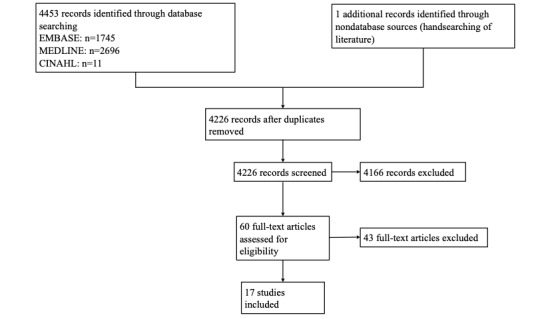
Background: Patient narratives are illustrative, individual accounts of patients’ experiences with certain health conditions. Web-based patient narratives have become widely available on the internet and in social media, as part of electronically available patient decision aids or Web-based databases. In recent years, the role of patient narratives as a source of information, insight, and support for both health care users and providers has increasingly been emphasized. Although the potential impact of patient stories has high immediate plausibility, it is of interest to know if this impact can be captured in quantitative studies. Objective: This review aimed to evaluate whether research-generated Web-based patient narratives have quantifiable risks or benefits for (potential) patients, relatives, or health care professionals. Methods: We searched the following databases from August 2017 to March 2019: Medical Literature Analysis and Retrieval System Online, PsycInfo, Sociological Abstracts, Web of Science, and EMBASE. Titles and abstracts of the retrieved studies were reviewed and assessed for the inclusion and exclusion criteria. Papers were included if they studied the following: (1) (potential) patients, relatives, or health care professionals; (2) the effects of Web-based patient narratives that were generated scientifically (eg, through qualitative research methods); and (3) were quantitative studies. Furthermore, 2 authors independently performed an assessment of the quality of the included studies using a validated checklist. Results: Of 4226 documents, 17 studies met the inclusion criteria. The studies investigated 10 different sources of Web-based patient narratives. Sample sizes ranged from 23 to 2458. The mean score of the quality assessment was 82.6 (range 61-100). Effects regarding five different purposes were identified as follows: provide information, engage, model behavior, persuade, and comfort. We found positive effects in every category and negative effects in one category (persuade). Several of the reported effects are rather small or were identified under specific experimental conditions. Conclusions: Patient narratives seem to be a promising means to support users in improving their understanding of certain health conditions and possibly to provide emotional support and have an impact on behavioral changes. There is limited evidence for beneficial effects on some outcomes. However, narratives are characterized by considerable heterogeneity and the investigated outcomes are hardly comparable with each other, which makes the overall judgment difficult. As there are numerous possible measures and purposes of narratives, quantifying the impact of Web-based patient narratives remains a challenge. Future research is needed to define the optimal standards for quantitative approaches to narrative-based interventions.
Overview
The claims and statistics of this paper haven’t been checked yet.
Free: it reads the open-access text and checks the first 5 claims that cite a source we can check. Create a free account to check every claim.
Integrity signals
Registry
Cites
Statistics
Figures
Verification
Claims the paper makes
The claims and statistics of this paper haven’t been checked yet.
Free: it reads the open-access text and checks the first 5 claims that cite a source we can check. Create a free account to check every claim.
Claims other papers make about this one
Each is checked against this paper’s own text: does it say what the citing paper says it does?
The cited source says what the claim attributes to it.
In the citing paper
“A recent review argues furthermore that patient narratives can have several benefits for patients and healthcare professionals in providing health-related information (Drewniak et al., 2020).”
From Using Personas in the development of eHealth interventions for chronic pain: A scoping review and narrative synthesis (2023) · cites this paper as Drewniak et al., 2020
Self-check
Percentages, sums and reported differences re-computed from the paper’s own numbers.
The self-check needs the paper’s full text.
Citations
Cites
Preferred Reporting Items for Systematic Reviews and Meta-Analyses: the PRISMA statement
Moher, D., Liberati, A., Tetzlaff, J., Altman, D. G., & for the PRISMA Group (2009) · BMJ · doi:10.1136/bmj.b2535 · Cited by 83,823
Preferred Reporting Items for Systematic Reviews and Meta-Analyses: The PRISMA Statement
Moher, D., Liberati, A., Tetzlaff, J., Altman, D. G., & The PRISMA Group (2009) · PLoS Medicine · doi:10.1371/journal.pmed.1000097 · Cited by 64,042 · cited 1×
“This review was conducted in accordance with the Preferred Reporting Items for Systematic Reviews and Meta-Analysis guidelines [21].”
Wang, G., Ma, R., Qiao, G., Wada, K., Aizawa, Y., & Satoh, T. (2015) · Integrative Medicine International · doi:10.1159/000368408 · Cited by 18,657
Bundesgesundheitsblatt - Gesundheitsforschung - Gesundheitsschutz
(2013) · Bundesgesundheitsblatt - Gesundheitsforschung - Gesundheitsschutz · doi:10.1007/103.1437-1588 · Cited by 11,796
Decision aids for people facing health treatment or screening decisions
Stacey, D., Légaré, F., Lewis, K., Barry, M. J., Bennett, C. L., Eden, K. B., Holmes-Rovner, M., Llewellyn-Thomas, H., Lyddiatt, A., Thomson, R., et al. (2017) · Cochrane Database of Systematic Reviews · doi:10.1002/14651858.cd001431.pub5 · Cited by 6,685 · cited 1×
“Decision aids are evidence-based tools with an aim to support patients in a value-sensitive way to make specific health care choices [46].”
BackgroundHigh-quality health systems in the Sustainable Development Goals era: time for a revolution
Kruk, M. E., Gage, A. D., Arsenault, C., Jordan, K., Leslie, H. H., Roder-DeWan, S., Adeyi, O., Barker, P., Daelmans, B., Doubova, S. V., et al. (2018) · The Lancet Global Health · doi:10.1016/s2214-109x(18)30386-3 · Cited by 4,057 · cited 2×
“Although quantitative data about patient experiences are essential measures for the accountability and improvement of health care systems, they fall short of capturing a more comprehensive picture of how patients experience health care encounters or illnesses [1,2].”
BackgroundAGREE II: advancing guideline development, reporting and evaluation in health care
Brouwers, M. C., Kho, M. E., Browman, G. P., Burgers, J. S., Cluzeau, F., Feder, G., Fervers, B., Graham, I. D., Grimshaw, J., Hanna, S. E., et al. (2010) · Canadian Medical Association Journal · doi:10.1503/cmaj.090449 · Cited by 3,790
Charnock, D., Shepperd, S., Needham, G., & Gann, R. (1999) · Journal of Epidemiology and Community Health · doi:10.1136/jech.53.2.105 · Cited by 3,329 · cited 1×
“Several quality measures to evaluate the quality of Web-based health information are available [42,43].”
BackgroundAppraising the Evidence: Reviewing Disparate Data Systematically
Hawker, S., Payne, S., Kerr, C., Hardey, M., & Powell, J. (2002) · Qualitative Health Research · doi:10.1177/1049732302238251 · Cited by 1,216 · cited 1×
“Therefore, 2 authors (DD and AG) independently performed an assessment of the quality of the included studies using the checklist proposed by Hawker et al [22].”
MethodRevisiting the Quantitative-Qualitative Debate: Implications for Mixed-Methods Research
Sale, J. E. M., Lohfeld, L. H., & Brazil, K. (2002) · Quality and Quantity · doi:10.1023/a:1014301607592 · Cited by 1,082 · cited 2×
“The foundations of the qualitative paradigm are interpretivism and constructivism, where multiple socially constructed realities are investigated [48,49].”
BackgroundWennberg, J. E., Fisher, E. S., & Skinner, J. S. (2002) · Health Affairs · doi:10.1377/hlthaff.w2.96 · Cited by 592 · cited 6×
“Outcomes were assigned to the benefit category when they were effective following the definition by Wennberg et al [24,25].”
BackgroundMethodInfluentialZIEBLAND, S., & WYKE, S. (2012) · The Milbank Quarterly · doi:10.1111/j.1468-0009.2012.00662.x · Cited by 554
How the internet affects patients' experience of cancer: a qualitative study
Ziebland, S., Chapple, A., Dumelow, C., Evans, J., Prinjha, S., & Rozmovits, L. (2004) · BMJ · doi:10.1136/bmj.328.7439.564 · Cited by 493 · cited 1×
“Patient narratives are a promising tool that can support people in coping with their illness [5], serve as a resource for preparing health care decisions [6], or help identify questions for physicians [7].”
BackgroundThe Health On the Net Code of Conduct for medical and health Websites
Boyer, C., Selby, M., Scherrer, J.-R., & Appel, R. D. (1998) · Computers in Biology and Medicine · doi:10.1016/s0010-4825(98)00037-7 · Cited by 427 · cited 1×
“Several quality measures to evaluate the quality of Web-based health information are available [42,43].”
BackgroundRisk communication in practice: the contribution of decision aids
O'Connor, A. M., Légaré, F., & Stacey, D. (2003) · BMJ · doi:10.1136/bmj.327.7417.736 · Cited by 384 · cited 5×
“Outcomes were assigned to the benefit category when they were effective following the definition by Wennberg et al [24,25].”
BackgroundMethodInfluentialDoes narrative information bias individual's decision making? A systematic review
Winterbottom, A., Bekker, H. L., Conner, M., & Mooney, A. (2008) · Social Science & Medicine · doi:10.1016/j.socscimed.2008.09.037 · Cited by 356 · cited 4×
“There is neither a clear definition of what constitutes a narrative nor any guidance on the length or content [4], which may lead to conflicting research results about the effects of patient narratives because of insufficient operationalization of the term [3].”
BackgroundInfluentialEvans, D. G. R., Barwell, J., Eccles, D. M., Collins, A., Izatt, L., Jacobs, C., Donaldson, A., Brady, A. F., Cuthbert, A., Harrison, R., et al. (2014) · Breast Cancer Research · doi:10.1186/s13058-014-0442-6 · Cited by 323 · cited 1×
“On the contrary, there are also serious concerns about the use of patient narratives because they are powerful message formats [13] and are suspected to override statistical information [14,15].”
BackgroundThe Influence of Narrative v. Statistical Information on Perceiving Vaccination Risks
Betsch, C., Ulshöfer, C., Renkewitz, F., & Betsch, T. (2011) · Medical Decision Making · doi:10.1177/0272989x11400419 · Cited by 297 · cited 13×
“Effect directionTaxonomy, outcome, authors (year) BenefitNo effectRisk Inform Competence N/AXbN/AaGiesler et al [29] (2017) XN/AN/ASnow et al [35] (2016) Knowledge N/AXN/AAllam et al [27] (2015) XN/AN/AEngler et al [18] (2016) Engage Empowerment XN/AN/AAardoom et al [26] (2014) XN/AN/AAllam et al [27] (2015) Length of…”
BackgroundMethodInfluentialAllam, A., Kostova, Z., Nakamoto, K., & Schulz, P. J. (2015) · Journal of Medical Internet Research · doi:10.2196/jmir.3510 · Cited by 274 · cited 9×
“Health care utilization and medication overuse decreased according to the findings of one study [27].”
BackgroundInfluentialRozmovits, L., & Ziebland, S. (2004) · Patient Education and Counseling · doi:10.1016/s0738-3991(03)00116-2 · Cited by 260 · cited 2×
“Furthermore, positive effects of personal health and illness experiences, including improvements in decision making [10,11] or addressing information needs [12], were identified in qualitative studies.”
BackgroundSocial media for patients: benefits and drawbacks
Martino, I. D., D’Apolito, R., McLawhorn, A. S., Fehring, K. A., Sculco, P. K., & Gasparini, G. (2017) · Current Reviews in Musculoskeletal Medicine · doi:10.1007/s12178-017-9394-7 · Cited by 180 · cited 2×
“Compared with the health-related information and experiences on general social media sites, academic research–based patient narratives might be less susceptible to challenges for the quality of health-related information through, eg, spamming, intentional misspelling, or actuality of information [41].”
BackgroundShaffer, V. A., & Zikmund-Fisher, B. J. (2013) · Medical Decision Making · doi:10.1177/0272989x12463266 · Cited by 167 · cited 10×
“There is neither a clear definition of what constitutes a narrative nor any guidance on the length or content [4], which may lead to conflicting research results about the effects of patient narratives because of insufficient operationalization of the term [3].”
BackgroundMethodResultInfluentialEntwistle, V. A., France, E. F., Wyke, S., Jepson, R., Hunt, K., Ziebland, S., & Thompson, A. (2011) · Patient Education and Counseling · doi:10.1016/j.pec.2011.05.014 · Cited by 147 · cited 2×
“Furthermore, positive effects of personal health and illness experiences, including improvements in decision making [10,11] or addressing information needs [12], were identified in qualitative studies.”
BackgroundSchaffer, R., Kuczynski, K., & Skinner, D. (2008) · Sociology of Health & Illness · doi:10.1111/j.1467-9566.2007.01042.x · Cited by 132
Wise, M. E., Han, J. Y., Shaw, B. R., Mctavish, F. M., & Gustafson, D. H. (2008) · Patient Education and Counseling · doi:10.1016/j.pec.2007.11.009 · Cited by 123 · cited 10×
“Effect directionTaxonomy, outcome, authors (year) BenefitNo effectRisk Inform Competence N/AXbN/AaGiesler et al [29] (2017) XN/AN/ASnow et al [35] (2016) Knowledge N/AXN/AAllam et al [27] (2015) XN/AN/AEngler et al [18] (2016) Engage Empowerment XN/AN/AAardoom et al [26] (2014) XN/AN/AAllam et al [27] (2015) Length of…”
BackgroundMethodInfluentialIs ‘watchful waiting’ a real choice for men with prostate cancer? A qualitative study
Chapple, A., Ziébland, S., Herxheimer, A., McPherson, A., Shepperd, S., & Miller, R. A. (2002) · British Journal of Urology · doi:10.1046/j.1464-410x.2002.02846.x · Cited by 111 · cited 2×
“Furthermore, positive effects of personal health and illness experiences, including improvements in decision making [10,11] or addressing information needs [12], were identified in qualitative studies.”
BackgroundBetsch, C., Renkewitz, F., & Haase, N. (2013) · Medical Decision Making · doi:10.1177/0272989x12452342 · Cited by 106 · cited 14×
“Two years later, the same research group published results from a similar setting, which point in the same direction [15].”
BackgroundMethodResultInfluentialZIEBLAND, S., & HERXHEIMER, A. (2008) · Journal of Nursing Management · doi:10.1111/j.1365-2834.2008.00863.x · Cited by 86 · cited 1×
“Patient narratives are a promising tool that can support people in coping with their illness [5], serve as a resource for preparing health care decisions [6], or help identify questions for physicians [7].”
BackgroundWinterbottom, A. E., Bekker, H. L., Conner, M., & Mooney, A. F. (2012) · Nephrology Dialysis Transplantation · doi:10.1093/ndt/gfr266 · Cited by 84 · cited 10×
“Students Hypothetical treatment choice Factorial design Winterbottom et al [37] (2012)”
BackgroundMethodResultInfluentialAardoom, J. J., Dingemans, A. E., Boogaard, L. H., & van Furth, E. F. (2014) · Eating Behaviors · doi:10.1016/j.eatbeh.2014.04.003 · Cited by 69 · cited 8×
“Effect directionTaxonomy, outcome, authors (year) BenefitNo effectRisk Inform Competence N/AXbN/AaGiesler et al [29] (2017) XN/AN/ASnow et al [35] (2016) Knowledge N/AXN/AAllam et al [27] (2015) XN/AN/AEngler et al [18] (2016) Engage Empowerment XN/AN/AAardoom et al [26] (2014) XN/AN/AAllam et al [27] (2015) Length of…”
BackgroundMethodInfluentialShaffer, V. A., Hulsey, L., & Zikmund‐Fisher, B. J. (2013) · Patient Education and Counseling · doi:10.1016/j.pec.2013.07.013 · Cited by 64 · cited 11×
“The study by Shaffer et al [31] compared participants who viewed experience narratives with those not viewing experience narratives.”
BackgroundMethodInfluentialCultural Contexts of Health: The Use of Narrative Research in the Health Sector
Who Regional Office for Europe (2016) · Cited by 60
Burkow, T. M., Vognild, L. K., Østengen, G., Johnsen, E., Risberg, M. J., Bratvold, A., Hagen, T., Brattvoll, M., Krogstad, T., & Hjalmarsen, A. (2013) · BMC Medical Informatics and Decision Making · doi:10.1186/1472-6947-13-33 · Cited by 53 · cited 1×
“Several qualitative studies report that illness narratives enjoy high acceptance among other patients [9].”
BackgroundGreenhalgh, T., & Wengraf, T. (2008) · Medical Education · doi:10.1111/j.1365-2923.2007.02956.x · Cited by 47 · cited 1×
“Therefore, in this review, we focused on studies that used established scientific methodologies to elicit the stories [8,20].”
BackgroundPersonal stories in publicly available patient decision aids
Khangura, S. D., Bennett, C. L., Stacey, D., & O'Connor, A. M. C. (2008) · Patient Education and Counseling · doi:10.1016/j.pec.2008.07.035 · Cited by 47 · cited 3×
“Narratives are widely used in patient decision aids [45].”
BackgroundResultShaffer, V. A., Owens, J. W., & Zikmund‐Fisher, B. J. (2013) · Journal of Medical Internet Research · doi:10.2196/jmir.2784 · Cited by 46 · cited 11×
“Researchers and health care professionals using patient narrative databases should be aware that the format of patient stories might be similarly important as the content in determining their effect on medical decision making [32].”
BackgroundMethodInfluentialNewman, M. A., Ziébland, S., & Barker, K. L. (2009) · Health Informatics Journal · doi:10.1177/1460458209102974 · Cited by 45 · cited 12×
“Effect directionTaxonomy, outcome, authors (year) BenefitNo effectRisk Inform Competence N/AXbN/AaGiesler et al [29] (2017) XN/AN/ASnow et al [35] (2016) Knowledge N/AXN/AAllam et al [27] (2015) XN/AN/AEngler et al [18] (2016) Engage Empowerment XN/AN/AAardoom et al [26] (2014) XN/AN/AAllam et al [27] (2015) Length of…”
BackgroundMethodResultInfluentialGrob, R., Schlesinger, M. J., Parker, A. M., Shaller, D., Barre, L. R., Martino, S. C., Finucane, M. L., Rybowski, L., & Cerully, J. (2016) · Health Services Research · doi:10.1111/1475-6773.12503 · Cited by 44 · cited 1×
“Furthermore, this highlights the need for a careful selection of the presented stories on patient narrative databases by the corresponding research teams in charge for the databases to present a balanced picture of the whole spectrum of health experiences [47].”
BackgroundEngler, J., Adami, S., Adam, Y., Keller, B., Repke, T., Fügemann, H., Lucius-Hoene, G., Müller‐Nordhorn, J., & Holmberg, C. (2016) · Patient Education and Counseling · doi:10.1016/j.pec.2016.03.015 · Cited by 41 · cited 11×
“Engler et al [18] (2016) Individuals diagnosed with colorectal cancer Coping self-efficacy and patient competenciesRandomized two-group between-subjects design with repeated measures.”
BackgroundMethodInfluentialSchweier, R., Romppel, M., Richter, C., Hoberg, E., Hahmann, H., Scherwinski, I., Kosmützky, G., & Grande, G. (2014) · Journal of Medical Internet Research · doi:10.2196/jmir.3434 · Cited by 37 · cited 13×
“Effect directionTaxonomy, outcome, authors (year) BenefitNo effectRisk Inform Competence N/AXbN/AaGiesler et al [29] (2017) XN/AN/ASnow et al [35] (2016) Knowledge N/AXN/AAllam et al [27] (2015) XN/AN/AEngler et al [18] (2016) Engage Empowerment XN/AN/AAardoom et al [26] (2014) XN/AN/AAllam et al [27] (2015) Length of…”
BackgroundMethodInfluentialThe role of the Internet for people with chronic pain: examples from the DIPEx International Project
Ziébland, S., Lavie‐Ajayi, M., & Lucius-Hoene, G. (2014) · British Journal of Pain · doi:10.1177/2049463714555438 · Cited by 36 · cited 1×
“Patient narratives are a promising tool that can support people in coping with their illness [5], serve as a resource for preparing health care decisions [6], or help identify questions for physicians [7].”
BackgroundGiesler, J. M., Keller, B., Repke, T., Leonhart, R., Weis, J., Muckelbauer, R., Rieckmann, N., Müller‐Nordhorn, J., Lucius-Hoene, G., & Holmberg, C. (2017) · Journal of Medical Internet Research · doi:10.2196/jmir.7639 · Cited by 35
Shaffer, V. A., Tomek, S. E., & Hulsey, L. (2013) · Health Communication · doi:10.1080/10410236.2012.717341 · Cited by 34 · cited 15×
“Furthermore, Shaffer et al [31] reported that participants who viewed narratives containing experiences regarding diagnosis, treatment, or complications with early breast cancer treatments showed greater abilities to imagine how it might be to experience these treatments (imagine a mastectomy in the no narrative condi…”
BackgroundMethodInfluentialSnow, R., Crocker, J. C., Talbot, K., Moore, J. A., & Salisbury, H. (2016) · Medical Teacher · doi:10.1080/0142159x.2016.1210109 · Cited by 34 · cited 12×
“expectations and learning experiences [18,30], self help and use of patients’ stories [39], and empowering processes and outcomes experienced by website participants [26]; (2) effects of narratives on patients’ and health care professionals’ behavior, including health care participation [38]; information search, treat…”
BackgroundMethodInfluentialParents and end-of-life decision-making for their child: roles and responsibilities
Sullivan, J., Gillam, L. H., & Monagle, P. (2014) · BMJ Supportive & Palliative Care · doi:10.1136/bmjspcare-2013-000558 · Cited by 32
Subjektive Krankheitserfahrungen und Patientenorientierung
Breuning, M., Lucius-Hoene, G., Burbaum, C., Himmel, W., & Bengel, J. (2017) · Bundesgesundheitsblatt - Gesundheitsforschung - Gesundheitsschutz · doi:10.1007/s00103-017-2524-y · Cited by 32 · cited 1×
“Such websites often provide biomedical information but lack information on wider experiences [18] or the experiences are not systematically collected, analyzed, and presented [19].”
BackgroundBrunette, M. F., Gunn, W. B., Alvarez, H., Finn, P. C., Geiger, P., Ferron, J. C., & McHugo, G. J. (2015) · Addiction Science & Clinical Practice · doi:10.1186/s13722-015-0026-5 · Cited by 25 · cited 9×
“Effect directionTaxonomy, outcome, authors (year) BenefitNo effectRisk Inform Competence N/AXbN/AaGiesler et al [29] (2017) XN/AN/ASnow et al [35] (2016) Knowledge N/AXN/AAllam et al [27] (2015) XN/AN/AEngler et al [18] (2016) Engage Empowerment XN/AN/AAardoom et al [26] (2014) XN/AN/AAllam et al [27] (2015) Length of…”
BackgroundMethodInfluentialA Rigorous Approach to Large-Scale Elicitation and Analysis of Patient Narratives
Schlesinger, M. J., Grob, R., Shaller, D., Martino, S. C., Parker, A. M., Rybowski, L., Finucane, M. L., & Cerully, J. (2018) · Medical Care Research and Review · doi:10.1177/1077558718803859 · Cited by 21 · cited 1×
“Schlesinger et al [44] demonstrated that a rigorous collection of patient narratives can also be incorporated into large patient experience surveys.”
BackgroundYaphe, J., Rigge, M., Herxheimer, A., McPherson, A., Miller, R. K., Shepperd, S., & Ziébland, S. (2000) · Health Expectations · doi:10.1046/j.1369-6513.2000.00092.x · Cited by 18 · cited 8×
“Effect directionTaxonomy, outcome, authors (year) BenefitNo effectRisk Inform Competence N/AXbN/AaGiesler et al [29] (2017) XN/AN/ASnow et al [35] (2016) Knowledge N/AXN/AAllam et al [27] (2015) XN/AN/AEngler et al [18] (2016) Engage Empowerment XN/AN/AAardoom et al [26] (2014) XN/AN/AAllam et al [27] (2015) Length of…”
BackgroundMethodInfluentialSullivan, H. W., O’Donoghue, A. C., Gard, J. C., Amoozegar, J. B., Aikin, K. J., & Rupert, D. J. (2018) · Journal of Medical Internet Research · doi:10.2196/jmir.7959 · Cited by 13 · cited 7×
“8% (high blood pressure) Simulated prescription drug websites 2125 (study on acid reflux: 1070; study on high blood pressure: 1055) United States Sullivan et al [36] (2018)”
BackgroundMethodInfluentialThe Social Construction Of Reality
Tridico, F. (2003) · Cited by 9
Research works printed but not linked: 1
- World Health Organization European Health Report 2018: More Than Numbers - Evidence for All 2018 Copenhagen, Denmark World Health Organization. Regional Office for Europe
Cited by
Bartels, S. L., Taygar, A. S., Johnsson, S. I., Petersson, S., Flink, I., Boersma, K., McCracken, L. M., & Wicksell, R. K. (2023) · Internet Interventions · doi:10.1016/j.invent.2023.100619 · Cited by 46
“A recent review argues furthermore that patient narratives can have several benefits for patients and healthcare professionals in providing health-related information (Drewniak et al., 2020).”
BackgroundSpitale, G., Biller‐Andorno, N., & Germani, F. (2021) · Journal of Medical Internet Research · doi:10.2196/34385 · Cited by 44
“In this context, complement as much as possible narratives based on data and scientific evidence with personal narratives (still backed up by science), as they are easier to relate to and can be more effective [29].”
BackgroundSelf-citationBrewster, G. S., Wang, D., McPhillips, M., Epps, F. R., & Yang, I. H. (2022) · Clinical Gerontologist · doi:10.1080/07317115.2022.2139655 · Cited by 38
“Three reviewers (G.B., I.Y., and D.W.) used Hawker’s checklist, a validated appraisal tool designed to systematically evaluate and assess methodological rigor (Drewniak et al., 2020; Hawker et al., 2002).”
MethodArnold, D., Gläßel, A., Böttger, T., Sarma, N., Bethmann, A., & Narimani, P. (2022) · International Journal of Environmental Research and Public Health · doi:10.3390/ijerph19159336 · Cited by 40
“Drewniak, D.; Glässel, A.; Hodel, M.; Biller-Andorno, N. Risks and benefits of web-based patient narratives: Systematic review.”
BackgroundNarrative Health Analytics: Integrating Empathy, Data, and Ethics in Patient-Centered Healthcare
Atento, R. G., Quinto, L., Espelita, C. A. M. H., & Juan, F. M. Z. S. (2025) · International Journal of Health & Business Analytics · doi:10.65166/yxgx8e59 · Cited by 37
“…— can be systematically analyzed to produce valid insights into healthcare quality and experience (Boylan et al., 2020; Nembhard et al., 2023; Zakkar & Lizotte, 2021; Alkhnbashi et al., 2024; Shah et al., 2019; Stokes et al., 2021; James et al., 2017; Navarro et al., 2021; Drewniak et al., 2020).”
Metadata
- Authors
- Drewniak, D., Glässel, A., Hodel, M., & Biller-Andorno, N.
- Affiliations
- University of Zurich (CH)
- Corresponding author
- Drewniak, Daniel
- Venue
- Journal of Medical Internet Research
- Publisher
- JMIR Publications Inc.
- Published
- 2020-03-26
- Volume
- 22
- Issue
- 3
- Pages
- e15772
- ISSN
- 1438-8871 (ISSN-L)
- PMC
- PMC7146251
- OpenAlex
- W3013322000
- Cited by
- 70
- References
- 51
- Citations by year
- 2026: 9 · 2025: 8 · 2024: 9 · 2023: 14 · 2022: 21 · 2021: 8 · 2020: 1
- FWCI
- 2.10
- Type
- journal article
- Language
- en
- Open access
- gold
- doi.org
- Licence
- cc-by
- Locations
- Journal of Medical Internet Research (publishedVersion, cc-by)
- PubMed Central (publishedVersion, cc-by)
- PubMed (publishedVersion)
- Zurich Open Repository and Archive (University of Zurich) (acceptedVersion, cc-by)
- Zürcher Hochschule für Angewandte Wissenschaften digital collection (Zurich University of Applied Sciences) (submittedVersion, cc-by-nc-nd)
- DOAJ (DOAJ: Directory of Open Access Journals) (submittedVersion, cc-by-sa)
- Repository for Publications and Research Data (ETH Zurich) (submittedVersion, cc-by)
- Zurich Open Repository and Archive (University of Zurich) (submittedVersion, cc-by)
- ETH Zürich Research Collection (cc-by)
- Zurich Open Repository and Archive (University of Zurich)
- Topics
- Health Sciences › Health Professions › General Health Professions › Health Literacy and Information Accessibility
- Social Sciences › Communication › Media Influence and Health
- Social Sciences › Health › Social Media in Health Education
- Keywords
- patient narratives, patient decision aids, health information, emotional support, behavior change, persuasion, patient engagement, healthcare workers, relatives, benefits and risks
- MeSH terms
- Humans, Outcome Assessment, Health Care, Risk Assessment, Internet
About these checks
Registry, retraction, Cites and statistics results are computed, not judged, with one exception: a printed reference that no index lists is read once by a model before it counts as a citation error. Claims are extracted by a model and kept only when their quote appears verbatim in the text; each cited source is then checked, with a model’s help, for whether it says what the claim relies on. Those verdicts can be wrong — read the claim’s quote and the cited source before relying on one.
Statistics and arithmetic are recomputed, not judged.
Confidence bands are shown only for fields calibrated on our annotated test set. None is calibrated yet, so no band is shown.
What counts as a claim ›How we measure confidence ›How we check this ›
Are you an author, or do you see a problem with this page? Request a review
Data sources
Bibliographic data: Semantic Scholar, OpenAlex, Crossref.
Contains information from the Semantic Scholar Academic Graph Datasets, made available under the ODC Attribution License (ODC-BY 1.0).
Semantic Scholar’s data is described in: Kinney, R., et al. (2023). The Semantic Scholar Open Data Platform. arXiv:2301.10140.
