

Development and feasibility of a digital acceptance and commitment therapy⇓based intervention for generalized anxiety disorder: Pilot acceptability study
Open accessPublished version of a preprint
The DOI matches its Crossref record; 71 of the 72 references it cites were found in a registry or an index; 39 of the 63 sources its claims cite were checked for support.
Abstract
Background: Generalized anxiety disorder (GAD) is characterized by excessive worry that is difficult to control and has high comorbidity with mood disorders including depression. Individuals experience long wait times for diagnosis and often face accessibility barriers to treatment. There is a need for a digital solution that is accessible and acceptable to those with GAD. Objective: This paper aims to describe the development of a digital intervention prototype of acceptance and commitment therapy (ACT) for GAD that sits within an existing well-being app platform, BioBase. A pilot feasibility study evaluating acceptability and usability is conducted in a sample of adults with a diagnosis of GAD, self-referred to the study. Methods: Phase 1 applied the person-based approach (creation of guiding principles, intervention design objectives, and the key intervention features). In Phase 2 participants received the app-based therapeutic and paired wearable for 2 weeks. Self-report questionnaires were obtained at baseline and posttreatment. The primary outcome was psychological flexibility (Acceptance and Action Questionnaire-II [AAQ-II]) as this is the aim of ACT. Mental well-being (Warwick-Edinburgh Mental Well-being Scale [WEMWBS]) and symptoms of anxiety (7-item Generalized Anxiety Disorder Assessment [GAD-7]) and depression (9-item Patient Health Questionnaire [PHQ-9]) were also assessed. Posttreatment usability was assessed via self-report measures (System Usability Scale [SUS]) in addition to interviews that further explored feasibility of the digital intervention in this sample. Results: The app-based therapeutic was well received. Of 13 participants, 10 (77%) completed the treatment. Results show a high usability rating (83.5). Participants found the digital intervention to be relevant, useful, and helpful in managing their anxiety. Participants had lower anxiety (d=0.69) and depression (d=0.84) scores at exit, and these differences were significantly different from baseline (P=.03 and .008 for GAD-7 and PHQ-9, respectively). Participants had higher psychological flexibility and well-being scores at exit, although these were not significantly different from baseline (P=.11 and .55 for AAQ-II and WEMWBS, respectively). Conclusions: This ACT prototype within BioBase is an acceptable and feasible digital intervention in reducing symptoms of anxiety and depression. This study suggests that this intervention warrants a larger feasibility study in adults with GAD. © Nicola R Hemmings, Jamie M Kawadler, Rachel Whatmough, Sonia Ponzo, Alessio Rossi, Davide Morelli, Geoffrey Bird, David Plans.
Overview
CoChat Summary
## TL;DR
This pilot study developed a 6-module, app-based ACT intervention for adults with diagnosed GAD and found it was acceptable and usable in a small feasibility sample. In 10 completers, anxiety and depression scores decreased significantly over 2 weeks, but the study was small and preliminary.
## Key findings
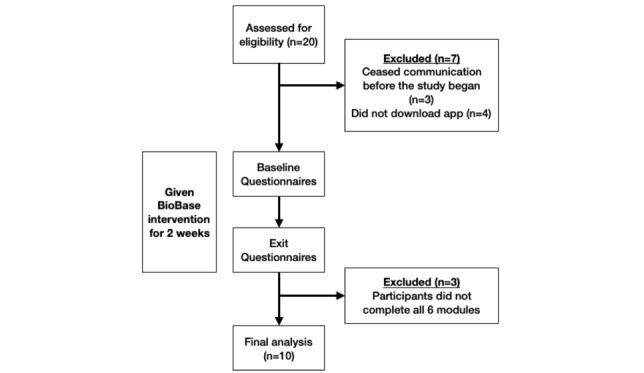
- Of 13 participants who met inclusion criteria, 10 (77%) completed the 2-week treatment; 7 of those 10 took part in semistructured interviews.
- Usability was high, with a System Usability Scale mean of 83.4 (reported in the results) and 83.5 (reported in the abstract/discussion), corresponding to an “A” rating.
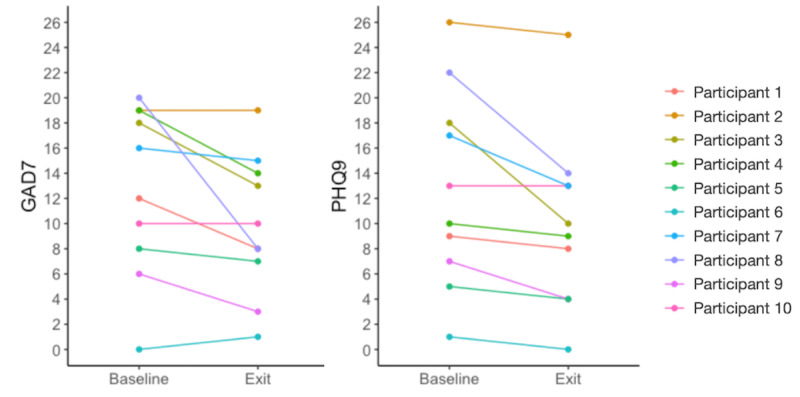
- Anxiety and depression symptoms decreased significantly from baseline to exit: GAD-7 showed P=.03 with d=0.69, and PHQ-9 showed P=.008 with d=0.84; in an additional analysis including all 13 participants, GAD-7 remained significant (P=.011, d=0.81) and PHQ-9 remained significant (P=.008, d=0.84).
- Psychological flexibility and well-being improved numerically but were not statistically significant: AAQ-II P=.11 and WEMWBS P=.55.
## Methods
- Two-phase design: Phase 1 used the person-based approach to create guiding principles, intervention design objectives, and key features; Phase 2 tested feasibility over 2 weeks.
- Sample: 13 adults with self-reported diagnosis of GAD from a GP or mental health professional were enrolled; 10 completed all 6 ACT modules and formed the final analysis sample.
- Main analysis: acceptability/usability were summarized with the SUS plus feedback questionnaires and semistructured interviews; baseline vs exit outcomes were compared using nonparametric paired-sample Wilcoxon signed-rank tests and effect sizes (Z/√N).
## Limitations
- The paper states the feasibility phase was limited by a small sample size and a relatively short intervention period.
- The sample was composed only of females, and the authors note future research should include ethnicity measures and a more representative sample.
- The intervention was only a 6-module prototype of a larger 30-module program, so it only addresses initial feasibility, and the results may not generalize broadly; this is stated in the paper.
- Evident from the text: participants were paid and all had access to an iPhone, so engagement and feasibility may not reflect unpaid users or people without iPhone access.
Model-written summary. Check it against the paper before relying on it.
Integrity signals
Registry
Cites
Statistics
Figures
Verification
Claims the paper makes
21 Valid · 3 Not valid · 7 Not checked · 41 Own results and interpretations
The cited sources support only part of this claim — read each source’s verdict below.
In the paper
“A digital therapeutic tool has the potential to increase accessibility and availability of treatment for those suffering with GAD by reducing barriers such as waiting times before treatment [7], perceived stigma [8,9], geographical distance, financial costs, and lack of time due to, for example, work commitments or caring responsibilities [10].”
§ Development and Feasibility of a Digital Acceptance and Commitment Therapy–Based Intervention for Generalized Anxiety Disorder: Pilot Acceptability Study > Introduction > Background
What the sources say
- Supportedcites [7] Bandelow, B, 2017, Dialogues Clin Neurosci source
Citation [7] is attached to the waiting-times barrier, not the other barriers listed in the sentence. The Psychotherapy section says internet therapies may bridge the waiting period before face-to-face therapy begins, supporting their potential to improve access during that wait. (LLM, conf=0.90)
- Not checked — no full text of the sourcecites [8] source
- Not checked — no full text of the sourcecites [9] source
- Partly supportedcites [10] sourceExperimental — accuracy not yet measured
The Discussion (page unavailable) identifies geographic distance, financial problems, and time barriers to seeking mental health treatment, supporting the barriers attached to citation [10]. The paper groups mental disorders rather than assessing GAD-specific barriers, and the passages do not establish work or caring responsibilities as reasons for the time barrier. Waiting times and stigma are attached to other citations in the sentence; this paper does not test whether a digital tool reduces any of these barriers. (LLM, conf=0.84)
hedgedstates a possible cause- Asserted: passes — The authors put it forward as true.
- Checkable: passes — It can be checked against evidence.
- Load-bearing: passes — The paper’s conclusions depend on it.
- Based: passes — The paper gives a reason why it holds.
- Supported
The cited sources support only part of this claim — read each source’s verdict below.
In the paper
“Digital interventions, whether therapist-guided or self-guided, have been shown to be as effective as face-to-face interventions [11,12] when based on the same core processes of face-to-face treatment with only the mode of delivery changing [13].”
§ Development and Feasibility of a Digital Acceptance and Commitment Therapy–Based Intervention for Generalized Anxiety Disorder: Pilot Acceptability Study > Introduction > Background
What the sources say
- Partly supportedcites [11] sourceExperimental — accuracy not yet measured
The Results (Study Characteristics and Effectiveness of Interventions Studied on Psychological Outcomes; page unavailable) describe both human-supported and self-guided programs and report beneficial outcomes for many digital interventions. They do not establish that either type is as effective as face-to-face treatment: face-to-face care was only one of several control conditions, and the Discussion (Strengths and Limitations; page unavailable) says no included study used a noninferiority analysis. The claim about retaining the same core processes is attached to a different citation [13]. (LLM, conf=0.88)
- Partly supportedcites [12] sourceExperimental — accuracy not yet measured
The Discussion (p. 16) concludes that internet-based and face-to-face CBT were equally effective for the conditions studied. But the selection criteria (p. 5) required therapist-guided internet treatment and some therapist contact, so this paper does not establish the claim for self-guided interventions. The statement about shared treatment processes is attached to a different citation. (LLM, conf=0.91)
- Not checked — no full text of the sourcecites [13] source
plain- Asserted: passes — The authors put it forward as true.
- Checkable: passes — It can be checked against evidence.
- Load-bearing: passes — The paper’s conclusions depend on it.
- Based: passes — The paper gives a reason why it holds.
- Partly supported
The sources with a verdict support this claim; the rest weren’t checked yet, have no full text we could read, or their verdicts aren’t rated yet.
In the paper
“However, poor engagement rates are a well-documented and an ongoing concern in the design, development, and evaluation of digital interventions [30-34].”
§ Development and Feasibility of a Digital Acceptance and Commitment Therapy–Based Intervention for Generalized Anxiety Disorder: Pilot Acceptability Study > Introduction > Acceptance and Commitment Therapy as a Treatment for GAD
What the sources say
- Supportedcites [30] source
The Discussion’s Implications for Future Work identifies high attrition on open-access websites as a problem and calls for research into ways to improve adherence. It also identifies methodological improvements needed to measure and evaluate adherence. These passages support the cited paper’s use as evidence that engagement is an ongoing concern for Internet interventions. (LLM, conf=0.87)
- Not checked — no full text of the sourcecites [31] source
- Supportedcites [32] source
In “The Law of Attrition (Or: Why Do eHealth Users Discontinue Usage?),” the paper describes discontinued use and loss to follow-up across several eHealth applications as a common methodological challenge. Its discussion of underreported attrition and its conclusion about development-related pro-innovation bias support the claim that poor engagement is a concern for evaluating and developing digital interventions. (LLM, conf=0.91)
- Supportedcites [33] source
The Background describes barriers to participation in evaluations of digital health interventions and says understanding engagement remains important as interventions move from trials to large-scale use. The Discussion (Recommendation 5) says even well-promoted interventions may fail to attract users and calls for better-designed engagement strategies. These passages support the broad claim that poor engagement is a documented, ongoing concern; the claim gives no specific rate. (LLM, conf=0.86)
- Supportedcites [34] source
The Results (‘Use’) call low actual use one of the largest problems in Internet-delivered interventions. The Discussion (‘Recommendations for Future Research’) describes discontinued or suboptimal use as a widely recognized problem and calls for strategies to increase engagement; the Discussion (‘Principal Findings’) also identifies attrition as a challenge in evaluation. (LLM, conf=0.91)
boosted- Asserted: passes — The authors put it forward as true.
- Checkable: passes — It can be checked against evidence.
- Load-bearing: passes — The paper’s conclusions depend on it.
- Based: passes — The paper gives a reason why it holds.
- Supported
Every source the paper cites for this claim was checked and supports it.
In the paper
“Compared with other PBA studies [44,76,77], the small sample size used in this study to represent the target population means that study may not have covered all context-specific behaviors that users with GAD may experience.”
§ Development and Feasibility of a Digital Acceptance and Commitment Therapy–Based Intervention for Generalized Anxiety Disorder: Pilot Acceptability Study > Discussion > Limitations
What the sources say
- Supportedcites [44] source
The citation identifies this paper as an example of another person-based approach (PBA) study, rather than attributing the citing authors’ conclusion about their GAD sample to it. The paper’s Methods describe qualitative optimisation with cancer survivors, confirming that it is such a study; the statement about potentially missed GAD behaviours is the citing authors’ own limitation. (LLM, conf=0.90)
- Supportedcites [76] source
The citation is attached to the comparison with other PBA studies, not to the citing authors’ conclusion about their own sample or users with GAD. The Participants section reports feedback from 39 Cigna colleagues, and the Discussion explicitly describes the study as using the PBA. Our copy provides no basis for judging the citing study’s sample-size comparison itself. (LLM, conf=0.90)
- Supportedcites [77] source
The citation identifies this paper as an example of another person-based approach (PBA) study. Its Methods > Intervention section explicitly says it employed that approach. The small-sample limitation concerning users with GAD is the citing authors’ assessment of their own study, not a finding attributed to this source. (LLM, conf=0.90)
hedgedstates a possible cause- Asserted: passes — The authors put it forward as true.
- Checkable: passes — It can be checked against evidence.
- Load-bearing: unclear — It is unclear whether the paper’s conclusions depend on it.
- Based: passes — The paper gives a reason why it holds.
- Supported
The cited sources support only part of this claim — read each source’s verdict below.
In the paper
“Although the prototype design process listed desired outcome behaviors of the intervention, the approach lacked clearly stated behavior change techniques for each of the desired behaviors [78].”
§ Development and Feasibility of a Digital Acceptance and Commitment Therapy–Based Intervention for Generalized Anxiety Disorder: Pilot Acceptability Study > Discussion > Limitations
What the sources say
- Partly supportedcites [78] sourceExperimental — accuracy not yet measured
The Discussion says that specifying intervention content is critical, and the section on theory-based techniques praises descriptions that clearly list discrete behavior change techniques. The paper does not establish that techniques must be stated separately for each desired outcome behavior; the assessment of the citing authors’ prototype is their own. (LLM, conf=0.82)
plain- Asserted: passes — The authors put it forward as true.
- Checkable: passes — It can be checked against evidence.
- Load-bearing: unclear — It is unclear whether the paper’s conclusions depend on it.
- Based: passes — The paper gives a reason why it holds.
- Partly supported
16 more claims · 4 with their cited sources checked
Create a free account to see all 72 claims and to verify the 3 references still open.
- It may state two separate claims as one. 40
- Probably not a substantial claim. 20
Citations
Cites
Statistical Power Analysis for the Behavioral Sciences
Muller, K. (1989) · Technometrics · doi:10.1080/00401706.1989.10488618 · Cited by 99,167
A Brief Measure for Assessing Generalized Anxiety Disorder: The GAD-7
Spitzer, R. L., Kroenke, K., Williams, J. B. W., & Löwe, B. (2006) · Archives of Internal Medicine · doi:10.1001/archinte.166.10.1092 · Cited by 31,765 · cited 12×
“Mental well-being (Warwick-Edinburgh Mental Well-being Scale [WEMWBS]) and symptoms of anxiety (7-item Generalized Anxiety Disorder Assessment [GAD-7]) and depression (9-item Patient Health Questionnaire [PHQ-9]) were also assessed.”
MethodInfluentialKessler, R. C., Chiu, W. T., Demler, O., & Walters, E. E. (2005) · Archives of General Psychiatry · doi:10.1001/archpsyc.62.6.617 · Cited by 12,052
Acceptance and commitment therapy: model, processes and outcomes
Hayes, S. C., Luoma, J. B., Bond, F. W., Masuda, A., & Lillis, J. (2006) · Behaviour Research and Therapy · doi:10.1016/j.brat.2005.06.006 · Cited by 6,587 · cited 3×
“Psychological flexibility reduces experiential avoidance and the unwillingness to experience difficult emotions, thoughts, or sensations [17].”
BackgroundEcological momentary assessment
Shiffman, S., Stone, A. A., & Hufford, M. R. (2008) · Annual Review of Clinical Psychology · doi:10.1146/annurev.clinpsy.3.022806.091415 · Cited by 6,454
The PHQ-9: A New Depression Diagnostic and Severity Measure
Kroenke, K., & Spitzer, R. L. (2002) · Psychiatric Annals · doi:10.3928/0048-5713-20020901-06 · Cited by 5,898 · cited 12×
“Mental well-being (Warwick-Edinburgh Mental Well-being Scale [WEMWBS]) and symptoms of anxiety (7-item Generalized Anxiety Disorder Assessment [GAD-7]) and depression (9-item Patient Health Questionnaire [PHQ-9]) were also assessed.”
MethodInfluentialThe Warwick-Edinburgh Mental Well-being Scale (WEMWBS): development and UK validation
Tennant, R., Hiller, L., Fishwick, R., Platt, S., Joseph, S., Weich, S., Parkinson, J., Secker, J., & Stewart-Brown, S. (2007) · Health and Quality of Life Outcomes · doi:10.1186/1477-7525-5-63 · Cited by 5,031
Bond, F. W., Hayes, S. C., Baer, R. A., Carpenter, K. M., Guenole, N., Orcutt, H. K., Waltz, T., & Zettle, R. D. (2011) · Behavior Therapy · doi:10.1016/j.beth.2011.03.007 · Cited by 3,950 · cited 1×
“Psychological flexibility, or the ability to be aware of and deal with difficult emotions while acting in accordance with one’s values, was measured by the 7-item Acceptance and Action Questionnaire-II (AAQ-II), which utilizes a 7-point Likert response scale (scores range 10-70 with lower scores indicating greater psy…”
MethodPsychological flexibility as a fundamental aspect of health
Kashdan, T. B., & Rottenberg, J. (2010) · Clinical Psychology Review · doi:10.1016/j.cpr.2010.03.001 · Cited by 3,054 · cited 1×
“Psychological flexibility is proposed to be a fundamental aspect of health and well-being [20]; even though ACT does not aim to specifically eliminate symptoms of anxiety, the ACT model has a transdiagnostic approach and has been consistently shown to reduce symptoms of anxiety [21] and depression [22] among other moo…”
BackgroundA taxonomy of behavior change techniques used in interventions
Abraham, C., & Michie, S. (2008) · Health Psychology · doi:10.1037/0278-6133.27.3.379 · Cited by 2,525
Research works printed but not linked: 7
- 2013, Diagnostic and Statistical Manual of Mental Disorders (DSM-5®)
- Jiménez, FJR, 2012, International Journal of Psychology & Psychological Therapy, 12, 333
- Eifert, G, 2005, Acceptance and Commitment Therapy for Anxiety Disorders: A Practitioner?s Treatment Guide to Using Mindfulness, Acceptance, and Values-Based Behavior Change
- Ruiz, F, 2010, International Journal of Psychology and Psychological Therapy, 10, 125
- Hayes, S, 2005, Get Out of Your Mind and Into Your Life: The New Acceptance and Commitment Therapy
- Harris, R, 2008, The Happiness Trap
- Hayes, S, 2011, Acceptance and Commitment Therapy, Second Edition
Cited by
Madrid‐Cagigal, A., Kealy, C., Potts, C., Mulvenna, M. D., Byrne, M., Barry, M. M., & Donohoe, G. (2025) · Early Intervention in Psychiatry · doi:10.1111/eip.70017 · Cited by 78
“Acceptance and commitment therapy (ACT) has also been adopted for online treatment (Levin, Hicks, and Krafft 2022) and has been found to effectively treat mental health issues such as anxiety and depression among university students (Hemmings et al. 2021).”
From Digital Health to Digital Well-being: Systematic Scoping Review
Smits, M., Kim, C. M., van Goor, H., & Ludden, G. (2022) · Journal of Medical Internet Research · doi:10.2196/33787 · Cited by 91
“• Beck Depression Inventory [51,82] • BRIEF-As [84] • Depression, Anxiety, and Stress Scale-21 [52,85] • EQ-5D [45] • EuroQol-5 Dimension [86] • Generalized Anxiety Disorder-7 [69,86,87] • HADSt [44,58,88-92] • HRQoL [46] • HRQoL-MacNew [47] • Kessler 10-Item Scale [69] • Paced Auditory Serial Addition Test [84] • PCL…”
BackgroundInfluentialBlodgett, J. M., Birch, J. M., Musella, M., Harkness, F., & Kaushal, A. (2022) · International Journal of Environmental Research and Public Health · doi:10.3390/ijerph192315845 · Cited by 63
“Five sub-themes emerged under the psychological theme: (1) 18 interventions on resilience, self-management and wellness [21–38]; (2) 16 mindfulness intervention studies [39–54]; (3) 9 psychoeducation intervention studies [55–63]; (4) 18 cognitive behavioural therapy (CBT) studies [64–81]; and (5) 19 studies of other t…”
BackgroundPalmer, C. E., Marshall, E., Millgate, E., Warren, G., Ewbank, M., Cooper, E., Lawes, S., Bouazzaoui, M., Smith, A., Hutchins-Joss, C., et al. (2025) · Journal of Medical Internet Research · doi:10.2196/69351 · Cited by 46
“A growing body of evidence indicates that ACT is as effective as other forms of CBT for anxiety disorders [68-70], and it has been shown to be both acceptable and engaging when delivered through a digital program for GAD [71,72].”
Moulaei, K., Moulaei, R., & Bahaadinbeigy, K. (2024) · DIGITAL HEALTH · doi:10.1177/20552076241237384 · Cited by 13
Metadata
- Authors
- Hemmings, N. R., Kawadler, J. M., Whatmough, R., Ponzo, S., Rossi, A., Morelli, D., Bird, G., & Plans, D.
- Affiliations
- Birkbeck, University of London (GB)
- Canterbury Christ Church University (GB)
- University of Pisa (IT)
- University of Oxford (GB)
- King's College London (GB)
- University of Exeter (GB)
- Corresponding author
- Hemmings, Nicola R
- ORCID
- Venue
- JMIR Formative Research
- Publisher
- JMIR Publications Inc.
- Published
- 2021-02-09
- Volume
- 5
- Issue
- 2
- Pages
- e21737
- ISSN
- 2561-326X (ISSN-L)
- PMC
- PMC7902195
- OpenAlex
- W3127130359
- Cited by
- 19
- References
- 72
- Citations by year
- 2026: 2 · 2025: 6 · 2024: 5 · 2022: 4 · 2021: 2
- FWCI
- 1.36
- Type
- journal article
- Language
- en
- Open access
- gold
- doi.org
- Licence
- cc-by
- Locations
- JMIR Formative Research (publishedVersion, cc-by)
- PubMed Central (publishedVersion, cc-by)
- PubMed (publishedVersion)
- DOAJ (DOAJ: Directory of Open Access Journals) (submittedVersion, cc-by-sa)
- Figshare (submittedVersion, cc-by)
- Research Portal (King's College London) (submittedVersion, other-oa)
- Open Research Exeter (University of Exeter) (submittedVersion, cc-by)
- University of Birmingham Research Portal (University of Birmingham) (submittedVersion, cc-by)
- University of Birmingham Research Portal (University of Birmingham) (submittedVersion, other-oa)
- Topics
- Social Sciences › Psychology › Applied Psychology › Digital Mental Health Interventions
- Social Sciences › Psychology › Clinical Psychology › Mindfulness and Compassion Interventions
- Social Sciences › Psychology › Experimental and Cognitive Psychology › Anxiety, Depression, Psychometrics, Treatment, Cognitive Processes
- Keywords
- generalized anxiety disorder, acceptance and commitment therapy, digital mental health interventions, mobile health apps, psychological flexibility, acceptability, usability, wearable devices, depressive symptoms, anxiety symptoms, psychological well-being, treatment feasibility
About these checks
Registry, retraction, Cites and statistics results are computed, not judged, with one exception: a printed reference that no index lists is read once by a model before it counts as a citation error. Claims are extracted by a model and kept only when their quote appears verbatim in the text; each cited source is then checked, with a model’s help, for whether it says what the claim relies on. Those verdicts can be wrong — read the claim’s quote and the cited source before relying on one.
The claim verdicts this report counts are experimental: their accuracy is not yet measured.
A language model drew the claims from the paper on 2026-10-11, under version 3 of the claim definition (model deepseek-v4.1-flash, prompt extract-v3).
A second model labelled each claim on 2026-10-11 (model jev-1.13-20260917, definition revision gold-guideline-v0.2).
Cited sources are checked with a language model’s help (gpt-6-sol).
Statistics and arithmetic are recomputed, not judged.
Confidence bands are shown only for fields calibrated on our annotated test set. None is calibrated yet, so no band is shown.
What counts as a claim ›How we measure confidence ›How we check this ›
Are you an author, or do you see a problem with this page? Request a review
Data sources
Bibliographic data: Semantic Scholar, OpenAlex, Crossref.
Contains information from the Semantic Scholar Academic Graph Datasets, made available under the ODC Attribution License (ODC-BY 1.0).
Semantic Scholar’s data is described in: Kinney, R., et al. (2023). The Semantic Scholar Open Data Platform. arXiv:2301.10140.
