

Promoting Physical Activity Through Conversational Agents: Mixed Methods Systematic Review
Open accessPublished version of a preprint
The DOI matches its Crossref record; 55 of the 55 references it cites were found in a registry or an index.
Abstract
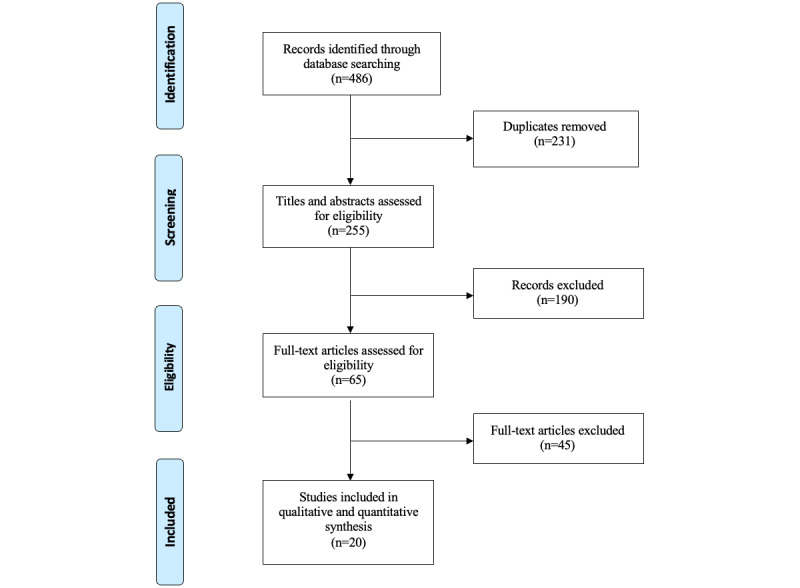
Background: Regular physical activity (PA) is crucial for well-being; however, healthy habits are difficult to create and maintain. Interventions delivered via conversational agents (eg, chatbots or virtual agents) are a novel and potentially accessible way to promote PA. Thus, it is important to understand the evolving landscape of research that uses conversational agents. Objective: This mixed methods systematic review aims to summarize the usability and effectiveness of conversational agents in promoting PA, describe common theories and intervention components used, and identify areas for further development. Methods: We conducted a mixed methods systematic review. We searched seven electronic databases (PsycINFO, PubMed, Embase, CINAHL, ACM Digital Library, Scopus, and Web of Science) for quantitative, qualitative, and mixed methods studies that conveyed primary research on automated conversational agents designed to increase PA. The studies were independently screened, and their methodological quality was assessed using the Mixed Methods Appraisal Tool by 2 reviewers. Data on intervention impact and effectiveness, treatment characteristics, and challenges were extracted and analyzed using parallel-results convergent synthesis and narrative summary. Results: In total, 255 studies were identified, 7.8% (20) of which met our inclusion criteria. The methodological quality of the studies was varied. Overall, conversational agents had moderate usability and feasibility. Those that were evaluated through randomized controlled trials were found to be effective in promoting PA. Common challenges facing interventions were repetitive program content, high attrition, technical issues, and safety and privacy concerns. Conclusions: Conversational agents hold promise for PA interventions. However, there is a lack of rigorous research on long-term intervention effectiveness and patient safety. Future interventions should be based on evidence-informed theories and treatment approaches and should address users’ desires for program variety, natural language processing, delivery via mobile devices, and safety and privacy concerns.
Overview
The claims and statistics of this paper haven’t been checked yet.
Free: it reads the open-access text and checks the first 5 claims that cite a source we can check. Create a free account to check every claim.
Integrity signals
Registry
Cites
Statistics
Figures
Verification
Claims the paper makes
The claims and statistics of this paper haven’t been checked yet.
Free: it reads the open-access text and checks the first 5 claims that cite a source we can check. Create a free account to check every claim.
Claims other papers make about this one
Each is checked against this paper’s own text: does it say what the citing paper says it does?
The source backs part of the claim, not all of it — or backs it for a different population, condition or comparison.
In the citing paper
“There are some studies using VUIs to support PA programs in other populations [30,34,35], but few studies have used VUIs to promote PA or reduce sedentary behavior among older adults.”
From Using Experience-Based Participatory Approach to Design Interactive Voice User Interfaces for Delivering Physical Activity Programs with Older Adults (2023) · cites this paper as [34]
Experimental — accuracy not yet measured
Self-check
Percentages, sums and reported differences re-computed from the paper’s own numbers.
The self-check needs the paper’s full text.
Citations
Cites
Preferred Reporting Items for Systematic Reviews and Meta-Analyses: the PRISMA statement
Moher, D., Liberati, A., Tetzlaff, J., Altman, D. G., & for the PRISMA Group (2009) · BMJ · doi:10.1136/bmj.b2535 · Cited by 83,823
Preferred Reporting Items for Systematic Reviews and Meta-Analyses: The PRISMA Statement
Moher, D., Liberati, A., Tetzlaff, J., Altman, D. G., & The PRISMA Group (2009) · PLoS Medicine · doi:10.1371/journal.pmed.1000097 · Cited by 64,042
Kytle, J., & Bandura, A. (1978) · Contemporary Sociology · doi:10.2307/2065952 · Cited by 25,422
A Theory of Cognitive Dissonance
Festinger, L. (1957) · doi:10.1515/9781503620766 · Cited by 24,241
Culture's Consequences: Comparing Values, Behaviors, Institutions, and Organizations across Nations
Bhagat, R. S., & Hofstede, G. (2002) · The Academy of Management Review · doi:10.2307/4134391 · Cited by 21,664
Wang, G., Ma, R., Qiao, G., Wada, K., Aizawa, Y., & Satoh, T. (2015) · Integrative Medicine International · doi:10.1159/000368408 · Cited by 18,657
Social Cognitive Theory: An Agentic Perspective
Bandura, A. (2001) · Annual Review of Psychology · doi:10.1146/annurev.psych.52.1.1 · Cited by 15,510
Pierce, W. D., & Bandura, A. (1977) · Canadian Journal of Sociology / Cahiers canadiens de sociologie · doi:10.2307/3340496 · Cited by 9,650
The Mixed Methods Appraisal Tool (MMAT) version 2018 for information professionals and researchers
Hong, Q. N., Fàbregues, S., Bartlett, G., Boardman, F., Cargo, M., Dagenais, P., Gagnon, M.-P., Griffiths, F., Nicolau, B., O’Cathain, A., et al. (2018) · Education for Information · doi:10.3233/efi-180221 · Cited by 4,737 · cited 2×
“Assigning studies an overall numerical score based on the ratings of each criterion is discouraged because a single number cannot provide insight into which aspects of the study methodology are problematic [26].”
Systematic reviews: CRD's guidance for undertaking reviews in health care
Tacconelli, E. (2010) · The Lancet Infectious Diseases · doi:10.1016/s1473-3099(10)70065-7 · Cited by 3,245 · cited 1×
“The formulation of the eligibility criteria was based on the PICOS (patient problem, intervention, comparison, outcomes, and studies) framework (Textbox 1) [25].”
Research works printed but not linked: 2
- 2018, Global Action Plan on Physical Activity 2018–2030: More Active People for a Healthier World
- Glanz, K, 2008, Health Behavior and Health Education: Theory, Research, and Practice. 4th Edition, 1
Cited by
Roles, Users, Benefits, and Limitations of Chatbots in Health Care: Rapid Review (Preprint)
Laymouna, M., Ma, Y., Lessard, D., Schuster, T., Engler, K., & Lebouché, B. (2024) · doi:10.2196/preprints.56930 · Cited by 302
Roles, Users, Benefits, and Limitations of Chatbots in Health Care: Rapid Review
Laymouna, M., Ma, Y., Lessard, D., Schuster, T., Engler, K., & Lebouché, B. (2024) · Journal of Medical Internet Research · doi:10.2196/56930 · Cited by 305
Systematic review and meta-analysis of the effectiveness of chatbots on lifestyle behaviours
Singh, B., Olds, T., Brinsley, J., Dumuid, D., Virgara, R., Matricciani, L., Watson, A., Szeto, K., Eglitis, E., Miatke, A., et al. (2023) · npj Digital Medicine · doi:10.1038/s41746-023-00856-1 · Cited by 224
Mair, J. L., Salamanca-Sanabria, A., Augsburger, M., Frese, B. F., Abend, S., Jakob, R., Kowatsch, T., & Haug, S. (2023) · Annals of Behavioral Medicine · doi:10.1093/abm/kaad041 · Cited by 140
Natural language processing in clinical neuroscience and psychiatry: A review
Crema, C., Attardi, G., Sartiano, D., & Redolfi, A. (2022) · Frontiers in Psychiatry · doi:10.3389/fpsyt.2022.946387 · Cited by 89
Vandelanotte, C., Trost, S., Hodgetts, D., Imam, T., Rashid, M., To, Q. G., & Maher, C. (2023) · Journal of Biomedical Informatics · doi:10.1016/j.jbi.2023.104435 · Cited by 62
GPTCoach: Towards LLM-Based Physical Activity Coaching
Jörke, M., Sapkota, S., Warkenthien, L., Vainio, N., Schmiedmayer, P., Brunskill, E., & Landay, J. A. (2025) · CHI Conference on Human Factors in Computing Systems · doi:10.1145/3706598.3713819 · Cited by 141
Kiuchi, K., Otsu, K., & Hayashi, Y. (2023) · Behaviour and Information Technology · doi:10.1080/0144929x.2023.2286528 · Cited by 62
“…2023; Whit-taker, Dobson, and Garner 2022; Zhang et al. 2020), coaching (Kramer et al. 2020; Tsiouris et al. 2020), per-sonalisation (Chew 2022; Kocaballi et al. 2019), and physical activity and weight loss (Luo et al. 2021; N oh et al. 2023), excluding nine reviews combined with other disciplines.”
AI Chatbots in Clinical Laboratory Medicine: Foundations and Trends
Yang, H. S., Wang, F., Greenblatt, M. B., Huang, X., & Zhang, Y. (2023) · Clinical Chemistry · doi:10.1093/clinchem/hvad106 · Cited by 56
Usability Testing of a Social Media Chatbot for Increasing Physical Activity Behavior
Larbi, D., Denecke, K., & Gabarron, E. (2022) · Journal of Personalized Medicine · doi:10.3390/jpm12050828 · Cited by 36
“[4], chatbots are effective in promoting physical activity among adults.”
BackgroundMethodMeyer, S., & Elsweiler, D. (2025) · International Journal of Human-Computer Studies · doi:10.1016/j.ijhcs.2025.103514 · Cited by 49
Giansanti, D. (2023) · Life · doi:10.3390/life13051130 · Cited by 29
“Luo et al. [64] examined the use of conversational agents in promoting physical activity (PA).”
BackgroundInfluentialA Formal Understanding of Computational Empathy in Interactive Agents
Brännström, A., Wester, J., & Nieves, J. C. (2022) · Cognitive Systems Research · doi:10.1016/j.cogsys.2023.101203 · Cited by 29
Conversational Physical Activity Coaches for Spanish and English Speaking Women: A User Design Study
Figueroa, C. A., Luo, T. C., Jacobo, A., Munoz, A., Manuel, M., Chan, D., Canny, J., & Aguilera, A. (2021) · Frontiers in Digital Health · doi:10.3389/fdgth.2021.747153 · Cited by 29
“Similarly, our previous review on conversational agents for physical activity identified only a handful of conversational agents for mobile delivery through apps and text messaging, and no Spanish conversational agents (15).”
BackgroundInfluentialSelf-citationImplementation of Chatbot Technology in Health Care: Protocol for a Bibliometric Analysis
Ni, Z., Peng, M. L., Balakrishnan, V., Tee, V., Azwa, I., Saifi, R. A., Nelson, L. E., Vlahov, D., & Altice, F. L. (2024) · JMIR Research Protocols · doi:10.2196/54349 · Cited by 26
“To fully realize the potential of chatbot technology in health care systems, more studies are needed to develop more sophisticated AI algorithms that are culturally tailored, theoretically informed, and trained based on clinical needs [18-21].”
Shade, M. Y., Yan, C., Jones, V. K., & Boron, J. A. B. (2024) · JMIR Formative Research · doi:10.2196/64763 · Cited by 23
“Their use has been explored for promoting behaviors such as physical activity and for health care support [6,7].”
Moore, R., Al-Tamimi, A.-K., & Freeman, E. (2023) · JMIR Formative Research · doi:10.2196/51571 · Cited by 19
“Systematic reviews have examined CA effectiveness in promoting PA, healthy eating, and weight loss [27,28].”
BackgroundMethodResultInfluentialWlasak, W., Zwanenburg, S. P., & Paton, C. (2022) · JMIR Formative Research · doi:10.2196/38500 · Cited by 19
“In addition, repetition of message content was mentioned as a downside of the interactions, which has been reported as an issue in other studies as well [15].”
MethodResultInfluentialDesai, S., Hu, X., Lundy, M., & Chin, J. (2023) · International Conference on Human-Agent Interaction · doi:10.1145/3623809.3623827 · Cited by 13
Уэтова, Е., Hederman, L., Ross, R., & O’Sullivan, D. M. (2024) · Digital Health · doi:10.1177/20552076241277693 · Cited by 17
“Existing reviews often restricted their focus to speci fi c health areas, such as mental health, 15 – 17 smoking cessation, 18 physical activity 19 or body weight management 20,21 ; population, e.g., young (25 years and younger), 17 or adults (18 years and older) 22 ; or agent types, e.g., embodied,…”
BackgroundWang, Q., Yang, W., Xu, K., & Lam, L. T.-M. (2025) · Digital Health · doi:10.1177/20552076251353731 · Cited by 22
A code-mixed task-oriented dialog dataset for medical domain
Dowlagar, S., & Mamidi, R. (2022) · Computer Speech & Language · doi:10.1016/j.csl.2022.101449 · Cited by 23
Tan, T. C., Roslan, N. E., Li, J. W., Xin-ying, Z., Chen, X., Ratnasari, & Santosa, A. (2023) · JMIR Formative Research · doi:10.2196/49239 · Cited by 16
Diño, M. J. S., Dion, K. W., Abadir, P. M., Budhathoki, C. B., Huang, C., Padula, W. V., Ong, I. L., Himmelfarb, C. D., Davidson, P. M., & Thiamwong, L. (2024) · Computers in Human Behavior · doi:10.1016/j.chb.2024.108507 · Cited by 14
“…the benefits of virtual coaches to aid patients such as older adults in attaining their health priorities while providing participatory and personalized content (Kocaballi et al., 2019) due to their automation and accessibility compared to physical coaches (Luo, Aguilera, Lyles, & Figueroa, 2021).”
Pimenta, N. M., Félix, I. B., Monteiro, D., Marques, M. M., & Guerreiro, M. P. (2022) · Frontiers in Psychology · doi:10.3389/fpsyg.2022.883354 · Cited by 13
Chen, J., Hu, R.-Z., Zhuang, Y.-X., Zhang, J.-Q., Shan, R., Yang, Y., & Liu, Z. (2025) · JMIR mhealth and uhealth · doi:10.2196/66403 · Cited by 20
“Some reviews [14,19,22] have reported the positive impacts of chatbots on physical activity behaviors.”
A virtual coach with more or less empathy: impact on older adults' engagement to exercise
Chauvin, R., Clavel, C., Sabouret, N., & Ravenet, B. (2023) · ACM International Conference on Intelligent Virtual Agents (IVA) · doi:10.1145/3570945.3607338 · Cited by 16
“In their meta-analysis, Luo et al. (2021) noticed considerable variability in agent design and evaluation.”
BackgroundVandelanotte, C., Hodgetts, D., Peiris, D. L. I. H. K., Karki, A., Maher, C. A., Imam, T., Rashid, M. M., To, Q. G., & Trost, S. G. (2024) · Applied Psychology Health and Well-Being · doi:10.1111/aphw.12594 · Cited by 7
Hybrid Virtual Coaching and Telemonitoring in COPD Management: The CAir Randomised Controlled Study
Kohlbrenner, D., Kühn, M., Kläy, A., Sievi, N. A., Muszyński, M., Ivankay, A., Gross, C., Asisof, A., Brunschwiler, T., & Clarenbach, C. F. (2024) · International Journal of COPD · doi:10.2147/copd.s487105 · Cited by 6
“35 However, this remains to be investigated in patients with COPD.”
Interactive AI Routines for Pain Symptoms and Loneliness in Older Adults
Shade, M. Y., Yan, C., Jones, V. K., & Boron, J. B. (2025) · Pain Management Nursing · doi:10.1016/j.pmn.2025.04.003 · Cited by 8
Montelaghi, A., Ciorciari, A. M., Roklicer, R., Jurak, G., & Carraro, A. (2025) · Artificial Intelligence Review · doi:10.1007/s10462-025-11361-0 · Cited by 7
“…features of conversational agents rather than on intervention outcomes (Yang et al. 2025), do not include systematic analysis (An et al. 2024), and many of these reviews are now outdated (Oh et al. 2021; Luo et al. 2021), having analyzed earlier forms of AI with less sophisticated capacities.”
Iwuagwu, A. O., Poon, A. W. C., & Fernandez, E. (2025) · Journal of Population Ageing · doi:10.1007/s12062-024-09474-5 · Cited by 5
“This categorization has been utilised previously to assess the quality of studies (Kalu et al., 2022; Luo et al., 2021).”
Ma, H., Cui, H., Yu, H., Pei, R., Li, S., Wang, A., Tang, X., Liu, G., & Piao, M. (2026) · Digital Health · doi:10.1177/20552076261421367 · Cited by 6
“29 This study follows the ethical principles and has received approval from the Peking Union Medical College (Ethics Approval Number: PUMCSON-2024 – 23).”
Lifset, E. T., Charles, K., Farcas, E., Weibel, N., Hogarth, M. A., Chen, C., Johnson, J. G., Draper, M., Nguyen, A. L., & Moore, A. A. (2023) · Gerontology and Geriatric Medicine · doi:10.1177/23337214231201138 · Cited by 10
“For this study, the original descriptive codes were extracted and two reviewers (de-identified for review purposes) independently assigned each code into categories corresponding to the 5Ms (Medication, Mentation, Mobility, Matters most and Multicomplexity) through an axial coding exercise.”
BackgroundInfluentialMethodological approaches applicable to patient-provider interaction analysis: A mini-review
Velasco, E. R., Pedersen, H. S., & Skinner, T. C. (2022) · Frontiers in Communication · doi:10.3389/fcomm.2022.1034427 · Cited by 7
Kalu, M. E., Okeke, C. O., Nwachukwu, E. C., Okoh, A. C., Akinrolie, O., Ezulike, J. C. D., Adandom, H. C., Onyeso, O. K., Egbumike, J., Olatunji, F. D., et al. (2022) · Journal of Global Health Economics and Policy · doi:10.52872/001c.36188 · Cited by 7
Weishaupt, I., Mages-Torluoglu, J., Kunze, C., Weidmann, C., Steinhausen, K., & Bailer, A. C. (2022) · JMIR Research Protocols · doi:10.2196/40321 · Cited by 6
“Moreover, conversational agents (CAs), computer programs that simulate conversations, are being increasingly used as DHIs [24], including behavior change apps to promote healthy eating [25] or physical activity [26].”
BackgroundAn application of Nightingale’s environmental theory in telenursing
Heo, D., Foli, K. J., & Hass, Z. (2025) · Nursing Outlook · doi:10.1016/j.outlook.2025.102422 · Cited by 4
Lim, S., Yang, Q., Meng, J., & Rains, S. A. (2025) · Behaviour and Information Technology · doi:10.1080/0144929x.2025.2567989 · Cited by 3
“…did not specific therapy or counselling strategies: Abd-Alrazaq, Safi et al. 2020; Gabarron et al. 2020; Hocking et al. 2023; Jabir et al. 2023; Luo et al. 2021; Milne-Ives et al. 2020; Montenegro, da Costa, and da Rosa Righi 2019; Pereira and Díaz 2019; Phiri and Munoriyarwa 2023; Provoost et…”
Choi, S., Seo, J., Hernandez, M. E., & Kitsiou, S. (2024) · Journal of Technology in Behavioral Science · doi:10.1007/s41347-024-00409-7 · Cited by 6
“This can be interpreted that tracking data daily on their current health status and health behaviors such as exercise and sleep may not be sufficient to achieve sustained improvements in physical activity and exercise (Luo et al., 2021).”
Laymouna, M. A., Ma, Y., Lessard, D., Engler, K., Therrien, R., Schuster, T., Vicente, S., Achiche, S., Haj, M. N. E., Lemire, B., et al. (2024) · Healthcare · doi:10.3390/healthcare12161661 · Cited by 9
“Chatbots that leverage artificial intelligence (AI) offer a promising solution to these challenges by facilitating the retrieval of medical information [20–23].”
BackgroundInterventions to promote well-being of nightshift nursing team members
Wyche, H., Weber, A., McNulty, T., Ruiz, M., Keller, S., Salmon, M. L., O'Donnell, S., Horner, J., Geiger-Brown, J. M., McLeese, R. W., et al. (2025) · Journal of Pediatric Nursing · doi:10.1016/j.pedn.2025.02.008 · Cited by 3
Large Language Model–Based Agents for Physical Activity and Cognitive Training: Scoping Review
Silacci, A., Giachetti, B., Angelini, L., Lopomo, N. F., Andreoni, G., Mugellini, E., Cherubini, M., & Caon, M. (2026) · JMIR AI · doi:10.2196/80123 · Cited by 2
“These studies highlighted several recurring limitations, including conversational rigidity, shallow personalization, limited contextual awareness, and repetitive or unnatural dialogue patterns [1,19].”
Feasibility and usability of a ChatGPT-based app to support physical activity: A pilot study
Larbi, D., Zanaboni, P., Årsand, E., Randine, P., Trondsen, M. V., Denecke, K., Wynn, R., & Gabarrón, E. (2026) · Digital Health · doi:10.1177/20552076261417860 · Cited by 4
“9,10,48 Interestingly, in our study, participants reported increased activity over time despite disengagement with the app.”
An Exploration of Swedish Adolescents’ Experiences of Mobile Apps for Physical Activity
Olander, A., Wilhelmsson, J., Davis, P., Gomes, L., Pereira, H. V., Teixeira, D., & Nyström, M. B. T. (2024) · Psihologijske teme · doi:10.31820/pt.33.1.5 · Cited by 2
“The psychological need of relatedness can be satisfied through interactions with other people in apps as well as internet bots (Luo et al., 2021).”
BackgroundKim, S. J., Swanson, V. A., Collier, G. H., Rabinowitz, A. R., Zondervan, D. K., & Reinkensmeyer, D. J. (2024) · IEEE Transactions on Neural Systems and Rehabilitation Engineering · doi:10.1109/tnsre.2024.3428915 · Cited by 5
“While conversational agents have been developed and tested for a wide variety of medical applications [49], little work has been done for people with stroke in the context of home exercise [50], [51].”
BackgroundSecurity and Privacy in Physical Activity Chatbots on Social Media: A Scoping Review
Larbi, D., Gabarrón, E., Zanaboni, P., Wynn, R., Årsand, E., & Denecke, K. (2024) · Studies in health technology and informatics · doi:10.3233/shti240809 · Cited by 2
Larbi, D., Sandsdalen, H., Gabarrón, E., Årsand, E., & Henriksen, A. (2022) · Linköping electronic conference proceedings · doi:10.3384/ecp187020 · Cited by 2
“In healthcare, chatbots have been used to promote health information, reproductive health, healthy diet, weight loss, mental health, and physical activity [3, 11, 12].”
BackgroundMethodResultInfluentialAbaraogu, U. O., Dall, P., Seenan, C., Rhodes, S., Gorely, T., McParland, J. L., Brittenden, J., Anieto, E. M., Booth, L., Gormal, C., et al. (2025) · Health Technology Assessment · doi:10.3310/zbng5240 · Cited by 1
Artificial Intelligence (AI) in Patient–Healthcare Relationships: Psychosocial Perspective
Saikia, M. J., & Borthakur, D. (2025) · IEEE Access · doi:10.1109/access.2025.3611818 · Cited by 3
Vandelanotte, C., Trost, S. G., Hodgetts, D., Imam, T., Rashid, M. M., To, Q. G., & Maher, C. A. (2025) · Trials · doi:10.1186/s13063-025-08926-3 · Cited by 4
“There are several strengths to this trial; for example, our trial will have more participants and measure intervention outcomes over a longer period than most comparable interventions in this space [18–21].”
Wlasak, W., Zwanenburg, S. P., & Paton, C. (2022) · doi:10.2196/preprints.38500
Tan, T. C., Roslan, N. E., Li, J. W., Zou, X., Chen, X., Ratnasari, R., & Santosa, A. (2023) · doi:10.2196/preprints.49239
La salud mental en los estudiantes de secundaria durante la pandemia
Baluis, W. L. R., & la Rosa, K. K. R. D. (2023) · Horizontes Revista de Investigación en Ciencias de la Educación · doi:10.33996/revistahorizontes.v7i28.571 · Cited by 4
Evaluating Older Adults’ Engagement and Usability with AI Driven Interventions (Preprint)Preprint
Shade, M. Y., Yan, C., Jones, V., & Boron, J. A. B. (2024) · doi:10.2196/preprints.64763
Kalu, M. E., Okeke, C. O., Nwachukwu, E. C., Okoh, A., Akinrolie, O., Ezulike, C., Adandom, H., Onyeso, O. K., Egbumike, J., Olatunji, F. D., et al. (2022) · Journal of Global Health Economics and Policy · doi:10.7189/001c.36188
SmartWalkCoach: An AI Companion for End-to-End Walking Guidance, Motivation, and Reflection
Zhang, X., Hu, M., Xue, B., Purwanto, E., Selig, T., & Yonto, D. (2026) · ACM International Conference on Intelligent User Interfaces (IUI) · doi:10.1145/3742413.3789170
“The AccompanyAgent brings in-situ companionship with contextualized motivational encouragement and map information prompts [54, 64].”
Jiang, Q., Chen, X. S., Patel, D., Brazendale, K., & Alejandro, S. (2026) · doi:10.2196/preprints.98889
How AI coach voice anthropomorphism influences exercise adherence: A PLS-SEM and fsQCA analysis
Li, C., & Shi, Y. (2026) · Acta Psychologica · doi:10.1016/j.actpsy.2026.107032
Mantena, S., Johnson, A., Schütz, N., Tolas, A., Montalvo, S., Delgado-SanMartin, J., Ramírez‐Posada, M., Du, L., Zhang, S., Huynh, A. D., et al. (2026) · medRxiv · doi:10.64898/2026.05.26.26354165
PhysB: a framework for designing conversational agents to support physical activity in adolescents
Moore, R., Al-Tamimi, A.-K., & Lazuras, L. (2026) · Journal of Health Population and Nutrition · doi:10.1186/s41043-026-01254-5
“Such novel digital solutions include CAs that have emerged as promising self-help tools to promote and provide support to increase or maintain PA levels [24, 25].”
Zhang, S. S., Hassan, N. C., Hassan, R., & Wang, C. (2025) · The Pertanika Journal of Learning Pedagogy and Educational Leadership · doi:10.47836/pjlpel.1.1.04
Jiang, Q., Chen, X. S., Patel, D., Brazendale, K., & Alejandro, S. (2026) · JMIR Pediatrics and Parenting · doi:10.2196/98889
“Previous reviews have examined conversational agents in health care broadly, chatbot-supported lifestyle interventions across age groups, or the feasibility and acceptability of chatbots for nutrition and PA promotion among adolescents [10,12,13].”
InfluentialBeyond speed and professionalism: Evidence from a discrete choice experiment on AI coach preferences
Sun, Y., & Hou, Z. (2026) · Journal of Retailing and Consumer Services · doi:10.1016/j.jretconser.2026.104960 · Cited by 1
Patient-Engaged AI: The Nursing Path to Health Equity
Milo, R. B., Etland, C., Martínez, N., Scott, S., Leon, C. D., Calero, P., Nibbelink, C. W., Georges, J. M., & Connelly, C. D. (2026) · SAGE Open Nursing · doi:10.1177/23779608261466379
“PEAI communication about chronic conditions is especially valued, particularly when health services are not readily available (Kocaballi et al., 2019; Luo et al., 2021; Otero-González et al., 2024; Vaidyam et al., 2019).”
Jauhiainen, S., & Saarela, M. (2026) · doi:10.2196/preprints.106488
Li, S., Liang, K.-H., Shahriar, S., Ye, Y., Goetsu, S., Du, W., Yoshida, M., Ohwa, T., Xu, X., & Yu, Z. (2026) · ACM Conference on Conversational User Interfaces (CUI) · doi:10.1145/3816046.3816277
“Nowadays, as LLMs shift the interaction paradigm, current research still focuses only on the initial consultation session in their design, neglecting sustained engagement and adherence [24].”
Zoubi, F. A., & Shakimbekov, R. (2026) · Lecture notes in computer science · doi:10.1007/978-981-92-6916-7_16
Metadata
- Authors
- Luo, T. C., Aguilera, A., Lyles, C. R., & Figueroa, C. A.
- Affiliations
- University of California, Berkeley (US)
- San Francisco General Hospital (US)
- Corresponding author
- Luo, Tiffany Christina
- Venue
- Journal of Medical Internet Research
- Publisher
- JMIR Publications Inc.
- Published
- 2021-09-14
- Volume
- 23
- Issue
- 9
- Pages
- e25486
- ISSN
- 1438-8871 (ISSN-L)
- PMC
- PMC8479596
- OpenAlex
- W3199811663
- Cited by
- 68
- References
- 54
- Citations by year
- 2026: 14 · 2025: 14 · 2024: 13 · 2023: 13 · 2022: 12 · 2021: 2
- FWCI
- 2.07
- Type
- journal article
- Language
- en
- Open access
- gold
- doi.org
- Licence
- cc-by
- Locations
- Journal of Medical Internet Research (publishedVersion, cc-by)
- PubMed Central (publishedVersion, cc-by)
- PubMed (publishedVersion)
- DOAJ (DOAJ: Directory of Open Access Journals) (submittedVersion)
- Topics
- Health Sciences › Health Professions › General Health Professions › Mobile Health and mHealth Applications
- Social Sciences › Psychology › Applied Psychology › Digital Mental Health Interventions
- Health Sciences › Medicine › Public Health, Environmental and Occupational Health › Physical Activity and Health
- Keywords
- chatbots, virtual agents, physical activity promotion, physical activity interventions, usability, intervention effectiveness, attrition, privacy concerns, natural language processing, mobile health, behaviour change theory
- MeSH terms
- Communication, Delivery of Health Care, Humans, Natural Language Processing, Exercise, Computers, Handheld
About these checks
Registry, retraction, Cites and statistics results are computed, not judged, with one exception: a printed reference that no index lists is read once by a model before it counts as a citation error. Claims are extracted by a model and kept only when their quote appears verbatim in the text; each cited source is then checked, with a model’s help, for whether it says what the claim relies on. Those verdicts can be wrong — read the claim’s quote and the cited source before relying on one.
Statistics and arithmetic are recomputed, not judged.
Confidence bands are shown only for fields calibrated on our annotated test set. None is calibrated yet, so no band is shown.
What counts as a claim ›How we measure confidence ›How we check this ›
Are you an author, or do you see a problem with this page? Request a review
Data sources
Bibliographic data: Semantic Scholar, OpenAlex, Crossref.
Contains information from the Semantic Scholar Academic Graph Datasets, made available under the ODC Attribution License (ODC-BY 1.0).
Semantic Scholar’s data is described in: Kinney, R., et al. (2023). The Semantic Scholar Open Data Platform. arXiv:2301.10140.
