

Promoting Physical Activity Through Conversational Agents: Mixed Methods Systematic Review
Open accessPublished version of a preprint
The DOI matches its Crossref record; 55 of the 55 references it cites were found in a registry or an index.
Abstract
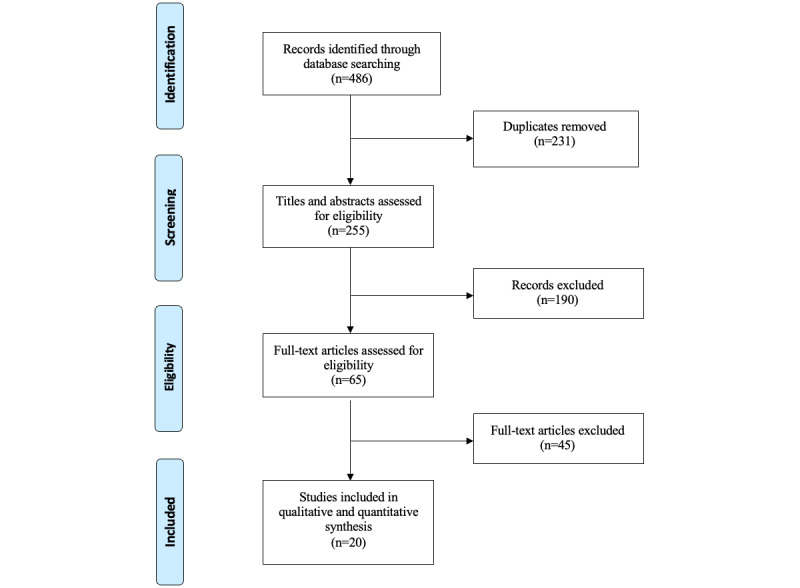
Background: Regular physical activity (PA) is crucial for well-being; however, healthy habits are difficult to create and maintain. Interventions delivered via conversational agents (eg, chatbots or virtual agents) are a novel and potentially accessible way to promote PA. Thus, it is important to understand the evolving landscape of research that uses conversational agents. Objective: This mixed methods systematic review aims to summarize the usability and effectiveness of conversational agents in promoting PA, describe common theories and intervention components used, and identify areas for further development. Methods: We conducted a mixed methods systematic review. We searched seven electronic databases (PsycINFO, PubMed, Embase, CINAHL, ACM Digital Library, Scopus, and Web of Science) for quantitative, qualitative, and mixed methods studies that conveyed primary research on automated conversational agents designed to increase PA. The studies were independently screened, and their methodological quality was assessed using the Mixed Methods Appraisal Tool by 2 reviewers. Data on intervention impact and effectiveness, treatment characteristics, and challenges were extracted and analyzed using parallel-results convergent synthesis and narrative summary. Results: In total, 255 studies were identified, 7.8% (20) of which met our inclusion criteria. The methodological quality of the studies was varied. Overall, conversational agents had moderate usability and feasibility. Those that were evaluated through randomized controlled trials were found to be effective in promoting PA. Common challenges facing interventions were repetitive program content, high attrition, technical issues, and safety and privacy concerns. Conclusions: Conversational agents hold promise for PA interventions. However, there is a lack of rigorous research on long-term intervention effectiveness and patient safety. Future interventions should be based on evidence-informed theories and treatment approaches and should address users’ desires for program variety, natural language processing, delivery via mobile devices, and safety and privacy concerns.
Overview
The claims and statistics of this paper haven’t been checked yet.
Free: it reads the open-access text and checks the first 5 claims that cite a source we can check. Create a free account to check every claim.
Integrity signals
Registry
Cites
Statistics
Figures
Verification
Claims the paper makes
The claims and statistics of this paper haven’t been checked yet.
Free: it reads the open-access text and checks the first 5 claims that cite a source we can check. Create a free account to check every claim.
Claims other papers make about this one
Each is checked against this paper’s own text: does it say what the citing paper says it does?
The source backs part of the claim, not all of it — or backs it for a different population, condition or comparison.
In the citing paper
“There are some studies using VUIs to support PA programs in other populations [30,34,35], but few studies have used VUIs to promote PA or reduce sedentary behavior among older adults.”
From Using Experience-Based Participatory Approach to Design Interactive Voice User Interfaces for Delivering Physical Activity Programs with Older Adults (2023) · cites this paper as [34]
Experimental — accuracy not yet measured
Self-check
Percentages, sums and reported differences re-computed from the paper’s own numbers.
The self-check needs the paper’s full text.
Citations
Cites
Preferred Reporting Items for Systematic Reviews and Meta-Analyses: the PRISMA statement
Moher, D., Liberati, A., Tetzlaff, J., Altman, D. G., & for the PRISMA Group (2009) · BMJ · doi:10.1136/bmj.b2535 · Cited by 83,823
Preferred Reporting Items for Systematic Reviews and Meta-Analyses: The PRISMA Statement
Moher, D., Liberati, A., Tetzlaff, J., Altman, D. G., & The PRISMA Group (2009) · PLoS Medicine · doi:10.1371/journal.pmed.1000097 · Cited by 64,042
Kytle, J., & Bandura, A. (1978) · Contemporary Sociology · doi:10.2307/2065952 · Cited by 25,422
A Theory of Cognitive Dissonance
Festinger, L. (1957) · doi:10.1515/9781503620766 · Cited by 24,241
Culture's Consequences: Comparing Values, Behaviors, Institutions, and Organizations across Nations
Bhagat, R. S., & Hofstede, G. (2002) · The Academy of Management Review · doi:10.2307/4134391 · Cited by 21,664
Wang, G., Ma, R., Qiao, G., Wada, K., Aizawa, Y., & Satoh, T. (2015) · Integrative Medicine International · doi:10.1159/000368408 · Cited by 18,657
Social Cognitive Theory: An Agentic Perspective
Bandura, A. (2001) · Annual Review of Psychology · doi:10.1146/annurev.psych.52.1.1 · Cited by 15,510
Pierce, W. D., & Bandura, A. (1977) · Canadian Journal of Sociology / Cahiers canadiens de sociologie · doi:10.2307/3340496 · Cited by 9,650
The Mixed Methods Appraisal Tool (MMAT) version 2018 for information professionals and researchers
Hong, Q. N., Fàbregues, S., Bartlett, G., Boardman, F., Cargo, M., Dagenais, P., Gagnon, M.-P., Griffiths, F., Nicolau, B., O’Cathain, A., et al. (2018) · Education for Information · doi:10.3233/efi-180221 · Cited by 4,737 · cited 2×
“Assigning studies an overall numerical score based on the ratings of each criterion is discouraged because a single number cannot provide insight into which aspects of the study methodology are problematic [26].”
Systematic reviews: CRD's guidance for undertaking reviews in health care
Tacconelli, E. (2010) · The Lancet Infectious Diseases · doi:10.1016/s1473-3099(10)70065-7 · Cited by 3,245 · cited 1×
“The formulation of the eligibility criteria was based on the PICOS (patient problem, intervention, comparison, outcomes, and studies) framework (Textbox 1) [25].”
Research works printed but not linked: 2
- 2018, Global Action Plan on Physical Activity 2018–2030: More Active People for a Healthier World
- Glanz, K, 2008, Health Behavior and Health Education: Theory, Research, and Practice. 4th Edition, 1
Cited by
Roles, Users, Benefits, and Limitations of Chatbots in Health Care: Rapid Review (Preprint)
Laymouna, M., Ma, Y., Lessard, D., Schuster, T., Engler, K., & Lebouché, B. (2024) · doi:10.2196/preprints.56930 · Cited by 302
Roles, Users, Benefits, and Limitations of Chatbots in Health Care: Rapid Review
Laymouna, M., Ma, Y., Lessard, D., Schuster, T., Engler, K., & Lebouché, B. (2024) · Journal of Medical Internet Research · doi:10.2196/56930 · Cited by 305
Systematic review and meta-analysis of the effectiveness of chatbots on lifestyle behaviours
Singh, B., Olds, T., Brinsley, J., Dumuid, D., Virgara, R., Matricciani, L., Watson, A., Szeto, K., Eglitis, E., Miatke, A., et al. (2023) · npj Digital Medicine · doi:10.1038/s41746-023-00856-1 · Cited by 224
Mair, J. L., Salamanca-Sanabria, A., Augsburger, M., Frese, B. F., Abend, S., Jakob, R., Kowatsch, T., & Haug, S. (2023) · Annals of Behavioral Medicine · doi:10.1093/abm/kaad041 · Cited by 140
Natural language processing in clinical neuroscience and psychiatry: A review
Crema, C., Attardi, G., Sartiano, D., & Redolfi, A. (2022) · Frontiers in Psychiatry · doi:10.3389/fpsyt.2022.946387 · Cited by 89
Metadata
- Authors
- Luo, T. C., Aguilera, A., Lyles, C. R., & Figueroa, C. A.
- Affiliations
- University of California, Berkeley (US)
- San Francisco General Hospital (US)
- Corresponding author
- Luo, Tiffany Christina
- Venue
- Journal of Medical Internet Research
- Publisher
- JMIR Publications Inc.
- Published
- 2021-09-14
- Volume
- 23
- Issue
- 9
- Pages
- e25486
- ISSN
- 1438-8871 (ISSN-L)
- PMC
- PMC8479596
- OpenAlex
- W3199811663
- Cited by
- 68
- References
- 54
- Citations by year
- 2026: 14 · 2025: 14 · 2024: 13 · 2023: 13 · 2022: 12 · 2021: 2
- FWCI
- 2.07
- Type
- journal article
- Language
- en
- Open access
- gold
- doi.org
- Licence
- cc-by
- Locations
- Journal of Medical Internet Research (publishedVersion, cc-by)
- PubMed Central (publishedVersion, cc-by)
- PubMed (publishedVersion)
- DOAJ (DOAJ: Directory of Open Access Journals) (submittedVersion)
- Topics
- Health Sciences › Health Professions › General Health Professions › Mobile Health and mHealth Applications
- Social Sciences › Psychology › Applied Psychology › Digital Mental Health Interventions
- Health Sciences › Medicine › Public Health, Environmental and Occupational Health › Physical Activity and Health
- Keywords
- chatbots, virtual agents, physical activity promotion, physical activity interventions, usability, intervention effectiveness, attrition, privacy concerns, natural language processing, mobile health, behaviour change theory
- MeSH terms
- Communication, Delivery of Health Care, Humans, Natural Language Processing, Exercise, Computers, Handheld
About these checks
Registry, retraction, Cites and statistics results are computed, not judged, with one exception: a printed reference that no index lists is read once by a model before it counts as a citation error. Claims are extracted by a model and kept only when their quote appears verbatim in the text; each cited source is then checked, with a model’s help, for whether it says what the claim relies on. Those verdicts can be wrong — read the claim’s quote and the cited source before relying on one.
Statistics and arithmetic are recomputed, not judged.
Confidence bands are shown only for fields calibrated on our annotated test set. None is calibrated yet, so no band is shown.
What counts as a claim ›How we measure confidence ›How we check this ›
Are you an author, or do you see a problem with this page? Request a review
Data sources
Bibliographic data: Semantic Scholar, OpenAlex, Crossref.
Contains information from the Semantic Scholar Academic Graph Datasets, made available under the ODC Attribution License (ODC-BY 1.0).
Semantic Scholar’s data is described in: Kinney, R., et al. (2023). The Semantic Scholar Open Data Platform. arXiv:2301.10140.
