

Promoting Physical Activity Through Conversational Agents: Mixed Methods Systematic Review
Open accessPublished version of a preprint
The DOI matches its Crossref record; 55 of the 55 references it cites were found in a registry or an index.
Abstract
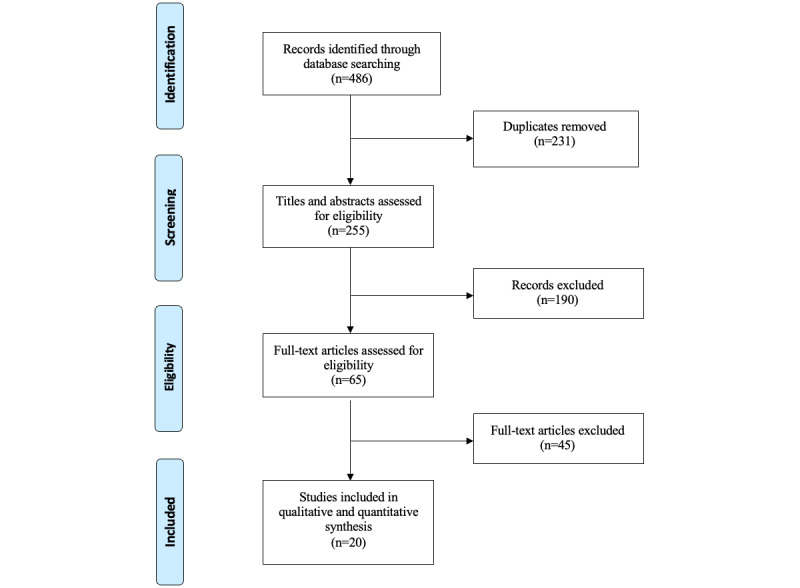
Background: Regular physical activity (PA) is crucial for well-being; however, healthy habits are difficult to create and maintain. Interventions delivered via conversational agents (eg, chatbots or virtual agents) are a novel and potentially accessible way to promote PA. Thus, it is important to understand the evolving landscape of research that uses conversational agents. Objective: This mixed methods systematic review aims to summarize the usability and effectiveness of conversational agents in promoting PA, describe common theories and intervention components used, and identify areas for further development. Methods: We conducted a mixed methods systematic review. We searched seven electronic databases (PsycINFO, PubMed, Embase, CINAHL, ACM Digital Library, Scopus, and Web of Science) for quantitative, qualitative, and mixed methods studies that conveyed primary research on automated conversational agents designed to increase PA. The studies were independently screened, and their methodological quality was assessed using the Mixed Methods Appraisal Tool by 2 reviewers. Data on intervention impact and effectiveness, treatment characteristics, and challenges were extracted and analyzed using parallel-results convergent synthesis and narrative summary. Results: In total, 255 studies were identified, 7.8% (20) of which met our inclusion criteria. The methodological quality of the studies was varied. Overall, conversational agents had moderate usability and feasibility. Those that were evaluated through randomized controlled trials were found to be effective in promoting PA. Common challenges facing interventions were repetitive program content, high attrition, technical issues, and safety and privacy concerns. Conclusions: Conversational agents hold promise for PA interventions. However, there is a lack of rigorous research on long-term intervention effectiveness and patient safety. Future interventions should be based on evidence-informed theories and treatment approaches and should address users’ desires for program variety, natural language processing, delivery via mobile devices, and safety and privacy concerns.
Overview
The claims and statistics of this paper haven’t been checked yet.
Free: it reads the open-access text and checks the first 5 claims that cite a source we can check. Create a free account to check every claim.
Integrity signals
Registry
Cites
Statistics
Figures
Verification
Claims the paper makes
The claims and statistics of this paper haven’t been checked yet.
Free: it reads the open-access text and checks the first 5 claims that cite a source we can check. Create a free account to check every claim.
Claims other papers make about this one
Each is checked against this paper’s own text: does it say what the citing paper says it does?
The source backs part of the claim, not all of it — or backs it for a different population, condition or comparison.
In the citing paper
“There are some studies using VUIs to support PA programs in other populations [30,34,35], but few studies have used VUIs to promote PA or reduce sedentary behavior among older adults.”
From Using Experience-Based Participatory Approach to Design Interactive Voice User Interfaces for Delivering Physical Activity Programs with Older Adults (2023) · cites this paper as [34]
Experimental — accuracy not yet measured
Self-check
Percentages, sums and reported differences re-computed from the paper’s own numbers.
The self-check needs the paper’s full text.
Citations
Cites
Preferred Reporting Items for Systematic Reviews and Meta-Analyses: the PRISMA statement
Moher, D., Liberati, A., Tetzlaff, J., Altman, D. G., & for the PRISMA Group (2009) · BMJ · doi:10.1136/bmj.b2535 · Cited by 83,823
Preferred Reporting Items for Systematic Reviews and Meta-Analyses: The PRISMA Statement
Moher, D., Liberati, A., Tetzlaff, J., Altman, D. G., & The PRISMA Group (2009) · PLoS Medicine · doi:10.1371/journal.pmed.1000097 · Cited by 64,042
Kytle, J., & Bandura, A. (1978) · Contemporary Sociology · doi:10.2307/2065952 · Cited by 25,422
A Theory of Cognitive Dissonance
Festinger, L. (1957) · doi:10.1515/9781503620766 · Cited by 24,241
Culture's Consequences: Comparing Values, Behaviors, Institutions, and Organizations across Nations
Bhagat, R. S., & Hofstede, G. (2002) · The Academy of Management Review · doi:10.2307/4134391 · Cited by 21,664
Wang, G., Ma, R., Qiao, G., Wada, K., Aizawa, Y., & Satoh, T. (2015) · Integrative Medicine International · doi:10.1159/000368408 · Cited by 18,657
Social Cognitive Theory: An Agentic Perspective
Bandura, A. (2001) · Annual Review of Psychology · doi:10.1146/annurev.psych.52.1.1 · Cited by 15,510
Pierce, W. D., & Bandura, A. (1977) · Canadian Journal of Sociology / Cahiers canadiens de sociologie · doi:10.2307/3340496 · Cited by 9,650
The Mixed Methods Appraisal Tool (MMAT) version 2018 for information professionals and researchers
Hong, Q. N., Fàbregues, S., Bartlett, G., Boardman, F., Cargo, M., Dagenais, P., Gagnon, M.-P., Griffiths, F., Nicolau, B., O’Cathain, A., et al. (2018) · Education for Information · doi:10.3233/efi-180221 · Cited by 4,737 · cited 2×
“Assigning studies an overall numerical score based on the ratings of each criterion is discouraged because a single number cannot provide insight into which aspects of the study methodology are problematic [26].”
Systematic reviews: CRD's guidance for undertaking reviews in health care
Tacconelli, E. (2010) · The Lancet Infectious Diseases · doi:10.1016/s1473-3099(10)70065-7 · Cited by 3,245 · cited 1×
“The formulation of the eligibility criteria was based on the PICOS (patient problem, intervention, comparison, outcomes, and studies) framework (Textbox 1) [25].”
Festinger, L. (1962) · Scientific American · doi:10.1038/scientificamerican1062-93 · Cited by 1,421
Conversational agents in healthcare: a systematic review
Laranjo, L., Dunn, A. G., Tong, H. L., Kocaballi, A. B., Chen, J., Bashir, R., Surian, D., Gallego, B., Magrabi, F., Lau, A. Y. S., et al. (2018) · Journal of the American Medical Informatics Association · doi:10.1093/jamia/ocy072 · Cited by 1,388 · cited 1×
“…other reviews’ evaluations of health care conversational agents, which show that natural language processing and machine learning are underused, high-quality evidence and attention to patient safety are lacking, and study methods and evaluation measures are often inconsistently reported [8,20,21].”
Pace, R., Pluye, P., Bartlett, G., Macaulay, A. C., Salsberg, J., Jagosh, J., & Seller, R. (2012) · International Journal of Nursing Studies · doi:10.1016/j.ijnurstu.2011.07.002 · Cited by 1,331 · cited 1×
“The MMAT is a valid, reliable, and efficient tool that allows the simultaneous appraisal of qualitative, quantitative, and mixed methods studies [27].”
Schoeppe, S., Alley, S., Van Lippevelde, W., Bray, N. A., Williams, S. L., Duncan, M. J., & Vandelanotte, C. (2016) · International Journal of Behavioral Nutrition and Physical Activity · doi:10.1186/s12966-016-0454-y · Cited by 949
Evaluating Digital Health Interventions
Murray, E., Hekler, E. B., Andersson, G., Collins, L. M., Doherty, A., Hollis, C., Rivera, D. E., West, R., & Wyatt, J. C. (2016) · American Journal of Preventive Medicine · doi:10.1016/j.amepre.2016.06.008 · Cited by 847 · cited 1×
“Therefore, innovative interventions are required to increase PA. Recently, there has been an increase in digital health interventions that promote healthy lifestyle changes through technologies such as smartphone apps, web-based programs, and text messages [3].”
Hong, Q. N., Pluye, P., Bujold, M., & Wassef, M. (2017) · Systematic Reviews · doi:10.1186/s13643-017-0454-2 · Cited by 754 · cited 2×
“Instead, data were analyzed using parallel-results convergent synthesis, which allows qualitative and quantitative evidence to be synthesized concurrently, without data transformation [29].”
Making health habitual: the psychology of ‘habit-formation’ and general practice
Gardner, B., Lally, P., & Wardle, J. (2012) · British Journal of General Practice · doi:10.3399/bjgp12x659466 · Cited by 591 · cited 1×
“…change theories Bickmore et al [31], Kramer et al [38] Behavior change theory (broad) [51] Piao et al [41], Vainio et al [44] Habit formation model [52] Fadhil et al [34] Health action process approach [53] Bickmore et al [30,31], Olafsson et al [40], Sillice et al [42] Transtheoretical model [54]…”
Conversational Agents in Health Care: Scoping Review and Conceptual Analysis
Tudor Car, L., Dhinagaran, D. A., Kyaw, B. M., Kowatsch, T., Joty, S., Theng, Y.-L., & Atun, R. (2020) · Journal of Medical Internet Research · doi:10.2196/17158 · Cited by 553 · cited 2×
“…other reviews’ evaluations of health care conversational agents, which show that natural language processing and machine learning are underused, high-quality evidence and attention to patient safety are lacking, and study methods and evaluation measures are often inconsistently reported [8,20,21].”
Learning Theory and Online Technologies
Harasim, L. (2017) · Routledge eBooks · doi:10.4324/9781315716831 · Cited by 540
Learning Theory and Online Technologies
Harasim, L. (2012) · Routledge eBooks · doi:10.4324/9780203846933 · Cited by 510
Noyes, J., Booth, A., Moore, G., Flemming, K., Tunçalp, Ö., & Shakibazadeh, E. (2019) · BMJ Global Health · doi:10.1136/bmjgh-2018-000893 · Cited by 497
Establishing the computer-patient working alliance in automated health behavior change interventions
Bickmore, T., Gruber, A., & Picard, R. (2005) · Patient Education and Counseling · doi:10.1016/j.pec.2004.09.008 · Cited by 494 · cited 7×
“%) mentioned a theory as their overarching framework but did not explicitly link intervention components with corresponding theoretical constructs [13,30,31,34,42].”
InfluentialCan smartphone apps increase physical activity? Systematic review and meta-analysis
Romeo, A., Edney, S., Plotnikoff, R., Curtis, R., Ryan, J., Sanders, I., Crozier, A., & Maher, C. (2019) · Journal of Medical Internet Research · doi:10.2196/12053 · Cited by 487 · cited 3×
“Systematic and scoping reviews have been conducted on the use of digital interventions to increase PA [15-18] and the use of conversational agents in health care [8,19-21].”
How to Overcome Health-Compromising Behaviors: The Health Action Process Approach
Schwarzer, R., & Luszczynska, A. (2008) · European Psychologist · doi:10.1027/1016-9040.13.2.141 · Cited by 424 · cited 1×
“…Behavior change theory (broad) [51] Piao et al [41], Vainio et al [44] Habit formation model [52] Fadhil et al [34] Health action process approach [53] Bickmore et al [30,31], Olafsson et al [40], Sillice et al [42] Transtheoretical model [54] Other Zhou et al [46] Hofstede’s cultural dimensions…”
The transtheoretical model: applications to exercise behavior
MARCUS, B. H., & SIMKIN, L. R. (1994) · Medicine & Science in Sports & Exercise · doi:10.1249/00005768-199411000-00016 · Cited by 410 · cited 1×
“…change theory (broad) [51] Piao et al [41], Vainio et al [44] Habit formation model [52] Fadhil et al [34] Health action process approach [53] Bickmore et al [30,31], Olafsson et al [40], Sillice et al [42] Transtheoretical model [54] Other Zhou et al [46] Hofstede’s cultural dimensions theory [55]”
'It's just like you talk to a friend': relational agents for older adults
Bickmore, T. W., Caruso, L., Clough-Gorr, K., & Heeren, T. (2005) · Interacting with Computers · doi:10.1016/j.intcom.2005.09.002 · Cited by 341 · cited 10×
“%) were computer-based [12-14,30-32 30-32,35,36,40 In total, of the 17 agents, 8 (47”
InfluentialDireito, A., Carraça, E., Rawstorn, J., Whittaker, R., & Maddison, R. (2017) · Annals of Behavioral Medicine · doi:10.1007/s12160-016-9846-0 · Cited by 337 · cited 2×
“Systematic and scoping reviews have been conducted on the use of digital interventions to increase PA [15-18] and the use of conversational agents in health care [8,19-21].”
The Personalization of Conversational Agents in Health Care: Systematic Review
Kocaballi, A. B., Berkovsky, S., Quiroz, J. C., Laranjo, L., Tong, H. L., Rezazadegan, D., Briatore, A., & Coiera, E. (2019) · Journal of Medical Internet Research · doi:10.2196/15360 · Cited by 332 · cited 5×
“…other reviews’ evaluations of health care conversational agents, which show that natural language processing and machine learning are underused, high-quality evidence and attention to patient safety are lacking, and study methods and evaluation measures are often inconsistently reported [8,20,21].”
InfluentialA randomized controlled trial of an automated exercise coach for older adults
Bickmore, T. W., Silliman, R. A., Nelson, K., Cheng, D. M., Winter, M., Henault, L., & Paasche‐Orlow, M. K. (2013) · Journal of the American Geriatrics Society · doi:10.1111/jgs.12449 · Cited by 305 · cited 7×
“…daily walking more quickly [31], achieved >30 minutes of exercise or 10,000 steps per day more times per week [13], significantly increased step count during the study period [12,32], significantly increased self-reported PA at 1 month [35], and maintained step counts throughout time [45].”
InfluentialMuellmann, S., Forberger, S., Möllers, T., Bröring, E., Zeeb, H., & Pischke, C. R. (2018) · Preventive Medicine · doi:10.1016/j.ypmed.2017.12.026 · Cited by 254 · cited 1×
“Our results are consistent with their findings that digital interventions have a modest effect on activity levels, particularly in the short term; however, user engagement tends to decline over time [16-18].”
Reflection Companion: A Conversational System for Engaging Users in Reflection on Physical Activity
Kocielnik, R., Xiao, L., Avrahami, D., & Hsieh, G. (2018) · Proceedings of the ACM on Interactive, Mobile, Wearable and Ubiquitous Technologies · doi:10.1145/3214273 · Cited by 221
Bendig, E., Erb, B., Schulze-Thuesing, L., & Baumeister, H. (2022) · Verhaltenstherapie · doi:10.1159/000501812 · Cited by 214 · cited 1×
“Although there is emerging evidence that most behavior change interventions are suitable for adaptation to a digital platform [22], few studies have addressed how digital content is linked to empirically tested frameworks and how program content and dialog flows are translated from face-to-face to…”
Maintaining reality: Relational agents for antipsychotic medication adherence
Bickmore, T. W., Puskar, K., Schlenk, E. A., Pfeifer, L. M., & Sereika, S. M. (2010) · Interacting with Computers · doi:10.1016/j.intcom.2010.02.001 · Cited by 213 · cited 9×
“%) were computer-based [12-14,30-32 30-32,35,36,40 In total, of the 17 agents, 8 (47”
InfluentialAutomated interventions for multiple health behaviors using conversational agents
Bickmore, T. W., Schulman, D., & Sidner, C. (2013) · Patient Education and Counseling · doi:10.1016/j.pec.2013.05.011 · Cited by 206 · cited 10×
“%) mentioned a theory as their overarching framework but did not explicitly link intervention components with corresponding theoretical constructs [13,30,31,34,42].”
InfluentialWatson, A., Bickmore, T., Cange, A., Kulshreshtha, A., & Kvedar, J. (2012) · Journal of Medical Internet Research · doi:10.2196/jmir.1629 · Cited by 180 · cited 5×
“…daily walking more quickly [31], achieved >30 minutes of exercise or 10,000 steps per day more times per week [13], significantly increased step count during the study period [12,32], significantly increased self-reported PA at 1 month [35], and maintained step counts throughout time [45].”
InfluentialMaher, C. A., Davis, C. R., Curtis, R. G., Short, C. E., & Murphy, K. J. (2020) · JMIR mHealth and uHealth · doi:10.2196/17558 · Cited by 165 · cited 3×
“%) were text-only chatbots [33,34,37-39, 41], and 3 ( 18”
A reusable framework for health counseling dialogue systems based on a behavioral medicine ontology
Bickmore, T. W., Schulman, D., & Sidner, C. L. (2011) · Journal of Biomedical Informatics · doi:10.1016/j.jbi.2010.12.006 · Cited by 147 · cited 8×
“%) mentioned a theory as their overarching framework but did not explicitly link intervention components with corresponding theoretical constructs [13,30,31,34,42].”
InfluentialGardiner, P. M., McCue, K. D., Negash, L. M., Cheng, T., White, L. F., Yinusa-Nyahkoon, L., Jack, B. W., & Bickmore, T. W. (2017) · Patient Education and Counseling · doi:10.1016/j.pec.2017.04.015 · Cited by 139 · cited 10×
“%) were computer-based [12-14,30-32 30-32,35,36,40 In total, of the 17 agents, 8 (47”
InfluentialDeveloping Embodied Conversational Agents for Coaching People in a Healthy Lifestyle: Scoping Review
Kramer, L. L., ter Stal, S., Mulder, B. C., de Vet, E., & van Velsen, L. (2020) · Journal of Medical Internet Research · doi:10.2196/14058 · Cited by 121 · cited 1×
“Systematic and scoping reviews have been conducted on the use of digital interventions to increase PA [15-18] and the use of conversational agents in health care [8,19-21].”
Bhagat, R. S. (2002) · Academy of Management Review · doi:10.5465/amr.2002.7389951 · Cited by 105 · cited 1×
“…change theory (broad) [51] Piao et al [41], Vainio et al [44] Habit formation model [52] Fadhil et al [34] Health action process approach [53] Bickmore et al [30,31], Olafsson et al [40], Sillice et al [42] Transtheoretical model [54] Other Zhou et al [46] Hofstede’s cultural dimensions theory [55]”
Kramer, J.-N., Künzler, F., Mishra, V., Smith, S. N., Kotz, D., Scholz, U., Fleisch, E., & Kowatsch, T. (2020) · Annals of Behavioral Medicine · doi:10.1093/abm/kaaa002 · Cited by 84 · cited 7×
“The remaining 30% (3/10) of RCTs used conversational agents in both experimental and control groups but varied the conversational agent conditions (eg, cash incentives vs charity incentives vs no incentives [38], rewards vs no rewards [41], and ECA vs text-only chatbot [44]).”
InfluentialAssistive Conversational Agent for Health Coaching: A Validation Study
Fadhil, A., Wang, Y., & Reiterer, H. (2019) · Methods of Information in Medicine · doi:10.1055/s-0039-1688757 · Cited by 77 · cited 6×
“%) mentioned a theory as their overarching framework but did not explicitly link intervention components with corresponding theoretical constructs [13,30,31,34,42].”
InfluentialPiao, M., Ryu, H., Lee, H., & Kim, J. (2020) · JMIR mHealth and uHealth · doi:10.2196/15085 · Cited by 75 · cited 9×
“…were implemented with moderate success, with one study finding that daily cash incentives increased step-goal achievement by 8.1% [38] and another study finding that intrinsic rewards improved habit formation and enhanced intervention sustainability [41]. al [46] a Intervention component present.”
InfluentialKramer, J.-N., Künzler, F., Mishra, V., Presset, B., Kotz, D., Smith, S., Scholz, U., & Kowatsch, T. (2019) · JMIR Research Protocols · doi:10.2196/11540 · Cited by 74 · cited 3×
“A way to reduce repetitiveness is through just-in-time adaptive interventions (JITAIs), which provide dynamically tailored support when users need it while minimizing user burden [10].”
InfluentialFriederichs, S., Bolman, C., Oenema, A., Guyaux, J., & Lechner, L. (2014) · Journal of Medical Internet Research · doi:10.2196/jmir.2974 · Cited by 69 · cited 5×
“%) were computer-based [12-14,30-32 30-32,35,36,40 In total, of the 17 agents, 8 (47”
InfluentialSillice, M. A., Morokoff, P. J., Ferszt, G., Bickmore, T., Bock, B. C., Lantini, R., & Velicer, W. F. (2018) · Journal of Medical Internet Research · doi:10.2196/jmir.7640 · Cited by 56 · cited 10×
“%) mentioned a theory as their overarching framework but did not explicitly link intervention components with corresponding theoretical constructs [13,30,31,34,42].”
InfluentialSystems Engineering and Conversational Agents
O’Shea, J. D., Bandar, Z. A., & Crockett, K. A. (2011) · Intelligent systems reference library · doi:10.1007/978-3-642-17931-0_8 · Cited by 43 · cited 1×
“Simple conversational agents operate according to expert systems or rule-based systems, meaning they generate conversations based on questions and responses written by program developers [9].”
OlloBot - Towards A Text-Based Arabic Health Conversational Agent: Evaluation and Results
Department of Computer Science, U. D. S. D. T., Fadhil, A., AbuRa’ed, A., & Information & Communication Technologies, U. P. F. B. (2019) · Proceedings - Natural Language Processing in a Deep Learning World · doi:10.26615/978-954-452-056-4_034 · Cited by 37 · cited 4×
“%) were text-only chatbots [33,34,37-39, 41], and 3 ( 18”
InfluentialCoerced Change-talk with Conversational Agents Promotes Confidence in Behavior Change
Olafsson, S., O'Leary, T., & Bickmore, T. (2019) · Proceedings of the 13th EAI International Conference on Pervasive Computing Technologies for Healthcare · doi:10.1145/3329189.3329202 · Cited by 36 · cited 9×
“Four interventions were based on a combination of theories [30,31,40,44], and 1 intervention used the Hofstede cultural dimensions theory to develop culturally appropriate dialog for an American and a Chinese conversational agent [46].”
InfluentialAdapting a Persuasive Conversational Agent for the Chinese Culture
Zhou, S., Zhang, Z., & Bickmore, T. (2017) · 2017 International Conference on Culture and Computing (Culture and Computing) · doi:10.1109/culture.and.computing.2017.42 · Cited by 31 · cited 9×
“Four interventions were based on a combination of theories [30,31,40,44], and 1 intervention used the Hofstede cultural dimensions theory to develop culturally appropriate dialog for an American and a Chinese conversational agent [46].”
InfluentialWiratunga, N., Cooper, K., Wijekoon, A., Palihawadana, C., Mendham, V., Reiter, E., & Martin, K. (2020) · arXiv (Cornell University) · doi:10.48550/arxiv.2004.14067 · Cited by 26 · cited 1×
“Another example, FitChat, uses goal setting, discussions of barriers, and motivational messages to encourage older adults to engage in aerobic activity and muscle-strengthening exercises [11].”
Salwen‐Deremer, J. K., Khan, A., Martin, S. S., Holloway, B. M., & Coughlin, J. W. (2019) · Journal of Technology in Behavioral Science · doi:10.1007/s41347-019-00118-6 · Cited by 22 · cited 3×
“Previous reviews have found that many digital interventions are not theoretically based or evidence informed [4].”
InfluentialLearning healthy habits with a mobile self-intervention
Vainio, J., Korhonen, I., Kaipainen, K., Kenttä, O., & Järvinen, J. (2014) · International Conference on Pervasive Computing Technologies for Healthcare · doi:10.4108/icst.pervasivehealth.2014.254951 · Cited by 7 · cited 9×
“The remaining 30% (3/10) of RCTs used conversational agents in both experimental and control groups but varied the conversational agent conditions (eg, cash incentives vs charity incentives vs no incentives [38], rewards vs no rewards [41], and ECA vs text-only chatbot [44]).”
InfluentialComparing Two Coaching Systems for Improving Physical Activity of Older Adults
Similä, H., Merilahti, J., Ylikauppila, M., Muuraiskangas, S., Perälä, J., & Kivikunnas, S. (2013) · World Congress on Medical Physics and Biomedical Engineering, September 7 - 12, 2009, Munich, Germany · doi:10.1007/978-3-319-00846-2_296 · Cited by 5 · cited 8×
“%) were qualitative studies [42,43].”
Influential(2020) · doi:10.1037/e305512003-001 · Cited by 2
Research works printed but not linked: 2
- 2018, Global Action Plan on Physical Activity 2018–2030: More Active People for a Healthier World
- Glanz, K, 2008, Health Behavior and Health Education: Theory, Research, and Practice. 4th Edition, 1
Cited by
Roles, Users, Benefits, and Limitations of Chatbots in Health Care: Rapid Review (Preprint)
Laymouna, M., Ma, Y., Lessard, D., Schuster, T., Engler, K., & Lebouché, B. (2024) · doi:10.2196/preprints.56930 · Cited by 302
Roles, Users, Benefits, and Limitations of Chatbots in Health Care: Rapid Review
Laymouna, M., Ma, Y., Lessard, D., Schuster, T., Engler, K., & Lebouché, B. (2024) · Journal of Medical Internet Research · doi:10.2196/56930 · Cited by 305
Systematic review and meta-analysis of the effectiveness of chatbots on lifestyle behaviours
Singh, B., Olds, T., Brinsley, J., Dumuid, D., Virgara, R., Matricciani, L., Watson, A., Szeto, K., Eglitis, E., Miatke, A., et al. (2023) · npj Digital Medicine · doi:10.1038/s41746-023-00856-1 · Cited by 224
Mair, J. L., Salamanca-Sanabria, A., Augsburger, M., Frese, B. F., Abend, S., Jakob, R., Kowatsch, T., & Haug, S. (2023) · Annals of Behavioral Medicine · doi:10.1093/abm/kaad041 · Cited by 140
Natural language processing in clinical neuroscience and psychiatry: A review
Crema, C., Attardi, G., Sartiano, D., & Redolfi, A. (2022) · Frontiers in Psychiatry · doi:10.3389/fpsyt.2022.946387 · Cited by 89
Metadata
- Authors
- Luo, T. C., Aguilera, A., Lyles, C. R., & Figueroa, C. A.
- Affiliations
- University of California, Berkeley (US)
- San Francisco General Hospital (US)
- Corresponding author
- Luo, Tiffany Christina
- Venue
- Journal of Medical Internet Research
- Publisher
- JMIR Publications Inc.
- Published
- 2021-09-14
- Volume
- 23
- Issue
- 9
- Pages
- e25486
- ISSN
- 1438-8871 (ISSN-L)
- PMC
- PMC8479596
- OpenAlex
- W3199811663
- Cited by
- 68
- References
- 54
- Citations by year
- 2026: 14 · 2025: 14 · 2024: 13 · 2023: 13 · 2022: 12 · 2021: 2
- FWCI
- 2.07
- Type
- journal article
- Language
- en
- Open access
- gold
- doi.org
- Licence
- cc-by
- Locations
- Journal of Medical Internet Research (publishedVersion, cc-by)
- PubMed Central (publishedVersion, cc-by)
- PubMed (publishedVersion)
- DOAJ (DOAJ: Directory of Open Access Journals) (submittedVersion)
- Topics
- Health Sciences › Health Professions › General Health Professions › Mobile Health and mHealth Applications
- Social Sciences › Psychology › Applied Psychology › Digital Mental Health Interventions
- Health Sciences › Medicine › Public Health, Environmental and Occupational Health › Physical Activity and Health
- Keywords
- chatbots, virtual agents, physical activity promotion, physical activity interventions, usability, intervention effectiveness, attrition, privacy concerns, natural language processing, mobile health, behaviour change theory
- MeSH terms
- Communication, Delivery of Health Care, Humans, Natural Language Processing, Exercise, Computers, Handheld
About these checks
Registry, retraction, Cites and statistics results are computed, not judged, with one exception: a printed reference that no index lists is read once by a model before it counts as a citation error. Claims are extracted by a model and kept only when their quote appears verbatim in the text; each cited source is then checked, with a model’s help, for whether it says what the claim relies on. Those verdicts can be wrong — read the claim’s quote and the cited source before relying on one.
Statistics and arithmetic are recomputed, not judged.
Confidence bands are shown only for fields calibrated on our annotated test set. None is calibrated yet, so no band is shown.
What counts as a claim ›How we measure confidence ›How we check this ›
Are you an author, or do you see a problem with this page? Request a review
Data sources
Bibliographic data: Semantic Scholar, OpenAlex, Crossref.
Contains information from the Semantic Scholar Academic Graph Datasets, made available under the ODC Attribution License (ODC-BY 1.0).
Semantic Scholar’s data is described in: Kinney, R., et al. (2023). The Semantic Scholar Open Data Platform. arXiv:2301.10140.
