

A Remotely Delivered, Semaglutide-Supported Specialist Weight Management Program: Preliminary Findings From a Retrospective Service Evaluation
Open accessPublished version of a preprint
The DOI matches its Crossref record; 28 of the 28 references it cites were found in a registry or an index.
Abstract
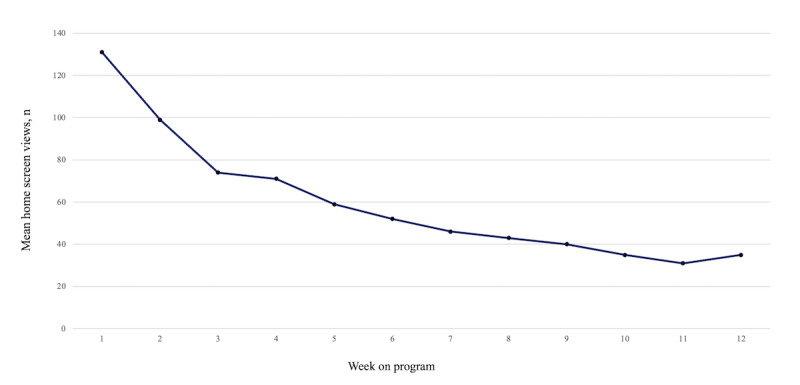
BACKGROUND: Digital weight management interventions have the potential to increase access to novel pharmacotherapy for people living with obesity. At present, there is limited real-world evidence on the effectiveness, feasibility, and acceptability of this type of intervention. OBJECTIVE: This retrospective service evaluation examines real-world data to evaluate the preliminary impact of Second Nature's 24-month, remotely delivered, semaglutide-supported weight management intervention for adults living with obesity at 12 weeks. METHODS: Retrospective data were extracted in October 2023 for participants who started the intervention between June 8, 2023, and July 22, 2023. The primary outcomes were weight change (kg) and percentage of weight change at 12 weeks. The secondary outcomes were the proportion of participants who achieved ≥5% and ≥10% weight loss and the feasibility and acceptability of this type of intervention. Descriptive statistics were used to evaluate the baseline characteristics, retention, engagement, prevalence of side effects, and weight change. A paired 2-tailed t test was used to determine the significance of weight change. Content analysis was used to analyze the free-text questionnaire responses. RESULTS: (SD 7.3) were included in the analysis (n=102, 90.4% women, mean age 46.6, SD 11.1 years). Over 12 weeks, 23% (n=26) of participants withdrew from the intervention. A total of 70.8% (n=80) of participants provided weight data at 12 weeks. The average weight loss observed over this 12-week period was 6.5 (SD 4.4) kg (P<.001) or 6.4% (SD 4.2%) of their starting weight (P<.001). Of the 80 participants who recorded weight readings, 62.5% (n=50) achieved ≥5% weight loss, and 11.3% (n=9) achieved ≥10% weight loss. Engagement with the app-based program declined from a mean of 131 (SD 142.6) home screen views in week 0 to 35 (SD 57.1) in week 11. Common side effects reported over 12 weeks included feeling more tired than usual, constipation, and feeling sick. However, a significant proportion of participants reported no side effects. Most participants (n=106, 93.8%) did not experience any difficulties in medication administration. Qualitative data showed that most participants had a positive or neutral experience of the intervention, with some reporting perceived benefits as early as 4 weeks. Most participants did not feel that improvements in the intervention were needed; however, some participants faced issues with medication shipping or logistics. CONCLUSIONS: This retrospective preliminary service evaluation suggests that a remotely delivered semaglutide-supported weight management intervention has the potential to be effective, feasible, and acceptable for self-paying consumer adults with obesity in the United Kingdom. Areas for further improvement were highlighted, including user engagement in an app-based program. A full-service evaluation at the end of the 24-month intervention with a larger sample size is required to support these early findings.
Overview
The claims and statistics of this paper haven’t been checked yet.
Free: it reads the open-access text and checks the first 5 claims that cite a source we can check. Create a free account to check every claim.
Integrity signals
Registry
Cites
Statistics
Figures
Verification
Claims the paper makes
The claims and statistics of this paper haven’t been checked yet.
Free: it reads the open-access text and checks the first 5 claims that cite a source we can check. Create a free account to check every claim.
Claims other papers make about this one
Each is checked against this paper’s own text: does it say what the citing paper says it does?
The source backs part of the claim, not all of it — or backs it for a different population, condition or comparison.
In the citing paper
“Hair loss/alopecia, reported in six publications, occurred in 4.9-7.0% of patients treated with tirzepatide compared with 0.9-1.4% treated with placebo [12,30,36,63,83,94].”
From Symptomatic Adverse Events and Quality of Life Related to Incretin-Based Medicines for Obesity: A Systematic Review Involving >400,000 Subjects (2025) · cites this paper as [83]
Experimental — accuracy not yet measuredThe source backs part of the claim, not all of it — or backs it for a different population, condition or comparison.
In the citing paper
“Despite the rapid adoption of digital health technologies, there remains a substantial gap in understanding how these digital interventions can complement pharmacological treatments in obesity for improved clinical outcomes compared with pharmacological treatment alone.”
From Impact of Digital Engagement on Weight Loss Outcomes in Obesity Management Among Individuals Using GLP-1 and Dual GLP-1/GIP Receptor Agonist Therapy: Retrospective Cohort Service Evaluation Study (2025) · cites this paper as [29]
Experimental — accuracy not yet measuredThe cited source says what the claim attributes to it.
In the citing paper
“However, existing literature is limited, as the integration of digital platforms with pharmacological therapy for weight loss has yet to be extensively researched due to its novelty [28-30].”
In the citing paper
“One publication reported a single AE of severe stomach pain [83].”
From Symptomatic Adverse Events and Quality of Life Related to Incretin-Based Medicines for Obesity: A Systematic Review Involving >400,000 Subjects (2025) · cites this paper as [83]
In the citing paper
“In a real-world setting, 0-0.6% of patients treated with semaglutide experienced hair loss [30,83].”
From Symptomatic Adverse Events and Quality of Life Related to Incretin-Based Medicines for Obesity: A Systematic Review Involving >400,000 Subjects (2025) · cites this paper as [83]
Self-check
Percentages, sums and reported differences re-computed from the paper’s own numbers.
The self-check needs the paper’s full text.
Citations
Cites
Michie, S., van Stralen, M. M., & West, R. (2011) · Implementation Science · doi:10.1186/1748-5908-6-42 · Cited by 13,697 · cited 1×
“Behavior change techniques and insights were also adopted from the “Behavior Change Wheel” [28], with new behaviors encouraged through self-monitoring, goal setting, social rewards, and education from credible sources.”
MethodOnce-Weekly Semaglutide in Adults with Overweight or Obesity
Wilding, J. P. H., Batterham, R. L., Calanna, S., Davies, M., Van Gaal, L. F., Lingvay, I., McGowan, B. M., Rosenstock, J., Tran, M. T. D., Wadden, T. A., et al. (2021) · New England Journal of Medicine · doi:10.1056/nejmoa2032183 · Cited by 5,205 · cited 6×
“…weekly injections of 2.4 mg) and lifestyle modification showed that people with obesity lost approximately 12% more weight compared with lifestyle modification alone [12], and people lost and sustained, on average, 15% of their body weight over a 2-year period using this combination treatment [13].”
BackgroundResultInfluentialProspective Studies Collaboration (2009) · The Lancet · doi:10.1016/s0140-6736(09)60318-4 · Cited by 4,807
Obesity in adults: a clinical practice guideline
Wharton, S., Lau, D. C. W., Vallis, M., Sharma, A. M., Biertho, L., Campbell-Scherer, D., Adamo, K., Alberga, A., Bell, R., Boulé, N., et al. (2020) · Canadian Medical Association Journal · doi:10.1503/cmaj.191707 · Cited by 1,506 · cited 1×
“Obesity is characterized by excess body fat and an increased risk of various physical and mental comorbidities, such as type 2 diabetes, cancer, cardiovascular disease, anxiety, and depression, as well as increased overall mortality risk [1-3].”
BackgroundWadden, T. A., Bailey, T. S., Billings, L. K., Davies, M., Frias, J. P., Koroleva, A., Lingvay, I., O’Neil, P. M., Rubino, D. M., Skovgaard, D., et al. (2021) · JAMA · doi:10.1001/jama.2021.1831 · Cited by 1,114 · cited 2×
“However, our findings are comparable with those from real-world and randomized clinical trials of this type of intervention for weight loss achieved at 12 weeks [12,34,35].”
ResultMaintenance of Lost Weight and Long-Term Management of Obesity
Hall, K. D., & Kahan, S. (2018) · Medical Clinics of North America · doi:10.1016/j.mcna.2017.08.012 · Cited by 876 · cited 1×
“However, sustained weight loss with behavioral interventions is poor because of the failure to address the physiological factors that drive obesity [8].”
BackgroundTwo-year effects of semaglutide in adults with overweight or obesity: the STEP 5 trial
Garvey, W. T., Batterham, R. L., Bhatta, M., Buscemi, S., Christensen, L. N., Frias, J. P., Jódar, E., Kandler, K., Rigas, G., Wadden, T. A., et al. (2022) · Nature Medicine · doi:10.1038/s41591-022-02026-4 · Cited by 868 · cited 2×
“This is an evidence-based and widely accepted clinical practice in which licensed medicine is unavailable [12,13].”
BackgroundInfluentialWeight Loss and Improvement in Comorbidity: Differences at 5%, 10%, 15%, and Over
Ryan, D. H., & Yockey, S. R. (2017) · Current Obesity Reports · doi:10.1007/s13679-017-0262-y · Cited by 831 · cited 1×
“Such interventions have been shown to be successful in reducing body weight in the best cases by approximately 5% to 10% in the short term, which is associated with improved health outcomes and quality of life [6,7].”
BackgroundAbdullah, A., Peeters, A., de Courten, M., & Stoelwinder, J. (2010) · Diabetes Research and Clinical Practice · doi:10.1016/j.diabres.2010.04.012 · Cited by 824 · cited 1×
“Obesity is characterized by excess body fat and an increased risk of various physical and mental comorbidities, such as type 2 diabetes, cancer, cardiovascular disease, anxiety, and depression, as well as increased overall mortality risk [1-3].”
BackgroundSemaglutide lowers body weight in rodents via distributed neural pathways.
Gabery, S., Salinas, C. G., Paulsen, S. J., Ahnfelt-Rønne, J., Alanentalo, T., Baquero, A. F., Buckley, S. T., Farkas, E., Fekete, C., Frederiksen, K. S., et al. (2020) · JCI Insight · doi:10.1172/jci.insight.133429 · Cited by 717 · cited 1×
“…receptor agonist (GLP-1RA), mimics the action of the hormone GLP-1, which helps regulate appetite, prevent overeating by improving the satiety signal from the gut to the brain, and regulate blood sugar levels by stimulating insulin production and slowing down the digestion of food [10,11].”
BackgroundFriedrichsen, M., Breitschaft, A., Tadayon, S., Wizert, A., & Skovgaard, D. (2021) · Diabetes, Obesity and Metabolism · doi:10.1111/dom.14280 · Cited by 427 · cited 2×
“Nevertheless, the weight loss findings were comparable to those of studies that used a higher dose of semaglutide [11,12,34].”
BackgroundResultFathers’ Thoughts on Breastfeeding and Implications for a Theory‐Based Intervention
Mitchell‐Box, K., & Braun, K. L. (2012) · Journal of Obstetric, Gynecologic & Neonatal Nursing · doi:10.1111/j.1552-6909.2012.01399.x · Cited by 348
Efficacy of Commercial Weight-Loss Programs: An Updated Systematic Review
Gudzune, K. A., Doshi, R. S., Mehta, A. K., Chaudhry, Z. W., Jacobs, D. K., Vakil, R. M., Lee, C. J., Bleich, S. N., & Clark, J. M. (2015) · Annals of Internal Medicine · doi:10.7326/m14-2238 · Cited by 325
A Review of Efficacious Technology-Based Weight-Loss Interventions: Five Key Components
Khaylis, A., Yiaslas, T., Bergstrom, J., & Gore-Felton, C. (2010) · Telemedicine and e-Health · doi:10.1089/tmj.2010.0065 · Cited by 218 · cited 1×
“The finding that participants desired and valued coaches and community interaction throughout the intervention is reflected in the broader literature on the useful components of digital weight management interventions [36].”
BackgroundEffective weight management practice: a review of the lifestyle intervention evidence
Kirk, S., Penney, T. L., McHugh, T.-L., & Sharma, A. M. (2011) · International Journal of Obesity · doi:10.1038/ijo.2011.80 · Cited by 168
Hartmann‐Boyce, J., Johns, D. J., Jebb, S. A., Summerbell, C., Aveyard, P., & Behavioural Weight Management Review Group (2014) · Obesity Reviews · doi:10.1111/obr.12220 · Cited by 147 · cited 1×
“Such interventions have been shown to be successful in reducing body weight in the best cases by approximately 5% to 10% in the short term, which is associated with improved health outcomes and quality of life [6,7].”
BackgroundRoss, J. A. D., Barron, E., McGough, B., Valabhji, J., Daff, K., Irwin, J., Henley, W. E., & Murray, E. (2022) · BMJ Open Diabetes Research & Care · doi:10.1136/bmjdrc-2021-002736 · Cited by 62 · cited 1×
“Previous studies have shown that the Second Nature Weight Management Program (without GLP-1RA medication support) is effective for weight loss for adults with overweight, obesity, and type 2 diabetes [29-32].”
Examining Factors of Engagement With Digital Interventions for Weight Management: Rapid Review
Sharpe, E. E., Karasouli, E., & Meyer, C. (2017) · JMIR Research Protocols · doi:10.2196/resprot.6059 · Cited by 59 · cited 2×
“In addition, the finding that engagement with the app-based program declined over time reflects a body of literature suggesting that this is a key issue with this type of intervention [37].”
BackgroundHazlehurst, J. M., Logue, J., Parretti, H. M., Abbott, S., Brown, A., Pournaras, D. J., & Tahrani, A. A. (2020) · Current Obesity Reports · doi:10.1007/s13679-020-00416-8 · Cited by 54 · cited 1×
“Furthermore, existing services face increasing problems such as long waiting lists, understaffing, and a lack of treatment flexibility [14-16], which can result in treatment delays and adversely affect patient outcomes [15].”
BackgroundMining Health App Data to Find More and Less Successful Weight Loss Subgroups
Serrano, K. J., Yu, M., Coa, K. I., Collins, L. M., & Atienza, A. A. (2016) · Journal of Medical Internet Research · doi:10.2196/jmir.5473 · Cited by 53
Idris, I., Hampton, J., Moncrieff, F., & Whitman, M. (2020) · JMIR Diabetes · doi:10.2196/15189 · Cited by 25
Self-citationHuntriss, R., Haines, M., Jones, L., & Mulligan, D. (2021) · Clinical Obesity · doi:10.1111/cob.12444 · Cited by 20 · cited 2×
“Currently, only one published study has explored the acceptability of this type of intervention in adults with obesity; however, only approximately 6% of the participants used GLP-1RA medication [19].”
BackgroundWatkins, R., Swancutt, D. R., Alexander, M., Moghadam, S., Perry, S., Dean, S. G., Sheaff, R., Pinkney, J. H., Tarrant, M., & Lloyd, J. (2023) · Patient · doi:10.1007/s40271-023-00644-9 · Cited by 17 · cited 1×
“Furthermore, existing services face increasing problems such as long waiting lists, understaffing, and a lack of treatment flexibility [14-16], which can result in treatment delays and adversely affect patient outcomes [15].”
BackgroundAlabduljabbar, K., Alsaqaaby, M., Neff, K. J., Crotty, M., & le Roux, C. W. (2023) · Endocrine · doi:10.1007/s12020-023-03534-0 · Cited by 16 · cited 5×
“The percentages of participants who achieved ≥ 5% and ≥ 10% body weight loss were also comparable [34].”
ResultInfluentialKar, P. S., Goward, C., Whitman, M., Davies, M., Willner, T., & Shaw, K. (2020) · Practical Diabetes · doi:10.1002/pdi.2295 · Cited by 15
Self-citationService evaluation of a digital behavioural change programme
Hampton, J., Allen, E., & Edson, C. (2017) · Future Healthcare Journal · doi:10.7861/futurehosp.4-3-173 · Cited by 7 · cited 1×
“Previous studies have shown that the Second Nature Weight Management Program (without GLP-1RA medication support) is effective for weight loss for adults with overweight, obesity, and type 2 diabetes [29-32].”
Gundersen, C. (2020) · Stanford University Press eBooks · doi:10.1515/9780804796873-009 · Cited by 5
Government expands private run diagnostic centres to tackle NHS waiting lists
O’Dowd, A. (2023) · BMJ · doi:10.1136/bmj.p1813 · Cited by 5
Research works printed but not linked: 2
- Semaglutide for managing overweight and obesity National Institute for Health and Care Excellence 2023 3 8 2023-11-01 https://www.nice.org.uk/guidance/ta875 40080622
- Obesity: identification, assessment and management National Institute for Health and Care Excellence 2014 11 27 2023-11-01 https://www.nice.org.uk/guidance/cg189 36719951
Cited by
Johnson, H., Huang, D., Liu, V., Ammouri, M. A., Jacobs, C., & El-Osta, A. (2025) · Journal of Medical Internet Research · doi:10.2196/69466 · Cited by 27
“…broaden the current literature on digital weight loss interventions that incorporate pharmacotherapy, building on recent work by Richards et al [29,30] which demonstrated that a remotely delivered, semaglutide-supported weight management program is both effective and efficacious in the short…”
Physiopathology and Treatment of Obesity and Overweight: A Proposal for a New Anorectic
Silvestrini, B., & Silvestrini, M. (2024) · Journal of Obesity · doi:10.1155/2024/9587300 · Cited by 24
Febrey, S., Nunns, M., Buckland, J., Abbott, R., Bethel, A., Whear, R., Boddy, K., Melendez‐Torres, G. J., Coon, J. T., & Shaw, L. (2025) · Health Expectations · doi:10.1111/hex.70251 · Cited by 15
Richards, R., Lunt, W., Whitman, M., Spaltro, G., & Hall, R. (2025) · JMIR Formative Research · doi:10.2196/81912 · Cited by 15
“These analytical frameworks underwent refinement following protocols established in previous research, resulting in 9 higher-level categories that encompassed key themes within participants’ experiences [21].”
Self-citationRichards, R., Whitman, M., Wren, G., & Campion, P. (2025) · JMIR Formative Research · doi:10.2196/72577 · Cited by 7
“Participants were emailed a mandatory web-based check-in survey at months 1, 3, 6, and 12 to collect information on medication side effects.”
InfluentialSelf-citation
Metadata
- Authors
- Richards, R., Wren, G. M., Campion, P., & Whitman, M.
- Affiliations
- University of Oxford (GB)
- Corresponding author
- Richards, Rebecca
- Venue
- JMIR Formative Research
- Publisher
- JMIR Publications Inc.
- Published
- 2023-12-28
- Volume
- 7
- Pages
- e53619
- ISSN
- 2561-326X (ISSN-L)
- PMC
- PMC10784980
- OpenAlex
- W4389190806
- Cited by
- 9
- References
- 28
- Citations by year
- 2025: 8 · 2024: 1
- FWCI
- 1.40
- Type
- journal article
- Language
- en
- Open access
- gold
- doi.org
- Licence
- cc-by
- Locations
- JMIR Formative Research (publishedVersion, cc-by)
- PubMed Central (publishedVersion, cc-by)
- PubMed (publishedVersion)
- DOAJ (DOAJ: Directory of Open Access Journals) (submittedVersion, cc-by-sa)
- Topics
- Health Sciences › Medicine › Pharmacology (medical) › Pharmacology and Obesity Treatment
- Health Sciences › Health Professions › General Health Professions › Mobile Health and mHealth Applications
- Health Sciences › Medicine › Public Health, Environmental and Occupational Health › Obesity and Health Practices
- Keywords
- obesity, weight management, semaglutide, GLP-1 receptor agonists, digital health interventions, weight loss, participant engagement, intervention feasibility and acceptability, adverse effects, real-world effectiveness, weight loss maintenance
About these checks
Registry, retraction, Cites and statistics results are computed, not judged, with one exception: a printed reference that no index lists is read once by a model before it counts as a citation error. Claims are extracted by a model and kept only when their quote appears verbatim in the text; each cited source is then checked, with a model’s help, for whether it says what the claim relies on. Those verdicts can be wrong — read the claim’s quote and the cited source before relying on one.
Statistics and arithmetic are recomputed, not judged.
Confidence bands are shown only for fields calibrated on our annotated test set. None is calibrated yet, so no band is shown.
What counts as a claim ›How we measure confidence ›How we check this ›
Are you an author, or do you see a problem with this page? Request a review
Data sources
Bibliographic data: Semantic Scholar, OpenAlex, Crossref.
Contains information from the Semantic Scholar Academic Graph Datasets, made available under the ODC Attribution License (ODC-BY 1.0).
Semantic Scholar’s data is described in: Kinney, R., et al. (2023). The Semantic Scholar Open Data Platform. arXiv:2301.10140.
