

The DOI matches its Crossref record; 91 of the 91 references it cites were found in a registry or an index; 28 of the 63 sources its claims cite were checked for support.
Features of Structured, One-to-One Videoconference Interventions That Actively Engage People in the Management of Their Chronic Conditions: Scoping Review
Open accessPublished version of a preprint
Abstract
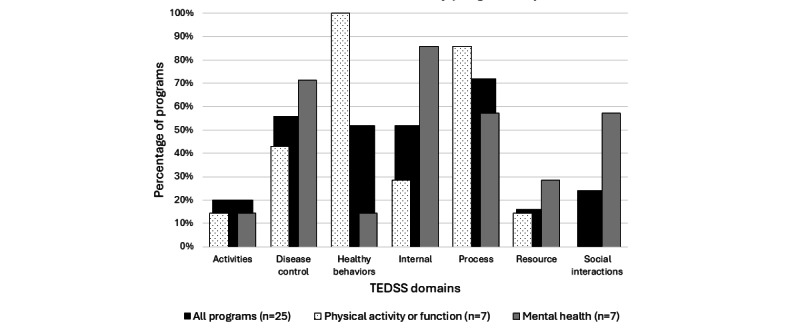
Background: A dramatic increase in the use of videoconferencing occurred as a response to the COVID-19 pandemic, including delivery of chronic disease management programs. With this increase, clients’ openness to and confidence in receiving any type of telehealth care has dramatically improved. However, the rapidity of the response was accomplished with little time to learn from existing knowledge and research. Objective: The purpose of this scoping review was to identify features, barriers, and facilitators of synchronous videoconference interventions that actively engage clients in the management of chronic conditions. Methods: Using scoping review methodology, MEDLINE, CINAHL, and 6 other databases were searched from 2003 onward. The included studies reported on structured, one-on-one, synchronous videoconferencing interventions that actively engaged adults in the management of their chronic conditions at home. Studies reporting assessment or routine care were excluded. Extracted text data were analyzed using thematic analysis and published taxonomies. Results: The 33 included articles reported on 25 distinct programs. Most programs targeted people with neurological conditions (10/25, 40%) or cancer (7/25, 28%). Analysis using the Taxonomy of Every Day Self-Management Strategies and the Behavior Change Technique Taxonomy version 1 identified common program content and behavior change strategies. However, distinct differences were evident based on whether program objectives were to improve physical activity or function (7/25, 28%) or mental health (7/25, 28%). Incorporating healthy behaviors was addressed in all programs designed to improve physical activity or function, whereas only 14% (1/7) of the programs targeting mental health covered content about healthy lifestyles. Managing emotional distress and social interaction were commonly discussed in programs with objectives of improving mental health (6/25, 24% and 4/25, 16%, respectively) but not in programs aiming at physical function (2/25, 8% and 0%, respectively). In total, 13 types of behavior change strategies were identified in the 25 programs. The top 3 types of strategies applied in programs intent on improving physical activity or function were feedback and monitoring, goals and planning, and social support, in contrast to shaping knowledge, regulation, and identity in programs with the goal of improving mental health. The findings suggest that chronic condition interventions continue to neglect evidence that exercise and strong relationships improve both physical and mental health. Videoconference interventions were seen as feasible and acceptable to clients. Challenges were mostly technology related: clients’ comfort, technology literacy, access to hardware and the internet, and technical breakdowns and issues. Only 15% (5/33) of the studies explicitly described compliance with health information or privacy protection regulations. Conclusions: Videoconferencing is a feasible and acceptable delivery format to engage clients in managing their conditions at home. Future program development could reduce siloed approaches by adding less used content and behavior change strategies. Addressing client privacy and technology issues should be priorities. ©Yu-Ting Chen, Michelle Lehman, Toni Van Denend, Jacqueline Kish, Yue Wu, Katharine Preissner, Matthew Plow, Tanya L Packer.
Overview
CoChat Summary
TL;DR
This scoping review mapped 33 studies of structured, one-to-one synchronous videoconference interventions for adults managing chronic conditions at home, identifying 25 unique programs. It found videoconferencing was generally feasible and acceptable, but technology access, literacy, and privacy/security issues were common barriers.
Key findings
- Of 4,067 articles in the initial search plus 1,714 in the updated search, 33 studies met inclusion criteria; these 33 studies reported on 25 unique intervention programs.
- Program objectives most often targeted improving physical activity or function and improving mental health, each in 7/25 programs (28%); quality of life was next most common (5/25, 20%).
- The most common TEDSS content domains were process (18/25, 72%), disease control (14/25, 56%), healthy behaviors (13/25, 52%), and internal (13/25, 52%); no program included all TEDSS domains.
- The most common BCT Taxonomy v1 groups were goals and planning (19/25, 76%), shaping knowledge (19/25, 76%), feedback and monitoring (16/25, 64%), and repetition and substitution (14/25, 56%).
- Videoconferencing was reported as feasible/acceptable, with facilitators including reduced temporal and physical barriers (11/25, 44%) and therapeutic benefit/alliance (10/25, 40%); common barriers were reliance on comfort/technology literacy (8/25, 32%), limited access to technology/internet (7/25, 28%), and technical issues/breakdowns (7/25, 28%).
Methods
- Scoping review using Arksey and O’Malley’s 5-stage framework and PRISMA-ScR; databases searched from 2003 to January 25, 2023.
- Included structured, synchronous, one-to-one videoconferencing interventions for adults living at home with chronic conditions; routine care, assessment-only, and non-structured interventions were excluded.
- Data were extracted in Covidence and analyzed with descriptive analysis plus thematic analysis; intervention content was coded with TEDSS and behavior change strategies with BCT Taxonomy v1.
Limitations
- The paper states findings were limited to information reported in manuscripts and publicly available to researchers/providers, and authors were not contacted for clarification; reporting of content and behavior change strategies may therefore be incomplete.
- The review did not assess study quality or intervention effectiveness, because scoping review methodology does not typically do so.
- The paper notes many interventions were planned or executed before COVID-19 and may not capture rapid post-2020 developments; it also states that provider perspectives were too sparse to report, and that the lack of security/confidentiality detail suggests a need for dedicated study.
Model-written summary. Check it against the paper before relying on it.
Integrity signals
Registry
Cites
Statistics
Figures


Verification
Claims the paper makes
18 Valid · 1 Not valid · 15 Not checked · 123 Own results and interpretations
The cited sources support only part of this claim — read each source’s verdict below.
In the paper
“Preventing chronic conditions by promoting and enabling self-management is now widely regarded as critical to improving client outcomes and reducing demands on health systems [6,7].”
§ Features of Structured, One-to-One Videoconference Interventions That Actively Engage People in the Management of Their Chronic Conditions: Scoping Review > Introduction > Objectives
What the sources say
- Partly supportedcites [6] sourceExperimental — accuracy not yet measured
The Introduction says self-management interventions for people with chronic conditions improve health outcomes and may reduce healthcare utilisation. It describes helping patients manage the consequences of existing conditions, not preventing chronic conditions from developing. The Discussion and conclusion also cautions that the link with reduced healthcare utilisation needs further study. (LLM, conf=0.87)
- Partly supportedcites [7] sourceExperimental — accuracy not yet measured
The Abstract (Clinical Relevance; page not provided) says chronic illness management is an important component of health care, and the Clinical Relevance section recommends provider support for self-management. The paper addresses managing existing illness, not preventing chronic conditions; the cited passages also do not establish that self-management reduces demands on health systems or improves client outcomes. (LLM, conf=0.88)
plainstates a cause- Asserted: passes — The authors put it forward as true.
- Checkable: passes — It can be checked against evidence.
- Load-bearing: passes — The paper’s conclusions depend on it.
- Based: passes — The paper gives a reason why it holds.
- Partly supported
The cited sources support only part of this claim — read each source’s verdict below.
In the paper
“The TEDSS framework, derived from the literature and interviews with 117 individuals living with chronic neurological conditions, was chosen for its robust and comprehensive categorization of strategies commonly used and considered important by people living with chronic conditions [19,30,31].”
§ Features of Structured, One-to-One Videoconference Interventions That Actively Engage People in the Management of Their Chronic Conditions: Scoping Review > Methods > Collating, Summarizing, and Reporting the Results
What the sources say
- Not checked — no full text of the sourcecites [19] source
- Not checked — no full text of the sourcecites [30] source
- Partly supportedcites [31] sourceExperimental — accuracy not yet measured
The Design and setting section says TEDSS emerged from the LINC study, and the Discussion says interviews with 117 participants supplied data also used to validate and refine TEDSS. Our copy does not say the framework was derived from the literature, so that part of the attributed claim is unsupported. (LLM, conf=0.84)
plainn = 117- Asserted: passes — The authors put it forward as true.
- Checkable: passes — It can be checked against evidence.
- Load-bearing: passes — The paper’s conclusions depend on it.
- Based: passes — The paper gives a reason why it holds.
The cited sources support only part of this claim — read each source’s verdict below.
In the paper
“BCT Taxonomy v1 techniques used in videoconferencing interventions appear to emulate asynchronous e-interventions for individuals with diabetes and programs for health promotion delivered using the internet or mobile phones [83-85].”
§ Features of Structured, One-to-One Videoconference Interventions That Actively Engage People in the Management of Their Chronic Conditions: Scoping Review > Discussion > Principal Findings
What the sources say
- Partly supportedcites [83] sourceExperimental — accuracy not yet measured
The Methods (Data extraction) say the review coded interventions using BCT Taxonomy v1, and the Results (Intervention characteristics) describe website- and smartphone-delivered diabetes-prevention programs. The paper does not compare their techniques with videoconferencing interventions or establish that the latter emulate them; its focus is prevention rather than interventions for people with diabetes. Page numbers were not available in our copy. (LLM, conf=0.84)
- Partly supportedcites [84] sourceExperimental — accuracy not yet measured
The Results (Intervention Characteristics; page unavailable) identify behavior change techniques used in Internet-based interventions, and the Methods (Coding of Intervention Characteristics; page unavailable) include SMS and videoconferencing as supplementary delivery modes. The paper does not compare those techniques with techniques used in videoconferencing interventions, and it uses an earlier taxonomy rather than BCT Taxonomy v1. It therefore supports the Internet-intervention example, but not the asserted resemblance. (LLM, conf=0.83)
- Supportedcites [85] source
Section 2.4 says the paper coded diabetes mobile-app interventions using BCT Taxonomy v1. Sections 3.5.2 and 4.2 identify their common techniques—including self-monitoring, feedback, and instruction—and compare the pattern with other digital interventions. The videoconferencing comparison is the citing authors’ own inference, not a finding attributed to this source. (LLM, conf=0.84)
hedgedstates an association- Asserted: passes — The authors put it forward as true.
- Checkable: passes — It can be checked against evidence.
- Load-bearing: unclear — It is unclear whether the paper’s conclusions depend on it.
- Based: passes — The paper gives a reason why it holds.
- Partly supported
The cited sources support only part of this claim — read each source’s verdict below.
In the paper
“Many techniques in the goals and planning and feedback and monitoring clusters, also found in this review, have had significant treatment effects in diabetes management [83-85].”
§ Features of Structured, One-to-One Videoconference Interventions That Actively Engage People in the Management of Their Chronic Conditions: Scoping Review > Discussion > Principal Findings
What the sources say
- Partly supportedcites [83] sourceExperimental — accuracy not yet measured
The Discussion (Behaviour change techniques; page not provided) identifies goal setting, feedback and self-monitoring among techniques frequently used in effective interventions. But the review concerns type 2 diabetes prevention, not diabetes management, and its Future directions section says it cannot infer causal effects of individual techniques. It therefore does not establish that these techniques had significant treatment effects in diabetes management. (LLM, conf=0.86)
- Partly supportedcites [84] sourceExperimental — accuracy not yet measured
The Results, under Intervention Characteristics (page unavailable), report positive effects on health behavior for goal setting, action planning, feedback on performance, and self-monitoring of behavior; the table’s confidence intervals for these techniques exclude zero. These are pooled findings across Internet-based interventions, not findings specific to diabetes management, so the diabetes-specific part of the claim is unsupported. (LLM, conf=0.86)
- Supportedcites [85] source
The meta-analysis table reproduced in the indexed copy reports statistically significant HbA1c treatment effects for several techniques in both the goals-and-planning and feedback-and-monitoring clusters. Section 4.2 distinguishes those treatment effects from comparisons between interventions with and without a particular technique: only action planning and self-monitoring of outcomes differed significantly in that comparison. (LLM, conf=0.88)
plainstates a cause- Asserted: passes — The authors put it forward as true.
- Checkable: passes — It can be checked against evidence.
- Load-bearing: unclear — It is unclear whether the paper’s conclusions depend on it.
- Based: passes — The paper gives a reason why it holds.
- Partly supported
The cited sources support only part of this claim — read each source’s verdict below.
In the paper
“Qualitative work by Satink et al [80], Audulv et al [81], Audulv [82], and others demonstrates how self-management needs change with time, particularly once clients return home and the focus on medical management diminishes.”
§ Features of Structured, One-to-One Videoconference Interventions That Actively Engage People in the Management of Their Chronic Conditions: Scoping Review > Discussion > Principal Findings
What the sources say
- Partly supportedcites [80] sourceExperimental — accuracy not yet measured
The Results (‘Changing meaning and different levels of self-management’) report that the meaning of self-management changed over time and that participants felt a need for support after discharge. The Discussion recommends shifting longer-term support toward role management rather than medical management after survivors have spent months at home. It does not establish that the focus on medical management actually diminished. (LLM, conf=0.82)
- Not checked — no full text of the sourcecites [81] source
- Partly supportedcites [82] sourceExperimental — accuracy not yet measured
The Results (A transitional self-management pattern; page not supplied) describe participants’ needs and self-management focus changing over time. The paper does not establish that this change occurs particularly after clients return home or that medical management then diminishes; those qualifications are not supported by the cited passages. (LLM, conf=0.86)
boostedstates an association- Asserted: passes — The authors put it forward as true.
- Checkable: passes — It can be checked against evidence.
- Load-bearing: passes — The paper’s conclusions depend on it.
- Based: passes — The paper gives a reason why it holds.
- Partly supported
64 more claims · 1 with their cited sources checked
Create a free account to see all 157 claims and every source verdict.
- Probably not a substantial claim. 47
- It may state two separate claims as one. 57
- The quote only partly states this claim. 1
Citations
Cites
PRISMA Extension for Scoping Reviews (PRISMA-ScR): Checklist and Explanation
Tricco, A. C., Lillie, E., Zarin, W., O'Brien, K. K., Colquhoun, H., Levac, D., Moher, D., Peters, M. D. J., Horsley, T., Weeks, L., et al. (2018) · Annals of Internal Medicine · doi:10.7326/m18-0850 · Cited by 43,565 · cited 1×
“The PRISMA-ScR (Preferred Reporting Items for Systematic Reviews and Meta-Analyses extension for Scoping Reviews) checklist [17] proposed by the Enhancing the Quality and Transparency of Health Research Network was used to guide reporting of study conduct and findings (Multimedia Appendix 1).”
Scoping studies: towards a methodological framework
Arksey, H., & O'Malley, L. (2005) · International Journal of Social Research Methodology · doi:10.1080/1364557032000119616 · Cited by 36,742 · cited 1×
“The 5-stage methodological framework by Arksey and O’Malley [14] was followed with augmentation consistent with recent evolutions of the scoping review methodology [15,16].”
Michie, S., Richardson, M., Johnston, M., Abraham, C., Francis, J., Hardeman, W., Eccles, M. P., Cane, J., & Wood, C. E. (2013) · Annals of Behavioral Medicine · doi:10.1007/s12160-013-9486-6 · Cited by 7,629 · cited 5×
“Active ingredients or strategies facilitating behavior change were operationalized using the Behavior Change Technique Taxonomy version 1 (BCT Taxonomy v1) hierarchical clusters [20] (see the Collating, Summarizing, and Reporting the Results section for details of each).”
InfluentialPatient Self-management of Chronic Disease in Primary Care
Bodenheimer, T. (2002) · JAMA · doi:10.1001/jama.288.19.2469 · Cited by 3,598 · cited 1×
“As such, they have become a primary focus of health service policy, redesign, and research [9,12], with delivery both in person and via telehealth care.”
Improving chronic illness care: translating evidence into action
Wagner, E. H., Austin, B. T., Davis, C., Hindmarsh, M., Schaefer, J., & Bonomi, A. (2001) · Health Affairs · doi:10.1377/hlthaff.20.6.64 · Cited by 3,446 · cited 2×
“In contrast to passive receipt of educational information, active client participation is a hallmark of “informed, activated patients” described in the widely endorsed chronic care model [9,10].”
Scoping reviews: Time for clarity in definition, methods, and reporting
Colquhoun, H. L., Levac, D., O'Brien, K. K., Straus, S., Tricco, A. C., Perrier, L., Kastner, M., & Moher, D. (2014) · Journal of Clinical Epidemiology · doi:10.1016/j.jclinepi.2014.03.013 · Cited by 2,783 · cited 2×
“This process was repeated until the κ interrater agreement level reached 0.8 [13,21].”
InfluentialWebb, T. L., Joseph, J., Yardley, L., & Michie, S. (2010) · Journal of Medical Internet Research · doi:10.2196/jmir.1376 · Cited by 2,517
Uchino, B. N. (2006) · Journal of Behavioral Medicine · doi:10.1007/s10865-006-9056-5 · Cited by 2,507 · cited 1×
“Similarly, improving physical activity or function in populations living with chronic conditions is often dependent on family and friends for support and motivation [88,89].”
A scoping review on the conduct and reporting of scoping reviews
Tricco, A. C., Lillie, E., Zarin, W., O’Brien, K., Colquhoun, H., Kastner, M., Levac, D., Ng, C., Sharpe, J. P., Wilson, K., et al. (2016) · BMC Medical Research Methodology · doi:10.1186/s12874-016-0116-4 · Cited by 2,250 · cited 1×
“The 5-stage methodological framework by Arksey and O’Malley [14] was followed with augmentation consistent with recent evolutions of the scoping review methodology [15,16].”
Moltu, C., Stefansen, J., Svisdahl, M., & Veseth, M. (2012) · Disability and Rehabilitation · doi:10.3109/09638288.2012.656792 · Cited by 1,247
Research works printed but not linked: 5
- 2015, Using Technology-Based Therapeutic Tools in Behavioral Health Services
- Hyman, I, 2017, Can Fam Physician, 63, e137
- Liddy, C, 2014, Can Fam Physician, 60, 1123
- Cohen, S, 1991, Life-span Developmental Psychology: Perspectives on Stress and Coping
- Brennan, DM, 2009, Stud Health Technol Inform, 145, 231
Cited by
Olsson, I., Björk, S., Isaksson, U., Packer, T. L., Kephart, G. C., Nordström, A., & Audulv, Å. (2025) · Scandinavian Journal of Primary Health Care · doi:10.1080/02813432.2025.2511070 · Cited by 1
Self-citationNeil, L. J., Mendis, R., Kelly, J. T., Haydon, H. M., Smith, A. C., & Snoswell, C. L. (2026) · Telemedicine Journal and e-Health · doi:10.1177/15305627261426080
Wan, Z., Liu, Y., Su, Z., Bai, C., Liu, X., Li, X., Zhao, X., Li, P., Song, L., & Rao, J. (2026) · Frontiers in Psychiatry · doi:10.3389/fpsyt.2026.1896124
“By contrast, videoconferencing-based platforms, despite their favorable interactivity, impose higher time requirements on users, which may negatively correlate with intervention adherence (49).”
Metadata
- Authors
- Chen, Y.-T., Lehman, M., Van Denend, T., Kish, J., Wu, Y., Preissner, K., Plow, M., & Packer, T. L.
- Affiliations
- Dalhousie University (CA)
- Shirley Ryan AbilityLab (US)
- University of Minnesota (US)
- University of Illinois Chicago (US)
- Case Western Reserve University (US)
- Corresponding author
- Packer, Tanya L
- ORCID
- Venue
- Journal of Medical Internet Research
- Publisher
- JMIR Publications Inc.
- Published
- 2025-02-26
- Volume
- 27
- Pages
- e58543
- ISSN
- 1438-8871 (ISSN-L)
- PMC
- PMC11904366
- OpenAlex
- W4407946461
- Cited by
- 3
- References
- 87
- Citations by year
- 2026: 2 · 2025: 1
- FWCI
- 0.57
- Type
- journal article
- Language
- en
- Open access
- gold
- doi.org
- Licence
- cc-by
- Locations
- Journal of Medical Internet Research (publishedVersion, cc-by)
- Europe PMC (PubMed Central) (publishedVersion, cc-by)
- PubMed Central (publishedVersion, cc-by)
- PubMed (publishedVersion)
- DOAJ (DOAJ: Directory of Open Access Journals) (publishedVersion)
- Topics
- Health Sciences › Medicine › Public Health, Environmental and Occupational Health › Telemedicine and Telehealth Implementation
- Health Sciences › Health Professions › General Health Professions › Mobile Health and mHealth Applications
- Health Sciences › Medicine › Geriatrics and Gerontology › Technology Use by Older Adults
- Keywords
- telemedicine, videoconferencing, chronic disease self-management, behaviour change techniques, mental health, physical activity, neurological disorders, cancer, social support, barriers and facilitators, COVID-19 pandemic, home care, emotional distress, social interaction
- MeSH terms
- COVID-19, Chronic Disease, Humans, Self Care, Telemedicine, Videoconferencing, Pandemics
About these checks
Registry, retraction, Cites and statistics results are computed, not judged, with one exception: a printed reference that no index lists is read once by a model before it counts as a citation error. Claims are extracted by a model and kept only when their quote appears verbatim in the text; each cited source is then checked, with a model’s help, for whether it says what the claim relies on. Those verdicts can be wrong — read the claim’s quote and the cited source before relying on one.
The claim verdicts this report counts are experimental: their accuracy is not yet measured.
A language model drew the claims from the paper on 2026-10-11, under version 3 of the claim definition (model deepseek-v4.1-flash, prompt extract-v3).
A second model labelled each claim on 2026-10-11 (model jev-1.13-20260917, definition revision gold-guideline-v0.2).
Cited sources are checked with a language model’s help (gpt-6-sol).
Statistics and arithmetic are recomputed, not judged.
Confidence bands are shown only for fields calibrated on our annotated test set. None is calibrated yet, so no band is shown.
What counts as a claim ›How we measure confidence ›How we check this ›
Are you an author, or do you see a problem with this page? Request a review
How to cite
Cite CoChat for the checks on this page, and the paper for its own findings.
- This page
- CoChat. (2026). Citation check: Features of Structured, One-to-One Videoconference Interventions That Actively Engage People in the Management of Their Chronic Conditions: Scoping Review. https://app.cochat.ai/papers/10.2196/58543
- The paper
- Chen, Y.-T., Lehman, M., Van Denend, T., Kish, J., Wu, Y., Preissner, K., Plow, M., & Packer, T. L. (2025). Features of Structured, One-to-One Videoconference Interventions That Actively Engage People in the Management of Their Chronic Conditions: Scoping Review. Journal of Medical Internet Research. https://doi.org/10.2196/58543
Data sources
Bibliographic data: Semantic Scholar, OpenAlex, Crossref.
Contains information from the Semantic Scholar Academic Graph Datasets, made available under the ODC Attribution License (ODC-BY 1.0).
Semantic Scholar’s data is described in: Kinney, R., et al. (2023). The Semantic Scholar Open Data Platform. arXiv:2301.10140.
