

The DOI matches its Crossref record; 21 of the 21 references it cites were found in a registry or an index.
HLA Class I and Genetic Susceptibility to Type 1 Diabetes
Open accessAbstract
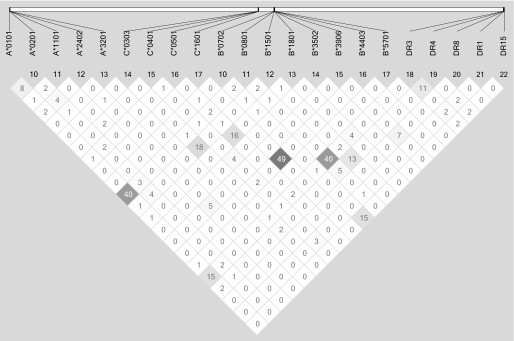
OBJECTIVE: We report here genotyping data and type 1 diabetes association analyses for HLA class I loci (A, B, and C) on 1,753 multiplex pedigrees from the Type 1 Diabetes Genetics Consortium (T1DGC), a large international collaborative study. RESEARCH DESIGN AND METHODS: Complete eight-locus HLA genotyping data were generated. Expected patient class I (HLA-A, -B, and -C) allele frequencies were calculated, based on linkage disequilibrium (LD) patterns with observed HLA class II DRB1-DQA1-DQB1 haplotype frequencies. Expected frequencies were compared to observed allele frequencies in patients. RESULTS: Significant type 1 diabetes associations were observed at all class I HLA loci. After accounting for LD with HLA class II, the most significantly type 1 diabetes–associated alleles were B*5701 (odds ratio 0.19; P = 4 × 10⁻¹¹) and B*3906 (10.31; P = 4 × 10⁻¹⁰). Other significantly type 1 diabetes–associated alleles included A*2402, A*0201, B*1801, and C*0501 (predisposing) and A*1101, A*3201, A*6601, B*0702, B*4403, B*3502, C*1601, and C*0401 (protective). Some alleles, notably B*3906, appear to modulate the risk of all DRB1-DQA1-DQB1 haplotypes on which they reside, suggesting a class I effect that is independent of class II. Other class I type 1 diabetes associations appear to be specific to individual class II haplotypes. Some apparent associations (e.g., C*1601) could be attributed to strong LD to another class I susceptibility locus (B*4403). CONCLUSIONS: These data indicate that HLA class I alleles, in addition to and independently from HLA class II alleles, are associated with type 1 diabetes.
Overview
The claims and statistics of this paper haven’t been checked yet.
Run the check — free, no account needed. It reads the open-access text and checks the sources it cites.
Integrity signals
Registry
Cites
Statistics
Figures
Verification
Claims the paper makes
The claims and statistics of this paper haven’t been checked yet.
Run the check — free, no account needed. It reads the open-access text and checks the sources it cites.
Claims other papers make about this one
Each is checked against this paper’s own text: does it say what the citing paper says it does?
The source backs part of the claim, not all of it — or backs it for a different population, condition or comparison.
In the citing paper
“The HLA region on chromosome 6 (ie, the IDDM1 locus) provides perhaps one-half of the genetic susceptibility that leads to risk of type 1 diabetes.73”
From Type 1 diabetes (2014) · cites this paper as [73]
Experimental — accuracy not yet measuredThe cited source says what the claim attributes to it.
In the citing paper
“Class I MHCs also seem to influence risk for type 1 diabetes, independent of class II molecules.73”
From Type 1 diabetes (2014) · cites this paper as [73]
Self-check
Percentages, sums and reported differences re-computed from the paper’s own numbers.
The self-check needs the paper’s full text.
Citations
Cites
Migueles, S. A., Sabbaghian, M. S., Shupert, W. L., Bettinotti, M. P., Marincola, F. M., Martino, L., Hallahan, C. W., Selig, S. M., Schwartz, D. H., Sullivan, J., et al. (2000) · Proceedings of the National Academy of Sciences · doi:10.1073/pnas.050567397 · Cited by 995
HLA DR-DQ Haplotypes and Genotypes and Type 1 Diabetes Risk
Erlich, H., Valdes, A. M., Noble, J., Carlson, J. A., Varney, M., Concannon, P., Mychaleckyj, J. C., Todd, J. A., Bonella, P., Fear, A. L., et al. (2008) · Diabetes · doi:10.2337/db07-1331 · Cited by 790 · cited 4×
“,(1) and references therein) and, to a lesser extent, HLA-DPB1/DPA1 (2-6).”
BackgroundMethodInfluentialSelf-citationLocalization of type 1 diabetes susceptibility to the MHC class I genes HLA-B and HLA-A
Nejentsev, S., Howson, J. M. M., Walker, N. M., Szeszko, J. S., Field, S. F., Stevens, H. E., Reynolds, P., Hardy, M. P., King, E., Masters, J., et al. (2007) · Nature · doi:10.1038/nature06406 · Cited by 573
Mapping disease genes: family-based association studies.
Thomson, G. (1995) · PubMed Central · Cited by 335
Macdonald, W. A., Purcell, A. W., Mifsud, N. A., Ely, L. K., Williams, D. S., Chang, L., Gorman, J. J., Clements, C. S., Kjer‐Nielsen, L., Koelle, D. M., et al. (2003) · The Journal of Experimental Medicine · doi:10.1084/jem.20030066 · Cited by 204
Howson, J. M. M., Walker, N. M., Clayton, D. G., & Todd, J. A. (2009) · Diabetes Obesity and Metabolism · doi:10.1111/j.1463-1326.2008.01001.x · Cited by 135
The HLA class I A locus affects susceptibility to type 1 diabetes
Noble, J. A., Valdes, A. M., Bugawan, T. L., Apple, R. J., Thomson, G. J., & Erlich, H. A. (2002) · Human Immunology · doi:10.1016/s0198-8859(02)00421-4 · Cited by 128
Self-citationValdes, A. M., Erlich, H. A., & Noble, J. A. (2005) · Human Immunology · doi:10.1016/j.humimm.2004.12.001 · Cited by 119
Self-citationHLA DR antigens and susceptibility to insulin-dependent diabetes mellitus.
Thomson, G. (1984) · PubMed · Cited by 109
The HLA class II locus DPB1 can influence susceptibility to type 1 diabetes.
Noble, J. A., Valdes, A. M., Thomson, G., & Erlich, H. A. (2000) · Diabetes · doi:10.2337/diabetes.49.1.121 · Cited by 104
Self-citation
Cited by
Sorted by citations
Atkinson, M. A., Eisenbarth, G. S., & Michels, A. W. (2014) · The Lancet · doi:10.1016/s0140-6736(13)60591-7 · Cited by 2,931
Cortés, A., Hadler, J., Robinson, P. C., Leo, P., Cremin, K., Pryce, K., Harris, J., Bradbury, L. A., Kenna, T., Yang, J., et al. (2013) · Nature Genetics · doi:10.1038/ng.2667 · Cited by 872
Differentiation of diabetes by pathophysiology, natural history, and prognosis
Skyler, J. S., Bakris, G. L., Bonifacio, E., Darsow, T., Eckel, R. H., Groop, L., Groop, P.-H., Handelsman, Y., Insel, R. A., Mathieu, C., et al. (2017) · Diabetes · doi:10.2337/db16-0806 · Cited by 823
The heterogeneous pathogenesis of type 1 diabetes mellitus
Ilonen, J., Lempainen, J., & Veijola, R. (2019) · Nature Reviews Endocrinology · doi:10.1038/s41574-019-0254-y · Cited by 522
Genetics of the HLA Region in the Prediction of Type 1 Diabetes
Noble, J. A., & Valdes, A. M. (2011) · Current Diabetes Reports · doi:10.1007/s11892-011-0223-x · Cited by 499
Self-citationAutoreactive T cells in type 1 diabetes
Pugliese, A. (2017) · Journal of Clinical Investigation · doi:10.1172/jci94549 · Cited by 365
Oram, R. A., Patel, K., Hill, A., Shields, B. M., McDonald, T. J., Jones, A. G., Hattersley, A. T., & Weedon, M. N. (2015) · Diabetes Care · doi:10.2337/dc15-1111 · Cited by 360
Noble, J. A., & Erlich, H. A. (2012) · Cold Spring Harbor Perspectives in Medicine · doi:10.1101/cshperspect.a007732 · Cited by 335
Self-citationMarine Algae-Derived Bioactive Compounds: A New Wave of Nanodrugs?
Menaa, F., Wijesinghe, U., Thiripuranathar, G., Althobaiti, N. A., Albalawi, A. E., Khan, B. A., & Menaa, B. (2021) · Marine Drugs · doi:10.3390/md19090484 · Cited by 254
Immunogenetics of type 1 diabetes: a comprehensive review
Noble, J. A. (2015) · Journal of Autoimmunity · doi:10.1016/j.jaut.2015.07.014 · Cited by 227
Self-citationRedondo, M. J., Steck, A. K., & Pugliese, A. (2018) · Pediatric Diabetes · doi:10.1111/pedi.12597 · Cited by 216
Early prediction of autoimmune (type 1) diabetes.
Regnell, S. E., & Lernmark, Å. (2017) · Diabetologia · doi:10.1007/s00125-017-4308-1 · Cited by 195
Hussain, T., Tan, B., Murtaza, G., Liu, G., Rahu, N., Kalhoro, M. S., Kalhoro, D. H., Adebowale, T. O., Mazhar, M. U., Rehman, Z. U., et al. (2020) · Pharmacological Research · doi:10.1016/j.phrs.2020.104629 · Cited by 208
Hypocretin (orexin) biology and the pathophysiology of narcolepsy with cataplexy
Liblau, R., Vassalli, A., Seifinejad, A., & Tafti, M. (2015) · The Lancet Neurology · doi:10.1016/s1474-4422(14)70218-2 · Cited by 194
The complement system and human autoimmune diseases
Coss, S. L., Zhou, D., Chua, G. T., Abdul‐Aziz, R., Hoffman, R. P., Wu, Y. L., Ardoin, S. P., Atkinson, J. P., & Yu, C. Y. (2022) · Journal of Autoimmunity · doi:10.1016/j.jaut.2022.102979 · Cited by 189
Cannas, D., Loi, E., Serra, M., Firinu, D., Valera, P., & Zavattari, P. (2020) · Nutrients · doi:10.3390/nu12072074 · Cited by 175
Ilonen, J., Kiviniemi, M., Lempainen, J., Simell, O., Toppari, J., Veijola, R., Knip, M., & Register, T. F. P. D. (2016) · Pediatric Diabetes · doi:10.1111/pedi.12327 · Cited by 134
Önengüt-Gümüşcü, S., Chen, W., Robertson, C. C., Bonnie, J. K., Farber, E., Zhu, Z., Oksenberg, J. R., Brant, S. R., Bridges, S. L., Edberg, J. C., et al. (2019) · Diabetes Care · doi:10.2337/dc18-1727 · Cited by 130
Self-citationMolecular Mechanisms in Autoimmune Type 1 Diabetes: a Critical Review
Xie, Z., Chang, C., & Zhou, Z. (2014) · Clinical Reviews in Allergy & Immunology · doi:10.1007/s12016-014-8422-2 · Cited by 127
T-Cell Epitopes and Neo-epitopes in Type 1 Diabetes: A Comprehensive Update and Reappraisal
Admin, A., James, E. A., Mallone, R., Kent, S. C., & DiLorenzo, T. P. (2020) · Diabetes · doi:10.2337/dbi19-0022 · Cited by 111
Human islet T cells are highly reactive to preproinsulin in type 1 diabetes
Anderson, A. M., Landry, L. G., Alkanani, A. K., Pyle, L. L., Powers, A. C., Atkinson, M. A., Mathews, C. E., Roep, B. O., Michels, A. W., & Nakayama, M. (2021) · Proceedings of the National Academy of Sciences · doi:10.1073/pnas.2107208118 · Cited by 97
Immune Recognition of β-Cells: Neoepitopes as Key Players in the Loss of Tolerance
James, E. A., Pietropaolo, M., & Mamula, M. J. (2018) · Diabetes · doi:10.2337/dbi17-0030 · Cited by 95
Type 1 Diabetes Mellitus: Cellular and Molecular Pathophysiology at A Glance.
Saberzadeh-Ardestani, B., Karamzadeh, R., Basiri, M., Hajizadeh‐Saffar, E., Farhadi, A., Shapiro, A. M. J., Tahamtani, Y., & Baharvand, H. (2018) · Europe PMC (PubMed Central) · doi:10.22074/cellj.2018.5513 · Cited by 103
Systematic Review of Polygenic Risk Scores for Type 1 and Type 2 Diabetes
Padilla-Martínez, F., Collin, F., Kwaśniewski, M., & Kretowski, A. J. (2020) · International Journal of Molecular Sciences · doi:10.3390/ijms21051703 · Cited by 93
Multifactorial Basis and Therapeutic Strategies in Metabolism-Related Diseases
Guerra, J. V. D. S., Dias, M. M. G., Brilhante, A. J. V. C., Terra, M. F., García‐Arévalo, M., & Figueira, A. C. M. (2021) · Nutrients · doi:10.3390/nu13082830 · Cited by 92
Narcolepsy-Associated HLA Class I Alleles Implicate Cell-Mediated Cytotoxicity
Tafti, M., Lammers, G. J., Dauvilliers, Y. A., Overeem, S., Mayer, G., Nowak, J., Pfister, C., Dubois, V., Eliaou, J., Eberhard, H., et al. (2016) · SLEEP · doi:10.5665/sleep.5532 · Cited by 84
Innate inflammation in type 1 diabetes
Cabrera, S. M., Henschel, A. M., & Hessner, M. J. (2015) · Translational research · doi:10.1016/j.trsl.2015.04.011 · Cited by 87
Perry, D. J., Wasserfall, C., Oram, R., Williams, M. D., Posgai, A., Muir, A. B., Haller, M., Schatz, D., Wallet, M., Mathews, C., et al. (2018) · Scientific Reports · doi:10.1038/s41598-018-22574-5 · Cited by 73
Classical HLA-DRB1 and DPB1 alleles account for HLA associations with primary biliary cirrhosis
Invernizzi, P., Ransom, M., Raychaudhuri, S., Kosoy, R., Lleò, A., Shigeta, R., Franke, A., Bossa, F., Amos, C. I., Gregersen, P. K., et al. (2012) · Genes and Immunity · doi:10.1038/gene.2012.17 · Cited by 83
Alvarez‐Navarro, C., & de Castro, J. A. Ł. (2013) · Molecular Immunology · doi:10.1016/j.molimm.2013.06.012 · Cited by 82
Impact of hyperglycemia on immune cell function: a comprehensive review
Lee, H., Kim, M.-J., Lee, I.-K., Hong, C.-W., & Jeon, J. (2024) · Diabetology International · doi:10.1007/s13340-024-00741-6 · Cited by 95
Stem-cell based organ-on-a-chip models for diabetes research
Rogal, J., Zbinden, A., Schenke‐Layland, K., & Loskill, P. (2018) · Advanced Drug Delivery Reviews · doi:10.1016/j.addr.2018.10.010 · Cited by 89
The genetic architecture of type 1 diabetes mellitus
Nyaga, D. M., Vickers, M. H., Jefferies, C., Perry, J. K., & O'Sullivan, J. M. (2018) · Molecular and Cellular Endocrinology · doi:10.1016/j.mce.2018.06.002 · Cited by 79
T Cell Epitopes and Post-Translationally Modified Epitopes in Type 1 Diabetes
McGinty, J. W., Marré, M. L., Bajzik, V., Piganelli, J. D., & James, E. A. (2015) · Current Diabetes Reports · doi:10.1007/s11892-015-0657-7 · Cited by 77
Seldin, M. F., Alkhairy, O. K., Lee, A. T., Lamb, J. A., Sussman, J. D., Pirskanen, R., Piehl, F., Verschuuren, J. J. G. M., Kostera‐Pruszczyk, A., Szczudlik, P., et al. (2015) · Molecular Medicine · doi:10.2119/molmed.2015.00232 · Cited by 75
Metabolic Diseases and Down Syndrome: How Are They Linked Together?
Moreau, M., Benhaddou, S., Dard, R., Tolu, S., Hamzé, R., Vialard, F., Movassat, J., & Janel, N. (2021) · Biomedicines · doi:10.3390/biomedicines9020221 · Cited by 76
Beyond the Hormone: Insulin as an Autoimmune Target in Type 1 Diabetes
Brezar, V., Carel, J., Boîtard, C., & Mallone, R. (2011) · Endocrine Reviews · doi:10.1210/er.2011-0010 · Cited by 69
The pancreatic β cell and type 1 diabetes: innocent bystander or active participant?
Soleimanpour, S. A., & Stoffers, D. A. (2013) · Trends in Endocrinology and Metabolism · doi:10.1016/j.tem.2013.03.005 · Cited by 60
What the HLA-I!—Classical and Non-classical HLA Class I and Their Potential Roles in Type 1 Diabetes
Wyatt, R. C., Lanzoni, G., Russell, M. A., Gerling, I., & Richardson, S. J. (2019) · Current Diabetes Reports · doi:10.1007/s11892-019-1245-z · Cited by 63
Hypomethylation within gene promoter regions and type 1 diabetes in discordant monozygotic twins
Elboudwarej, E., Cole, M. B., Briggs, F. B. S., Fouts, A., Fain, P. R., Quach, H., Quach, D. L., Sinclair, E., Criswell, L. A., Lane, J. A., et al. (2016) · Journal of Autoimmunity · doi:10.1016/j.jaut.2015.12.003 · Cited by 57
Self-citationGenetic Epidemiology of Type 1 Diabetes in the 22 Arab Countries
Zayed, H. (2016) · Current Diabetes Reports · doi:10.1007/s11892-016-0736-4 · Cited by 56
The Role of β Cell Stress and Neo-Epitopes in the Immunopathology of Type 1 Diabetes
Piganelli, J. D., Mamula, M. J., & James, E. A. (2021) · Frontiers in Endocrinology · doi:10.3389/fendo.2020.624590 · Cited by 53
The Immunoproteasome: An Emerging Target in Cancer and Autoimmune and Neurological Disorders
Zerfas, B. L., Maresh, M. E., & Trader, D. J. (2019) · Journal of Medicinal Chemistry · doi:10.1021/acs.jmedchem.9b01226 · Cited by 53
Using the T Cell Receptor as a Biomarker in Type 1 Diabetes
Nakayama, M., & Michels, A. W. (2021) · Frontiers in Immunology · doi:10.3389/fimmu.2021.777788 · Cited by 52
Next Generation Sequencing Reveals the Association of DRB3*02:02 With Type 1 Diabetes
Erlich, H., Valdés, A., McDevitt, S., Simen, B., Blake, L., McGowan, K. R., Todd, J., Rich, S., & Noble, J. (2013) · Diabetes · doi:10.2337/db12-1387 · Cited by 49
Self-citationO’Kell, A. L., Wasserfall, C. H., Catchpole, B., Davison, L. J., Hess, R. S., Kushner, J. A., & Atkinson, M. A. (2017) · Diabetes · doi:10.2337/db16-1551 · Cited by 54
Carré, A., Richardson, S. J., Larger, É., & Mallone, R. (2020) · Diabetologia · doi:10.1007/s00125-020-05298-y · Cited by 53
Origin and plasticity of MHC I-associated self peptides
de Verteuil, D. A., Granados, D. P., Thibault, P., & Perreault, C. (2011) · Autoimmunity Reviews · doi:10.1016/j.autrev.2011.11.003 · Cited by 50
Hollenbach, J. A., Mack, S. J., Gourraud, P., Single, R. M., Maiers, M. J., Middleton, D., Thomson, G., Marsh, S. G. E., Varney, M. D., & for the Immunogenomics Data Analysis Working Group (2011) · Tissue Antigens · doi:10.1111/j.1399-0039.2011.01777.x · Cited by 48
Self-citationGenetic Aspects of type 1 diabetes
Lee, H. S., & Hwang, J. S. (2019) · Annals of Pediatric Endocrinology & Metabolism · doi:10.6065/apem.2019.24.3.143 · Cited by 57
Mikk, M.-L., Kiviniemi, M., Laine, A., Härkönen, T., Veijola, R., Simell, O., Knip, M., & Ilonen, J. (2014) · Human Immunology · doi:10.1016/j.humimm.2013.09.008 · Cited by 43
Törn, C., Liu, X., Hagopian, W., Lernmark, Å., Simell, O., Rewers, M., Ziegler, A., Schatz, D., Akolkar, B., Önengüt-Gümüşcü, S., et al. (2016) · Scientific Reports · doi:10.1038/srep27887 · Cited by 39
Metabolic Syndrome After HIV Acquisition in South African Women
Sobieszczyk, M. E., Werner, L., Mlisana, K. P., Naicker, N., Feinstein, A., Gray, C. M., Masson, L., Passmore, J.-A. S., Williamson, C. E., Karim, Q. A., et al. (2016) · JAIDS Journal of Acquired Immune Deficiency Syndromes · doi:10.1097/qai.0000000000001123 · Cited by 43
Fath, M. K., Jahangiri, A., Ganji, M., Sefid, F., Payandeh, Z., Hashemi, Z. S., Pourzardosht, N., Hessami, A., Mard‐Soltani, M., Zakeri, A., et al. (2021) · Frontiers in Immunology · doi:10.3389/fimmu.2021.705772 · Cited by 41
Valdés, A., Erlich, H. A., Carlson, J., Varney, M., Moonsamy, P. V., & Noble, J. A. (2012) · Diabetologia · doi:10.1007/s00125-012-2608-z · Cited by 40
Self-citationNoble, J. A. (2024) · Frontiers in Immunology · doi:10.3389/fimmu.2024.1457213 · Cited by 42
Self-citationClinical and research uses of genetic risk scores in type 1 diabetes
Sharp, S. A., Weedon, M. N., Hagopian, W., & Oram, R. A. (2018) · Current Opinion in Genetics & Development · doi:10.1016/j.gde.2018.03.009 · Cited by 43
Cantú-Rodríguez, O. G., Lavalle-González, F., Herrera-Rojas, M. Á., Jaime-Pérez, J. C., Hawing-Zárate, J. Á., Gutiérrez-Aguirre, C. H., Mancias-Guerra, C., González-Llano, O., Zapata-Garrido, A., Villarreal-Pérez, J. Z., et al. (2016) · The Journal of Clinical Endocrinology & Metabolism · doi:10.1210/jc.2015-2776 · Cited by 39
Genetic Discrimination Between LADA and Childhood-Onset Type 1 Diabetes Within the MHC
Mishra, R., Åkerlund, M., Cousminer, D. L., Ahlqvist, E., Bradfield, J. P., Chesi, A., Hodge, K. M., Guy, V. C., Brillon, D. J., Pratley, R. E., et al. (2020) · Diabetes Care · doi:10.2337/dc19-0986 · Cited by 46
Gene-environment interaction in the pathophysiology of type 1 diabetes
Mittal, R., Camick, N., Lemos, J. R. N., & Hirani, K. (2024) · Frontiers in Endocrinology · doi:10.3389/fendo.2024.1335435 · Cited by 46
Critical Review of Existing MHC I Immunopeptidome Isolation Methods
Kuznetsov, A. A., Voronina, A. K., Govorun, V. M., & Arapidi, G. P. (2020) · Molecules · doi:10.3390/molecules25225409 · Cited by 38
Nathan, B. M., REDONDO, M. J., Ismail, H. M., Jacobsen, L. M., Sims, E. K., Palmer, J. P., Skyler, J. S., Bocchino, L. E., Geyer, S. M., & Sosenko, J. M. (2021) · Diabetes Care · doi:10.2337/dc21-0944 · Cited by 36
Yeo, L., Pujol‐Autonell, I., Baptista, R., Eichmann, M., Kronenberg‐Versteeg, D., Heck, S., Dolton, G. M., Sewell, A. K., Härkönen, T., Mikk, M.-L., et al. (2019) · Clinical & Experimental Immunology · doi:10.1111/cei.13391 · Cited by 36
Insulin and type 1 diabetes: immune connections.
Culina, S., Brezar, V., & Mallone, R. (2013) · European Journal of Endocrinology · doi:10.1530/eje-12-0693 · Cited by 36
Roshandel, D., Gubitosi‐Klug, R., Bull, S. B., Canty, A. J., Pezzolesi, M. G., King, G. L., Keenan, H. A., Snell‐Bergeon, J. K., Maahs, D. M., Klein, R., et al. (2018) · Diabetologia · doi:10.1007/s00125-018-4555-9 · Cited by 33
Sintilimab-Induced Autoimmune Diabetes in a Patient With the Anti-tumor Effect of Partial Regression
Wen, L., Zou, X.-W., Chen, Y., Bai, X., & Liang, T. (2020) · Frontiers in Immunology · doi:10.3389/fimmu.2020.02076 · Cited by 32
Humanized Mouse Model to Study Type 1 Diabetes
Luce, S., Guinoiseau, S., Gadault, A., Letourneur, F., Blondeau, B., Nitschké, P., Pasmant, É., Vidaud, M., Lemonnier, F. A., & Boîtard, C. (2018) · Diabetes · doi:10.2337/db18-0202 · Cited by 31
Multiple HLA Epitopes Contribute to Type 1 Diabetes Susceptibility
Roark, C. L., Anderson, K. M., Simon, L., Schuyler, R. P., Aubrey, M., & Freed, B. (2013) · Diabetes · doi:10.2337/db13-1153 · Cited by 34
Gjymishka, A., Coman, R. M., Brusko, T. M., & Glover, S. C. (2013) · Immunotherapy · doi:10.2217/imt.13.130 · Cited by 31
Index60 as an additional diagnostic criterion for type 1 diabetes
REDONDO, M. J., Nathan, B. M., Jacobsen, L. M., Sims, E. K., Bocchino, L. E., Pugliese, A., Schatz, D., Atkinson, M. A., Skyler, J. S., Palmer, J. P., et al. (2021) · Diabetologia · doi:10.1007/s00125-020-05365-4 · Cited by 31
Mallone, R., Scotto, M., Janicki, C. N., James, E. A., Fitzgerald-Miller, L., Wagner, R., Gottlieb, P. A., Thorpe, J., Jospe, N., Durinovic‐Belló, I., et al. (2011) · Diabetes/Metabolism Research and Reviews · doi:10.1002/dmrr.1243 · Cited by 29
Fitas, A. L., Martins, C. G., Borrego, L. M., Lopes, L., Jörns, A., Lenzen, S., & Limbert, C. (2018) · Pediatric Diabetes · doi:10.1111/pedi.12671 · Cited by 29
Progress and challenges for treating Type 1 diabetes
Garyu, J., Meffre, E., Cotsapas, C. J., & Herold, K. C. (2016) · Journal of Autoimmunity · doi:10.1016/j.jaut.2016.04.004 · Cited by 30
Targeting Glycoproteins as a therapeutic strategy for diabetes mellitus and its complications
Naseri, R., Navabi, S. J., Samimi, Z., Mishra, A. P., Nigam, M., Chandra, H., Olatunde, A., Tijjani, H., Morais‐Urano, R. P., & Farzaei, M. H. (2020) · DARU Journal of Pharmaceutical Sciences · doi:10.1007/s40199-020-00327-y · Cited by 31
Genetics Coming of Age in Type 1 Diabetes
Cerolsaletti, K., Hao, W., & Greenbaum, C. J. (2019) · Diabetes Care · doi:10.2337/dci18-0039 · Cited by 31
Significance of KIR like natural killer cell receptors in autoimmune disorders
Agrawal, S., & Prakash, S. (2020) · Clinical Immunology · doi:10.1016/j.clim.2020.108449 · Cited by 28
Eichmann, M., de Ru, A., van Veelen, P. A., Peakman, M., & Kronenberg‐Versteeg, D. (2014) · Tissue Antigens · doi:10.1111/tan.12413 · Cited by 27
Mbunwe, E., der Auwera, B. J. R. V., Vermeulen, I., Demeester, S., Dalem, A. V., Balti, E. V., Aken, S. V., Derdelinckx, L., Dorchy, H., Schepper, J. D., et al. (2012) · Diabetes · doi:10.2337/db12-0747 · Cited by 27
Yang, K., Zhang, Y., Ding, J., Li, Z., Zhang, H., & Zou, F. (2024) · Frontiers in Endocrinology · doi:10.3389/fendo.2024.1377322 · Cited by 30
Aydemir, Ö., Noble, J. A., Bailey, J. A., Lernmark, Å., Marsh, P. W., Svärd, A. A., Bearoff, F. M., Blankenhorn, E. P., Mordes, J. P., Better Diabetes Diagnosis (BDD) Study Group, et al. (2019) · Diabetes · doi:10.2337/db18-1128 · Cited by 25
Self-citationMikk, M., Heikkinen, T., El‐Amir, M. I., Kiviniemi, M., Laine, A., Härkönen, T., Veijola, R., Toppari, J., Knip, M., Ilonen, J., et al. (2017) · HLA · doi:10.1111/tan.12967 · Cited by 26
Schloss, J. M., Ali, R., Racine, J. J., Chapman, H. D., SERREZE, D. V., & DiLorenzo, T. P. (2018) · The Journal of Immunology · doi:10.4049/jimmunol.1701652 · Cited by 26
Failed Genetic Protection: Type 1 Diabetes in the Presence of HLA-DQB1*06:02
Simmons, K. M., Mitchell, A. M., Alkanani, A. K., McDaniel, K. A., Baschal, E. E., Armstrong, T., Pyle, L. L., Yu, L., & Michels, A. W. (2020) · Diabetes · doi:10.2337/db20-0038 · Cited by 27
Jiang, Z., Ren, W., Liang, H., Yan, J., Yang, D., Luo, S., Zheng, X., Lin, G.-W., Xian, Y., Xu, W., et al. (2021) · Diabetologia · doi:10.1007/s00125-021-05476-6 · Cited by 26
Self-citationWilliams, C. L., Fareed, R., Mortimer, G., Aitken, R. J., Wilson, I. V., George, G., Gillespie, K. M., Williams, A. J. K., The BOX Study Group, Ballav, C., et al. (2022) · Clinical & Experimental Immunology · doi:10.1093/cei/uxac087 · Cited by 27
The HLA-B*3906 allele imparts a high risk of diabetes only on specific HLA-DR/DQ haplotypes
Baschal, E. E., Baker, P. R., Eyring, K. R., Siebert, J., Jasinski, J., & Eisenbarth, G. S. (2011) · Diabetologia · doi:10.1007/s00125-011-2161-1 · Cited by 26
Racine, J. J., Stewart, I., Ratiu, J. J., Christianson, G. J., Lowell, E., Helm, K., Allocco, J., Maser, R. S., Chen, Y., Lutz, C. M., et al. (2018) · Diabetes · doi:10.2337/db17-1467 · Cited by 26
Race-Specific Type 1 Diabetes Risk of HLA-DR7 Haplotypes
Noble, J., Johnson, J., Lane, J. A., & Valdés, A. (2011) · Tissue Antigens · doi:10.1111/j.1399-0039.2011.01772.x · Cited by 26
Self-citationType 1 diabetes mellitus in pediatric age group
Pasi, R., & Ravi, K. S. (2022) · Journal of Family Medicine and Primary Care · doi:10.4103/jfmpc.jfmpc_975_21 · Cited by 33
Adaptive immune regulation in autoimmune diabetes
Ferretti, C., & Cava, A. L. (2015) · Autoimmunity Reviews · doi:10.1016/j.autrev.2015.11.008 · Cited by 23
Balke, E. M., Balti, E. V., der Auwera, B. J. R. V., Weets, I., Costa, O. R., Demeester, S., Abrams, P. J., Casteels, K., Coeckelberghs, M., Tenoutasse, S., et al. (2018) · Diabetes Care · doi:10.2337/dc17-2462 · Cited by 25
Discordant association of islet autoantibodies with high‐risk HLA genes in Chinese type 1 diabetes
Gu, Y., Zhang, M., Chen, H., Wang, Z., Xing, C., Yang, H., Xu, X., Liu, Y., Zhou, Z., Yu, L., et al. (2011) · Diabetes/Metabolism Research and Reviews · doi:10.1002/dmrr.1270 · Cited by 21
Ali, A. A., Aalto, M., Jonasson, J., & Osman, A. (2020) · Scientific Reports · doi:10.1038/s41598-020-62645-0 · Cited by 22
Scotto, M., Afonso, G., Østerbye, T., Larger, É., Luce, S., Raverdy, C., Novelli, G., Bruno, G., Gonfroy‐Leymarie, C., Launay, O., et al. (2012) · Diabetes · doi:10.2337/db12-0136 · Cited by 22
Microsatellite variation in the equine MHC
Brinkmeyer‐Langford, C., Cai, J. J., Gill, C. A., & Skow, L. C. (2012) · Animal Genetics · doi:10.1111/age.12003 · Cited by 22
James, E. A., Abreu, J. R. F., McGinty, J. W., Odegard, J., Fillié, Y. E., Hocter, C. N., Čulina, S., Ladell, K., Price, D. A., Alkanani, A. K., et al. (2017) · Diabetologia · doi:10.1007/s00125-017-4508-8 · Cited by 22
Bratt, G., Brännström, J., Missalidis, C., & Nyström, T. (2021) · PLoS ONE · doi:10.1371/journal.pone.0254079 · Cited by 21
The Multifactorial Progression from the Islet Autoimmunity to Type 1 Diabetes in Children
Bauer, W., Gyenesei, A., & Kretowski, A. J. (2021) · International Journal of Molecular Sciences · doi:10.3390/ijms22147493 · Cited by 25
Xu, X., Gu, Y., Bian, L., Shi, Y., Cai, Y., Chen, Y., Chen, H., Li, Q., Wu, X., Xu, K., et al. (2015) · Vaccine · doi:10.1016/j.vaccine.2015.10.108 · Cited by 21
Long, A. E., Gillespie, K. M., Aitken, R. J., Goode, J. C., Bingley, P. J., & Williams, A. J. K. (2013) · Diabetes · doi:10.2337/db12-1468 · Cited by 21
Metadata
- Authors
- Noble, J. A., Valdes, A. M., Varney, M. D., Carlson, J. A., Moonsamy, P., Fear, A. L., Lane, J. A., Lavant, E., Rappner, R., Louey, A., Concannon, P., Mychaleckyj, J. C., Erlich, H. A., & for the Type 1 Diabetes Genetics Consortium
- Affiliations
- Children's Hospital Oakland Research Institute, Oakland, California;
- King's College London (GB)
- Australian Red Cross Lifeblood (AU)
- Skåne University Hospital (SE)
- Roche Molecular Systems, Pleasanton, California;
- University of Virginia (US)
- Corresponding author
- Noble, Janelle A.
- Venue
- Diabetes
- Publisher
- American Diabetes Association
- Published
- 2010-08-26
- Volume
- 59
- Issue
- 11
- Pages
- 2972-2979
- ISSN
- 0012-1797 (ISSN-L)
- 1939-327X
- PMC
- PMC2963558
- OpenAlex
- W2110458118
- Cited by
- 254
- References
- 21
- Citations by year
- 2026: 4 · 2025: 8 · 2024: 31 · 2023: 12 · 2022: 9 · 2021: 30 · 2020: 22 · 2019: 17 · 2018: 25 · 2017: 11 · 2016: 14 · 2015: 17 · 2014: 8 · 2013: 20 · 2012: 14
- FWCI
- 8.28
- Type
- journal article
- Language
- en
- Open access
- hybrid
- doi.org
- Licence
- Locations
- Diabetes (publishedVersion, cc-by-nc-nd)
- PubMed Central (publishedVersion, cc-by-nc-nd)
- PubMed (publishedVersion)
- Lund University Publications (Lund University) (submittedVersion)
- Funders
- Juvenile Diabetes Research Foundation International (U01 DK062418)
- National Human Genome Research Institute
- National Institute of Allergy and Infectious Diseases
- National Institute of Diabetes and Digestive and Kidney Diseases (R01DK061722, R01 DK-61722, DK062418, U01DK062418)
- National Institute of Child Health and Human Development
- Topics
- Life Sciences › Biochemistry, Genetics and Molecular Biology › Genetics › Diabetes and associated disorders
- Life Sciences › Biochemistry, Genetics and Molecular Biology › Genetics › Genetic Associations and Epidemiology
- Health Sciences › Medicine › Clinical Neurology › Multiple Sclerosis Research Studies
- Keywords
- type 1 diabetes, HLA class I, HLA-A, HLA-B, HLA-C, genetic susceptibility, HLA class II, linkage disequilibrium, HLA-B*57:01, multiplex pedigrees, allele frequency
- MeSH terms
- Diabetes Mellitus, Type 1, Exons, Female, Gene Frequency, Humans, Male, Polymorphism, Genetic, T-Lymphocytes, HLA-A Antigens, HLA-B Antigens, HLA-C Antigens, Histocompatibility Antigens Class I, Linkage Disequilibrium, Genetic Predisposition to Disease, Insulin-Secreting Cells
About these checks
Registry, retraction, Cites and statistics results are computed, not judged, with one exception: a printed reference that no index lists is read once by a model before it counts as a citation error. Claims are extracted by a model and kept only when their quote appears verbatim in the text; each cited source is then checked, with a model’s help, for whether it says what the claim relies on. Those verdicts can be wrong — read the claim’s quote and the cited source before relying on one.
Statistics and arithmetic are recomputed, not judged.
Confidence bands are shown only for fields calibrated on our annotated test set. None is calibrated yet, so no band is shown.
What counts as a claim ›How we measure confidence ›How we check this ›
Are you an author, or do you see a problem with this page? Request a review
