

Pathogenesis of fasting and postprandial hyperglycemia in type 2 diabetes: implications for therapy.
Open accessThe DOI matches its Crossref record; 39 of the 39 references it cites were found in a registry or an index.
Abstract
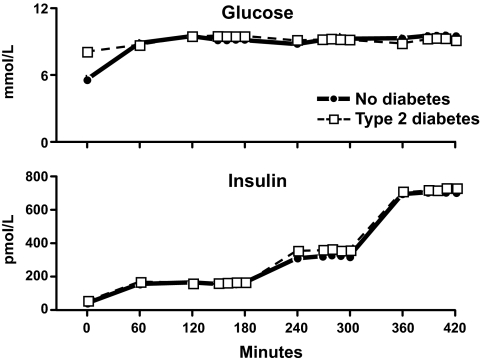
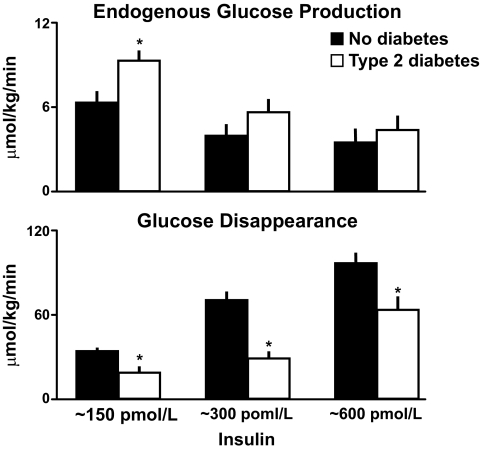
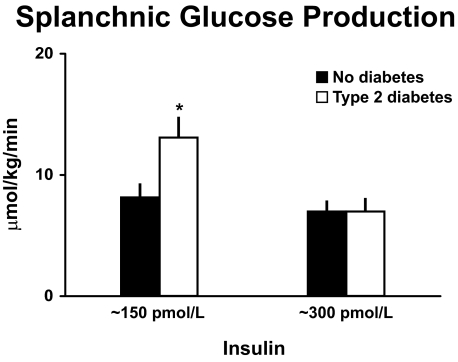
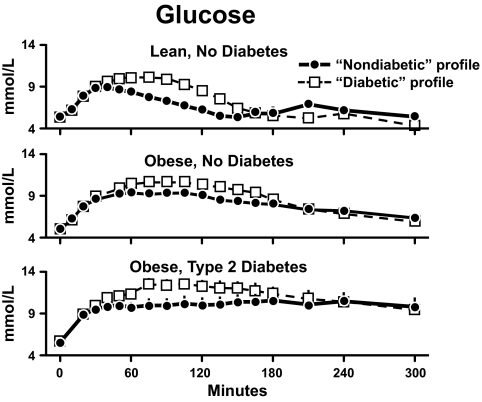
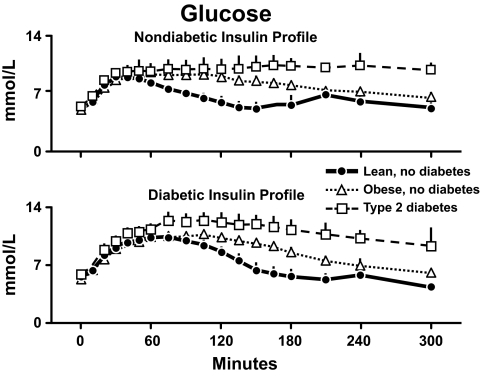
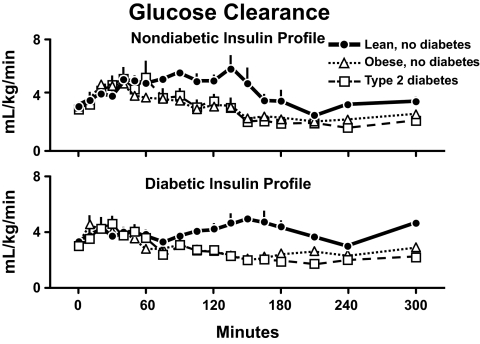
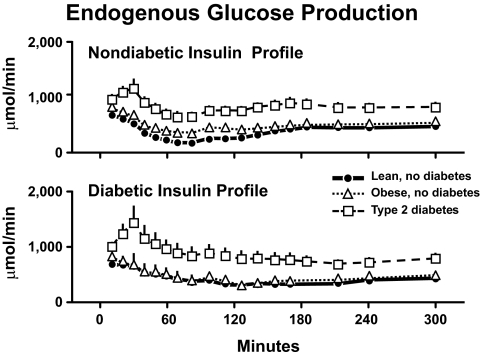
The objective of this research is to gain a greater understanding of the cause of fasting and postprandial hyperglycemia in people with type 2 diabetes. Endogenous glucose production is excessive before eating and fails to appropriately suppress after eating in people with type 2 diabetes. This is due in part to impaired insulin-induced suppression of endogenous glucose production, which is observed early in the evolution of type 2 diabetes. Increased rates of gluconeogenesis and perhaps glycogenolysis contribute to hepatic insulin resistance. Insulin-induced stimulation of hepatic glucose uptake and hepatic glycogen synthesis are reduced in people with type 2 diabetes primarily due to decreased uptake of extracellular glucose presumably because of inadequate activation of hepatic glucokinase. Delayed insulin secretion results in higher peak glucose concentrations particularly when suppression of glucagon is impaired, whereas insulin resistance prolongs the duration of hyperglycemia, which can be marked when both hepatic and extra-hepatic insulin resistance are present. The premise of these studies, as well as those performed by many other investigators, is that an understanding of the pathogenesis of type 2 diabetes will enable the development of targeted therapies that are directed toward correcting specific metabolic defects in a given individual. I, as well as many other investigators, believe that such therapies are likely to be more effective and to have a lower risk than would occur if everyone were treated the same regardless of the underlying cause of their hyperglycemia. While we do not yet have sufficient knowledge to truly individualize therapy, in my opinion this approach will be the norm in the not too distant future.
Overview
The claims and statistics of this paper haven’t been checked yet.
Free: it reads the open-access text and checks the first 5 claims that cite a source we can check. Create a free account to check every claim.
Integrity signals
Registry
Cites
Statistics
Figures
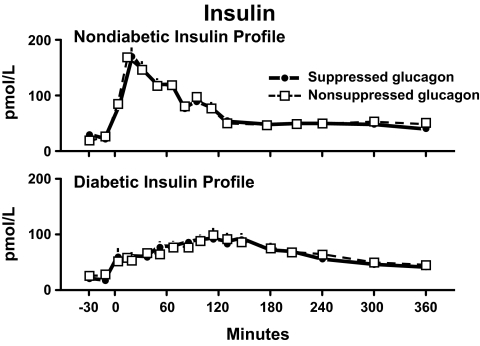
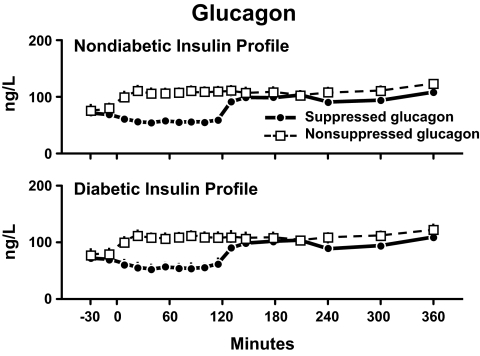
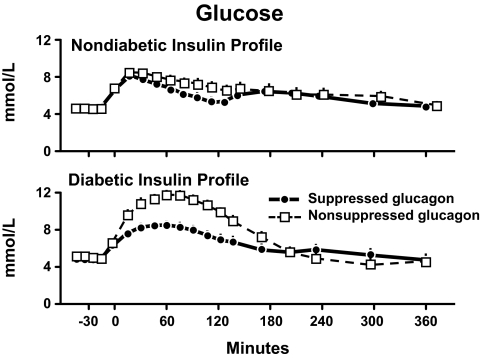
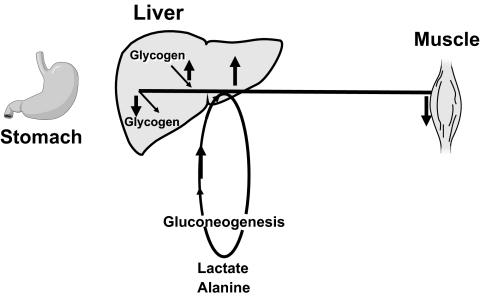
Verification
Claims the paper makes
The claims and statistics of this paper haven’t been checked yet.
Free: it reads the open-access text and checks the first 5 claims that cite a source we can check. Create a free account to check every claim.
Claims other papers make about this one
Each is checked against this paper’s own text: does it say what the citing paper says it does?
The cited source says what the claim attributes to it.
In the citing paper
“The set point above the normal glucose concentration of around 5–5.5 mM [1], [28] is in line with the role of the liver as glucose producer under normoglycemic conditions [1], [29].”
From Quantifying the Contribution of the Liver to Glucose Homeostasis: A Detailed Kinetic Model of Human Hepatic Glucose Metabolism (2012) · cites this paper as [29]
Self-check
Percentages, sums and reported differences re-computed from the paper’s own numbers.
The self-check needs the paper’s full text.
Citations
Cites
Magnusson, I., Rothman, D. L., Katz, L. D., Shulman, R. G., & Shulman, G. I. (1992) · Journal of Clinical Investigation · doi:10.1172/jci115997 · Cited by 757 · cited 1×
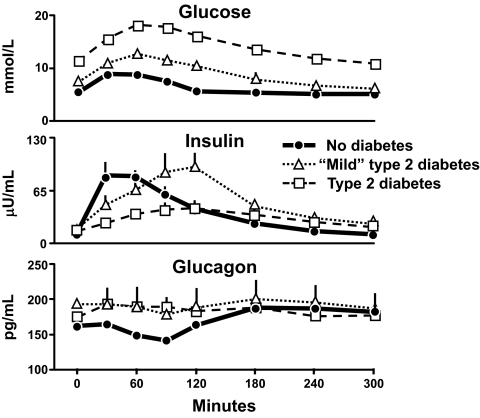
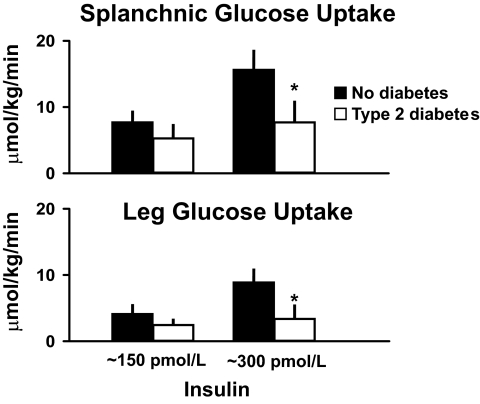
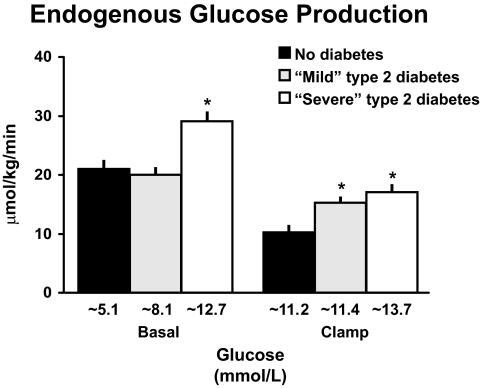
“Consistent with previous studies (23,25), the data on the left side of Fig.”
ResultAbnormal Alpha-Cell Function in Diabetes: Response to Carbohydrate and Protein Ingestion
Müller, W. A., Faloona, G. R., Aguilar-Parada, E., & Unger, R. H. (1970) · New England Journal of Medicine · doi:10.1056/nejm197007162830301 · Cited by 626
β-cells in type II diabetes mellitus
Porte, D. (1991) · Diabetes · doi:10.2337/diab.40.2.166 · Cited by 585
Regulation of Splanchnic and Peripheral Glucose Uptake by Insulin and Hyperglycemia in Man
DeFronzo, R. A., Ferrannini, E., Hendler, R., Felig, P., & Wahren, J. (1983) · Diabetes · doi:10.2337/diab.32.1.35 · Cited by 509 · cited 1×
“However, since the glucose concentrations were markedly elevated in the people with the diabetes and since hyperglycemia stimulates hepatic glucose uptake (11-14), these data should not be interpreted as indicating postprandial hepatic glucose uptake is normal in type 2 diabetes.”
BackgroundContributions of gluconeogenesis to glucose production in the fasted state
Landau, B. R., Wahren, J., Chandramouli, V, Schumann, W. C., Ekberg, K., & Kalhan, S. C. (1996) · Journal of Clinical Investigation · doi:10.1172/jci118803 · Cited by 487 · cited 1×
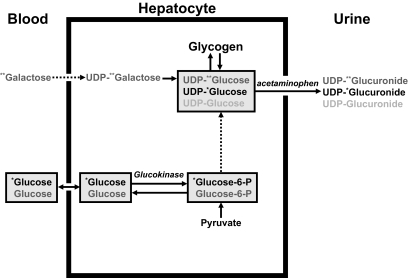
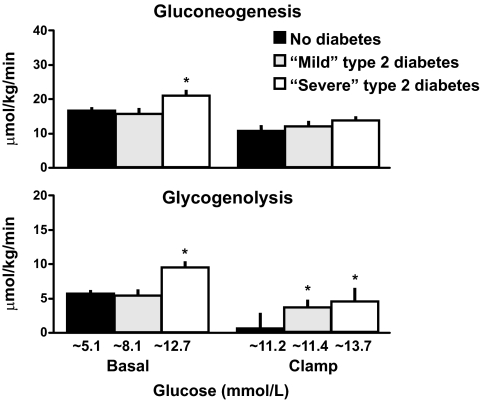
“This method is based on the fact that following the ingestion of deuterated water, the fifth carbon of glucose is labeled with deuterium during gluconeogenesis, whereas the second carbon of glucose is labeled with deuterium during both the gluconeogenesis and glycogenolysis (30).”
MethodBogardus, C., Lillioja, S., Howard, B. V., Reaven, G., & Mott, D. (1984) · Journal of Clinical Investigation · doi:10.1172/jci111533 · Cited by 397 · cited 2×
“Consistent with previous studies (22-26) and those discussed above (1;”
BackgroundResultPerley, M., & Kipnis, D. M. (1966) · Diabetes · doi:10.2337/diab.15.12.867 · Cited by 330
Firth, R. G., Bell, P. M., Marsh, H. M., Hansen, I., & Rizza, R. A. (1986) · Journal of Clinical Investigation · doi:10.1172/jci112467 · Cited by 280 · cited 7×
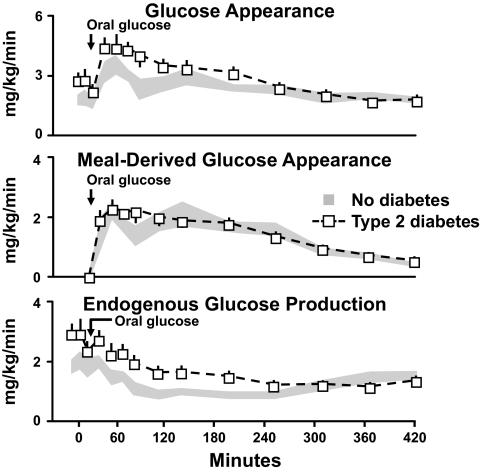
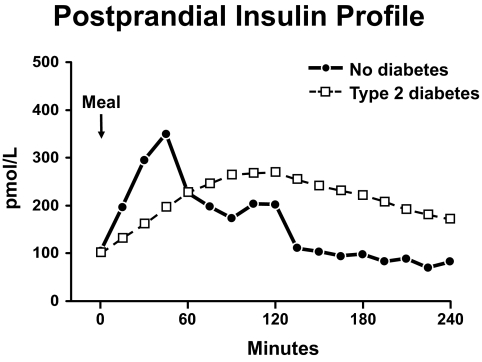
“The excess amount of glucose released due to slower suppression of endogenous glucose production entirely accounted for the higher postprandial rates of glucose appearance (10).”
BackgroundMethodResultSelf-citationCarbohydrate Metabolism in Non-Insulin-Dependent Diabetes Mellitus
Dinneen, S., Gerich, J., & Rizza, R. (1992) · New England Journal of Medicine · doi:10.1056/nejm199209033271007 · Cited by 279 · cited 2×
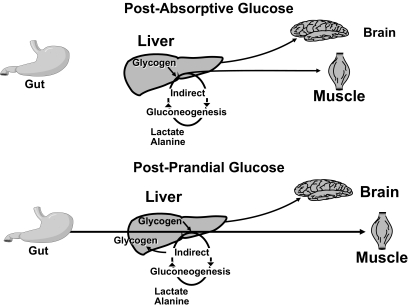
“Simplified portrayal of glucose metabolism in the postabsorptive (upper panel) and postprandial (lower panel) states (9).”
BackgroundSelf-citationMechanism by which glucose and insulin inhibit net hepatic glycogenolysis in humans.
Petersen, K. F., Laurent, D., Rothman, D. L., Cline, G. W., & Shulman, G. I. (1998) · Journal of Clinical Investigation · doi:10.1172/jci579 · Cited by 237 · cited 1×
“However, hyperglycemia is known to be a potent suppressor of glycogenolysis (33).”
Background
Cited by
Diamanti-Kandarakis, E., & Dunaif, A. (2012) · Endocrine Reviews · doi:10.1210/er.2011-1034 · Cited by 1,947
The integrative biology of type 2 diabetes
Roden, M., & Shulman, G. I. (2019) · Nature · doi:10.1038/s41586-019-1797-8 · Cited by 1,167
Regulation of hepatic glucose metabolism in health and disease
Petersen, M. C., Vatner, D. F., & Shulman, G. I. (2017) · Nature Reviews Endocrinology · doi:10.1038/nrendo.2017.80 · Cited by 1,133
Insulin Resistance: From Mechanisms to Therapeutic Strategies
Lee, S.-H., Park, S.-Y., & Choi, C. S. (2022) · Diabetes & Metabolism Journal · doi:10.4093/dmj.2021.0280 · Cited by 1,092
“This process is called hepatic glucose production (HGP), and involves the breakdown of hepatic glycogen (glycogenolysis) and de novo synthesis of glucose (gluconeogenesis) using fatty acids and glycerol derived from adipose tissues [3].”
BackgroundFeinman, R. D., Pogozelski, W. K., Astrup, A., Bernstein, R. K., Fine, E. J., Westman, E. C., Accurso, A., Frassetto, L., Gower, B. A., McFarlane, S. I., et al. (2015) · Nutrition · doi:10.1016/j.nut.2014.06.011 · Cited by 912
“Whereas defects in repression of gluconeogenesis and glycogenolysis are the major causes of hyperglycemia [8,15], carbohydrate is by far the greatest dietary contributor to blood sugar rises and, as expected, dietary carbohydrate restriction reliably reduces glucose profile.”
Metadata
- Authors
- Rizza, R. A.
- Affiliations
- Mayo Clinic (US)
- Corresponding author
- Rizza, Robert A.
- Venue
- Diabetes
- Publisher
- American Diabetes Association
- Published
- 2010-08-12
- Volume
- 59
- Issue
- 11
- Pages
- 2697-2707
- ISSN
- 0012-1797 (ISSN-L)
- 1939-327X
- PMC
- PMC2963523
- OpenAlex
- W2112941360
- Cited by
- 367
- References
- 39
- Citations by year
- 2026: 13 · 2025: 18 · 2024: 21 · 2023: 31 · 2022: 34 · 2021: 28 · 2020: 20 · 2019: 25 · 2018: 31 · 2017: 31 · 2016: 22 · 2015: 18 · 2014: 24 · 2013: 19 · 2012: 16
- FWCI
- 17.19
- Type
- journal article
- Language
- en
- Open access
- hybrid
- doi.org
- Licence
- Locations
- Diabetes (publishedVersion, cc-by-nc-nd)
- PubMed Central (publishedVersion, cc-by-nc-nd)
- PubMed (publishedVersion)
- Funders
- American Diabetes Association
- Mayo Clinic (UL1 RR024150, RR024150)
- National Institute of Diabetes and Digestive and Kidney Diseases (R01DK029953, DK 29953, R37DK029953)
- National Center for Research Resources (UL1RR024150)
- Topics
- Health Sciences › Medicine › Endocrinology, Diabetes and Metabolism › Pancreatic function and diabetes
- Health Sciences › Medicine › Endocrinology, Diabetes and Metabolism › Diabetes Treatment and Management
- Health Sciences › Medicine › Endocrinology, Diabetes and Metabolism › Diabetes Management and Research
- Keywords
- type 2 diabetes, fasting hyperglycemia, postprandial hyperglycemia, endogenous glucose production, hepatic insulin resistance, gluconeogenesis, glycogenolysis, hepatic glucokinase, hepatic glucose uptake, hepatic glycogen synthesis, glucagon suppression, insulin resistance, personalized treatment
- MeSH terms
- Blood Glucose, Diabetes Mellitus, Type 2, Fasting, Glucagon, Gluconeogenesis, Glucose, Glycosuria, Humans, Hyperglycemia, Insulin Resistance, Intestinal Absorption, Liver, Reference Values, Uridine Diphosphate Glucose, Postprandial Period
About these checks
Registry, retraction, Cites and statistics results are computed, not judged, with one exception: a printed reference that no index lists is read once by a model before it counts as a citation error. Claims are extracted by a model and kept only when their quote appears verbatim in the text; each cited source is then checked, with a model’s help, for whether it says what the claim relies on. Those verdicts can be wrong — read the claim’s quote and the cited source before relying on one.
Statistics and arithmetic are recomputed, not judged.
Confidence bands are shown only for fields calibrated on our annotated test set. None is calibrated yet, so no band is shown.
What counts as a claim ›How we measure confidence ›How we check this ›
Are you an author, or do you see a problem with this page? Request a review
Data sources
Bibliographic data: Semantic Scholar, OpenAlex, Crossref.
Contains information from the Semantic Scholar Academic Graph Datasets, made available under the ODC Attribution License (ODC-BY 1.0).
Semantic Scholar’s data is described in: Kinney, R., et al. (2023). The Semantic Scholar Open Data Platform. arXiv:2301.10140.
