

The DOI matches its Crossref record; 49 of the 50 references it cites were found in a registry or an index.
Genome-Wide Association Identifies Nine Common Variants Associated With Fasting Proinsulin Levels and Provides New Insights Into the Pathophysiology of Type 2 Diabetes
Open accessAbstract
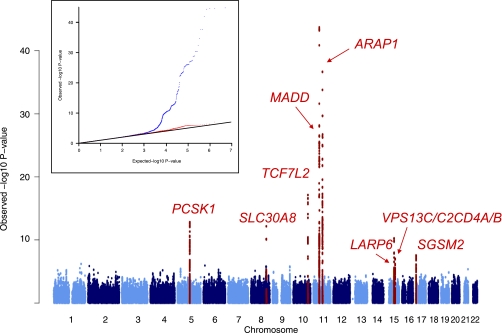
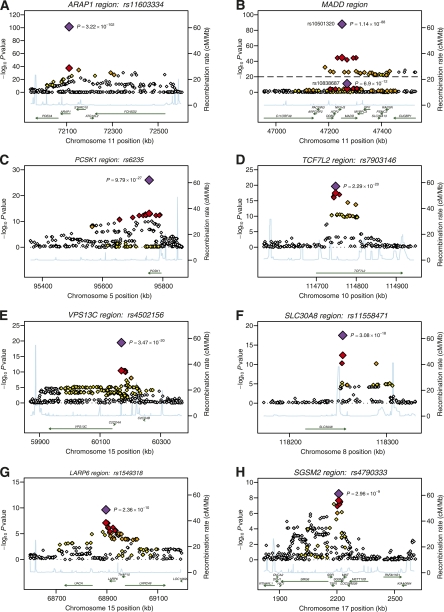
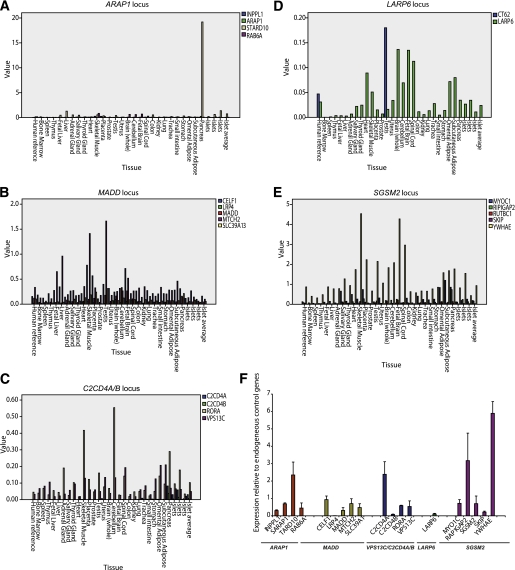
OBJECTIVE: Proinsulin is a precursor of mature insulin and C-peptide. Higher circulating proinsulin levels are associated with impaired β-cell function, raised glucose levels, insulin resistance, and type 2 diabetes (T2D). Studies of the insulin processing pathway could provide new insights about T2D pathophysiology. RESEARCH DESIGN AND METHODS: We have conducted a meta-analysis of genome-wide association tests of ∼2.5 million genotyped or imputed single nucleotide polymorphisms (SNPs) and fasting proinsulin levels in 10,701 nondiabetic adults of European ancestry, with follow-up of 23 loci in up to 16,378 individuals, using additive genetic models adjusted for age, sex, fasting insulin, and study-specific covariates. RESULTS: Nine SNPs at eight loci were associated with proinsulin levels (P < 5 × 10⁻⁸). Two loci (LARP6 and SGSM2) have not been previously related to metabolic traits, one (MADD) has been associated with fasting glucose, one (PCSK1) has been implicated in obesity, and four (TCF7L2, SLC30A8, VPS13C/C2CD4A/B, and ARAP1, formerly CENTD2) increase T2D risk. The proinsulin-raising allele of ARAP1 was associated with a lower fasting glucose (P = 1.7 × 10⁻⁴), improved β-cell function (P = 1.1 × 10⁻⁵), and lower risk of T2D (odds ratio 0.88; P = 7.8 × 10⁻⁶). Notably, PCSK1 encodes the protein prohormone convertase 1/3, the first enzyme in the insulin processing pathway. A genotype score composed of the nine proinsulin-raising alleles was not associated with coronary disease in two large case-control datasets. CONCLUSIONS: We have identified nine genetic variants associated with fasting proinsulin. Our findings illuminate the biology underlying glucose homeostasis and T2D development in humans and argue against a direct role of proinsulin in coronary artery disease pathogenesis.
Overview
The claims and statistics of this paper haven’t been checked yet.
Run the check — free, no account needed. It reads the open-access text and checks the sources it cites.
Integrity signals
Registry
Cites
Statistics
Figures
Verification
Claims the paper makes
The claims and statistics of this paper haven’t been checked yet.
Run the check — free, no account needed. It reads the open-access text and checks the sources it cites.
Claims other papers make about this one
Each is checked against this paper’s own text: does it say what the citing paper says it does?
The check wasn’t confident either way, so it gives no verdict — never disputed.
In the citing paper
“Interestingly, rs1057233 was previously found to be associated with systemic lupus erythematosus33, body mass index40 and proinsulin levels41”
From A common haplotype lowers PU.1 expression in myeloid cells and delays onset of Alzheimer's disease (2017) · cites this paper as [40]
Experimental — accuracy not yet measured
Self-check
Percentages, sums and reported differences re-computed from the paper’s own numbers.
The self-check needs the paper’s full text.
Citations
Cites
R: A Language and Environment for Statistical Computing
R Core Team (2000) · doi:10.32614/r.manuals · Cited by 355,893
PLINK: a tool set for whole-genome association and population-based linkage analyses.
Purcell, S., Neale, B., Todd-Brown, K., Thomas, L., Ferreira, M. A. R., Bender, D., Maller, J., Sklar, P., de Bakker, P. I. W., Daly, M. J., et al. (2007) · The American Journal of Human Genetics · doi:10.1086/519795 · Cited by 34,089
Matthews, D. R., Hosker, J. P., Rudenski, A. S., Naylor, B. A., Treacher, D. F., & Turner, R. C. (1985) · Diabetologia · doi:10.1007/bf00280883 · Cited by 31,502
Toprak, Ö., Kurt, H., Sarı, Y., Şarkış, C., Us, H., & Kırık, A. (2017) · Kidney & Blood Pressure Research · doi:10.1159/000468530 · Cited by 29,772
Genetics of Food Intake Self-Regulation in Childhood: Literature Review and Research Opportunities
Faith, M. S., Carnell, S., & Kral, T. V. E. (2013) · Human Heredity · doi:10.1159/000353879 · Cited by 7,633
Matsuda, M., & DeFronzo, R. A. (1999) · Diabetes Care · doi:10.2337/diacare.22.9.1462 · Cited by 5,621
METAL: fast and efficient meta-analysis of genomewide association scans
Willer, C. J., Li, Y., & Abecasis, G. R. (2010) · Bioinformatics · doi:10.1093/bioinformatics/btq340 · Cited by 5,205
Genomic Control for Association Studies
Devlin, B., & Roeder, K. (1999) · Biometrics · doi:10.1111/j.0006-341x.1999.00997.x · Cited by 3,162 · cited 1×
“Genome-wide association inflation coefficients were estimated for each discovery cohort using the genomic control (GC) method (23) and applied subsequently to each individual SNP association test statistics to correct for cryptic relatedness.”
Association analyses of 249,796 individuals reveal 18 new loci associated with body mass index
MAGIC, Speliotes, E. K., on behalf of Procardis Consortium, Willer, C. J., Berndt, S. I., Monda, K. L., Thorleifsson, G., Jackson, A. U., Allen, H. L., Lindgren, C. M., et al. (2010) · Nature Genetics · doi:10.1038/ng.686 · Cited by 2,912
Self-citationA new multipoint method for genome-wide association studies by imputation of genotypes
Marchini, J., Howie, B., Myers, S., McVean, G., & Donnelly, P. (2007) · Nature Genetics · doi:10.1038/ng2088 · Cited by 2,609
Research works printed but not linked: 2
- StataCorp, 2007, Stata Statistical Software: Release 10
- Li, 2006, Am J Hum Genet, S79, 2290
Cited by
Sorted by citations
Causal relationships among the gut microbiome, short-chain fatty acids and metabolic diseases
Sanna, S., van Zuydam, N. R., Mahajan, A., Kurilshikov, A., Vich Vila, A., Võsa, U., Mujagic, Z., Masclee, A. A. M., Jonkers, D. M. A. E., Oosting, M., et al. (2019) · Nature Genetics · doi:10.1038/s41588-019-0350-x · Cited by 1,539
Self-citationScott, R. A., Lagou, V., Welch, R., Wheeler, E., Montasser, M. E., Luan, J., Mägi, R., Strawbridge, R. J., Rehnberg, E., Gustafsson, S., et al. (2012) · Nature Genetics · doi:10.1038/ng.2385 · Cited by 831
Self-citationManning, A. K., Hivert, M., Scott, R. A., Grimsby, J., Bouatia‐Naji, N., Chen, H., Rybin, D. V., Liu, C.-T., Bielak, L. F., Prokopenko, I., et al. (2012) · Nature Genetics · doi:10.1038/ng.2274 · Cited by 821
Self-citationThe effect of host genetics on the gut microbiome
Bonder, M. J., Kurilshikov, A., Tigchelaar, E. F., Mujagic, Z., Imhann, F., Vila, A. V., Deelen, P., Vatanen, T., Schirmer, M., Smeekens, S. P., et al. (2016) · Nature Genetics · doi:10.1038/ng.3663 · Cited by 819
An Expanded Genome-Wide Association Study of Type 2 Diabetes in Europeans
Scott, R. A., Scott, L. J., Mägi, R., Marullo, L., Gaulton, K. J., Kaakinen, M., Pervjakova, N., Pers, T. H., Johnson, A. D., Eicher, J. D., et al. (2017) · Diabetes · doi:10.2337/db16-1253 · Cited by 708
Self-citation
Metadata
- Authors
- Strawbridge, R. J., Dupuis, J., Prokopenko, I., Barker, A., Ahlqvist, E., Rybin, D., Petrie, J. R., Travers, M. E., Bouatia-Naji, N., Dimas, A. S., Nica, A., Wheeler, E., Chen, H., Voight, B. F., Taneera, J., Kanoni, S., Peden, J. F., Turrini, F., Gustafsson, S., Zabena, C., Almgren, P., Barker, D. J. P., Barnes, D., Dennison, E. M., Eriksson, J. G., Eriksson, P., Eury, E., Folkersen, L., Fox, C. S., Frayling, T. M., Goel, A., Gu, H. F., Horikoshi, M., Isomaa, B., Jackson, A. U., Jameson, K. A., Kajantie, E., Kerr-Conte, J., Kuulasmaa, T., Kuusisto, J., Loos, R. J. F., Luan, J., Makrilakis, K., Manning, A. K., Martínez-Larrad, M. T., Narisu, N., Nastase Mannila, M., Öhrvik, J., Osmond, C., Pascoe, L., Payne, F., Sayer, A. A., Sennblad, B., Silveira, A., Stančáková, A., Stirrups, K., Swift, A. J., Syvänen, A.-C., Tuomi, T., van 't Hooft, F. M., Walker, M., Weedon, M. N., Xie, W., Zethelius, B., the DIAGRAM Consortium, the GIANT Consortium, the MuTHER Consortium, the CARDIoGRAM Consortium, the C4D Consortium, Ongen, H., Mälarstig, A., Hopewell, J. C., Saleheen, D., Chambers, J., Parish, S., Danesh, J., Kooner, J., Östenson, C.-G., Lind, L., Cooper, C. C., Serrano-Ríos, M., Ferrannini, E., Forsen, T. J., Clarke, R., Franzosi, M. G., Seedorf, U., Watkins, H., Froguel, P., Johnson, P., Deloukas, P., Collins, F. S., Laakso, M., Dermitzakis, E. T., Boehnke, M., McCarthy, M. I., Wareham, N. J., Groop, L., Pattou, F., Gloyn, A. L., Dedoussis, G. V., Lyssenko, V., Meigs, J. B., Barroso, I., Watanabe, R. M., Ingelsson, E., Langenberg, C., Hamsten, A., & Florez, J. C.
- Affiliations
- Karolinska University Hospital (SE)
- Boston University (US)
- Centre for Human Genetics (GB)
- Addenbrooke's Hospital (GB)
- Lund University (SE)
- University of Glasgow (GB)
- University of Oxford (GB)
- Université Lille-Nord de France, Lille, France
- University of Geneva (CH)
- Wellcome Sanger Institute (GB)
- Broad Institute (US)
- University of Verona (IT)
- Karolinska Institutet (SE)
- CIBER de Diabetes y Enfermedades Metabólicas Asociadas (CIBERDEM), Madrid, Spain
- Oregon Health & Science University (US)
- Southampton General Hospital (GB)
- University of Helsinki (FI)
- Centre National de la Recherche Scientifique (FR)
- Brigham and Women's Hospital (US)
- University of Exeter (GB)
- Folkhälsans Forskningscentrum (FI)
- University of Michigan (US)
- Inserm (FR)
- Kuopio University Hospital (FI)
- Laiko General Hospital of Athens (GR)
- Hospital Clínico San Carlos (ES)
- National Institutes of Health (US)
- Atherosclerosis Research Unit, Department of Medicine Solna, Karolinska Institutet, Karolinska University Hospital Solna, Stockholm, Sweden
- Newcastle University (GB)
- Uppsala University (SE)
- Folkhälsan Research Centre, Helsinki, Finland
- University of Cambridge (GB)
- Ealing Hospital NHS Trust (GB)
- University of Pisa (IT)
- Department of General Practice and Primary Health Care, University of Helsinki, Helsinki, Finland
- Mario Negri Institute for Pharmacological Research (IT)
- University of Münster (DE)
- Oxford Centre for Diabetes Endocrinology and Metabolism, University of Oxford, Oxford, U.K.
- Harokopio University of Athens (GR)
- Harvard University (US)
- University of Southern California (US)
- Program in Medical and Population Genetics, Broad Institute, Cambridge, Massachusetts
- Corresponding author
- Langenberg, Claudia
- Hamsten, Anders
- ORCID
- Strawbridge, Rona J.
- Dupuis, Josée
- Prokopenko, Inga
- Barker, Adam
- Ahlqvist, Emma
- Rybin, Denis
- Petrie, John R.
- Dimas, Antigone S.
- Wheeler, Eleanor
- Chen, Han
- Voight, Benjamin F.
- Taneera, Jalal
- Kanoni, Stavroula
- Gustafsson, Stefan
- Almgren, Peter
- Barnes, Daniel
- Dennison, Elaine M.
- Eriksson, Johan G.
- Eriksson, Per
- Folkersen, Lasse
- Fox, Caroline S.
- Frayling, Timothy M.
- Goel, Anuj
- Gu, Harvest F.
- Horikoshi, Momoko
- Jackson, Anne U.
- Kajantie, Eero
- Kerr-Conte, Julie
- Kuulasmaa, Teemu
- Kuusisto, Johanna
- Loos, Ruth J.F.
- Luan, Jian'an
- Makrilakis, Konstantinos
- Manning, Alisa K.
- Narisu, Narisu
- Öhrvik, John
- Osmond, Clive
- Pascoe, Laura
- Payne, Felicity
- Sayer, Avan A.
- Sennblad, Bengt
- Silveira, Angela
- Walker, Mark
- Weedon, Michael N.
- Xie, Weijia
- Zethelius, Björn
- Ongen, Halit
- Mälarstig, Anders
- Hopewell, Jemma C.
- Saleheen, Danish
- Chambers, John
- Parish, Sarah
- Danesh, John
- Kooner, Jaspal
- Lind, Lars
- Cooper, Cyrus C.
- Ferrannini, Ele
- Clarke, Robert
- Seedorf, Udo
- Watkins, Hugh
- Froguel, Philippe
- Deloukas, Panos
- Collins, Francis S.
- Laakso, Markku
- Dermitzakis, Emmanouil T.
- Boehnke, Michael
- McCarthy, Mark I.
- Wareham, Nicholas J.
- Groop, Leif
- Pattou, François
- Gloyn, Anna L.
- Dedoussis, George V.
- Lyssenko, Valeriya
- Meigs, James B.
- Barroso, Inês
- Watanabe, Richard M.
- Ingelsson, Erik
- Langenberg, Claudia
- Hamsten, Anders
- Venue
- Diabetes
- Publisher
- American Diabetes Association
- Published
- 2011-09-16
- Volume
- 60
- Issue
- 10
- Pages
- 2624-2634
- ISSN
- 0012-1797 (ISSN-L)
- 1939-327X
- PMC
- PMC3178302
- OpenAlex
- W2151600164
- Cited by
- 356
- References
- 50
- Citations by year
- 2026: 7 · 2025: 7 · 2024: 12 · 2023: 16 · 2022: 18 · 2021: 23 · 2020: 23 · 2019: 27 · 2018: 27 · 2017: 36 · 2016: 30 · 2015: 30 · 2014: 39 · 2013: 29 · 2012: 31
- FWCI
- 19.95
- Type
- journal article
- Language
- en
- Open access
- hybrid
- doi.org
- Licence
- Locations
- Diabetes (publishedVersion, cc-by-nc-nd)
- PubMed Central (publishedVersion, cc-by-nc-nd)
- PubMed (publishedVersion)
- Research Explorer (The University of Manchester) (publishedVersion)
- VU Research Portal (publishedVersion, other-oa)
- Digital Access to Scholarship at Harvard (DASH) (Harvard University) (submittedVersion, cc-by)
- QUT ePrints (Queensland University of Technology) (submittedVersion, cc-by-nc-nd)
- Archivio Istituzionale della Ricerca - Università Vita-Salute San Raffaele (submittedVersion, cc-by-nc-nd)
- Minerva Access (University of Melbourne) (submittedVersion, cc-by-nc-nd)
- Archive ouverte UNIGE (University of Geneva) (submittedVersion, other-oa)
- UWA Profiles and Research Repository (UWA) (submittedVersion, other-oa)
- Data Archiving and Networked Services (DANS) (submittedVersion)
- RePub (Erasmus University Rotterdam) (submittedVersion, other-oa)
- Leiden Repository (Leiden University) (submittedVersion)
- CINECA IRIS Institutial research information system (University of Pisa) (submittedVersion)
- Adelaide Research & Scholarship (AR&S) (University of Adelaide) (submittedVersion, cc-by-nc-nd)
- ENLIGHTEN (Jurnal Bimbingan dan Konseling Islam) (submittedVersion)
- UCL Discovery (University College London) (submittedVersion)
- eScholarship (California Digital Library) (submittedVersion, cc-by)
- JuSER (Forschungszentrum Jülich) (submittedVersion)
- Lund University Publications (Lund University) (submittedVersion)
- Pure Amsterdam UMC (submittedVersion)
- Scopus (Elsevier) (submittedVersion)
- Edinburgh Research Explorer (University of Edinburgh) (submittedVersion, cc-by-nc-nd)
- Radboud Repository (Radboud University) (submittedVersion)
- RePub (Erasmus University Rotterdam) (submittedVersion)
- SERVAL (Université de Lausanne) (submittedVersion)
- Spiral (Imperial College London) (submittedVersion, cc-by-nc-nd)
- OPUS (Augsburg University) (submittedVersion)
- Open Research (University of Surrey) (submittedVersion)
- Archive ouverte UNIGE (University of Geneva) (submittedVersion, cc-by)
- STM:n Hallinnonalan avoin julkaisuarkisto (Julkari) (submittedVersion)
- Apollo (University of Cambridge) (submittedVersion, cc-by)
- University of Groningen research database (University of Groningen / Centre for Information Technology) (submittedVersion, cc-by-nc-nd)
- Data Archiving and Networked Services (DANS) (submittedVersion, other-oa)
- Apollo (cc-by)
- Newcastle University ePrints (Newcastle Univesity)
- Funders
- Wellcome Trust (083270/Z/07/Z, 077016/Z/05/Z, 090532)
- National Institute for Health and Care Research (NF-SI-0508-10082)
- British Heart Foundation (RG/08/014/24067)
- Novo Nordisk Fonden (#NNF10OC1013354)
- Medical Research Council (MC_PC_U127592696, MC_PC_U127561128, MRC_MC_UP_A620_1015, G0601966, G0601261, MC_UP_A620_1014, G0700931)
- National Heart, Lung, and Blood Institute (U01HL054527)
- National Institute of Diabetes and Digestive and Kidney Diseases (R01DK078616, K24DK080140, DK-062370)
- Topics
- Life Sciences › Biochemistry, Genetics and Molecular Biology › Genetics › Genetic Associations and Epidemiology
- Life Sciences › Biochemistry, Genetics and Molecular Biology › Genetics › Diabetes and associated disorders
- Health Sciences › Medicine › Endocrinology, Diabetes and Metabolism › Pancreatic function and diabetes
- Keywords
- proinsulin, type 2 diabetes, single nucleotide polymorphisms, genetic loci, beta-cell function, fasting blood glucose, insulin resistance, ARAP1, PCSK1, prohormone convertase 1/3, TCF7L2, SLC30A8, VPS13C, MADD, LARP6, coronary artery disease, glucose homeostasis
- MeSH terms
- Adult, Diabetes Mellitus, Type 2, Fasting, Female, Genotype, Humans, Insulin, Male, Proinsulin, Genetic Variation, Genome, Human, Polymorphism, Single Nucleotide
About these checks
Registry, retraction, Cites and statistics results are computed, not judged, with one exception: a printed reference that no index lists is read once by a model before it counts as a citation error. Claims are extracted by a model and kept only when their quote appears verbatim in the text; each cited source is then checked, with a model’s help, for whether it says what the claim relies on. Those verdicts can be wrong — read the claim’s quote and the cited source before relying on one.
Statistics and arithmetic are recomputed, not judged.
Confidence bands are shown only for fields calibrated on our annotated test set. None is calibrated yet, so no band is shown.
What counts as a claim ›How we measure confidence ›How we check this ›
Are you an author, or do you see a problem with this page? Request a review
