

The Oral Minimal Model Method
Open accessThe DOI matches its Crossref record; 48 of the 48 references it cites were found in a registry or an index.
Abstract
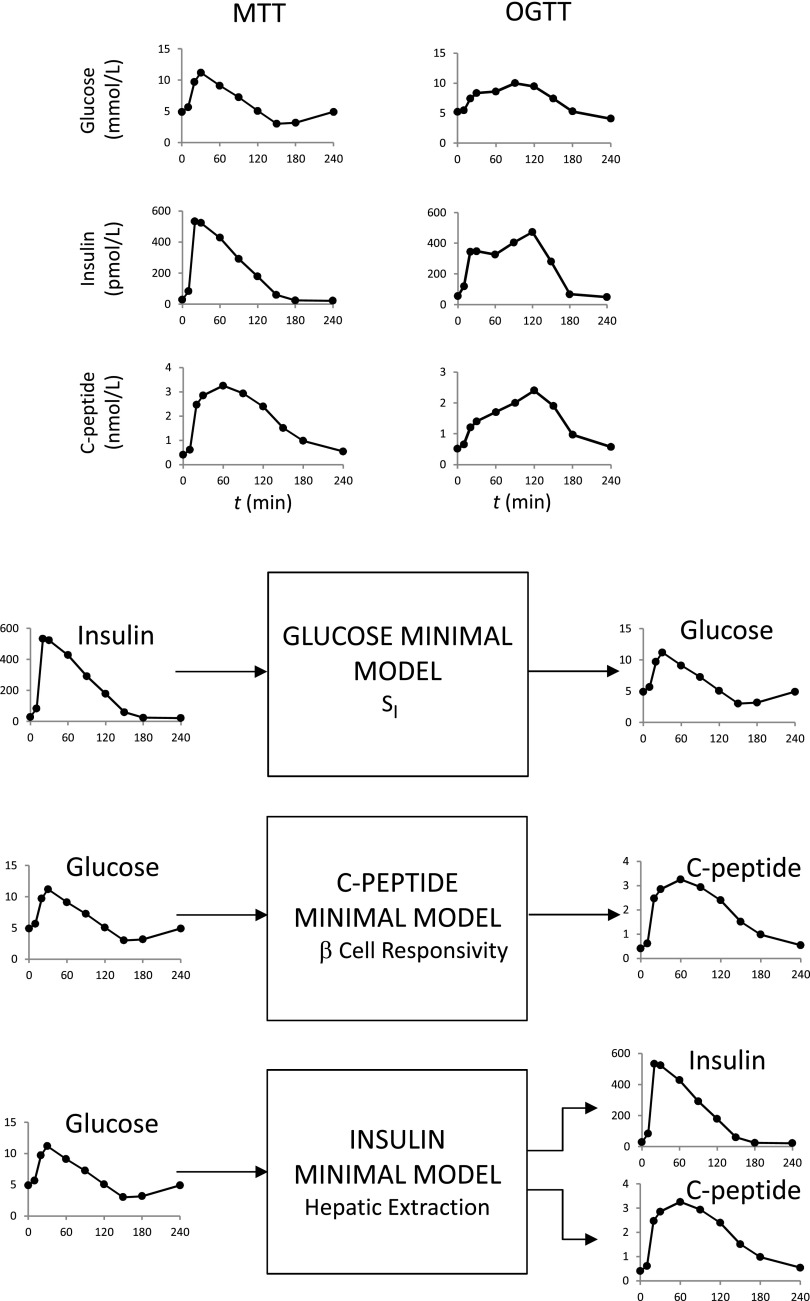
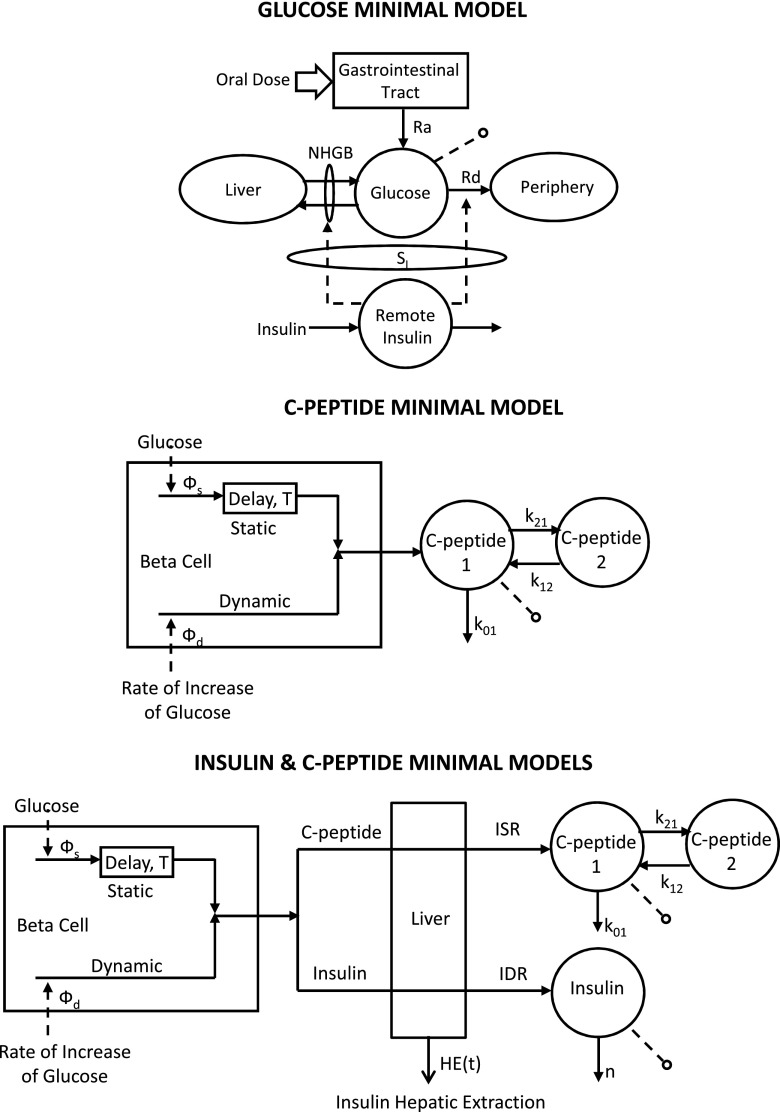
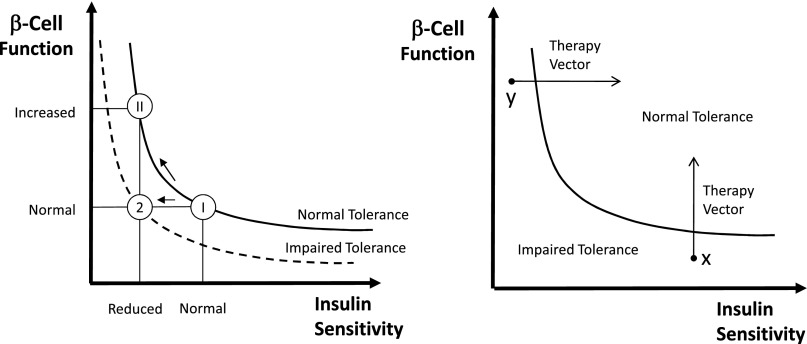
The simultaneous assessment of insulin action, secretion, and hepatic extraction is key to understanding postprandial glucose metabolism in nondiabetic and diabetic humans. We review the oral minimal method (i.e., models that allow the estimation of insulin sensitivity, β-cell responsivity, and hepatic insulin extraction from a mixed-meal or an oral glucose tolerance test). Both of these oral tests are more physiologic and simpler to administer than those based on an intravenous test (e.g., a glucose clamp or an intravenous glucose tolerance test). The focus of this review is on indices provided by physiological-based models and their validation against the glucose clamp technique. We discuss first the oral minimal model method rationale, data, and protocols. Then we present the three minimal models and the indices they provide. The disposition index paradigm, a widely used β-cell function metric, is revisited in the context of individual versus population modeling. Adding a glucose tracer to the oral dose significantly enhances the assessment of insulin action by segregating insulin sensitivity into its glucose disposal and hepatic components. The oral minimal model method, by quantitatively portraying the complex relationships between the major players of glucose metabolism, is able to provide novel insights regarding the regulation of postprandial metabolism.
Overview
The claims and statistics of this paper haven’t been checked yet.
Free: it reads the open-access text and checks the first 5 claims that cite a source we can check. Create a free account to check every claim.
Integrity signals
Registry
Cites
Statistics
Figures



Verification
Claims the paper makes
The claims and statistics of this paper haven’t been checked yet.
Free: it reads the open-access text and checks the first 5 claims that cite a source we can check. Create a free account to check every claim.
Claims other papers make about this one
Each is checked against this paper’s own text: does it say what the citing paper says it does?
The source backs part of the claim, not all of it — or backs it for a different population, condition or comparison.
In the citing paper
“Indeed, SI measured during an OGTT is highly correlated with glucose disposal measured during the euglycemic-hyperinsulinemic clamp technique (r = 0.70) [51].”
From Insulin sensitivity and pancreatic β-cell function in patients with primary aldosteronism (2021) · cites this paper as [51]
Experimental — accuracy not yet measured
Self-check
Percentages, sums and reported differences re-computed from the paper’s own numbers.
The self-check needs the paper’s full text.
Citations
Cites
Quantitative estimation of insulin sensitivity.
Bergman, R. N., Ider, Y. Z., Bowden, C. R., & Cobelli, C. (1979) · American Journal of Physiology-Endocrinology and Metabolism · doi:10.1152/ajpendo.1979.236.6.e667 · Cited by 1,874 · cited 2×
“(5), one obtains the following (14): (8)>>>< >>>: _ QðtÞ 1⁄4 2 1⁄2SG þ XðtÞ $QðtÞ þ SG$Qb þ Raða; tÞ Qð0Þ 1⁄4 Qb”
MethodSelf-citationBergman, R. N., Phillips, L. S., & Cobelli, C. (1981) · Journal of Clinical Investigation · doi:10.1172/jci110398 · Cited by 1,640 · cited 1×
“One possibility is to resort to a normalization of b-cell function based on the disposition index (DI) paradigm, first introduced in 1981 (28), and recently revisited first in Cobelli et al.”
MethodSelf-citationCauter, E. V., Mestrez, F., Sturis, J., & Polonsky, K. S. (1992) · Diabetes · doi:10.2337/diab.41.3.368 · Cited by 890
Cauter, E. V., Mestrez, F., Sturis, J., et al. (1992) · Diabetes · doi:10.2337/diabetes.41.3.368 · Cited by 643
DHEA in elderly women and DHEA or testosterone in elderly men.
Nair, K. S., Rizza, R. A., O'Brien, P., Dhatariya, K., Short, K. R., Nehra, A., Vittone, J. L., Klee, G. G., Basu, A., Basu, R., et al. (2006) · New England Journal of Medicine · doi:10.1056/nejmoa054629 · Cited by 566 · cited 1×
“For instance, the battery of oral glucose, C-peptide, and insulin models has been used to study the effect of age and sex on glucose metabolism (8), the effect of antiaging drugs (35), the influence of ethnicity (36), SI and b-cell function in nondiabetic (37) and obese (38) adolescents and children (39), the pathogen…”
MethodSelf-citationIncreased prevalence of insulin resistance and nonalcoholic fatty liver disease in Asian-Indian men
Petersen, K. F., Dufour, S., Feng, J., Befroy, D., Dziura, J., Man, C. D., Cobelli, C., & Shulman, G. I. (2006) · Proceedings of the National Academy of Sciences · doi:10.1073/pnas.0608537103 · Cited by 403 · cited 1×
“For instance, the battery of oral glucose, C-peptide, and insulin models has been used to study the effect of age and sex on glucose metabolism (8), the effect of antiaging drugs (35), the influence of ethnicity (36), SI and b-cell function in nondiabetic (37) and obese (38) adolescents and children (39), the pathogen…”
MethodSelf-citationEffects of Age and Sex on Postprandial Glucose Metabolism
Basu, R., Dalla Man, C., Campioni, M., Basu, A., Klee, G., Toffolo, G., Cobelli, C., & Rizza, R. A. (2006) · Diabetes · doi:10.2337/db05-1692 · Cited by 334
Self-citationOral Glucose Tolerance Test Minimal Model Indexes of β-Cell Function and Insulin Sensitivity
Breda, E., Cavaghan, M. K., Toffolo, G., Polonsky, K. S., & Cobelli, C. (2001) · Diabetes · doi:10.2337/diabetes.50.1.150 · Cited by 320
Self-citationCobelli, C., Toffolo, G. M., Man, C. D., Campioni, M., Denti, P., Caumo, A., Butler, P., & Rizza, R. (2007) · American Journal of Physiology-Endocrinology and Metabolism · doi:10.1152/ajpendo.00421.2006 · Cited by 311
Self-citationMeal and oral glucose tests for assessment of β-cell function: modeling analysis in normal subjects
Mari, A., Schmitz, O., Gastaldelli, A., Oestergaard, T., Nyholm, B., & Ferrannini, E. (2002) · American Journal of Physiology-Endocrinology and Metabolism · doi:10.1152/ajpendo.00093.2002 · Cited by 303
Research works printed but not linked: 1
- Cobelli, 1999, Minimal model SG overestimation and SI underestimation: improved accuracy by a Bayesian two-compartment model, Am J Physiol, 277, E481
Cited by
Items 101–200 of 216
Umano, G. R., Galderisi, A., Aiello, F. B., Martino, M., Camponesco, O., Sessa, A. D., Marzuillo, P., Alfonso, P., & del Giudice, E. M. (2023) · International Journal of Obesity · doi:10.1038/s41366-023-01257-w · Cited by 12
Farahani, R. A., Egan, A. M., Welch, A. A., LAURENTI, M. C., Cobelli, C., Man, C. D., & Vella, A. V. (2022) · Diabetes · doi:10.2337/db22-0709 · Cited by 12
Self-citationAdams, J. D., Egan, A. M., Laurenti, M. C., Schembri Wismayer, D., Bailey, K. R., Cobelli, C., Dalla Man, C., & Vella, A. (2021) · American Journal of Physiology-Endocrinology and Metabolism · doi:10.1152/ajpendo.00284.2021 · Cited by 10
Self-citationThe Longitudinal Effect of Diabetes-Associated Variation in TCF7L2 on Islet Function in Humans
Zeini, M., Laurenti, M. C., Egan, A. M., Muthusamy, K., Ramar, A., Vella, E., Bailey, K. R., Cobelli, C., Dalla Man, C., & Vella, A. (2024) · Diabetes · doi:10.2337/db24-0192 · Cited by 10
Self-citationSandby, K., Krarup, T., Chabanova, E., Geiker, N. R. W., & Magkos, F. (2024) · The Journal of Clinical Endocrinology & Metabolism · doi:10.1210/clinem/dgae572 · Cited by 11
Subramanian, V., Bagger, J. I., Harihar, V., Holst, J. J., Knop, F. K., & Villsbøll, T. (2023) · American Journal of Physiology-Endocrinology and Metabolism · doi:10.1152/ajpendo.00278.2023 · Cited by 12
Carreau, A., Xie, D., Garcia‐Reyes, Y., Rahat, H., Bartlette, K., Behn, C. D., Pyle, L. L., Nadeau, K. J., & Cree‐Green, M. (2020) · Pediatric Diabetes · doi:10.1111/pedi.13072 · Cited by 13
Metabolic Phenotype of Stage 1 and Stage 2 Type 1 Diabetes Using Modeling of β Cell Function
Galderisi, A., Bonet, J., Ismail, H. M., Moran, A., Fiorina, P., Bosi, E., & Petrelli, A. (2025) · The Journal of Clinical Endocrinology & Metabolism · doi:10.1210/clinem/dgaf086 · Cited by 9
Shankar, S. S., Shankar, R. R., Mixson, L. A., Miller, D. L., Chung, C., Cilissen, C., Beals, C. R., Stoch, S. A., Steinberg, H. O., & Kelley, D. E. (2016) · American Journal of Physiology-Endocrinology and Metabolism · doi:10.1152/ajpendo.00527.2015 · Cited by 10
Brede, S., Lutzke, B., Albers, E., Man, C. D., Cobelli, C., Hallschmid, M., Klement, J., & Lehnert, H. (2020) · Physiology & Behavior · doi:10.1016/j.physbeh.2020.113071 · Cited by 8
Self-citationSchiavon, M., Herzig, D., Hepprich, M., Donath, M. Y., Bally, L., & Man, C. D. (2021) · Frontiers in Endocrinology · doi:10.3389/fendo.2021.611253 · Cited by 9
Using Oral Challenge Testing to Assess Insulin Action and Secretion With Mathematical Modeling
Staten, M. A., & Kelley, D. E. (2014) · Diabetes · doi:10.2337/db13-1839 · Cited by 12
“(10) summarize the characteristics and benefits of using mathematical modeling of data obtained from an orally administered nutrient challenge, which could be either a mixed meal or glucose.”
BackgroundEgan, A. M., LAURENTI, M. C., Andrade, M. D. H., Man, C. D., Cobelli, C., Bailey, K. R., & Vella, A. V. (2020) · European Journal of Clinical Investigation · doi:10.1111/eci.13469 · Cited by 11
Self-citationCritical Evaluation of Indices Used to Assess β-Cell Function
Cao, C., Koh, H. E., Reeds, D. N., Patterson, B. W., Klein, S., & Mittendorfer, B. (2023) · Diabetes · doi:10.2337/db23-0613 · Cited by 12
Continuous glucose monitoring as a tool in early-stage type 1 diabetes
Carr, A. L. J., Sutton, H., Agesen, R. M., Bonifacio, E., Bosi, E., Gillard, P., Swaby, R., Vercauteren, J., & Besser, R. E. J. (2026) · Diabetologia · doi:10.1007/s00125-026-06707-4 · Cited by 10
“More complex modelling approaches such as the oral minimal model [65, 66] allow estimation of insulin sensitivity and beta cell responsivity from OGTT data, possibly offering greater granularity in dissecting metabolic heterogeneity in the early stages of disease [38, 39, 67].”
Adams, J. D., Egan, A. M., LAURENTI, M. C., Wismayer, D. S., Bailey, K. R., Cobelli, C., Man, C. D., & Vella, A. V. (2022) · Metabolic Syndrome and Related Disorders · doi:10.1089/met.2021.0136 · Cited by 8
Self-citationVoigt, J. H., Lauritsen, K. M., Pedersen, S. B., Hansen, T. K., Møller, N., Jessen, N., LAURENTI, M. C., Man, C. D., Vella, A. V., Gormsen, L. C., et al. (2024) · Basic & Clinical Pharmacology & Toxicology · doi:10.1111/bcpt.13991 · Cited by 9
“15 The improvement in β -cell function was due to an increase in ɸ static , which is a measure that represents newly produced and releasable insulin at a given glucose concentration.”
BackgroundSelf-citationAbnormal Glucagon Secretion Contributes to a Longitudinal Decline in Glucose Tolerance
Mohan, S., Christie, H. E., LAURENTI, M. C., Egan, A. M., Bailey, K. R., Cobelli, C., Man, C. D., & Vella, A. V. (2025) · The Journal of Clinical Endocrinology & Metabolism · doi:10.1210/clinem/dgae915 · Cited by 9
Self-citationBailetti, D., Sentinelli, F., Prudente, S., Cimini, F. A., Barchetta, I., Totaro, M., Costanzo, A. D., Barbonetti, A., Leonetti, F., Cavallo, M. G., et al. (2022) · International Journal of Molecular Sciences · doi:10.3390/ijms23031221 · Cited by 8
A glucose-insulin-glucagon coupled model of the isoglycemic intravenous glucose infusion experiment
Subramanian, V., Bagger, J. I., Holst, J. J., Knop, F. K., & Vilsbøll, T. (2022) · Frontiers in Physiology · doi:10.3389/fphys.2022.911616 · Cited by 10
“While the role of insulin mediated regulation of glucose homeostasis is well established and the contribution to the pathophysiology of T2D has been extensively quantified (Mari et al., 2002b; Panunzi et al., 2007; Cobelli et al., 2009; Cobelli et al., 2014; Bergman, 2021), the role of glucagon and alpha-cell dysregul…”
BackgroundHalvorsen, M., Benam, K. D., Khoshamadi, H., & Fougner, A. L. (2022) · IEEE Conference on Decision and Control (CDC) · doi:10.1109/cdc51059.2022.9992638 · Cited by 8
“Models describing the glucose dynamics are not limited in the literature, and they range from minimal [13] to quite complex [14].”
BackgroundSugimoto, H., Hironaka, K., Yamada, T., Sakaguchi, K., Ogawa, W., & Kuroda, S. (2023) · The Journal of Clinical Endocrinology & Metabolism · doi:10.1210/clinem/dgad392 · Cited by 6
Molecular imaging of postprandial metabolism
Schrauwen‐Hinderling, V. B., & Carpentier, A. C. (2017) · Journal of Applied Physiology · doi:10.1152/japplphysiol.00212.2017 · Cited by 10
“endogenous glucose appearance to systemic glucose metabolism, has been very well studied using conventional tracers (10, 37).”
BackgroundLAURENTI, M. C., Vella, A. V., Varghese, R. T., Andrews, J. C., Sharma, A. R., Kittah, N. E., Rizza, R. A., Matveyenko, A. V., Nicolao, G. D., Cobelli, C., et al. (2019) · American Journal of Physiology-Endocrinology and Metabolism · doi:10.1152/ajpendo.00519.2018 · Cited by 9
Self-citationBrief communication: β-cell function influences dopamine receptor availability
Dunn, J. P., Abumrad, N. N., Patterson, B. W., KESSLER, R. M., & Tamboli, R. A. (2019) · PLoS ONE · doi:10.1371/journal.pone.0212738 · Cited by 8
Determinants of hepatic insulin clearance – Results from a Mendelian Randomization study
Lamprinou, A., Willmann, C., Machann, J., Schick, F., Eckstein, S. S., Man, C. D., VISENTIN, R., Birkenfeld, A. L., Peter, A., Stefan, N., et al. (2021) · Metabolism · doi:10.1016/j.metabol.2021.154776 · Cited by 8
Dobbs, T. J., Cree‐Green, M., Bailey, A., Baumgartner, A., Garrish, J., Diniz-Behn, C., Pyle, L., Kelsey, M. M., SHAH, A. S., Inge, T. H., et al. (2025) · Journal of the Endocrine Society · doi:10.1210/jendso/bvaf020 · Cited by 7
“OMM results from a mixed meal have been shown to correlate well with those from an oral glucose tolerance test [32, 33].”
Gignac, T., Trépanier, G., Pradeau, M., Morissette, A., Agrinier, A.-L., Larose, É., Marois, J., Pilon, G., Gagnon, C., Vohl, M., et al. (2024) · American Journal of Physiology-Endocrinology and Metabolism · doi:10.1152/ajpendo.00294.2023 · Cited by 8
Mittendorfer, B., Patterson, B. W., Smith, G. I., Yoshino, M., & Klein, S. (2024) · Diabetes Care · doi:10.2337/dc24-1280 · Cited by 8
A novel natural tracer method to measure complex carbohydrate metabolism
Basu, R., Schiavon, M., Petterson, X.-M. T., Hinshaw, L., Slama, M. Q., Carter, R. E., Man, C. D., Cobelli, C., & Basu, A. (2019) · American Journal of Physiology-Endocrinology and Metabolism · doi:10.1152/ajpendo.00133.2019 · Cited by 8
Self-citationBuser, A., Joray, C., Schiavon, M., Kosinski, C., Minder, B., Nakas, C. T., Man, C. D., Muka, T., Herzig, D., & Bally, L. (2022) · The Journal of Clinical Endocrinology & Metabolism · doi:10.1210/clinem/dgac446 · Cited by 10
Ware, M. A., Kaar, J. L., Behn, C. D., Bartlette, K., Carreau, A., Lopez‐Paniagua, D., Scherzinger, A. L., Xie, D., Rahat, H., Garcia‐Reyes, Y., et al. (2021) · Obesity · doi:10.1002/oby.23317 · Cited by 7
Cantley, J., Eizirik, D. L., Latres, E., Dayan, C. M., & _, _. (2023) · Journal of Endocrinology · doi:10.1530/joe-23-0082 · Cited by 10
“The oral minimal model (OMM) developed by Cobelli and colleagues (Cobelli et al. 2014, Galderisi et al. 2021) can estimate biphasic insulin secretion from the OGTT.”
MethodComparing Simple Insulin Sensitivity Indices to the Oral Minimal Model Postexercise
Rynders, C. A., Weltman, J. Y., Malin, S. K., Jiang, B., Breton, M. D., Barrett, E. J., & WELTMAN, A. L. (2015) · Medicine & Science in Sports & Exercise · doi:10.1249/mss.0000000000000728 · Cited by 7
Visual Predictive Check in Models with Time-Varying Input Function
Largajolli, A., Bertoldo, A., Campioni, M., & Cobelli, C. (2015) · The AAPS Journal · doi:10.1208/s12248-015-9808-7 · Cited by 7
Self-citationGeometric adaptive control in type 1 diabetes
Cocha, G., Amorena, C. E., Mazzadi, A. N., & D’Attellis, C. E. (2017) · Proceedings of SPIE, the International Society for Optical Engineering/Proceedings of SPIE · doi:10.1117/12.2256677 · Cited by 6
Anderson, B. J., Carlson, P., LAURENTI, M. C., Vella, A. V., Camilleri, M., Desai, A., Feuerhak, K. J., & Bharucha, A. E. (2019) · Neurogastroenterology & Motility · doi:10.1111/nmo.13724 · Cited by 7
Self-citationMather, K. J., Chen, M. E., & Hannon, T. S. (2020) · Journal of Diabetes and its Complications · doi:10.1016/j.jdiacomp.2020.107589 · Cited by 6
Moscoso-Vásquez, M., Fabris, C., & Breton, M. D. (2023) · Journal of Diabetes Science and Technology · doi:10.1177/19322968231206798 · Cited by 6
“32 For this, one-day simulations with a single meal with 80 g of carbohydrates (CHO) were performed, providing an insulin bolus determined based only on each subject’s CR.”
MethodTamaroff, J. G., Nguyen, S., Wilson, N. E., Stefanovski, D., Xiao, R., Scattergood, T. M., Capiola, C. J., Schur, G. M., Dunn, J., Dedio, A., et al. (2024) · The Journal of Clinical Endocrinology & Metabolism · doi:10.1210/clinem/dgae545 · Cited by 6
Brunasso, A., Man, C. D., Poli, S., Prompers, J. J., Herzig, D., Kreis, R., Bally, L., & Schiavon, M. (2025) · American Journal of Physiology-Endocrinology and Metabolism · doi:10.1152/ajpendo.00511.2024 · Cited by 5
Rocca, A., Fanchon, É., & Moulis, J. (2020) · Toxics · doi:10.3390/toxics8020030 · Cited by 5
“The trade off of not using a model as detailed as [29] is that our conclusion will only be qualitative: the fitted models and parameters cannot be used for quantitative predictive purposes unlike those in [21,29].”
BackgroundMethodWismayer, D. S., LAURENTI, M. C., Song, Y., Egan, A. M., Welch, A. A., Bailey, K. R., Cobelli, C., Man, C. D., Jensen, M. D., & Vella, A. V. (2023) · American Journal of Physiology-Endocrinology and Metabolism · doi:10.1152/ajpendo.00043.2023 · Cited by 5
Self-citationVISENTIN, R., Brodersen, K., Richelsen, B., Møller, N., Man, C. D., Pedersen, A. K., Abrahamsen, J., Holst, J. J., & Nielsen, M. F. (2023) · Journal of Diabetes Research · doi:10.1155/2023/7127426 · Cited by 6
“Further information on model equations and calculation of indices is provided in [31].”
BackgroundSex-specific association of circulating Isthmin-1 with isolated post-challenge hyperglycemia
Fan, J., He, J., Zhu, J., Yang, J., Ju, J., Huang, J., Huang, Z., Zhang, Z., Li, W., Xia, M., et al. (2024) · Frontiers in Endocrinology · doi:10.3389/fendo.2024.1394190 · Cited by 5
“Among them, 71 subjects (38 men and 33 women) further participated in the 3-h oral minimal model tests with blood sampling at 0, 10, 20, 30, 60, 90, 120, and 180 min after a 75-g oral glucose challenge (20, 21).”
BackgroundMethodLiu, X., Liu, Y., Liu, H., Li, H., Yang, J., Hu, P., Xiao, X., & Liu, D. (2021) · Frontiers in Endocrinology · doi:10.3389/fendo.2021.694390 · Cited by 8
Garrish, J., Chan, C. L., Nychka, D. W., & Behn, C. D. (2023) · SIAM Journal on Applied Mathematics · doi:10.1137/22m1506225 · Cited by 6
Incretin effect determines glucose trajectory and insulin sensitivity in youths with obesity
Galderisi, A., Tricò, D., Lat, J., Samuels, S. L., Weiss, R., Name, M. A. V., Pierpont, B. M., Santoro, N., & Caprio, S. (2023) · JCI Insight · doi:10.1172/jci.insight.165709 · Cited by 7
Finn, E., Severn, C., Pyle, L. L., Garrish, J., Vigers, T., Behn, C. D., Zeitler, P. S., Sagel, S. D., Nadeau, K. J., & Chan, C. L. (2023) · Pediatric Pulmonology · doi:10.1002/ppul.26533 · Cited by 4
Ferreira, A., Emara, A. F., Herzig, D., Melmer, A., Vogt, A. P., Nakas, C. T., Facchinetti, A., Man, C. D., & Bally, L. (2022) · BMJ Open · doi:10.1136/bmjopen-2021-060668 · Cited by 5
Lim, M. H., Oh, T. J., Choi, K., Lee, J. C., Cho, Y. M., & Kim, S. (2016) · Diabetes & Metabolism Journal · doi:10.4093/dmj.2016.40.4.308 · Cited by 4
“The oral C-peptide minimal model has four ordinary differential equations [3,14].”
BackgroundMethodInfluentialPersonalized glucose-insulin model based on signal analysis
Goede, S. L., de Galan, B. E., & Leow, M. K. (2016) · Journal of Theoretical Biology · doi:10.1016/j.jtbi.2016.12.018 · Cited by 5
Hampton, G. S., Bartlette, K., Nadeau, K. J., Cree‐Green, M., & Behn, C. D. (2022) · Frontiers in Physiology · doi:10.3389/fphys.2022.895118 · Cited by 5
Herzig, D., Schiavon, M., Tripyla, A., Lehmann, V. F., Meier, J., Jainandunsing, S., Kuenzli, C., Stauffer, T. P., Man, C. D., & Bally, L. (2022) · Surgery for Obesity and Related Diseases · doi:10.1016/j.soard.2022.10.037 · Cited by 4
Liu, X., Song, L., Zhang, Y., Li, H., Cui, C., & Liu, D. (2023) · Frontiers in Pharmacology · doi:10.3389/fphar.2023.1088670 · Cited by 5
“It is based on the minimal model and has been validated with two gold standard methods, the clamp and the minimal model (Cobelli et al., 2014).”
MethodObstacles to Translating Genotype-Phenotype Correlates in Metabolic Disease
Sharma, A. R., & Vella, A. V. (2016) · Physiology · doi:10.1152/physiol.00009.2016 · Cited by 4
Self-citationInsulin:Carbohydrate Ratio—Part of the Story
Basu, A., & Basu, R. (2015) · Diabetes Technology & Therapeutics · doi:10.1089/dia.2015.0333 · Cited by 4
Self-citationSheikh, S., Stefanovski, D., Kilberg, M. J., Hadjiliadis, D., Rubenstein, R. C., Rickels, M. R., & Kelly, A. T. (2024) · Frontiers in Endocrinology · doi:10.3389/fendo.2024.1340346 · Cited by 3
“The mixed meal tolerance test (MMTT), which is less intensive in terms of participation and resources, can assess insulin secretion from mathematical deconvolution of peripherally measured C-peptide concentrations in response to a more physiologic challenge, a standardized meal (13).”
BackgroundKim, Y., Ha, J., & Moon, J. S. (2026) · Diabetes & Metabolism Journal · doi:10.4093/dmj.2026.0034 · Cited by 8
“Beyond C-peptide–based minimal modeling approaches [15,18], several C-peptide–derived surrogate indices of β-cell function have been widely adopted.”
InfluentialCobelli, C., & Vella, A. V. (2016) · Diabetes · doi:10.2337/dbi16-0049 · Cited by 3
“In addition, the prevailing degree of insulin action will also alter b-cell secretion; indeed for glucose tolerance to be maintained, b-cell function must be able to compensate for impaired insulin action (4).”
BackgroundInfluentialSelf-citationViskochil, R. H., Lyden, K. A., STAUDENMAYER, J. W., Keadle, S. K., Freedson, P. S., & Braun, B. (2019) · Applied Physiology, Nutrition, and Metabolism · doi:10.1139/apnm-2018-0802 · Cited by 3
“Also, while the use of OGTT to capture insulin secretion and beta cell function has been previously validated (Cobelli et al. 2014), using a frequently-sampled intravenous glucose tolerance test (FSIGTT) would provide additional information on insulin secretion that may enhance the understanding of…”
BackgroundMethodEichenlaub, M., Hattersley, J. G., Gannon, M. C., Nuttall, F. Q., & Khovanova, N. A. (2020) · Computer Methods and Programs in Biomedicine · doi:10.1016/j.cmpb.2020.105911 · Cited by 4
Modeling the acute effects of exercise on glucose dynamics in healthy nondiabetic subjects
Frank, S., Jbaily, A., Hinshaw, L., Basu, R., Basu, A., & Szeri, A. J. (2021) · Journal of Pharmacokinetics and Pharmacodynamics · doi:10.1007/s10928-020-09726-9 · Cited by 7
Self-citationWilbaux, M., Wölnerhanssen, B. K., Meyer‐Gerspach, A. C., Beglinger, C., & Pfister, M. (2016) · American Journal of Physiology-Regulatory, Integrative and Comparative Physiology · doi:10.1152/ajpregu.00369.2016 · Cited by 3
Adams, J. D., Treiber, G. M., Hurtado, M. D., LAURENTI, M. C., Man, C. D., Cobelli, C., Rizza, R. A., & Vella, A. V. (2018) · Journal of the Endocrine Society · doi:10.1210/js.2018-00222 · Cited by 3
Self-citationRethinking Postpartum Glucose Assessment: Is One-Hour Testing the Key to Success?
Egan, A. M., & Dunne, F. (2025) · Diabetes Care · doi:10.2337/dci25-0021 · Cited by 4
Beta cell function in the early stages of type 1 diabetes: still a long way ahead of us
Galderisi, A. (2023) · Pediatric Endocrinology Diabetes and Metabolism · doi:10.5114/pedm.2023.126360 · Cited by 2
Mathematical Modeling in Diabetes Care and Innovation
Maamar, M. H. (2025) · Industrial and applied mathematics · doi:10.1007/978-981-96-1925-2_4 · Cited by 2
Schiavon, M., Vella, A. V., & Man, C. D. (2025) · American Journal of Physiology-Endocrinology and Metabolism · doi:10.1152/ajpendo.00407.2024 · Cited by 3
Self-citationNallapu, C., Dayal, D., Sachdeva, N. K., Kumar, M., & Attri, S. V. (2025) · Journal of Pediatric Endocrinology and Metabolism · doi:10.1515/jpem-2025-0206 · Cited by 2
Assessment of Islet Alpha- and Beta-Cell Function
Madsbad, S., & Holst, J. J. (2019) · Springer eBooks · doi:10.1007/978-3-030-11748-1_2 · Cited by 4
Man, C. D., Pillonetto, G., Riz, M., & Cobelli, C. (2015) · American Journal of Physiology-Endocrinology and Metabolism · doi:10.1152/ajpendo.00350.2014 · Cited by 2
“2, right) (4, 5), assuming that insulin secretion is made up of two components.”
BackgroundMethodSelf-citationKartono, A., Putri, E. S., Setiawan, A. A., Syafutra, H., & Sumaryada, T. I. (2017) · American Journal of Applied Sciences · doi:10.3844/ajassp.2017.426.435 · Cited by 2
“Dalla Man et al. (2002) proposed a glucose tracer method to validate the SI and SG index from the OGTT methods.”
MethodMass Spectrometry Techniques for In Vivo Stable Isotope Approaches
Godin, J., & Schierbeek, H. (2017) · Wiley eBooks · doi:10.1002/9781119341185.ch1 · Cited by 3
Delay-Induced Uncertainty in Physiological SystemsPreprint
Karamched, B. R., Hripcsak, G. M., Albers, D. J., & Ott, W. (2020) · bioRxiv (Cold Spring Harbor Laboratory) · doi:10.1101/2020.07.17.209544 · Cited by 2
“Such models may apply directly to the oral and intraveneous glucose tolerance test settings (IVGTT, OGTT) [10, 20], or to both GTT and free-living settings [20, 43].”
BackgroundRidout, S. A., Vellanki, P., & Nemenman, I. M. (2024) · eLife · doi:10.7554/elife.100193 · Cited by 5
Diabetes-associated Genetic Variation in MTNR1B and Its Effect on Islet Function
Vella, M., Mohan, S., Christie, H. E., Bailey, K. R., Cobelli, C., Man, C. D., Matveyenko, A. V., Egan, A. M., & Vella, A. V. (2024) · Journal of the Endocrine Society · doi:10.1210/jendso/bvae130 · Cited by 1
“Postprandial glucose concentrations are dependent on the ability of the endocrine pancreas to secrete insulin in addition to the ability of insulin to suppress endogenous glucose production and to stimulate glucose uptake [23].”
BackgroundMethodSelf-citationShankar, S. S., Lee, D. S., Raymond, R. H., Calle, R. A., Cobelli, C., Ghosh, A., Robertson, R. P., Ruetten, H., Staten, M. A., Stefanovski, D., et al. (2018) · Contemporary Clinical Trials Communications · doi:10.1016/j.conctc.2018.03.009 · Cited by 1
“Glucose, insulin, and C-peptide profiles were used to fit the minimal model to derive estimates of insulin sensitivity (Si); beta cell responsivity (Φtot); and disposition index (DItot = Si*Φtot) [3,4].”
MethodSelf-citationRichter, L. R., Albert, B. I., Zhang, L., Ostropolets, A., Zitsman, J. L., Fennoy, I., Albers, D. J., & Hripcsak, G. M. (2022) · Frontiers in Physiology · doi:10.3389/fphys.2022.923704 · Cited by 4
“, 2007), oral minimal model (Cobelli et al., 2014), and ultradian model (Sturis et al.”
BackgroundPhysiological Models and Exogenous Input Modeling
Georga, E. I., Fotiadis, D. I., & Tigas, S. K. (2017) · Elsevier eBooks · doi:10.1016/b978-0-12-804831-3.00004-2 · Cited by 1
Lv, D., Garcia‐Tirado, J., & Fabris, C. (2018) · OBM Transplantation · doi:10.21926/obm.transplant.1803019 · Cited by 2
Eichenlaub, M., Saccomani, M. P., Hattersley, J. G., & Khovanova, N. A. (2021) · Journal of Diabetes Science and Technology · doi:10.1177/19322968211053884 · Cited by 1
Faggionato, E., Tonello, A., Laurenti, M. C., Vella, A., & Dalla Man, C. (2025) · American Journal of Physiology - Regulatory, Integrative and Comparative Physiology · doi:10.1152/ajpregu.00172.2025
Self-citationKrentz, A. J., Heinemann, L., & Hompesch, M. (2014) · Springer eBooks · doi:10.1007/978-1-4471-4920-0_2
Vella, A. V. (2017) · Metabolic Syndrome and Related Disorders · doi:10.1089/met.2017.0130
Self-citationThe Immediate and Extended Effect of Diet and Exercise on Metabolic Flexibility
Allerton, T. D. (2017) · Louisiana State University · doi:10.31390/gradschool_dissertations.4493
Techniques to Assess Insulin Action in Youth
Michaliszyn, S. F., & Arslanian, S. A. (2019) · Contemporary Endocrinology · doi:10.1007/978-3-030-25057-7_2
Vella, A. V. (2021) · Wiley eBooks · doi:10.1002/9781119603207.ch3
Self-citationMeasuring insulin action in vivo
Bergman, R. N., & Ader, M. (2015) · Wiley eBooks · doi:10.1002/9781118387658.ch15
Glukosetoleranztest, intravenös
Lackner, K. J., & Peetz, D. (2018) · Springer eBooks · doi:10.1007/978-3-662-49054-9_1276-1
(2019) · Elsevier eBooks · doi:10.1016/b978-0-12-815756-5.00023-0
Glukosetoleranztest, intravenös
Lackner, K. J., & Peetz, D. (2019) · Springer Reference Medizin · doi:10.1007/978-3-662-48986-4_1276
Control-oriented modeling of type 1 diabetic patients
Nath, A., Dey, R., & Bălaş, V. E. (2022) · Elsevier eBooks · doi:10.1016/b978-0-32-390776-7.00010-2
Vieira‐Lara, M. A., Reijne, A. C., Koshian, S., Čiapaitė, J., Abegaz, F., Talarovičová, A., van Dijk, T. H., Versloot, C. J., Bandsma, R., Wolters, J. C., et al. (2023) · doi:10.2337/figshare.22665826.v1
Vieira‐Lara, M. A., Reijne, A. C., Koshian, S., Čiapaitė, J., Abegaz, F., Talarovičová, A., van Dijk, T. H., Versloot, C. J., Bandsma, R., Wolters, J. C., et al. (2023) · doi:10.2337/figshare.22665826
Kartono, A., Yuantoro, Y., Wahyudi, S. T., & Setiawan, A. A. (2023) · Kappa Journal · doi:10.29408/kpj.v7i3.23953
Andreozzi, F., Mancuso, E., Rubino, M., Salvatori, B., Morettini, M., Monea, G., Göbl, C. S., Mannino, G. C., & Tura, A. (2024) · Frontiers in Endocrinology · doi:10.3389/fendo.2024.1376530
de Rooij, M., Erdõs, B., van Riel, N. A. W., & O’Donovan, S. D. (2024) · bioRxiv (Cold Spring Harbor Laboratory) · doi:10.1101/2024.05.28.596164
“As a test case, a neural network was introduced into the oral glucose minimal model [17,29] to learn a representation of the rate of glucose appearance from the gut and was trained using a large public dataset of meal responses.”
Method
Metadata
- Authors
- Cobelli, C., Dalla Man, C., Toffolo, G., Basu, R., Vella, A., & Rizza, R.
- Affiliations
- University of Padua (IT)
- Department of Information Engineering, University of Padova, Padova, Italy
- Mayo Clinic (US)
- Corresponding author
- Cobelli, Claudio
- Venue
- Diabetes
- Publisher
- American Diabetes Association
- Published
- 2014-03-13
- Volume
- 63
- Issue
- 4
- Pages
- 1203-1213
- ISSN
- 0012-1797 (ISSN-L)
- 1939-327X
- PMC
- PMC4179313
- OpenAlex
- W2123229781
- Semantic Scholar
- 11546915ff6d99236372831822dc553c6adef873
- Cited by
- 216
- References
- 47
- Citations by year
- 2026: 12 · 2025: 15 · 2024: 16 · 2023: 23 · 2022: 16 · 2021: 18 · 2020: 19 · 2019: 19 · 2018: 22 · 2017: 17 · 2016: 18 · 2015: 13 · 2014: 8
- FWCI
- 3.52
- Type
- journal article
- Language
- en
- Open access
- hybrid
- doi.org
- Licence
- Locations
- Diabetes (publishedVersion, cc-by-nc-nd)
- PubMed Central (publishedVersion, cc-by-nc-nd)
- PubMed (publishedVersion)
- Padua Research Archive (University of Padova) (submittedVersion, cc-by-nc-nd)
- Funders
- National Institutes of Health (UL1TR000135)
- National Institute of Diabetes and Digestive and Kidney Diseases (R01DK029953, P30DK050456, DK 29953, R37DK029953)
- National Center for Advancing Translational Sciences
- Topics
- Health Sciences › Medicine › Endocrinology, Diabetes and Metabolism › Pancreatic function and diabetes
- Health Sciences › Medicine › Endocrinology, Diabetes and Metabolism › Diabetes, Cardiovascular Risks, and Lipoproteins
- Health Sciences › Medicine › Endocrinology, Diabetes and Metabolism › Diabetes Management and Research
- Keywords
- insulin sensitivity, beta-cell function, hepatic insulin extraction, postprandial glucose metabolism, oral glucose tolerance test, mixed meal tolerance test, disposition index, glucose tracer, glucose disposal
- MeSH terms
- Adolescent, Blood Glucose, C-Peptide, Child, Food, Glucose, Glucose Tolerance Test, Humans, Insulin, Insulin Resistance, Liver, Models, Biological, Glucose Clamp Technique, Postprandial Period, Insulin-Secreting Cells
About these checks
Registry, retraction, Cites and statistics results are computed, not judged, with one exception: a printed reference that no index lists is read once by a model before it counts as a citation error. Claims are extracted by a model and kept only when their quote appears verbatim in the text; each cited source is then checked, with a model’s help, for whether it says what the claim relies on. Those verdicts can be wrong — read the claim’s quote and the cited source before relying on one.
Statistics and arithmetic are recomputed, not judged.
Confidence bands are shown only for fields calibrated on our annotated test set. None is calibrated yet, so no band is shown.
What counts as a claim ›How we measure confidence ›How we check this ›
Are you an author, or do you see a problem with this page? Request a review
Data sources
Bibliographic data: Semantic Scholar, OpenAlex, Crossref.
Contains information from the Semantic Scholar Academic Graph Datasets, made available under the ODC Attribution License (ODC-BY 1.0).
Semantic Scholar’s data is described in: Kinney, R., et al. (2023). The Semantic Scholar Open Data Platform. arXiv:2301.10140.
