

The DOI matches its Crossref record, with a small difference in title or year; 25 of the 27 references it cites were found in a registry or an index; none of the 31 sources its claims cite is checked for support yet.
Cross-Sectional Associations Between Measures of Sleep and Markers of Glucose Metabolism Among Subjects With and Without Diabetes
Open accessAbstract
OBJECTIVE: To examine whether sleep duration and quality are associated with fasting glucose, fasting insulin, or estimated insulin resistance in a community-based sample of early middle-aged adults. RESEARCH DESIGN AND METHODS: This was an ancillary study to the Coronary Artery Risk Development in Young Adults (CARDIA) Study. Habitual sleep duration and fragmentation were estimated from 6 days of wrist actigraphy collected in 2003–2005. Insomnia was defined as self-reported difficulty falling asleep or waking up in the night three or more times per week plus average sleep efficiency of <80% based on actigraphy. Fasting blood samples to measure glucose and insulin were collected after the sleep measures during the CARDIA clinical examination in 2005–2006. Insulin resistance was estimated using the homeostatic model assessment (HOMA) method. Analyses were cross-sectional and stratified by the presence of diabetes. RESULTS: There was no association between sleep measures and fasting glucose, insulin, or HOMA in the 115 subjects without diabetes. Among the 40 subjects with diabetes, after adjustment for covariates, 10% higher sleep fragmentation was associated with a 9% higher fasting glucose level, a 30% higher fasting insulin level, and a 43% higher HOMA level. Insomnia was associated with a 23% higher fasting glucose level, a 48% higher fasting insulin level, and an 82% higher HOMA level. CONCLUSIONS: The observed association between poor sleep quality and higher glucose, insulin, and estimated insulin resistance among subjects with diabetes warrants further examination of the effect of sleep disturbances on glucose control in type 2 diabetes.
Overview
AI snapshot
Written from the paper’s full text.
TL;DR
In this cross-sectional CARDIA ancillary study, objectively measured sleep duration was not associated with fasting glucose, insulin, or HOMA-IR, but greater sleep fragmentation and insomnia were associated with worse glucose metabolism among participants with diabetes, not those without. The authors conclude that poor sleep quality may be clinically relevant for glycemic control in type 2 diabetes and warrants further study.
Key findings
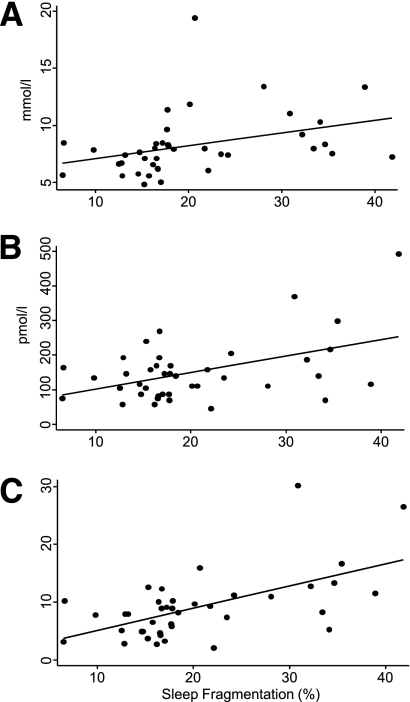
- Among the 40 subjects with diabetes, fully adjusted models showed that each 10% higher sleep fragmentation was associated with a 9% higher fasting glucose level, a 30% higher fasting insulin level, and a 43% higher HOMA level.
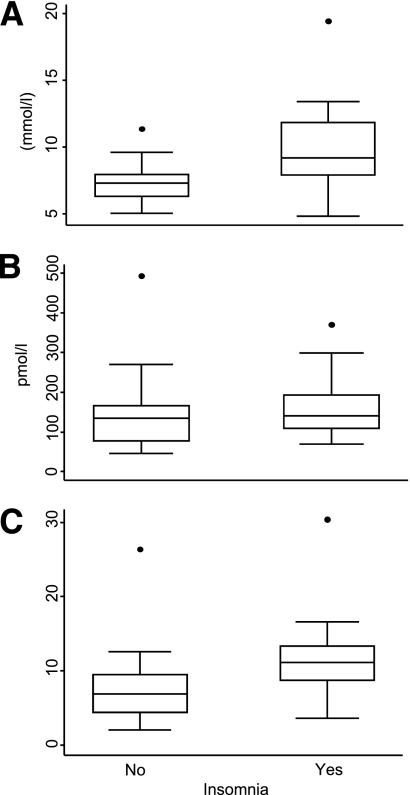
- Insomnia among subjects with diabetes was associated with a 23% higher fasting glucose level, a 48% higher fasting insulin level, and an 82% higher HOMA level.
- There was no association between sleep measures and fasting glucose, insulin, or HOMA in subjects without diabetes; the abstract states 115 subjects without diabetes, while Table 1 reports n=531 without diabetes and n=40 with diabetes (final sample 571). In unadjusted models among those without diabetes, frequent snoring and shorter sleep duration were associated with some outcomes, but these were not significant after adjustment; adjusted insomnia was associated with 14% lower fasting insulin and 14% lower HOMA.
- Sleep duration was not associated with any outcome in either group, and frequent snoring was not significantly associated with outcomes in fully adjusted models.
Methods
- Ancillary study to CARDIA at the Chicago site; 670 of 814 eligible participants consented, and the final analytic sample was 571 after excluding 9 with <3 days of actigraphy, 87 with reported fasting <8 h, 2 missing fasting glucose or insulin, and 1 with unknown diabetes status. Sleep was measured in 2003–2005 with wrist actigraphy (Actiwatch-16, 3 days on two occasions approximately 1 year apart) and questionnaires; fasting blood samples were collected in 2005–2006.
- Diabetes was defined by fasting plasma glucose ≥6.99 mmol/L, self-reported diagnosis, or diabetes medication use. HOMA-IR was calculated as fasting insulin (mU/L) × fasting glucose (mmol/L)/22.5. Insomnia was defined as self-reported difficulty falling asleep or waking at night ≥3 times/week plus actigraphic sleep efficiency <80%; frequent snoring was based on the Berlin Sleep Apnea questionnaire.
- Cross-sectional linear regressions were stratified by diabetes status; each sleep measure was entered into a separate model. Outcomes were natural-log transformed, and models were unadjusted and adjusted for age, race, sex, BMI, education, and income, using robust variance estimators.
Limitations
- The paper states that the cross-sectional design cannot determine causal direction; there were no polysomnographic measures, so sleep disorders such as obstructive sleep apnea could not be accurately detected; fasting status was self-reported and not objectively verified; the diabetes subgroup included only 40 individuals; and sleep was not assessed immediately before the clinical examination.
- Evident from the text: the small diabetes subgroup limits precision and generalizability, and multiple sleep predictors and outcomes were tested in separate models without stated adjustment for multiple comparisons.
Model-written summary. Check it against the paper before relying on it.
Integrity signals
Registry
Cites
Statistics
Figures
Verification
Claims the paper makes
17 Own result · 15 Not checked yet · 12 Own method · 7 Own interpretation
A result the paper reports from its own data — it cites no other source for it, so there is none to check. The quote shows it is in the paper.
In the paper
“but these associations were no longer statistically significant in the fully adjusted models.”
§ Cross-Sectional Associations Between Measures of Sleep and Markers of Glucose Metabolism Among Subjects With and Without Diabetes > RESULTS
plain- Asserted: passes — The authors put it forward as true.
- Checkable: passes — It can be checked against evidence.
- Load-bearing: passes — The paper’s conclusions depend on it.
- Based: passes — The paper gives a reason why it holds.
A result the paper reports from its own data — it cites no other source for it, so there is none to check. The quote shows it is in the paper.
In the paper
“Our analyses suggest that habitual sleep duration objectively assessed by multiple days of wrist actigraphy is not associated with markers of glucose metabolism assessed after an overnight fast in middle-aged adults with and without diabetes.”
§ Cross-Sectional Associations Between Measures of Sleep and Markers of Glucose Metabolism Among Subjects With and Without Diabetes > CONCLUSIONS
hedged- Asserted: passes — The authors put it forward as true.
- Checkable: passes — It can be checked against evidence.
- Load-bearing: passes — The paper’s conclusions depend on it.
- Based: passes — The paper gives a reason why it holds.
A result the paper reports from its own data — it cites no other source for it, so there is none to check. The quote shows it is in the paper.
In the paper
“Frequent snoring was not significantly associated with any of the metabolic measures in subjects with diabetes.”
§ Cross-Sectional Associations Between Measures of Sleep and Markers of Glucose Metabolism Among Subjects With and Without Diabetes > CONCLUSIONS
plain- Asserted: passes — The authors put it forward as true.
- Checkable: passes — It can be checked against evidence.
- Load-bearing: passes — The paper’s conclusions depend on it.
- Based: passes — The paper gives a reason why it holds.
A result the paper reports from its own data — it cites no other source for it, so there is none to check. The quote shows it is in the paper.
In the paper
“Among subjects with diabetes, fragmented sleep and insomnia were associated with fasting glucose levels that were 0.7–1.8 mmol/L higher than in those who had well-consolidated sleep or no insomnia.”
§ Cross-Sectional Associations Between Measures of Sleep and Markers of Glucose Metabolism Among Subjects With and Without Diabetes > CONCLUSIONS
plaincorrelational- Asserted: passes — The authors put it forward as true.
- Checkable: passes — It can be checked against evidence.
- Load-bearing: passes — The paper’s conclusions depend on it.
- Based: passes — The paper gives a reason why it holds.
A result the paper reports from its own data — it cites no other source for it, so there is none to check. The quote shows it is in the paper.
In the paper
“We did not observe significant differences in sleep fragmentation between subjects with and without type 2 diabetes”
§ Cross-Sectional Associations Between Measures of Sleep and Markers of Glucose Metabolism Among Subjects With and Without Diabetes > CONCLUSIONS
plain- Asserted: passes — The authors put it forward as true.
- Checkable: passes — It can be checked against evidence.
- Load-bearing: passes — The paper’s conclusions depend on it.
- Based: passes — The paper gives a reason why it holds.
A result the paper reports from its own data — it cites no other source for it, so there is none to check. The quote shows it is in the paper.
In the paper
“the prevalence of insomnia symptoms in subjects with diabetes was double that in those without diabetes.”
§ Cross-Sectional Associations Between Measures of Sleep and Markers of Glucose Metabolism Among Subjects With and Without Diabetes > CONCLUSIONS
plaincorrelational- Asserted: passes — The authors put it forward as true.
- Checkable: passes — It can be checked against evidence.
- Load-bearing: passes — The paper’s conclusions depend on it.
- Based: passes — The paper gives a reason why it holds.
A conclusion the paper draws from its own results — it cites no other source for it, so there is none to check. The quote shows it is in the paper.
In the paper
“which suggests that this association may be mediated by one of the covariates, such as BMI.”
§ Cross-Sectional Associations Between Measures of Sleep and Markers of Glucose Metabolism Among Subjects With and Without Diabetes > CONCLUSIONS
hedgedconditional- Asserted: passes — The authors put it forward as true.
- Checkable: passes — It can be checked against evidence.
- Load-bearing: passes — The paper’s conclusions depend on it.
- Based: passes — The paper gives a reason why it holds.
A conclusion the paper draws from its own results — it cites no other source for it, so there is none to check. The quote shows it is in the paper.
In the paper
“Thus, the effects of short sleep duration or poor sleep quality on glucose metabolism in healthy individuals may be detectable only after a glucose challenge.”
§ Cross-Sectional Associations Between Measures of Sleep and Markers of Glucose Metabolism Among Subjects With and Without Diabetes > CONCLUSIONS
hedgedconditional- Asserted: passes — The authors put it forward as true.
- Checkable: passes — It can be checked against evidence.
- Load-bearing: passes — The paper’s conclusions depend on it.
- Based: passes — The paper gives a reason why it holds.
None of the sources cited for this claim have been checked yet.
In the paper
“Laboratory studies that manipulated bedtimes observed impaired glucose metabolism after sleep restriction compared with sleep extension (4–6).”
§ Cross-Sectional Associations Between Measures of Sleep and Markers of Glucose Metabolism Among Subjects With and Without Diabetes > Abstract > CONCLUSIONS
What the sources say
- Not checked yetcites [4] Spiegel, 1999, Impact of sleep debt on metabolic and endocrine function, Lancet source
- Not checked yetcites [5] Buxton, 2010, Sleep restriction for 1 week reduces insulin sensitivity in healthy men
- Not checked yetcites [6] Nedeltcheva, 2009, Exposure to recurrent sleep restriction in the setting of high caloric intake and physical inactivity results in increased insulin resistance and reduced glucose tolerance, J Clin Endocrinol Metab source
plaindirect- Asserted: passes — The authors put it forward as true.
- Checkable: passes — It can be checked against evidence.
- Load-bearing: passes — The paper’s conclusions depend on it.
- Based: passes — The paper gives a reason why it holds.
None of the sources cited for this claim have been checked yet.
In the paper
“The lack of association between sleep duration or fragmentation and fasting glucose among subjects without diabetes in our sample is consistent with laboratory studies of sleep restriction in both young and middle-aged healthy subjects (4–6,19).”
§ Cross-Sectional Associations Between Measures of Sleep and Markers of Glucose Metabolism Among Subjects With and Without Diabetes > CONCLUSIONS
What the sources say
- Not checked yetcites [4] Spiegel, 1999, Impact of sleep debt on metabolic and endocrine function, Lancet source
- Not checked yetcites [5] Buxton, 2010, Sleep restriction for 1 week reduces insulin sensitivity in healthy men
- Not checked yetcites [6] Nedeltcheva, 2009, Exposure to recurrent sleep restriction in the setting of high caloric intake and physical inactivity results in increased insulin resistance and reduced glucose tolerance, J Clin Endocrinol Metab source
- Not checked yetcites [19] Tasali, 2008, Slow-wave sleep and the risk of type 2 diabetes in humans, Proc Natl Acad Sci USA source
plain- Asserted: passes — The authors put it forward as true.
- Checkable: passes — It can be checked against evidence.
- Load-bearing: passes — The paper’s conclusions depend on it.
- Based: passes — The paper gives a reason why it holds.
- It may state two separate claims as one. 25
- Probably not a substantial claim. 12
A result the paper reports from its own data — it cites no other source for it, so there is none to check. The quote shows it is in the paper.
In the paper
“Among subjects with diabetes, greater sleep fragmentation and insomnia, but not sleep duration, were associated with higher fasting glucose, higher fasting insulin, and higher HOMA even in the fully adjusted models.”
§ Cross-Sectional Associations Between Measures of Sleep and Markers of Glucose Metabolism Among Subjects With and Without Diabetes > RESULTS
plaincorrelational- Asserted: passes — The authors put it forward as true.
- Checkable: passes — It can be checked against evidence.
- Load-bearing: passes — The paper’s conclusions depend on it.
- Based: passes — The paper gives a reason why it holds.
It may state two separate claims as one.
A result the paper reports from its own data — it cites no other source for it, so there is none to check. The quote shows it is in the paper.
In the paper
“Among subjects without diabetes, the fully adjusted models showed insomnia was associated with lower insulin levels and, as a direct result of lower insulin levels, lower HOMA.”
§ Cross-Sectional Associations Between Measures of Sleep and Markers of Glucose Metabolism Among Subjects With and Without Diabetes > RESULTS
plaincorrelational- Asserted: passes — The authors put it forward as true.
- Checkable: passes — It can be checked against evidence.
- Load-bearing: passes — The paper’s conclusions depend on it.
- Based: passes — The paper gives a reason why it holds.
It may state two separate claims as one.
A result the paper reports from its own data — it cites no other source for it, so there is none to check. The quote shows it is in the paper.
In the paper
“shorter sleep duration was associated with higher insulin levels and higher HOMA values”
§ Cross-Sectional Associations Between Measures of Sleep and Markers of Glucose Metabolism Among Subjects With and Without Diabetes > RESULTS
plaincorrelational- Asserted: passes — The authors put it forward as true.
- Checkable: passes — It can be checked against evidence.
- Load-bearing: unclear — It is unclear whether the paper’s conclusions depend on it.
- Based: passes — The paper gives a reason why it holds.
It may state two separate claims as one.
A result the paper reports from its own data — it cites no other source for it, so there is none to check. The quote shows it is in the paper.
In the paper
“a 10% higher sleep fragmentation was associated with a 9% higher fasting glucose level, a 30% higher fasting insulin level, and a 43% higher HOMA value.”
§ Cross-Sectional Associations Between Measures of Sleep and Markers of Glucose Metabolism Among Subjects With and Without Diabetes > RESULTS
plaincorrelational- Asserted: passes — The authors put it forward as true.
- Checkable: passes — It can be checked against evidence.
- Load-bearing: passes — The paper’s conclusions depend on it.
- Based: passes — The paper gives a reason why it holds.
It may state two separate claims as one.
A result the paper reports from its own data — it cites no other source for it, so there is none to check. The quote shows it is in the paper.
In the paper
“BMI, fasting glucose, fasting insulin, HOMA-IR, and prevalence of insomnia were all significantly higher in the diabetes group.”
§ Cross-Sectional Associations Between Measures of Sleep and Markers of Glucose Metabolism Among Subjects With and Without Diabetes > RESULTS
plaincorrelationaln = 40 ·- Asserted: passes — The authors put it forward as true.
- Checkable: passes — It can be checked against evidence.
- Load-bearing: unclear — It is unclear whether the paper’s conclusions depend on it.
- Based: passes — The paper gives a reason why it holds.
It may state two separate claims as one.
A result the paper reports from its own data — it cites no other source for it, so there is none to check. The quote shows it is in the paper.
In the paper
“Sleep fragmentation and insomnia, however, were both associated with higher fasting glucose, insulin, and estimated insulin resistance, but in subjects with diabetes only.”
§ Cross-Sectional Associations Between Measures of Sleep and Markers of Glucose Metabolism Among Subjects With and Without Diabetes > CONCLUSIONS
plaincorrelational- Asserted: passes — The authors put it forward as true.
- Checkable: passes — It can be checked against evidence.
- Load-bearing: passes — The paper’s conclusions depend on it.
- Based: passes — The paper gives a reason why it holds.
It may state two separate claims as one.
A result the paper reports from its own data — it cites no other source for it, so there is none to check. The quote shows it is in the paper.
In the paper
“insomnia among subjects with diabetes was associated with a 23% higher fasting glucose level, a 48% higher fasting insulin level, and an 82% higher level of HOMA.”
§ Cross-Sectional Associations Between Measures of Sleep and Markers of Glucose Metabolism Among Subjects With and Without Diabetes > RESULTS
plaincorrelational- Asserted: passes — The authors put it forward as true.
- Checkable: passes — It can be checked against evidence.
- Load-bearing: passes — The paper’s conclusions depend on it.
- Based: passes — The paper gives a reason why it holds.
It may state two separate claims as one.
A result the paper reports from its own data — it cites no other source for it, so there is none to check. The quote shows it is in the paper.
In the paper
“The regression coefficients indicated that having insomnia was associated with a 14% lower fasting insulin level and a 14% lower HOMA level.”
§ Cross-Sectional Associations Between Measures of Sleep and Markers of Glucose Metabolism Among Subjects With and Without Diabetes > RESULTS
hedgedcorrelational- Asserted: passes — The authors put it forward as true.
- Checkable: passes — It can be checked against evidence.
- Load-bearing: passes — The paper’s conclusions depend on it.
- Based: passes — The paper gives a reason why it holds.
It may state two separate claims as one.
A result the paper reports from its own data — it cites no other source for it, so there is none to check. The quote shows it is in the paper.
In the paper
“In subjects without diabetes in the unadjusted models, frequent snoring was associated with higher fasting glucose, higher insulin, and higher HOMA values”
§ Cross-Sectional Associations Between Measures of Sleep and Markers of Glucose Metabolism Among Subjects With and Without Diabetes > RESULTS
plaincorrelational- Asserted: passes — The authors put it forward as true.
- Checkable: passes — It can be checked against evidence.
- Load-bearing: unclear — It is unclear whether the paper’s conclusions depend on it.
- Based: passes — The paper gives a reason why it holds.
It may state two separate claims as one.
A result the paper reports from its own data — it cites no other source for it, so there is none to check. The quote shows it is in the paper.
In the paper
“An exploratory analysis showed that this association became significant after adjustment for BMI, and reflected the contribution of the nondiabetic individuals with insomnia who were not overweight (BMI <25 kg/m2).”
§ Cross-Sectional Associations Between Measures of Sleep and Markers of Glucose Metabolism Among Subjects With and Without Diabetes > CONCLUSIONS
plaincorrelationaln = 22 ·- Asserted: passes — The authors put it forward as true.
- Checkable: passes — It can be checked against evidence.
- Load-bearing: passes — The paper’s conclusions depend on it.
- Based: passes — The paper gives a reason why it holds.
It may state two separate claims as one.
A result the paper reports from its own data — it cites no other source for it, so there is none to check. The quote shows it is in the paper.
In the paper
“The unadjusted mean (SD) fasting insulin level was 43.3 (20.7) pmol/L in the 22 subjects with insomnia and 54.9 (22.4) pmol/L in the 145 individuals without insomnia.”
§ Cross-Sectional Associations Between Measures of Sleep and Markers of Glucose Metabolism Among Subjects With and Without Diabetes > CONCLUSIONS
plainn = 22- Asserted: passes — The authors put it forward as true.
- Checkable: passes — It can be checked against evidence.
- Load-bearing: unclear — It is unclear whether the paper’s conclusions depend on it.
- Based: passes — The paper gives a reason why it holds.
It may state two separate claims as one.
What the paper did — it cites no source for this, so there is none to check. The quote shows it is in the paper.
In the paper
“Fasting glucose, fasting insulin, and HOMA-IR were all transformed using the natural log in the analyses because they were skewed to the right.”
§ Cross-Sectional Associations Between Measures of Sleep and Markers of Glucose Metabolism Among Subjects With and Without Diabetes > RESEARCH DESIGN AND METHODS > Statistical analysis
plain- Asserted: passes — The authors put it forward as true.
- Checkable: passes — It can be checked against evidence.
- Load-bearing: passes — The paper’s conclusions depend on it.
- Based: passes — The paper gives a reason why it holds.
Probably not a substantial claim. It may state two separate claims as one.
What the paper did — it cites no source for this, so there is none to check. The quote shows it is in the paper.
In the paper
“the second model was adjusted for age, race, sex, BMI, education, and income.”
§ Cross-Sectional Associations Between Measures of Sleep and Markers of Glucose Metabolism Among Subjects With and Without Diabetes > RESEARCH DESIGN AND METHODS > Statistical analysis
plain- Asserted: passes — The authors put it forward as true.
- Checkable: passes — It can be checked against evidence.
- Load-bearing: fails — The paper’s conclusions may not depend on it.
- Based: passes — The paper gives a reason why it holds.
Probably not a substantial claim. The paper’s conclusions may not depend on it.
None of the sources cited for this claim have been checked yet.
In the paper
“These laboratory studies lasted only 1 to 2 weeks and the results may not reflect the effects of habitual short sleep.”
§ Cross-Sectional Associations Between Measures of Sleep and Markers of Glucose Metabolism Among Subjects With and Without Diabetes > Abstract > CONCLUSIONS
What the sources say
- Not checked yetcites [4] Spiegel, 1999, Impact of sleep debt on metabolic and endocrine function, Lancet source
- Not checked yetcites [5] Buxton, 2010, Sleep restriction for 1 week reduces insulin sensitivity in healthy men
- Not checked yetcites [6] Nedeltcheva, 2009, Exposure to recurrent sleep restriction in the setting of high caloric intake and physical inactivity results in increased insulin resistance and reduced glucose tolerance, J Clin Endocrinol Metab source
hedgedconditional- Asserted: passes — The authors put it forward as true.
- Checkable: passes — It can be checked against evidence.
- Load-bearing: unclear — It is unclear whether the paper’s conclusions depend on it.
- Based: passes — The paper gives a reason why it holds.
It may state two separate claims as one.
What the paper did — it cites no source for this, so there is none to check. The quote shows it is in the paper.
In the paper
“The robust variance estimator was used in linear regression models to calculate confidence intervals and P values.”
§ Cross-Sectional Associations Between Measures of Sleep and Markers of Glucose Metabolism Among Subjects With and Without Diabetes > RESEARCH DESIGN AND METHODS > Statistical analysis
plain- Asserted: passes — The authors put it forward as true.
- Checkable: passes — It can be checked against evidence.
- Load-bearing: fails — The paper’s conclusions may not depend on it.
- Based: passes — The paper gives a reason why it holds.
Probably not a substantial claim. The paper’s conclusions may not depend on it.
In the paper
“A small Italian study did use wrist actigraphy to compare the sleep of patients with type 2 diabetes with healthy control subjects and found higher sleep fragmentation in the patients with diabetes (14).”
§ Cross-Sectional Associations Between Measures of Sleep and Markers of Glucose Metabolism Among Subjects With and Without Diabetes > Abstract > CONCLUSIONS
What the sources say
- Not checked yetcites [14] Trento, 2008, Sleep abnormalities in type 2 diabetes may be associated with glycemic control, Acta Diabetol source
plaincorrelational- Asserted: passes — The authors put it forward as true.
- Checkable: passes — It can be checked against evidence.
- Load-bearing: unclear — It is unclear whether the paper’s conclusions depend on it.
- Based: passes — The paper gives a reason why it holds.
It may state two separate claims as one.
What the paper did — it cites no source for this, so there is none to check. The quote shows it is in the paper.
In the paper
“Because the mechanisms of glucose regulation are markedly different between people with and without diabetes, all analyses were stratified by diabetes status.”
§ Cross-Sectional Associations Between Measures of Sleep and Markers of Glucose Metabolism Among Subjects With and Without Diabetes > RESEARCH DESIGN AND METHODS > Statistical analysis
plain- Asserted: passes — The authors put it forward as true.
- Checkable: passes — It can be checked against evidence.
- Load-bearing: passes — The paper’s conclusions depend on it.
- Based: passes — The paper gives a reason why it holds.
Probably not a substantial claim.
In the paper
“Wrist actigraphy has been validated against polysomnography, demonstrating a correlation for sleep duration between 0.82 in people with insomnia and 0.97 in healthy subjects (16).”
§ Cross-Sectional Associations Between Measures of Sleep and Markers of Glucose Metabolism Among Subjects With and Without Diabetes > RESEARCH DESIGN AND METHODS
What the sources say
- Not checked yetcites [16] Jean-Louis, 1997, The actigraph data analysis software: I. A novel approach to scoring and interpreting sleep-wake activity, Percept Mot Skills source
boostedcorrelational- Asserted: passes — The authors put it forward as true.
- Checkable: passes — It can be checked against evidence.
- Load-bearing: fails — The paper’s conclusions may not depend on it.
- Based: passes — The paper gives a reason why it holds.
Probably not a substantial claim. The paper’s conclusions may not depend on it.
A conclusion the paper draws from its own results — it cites no other source for it, so there is none to check. The quote shows it is in the paper.
In the paper
“Each of these pathways is already dysregulated in the diabetic state and is likely to be more vulnerable to an additional perturbation, such as sleep disturbance.”
§ Cross-Sectional Associations Between Measures of Sleep and Markers of Glucose Metabolism Among Subjects With and Without Diabetes > CONCLUSIONS
hedgedconditional- Asserted: passes — The authors put it forward as true.
- Checkable: passes — It can be checked against evidence.
- Load-bearing: passes — The paper’s conclusions depend on it.
- Based: fails — The paper may give no reason why it holds.
Probably not a substantial claim. The paper may give no reason why it holds. It may state two separate claims as one.
- Rests on an assumption: Laboratory studies in healthy subjects have indicated that lower cerebral glucose utilization, elevated sympathetic activity, higher evening cortisol levels, alterations in growth hormone release, and elevated markers of inflammation are on the pathways that mediate the adverse effects of reduced sleep duration or quality on glucose metabolism, or both.
- Rests on an assumption: The mechanisms responsible for glucose homeostasis are already deficient in subjects with diabetes and therefore more vulnerable to additional perturbation.
What the paper did — it cites no source for this, so there is none to check. The quote shows it is in the paper.
In the paper
“We excluded 9 participants with <3 days of wrist actigraphy data, 87 who reported a fasting period of <8 h before the clinical examination, 2 who were missing a value for fasting glucose or fasting insulin at 20 years, and one whose diabetes status could not be ascertained, which resulted in a final sample size of 571 participants.”
§ Cross-Sectional Associations Between Measures of Sleep and Markers of Glucose Metabolism Among Subjects With and Without Diabetes > RESEARCH DESIGN AND METHODS > Statistical analysis
plainn = 571- Asserted: passes — The authors put it forward as true.
- Checkable: passes — It can be checked against evidence.
- Load-bearing: passes — The paper’s conclusions depend on it.
- Based: passes — The paper gives a reason why it holds.
Probably not a substantial claim. It may state two separate claims as one.
None of the sources cited for this claim have been checked yet.
In the paper
“These studies observed a significant deleterious impact of experimentally reduced sleep duration or quality on glucose metabolism in response to a glucose challenge, but did not observe a significant change in fasting levels of glucose or insulin.”
§ Cross-Sectional Associations Between Measures of Sleep and Markers of Glucose Metabolism Among Subjects With and Without Diabetes > CONCLUSIONS
What the sources say
- Not checked yetcites [4] Spiegel, 1999, Impact of sleep debt on metabolic and endocrine function, Lancet source
- Not checked yetcites [5] Buxton, 2010, Sleep restriction for 1 week reduces insulin sensitivity in healthy men
- Not checked yetcites [6] Nedeltcheva, 2009, Exposure to recurrent sleep restriction in the setting of high caloric intake and physical inactivity results in increased insulin resistance and reduced glucose tolerance, J Clin Endocrinol Metab source
- Not checked yetcites [19] Tasali, 2008, Slow-wave sleep and the risk of type 2 diabetes in humans, Proc Natl Acad Sci USA source
plaindirect- Asserted: passes — The authors put it forward as true.
- Checkable: passes — It can be checked against evidence.
- Load-bearing: passes — The paper’s conclusions depend on it.
- Based: passes — The paper gives a reason why it holds.
It may state two separate claims as one.
A conclusion the paper draws from its own results — it cites no other source for it, so there is none to check. The quote shows it is in the paper.
In the paper
“It is possible that the effects of sleep disturbances are more pronounced in subjects with diabetes because the mechanisms responsible for glucose homeostasis are already deficient and therefore more vulnerable.”
§ Cross-Sectional Associations Between Measures of Sleep and Markers of Glucose Metabolism Among Subjects With and Without Diabetes > CONCLUSIONS
hedgedconditional- Asserted: passes — The authors put it forward as true.
- Checkable: fails — It may be too vague to check against evidence.
- Load-bearing: passes — The paper’s conclusions depend on it.
- Based: passes — The paper gives a reason why it holds.
Probably not a substantial claim. It may be too vague to check against evidence.
- Rests on an assumption: The mechanisms responsible for glucose homeostasis are already deficient in subjects with diabetes and therefore more vulnerable to additional perturbation.
What the paper did — it cites no source for this, so there is none to check. The quote shows it is in the paper.
In the paper
“As part of quality control, reassays of stored samples were conducted and recalibration equations were developed for the glucose and insulin values from the 2005–2006 CARDIA examination.”
§ Cross-Sectional Associations Between Measures of Sleep and Markers of Glucose Metabolism Among Subjects With and Without Diabetes > RESEARCH DESIGN AND METHODS
plain- Asserted: passes — The authors put it forward as true.
- Checkable: passes — It can be checked against evidence.
- Load-bearing: fails — The paper’s conclusions may not depend on it.
- Based: passes — The paper gives a reason why it holds.
Probably not a substantial claim. The paper’s conclusions may not depend on it. It may state two separate claims as one.
None of the sources cited for this claim have been checked yet.
In the paper
“Many have found cross-sectional associations that indicated a higher prevalence of diabetes among short sleepers (7–9) and among those with poor subjective sleep quality (10,11).”
§ Cross-Sectional Associations Between Measures of Sleep and Markers of Glucose Metabolism Among Subjects With and Without Diabetes > Abstract > CONCLUSIONS
What the sources say
- Not checked yetcites [7] Gottlieb, 2005, Association of sleep time with diabetes mellitus and impaired glucose tolerance, Arch Intern Med source
- Not checked yetcites [8] Chaput, 2007, Association of sleep duration with type 2 diabetes and impaired glucose tolerance, Diabetologia source
- Not checked yetcites [9] Chao, Sleep duration is a potential risk factor for newly diagnosed type 2 diabetes mellitus
- Not checked yetcites [10] Jennings, 2007, Self-reported sleep quality is associated with the metabolic syndrome, Sleep source
- Not checked yetcites [11] Suarez, 2008, Self-reported symptoms of sleep disturbance and inflammation, coagulation, insulin resistance and psychosocial distress: evidence for gender disparity, Brain Behav Immun source
plaincorrelational- Asserted: passes — The authors put it forward as true.
- Checkable: passes — It can be checked against evidence.
- Load-bearing: passes — The paper’s conclusions depend on it.
- Based: passes — The paper gives a reason why it holds.
It may state two separate claims as one.
In the paper
“These observational studies all relied on self-reported sleep, which may not be very accurate (13).”
§ Cross-Sectional Associations Between Measures of Sleep and Markers of Glucose Metabolism Among Subjects With and Without Diabetes > Abstract > CONCLUSIONS
What the sources say
- Not checked yetcites [13] Lauderdale, 2008, Self-reported and measured sleep duration: how similar are they?, Epidemiology source
hedged- Asserted: passes — The authors put it forward as true.
- Checkable: passes — It can be checked against evidence.
- Load-bearing: unclear — It is unclear whether the paper’s conclusions depend on it.
- Based: passes — The paper gives a reason why it holds.
It may state two separate claims as one.
What the paper did — it cites no source for this, so there is none to check. The quote shows it is in the paper.
In the paper
“For 92% of participants in these analyses, 6 days of actigraphy recording were available and the remaining 8% had 3 to 5 days of actigraphy recording.”
§ Cross-Sectional Associations Between Measures of Sleep and Markers of Glucose Metabolism Among Subjects With and Without Diabetes > RESEARCH DESIGN AND METHODS
plain- Asserted: passes — The authors put it forward as true.
- Checkable: passes — It can be checked against evidence.
- Load-bearing: fails — The paper’s conclusions may not depend on it.
- Based: passes — The paper gives a reason why it holds.
Probably not a substantial claim. The paper’s conclusions may not depend on it. It may state two separate claims as one.
In the paper
“Insomnia may be associated with increased activity in the hypothalamic-pituitary-adrenal axis (22), which could impair glucose metabolism, particularly in those whose metabolism is already compromised.”
§ Cross-Sectional Associations Between Measures of Sleep and Markers of Glucose Metabolism Among Subjects With and Without Diabetes > CONCLUSIONS
What the sources say
- Not checked yetcites [22] Vgontzas, 2002, Sleep, the hypothalamic-pituitary-adrenal axis, and cytokines: multiple interactions and disturbances in sleep disorders, Endocrinol Metab Clin North Am source
hedgedconditional- Asserted: passes — The authors put it forward as true.
- Checkable: passes — It can be checked against evidence.
- Load-bearing: passes — The paper’s conclusions depend on it.
- Based: passes — The paper gives a reason why it holds.
It may state two separate claims as one.
What the paper did — it cites no source for this, so there is none to check. The quote shows it is in the paper.
In the paper
“Finally, sleep was not assessed immediately before the clinical examination”
§ Cross-Sectional Associations Between Measures of Sleep and Markers of Glucose Metabolism Among Subjects With and Without Diabetes > CONCLUSIONS
plain- Asserted: passes — The authors put it forward as true.
- Checkable: passes — It can be checked against evidence.
- Load-bearing: fails — The paper’s conclusions may not depend on it.
- Based: passes — The paper gives a reason why it holds.
Probably not a substantial claim. The paper’s conclusions may not depend on it.
What the paper did — it cites no source for this, so there is none to check. The quote shows it is in the paper.
In the paper
“Second, we do not have polysomnographic measures of sleep in this cohort, so we cannot accurately detect sleep disorders like obstructive sleep apnea”
§ Cross-Sectional Associations Between Measures of Sleep and Markers of Glucose Metabolism Among Subjects With and Without Diabetes > CONCLUSIONS
plain- Asserted: passes — The authors put it forward as true.
- Checkable: passes — It can be checked against evidence.
- Load-bearing: passes — The paper’s conclusions depend on it.
- Based: passes — The paper gives a reason why it holds.
It may state two separate claims as one.
What the paper did — it cites no source for this, so there is none to check. The quote shows it is in the paper.
In the paper
“A third limitation is that participants reported having fasted for at least 8 h, but there was no way to objectively verify whether they were indeed fasting.”
§ Cross-Sectional Associations Between Measures of Sleep and Markers of Glucose Metabolism Among Subjects With and Without Diabetes > CONCLUSIONS
plain- Asserted: passes — The authors put it forward as true.
- Checkable: passes — It can be checked against evidence.
- Load-bearing: passes — The paper’s conclusions depend on it.
- Based: passes — The paper gives a reason why it holds.
It may state two separate claims as one.
None of the sources cited for this claim have been checked yet.
In the paper
“which appears to be highly prevalent in patients with type 2 diabetes (23) and is associated with poorer glycemic control (24).”
§ Cross-Sectional Associations Between Measures of Sleep and Markers of Glucose Metabolism Among Subjects With and Without Diabetes > CONCLUSIONS
What the sources say
- Not checked yetcites [23] Aronsohn, 2010, Impact of untreated obstructive sleep apnea on glucose control in type 2 diabetes, Am J Respir Crit Care Med source
- Not checked yetcites [24] Punjabi, 2004, Sleep-disordered breathing, glucose intolerance, and insulin resistance: the Sleep Heart Health Study, Am J Epidemiol source
hedgedcorrelational- Asserted: passes — The authors put it forward as true.
- Checkable: passes — It can be checked against evidence.
- Load-bearing: fails — The paper’s conclusions may not depend on it.
- Based: passes — The paper gives a reason why it holds.
Probably not a substantial claim. The paper’s conclusions may not depend on it. It may state two separate claims as one.
The paper relies on this without support.
Laboratory studies in healthy subjects have indicated that lower cerebral glucose utilization, elevated sympathetic activity, higher evening cortisol levels, alterations in growth hormone release, and elevated markers of inflammation are on the pathways that mediate the adverse effects of reduced sleep duration or quality on glucose metabolism, or both.
“Laboratory studies in healthy subjects have indicated that lower cerebral glucose utilization, elevated sympathetic activity, higher evening cortisol levels, alterations in growth hormone release, and elevated markers of inflammation are on the pathways that mediate the adverse effects of reduced sleep duration or quality on glucose metabolism, or both.”
The paper relies on this without support.
Several prospective studies found higher rates of incident diabetes associated with shorter sleep durations.
“Several prospective studies found higher rates of incident diabetes associated with shorter sleep durations.”
The paper relies on this without support.
Patients with type 2 diabetes are at a higher risk of diabetes complications if their glucose levels are poorly controlled.
“Patients with type 2 diabetes are at a higher risk of diabetes complications if their glucose levels are poorly controlled.”
The paper relies on this without support.
The mechanisms responsible for glucose homeostasis are already deficient in subjects with diabetes and therefore more vulnerable to additional perturbation.
“because the mechanisms responsible for glucose homeostasis are already deficient and therefore more vulnerable.”
Claims other papers make about this one
Each is checked against this paper’s own text: does it say what the citing paper says it does?
In the citing paper
“Furthermore, among persons with T2DM, poorer glycemic control is associated with worse sleep quality and increased sleep disordered breathing [179–181].”
From Association between sleep deficiency and cardiometabolic disease: implications for health disparities (2016) · cites this paper as [181]
Self-check
Percentages, sums and reported differences re-computed from the paper’s own numbers.
Each contradiction between two passages listed here was confirmed by an independent check.
Rated major: it would touch a result — a value a result rests on, reported and recomputed p-values on opposite sides of the significance level, two passages that conflict with no sign which is right, or a cited work retracted before this paper was published.
In the paper
“| β | –0.059 | 0.216 | -0.145 | 0.389 | | 95% CI | –0.203 to 0.085 | –0.133 to 0.565 | –0.275 to −0.014 | –0.068 to 0.710 | | P | 0.42 | 0.22 | 0.030 | 0.019 |”
§ Cross-Sectional Associations Between Measures of Sleep and Markers of Glucose Metabolism Among Subjects With and Without Diabetes > RESULTS
Reported 0.389 · recomputed 0.321
Rated major: it would touch a result — a value a result rests on, reported and recomputed p-values on opposite sides of the significance level, two passages that conflict with no sign which is right, or a cited work retracted before this paper was published.
In the paper
§ Cross-Sectional Associations Between Measures of Sleep and Markers of Glucose Metabolism Among Subjects With and Without Diabetes > Abstract > RESULTS
“There was no association between sleep measures and fasting glucose, insulin, or HOMA in the 115 subjects without diabetes.”
§ Cross-Sectional Associations Between Measures of Sleep and Markers of Glucose Metabolism Among Subjects With and Without Diabetes > RESULTS
“Among subjects without diabetes, the fully adjusted models showed insomnia was associated with lower insulin levels and, as a direct result of lower insulin levels, lower HOMA.”
Rated minor: it would not touch a result — a value no result rests on, a p-value that stays on the same side of the significance level, or a conflict that is clerical, resolved elsewhere in the paper, or outside its own findings.
In the paper
§ Cross-Sectional Associations Between Measures of Sleep and Markers of Glucose Metabolism Among Subjects With and Without Diabetes > Abstract > RESULTS
“There was no association between sleep measures and fasting glucose, insulin, or HOMA in the 115 subjects without diabetes.”
§ Cross-Sectional Associations Between Measures of Sleep and Markers of Glucose Metabolism Among Subjects With and Without Diabetes > RESULTS
“No diabetes (n = 531) Mean (SD)”
Citations
Cites
The Pittsburgh Sleep Quality Index: a new instrument for psychiatric practice and research
Buysse, D. J., Reynolds, C. F., Monk, T. H., Berman, S. R., & Kupfer, D. J. (1989) · Psychiatry Research · doi:10.1016/0165-1781(89)90047-4 · Cited by 35,234
Matthews, D. R., Hosker, J. P., Rudenski, A. S., Naylor, B. A., Treacher, D. F., & Turner, R. C. (1985) · Diabetologia · doi:10.1007/bf00280883 · Cited by 31,502
Impact of sleep debt on metabolic and endocrine function
Spiegel, K., Leproult, R., & Van Cauter, E. (1999) · The Lancet · doi:10.1016/s0140-6736(99)01376-8 · Cited by 3,668
Using the Berlin Questionnaire To Identify Patients at Risk for the Sleep Apnea Syndrome
Netzer, N. C., Stoohs, R. A., Netzer, C. M., Clark, K., & Strohl, K. P. (1999) · Annals of Internal Medicine · doi:10.7326/0003-4819-131-7-199910050-00002 · Cited by 2,973
Quantity and Quality of Sleep and Incidence of Type 2 Diabetes
Cappuccio, F. P., D'Elia, L., Strazzullo, P., & Miller, M. A. (2010) · Diabetes Care · doi:10.2337/dc09-1124 · Cited by 1,670
Self-Reported and Measured Sleep Duration: How Similar Are They?
Lauderdale, D. S., Knutson, K. L., Yan, L. L., Liu, K., & Rathouz, P. J. (2008) · Epidemiology · doi:10.1097/ede.0b013e318187a7b0 · Cited by 1,565
Self-citationPunjabi, N. M. (2004) · American Journal of Epidemiology · doi:10.1093/aje/kwh261 · Cited by 1,107
Association of sleep time with diabetes mellitus and impaired glucose tolerance
Gottlieb, D. J., Punjabi, N. M., Newman, A. B., Resnick, H. E., Redline, S., Baldwin, C. M., & Nieto, F. J. (2005) · Archives of Internal Medicine · doi:10.1001/archinte.165.8.863 · Cited by 927
Slow-wave sleep and the risk of type 2 diabetes in humans
Tasali, E., Leproult, R., Ehrmann, D. A., & Van Cauter, E. (2008) · Proceedings of the National Academy of Sciences · doi:10.1073/pnas.0706446105 · Cited by 921
Sleep Restriction for 1 Week Reduces Insulin Sensitivity in Healthy Men
Buxton, O. M., Pavlova, M., Reid, E. W., Wang, W., Simonson, D. C., & Adler, G. K. (2010) · Diabetes · doi:10.2337/db09-0699 · Cited by 604
Cited by
Sorted by citations
Items 101–200 of 230
Zou, J., Xia, Y., Xu, H., Fu, Y., Qian, Y., Li, X., Zhao, X., Zou, J., Meng, L., Liu, S., et al. (2018) · Metabolism · doi:10.1016/j.metabol.2017.11.021 · Cited by 32
Torrella, M., Castells, I., Giménez‐Pérez, G., Recasens, A., Miquel, M., Simó, O., Barbeta, E., & Sampol, G. (2015) · Diabetes & Metabolism · doi:10.1016/j.diabet.2015.01.002 · Cited by 32
Endocrine Rhythms, the Sleep-Wake Cycle, and Biological Clocks
Copinschi, G., & Challet, É. (2015) · Elsevier eBooks · doi:10.1016/b978-0-323-18907-1.00009-3 · Cited by 34
Campbell, L. M., Kohli, M., Lee, E., Kaufmann, C. N., Higgins, M., Delgadillo, J. D., Heaton, R. K., Cherner, M., Ellis, R. J., Moore, D. J., et al. (2020) · The Clinical Neuropsychologist · doi:10.1080/13854046.2020.1824280 · Cited by 33
Fernández‐Mendoza, J., He, F., Vgontzas, A. N., Liao, D., & Bixler, E. O. (2017) · Journal of Hypertension · doi:10.1097/hjh.0000000000001253 · Cited by 31
de Oliveira, E. M., Visniauskas, B., Sandri, S., Migliorini, S., Andersen, M. L., Tufik, S. B., Fock, R. A., Chagas, J. R., & Čampa, A. (2014) · Obesity · doi:10.1002/oby.20970 · Cited by 30
Zhang, H.-Z., Zhang, P., Chang, G., Xiang, Q., Cao, H., Zhou, J., Dong, Z., Qiao, C., Xu, C., Qin, Y., et al. (2021) · World Journal of Diabetes · doi:10.4239/wjd.v12.i3.292 · Cited by 29
Abdelmaksoud, A. A., Salah, N. Y., Ali, Z., Rashed, H. R., & Abido, A. Y. (2021) · Diabetes Research and Clinical Practice · doi:10.1016/j.diabres.2021.108774 · Cited by 29
Kline, C. E., Hall, M. H., Buysse, D. J., Earnest, C. P., & Church, T. S. (2018) · Metabolic Syndrome and Related Disorders · doi:10.1089/met.2018.0013 · Cited by 28
Impaired Sleep, Circadian Rhythms and Neurogenesis in Diet-Induced Premature Aging
Stankiewicz, A. J., McGowan, E., Yu, L., & Zhdanova, I. V. (2017) · International Journal of Molecular Sciences · doi:10.3390/ijms18112243 · Cited by 28
Sipilä, J., Rautava, P. T., & Kytö, V. (2015) · Annals of Medicine · doi:10.3109/07853890.2015.1119302 · Cited by 27
von Schantz, M., Ong, J. C., & Knutson, K. L. (2021) · Journal of Sleep Research · doi:10.1111/jsr.13392 · Cited by 29
Self-citationSleep duration and cardiometabolic risk factors among individuals with type 2 diabetes
Cooper, A., Westgate, K. L., Brage, S., Prevost, A. T., Griffin, S. J., & Simmons, R. K. (2014) · Sleep Medicine · doi:10.1016/j.sleep.2014.10.006 · Cited by 26
Brouwer, A., van Raalte, D. H., Diamant, M., Rutters, F., van Someren, E. J. W., Snoek, F. J., Beekman, A. T. F., & Bremmer, M. A. (2015) · BMC Psychiatry · doi:10.1186/s12888-015-0543-5 · Cited by 25
Potential biochemical pathways for the relationship between sleep duration and mortality
Li, Y., Sato, Y., & Yamaguchi, N. (2012) · Sleep Medicine · doi:10.1016/j.sleep.2012.08.020 · Cited by 25
Sigurdardottir, F. D., Bertisch, S. M., Reid, M., deFilippi, C. R., Lima, J. A. C., Redline, S. S., & Omland, T. (2022) · SLEEP · doi:10.1093/sleep/zsac318 · Cited by 25
Dumpala, S., Zele, A. J., & Feigl, B. (2019) · Investigative Ophthalmology & Visual Science · doi:10.1167/iovs.18-26297 · Cited by 24
Sleep Quality and Blood Lipid Composition Among Patients with Diabetes
Barikani, A., Javadi, M., & Rafiei, S. (2019) · Intern J Endocrinol Metab · doi:10.5812/ijem.81062 · Cited by 26
Habitual shortened sleep and insulin resistance: An independent relationship in obese individuals
Liu, A., Kushida, C. A., & Reaven, G. M. (2013) · Metabolism · doi:10.1016/j.metabol.2013.06.003 · Cited by 23
Computerized Cognitive Behavioral Therapy for Insomnia in a Community Health Setting
Feuerstein, S., Hodges, S. E., Keenaghan, B., Bessette, A. J., Forselius, E., & MORGAN, P. T. (2017) · Journal of Clinical Sleep Medicine · doi:10.5664/jcsm.6460 · Cited by 23
Pogach, M. S., Punjabi, N. M., Thomas, G. N., & THOMAS, R. J. (2011) · SLEEP · doi:10.5665/sleep.1604 · Cited by 23
Effects of sleep disruption and high fat intake on glucose metabolism in mice
Ho, J. M., Barf, R. P., & Opp, M. R. (2016) · Psychoneuroendocrinology · doi:10.1016/j.psyneuen.2016.02.024 · Cited by 22
Nicolaides, N. C., Vgontzas, A. N., Kritikou, I., & Chrousos, G. P. (2016) · Europe PMC (PubMed Central) · Cited by 22
Siwasaranond, N., Nimitphong, H., Saetung, S., Chirakalwasan, N., Ongphiphadhanakul, B., & Reutrakul, S. (2015) · Sleep And Breathing · doi:10.1007/s11325-015-1243-6 · Cited by 21
A nonparametric methodological analysis of rest-activity rhythm in type 2 diabetes
Ferreira, P. R. C., Berk, L., Daher, N. S., Campus, T., Araújo, J. F., PETROFSKY, J. S., & Lohman, E. (2018) · Sleep Science · doi:10.5935/1984-0063.20180044 · Cited by 20
Buman, M. P., Hu, F., Newman, E., Smeaton, A. F., & Epstein, D. R. (2016) · BioMed Research International · doi:10.1155/2016/4856506 · Cited by 20
Pyatak, E. A., Spruijt‐Metz, D., Schneider, S., Hernandez, R., Pham, L. T., Hoogendoorn, C. J., Peters, A. L., Crandall, J. P., Jin, H., Lee, P.-J., et al. (2023) · Diabetes Care · doi:10.2337/dc22-2008 · Cited by 19
Modeling the cardiometabolic benefits of sleep in older women: exploring the 24-hour day
Full, K. M., Gallo, L. C., Malhotra, A., Bellettiere, J., Kerr, J., Arredondo, E. M., Stone, K. L., Zaslavsky, O., Lewis, C. E., Lin, X., et al. (2019) · SLEEP · doi:10.1093/sleep/zsz205 · Cited by 19
Effects of Dietary Carbohydrate Profile on Nocturnal Metabolism, Sleep, and Wellbeing: A Review
Mantantzis, K., Campos, V. C., Darimont, C., & Martin, F. (2022) · Frontiers in Public Health · doi:10.3389/fpubh.2022.931781 · Cited by 22
Zheng, Y., Wang, A., Pan, C., Lu, J., Dou, J., Lü, Z., Ba, J., Wang, B., & Mu, Y. (2014) · Journal of Diabetes · doi:10.1111/1753-0407.12186 · Cited by 19
Sleep characteristics and insulin sensitivity in humans
Donga, E., & Romijn, J. A. (2014) · Handbook of clinical neurology · doi:10.1016/b978-0-444-59602-4.00007-1 · Cited by 21
Tare, A., Lane, J. M., Cade, B. E., Grant, S. F. A., Chen, T.-H., Punjabi, N. M., Lauderdale, D. S., Zee, P. C., Gharib, S. A., Gottlieb, D. J., et al. (2013) · Diabetologia · doi:10.1007/s00125-013-3110-y · Cited by 18
Self-citationDing, C., Zhang, J., Lau, E. S. H., Luk, A. O. Y., So, W. Y., Ronald, C. W., Choi, K. C., Chan, J. C. N., Wing, Y. K., & Kong, A. P. S. (2019) · SLEEP · doi:10.1093/sleep/zsz014 · Cited by 18
Causal assessment of sleep on coronary heart disease
Liao, L., Li, W., Liu, Y., Li, J.-P., Zhuang, X., & Liao, X. (2019) · Sleep Medicine · doi:10.1016/j.sleep.2019.08.014 · Cited by 19
Wang, W., Meng, H., Liu, Y., Yin, W. H., Li, Z., Wan, M., Zou, L., & Zhang, D. (2021) · Sleep And Breathing · doi:10.1007/s11325-021-02391-3 · Cited by 17
St‐Onge, M., Zammit, G. K., Reboussin, Kuna, S. T., Sanders, Millman, Newman, A. B., Wadden, T. A., Pi-Sunyer, Foster, et al. (2012) · Nature and Science of Sleep · doi:10.2147/nss.s35797 · Cited by 17
Azuma, M., Chin, K., Yoshimura, C., Takegami, M., Takahashi, K. P., Sumi, K., Nakamura, T., Nakayama-Ashida, Y., Minami, I., Horita, S., et al. (2014) · Respiration · doi:10.1159/000366064 · Cited by 17
Li, C., Lin, C., Liu, C.-S., Lin, C.-H., Yang, S.-Y., & Li, T. (2022) · Cardiovascular Diabetology · doi:10.1186/s12933-022-01500-0 · Cited by 16
Kakutani‐Hatayama, M., Kadoya, M., Morimoto, A., Miyoshi, A., Kosaka‐Hamamoto, K., Kusunoki, Y., Shoji, T., & Koyama, H. (2020) · Metabolism Open · doi:10.1016/j.metop.2020.100033 · Cited by 16
Obstructive Sleep Apnea and Type 2 Diabetes: An Update
Gentile, S., Monda, V. M., Guarino, G., Satta, E., Chiarello, M., Caccavale, G., Mattera, E., Marfella, R., & Strollo, F. (2025) · Journal of Clinical Medicine · doi:10.3390/jcm14155574 · Cited by 17
Ho, J. M., Ducich, N. H., Nguyen, N.-Q. K., & Opp, M. R. (2017) · Neurobiology of Sleep and Circadian Rhythms · doi:10.1016/j.nbscr.2017.09.003 · Cited by 15
Altered sleep architecture in diabetes and prediabetes: findings from the Baependi Heart Study
Chen, D. M., Taporoski, T. P., Alexandria, S. J., Aaby, D., Beijamini, F., Krieger, J. E., von Schantz, M., Pereira, A. C., & Knutson, K. L. (2023) · SLEEP · doi:10.1093/sleep/zsad229 · Cited by 15
Self-citationFarooque, R., Herekar, F. F., Iftikhar, S., & Patel, M. J. (2020) · Cureus · doi:10.7759/cureus.11608 · Cited by 14
Insomnia and cardiometabolic disease risk
Fernández‐Mendoza, J. (2019) · Elsevier eBooks · doi:10.1016/b978-0-12-815373-4.00029-0 · Cited by 13
Lack of change in glucose metabolism in eszopiclone-treated primary insomnia patients
Buxton, O. M., Pavlova, M. K., O'Connor, S., Wang, W., & Winkelman, J. W. (2017) · Nature and Science of Sleep · doi:10.2147/nss.s130505 · Cited by 13
Campbell, L. M., Tang, B., Watson, W.-M., Higgins, M., Cherner, M., Henry, B. L., & Moore, R. C. (2020) · Cannabis · doi:10.26828/cannabis.2020.02.005 · Cited by 12
The Association Between Self-Reported Sleep Quality and Overweight in A Chinese Population
Hung, H., Yang, Y., Ou, H., Wu, J., Lu, F.-H., & Chang, C. (2012) · Obesity · doi:10.1038/oby.2012.169 · Cited by 12
Ghorbani, A., Esmailzadehha, N., Mohammadpoorasl, A., & Ziaee, A. (2015) · Sleep Disorders · doi:10.1155/2015/480742 · Cited by 11
Sivakumaran, K., Ritonja, J. A., Palmer, N. R., Pasumarthi, T. S., Waseem, H., Yu, T. M., Denning, A., Michaud, D. S., & Morgan, R. L. (2022) · Journal of Sleep Research · doi:10.1111/jsr.13775 · Cited by 12
Wang, L., Zhang, S., Yu, M., & Yuan, J. (2022) · Archives of Public Health · doi:10.1186/s13690-022-00834-1 · Cited by 11
Hussein, Y. H. H., & Soliman, A.-Z. M. (2022) · Journal of Family and Community Medicine · doi:10.4103/jfcm.jfcm_114_22 · Cited by 11
Sleep biosignature of Type 2 diabetes: a case–control study
Lecube, A., Romero, O., Sampol, G., Mestre, O., Ciudin, A., Sánchez, E., Hernández, C., Caixàs, A., Vigil, L., & Simó, R. (2016) · Diabetic Medicine · doi:10.1111/dme.13161 · Cited by 11
Cognitive benefits of sleep: a narrative review to explore the relevance of glucose regulation
Longis, E. D., Kassis, A. N., Rémond-Derbez, N., Thota, R. N., Darimont, C., Donato, L., & Hudry, J. (2024) · SLEEP Advances · doi:10.1093/sleepadvances/zpae095 · Cited by 12
Long sleep duration and risk of increased arterial stiffness in a Chinese population
Liu, X., Song, Q., Wu, S., & Wang, X. (2020) · Medicine · doi:10.1097/md.0000000000022073 · Cited by 10
Diabetes and anxiety were associated with insomnia among Japanese male truck drivers
Sugano, Y., Miyachi, T., Ando, T., Iwata, T., Yamanouchi, T., Mishima, K., & Nomura, K. (2022) · Sleep Medicine · doi:10.1016/j.sleep.2022.01.014 · Cited by 10
Hall, M. H., Fernández‐Mendoza, J., Kline, C. E., & Vgontzas, A. N. (2016) · Elsevier eBooks · doi:10.1016/b978-0-323-24288-2.00084-2 · Cited by 11
Endocrine Physiology in Relation to Sleep and Sleep Disturbances
Cauter, E. V., & Tasali, E. (2016) · Elsevier eBooks · doi:10.1016/b978-0-323-24288-2.00020-9 · Cited by 10
Mechanisms Linking Insomnia and Cardiometabolic Disease Risk
Fernández‐Mendoza, J. (2025) · Arteriosclerosis Thrombosis and Vascular Biology · doi:10.1161/atvbaha.125.322880 · Cited by 9
Short sleep duration and risk of gestational diabetes
Nicolì, F., Prete, A., Citro, F., Bertolotto, A., Battini, L., Gennaro, G., Prato, S. D., & Bianchi, C. (2022) · Gynecological Endocrinology · doi:10.1080/09513590.2022.2089105 · Cited by 9
Metabolic outcomes in adults with type 2 diabetes and sleep disorders
Imes, C. C., Bizhanova, Z., Sereika, S. M., Korytkowski, M. T., Atwood, C. W., Burke, L. E., Kariuki, J. K., Morris, J. L., Stansbury, R. C., Strollo, P. J., et al. (2021) · Sleep And Breathing · doi:10.1007/s11325-021-02408-x · Cited by 9
Li, J., Sun, X., & Yu, Y. (2013) · Sleep Medicine · doi:10.1016/j.sleep.2013.04.004 · Cited by 9
Objective Measures are Useful in Subtyping Chronic Insomnia
Vgontzas, A. N., & Fernández‐Mendoza, J. (2013) · SLEEP · doi:10.5665/sleep.2866 · Cited by 9
Impact of Sleep and Circadian Disturbances on Glucose Metabolism and Type 2 Diabetes
Reutrakul, S., Punjabi, N. M., & Cauter, E. V. (2018) · Cited by 9
Kim, J. S., Dashti, H. S., Huang, T., Cade, B. E., Podolanczuk, A. J., O’Hearn, D. J., Hoffman, E. A., Wang, H., Blaikley, J., Barr, R. G., et al. (2021) · Journal of Sleep Research · doi:10.1111/jsr.13475 · Cited by 9
The Connection Between Sleep Loss, Obesity, and Type 2 Diabetes
Pannain, S., Beccuti, G., & Cauter, E. V. (2012) · Springer eBooks · doi:10.1007/978-1-4614-3492-4_10 · Cited by 8
Associations of Sleep Measures with Retinal Microvascular Diameters among Police Officers
Claudia, C., Gu, J. K., Andrew, M. E., Fekedulegn, D. B., Violanti, J. M., Klein, B. E. K., Tinney-Zara, C. A., & Charles, L. E. (2020) · Ophthalmic Epidemiology · doi:10.1080/09286586.2020.1783688 · Cited by 7
Yamamoto, K., Motokawa, K., Yoshizaki, T., Yano, T., Hirano, H., Ohara, Y., Shirobe, M., Hayakawa, M., Inagaki, H., Awata, S., et al. (2020) · Clinical Nutrition ESPEN · doi:10.1016/j.clnesp.2020.10.013 · Cited by 7
Al-Musharaf, S., Al-Ajllan, L., Aljuraiban, G. S., Alsuhaibani, M. N., Alafif, N., & Hussain, S. D. (2022) · Nutrients · doi:10.3390/nu14142898 · Cited by 7
Full, K. M., Schmied, E. A., Parada, H., Cherrington, A., Horton, L. A., & Ayala, G. X. (2017) · The Science of Diabetes Self-Management and Care · doi:10.1177/0145721717724564 · Cited by 7
Impact of sleep disturbance in shift workers on hippocampal volume and psychomotor speed
Song, Y., Kim, S., Joo, Y., Ha, E., Shim, Y., Lee, H., Jeong, H. S., Lyoo, I. K., Yoon, S. J., & Lee, S. L. (2024) · SLEEP · doi:10.1093/sleep/zsae100 · Cited by 6
Quality of life in patients with hypertension and type 2 diabetes mellitus
Asl, N. S., Avazabadian, M., Ghorbani, R., & Malek, F. (2020) · کومش · doi:10.29252/koomesh.22.2.263 · Cited by 6
Factors affecting sleep quality in patients with type 2 diabetes: a cross-sectional study in Iran
Kia, N. S., Gharib, E., Doustmohamadian, S., Mansori, K., & Ghods, E. (2023) · Middle East Current Psychiatry · doi:10.1186/s43045-023-00310-8 · Cited by 5
Racial and ethnic influences on carotid atherosclerosis: Epidemiology and risk factors
Huang, Y., Shi, W., He, Q. P., Tan, J., Tong, J., & Yu, B. (2024) · SAGE Open Medicine · doi:10.1177/20503121241261840 · Cited by 5
Soon, C. S., Thota, R. N., Owen, L., Tian, L., Martin, F., Mantantzis, K., Cherta-Murillo, A., Campos, V. C., Chkroun, C., Lavalle, L., et al. (2025) · European Journal of Nutrition · doi:10.1007/s00394-025-03643-8 · Cited by 5
The Correlation Between Sleep and Coronary Heart Disease: A Review
Shi, Q., Gao, Y., Shi, Z., & Li, M. (2025) · Reviews in Cardiovascular Medicine · doi:10.31083/rcm37252 · Cited by 5
The Relationship between Insomnia and Lifestyle-Related Diseases among Japanese Male Truck Drivers
Ando, T., Miyachi, T., Sugano, Y., Kamatsuka, M., Mishima, K., & Nomura, K. (2023) · The Tohoku Journal of Experimental Medicine · doi:10.1620/tjem.2023.j052 · Cited by 5
Cribbet, M. R., Thayer, J. F., Jarczok, M. N., & Fischer, J. E. (2024) · Psychosomatic Medicine · doi:10.1097/psy.0000000000001302 · Cited by 5
Psychiatric and Medical Comorbidities and Effects of Medications in Older Adults
Barczi, S. R., & Teodorescu, M. C. (2016) · Elsevier eBooks · doi:10.1016/b978-0-323-24288-2.00151-3 · Cited by 5
Chen, Z., Li, Q., He, X., & Zhou, Y. (2025) · Journal of Exercise Science & Fitness · doi:10.1016/j.jesf.2025.200432 · Cited by 4
Chapagai, S., Schreiner, P. J., Thomas, S. J., Lewis, C. E., Alexandria, S. J., Carnethon, M. R., Reid, K. J., & Knutson, K. L. (2026) · Journal of the American Heart Association · doi:10.1161/jaha.125.046839 · Cited by 4
Self-citationThe Effect of Time-Restricted Eating on Sleep: A Systematic Review and Meta-analysis
Jin, X., Li, T., Xu, X., & Rong, S. (2025) · Nutrition Reviews · doi:10.1093/nutrit/nuaf051 · Cited by 4
Hilow, H. J., Whibley, D., Kratz, A. L., & Ghanbari, H. (2021) · Cardiovascular Digital Health Journal · doi:10.1016/j.cvdhj.2021.09.001 · Cited by 4
Metabolic Correction in Patients Sample with Diabetes: Clinical Outcomes and Costs Reductions.
Miranda-Massari, J. R., Rodríguez-Gómez, J., González, M. J., Cidre, C., Duconge-Soler, J., Marín-Centeno, H., Grace, K., & McLeod, H. L. (2016) · PubMed · Cited by 4
Faust, L. J., Fortune, E., Jahanian, O., Oloyede, S. V., Trouard, C., Dixon, S., Torres, E., Sletten, C., & Scholten, P. (2025) · PLoS ONE · doi:10.1371/journal.pone.0319348 · Cited by 3
Characterization of abnormal sleep patterns in patients with obesity, type 2 diabetes, or combined
El-Aghoury, A. A., Elsherbiny, T. M., Lewis, N., Salem, T. M., & Osman, N. (2017) · Alexandria Journal of Medicine · doi:10.1016/j.ajme.2017.10.004 · Cited by 3
Metabolic consequences of sleep disorders. Review
Romanenko, I. Y., & Третяк, О. Е. (2022) · Clinical endocrinology and endocrine surgery · doi:10.30978/cees-2022-2-39 · Cited by 4
Depner, C. M. (2023) · Frontiers in Sleep · doi:10.3389/frsle.2023.1293941 · Cited by 3
LeBlanc, E. S., Smith, N. X., Hwang, D., Young, D. R., Oshiro, C. E. S., Mayhew, M., Massimino, S., Catlin, C., & Clarke, G. N. (2024) · Contemporary Clinical Trials · doi:10.1016/j.cct.2024.107796 · Cited by 3
Hung, H., Yang, Y., Ou, H., Wu, J., Lu, F., & Chang, C. (2012) · Canadian Journal of Diabetes · doi:10.1016/j.jcjd.2012.04.010 · Cited by 3
Gourineni, R. (2016) · Springer eBooks · doi:10.1007/978-3-319-41400-3_5 · Cited by 3
Immune, neuroendocrine, and metabolic functions in insomnia disorder
Engert, L. C., & Haack, M. (2021) · Elsevier eBooks · doi:10.1016/b978-0-12-822963-7.00120-1 · Cited by 3
Kale, H. P., Zhdanava, M., Pilon, D., Sheehan, J. J., Drissen, T., Boonmak, P., Choudhry, Z., Shah, A., & Jha, M. K. (2024) · Journal of Affective Disorders · doi:10.1016/j.jad.2024.12.048 · Cited by 2
Hannan, M. F., Jeamjitvibool, T., Luo, Q., Izci‐Balserak, B., Ajilore, O., Lash, J. P., Zhou, X. J., & Bronas, U. G. (2023) · Journal of Gerontological Nursing · doi:10.3928/00989134-20230616-01 · Cited by 2
RELATIONSHIP BETWEEN SLEEP DURATION AND BLOOD SUGAR LEVELS IN PATIENTS WITH TYPE 2 DIABETES
Hossein, Z. M. S. A., Javadi, M., Alimoradi, F., & Asghar, M. (2016) · Cited by 2
The Effect of Sleep Disorders on Blood Sugar in Children With Type 1 Diabetes Mellitus
Shamsadini, A., Arabi, A. A., Vazirian, M. V., & Aftabi, F. (2023) · Journal of Pediatrics Review · doi:10.32598/jpr.11.3.1079.1 · Cited by 2
Lack of Efficacy of Suvorexant in People with Insomnia and Poorly Controlled Type 2 Diabetes
Winkelman, J. W., Wipper, B., Zackon, J., & Hoeppner, B. B. (2023) · Nature and Science of Sleep · doi:10.2147/nss.s434058 · Cited by 2
Le diabete de type 2: voyage au coeur d'une maladie complexe.
Scheen, A. J., & Paquot, N. (2012) · RMLG. Revue médicale de Liège · Cited by 2
Akçay, B. D., & Deniz, D. H. (2019) · Sağlık Bilimleri Dergisi · doi:10.34108/eujhs.467884 · Cited by 2
Approach to Stress and Mental Disorders in Patients with Diabetes
Koh, K. B. (2018) · Springer eBooks · doi:10.1007/978-3-030-02783-4_21 · Cited by 2
Sigurdardottir, F. D., Bertisch, S. M., Reid, M., Filippi, C., Lima, J. A., Redline, S. S., & Omland, T. (2022) · Sleep Medicine · doi:10.1016/j.sleep.2022.05.305 · Cited by 2
Metadata
- Authors
- Knutson, K. L., Van Cauter, E., Zee, P., Liu, K., & Lauderdale, D. S.
- Affiliations
- University of Chicago (US)
- Department of Medicine, University of Chicago, Chicago, Illinois
- Northwestern University (US)
- Corresponding author
- Knutson, Kristen L.
- Venue
- Diabetes Care
- Publisher
- American Diabetes Association
- Published
- 2011-04-20
- Volume
- 34
- Issue
- 5
- Pages
- 1171-1176
- ISSN
- 0149-5992 (ISSN-L)
- 1935-5548
- PMC
- PMC3114508
- OpenAlex
- W1967340496
- Semantic Scholar
- 010fc1dbc063f2587f71da0c481460fb422c89ac
- Cited by
- 230
- References
- 27
- Citations by year
- 2026: 6 · 2025: 12 · 2024: 8 · 2023: 11 · 2022: 18 · 2021: 9 · 2020: 12 · 2019: 13 · 2018: 13 · 2017: 19 · 2016: 20 · 2015: 22 · 2014: 16 · 2013: 25 · 2012: 21
- FWCI
- 27.52
- Type
- journal article
- Language
- en
- Open access
- hybrid
- doi.org
- Licence
- Locations
- Diabetes Care (publishedVersion, cc-by-nc-nd)
- PubMed Central (publishedVersion, cc-by-nc-nd)
- PubMed (publishedVersion)
- Funders
- National Institutes of Health (n01hc95095-66-0-1, n01hc48050-59-0-1, n01hc48048-58-0-1, n01hc48047-55-0-1, n01hc48049-61-0-1)
- U.S. Public Health Service
- National Institute on Aging (P01AG011412)
- National Heart, Lung, and Blood Institute (N01HC48050, N01 HC 95095, N01 HC048048, N01-HC-048049, NO1-HC-48049, N01 HC095095, N01 HC048050, N01-HC48048, N01-HC-48-049, N01 HC048047, NO1-HC-95095, N01-HC-480-47)
- Topics
- Social Sciences › Psychology › Experimental and Cognitive Psychology › Sleep and related disorders
- Life Sciences › Neuroscience › Endocrine and Autonomic Systems › Circadian rhythm and melatonin
- Social Sciences › Psychology › Experimental and Cognitive Psychology › Sleep and Work-Related Fatigue
- Keywords
- sleep duration, sleep quality, sleep fragmentation, insomnia, diabetes mellitus, insulin resistance, fasting blood glucose, fasting insulin, glucose metabolism, type 2 diabetes, middle-aged adults, actigraphy
- MeSH terms
- Adult, Blood Glucose, Cross-Sectional Studies, Diabetes Mellitus, Fasting, Female, Humans, Sleep Initiation and Maintenance Disorders, Insulin, Insulin Resistance, Male, Middle Aged, Sleep, Actigraphy
About these checks
Registry, retraction, Cites and statistics results are computed, not judged, with one exception: a printed reference that no index lists is read once by a model before it counts as a citation error. Claims are extracted by a model and kept only when their quote appears verbatim in the text; each cited source is then checked, with a model’s help, for whether it says what the claim relies on. Those verdicts can be wrong — read the claim’s quote and the cited source before relying on one.
A language model drew the claims from the paper on 2026-10-10, under version 3 of the claim definition (model deepseek-v4.1-flash, prompt extract-v3).
A second model labelled each claim on 2026-10-10 (model jev-1.13-20260917, definition revision gold-guideline-v0.2).
Statistics and arithmetic are recomputed, not judged.
Confidence bands are shown only for fields calibrated on our annotated test set. None is calibrated yet, so no band is shown.
What counts as a claim ›How we measure confidence ›How we check this ›
Are you an author, or do you see a problem with this page? Request a review
