

The Impact of Social Media & Technology on Child and Adolescent Mental Health
Open accessThe DOI matches its Crossref record; 123 of the 123 references it cites were found in a registry or an index; 117 of the 172 sources its claims cite were checked for support.
Abstract
The prevalence of mental health disorders among youth and adolescents has been rising at an alarming rate over the past few decades, with conditions such as anxiety, depression, attention deficit hyperreactivity disorder, autism spectrum disorder, and body dysmorphic disorder becoming increasingly common. One contributing factor that has received growing attention is the role of social media and technology in shaping adolescent brain development, behavior, and emotional well-being.
Overview
CoChat Summary
TL;DR
This review synthesizes literature on social media/technology and child/adolescent mental health, linking excessive use to dopaminergic reward reinforcement, social comparison, cyberbullying, and symptom exacerbation across ADHD, ASD, bipolar disorder, BDD, anxiety, and depression. It concludes that digital platforms can also provide connection and support, and calls for multidisciplinary interventions plus longitudinal research.
Key findings
- Approximately 24.4% of adolescents meet criteria for social media addiction; more than 3 hours/day on social media is associated with increased anxiety/depression symptoms, and problematic social networking is linked to higher depression, anxiety, stress, OCD, and ADHD.
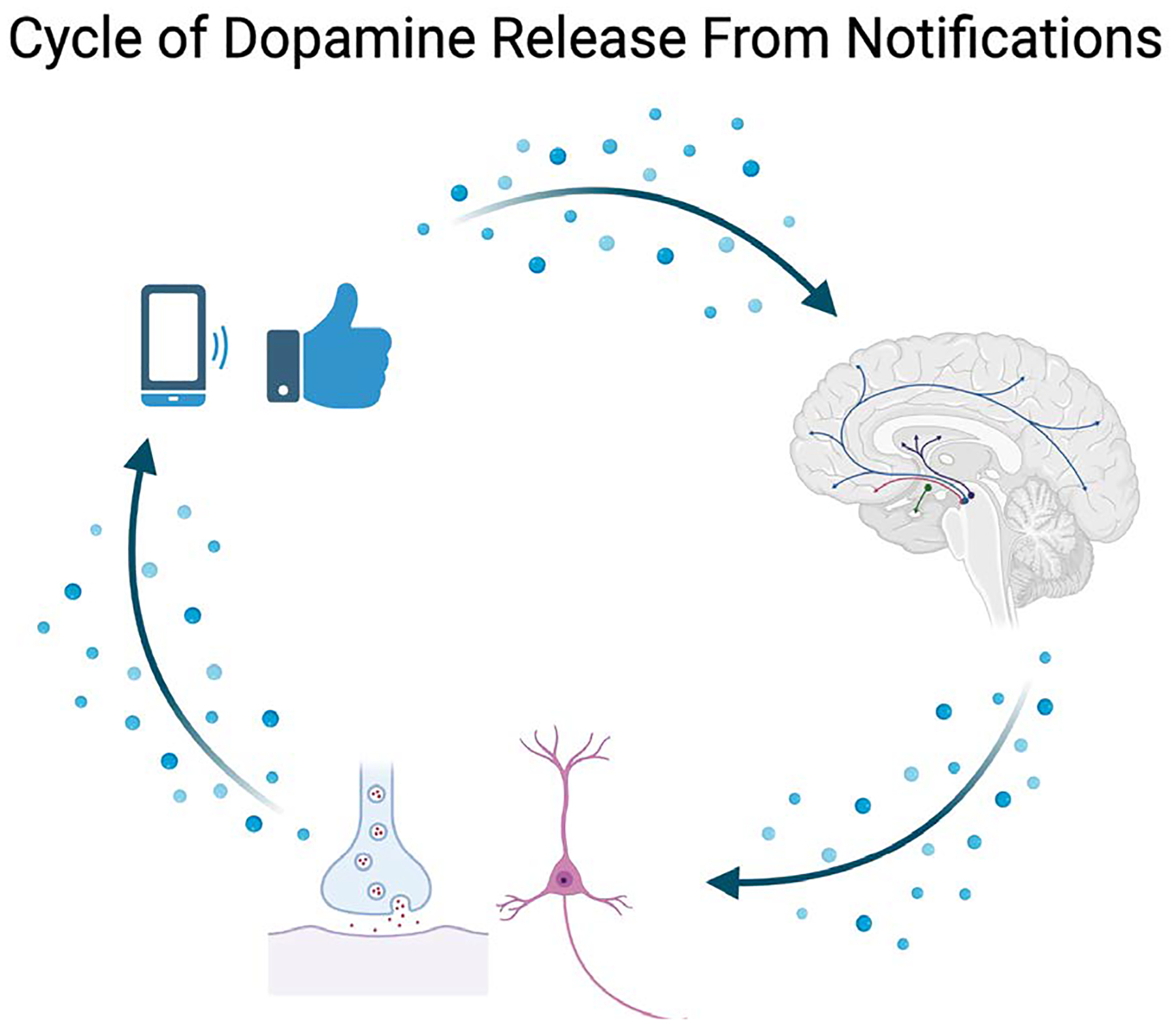
- Neurobiologically, unpredictable social media rewards (likes, comments, notifications) engage mesolimbic dopamine/VTA–NAc pathways and reinforce compulsive checking; ADHD is associated with attenuated tonic and enhanced phasic dopamine release in the right caudate, and serotonin dysregulation may increase vulnerability to internet addiction and emotional dysregulation.
- Disorder-specific evidence includes ASD prevalence rising from 0.18% (1997) to 3.36% (2019) and 3.42% (2021–2022), ADHD prevalence rising from 6.1% (1997–1998) to 10.5% (2022), screen time linked to ASD symptoms/connectivity and lower developmental quotients, and BDD linked to filters/selfies/cosmetic procedure consideration; ASD comorbidity in BDD reported as high as 16%.
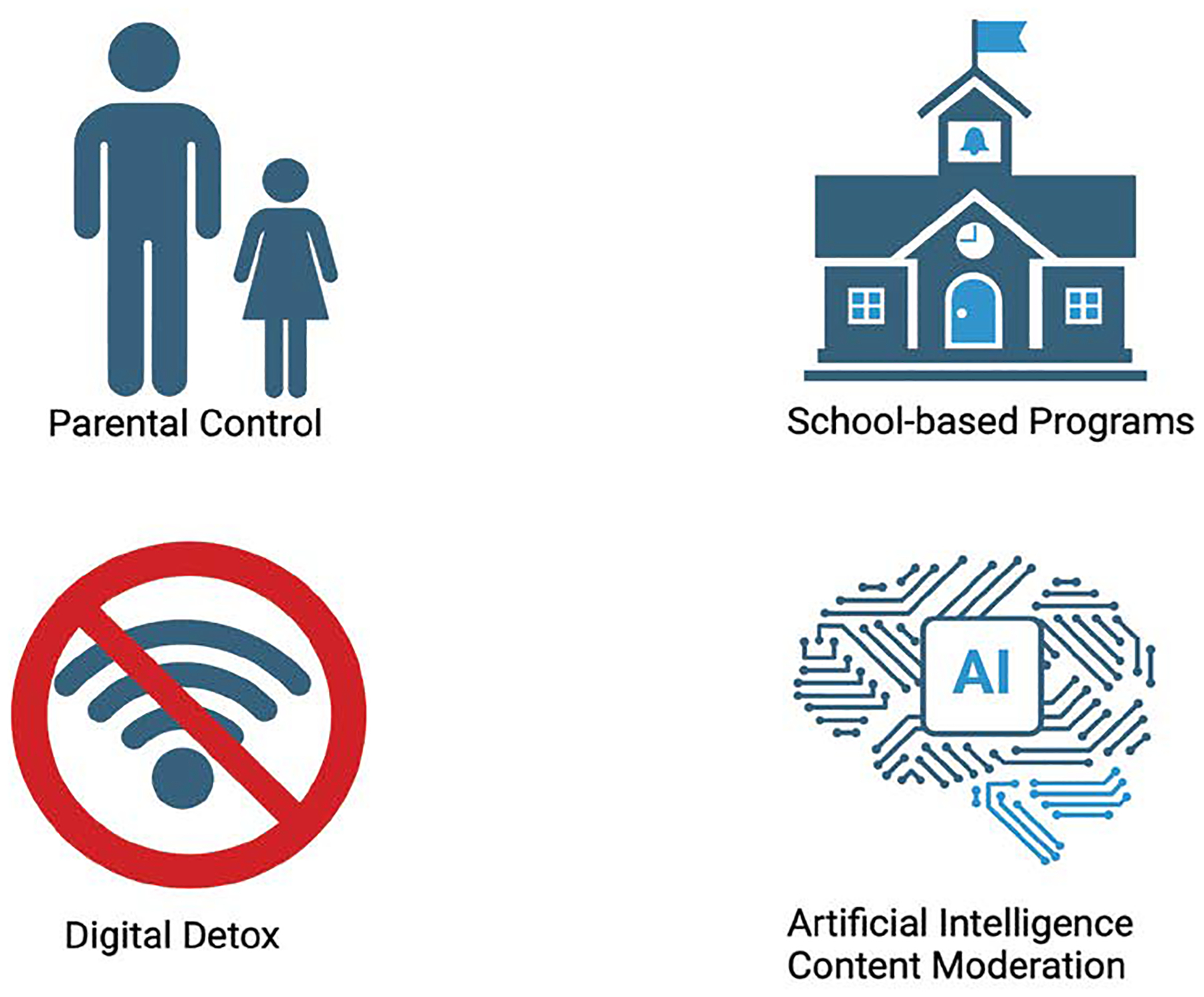
- Interventions: CBT-IA in 128 clients showed >95% managed symptoms after 12 weekly sessions and 78% sustained recovery at 6 months; anti-cyberbullying programs reduced perpetration ~10–15% and victimization ~14%; antibullying programs reduced perpetration 18–19% and victimization 15–16%; SSRI response rates in BDD were 53–65%; digital detox meta-analysis found reduced depressive symptoms but non-significant effects on well-being, life satisfaction, and stress.
Methods
- Design: narrative review/synthesis of existing literature, not a primary study; it covers neurobiological pathways, thematic findings by disorder, and treatment/prevention strategies.
- Data/sample: no original sample; draws on prior studies, systematic reviews, meta-analyses, clinical trials, surveys, and guidelines, including specific samples such as 128 CBT-IA clients and 21 digital detox studies with 3,625 participants.
- Main analysis: thematic/qualitative synthesis organized by disorder and intervention domain; no stated systematic search strategy, risk-of-bias assessment, or meta-analytic pooling.
Limitations
- Stated: future research should prioritize longitudinal studies to clarify long-term psychological effects and distinguish adaptive from maladaptive digital behaviors; the ASD–screen time relationship may be bidirectional rather than purely causal, with debates about causation and confounding; for social skills training, specific details about duration-outcome impact were not provided in available sources.
- Evident: as a narrative review, it lacks a described systematic search/selection method and formal quality appraisal, so findings rely on cited literature and may be subject to selection/reporting bias; many reported links are associational rather than causal.
Model-written summary. Check it against the paper before relying on it.
Integrity signals
Registry
Cites
Statistics
Figures
Verification
Claims the paper makes
97 Valid · 19 Not valid · 56 Not checked · 5 Own results and interpretations
At least one cited source doesn’t support this claim or points to a different paper, and none confirmed it — see the verdicts below.
In the paper
“In addition, serotonin imbalances, commonly observed in depression and anxiety, are exacerbated by online interactions [29].”
§ The Impact of Social Media & Technology on Child and Adolescent Mental Health > Neurological Pathways > Serotonin and Emotional Dysregulation
What the sources say
- Disputedcites [29] Zhang HX, Jiang WQ, Lin ZG,, Comparison of psychological symptoms and serum levels of neurotransmitters in Shanghai adolescents with and without internet addiction disorder: a case-control study. PLoS One 8 (2013): e63089. 23658801 PMC3643902 sourceExperimental — accuracy not yet measured
The Introduction links serotonin imbalance to mood and anxiety disorders, but the Results found no significant difference in serotonin levels between adolescents with internet addiction disorder and controls. The Discussion says serotonin was not implicated and cautions that the study cannot establish causation; it does not support the claim that online interactions exacerbate serotonin imbalances. Page numbers are unavailable in our copy. (LLM, conf=0.88)
Checked by a reasoning model — may be wrong.
plainstates a cause- Asserted: passes — The authors put it forward as true.
- Checkable: passes — It can be checked against evidence.
- Load-bearing: passes — The paper’s conclusions depend on it.
- Based: passes — The paper gives a reason why it holds.
- Disputed
The cited sources support only part of this claim — read each source’s verdict below.
In the paper
“Research shows that such rapid reward structures, including short TikTok videos or Instagram reels, can significantly reduce attention control over time [14].”
§ The Impact of Social Media & Technology on Child and Adolescent Mental Health > Neurological Pathways > Dopaminergic Pathways in Social Media Engagement
What the sources say
- Partly supportedcites [14] Xie J, Xu X, Zhang Y,, The effect of short-form video addiction on undergraduates’ academic procrastination: a moderated mediation model. Front Psychol 14 (2023): 1298361. 38162977 PMC10756502 sourceExperimental — accuracy not yet measured
The Results (Descriptive statistics; no page supplied) report a significant negative correlation between short-form video addiction and attentional control in undergraduates. The Discussion (The mediating role of attentional control) links rapidly switching videos and immediate gratification to attention difficulties. But the Implications and limitations section says the cross-sectional data cannot establish causality or change over time; the study does not establish that TikTok videos or Instagram reels themselves significantly reduce attention control. (LLM, conf=0.89)
plainstates a cause- Asserted: passes — The authors put it forward as true.
- Checkable: passes — It can be checked against evidence.
- Load-bearing: passes — The paper’s conclusions depend on it.
- Based: passes — The paper gives a reason why it holds.
- Partly supported
The cited sources support only part of this claim — read each source’s verdict below.
In the paper
“The prospect of obtaining a reward, such as a like or a comment, causes persistent dopamine release, encouraging the habit of monitoring social media regularly [12].”
§ The Impact of Social Media & Technology on Child and Adolescent Mental Health > Neurological Pathways > Dopaminergic Pathways in Social Media Engagement
What the sources say
- Partly supportedcites [12] Goedhoop J, Arbab T, Willuhn I. Anticipation of Appetitive Operant Action Induces Sustained Dopamine Release in the Nucleus Accumbens. J Neurosci 43(2023): 3922– 3932. 37185100 PMC10217991 sourceExperimental — accuracy not yet measured
The Discussion reports sustained dopamine release in rats when a cue signaled an opportunity to act for a food reward, but not when it signaled reward delivery alone. The paper does not study likes, comments, social media, or habitual monitoring, so it does not support extending that finding to those behaviors. (LLM, conf=0.88)
plainstates a cause- Asserted: passes — The authors put it forward as true.
- Checkable: passes — It can be checked against evidence.
- Load-bearing: passes — The paper’s conclusions depend on it.
- Based: passes — The paper gives a reason why it holds.
- Partly supported
The sources with a verdict support this claim; the rest weren’t checked yet, have no full text we could read, or their verdicts aren’t rated yet.
In the paper
“The mesolimbic dopaminergic pathway has been associated with addictive behaviors, including drug use and binge eating disorders [7, 8].”
§ The Impact of Social Media & Technology on Child and Adolescent Mental Health > Neurological Pathways > Dopaminergic Pathways in Social Media Engagement
What the sources say
- Not checked — no full text of the sourcecites [7] Pierce RC, Kumaresan V. The mesolimbic dopamine system: the final common pathway for the reinforcing effect of drugs of abuse? Neurosci Biobehav Rev 30 (2006): 215– 238. 16099045 source
- Supportedcites [8] Yohn SE, Galbraith J, Calipari ES,, Shared Behavioral and Neurocircuitry Disruptions in Drug Addiction, Obesity, and Binge Eating Disorder: Focus on Group I mGluRs in the Mesolimbic Dopamine Pathway. ACS Chem Neurosci 10 (2019): 2125– 2143. 30933466 PMC7898461 source
The Mesolimbic Dopamine Pathway section says the pathway has long been implicated in reward and reinforcement responses to drugs of abuse. The Conclusions link abnormalities in the mesolimbic system to both addiction and binge eating disorder (BED), supporting the claimed association. (LLM, conf=0.93)
plainstates an association- Asserted: passes — The authors put it forward as true.
- Checkable: passes — It can be checked against evidence.
- Load-bearing: unclear — It is unclear whether the paper’s conclusions depend on it.
- Based: passes — The paper gives a reason why it holds.
The cited sources support only part of this claim — read each source’s verdict below.
In the paper
“Research suggests that adolescents who frequently encounter depictions of alcohol and drug use on these platforms are at higher risk of engaging in these behaviors themselves [6].”
§ The Impact of Social Media & Technology on Child and Adolescent Mental Health > Introduction
What the sources say
- Partly supportedcites [6] Cheng B, Lim CCW, Rutherford BN,, A systematic review and meta-analysis of the relationship between youth drinking, self-posting of alcohol use and other social media engagement (2012–21). Addiction 119 (2024): 28– 46. 37751678 sourceExperimental — accuracy not yet measured
The Discussion (page unavailable) reports that greater exposure to alcohol-related social media content is associated with greater alcohol consumption, and the prospective-studies section reports this association in adolescents. The paper does not establish that exposure increases adolescents’ risk of drug use; its mention of alcohol- and drug-related videos concerns alcohol consumption as the outcome. (LLM, conf=0.88)
hedgedstates an association- Asserted: passes — The authors put it forward as true.
- Checkable: passes — It can be checked against evidence.
- Load-bearing: passes — The paper’s conclusions depend on it.
- Based: passes — The paper gives a reason why it holds.
- Rests on an assumption not shown here.
- Partly supported
89 more claims · 59 with their cited sources checked
Create a free account to see all 177 claims and to verify the 6 references still open.
- It may state two separate claims as one. 76
- Probably not a substantial claim. 9
- The quote only partly states this claim. 1
Self-check
Percentages, sums and reported differences re-computed from the paper’s own numbers.
Each contradiction between two passages listed here was confirmed by an independent check.
Rated minor: it would not touch a result — a value no result rests on, a p-value that stays on the same side of the significance level, or a conflict that is clerical, resolved elsewhere in the paper, or outside its own findings.
In the paper
§ The Impact of Social Media & Technology on Child and Adolescent Mental Health > Treatment Strategies, Behavioral Modifications, and Reducing Negative Impact of Social Media > Behavioral and Psychosocial Interventions
“Similarly, Bandelow et al. (2020) examined long-term outcomes”
§ The Impact of Social Media & Technology on Child and Adolescent Mental Health > References
“89. Bandelow B, Reitt M, Röver C,, Efficacy of treatments for anxiety disorders: a meta-analysis. Int Clin Psychopharmacol 30 (2015): 183– 192.”
Rated minor: it would not touch a result — a value no result rests on, a p-value that stays on the same side of the significance level, or a conflict that is clerical, resolved elsewhere in the paper, or outside its own findings.
In the paper
§ The Impact of Social Media & Technology on Child and Adolescent Mental Health > Introduction
“A study using data from the National Health Interview Survey reported that the prevalence of ASD increased from 0.18% in 1997 to 3.36% in 2019 [1].”
§ The Impact of Social Media & Technology on Child and Adolescent Mental Health > References
“1. Chihuri S, Blanchard A, DiGuiseppi CG,, Epidemiologic Patterns of Autism Spectrum Disorder in Pediatric Inpatients in the United States, 1997–2019.”
Rated minor: it would not touch a result — a value no result rests on, a p-value that stays on the same side of the significance level, or a conflict that is clerical, resolved elsewhere in the paper, or outside its own findings.
In the paper
§ The Impact of Social Media & Technology on Child and Adolescent Mental Health > Treatment Strategies, Behavioral Modifications, and Reducing Negative Impact of Social Media > Behavioral and Psychosocial Interventions
“A systematic review published in the Journal of Medical Internet Research Mental Health highlighted the potential of digital peer support systems in promoting mental well-being [111].”
§ The Impact of Social Media & Technology on Child and Adolescent Mental Health > References
“111. Dodd S, Widnall E, Russell AE,, School-based peer education interventions to improve health: a global systematic review of effectiveness. BMC Public Health 22 (2022): 2247.”
Citations
Cites
Keles, B., McCrae, N., & Grealish, A. (2020) · International Journal of Adolescence and Youth · doi:10.1080/02673843.2019.1590851 · Cited by 1,909
Social comparison, social media, and self-esteem.
Vogel, E. A., Rose, J. P., Roberts, L. R., & Eckles, K. (2014) · Psychology of Popular Media Culture · doi:10.1037/ppm0000047 · Cited by 1,418 · cited 2×
“This reluctance can lead to increased social withdrawal and contribute to depressive symptoms [43].”
Twenge, J. M., & Campbell, W. K. (2018) · Preventive Medicine Reports · doi:10.1016/j.pmedr.2018.10.003 · Cited by 1,304 · cited 2×
“This constant exposure to thoughtfully selected content has been linked to increased symptoms of depression, particularly among female adolescents, who may be more vulnerable to body image concerns [41].”
Social Media and Mental Health: Benefits, Risks, and Opportunities for Research and Practice
Naslund, J. A., Bondre, A., Torous, J., & Aschbrenner, K. A. (2020) · Journal of Technology in Behavioral Science · doi:10.1007/s41347-020-00134-x · Cited by 1,194
Gorwa, R., Binns, R., & Katzenbach, C. (2020) · Big Data & Society · doi:10.1177/2053951719897945 · Cited by 1,097 · cited 1×
“These include potential algorithmic bias, issues with accuracy in detecting nuanced content, and concerns about transparency and accountability [101].”
Lissak, G. (2018) · Environmental Research · doi:10.1016/j.envres.2018.01.015 · Cited by 1,024
Autism Spectrum Disorder: A Review
Hirota, T., & King, B. H. (2023) · JAMA · doi:10.1001/jama.2022.23661 · Cited by 957
Pierce, R. C., & Kumaresan, V. (2006) · Neuroscience & Biobehavioral Reviews · doi:10.1016/j.neubiorev.2005.04.016 · Cited by 913
Social media use and perceived social isolation among young adults in the U.S
Primack, B. A., Shensa, A., Sidani, J. E., Whaite, E. O., Lin, L. Y., Rosen, D., Colditz, J. B., Radovic, A., & Miller, E. (2017) · American Journal of Preventive Medicine · doi:10.1016/j.amepre.2017.01.010 · Cited by 889 · cited 2×
“Studies indicate that adolescents who spend significant time on social media are more likely to experience negative mental health outcomes, including decreased self-esteem and increased feelings of loneliness or social isolation [39].”
Carpenter, J. K., Andrews, L. A., Witcraft, S. M., Powers, M. B., Smits, J. A. J., & Hofmann, S. G. (2018) · Depression and Anxiety · doi:10.1002/da.22728 · Cited by 846 · cited 2×
“The study highlighted CBT’s ability to help individuals challenge cognitive distortions and develop coping strategies, leading to improved outcomes [88].”
Research works printed but not linked: 4
- [6]Cheng B, Lim CCW, Rutherford BN,, A systematic review and meta-analysis of the relationship between youth drinking, self-posting of alcohol use and other social media engagement (2012–21). Addiction 119 (2024): 28– 46. 37751678
- [40]Griffiths MD, Kuss DJ, Demetrovics Z. Social networking addiction: An overview of preliminary findings. In: Rosenberg KP, Feder LC, editors. Behavioral addictions: Criteria, evidence, and treatment. San Diego: Academic Press (2014): 119– 141.
- [102]Banchio PR. Legal, ethical and practical challenges of AI-driven content moderation. SSRN. (2024).
- [104]Nahmias Y, Perel M. The oversight of content moderation by AI: Impact assessments and their limitations. Harv J Legis 58 (2021): 146– 193.
Cited by
Connected but at Risk: Social Media Exposure and Psychiatric and Psychological Outcomes in Youth
Marano, G., Lisci, F. M., Rossi, S., Marzo, E. M., Boggio, G., Brisi, C., Traversi, G., Mazza, O., Pola, R., Gaetani, E., et al. (2025) · Children · doi:10.3390/children12101322 · Cited by 39
Zayer, L. T., Coleman, C. A., Chu, S., & Gruber, V. (2026) · Journal of Advertising · doi:10.1080/00913367.2026.2617048 · Cited by 4
“For example, online gaming and social media consumption have been linked to negative well-being outcomes among adolescents (e.g., Masri-Zada et al. 2025; Wright and Wachs 2022).”
Guerrero-Gutiérrez, N., Rojas-Cadena, S. J., Casadiegos, E. M. I., Rozo-Sánchez, A., Cepeda-Pineda, D., Carrillo-Sierra, S.-M., Bermudez, V., Contreras-Velásquez, J., Gómez-Charris, Y., & Rivera-Porras, D. (2026) · BMC Psychology · doi:10.1186/s40359-026-04109-0 · Cited by 4
“Previous research has linked problematic usage patterns with higher levels of social isolation, anxiety, diminished self-esteem and challenges in emotional self-regulation [20, 21].”
Domingo, J. L., & Shomar, B. (2026) · Human and Ecological Risk Assessment An International Journal · doi:10.1080/10807039.2026.2670401 · Cited by 1
Rahmat, W., Tiawati, R. L., Tatalia, R. G., & Azri, H. (2026) · Multidisciplinary Science Journal · doi:10.31893/multiscience.2026733 · Cited by 2
Schonfeld, D. J., & Demaria, T. P. (2025) · IGI Global eBooks · doi:10.4018/979-8-3693-1293-3.ch009
Reflections on the future of child & adolescent mental health
van der Gaag, R. J. (2025) · International Review of Psychiatry · doi:10.1080/09540261.2025.2596169
“These trendsetters can share (dangerous) ideas and convictions, or ideal imagines of the perfect face, body that leave followers confused, frustrated or compelled to imitate their idealized idols (Yen & Chamanadjian, 2025; Masri-Zada et al. 2025).”
Puspita, A., & Wulandari, M. T. A. (2025) · Konselor · doi:10.24036/02025143143-0-86 · Cited by 4
Adverse Environmental and Public Health Effects of Artificial Intelligence: A Comprehensive ReviewPreprint
Domingo, J. L. (2026) · Qeios · doi:10.32388/x3o2n6
Adverse Environmental and Public Health Effects of Artificial Intelligence: A Narrative ReviewPreprint
Domingo, J. L. (2026) · Qeios · doi:10.32388/x3o2n6.2
Adverse Environmental and Public Health Effects of Artificial Intelligence: A Narrative ReviewPreprint
Domingo, J. L. (2026) · Qeios · doi:10.32388/x3o2n6.3 · Cited by 1
Challenging Case: “Digital Addiction” in a Neurodivergent Adolescent
Tariq, M., Genovese, A., & Augustyn, M. C. (2026) · Journal of Developmental & Behavioral Pediatrics · doi:10.1097/dbp.0000000000001464
Saha, A. (2026) · International Journal of Social Science Research Studies (IJSSRS) · doi:10.63090/ijssrs/3108.1932.0011 · Cited by 2
The neurobiology of addiction and artificial intelligence dependency
Saba, L. (2026) · Elsevier eBooks · doi:10.1016/b978-0-443-44728-0.00015-9
Longitudinal Effects of Parental Mediation Strategies on Adolescent Sexting
Soto, A. M., Mýlek, V., & Dědková, L. (2026) · Computers in Human Behavior · doi:10.2139/ssrn.6428741
Digital Disruption and the Adolescent Self: An Eriksonian Analysis of the Web Series “Adolescence”
Sethi, K., Tiwari, S., & Sravanti, L. (2026) · Journal of Psychiatry Spectrum · doi:10.4103/jopsys.jopsys_155_25
New Trends and Challenges in Academic Research on Adolescent Growth and Development
Gao, J., Ren, X., Hu, Y., Li, G., Yang, T., & Xiao, J. (2026) · Advances in experimental medicine and biology · doi:10.1007/978-981-95-7000-3_20
Hellerova, L., Smaldone, A. M., & Bruzzese, J. (2026) · Academic Pediatrics · doi:10.1016/j.acap.2026.103316
Febriany, E. (2026) · Pubmedia Jurnal Pendidikan Bahasa Inggris · doi:10.47134/jpbi.v3i3.2534
Holistic Transcendent Parenting Theory Examines Parental Anxiety Levels and DeterminantsPreprint
Khomaeny, E. F. F., Dewi, R. S., Lubis, M., & Permana, R. (2026) · Research Square · doi:10.21203/rs.3.rs-9211941/v1
Ganaprakasam, C., Kamsani, S. R., & Ibrahim, N. B. (2026) · Research Square · doi:10.21203/rs.3.rs-9626484/v1
Qi, X., He, J., Wang, Q., Liu, S., Zhang, L., Zhao, J., Ma, D., & Zhao, D. (2026) · Frontiers in Psychiatry · doi:10.3389/fpsyt.2026.1830013 · Cited by 3
“On one hand, emotional dysregulation manifests as an individual ’ s dif fi culty in effectively regulating negative emotions, prompting them to seek refuge in cyberspace to escape real-world pressures or pursue immediate emotional relief (5).”
Al‐Beltagi, M. (2026) · World Journal of Clinical Pediatrics · doi:10.5409/wjcp.120091
Terzioğlu, M. A., Patlar, S., Onaç, C., Çört, A., & Ata, M. T. (2026) · Psychiatry Investigation · doi:10.30773/pi.2025.0444
Social Media Ban for Children and Adolescents: Moving Beyond Binaries
Aneja, J., & Gupta, N. (2026) · Journal of Indian Association for Child and Adolescent Mental Health · doi:10.1177/09731342261456044
When Screens Meet Cravings: Exploring the Intersection of Food and Technology Addiction
Kurtuluş, E. (2026) · IGI Global eBooks · doi:10.4018/979-8-2600-2468-3.ch009
Generation Z: Identity and Mental Health in the Era of Artificial Intelligence
Statharakos, N., Papadopoulou, E., Vlontaki, V., Statharakou, A., & Moutos, D. (2026) · IGI Global eBooks · doi:10.4018/979-8-3373-8387-3.ch006
`Mzabi, S. K., Ignarska, J., Piech, B., Judzińska, A., Sobczyńska, K., Terbosh, M., Trojanowska, E., Dubaj, M., Kwolek, M., & Osipowska, J. (2026) · International Journal of Innovative Technologies in Social Science · doi:10.31435/ijitss.2(50).2026.5602
Blandino, C., Rega, V., Amico, C., Giani, L., & Boursier, V. (2026) · Current Psychology · doi:10.1007/s12144-026-09676-4
Social media and substance use in youth: app-specific associations in the ABCD study
Wade, N. E., Nguyen‐Louie, T. T., Sullivan, R. M., May, A. C., Courtney, K. E., Jacobus, J., & Doran, N. (2026) · Addictive Behaviors · doi:10.1016/j.addbeh.2026.108793
Abdallah, N., Katmah, R., Khalaf, K. A., & Jelinek, H. F. (2026) · Computers in Human Behavior Reports · doi:10.1016/j.chbr.2026.101208
Bai, H., Lin, Y., Wang, T., Yang, Y., Chen, X. J., Wang, N., Li, H., Yu, Z., Zeng, Q., Wang, J., et al. (2026) · Research Square · doi:10.21203/rs.3.rs-10356111/v1
Bevens, W., Brookman-Frazee, L. I., Edwards, H. N., Kuelbs, C. L., & Stadnick, N. A. (2026) · Evidence-Based Practice in Child and Adolescent Mental Health · doi:10.1080/23794925.2026.2711444
“…has been attributed to several factors, such as familial economic stress (Mojtabai et al., 2016; Weinberger et al., 2018), social media use (Masri-Zada et al., 2025; Saleem et al., 2024; Twenge et al., 2018), and changes to mental health screening (Keyes et al., 2019; Mojtabai et al.,…”
Venkatesh, U., Santhosh, V. N., Saha, A., Chinnakali, P., Joshi, K., Bhattacharya, S., Gandhi, A. P., Agarwalla, R., & Tripathi, R. (2026) · International Journal of Mental Health and Addiction · doi:10.1007/s11469-026-01709-0
Deesongkram, M., Phupardrae, K., Taksinaporn, N., Thanoorak, P., Boottakhote, J., & Sonsomnuk, P. (2026) · NexusTech · doi:10.31893/tech.2026009
“…the development of evidence-based digital mental health policies, which represent a crucial component in enhancing the quality of mental health care for populations in an era where technology has become an inescapable aspect of daily life (Masri-zada et al., 2025; Agyapong-Opoku et al., 2025).”
Luu, S., & Luu, K. (2026) · Journal of the American Academy of Child & Adolescent Psychiatry · doi:10.1016/j.jaac.2026.07.008
Esan, B. T., Ngwai, Y. B., Akyala, A. I., Esan, O. A., Olugbemi, M. K., & Aremu, S. O. (2026) · Discover Public Health · doi:10.1186/s12982-026-02779-0 · Cited by 1
“By leveraging anonymity and interactivity, digital platforms can foster trust, engagement, and self-efficacy among young users [31–32].”
Youth, Social Media, and Emerging Addictive Behaviors in the Digital Age
Ogundare, Y. D. (2026) · IGI Global eBooks · doi:10.4018/979-8-2600-1699-2.ch001
Uso adictivo del celular y su relación con la ansiedad en estudiantes de secundaria bolivianos
Ramos, R. G., Ramallo, S. P., Rivero, L. E. P., & López, E. S. L. S. (2026) · Revista Ecuatoriana de Psicología · doi:10.33996/repsi.v9i24.240
Zhuang, P. (2026) · Information Resources Management Journal · doi:10.4018/irmj.423254
Impact of social media on the psychological well-being of adolescents and young adults in Delhi
Kumar, K., & Dhall, M. (2026) · International Journal of Community Medicine and Public Health · doi:10.18203/2394-6040.ijcmph20263621
Adicción a las redes sociales y nivel de autoestima en adolescentes escolarizados
Juárez, M. E. H., Ramírez, K. M., Cano-Estrada, E. A., & Hernández-Mariano, J. Á. (2026) · Revista Ecuatoriana de Ciencias de la Salud Alianza del Sur. · doi:10.69583/recsas.v3n1.2026.228
Sholikhah, K., Sihafudin, A., & Sodikin, S. (2026) · Berkala Ilmiah Pendidikan · doi:10.51214/bip.v6i2.2105
“However, excessive digital exposure causes individuals to experience anxiety, impulsivity, stress, mental fatigue, and difficulty controlling negative emotions (Masri-Zada et al., 2025).”
Lin, T., Wang, H., & Mullick, J. (2026) · Acta Psychologica · doi:10.1016/j.actpsy.2026.107952
Amin, S. M., Alkubati, S. A., El-hie, H. A. A., Khedr, M. A., Abdelaliem, S. M. F., AbouZeid, N. A., & El-Ashry, A. M. (2026) · Frontiers in Public Health · doi:10.3389/fpubh.2026.1897518
Metadata
- Authors
- Masri-zada, T., Martirosyan, S., Abdou, A., Barbar, R., Kades, S., Makki, H., Haley, G., & K Agrawal, D.
- Affiliations
- Western University of Health Sciences (US)
- Venue
- Journal of Psychiatry and Psychiatric Disorders
- Publisher
- Fortune Journals
- Published
- 2025
- Volume
- 9
- Issue
- 2
- Pages
- 111-130
- ISSN
- 2572-519X (ISSN-L)
- PMC
- PMC12165459
- OpenAlex
- W4411315511
- Semantic Scholar
- 606975b5b283a17e56f071a90e889ad61d3348d6
- Cited by
- 45
- References
- 1
- Citations by year
- 2026: 41 · 2025: 4
- FWCI
- 77.51
- Type
- journal article
- Language
- en
- Open access
- hybrid
- doi.org
- Licence
- cc-by
- Locations
- Journal of Psychiatry and Psychiatric Disorders (publishedVersion, cc-by)
- PubMed (publishedVersion)
- Europe PMC (PubMed Central) (acceptedVersion, cc-by)
- PubMed Central (acceptedVersion, cc-by)
- Funders
- National Institutes of Health
- National Heart, Lung, and Blood Institute (R01HL147662)
- National Institute of Allergy and Infectious Diseases (R25AI179582)
- Topics
- Social Sciences › Sociology and Political Science › Impact of Technology on Adolescents
- Social Sciences › Education › Child Development and Digital Technology
- Social Sciences › Psychology › Clinical Psychology › Body Image and Dysmorphia Studies
- Keywords
- social media, technology, child mental health, adolescent mental health
About these checks
Registry, retraction, Cites and statistics results are computed, not judged, with one exception: a printed reference that no index lists is read once by a model before it counts as a citation error. Claims are extracted by a model and kept only when their quote appears verbatim in the text; each cited source is then checked, with a model’s help, for whether it says what the claim relies on. Those verdicts can be wrong — read the claim’s quote and the cited source before relying on one.
The claim verdicts this report counts are experimental: their accuracy is not yet measured.
A language model drew the claims from the paper on 2026-10-12, under version 3 of the claim definition (model deepseek-v4.1-flash, prompt extract-v3).
A second model labelled each claim on 2026-10-12 (model jev-1.13-20260917, definition revision gold-guideline-v0.2).
Cited sources are checked with a language model’s help (gpt-6-sol).
Statistics and arithmetic are recomputed, not judged.
Confidence bands are shown only for fields calibrated on our annotated test set. None is calibrated yet, so no band is shown.
What counts as a claim ›How we measure confidence ›How we check this ›
Are you an author, or do you see a problem with this page? Request a review
Data sources
Bibliographic data: Semantic Scholar, OpenAlex, Crossref.
Contains information from the Semantic Scholar Academic Graph Datasets, made available under the ODC Attribution License (ODC-BY 1.0).
Semantic Scholar’s data is described in: Kinney, R., et al. (2023). The Semantic Scholar Open Data Platform. arXiv:2301.10140.
