

The DOI matches its Crossref record; 18 of the 18 references it cites were found in a registry or an index; none of the 44 sources its claims cite is checked for support yet.
Blockchain in Healthcare: A Patient-Centered Model
Open accessAbstract
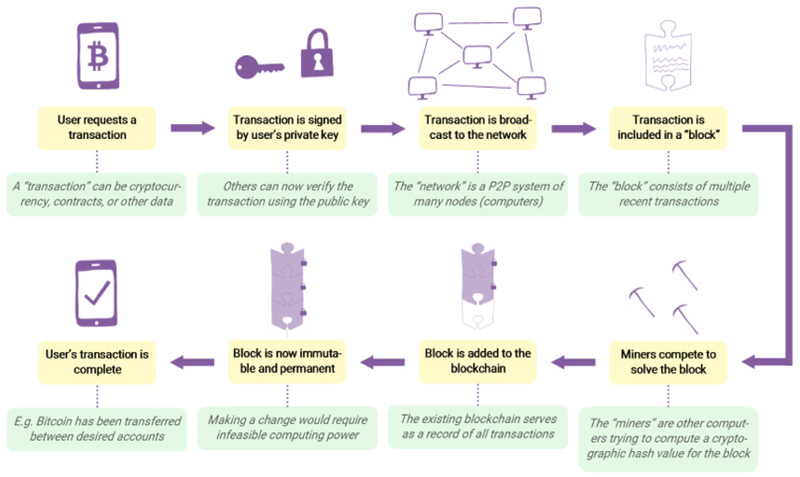
A blockchain is a system for storing and sharing information that is secure because of its transparency. Each block in the chain is both its own independent unit containing its own information, and a dependent link in the collective chain, and this duality creates a network regulated by participants who store and share the information, rather than a third party. Blockchain has many applications in healthcare, and can improve mobile health applications, monitoring devices, sharing and storing of electronic medical records, clinical trial data, and insurance information storage. Research about blockchain and healthcare is currently limited, but blockchain is on the brink of transforming the healthcare system; through its decentralized principles, blockchain can improve accessibility and security of patient information, and can therefore overturn the healthcare hierarchy and build a new system in which patients manage their own care.
Overview
AI snapshot
Written from the paper’s full text.
TL;DR
This paper reviews blockchain applications in healthcare—mobile health, remote monitoring, EMR sharing, clinical trials, and insurance—and proposes a patient-centered Ethereum-based model using decentralized storage and multi-signature contracts. It argues blockchain can improve security, accessibility, and patient ownership of medical data, though research and implementation remain limited.
Key findings
- In 2018, OCR received breach notifications exposing 13 million total healthcare records, and the average total cost of a U.S. data breach was $7.91 million, with the health sector having the highest per capita cost.
- Blockchain-based systems are described for mHealth, remote monitoring, EMR access (e.g., MedBlock, DPS, omniPHR), data sharing (e.g., BSPP, BMPLS), clinical trials, and medical insurance storage (MIStore).
- One study found Logitboost detected root exploit at 93% accuracy and predicted root exploit in the Root Exploit Detection System (RODS).
- The proposed patient-centered model uses Ethereum, decentralized cloud storage such as Ethereum Swarm, unique swarm hashes/root chunks stored in smart contracts, and multisig contracts requiring patient and hospital private keys; a “last accessed” timestamp triggers a new swarm hash after access.
Methods
- Narrative review of blockchain in healthcare plus a proposed system design; no systematic review protocol is reported.
- The paper synthesizes prior literature and systems, citing 18 references, and describes applications across mobile health, remote monitoring, health data access/sharing, clinical trials, and insurance.
- The proposed model is conceptual: it is based on Ethereum, Ethereum Swarm, smart contracts, and multisig authentication, but no implementation or empirical evaluation is described.
Limitations
- The paper states that research about blockchain and healthcare is currently limited and that more research is needed, especially for mobile health and remote monitoring security and patient information sharing.
- The paper acknowledges that blockchains are susceptible to 51% attacks, though it says the probability of a successful attack is extremely low, and notes cost concerns from Ethereum “gas” fees (ETH valued around $120 USD as of January 2019).
- Evident from the text: the proposed patient-centered model is not tested or deployed, and the review does not report a systematic search or formal quality assessment of included systems.
Model-written summary. Check it against the paper before relying on it.
Integrity signals
Registry
Cites
Statistics
Figures
Verification
Claims the paper makes
44 Not checked yet · 20 Own interpretation · 8 No basis given
In the paper
“a group of researchers created and tested an mHealth (mobile health) smart phone application for cognitive behavioral therapy for insomnia [4].”
§ Blockchain in Healthcare: A Patient-Centered Model > Mobile Health and Remote Monitoring
What the sources say
- Not checked yetcites [4] Ichikawa D, Kashiyama M and Ueno T (2017) Tamper-Resistant Mobile Health Using Blockchain Technology. JMIR Mhealth Uhealth 5(7): e111. 28747296 PMC5550736
plain- Asserted: passes — The authors put it forward as true.
- Checkable: passes — It can be checked against evidence.
- Load-bearing: passes — The paper’s conclusions depend on it.
- Based: passes — The paper gives a reason why it holds.
The paper states this without a source or data behind it here, so there is nothing to check it against. The quote shows it is in the paper.
In the paper
“Blockchain is permanent because once a block is added to the chain, anyone who wishes to alter it would need to recompute the altered block and all subsequent blocks, which requires an infeasible amount of computation power.”
§ Blockchain in Healthcare: A Patient-Centered Model > Introduction
plaindirect- Asserted: passes — The authors put it forward as true.
- Checkable: passes — It can be checked against evidence.
- Load-bearing: passes — The paper’s conclusions depend on it.
- Based: passes — The paper gives a reason why it holds.
In the paper
“the technology offers a verifiable, permanent, and attack-resistant system for recording data [2].”
§ Blockchain in Healthcare: A Patient-Centered Model > Introduction
What the sources say
- Not checked yetcites [2] Nakamoto S (2008) Bitcoin: A Peer-to-Peer Electronic Cash System.
plain- Asserted: passes — The authors put it forward as true.
- Checkable: passes — It can be checked against evidence.
- Load-bearing: passes — The paper’s conclusions depend on it.
- Based: passes — The paper gives a reason why it holds.
The paper states this without a source or data behind it here, so there is nothing to check it against. The quote shows it is in the paper.
In the paper
“Furthermore, blockchain is secure because there is no centralized structure for a malicious user to target, as the data is stored in numerous copies on different nodes.”
§ Blockchain in Healthcare: A Patient-Centered Model > Introduction
plaindirect- Asserted: passes — The authors put it forward as true.
- Checkable: passes — It can be checked against evidence.
- Load-bearing: passes — The paper’s conclusions depend on it.
- Based: unclear — It is unclear why the paper says it holds.
In the paper
“Using an application such as this one, the patient can record data and send it to healthcare providers in minutes no matter the distance between the patient and the provider.”
§ Blockchain in Healthcare: A Patient-Centered Model > Mobile Health and Remote Monitoring
What the sources say
- Not checked yetcites [4] Ichikawa D, Kashiyama M and Ueno T (2017) Tamper-Resistant Mobile Health Using Blockchain Technology. JMIR Mhealth Uhealth 5(7): e111. 28747296 PMC5550736
plaindirect- Asserted: passes — The authors put it forward as true.
- Checkable: passes — It can be checked against evidence.
- Load-bearing: unclear — It is unclear whether the paper’s conclusions depend on it.
- Based: passes — The paper gives a reason why it holds.
In the paper
“Root exploit is dangerous to blockchain systems because it can obtain a patient’s PKI private key that is used by the patient for access to their personal, protected information in the blockchain.”
§ Blockchain in Healthcare: A Patient-Centered Model > Mobile Health and Remote Monitoring
What the sources say
- Not checked yetcites [7] Firdaus A, Anuar NB, Razak MFA, Hashem Ibrahim Abaker Targio, Bachok Syafiq, (2018) Root Exploit Detection and Features Optimization: Mobile Device and Blockchain Based Medical Data Management. J Med Syst 42: 112. 29728780
plaindirect- Asserted: passes — The authors put it forward as true.
- Checkable: passes — It can be checked against evidence.
- Load-bearing: passes — The paper’s conclusions depend on it.
- Based: passes — The paper gives a reason why it holds.
In the paper
“The application sends patient health data to a private blockchain network.”
§ Blockchain in Healthcare: A Patient-Centered Model > Mobile Health and Remote Monitoring
What the sources say
- Not checked yetcites [4] Ichikawa D, Kashiyama M and Ueno T (2017) Tamper-Resistant Mobile Health Using Blockchain Technology. JMIR Mhealth Uhealth 5(7): e111. 28747296 PMC5550736
plaindirect- Asserted: passes — The authors put it forward as true.
- Checkable: passes — It can be checked against evidence.
- Load-bearing: passes — The paper’s conclusions depend on it.
- Based: passes — The paper gives a reason why it holds.
In the paper
“Moreover, Logitboost was also found to predict root exploit in the Root Exploit Detection System (RODS) curated in the study.”
§ Blockchain in Healthcare: A Patient-Centered Model > Mobile Health and Remote Monitoring
What the sources say
- Not checked yetcites [7] Firdaus A, Anuar NB, Razak MFA, Hashem Ibrahim Abaker Targio, Bachok Syafiq, (2018) Root Exploit Detection and Features Optimization: Mobile Device and Blockchain Based Medical Data Management. J Med Syst 42: 112. 29728780
plaincorrelational- Asserted: passes — The authors put it forward as true.
- Checkable: passes — It can be checked against evidence.
- Load-bearing: unclear — It is unclear whether the paper’s conclusions depend on it.
- Based: passes — The paper gives a reason why it holds.
In the paper
“The EMRs in the network were secure and resistant to tampering after testing because of the properties of the blockchain”
§ Blockchain in Healthcare: A Patient-Centered Model > Mobile Health and Remote Monitoring
What the sources say
- Not checked yetcites [4] Ichikawa D, Kashiyama M and Ueno T (2017) Tamper-Resistant Mobile Health Using Blockchain Technology. JMIR Mhealth Uhealth 5(7): e111. 28747296 PMC5550736
plaindirect- Asserted: passes — The authors put it forward as true.
- Checkable: passes — It can be checked against evidence.
- Load-bearing: passes — The paper’s conclusions depend on it.
- Based: passes — The paper gives a reason why it holds.
A conclusion the paper draws from its own results — it cites no other source for it, so there is none to check. The quote shows it is in the paper.
In the paper
“Blockchain technology can also be applied to the accessing and sharing of patient medical records.”
§ Blockchain in Healthcare: A Patient-Centered Model > Accessing and Sharing Health Data
plainconditional- Asserted: passes — The authors put it forward as true.
- Checkable: passes — It can be checked against evidence.
- Load-bearing: passes — The paper’s conclusions depend on it.
- Based: passes — The paper gives a reason why it holds.
- Probably not a substantial claim. 38
- It may state two separate claims as one. 28
The paper states this without a source or data behind it here, so there is nothing to check it against. The quote shows it is in the paper.
In the paper
“Research about blockchain and healthcare is currently limited, but blockchain is on the brink of transforming the healthcare system”
- Also stated in: § Conclusion · plain
“Research about blockchain’s applications to healthcare is currently limited, but more research becomes available every day.”
§ Blockchain in Healthcare: A Patient-Centered Model > Abstract
plain- Asserted: passes — The authors put it forward as true.
- Checkable: passes — It can be checked against evidence.
- Load-bearing: fails — The paper’s conclusions may not depend on it.
- Based: fails — The paper may give no reason why it holds.
Probably not a substantial claim. The paper’s conclusions may not depend on it. The paper may give no reason why it holds.
- Also stated in: § Conclusion · plain
The paper states this without a source or data behind it here, so there is nothing to check it against. The quote shows it is in the paper.
In the paper
“This study is the only one of its kind so far, but blockchain has many potential applications for insurance and more research will certainly become available soon”
§ Blockchain in Healthcare: A Patient-Centered Model > Accessing and Sharing Health Data
plain- Asserted: passes — The authors put it forward as true.
- Checkable: passes — It can be checked against evidence.
- Load-bearing: fails — The paper’s conclusions may not depend on it.
- Based: fails — The paper may give no reason why it holds.
Probably not a substantial claim. The paper’s conclusions may not depend on it. The paper may give no reason why it holds.
The paper states this without a source or data behind it here, so there is nothing to check it against. The quote shows it is in the paper.
In the paper
“various mobile apps and Electronic Medical Record (EMR) systems based on blockchain have also been proposed.”
§ Blockchain in Healthcare: A Patient-Centered Model > Introduction
plain- Asserted: passes — The authors put it forward as true.
- Checkable: passes — It can be checked against evidence.
- Load-bearing: fails — The paper’s conclusions may not depend on it.
- Based: passes — The paper gives a reason why it holds.
Probably not a substantial claim. The paper’s conclusions may not depend on it.
A conclusion the paper draws from its own results — it cites no other source for it, so there is none to check. The quote shows it is in the paper.
In the paper
“Blockchain can be applied to these technologies and improve security and quality of machinery.”
§ Blockchain in Healthcare: A Patient-Centered Model > Mobile Health and Remote Monitoring
plaindirect- Asserted: passes — The authors put it forward as true.
- Checkable: passes — It can be checked against evidence.
- Load-bearing: passes — The paper’s conclusions depend on it.
- Based: passes — The paper gives a reason why it holds.
It may state two separate claims as one.
A conclusion the paper draws from its own results — it cites no other source for it, so there is none to check. The quote shows it is in the paper.
In the paper
“through its decentralized principles, blockchain can improve accessibility and security of patient information”
§ Blockchain in Healthcare: A Patient-Centered Model > Abstract
plaindirect- Asserted: passes — The authors put it forward as true.
- Checkable: passes — It can be checked against evidence.
- Load-bearing: passes — The paper’s conclusions depend on it.
- Based: fails — The paper may give no reason why it holds.
Probably not a substantial claim. The paper may give no reason why it holds. It may state two separate claims as one.
The paper states this without a source or data behind it here, so there is nothing to check it against. The quote shows it is in the paper.
In the paper
“Sensitive medical records currently lack a secure structure, leading to data breaches with severe consequences.”
§ Blockchain in Healthcare: A Patient-Centered Model > Introduction
plaindirect- Asserted: passes — The authors put it forward as true.
- Checkable: passes — It can be checked against evidence.
- Load-bearing: passes — The paper’s conclusions depend on it.
- Based: passes — The paper gives a reason why it holds.
It may state two separate claims as one.
A conclusion the paper draws from its own results — it cites no other source for it, so there is none to check. The quote shows it is in the paper.
In the paper
“Blockchain has many applications in healthcare, and can improve mobile health applications, monitoring devices, sharing and storing of electronic medical records, clinical trial data, and insurance information storage.”
§ Blockchain in Healthcare: A Patient-Centered Model > Abstract
plaindirect- Asserted: passes — The authors put it forward as true.
- Checkable: passes — It can be checked against evidence.
- Load-bearing: passes — The paper’s conclusions depend on it.
- Based: fails — The paper may give no reason why it holds.
Probably not a substantial claim. The paper may give no reason why it holds. It may state two separate claims as one.
In the paper
“the average total cost of data breach in the United States was $7.91 million, with the health sector having the highest per capita cost (Ponemon Institute, 2018).”
§ Blockchain in Healthcare: A Patient-Centered Model > Introduction
What the sources say
- Not checked yetcites Ponemon Institute, 2018
plain- Asserted: passes — The authors put it forward as true.
- Checkable: passes — It can be checked against evidence.
- Load-bearing: fails — The paper’s conclusions may not depend on it.
- Based: passes — The paper gives a reason why it holds.
Probably not a substantial claim. The paper’s conclusions may not depend on it. It may state two separate claims as one.
In the paper
“In 2018, the Department of Health and Human Services’ Office for Civil Rights (OCR) received notifications of many data breaches that resulted in the exposure of 13 million total healthcare records [1].”
§ Blockchain in Healthcare: A Patient-Centered Model > Introduction
What the sources say
- Not checked yetcites [1] Journal H (2018) Largest Healthcare Data Breaches of 2018. HIPAA Journal.
plain- Asserted: passes — The authors put it forward as true.
- Checkable: passes — It can be checked against evidence.
- Load-bearing: fails — The paper’s conclusions may not depend on it.
- Based: passes — The paper gives a reason why it holds.
Probably not a substantial claim. The paper’s conclusions may not depend on it.
A conclusion the paper draws from its own results — it cites no other source for it, so there is none to check. The quote shows it is in the paper.
In the paper
“Additionally, improving blockchain based smart contracts may help monitoring devices operate securely.”
§ Blockchain in Healthcare: A Patient-Centered Model > Mobile Health and Remote Monitoring
hedgedconditional- Asserted: passes — The authors put it forward as true.
- Checkable: fails — It may be too vague to check against evidence.
- Load-bearing: fails — The paper’s conclusions may not depend on it.
- Based: fails — The paper may give no reason why it holds.
Probably not a substantial claim. It may be too vague to check against evidence. The paper’s conclusions may not depend on it. The paper may give no reason why it holds.
In the paper
“A private blockchain which is based on the Ethereum model has been developed to improve remote monitoring; in this private blockchain, sensors interact with smart devices that utilize smart contracts to record events in the blockchain [6].”
§ Blockchain in Healthcare: A Patient-Centered Model > Mobile Health and Remote Monitoring
What the sources say
- Not checked yetcites [6] Griggs KN, Ossipova O, Kohlios CP, Alessandro N Baccarini, Howson Emily A, (2018) Healthcare Blockchain System Using Smart Contracts for Secure Automated Remote Patient Monitoring. J Med Syst 42: 130. 29876661
plaindirect- Asserted: passes — The authors put it forward as true.
- Checkable: passes — It can be checked against evidence.
- Load-bearing: passes — The paper’s conclusions depend on it.
- Based: passes — The paper gives a reason why it holds.
It may state two separate claims as one.
In the paper
“and the data was accessible to and controlled by the patient.”
§ Blockchain in Healthcare: A Patient-Centered Model > Mobile Health and Remote Monitoring
What the sources say
- Not checked yetcites [4] Ichikawa D, Kashiyama M and Ueno T (2017) Tamper-Resistant Mobile Health Using Blockchain Technology. JMIR Mhealth Uhealth 5(7): e111. 28747296 PMC5550736
plain- Asserted: passes — The authors put it forward as true.
- Checkable: passes — It can be checked against evidence.
- Load-bearing: passes — The paper’s conclusions depend on it.
- Based: passes — The paper gives a reason why it holds.
It may state two separate claims as one.
In the paper
“One study investigated root exploit, the most vicious type of mobile malware, and its interactions with blockchain [7].”
§ Blockchain in Healthcare: A Patient-Centered Model > Mobile Health and Remote Monitoring
What the sources say
- Not checked yetcites [7] Firdaus A, Anuar NB, Razak MFA, Hashem Ibrahim Abaker Targio, Bachok Syafiq, (2018) Root Exploit Detection and Features Optimization: Mobile Device and Blockchain Based Medical Data Management. J Med Syst 42: 112. 29728780
plain- Asserted: passes — The authors put it forward as true.
- Checkable: passes — It can be checked against evidence.
- Load-bearing: fails — The paper’s conclusions may not depend on it.
- Based: passes — The paper gives a reason why it holds.
Probably not a substantial claim. The paper’s conclusions may not depend on it.
In the paper
“The biological method of Practical Swarm Optimization (PSO) was used in this study to select for root exploits, along with boosters, which can strengthen machine learning activity to uncover new root exploits and glean new information about malware.”
§ Blockchain in Healthcare: A Patient-Centered Model > Mobile Health and Remote Monitoring
What the sources say
- Not checked yetcites [7] Firdaus A, Anuar NB, Razak MFA, Hashem Ibrahim Abaker Targio, Bachok Syafiq, (2018) Root Exploit Detection and Features Optimization: Mobile Device and Blockchain Based Medical Data Management. J Med Syst 42: 112. 29728780
plaindirect- Asserted: passes — The authors put it forward as true.
- Checkable: passes — It can be checked against evidence.
- Load-bearing: passes — The paper’s conclusions depend on it.
- Based: passes — The paper gives a reason why it holds.
It may state two separate claims as one.
In the paper
“another mobile application, called Healthcare Data Gateway (HGD), has been presented for organization of patient data [5].”
§ Blockchain in Healthcare: A Patient-Centered Model > Mobile Health and Remote Monitoring
What the sources say
- Not checked yetcites [5] Yue X, Wang H, Jin D, Mingqiang Li, Jiang Wei (2016) Healthcare Data Gateways: Found Healthcare Intelligence on Blockchain with Novel Privacy Risk Control. J Med Syst 40: 218. 27565509
plain- Asserted: passes — The authors put it forward as true.
- Checkable: passes — It can be checked against evidence.
- Load-bearing: fails — The paper’s conclusions may not depend on it.
- Based: passes — The paper gives a reason why it holds.
Probably not a substantial claim. The paper’s conclusions may not depend on it.
In the paper
“The smart contracts enable real-time patient monitoring, as important notifications are sent to patients and healthcare providers securely.”
§ Blockchain in Healthcare: A Patient-Centered Model > Mobile Health and Remote Monitoring
What the sources say
- Not checked yetcites [6] Griggs KN, Ossipova O, Kohlios CP, Alessandro N Baccarini, Howson Emily A, (2018) Healthcare Blockchain System Using Smart Contracts for Secure Automated Remote Patient Monitoring. J Med Syst 42: 130. 29876661
plaindirect- Asserted: passes — The authors put it forward as true.
- Checkable: passes — It can be checked against evidence.
- Load-bearing: passes — The paper’s conclusions depend on it.
- Based: passes — The paper gives a reason why it holds.
It may state two separate claims as one.
In the paper
“The application uses a simple unified Indicator-Centric Schema (ICS) to organize this data, and a secure Multi-Party Computing (MPC) system, which enables third party interaction with protected healthcare data without privacy breaches and with-out authoritative power over the information.”
§ Blockchain in Healthcare: A Patient-Centered Model > Mobile Health and Remote Monitoring
What the sources say
- Not checked yetcites [5] Yue X, Wang H, Jin D, Mingqiang Li, Jiang Wei (2016) Healthcare Data Gateways: Found Healthcare Intelligence on Blockchain with Novel Privacy Risk Control. J Med Syst 40: 218. 27565509
plaindirect- Asserted: passes — The authors put it forward as true.
- Checkable: passes — It can be checked against evidence.
- Load-bearing: fails — The paper’s conclusions may not depend on it.
- Based: passes — The paper gives a reason why it holds.
Probably not a substantial claim. The paper’s conclusions may not depend on it. It may state two separate claims as one.
In the paper
“A prototype of DPS has been created which is modeled after the Ethereum blockchain.”
§ Blockchain in Healthcare: A Patient-Centered Model > Accessing and Sharing Health Data
What the sources say
- Not checked yetcites [9] Li H, Zhu L, Shen M, Feng Gao, Xiaoling Tao, (2018) BlockchainBased Data Preservation System for Medical Data. J Med Syst 42: 141. 29956058
plain- Asserted: passes — The authors put it forward as true.
- Checkable: passes — It can be checked against evidence.
- Load-bearing: fails — The paper’s conclusions may not depend on it.
- Based: passes — The paper gives a reason why it holds.
Probably not a substantial claim. The paper’s conclusions may not depend on it.
In the paper
“This new cryptographic framework based on multiple levels of encryption maximizes security.”
§ Blockchain in Healthcare: A Patient-Centered Model > Accessing and Sharing Health Data
What the sources say
- Not checked yetcites [11] Wang H and Song Y (2018) Secure Cloud-Based EHR System Using Attribute-Based Cryptosystem and Blockchain. J Med Syst 42(8): 152. 29974270
boosteddirect- Asserted: passes — The authors put it forward as true.
- Checkable: fails — It may be too vague to check against evidence.
- Load-bearing: fails — The paper’s conclusions may not depend on it.
- Based: fails — The paper may give no reason why it holds.
Probably not a substantial claim. It may be too vague to check against evidence. The paper’s conclusions may not depend on it. The paper may give no reason why it holds.
In the paper
“a blockchain based Data Preservation System (DPS) for medical data has been engineered [9].”
§ Blockchain in Healthcare: A Patient-Centered Model > Accessing and Sharing Health Data
What the sources say
- Not checked yetcites [9] Li H, Zhu L, Shen M, Feng Gao, Xiaoling Tao, (2018) BlockchainBased Data Preservation System for Medical Data. J Med Syst 42: 141. 29956058
plain- Asserted: passes — The authors put it forward as true.
- Checkable: passes — It can be checked against evidence.
- Load-bearing: fails — The paper’s conclusions may not depend on it.
- Based: passes — The paper gives a reason why it holds.
Probably not a substantial claim. The paper’s conclusions may not depend on it.
In the paper
“Zhang and Lin curated a patient information sharing plan, called a BSPP (blockchain-based secure and privacy-preserving patient health information sharing) scheme, that may improve diagnosis of patients in virtual health systems [12].”
§ Blockchain in Healthcare: A Patient-Centered Model > Accessing and Sharing Health Data
What the sources say
- Not checked yetcites [12] Zhang A and Lin X (2018) Towards Secure and Privacy-Preserving Data Sharing in e-Health Systems via Consortium Blockchain. J Med Syst 42(8): 140. 29956061
hedgedconditional- Asserted: passes — The authors put it forward as true.
- Checkable: passes — It can be checked against evidence.
- Load-bearing: fails — The paper’s conclusions may not depend on it.
- Based: passes — The paper gives a reason why it holds.
Probably not a substantial claim. The paper’s conclusions may not depend on it.
In the paper
“The private patient health information is stored in the private blockchain while the records of patient health information activity, rather than the actual information, are stored in the consortium blockchain, and all the data is encrypted.”
§ Blockchain in Healthcare: A Patient-Centered Model > Accessing and Sharing Health Data
What the sources say
- Not checked yetcites [12] Zhang A and Lin X (2018) Towards Secure and Privacy-Preserving Data Sharing in e-Health Systems via Consortium Blockchain. J Med Syst 42(8): 140. 29956061
plain- Asserted: passes — The authors put it forward as true.
- Checkable: passes — It can be checked against evidence.
- Load-bearing: passes — The paper’s conclusions depend on it.
- Based: passes — The paper gives a reason why it holds.
It may state two separate claims as one.
In the paper
“Their scheme includes the use of private and consortium blockchains and consensus mechanisms for the utmost security.”
§ Blockchain in Healthcare: A Patient-Centered Model > Accessing and Sharing Health Data
What the sources say
- Not checked yetcites [12] Zhang A and Lin X (2018) Towards Secure and Privacy-Preserving Data Sharing in e-Health Systems via Consortium Blockchain. J Med Syst 42(8): 140. 29956061
plaindirect- Asserted: passes — The authors put it forward as true.
- Checkable: passes — It can be checked against evidence.
- Load-bearing: passes — The paper’s conclusions depend on it.
- Based: passes — The paper gives a reason why it holds.
Probably not a substantial claim.
In the paper
“Another electronic health record (EHR) system has been established in addition to omniPHR, and this system combines attribute-based encryption (ABE), identity-based encryption (IBE), and identity-based signatures (IBS) to create a new type of cryptographic framework called combined attribute-based/identity-based encryption and signature (C-AB-/IB-ES) [11].”
§ Blockchain in Healthcare: A Patient-Centered Model > Accessing and Sharing Health Data
What the sources say
- Not checked yetcites [11] Wang H and Song Y (2018) Secure Cloud-Based EHR System Using Attribute-Based Cryptosystem and Blockchain. J Med Syst 42(8): 152. 29974270
plain- Asserted: passes — The authors put it forward as true.
- Checkable: passes — It can be checked against evidence.
- Load-bearing: fails — The paper’s conclusions may not depend on it.
- Based: passes — The paper gives a reason why it holds.
Probably not a substantial claim. The paper’s conclusions may not depend on it. It may state two separate claims as one.
A conclusion the paper draws from its own results — it cites no other source for it, so there is none to check. The quote shows it is in the paper.
In the paper
“Patients should be able to access all of their medical data in one forum, and this access will improve efficiency of care.”
§ Blockchain in Healthcare: A Patient-Centered Model > Accessing and Sharing Health Data
plaindirect- Asserted: passes — The authors put it forward as true.
- Checkable: passes — It can be checked against evidence.
- Load-bearing: passes — The paper’s conclusions depend on it.
- Based: fails — The paper may give no reason why it holds.
Probably not a substantial claim. The paper may give no reason why it holds.
- Rests on an assumption: Medical records are generally spread out across many different healthcare facilities, making them difficult to access.
In the paper
“DPS uses similar data storage mechanisms and cryptographic algorithms to ensure security.”
§ Blockchain in Healthcare: A Patient-Centered Model > Accessing and Sharing Health Data
What the sources say
- Not checked yetcites [9] Li H, Zhu L, Shen M, Feng Gao, Xiaoling Tao, (2018) BlockchainBased Data Preservation System for Medical Data. J Med Syst 42: 141. 29956058
plaindirect- Asserted: passes — The authors put it forward as true.
- Checkable: passes — It can be checked against evidence.
- Load-bearing: fails — The paper’s conclusions may not depend on it.
- Based: passes — The paper gives a reason why it holds.
Probably not a substantial claim. The paper’s conclusions may not depend on it.
In the paper
“Each block is then encrypted and the chain of blocks carrying the different pieces of one patient’s health information is fully accessible to that patient.”
§ Blockchain in Healthcare: A Patient-Centered Model > Accessing and Sharing Health Data
What the sources say
- Not checked yetcites [10] Roehrs A, da Costa CA and da Rosa Righi R (2017) OmniPHR: A distributed architecture model to integrate personal health records. J Biomed Inform 71: 70– 81. 28545835
plain- Asserted: passes — The authors put it forward as true.
- Checkable: passes — It can be checked against evidence.
- Load-bearing: passes — The paper’s conclusions depend on it.
- Based: passes — The paper gives a reason why it holds.
It may state two separate claims as one.
In the paper
“A Blockchain-Based Multi-Level Privacy Preserving Location Sharing scheme (BMPLS) has been proposed for telecare medical information systems [15].”
§ Blockchain in Healthcare: A Patient-Centered Model > Accessing and Sharing Health Data
What the sources say
- Not checked yetcites [15] Ji Y, Zhang J, Jianfeng Ma, Chao Yang, Xin Yao, (2018) BMPLS: Blockchain-Based Multi-level Privacy-Preserving Location Sharing Scheme for Telecare Medical Information Systems. J Med Syst 42: 147. 29961160
plain- Asserted: passes — The authors put it forward as true.
- Checkable: passes — It can be checked against evidence.
- Load-bearing: fails — The paper’s conclusions may not depend on it.
- Based: passes — The paper gives a reason why it holds.
Probably not a substantial claim. The paper’s conclusions may not depend on it.
In the paper
“Blockchains can easily detect fake information because of their transparency, and smart contracts in the blockchain can serve as security promoters for clinical trial data [16].”
§ Blockchain in Healthcare: A Patient-Centered Model > Accessing and Sharing Health Data
What the sources say
- Not checked yetcites [16] Nugent T, Upton D and Cimpoesu M (2016) Improving data transparency in clinical trials using blockchain smart contracts. F1000Res 5: 2541. 28357041 PMC5357027
plaindirect- Asserted: passes — The authors put it forward as true.
- Checkable: passes — It can be checked against evidence.
- Load-bearing: passes — The paper’s conclusions depend on it.
- Based: passes — The paper gives a reason why it holds.
It may state two separate claims as one.
In the paper
“A recent study outlines MIStore, a blockchain-based medical insurance storage system [18].”
§ Blockchain in Healthcare: A Patient-Centered Model > Accessing and Sharing Health Data
What the sources say
- Not checked yetcites [18] Zhou L, Wang L and Sun Y (2018) MIStore: a Blockchain-Based Medical Insurance Storage System. J Med Syst 42: 149 29968202 PMC6028902
plain- Asserted: passes — The authors put it forward as true.
- Checkable: passes — It can be checked against evidence.
- Load-bearing: fails — The paper’s conclusions may not depend on it.
- Based: passes — The paper gives a reason why it holds.
Probably not a substantial claim. The paper’s conclusions may not depend on it.
A conclusion the paper draws from its own results — it cites no other source for it, so there is none to check. The quote shows it is in the paper.
In the paper
“Blockchain technology has also been applied to clinical trials and, very recently, to medical insurance storage.”
§ Blockchain in Healthcare: A Patient-Centered Model > Accessing and Sharing Health Data
plain- Asserted: passes — The authors put it forward as true.
- Checkable: passes — It can be checked against evidence.
- Load-bearing: fails — The paper’s conclusions may not depend on it.
- Based: passes — The paper gives a reason why it holds.
Probably not a substantial claim. The paper’s conclusions may not depend on it. It may state two separate claims as one.
A conclusion the paper draws from its own results — it cites no other source for it, so there is none to check. The quote shows it is in the paper.
In the paper
“This model not only provides the security and immutability provided by blockchain, but also offers a multisig solution to data ownership and accessibility.”
§ Blockchain in Healthcare: A Patient-Centered Model > Proposed Patient-Centered Blockchain Model
plaindirect- Asserted: passes — The authors put it forward as true.
- Checkable: passes — It can be checked against evidence.
- Load-bearing: passes — The paper’s conclusions depend on it.
- Based: passes — The paper gives a reason why it holds.
It may state two separate claims as one.
In the paper
“Another data sharing system was developed that uses LifePound, a digital currency that is similar to bitcoin, which can buy and sell biomedical data [14].”
§ Blockchain in Healthcare: A Patient-Centered Model > Accessing and Sharing Health Data
What the sources say
- Not checked yetcites [14] Mamoshina P, Ojomoko L, Yanovich Y, (2018) Converging blockchain and next-generation artificial intelligence technologies to decentralize and accelerate biomedical research and healthcare. Oncotarget 2018; 9: 5665– 5690. PMC5814166 29464026
plain- Asserted: passes — The authors put it forward as true.
- Checkable: passes — It can be checked against evidence.
- Load-bearing: fails — The paper’s conclusions may not depend on it.
- Based: passes — The paper gives a reason why it holds.
Probably not a substantial claim. The paper’s conclusions may not depend on it.
In the paper
“Their method emphasizes security, availability, privacy, and control of data access, and lowers access time for records.”
§ Blockchain in Healthcare: A Patient-Centered Model > Accessing and Sharing Health Data
What the sources say
- Not checked yetcites [13] Dubovitskaya A, Xu Z, Ryu S, (2017) Secure and Trustable Electronic Medical Records Sharing using Blockchain. AMIA Annu Symp Proc 2017: 650– 659. 29854130 PMC5977675
plaindirect- Asserted: passes — The authors put it forward as true.
- Checkable: passes — It can be checked against evidence.
- Load-bearing: fails — The paper’s conclusions may not depend on it.
- Based: passes — The paper gives a reason why it holds.
Probably not a substantial claim. The paper’s conclusions may not depend on it. It may state two separate claims as one.
A conclusion the paper draws from its own results — it cites no other source for it, so there is none to check. The quote shows it is in the paper.
In the paper
“Systems such as MIStore can encourage a more productive relationship between patients, caregivers, and insurance companies.”
§ Blockchain in Healthcare: A Patient-Centered Model > Accessing and Sharing Health Data
plainconditional- Asserted: passes — The authors put it forward as true.
- Checkable: fails — It may be too vague to check against evidence.
- Load-bearing: fails — The paper’s conclusions may not depend on it.
- Based: fails — The paper may give no reason why it holds.
Probably not a substantial claim. It may be too vague to check against evidence. The paper’s conclusions may not depend on it. The paper may give no reason why it holds.
A conclusion the paper draws from its own results — it cites no other source for it, so there is none to check. The quote shows it is in the paper.
In the paper
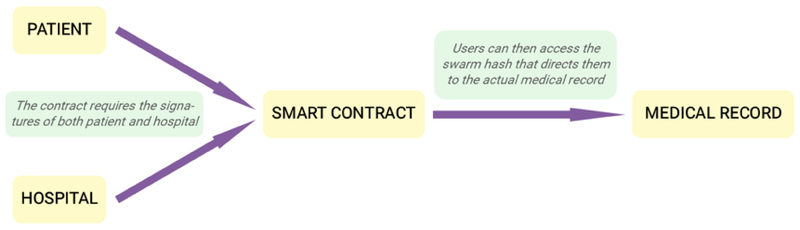
“This way, the patient cannot alter the record without permission of the hospital, but he still has control over who can access his record.”
§ Blockchain in Healthcare: A Patient-Centered Model > Proposed Patient-Centered Blockchain Model
plaindirect- Asserted: passes — The authors put it forward as true.
- Checkable: passes — It can be checked against evidence.
- Load-bearing: passes — The paper’s conclusions depend on it.
- Based: passes — The paper gives a reason why it holds.
It may state two separate claims as one.
In the paper
“Although blockchains are extremely secure, they are by nature susceptible to a type of attack known as the 51% attack (also called a double-spend attack or majority attack) (Yli-Huumo, Ko, Choi, Park, & Smolander, 2016).”
§ Blockchain in Healthcare: A Patient-Centered Model > Addressed Concerns
What the sources say
- Not checked yetcites Yli-Huumo, Ko, Choi, Park, & Smolander, 2016
plaindirect- Asserted: passes — The authors put it forward as true.
- Checkable: passes — It can be checked against evidence.
- Load-bearing: fails — The paper’s conclusions may not depend on it.
- Based: passes — The paper gives a reason why it holds.
Probably not a substantial claim. The paper’s conclusions may not depend on it.
In the paper
“LifePound rewards a patient for entering data and encourages participation in data sharing.”
§ Blockchain in Healthcare: A Patient-Centered Model > Accessing and Sharing Health Data
What the sources say
- Not checked yetcites [14] Mamoshina P, Ojomoko L, Yanovich Y, (2018) Converging blockchain and next-generation artificial intelligence technologies to decentralize and accelerate biomedical research and healthcare. Oncotarget 2018; 9: 5665– 5690. PMC5814166 29464026
plaindirect- Asserted: passes — The authors put it forward as true.
- Checkable: passes — It can be checked against evidence.
- Load-bearing: fails — The paper’s conclusions may not depend on it.
- Based: passes — The paper gives a reason why it holds.
Probably not a substantial claim. The paper’s conclusions may not depend on it. It may state two separate claims as one.
A conclusion the paper draws from its own results — it cites no other source for it, so there is none to check. The quote shows it is in the paper.
In the paper
“The change in the data will automatically change the swarm hash, which can then be secured once again until it receives the required permissions for access.”
§ Blockchain in Healthcare: A Patient-Centered Model > Proposed Patient-Centered Blockchain Model
plaindirect- Asserted: passes — The authors put it forward as true.
- Checkable: passes — It can be checked against evidence.
- Load-bearing: passes — The paper’s conclusions depend on it.
- Based: fails — The paper may give no reason why it holds.
Probably not a substantial claim. The paper may give no reason why it holds. It may state two separate claims as one.
A conclusion the paper draws from its own results — it cites no other source for it, so there is none to check. The quote shows it is in the paper.
In the paper
“Thus, the root chunks are securely stored in smart contracts through the blockchain and are released only under specific conditions.”
§ Blockchain in Healthcare: A Patient-Centered Model > Proposed Patient-Centered Blockchain Model
plaindirect- Asserted: passes — The authors put it forward as true.
- Checkable: passes — It can be checked against evidence.
- Load-bearing: passes — The paper’s conclusions depend on it.
- Based: passes — The paper gives a reason why it holds.
It may state two separate claims as one.
In the paper
“These smart contracts can keep a truthful record of trials and produce truthful data that can fuel new and effective treatments and pharmaceuticals.”
§ Blockchain in Healthcare: A Patient-Centered Model > Accessing and Sharing Health Data
What the sources say
- Not checked yetcites [16] Nugent T, Upton D and Cimpoesu M (2016) Improving data transparency in clinical trials using blockchain smart contracts. F1000Res 5: 2541. 28357041 PMC5357027
plaindirect- Asserted: passes — The authors put it forward as true.
- Checkable: passes — It can be checked against evidence.
- Load-bearing: passes — The paper’s conclusions depend on it.
- Based: passes — The paper gives a reason why it holds.
It may state two separate claims as one.
In the paper
“Another study also outlines the benefits of blockchain in clinical trials and presents a successful procedure for implementation [17].”
§ Blockchain in Healthcare: A Patient-Centered Model > Accessing and Sharing Health Data
What the sources say
- Not checked yetcites [17] Benchoufi M, Porcher R and Ravaud P (2017) Blockchain protocols Cinclinical trials: Transparency and traceability of consent. F1000Res 6: 66. 29167732 PMC5676196
plain- Asserted: passes — The authors put it forward as true.
- Checkable: passes — It can be checked against evidence.
- Load-bearing: fails — The paper’s conclusions may not depend on it.
- Based: passes — The paper gives a reason why it holds.
Probably not a substantial claim. The paper’s conclusions may not depend on it. It may state two separate claims as one.
A conclusion the paper draws from its own results — it cites no other source for it, so there is none to check. The quote shows it is in the paper.
In the paper
“We propose a medical data management system using blockchain technology that is secure and allows patients to retain ownership over their own records while allowing hospitals to have easy access (see the following Figure 2).”
§ Blockchain in Healthcare: A Patient-Centered Model > Proposed Patient-Centered Blockchain Model
plaindirect- Asserted: passes — The authors put it forward as true.
- Checkable: passes — It can be checked against evidence.
- Load-bearing: passes — The paper’s conclusions depend on it.
- Based: fails — The paper may give no reason why it holds.
Probably not a substantial claim. The paper may give no reason why it holds. It may state two separate claims as one.
- Rests on an assumption: Patients are currently unable to have full ownership of their own medical data.
- Rests on an assumption: Blockchains do not innately offer sufficient storage.
The paper states this without a source or data behind it here, so there is nothing to check it against. The quote shows it is in the paper.
In the paper
“When a transaction is requested, the user must pay for the computation.”
§ Blockchain in Healthcare: A Patient-Centered Model > Addressed Concerns
plaindirect- Asserted: passes — The authors put it forward as true.
- Checkable: passes — It can be checked against evidence.
- Load-bearing: passes — The paper’s conclusions depend on it.
- Based: passes — The paper gives a reason why it holds.
Probably not a substantial claim.
A conclusion the paper draws from its own results — it cites no other source for it, so there is none to check. The quote shows it is in the paper.
In the paper
“Because blockchain maximizes security and accessibility, the technology can be used in many different areas of the healthcare system, such as for storing and sharing medical records and insurance information both in healthcare venues and in mobile applications and remote monitoring systems, and for clinical trials.”
§ Blockchain in Healthcare: A Patient-Centered Model > Conclusion
plaindirect- Asserted: passes — The authors put it forward as true.
- Checkable: fails — It may be too vague to check against evidence.
- Load-bearing: passes — The paper’s conclusions depend on it.
- Based: fails — The paper may give no reason why it holds.
Probably not a substantial claim. It may be too vague to check against evidence. The paper may give no reason why it holds. It may state two separate claims as one.
- Rests on an assumption: The probability of a successful 51% attack is extremely low.
In the paper
“In the Ethereum network, the payment is calculated in “gas” and the gas is paid in “ETH,” valued around $120 USD as of January 2019 (EthereumPrice.org, 2019).”
§ Blockchain in Healthcare: A Patient-Centered Model > Addressed Concerns
What the sources say
- Not checked yetcites EthereumPrice.org, 2019
plain- Asserted: passes — The authors put it forward as true.
- Checkable: passes — It can be checked against evidence.
- Load-bearing: fails — The paper’s conclusions may not depend on it.
- Based: passes — The paper gives a reason why it holds.
Probably not a substantial claim. The paper’s conclusions may not depend on it. It may state two separate claims as one.
A conclusion the paper draws from its own results — it cites no other source for it, so there is none to check. The quote shows it is in the paper.
In the paper
“This transfer of authority may lead to an overall shift toward patient-centered care; the blockchain movement for patients is just beginning.”
§ Blockchain in Healthcare: A Patient-Centered Model > Conclusion
hedgedconditional- Asserted: passes — The authors put it forward as true.
- Checkable: fails — It may be too vague to check against evidence.
- Load-bearing: passes — The paper’s conclusions depend on it.
- Based: fails — The paper may give no reason why it holds.
Probably not a substantial claim. It may be too vague to check against evidence. The paper may give no reason why it holds.
A conclusion the paper draws from its own results — it cites no other source for it, so there is none to check. The quote shows it is in the paper.
In the paper
“it can change the hierarchy of healthcare by returning authority over medical records and health data to the patient.”
§ Blockchain in Healthcare: A Patient-Centered Model > Conclusion
plaindirect- Asserted: passes — The authors put it forward as true.
- Checkable: fails — It may be too vague to check against evidence.
- Load-bearing: passes — The paper’s conclusions depend on it.
- Based: fails — The paper may give no reason why it holds.
Probably not a substantial claim. It may be too vague to check against evidence. The paper may give no reason why it holds.
- Rests on an assumption: Patients are currently unable to have full ownership of their own medical data.
A conclusion the paper draws from its own results — it cites no other source for it, so there is none to check. The quote shows it is in the paper.
In the paper
“The vast amount of transactions needed to be processed in hospital settings would amount to a sizable cost.”
§ Blockchain in Healthcare: A Patient-Centered Model > Addressed Concerns
hedgeddirect- Asserted: passes — The authors put it forward as true.
- Checkable: passes — It can be checked against evidence.
- Load-bearing: fails — The paper’s conclusions may not depend on it.
- Based: fails — The paper may give no reason why it holds.
Probably not a substantial claim. The paper’s conclusions may not depend on it. The paper may give no reason why it holds.
In the paper
“This occurs when a miner, or group of miners, controls over 50% of the total mining hash rate (computing power) in the network and becomes able to prevent new transactions or reverse completed transactions.”
§ Blockchain in Healthcare: A Patient-Centered Model > Addressed Concerns
What the sources say
- Not checked yetcites Yli-Huumo et al., 2016
plaindirect- Asserted: passes — The authors put it forward as true.
- Checkable: passes — It can be checked against evidence.
- Load-bearing: fails — The paper’s conclusions may not depend on it.
- Based: passes — The paper gives a reason why it holds.
Probably not a substantial claim. The paper’s conclusions may not depend on it.
In the paper
“However, the use of a blockchain system would replace current storage systems (electronic health records (EHRs), personal medical records, disease registries, and other databases (The National Academies)) and eliminate costly data breaches and other errors, ultimately rendering the system cost-efficient.”
§ Blockchain in Healthcare: A Patient-Centered Model > Addressed Concerns
What the sources say
- Not checked yetcites The National Academies
hedgeddirect- Asserted: passes — The authors put it forward as true.
- Checkable: passes — It can be checked against evidence.
- Load-bearing: passes — The paper’s conclusions depend on it.
- Based: unclear — It is unclear why the paper says it holds.
It may state two separate claims as one.
The paper states this without a source or data behind it here, so there is nothing to check it against. The quote shows it is in the paper.
In the paper
“By controlling over 50% of the computing power, the malicious user is able to form blocks at a faster rate than the rest of the network, and by the longest chain rule (which states that the longest blockchain is the valid chain), the network is forced to switch to the attacker’s desired chain.”
§ Blockchain in Healthcare: A Patient-Centered Model > Addressed Concerns
plaindirect- Asserted: passes — The authors put it forward as true.
- Checkable: passes — It can be checked against evidence.
- Load-bearing: fails — The paper’s conclusions may not depend on it.
- Based: passes — The paper gives a reason why it holds.
Probably not a substantial claim. The paper’s conclusions may not depend on it. It may state two separate claims as one.
The paper relies on this without support.
Patients are currently unable to have full ownership of their own medical data.
“Another concern is that patients are currently unable to have full ownership of their own medical data, a notion that is increasing in relevance with the rise of personalized medicine and wearables.”
The paper relies on this without support.
Security concerns are associated with mobile monitoring of healthcare, as patient health information is private and sensitive.
“Security concerns are associated with mobile monitoring of healthcare, as patient health information is private and sensitive.”
The paper relies on this without support.
Mobile malware has destroyed blockchain in the past.
“Mobile malware has destroyed blockchain in the past, and the blockchain that controls mobile applications must be completely secure before it can be used to store health information.”
The paper relies on this without support.
Medical records are generally spread out across many different healthcare facilities, making them difficult to access.
“Medical records can be difficult to access because they are generally spread out across many different healthcare facilities”
The paper relies on this without support.
Network overload is a concern when software such as blockchain that continues to grow over time is implemented.
“Network overload is a concern when software such as blockchain that continues to grow over time is implemented.”
The paper relies on this without support.
A patient’s location may need to be shared securely with providers and other relevant personnel.
“A patient’s location is another piece of health information that may need to be shared securely with providers and other relevant personnel.”
The paper relies on this without support.
Blockchains do not innately offer sufficient storage.
“Since many times, blockchains do not innately offer sufficient storage, we store the actual medical records on a decentralized cloud storage such as Ethereum Swarm”
The paper relies on this without support.
The probability of a successful 51% attack is extremely low.
“However, although 51% attacks are possible, the probability of a successful attack is extremely low, so blockchain remains one of the most secure forms of technology.”
Claims other papers make about this one
Each is checked against this paper’s own text: does it say what the citing paper says it does?
In the citing paper
“Combined with blockchain, a transparent and immutable ledger, it establishes an ecosystem fostering trust, security, and data integrity.”
From Federated learning meets blockchain in decentralized data-sharing: Healthcare use case (2024) · cites this paper as [15]
In the citing paper
“Its characteristics are well-suited to address the need for trust and accountability in data-sharing ecosystems [15].”
From Federated learning meets blockchain in decentralized data-sharing: Healthcare use case (2024) · cites this paper as [15]
Citations
Cites
Bitcoin: A Peer-to-Peer Electronic Cash SystemPreprint
Nakamoto, S. (2019) · SSRN Electronic Journal · doi:10.2139/ssrn.3440802 · Cited by 14,677
Yue, X., Wang, H., Jin, D., Li, M., & Jiang, W. (2016) · Journal of Medical Systems · doi:10.1007/s10916-016-0574-6 · Cited by 1,240
Healthcare blockchain system using smart contracts for secure automated remote patient monitoring
Griggs, K. N., Ossipova, O., Kohlios, C. P., Baccarini, A. N., Howson, E. A., & Hayajneh, T. (2018) · Journal of Medical Systems · doi:10.1007/s10916-018-0982-x · Cited by 926
Mastering Bitcoin: Unlocking Digital Crypto-Currencies
Antonopoulos, A. M. (2014) · Cited by 865
MedBlock: Efficient and Secure Medical Data Sharing Via Blockchain
Fan, K., Wang, S., Ren, Y., Li, H., & Yang, Y. (2018) · Journal of Medical Systems · doi:10.1007/s10916-018-0993-7 · Cited by 631
Towards secure and privacy-preserving data sharing in e-Health systems via consortium blockchain
Zhang, A., & Lin, X. (2018) · Journal of Medical Systems · doi:10.1007/s10916-018-0995-5 · Cited by 606
Mamoshina, P., Ojomoko, L., Yanovich, Y., Ostrovski, A., Botezatu, A., Prikhodko, P., Izumchenko, E., Aliper, A., Romantsov, K., Zhebrak, A., et al. (2018) · Oncotarget · doi:10.18632/oncotarget.22345 · Cited by 471
Secure and Trustable Electronic Medical Records Sharing using Blockchain
Dubovitskaya, A., Xu, Z., Ryu, S., Schumacher, M., & Wang, F. (2017) · PubMed Central · doi:10.48550/arxiv.1709.06528 · Cited by 465
OmniPHR: a distributed architecture model to integrate personal health records
Roehrs, A., da Costa, C. A., & da Rosa Righi, R. (2017) · Journal of Biomedical Informatics · doi:10.1016/j.jbi.2017.05.012 · Cited by 428
Secure cloud-based EHR system using attribute-based cryptosystem and blockchain
Wang, H., & Song, Y. (2018) · Journal of Medical Systems · doi:10.1007/s10916-018-0994-6 · Cited by 409
Blockchain-based data preservation system for medical data
Li, H., Zhu, L., Shen, M., Gao, F., Tao, X., & Liu, S. (2018) · Journal of Medical Systems · doi:10.1007/s10916-018-0997-3 · Cited by 347
Improving data transparency in clinical trials using blockchain smart contracts
Nugent, T., Upton, D., & Cimpoesu, M. (2016) · F1000Research · doi:10.12688/f1000research.9756.1 · Cited by 309
Tamper-Resistant Mobile Health Using Blockchain Technology.
Ichikawa, D., Kashiyama, M., & Ueno, T. (2017) · JMIR mHealth and uHealth · doi:10.2196/mhealth.7938 · Cited by 298 · cited 1×
“For example, a group of researchers created and tested an mHealth (mobile health) smart phone application for cognitive behavioral therapy for insomnia [4].”
BackgroundMIStore: a Blockchain-Based Medical Insurance Storage System
Zhou, L., Wang, L., & Sun, Y. (2018) · Journal of Medical Systems · doi:10.1007/s10916-018-0996-4 · Cited by 217
Blockchain protocols in clinical trials: Transparency and traceability of consent
Benchoufi, M., Porcher, R., & Ravaud, P. (2018) · F1000Research · doi:10.12688/f1000research.10531.5 · Cited by 129
Ji, Y., Zhang, J., Ma, J., Yang, C., & Yao, X. (2018) · Journal of Medical Systems · doi:10.1007/s10916-018-0998-2 · Cited by 123
Blockchain protocols in clinical trials: Transparency and traceability of consent
Benchoufi, M., Porcher, R., & Ravaud, P. (2017) · F1000Research · doi:10.12688/f1000research.10531.1 · Cited by 78
Firdaus, A., Anuar, N. B., Razak, M. F. A., Hashem, I. A. T., Bachok, S., & Sangaiah, A. K. (2018) · Journal of Medical Systems · doi:10.1007/s10916-018-0966-x · Cited by 73
Research works printed but not linked: 1
- [1]Journal H (2018) Largest Healthcare Data Breaches of 2018. HIPAA Journal.
Cited by
Sorted by citations
Blockchain technology applications in healthcare: An overview
Haleem, A., Javaid, M., Singh, R. P., Suman, R., & Rab, S. (2021) · International Journal of Intelligent Networks · doi:10.1016/j.ijin.2021.09.005 · Cited by 504
The Internet of Things: Impact and Implications for Health Care Delivery
Kelly, J. T., Campbell, K. L., Gong, E., & Scuffham, P. (2020) · Journal of Medical Internet Research · doi:10.2196/20135 · Cited by 523
Dwivedi, R., Mehrotra, D., & Chandra, S. (2021) · Journal of Oral Biology and Craniofacial Research · doi:10.1016/j.jobcr.2021.11.010 · Cited by 445
A Comparative Study: Blockchain Technology Utilization Benefits, Challenges and Functionalities
Ali, O., Jaradat, A., Kulakli, A., & Abuhalimeh, A. (2021) · IEEE Access · doi:10.1109/access.2021.3050241 · Cited by 337
A critical analysis of the integration of blockchain and artificial intelligence for supply chain
Charles, V., Emrouznejad, A., & Gherman, T. (2023) · Annals of Operations Research · doi:10.1007/s10479-023-05169-w · Cited by 294
Metadata
- Authors
- Huang, X.
- Affiliations
- Harvard University (US)
- Corresponding author
- Huang, Xudong
- ORCID
- Huang, Xudong
- Venue
- Biomedical Journal of Scientific & Technical Research
- Publisher
- Biomedical Research Network, LLC
- Published
- 2019-08-08
- Volume
- 20
- Issue
- 3
- Pages
- 15017-15022
- ISSN
- 2574-1241 (ISSN-L)
- PMC
- PMC6764776
- OpenAlex
- W2981296547
- Cited by
- 167
- References
- 18
- Citations by year
- 2026: 6 · 2025: 14 · 2024: 28 · 2023: 23 · 2022: 43 · 2021: 38 · 2020: 13 · 2019: 1
- FWCI
- 29.52
- Type
- journal article
- Language
- en
- Open access
- diamond
- doi.org
- Licence
- cc-by
- Locations
- Biomedical Journal of Scientific & Technical Research (publishedVersion, cc-by)
- PubMed (publishedVersion)
- Europe PMC (PubMed Central) (acceptedVersion, cc-by)
- PubMed Central (acceptedVersion, cc-by)
- Funders
- National Institute on Aging (R01AG056614)
- Topics
- Physical Sciences › Computer Science › Information Systems › Blockchain Technology Applications and Security
- Physical Sciences › Computer Science › Information Systems › Blockchain Technology in Education and Learning
- Health Sciences › Health Professions › Health Information Management › Electronic Health Records Systems
- Keywords
- blockchain, health care, patient-centered care, electronic health records, decentralized systems, data security, mobile health apps, clinical trial data, health insurance data, patient data sharing, patient self-management
About these checks
Registry, retraction, Cites and statistics results are computed, not judged, with one exception: a printed reference that no index lists is read once by a model before it counts as a citation error. Claims are extracted by a model and kept only when their quote appears verbatim in the text; each cited source is then checked, with a model’s help, for whether it says what the claim relies on. Those verdicts can be wrong — read the claim’s quote and the cited source before relying on one.
A language model drew the claims from the paper on 2026-10-09, under version 3 of the claim definition (model deepseek-v4.1-flash, prompt extract-v3).
A second model labelled each claim on 2026-10-09 (model jev-1.13-20260917, definition revision gold-guideline-v0.2).
Statistics and arithmetic are recomputed, not judged.
Confidence bands are shown only for fields calibrated on our annotated test set. None is calibrated yet, so no band is shown.
What counts as a claim ›How we measure confidence ›How we check this ›
Are you an author, or do you see a problem with this page? Request a review
