

The Colletotrichum boninense species complex
Open accessThe DOI matches its Crossref record; 82 of the 84 references it cites were found in a registry or an index, and 1 are not checked yet.
Abstract
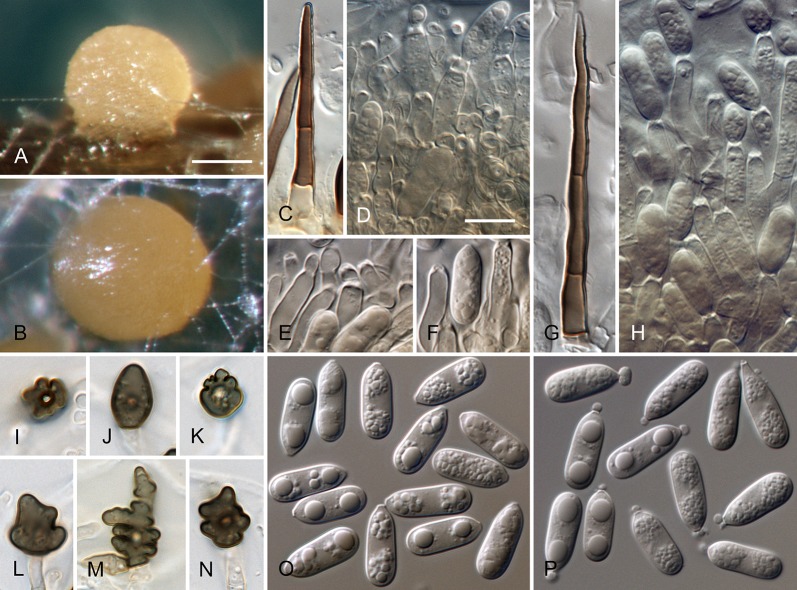
Although only recently described, Colletotrichum boninense is well established in literature as an anthracnose pathogen or endophyte of a diverse range of host plants worldwide. It is especially prominent on members of Amaryllidaceae, Orchidaceae, Proteaceae and Solanaceae. Reports from literature and preliminary studies using ITS sequence data indicated that C. boninense represents a species complex. A multilocus molecular phylogenetic analysis (ITS, ACT, TUB2, CHS-1, GAPDH, HIS3, CAL) of 86 strains previously identified as C. boninense and other related strains revealed 18 clades. These clades are recognised here as separate species, including C. boninense s. str., C. hippeastri, C. karstii and 12 previously undescribed species, C. annellatum, C. beeveri, C. brassicicola, C. brasiliense, C. colombiense, C. constrictum, C. cymbidiicola, C. dacrycarpi, C. novae-zelandiae, C. oncidii, C. parsonsiae and C. torulosum. Seven of the new species are only known from New Zealand, perhaps reflecting a sampling bias. The new combination C. phyllanthi was made, and C. dracaenae Petch was epitypified and the name replaced with C. petchii. Typical for species of the C. boninense species complex are the conidiogenous cells with rather prominent periclinal thickening that also sometimes extend to form a new conidiogenous locus or annellations as well as conidia that have a prominent basal scar. Many species in the C. boninense complex form teleomorphs in culture. TAXONOMIC NOVELTIES: New combination - Colletotrichum phyllanthi (H. Surendranath Pai) Damm, P.F. Cannon & Crous. Name replacement - C. petchii Damm, P.F. Cannon & Crous. New species - C. annellatum Damm, P.F. Cannon & Crous, C. beeveri Damm, P.F. Cannon, Crous, P.R. Johnst. & B. Weir, C. brassicicola Damm, P.F. Cannon & Crous, C. brasiliense Damm, P.F. Cannon, Crous & Massola, C. colombiense Damm, P.F. Cannon, Crous, C. constrictum Damm, P.F. Cannon, Crous, P.R. Johnst. & B. Weir, C. cymbidiicola Damm, P.F. Cannon, Crous, P.R. Johnst. & B. Weir, C. dacrycarpi Damm, P.F. Cannon, Crous, P.R. Johnst. & B. Weir, C. novae-zelandiae Damm, P.F. Cannon, Crous, P.R. Johnst. & B. Weir, C. oncidii Damm, P.F. Cannon & Crous, C. parsonsiae Damm, P.F. Cannon, Crous, P.R. Johnst. & B. Weir, C. torulosum Damm, P.F. Cannon, Crous, P.R. Johnst. & B. Weir. Typifications: Epitypifications - C. dracaenae Petch.
Overview
The claims and statistics of this paper haven’t been checked yet.
Free: it reads the open-access text and checks the first 5 claims that cite a source we can check. Create a free account to check every claim.
Integrity signals
Registry
Cites
Statistics
Figures
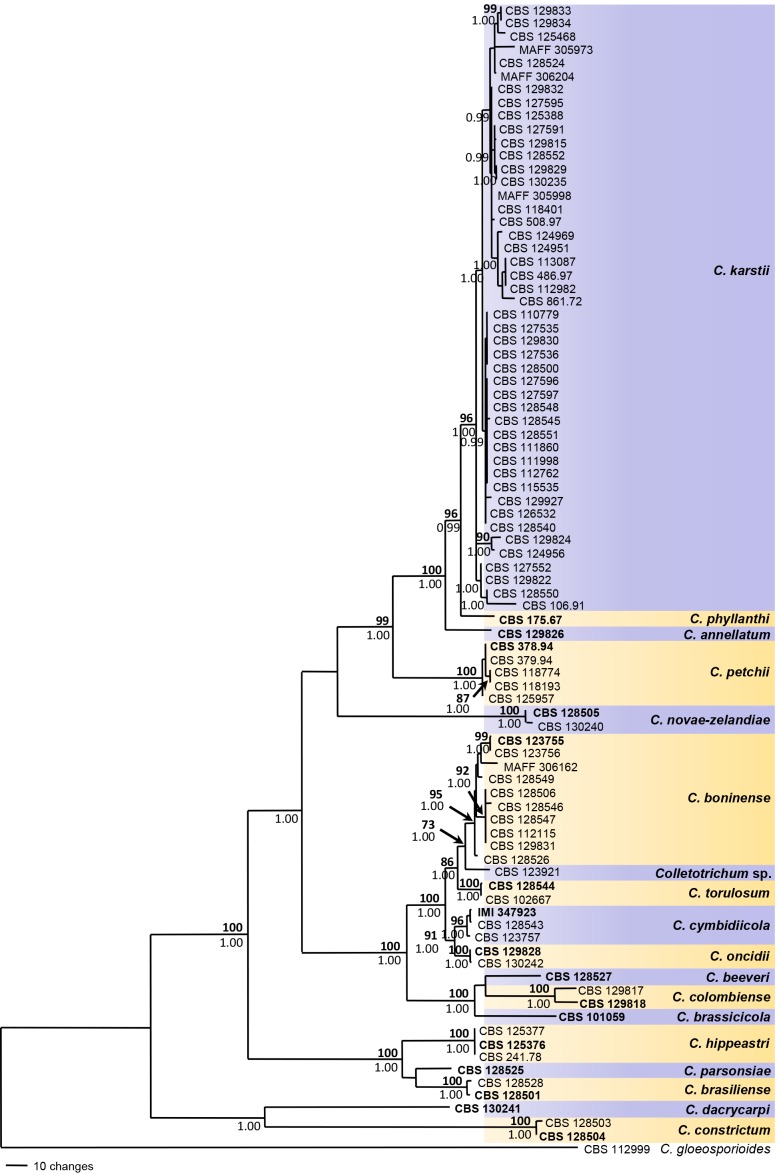
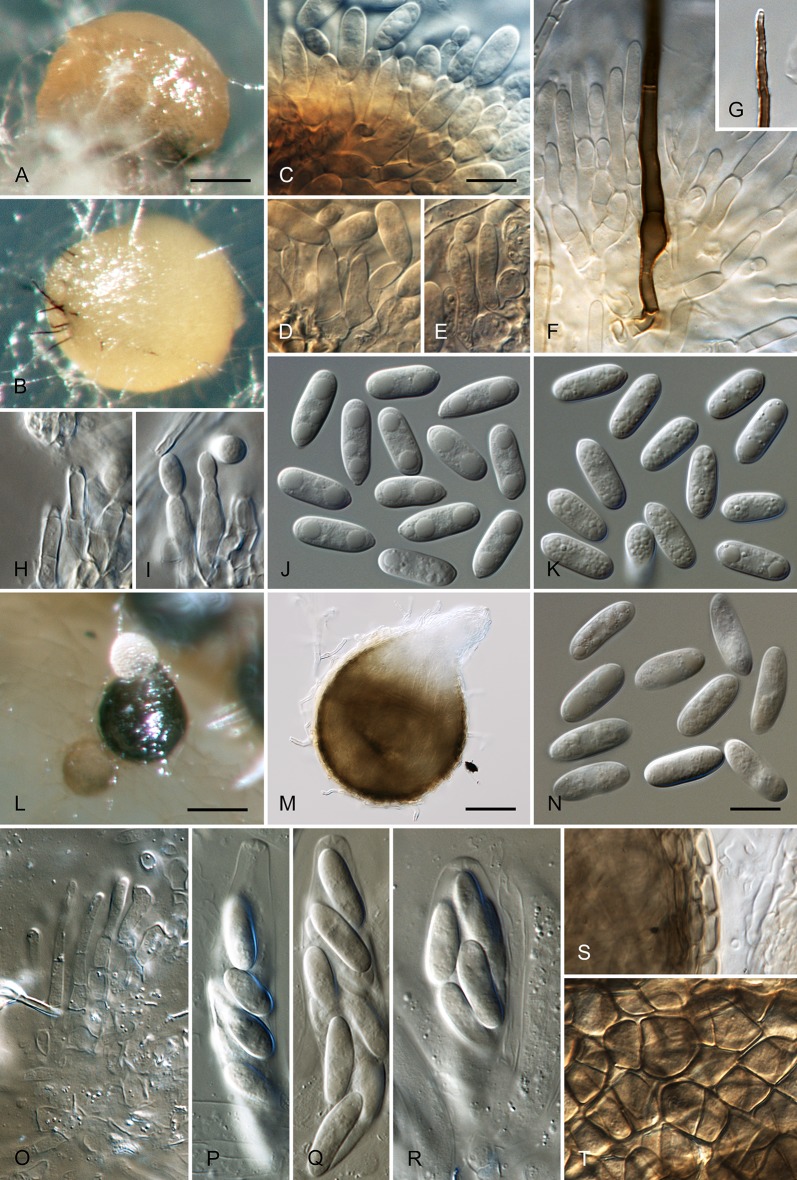
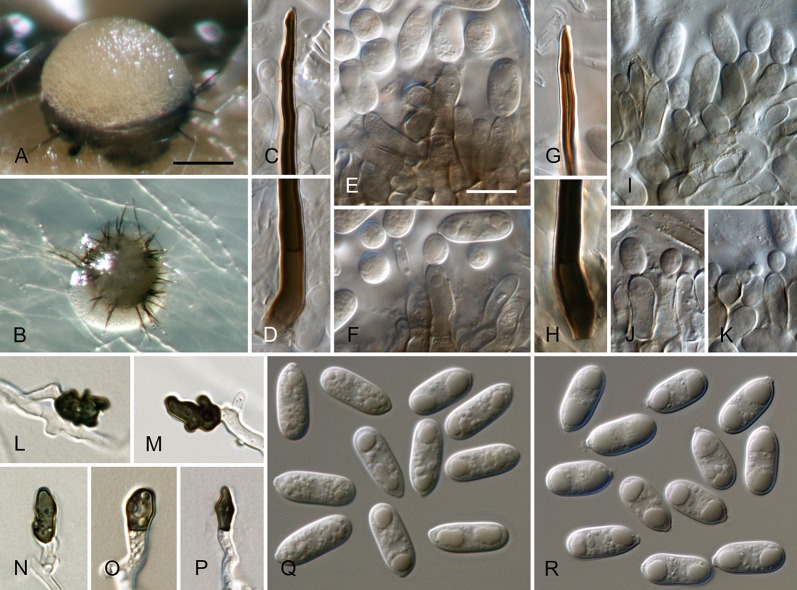
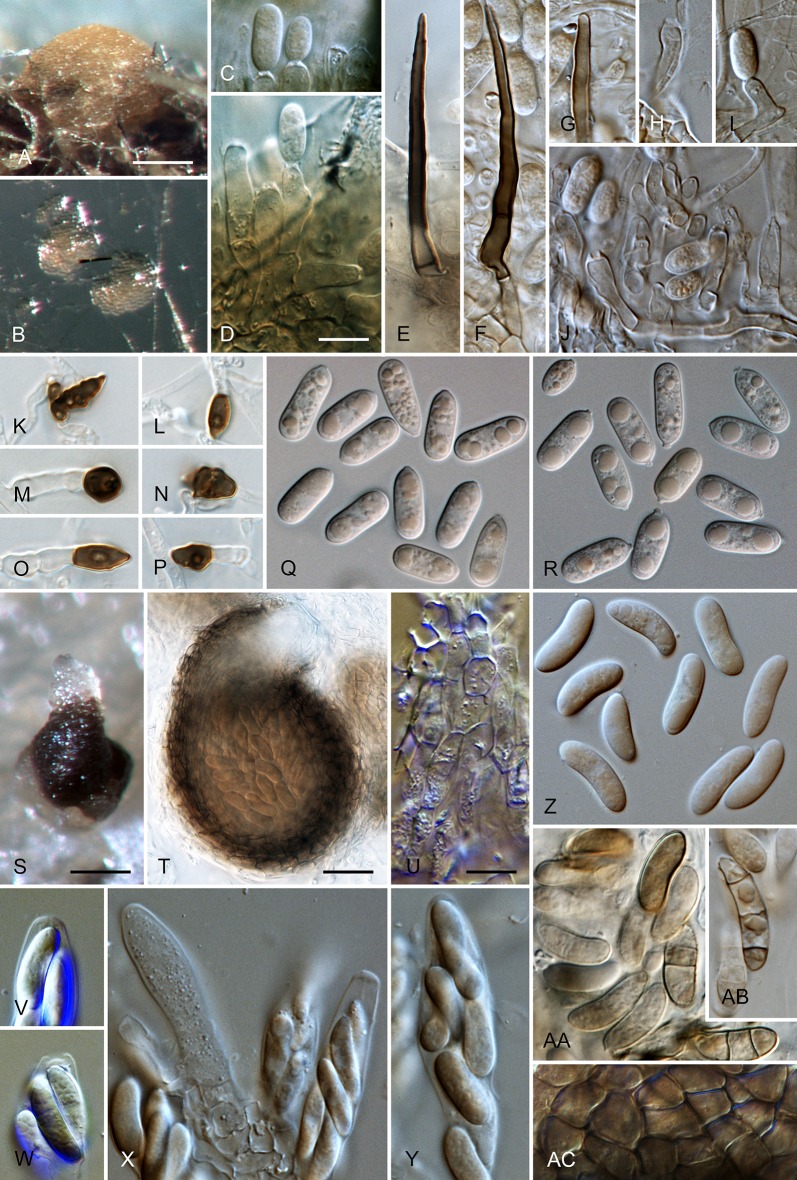
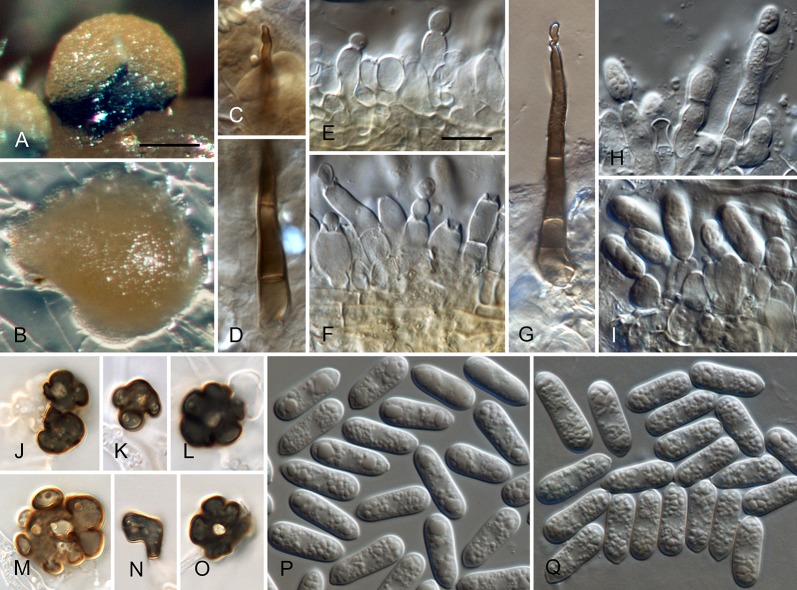
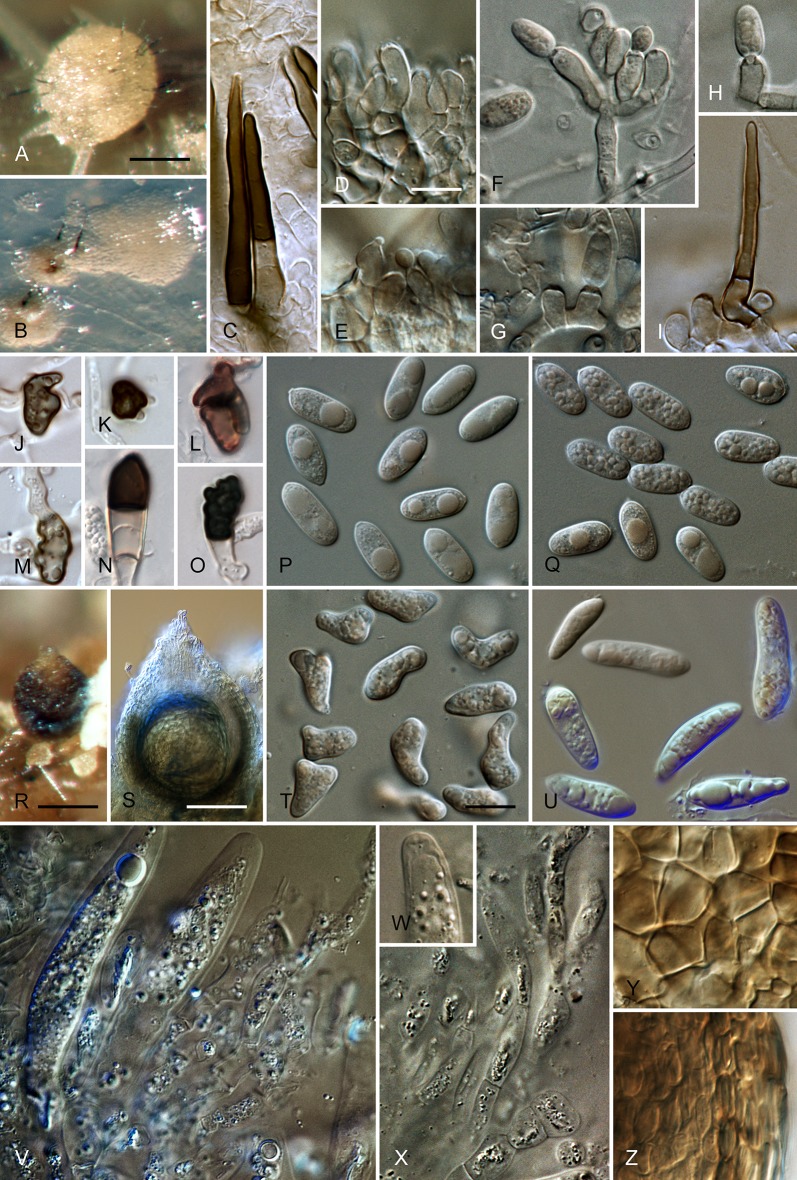
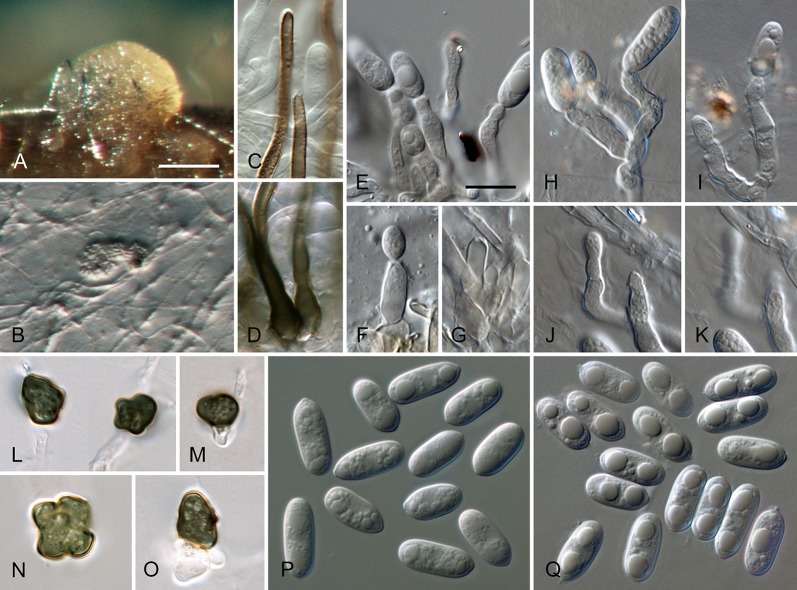
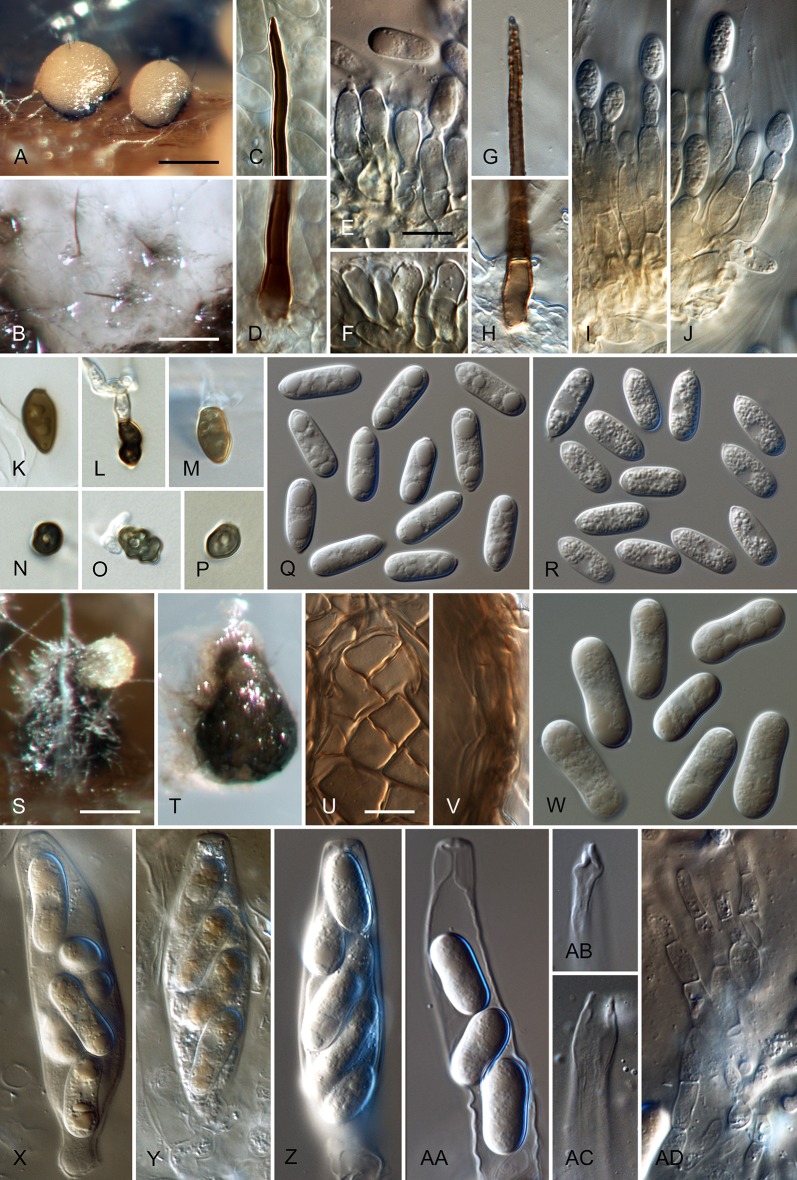
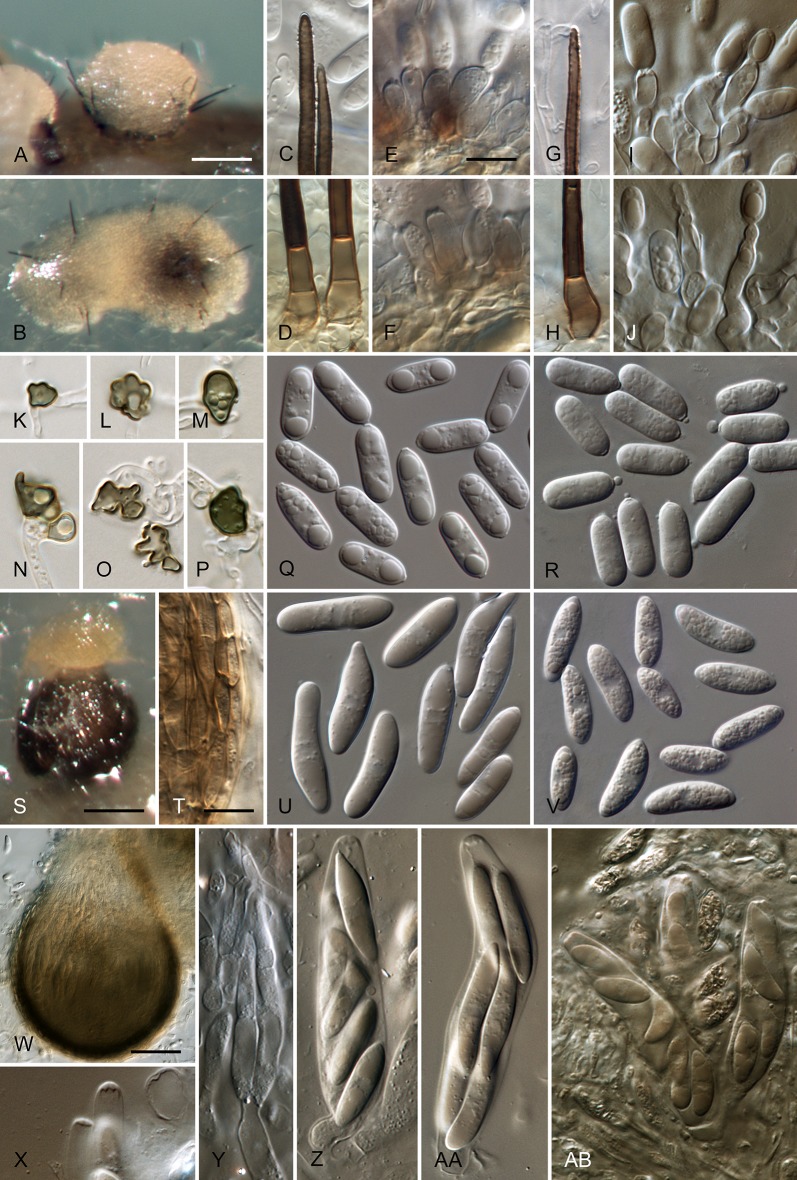
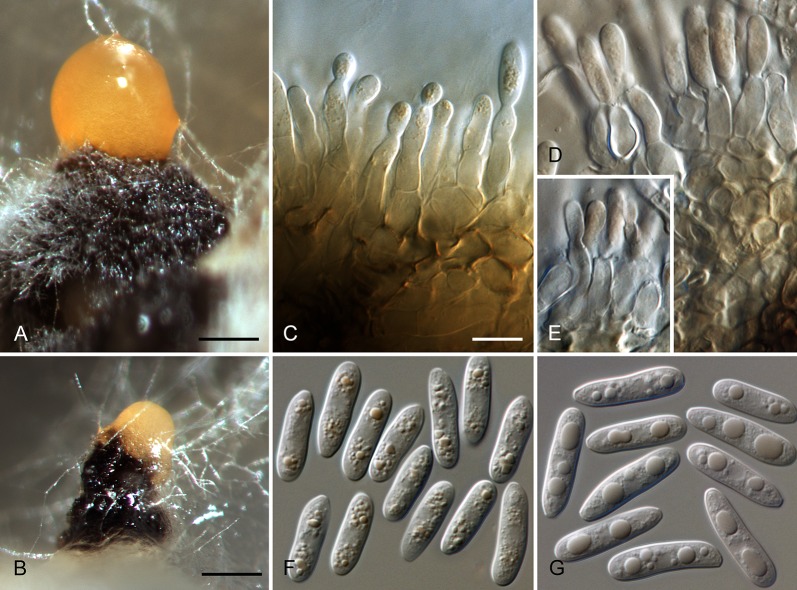
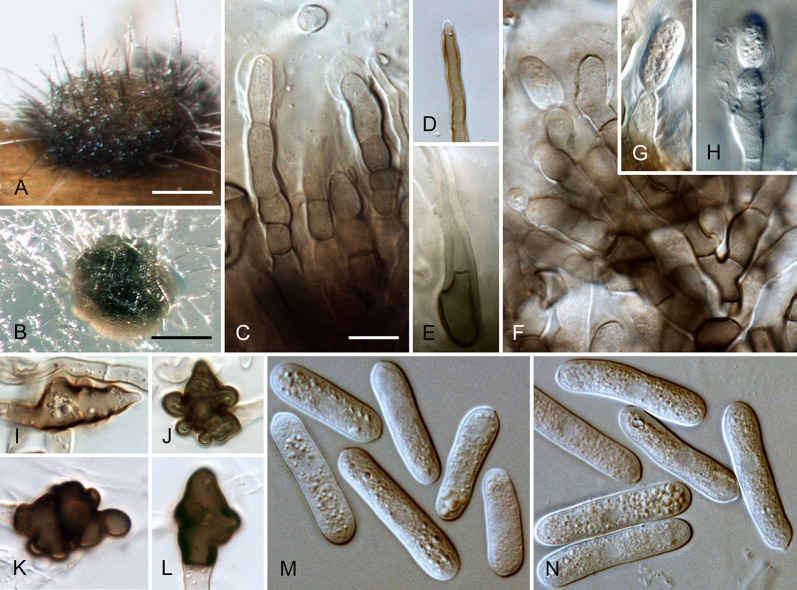
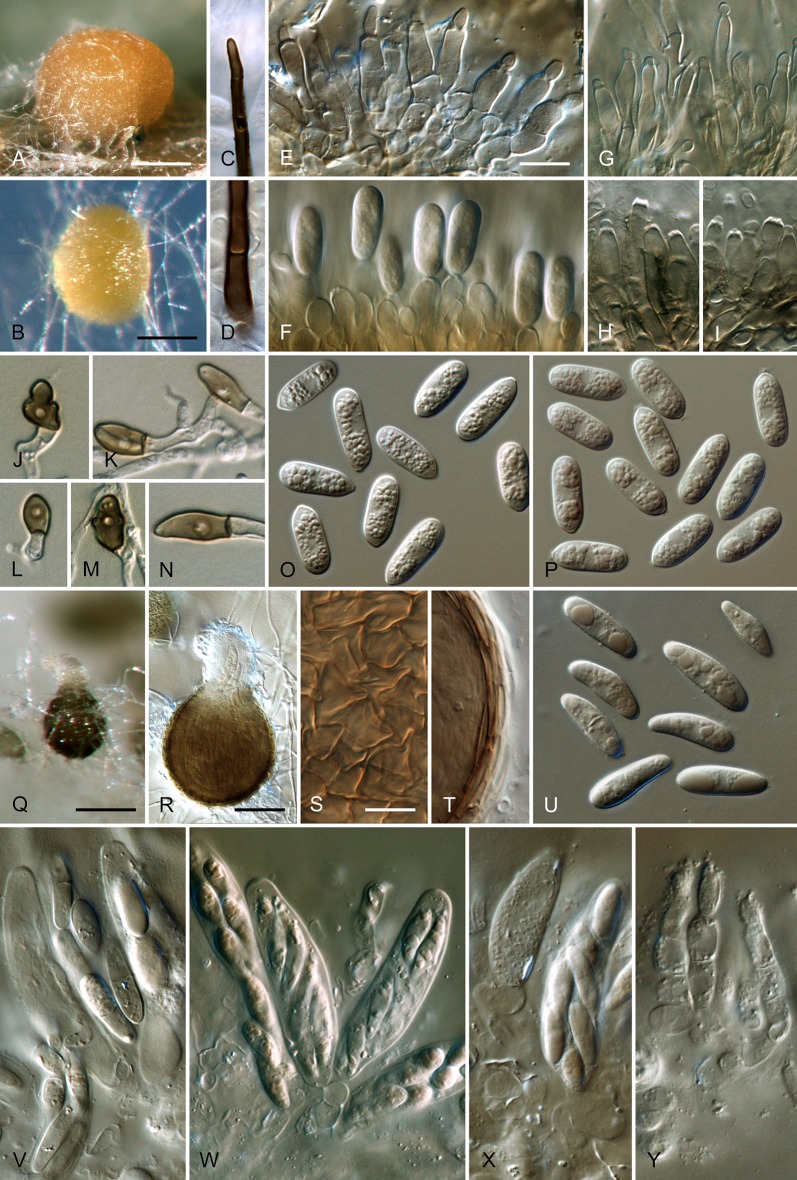
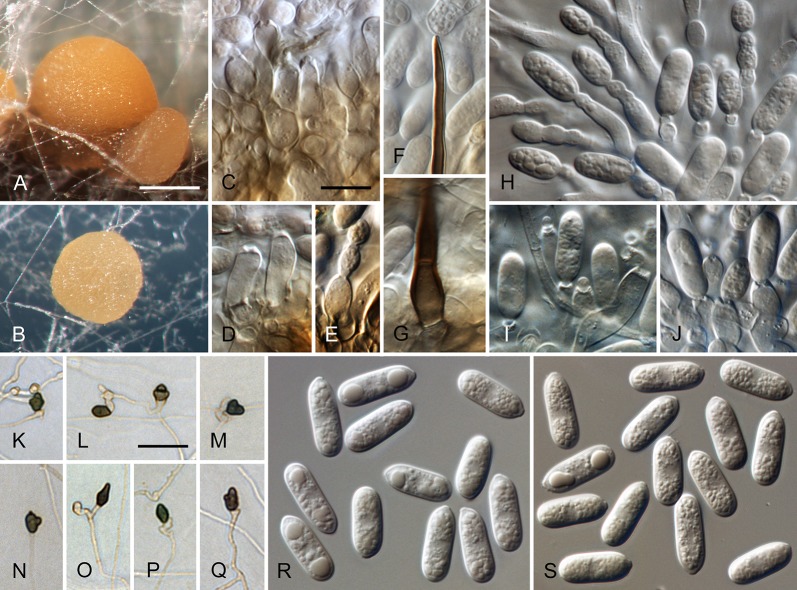
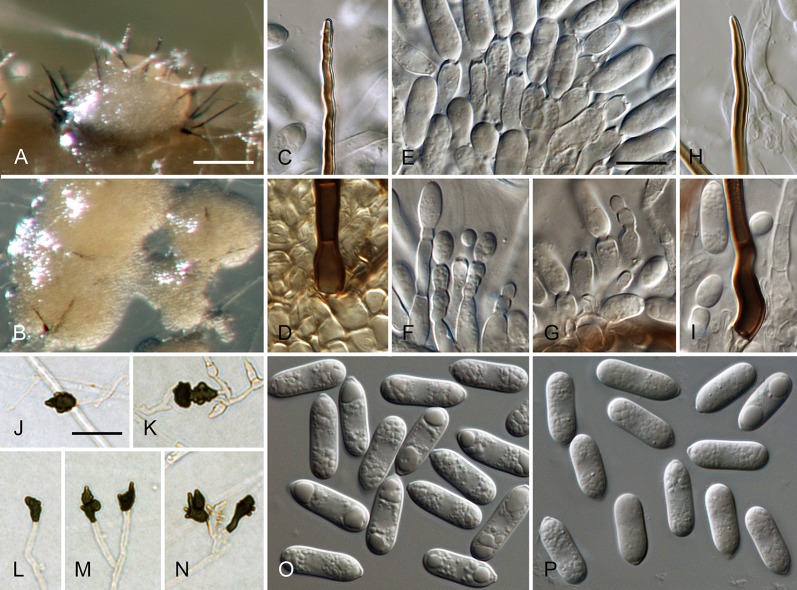
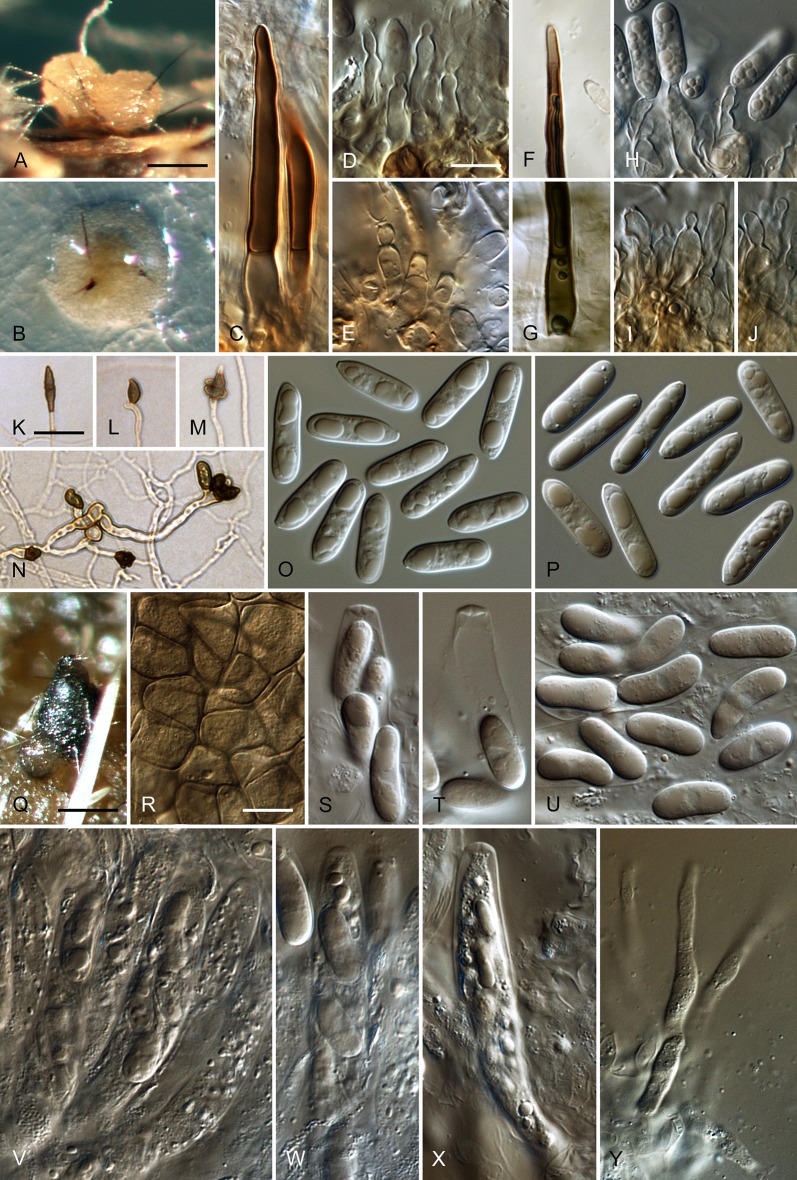
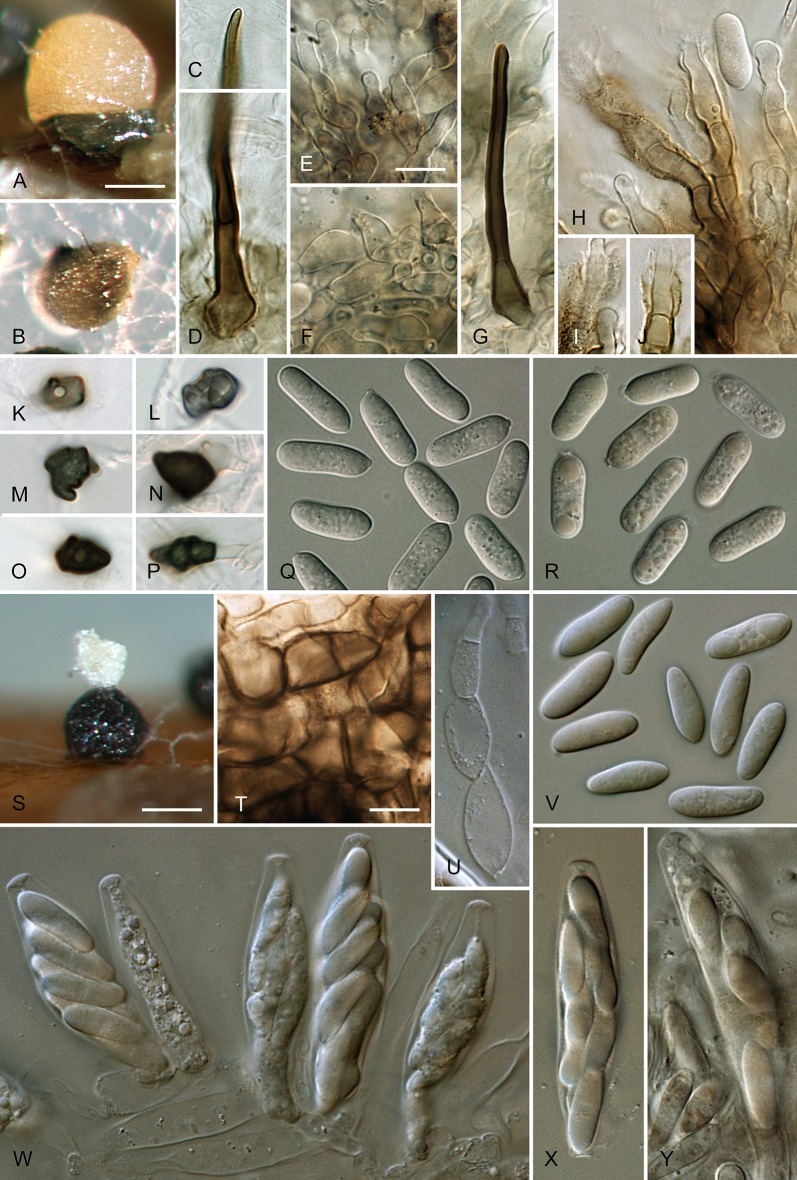
Verification
Claims the paper makes
The claims and statistics of this paper haven’t been checked yet.
Free: it reads the open-access text and checks the first 5 claims that cite a source we can check. Create a free account to check every claim.
Claims other papers make about this one
Each is checked against this paper’s own text: does it say what the citing paper says it does?
The cited source says what the claim attributes to it.
In the citing paper
“Colleotrichum karstii was first reported from orchids and was also known from some other hosts such as Carica papaya11, Citrus sp.11, and M. indica11,17. Colletotrichum karstii has been found on mango and avocado fruit17,33, and it has been placed in the C. boninense species complex11.”
From Colletotrichum species associated with mango in southern China (2019) · cites this paper as [11]
The check wasn’t confident either way, so it gives no verdict — never disputed.
In the citing paper
“This taxon is closely related to C. parsoniae and can be differentiated by its appresorial and ascospore shapes (Damm et al. 2012).”
From Colletotrichum: lifestyles, biology, morpho-species, species complexes and accepted species (2021) · cites this paper as Damm et al. 2012
Experimental — accuracy not yet measured
Self-check
Percentages, sums and reported differences re-computed from the paper’s own numbers.
The self-check needs the paper’s full text.
Citations
Cites
Amplification and direct sequencing of fungal ribosomal RNA genes for phylogenetics
White, T. J., Bruns, T., Lee, S., & Taylor, J. (1990) · PCR Protocols · doi:10.1016/b978-0-12-372180-8.50042-1 · Cited by 36,648 · cited 3×
“8S nuclear ribosomal gene with the two flanking internal transcribed spacers (ITS), a 200-bp intron of the glyceraldehyde-3-phosphate dehydrogenase (GAPDH), and partial sequences of the actin (ACT), chitin synthase 1 (CHS-1), betatubulin (TUB2), histone3 (HIS3) and calmodulin (CAL) genes were amplified and sequenced u…”
MethodMrBayes 3: Bayesian phylogenetic inference under mixed models
Ronquist, F., & Huelsenbeck, J. P. (2003) · Bioinformatics · doi:10.1093/bioinformatics/btg180 · Cited by 29,077
PCR protocols — A guide to methods and applications
U.G. (1990) · Trends in Biochemical Sciences · doi:10.1016/0968-0004(90)90252-7 · Cited by 11,702
GARDES, M., & BRUNS, T. D. (1993) · Molecular Ecology · doi:10.1111/j.1365-294x.1993.tb00005.x · Cited by 10,480
Glass, N. L., & Donaldson, G. C. (1995) · Applied and Environmental Microbiology · doi:10.1128/aem.61.4.1323-1330.1995 · Cited by 4,755
A method for designing primer sets for speciation studies in filamentous ascomycetes
Carbone, I., & Kohn, L. M. (1999) · Mycologia · doi:10.1080/00275514.1999.12061051 · Cited by 4,217
An Empirical Test of Bootstrapping as a Method for Assessing Confidence in Phylogenetic Analysis
Hillis, D. M., & Bull, J. J. (1993) · Systematic Biology · doi:10.1093/sysbio/42.2.182 · Cited by 3,631
An Empirical Test of Bootstrapping as a Method for Assessing Confidence in Phylogenetic Analysis
Hillis, D. M., & Bull, J. J. (1993) · Systematic Biology · doi:10.2307/2992540 · Cited by 3,423
O'Donnell, K., & Cigelnik, E. (1997) · Molecular Phylogenetics and Evolution · doi:10.1006/mpev.1996.0376 · Cited by 2,397
A Method for Designing Primer Sets for Speciation Studies in Filamentous Ascomycetes
Carbone, I., & Kohn, L. M. (1999) · Mycologia · doi:10.2307/3761358 · Cited by 2,061
Research works printed but not linked: 10
- Allescher A (1902). Rabenhorst’s Kryptogamen-Flora. Pilze - Fungi Imperfecti vol. 1(7): 385– 704 Edn 2
- Arx JA von (1957). Die Arten der Gattung Colletotrichum Cda. Phytopathologische Zeitschrift 29: 413– 468
- Di Lenna P Montecchio L (1995). Gravi danni da antracnosi (Colletotrichum gloeosporioides) su colture di Dracaena deremensis in serra. Informatore Fitopatologico 4: 24– 26
- Pai HS (1966). A new anthracnose disease of Phyllanthus acidus from India. Plant Disease Reporter 50: 313– 314
- Petch T (1906). Descriptions of new Ceylon fungi. Annals of the Royal Botanical Gardens Peradeniya 3(1): 1– 10
- Rambaut A (2002). Sequence Alignment Editor. Version 2.0. University of Oxford, Oxford
- Saccardo PA (1895). Sylloge Fungorum vol. 11 Padova, Italy
- Saccardo PA Trotter A (1913). Sylloge Fungorum vol. 22 Padova, Italy
- Simmonds JH (1968). Type specimens of Colletotrichum gloeosporioides var. minor and Colletotrichum acutatum. Queensland Journal of Agricultural and Animal Science 25: 178A
- Yang YL Liu ZY Cai L Hyde KD Yu ZN McKenzie EHC (2009). Colletotrichum anthracnose of Amaryllidaceae. Fungal Diversity 39: 123– 146
Cited by
Items 401–500 of 552
Don, H. N., Kim, U. N. T., & Thanh, T. N. T. (2025) · Journal of Rubber Research · doi:10.1007/s42464-025-00332-3 · Cited by 2
Jena, R. K., Raja, I. Y., Ramamoorthy, V., Narayanan, S. L., Renuka, R., Aiyanathan, K. E. A., Subbiah, A., & Pandi, V. K. (2023) · Journal of Applied and Natural Science · doi:10.31018/jans.v15i3.4654 · Cited by 2
First Report of Colletotrichum karstii Causing Anthracnose on Soybean in China
Luo, M., Huang, L. H., An, X., Pan, Y., & Wu, S. (2024) · Plant Disease · doi:10.1094/pdis-02-24-0452-pdn · Cited by 2
Solano‐Báez, A. R., Arroyo-Axol, J. R., Leyva‐Madrigal, K. Y., Núñez-Pastrana, R., Ortíz-Lazalde, M. R., & Márquez‐Licona, G. (2022) · Plant Disease · doi:10.1094/pdis-06-22-1503-pdn · Cited by 2
Chen, J., Wang, M., Han, X., Gan, Y., Lin, J., Tong, Z., Duan, X., Yan, J., & Gan, B. (2023) · Plant Disease · doi:10.1094/pdis-04-23-0642-pdn · Cited by 2
First Report of Colletotrichum fioriniae Causing Anthracnose on Mu Oil Tree in China
Zhang, Y., Li, G., Yang, D., Zhang, R., & Wan, S. (2021) · Plant Disease · doi:10.1094/pdis-03-21-0502-pdn · Cited by 2
Anthracnose in Samanea tubulosa caused by Colletotrichum karstii in Brazil
Almeida, R. F., Azevedo, D. M. Q., Sousa, V. M., Alfenas, A. C., Alfenas, R. F., & Fonseca, N. R. (2022) · Forest Pathology · doi:10.1111/efp.12738 · Cited by 2
UMA ABORDAGEM SOBRE A CULTURA DO MARACUJAZEIRO E O MANEJO QUÍMICO E BIOLÓGICO DA ANTRACNOSE
da Silva, J. L., Costa, J. F. D. O., Ramirez, C. H., da Silva, M. J. D. S., dos Santos, T. F., Lima, T. S., Lima, G. S. D. A., & Assunção, I. P. (2023) · doi:10.22533/at.ed.11823181211 · Cited by 1
ANÁLISE E MAPEAMENTO DO USO E OCUPAÇÃO DO SOLO DE NOVO HORIZONTE DO NORTE – MT DE 1986 A 2020
Vendramini, W. J. (2023) · doi:10.22533/at.ed.11823181214 · Cited by 1
ÍNDICES HÍDRICO, DE ARIDEZ E DE UMIDADE NA REGIÂO NORTE DO ESTADO DO RIO DE JANEIRO
Mendonça, J. C. (2023) · doi:10.22533/at.ed.1182318122 · Cited by 1
Thao, L. D., Choi, H., Kang, D., Mageswari, A., Lee, J. S., Lee, D., Choi, I., Shin, H., & Hong, S.-B. (2025) · The Plant Pathology Journal · doi:10.5423/ppj.oa.01.2025.0002 · Cited by 1
Jiang, K., Luo, Y., Chen, X., Liang, S., Zhang, W., & Li, Z. A. (2025) · Crop Protection · doi:10.1016/j.cropro.2025.107314 · Cited by 1
Hidayat, J., Hidayat, S. H., Wiyono, S., & Widodo, W. (2024) · Jurnal Fitopatologi Indonesia/Jurnal Fitopatologi · doi:10.14692/jfi.20.3.140-153 · Cited by 1
Bustamante, M. I., Fernández, Y., Osorio-Navarro, C., Cardenas, C. S., Bourret, T. B., Eşkalen, A., & Henríquez-Sáez, J. L. (2026) · Phytopathologia Mediterranea · doi:10.36253/phyto-16790 · Cited by 1
CABI (2022) · CABI Compendium · doi:10.1079/cabicompendium.108203 · Cited by 1
Li, S., Wu, Y., Zhang, M., & Tian, C. (2026) · Mycologia · doi:10.1080/00275514.2026.2619063 · Cited by 1
Ahmad, S. (2017) · Journal of Bacteriology & Mycology Open Access · doi:10.15406/jbmoa.2017.05.00129 · Cited by 1
McLaughlin, M. S., Abbasi, P. A., & Ali, S. (2025) · Plant Disease · doi:10.1094/pdis-05-25-0942-re · Cited by 1
Olana, R. C., Haituk, S., Karunarathna, A., Cumagun, C. J. R., Cheewangkoon, R., & Harishchandra, D. L. (2026) · Physiological and Molecular Plant Pathology · doi:10.1016/j.pmpp.2026.103114 · Cited by 1
Grskovich, M. R., Creswell, T. C., & Bonkowski, J. C. (2024) · Plant Disease · doi:10.1094/pdis-05-24-1049-pdn · Cited by 1
Zambell, C. B. (2015) · doi:10.7282/t38p62h9 · Cited by 1
PROSPECÇÃO DE GENÓTIPOS DE AGAVE PARA OBTENÇÃO DE SUCO PARA BIOINSETICIDA
Gondim, T. M. D. S., de Araújo, J. B., Brandão, Z. N., & de Medeiros, E. P. (2022) · doi:10.22533/at.ed.77722230612 · Cited by 1
ANÁLISE DA PRODUTIVIDADE DE CAROTENOIDES EM VARIEDADES LOCAIS DE MILHO
Spezzatto, J., Romani, G. K. K., Kuhn, T. C., Siega, Y. P., Cól, M. C. D., & Kist, V. (2022) · doi:10.22533/at.ed.6462231014 · Cited by 1
Characterization of Colletotrichum Species Causing Mango Anthracnose in Senegal
Diallo, Y., Diédhiou, P. M., Bush, E., Nita, M., & Baudoin, A. (2021) · International Journal of Science and Research (IJSR) · doi:10.21275/art20193054 · Cited by 1
Pereira, F. D. (2016) · Americanae (AECID Library) · Cited by 1
Diversidade de espécies de CColletotrichum Endofíticas da seringueira
Moreno, A., & Lorena, H. (2016) · Americanae (AECID Library) · Cited by 1
Suwannarach, N., & Kumla, J. (2026) · Scientific Reports · doi:10.1038/s41598-026-46031-w · Cited by 1
DESENVOLVIMENTO DE UM PROCESSO ALTERNATIVO DE EXTRAÇÃO A FRIO DE ÓLEO DA POLPA DE PEQUI
Malacrida, C. R., & Naito, R. S. (2022) · doi:10.22533/at.ed.64622310115 · Cited by 1
Colletotrichum karsti causing fruit anthracnose on tamarillo (Solanum betaceum) in Brazil
Rosado, A. W. C., Cacique, I. S., Ramos, D. O., Custódio, F. A., Zambolim, L., & Pereira, O. L. (2022) · Australasian Plant Disease Notes · doi:10.1007/s13314-022-00453-3 · Cited by 1
Abdelnaeim, A. A. (2016) · Nova Science Publishers (Nova Science Publishers, Inc.) · Cited by 1
Zhang, W., Chen, P., Zhou, Y., Manawasinghe, I. S., Ji, S., Li, X., Al-Otibi, F., Hyde, K., Abeywickrama, P. D., & Yan, J. (2025) · Mycosphere · doi:10.5943/mycosphere/16/1/3 · Cited by 1
First Report of Colletotrichum boninense Causing Anthracnose on Polygonatum odoratum in China
Chen, X., Wu, S., Chen, W., Jia, W., Wu, C., Wang, L., Huang, L., Yang, S., Jiang, X., & Wang, Y. (2025) · Plant Disease · doi:10.1094/pdis-07-25-1547-pdn · Cited by 1
Daoud, H. B. H., Salem, B. M., & Boughalleb-M’Hamdi, N. (2021) · Journal of Pathology & Microbiology · doi:10.26420/jpatholmicrobiol.2021.1017 · Cited by 1
Boeremia parva sp. nov., a novel species of the family Didymellaceae isolated from soil
Das, K., Ten, L. N., Ban, J.-H., Lee, S., & Jung, H. (2021) · Phytotaxa · doi:10.11646/phytotaxa.518.1.3 · Cited by 1
First Report of Colletotrichum fioriniae Causing Leaf Spot on Schima superba in the World
Wang, Q.-H., Kuang, S.-Y., Zeng, Y.-C., Jiao, X.-J., Han, Y.-M., Wang, J.-W., Peng, Y.-J., Liu, X.-H., & Zhang, Y. (2022) · Plant Disease · doi:10.1094/pdis-10-21-2265-pdn · Cited by 1
Widayanti, S. M., Hoerudin, H., & Permana, A. W. (2024) · AIP conference proceedings · doi:10.1063/5.0184110 · Cited by 1
Colletotrichum magnum Species Complex: Emerging Pathogens in Tropical and Subtropical Regions
Wang, S., Chen, L., Cao, J., Tang, L.-Q., Clapés, P., Zhu, S.-Q., & Laborda, P. (2026) · Phytopathology · doi:10.1094/phyto-08-25-0278-rvw
Velame, K. V. C., Filho, H. P. S., Lima, A. D. A., Bragança, C. A. D., & Laranjeira, F. F. (2019) · bioRxiv (Cold Spring Harbor Laboratory) · doi:10.1101/781963
Foliar, Floral and Soilborne Diseases
Freeman, S., & Prusky, D. B. (2026) · Botany, production and uses. · doi:10.1079/9781800622647.0012
CRESCIMENTO VEGETATIVO DE TRÊS ESPÉCIES FLORESTAIS EM ÁREA DE REFLORESTAMENTO NO SUDESTE DA AMAZÔNIA
Sousa, L. G. D. S. D. O., Ferreira, G. S., Siqueira, R. S., Mariano, D. D. C., Ebling, Â. A., & Okumura, R. S. (2022) · doi:10.22533/at.ed.75422160914
PROSPECÇÃO CIENTÍFICA E TECNOLÓGICA DE QUEIJOS PETIT SUISSE COM A UTILIZAÇÃO DE ESPÉCIES VEGETAIS
de Souza, J. S. P., de Lucena, M. K. S. P., Marques, L. E., Bezerra, M. E. D. M., & Ramalho, H. M. M. (2022) · doi:10.22533/at.ed.75422160926
THE CULTURE OF HELICONIA ASSOCIATED WITH ANTHRACNOSIS AND CHEMICAL MANAGEMENT
Lima, T. S., Costa, J. F. D. O., da Silva, J. L., Ramirez, C. H., da Silva, M. J. D. S., dos Santos, T. F., Lima, G. S. D. A., & Assunção, I. P. (2022) · doi:10.22533/at.ed.75422160928
EFICIÊNCIA DO USO DA ÁGUA DE IRRIGAÇÃO NA CULTURA DO CAFÉ CONILON, EM CAMPOS DOS GOYTACAZES, RJ
Mendonça, J. C., de Almeida, C. M., Garcia, R. F., & Lazzarini, L. M. (2022) · doi:10.22533/at.ed.75422160918
EFECTO DE FITOVITA EN EL DESARROLLO DE RAÍZ EN MAÍZ Y CAÑA DE AZÚCAR
Hernández, A. V., Mireles, H. C., Prado, A. D., Isaac, M. M., & Gómez, A. A. (2022) · doi:10.22533/at.ed.75422160915
AGRICULTURA URBANA E PERIURBANA: UM ESTUDO DE CASO NO MUNICÍPIO DE ARAGARÇAS-GO
de Oliveira, J. C., Corioletti, N. S. D., de Matos, L. G. T., Morais, M. A. V., Maia, A. H., Binde, D. R., de Moura, G. B., Taveira, J. H. D. S., Lima, D. A. L. L., & Cardoso, R. L. (2022) · doi:10.22533/at.ed.7542216093
Carnaúba, J. P., Carvalho, T. D. S., da Silva, J. A. C., de Cristo, C. C. N., de Melo, L. H. V., Silva, I. O., & Amorim, E. P. D. R. (2022) · doi:10.22533/at.ed.75422160917
A IMPORTÂNCIA DA BIOTECNOLOGIA AGRÍCOLA NA PRODUÇÃO DE ALIMENTOS
Barros, D. D. M., de Moura, D. F., do Monte, Z. S., Rodrigues, T. H. G., da Silva, H. M. L., Ribeiro, A. N. D. S., Lima, T. V. D. O., da Silva, A. S., Campos, M. I. X., Silva, J. T. A., et al. (2022) · doi:10.22533/at.ed.7542216091
LEGITIMAÇÃO DE POSSE SOBRE TERRAS DEVOLUTAS
Moreira, L. S., & de Lima, R. R. (2022) · doi:10.22533/at.ed.75422160922
Ribeiro, P. R. C. D. C., Pires, F. R., Viana, D. G., Filho, F. B. E., & Cruz, L. B. S. (2022) · doi:10.22533/at.ed.75422160927
CLÍNICA ENTOMOLÓGICA: UMA AÇÃO DE EXTENSÃO UNIVERSITÁRIA
Costa, G. G., & de Azevedo, F. R. (2022) · doi:10.22533/at.ed.75422160912
Costa, A. J. D. S. R., Arré, F. A., Carvalho, F. L. D. A., de Oliveira, M. R. A., Lustosa, J. C. B., da Silva, L. A. S., Reis, M. L., Evangelista, A. F., Castro, G. C., & da Silva, D. C. F. (2022) · doi:10.22533/at.ed.75422160924
EFEITO ALELOPÁTICO DA VASSOURINHA DE BOTÃO SOBRE A CULTURA DO MATAPASTO
Pinto, F. F., Ribeiro, B. D. S. B., de Sousa, L. A. M., Silva, F. L. D. S., Silva, K. R. C., Azevedo, J. L. X., Moraes, L. F., Cordeiro, K. V., da Silva-Matos, R. R. S., & da Silva, R. R. S. D. S.-M. I. A. (2022) · doi:10.22533/at.ed.75422160916
Barreto, M. L. R., dos Santos, C. R. C., da Silva, M. O., Oliveira, J. D. N. D. S., Oliveira, M. B. D. L., Borges, M. D. C. D. S., Pereira, C. J. S., Barbosa, B. S., Amaral, L. D. S., Martins, W. B. R., et al. (2022) · doi:10.22533/at.ed.75422160921
da Silva, B. B. F., & Carnaúba, J. P. (2022) · doi:10.22533/at.ed.7542216095
ADUBAÇÃO NITROGENADA E INOCULAÇÃO COM Azospirillum brasilense NO DESENVOLVIMENTO DA CULTURA DO MILHO
Chaves, H. S., Galdino, G. C., Neto, C. F. D. O., Mariano, D. D. C., Maciel, R. P., & Okumura, R. S. (2022) · doi:10.22533/at.ed.7542216092
Belém, J. G., dos Santos, C. F., Lopes, E. L. N., Ritter, L. H., Redig, M. D. S. F., & Costa, G. V. (2022) · doi:10.22533/at.ed.7542216099
Costa, L. D. S., & da Costa, B. L. (2022) · doi:10.22533/at.ed.7542216094
USE OF EXOGENOUS ENZYMES IN POULTRY AND PIG NUTRITION
Ribeiro, A. G., da Silva, D. A., Pessoa, R. A. S., Rabello, C. B.-V., Silva, C. M., Rodrigues, M. R. D. S., Benvenuto, E. A. D. S., da Costa, H. N., & Nascimento, J. C. D. S. (2023) · doi:10.22533/at.ed.1182318128
CHITIN DEACETYLASE OF Bemisia tabaci (HEMIPTERA: ALEYRODIDAE) AS NEW TARGET FOR PESTICIDE DISCOVERY
Pinto, C. P. G., & Romanello, N. (2023) · doi:10.22533/at.ed.11823181213
POLÍTICAS PÚBLICAS DE AQUISIÇÃO DE ALIMENTOS PARA O FOMENTO DA AGRICULTURA FAMILIAR
Carneiro, M. T. S., Daniel, L. O., & da Cruz, J. V. (2023) · doi:10.22533/at.ed.1182318129
Barbosa, A. I. G., Mendonça, J. C., & Reis, C. H. (2023) · doi:10.22533/at.ed.1182318125
PERCEPÇÃO DE FEIRANTES E CONSUMIDORES DE PESCADO SOBRE A DOENÇA DE HAFF
Borges, S. F., Sousa, W. D. R., Dias, C. D. C., do Rosário, C. J. R. M., & Lacerda, L. D. M. (2023) · doi:10.22533/at.ed.1182318121
DIVERSIFICACIÓN DE LA OFERTA TURÍSTICA CON FERIAS DE PRODUCTORES EN LA PROVINCIA DE IMBABURA
Núñez, E. W. M., Zapata, L. L. C., González, J. E. O., Chalacán, D. R. B., & Ruíz, Y. P. E. (2023) · doi:10.22533/at.ed.11823181210
Ribeiro, W. R., Gonçalves, D. D. C., Ferreira, D. S., Gonçalves, M. S., Schwan, M. G., Pereira, L. R., Martins, C. A. D. S., Tomaz, M. A., do Amaral, J. F. T., & dos Reis, E. F. (2023) · doi:10.22533/at.ed.11823181212
PARÂMETROS DE QUALIDADE DO LEITE INFORMAL COMERCIALIZADO NA ILHA DE SÃO LUÍS - MA
Fukuda, A. A., Lacerda, L. D. M., & do Rosário, C. J. R. M. (2023) · doi:10.22533/at.ed.1182318126
ESTRATÉGIAS DE CONTROLE DO MOSQUITO Aedes aegypti: UMA ANÁLISE DOS MÉTODOS DE BIOCONTROLE
Souza, C. O., Teixeira, V. W., Cruz, G. D. S., Ferreira, M. C. D. N., Navarro, D. M. D. A. F., & Teixeira, Á. A. C. (2023) · doi:10.22533/at.ed.1182318124
Avances científicos y tecnológicos en ciencias agrícolas 3
Guedes, D. M., da Silva, L. F., & de Oliveira, V. C. (2023) · doi:10.22533/at.ed.118231812
Ji, Y., Li, X., Gao, Q., Geng, C., & Duan, K. (2022) · Figshare · doi:10.6084/m9.figshare.21563849
Revealing Diversity in NRPS Gene Clusters Across Six Pathogenic Colletotrichum Species
Sayari, M., Sharifi-Tehrani, M., Shabani, L., Dolatabadian, A., & Daayf, F. (2025) · Current Microbiology · doi:10.1007/s00284-025-04440-6
Two novel species of Colletotrichum (Glomerellaceae, Glomerellales) from Sichuan Province, China
Wang, F., Liu, F., Xu, X., Yang, C., & Liu, Y. (2026) · MycoKeys · doi:10.3897/mycokeys.141.209472
Terfezia morenoi Bordallo, Ant. Rodriguez & Morte
Martinez, J. M., & Martinez, J. C. M. (2023) · doi:10.51436/simsheets/2023/43
Characterization and Haplotype Analysis of Colletotrichum truncatum in Greenhouse Tomato in Turkey
Gül, E. (2021) · Yüzüncü Yıl Üniversitesi Tarım Bilimleri Dergisi · doi:10.29133/yyutbd.912293
Warale, R. (2015) · HARVEST (University of Saskatchewan)
Jin, H., YangJin, T., Lan, X., Zhang, F., Xia, H., & Gong, W. (2026) · Australasian Plant Pathology · doi:10.1007/s13313-026-01133-x
Abubakar, M. N., Mazucato, V. D. S., & Vieira, P. C. (2026) · Archives of Microbiology · doi:10.1007/s00203-025-04650-3
Diseases in chilli (Capsicum spp.): A comprehensive overview with integrated management strategies
Kumari, M., Choudhary, M., Kuldeep, K., Bhardwaj, R., Saini, S., Aswani, J., & Nag, P. (2025) · International Journal of Advanced Biochemistry Research · doi:10.33545/26174693.2025.v9.i5f.4373
Colletotrichum Species Causing Anthracnose Disease of Carya illinoinensis in China
Wang, D., Chang, J., Zhang, W., Shu, J., Zhang, Y., & Zhai, F. (2026) · Plant Disease · doi:10.1094/pdis-11-24-2316-re
Two new Colletotrichum species from Michelia × alba and Myristica fragrans in Hainan Province, China
Dong, Z., Yuan, Y., Lv, Y., Zhang, Z., Zhang, X., & 夏继文 (2026) · MycoKeys · doi:10.3897/mycokeys.141.203785
Diversity and Host Associations of the Genus Colletotrichum in Korea
Thao, L. D., Choi, H., Lee, J. S., Mageswari, A., Kang, D., Lee, D., Choi, I.-Y., Shin, H.-D., Damm, U., & Hong, S.-B. (2026) · The Plant Pathology Journal · doi:10.5423/ppj.rw.07.2026.0100
Self-citationJiang, B., Cai, T., Yang, X., Dai, Y., Yu, K., Zhang, P., Li, P., Wang, C., Liu, N., Li, B., et al. (2022) · Figshare · doi:10.6084/m9.figshare.19470380
Jiang, B., Cai, T., Yang, X., Dai, Y., Yu, K., Zhang, P., Li, P., Wang, C., Liu, N., Li, B., et al. (2022) · Figshare · doi:10.6084/m9.figshare.19470377
Jiang, B., Cai, T., Yang, X., Dai, Y., Yu, K., Zhang, P., Li, P., Wang, C., Liu, N., Li, B., et al. (2022) · Figshare · doi:10.6084/m9.figshare.19470374
Jiang, B., Cai, T., Yang, X., Dai, Y., Yu, K., Zhang, P., Li, P., Wang, C., Liu, N., Li, B., et al. (2022) · Figshare · doi:10.6084/m9.figshare.19470371
Jiang, B., Cai, T., Yang, X., Dai, Y., Yu, K., Zhang, P., Li, P., Wang, C., Liu, N., Li, B., et al. (2022) · Figshare · doi:10.6084/m9.figshare.19470386
Jiang, B., Cai, T., Yang, X., Dai, Y., Yu, K., Zhang, P., Li, P., Wang, C., Liu, N., Li, B., et al. (2022) · Figshare · doi:10.6084/m9.figshare.19470383
Jiang, B., Cai, T., Yang, X., Dai, Y., Yu, K., Zhang, P., Li, P., Wang, C., Liu, N., Li, B., et al. (2022) · Figshare · doi:10.6084/m9.figshare.19470389
Wang, W., Vaghefi, N., Ades, P. K., Edwards, J., Crous, P. W., & Taylor, P. W. J. (2026) · Journal of Fungi · doi:10.3390/jof12090687
Self-citationMoreira, V. (2023) · LA Referencia (Red Federada de Repositorios Institucionales de Publicaciones Científicas)
Fungi Causing Anthracnose and Foliar Blight in Plumeria spp. in Mexico
Márquez‐Licona, G., Ortiz-Álvarez, J., Tovar‐Pedraza, J. M., Hernandez‐Hernandez, M. A., & Solano‐Báez, A. R. (2025) · Forest Pathology · doi:10.1111/efp.70018
Ferronato Pagani, B. (2023) · LA Referencia (Red Federada de Repositorios Institucionales de Publicaciones Científicas)
Din, R. U., Irshad, G., Waris, M., Ali, S. Z., Jabeen, Z., Baloch, A., Basharat, M., & Dad, S. (2026) · Journal of Pharma and Biomedics · doi:10.56810/jpbm.004.02.0182
Velho, A. C. (2015) · LA Referencia (Red Federada de Repositorios Institucionales de Publicaciones Científicas)
BARCODING QUARANTINE FUNGI: LESSONS FROM THE EUROPEAN QBOL PROJECT AND Q-BANK DATABASE
Zacharias, J., Groenewald, J. Z., van Raak, M., Damm, U., Edema, M., Pedro, & Crous, W. (2015) · KNAW Research Portal (The Royal Netherlands Academy of Arts and Sciences)
Self-citationPereira, C. M., & Barreto, R. W. (2026) · Plant Pathology · doi:10.1111/ppa.70178
Metadata
- Authors
- Damm, U., Cannon, P. F., Woudenberg, J. H. C., Johnston, P. R., Weir, B. S., Tan, Y. P., Shivas, R. G., & Crous, P. W.
- Affiliations
- Westerdijk Fungal Biodiversity Institute (NL)
- Royal Botanic Gardens, Kew (GB)
- Manaaki Whenua – Landcare Research (NZ)
- Utrecht University (NL)
- Corresponding author
- Damm, U.
- Venue
- Studies in Mycology
- Published
- 2012-09
- Volume
- 73
- Issue
- 1
- Pages
- 1-36
- ISSN
- 0166-0616 (ISSN-L)
- PMC
- PMC3458415
- OpenAlex
- W2045620887
- Semantic Scholar
- 70ffbe47d01afc4f4bce044f24fd22ead47bba8b
- Cited by
- 485
- References
- 84
- Citations by year
- 2026: 21 · 2025: 37 · 2024: 39 · 2023: 47 · 2022: 88 · 2021: 41 · 2020: 34 · 2019: 32 · 2018: 24 · 2017: 25 · 2016: 29 · 2015: 21 · 2014: 22 · 2013: 17 · 2012: 8
- FWCI
- 10.31
- Type
- journal article
- Language
- en
- Open access
- hybrid
- doi.org
- Licence
- cc-by-nc-nd
- www.elsevier.com/tdm/userlicense/1.0/ (tdm)
- creativecommons.org/licenses/by-nc-nd/3.0/ (vor, 633 d)
- Locations
- Studies in Mycology (publishedVersion, cc-by-nc-nd)
- Europe PMC (PubMed Central) (publishedVersion, cc-by-nc-nd)
- PubMed Central (publishedVersion, cc-by-nc-nd)
- PubMed (publishedVersion)
- KNAW research portal (Royal Academy of Art and Sciences (KNAW)) (publishedVersion, other-oa)
- University of Southern Queensland ePrints (University of Southern Queensland) (acceptedVersion)
- Queensland Department of Agriculture and Fisheries archive of scientific and research publications (Queensland Department of Agriculture and Fisheries) (acceptedVersion)
- Socio-Environmental Systems Modeling (acceptedVersion)
- Data Archiving and Networked Services (DANS) (submittedVersion)
- Queensland Department of Agriculture and Fisheries archive of scientific and research publications (Queensland Department of Agriculture and Fisheries) (submittedVersion)
- Data Archiving and Networked Services (DANS) (submittedVersion, other-oa)
- Topics
- Life Sciences › Agricultural and Biological Sciences › Plant Science › Plant Pathogens and Fungal Diseases
- Life Sciences › Immunology and Microbiology › Microbiology › Yeasts and Rust Fungi Studies
- Life Sciences › Agricultural and Biological Sciences › Ecology, Evolution, Behavior and Systematics › Plant and Fungal Species Descriptions
- Keywords
- Colletotrichum, anthracnose, fungal taxonomy, new species, new combination, Colletotrichum karstii, conidiogenous cells, teleomorph
About these checks
Registry, retraction, Cites and statistics results are computed, not judged, with one exception: a printed reference that no index lists is read once by a model before it counts as a citation error. Claims are extracted by a model and kept only when their quote appears verbatim in the text; each cited source is then checked, with a model’s help, for whether it says what the claim relies on. Those verdicts can be wrong — read the claim’s quote and the cited source before relying on one.
Statistics and arithmetic are recomputed, not judged.
Confidence bands are shown only for fields calibrated on our annotated test set. None is calibrated yet, so no band is shown.
What counts as a claim ›How we measure confidence ›How we check this ›
Are you an author, or do you see a problem with this page? Request a review
Data sources
Bibliographic data: Semantic Scholar, OpenAlex, Crossref.
Contains information from the Semantic Scholar Academic Graph Datasets, made available under the ODC Attribution License (ODC-BY 1.0).
Semantic Scholar’s data is described in: Kinney, R., et al. (2023). The Semantic Scholar Open Data Platform. arXiv:2301.10140.
