

The DOI matches its Crossref record; 74 of the 75 references it cites were found in a registry or an index, and 1 are not checked yet.
The Potential of Generative AI for Personalized Persuasion at Scale
Open accessAbstract
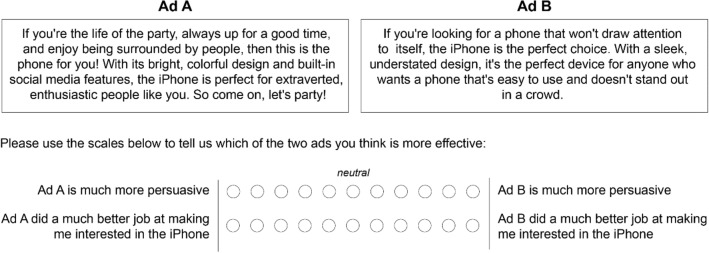
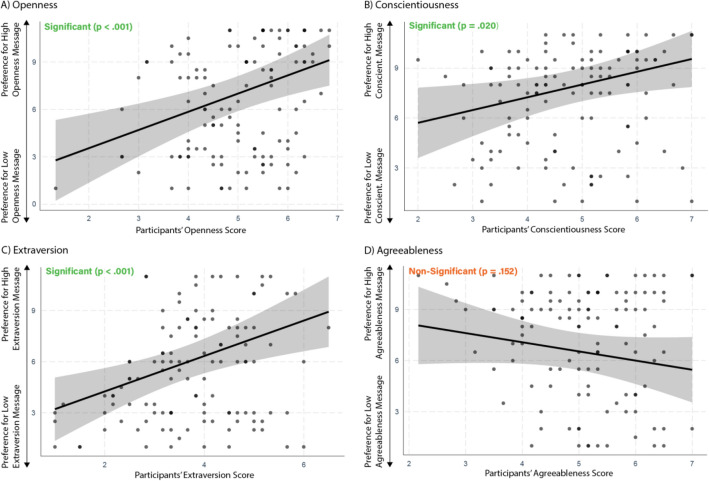
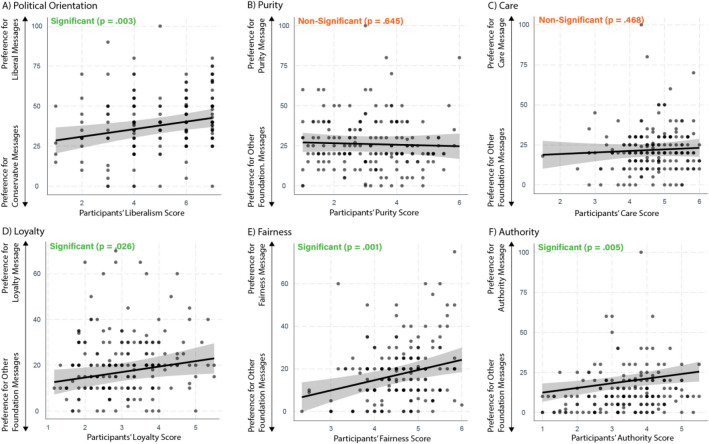
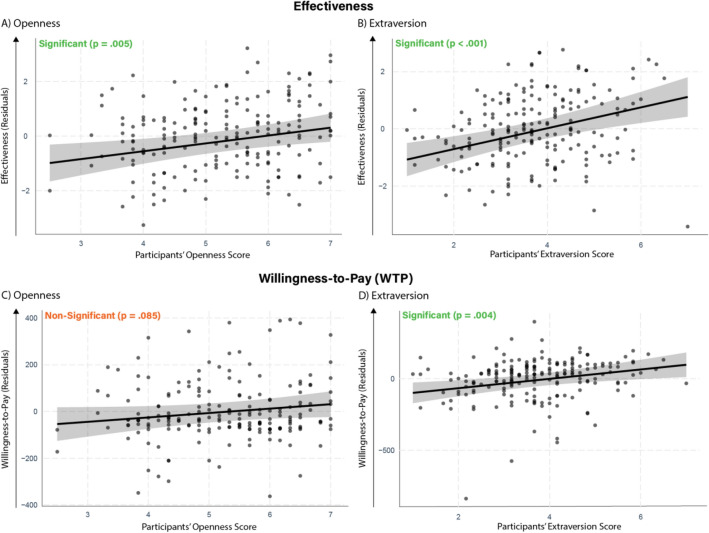
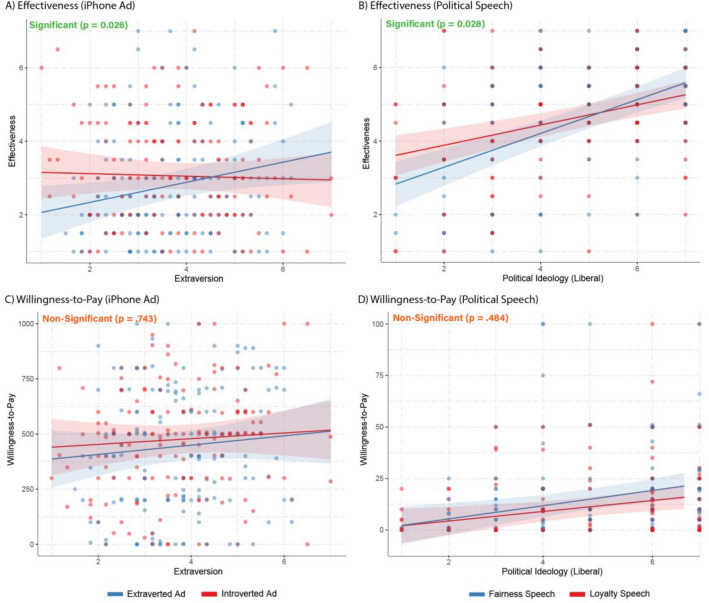
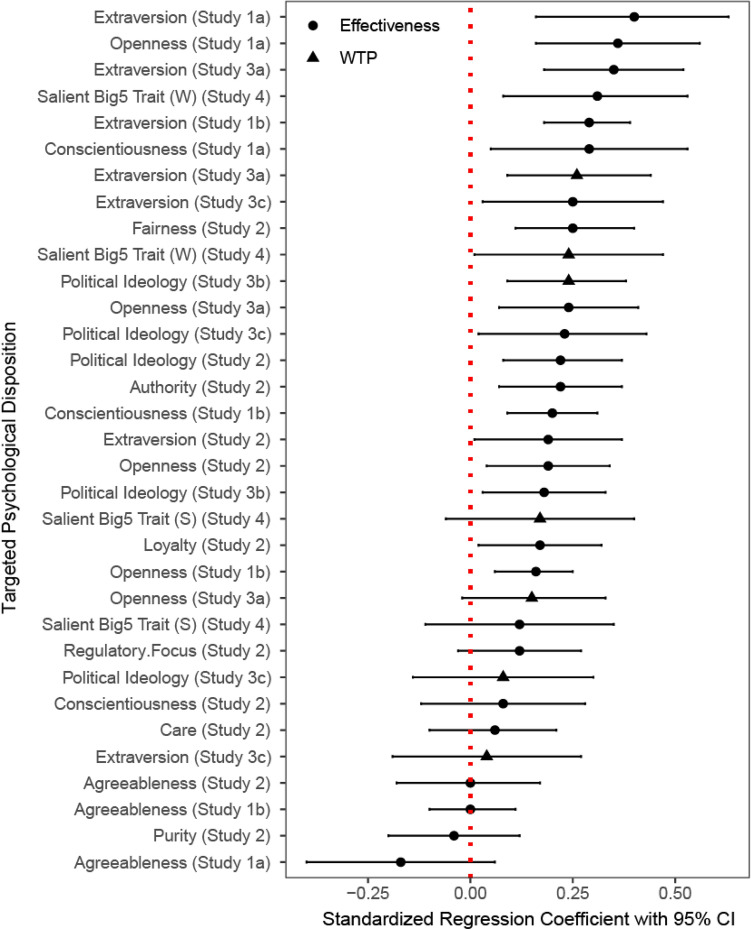
Matching the language or content of a message to the psychological profile of its recipient (known as “personalized persuasion”) is widely considered to be one of the most effective messaging strategies. We demonstrate that the rapid advances in large language models (LLMs), like ChatGPT, could accelerate this influence by making personalized persuasion scalable. Across four studies (consisting of seven sub-studies; total N = 1,788), we show that personalized messages crafted by ChatGPT exhibit significantly more influence than non-personalized messages. This was true across different domains of persuasion (e.g., marketing of consumer products, political appeals for climate action), psychological profiles (e.g., personality traits, political ideology, moral foundations), and when only providing the LLM with a single, short prompt naming or describing the targeted psychological dimension. Thus, our findings are among the first to demonstrate the potential for LLMs to automate, and thereby scale, the use of personalized persuasion in ways that enhance its effectiveness and efficiency. We discuss the implications for researchers, practitioners, and the general public.
Overview
The claims and statistics of this paper haven’t been checked yet.
Run the check — free, no account needed. It reads the open-access text and checks the sources it cites.
Integrity signals
Registry
Cites
Statistics
Figures
Verification
Claims the paper makes
The claims and statistics of this paper haven’t been checked yet.
Run the check — free, no account needed. It reads the open-access text and checks the sources it cites.
Claims other papers make about this one
Each is checked against this paper’s own text: does it say what the citing paper says it does?
The cited source says what the claim attributes to it.
In the citing paper
“or other personality traits as personalized marketing content is more effective than a one-content-fits-all approach (Matz et al. 2023).”
From Generative AI (2024) · cites this paper as Matz et al. 2023
Self-check
Percentages, sums and reported differences re-computed from the paper’s own numbers.
The self-check needs the paper’s full text.
Citations
Cites
Vaswani, A., Shazeer, N., Parmar, N., Uszkoreit, J., Jones, L., Gomez, A. N., Kaiser, L., & Polosukhin, I. (2017) · arXiv · doi:10.48550/arxiv.1706.03762 · Cited by 120,404
The theory of planned behavior
Ajzen, I. (1991) · Organizational Behavior and Human Decision Processes · doi:10.1016/0749-5978(91)90020-t · Cited by 90,587
Podsakoff, P. M., MacKenzie, S. B., Lee, J.-Y., & Podsakoff, N. P. (2003) · Journal of Applied Psychology · doi:10.1037/0021-9010.88.5.879 · Cited by 82,194
Advances In Experimental Social Psychology
(2022) · Advances in experimental social psychology · doi:10.1016/s0065-2601(22)x0002-6 · Cited by 22,559
A very brief measure of the Big-Five personality domains
Gosling, S. D., Rentfrow, P. J., & Swann, W. B. (2003) · Journal of Research in Personality · doi:10.1016/s0092-6566(03)00046-1 · Cited by 8,307
An Introduction to the Five‐Factor Model and Its Applications
McCrae, R. R., & John, O. P. (1992) · Journal of Personality · doi:10.1111/j.1467-6494.1992.tb00970.x · Cited by 6,835
LLaMA: Open and Efficient Foundation Language Models
Touvron, H., Lavril, T., Izacard, G., Martinet, X., Lachaux, M.-A., Lacroix, T., Rozière, B., Goyal, N., Hambro, E., Azhar, F., et al. (2023) · arXiv · doi:10.48550/arxiv.2302.13971 · Cited by 4,602
The international personality item pool and the future of public-domain personality measures
Goldberg, L. R., Johnson, J. A., Eber, H. W., Hogan, R., Ashton, M. C., Cloninger, C. R., & Gough, H. G. (2006) · Journal of Research in Personality · doi:10.1016/j.jrp.2005.08.007 · Cited by 3,185
Private traits and attributes are predictable from digital records of human behavior
Kosinski, M., Stillwell, D., & Graepel, T. (2013) · Proceedings of the National Academy of Sciences · doi:10.1073/pnas.1218772110 · Cited by 2,829
Llama 2: Open Foundation and Fine-Tuned Chat Models
Touvron, H., Martin, L., Stone, K., Albert, P., Almahairi, A., Babaei, Y., Bashlykov, N., Batra, S., Bhargava, P., Bhosale, S., et al. (2023) · arXiv · doi:10.48550/arxiv.2307.09288 · Cited by 2,604
Research works printed but not linked: 4
- Youyou, W., Kosinski, M. & Stillwell, D. Computers judge personalities better than humans. Proc. Natl. Acad. Sci. 112, 1036-1040 (2015).
- Stachl, C., et al. Behavioral Patterns in Smartphone Usage Predict Big Five Personality Traits (PsyArXiv, 2019).
- Matz, S. C., Kosinski, M., Nave, G. & Stillwell, D. Psychological targeting as an effective approach to digital mass persuasion. Proc. Natl. Acad. Sci. 20, 20 (2017).
- Fazio, R. H. & Olson, M. A. The MODE Model: Attitude-Behavior Processes as a Function of Motivation and Opportunity. In Dual- Process Theories of the Social Mind 155-171 (The Guilford Press, 2014).
Cited by
Sorted by citations
Feuerriegel, S., Hartmann, J., Janiesch, C., & Zschech, P. (2024) · Business & Information Systems Engineering · doi:10.1007/s12599-023-00834-7 · Cited by 2,267
Generative artificial intelligence enhances creativity but reduces the diversity of novel content
Doshi, A., & Hauser, O. (2023) · doi:10.2139/ssrn.4535536 · Cited by 1,350
Bengesi, S., El-Sayed, H., Sarker, M. K., Houkpati, Y., Irungu, J., & Oladunni, T. (2024) · IEEE Access · doi:10.1109/access.2024.3397775 · Cited by 470
Durably reducing conspiracy beliefs through dialogues with AI
Costello, T. H., Pennycook, G., & Rand, D. G. (2024) · Science · doi:10.1126/science.adq1814 · Cited by 354
Brüns, J. D., & Meißner, M. (2024) · Journal of Retailing and Consumer Services · doi:10.1016/j.jretconser.2024.103790 · Cited by 400
On the conversational persuasiveness of GPT-4
Salvi, F., Ribeiro, M. H., Gallotti, R., & West, R. (2025) · Nature Human Behaviour · doi:10.1038/s41562-025-02194-6 · Cited by 480
Artificial intelligence and consumer behavior: From predictive to generative AI
Hermann, E., & Puntoni, S. (2024) · Journal of Business Research · doi:10.1016/j.jbusres.2024.114720 · Cited by 316
The power of generative marketing: Can generative AI create superhuman visual marketing content?
Hartmann, J., Exner, Y., & Domdey, S. (2025) · International Journal of Research in Marketing · doi:10.1016/j.ijresmar.2024.09.002 · Cited by 229
Generative AI and its Transformative Value for Digital Platforms
Wessel, M., Adam, M., Benlian, A., Majchrzak, A., & Thies, F. (2025) · Journal of Management Information Systems · doi:10.1080/07421222.2025.2487315 · Cited by 183
The persuasive effects of political microtargeting in the age of generative artificial intelligence
Simchon, A., Edwards, M., & Lewandowsky, S. (2024) · PNAS Nexus · doi:10.1093/pnasnexus/pgae035 · Cited by 143
LLM-generated messages can persuade humans on policy issues
Bai, H., Voelkel, J. G., Muldowney, S., Eichstaedt, J. C., & Willer, R. (2025) · Nature Communications · doi:10.1038/s41467-025-61345-5 · Cited by 110
Generative AI in Marketing and Principles for Ethical Design and Deployment
Hermann, E., & Puntoni, S. (2024) · Journal of Public Policy & Marketing · doi:10.1177/07439156241309874 · Cited by 121
Generative language models exhibit social identity biases
Hu, T., Kyrychenko, Y., Rathje, S., Collier, N., van der Linden, S., & Roozenbeek, J. (2024) · Nature Computational Science · doi:10.1038/s43588-024-00741-1 · Cited by 100
Large language models can infer psychological dispositions of social media users
Peters, H., & Matz, S. (2024) · PNAS Nexus · doi:10.1093/pnasnexus/pgae231 · Cited by 131
Self-citationLi, H., Xi, J., Hsu, C. H. C., Yu, B. X. B., & Zheng, X. (2025) · Tourism Management · doi:10.1016/j.tourman.2025.105179 · Cited by 95
Generative AIPreprint
Feuerriegel, S., Hartmann, J., Janiesch, C., & Zschech, P. (2023) · SSRN Electronic Journal · doi:10.2139/ssrn.4443189 · Cited by 65
Ideation with Generative AI—in Consumer Research and Beyond
Freitas, J. D., Nave, G., & Puntoni, S. (2025) · Journal of Consumer Research · doi:10.1093/jcr/ucaf012 · Cited by 75
Nepal, S. K., Pillai, A., Campbell, W., Massachi, T., Choi, E. S., Xu, X., Kuc, J., Huckins, J. F., Holden, J. L., Depp, C. A., et al. (2024) · CHI Conference Extended Abstracts on Human Factors in Computing Systems (CHI EA) · doi:10.1145/3613905.3650767 · Cited by 78
The Persuasive Power of Large Language Models
Breum, S. M., Egdal, D. V., Gram Mortensen, V., Møller, A. G., & Aiello, L. M. (2024) · Proceedings of the International AAAI Conference on Web and Social Media · doi:10.1609/icwsm.v18i1.31304 · Cited by 57
Intelligent financial system: How AI is transforming finance
Aldasoro, I., Gambacorta, L., Korinek, A., Shreeti, V., & Stein, M. (2025) · Journal of Financial Stability · doi:10.1016/j.jfs.2025.101472 · Cited by 76
Nepal, S. K., Pillai, A., Campbell, W., Massachi, T., Heinz, M. V., Kunwar, A., Choi, E. S., Xu, X., Kuc, J., Huckins, J. F., et al. (2024) · Proceedings of the ACM on Interactive Mobile Wearable and Ubiquitous Technologies · doi:10.1145/3699761 · Cited by 76
Developing Personalized Marketing Service Using Generative AI
Lee, G. H., Lee, K. J., Jeong, B., & Kim, T. (2024) · IEEE Access · doi:10.1109/access.2024.3361946 · Cited by 44
Risks and protective measures for synthetic relationships
Starke, C., Ventura, A., Bersch, C., Cha, M., de Vreese, C. H., Doebler, P., Dong, M., Krämer, N., Leib, M., Peter, J., et al. (2024) · Nature Human Behaviour · doi:10.1038/s41562-024-02005-4 · Cited by 42
Persuading voters using human–artificial intelligence dialogues
Lin, H., Czarnek, G., Lewis, B., White, J. P., Berinsky, A. J., Costello, T. H., Pennycook, G., & Rand, D. G. (2025) · Nature · doi:10.1038/s41586-025-09771-9 · Cited by 88
The levers of political persuasion with conversational artificial intelligence
Hackenburg, K., Tappin, B. M., Hewitt, L., Saunders, E., Black, S., Lin, H., Fist, C., Margetts, H. Z., Rand, D. G., & Summerfield, C. (2025) · Science · doi:10.1126/science.aea3884 · Cited by 128
Ethics of generative AI and manipulation: a design-oriented research agenda
Klenk, M. (2024) · Ethics and Information Technology · doi:10.1007/s10676-024-09745-x · Cited by 68
Zehnle, M., Hildebrand, C., & Valenzuela, A. (2025) · International Journal of Research in Marketing · doi:10.1016/j.ijresmar.2025.02.005 · Cited by 51
Lim, S., Schmälzle, R., & Bente, G. (2025) · Computers in Human Behavior Artificial Humans · doi:10.1016/j.chbah.2025.100172 · Cited by 58
Pantano, E., Serravalle, F., & Priporas, C. (2024) · Journal of Marketing Management · doi:10.1080/0267257x.2024.2436096 · Cited by 42
Farah, M. F., Ramadan, Z. B., & Nassereddine, Y. (2024) · Psychology and Marketing · doi:10.1002/mar.22097 · Cited by 46
Normative Challenges of Risk Regulation of Artificial Intelligence
Orwat, C., Bareis, J., Folberth, A., Jahnel, J., & Wadephul, C. (2024) · NanoEthics · doi:10.1007/s11569-024-00454-9 · Cited by 63
Attitude Towards AI: Potential Influence of Conspiracy Belief, XAI Experience and Locus of Control
Babiker, A., Alshakhsi, S. A. A., Al‐Thani, D., Montag, C., & Ali, R. (2024) · International Journal of Human-Computer Interaction · doi:10.1080/10447318.2024.2401249 · Cited by 44
Deception and manipulation in generative AI
Tarsney, C. J. (2025) · Philosophical Studies · doi:10.1007/s11098-024-02259-8 · Cited by 51
Madathil, J. C. (2025) · Journal of Retailing and Consumer Services · doi:10.1016/j.jretconser.2025.104381 · Cited by 36
From killer bunnies to talking cupcakes: theorizing the diverse universe of virtual influencers
Gambetti, R. C., & Kozinets, R. V. (2024) · European Journal of Marketing · doi:10.1108/ejm-12-2022-0948 · Cited by 30
Durably reducing conspiracy beliefs through dialogues with AI
Costello, T. H., Pennycook, G., & Rand, D. G. (2024) · doi:10.31234/osf.io/xcwdn · Cited by 28
Biased AI writing assistants shift users’ attitudes on societal issues
Williams‐Ceci, S., Jakesch, M., Bhat, A., Kadoma, K., Zalmanson, L., & Naaman, M. (2026) · Science Advances · doi:10.1126/sciadv.adw5578 · Cited by 40
Blömker, J., & Albrecht, C. (2024) · Journal of Retailing and Consumer Services · doi:10.1016/j.jretconser.2024.103806 · Cited by 29
The effects of generative AI’s human-like competencies on clinical decision-making
Spatscheck, N., Schaschek, M., & Winkelmann, A. (2024) · Journal of Decision System · doi:10.1080/12460125.2024.2430731 · Cited by 28
Testing theories of political persuasion using AI
Argyle, L. P., Busby, E. C., Gubler, J. R., Lyman, A., Olcott, J., Pond, J., & Wingate, D. (2025) · Proceedings of the National Academy of Sciences · doi:10.1073/pnas.2412815122 · Cited by 53
Market research and knowledge using Generative AI: the power of Large Language Models
Estévez, M., Ballestar, M. T., & Sáinz, J. (2025) · Journal of Innovation & Knowledge · doi:10.1016/j.jik.2025.100796 · Cited by 40
Sun, H., Xie, P., & Sun, Y. (2025) · Journal of Advertising Research · doi:10.1080/00218499.2025.2462405 · Cited by 34
How do people react to political bias in generative artificial intelligence (AI)?
Messer, U. (2024) · Computers in Human Behavior Artificial Humans · doi:10.1016/j.chbah.2024.100108 · Cited by 33
Balaskas, S., Konstantakopoulou, M., Yfantidou, I., & Komis, K. (2025) · Societies · doi:10.3390/soc15080232 · Cited by 21
Understanding model power in social AI
Brandtzæg, P. B., Skjuve, M. B., & Følstad, A. (2024) · AI & Society · doi:10.1007/s00146-024-02053-4 · Cited by 25
Large Language Models Can Infer Personality from Free-Form User InteractionsPreprint
Peters, H., Cerf, M., & Matz, S. (2024) · OSF Preprints (OSF Preprints) · doi:10.31219/osf.io/apc5g · Cited by 45
Self-citationThe Double-Edged Sword of Anthropomorphism in LLMs
Reinecke, M. G., Ting, F., Savulescu, J., & Singh, I. (2025) · Proceedings · doi:10.3390/proceedings2025114004 · Cited by 27
Do Expressions Change Decisions? Exploring the Impact of AI's Explanation Tone on Decision-Making
Okoso, A., Yang, M., & Baba, Y. (2025) · CHI Conference on Human Factors in Computing Systems · doi:10.1145/3706598.3713744 · Cited by 26
Yan, H. Y., Morrow, G., Yang, K.-C., & Wihbey, J. (2025) · Harvard Kennedy School Misinformation Review · doi:10.37016/mr-2020-171 · Cited by 30
Yang, Y., Li, C., & Qu, Z. (2025) · Journal of Hospitality and Tourism Management · doi:10.1016/j.jhtm.2025.05.012 · Cited by 17
When cutting edge meets silver tongue: Understanding the word-of-machine effect on travel decisions
Sun, D., Wong, I. A., Xiong, X., & Li, S. (2025) · Tourism Management · doi:10.1016/j.tourman.2025.105271 · Cited by 21
The impact of advanced AI systems on democracy
Summerfield, C., Argyle, L. P., Bakker, M. A., Collins, T., Durmus, E., Eloundou, T., Gabriel, I., Ganguli, D., Hackenburg, K., Hadfield, G. K., et al. (2025) · Nature Human Behaviour · doi:10.1038/s41562-025-02309-z · Cited by 65
Navigating the AI era: university communication strategies and perspectives on generative AI tools
Henke, J. (2024) · Journal of Science Communication · doi:10.22323/2.23030205 · Cited by 16
Merl, N. B., Schramm, F., Wies, C., Winterstein, J. T., & Brinker, T. J. (2025) · European Journal of Cancer · doi:10.1016/j.ejca.2025.116114 · Cited by 22
A meta-analysis of the persuasive power of large language models
Hölbling, L., Maier, S., & Feuerriegel, S. (2025) · Scientific Reports · doi:10.1038/s41598-025-30783-y · Cited by 34
Beware the Intention Economy: Collection and Commodification of Intent via Large Language Models
Chaudhary, Y., & Penn, J. (2024) · Harvard Data Science Review · doi:10.1162/99608f92.21e6bbaa · Cited by 21
Generative AI, Work and Risks in Cultural and Creative IndustriesPreprint
Walkowiak, E., & Potts, J. (2024) · SSRN Electronic Journal · doi:10.2139/ssrn.4830265 · Cited by 19
Capturing a moving target: Developing research on and with AI for Human Relations
Stollberger, J., Anand, S., & Dick, P. (2025) · Human Relations · doi:10.1177/00187267251332075 · Cited by 16
Allen, J. W., Earp, B., & Wilkinson, D. (2025) · Journal of Medical Ethics · doi:10.1136/jme-2024-110624 · Cited by 13
Clicks and tricks: The dark art of online persuasion
Fagan, P. (2024) · Current Opinion in Psychology · doi:10.1016/j.copsyc.2024.101844 · Cited by 12
Beyond the Turing Test: Exploring the implications of generative AI for category construction
Phillips, N., Kalvapalle, S. G., & Kennedy, M. (2024) · Organization Theory · doi:10.1177/26317877241275113 · Cited by 14
Artificial Intelligence in Marketing: From Computer Science to Social Science
Puntoni, S. (2024) · Journal of Macromarketing · doi:10.1177/02761467241282666 · Cited by 14
We need to understand “when” not “if” generative AI can enhance personalized persuasion
Teeny, J. D., & Matz, S. (2024) · Proceedings of the National Academy of Sciences · doi:10.1073/pnas.2418005121 · Cited by 12
Self-citationAutomated Parasociality: From Personalization to Personification
Andrejevic, M., & Volčić, Z. (2024) · Television & New Media · doi:10.1177/15274764241300436 · Cited by 20
Enabling people-centric climate action using human-in-the-loop artificial intelligence: a review
Debnath, R., Tkachenko, N., & Bhattacharyya, M. (2025) · Current Opinion in Behavioral Sciences · doi:10.1016/j.cobeha.2025.101482 · Cited by 13
AI can outperform humans in predicting correlations between personality items
Schoenegger, P., Greenberg, S., Grishin, A. V., Lewis, J., & Caviola, L. (2025) · Communications Psychology · doi:10.1038/s44271-025-00205-w · Cited by 12
On the emergent capabilities of ChatGPT 4 to estimate personality traits
Piastra, M., & Catellani, P. (2025) · Frontiers in Artificial Intelligence · doi:10.3389/frai.2025.1484260 · Cited by 15
Lu, H. (2025) · Vaccine · doi:10.1016/j.vaccine.2025.127018 · Cited by 12
Blömker, J., & Albrecht, C. (2025) · Journal of Retailing and Consumer Services · doi:10.1016/j.jretconser.2025.104349 · Cited by 12
Unwrapping generative AI paradigms for product and service innovation differentiation
Shonubi, O. A. (2026) · Journal of Strategy & Innovation · doi:10.1016/j.jsinno.2025.200562 · Cited by 16
LLM-Aided Social Media Influence Operations
Meier, R. (2024) · Springer eBooks · doi:10.1007/978-3-031-54827-7_11 · Cited by 11
Something AI Should Tell You – The Case for Labelling Synthetic Content
Fisher, S. A. (2024) · Journal of Applied Philosophy · doi:10.1111/japp.12758 · Cited by 15
Gonzalez, K., Kanitz, R., & Briker, R. (2024) · The Journal of Applied Behavioral Science · doi:10.1177/00218863241279916 · Cited by 17
Allen, J. W., Schaefer, G. O., Mann, S. P., Earp, B. D., & Wilkinson, D. J. C. (2024) · Research Ethics · doi:10.1177/17470161241298726 · Cited by 11
Warning people that they are being microtargeted fails to eliminate persuasive advantage
Carrella, F., Simchon, A., Edwards, M., & Lewandowsky, S. (2025) · Communications Psychology · doi:10.1038/s44271-025-00188-8 · Cited by 17
Biswas, S., Erlei, A., & Gadiraju, U. (2025) · CHI Conference on Human Factors in Computing Systems · doi:10.1145/3706598.3713201 · Cited by 17
The psychological mechanism of value co-creation with human-centred generative AI robot assistants
Li, Z., Yuen, K. F., & Teo, C. (2025) · Technology in Society · doi:10.1016/j.techsoc.2025.103015 · Cited by 11
Srba, I., Razuvayevskaya, O., Leite, J. A., Moro, R., Schlicht, I. B., Tonelli, S., García, F. M., Lottmann, S. B., Teyssou, D., Porcellini, V., et al. (2026) · ACM Transactions on Intelligent Systems and Technology · doi:10.1145/3770077 · Cited by 19
Blömker, J., & Albrecht, C. (2025) · Computers in Human Behavior Artificial Humans · doi:10.1016/j.chbah.2025.100126 · Cited by 14
Lim, R. E., Kim, S., Abernathy, A. M., Shin, S., & Avance, R. (2025) · Journal of Marketing Communications · doi:10.1080/13527266.2025.2497259 · Cited by 11
How AI sources can increase openness to opposing views
Lu, L., Tormala, Z. L., & Duhachek, A. (2025) · Scientific Reports · doi:10.1038/s41598-025-00791-z · Cited by 20
Palm, S., & Tims, M. (2025) · Personality and Individual Differences · doi:10.1016/j.paid.2025.113412 · Cited by 9
Assessing public support for degrowth: survey-based experimental and predictive studies
Krpan, D., Bassó, F., Hickel, J., & Kallis, G. (2025) · The Lancet Planetary Health · doi:10.1016/j.lanplh.2025.101326 · Cited by 12
Neuroscientific Analysis of Logo Design: Implications for Luxury Brand Marketing
Šola, H. M., Khawaja, S., & Qureshi, F. H. (2025) · Behavioral Sciences · doi:10.3390/bs15040502 · Cited by 12
Exploring the Productivity of Generative AI-Powered Ad Campaigns: A Consumer Response Perspective
Yang, J. (2025) · Journal of Interactive Advertising · doi:10.1080/15252019.2025.2551598 · Cited by 12
Applications of generative artificial intelligence to influence climate change decisions
Richards, D. R., & Worden, D. (2024) · npj Climate Action · doi:10.1038/s44168-024-00202-5 · Cited by 7
Ethical Foundations of AI-Driven Avatars in the Metaverse for Innovation and User Privacy
Almomani, A., Al–Qerem, A., Alauthman, M., Aldweesh, A. Y., Aoudi, S., & Salloum, S. A. (2025) · IEEE Access · doi:10.1109/access.2025.3589714 · Cited by 11
Rodríguez-Sánchez, C., Esper, F. S., Casaló, L. V., & López, M. (2025) · Technology in Society · doi:10.1016/j.techsoc.2025.103036 · Cited by 7
Using artificial intelligence in digital branding: a two-phase qualitative approach
Jalilvand, M. R., & Ataei, J. (2026) · EuroMed Journal of Business · doi:10.1108/emjb-12-2024-0353 · Cited by 7
Zhang, Y., Huang, B., Yuan, W., Jiang, Z., Peng, L., Chen, S., & Tan‐Soo, J. (2025) · Information Processing & Management · doi:10.1016/j.ipm.2025.104090 · Cited by 7
How the Role of Generative AI Shapes Perceptions of Value in Human-AI Collaborative Work
Schecter, A., & Richardson, B. (2025) · CHI Conference on Human Factors in Computing Systems · doi:10.1145/3706598.3713946 · Cited by 15
Trzebiński, W., Konuk, F. A., & Marciniak, B. (2025) · Journal of Business Research · doi:10.1016/j.jbusres.2025.115487 · Cited by 7
The fundamental rights risks of countering cognitive warfare with artificial intelligence
Lahmann, H., Custers, B. H. M., & Scott, B. I. (2025) · Ethics and Information Technology · doi:10.1007/s10676-025-09868-9 · Cited by 12
Twenty Years of Personality Computing: Threats, Challenges and Future Directions
Celli, F., Kartelj, A., Dordevič, M., Suhartono, D., Filipović, V., Milutinović, V. M., Spathoulas, G. P., Vinciarelli, A., Kosiński, M., & Lepri, B. (2026) · ACM Computing Surveys · doi:10.1145/3806009 · Cited by 16
Is Undisclosed LLM Use Morally Wrong?
Sahebi, S., & Montefiore, T. (2026) · Philosophy & Technology · doi:10.1007/s13347-026-01094-5 · Cited by 6
La inteligencia artificial en la publicidad: una revisión sistemática de la década 2020-2024
Sanguineti, R. G. B., Córdova, C. D. C., & Baltazar, A. T. (2024) · Journal of the Academy · doi:10.47058/joa11.4 · Cited by 6
Epstein, R., Newland, A., & Tang, L. (2025) · PLoS ONE · doi:10.1371/journal.pone.0322900 · Cited by 6
Can generative artificial intelligence help or hinder sustainable marketing?
McCarthy, B. (2024) · Journal of Resilient Economies (ISSN 2653-1917) · doi:10.25120/jre.4.2.2024.4153 · Cited by 2
Artificial intelligence, digital social networks, and climate emotions
Galaz, V., Metzler, H., Schill, C., Lindahl, T., Daume, S., Marklund, A., Castro, A. A., Bard, J. S., McPhearson, T., Galafassi, D., et al. (2025) · npj Climate Action · doi:10.1038/s44168-025-00225-6 · Cited by 6
Self-citationMotivation profiles: understanding interplay of persuasive strategies and self-determination theory
Orji, F. A., Gutiérrez, F. J., & Vassileva, J. (2025) · Behaviour and Information Technology · doi:10.1080/0144929x.2025.2522200 · Cited by 10
Metadata
- Authors
- Matz, S., Teeny, J., Vaid, S. S., Peters, H., Harari, G. M., & Cerf, M.
- Affiliations
- Columbia University (US)
- Harvard University (US)
- Stanford University (US)
- Corresponding author
- Matz, Sandra
- Venue
- Scientific Reports
- Publisher
- Center for Open Science
- Published
- 2023-04-22
- Volume
- 14
- Issue
- 1
- Pages
- 4692-4692
- ISSN
- 2045-2322 (ISSN-L)
- PMC
- PMC10897294
- OpenAlex
- W4392153984
- Cited by
- 312
- References
- 74
- Citations by year
- 2026: 131 · 2025: 120 · 2024: 58 · 2023: 3
- FWCI
- 220.91
- Type
- journal article
- Language
- en
- Open access
- gold
- doi.org
- Locations
- Scientific Reports (publishedVersion, cc-by)
- PubMed Central (publishedVersion, cc-by)
- PubMed (publishedVersion)
- DOAJ (DOAJ: Directory of Open Access Journals) (submittedVersion)
- OSF Preprints (OSF Preprints) (submittedVersion)
- PsyArXiv (OSF Preprints) (submittedVersion)
- PsyArXiv (OSF Preprints) (submittedVersion, cc-by)
- Topics
- Social Sciences › Psychology › Social Psychology › Psychology of Social Influence
- Social Sciences › Business, Management and Accounting › Marketing › AI in Service Interactions
- Physical Sciences › Computer Science › Artificial Intelligence › Ethics and Social Impacts of AI
- Keywords
- personalized persuasion, generative AI, large language models, ChatGPT, message tailoring, psychological profiling, persuasiveness, political appeal, climate action, political ideology, moral foundations, personality traits
- MeSH terms
- Climate, Language, Morals, Persuasive Communication, Marketing
About these checks
Registry, retraction, Cites and statistics results are computed, not judged, with one exception: a printed reference that no index lists is read once by a model before it counts as a citation error. Claims are extracted by a model and kept only when their quote appears verbatim in the text; each cited source is then checked, with a model’s help, for whether it says what the claim relies on. Those verdicts can be wrong — read the claim’s quote and the cited source before relying on one.
Statistics and arithmetic are recomputed, not judged.
Confidence bands are shown only for fields calibrated on our annotated test set. None is calibrated yet, so no band is shown.
What counts as a claim ›How we measure confidence ›How we check this ›
Are you an author, or do you see a problem with this page? Request a review
