

Evolutionary aspects of anxiety disorders
Open accessThe DOI matches its Crossref record; 54 of the 54 references it cites were found in a registry or an index.
Abstract
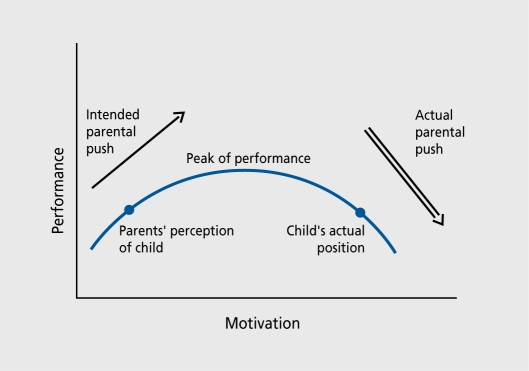
DANGER AND HARM ARE AVOIDED BY STRATEGIC DECISIONS MADE AT ALL THREE LEVELS OF THE TRIUNE FOREBRAIN: rational (neomammalian), emotional (paleomammalian), and instinctive (reptilian). This applies also to potential harm from conspecifics, which leads to a choice between escalating and de-escalating strategies. Anxiety is a component of de-escalating strategies mediated by the paleomammalian and reptilian forebrains. When the neomammalian (rational) brain fails to deal with the threat of conspecific danger, these more primitive de-escalating strategies may be activated and may present as anxiety disorders. The capacity for concealment of anxiety and other forms of negative affect has also evolved, and excessive concealment may lead to psychopaihology by breaking the negative feedback loop of excessive motivation, leading to impaired performance, leading to signals of distress, and leading to reduced exhortation to succeed on the part of parents and teachers; this situation is illustrated by a model based on the Yerkes-Dodson law.
Overview
The claims and statistics of this paper haven’t been checked yet.
Free: it reads the open-access text and checks the first 5 claims that cite a source we can check. Create a free account to check every claim.
Integrity signals
Registry
Cites
Statistics
Figures
Verification
Claims the paper makes
The claims and statistics of this paper haven’t been checked yet.
Free: it reads the open-access text and checks the first 5 claims that cite a source we can check. Create a free account to check every claim.
Claims other papers make about this one
Each is checked against this paper’s own text: does it say what the citing paper says it does?
In the citing paper
“low-level anxiety has been shown to benefit preparation and performance for stressful events (eg, public speaking) and can help us avoid potentially dangerous situations (Jamieson et al, 2013;Lupien and Mcewen, 1997;Price, 2003).”
From The human BNST: functional role in anxiety and addiction (2016) · cites this paper as Price, 2003
Self-check
Percentages, sums and reported differences re-computed from the paper’s own numbers.
The self-check needs the paper’s full text.
Citations
Cites
The relation of strength of stimulus to rapidity of habit formation
Yerkes, R. M., & Dodson, J. D. (1908) · Journal of Comparative Neurology and Psychology · doi:10.1002/cne.920180503 · Cited by 6,911
The principles of psychology, Vol I.
James, W. (1890) · doi:10.1037/10538-000 · Cited by 4,514
Fears, phobias, and preparedness: toward an evolved module of fear and fear learning
Öhman, A., & Mineka, S. (2001) · Psychological Review · doi:10.1037/0033-295x.108.3.483 · Cited by 3,147
Comorbidity of anxiety and unipolar mood disorders
Mineka, S., Watson, D., & Clark, L. A. (1998) · Annual Review of Psychology · doi:10.1146/annurev.psych.49.1.377 · Cited by 1,573 · cited 2×
“This synergistic action of depression and anxiety is compatible with the finding of extensive comorbidity between anxiety states and depressive disorders,22-25 and with the finding that the genetic predisposition to major depression is indistinguishable from the predisposition to GAD.22”
ResultEgalitarian Behavior and Reverse Dominance Hierarchy [and Comments and Reply]
Boehm, C., Barclay, H. B., Dentan, R. K., Dupre, M.-C., Hill, J. D., Kent, S., Knauft, B. M., Otterbein, K. F., & Rayner, S. (1993) · Current Anthropology · doi:10.1086/204166 · Cited by 675
Fear and fitness: An evolutionary analysis of anxiety disorders
Marks, I. F., & Nesse, R. M. (1994) · Ethology and Sociobiology · doi:10.1016/0162-3095(94)90002-7 · Cited by 624
DE WAAL, F. B. M., & Waal, F. B. M. D. (1989) · Harvard University Press eBooks · doi:10.4159/9780674033085 · Cited by 568
The Social Competition Hypothesis of Depression
Price, J., Sloman, L., Gardner, R., Gilbert, P., & Rohde, P. (1994) · British Journal of Psychiatry · doi:10.1192/bjp.164.3.309 · Cited by 556 · cited 1×
“If we consider the state of mind of the deposed animal after he has been beaten, but before he has reconciled, we can see the need for some reorganization of goals and attitudes: we have suggested that depressed mood may help the animal give up the goal of retaining his high rank, and reconcile him to his inferior soc…”
BackgroundSelf-citationComorbidity of mood and anxiety disorders
Kaufman, J., & Charney, D. (2000) · Depression and Anxiety · doi:10.1002/1520-6394(2000)12:1+<69::aid-da9>3.0.co;2-k · Cited by 473
Gilbert, P. (2001) · Psychiatric Clinics of North America · doi:10.1016/s0193-953x(05)70260-4 · Cited by 370
Research works printed but not linked: 34
- Stevens A. Price J. Evolutionary Psychiatry: A New Beginning 2nd éd. London, UK: Routledge; 2000
- McGuire MT. Troisi A. Darwinian Psychiatry. New York, NY: Oxford University Press; 1998
- Marks IM. Fears, Phobias and Rituals. New York, NY: Oxford University Press; 1987
- de Waal F. The reconciled hierarchy. In: Chance MRA, ed. Social Fabrics of the Mind. Hove, UK: Lawrence Erlbaum 1988;xx 297 312
- Aureli F. de Waal FMB. Why natural conflict resolution? In: Aureli F, de Waal FMB, eds. Natural Conflict Resolution. Berkely, Calif: University of California Press; 2000 1 10
- Gardner R. Price J. Sociophysiology and depression. In: Joiner T, Coyne JD, eds. Recent Advances in interpersonal Approaches to Depression. Washington, DC: American Psychological Association; 1996 247 268
- Whyte FW. Street Corner Society. 2nd ed. Chicago, III: University of Chicago Press; 1955
- Weissman MM. Markowitz JC. Klerman Gl. Comprehensive Guide to interpersonal Psychotherapy. New York, NY: Basic Books; 2000
- Davidson RJ. Ekman P. Afterword: how are emotions distinguished from moods, temperament and other related affective constructs. In: Eckman P, Davidson RJ, eds. The Nature of Emotion: Fundamental Questions. New York, NY: Oxford University Press; 1994 94 96
- MacLean PD. The Triune Brain in Evolution. New York, NY: Plenum Press; 1990
- Price JS. Gurdjieff and the triune brain. ASCAP Newsletter. 1998 11 19 21
- Price JS. The triune brain, escalation de-escalation strategies, and mood disorders. In: Cory G, Gardner R, eds. The Neuroethology of Paul MacLean: Convergences and Frontiers. Westport, Conn: Greenwood-Praeger; 2002
- Cornford FM. The Republic of Plato. Translated with introduction and notes. London, UK: Turnstone Books; 1976
- Huntingford FA. Taylor AC. Sneddon LU. Neat FC. Prowess and the resolution of animal fights. In: Espmark Y, Amundsen T, Rosenqvist G, eds. Animal Signals: Signalling and Signal Design in Animal Communication. Trondheim, Norway: Tapir Academic Press 2000 259 276
- Krebs JR. Davies NB. An Introduction to Behavioural Ecology, 3rd ed. Oxford, UK: Blackwell Scientific Publications; 1993
- Clutton-Brock TH. Guiness FE. Albob SD. Red Deer: Behaviour and Ecology of Two Sexes. Edinburgh, UK: Edinburgh University Press; 1982
- Maynard Smith J. Evolution and the Theory of Games. Cambridge, UK: Cambridge University Press; 1982
- Gilbert P. Depression: The Evolution of Powerlessness. Hove, UK: Lawrence Erlbaum; 1992
- Bowlby J. Attachment and Loss. Vol 1. Attachment. London, UK: Hogarth Press; 1969
- Bowlby J. Attachment and Loss. Vol 2. Separation, Anxiety and Anger. London, UK: Hogarth Press; 1973 xx
- Bowlby J. Attachment and Loss. Vol 3. Loss: Sadness and Depression. London, UK: Hogarth Press; 1980
- De Waal FBM. Harcourt AH. Coalitions and alliances: a history of ethological research. In: Harcourt AH, de Waal FBM, eds. Coalitions and Alliances in Humans and Other Animals. Oxford, UK: Oxford University Press; 1992 1 19
- Stevens A. Price JS. Prophets, Cults and Madness. London, UK: Duckworth; 2000
- Howell S. “To be angry is not to be human, but to be fearful is”: Chewong concepts of human nature. In: Howell S, Willis R, eds. Societies at Peace: Anthropological Perspectives. London, UK: Routledge; 1989 36 45 59
- Gray P. Psychology. New York, NY: Worth Publishers; 1991
- Price JS. Developmental features of depression. ASCAP Bull. 2002 3 16 20
- Selye H. Stress Without Distress. London, UK: Hodder & Stoughton; 1974
- Seyfarth RM. Vocal communication and its relation to language. In: Smuts BB, Cheney DL, Seyfarth RM, Wrangham RW, Struhsaker TT, eds. Primate Societies. Chicago, III: University of Chicago Press; 1986 440 451
- Cheney DL. Wrangham W. Prédation. In: Smuts BB, Cheney DL, Seyfarth RM, Wrangham RW, Struhsaker TT, eds. Primate Societies. Chicago, III: University of Chicago Press; 1986 227 239
- Cheney DL. Seyfarth RM. How Monkeys See the V/orld: Inside the Mind of Another Species. Chicago, III: University of Chicago Press, 1990
- DeVore I. Hall KRL. Baboon ecology. In: DeVore I, ed. Primate Behavior: Field Studies of Monkeys and Apes. New York, NY: Hold, Reinhart & Winston; 1965 20 52
- Dowling S. The ontogeny and dynamics of anxiety in childhood. In: Roose SP, Glick RA, eds. Anxiety as Symptom and Signal. Hillsdale, NJ: Analytic Press 1995;xx 75 86
- Glick RA. Freudian and post-Freudian theories of anxiety. In: Roose SP, Glick RA, eds. Anxiety as Symptom and Signal. Hillsdale, NJ: Analytic Press; 1995 1 16
- Sober E. Wilson DS. Unto Others: The Evolution and Psychology of Unselfish Behavior. Cambridge, Mass: Harvard University Press; 1998
Cited by
The human BNST: functional role in anxiety and addiction
Avery, S. N., Clauss, J. A., & Blackford, J. U. (2016) · Neuropsychopharmacology · doi:10.1038/npp.2015.185 · Cited by 331
Approach-Avoidance Decisions Under Threat: The Role of Autonomic Psychophysiological States
Livermore, J. J. A., Klaassen, F. H., Bramson, B., Hulsman, A. M., Meijer, S. W., Held, L. K., Klumpers, F., de Voogd, L. D., & Roelofs, K. (2021) · Frontiers in Neuroscience · doi:10.3389/fnins.2021.621517 · Cited by 112
Bystritsky, A., & Kronemyer, D. (2014) · Psychiatric Clinics of North America · doi:10.1016/j.psc.2014.08.002 · Cited by 134
Amendola, S., von Wyl, A., Volken, T., Zysset, A. E., Huber, M., & Dratva, J. (2021) · Frontiers in Psychology · doi:10.3389/fpsyg.2021.643171 · Cited by 73
A new comprehensive evolutionary model of depression and anxiety
Sloman, L. (2007) · Journal of Affective Disorders · doi:10.1016/j.jad.2007.07.008 · Cited by 58
Metadata
- Authors
- Price, J. S.
- Affiliations
- Brighton General Hospital (GB)
- Corresponding author
- Price, John S.
- Venue
- Dialogues in Clinical Neuroscience
- Publisher
- Informa UK Limited
- Published
- 2003-09-30
- Volume
- 5
- Issue
- 3
- Pages
- 223-236
- ISSN
- 1294-8322 (ISSN-L)
- 1958-5969
- PMC
- PMC3181631
- OpenAlex
- W4297699155
- Cited by
- 51
- References
- 48
- Citations by year
- 2026: 4 · 2025: 7 · 2024: 5 · 2023: 3 · 2022: 5 · 2021: 4 · 2019: 1 · 2018: 7 · 2017: 1 · 2016: 3 · 2015: 1 · 2014: 4 · 2013: 1 · 2012: 1
- FWCI
- 0.47
- Type
- journal article
- Language
- en
- Open access
- diamond
- doi.org
- Licence
- Locations
- Dialogues in Clinical Neuroscience (publishedVersion, cc-by-nc-nd)
- Europe PMC (PubMed Central) (publishedVersion, cc-by-nc-nd)
- PubMed Central (publishedVersion, cc-by-nc-nd)
- PubMed (publishedVersion)
- PubMed
- Topics
- Social Sciences › Psychology › Experimental and Cognitive Psychology › Anxiety, Depression, Psychometrics, Treatment, Cognitive Processes
- Social Sciences › Psychology › Clinical Psychology › Psychoanalysis and Psychopathology Research
- Social Sciences › Psychology › Clinical Psychology › Child and Adolescent Psychosocial and Emotional Development
- Keywords
- anxiety disorders, evolutionary psychology, threat avoidance, de-escalation strategies, psychopathology, Yerkes-Dodson law, motivation
About these checks
Registry, retraction, Cites and statistics results are computed, not judged, with one exception: a printed reference that no index lists is read once by a model before it counts as a citation error. Claims are extracted by a model and kept only when their quote appears verbatim in the text; each cited source is then checked, with a model’s help, for whether it says what the claim relies on. Those verdicts can be wrong — read the claim’s quote and the cited source before relying on one.
Statistics and arithmetic are recomputed, not judged.
Confidence bands are shown only for fields calibrated on our annotated test set. None is calibrated yet, so no band is shown.
What counts as a claim ›How we measure confidence ›How we check this ›
Are you an author, or do you see a problem with this page? Request a review
How to cite
Cite CoChat for the checks on this page, and the paper for its own findings.
- This page
- CoChat. (2026). Citation check: Evolutionary aspects of anxiety disorders. https://app.cochat.ai/papers/10.31887/dcns.2003.5.3/jprice
- The paper
- Price, J. S. (2003). Evolutionary aspects of anxiety disorders. Dialogues in Clinical Neuroscience. https://doi.org/10.31887/dcns.2003.5.3/jprice
Data sources
Bibliographic data: Semantic Scholar, OpenAlex, Crossref.
Contains information from the Semantic Scholar Academic Graph Datasets, made available under the ODC Attribution License (ODC-BY 1.0).
Semantic Scholar’s data is described in: Kinney, R., et al. (2023). The Semantic Scholar Open Data Platform. arXiv:2301.10140.
