

Neurobiological mechanisms of anhedonia
Open accessThe DOI matches its Crossref record; 96 of the 96 references it cites were found in a registry or an index.
Abstract
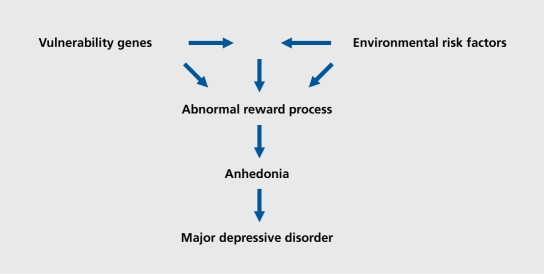
Anhedonia refers to the reduced ability to experience pleasure, and has been studied in different neuropsychiatric disorders. Anhedonia is nevertheless considered as a core feature of major depressive disorder, according to DSM-IV criteria for major depression and the definition of melancholic subtype, and regarding its capacity to predict antidepressant response. Behavioral, electrophysiological, hemodynamic, and interview-based measures and self-reports have been used to assess anhedonia, but the most interesting findings concern neuropharmacological and neuroanatomical studies. The analyses of anhedonic non-clinical subjects, nonanhedonic depressed patients, and depressed patients with various levels ofanhedonia seem to favor the hypothesis that the severity of anhedonia is associated with a deficit of activity of the ventral striatum (including the nucleus accumbens) and an excess of activity of ventral region of the prefrontal cortex (including the ventromedial prefrontal cortex and the orbitofrontal cortex), with a pivotal, but not exclusive, role of dopamine.
Overview
The claims and statistics of this paper haven’t been checked yet.
Free: it reads the open-access text and checks the first 5 claims that cite a source we can check. Create a free account to check every claim.
Integrity signals
Registry
Cites
Statistics
Figures
Verification
Claims the paper makes
The claims and statistics of this paper haven’t been checked yet.
Free: it reads the open-access text and checks the first 5 claims that cite a source we can check. Create a free account to check every claim.
Claims other papers make about this one
Each is checked against this paper’s own text: does it say what the citing paper says it does?
The source backs part of the claim, not all of it — or backs it for a different population, condition or comparison.
In the citing paper
“As a continuous measure, social anhedonia is associated with depressive symptom severity (70–72) and poor treatment response (68, 73).”
From A transdiagnostic perspective on social anhedonia (2019) · cites this paper as [73]
Experimental — accuracy not yet measuredIn the citing paper
“social anhedonia is believed to predict non-response to antidepressants (Gorwood, 2008) and psychotherapy (Hasler et al., 2004a(Hasler et al., , 2004b)).”
From Social functioning in major depressive disorder (2016) · cites this paper as Gorwood, 2008
In the citing paper
“anhedonia is one of the two core symptoms required for the diagnosis [2–4].”
From Chronic unpredictable stress induces depression-related behaviors by suppressing AgRP neuron activity (2021) · cites this paper as [2]
In the citing paper
“Along with depressed mood, anhedonia is one of the two main diagnostic criteria for major depression [2].”
From Chronic unpredictable stress induces depression-related behaviors by suppressing AgRP neuron activity (2021) · cites this paper as [2]
Self-check
Percentages, sums and reported differences re-computed from the paper’s own numbers.
The self-check needs the paper’s full text.
Citations
Cites
Predictive reward signal of dopamine neurons
Schultz, W. (1998) · Journal of Neurophysiology · doi:10.1152/jn.1998.80.1.1 · Cited by 4,564
Meeting of minds: the medial frontal cortex and social cognition
Amodio, D. M., & Frith, C. D. (2006) · Nature Reviews Neuroscience · doi:10.1038/nrn1884 · Cited by 3,782 · cited 1×
“The literature supports the idea that the VMPFC not only monitors the rewarding value of stimuli/responses, but also represents one’s upcoming emotional states/reactions.(90) An alternative explanation for an overactive VMPFC in trait anhedonia could be that this region inhibits emotional processing performed by other…”
Functional neuroanatomy of emotion: A meta-analysis of emotion activation studies in PET and fMRI
Phan, K. L., Wager, T., Taylor, S. F., & Liberzon, I. (2002) · NeuroImage · doi:10.1006/nimg.2002.1087 · Cited by 3,502
Drug Addiction, Dysregulation of Reward, and Allostasis
Koob, G. (2001) · Neuropsychopharmacology · doi:10.1016/s0893-133x(00)00195-0 · Cited by 2,953
Blood, A. J., & Zatorre, R. J. (2001) · Proceedings of the National Academy of Sciences · doi:10.1073/pnas.191355898 · Cited by 2,814
From motivation to action: Functional interface between the limbic system and the motor system
MOGENSON, G., JONES, D., & YIM, C. (1980) · Progress in Neurobiology · doi:10.1016/0301-0082(80)90018-0 · Cited by 2,331
The human orbitofrontal cortex: linking reward to hedonic experience
Kringelbach, M. L. (2005) · Nature Reviews Neuroscience · doi:10.1038/nrn1747 · Cited by 2,180 · cited 1×
“The orbitofrontal cortex is a nexus for sensory integration, the modulation of autonomic reactions, and anticipation in learning, prediction and decision-making for emotional and reward-related behaviours.(50) Neuroimaging studies have found that the reward value,(51) and the expected reward value,(52) and even the su…”
Neurobiology of emotion perception I: the neural basis of normal emotion perception
Phillips, M. L., Drevets, W. C., Rauch, S. L., & Lane, R. (2003) · Biological Psychiatry · doi:10.1016/s0006-3223(03)00168-9 · Cited by 2,173
Negative v Positive Schizophrenia: Definition and Validation
Andreasen, N. C. (1982) · Archives of General Psychiatry · doi:10.1001/archpsyc.1982.04290070025006 · Cited by 2,012
Abstract reward and punishment representations in the human orbitofrontal cortex
O'Doherty, J., Kringelbach, M. L., Rolls, E. T., Hornak, J., & Andrews, C. (2001) · Nature Neuroscience · doi:10.1038/82959 · Cited by 2,003
Research works printed but not linked: 8
- 2. Myerson A. Anhedonia.. Am J Psychiatry. 1923;2:87–103.
- 6. Klein D. Depression and anhedonia. In: Clark C, Fawcett J, eds. Anhedonia and Affect Deficit States. New York, NY: PMA Publishing; 1984
- 14. American Psychiatric Association. Diagnostic and Statistical Manual of Mental Disorders. 4th ed. Washington, DC: American Psychiatric Association; 1994
- 26. Chapman LJ., Chapman JP. The Revised Physical Anhedonia Scale. Madison, Wl: University of Wisconsin; 1982
- 41. Knutson B., Fong GW., Adams CM., Varner JL., Hommer D. Dissociation of reward anticipation and outcome with event-related fMRI. Neuroreport. 2001;12:3683–3687. doi: 10.1097/00001756-200112040-00016. · DOI · Paper page
- 62. O'Doherty J., Kringelbach ML., Rolls ET., Hornak J., Andrews C. Abstract reward and punishment representations in the human orbitofrontal cortex. Nat Neurosci. 2001;4:95–102. doi: 10.1038/82959. · DOI · Paper page
- 65. Lane RD., Reiman EM., Ahern GL., Schwartz GE., Davidson RJ. Neuroanatomical correlates of happiness sadness and disgust. Am J Psychiatry. 1997;154:926–933. doi: 10.1176/ajp.154.7.926. · DOI · Paper page
- 99. Schlaepfer TE., Cohen MX., Frick C., et al. Deep brain stimulation to reward circuitry alleviates anhedonia in refractory major depression. Neuropsychopharmacoiogy. 2008;33:368–377. doi: 10.1038/sj.npp.1301408. · DOI · Paper page
Cited by
Items 201–284 of 284
Grinde, B. (2015) · Evolutionary psychology · doi:10.1007/978-3-319-12697-5_33 · Cited by 3
From syndromes to symptoms: Advancing our understanding of mental disorders
Clack, S. (2020) · Open Access Victoria University of Wellington | Te Herenga Waka (Figshare) · doi:10.26686/wgtn.17151110.v1 · Cited by 4
Pirrung, C. J. H., Singh, G., Hogeveen, J., Quinn, D. K., & Cavanagh, J. F. (2024) · Biological Psychiatry Cognitive Neuroscience and Neuroimaging · doi:10.1016/j.bpsc.2024.11.002 · Cited by 12
Imbert, L., Neige, C., Dumas, M., Bensafi, M., Mandairon, N., & Brunelin, J. (2024) · Frontiers in Psychology · doi:10.3389/fpsyg.2024.1451096 · Cited by 3
Hillman, C., Kearn, J., Wasser‐Bennett, G., Trznadel, M., Winter, M. J., & Parker, M. O. (2026) · Pharmacological Research · doi:10.1016/j.phrs.2026.108291 · Cited by 2
Addressing anhedonia in depression with antidepressant therapies
France, N. L. (2025) · Drugs & Therapy Perspectives · doi:10.1007/s40267-025-01172-2 · Cited by 3
Redic, M. M., Miller, J. P., Kimmel, M., Luby, J. L., Smyser, T. A., Rogers, C. E., Warner, B. B., Smyser, C. D., Barch, D. M., Miller, G. E., et al. (2025) · Psychoneuroendocrinology · doi:10.1016/j.psyneuen.2025.107648 · Cited by 3
Kanhere, H. S., Kokare, D. M., Jogdand, Y. R., Dudhabhate, B. B., & Subhedar, N. K. (2026) · Neurochemical Research · doi:10.1007/s11064-025-04655-w · Cited by 3
Counterfactual Thinking-Related Emotional Responses in Patients With Major Depressive Disorder
Zheng, Q., Liao, M., Liu, B., Ou, W., Chen, W., Jin, L., & Zhang, Y. (2021) · Frontiers in Psychiatry · doi:10.3389/fpsyt.2020.589335 · Cited by 3
Boisvert, M., Dugre, J. R., & Potvin, S. (2025) · PLoS ONE · doi:10.1371/journal.pone.0316330 · Cited by 2
Reddy, A., Bertocci, M. A., Gupta, T., Eckstrand, K., Rengasamy, M. L., & Forbes, E. E. (2025) · Journal of Mood and Anxiety Disorders · doi:10.1016/j.xjmad.2025.100116 · Cited by 3
Apostol, O. A., Cioca, I. E., Morcov, M.-V., Sporea, C., Morcov, C. G., Pellegrini, A. M., & Bordea, E.-N. (2025) · Psychiatry International · doi:10.3390/psychiatryint6020043 · Cited by 2
Sacchet, M. D., Valenti, J. L., Keshava, P., Walsh, S. W., Smoski, M. J., Krystal, A. D., & Pizzagalli, D. A. (2025) · Journal of Mood and Anxiety Disorders · doi:10.1016/j.xjmad.2025.100126 · Cited by 2
Villela, P. N. R., & Johnson, E. C. (2025) · Journal of Psychiatry and Brain Science · doi:10.20900/jpbs.20250003 · Cited by 6
Ryu, V., Yoo, S. B., Kim, B.-T., Lee, J.-H., & Jahng, J. W. (2009) · Experimental Neurobiology · doi:10.5607/en.2009.18.2.88 · Cited by 2
Faludi, G., Gonda, X., Kliment, E., Békés, V., Mészáros, V., & Oláh, A. (2010) · PubMed · Cited by 4
Stressful Experiences in Early Life and Subsequent Food Intake
Jahng, J. W. (2012) · Neuromethods · doi:10.1007/978-1-62703-104-2_9 · Cited by 2
Ekeanyanwu, R. C., Chikezie, P. C., & Chile-Agada, A. B. (2022) · Scientific African · doi:10.1016/j.sciaf.2022.e01397 · Cited by 4
A study of physical anhedonia as a trait marker in schizophrenia
Tikka, S. K., Garg, S., Khess, C. J., Khattri, S., & Mishra, P. (2018) · Industrial Psychiatry Journal · doi:10.4103/ipj.ipj_65_17 · Cited by 2
Gut Microbiota Profiles of Systemic Lupus Erythematosus Patients with Anxiety or DepressionPreprint
Widhani, A., Gebrina, M., Putranto, R., Abdullah, M., Rinaldi, I., Djauzi, S., Suyatna, F. D., Dewi, B. E., Yasmon, A., & Rahayu, S. (2021) · Research Square · doi:10.21203/rs.3.rs-885639/v1 · Cited by 2
Chaleckas, E., Putnynaite, V., Petkus, V., Deimantavičius, M., Boere, K. A. M., Tamošuitis, T., Kavaliauskas, M., Ročka, S., Preikšaitis, A., & Ragauskas, A. (2022) · Journal of Cerebral Blood Flow & Metabolism · doi:10.1177/0271678x221096357 · Cited by 2
Choi, H., Le, G. H., Teopiz, K. M., Mansur, R. B., Rosenblat, J. D., Wong, S., Byun, S., & McIntyre, R. S. (2025) · Journal of Geriatric Psychiatry and Neurology · doi:10.1177/08919887251338262 · Cited by 3
NAcLat-DBS reduces GABAB expression of dopamine neurons to correct depressive symptoms in CMS mice
Jing, J., Yuan, C., Li, X., & Fan, H. (2026) · Neurotherapeutics · doi:10.1016/j.neurot.2026.e01039 · Cited by 1
Anhedonia in Mouse Models of Methamphetamine-Induced Drug Seeking Behavior
Kitanaka, J., Kitanaka, N., Hall, F. S., Uhl, G. R., & Takemura, M. (2014) · Springer eBooks · doi:10.1007/978-94-017-8591-4_12 · Cited by 1
Brain Imaging Correlates of Anhedonia
Preda, A. (2014) · Springer eBooks · doi:10.1007/978-94-017-8591-4_14 · Cited by 5
Cerebrovascular Diseases: Post-stroke Depression and Anhedonia
Calabrò, R. S., Spadaro, L., & Bramanti, P. (2014) · Springer eBooks · doi:10.1007/978-94-017-8610-2_15 · Cited by 1
Innate liking and disgust reactions elicited by intraoral capsaicin in male mice
Han, Y., Tanaka, D. H., & Uesaka, N. (2025) · Chemical Senses · doi:10.1093/chemse/bjaf006 · Cited by 3
Hedonic Capacity and Related Factors in Schizophrenia and Schizoaffective Disorder
Ritsner, M. S. (2014) · Springer eBooks · doi:10.1007/978-94-017-8610-2_3 · Cited by 2
Anhedonia in Depression: Neurobiological and Genetic Aspects
Kibitov, A. O., & Mazo, G. E. (2022) · Neuroscience and Behavioral Physiology · doi:10.1007/s11055-022-01204-8 · Cited by 2
Sytine, A. I. (2016) · TigerPrints (Clemson University) · Cited by 1
Medial frontal theta is entrained to rewarded actionsPreprint
Amarante, L. M., Caetano, M. S., & Laubach, M. (2017) · bioRxiv (Cold Spring Harbor Laboratory) · doi:10.1101/144550 · Cited by 2
Tang, B. L. (2020) · Digital Archive @ GSU · doi:10.57709/15169716 · Cited by 1
Unravelling the Role of the Dopamine D1 Receptor in Anhedonia, Asociality, and Avolition
Witt, K. (2023) · Open Access Victoria University of Wellington | Te Herenga Waka (Figshare) · doi:10.26686/wgtn.24646128 · Cited by 1
Taraku, B., Loureiro, J. R., Sahib, A. K., Zavaliangos‐Petropulu, A., Al‐Sharif, N., Leaver, A. M., Wade, B., Joshi, S. H., Woods, R. P., Espinoza, R. T., et al. (2023) · medRxiv · doi:10.1101/2023.12.01.23299282 · Cited by 1
A Balanced Mind: A Network Perspective on Mood and Motivation Brain Pathways
Kringelbach, M. L. (2015) · Wiley eBooks · doi:10.1002/9781118568323.ch2
Grinde, B. (2012) · SpringerBriefs in well-being and quality of life research · doi:10.1007/978-94-007-4393-9_3
Stedenfeld, K. A. (2011) · D-Scholarship@Pitt (University of Pittsburgh) · Cited by 1
Depresyon Tedavisinde Yeni Bakiş Açilari
Gönül, A. S. (2012) · Journal of Mood Disorders · doi:10.5455/jmood.20120925164518 · Cited by 3
The Role of the Opioid System in Reward Responsiveness
Eikemo, M. (2012) · NVA (Nasjonalt vitenarkiv) · Cited by 1
The Basal Ganglia and Decision-Making in Neuropsychiatric Disorders
Tinaz, S., & Stern, C. E. (2016) · Innovations in cognitive neuroscience · doi:10.1007/978-3-319-42743-0_15
Moreines, J. L. (2017) · D-Scholarship@Pitt (University of Pittsburgh)
Mitchell, K. R. (2015) · Louisiana State University · doi:10.31390/gradschool_theses.49
Pérez-Caballero, L., Torres-Sánchez, S., Micó, J. A., & Berrocoso, E. (2017) · Springer eBooks · doi:10.1007/978-3-319-53126-7_19
Hovedoppgave ved Psykologisk Institutt
Olsen, I. E. (2011)
Carrillo, J. F. S. (2017) · Digital Library of Theses and Dissertations (Universidade de São Paulo) · doi:10.11606/d.42.2017.tde-26102017-153230 · Cited by 1
The Role of the Reward Recognition Network in Therapy
Wasserman, T. H., & Wasserman, L. D. (2019) · Springer eBooks · doi:10.1007/978-3-030-26921-0_8
Principles of deep brain stimulation
Pereira, E. A. C., Green, A. L., & Aziz, T. Z. (2019) · Oxford University Press eBooks · doi:10.1093/med/9780198746706.003.0075
Depressive disorder and quality of life in patients with cerebral microangiopathy
Ov, V., & Fateeva, V. V. (2020) · Sechenov Medical Journal · doi:10.47093/2218-7332.2020.11.1.49-58
Vares, M., Anja, K., Kanarik, M., Kõiv, K., Metelitsa, M., Laugus, K., Tigro, H., Shimmo, R., & Harro, J. (2021) · European Neuropsychopharmacology · doi:10.1016/j.euroneuro.2021.01.037
Song, N., Yan, G., Shanshan, L., Yang, S., Yuan, C., & Wenyu, S. (2021) · bioRxiv (Cold Spring Harbor Laboratory) · doi:10.1101/2021.12.01.470503
Lévêque, M. (2014) · Springer eBooks · doi:10.1007/978-3-319-01144-8_3
(2020) · Elsevier eBooks · doi:10.1016/b978-0-12-815002-3.00020-6
Isager, P. M. (2017) · Thesis Commons (OSF Preprints) · doi:10.31237/osf.io/8nvb9
Marazziti, D., & Mucci, F. (2019) · Faculty Opinions – Post-Publication Peer Review of the Biomedical Literature · doi:10.3410/f.726867804.793557955
Depression and Cardiovascular Disease: The Need for Improved Case Definition
Perez-Parada, J. (2011) · Klinik Psikofarmakoloji Bülteni-Bulletin of Clinical Psychopharmacology
Bilibio, J. O. (2024) · Digital Library of Theses and Dissertations (Universidade de São Paulo) · doi:10.11606/d.17.2024.tde-13052024-160023
Saúde mental e adoecimento psíquico
Aragão, H. D. S., Fernandes, F. E. C. V., Monte, F. F. D. C., & de Melo, R. A. (2024) · PLURAIS - Revista Multidisciplinar · doi:10.29378/plurais.v9iesp.1.19381
Optogenetics in Mood Disorders
Kumar, P., Kumari, T., Mateen, R., & Bhandarı, S. S. (2024) · Current Behavioral Neuroscience Reports · doi:10.1007/s40473-024-00285-8
Malinić, M., Lakić, J., Jovanović, D., & Simonović, M. (2024) · Medicinski podmladak · doi:10.5937/mp75-39316
Depression and cardiovascular reactions to acute psychological stress: Is anhedonia the driver?
Whiston, A., Keogh, T. M., Howard, S., & Gallagher, S. M. (2024) · International Journal of Psychophysiology · doi:10.1016/j.ijpsycho.2024.112492
Vismara, M. E. M., Torriero, S., Monica, K. L., Benatti, B., Larini, L., Bucca, C., Girone, N., Bosi, M. F., & Dell’Osso, B. M. (2025) · Neuroscience Applied · doi:10.1016/j.nsa.2025.105511 · Cited by 1
Witt, K. M., Harper, D. N., & Ellenbroek, B. A. (2025) · Behavioural Pharmacology · doi:10.1097/fbp.0000000000000816
Özsarı, Y. İ., & Ergin, İ. H. (2025) · Mevzu – Sosyal Bilimler Dergisi · doi:10.56720/mevzu.1610688
Juárez, J., la Torre, A. C. H. D., & Yepez, J. E. (2025) · Pharmacological Research - Reports · doi:10.1016/j.prerep.2025.100060
Tan, M., Rizvi, S. J., Hurt-Thaut, C., & Thaut, M. H. (2025) · PLOS mental health. · doi:10.1371/journal.pmen.0000361
Liu, X., He, C., Fan, D., Liu, S., Zhang, H., Zhang, Z., Zhang, H., Xie, C., & Zhang, X. (2025) · Depression and Anxiety · doi:10.1155/da/6529148
Les interventions de psychochirurgie
Lévêque, M. (2013) · Springer eBooks · doi:10.1007/978-2-8178-0454-5_3
Connecting the dots : new perspectives on stress and psychosis
Lataster, J. (2012) · Research Publications (Maastricht University) · doi:10.26481/dis.20120127jl
Additional file 1 of Microglial responses to peripheral type 1 interferon
Aw, E., Zhang, Y., & Carroll, M. (2020) · Figshare · doi:10.6084/m9.figshare.13233307
Additional file 4 of Microglial responses to peripheral type 1 interferon
Aw, E., Zhang, Y., & Carroll, M. (2020) · Figshare · doi:10.6084/m9.figshare.13233316
Additional file 2 of Microglial responses to peripheral type 1 interferon
Aw, E., Zhang, Y., & Carroll, M. (2020) · Figshare · doi:10.6084/m9.figshare.13233310
Additional file 3 of Microglial responses to peripheral type 1 interferon
Aw, E., Zhang, Y., & Carroll, M. (2020) · Figshare · doi:10.6084/m9.figshare.13233313
Tahsin, M. R., Sultana, A., Aktar, F., Bahar, N. B., Rony, M. N. H., Chowdhury, R. N., Mim, S. R., Qahl, S. H., Jahan, I., & Amran, M. S. (2025) · Journal of Holistic Integrative Pharmacy · doi:10.1016/j.jhip.2025.09.006
NAcLat-DBS reduces GABAB1R expression of dopamine neurons to correct depressive symptoms in CMS micePreprint
jing, J., Chao, Y., Xia, L., & Hao, F. (2026) · Research Square · doi:10.21203/rs.3.rs-8315922/v1
Boissard, É. (2023) · theses.fr (ABES) · doi:10.70675/95d775e5z6b0ez44c6z8f63z6473f8f6f430 · Cited by 3
From Neural Circuits to Behavior: Examining the Central Role of Anhedonia in Major Depression
Ghanayem, L. K., Kumar, P., & Rizvi, S. J. (2026) · Advances in experimental medicine and biology · doi:10.1007/978-981-95-6872-7_8
The impact of anhedonia on physical health and somatic diseases: an exploratory literature review
Demyttenaere, K., Alassiry, M. Z., Bobrowska, A., Fagiolini, A. M., Gorwood, P. A. P. M., Kambarov, Y., Makhoul, S., Reif, A., Riise, J., Werner‐Kiechle, T., et al. (2026) · European Neuropsychopharmacology · doi:10.1016/j.euroneuro.2026.112902
Self-citationSubacute effects of ketamine on neural correlates of reward processing
Briem, E., Stöhrmann, P., Dörl, G., Milz, C., Schlosser, G., Klöbl, M., Reed, M., Atger, M., Schmidt, C., Graf, S., et al. (2026) · Translational Psychiatry · doi:10.1038/s41398-026-04485-6
Bhise, S. S., Dudhbhate, P., Mane, S., & Aswar, U. M. (2026) · Journal of Pharmaceutical Innovation · doi:10.1007/s12247-026-11065-0
Rod, A. (2014) · NVA (Nasjonalt vitenarkiv)
Importance of COMT in the regulation of prefrontal dopamine
Käenmäki, M. (2012) · Helda - University of Helsinki Institutional Repository
Alhuda, L. A. (2014) · Acervo Digital da Universidade Estadual Paulista (Universidade Estadual Paulista)
Metadata
- Authors
- Gorwood, P.
- Affiliations
- Inserm (FR)
- Corresponding author
- Gorwood, Philip
- ORCID
- Gorwood, Philip
- Venue
- Dialogues in Clinical Neuroscience
- Publisher
- Informa UK Limited
- Published
- 2008-09-30
- Volume
- 10
- Issue
- 3
- Pages
- 291-299
- ISSN
- 1294-8322 (ISSN-L)
- 1958-5969
- PMC
- PMC3181880
- OpenAlex
- W2118336207
- Cited by
- 285
- References
- 96
- Citations by year
- 2026: 10 · 2025: 30 · 2024: 21 · 2023: 14 · 2022: 21 · 2021: 18 · 2020: 22 · 2019: 17 · 2018: 15 · 2017: 14 · 2016: 14 · 2015: 18 · 2014: 13 · 2013: 12 · 2012: 16
- FWCI
- 4.33
- Type
- journal article
- Language
- en
- Open access
- diamond
- doi.org
- Licence
- Locations
- Dialogues in Clinical Neuroscience (publishedVersion, cc-by-nc-nd)
- Europe PMC (PubMed Central) (publishedVersion, cc-by-nc-nd)
- PubMed Central (publishedVersion, cc-by-nc-nd)
- PubMed (publishedVersion)
- Topics
- Life Sciences › Neuroscience › Cellular and Molecular Neuroscience › Neurotransmitter Receptor Influence on Behavior
- Health Sciences › Medicine › Pharmacology (medical) › Treatment of Major Depression
- Life Sciences › Neuroscience › Cognitive Neuroscience › Neural and Behavioral Psychology Studies
- Keywords
- anhedonia, major depressive disorder, endogenous depression, ventral striatum, nucleus accumbens, ventromedial prefrontal cortex, orbitofrontal cortex, dopamine, neurobiological mechanisms, antidepressant response
- MeSH terms
- Affective Symptoms, Mental Disorders, Brain, Humans
About these checks
Registry, retraction, Cites and statistics results are computed, not judged, with one exception: a printed reference that no index lists is read once by a model before it counts as a citation error. Claims are extracted by a model and kept only when their quote appears verbatim in the text; each cited source is then checked, with a model’s help, for whether it says what the claim relies on. Those verdicts can be wrong — read the claim’s quote and the cited source before relying on one.
Statistics and arithmetic are recomputed, not judged.
Confidence bands are shown only for fields calibrated on our annotated test set. None is calibrated yet, so no band is shown.
What counts as a claim ›How we measure confidence ›How we check this ›
Are you an author, or do you see a problem with this page? Request a review
Data sources
Bibliographic data: Semantic Scholar, OpenAlex, Crossref.
Contains information from the Semantic Scholar Academic Graph Datasets, made available under the ODC Attribution License (ODC-BY 1.0).
Semantic Scholar’s data is described in: Kinney, R., et al. (2023). The Semantic Scholar Open Data Platform. arXiv:2301.10140.
