

Neurobiological mechanisms of anhedonia
Open accessThe DOI matches its Crossref record; 96 of the 96 references it cites were found in a registry or an index.
Abstract
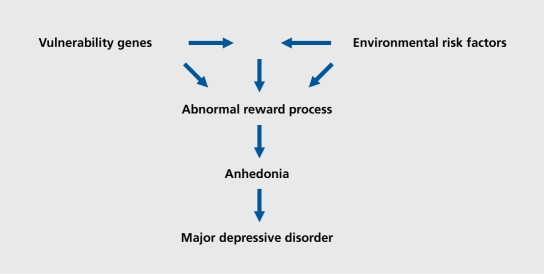
Anhedonia refers to the reduced ability to experience pleasure, and has been studied in different neuropsychiatric disorders. Anhedonia is nevertheless considered as a core feature of major depressive disorder, according to DSM-IV criteria for major depression and the definition of melancholic subtype, and regarding its capacity to predict antidepressant response. Behavioral, electrophysiological, hemodynamic, and interview-based measures and self-reports have been used to assess anhedonia, but the most interesting findings concern neuropharmacological and neuroanatomical studies. The analyses of anhedonic non-clinical subjects, nonanhedonic depressed patients, and depressed patients with various levels ofanhedonia seem to favor the hypothesis that the severity of anhedonia is associated with a deficit of activity of the ventral striatum (including the nucleus accumbens) and an excess of activity of ventral region of the prefrontal cortex (including the ventromedial prefrontal cortex and the orbitofrontal cortex), with a pivotal, but not exclusive, role of dopamine.
Overview
The claims and statistics of this paper haven’t been checked yet.
Free: it reads the open-access text and checks the first 5 claims that cite a source we can check. Create a free account to check every claim.
Integrity signals
Registry
Cites
Statistics
Figures
Verification
Claims the paper makes
The claims and statistics of this paper haven’t been checked yet.
Free: it reads the open-access text and checks the first 5 claims that cite a source we can check. Create a free account to check every claim.
Claims other papers make about this one
Each is checked against this paper’s own text: does it say what the citing paper says it does?
The source backs part of the claim, not all of it — or backs it for a different population, condition or comparison.
In the citing paper
“As a continuous measure, social anhedonia is associated with depressive symptom severity (70–72) and poor treatment response (68, 73).”
From A transdiagnostic perspective on social anhedonia (2019) · cites this paper as [73]
Experimental — accuracy not yet measuredIn the citing paper
“social anhedonia is believed to predict non-response to antidepressants (Gorwood, 2008) and psychotherapy (Hasler et al., 2004a(Hasler et al., , 2004b)).”
From Social functioning in major depressive disorder (2016) · cites this paper as Gorwood, 2008
In the citing paper
“anhedonia is one of the two core symptoms required for the diagnosis [2–4].”
From Chronic unpredictable stress induces depression-related behaviors by suppressing AgRP neuron activity (2021) · cites this paper as [2]
In the citing paper
“Along with depressed mood, anhedonia is one of the two main diagnostic criteria for major depression [2].”
From Chronic unpredictable stress induces depression-related behaviors by suppressing AgRP neuron activity (2021) · cites this paper as [2]
Self-check
Percentages, sums and reported differences re-computed from the paper’s own numbers.
The self-check needs the paper’s full text.
Citations
Cites
Predictive reward signal of dopamine neurons
Schultz, W. (1998) · Journal of Neurophysiology · doi:10.1152/jn.1998.80.1.1 · Cited by 4,564
Meeting of minds: the medial frontal cortex and social cognition
Amodio, D. M., & Frith, C. D. (2006) · Nature Reviews Neuroscience · doi:10.1038/nrn1884 · Cited by 3,782 · cited 1×
“The literature supports the idea that the VMPFC not only monitors the rewarding value of stimuli/responses, but also represents one’s upcoming emotional states/reactions.(90) An alternative explanation for an overactive VMPFC in trait anhedonia could be that this region inhibits emotional processing performed by other…”
Functional neuroanatomy of emotion: A meta-analysis of emotion activation studies in PET and fMRI
Phan, K. L., Wager, T., Taylor, S. F., & Liberzon, I. (2002) · NeuroImage · doi:10.1006/nimg.2002.1087 · Cited by 3,502
Drug Addiction, Dysregulation of Reward, and Allostasis
Koob, G. (2001) · Neuropsychopharmacology · doi:10.1016/s0893-133x(00)00195-0 · Cited by 2,953
Blood, A. J., & Zatorre, R. J. (2001) · Proceedings of the National Academy of Sciences · doi:10.1073/pnas.191355898 · Cited by 2,814
From motivation to action: Functional interface between the limbic system and the motor system
MOGENSON, G., JONES, D., & YIM, C. (1980) · Progress in Neurobiology · doi:10.1016/0301-0082(80)90018-0 · Cited by 2,331
The human orbitofrontal cortex: linking reward to hedonic experience
Kringelbach, M. L. (2005) · Nature Reviews Neuroscience · doi:10.1038/nrn1747 · Cited by 2,180 · cited 1×
“The orbitofrontal cortex is a nexus for sensory integration, the modulation of autonomic reactions, and anticipation in learning, prediction and decision-making for emotional and reward-related behaviours.(50) Neuroimaging studies have found that the reward value,(51) and the expected reward value,(52) and even the su…”
Neurobiology of emotion perception I: the neural basis of normal emotion perception
Phillips, M. L., Drevets, W. C., Rauch, S. L., & Lane, R. (2003) · Biological Psychiatry · doi:10.1016/s0006-3223(03)00168-9 · Cited by 2,173
Negative v Positive Schizophrenia: Definition and Validation
Andreasen, N. C. (1982) · Archives of General Psychiatry · doi:10.1001/archpsyc.1982.04290070025006 · Cited by 2,012
Abstract reward and punishment representations in the human orbitofrontal cortex
O'Doherty, J., Kringelbach, M. L., Rolls, E. T., Hornak, J., & Andrews, C. (2001) · Nature Neuroscience · doi:10.1038/82959 · Cited by 2,003
Research works printed but not linked: 8
- 2. Myerson A. Anhedonia.. Am J Psychiatry. 1923;2:87–103.
- 6. Klein D. Depression and anhedonia. In: Clark C, Fawcett J, eds. Anhedonia and Affect Deficit States. New York, NY: PMA Publishing; 1984
- 14. American Psychiatric Association. Diagnostic and Statistical Manual of Mental Disorders. 4th ed. Washington, DC: American Psychiatric Association; 1994
- 26. Chapman LJ., Chapman JP. The Revised Physical Anhedonia Scale. Madison, Wl: University of Wisconsin; 1982
- 41. Knutson B., Fong GW., Adams CM., Varner JL., Hommer D. Dissociation of reward anticipation and outcome with event-related fMRI. Neuroreport. 2001;12:3683–3687. doi: 10.1097/00001756-200112040-00016. · DOI · Paper page
- 62. O'Doherty J., Kringelbach ML., Rolls ET., Hornak J., Andrews C. Abstract reward and punishment representations in the human orbitofrontal cortex. Nat Neurosci. 2001;4:95–102. doi: 10.1038/82959. · DOI · Paper page
- 65. Lane RD., Reiman EM., Ahern GL., Schwartz GE., Davidson RJ. Neuroanatomical correlates of happiness sadness and disgust. Am J Psychiatry. 1997;154:926–933. doi: 10.1176/ajp.154.7.926. · DOI · Paper page
- 99. Schlaepfer TE., Cohen MX., Frick C., et al. Deep brain stimulation to reward circuitry alleviates anhedonia in refractory major depression. Neuropsychopharmacoiogy. 2008;33:368–377. doi: 10.1038/sj.npp.1301408. · DOI · Paper page
Cited by
Correll, C. U., & Schooler, N. R. (2020) · Neuropsychiatric Disease and Treatment · doi:10.2147/ndt.s225643 · Cited by 911
Bewernick, B. H., Hurlemann, R., Matusch, A., Kayser, S., Grubert, C., Hadrysiewicz, B., Axmacher, N., Lemke, M., Cooper-Mahkorn, D., Cohen, M. X., et al. (2010) · Biological Psychiatry · doi:10.1016/j.biopsych.2009.09.013 · Cited by 865
Social functioning in major depressive disorder
Kupferberg, A., Bicks, L., & Hasler, G. (2016) · Neuroscience & Biobehavioral Reviews · doi:10.1016/j.neubiorev.2016.07.002 · Cited by 663
“, 2009), social anhedonia is believed to predict non-response to antidepressants (Gorwood, 2008) and psychotherapy (Hasler et al.”
Prefrontal cortical regulation of brainwide circuit dynamics and reward-related behavior
Ferenczi, E. A., Zalocusky, K. A., Liston, C., Grosenick, L., Warden, M. R., Amatya, D., Katovich, K., Mehta, H., Patenaude, B., Ramakrishnan, C., et al. (2016) · Science · doi:10.1126/science.aac9698 · Cited by 535
Towards a functional neuroanatomy of pleasure and happiness
Kringelbach, M. L., & Berridge, K. C. (2009) · Trends in Cognitive Sciences · doi:10.1016/j.tics.2009.08.006 · Cited by 522
Downar, J., Geraci, J., Salomons, T. V., Dunlop, K., Wheeler, S., McAndrews, M. P., Bakker, N., Blumberger, D. M., Daskalakis, Z. J., Kennedy, S. H., et al. (2014) · Biological Psychiatry · doi:10.1016/j.biopsych.2013.10.026 · Cited by 337
Fettes, P., Schulze, L., & Downar, J. (2017) · Frontiers in Systems Neuroscience · doi:10.3389/fnsys.2017.00025 · Cited by 299
Rømer Thomsen, K., Whybrow, P. C., & Kringelbach, M. L. (2015) · Frontiers in Behavioral Neuroscience · doi:10.3389/fnbeh.2015.00049 · Cited by 229
Neural correlates of change in major depressive disorder anhedonia following open-label ketamine
Lally, N., Nugent, A. C., Luckenbaugh, D. A., Niciu, M. J., Roiser, J. P., & Zarate, C. A. (2015) · Journal of Psychopharmacology · doi:10.1177/0269881114568041 · Cited by 224
Kupferberg, A., & Hasler, G. (2023) · Journal of Affective Disorders Reports · doi:10.1016/j.jadr.2023.100631 · Cited by 170
A transdiagnostic perspective on social anhedonia
Barkus, E., & Badcock, J. C. (2019) · Frontiers in Psychiatry · doi:10.3389/fpsyt.2019.00216 · Cited by 165
Trøstheim, M., Eikemo, M., Meir, R., Hansen, I., Paul, E., Kroll, S. L., Garland, E. L., & Leknes, S. (2020) · JAMA Network Open · doi:10.1001/jamanetworkopen.2020.13233 · Cited by 160
Anhedonia in depression and schizophrenia: A transdiagnostic challenge
Lambert, C., Da Silva, S., Ceniti, A. K., Rizvi, S. J., Foussias, G., & Kennedy, S. H. (2018) · CNS Neuroscience & Therapeutics · doi:10.1111/cns.12854 · Cited by 155
Novelty-seeking behavior predicts vulnerability in a rodent model of depression
Stedenfeld, K. A., Clinton, S. M., Kerman, I. A., Akil, H., Watson, S. J., & Sved, A. F. (2011) · Physiology & Behavior · doi:10.1016/j.physbeh.2011.02.001 · Cited by 153
Bechtholt-Gompf, A. J., Walther, H. V., Adams, M. A., Carlezon, W. A., Öngür, D., & Cohen, B. M. (2010) · Neuropsychopharmacology · doi:10.1038/npp.2010.74 · Cited by 152
Der-Avakian, A., Mazei-Robison, M. S., Kesby, J. P., Nestler, E. J., & Markou, A. (2014) · Biological Psychiatry · doi:10.1016/j.biopsych.2014.01.013 · Cited by 147
Pleasantness of touch in human glabrous and hairy skin: Order effects on affective ratings
Löken, L. S., Evert, M., & Wessberg, J. (2011) · Brain Research · doi:10.1016/j.brainres.2011.08.011 · Cited by 159
Dysfunctional hippocampal activity affects emotion and cognition in mood disorders
Femenía, T., Gómez-Galán, M., Lindskog, M., & Magara, S. (2012) · Brain Research · doi:10.1016/j.brainres.2012.03.053 · Cited by 143
Davidson, K. W., Burg, M. M., Kronish, I. M., Shimbo, D., Dettenborn, L., Mehran, R., Vorchheimer, D., Clemow, L., Schwartz, J. E., & Rieckmann, N. (2010) · Archives of General Psychiatry · doi:10.1001/archgenpsychiatry.2010.36 · Cited by 141
Deep brain stimulation for treatment-resistant depression: Efficacy, safety and mechanisms of action
Anderson, R. J., Frye, M. A., Abulseoud, O. A., Lee, K. H., McGillivray, J. A., Berk, M., & Tye, S. J. (2012) · Neuroscience & Biobehavioral Reviews · doi:10.1016/j.neubiorev.2012.06.001 · Cited by 135
Kitaichi, Y., Inoue, T., Nakagawa, S., Boku, S., Kakuta, A., Izumi, T., & Koyama, T. (2010) · European Journal of Pharmacology · doi:10.1016/j.ejphar.2010.08.026 · Cited by 145
Corral-Frías, N. S., Nikolova, Y. S., Michalski, L. J., Baranger, D. A. A., Hariri, A. R., & Bogdan, R. (2015) · Psychological Medicine · doi:10.1017/s0033291715000525 · Cited by 132
Sheth, C., McGlade, E., & Yurgelun-Todd, D. (2017) · Chronic Stress · doi:10.1177/2470547017715645 · Cited by 131
Bessa, J. M., Morais, M., Marques, F., Pinto, L., Palha, J. A., Almeida, O. F. X., & Sousa, N. (2013) · Translational Psychiatry · doi:10.1038/tp.2013.39 · Cited by 130
“One of the core symptoms of major depressive disorder is anhedonia (diminished interest or pleasure).(1) This suggests that dysfunction of brain reward pathways contributes to the pathophysiology of the disease.”
Anhedonia revisited: Is there a role for dopamine-targeting drugs for depression?
Argyropoulos, S. V., & Nutt, D. J. (2013) · Journal of Psychopharmacology · doi:10.1177/0269881113494104 · Cited by 126
Mapping inflammation onto mood: inflammatory mediators of anhedonia
Swardfager, W., Rosenblat, J. D., Benlamri, M., & McIntyre, R. S. (2016) · Neuroscience & Biobehavioral Reviews · doi:10.1016/j.neubiorev.2016.02.017 · Cited by 125
Ortega, M. A., Alvarez-Mon, M. A., García-Montero, C., Fraile-Martinez, O., Guijarro, L. G., Lahera, G., Monserrat, J., Valls, P., Mora, F., Rodríguez-Jiménez, R., et al. (2022) · Metabolites · doi:10.3390/metabo12010050 · Cited by 123
Clepce, M., Gossler, A., Reich, K., Kornhuber, J., & Thuerauf, N. (2010) · Neuroscience Letters · doi:10.1016/j.neulet.2010.01.027 · Cited by 134
Social vs. environmental stress models of depression from a behavioural and neurochemical approach
Vénzala, E., Garcia‐García, Á. L., Elizalde, N., & Tordera, R. M. (2012) · European Neuropsychopharmacology · doi:10.1016/j.euroneuro.2012.05.010 · Cited by 133
Lataster, J., Collip, D., Ceccarini, J., Haas, D., Booij, L., van Os, J., Pruessner, J., Van Laere, K., & Myin-Germeys, I. (2011) · NeuroImage · doi:10.1016/j.neuroimage.2011.07.030 · Cited by 109
Cortical thickness predicts the first onset of major depression in adolescence
Foland‐Ross, L. C., Sacchet, M. D., Prasad, G., Gilbert, B., Thompson, P. M., & Gotlib, I. H. (2015) · International Journal of Developmental Neuroscience · doi:10.1016/j.ijdevneu.2015.07.007 · Cited by 109
Must, A., Horvath, S., Nemeth, V. L., & Janka, Z. (2013) · Frontiers in Psychology · doi:10.3389/fpsyg.2013.00732 · Cited by 108
Fang, X., Jiang, S., Wang, J., Bai, Y., Kim, C. S., Blake, D., Weintraub, N. L., Lei, Y., & Lu, X.-Y. (2021) · Molecular Psychiatry · doi:10.1038/s41380-020-01004-x · Cited by 95
Brain Illness and Creativity: Mechanisms and Treatment Risks
Flaherty, A. W. (2011) · The Canadian Journal of Psychiatry · doi:10.1177/070674371105600303 · Cited by 94
Toenders, Y. J., van Velzen, L. S., Heideman, I. Z., Harrison, B. J., Davey, C. G., & Schmaal, L. (2019) · Developmental Cognitive Neuroscience · doi:10.1016/j.dcn.2019.100700 · Cited by 102
Zisner, A., & Beauchaine, T. P. (2016) · Development and Psychopathology · doi:10.1017/s0954579416000754 · Cited by 92
Associations between anhedonia and marijuana use escalation across mid‐adolescence
Leventhal, A. M., Cho, J., Stone, M. D., Barrington‐Trimis, J. L., Chou, C., Sussman, S. Y., Riggs, N. R., Unger, J. B., Audrain‐McGovern, J., & Strong, D. R. (2017) · Addiction · doi:10.1111/add.13912 · Cited by 92
Handling method alters the hedonic value of reward in laboratory mice
Clarkson, J. M., Dwyer, D. M., Flecknell, P. A., Leach, M. C., & Rowe, C. (2018) · Scientific Reports · doi:10.1038/s41598-018-20716-3 · Cited by 91
Neural responses to monetary incentives among self-injuring adolescent girls
Sauder, C. L., Derbidge, C. M., & Beauchaine, T. P. (2016) · Development and Psychopathology · doi:10.1017/s0954579415000449 · Cited by 89
Role of Orexin in the Pathophysiology of Depression: Potential for Pharmacological Intervention
Nollet, M., & Leman, S. (2013) · CNS Drugs · doi:10.1007/s40263-013-0064-z · Cited by 97
Schmuckermair, C., Gaburro, S., Sah, A., Landgraf, R., Sartori, S. B., & Singewald, N. (2013) · Neuropsychopharmacology · doi:10.1038/npp.2013.21 · Cited by 84
Ward, J., Lyall, L. M., Bethlehem, R. A. I., Ferguson, A., Strawbridge, R. J., Lyall, D. M., Cullen, B., Graham, N., Johnston, K. J. A., Bailey, M. E. S., et al. (2019) · Translational Psychiatry · doi:10.1038/s41398-019-0635-y · Cited by 83
Katzman, M., & Sternat, T. (2016) · Neuropsychiatric Disease and Treatment · doi:10.2147/ndt.s111818 · Cited by 83
“Anhedonia, defined as the state of reduced ability to experience feelings of pleasure, is one of the hallmarks of depression.(3,4) However, the term anhedonia is insufficient Correspondence: Martin A Katzman START Clinic for Mood and Anxiety Disorders, 32 Park Road, Toronto, ON M4w 2N4, Canada Tel +1 416 598 9344 Fax…”
Jahng, J. W., Ryu, V., Yoo, S. B., Noh, S. J., Kim, J. Y., & Lee, J. (2010) · Neuroscience · doi:10.1016/j.neuroscience.2010.08.063 · Cited by 94
Pochwat, B., Szewczyk, B., Sowa-Kucma, M., Siwek, A., Doboszewska, U., Piekoszewski, W., Gruca, P., Papp, M., & Nowak, G. (2014) · The International Journal of Neuropsychopharmacology · doi:10.1017/s1461145713001089 · Cited by 82
Réus, G. Z., Carlessi, A. S., Titus, S. E., Abelaira, H. M., Ignácio, Z. M., da Luz, J. R., Matias, B. I., Bruchchen, L., Florentino, D., Vieira, A., et al. (2015) · Developmental Neurobiology · doi:10.1002/dneu.22283 · Cited by 81
Liu, R., Wang, Y., Chen, X., Zhang, Z., Xiao, L., & Zhou, Y. (2021) · NeuroImage Clinical · doi:10.1016/j.nicl.2021.102599 · Cited by 93
Fuel not fun: Reinterpreting attenuated brain responses to reward in obesity
Kroemer, N. B., & Small, D. M. (2016) · Physiology & Behavior · doi:10.1016/j.physbeh.2016.04.020 · Cited by 73
Amiri, S., Amini-Khoei, H., Mohammadi‐Asl, A., Alijanpour, S., Haj‐Mirzaian, A., Rahimi-Balaei, M., Razmi, A., Olson, C. O., Rastegar, M., Mehdizadeh, M., et al. (2016) · Physiology & Behavior · doi:10.1016/j.physbeh.2016.04.052 · Cited by 78
Reward systems and cognitions in Major Depressive Disorder
Cléry-Melin, M.-L., Jollant, F., & Gorwood, P. A. P. M. (2018) · CNS Spectrums · doi:10.1017/s1092852918001335 · Cited by 83
Self-citationAn animal model of eating disorders associated with stressful experience in early life
Jahng, J. W. (2010) · Hormones and Behavior · doi:10.1016/j.yhbeh.2010.11.010 · Cited by 93
Orphan G Protein Coupled Receptors in Affective Disorders
Watkins, L. R., & Orlandi, C. (2020) · Genes · doi:10.3390/genes11060694 · Cited by 75
Ventral pallidal modulation of aversion processing
Wulff, A. B., Tooley, J. R., Marconi, L. J., & Creed, M. C. (2018) · Brain Research · doi:10.1016/j.brainres.2018.10.010 · Cited by 69
Arcego, D. M., Toniazzo, A. P., Krolow, R., Lampert, C., Berlitz, C., dos Santos Garcia, E., do Couto Nicola, F., Hoppe, J. B., Gaelzer, M. M., Klein, C. P., et al. (2018) · Molecular Neurobiology · doi:10.1007/s12035-017-0538-y · Cited by 66
COMTVal158Met genotype is associated with reward learning: a replication study and meta‐analysis
Corral-Frías, N. S., Pizzagalli, D. A., Carré, J. M., Michalski, L. J., Nikolova, Y. S., Perlis, R. H., Fagerness, J. A., Lee, M. R., Drabant, E. M., Lancaster, T. M., et al. (2016) · Genes Brain & Behavior · doi:10.1111/gbb.12296 · Cited by 71
Seo, D.-O., Funderburk, S. C., Bhatti, D. L., Motard, L. E., Newbold, D., Girven, K. S., McCall, J. G., Krashes, M., Sparta, D. R., & Bruchas, M. R. (2016) · The Journal of Neuroscience · doi:10.1523/jneurosci.1164-16.2016 · Cited by 64
Wen, J., Chen, C. H., Stock, A. D., Doerner, J., Gulinello, M. E., & Putterman, C. (2015) · Brain Behavior and Immunity · doi:10.1016/j.bbi.2015.12.017 · Cited by 67
Disentangling fatigue from anhedonia: a scoping review
Billones, R. R., Kumar, S., & Saligan, L. N. (2020) · Translational Psychiatry · doi:10.1038/s41398-020-00960-w · Cited by 60
Microglial responses to peripheral type 1 interferon
Aw, E., Zhang, Y., & Carroll, M. (2020) · Journal of Neuroinflammation · doi:10.1186/s12974-020-02003-z · Cited by 62
The Application of Vagus Nerve Stimulation and Deep Brain Stimulation in Depression
Mohr, P., Rodriguez, M., Slavíčková, A., & Hanka, J. (2011) · Neuropsychobiology · doi:10.1159/000325225 · Cited by 62
Stress triggers anhedonia in rats bred for learned helplessness
Enkel, T., Spanagel, R., Vollmayr, B., & Schneider, M. (2010) · Behavioural Brain Research · doi:10.1016/j.bbr.2010.01.042 · Cited by 65
Sing the mind electric – principles of deep brain stimulation
Kringelbach, M. L., Green, A. L., Owen, S. L. F., Schweder, P. M., & Aziz, T. Z. (2010) · European Journal of Neuroscience · doi:10.1111/j.1460-9568.2010.07419.x · Cited by 59
New Frontiers in Animal Research of Psychiatric Illness
Kaffman, A., & Krystal, J. J. (2012) · Methods in Molecular Biology · doi:10.1007/978-1-61779-458-2_1 · Cited by 59
“Don't [ruminate], be happy”: A cognitive perspective linking depression and anhedonia
Rutherford, A. V., McDougle, S. D., & Joormann, J. (2023) · Clinical Psychology Review · doi:10.1016/j.cpr.2023.102255 · Cited by 75
McIntyre, R. S., Woldeyohannes, H. O., Soczynska, J. K., Maruschak, N. A., Wium-Andersen, I. K., Vinberg, M., Cha, D. S., Lee, Y., Xiao, H. X., Gallaugher, L. A., et al. (2016) · CNS Spectrums · doi:10.1017/s1092852915000747 · Cited by 56
Gonçalves, A. E., Bürger, C., Amoah, S. K. S., Tolardo, R., Biavatti, M. W., & de Souza, M. M. (2011) · European Journal of Pharmacology · doi:10.1016/j.ejphar.2011.11.009 · Cited by 55
Nogo, D., Jasrai, A. K., Kim, H., Nasri, F., Ceban, F., Lui, L. M. W., Rosenblat, J. D., Vinberg, M., Ho, R., & McIntyre, R. S. (2022) · Psychopharmacology · doi:10.1007/s00213-022-06105-9 · Cited by 54
Gyles, T. M., Nestler, E. J., & Parise, E. M. (2023) · Neuropsychopharmacology · doi:10.1038/s41386-023-01625-0 · Cited by 57
Ritsner, M. S., Arbitman, M., & Lisker, A. (2011) · Journal of Nervous & Mental Disease · doi:10.1097/nmd.0b013e3182349ce6 · Cited by 51
Song, N., Liu, Z., Gao, Y., Lu, S., Yang, S., & Yuan, C. (2024) · Molecular Psychiatry · doi:10.1038/s41380-024-02476-x · Cited by 56
Drug withdrawal-induced depression: Serotonergic and plasticity changes in animal models
Renoir, T., Pang, T. Y., & Lanfumey, L. (2011) · Neuroscience & Biobehavioral Reviews · doi:10.1016/j.neubiorev.2011.10.003 · Cited by 57
Subramaniapillai, M., Mansur, R. B., Zuckerman, H., Park, C., Lee, Y., Iacobucci, M., Cao, B., Ho, R., Lin, K., Phan, L., et al. (2019) · Comprehensive Psychiatry · doi:10.1016/j.comppsych.2019.07.006 · Cited by 49
Symptom Descriptions in Psychopathology: How Well Are They Working for Us?
Wilshire, C. E., Ward, T. J., & Clack, S. (2021) · Clinical Psychological Science · doi:10.1177/2167702620969215 · Cited by 62
Jiang, B., Wang, W., Wang, F., Hu, Z., Xiao, J., Yang, S., Zhang, J., Peng, X., Wang, J., & Chen, J. (2012) · Biological Psychiatry · doi:10.1016/j.biopsych.2012.10.031 · Cited by 48
Li, Y., Mou, X., Jiang, W., Yang, Z., Shen, X., Jin, Z., Dai, Z., Liu, Y., Mao, S., Zhang, J., et al. (2015) · Annals of General Psychiatry · doi:10.1186/s12991-015-0061-3 · Cited by 49
Renoir, T., Pang, T. Y., Mo, C., Chan, G., Chevarin, C., Lanfumey, L., & Hannan, A. J. (2012) · The Journal of Physiology · doi:10.1113/jphysiol.2012.239798 · Cited by 53
Therapeutic potential of ketamine for alcohol use disorder
Worrell, S. D., & Gould, T. J. (2021) · Neuroscience & Biobehavioral Reviews · doi:10.1016/j.neubiorev.2021.05.006 · Cited by 52
Binfaré, R. W., Mantovani, M., Budni, J., Santos, A. R. S., & Rodrigues, A. L. S. (2010) · European Journal of Pharmacology · doi:10.1016/j.ejphar.2010.04.011 · Cited by 53
Unpacking Major Depressive Disorder: From Classification to Treatment Selection
Kennedy, S. H., & Ceniti, A. K. (2017) · The Canadian Journal of Psychiatry · doi:10.1177/0706743717748883 · Cited by 53
Mello, B. S. F., Chaves Filho, A. J. M., Custódio, C. S., Cordeiro, R. C., Miyajima, F., de Sousa, F. C. F., Vasconcelos, S. M. M., de Lucena, D. F., & Macedo, D. (2018) · Journal of Neuroimmunology · doi:10.1016/j.jneuroim.2018.04.009 · Cited by 45
Medial Frontal Theta Is Entrained to Rewarded Actions
Amarante, L. M., Caetano, M. S., & Laubach, M. (2017) · Journal of Neuroscience · doi:10.1523/jneurosci.1965-17.2017 · Cited by 48
Role of Quercetin in Depressive-Like Behaviors: Findings from Animal Models
Silvestro, S., Bramanti, P., & Mazzon, E. (2021) · Applied Sciences · doi:10.3390/app11157116 · Cited by 58
Anhedonia in Unipolar Major Depressive Disorder: A Review~!2009-10-26~!2010-02-18~!2010-04-08~!
Dichter, G. S. (2010) · The Open Psychiatry Journal · doi:10.2174/1874354401004010001 · Cited by 44
Presentation and Neurobiology of Anhedonia in Mood Disorders: Commonalities and Distinctions
Rizvi, S. J., Lambert, C. M., & Kennedy, S. H. (2018) · Current Psychiatry Reports · doi:10.1007/s11920-018-0877-z · Cited by 54
From symptoms of psychopathology to the explanation of clinical phenomena
Ward, T. J., & Clack, S. (2019) · New Ideas in Psychology · doi:10.1016/j.newideapsych.2019.01.004 · Cited by 45
Viana, A. F., Maciel, I. S., Dornelles, F. N., Figueiredo, C. P., Siqueira, J. M., Campos, M. M., & Calixto, J. B. (2010) · Journal of Neuroinflammation · doi:10.1186/1742-2094-7-98 · Cited by 43
Investigating dopamine and glucocorticoid systems as underlying mechanisms of anhedonia
Lamontagne, S. J., Melendez, S. I., & Olmstead, M. C. (2018) · Psychopharmacology · doi:10.1007/s00213-018-5007-4 · Cited by 45
Enduring disruption of reward and stress circuit activities by early-life adversity in male rats
Levis, S. C., Birnie, M. T., Bolton, J. L., Perrone, C. R., Montesinos, J. S., Baram, T. Z., & Mahler, S. V. (2022) · Translational Psychiatry · doi:10.1038/s41398-022-01988-w · Cited by 49
Riva‐Posse, P., Holtzheimer, P. E., Garlow, S. J., & Mayberg, H. S. (2012) · World Neurosurgery · doi:10.1016/j.wneu.2012.11.074 · Cited by 46
Gaspar, R., Soares‐Cunha, C., Domingues, A. V., Coimbra, B., Baptista, F. I., Pinto, L., Ambrósio, A. F., Rodrigues, A. J., & Gomes, C. A. (2021) · Neurobiology of Stress · doi:10.1016/j.ynstr.2021.100302 · Cited by 42
Lataster, J., Collip, D., Ceccarini, J., Hernaus, D., Haas, D., Booij, L., van Os, J., Pruessner, J. C., Laere, K. V., & Myin‐Germeys, I. (2013) · Schizophrenia Bulletin · doi:10.1093/schbul/sbs187 · Cited by 43
Neurochemicals, Behaviours and Psychiatric Perspectives of Neurological Diseases
Choudhury, A., Sahu, T., Ramanujam, P. L., Banerjee, A. K., Chakraborty, I., Arun Kumar, R., & Arora, N. (2018) · Neuropsychiatry · doi:10.4172/neuropsychiatry.1000361 · Cited by 47
Su, M., Li, E., Tang, C., Zhao, Y., Liu, R., & Gao, K. (2019) · Molecular Medicine · doi:10.1186/s10020-019-0119-9 · Cited by 38
Affective Biases in Humans and Animals
Robinson, E. S. J., & Roiser, J. P. (2015) · Current Topics in Behavioral Neurosciences · doi:10.1007/7854_2015_5011 · Cited by 37
Zhang, B., Li, S., Zhuo, C., Li, M., Safron, A., Genz, A., Qin, W., Yu, C., & Walter, M. (2016) · Journal of Affective Disorders · doi:10.1016/j.jad.2016.08.042 · Cited by 44
Bregman, T., Reznikov, R., Diwan, M., Raymond, R., Butson, C. R., Nóbrega, J. N., & Hamani, C. (2015) · Brain stimulation · doi:10.1016/j.brs.2015.02.007 · Cited by 45
Anhedonia is associated with reduced incentive cue related activation in the basal ganglia
Chung, Y. S., & Barch, D. M. (2015) · Cognitive Affective & Behavioral Neuroscience · doi:10.3758/s13415-015-0366-3 · Cited by 38
Anhedonia in Unipolar Major Depressive Disorder: A Review
Dichter, G. S. (2010) · The Open Psychiatry Journal · Cited by 36
Han, S., Cui, Q., Wang, X., Chen, Y., Li, D., Li, L., Guo, X., Fan, Y., Guo, J., Sheng, W., et al. (2020) · Progress in Neuro-Psychopharmacology and Biological Psychiatry · doi:10.1016/j.pnpbp.2020.109865 · Cited by 34
Edaravone abrogates LPS-induced behavioral anomalies, neuroinflammation and PARP-1
Sriram, C. S., Jangra, A., Gurjar, S. S., Mohan, P., & Bezbaruah, B. K. (2015) · Physiology & Behavior · doi:10.1016/j.physbeh.2015.10.029 · Cited by 34
Metadata
- Authors
- Gorwood, P.
- Affiliations
- Inserm (FR)
- Corresponding author
- Gorwood, Philip
- ORCID
- Gorwood, Philip
- Venue
- Dialogues in Clinical Neuroscience
- Publisher
- Informa UK Limited
- Published
- 2008-09-30
- Volume
- 10
- Issue
- 3
- Pages
- 291-299
- ISSN
- 1294-8322 (ISSN-L)
- 1958-5969
- PMC
- PMC3181880
- OpenAlex
- W2118336207
- Cited by
- 285
- References
- 96
- Citations by year
- 2026: 10 · 2025: 30 · 2024: 21 · 2023: 14 · 2022: 21 · 2021: 18 · 2020: 22 · 2019: 17 · 2018: 15 · 2017: 14 · 2016: 14 · 2015: 18 · 2014: 13 · 2013: 12 · 2012: 16
- FWCI
- 4.33
- Type
- journal article
- Language
- en
- Open access
- diamond
- doi.org
- Licence
- Locations
- Dialogues in Clinical Neuroscience (publishedVersion, cc-by-nc-nd)
- Europe PMC (PubMed Central) (publishedVersion, cc-by-nc-nd)
- PubMed Central (publishedVersion, cc-by-nc-nd)
- PubMed (publishedVersion)
- Topics
- Life Sciences › Neuroscience › Cellular and Molecular Neuroscience › Neurotransmitter Receptor Influence on Behavior
- Health Sciences › Medicine › Pharmacology (medical) › Treatment of Major Depression
- Life Sciences › Neuroscience › Cognitive Neuroscience › Neural and Behavioral Psychology Studies
- Keywords
- anhedonia, major depressive disorder, endogenous depression, ventral striatum, nucleus accumbens, ventromedial prefrontal cortex, orbitofrontal cortex, dopamine, neurobiological mechanisms, antidepressant response
- MeSH terms
- Affective Symptoms, Mental Disorders, Brain, Humans
About these checks
Registry, retraction, Cites and statistics results are computed, not judged, with one exception: a printed reference that no index lists is read once by a model before it counts as a citation error. Claims are extracted by a model and kept only when their quote appears verbatim in the text; each cited source is then checked, with a model’s help, for whether it says what the claim relies on. Those verdicts can be wrong — read the claim’s quote and the cited source before relying on one.
Statistics and arithmetic are recomputed, not judged.
Confidence bands are shown only for fields calibrated on our annotated test set. None is calibrated yet, so no band is shown.
What counts as a claim ›How we measure confidence ›How we check this ›
Are you an author, or do you see a problem with this page? Request a review
Data sources
Bibliographic data: Semantic Scholar, OpenAlex, Crossref.
Contains information from the Semantic Scholar Academic Graph Datasets, made available under the ODC Attribution License (ODC-BY 1.0).
Semantic Scholar’s data is described in: Kinney, R., et al. (2023). The Semantic Scholar Open Data Platform. arXiv:2301.10140.
