

The DOI matches its Crossref record; 125 of the 125 references it cites were found in a registry or an index.
Cellular and molecular mechanisms in the long-term action of antidepressants.
Open accessAbstract
The hypotheses on the pathophysiology of depression/mood disorders and on antidepressant mechanisms have greatly changed in recent years. The classical monoamine hypothesis was revealed to be simplistic, in that it could not explain the temporal delay in the therapeutic action of antidepressants. Converging lines of evidence have shown that adaptive changes in the several mechanisms of neuroplasticity are likely to be the cellular and molecular correlates of therapeutic effect. In this article, several mechanisms of neuroplasticity are analyzed in relation to the mechanism of antidepressants, ranging from changes in gene expression (including neurotrophic mechanisms), to synaptic transmission and plasticity, and neurogenesis. We propose that the current version of the hypothesis of antidepressant mechanism simply be called the "hypothesis of neuroplasticity". In the final section, we also briefly review the main current novel strategies in the pharmacology of depression and the new putative targets for antidepressants, with particular emphasis on nonmonoaminergic mechanisms.
Overview
The claims and statistics of this paper haven’t been checked yet.
Run the check — free, no account needed. It reads the open-access text and checks the sources it cites.
Integrity signals
Registry
Cites
Statistics
Figures
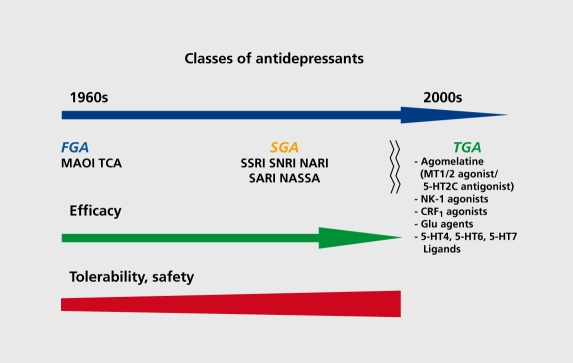
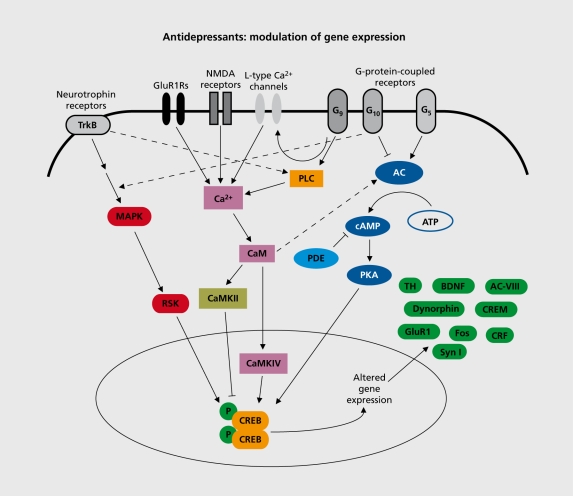
Verification
Claims the paper makes
The claims and statistics of this paper haven’t been checked yet.
Run the check — free, no account needed. It reads the open-access text and checks the sources it cites.
Claims other papers make about this one
Each is checked against this paper’s own text: does it say what the citing paper says it does?
The source backs part of the claim, not all of it — or backs it for a different population, condition or comparison.
In the citing paper
“Tricyclics, MAO inhibitors, and SSRIs all increase synaptic levels of monoamines in the brain within minutes, while it takes weeks before the antidepressant effects become apparent (Figure 1) (4, 9).”
From Psychedelics and Other Psychoplastogens for Treating Mental Illness. (2021) · cites this paper as [4]
Experimental — accuracy not yet measuredThe cited source says what the claim attributes to it.
In the citing paper
“the primary issue with the monoamine hypothesis of depression lies in the temporal discrepancy between the acute effects of traditional antidepressants and their delayed therapeutic responses”
From Psychedelics and Other Psychoplastogens for Treating Mental Illness. (2021) · cites this paper as [4]
Self-check
Percentages, sums and reported differences re-computed from the paper’s own numbers.
The self-check needs the paper’s full text.
Citations
Cites
Influence of life stress on depression: moderation by a polymorphism in the 5-HTT gene
Caspi, A., Sugden, K., Moffitt, T. E., Taylor, A., Craig, I. W., Harrington, H., McClay, J., Mill, J., Martin, J., Braithwaite, A., et al. (2003) · Science · doi:10.1126/science.1083968 · Cited by 8,120
Gage, F. H. (2000) · Science · doi:10.1126/science.287.5457.1433 · Cited by 4,786
Requirement of hippocampal neurogenesis for the behavioral effects of antidepressants
Santarelli, L., Saxe, M., Gross, C., Surget, A., Battaglia, F., Dulawa, S., Weisstaub, N., Lee, J., Duman, R., Arancio, O., et al. (2003) · Science · doi:10.1126/science.1083328 · Cited by 4,321
Antidepressant effects of ketamine in depressed patients
Berman, R. M., Cappiello, A., Anand, A., Oren, D. A., Heninger, G. R., Charney, D. S., & Krystal, J. H. (2000) · Biological Psychiatry · doi:10.1016/s0006-3223(99)00230-9 · Cited by 3,856
A randomized trial of an N-methyl-D-aspartate antagonist in treatment-resistant major depression.
Zarate, C. A., Singh, J. B., Carlson, P. J., Brutsche, N. E., Ameli, R., Luckenbaugh, D. A., Charney, D. S., & Manji, H. K. (2006) · Archives of General Psychiatry · doi:10.1001/archpsyc.63.8.856 · Cited by 3,766
A Neurotrophic Model for Stress-Related Mood Disorders
Duman, R. S., & Monteggia, L. M. (2006) · Biological Psychiatry · doi:10.1016/j.biopsych.2006.02.013 · Cited by 3,375
Subgenual prefrontal cortex abnormalities in mood disorders
Drevets, W. C., Price, J. L., Simpson, J. R., Todd, R. D., Reich, T., Vannier, M., & Raichle, M. E. (1997) · Nature · doi:10.1038/386824a0 · Cited by 2,693
Transcriptional regulation by the phosphorylation-dependent factor CREB
Mayr, B., & Montminy, M. (2001) · Nature Reviews Molecular Cell Biology · doi:10.1038/35085068 · Cited by 2,587
Synaptic Plasticity: Multiple Forms, Functions, and Mechanisms
Citri, A., & Malenka, R. C. (2008) · Neuropsychopharmacology · doi:10.1038/sj.npp.1301559 · Cited by 2,323
Essential role of BDNF in the mesolimbic dopamine pathway in social defeat stress
Berton, O., McClung, C. A., DiLeone, R. J., Krishnan, V., Renthal, W., Russo, S. J., Graham, D., Tsankova, N. M., Bolanos, C. A., Rios, M., et al. (2006) · Science · doi:10.1126/science.1120972 · Cited by 2,129
Research works printed but not linked: 10
- Olesen J., 2006, J Neurol Neurosurg Psychiatry., 77, i1
- Stahl SM., 1998, J Clin Psychiatry., 59, 5
- 10.1016/j.tips.2005.10.005 · DOI
- Ryan B., 2008, Int J Neuropsychopharmacol., 31, 1
- Qi H., 2008, Neuropharmacol.
- Popoli M., 2006, .
- Campbell S., 2004, J Psychiatry Neurosci., 29, 417
- Sahay A., 2007, Neurosci., 10, 1110
- 0lié JP., 2007, int J Neuropsychopharmacol., 10, 661
- Quera Salva MA., 2007, Int J Neuropsychopharmacol., 10, 691
Cited by
Sorted by citations
Items 101–193 of 193
DBA Mice as Models of Sudden Unexpected Death in Epilepsy
Faingold, C. L., Tupal, S., Mhaskar, Y., & Uteshev, V. V. (2010) · CRC Press eBooks · doi:10.1201/b10317-42 · Cited by 13
Involvement of 5-HT1A receptor-mediated histone acetylation in the regulation of depression
Zhu, L.-J., Sun, Y.-Q., Wang, S., Shi, H.-J., & Li, N. (2021) · Neuroreport · doi:10.1097/wnr.0000000000001693 · Cited by 12
Advancing past ketamine: emerging glutamatergic compounds for the treatment of depression
Freudenberg, F., Reif-Leonhard, C., & Reif, A. (2024) · European Archives of Psychiatry and Clinical Neuroscience · doi:10.1007/s00406-024-01875-z · Cited by 14
Review of Herbal Medicines for the Treatment of Depression
Peng, S., Zhou, Y., Meng, L. M., & Wang, Q. (2022) · Natural Product Communications · doi:10.1177/1934578x221139082 · Cited by 14
Towards Novel Potential Molecular Targets for Antidepressant and Antipsychotic Pharmacotherapies
Kositsyn, Y. M., de Abreu, M. S., Kolesnikova, T. O., Lagunin, A. A., Poroikov, V., Harutyunyan, H. S., Yenkoyan, K. B., & Kalueff, A. V. (2023) · International Journal of Molecular Sciences · doi:10.3390/ijms24119482 · Cited by 11
Delayed multifocal recurrent stress-induced cardiomyopathy after antidepressants withdrawal
Marabotti, C., Venturini, E., Marabotti, A., & Pingitore, A. (2014) · Heart & Lung · doi:10.1016/j.hrtlng.2014.03.003 · Cited by 11
Zoladz, P. R., Muñoz, C., & Diamond, D. M. (2010) · Pharmaceuticals · doi:10.3390/ph3103143 · Cited by 11
Peripheral serotonin levels as a predictor of antidepressant treatment response: A systematic review
Holck, A., Movahed, P., Westrin, Å., Wolkowitz, O. M., Lindqvist, D., & Asp, M. (2024) · Progress in Neuro-Psychopharmacology and Biological Psychiatry · doi:10.1016/j.pnpbp.2024.111031 · Cited by 9
Yao, X., Qin, X., Wang, H., Zheng, J., Peng, Z. F., Wang, J., Weber, H. C., Liu, R., Zhang, W., Zeng, J., et al. (2022) · Stress · doi:10.1080/10253890.2022.2155513 · Cited by 10
Castanheira, S., Gomes, C. V., Bicker, J., & Fortuna, A. C. (2025) · Drug Discovery Today · doi:10.1016/j.drudis.2025.104371 · Cited by 10
Alahmad, R., Hinchey, L. M.-E., Shaikh, M., Amirsadri, A., & Javanbakht, A. (2025) · Journal of Psychiatric Research · doi:10.1016/j.jpsychires.2025.01.032 · Cited by 11
Time-dependent activation of MAPK/Erk1/2 and Akt/GSK3 cascades: modulation by agomelatine
Musazzi, L., Seguini, M., Mallei, A., Treccani, G., Pelizzari, M., Tornese, P., Racagni, G., & Tardito, D. (2014) · BMC Neuroscience · doi:10.1186/s12868-014-0119-1 · Cited by 10
Self-citationCamp, A. A., Yun, J., Chambers, S. A., Haeba, M. H., & LeBlanc, G. A. (2020) · Journal of Insect Physiology · doi:10.1016/j.jinsphys.2020.104015 · Cited by 9
Tea and Its Active Ingredients in Preventing and Alleviating Depression: A Comprehensive Review
Xiao, S., Li, Y., Jiang, H., Hou, S., Wang, Y., Wang, D., & Teng, J. (2025) · Foods · doi:10.3390/foods14122054 · Cited by 10
Mode of action of electroconvulsive therapy: an update
Scott, A. I. F. (2011) · Advances in Psychiatric Treatment · doi:10.1192/apt.bp.109.007039 · Cited by 8
Maneenet, J., Chotritthirong, Y., Omar, A. M., Choonong, R., Daodee, S., Monthakantirat, O., Khamphukdee, C., Pitiporn, S., Awale, S., Matsumoto, K., et al. (2024) · Nutrients · doi:10.3390/nu17010094 · Cited by 10
Genetic Animal Models of Depression
Canavello, P. R., Egan, R. J., Bergner, C., Hart, P. C., Cachat, J., & Kalueff, A. V. (2009) · Neuromethods · doi:10.1007/978-1-60761-474-6_10 · Cited by 7
Raudkivi, K., O’Leary, A., Leito, I., & Harro, J. (2015) · Pharmacological Reports · doi:10.1016/j.pharep.2015.02.002 · Cited by 7
Nicotine and fluoxetine alter adolescent dopamine-mediated behaviors via 5-HT1A receptor activation
Yuan, M., & Leslie, F. M. (2024) · Frontiers in Psychiatry · doi:10.3389/fpsyt.2024.1380123 · Cited by 6
Miley, E. V., Schaeffler, F., Beck, J. M., Eichner, M., & Jannetts, S. (2021) · Linguistics Vanguard · doi:10.1515/lingvan-2019-0015 · Cited by 6
Scheil, K., Sánchez-Lafuente, C. L., Reive, B. S., Halvorson, C. S., Floyd, J., Reid, H. M. O., Johnston, J. N., Kalynchuk, L. E., & Caruncho, H. J. (2024) · Progress in Neuro-Psychopharmacology and Biological Psychiatry · doi:10.1016/j.pnpbp.2024.110998 · Cited by 9
Role of glutamate and advantages of combining memantine with a 5HT6 ligand in a model of depression
Abraham, R., Nirogi, R. V. S., & Shinde, A. K. (2014) · Pharmacological Reports · doi:10.1016/j.pharep.2013.10.007 · Cited by 6
Supportive and Palliative Care and Quality of Life in Oncology
Hassan, B. A. R. (2022) · IntechOpen eBooks · doi:10.5772/intechopen.100933 · Cited by 5
Dean, B., & Scarr, E. (2024) · The World Journal of Biological Psychiatry · doi:10.1080/15622975.2024.2312475 · Cited by 5
Shichiri, H., Yamamoto, K., Tokura, M., Ishida, T., Uda, A., Bito, T., Nishigori, C., Nakagawa, T., Hirano, T., Yano, I., et al. (2017) · Biochemical and Biophysical Research Communications · doi:10.1016/j.bbrc.2017.02.107 · Cited by 5
Counselors’ Neuroscience Conceptualizations of Depression
Field, T. A., Beeson, E. T., Luke, C., Ghoston, M. R., & Golubovic, N. (2019) · Journal of Mental Health Counseling · doi:10.17744/mehc.41.3.05 · Cited by 7
A New Paradigm Shift in Antidepressant Therapy: From Dual-action to Multitarget-directed Ligands
Rodríguez-Lavado, J., Alarcón‐Espósito, J., Mallea, M., & Lorente, A. (2022) · Current Medicinal Chemistry · doi:10.2174/0929867329666220317121551 · Cited by 5
Decreased hippocampal neurogenesis and post-stroke depression
Tang, X., Ran, L., & Li, W. (2026) · Frontiers in Psychiatry · doi:10.3389/fpsyt.2026.1761408 · Cited by 5
Lost in translation: toward clinically effective translational research
Tan, V. T. Y., & Ward, R. D. (2025) · Translational Psychiatry · doi:10.1038/s41398-025-03688-7 · Cited by 4
Aydın, İ. H., & El‐Mallakh, R. S. (2024) · Bipolar Disorders · doi:10.1111/bdi.13494 · Cited by 4
A simple platelet biomarker is associated with symptom severity in major depressive disorder
Günay, A., Targum, S. D., Leow, A., Ajilore, O., & Rasenick, M. M. (2025) · Molecular Psychiatry · doi:10.1038/s41380-025-02941-1 · Cited by 4
García‐Rojo, G., Martı́nez, I., Aguayo, F. I., Muñoz-Llanos, M., Ramírez, D., & Fiedler, J. L. (2025) · ACS Pharmacology & Translational Science · doi:10.1021/acsptsci.4c00680 · Cited by 4
Bremer, S., Weitkemper, E., Häberlein, H., & Franken, S. (2024) · Scientific Reports · doi:10.1038/s41598-024-60562-0 · Cited by 3
Peripartum Depression Pharmacotherapies Targeting GABA–Glutamate Neurotransmission
Courtes, A. C., Smitherman, L., Shahani, L., Soares, J. C., Goetzl, L. M., & Machado‐Vieira, R. (2025) · Journal of Clinical Medicine · doi:10.3390/jcm14176177 · Cited by 4
Frycz, B. A., Dutsch-Wicherek, M., Płaza, O., Szulc, A., Bijata, M., Włodarczyk, J., & Dzwonek, J. (2026) · Pharmacological Reports · doi:10.1007/s43440-026-00827-9 · Cited by 2
Modulating Neuroplasticity: Lessons Learned from Antidepressants and Emerging Novel Therapeutics
Yates, C. G., Kruse, J. L., Price, J. B., Robertson, A. A. B., & Tye, S. J. (2021) · Current Treatment Options in Psychiatry · doi:10.1007/s40501-021-00249-9 · Cited by 3
Basic Principles in the Management of Depression in Neurologic Disorders
Mula, M. (2012) · doi:10.1002/9781118348093.ch8 · Cited by 3
S.04.08 Analysis of miRNome expression profiles in hippocampus of rats treated with antidepressants
Pelizzari, M., Tardito, D., Mallei, A., Corna, S., Treccani, G., Bocchio‐Chiavetto, L., Racagni, G., & Popoli, M. (2012) · European Neuropsychopharmacology · doi:10.1016/s0924-977x(12)70129-3 · Cited by 2
Self-citationBeneficial Effects of Flaxseed Oil (n-3 Fatty Acids) on Neurological Disorders
Farooqui, A. A. (2012) · Springer eBooks · doi:10.1007/978-1-4614-3804-5_3 · Cited by 2
Current state and potential of pharmacogenetic studies in the treatment of depression
Ivanets, N. N., Tikhonova, Y. G., Kinkulkina, M. A., & Avdeeva, T. I. (2015) · S S Korsakov Journal of Neurology and Psychiatry · doi:10.17116/jnevro201511531113-121 · Cited by 2
Rang, H. P., Dale, M. M., Ritter, J. M., Flower, R. J., & Henderson, G. (2012) · Elsevier eBooks · doi:10.1016/b978-0-7020-3471-8.00046-9 · Cited by 2
Diniz, C. R. A. F., Rodrigues, M. W., Casarotto, P. C., Pereira, V. S., Crestani, C. C., & Joca, S. R. L. (2016) · bioRxiv (Cold Spring Harbor Laboratory) · doi:10.1101/086983 · Cited by 2
Fournier, C., Buchy, D., Mohr, S., Pähler, A., Jacobsen, B., Norcross, R. D., Pflieger, P., Sewing, S., Greiter‐Wilke, A., Künnecke, B., et al. (2026) · Molecular Psychiatry · doi:10.1038/s41380-026-03465-y · Cited by 1
The Role of Arrestins in the Neuroprotective Effects of Antidepressant Drugs
Avissar, S., Golan, M., Feinshtein, V., Kolatkar, S., Fux, D., & Schreiber, G. (2016) · Springer eBooks · doi:10.1007/978-81-322-2803-5_46 · Cited by 1
Pharmacogenetics of antidepressant drugs: An update
Crisafulli, C., Drago, A., Calabrò, M., Sidoti, A., Serretti, A., & Spina, E. (2014) · Hospital Pharmacology - International Multidisciplinary Journal · doi:10.5937/hpimj1401033c · Cited by 1
Anxiety, Depression, and Delirium in Terminally Ill Cancer Patient
Ugarte, S. V. G., & Calderón, L. E. M. (2023) · IntechOpen eBooks · doi:10.5772/intechopen.107325 · Cited by 1
TAŞKIRAN, A., Canbolat, F., YÜCELLİ, S. N., & Çevreli, B. (2024) · Namık Kemal Tıp Dergisi · doi:10.4274/nkmj.galenos.2024.79553 · Cited by 1
Mental disorder and its treatment as a transformative experience
Villiger, D. (2025) · Phenomenology and the Cognitive Sciences · doi:10.1007/s11097-025-10059-6 · Cited by 1
Badenhorst, N. J. (2014) · Boloka Institutional Repository (North-west University) · Cited by 1
Multimodal MR Prediction Models for Late-Life Depression and Treatment Response
Patel, M. J. (2014) · D-Scholarship@Pitt (University of Pittsburgh)
Modelling depression in animals and the potential antidepressant effect of histaminergic modulation
Magara, S. (2015) · Figshare
Yochiy, A. (2010) · Digital Library of Theses and Dissertations (Universidade de São Paulo) · doi:10.11606/t.47.2010.tde-26072010-143609
Orre, K. (2013) · Lund University Publications (Lund University)
Oriaifo, E., & E., K. I. O. (2012) · AFRICAN JOURNAL OF BIOTECHNOLOGY · doi:10.5897/ajb12.248
Gene Regulation by Drugs Used to Treat Mood Disorders
Deng, X. (2011) · Otago University Research Archive (University of Otago)
Mertikas, G. G. (2010) · Jyväskylä University Digital Archive (University of Jyväskylä)
Ivanets, N. N., Tikhonova, Y. G., Kinkulkina, M. A., & Avdeeva, T. I. (2015)
Molz, S., & Ludka, F. K. (2016) · DRd - Desenvolvimento Regional em debate · doi:10.24302/drd.v6i2.1211
van Houtum, L. A. E. M., & Deijen, J. B. (2016) · International Neuropsychiatric Disease Journal · doi:10.9734/indj/2016/29568
Kruger, R. (2014) · Boloka Institutional Repository (North-west University)
Neurobiological Consequences of Fluoxetine Exposure during Adolescence
Iñiguez, S. D. (2011)
Nichols, I. (2016) · Atlanta University Center Robert W. Woodruff Library (Atlanta University Center Robert W. Woodruff Library)
Giraldi, T. (2017) · Springer eBooks · doi:10.1007/978-3-319-57657-2_9
Fabbri (2018) · Research Publications (Maastricht University) · doi:10.26481/dis.20181114cf
Knudsen, J. K. (2021) · VBN Forskningsportal (Aalborg Universitet) · doi:10.54337/aau455013245
Unipolar Depression And Its Treatment
Stahl, S. M. (2022) · Cambridge University Press eBooks · doi:10.1017/9781009241595.012
Belov, V. (2023) · eDiss (Georg-August-Universität Göttingen) · doi:10.53846/goediss-9834
Antidepressants and ocular health: Addressing dry eye syndrome
Mansoor, A., Mansoor, S., & Khan, A. (2024) · Journal of Shifa Tameer-e-Millat University · doi:10.32593/jstmu/vol7.iss1.249
Conclusions and future directions
Heinrichs, D. W. (2025) · Oxford University Press eBooks · doi:10.1093/9780198960720.003.0011
The POP model of clinical reasoning
Heinrichs, D. W. (2025) · Oxford University Press eBooks · doi:10.1093/9780198960720.003.0007
The role of model construction in developing expertise in psychiatry
Heinrichs, D. W. (2025) · Oxford University Press eBooks · doi:10.1093/9780198960720.003.0009
Changing goals and changing models
Heinrichs, D. W. (2025) · Oxford University Press eBooks · doi:10.1093/9780198960720.003.0004
Shifting and conflicting models
Heinrichs, D. W. (2025) · Oxford University Press eBooks · doi:10.1093/9780198960720.003.0006
Heinrichs, D. W. (2025) · Oxford University Press eBooks · doi:10.1093/9780198960720.002.0002
Heinrichs, D. W. (2025) · Oxford University Press eBooks · doi:10.1093/9780198960720.003.0005
Does evidence-based medicine provide a clinical method?
Heinrichs, D. W. (2025) · Oxford University Press eBooks · doi:10.1093/9780198960720.003.0002
Heinrichs, D. W. (2025) · Oxford University Press eBooks · doi:10.1093/9780198960720.003.0001
The role of models in clinical reasoning
Heinrichs, D. W. (2025) · Oxford University Press eBooks · doi:10.1093/9780198960720.003.0003
Heinrichs, D. W. (2025) · Oxford University Press eBooks · doi:10.1093/9780198960720.002.0006
Heinrichs, D. W. (2025) · Oxford University Press eBooks · doi:10.1093/9780198960720.002.0007
How Psychiatrists Make Decisions
Heinrichs, D. W. (2025) · doi:10.1093/9780198960720.001.0001
Justifying knowledge claims in psychiatric reasoning
Heinrichs, D. W. (2025) · Oxford University Press eBooks · doi:10.1093/9780198960720.003.0010
How we reason and make decisions
Heinrichs, D. W. (2025) · Oxford University Press eBooks · doi:10.1093/9780198960720.003.0008
Heinrichs, D. W. (2025) · Oxford University Press eBooks · doi:10.1093/9780198960720.002.0005
Targum, S. D., Günay, A., Leow, A., Ajilore, O., Rapaport, M. H., & Rasenick, M. M. (2025) · Europe PMC (PubMed Central) · doi:10.3389/fpsyt.2025.1619243
Impact of open channel blockers on the surface dynamics and organization of NMDA receptors
Fernandes, A. (2020) · theses.fr (ABES) · doi:10.70675/d12c14b2z7a80z4668z9c48z8e2c0e41c009 · Cited by 1
Ding, W., MingZe, L., Liu, L., Zhang, L., Li, H., Dong, R., Li, W., Zhang, J., & Wang, L. (2026) · Journal of Functional Foods · doi:10.1016/j.jff.2026.107319
Chapter 1. Basic Principles of Transcranial Magnetic Stimulation
Lanocha, K. I., Bermudes, R. A., & Janicak, P. G. (2024) · American Psychiatric Association Publishing eBooks · doi:10.1176/appi.books.9798894550671.lg01
Dharwadkar, J., Nayak, A. R., Rao, B. S. S., & Srikumar, B. N. (2026) · Annals of Neurosciences · doi:10.1177/09727531261448654
Selective Serotonin Reuptake Inhibitors for Treatment of Mood Disorders
Devi, J., Shilpa, S., & Duggal, S. (2026) · Asian Journal of Research in Chemistry · doi:10.52711/0974-4150.2026.00067
Long-term efficacy of antidepressants: Analyzing brain adaptive modifications
Vidal, R., Pilar-Cuéllar, F., Rodríguez‐Gaztelumendi, A., Pascual-Brazo, J., Rojo, M. L., Castro, E., Díaz, Á., Valdizán, E. M., & Pazos, Á. (2009) · DIGITAL.CSIC (Spanish National Research Council (CSIC))
Metadata
- Authors
- Racagni, G., & Popoli, M.
- Affiliations
- University of Milan (IT)
- Corresponding author
- Popoli, Maurizio
- Venue
- Dialogues in Clinical Neuroscience
- Publisher
- Informa UK Limited
- Published
- 2008-12-31
- Volume
- 10
- Issue
- 4
- Pages
- 385-400
- ISSN
- 1294-8322 (ISSN-L)
- 1958-5969
- PMC
- PMC3181899
- OpenAlex
- W2095618681
- Cited by
- 192
- References
- 125
- Citations by year
- 2026: 6 · 2025: 26 · 2024: 12 · 2023: 5 · 2022: 14 · 2021: 13 · 2020: 7 · 2019: 7 · 2018: 5 · 2017: 10 · 2016: 13 · 2015: 8 · 2014: 16 · 2013: 10 · 2012: 10
- FWCI
- 7.03
- Type
- journal article
- Language
- en
- Open access
- diamond
- doi.org
- Licence
- Locations
- Dialogues in Clinical Neuroscience (publishedVersion, cc-by-nc-nd)
- Europe PMC (PubMed Central) (publishedVersion, cc-by-nc-nd)
- PubMed Central (publishedVersion, cc-by-nc-nd)
- PubMed (publishedVersion)
- Topics
- Health Sciences › Medicine › Pharmacology (medical) › Treatment of Major Depression
- Life Sciences › Neuroscience › Cellular and Molecular Neuroscience › Neuroscience and Neuropharmacology Research
- Life Sciences › Neuroscience › Cellular and Molecular Neuroscience › Neurotransmitter Receptor Influence on Behavior
- Keywords
- antidepressants, depression, mood disorders, neuroplasticity, antidepressant mechanism, monoamine hypothesis, gene expression, neurotrophic factors, synaptic plasticity, synaptic transmission, neurogenesis
- MeSH terms
- Animals, Antidepressive Agents, Depressive Disorder, Humans, Synaptic Transmission, Neuronal Plasticity, Neurons, Biogenic Monoamines, Brain-Derived Neurotrophic Factor, Cell Proliferation
About these checks
Registry, retraction, Cites and statistics results are computed, not judged, with one exception: a printed reference that no index lists is read once by a model before it counts as a citation error. Claims are extracted by a model and kept only when their quote appears verbatim in the text; each cited source is then checked, with a model’s help, for whether it says what the claim relies on. Those verdicts can be wrong — read the claim’s quote and the cited source before relying on one.
Statistics and arithmetic are recomputed, not judged.
Confidence bands are shown only for fields calibrated on our annotated test set. None is calibrated yet, so no band is shown.
What counts as a claim ›How we measure confidence ›How we check this ›
Are you an author, or do you see a problem with this page? Request a review
