

The DOI matches its Crossref record; 125 of the 125 references it cites were found in a registry or an index.
Cellular and molecular mechanisms in the long-term action of antidepressants.
Open accessAbstract
The hypotheses on the pathophysiology of depression/mood disorders and on antidepressant mechanisms have greatly changed in recent years. The classical monoamine hypothesis was revealed to be simplistic, in that it could not explain the temporal delay in the therapeutic action of antidepressants. Converging lines of evidence have shown that adaptive changes in the several mechanisms of neuroplasticity are likely to be the cellular and molecular correlates of therapeutic effect. In this article, several mechanisms of neuroplasticity are analyzed in relation to the mechanism of antidepressants, ranging from changes in gene expression (including neurotrophic mechanisms), to synaptic transmission and plasticity, and neurogenesis. We propose that the current version of the hypothesis of antidepressant mechanism simply be called the "hypothesis of neuroplasticity". In the final section, we also briefly review the main current novel strategies in the pharmacology of depression and the new putative targets for antidepressants, with particular emphasis on nonmonoaminergic mechanisms.
Overview
The claims and statistics of this paper haven’t been checked yet.
Run the check — free, no account needed. It reads the open-access text and checks the sources it cites.
Integrity signals
Registry
Cites
Statistics
Figures
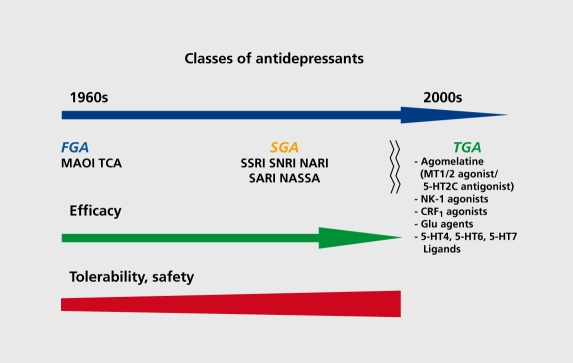
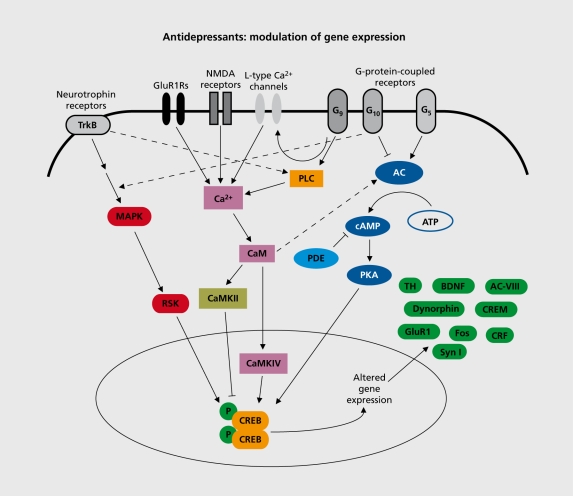
Verification
Claims the paper makes
The claims and statistics of this paper haven’t been checked yet.
Run the check — free, no account needed. It reads the open-access text and checks the sources it cites.
Claims other papers make about this one
Each is checked against this paper’s own text: does it say what the citing paper says it does?
The source backs part of the claim, not all of it — or backs it for a different population, condition or comparison.
In the citing paper
“Tricyclics, MAO inhibitors, and SSRIs all increase synaptic levels of monoamines in the brain within minutes, while it takes weeks before the antidepressant effects become apparent (Figure 1) (4, 9).”
From Psychedelics and Other Psychoplastogens for Treating Mental Illness. (2021) · cites this paper as [4]
Experimental — accuracy not yet measuredThe cited source says what the claim attributes to it.
In the citing paper
“the primary issue with the monoamine hypothesis of depression lies in the temporal discrepancy between the acute effects of traditional antidepressants and their delayed therapeutic responses”
From Psychedelics and Other Psychoplastogens for Treating Mental Illness. (2021) · cites this paper as [4]
Self-check
Percentages, sums and reported differences re-computed from the paper’s own numbers.
The self-check needs the paper’s full text.
Citations
Cites
Influence of life stress on depression: moderation by a polymorphism in the 5-HTT gene
Caspi, A., Sugden, K., Moffitt, T. E., Taylor, A., Craig, I. W., Harrington, H., McClay, J., Mill, J., Martin, J., Braithwaite, A., et al. (2003) · Science · doi:10.1126/science.1083968 · Cited by 8,120
Gage, F. H. (2000) · Science · doi:10.1126/science.287.5457.1433 · Cited by 4,786
Requirement of hippocampal neurogenesis for the behavioral effects of antidepressants
Santarelli, L., Saxe, M., Gross, C., Surget, A., Battaglia, F., Dulawa, S., Weisstaub, N., Lee, J., Duman, R., Arancio, O., et al. (2003) · Science · doi:10.1126/science.1083328 · Cited by 4,321
Antidepressant effects of ketamine in depressed patients
Berman, R. M., Cappiello, A., Anand, A., Oren, D. A., Heninger, G. R., Charney, D. S., & Krystal, J. H. (2000) · Biological Psychiatry · doi:10.1016/s0006-3223(99)00230-9 · Cited by 3,856
A randomized trial of an N-methyl-D-aspartate antagonist in treatment-resistant major depression.
Zarate, C. A., Singh, J. B., Carlson, P. J., Brutsche, N. E., Ameli, R., Luckenbaugh, D. A., Charney, D. S., & Manji, H. K. (2006) · Archives of General Psychiatry · doi:10.1001/archpsyc.63.8.856 · Cited by 3,766
A Neurotrophic Model for Stress-Related Mood Disorders
Duman, R. S., & Monteggia, L. M. (2006) · Biological Psychiatry · doi:10.1016/j.biopsych.2006.02.013 · Cited by 3,375
Subgenual prefrontal cortex abnormalities in mood disorders
Drevets, W. C., Price, J. L., Simpson, J. R., Todd, R. D., Reich, T., Vannier, M., & Raichle, M. E. (1997) · Nature · doi:10.1038/386824a0 · Cited by 2,693
Transcriptional regulation by the phosphorylation-dependent factor CREB
Mayr, B., & Montminy, M. (2001) · Nature Reviews Molecular Cell Biology · doi:10.1038/35085068 · Cited by 2,587
Synaptic Plasticity: Multiple Forms, Functions, and Mechanisms
Citri, A., & Malenka, R. C. (2008) · Neuropsychopharmacology · doi:10.1038/sj.npp.1301559 · Cited by 2,323
Essential role of BDNF in the mesolimbic dopamine pathway in social defeat stress
Berton, O., McClung, C. A., DiLeone, R. J., Krishnan, V., Renthal, W., Russo, S. J., Graham, D., Tsankova, N. M., Bolanos, C. A., Rios, M., et al. (2006) · Science · doi:10.1126/science.1120972 · Cited by 2,129
Research works printed but not linked: 10
- Olesen J., 2006, J Neurol Neurosurg Psychiatry., 77, i1
- Stahl SM., 1998, J Clin Psychiatry., 59, 5
- 10.1016/j.tips.2005.10.005 · DOI
- Ryan B., 2008, Int J Neuropsychopharmacol., 31, 1
- Qi H., 2008, Neuropharmacol.
- Popoli M., 2006, .
- Campbell S., 2004, J Psychiatry Neurosci., 29, 417
- Sahay A., 2007, Neurosci., 10, 1110
- 0lié JP., 2007, int J Neuropsychopharmacol., 10, 661
- Quera Salva MA., 2007, Int J Neuropsychopharmacol., 10, 691
Cited by
Sorted by citations
Towards a glutamate hypothesis of depression
Sanacora, G., Treccani, G., & Popoli, M. (2012) · Neuropharmacology · doi:10.1016/j.neuropharm.2011.07.036 · Cited by 1,036
Self-citationThe Role of BDNF on Neural Plasticity in Depression
Yang, T., Nie, Z., Shu, H., Kuang, Y., Chen, X., Cheng, J., Yu, S., & Liu, H. (2020) · Frontiers in Cellular Neuroscience · doi:10.3389/fncel.2020.00082 · Cited by 435
Neural basis of major depressive disorder: Beyond monoamine hypothesis
Boku, S., Nakagawa, S., Toda, H., & Hishimoto, A. (2018) · Psychiatry and Clinical Neurosciences · doi:10.1111/pcn.12604 · Cited by 402
Epigenetic regulation of RAC1 induces synaptic remodeling in stress disorders and depression
Golden, S. A., Christoffel, D. J., Heshmati, M., Hodes, G. E., Magida, J., Davis, K., Cahill, M. E., Dias, C., Ribeiro, E., Ables, J. L., et al. (2013) · Nature Medicine · doi:10.1038/nm.3090 · Cited by 322
From Serotonin to Neuroplasticity: Evolvement of Theories for Major Depressive Disorder
Liu, B., Liu, J., Wang, M., Zhang, Y., & Li, L. (2017) · Frontiers in Cellular Neuroscience · doi:10.3389/fncel.2017.00305 · Cited by 249
Godfrey, K. E. M., Gardner, A. C., Kwon, S., Chea, W., & Muthukumaraswamy, S. D. (2018) · Journal of Psychiatric Research · doi:10.1016/j.jpsychires.2018.08.015 · Cited by 218
The Role of BDNF in the Neuroimmune Axis Regulation of Mood Disorders
Jin, Y., Sun, L., Yang, W., Cui, R., & Xu, S. B. (2019) · Frontiers in Neurology · doi:10.3389/fneur.2019.00515 · Cited by 205
Psychedelics and Other Psychoplastogens for Treating Mental Illness.
Vargas, M. V., Meyer, R., Avanes, A. A., Rus, M., & Olson, D. E. (2021) · Frontiers in Psychiatry · doi:10.3389/fpsyt.2021.727117 · Cited by 166
MicroRNAs and exosomes in depression: Potential diagnostic biomarkers
Tavakolizadeh, J., Roshanaei, K., Salmaninejad, A., Yari, R., Nahand, J. S., Khoshdel‐Sarkarizi, H., Mousavi, S. M., Salarinia, R., Rahmati, M., Mousavi, S. F., et al. (2017) · Journal of Cellular Biochemistry · doi:10.1002/jcb.26599 · Cited by 162
Ashe, K., Kelso, W. M., Farrand, S., Panetta, J., Fazio, T. N., Jong, G. D., & Walterfang, M. (2019) · Frontiers in Psychiatry · doi:10.3389/fpsyt.2019.00561 · Cited by 165
GABAA receptor-acting neurosteroids: a role in the development and regulation of the stress response
Gunn, B. G., Cunningham, L., Mitchell, S. G., Swinny, J. D., Lambert, J. J., & Belelli, D. (2015) · Frontiers in Neuroendocrinology · doi:10.1016/j.yfrne.2014.06.001 · Cited by 149
Blondeau, N., Nguemeni, C., Debruyne, D. N., Piens, M., Wu, X., Pan, H., Hu, X., Gandin, C., Lipsky, R. H., Plumier, J.-C., et al. (2009) · Neuropsychopharmacology · doi:10.1038/npp.2009.84 · Cited by 154
Sales, A. J., Biojone, C., Terceti, M. S., Guimarães, F. S., Gomes, M. V., & Joca, S. R. (2011) · British Journal of Pharmacology · doi:10.1111/j.1476-5381.2011.01489.x · Cited by 147
Sigma receptors: Potential targets for a new class of antidepressant drug
Fishback, J. A., Robson, M. J., Xu, Y., & Matsumoto, R. R. (2010) · Pharmacology & Therapeutics · doi:10.1016/j.pharmthera.2010.04.003 · Cited by 128
Sigma‐1 receptor chaperones regulate the secretion of brain‐derived neurotrophic factor
Fujimoto, M., Hayashi, T., Urfer, R., Mita, S., & Su, T. (2012) · Synapse · doi:10.1002/syn.21549 · Cited by 127
Dual Role of Autophagy in Diseases of the Central Nervous System
Bar-Yosef, T., Damri, O., & Agam, G. (2019) · Frontiers in Cellular Neuroscience · doi:10.3389/fncel.2019.00196 · Cited by 128
Sartori, C. R., Vieira, A. S., Ferrari, E. M., Langone, F., Tongiorgi, E., & Parada, C. A. (2011) · Neuroscience · doi:10.1016/j.neuroscience.2011.02.055 · Cited by 123
Fornaro, M., Prestía, D., Colicchio, S., & Perugi, G. (2010) · Current Neuropharmacology · doi:10.2174/157015910792246227 · Cited by 120
Aromatherapy and the Central Nerve System (CNS): Therapeutic Mechanism and its Associated Genes
Lv, X., Liu, Z., Zhang, H., & Tzeng, C. S. (2013) · Current Drug Targets · doi:10.2174/1389450111314080007 · Cited by 126
Pharmacogenetics of antidepressants
Crisafulli, C., Fabbri, C., Porcelli, S., Drago, A., Spina, E., De Ronchi, D., & Serretti, A. (2011) · Frontiers in Pharmacology · doi:10.3389/fphar.2011.00006 · Cited by 113
Stress, glucocorticoids and glutamate release: Effects of antidepressant drugs
Musazzi, L., Racagni, G., & Popoli, M. (2011) · Neurochemistry International · doi:10.1016/j.neuint.2011.05.002 · Cited by 118
Self-citationZhong, H., Haddjeri, N., & Sánchez, C. (2012) · Psychopharmacology · doi:10.1007/s00213-011-2463-5 · Cited by 105
An epigenome-wide DNA methylation study of PTSD and depression in World Trade Center responders
Kuan, P.-F., Waszczuk, M. A., Kotov, R., Marsit, C. J., Guffanti, G., Gonzalez, A., Yang, X., Koenen, K., Bromet, E., & Luft, B. J. (2017) · Translational Psychiatry · doi:10.1038/tp.2017.130 · Cited by 103
Roles of glutamate signaling in preclinical and/or mechanistic models of depression
Tokita, K., Yamaji, T., & Hashimoto, K. (2011) · Pharmacology Biochemistry and Behavior · doi:10.1016/j.pbb.2011.04.016 · Cited by 104
Prins, J., Olivier, B., & Korte, S. M. (2011) · Expert Opinion on Investigational Drugs · doi:10.1517/13543784.2011.594039 · Cited by 106
Melvin, S. D. (2016) · Aquatic Toxicology · doi:10.1016/j.aquatox.2016.11.007 · Cited by 98
Common mechanisms of pain and depression: are antidepressants also analgesics?
Nekovářová, T., Yamamotová, A., Valeš, K., Stuchlík, A., Fricová, J., & Rokyta, R. (2014) · Frontiers in Behavioral Neuroscience · doi:10.3389/fnbeh.2014.00099 · Cited by 91
Maina, G., Rosso, G., Zanardini, R., Bogetto, F., Gennarelli, M., & Bocchio‐Chiavetto, L. (2009) · Journal of Affective Disorders · doi:10.1016/j.jad.2009.07.009 · Cited by 94
Ketamine’s antidepressant effect is mediated by energy metabolism and antioxidant defense system
Weckmann, K., Deery, M. J., Howard, J. A., Feret, R., Asara, J. M., Dethloff, F., Filiou, M. D., Iannace, J., Labermaier, C., Maccarrone, G., et al. (2017) · Scientific Reports · doi:10.1038/s41598-017-16183-x · Cited by 95
The role of the neuroendocrine and immune systems in the pathogenesis of depression
Ogłodek, E., Szota, A. M., Just, M. J., Moś, D., & Araszkiewicz, A. S. (2014) · Pharmacological Reports · doi:10.1016/j.pharep.2014.04.009 · Cited by 87
Onset, time course and trajectories of improvement with antidepressants
Lam, R. W. M. (2012) · European Neuropsychopharmacology · doi:10.1016/j.euroneuro.2012.07.005 · Cited by 86
G protein-linked signaling pathways in bipolar and major depressive disorders
Tomita, H., Ziegler, M. E., Kim, H. B., Evans, S. J., Choudary, P. V., Li, J. Z., Meng, F., Dai, M., Myers, R., Neal, C. R., et al. (2013) · Frontiers in Genetics · doi:10.3389/fgene.2013.00297 · Cited by 84
Agomelatine, a novel intriguing antidepressant option enhancing neuroplasticity: A critical review
Pompili, M., Serafini, G., Innamorati, M., Venturini, P., Fusar‐Poli, P., Sher, L., Amore, M., & Girardi, P. (2013) · The World Journal of Biological Psychiatry · doi:10.3109/15622975.2013.765593 · Cited by 80
Xue, W., Zhou, X., Yi, N., Jiang, L., Tao, W., Wu, R., Wang, D., Jiang, J., Ge, X., Wang, Y., et al. (2013) · Evidence-based Complementary and Alternative Medicine · doi:10.1155/2013/184367 · Cited by 77
Protti, M., Mandrioli, R., Marasca, C., Cavalli, A., Serretti, A., & Mercolini, L. (2020) · Medicinal Research Reviews · doi:10.1002/med.21671 · Cited by 71
Trehalose induced antidepressant-like effects and autophagy enhancement in mice
Kara, N. Z., Toker, L., Agam, G., Anderson, G. W., Belmaker, R. H., & Einat, H. (2013) · Psychopharmacology · doi:10.1007/s00213-013-3119-4 · Cited by 64
Leuchter, A. F., Hunter, A. M., Krantz, D. E., & Cook, I. A. (2015) · Annals of the New York Academy of Sciences · doi:10.1111/nyas.12742 · Cited by 75
Lisoway, A. J., Zai, C. C. H., Tiwari, A. K., & Kennedy, J. L. (2017) · Neuroscience Letters · doi:10.1016/j.neulet.2016.12.071 · Cited by 71
Sales, A. J., & Joca, S. R. L. (2016) · Acta Neuropsychiatrica · doi:10.1017/neu.2015.40 · Cited by 62
Molecular Neurobiology and Promising New Treatment in Depression
Jeon, S. R., & Kim, Y. (2016) · International Journal of Molecular Sciences · doi:10.3390/ijms17030381 · Cited by 62
Fluoxetine Exposure during Adolescence Alters Responses to Aversive Stimuli in Adulthood
Iñiguez, S. D., Parise, L. F., Warren, B. L., Riggs, L. M., Parise, E. M., Vialou, V., Wright, K. N., Dayrit, G., Nieto, S. J., Wilkinson, M. B., et al. (2014) · Journal of Neuroscience · doi:10.1523/jneurosci.5725-12.2014 · Cited by 63
Update on GPCR-based targets for the development of novel antidepressants
Mantas, I., Saarinen, M., Xu, Q., & Svenningsson, P. (2021) · Molecular Psychiatry · doi:10.1038/s41380-021-01040-1 · Cited by 61
Golan, M., Schreiber, G., & Avissar, S. (2011) · The International Journal of Neuropsychopharmacology · doi:10.1017/s1461145710001550 · Cited by 54
Möller, H. ‐., Bitter, I., Bobes, J., Fountoulakis, K. Ν., Höschl, C., & Kasper, S. F. (2011) · European Psychiatry · doi:10.1016/j.eurpsy.2011.08.002 · Cited by 53
Silva, M., de Aguiar, D. C., Diniz, C. R. A. F., Guimarães, F. S., & Joca, S. R. L. (2011) · Cellular and Molecular Neurobiology · doi:10.1007/s10571-011-9775-1 · Cited by 56
Gupta, D., Radhakrishnan, M., & Kurhe, Y. (2015) · Steroids · doi:10.1016/j.steroids.2015.01.021 · Cited by 54
The dose makes the poison: From glutamate-mediated neurogenesis to neuronal atrophy and depression
Rubio-Casillas, A., & Fernández-Guasti, A. (2016) · Reviews in the Neurosciences · doi:10.1515/revneuro-2015-0066 · Cited by 49
Jiang, B., Wang, W., Wang, F., Hu, Z., Xiao, J., Yang, S., Zhang, J., Peng, X., Wang, J., & Chen, J. (2012) · Biological Psychiatry · doi:10.1016/j.biopsych.2012.10.031 · Cited by 47
Yosaee, S., Clark, C. C. T., Keshtkaran, Z., Ashourpour, M., Keshani, P., & Soltani, S. (2020) · General Hospital Psychiatry · doi:10.1016/j.genhosppsych.2020.08.001 · Cited by 48
Yan, T., Wang, L., Kuang, W., Xu, J., Li, S., Chen, J., & Yang, Y. (2014) · Asia-Pacific Psychiatry · doi:10.1111/appy.12148 · Cited by 46
Targeting astrocytes in bipolar disorder
Peng, L., Li, B., & Verkhratsky, A. (2016) · Expert Review of Neurotherapeutics · doi:10.1586/14737175.2016.1171144 · Cited by 45
Early induction of CREB activation and CREB-regulating signalling by antidepressants
Tardito, D., Musazzi, L., Tiraboschi, E., Mallei, A., Racagni, G., & Popoli, M. (2009) · The International Journal of Neuropsychopharmacology · doi:10.1017/s1461145709000376 · Cited by 43
Self-citationFabbri, C., Marsano, A., Albani, D., Chierchia, A., Calati, R., Drago, A., Crisafulli, C., Calabrò, M., Kasper, S. F., Lanzenberger, R. R., et al. (2014) · The Pharmacogenomics Journal · doi:10.1038/tpj.2014.15 · Cited by 41
Klomp, A., Tremoleda, J. L., Wylezinska, M., Nederveen, A. J., Feenstra, M. G. P., Gsell, W., & Reneman, L. (2011) · NeuroImage · doi:10.1016/j.neuroimage.2011.07.082 · Cited by 41
Musazzi, L., Rimland, J. M., Ieraci, A., Racagni, G., Domenici, E., & Popoli, M. (2014) · The International Journal of Neuropsychopharmacology · doi:10.1017/s1461145713001685 · Cited by 40
Self-citationRare susceptibility variants for bipolar disorder suggest a role for G protein-coupled receptors
Cruceanu, C., Schmouth, J.-F., Torres-Platas, S. G., López, J. P., Ambalavanan, A., Darcq, E., Gross, F., Breton, B., Spiegelman, D., Rochefort, D. L., et al. (2017) · Molecular Psychiatry · doi:10.1038/mp.2017.223 · Cited by 38
Isotretinoin has no negative effect on attention, executive function and mood
Ergun, T., Seçkin, D., Özaydın, A., Bakar, Ö., Cömert, A., Atsü, N., Demirçay, Z., Yöney, H., & Zaimoğlu, S. (2011) · Journal of the European Academy of Dermatology and Venereology · doi:10.1111/j.1468-3083.2011.04089.x · Cited by 38
Ludka, F. K., Dal-Cim, T. A., Binder, L. B., Constantino, L. C., Massari, C. M., & Tasca, C. I. (2016) · Molecular Neurobiology · doi:10.1007/s12035-016-9882-6 · Cited by 38
Álvarez-Mon, M. Á., Ortega, M. A., Montero, C. G., Fraile‐Μartinez, O., Monserrat, J., Lahera, G., Mora, F., Rodríguez-Quiroga, A., Fernández-Rojo, S., Quintero, J., et al. (2021) · Pharmaceuticals · doi:10.3390/ph14080821 · Cited by 38
A novel peripheral biomarker for depression and antidepressant response
Targum, S. D., Schappi, J. M., Koutsouris, A., Bhaumik, R., Rapaport, M. H., Rasgon, N., & Rasenick, M. M. (2021) · Molecular Psychiatry · doi:10.1038/s41380-021-01399-1 · Cited by 42
Clinical features and drug induced side effects in early versus late antidepressant responders
Fabbri, C., Marsano, A., Balestri, M., Ronchi, D. D., & Serretti, A. (2013) · Journal of Psychiatric Research · doi:10.1016/j.jpsychires.2013.05.020 · Cited by 33
Advances in novel molecular targets for antidepressants
Wang, Q., & Dwivedi, Y. (2020) · Progress in Neuro-Psychopharmacology and Biological Psychiatry · doi:10.1016/j.pnpbp.2020.110041 · Cited by 33
Fry, J. P., Li, K. Y., Devall, A., Cockcroft, S., Honour, J. W., & Lovick, T. A. (2014) · British Journal of Pharmacology · doi:10.1111/bph.12891 · Cited by 32
Antidepressants and type 2 diabetes: highways to knowns and unknowns
Alruwaili, N. S., Al-Kuraishy, H. M., Al-Gareeb, A. I., Albuhadily, A. K., Ragab, A. E., Alenazi, A. A., Alexiou, A. T., Papadakis, M., & Batiha, G. E. (2023) · Diabetology & Metabolic Syndrome · doi:10.1186/s13098-023-01149-z · Cited by 36
Zhang, L., Wang, X., Zhao, N., Wang, Y., Hu, X., Ran, Y., Liu, Y., Zhang, Y., Yang, R., & Li, Y. (2016) · British Journal of Pharmacology · doi:10.1111/bph.13675 · Cited by 30
Rosas-Sánchez, G. U., Germán-Ponciano, L. J., Guillén-Ruiz, G., Cueto‐Escobedo, J., Limón-Vázquez, A. K., Rodríguez‐Landa, J. F., & Soria-Fregozo, C. (2024) · Biomedicines · doi:10.3390/biomedicines12122744 · Cited by 30
Psychiatric neural networks and neuropharmacology: Selected advances and novel implications
Ghanemi, A. (2013) · Saudi Pharmaceutical Journal · doi:10.1016/j.jsps.2013.01.008 · Cited by 27
The intersection of pharmacology, imaging, and genetics in the development of personalized medicine
Gerretsen, P., Müller, D. J., Tiwari, A. K., Mamo, D. C., & Pollock, B. G. (2009) · Dialogues in Clinical Neuroscience · doi:10.31887/dcns.2009.11.4/pgerretsen · Cited by 27
Wang, X., Chen, J., Zhang, H., Huang, Z., Zou, Z., Yin, C., Sheng, L., Xue, W., Tang, J., Wu, H., et al. (2018) · Bioscience Reports · doi:10.1042/bsr20181539 · Cited by 26
Germán-Ponciano, L. J., Rosas-Sánchez, G. U., Cueto‐Escobedo, J., Fernández-Demeneghi, R., Guillén-Ruiz, G., Soria-Fregozo, C., Herrera-Huerta, E. V., & Rodríguez‐Landa, J. F. (2022) · International Journal of Molecular Sciences · doi:10.3390/ijms231810896 · Cited by 27
Monoamine involvement in the antidepressant-like effect induced by P2 blockade
Diniz, C. R. A. F., Rodrigues, M., Casarotto, P. C., Pereira, V. S., Crestani, C. C., & Joca, S. R. L. (2017) · Brain Research · doi:10.1016/j.brainres.2017.09.011 · Cited by 25
Zemanová, N., Anzenbacher, P., & Anzenbacherová, E. (2022) · Biomedical Papers · doi:10.5507/bp.2022.019 · Cited by 27
The Role of Beta-Adrenergic Receptors in Depression and Resilience
Zhang, H., Cui, M., Cao, J., & Han, M. (2022) · Biomedicines · doi:10.3390/biomedicines10102378 · Cited by 26
Kingir, E., Sevinc, C., & Ünal, G. (2023) · Neuropharmacology · doi:10.1016/j.neuropharm.2023.109468 · Cited by 28
Golan, M., Schreiber, G., & Avissar, S. (2010) · The Journal of Pharmacology and Experimental Therapeutics · doi:10.1124/jpet.109.160218 · Cited by 24
Sołek, P., Koszła, O., Mytych, J., Badura, J., Chelminiak, Z., Cuprys, M., Fraczek, J., Tabęcka-Łonczyńska, A., & Koziorowski, M. (2019) · APOPTOSIS · doi:10.1007/s10495-019-01557-5 · Cited by 24
Molecular and Cellular Aspects of Major Depressive Disorder
Chottekalapanda, R. U., Greengard, P., & Sagi, Y. (2019) · Oxford University Press eBooks · doi:10.1093/oso/9780190455132.003.0004 · Cited by 23
Foshati, S., Ghanizadeh, A. J., & Akhlaghi, M. (2021) · Journal of the Academy of Nutrition and Dietetics · doi:10.1016/j.jand.2021.07.016 · Cited by 26
All roads lead to glutamate: NMDA and AMPA receptors as targets for rapid-acting antidepressants
Freudenberg, F., Reif-Leonhard, C., Dawson, G. R., McKernan, R. M., & Reif, A. (2025) · Pharmacological Research · doi:10.1016/j.phrs.2025.107918 · Cited by 23
Diniz, C. R. A. F., Casarotto, P. C., & Joca, S. R. L. (2016) · Behavioural Brain Research · doi:10.1016/j.bbr.2016.03.037 · Cited by 22
New Therapeutic Strategy for Mood Disorders
Crupi, R., Marino, A., & Cuzzocrea, S. (2011) · Current Medicinal Chemistry · doi:10.2174/092986711797200417 · Cited by 20
Dong, X. Y., Liu, L., Li, Y., Ruan, J., & Wang, H. (2019) · Neurochemical Research · doi:10.1007/s11064-019-02840-2 · Cited by 22
Li, Q., Gao, Y., Li, H., Liu, H., Wang, D., Pan, W. X., Liu, S., & Xu, Y. (2022) · Journal of Affective Disorders · doi:10.1016/j.jad.2022.07.037 · Cited by 21
Saracino, M. A., Mercolini, L., Carbini, G., Volterra, V., Quarta, A. L., Amore, M., & Raggi, M. A. (2014) · Journal of Pharmaceutical and Biomedical Analysis · doi:10.1016/j.jpba.2014.02.005 · Cited by 21
Golan, M., Schreiber, G., & Avissar, S. (2013) · The International Journal of Neuropsychopharmacology · doi:10.1017/s1461145713000291 · Cited by 21
Yoga in major depressive disorder: molecular mechanisms and clinical utility
Tolahunase, M., Gautam, S., Sagar, R., Kumar, M., & Dada, R. (2021) · Frontiers in Bioscience-Scholar · doi:10.52586/s553 · Cited by 22
Research progress on vesicle cycle and neurological disorders
Zhang, C., Zhu, L., & Chen, C. (2021) · Journal of Pharmacy & Pharmaceutical Sciences · doi:10.18433/jpps31458 · Cited by 18
Lee, J. S., Bainter, S. A., Tsai, A. C., Andersen, L. S., Stanton, A. M., Magidson, J. F., Kagee, A., Joska, J. A., O’Cleirigh, C. M., & Safren, S. A. (2022) · AIDS and Behavior · doi:10.1007/s10461-022-03906-z · Cited by 22
Chronic Fluoxetine Treatment of Socially Isolated Rats Modulates Prefrontal Cortex Proteome
Filipović, D., Novak, B., Xiao, J., Yan, Y., Yeoh, K., & Turck, C. W. (2022) · Neuroscience · doi:10.1016/j.neuroscience.2022.08.011 · Cited by 22
Astroglia, Glutamatergic Transmission and Psychiatric Diseases
Verkhratsky, A., Steardo, L., Peng, L., & Parpura, V. (2016) · Advances in neurobiology · doi:10.1007/978-3-319-45096-4_12 · Cited by 18
Lyman, K. A., Han, Y., Zhou, C., Renteria, I., Besing, G.-L., Kurz, J. E., & Chetkovich, D. M. (2021) · Science Translational Medicine · doi:10.1126/scitranslmed.abl4580 · Cited by 17
Zhao, X., Li, H., & Dai, R. (2022) · World Journal of Psychiatry · doi:10.5498/wjp.v12.i3.379 · Cited by 19
Marcin, L. R., Warrier, J., Thangathirupathy, S., Shi, J., Karageorge, G. N., Pearce, B. C., Ng, A., Park, H., Kempson, J., Li, J., et al. (2018) · ACS Medicinal Chemistry Letters · doi:10.1021/acsmedchemlett.8b00080 · Cited by 18
Dawson, G. R., Post, A., Smart, T. S., Browning, M. D., & Harmer, C. J. (2021) · Journal of Psychopharmacology · doi:10.1177/02698811211044684 · Cited by 16
Wheatgrass extract imparts neuroprotective actions against scopolamine-induced amnesia in mice
Katiyar, P., Rathore, A. S., Banerjee, S., Nathani, S., Zahra, W., Singh, S. P., Sircar, D., & Roy, P. (2022) · Food & Function · doi:10.1039/d2fo00423b · Cited by 16
Zhang, Y., Jin, C., Wang, X., Shen, M., Zhou, J., Wu, S., Fu, Z., & Jin, Y. (2018) · Environmental Toxicology · doi:10.1002/tox.22653 · Cited by 16
Chukaew, P., Leow, A., Saengsawang, W., & Rasenick, M. M. (2020) · Molecular Psychiatry · doi:10.1038/s41380-020-0724-6 · Cited by 16
Aswar, U. M., ., P. K., Shelke, S. M., Bhosale, S. H., & Bodhankar, S. L. (2012) · Asian Pacific Journal of Tropical Biomedicine · doi:10.1016/s2221-1691(13)60012-x · Cited by 17
Khlebnikova, N. N., Krupina, N. A., Kushnareva, E. Y., Золотов, Н. Н., & Крыжановский, Г. Н. (2012) · Bulletin of Experimental Biology and Medicine · doi:10.1007/s10517-012-1540-z · Cited by 14
Filipović, D., Costina, V., Findeisen, P., & Inta, D. (2022) · International Journal of Molecular Sciences · doi:10.3390/ijms232315351 · Cited by 15
Metadata
- Authors
- Racagni, G., & Popoli, M.
- Affiliations
- University of Milan (IT)
- Corresponding author
- Popoli, Maurizio
- Venue
- Dialogues in Clinical Neuroscience
- Publisher
- Informa UK Limited
- Published
- 2008-12-31
- Volume
- 10
- Issue
- 4
- Pages
- 385-400
- ISSN
- 1294-8322 (ISSN-L)
- 1958-5969
- PMC
- PMC3181899
- OpenAlex
- W2095618681
- Cited by
- 192
- References
- 125
- Citations by year
- 2026: 6 · 2025: 26 · 2024: 12 · 2023: 5 · 2022: 14 · 2021: 13 · 2020: 7 · 2019: 7 · 2018: 5 · 2017: 10 · 2016: 13 · 2015: 8 · 2014: 16 · 2013: 10 · 2012: 10
- FWCI
- 7.03
- Type
- journal article
- Language
- en
- Open access
- diamond
- doi.org
- Licence
- Locations
- Dialogues in Clinical Neuroscience (publishedVersion, cc-by-nc-nd)
- Europe PMC (PubMed Central) (publishedVersion, cc-by-nc-nd)
- PubMed Central (publishedVersion, cc-by-nc-nd)
- PubMed (publishedVersion)
- Topics
- Health Sciences › Medicine › Pharmacology (medical) › Treatment of Major Depression
- Life Sciences › Neuroscience › Cellular and Molecular Neuroscience › Neuroscience and Neuropharmacology Research
- Life Sciences › Neuroscience › Cellular and Molecular Neuroscience › Neurotransmitter Receptor Influence on Behavior
- Keywords
- antidepressants, depression, mood disorders, neuroplasticity, antidepressant mechanism, monoamine hypothesis, gene expression, neurotrophic factors, synaptic plasticity, synaptic transmission, neurogenesis
- MeSH terms
- Animals, Antidepressive Agents, Depressive Disorder, Humans, Synaptic Transmission, Neuronal Plasticity, Neurons, Biogenic Monoamines, Brain-Derived Neurotrophic Factor, Cell Proliferation
About these checks
Registry, retraction, Cites and statistics results are computed, not judged, with one exception: a printed reference that no index lists is read once by a model before it counts as a citation error. Claims are extracted by a model and kept only when their quote appears verbatim in the text; each cited source is then checked, with a model’s help, for whether it says what the claim relies on. Those verdicts can be wrong — read the claim’s quote and the cited source before relying on one.
Statistics and arithmetic are recomputed, not judged.
Confidence bands are shown only for fields calibrated on our annotated test set. None is calibrated yet, so no band is shown.
What counts as a claim ›How we measure confidence ›How we check this ›
Are you an author, or do you see a problem with this page? Request a review
