

The DOI matches its Crossref record; 125 of the 125 references it cites were found in a registry or an index.
Cellular and molecular mechanisms in the long-term action of antidepressants.
Open accessAbstract
The hypotheses on the pathophysiology of depression/mood disorders and on antidepressant mechanisms have greatly changed in recent years. The classical monoamine hypothesis was revealed to be simplistic, in that it could not explain the temporal delay in the therapeutic action of antidepressants. Converging lines of evidence have shown that adaptive changes in the several mechanisms of neuroplasticity are likely to be the cellular and molecular correlates of therapeutic effect. In this article, several mechanisms of neuroplasticity are analyzed in relation to the mechanism of antidepressants, ranging from changes in gene expression (including neurotrophic mechanisms), to synaptic transmission and plasticity, and neurogenesis. We propose that the current version of the hypothesis of antidepressant mechanism simply be called the "hypothesis of neuroplasticity". In the final section, we also briefly review the main current novel strategies in the pharmacology of depression and the new putative targets for antidepressants, with particular emphasis on nonmonoaminergic mechanisms.
Overview
The claims and statistics of this paper haven’t been checked yet.
Run the check — free, no account needed. It reads the open-access text and checks the sources it cites.
Integrity signals
Registry
Cites
Statistics
Figures
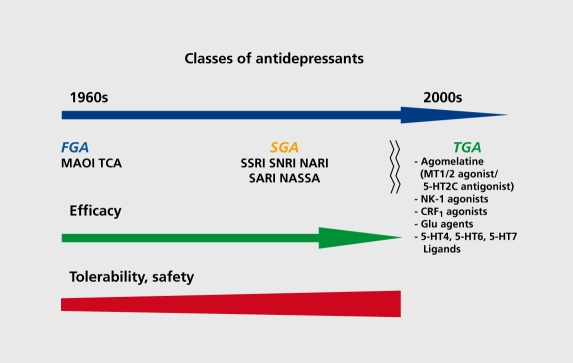
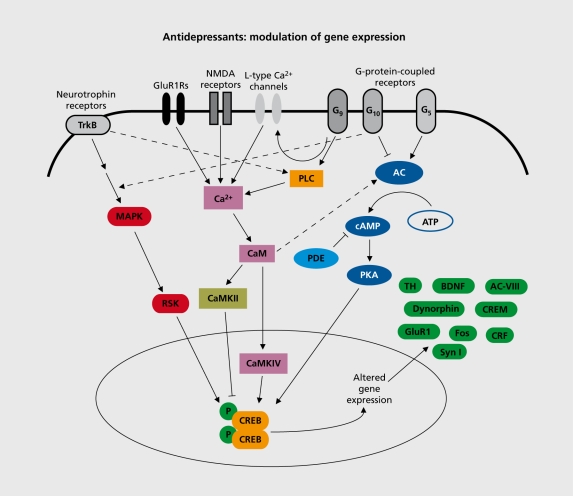
Verification
Claims the paper makes
The claims and statistics of this paper haven’t been checked yet.
Run the check — free, no account needed. It reads the open-access text and checks the sources it cites.
Claims other papers make about this one
Each is checked against this paper’s own text: does it say what the citing paper says it does?
The source backs part of the claim, not all of it — or backs it for a different population, condition or comparison.
In the citing paper
“Tricyclics, MAO inhibitors, and SSRIs all increase synaptic levels of monoamines in the brain within minutes, while it takes weeks before the antidepressant effects become apparent (Figure 1) (4, 9).”
From Psychedelics and Other Psychoplastogens for Treating Mental Illness. (2021) · cites this paper as [4]
Experimental — accuracy not yet measuredThe cited source says what the claim attributes to it.
In the citing paper
“the primary issue with the monoamine hypothesis of depression lies in the temporal discrepancy between the acute effects of traditional antidepressants and their delayed therapeutic responses”
From Psychedelics and Other Psychoplastogens for Treating Mental Illness. (2021) · cites this paper as [4]
Self-check
Percentages, sums and reported differences re-computed from the paper’s own numbers.
The self-check needs the paper’s full text.
Citations
Cites
Influence of life stress on depression: moderation by a polymorphism in the 5-HTT gene
Caspi, A., Sugden, K., Moffitt, T. E., Taylor, A., Craig, I. W., Harrington, H., McClay, J., Mill, J., Martin, J., Braithwaite, A., et al. (2003) · Science · doi:10.1126/science.1083968 · Cited by 8,120
Gage, F. H. (2000) · Science · doi:10.1126/science.287.5457.1433 · Cited by 4,786
Requirement of hippocampal neurogenesis for the behavioral effects of antidepressants
Santarelli, L., Saxe, M., Gross, C., Surget, A., Battaglia, F., Dulawa, S., Weisstaub, N., Lee, J., Duman, R., Arancio, O., et al. (2003) · Science · doi:10.1126/science.1083328 · Cited by 4,321
Antidepressant effects of ketamine in depressed patients
Berman, R. M., Cappiello, A., Anand, A., Oren, D. A., Heninger, G. R., Charney, D. S., & Krystal, J. H. (2000) · Biological Psychiatry · doi:10.1016/s0006-3223(99)00230-9 · Cited by 3,856
A randomized trial of an N-methyl-D-aspartate antagonist in treatment-resistant major depression.
Zarate, C. A., Singh, J. B., Carlson, P. J., Brutsche, N. E., Ameli, R., Luckenbaugh, D. A., Charney, D. S., & Manji, H. K. (2006) · Archives of General Psychiatry · doi:10.1001/archpsyc.63.8.856 · Cited by 3,766
A Neurotrophic Model for Stress-Related Mood Disorders
Duman, R. S., & Monteggia, L. M. (2006) · Biological Psychiatry · doi:10.1016/j.biopsych.2006.02.013 · Cited by 3,375
Subgenual prefrontal cortex abnormalities in mood disorders
Drevets, W. C., Price, J. L., Simpson, J. R., Todd, R. D., Reich, T., Vannier, M., & Raichle, M. E. (1997) · Nature · doi:10.1038/386824a0 · Cited by 2,693
Transcriptional regulation by the phosphorylation-dependent factor CREB
Mayr, B., & Montminy, M. (2001) · Nature Reviews Molecular Cell Biology · doi:10.1038/35085068 · Cited by 2,587
Synaptic Plasticity: Multiple Forms, Functions, and Mechanisms
Citri, A., & Malenka, R. C. (2008) · Neuropsychopharmacology · doi:10.1038/sj.npp.1301559 · Cited by 2,323
Essential role of BDNF in the mesolimbic dopamine pathway in social defeat stress
Berton, O., McClung, C. A., DiLeone, R. J., Krishnan, V., Renthal, W., Russo, S. J., Graham, D., Tsankova, N. M., Bolanos, C. A., Rios, M., et al. (2006) · Science · doi:10.1126/science.1120972 · Cited by 2,129
Function and regulation of CREB family transcription factors in the nervous system
Lonze, B. E., & Ginty, D. D. (2002) · Neuron · doi:10.1016/s0896-6273(02)00828-0 · Cited by 2,127
Stress, Depression, and Neuroplasticity: A Convergence of Mechanisms
Pittenger, C., & Duman, R. S. (2008) · Neuropsychopharmacology · doi:10.1038/sj.npp.1301574 · Cited by 1,795
Sustained hippocampal chromatin regulation in a mouse model of depression and antidepressant action
Tsankova, N. M., Berton, O., Renthal, W., Kumar, A., Neve, R. L., & Nestler, E. J. (2006) · Nature Neuroscience · doi:10.1038/nn1659 · Cited by 1,780
New approaches to antidepressant drug discovery: beyond monoamines
Berton, O., & Nestler, E. J. (2006) · Nature Reviews Neuroscience · doi:10.1038/nrn1846 · Cited by 1,589
Adult neurogenesis produces a large pool of new granule cells in the dentate gyrus
Cameron, H. A., & Mckay, R. D. G. (2001) · Journal of Comparative Neurology · doi:10.1002/cne.1040 · Cited by 1,585
The stressed hippocampus, synaptic plasticity and lost memories
Kim, J. J., & Diamond, D. M. (2002) · Nature Reviews Neuroscience · doi:10.1038/nrn849 · Cited by 1,543
Rajkowska, G., Miguel-Hidalgo, J. J., Wei, J., Dilley, G., Pittman, S. D., Meltzer, H. Y., Overholser, J. C., Roth, B. L., & Stockmeier, C. A. (1999) · Biological Psychiatry · doi:10.1016/s0006-3223(99)00041-4 · Cited by 1,477
Sheline, Y. I., Sanghavi, M., Mintun, M. A., & Gado, M. H. (1999) · The Journal of Neuroscience · doi:10.1523/jneurosci.19-12-05034.1999 · Cited by 1,382
Carlezon, W. A., Duman, R. S., & Nestler, E. J. (2005) · Trends in Neurosciences · doi:10.1016/j.tins.2005.06.005 · Cited by 1,382
Genetic variant BDNF (Val66Met) polymorphism alters anxiety-related behavior
Chen, Z.-Y., Jing, D., Bath, K. G., Ieraci, A., Khan, T., Siao, C.-J., Herrera, D. G., Toth, M., Yang, C., McEwen, B. S., et al. (2006) · Science · doi:10.1126/science.1129663 · Cited by 1,340
Neuroimaging studies of mood disorders
Drevets, W. C. (2000) · Biological Psychiatry · doi:10.1016/s0006-3223(00)01020-9 · Cited by 1,334
New insights into BDNF function in depression and anxiety
Martinowich, K., Manji, H., & Lu, B. (2007) · Nature Neuroscience · doi:10.1038/nn1971 · Cited by 1,221
Stress induces atrophy of apical dendrites of hippocampal CA3 pyramidal neurons
Watanabe, Y., Gould, E., & McEwen, B. S. (1992) · Brain Research · doi:10.1016/0006-8993(92)91597-8 · Cited by 1,212
Adult hippocampal neurogenesis in depression
Sahay, A., & Hen, R. (2007) · Nature Neuroscience · doi:10.1038/nn1969 · Cited by 1,206
Bito, H., Deisseroth, K. A., & Tsien, R. W. (1996) · Cell · doi:10.1016/s0092-8674(00)81816-4 · Cited by 1,138
Current advances and trends in the treatment of depression
Blier, P., & de Montigny, C. (1994) · Trends in Pharmacological Sciences · doi:10.1016/0165-6147(94)90315-8 · Cited by 1,113
Maeng, S., Zarate, C. A., Du, J., Schloesser, R. J., McCammon, J., Chen, G., & Manji, H. K. (2008) · Biological Psychiatry · doi:10.1016/j.biopsych.2007.05.028 · Cited by 1,103
Catecholamine Metabolism: A Contemporary View with Implications for Physiology and Medicine
Eisenhofer, G., Kopin, I. J., & Goldstein, D. S. (2004) · Pharmacological Reviews · doi:10.1124/pr.56.3.1 · Cited by 1,072
Calcium regulation of neuronal gene expression
West, A. E., Chen, W., Dalva, M. B., Dolmetsch, R. E., Kornhauser, J. M., Shaywitz, A. J., Takasu, M. A., Xu, T., & Greenberg, M. E. (2001) · Proceedings of the National Academy of Sciences · doi:10.1073/pnas.191352298 · Cited by 1,047
Mouse and rat BDNF gene structure and expression revisited
Aid, T., Kazantseva, A., Piirsoo, M., Palm, K., & Timmusk, T. (2007) · Journal of Neuroscience Research · doi:10.1002/jnr.21139 · Cited by 943
Targeting the glutamatergic system to develop novel, improved therapeutics for mood disorders
Sanacora, G., Zarate, C. A., Krystal, J. H., & Manji, H. K. (2008) · Nature Reviews Drug Discovery · doi:10.1038/nrd2462 · Cited by 894
The role of the hippocampus in the pathophysiology of major depression
Campbell, S., & MacQUEEN, G. M. (2004) · Journal of Psychiatry and Neuroscience · doi:10.1139/jpn.0441 · Cited by 891
The antidepressant fluoxetine restores plasticity in the adult visual cortex
Vetencourt, J. F. M., Sale, A., Viegi, A., Baroncelli, L., De Pasquale, R., F. O'Leary, O., Castrén, E., & Maffei, L. (2008) · Science · doi:10.1126/science.1150516 · Cited by 890
Hippocampal neurogenesis in adult Old World primates
Gould, E., Reeves, A. J., Fallah, M., Tanapat, P., Gross, C. G., & Fuchs, E. (1999) · Proceedings of the National Academy of Sciences · doi:10.1073/pnas.96.9.5263 · Cited by 815
Subtype-Specific Alterations of γ-Aminobutyric Acid and Glutamatein Patients With Major Depression
Sanacora, G., Gueorguieva, R. V., Epperson, C. N., Wu, Y., Appel, M., Rothman, D. L., Krystal, J. H., & Mason, G. F. (2004) · Archives of General Psychiatry · doi:10.1001/archpsyc.61.7.705 · Cited by 796
Development of β-adrenergic receptor subsensitivity by antidepressants
Banerjee, S. P., Kung, L. S., Riggi, S. J., & Chanda, S. K. (1977) · Nature · doi:10.1038/268455a0 · Cited by 722
The possibility of neurotoxicity in the hippocampus in major depression: a primer on neuron death
Sapolsky, R. M. (2000) · Biological Psychiatry · doi:10.1016/s0006-3223(00)00971-9 · Cited by 699
Increased Levels of Glutamate in Brains from Patients with Mood Disorders
Hashimoto, K., Sawa, A., & Iyo, M. (2007) · Biological Psychiatry · doi:10.1016/j.biopsych.2007.03.017 · Cited by 631
Depression: a case of neuronal life and death?
Duman, R. S. (2004) · Biological Psychiatry · doi:10.1016/j.biopsych.2004.02.033 · Cited by 630
Regulation of transcription factors by neuronal activity
West, A. E., Griffith, E. C., & Greenberg, M. E. (2002) · Nature reviews. Neuroscience · doi:10.1038/nrn987 · Cited by 610
Metabotropic glutamate receptors as novel targets for anxiety and stress disorders
Swanson, C. J., Bures, M., Johnson, M. P., Linden, A.-M., Monn, J. A., & Schoepp, D. D. (2005) · Nature Reviews Drug Discovery · doi:10.1038/nrd1630 · Cited by 607
Johannessen, M., Delghandi, M. P., & Moens, U. L. (2004) · Cellular Signalling · doi:10.1016/j.cellsig.2004.05.001 · Cited by 586
Preclinical models: status of basic research in depression
Nestler, E. J., Gould, E., & Manji, H. K. (2002) · Biological Psychiatry · doi:10.1016/s0006-3223(02)01405-1 · Cited by 571
Moghaddam, B. (1993) · Journal of Neurochemistry · doi:10.1111/j.1471-4159.1993.tb13387.x · Cited by 567
Impaired Spatial Learning after Saturation of Long-Term Potentiation
Moser, E. I., Krobert, K. A., Moser, M.-B., & Morris, R. G. M. (1998) · Science · doi:10.1126/science.281.5385.2038 · Cited by 505
Initiation and adaptation: a paradigm for understanding psychotropic drug action
(1996) · American Journal of Psychiatry · doi:10.1176/ajp.153.2.151 · Cited by 490
Behavioral stress modifies hippocampal plasticity through N-methyl-D-aspartate receptor activation.
Kim, J. J., Foy, M. R., & Thompson, R. F. (1996) · Proceedings of the National Academy of Sciences · doi:10.1073/pnas.93.10.4750 · Cited by 435
Is it time to reassess the BDNF hypothesis of depression?
Groves, J. O. (2007) · Molecular Psychiatry · doi:10.1038/sj.mp.4002075 · Cited by 412
Glutamate and Depression: Clinical and Preclinical Studies
PAUL, I. A., & SKOLNICK, P. (2003) · Annals of the New York Academy of Sciences · doi:10.1196/annals.1300.016 · Cited by 408
Heninger, G. R., Delgado, P. L., & Charney, D. S. (1996) · Pharmacopsychiatry · doi:10.1055/s-2007-979535 · Cited by 394
Brain microdialysis of GABA and glutamate: What does it signify?
Timmerman, W., & Westerink, B. H. C. (1997) · Synapse · doi:10.1002/(sici)1098-2396(199711)27:3 · Cited by 387
Adachi, M., Barrot, M., Autry, A. E., Theobald, D., & Monteggia, L. M. (2008) · Biological Psychiatry · doi:10.1016/j.biopsych.2007.09.019 · Cited by 380
Biological rhythm disturbances in mood disorders
Wirz‐Justice, A. (2006) · International Clinical Psychopharmacology · doi:10.1097/01.yic.0000195660.37267.cf · Cited by 359
Antidepressants for the new millennium
Skolnick, P. (1999) · European Journal of Pharmacology · doi:10.1016/s0014-2999(99)00330-1 · Cited by 355
Neuroplasticity Mediated by Altered Gene Expression
McClung, C. A., & Nestler, E. J. (2008) · Neuropsychopharmacology · doi:10.1038/sj.npp.1301544 · Cited by 347
Liu, G. (2004) · Nature Neuroscience · doi:10.1038/nn1206 · Cited by 339
Mathers, C. D., Stevenson, C., Vos, E. T., & Begg, S. J. (2000) · The Medical Journal of Australia · doi:10.5694/j.1326-5377.2000.tb124125.x · Cited by 339
Calcium regulation of gene expression in neuronal cells
Ghosh, A., Ginty, D. D., Bading, H., & Greenberg, M. E. (1994) · Journal of Neurobiology · doi:10.1002/neu.480250309 · Cited by 326
Roceri, M., Cirulli, F., Pessina, C., Peretto, P., Racagni, G., & Riva, M. A. (2004) · Biological Psychiatry · doi:10.1016/j.biopsych.2003.12.011 · Cited by 317
Self-citationSignaling routes to CREM and CREB: plasticity in transcriptional activation
Cesare, D. D., Fimia, G. M., & Sassone‐Corsi, P. (1999) · Trends in Biochemical Sciences · doi:10.1016/s0968-0004(99)01414-0 · Cited by 310
Acute Stress-induced Changes in Hippocampal/Prefrontal Circuits in Rats: Effects of Antidepressants
Rocher, C. (2004) · Cerebral Cortex · doi:10.1093/cercor/bhg122 · Cited by 307
Tardito, D., Perez, J., Tiraboschi, E., Musazzi, L., Racagni, G., & Popoli, M. (2006) · Pharmacological Reviews · doi:10.1124/pr.58.1.7 · Cited by 303
Self-citationSvenningsson, P., Bateup, H. S., Qi, H., Takamiya, K., Huganir, R. L., Spedding, M., Roth, B. L., McEwen, B. S., & Greengard, P. (2007) · European Journal of Neuroscience · doi:10.1111/j.1460-9568.2007.05952.x · Cited by 292
Lauterborn, J. C., LYNCH, G. S., Vanderklish, P. W., Arai, A., & Gall, C. M. (2000) · Journal of Neuroscience · doi:10.1523/jneurosci.20-01-00008.2000 · Cited by 291
Venero, C., & Borrell, J. (1999) · European Journal of Neuroscience · doi:10.1046/j.1460-9568.1999.00668.x · Cited by 277
Olié, J., & Kasper, S. F. (2007) · The International Journal of Neuropsychopharmacology · doi:10.1017/s1461145707007766 · Cited by 261
Stahl, S. M. (1998) · PubMed · Cited by 260
Plasma and platelet excitatory amino acids in psychiatric disorders
(1993) · American Journal of Psychiatry · doi:10.1176/ajp.150.11.1731 · Cited by 243
How can drug discovery for psychiatric disorders be improved?
Agid, Y., Buzsáki, G., Diamond, D. M., Frackowiak, R., Giedd, J., Girault, J.-A., Grace, A., Lambert, J. J., Manji, H., Mayberg, H., et al. (2007) · Nature Reviews Drug Discovery · doi:10.1038/nrd2217 · Cited by 240
Self-citationLearned helplessness in the rat: improvements in validity and reliability
Vollmayr, B., & Henn, F. A. (2001) · Brain Research Protocols · doi:10.1016/s1385-299x(01)00067-8 · Cited by 238
Bonanno, G., Giambelli, R., Raiteri, L., Tiraboschi, E., Zappettini, S., Musazzi, L., Raiteri, M., Racagni, G., & Popoli, M. (2005) · Journal of Neuroscience · doi:10.1523/jneurosci.5033-04.2005 · Cited by 237
Self-citationBagley, J., & Moghaddam, B. (1997) · Neuroscience · doi:10.1016/s0306-4522(96)00435-6 · Cited by 231
Clinical Applications of MAO-Inhibitors
Riederer, P. F., Lachenmayer, L., & Laux, G. (2004) · Current Medicinal Chemistry · doi:10.2174/0929867043364775 · Cited by 222
Lemoine, P., & Guilleminault, C. (2007) · The Journal of Clinical Psychiatry · doi:10.4088/jcp.v68n1112 · Cited by 220
Kennedy, S. H., Rizvi, S. J., Fulton, K., & Rasmussen, J. (2008) · Journal of Clinical Psychopharmacology · doi:10.1097/jcp.0b013e318172b48c · Cited by 213
Reznikov, L. R., Grillo, C. A., Piroli, G. G., Pasumarthi, R. K., Reagan, L. P., & Fadel, J. R. (2007) · European Journal of Neuroscience · doi:10.1111/j.1460-9568.2007.05560.x · Cited by 211
Montgomery, S. A., Kennedy, S. H., Burrows, G. D., Lejoyeux, M., & Hindmarch, I. (2004) · International Clinical Psychopharmacology · doi:10.1097/01.yic.0000137184.64610.c8 · Cited by 196
Balu, D. T., Hoshaw, B. A., Malberg, J. E., Rosenzweig-Lipson, S., Schechter, L. E., & Lucki, I. (2008) · Brain Research · doi:10.1016/j.brainres.2008.03.023 · Cited by 194
Antidepressant action: to the nucleus and beyond
Malberg, J. E., & Blendy, J. A. (2005) · Trends in Pharmacological Sciences · doi:10.1016/j.tips.2005.10.005 · Cited by 193
Nair, A., Vadodaria, K. C., Banerjee, S. B., Benekareddy, M., Dias, B. G., Duman, R. S., & Vaidya, V. A. (2007) · Neuropsychopharmacology · doi:10.1038/sj.npp.1301276 · Cited by 189
Tiraboschi, E., Tardito, D., Kasahara, J., Moraschi, S., Pruneri, P., Gennarelli, M., Racagni, G., & Popoli, M. (2004) · Neuropsychopharmacology · doi:10.1038/sj.npp.1300488 · Cited by 186
Self-citationKole, M. H. P., Swan, L., & Fuchs, E. (2002) · European Journal of Neuroscience · doi:10.1046/j.1460-9568.2002.02136.x · Cited by 181
Shakesby, A. C., Anwyl, R., & Rowan, M. J. (2002) · The Journal of Neuroscience · doi:10.1523/jneurosci.22-09-03638.2002 · Cited by 173
Major depressive disorder, sleep EEG and agomelatine: an open-label study
Quera-Salva, M.-A., Vanier, B., Laredo, J., Hartley, S., Chapotot, F., Moulin, C., Lofaso, F., & Guilleminault, C. (2007) · The International Journal of Neuropsychopharmacology · doi:10.1017/s1461145707007754 · Cited by 170
Regulation of Cellular Plasticity Cascades in the Pathophysiology and Treatment of Mood Disorders
Zarate, C. A., Du, J., Quiroz, J. A., GRAY, N. A., Denicoff, K. D., Singh, J., Charney, D. S., & Manji, H. K. (2003) · Annals of the New York Academy of Sciences · doi:10.1196/annals.1300.017 · Cited by 166
Lee, B., Butcher, G. Q., Hoyt, K. R., Impey, S., & Obrietan, K. H. (2005) · Journal of Neuroscience · doi:10.1523/jneurosci.4288-04.2005 · Cited by 165
Boyer, P., Skolnick, P., & Fossom, L. H. (1998) · Journal of Molecular Neuroscience · doi:10.1007/bf02761776 · Cited by 158
Stewart, C. A., & Reid, I. (2000) · Psychopharmacology · doi:10.1007/s002130050045 · Cited by 157
Du, J., Gray, N. A., Falke, C. A., Chen, W., Yuan, P., Szabo, S. T., Einat, H., & Manji, H. K. (2004) · The Journal of Neuroscience · doi:10.1523/jneurosci.1258-04.2004 · Cited by 157
Brain-Derived Neurotrophic Factor and Antidepressant Activity
Russo‐Neustadt, A. A., & Chen, M. (2005) · Current Pharmaceutical Design · doi:10.2174/1381612053764788 · Cited by 152
Modulation of synaptic plasticity by stress and antidepressants
Popoli, M., Gennarelli, M., & Racagni, G. (2002) · Bipolar Disorders · doi:10.1034/j.1399-5618.2002.01159.x · Cited by 142
Self-citationCarola, V., Frazzetto, G., Pascucci, T., Audero, E., Puglisi‐Allegra, S., Cabib, S., Lesch, K., & Gross, C. T. (2007) · Biological Psychiatry · doi:10.1016/j.biopsych.2007.08.013 · Cited by 141
Strategies for producing faster acting antidepressants
Adell, A., Castro, E., Celada, P., Bortolozzi, A., Pazos, Á., & Artigas, F. (2005) · Drug Discovery Today · doi:10.1016/s1359-6446(05)03398-2 · Cited by 133
Pattabiraman, P. P., Tropea, D., Chiaruttini, C., Tongiorgi, E., Cattaneo, A., & Domenici, L. (2005) · Molecular and Cellular Neuroscience · doi:10.1016/j.mcn.2004.11.010 · Cited by 132
Dynamic Multiphosphorylation Passwords for Activity-Dependent Gene Expression
Deisseroth, K. A., & Tsien, R. W. (2002) · Neuron · doi:10.1016/s0896-6273(02)00664-5 · Cited by 130
Stress, Metaplasticity, and Antidepressants
Garcia, R. (2002) · Current Molecular Medicine · doi:10.2174/1566524023362023 · Cited by 130
Kasahara, J., Fukunaga, K., & Miyamoto, E. (2001) · Journal of Biological Chemistry · doi:10.1074/jbc.m100247200 · Cited by 128
Martínez-Turrillas, R. (2002) · Neuropharmacology · doi:10.1016/s0028-3908(02)00299-x · Cited by 124
Greisen, M. H., Altar, C. A., Bolwig, T. G., Whitehead, R. E., & Wörtwein, G. (2005) · Journal of Neuroscience Research · doi:10.1002/jnr.20418 · Cited by 123
Sartorius, N., Baghai, T. C., Baldwin, D. S., Barrett, B. M., Brand, U., Fleischhacker, W., Goodwin, G. M., Grunze, H., Knapp, M. R. J., Leonard, B. E., et al. (2007) · The International Journal of Neuropsychopharmacology · doi:10.1017/s1461145707008255 · Cited by 103
Qi, H., Mailliet, F., Spedding, M., Rocher, C., Zhang, X., Delagrange, P., McEwen, B. S., Jay, T. M., & Svenningsson, P. (2008) · Neuropharmacology · doi:10.1016/j.neuropharm.2008.06.068 · Cited by 91
Ryan, B. K., Musazzi, L., Mallei, A., Tardito, D., Gruber, S. H. M., Khoury, A. E., Anwyl, R., Racagni, G., Mathé, A. A., Rowan, M. J., et al. (2008) · The International Journal of Neuropsychopharmacology · doi:10.1017/s1461145708009607 · Cited by 81
Self-citationPittaluga, A., Raiteri, L., Longordo, F., Luccini, E., Barbiero, V. S., Racagni, G., Popoli, M., & Raiteri, M. (2007) · Neuropharmacology · doi:10.1016/j.neuropharm.2007.04.006 · Cited by 77
Self-citationLarsen, M. H., Hay‐Schmidt, A., Rønn, L. C. B., & Mikkelsen, J. D. (2007) · European Journal of Pharmacology · doi:10.1016/j.ejphar.2007.08.050 · Cited by 76
Tianeptine increases brain-derived neurotrophic factor expression in the rat amygdala
Reagan, L. P., Hendry, R. M., Reznikov, L. R., Piroli, G. G., Wood, G. E., McEwen, B. S., & Grillo, C. A. (2007) · European Journal of Pharmacology · doi:10.1016/j.ejphar.2007.02.023 · Cited by 70
Khundakar, A. A., & Zetterström, T. (2006) · Brain Research · doi:10.1016/j.brainres.2006.05.063 · Cited by 67
Faure, J., Uys, J. D. K., Marais, L., Stein, D. J., & Daniels, W. M. U. (2007) · Metabolic Brain Disease · doi:10.1007/s11011-007-9048-3 · Cited by 67
von Frijtag, J. C., Kamal, A., Reijmers, L. G. J. E., Schrama, L. H., van den Bos, R., & Spruijt, B. M. (2001) · Neuroscience Letters · doi:10.1016/s0304-3940(01)02062-6 · Cited by 65
Enhancing AMPA to NMDA throughput as a convergent mechanism for antidepressant action
Du, J., Machado-Vieira, R., Maeng, S., Martinowich, K., Manji, H. K., & Zarate, C. A. (2006) · Drug Discovery Today: Therapeutic Strategies · doi:10.1016/j.ddstr.2006.11.012 · Cited by 64
Tongiorgi, E., Domenici, L., & Simonato, M. (2005) · Molecular Neurobiology · doi:10.1385/mn:33:1:017 · Cited by 58
Holden, C. (2003) · Science · doi:10.1126/science.300.5627.1866 · Cited by 57
Kojima, T., Matsumoto, M., Togashi, H., Tachibana, K., Kemmotsu, O., & Yoshioka, M. (2002) · Brain Research · doi:10.1016/s0006-8993(02)03756-3 · Cited by 56
The When and Where of BDNF and the Antidepressant Response
Wang, J., Dranovsky, A., & Hen, R. (2008) · Biological Psychiatry · doi:10.1016/j.biopsych.2008.01.008 · Cited by 54
Ohashi, S., Matsumoto, M., Otani, H., Mori, K., Togashi, H., Ueno, K.-I., Kaku, A., & Yoshioka, M. (2002) · Brain Research · doi:10.1016/s0006-8993(02)02973-6 · Cited by 54
Bouron, A., & Chatton, J. (1999) · Neuroscience · doi:10.1016/s0306-4522(98)00480-1 · Cited by 50
BMJ Publishing Group Ltd (2006) · Journal of Neurology Neurosurgery & Psychiatry · doi:10.1136/jnnp.2006.089540 · Cited by 48
Mnie‐Filali, O., Mansari, M. E., Espana, A., Sánchez, C., & Haddjeri, N. (2005) · Neuroscience Letters · doi:10.1016/j.neulet.2005.10.044 · Cited by 47
Do Stress and Long-Term Potentiation Share the Same Molecular Mechanisms?
Huang, C., Yang, C., & Hsu, K. (2005) · Molecular Neurobiology · doi:10.1385/mn:32:3:223 · Cited by 46
New perspectives on the molecular pharmacology of affective disorders
Sulser, F. (1989) · European Archives of Psychiatry and Clinical Neuroscience · doi:10.1007/bf00449803 · Cited by 39
Tachibana, K., Matsumoto, M., Togashi, H., Kojima, T., Morimoto, Y., Kemmotsu, O., & Yoshioka, M. (2004) · Neuroscience Letters · doi:10.1016/j.neulet.2003.11.016 · Cited by 37
Matsumoto, M., Tachibana, K., Togashi, H., Tahara, K., Kojima, T., Yamaguchi, T., & Yoshioka, M. (2004) · Psychopharmacology · doi:10.1007/s00213-004-2094-1 · Cited by 35
Time-dependent biphasic modulation of human BDNF by antidepressants in neuroblastoma cells
Donnici, L., Tiraboschi, E., Tardito, D., Musazzi, L., Racagni, G., & Popoli, M. (2008) · BMC Neuroscience · doi:10.1186/1471-2202-9-61 · Cited by 33
Self-citationThe link between sleep and depression: The effects of antidepressants on EEG sleep
van Bemmel, A. L. (1997) · Journal of Psychosomatic Research · doi:10.1016/s0022-3999(97)00003-2 · Cited by 25
Tardito, D., Tiraboschi, E., Kasahara, J., Racagni, G., & Popoli, M. (2006) · The International Journal of Neuropsychopharmacology · doi:10.1017/s1461145706007140 · Cited by 25
Self-citationGoodwin, G. M., Rouillon, F., & Emsley, R. A. (2008) · European Neuropsychopharmacology · doi:10.1016/s0924-977x(08)70471-1 · Cited by 13
Research works printed but not linked: 10
- Olesen J., 2006, J Neurol Neurosurg Psychiatry., 77, i1
- Stahl SM., 1998, J Clin Psychiatry., 59, 5
- 10.1016/j.tips.2005.10.005 · DOI
- Ryan B., 2008, Int J Neuropsychopharmacol., 31, 1
- Qi H., 2008, Neuropharmacol.
- Popoli M., 2006, .
- Campbell S., 2004, J Psychiatry Neurosci., 29, 417
- Sahay A., 2007, Neurosci., 10, 1110
- 0lié JP., 2007, int J Neuropsychopharmacol., 10, 661
- Quera Salva MA., 2007, Int J Neuropsychopharmacol., 10, 691
Cited by
Sorted by citations
Towards a glutamate hypothesis of depression
Sanacora, G., Treccani, G., & Popoli, M. (2012) · Neuropharmacology · doi:10.1016/j.neuropharm.2011.07.036 · Cited by 1,036
Self-citationThe Role of BDNF on Neural Plasticity in Depression
Yang, T., Nie, Z., Shu, H., Kuang, Y., Chen, X., Cheng, J., Yu, S., & Liu, H. (2020) · Frontiers in Cellular Neuroscience · doi:10.3389/fncel.2020.00082 · Cited by 435
Neural basis of major depressive disorder: Beyond monoamine hypothesis
Boku, S., Nakagawa, S., Toda, H., & Hishimoto, A. (2018) · Psychiatry and Clinical Neurosciences · doi:10.1111/pcn.12604 · Cited by 402
Epigenetic regulation of RAC1 induces synaptic remodeling in stress disorders and depression
Golden, S. A., Christoffel, D. J., Heshmati, M., Hodes, G. E., Magida, J., Davis, K., Cahill, M. E., Dias, C., Ribeiro, E., Ables, J. L., et al. (2013) · Nature Medicine · doi:10.1038/nm.3090 · Cited by 322
From Serotonin to Neuroplasticity: Evolvement of Theories for Major Depressive Disorder
Liu, B., Liu, J., Wang, M., Zhang, Y., & Li, L. (2017) · Frontiers in Cellular Neuroscience · doi:10.3389/fncel.2017.00305 · Cited by 249
Metadata
- Authors
- Racagni, G., & Popoli, M.
- Affiliations
- University of Milan (IT)
- Corresponding author
- Popoli, Maurizio
- Venue
- Dialogues in Clinical Neuroscience
- Publisher
- Informa UK Limited
- Published
- 2008-12-31
- Volume
- 10
- Issue
- 4
- Pages
- 385-400
- ISSN
- 1294-8322 (ISSN-L)
- 1958-5969
- PMC
- PMC3181899
- OpenAlex
- W2095618681
- Cited by
- 192
- References
- 125
- Citations by year
- 2026: 6 · 2025: 26 · 2024: 12 · 2023: 5 · 2022: 14 · 2021: 13 · 2020: 7 · 2019: 7 · 2018: 5 · 2017: 10 · 2016: 13 · 2015: 8 · 2014: 16 · 2013: 10 · 2012: 10
- FWCI
- 7.03
- Type
- journal article
- Language
- en
- Open access
- diamond
- doi.org
- Licence
- Locations
- Dialogues in Clinical Neuroscience (publishedVersion, cc-by-nc-nd)
- Europe PMC (PubMed Central) (publishedVersion, cc-by-nc-nd)
- PubMed Central (publishedVersion, cc-by-nc-nd)
- PubMed (publishedVersion)
- Topics
- Health Sciences › Medicine › Pharmacology (medical) › Treatment of Major Depression
- Life Sciences › Neuroscience › Cellular and Molecular Neuroscience › Neuroscience and Neuropharmacology Research
- Life Sciences › Neuroscience › Cellular and Molecular Neuroscience › Neurotransmitter Receptor Influence on Behavior
- Keywords
- antidepressants, depression, mood disorders, neuroplasticity, antidepressant mechanism, monoamine hypothesis, gene expression, neurotrophic factors, synaptic plasticity, synaptic transmission, neurogenesis
- MeSH terms
- Animals, Antidepressive Agents, Depressive Disorder, Humans, Synaptic Transmission, Neuronal Plasticity, Neurons, Biogenic Monoamines, Brain-Derived Neurotrophic Factor, Cell Proliferation
About these checks
Registry, retraction, Cites and statistics results are computed, not judged, with one exception: a printed reference that no index lists is read once by a model before it counts as a citation error. Claims are extracted by a model and kept only when their quote appears verbatim in the text; each cited source is then checked, with a model’s help, for whether it says what the claim relies on. Those verdicts can be wrong — read the claim’s quote and the cited source before relying on one.
Statistics and arithmetic are recomputed, not judged.
Confidence bands are shown only for fields calibrated on our annotated test set. None is calibrated yet, so no band is shown.
What counts as a claim ›How we measure confidence ›How we check this ›
Are you an author, or do you see a problem with this page? Request a review
