

Clinical applications of neuropsychological assessment.
Open accessThe DOI matches its Crossref record; 31 of the 31 references it cites were found in a registry or an index.
Abstract
Neuropsychological assessment is a performance-based method to assess cognitive functioning. This method is used to examine the cognitive consequences of brain damage, brain disease, and severe mental illness. There are several specific uses of neuropsychological assessment, including collection of diagnostic information, differential diagnostic information, assessment of treatment response, and prediction of functional potential and functional recovery. We anticipate that clinical neuropsychological assessment will continue to be used, even in the face of advances in imaging technology, because it is already well known that the presence of significant brain changes can be associated with nearly normal cognitive functioning, while individuals with no lesions detectable on imaging can have substantial cognitive and functional limitations.
Overview
The claims and statistics of this paper haven’t been checked yet.
Free: it reads the open-access text and checks the first 5 claims that cite a source we can check. Create a free account to check every claim.
Integrity signals
Registry
Cites
Statistics
Figures
Verification
Claims the paper makes
The claims and statistics of this paper haven’t been checked yet.
Free: it reads the open-access text and checks the first 5 claims that cite a source we can check. Create a free account to check every claim.
Claims other papers make about this one
Each is checked against this paper’s own text: does it say what the citing paper says it does?
The cited source says what the claim attributes to it.
In the citing paper
“Harvey (2012) asserted that performance-based tests are the core of neuropsychological assessment.”
From Assessment of executive functions in school-aged children: A narrative review (2022) · cites this paper as Harvey (2012)
Self-check
Percentages, sums and reported differences re-computed from the paper’s own numbers.
The self-check needs the paper’s full text.
Citations
Cites
Norman, G. R., Sloan, J. A., & Wyrwich, K. W. (2003) · Medical Care · doi:10.1097/01.mlr.0000062554.74615.4c · Cited by 4,700 · cited 1×
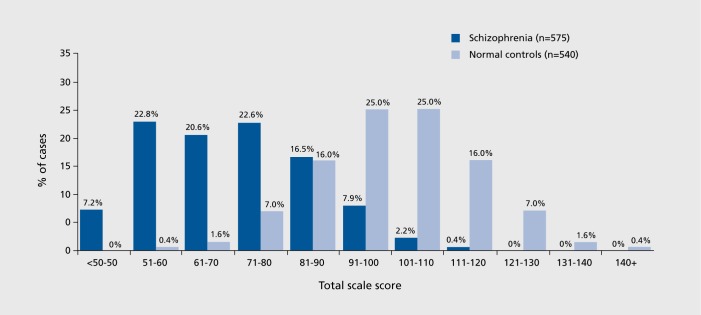
“In terms of interpretation of meaningful differences between abilities in neuropsychiatric conditions, a widely accepted rule of for a clinically meaningful difference between two ability areas is about one-half of a standard deviation.(11) This translates into about 7 IQ points and this level of difference has been s…”
BackgroundGreen, M. F., Kern, R. S., Braff, D. L., & Mintz, J. (2000) · Schizophrenia Bulletin · doi:10.1093/oxfordjournals.schbul.a033430 · Cited by 2,999
Neurocognitive deficit in schizophrenia: A quantitative review of the evidence.
Heinrichs, R. W., & Zakzanis, K. K. (1998) · Neuropsychology · doi:10.1037/0894-4105.12.3.426 · Cited by 2,798
The MATRICS Consensus Cognitive Battery, part 1: test selection, reliability, and validity
Nuechterlein, K. H., Green, M. F., Kern, R. S., Baade, L. E., Barch, D. M., Cohen, J. D., Essock, S., Fenton, W. S., Frese, F. J., Gold, J. M., et al. (2008) · American Journal of Psychiatry · doi:10.1176/appi.ajp.2007.07010042 · Cited by 2,342 · cited 1×
“These global scores are the indices most commonly used to predict real-world functional milestones and to make judgments about functioning in conditions where multiple ability domains are affected (eg, serious mental illness or traumatic brain injury).(6) However, it is also important to be able to make judgments abou…”
BackgroundA Meta-Analysis of Cognitive Remediation for Schizophrenia: Methodology and Effect Sizes
Wykes, T., Huddy, V., Cellard, C., McGurk, S. R., & Czobor, P. (2011) · American Journal of Psychiatry · doi:10.1176/appi.ajp.2010.10060855 · Cited by 1,693
The MATRICS Consensus Cognitive Battery, part 2: co-norming and standardization
Kern, R. S., Nuechterlein, K. H., Green, M. F., Baade, L. E., Fenton, W. S., Gold, J. M., Keefe, R. S. E., Mesholam-Gately, R., Mintz, J., Seidman, L. J., et al. (2008) · American Journal of Psychiatry · doi:10.1176/appi.ajp.2007.07010043 · Cited by 744 · cited 1×
“The discrepancies between ability areas that can be interpreted as truly different from each other also depend on whether the normative standards for the tests were developed in a single sample (ie, co-normed) or separately.(8) For example, meaningful differences between individual subtests on intelligence tests such…”
BackgroundThe impact of HIV-associated neuropsychological impairment on everyday functioning
HEATON, R. K., MARCOTTE, T. D., MINDT, M. R., SADEK, J., MOORE, D. J., BENTLEY, H., MCCUTCHAN, J. A., REICKS, C., GRANT, I., & THE HNRC GROUP (2004) · Journal of the International Neuropsychological Society · doi:10.1017/s1355617704102130 · Cited by 726
Welsh, K., Butters, N., Hughes, J., Mohs, R., & Heyman, A. (1991) · Archives of Neurology · doi:10.1001/archneur.1991.00530150046016 · Cited by 724 · cited 1×
“0 SD below that of demographically similar healthy controls.(12) Further, differential deficits between abilities at the time of diagnosis are also substantial.”
BackgroundNeuropsychological Function and Dysfunction in Schizophrenia and Psychotic Affective Disorders
Reichenberg, A., Harvey, P. D., Bowie, C. R., Mojtabai, R., Rabinowitz, J., Heaton, R. K., & Bromet, E. (2009) · Schizophrenia Bulletin · doi:10.1093/schbul/sbn044 · Cited by 518
Self-citationWelsh, K. A. (1992) · Archives of Neurology · doi:10.1001/archneur.1992.00530290030008 · Cited by 475 · cited 1×
“tion naming at the time of diagnosis.(13) Although subtle differences can be detected by observers as described above, many of the differences between abilities in neuropsychiatric conditions are not subtle.”
Background
Research works printed but not linked: 12
- 2. Goldstein K. The Organism (reprinted from 1939 ed). Cambridge, MA: MIT Press-Zone Books; 1995
- 3. Adams KM. Grant I. Neuropsychological Assessment of Neuropsychiatric and Neuromedical Disorders. 3rd ed. New York, NY: Oxford University Press, 2009
- 5. Anastasi A. Urbina S. Psychological testing (7th ed). Upper Saddle River, NJ: Prentice-Hall; 1997
- 9. Wechsler D. The Wechsler Adult Intelligence Scales. 4th ed. (WAIS-IV). San Antonio, Pearson Assessment: 2009
- 10. Heaton RK. Grant IS. Matthews CG. Comprehensive Norms for an Expanded Halstead-Reitan Battery: Demographic Corrections, Research Findings, and Clinical Applications. Odessa, FL: Psychological Assessment Resources; 1991
- 14. American Psychiatric Association Diagnostic and Statistical Manual of Mental Disorders. 4th ed, Text Revision. Washington, DC: American Psychiatric Association; 1997
- 19. Zakzanis K. Leach L. Kaplan E. Neuropsychological Differential Diagnosis. Lisse, the Netherlands: Swets and Zeitlinger; 1999
- 21. Randolph CR. The repeatable battery for neuropsychological screening. San Antonio, TX: Pearson Assessment; 1998
- 23. Heaton RK. Chellune CJ. Talley JL. Kay GG. Curtiss G. Wisconsin card sorting test manual-revised and expanded. Odessa, FL: Psychological Assessment Resources; 1993
- 25. Parente FJ. Anderson JK. Use of the Wechsler Memory Scale for predicting success in cognitive rehabilitation. Cogn Rehab. 1984 2 12 15
- 32. Lucas JA. Traumatic brain injury and postconcussive syndrome. In: Snyder PJ, Nussbaum PD, eds. Clinical Neuropsychology. Washington DC: American Psychological Association; 1998
- 33. Lezak MD. Howieson DB. Loring DW. Neuropsychological Assessment. 4th ed. New York, NY: Oxford University Press; 2004
Cited by
Items 201–264 of 264
PSIQUE: A Computerised Neuropsychological Assessment App
Diaz, D., Cadena, S., Gil, J., Chaves, D., & Trujillo, M. (2021) · Lecture notes in bioengineering · doi:10.1007/978-3-030-72567-9_8
da Silva, J. M. (2021) · Digital Library of Theses and Dissertations (Universidade de São Paulo) · doi:10.11606/d.5.2021.tde-17082021-083701
da Costa, R. Q. M. (2020) · Digital Library of Theses and Dissertations (Universidade de São Paulo) · doi:10.11606/t.5.2020.tde-15092021-155025 · Cited by 3
Protocolo de fijacion y curacion de accesos vasculares en neonatologia y pediatria
Monroy, E. M. M., & Salvático, E. (2010)
Current Research in the Departments of Neurology and Psychiatry & Behavioral Neuroscience.
Grysman, N., & Grossberg, G. T. (2021) · PubMed Central
Inhibition and shifting across the weight status spectrum
Mas, M., Chambaron, S., Chabanet, C., & Brindisi, M. (2022) · Applied Neuropsychology Adult · doi:10.31234/osf.io/pwvej · Cited by 1
Cerhan, J. H., Butts, A. M., Parsons, M. W., & Brown, P. D. (2018) · Springer eBooks · doi:10.1007/978-3-319-42878-9_41 · Cited by 1
Leslie Neal-Boylan PhD, A. (2020) · Wiley eBooks · doi:10.1002/9781119603238.part11
Gruters, A. A. A. (2020) · Research Publications (Maastricht University) · doi:10.26481/dis.20201218ag
Inhibition and shifting across the weight status spectrumPreprint
Mas, M., Chambaron, S., Chabanet, C., & Brindisi, M. (2021) · PsyArXiv (OSF Preprints) · doi:10.31234/osf.io/uxga9
Bergese, S. D., & Stoicea, N. (2017) · Faculty Opinions – Post-Publication Peer Review of the Biomedical Literature · doi:10.3410/f.726559968.793531508
Relationship between gait parameters and cognitive indexes in elderly adultsPreprint
Aznielle, T., Galán‐Garcia, L., Ontivero-Ortega, M., Aguilar-Mateu, K., Laguardia, A. M. C., Fernández-Nin, A., García-Agustin, D., & Valdés-Sosa, M. J. (2022) · medRxiv · doi:10.1101/2022.09.23.22280301
Nasehi, S., Malek, A., Meshkini, A., Shafiee‐Kandjani, A. R., Amiri, S., Salehpoor, F., Mirzaei, F., Shahrokhi, H., Dastgiri, S., & Farhang, S. (2022) · Iranian journal of child neurology. · doi:10.22037/ijcn.v16i1.31457
“These abilities include attention, memory, executive functions, and visuospatial and linguistic capabilities (9).”
BackgroundTucker, J., & Loyal, A. (2021) · FPOP Bulletin Psychology of Older People · doi:10.53841/bpsfpop.2021.1.153.46
Lindemann, H. (2023) · eDiss (Georg-August-Universität Göttingen) · doi:10.53846/goediss-9889
Guo, N. (2023) · University of Groningen research database (University of Groningen / Centre for Information Technology) · doi:10.33612/diss.702628729
Neuropsychological Normed Measures for the Tinker Toy Test (TTT). Exploring Latent Structures
Crippa, F., Cesana, L., & Daini, R. (2023) · The Springer series on demographic methods and population analysis · doi:10.1007/978-3-031-28697-1_10
Du, B., Jones, S., Bailey, J., Poornima Rao, S., Chandra, M., Vaitheswaran, S., S, S. K., Goswami, S. P., Spector, A. E., Fisher, E., et al. (2023) · Wellcome Open Research · doi:10.12688/wellcomeopenres.19791.1 · Cited by 1
Baldwin, O., Breed, A., Grayling, J., Haque, A., McCormack, D., Methley, A. M., Yates, S., & King, L. (2023) · Clinical Psychology Forum · doi:10.53841/bpscpf.2023.1.365.24
Dlamini, A. S. (2023) · ResearchSpace (University of KwaZulu-Natal) · doi:10.29086/10413/22607
Bai, Y., Luo, Y., Goh, C. C. W., Gao, R., Wu, Y., Jiang, Z., & Bi, B. (2024) · doi:10.2196/preprints.56595
Bunn, E., King, L., & Watts, K. (2023) · Clinical Psychology Forum · doi:10.53841/bpscpf.2023.1.370.39
Nöropsikoloji ve Nöropsikolojik Psikoterapi
Özen, Y. (2024) · Akademisyen Kitabevi eBooks · doi:10.37609/akya.3077
Sanrısal Yanlış Tanımlama Sendromları
Tamam, L., & Yıldız, M. (2024) · Akademisyen Kitabevi eBooks · doi:10.37609/akya.3134
Role of Clinical Neuropsychology
Nehra, A., Makkar, R., Hazrati, R., & Singh, G. (2024) · Springer eBooks · doi:10.1007/978-981-99-8059-8_34
Biopsychosocial Impact of Multiple Sclerosis in Omani Patients: A Multicenter Comparative Study
Al-Dhahri, M., Helmy, M. S., Rajeev, N., Toubi, A. A., Al-Abdali, H., Al-Asmi, A. R., Redha, I., Al-Adawi, I., Jeyaseelan, L., & Al‐Adawi, S. (2024) · Journal of Clinical Medicine · doi:10.3390/jcm13216315
Introduction to Neuropsychological Assessment and Intervention
Samuel, A. R., Reynolds, G., Willment, K., & Gale, S. A. (2024) · Elsevier eBooks · doi:10.1016/b978-0-443-12642-0.00016-5
Butts, A. M., Cerhan, J. H., Parsons, M. W., & Brown, P. D. (2024) · Springer eBooks · doi:10.1007/978-3-031-67878-3_39
Kang, J. M., Manjavong, M., Diaz, A., Ashford, M. T., Aaronson, A., Eichenbaum, J., Mackin, R. S., Tank, R., Miller, M. J., Landavazo, B., et al. (2024) · doi:10.2196/preprints.69689
Segado, J. C., Lacasa, C. C., Sanchidrián, D. C., & Esquitino, J. M. (2024) · Revista de Neurología · doi:10.31083/rn36419
Introduction to Forensic Neuropsychology
Reddy, K. J. (2025) · Springer eBooks · doi:10.1007/978-3-031-83771-5_1
Understanding Neuropsychology of Crime
Reddy, K. J. (2025) · Springer eBooks · doi:10.1007/978-3-031-83771-5_2
Neuropsychological Assessment in Criminal Cases
Reddy, K. J. (2025) · Springer eBooks · doi:10.1007/978-3-031-83771-5_6
Neuropsychological Evaluation of Competency to Stand Trial
Reddy, K. J. (2025) · Springer eBooks · doi:10.1007/978-3-031-83771-5_12
23 Special Kinds of Acquired Language Disorders: Aphasia
Aiello, E. N., Berger, S., Cappa, S. F., Difonzo, T., Escher, A., Gerhards, L., Jonas, K., Marini, A., Meneguzzi, F., Muò, R., et al. (2025) · European manual of medicine · doi:10.1007/978-3-031-48091-1_8
Dawar, D., & Mehmood, E. (2024) · Springer eBooks · doi:10.1007/978-3-031-32046-0_4-1
Scaglioni, J. A., & de Lima, R. F. (2025) · Revista Ensaios Pioneiros · doi:10.24933/rep.v9i1.420
Concussion Neurocognitive Testing
Mjaanes, J. M., & Nerrie, J. M. (2025) · Springer eBooks · doi:10.1007/978-3-031-85516-0_6
Validation of ReadSmart4U: An Automated Tool for Neuropsychological Assessment Reporting
Park, J., Kim, C. H., Park, S., Kim, H. I., Han, J. W., & Kim, K. W. (2025) · Journal of Korean Medical Science · doi:10.3346/jkms.2025.40.e225
Mis, R. E., Ando, T., Yamaguchi, T., Brough, C., Michalski, L., Hoffman, L. J., Olson, I. R., & Giovannetti, T. (2025) · Journal of the International Neuropsychological Society · doi:10.1017/s135561772510101x · Cited by 1
“…validity or generalizability of results from traditional neuropsychological tests to real world functioning is limited (Mcalister et al., 2016; Royall et al., 2007), partly because traditional neuropsychological measures were not developed specifically to evaluate everyday function (Harvey, 2012).”
Dawar, D., & Mehmood, E. (2025) · Springer eBooks · doi:10.1007/978-3-031-73363-5_4
Neuropsychological Assessments and Neurodegenerative Disorders
Tchienga, I., & Heavens, B. (2025) · IntechOpen eBooks · doi:10.5772/intechopen.1012409 · Cited by 1
Incorporating and Validating Digital Tools in Clinical Assessment
Singh, S. M. (2025) · Wiley eBooks · doi:10.1002/9781394295432.ch04
Integrating the lungs and the nervous system: Redefining chronic obstructive pulmonary disease care
Messina, C. (2025) · European Journal of Internal Medicine · doi:10.1016/j.ejim.2025.106651
Georgiou, E. (. E.-Z., Prapiadou, S., Thomopoulos, V., Skondra, M., Charalampopoulou, M., Pachi, A., Anagnostopoulou, Α., Vorvolakos, T., Perneczky, R., Politis, A. M., et al. (2023) · Figshare · doi:10.6084/m9.figshare.22609931
Milgrom, J., Hirshler, Y., Holt, C., Skouteris, H., Galbally, M., East, C., Glover, V. A. S., Reece, J., O’Donnell, K. J., Walker, S. P., et al. (2024) · Figshare · doi:10.6084/m9.figshare.26608554
Milgrom, J., Hirshler, Y., Holt, C., Skouteris, H., Galbally, M., East, C., Glover, V. A. S., Reece, J., O’Donnell, K. J., Walker, S. P., et al. (2024) · Figshare · doi:10.6084/m9.figshare.26608548
Milgrom, J., Hirshler, Y., Holt, C., Skouteris, H., Galbally, M., East, C., Glover, V. A. S., Reece, J., O’Donnell, K. J., Walker, S. P., et al. (2024) · Figshare · doi:10.6084/m9.figshare.26608551
Digital neuropsychology in Latin America: A scoping review
Flórez, J. F. M., Tabares, I. C., del Río, N. A. O., Vélez, S. R., Mejía, L. S., Trujillo, N., & Escudero, J. P. S. (2026) · The Clinical Neuropsychologist · doi:10.1080/13854046.2026.2615104
Xu, Y., Zeng, M., Mao, L. C., Wu, J., Wu, L., Hu, D., Tao, C., Wang, C., Wang, J., Wang, D., et al. (2026) · Aphasiology · doi:10.1080/02687038.2026.2645816
Jung, M., Apostolova, L. G., Moser, D. K., Gradus‐Pizlo, I., Gao, S., Rogers, J. L., Algashgari, E. Y., Wang, S., Smith, A., Nudelman, K. N. H., et al. (2026) · The Journal of Cardiovascular Nursing · doi:10.1097/jcn.0000000000001326
“Guided by Attention Restoration Theory, the Nature-VR intervention and the Urban-VR active control condition were developed by research team members (M.J., S.J.P., and J.R.).”
Monsalve, R. M., & Castaño-Ocampo, S. I. (2026) · Acta neurológica colombiana · doi:10.22379/anc.v42i1.1925
Mas, M. (2020) · theses.fr (ABES) · doi:10.70675/2acbede7ze0d9z4b79z92d2zac21e057d5b5 · Cited by 1
Mapping the Cognitive Constructs Assessed by the Allen Cognitive Level Screen: A Scoping Review
Liu, G., Pordage, L., Pan, T.-C., Chou, L., & Ma, W. (2026) · Psychology Research and Behavior Management · doi:10.2147/prbm.s593468
Assfaw, A. D., Xiong, C., Moulder, K. L., & Morris, J. C. (2026) · Alzheimer s & Dementia · doi:10.1002/alz.71601
Moore, T., Brock, K., Palmer, J., Baker, R., Taleshi, N., & Williams, G. (2026) · Sports · doi:10.3390/sports14070269
Gasparini, M., Vanacore, N., & Moro, V. (2026) · Neurological Sciences · doi:10.1007/s10072-026-09263-2 · Cited by 1
“In our opinion, technological developments will continue to offer new opportunities, but we must not underestimate the risk of entrusting the entire NPA to digital algorithms, first and foremost due to the necessity to predict daily life abilities from specific data sources [ 51].”
IQCODE‐Brief Version in Stroke Patients
Sezgin, M., Hacılar, E., Özel-Yıldız, S., Dörtkol, O., Ekizoğlu, E., & Yeşilot, N. (2026) · Brain and Behavior · doi:10.1002/brb3.71649
“Although detailed neuropsychological evaluation can help overcome diagnostic challenges in PSCI, it requires specialized training for both application and interpretation (Harvey 2012 ).”
Harrison, A. G., Davin, N., & Kwan, D. (2026) · Archives of Clinical Neuropsychology · doi:10.1093/arclin/acag067
“…testing alone did not meaningfully differentiate ADHD from anxiety, depression, or assessment-seeking controls, consistent with prior research indicating limited diagnostic specificity of cognitive test profiles in psychiatric conditions ( Barkley, 2019; Harvey, 2012; Zakzanis et al., 1999).”
Nöropsikolojik Değerlendirmenin Metodolojik Çerçevesi: Amaçlar, Yaklaşımlar ve Uygulama Aşamaları
Kalkan, D., & BAL, S. Ş. (2025) · Nesne Psikoloji Dergisi · doi:10.7816/nesne-13-36-06
“Nöropsikolojik değerlendirme, beyin işlevselliğine ilişkin nesnel ve nicel veriler sağlamak amacıyla bilişsel işlevlerin standardize test bataryaları aracılığıyla sistematik olarak incelenmesidir (Harvey, 2012; Sturm, 2007).”
Wolff, B., Umfleet, L. G., Drane, D. L., Gullett, J. M., Bauer, R. M., Cavanagh, L., Strutt, A. M., Reise, S. P., Widaman, K. F., Bell, D. S., et al. (2026) · The Clinical Neuropsychologist · doi:10.1080/13854046.2026.2738661
The Architecture of the Mind: Neural Networks and Cognitive DomainsPreprint
Kesar, B. (2026) · SSRN Electronic Journal · doi:10.2139/ssrn.7616499
The Role of Translational Neuroscience in the Evidence-Based Practice of Clinical Psychology
Beers, A. (2015) · doi:10.15760/honors.109
“psychological, neurological, and physiological assessments to inform psychological diagnoses and treatments (Harvey, 2012).”
Background
Metadata
- Authors
- Harvey, P. D.
- Affiliations
- University of Miami (US)
- Corresponding author
- Harvey, Philip D.
- ORCID
- Harvey, Philip D.
- Venue
- Dialogues in Clinical Neuroscience
- Publisher
- Informa UK Limited
- Published
- 2012-03-31
- Volume
- 14
- Issue
- 1
- Pages
- 91-99
- ISSN
- 1294-8322 (ISSN-L)
- 1958-5969
- PMC
- PMC3341654
- OpenAlex
- W4297851085
- Cited by
- 265
- References
- 31
- Citations by year
- 2026: 18 · 2025: 35 · 2024: 32 · 2023: 30 · 2022: 22 · 2021: 28 · 2020: 27 · 2019: 10 · 2018: 14 · 2017: 15 · 2016: 21 · 2015: 6 · 2014: 3 · 2013: 2 · 2012: 1
- FWCI
- 5.40
- Type
- journal article
- Language
- en
- Open access
- diamond
- doi.org
- Licence
- Locations
- Dialogues in Clinical Neuroscience (publishedVersion, cc-by-nc-nd)
- Europe PMC (PubMed Central) (publishedVersion, cc-by-nc-nd)
- PubMed Central (publishedVersion, cc-by-nc-nd)
- PubMed (publishedVersion)
- PubMed
- Topics
- Social Sciences › Psychology › Applied Psychology › Psychological Testing and Assessment
- Social Sciences › Psychology › Clinical Psychology › Historical and Modern Theater Studies
- Health Sciences › Medicine › Psychiatry and Mental health › Dementia and Cognitive Impairment Research
- Keywords
- neuropsychological assessment, cognitive function, brain damage, brain disorders, severe mental illness, differential diagnosis, treatment response assessment, functional recovery prediction, functional potential
- MeSH terms
- Mental Disorders, Brain, Diagnosis, Differential, Diagnostic Errors, Diagnostic Imaging, Humans, Neuropsychological Tests, Predictive Value of Tests, Neuropsychiatry
About these checks
Registry, retraction, Cites and statistics results are computed, not judged, with one exception: a printed reference that no index lists is read once by a model before it counts as a citation error. Claims are extracted by a model and kept only when their quote appears verbatim in the text; each cited source is then checked, with a model’s help, for whether it says what the claim relies on. Those verdicts can be wrong — read the claim’s quote and the cited source before relying on one.
Statistics and arithmetic are recomputed, not judged.
Confidence bands are shown only for fields calibrated on our annotated test set. None is calibrated yet, so no band is shown.
What counts as a claim ›How we measure confidence ›How we check this ›
Are you an author, or do you see a problem with this page? Request a review
Data sources
Bibliographic data: Semantic Scholar, OpenAlex, Crossref.
Contains information from the Semantic Scholar Academic Graph Datasets, made available under the ODC Attribution License (ODC-BY 1.0).
Semantic Scholar’s data is described in: Kinney, R., et al. (2023). The Semantic Scholar Open Data Platform. arXiv:2301.10140.
