

Physiological correlates of bereavement and the impact of bereavement interventions
Open accessThe DOI matches its Crossref record; 69 of the 69 references it cites were found in a registry or an index.
Abstract
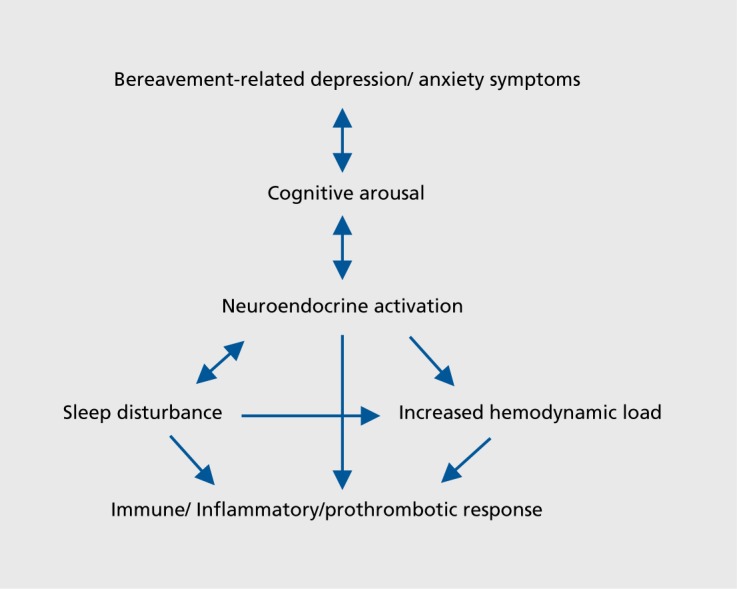
The death of a loved one is recognized as one of life's greatest stresses, with reports of increased mortality and morbidity for the surviving spouse or parent, especially in the early months of bereavement. The aim of this paper is to review the evidence to date to identify physiological changes in the early bereaved period, and evaluate the impact of bereavement interventions on such physiological responses, where they exist. Research to date suggests that bereavement is associated with neuroendocrine activation (cortisol response), altered sleep (electroencephalography changes), immune imbalance (reduced T-lymphocyte proliferation), inflammatory cell mobilization (neutrophils), and prothrombotic response (platelet activation and increased vWF-ag) as well as hemodynamic changes (heart rate and blood pressure), especially in the early months following loss. Additional evidence suggests that bereavement interventions have the potential to be of value in instances where sleep disturbance becomes a prolonged feature of complicated grief, but have limited efficacy in maintaining immune function in the normal course of bereavement.
Overview
The claims and statistics of this paper haven’t been checked yet.
Free: it reads the open-access text and checks the first 5 claims that cite a source we can check. Create a free account to check every claim.
Integrity signals
Registry
Cites
Statistics
Figures
Verification
Claims the paper makes
The claims and statistics of this paper haven’t been checked yet.
Free: it reads the open-access text and checks the first 5 claims that cite a source we can check. Create a free account to check every claim.
Claims other papers make about this one
Each is checked against this paper’s own text: does it say what the citing paper says it does?
The source backs part of the claim, not all of it — or backs it for a different population, condition or comparison.
In the citing paper
“Persistent grief reactions have been associated with marked occupational and social impairment 56 , impaired sleep 57 , increased rates of cancer and cardiovascular problems 58 and other medical conditions 59 , and poor health behaviours, such as increased alcohol and tobacco use 60,61 .”
From Emerging experience with selected new categories in the ICD‐11: complex PTSD, prolonged grief disorder, gaming disorder, and compulsive sexual behaviour disorder (2022) · cites this paper as [58]
Experimental — accuracy not yet measuredThe cited source says what the claim attributes to it.
In the citing paper
“Impaired sleep is a common problem in bereaved individuals (Buckley et al., 2012; Hardison et al., 2005; Lancel et al., 2020).”
From Feasibility and preliminary efficacy of guided internet-delivered cognitive behavioral therapy for insomnia after the loss of a child to cancer: Randomized controlled trial (2021) · cites this paper as Buckley et al., 2012
Self-check
Percentages, sums and reported differences re-computed from the paper’s own numbers.
The self-check needs the paper’s full text.
Citations
Cites
Inflammation, aspirin, and the risk of cardiovascular disease in apparently healthy men
Ridker, P. M., Cushman, M., Stampfer, M. J., Tracy, R. P., & Hennekens, C. H. (1997) · New England Journal of Medicine · doi:10.1056/nejm199704033361401 · Cited by 5,504 · cited 1×
“While the significance of increased leukocytes in bereavement is unclear to date, inflammation plays a significant role in atherosclerosis, and inflammatory markers, including leukocytes, correlate with cardiovascular mortality.(40,41)”
Psychological stress and the human immune system: a meta-analytic study of 30 Years of inquiry
Segerstrom, S. C., & Miller, G. E. (2004) · Psychological Bulletin · doi:10.1037/0033-2909.130.4.601 · Cited by 3,334
Inventory of complicated grief: a scale to measure maladaptive symptoms of loss.
Prigerson, H. G., Maciejewski, P. K., Reynolds, C. F., Bierhals, A. J., Newsom, J. T., Fasiczka, A., Frank, E., Doman, J., & Miller, M. (1995) · Psychiatry Research · doi:10.1016/0165-1781(95)02757-2 · Cited by 1,582
DEPRESSED LYMPHOCYTE FUNCTION AFTER BEREAVEMENT
Bartrop, R. W., Lazarus, L., Luckhurst, E., Kiloh, L. G., & Penny, R. (1977) · The Lancet · doi:10.1016/s0140-6736(77)92780-5 · Cited by 932 · cited 1×
“Response to the mitogenic stimulant phytohemagglutinin (PHA) was significantly depressed in the bereaved group at 6 weeks after bereavement, but not at the 2-week assessment.(32) Since this study, altered T-cell responses have been reported following the death of a loved one at 1 month following loss of a spouse,(33)…”
Self-citationTraumatic grief as a risk factor for mental and physical morbidity
(1997) · American Journal of Psychiatry · doi:10.1176/ajp.154.5.616 · Cited by 693
Sleep and depression--results from psychobiological studies: an overview
Riemann, D., Berger, M., & Voderholzer, U. (2001) · Biological Psychology · doi:10.1016/s0301-0511(01)00090-4 · Cited by 653 · cited 1×
“In bereavement, reduced sleep time, likely a result of an increased hypothalamic-pituitary-adrenal axis activation, may exacerbate depressive symptoms since a strong bidirectional relationship between sleep and depression has been previously suggested.(26) While sleep disturbance can become persistent and debilitating…”
Suppression of Lymphocyte Stimulation Following Bereavement
Schleifer, S. J. (1983) · JAMA: The Journal of the American Medical Association · doi:10.1001/jama.1983.03340030034024 · Cited by 643
Healthy Older Adults’ Sleep Predicts All-Cause Mortality at 4 to 19 Years of Follow-Up
Dew, M. A., Hoch, C. C., Buysse, D. J., Monk, T. H., Begley, A. E., Houck, P. R., Hall, M., Kupfer, D. J., & Reynolds, C. F. (2003) · Psychosomatic Medicine · doi:10.1097/01.psy.0000039756.23250.7c · Cited by 587
Sleep Research in Affective Illness: State of the Art Circa 1987
Reynolds, C. F., & Kupfer, D. J. (1987) · Sleep · doi:10.1093/sleep/10.3.199 · Cited by 465 · cited 1×
“It is not surprising that disturbed sleep patterns are a prominent feature of bereavement, as sleep disturbance is a prominent feature of depressive symptomatology, affecting more than 80% of people experiencing depression.(24,25) In bereavement, reduced sleep time, likely a result of an increased hypothalamic-pituita…”
Research works printed but not linked: 1
- Spratt ML. Denney DR. Immune variables, depression, and plasma cortisol over time in suddenly bereaved parents. J Neuropsychiatry Clin Neurosci. 1991 3 299 306 1821246 · DOI · Paper page
Cited by
Shear, M. K. (2015) · New England Journal of Medicine · doi:10.1056/nejmcp1315618 · Cited by 533
Keyes, K. M., Pratt, C., Galea, S., McLaughlin, K. A., Koenen, K. C., & Shear, M. K. (2014) · American Journal of Psychiatry · doi:10.1176/appi.ajp.2014.13081132 · Cited by 398
Reed, G. M., First, M. B., Billieux, J., Cloitre, M., Briken, P., Achab, S., Brewin, C. R., King, D. L., Kraus, S. W., & Bryant, R. A. (2022) · World Psychiatry · doi:10.1002/wps.20960 · Cited by 182
Bereavement: Course, Consequences, and Care
Zisook, S., Iglewicz, A., Avanzino, J. A., Maglione, J. E., Glorioso, D., Zetumer, S. D., Seay, K., Vahia, I. V., Young, I. T., Lebowitz, B. D., et al. (2014) · Current Psychiatry Reports · doi:10.1007/s11920-014-0482-8 · Cited by 160
Increased Risk of Acute Cardiovascular Events After Partner Bereavement: A Matched Cohort Study
Carey, I. M., Shah, S. M., DeWilde, S., Harris, T., Victor, C. R., & Cook, D. G. (2014) · JAMA Internal Medicine · doi:10.1001/jamainternmed.2013.14558 · Cited by 158
Seiler, A., von Känel, R., & Slavich, G. M. (2020) · Frontiers in Psychiatry · doi:10.3389/fpsyt.2020.565239 · Cited by 134
“The Impact of Bereavement on Mental Health As alluded to previously, the death of spouse is one of the most stressful life events a person can experience (59).”
BackgroundPohlkamp, L., Kreicbergs, U., & Sveen, J. (2019) · Psycho-Oncology · doi:10.1002/pon.5112 · Cited by 110
“Another common health problem associated with bereavement is sleep disturbance.(13,14) A study(15) reported that fathers were more likely to have sleep disturbances than mothers were, 4 to 9 years after the loss of a child to cancer.”
BackgroundJohansson, L., Guo, X., Hällström, T., Norton, M. C., Waern, M., Östling, S., Bengtsson, C., & Skoog, I. (2013) · BMJ Open · doi:10.1136/bmjopen-2013-003142 · Cited by 101
Pohl, T. T., Young, L. J., & Bosch, O. J. (2019) · International Journal of Psychophysiology · doi:10.1016/j.ijpsycho.2017.12.011 · Cited by 83
Prior, A., Fenger‐Grøn, M., Davydow, D. S., Olsen, J., Li, J., Guldin, M., & Vestergaard, M. (2017) · Psychological Medicine · doi:10.1017/s0033291717002380 · Cited by 70
“Allostatic load theory provides a basis for the relation between psychological and physiological stress; it describes stress as a response mediated by the neurological, endocrine, and immune systems (McEwen, 1998; Buckley et al. 2012).”
BackgroundGrief Before and After Bereavement in the Elderly: An Approach to Care
Lechner‐Meichsner, F., O'Connor, M., Skritskaya, N. A., & Shear, M. K. (2020) · American Journal of Geriatric Psychiatry · doi:10.1016/j.jagp.2019.12.010 · Cited by 70
Ennis, J., & Majid, U. (2021) · Death Studies · doi:10.1080/07481187.2019.1661884 · Cited by 68
“Other studies have also found a heightened cardiovascular risk in spousally-bereaved individuals (Buckley et al., 2010, 2012; Mason & Duffy, 2018), which may be due to a disruption in health service access and utilization (Simeonova, 2013).”
BackgroundInfluentialGrauerholz, K. R., Berry, S. N., Capuano, R. M., & Early, J. (2021) · Frontiers in Psychology · doi:10.3389/fpsyg.2021.673050 · Cited by 64
O’Connor, M., & Breen, L. J. (2014) · BMC Medical Education · doi:10.1186/1472-6920-14-59 · Cited by 60
“Further, patients may visit their GP more frequently following bereavement due to increased morbidity during this time [4,5].”
BackgroundWidowhood and cognitive decline in adults aged 50 and over: A systematic review and meta-analysis
Singham, T., Bell, G., Saunders, R., & Stott, J. C. H. (2021) · Ageing Research Reviews · doi:10.1016/j.arr.2021.101461 · Cited by 57
Bordere, T. C. (2017) · Family Relations · doi:10.1111/fare.12231 · Cited by 56
Killikelly, C., Lorenz, L., Bauer, S., Mahat-Shamir, M., Ben-Ezra, M., & Maercker, A. (2019) · Journal of Affective Disorders · doi:10.1016/j.jad.2019.02.014 · Cited by 48
Biddle, K. D., Jacobs, H. I. L., Uquillas, F. D., Zide, B. S., Kirn, D. R., Properzi, M. J., Rentz, D. M., Johnson, K. A., Sperling, R. A., & Donovan, N. J. (2020) · JAMA Network Open · doi:10.1001/jamanetworkopen.2020.0121 · Cited by 56
Divergent gene expression responses to Complicated Grief and Non-complicated Grief
O’Connor, M.-F., Schultze-Florey, C. R., Irwin, M. R., Arevalo, J. M. G., & Cole, S. W. (2014) · Brain, Behavior, and Immunity · doi:10.1016/j.bbi.2013.12.017 · Cited by 46
“Acute increases in catecholamines, which can suppress antiviral response, are found during the initial months of bereavement (Buckley et al., 2012), and those with CG and with the highest levels of epinephrine are least likely to be responsive to psychotherapy (O’Connor et al.”
Determinants and Predictors of Grief Severity and Persistence: The Rotterdam Study
Milić, J., Muka, T., Ikram, M. A., Franco, O. H., & Tiemeier, H. W. (2017) · Journal of Aging and Health · doi:10.1177/0898264317720715 · Cited by 54
“Two previous studies reported that even older bereaved spouses have higher rates of mortality and morbidity, impaired immune system, more depressive symptoms, more chronic conditions, and functional disabilities (Buckley et al., 2012; Fiske, Wetherell, & Gatz, 2009; Shahar, Schultz, Shahar, & Wing, 2001).”
BackgroundHuang, F., Hsu, A., Chao, Y., Shang, C. M., Tsai, J., & Wu, C. W. (2020) · Human Brain Mapping · doi:10.1002/hbm.25240 · Cited by 52
“The brain functional alterations have global internetwork effects, rather than affecting RSFCDMN only, because the grief could result in multiple functionalities that transcend self-awareness, such as psychomotor retardation (Hensley & Clayton, 2008), sleep disturbance, and neuroendocrine activations (Buckley et al.,…”
BackgroundCare at the Very End-of-Life: Dying Cancer Patients and Their Chosen Family’s Needs
Clark, K. (2017) · Cancers · doi:10.3390/cancers9020011 · Cited by 48
“Even aside from grief and sadness, bereaved people are at greater risk of morbidity and even mortality compared to the rest of the community [25].”
BackgroundBrooten, D. A., Youngblut, J. M., Caicedo, C., del Moral, T., Cantwell, G. P., & Totapally, B. (2016) · American Journal of Hospice and Palliative Medicine® · doi:10.1177/1049909116678597 · Cited by 45
Kirby, E. R., Kenny, K., Broom, A. F., MacArtney, J. I., & Good, P. D. (2017) · Palliative & Supportive Care · doi:10.1017/s1478951517000475 · Cited by 44
“…have shown that bereavement and bereavement-related grief increase the risk of mortality (Stroebe & Stroebe, 1993; Bowling, 1994; Hart et al., 2007; Buckley et al., 2012), and they have also been linked to depression, anxiety, insomnia, cognitive function, and work and relationship difficulties…”
BackgroundCozza, S. J., Shear, M. K., Reynolds, C. F., Fisher, J. E., Zhou, J., Maercker, A., Simon, N., Mauro, C., Skritskaya, N., Zisook, S., et al. (2020) · Psychological Medicine · doi:10.1017/s0033291719000254 · Cited by 43
“Given this condition’s impact on health and functioning (Lannen et al., 2008; Buckley et al., 2012) and its response to grief-specific interventions (Bryant et al.”
Bryant, R. A., Azevedo, S., Yadav, S., Cahill, C., Kenny, L., Maccallum, F., Tran, J., Choi-Christou, J., Rawson, N., Tockar, J., et al. (2024) · JAMA Psychiatry · doi:10.1001/jamapsychiatry.2024.0432 · Cited by 41
Childhood maltreatment and adult proinflammatory status in patients with major depression.
Zeugmann, S., Bührsch, N., Bajbouj, M., Heuser, I., Anghelescu, I. G., & Quante, A. (2013) · PubMed · Cited by 36
A Scoping Review of Interventions for Spousal Bereavement in Older Adults
Davidow, J. B., Zide, B. S., Levin, L., Biddle, K. D., Urizar, J. C., & Donovan, N. J. (2021) · American Journal of Geriatric Psychiatry · doi:10.1016/j.jagp.2021.08.002 · Cited by 36
de Jong, T. R., Harris, B. N., Perea-Rodríguez, J. P., & Saltzman, W. (2013) · Psychoneuroendocrinology · doi:10.1016/j.psyneuen.2013.03.006 · Cited by 35
“For example, social conflict or social loss can cause or exacerbate the effects of chronic stress (Kiecolt-Glaser et al., 1998; Buckley et al., 2012), whereas a stable and affiliative social environment can provide a buffer against the effects of stress (Cohen and Wills, 1985; Uchino et al.”
BackgroundSveen, J., Jernelöv, S., Pohlkamp, L., Kreicbergs, U., & Kaldo, V. (2021) · Internet Interventions · doi:10.1016/j.invent.2021.100409 · Cited by 32
“Impaired sleep is a common problem in bereaved individuals (Buckley et al., 2012; Hardison et al., 2005; Lancel et al., 2020).”
BackgroundPalliative and end of life care of people with diabetes: issues, challenges and strategies
Dunning, T., & Martin, P. (2018) · Diabetes Research and Clinical Practice · doi:10.1016/j.diabres.2017.09.018 · Cited by 32
‘Unprepared for the depth of my feelings’ - Capturing grief in older people through research poetry
Gerber, K., Brijnath, B., Lock, K., Bryant, C., Hills, D., & Hjorth, L. (2022) · Age and Ageing · doi:10.1093/ageing/afac030 · Cited by 32
“For example, it can heighten an individual’s vulnerability to depression [6–8] and post-traumatic stress [7, 9], and negatively affect immune function [10, 11], inflammatory markers [6], neuroendocrine systems [12], weight [4, 13] and sleep [12, 14].”
Clark, K., Cain, J., Campbell, L., & Byfieldt, N. (2014) · Palliative & Supportive Care · doi:10.1017/s1478951514000066 · Cited by 31
“Aside from grief and sadness, being bereaved predisposes one to significant morbidity and, in the worst cases, mortality (Buckley et al., 2012).”
BackgroundInfluentialMonitoring and optimising outcomes of survivors of critical illness
Aitken, L. M., & Marshall, A. P. (2014) · Intensive and Critical Care Nursing · doi:10.1016/j.iccn.2014.10.006 · Cited by 30
Self-citationBereavement support in the UK – a rapid evidence assessment
Hewison, A., Zafar, S., & Efstathiou, N. (2020) · Bereavement Care · doi:10.1080/02682621.2020.1728086 · Cited by 29
Millar, B., & Lee, J. (2021) · Emotion Review · doi:10.1177/17540739211022815 · Cited by 26
“For example, grief is associated with elevated heart rate and blood pressure, and an increase in the stress hormone cortisol (for review, see Buckley et al., 2012), all three of which are also associated with fear (e.g., Hayashi et al., 2009; Lerner et al., 2007).”
BackgroundKang, M., Bohorquez‐Montoya, L., McAuliffe, T. L., Claesges, S. A., Blair, N.-O. P., Sauber, G., Reynolds, C. F., Hillard, C. J., & Goveas, J. S. (2021) · Frontiers in Psychiatry · doi:10.3389/fpsyt.2021.783187 · Cited by 26
“Higher cortisol concentrations are consistently reported during the early bereavement period than in non-bereaved adults (26, 53, 54).”
BackgroundBiological determinants of depression following bereavement
Assareh, A. A., Sharpley, C. F., McFarlane, J. R., & Sachdev, P. S. (2014) · Neuroscience & Biobehavioral Reviews · doi:10.1016/j.neubiorev.2014.12.013 · Cited by 27
“Bereavement is associated with increased adrenocortical activity, and elevated cortisol in the early period of bereavement has been confirmed in several studies (Biondi and Picardi, 1996; Buckley et al., 2012).”
Tang, R., Xie, T., Jiao, K., Xu, X. Y., Zou, X., Qian, W., & Wang, J. (2021) · International Journal of Environmental Research and Public Health · doi:10.3390/ijerph18179061 · Cited by 26
“However, studies have suggested that some bereaved people may develop intense and continuous symptoms in emotional, cognitive, behavioral, and physiological aspects, which may lead to the impairment of their mental or physical health and social functions [6,7,10,12].”
BackgroundDeveloping a practice-based research agenda for grief and bereavement care
Hay, A., Hall, C., Sealey, M., Lobb, E. A., & Breen, L. J. (2019) · Death Studies · doi:10.1080/07481187.2019.1636897 · Cited by 24
Life Will Never be the Same: Experiences of Grief and Loss among Older Adults
Ang, C. (2022) · Current Psychology · doi:10.1007/s12144-021-02595-6 · Cited by 22
“Preoccupation with the deceased can lead to irregular eating, poor sleep, heart disease, and digestive disorders (Buckley et al., 2012; Carey et al., 2014; He et al., 2014; Krochalk et al., 2008).”
BackgroundPorous Bodies, Porous Minds. Emotions and the Supernatural in the Íslendingasögur (ca. 1200–1400)
Kanerva, K. (2015) · UTUPub (University of Turku) · Cited by 23
Levi‐Belz, Y. (2020) · Archives of Suicide Research · doi:10.1080/13811118.2020.1820412 · Cited by 20
“CG is associated with other health problems, such as sleep disturbance, substance abuse, suicidal ideation and behavior, abnormalities in immune function, and increased risks of cardiovascular disease and cancer (e.g., Buckley et al., 2012; Shear, 2015).”
BackgroundSpousal bereavement after dementia caregiving: A turning point for immune health
Wilson, S. J., Padin, A. C., Bailey, B. E., Laskowski, B. F., Andridge, R., Malarkey, W. B., & Kiecolt‐Glaser, J. K. (2020) · Psychoneuroendocrinology · doi:10.1016/j.psyneuen.2020.104717 · Cited by 20
Whitfield, V., Havyatt, J., Buckley, T. A., Bartrop, R. W., McKinley, S., Roche, D., Spinaze, M., Bramwell, M., & Tofler, G. H. (2014) · Australian Critical Care · doi:10.1016/j.aucc.2014.11.002 · Cited by 20
Self-citationFra cure intensive e cure palliative ai tempi di CoViD-19
Romanò, M. (2020) · Recenti Progressi in Medicina · doi:10.1701/3347.33185 · Cited by 18
Catecholamine predictors of complicated grief treatment outcomes
O'Connor, M., Shear, M. K., Fox, R., Skritskaya, N. A., Campbell, B., Ghesquiere, A., & Glickman, K. (2012) · International Journal of Psychophysiology · doi:10.1016/j.ijpsycho.2012.09.014 · Cited by 17
Hamano, J., Morita, T., Igarashi, N., Shima, Y., & Miyashita, M. (2020) · Psycho-Oncology · doi:10.1002/pon.5539 · Cited by 17
“A previous study suggested that CG is associated with sleep disturbance, suicidal thinking and behavior, and an increased risk of cardiovascular disease and cancer.(5,6) Several studies reported that the prevalence of MDD in bereaved families of patients with advanced cancer was high, and that it deteriorated the qual…”
BackgroundInfluential Factors of Complicated Grief of Bereaved Spouses from Cancer Patient
Kim, S. M., & Kown, S. H. (2018) · Journal of Korean Academy of Nursing · doi:10.4040/jkan.2018.48.1.59 · Cited by 15
The Grieving Nursing Diagnoses in the Primary Healthcare Setting
Rodríguez‐Álvaro, M., Brito, P. R. B., Hernández, A. M. G., Aguirre‐Jaime, A., & Fernández‐Gutiérrez, D. Á. (2019) · International Journal of Nursing Knowledge · doi:10.1111/2047-3095.12202 · Cited by 15
“With respect to greater presence of deaths among complicated mourners, men, and elderly, the literature reports that, in fact, loss leads to an increase in morbidity and mortality, especially in situations of greater dysfunction and during the first months of mourning (Buckley et al., 2012).”
Joa, B., & Newberg, A. B. (2021) · OMEGA - Journal of Death and Dying · doi:10.1177/00302228211024111 · Cited by 14
“…experience physiological changes such as cortisol increases, sleep disturbances, hemodynamic alterations, and suppressed immune functioning, all of which may contribute to the increased morbidity and mortality observed in people surviving the loss of a close loved one (Buckley et al., 2012).”
BackgroundBereavement in the year before a first myocardial infarction: Impact on prognosis
Wei, D., Janszky, I., Ljung, R., Leander, K., Chen, H., Fang, F., Li, J., & László, K. D. (2020) · European Journal of Preventive Cardiology · doi:10.1177/2047487320916958 · Cited by 14
Tzeng, H., Lee, C. B., Chen, C.-T., & Lee, M. (2022) · Research on Aging · doi:10.1177/01640275221144251 · Cited by 13
“Third, PSS might directly alleviate the harmful physiological functions associated with bereavement through physiological mechanisms, namely the biological regulation of the sympathetic nervous system and hypothalamic–pituitary–adrenal axis activity (Uchino, 2006; Buckley et al., 2012).”
BackgroundThe psychology of bereavement and mourning rituals in a Northern Sotho community
Makgahlela, M. (2016) · Cited by 13
Romero, M. M. (2018) · OMEGA - Journal of Death and Dying · doi:10.1177/0030222818821024 · Cited by 12
“ing substance abuse, suicidal ideation, abnormal immune function, sleep disturbance, increased risks for cancer and cardiovascular disease, and abnormal neurocognitive functioning (Buckley et al., 2012; Hall et al., 2014; O’Connor & Arizmendi, 2014).”
BackgroundCaring for People with Diabetes at the End of Life
Dunning, T. L., Duggan, N. M., & Savage, S. (2016) · Current Diabetes Reports · doi:10.1007/s11892-016-0801-z · Cited by 12
Karl, S., Fallon, M., Palitsky, R., Martinez, J. A., Gündel, H., & O'Connor, M. (2018) · Psychotherapy and Psychosomatics · doi:10.1159/000481862 · Cited by 12
Li, W., Cheng, P., Liu, Z., Ma, C., Liu, B., Zheng, W., Scarisbrick, D., Lü, J., Li, L., Huang, Y., et al. (2023) · Psychiatry Research · doi:10.1016/j.psychres.2023.115282 · Cited by 11
Evolutionary Perspectives on Depression
Rantala, M. J., & Luoto, S. (2022) · Cambridge University Press eBooks · doi:10.1017/9781009030564.010 · Cited by 12
Clark, K., Willis, A., & Byfieldt, N. (2016) · American Journal of Hospice and Palliative Medicine® · doi:10.1177/1049909115625280 · Cited by 11
Measuring and Valuing Outcomes for Care at the End of Life: The Capability Approach
Coast, J., Bailey, C., Canaway, A., & Kinghorn, P. (2016) · Springer eBooks · doi:10.1007/978-3-319-28267-1_7 · Cited by 11
Increased risk for hip fracture after death of a spouse—further support for bereavement frailty?
Vala, C. H., Lorentzon, M., Sundh, V., Johansson, H., Lewerin, C., Sten, S., Karlsson, M. K., Ohlsson, C., Johansson, B. E. A., Kanis, J. А., et al. (2019) · Osteoporosis International · doi:10.1007/s00198-019-05242-w · Cited by 11
El duelo: diagnóstico y abordaje del duelo normal y complicado
Falagán, N. D. (2014) · UCrea (University of Cantabria) · Cited by 11
Lee, K. H., & Jun, J. S. (2023) · Journal of Evidence-Based Social Work · doi:10.1080/26408066.2023.2211970 · Cited by 10
Prairie voles as a model for adaptive reward remodeling following loss of a bonded partner
Sadino, J. M., & Donaldson, Z. R. (2024) · Annals of the New York Academy of Sciences · doi:10.1111/nyas.15134 · Cited by 10
“Specifically, separation-induced behavioral and physiological changes mirror those observedingrievinghumans, 8,9,63,65–69 andthesechangesareinitiated byasimilardisruptionofaspecificsocialbond(Figure1).”
BackgroundIntegrating biology and biography in medicine: The mind and body are not separate
Horwitz, R. I., Cullen, M. R., Conroy, A. H., Sim, I., Singer, B. H., Badal, K., & Offidani, E. (2024) · PLOS mental health. · doi:10.1371/journal.pmen.0000122 · Cited by 10
Oberndorfer, M., Mogg, C., Haider, S., Grabovac, I., Drgac, D., & Dorner, T. E. (2021) · Journal of Epidemiology & Community Health · doi:10.1136/jech-2021-216637 · Cited by 10
Shahane, A. D., Fagundes, C. P., & Denny, B. T. (2018) · Bereavement Care · doi:10.1080/02682621.2018.1493640 · Cited by 10
Co-Creative Songwriting for Bereavement Support
Cheatley, L., Ackerman, M., Pease, A., & Moncur, W. (2020) · Strathprints: The University of Strathclyde institutional repository (University of Strathclyde) · Cited by 10
Levi-Belz, Y., & Lev-Ari, L. (2023) · Death Studies · doi:10.1080/07481187.2022.2065707 · Cited by 9
“Complicated grief is associated with major health problems, such as sleep disturbance, substance abuse, abnormalities in immune function, increased risk of cardiovascular disease, and cancer, as well as suicide ideation and suicide behavior (e.g., Buckley et al., 2012; Shear, 2015).”
BackgroundButler, A. E., Riegel, M., Speedie, L., Ranse, K., & Buckley, T. A. (2023) · Australian Critical Care · doi:10.1016/j.aucc.2023.10.008 · Cited by 9
Self-citationTofthagen, C. S., Hernández, D., Mason, T. M., Buck, H. G., & Kip, K. E. (2020) · OMEGA - Journal of Death and Dying · doi:10.1177/0030222820947241 · Cited by 9
Fadeeva, A., Mann, E., McGill, G., Wilson, G., Moreland, M., Melling, A., & Kiernan, M. D. (2022) · Death Studies · doi:10.1080/07481187.2022.2089777 · Cited by 8
“Bereavement can result in subsequent poor mental and physical health for surviving family members and an increased risk of mortality (Buckley et al., 2012).”
BackgroundHow people perceive the minds of the dead: The importance of consciousness at the moment of death
Doyle, C. M., & Gray, K. J. (2020) · Cognition · doi:10.1016/j.cognition.2020.104308 · Cited by 8
Wong, L. P., Alias, H., Tan, S., & Saw, A. (2023) · Anatomical Science International · doi:10.1007/s12565-023-00723-9 · Cited by 7
“Grieving and mourning over the death of loved ones may have health-damaging effects (Buckley et al. 2012).”
BackgroundOpportunities for Computational Creativity in a Therapeutic Context.
Cheatley, L., Moncur, W., & Pease, A. (2019) · Strathprints: The University of Strathclyde institutional repository (University of Strathclyde) · Cited by 7
Relational Transitions and Stress: Turbulence Over the Lifespan of Marriage
Brisini, K. S. C., & Solomon, D. H. (2020) · Oxford University Press eBooks · doi:10.1093/oxfordhb/9780190679446.013.10 · Cited by 8
Positive Affect as Source of Resilience in Adulthood and Later Life
Ong, A. D., Bergeman, C. S., & Reid, M. C. (2020) · Risk, systems and decisions · doi:10.1007/978-3-030-57089-7_7 · Cited by 7
CortiLove: A pilot study on hair steroids in the context of being in love and separation
Renner, J., Stanulla, M., Walther, A., & Schindler‐Gmelch, L. (2021) · Comprehensive Psychoneuroendocrinology · doi:10.1016/j.cpnec.2021.100061 · Cited by 7
Wenping, S., Ying, L., Song, L., Li, Y., & Liu, H. (2015) · Journal of Translational Medicine · doi:10.1186/s12967-015-0487-z · Cited by 7
“indicators, such as the neutrophil count and glucose level (reflecting stress) [9-11]; the triglyceride, cholesterol, high-density lipoprotein and low-density lipoprotein levels (reflecting blood lipids) [12-14]; and the albumin and creatinine values (reflecting liver and kidney function) [15-17] can be used to evalua…”
BackgroundMindfulness and Relaxation Interventions Reduce Depression, Negative Affect and Stress in Widow(er)s
Knowles, L. M., Kaplan, D. M., Flores, M. A., Friedman, S. E., & O'Connor, M. (2025) · Journal of Loss and Trauma · doi:10.1080/15325024.2025.2504951 · Cited by 6
“…increased all-cause mortality following the death of a loved one, a phenomenon that may be driven by significant increased risk for cardiovascular events and disease (Buckley et al., 2010, 2012), including higher blood pressure found in those with higher grief severity (Palitsky et al., 2023).”
Spouse bereavement and brain pathologies: A propensity score matching study
Kim, J. W., Byun, M. S., Lee, J. H., Yi, D., Kim, M. J., Jung, G., Lee, J., Lee, Y., Kim, Y. K., Kang, K. M., et al. (2022) · Psychiatry and Clinical Neurosciences · doi:10.1111/pcn.13439 · Cited by 6
“First, the loss of a spouse is considered one of the most stressful life events.(1,2,36) The experience of spouse bereavement can cause a severe acute or chronic stress reaction and emotional sequalae such as depression, which may subsequently contribute to cerebrovascular changes, resulting in increased WMH.”
BackgroundMethodDawson, L., Hay, J., & Rosling, N. (2021) · Research for All · doi:10.14324/rfa.05.2.04 · Cited by 6
Musical creativity support tools for bereavement support
Cheatley, L., Ackerman, M., Pease, A., & Moncur, W. (2022) · Digital Creativity · doi:10.1080/14626268.2022.2034648 · Cited by 6
“The passing of a loved one can increase the risk of mortality and carry significant risks to mental and physical health, including increased rates of heart attacks, strokes (Carey et al. 2014), increased blood pressure (Buckley et al. 2012) and aggravation of physical pain (Bradbeer et al. 2003).”
BackgroundCommunication after pregnancy and baby loss
Crossingham, G., & Abramson, P. (2022) · BJA Education · doi:10.1016/j.bjae.2022.03.001 · Cited by 6
Cortisol and psychological responses to natural disasters
Flinn, M. V., Thum, E., Lau, I., Srinivasan, S., Kanchwala, Z., Varghese, C., Ang, K., & Schweiger, B. C. (2025) · Psychoneuroendocrinology · doi:10.1016/j.psyneuen.2025.107474 · Cited by 5
Unraveling the Neurobiology of Grief: Insights into Brain and Behavior–Narrative Review
Statharakos, N. (2025) · Brain Science Advances · doi:10.26599/bsa.2025.905001 · Cited by 5
“Group therapy and bereavement support groups have been linked to lower cortisol levels, suggesting that social connection may attenuate prolonged HPA axis activation [47].”
Tan, H. P. (2020) · INFORMASI · doi:10.21831/informasi.v50i2.18462 · Cited by 5
“It has been proven through clinical and psychological studies that grief and bereavement can yield negative psychological, physiological, physical and social consequences (Buckley et al., 2012, Mash, Fullerton, & Ursano, 2013; Stroebe, 2009).”
BackgroundAttwood, C., Benkwitz, A., & Holland, M. J. G. (2022) · Death Studies · doi:10.1080/07481187.2022.2160032 · Cited by 5
“An explanation for this may be that studies involving bereaved families can be hard to conduct due to a low participant response rate (Buckley et al., 2012).”
BackgroundAbordagem do luto na Atenção Primária em Saúde
Conzatti, M. (2023) · Revista Brasileira de Medicina de Família e Comunidade · doi:10.5712/rbmfc18(45)3409 · Cited by 5
Mason, T. M., Szalacha, L. A., Tofthagen, C. S., & Buck, H. G. (2021) · Journal of Palliative Medicine · doi:10.1089/jpm.2021.0267 · Cited by 5
Komplike yas ve komplike yas tedavisi
Özer, Ü., & Yıldırım, E. A. (2015) · Dusunen Adam The Journal of Psychiatry and Neurological Sciences · doi:10.5350/dajpn2015280313 · Cited by 5
“CG is associated with psychiatric symptoms such as sleeping disorder, psychoactive substance abuse, and suicidal ideation, as well as diseases like anomalies of the immune system, hemodynamic alterations, increase of cardiovascular diseases, and cancer risk (8).”
BackgroundEcological grief is a One Health imperative for building socioecological resilience
Reaser, J. K., & Kirkey, J. (2025) · BioScience · doi:10.1093/biosci/biaf135 · Cited by 4
“Acute grief can lead to increased cortisol levels, resulting in potential sleep disruptions that, in turn, can exacerbate immune system response and inflammation (Buckley et al. 2012 ), placing grieving individuals at higher disease risk.”
Does Stress Shorten Your Life? Evidence from Parental Bereavement
Schmidpeter, B. (2024) · Oxford Bulletin of Economics and Statistics · doi:10.1111/obes.12596 · Cited by 4
Sleep quality moderates the association between family bereavement and heart rate variability
Chai, H. W., Jester, D. J., Lee, S., Joo, S., Umberson, D., & Almeida, D. M. (2022) · Journal of Behavioral Medicine · doi:10.1007/s10865-022-00388-1 · Cited by 4
Family Bereavement Care in Pediatric Oncology
Lövgren, M., & Sveen, J. (2017) · Pediatric oncology · doi:10.1007/978-3-319-61391-8_12 · Cited by 4
Brooten, D. A., Youngblut, J. M., Roche, R. M., Caicedo, C., Del-Moral, T., Cantwell, G. P., & Totapally, B. (2019) · American Journal of Critical Care · doi:10.4037/ajcc2019572 · Cited by 4
African American Sibling Survivors of Homicide Victims: A Phenomenological Study
Brown, T. N. (2020) · ScholarWorks (Walden University) · Cited by 4
Larsson, A.-L., Beck, I., Janlöv, A., & Einberg, E. (2024) · International Journal of Qualitative Studies on Health and Well-Being · doi:10.1080/17482631.2024.2330116 · Cited by 3
Beeris, C., Niemeijer, A. R., Bisseling, R., & Machielse, A. (2025) · International Journal of Qualitative Studies on Health and Well-Being · doi:10.1080/17482631.2025.2477372 · Cited by 3
“…injurious outcomes (Stahl & Schulz, 2013) such as intense suffering (Holmes & Rahe, 1967), decline in physical and mental health (Ang, 2023; Buckley et al., 2012; Jones et al., 2010; Lee & Carr, 2007; Shear et al., 2013; Utz et al., 2012) and higher risk of mortality (Holland et al., 2013;…”
Metadata
- Authors
- Buckley, T., Sunari, D., Marshall, A., Bartrop, R., McKinley, S., & Tofler, G.
- Affiliations
- The University of Sydney (AU)
- University of Technology Sydney (AU)
- Corresponding author
- Buckley, Thomas
- Venue
- Dialogues in Clinical Neuroscience
- Publisher
- Informa UK Limited
- Published
- 2012-06-30
- Volume
- 14
- Issue
- 2
- Pages
- 129-139
- ISSN
- 1294-8322 (ISSN-L)
- 1958-5969
- PMC
- PMC3384441
- OpenAlex
- W1505503209
- Cited by
- 160
- References
- 69
- Citations by year
- 2026: 10 · 2025: 16 · 2024: 13 · 2023: 21 · 2022: 16 · 2021: 14 · 2020: 14 · 2019: 12 · 2018: 10 · 2017: 11 · 2016: 7 · 2015: 3 · 2014: 9 · 2013: 3 · 2012: 1
- FWCI
- 5.79
- Type
- journal article
- Language
- en
- Open access
- diamond
- doi.org
- Licence
- Locations
- Dialogues in Clinical Neuroscience (publishedVersion, cc-by-nc-nd)
- Europe PMC (PubMed Central) (publishedVersion, cc-by-nc-nd)
- PubMed Central (publishedVersion, cc-by-nc-nd)
- PubMed (publishedVersion)
- Griffith Research Online (submittedVersion)
- OPUS - Open Publications of UTS Scholars (University of Technology Sydney) (submittedVersion)
- Topics
- Social Sciences › Psychology › Clinical Psychology › Grief, Bereavement, and Mental Health
- Social Sciences › Anthropology › Death, Funerary Practices, and Mourning
- Life Sciences › Neuroscience › Behavioral Neuroscience › Stress Responses and Cortisol
- Keywords
- bereavement, grief, cortisol, neuroendocrine activation, sleep disorders, EEG, T cell proliferation, immune function, neutrophils, platelet activation, von Willebrand factor, hemodynamic changes, heart rate, blood pressure, complicated grief, bereavement interventions
- MeSH terms
- Bereavement, Blood Pressure, Grief, Heart Rate, Humans, Hydrocortisone, Immune System, Sleep Wake Disorders, Stress, Psychological
About these checks
Registry, retraction, Cites and statistics results are computed, not judged, with one exception: a printed reference that no index lists is read once by a model before it counts as a citation error. Claims are extracted by a model and kept only when their quote appears verbatim in the text; each cited source is then checked, with a model’s help, for whether it says what the claim relies on. Those verdicts can be wrong — read the claim’s quote and the cited source before relying on one.
Statistics and arithmetic are recomputed, not judged.
Confidence bands are shown only for fields calibrated on our annotated test set. None is calibrated yet, so no band is shown.
What counts as a claim ›How we measure confidence ›How we check this ›
Are you an author, or do you see a problem with this page? Request a review
Data sources
Bibliographic data: Semantic Scholar, OpenAlex, Crossref.
Contains information from the Semantic Scholar Academic Graph Datasets, made available under the ODC Attribution License (ODC-BY 1.0).
Semantic Scholar’s data is described in: Kinney, R., et al. (2023). The Semantic Scholar Open Data Platform. arXiv:2301.10140.
