

The DOI matches its Crossref record; 234 of the 234 references it cites were found in a registry or an index.
Brain rhythms and neural syntax: implications for efficient coding of cognitive content and neuropsychiatric disease.
Open accessAbstract
The perpetual activity of the cerebral cortex is largely supported by the variety of oscillations the brain generates, spanning a number of frequencies and anatomical locations, as well as behavioral correlates. First, we review findings from animal studies showing that most forms of brain rhythms are inhibition-based, producing rhythmic volleys of inhibitory inputs to principal cell populations, thereby providing alternating temporal windows of relatively reduced and enhanced excitability in neuronal networks. These inhibition-based mechanisms offer natural temporal frames to group or "chunk" neuronal activity into cell assemblies and sequences of assemblies, with more complex multi-oscillation interactions creating syntactical rules for the effective exchange of information among cortical networks. We then review recent studies in human psychiatric patients demonstrating a variety alterations in neural oscillations across all major psychiatric diseases, and suggest possible future research directions and treatment approaches based on the fundamental properties of brain rhythms.
Overview
The claims and statistics of this paper haven’t been checked yet.
Run the check — free, no account needed. It reads the open-access text and checks the sources it cites.
Integrity signals
Registry
Cites
Statistics
Figures
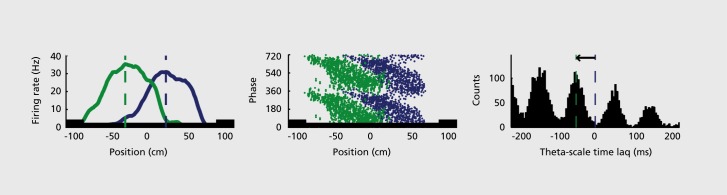
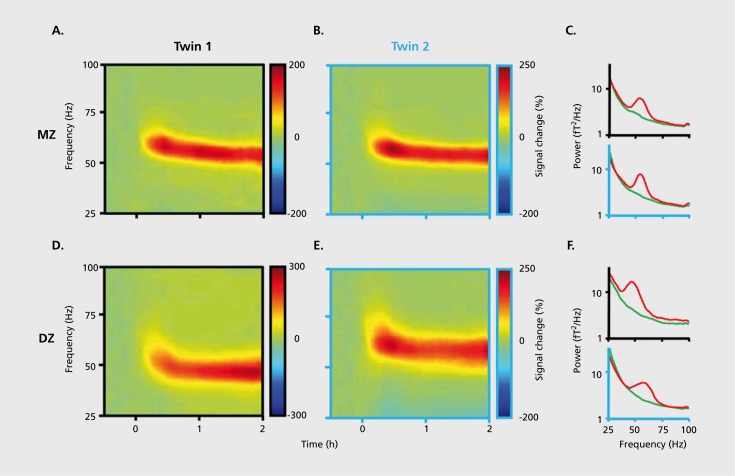
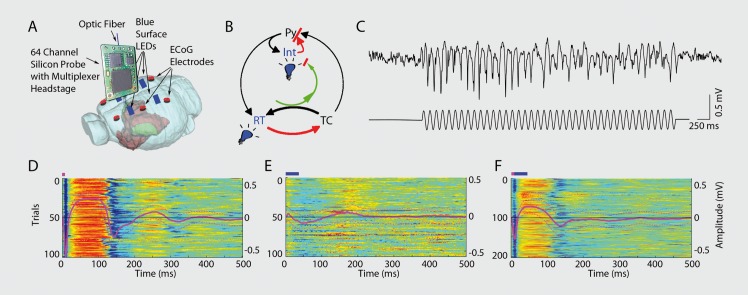
Verification
Claims the paper makes
The claims and statistics of this paper haven’t been checked yet.
Run the check — free, no account needed. It reads the open-access text and checks the sources it cites.
Claims other papers make about this one
Each is checked against this paper’s own text: does it say what the citing paper says it does?
The source backs part of the claim, not all of it — or backs it for a different population, condition or comparison.
In the citing paper
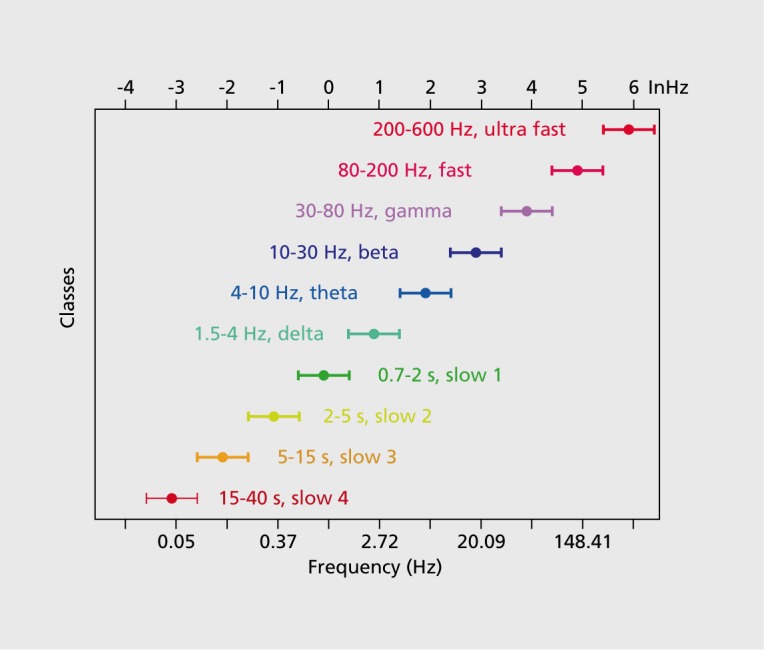
“SOHM dynamics may help to explain many kinds of rhythmic phenomena, such as the fact that oscillations tend to occur at faster rates in organisms with smaller brains (Buzsáki and Watson, 2012); all else being equal, smaller systems are likely to arrive at synchronous equilibria more quickly, with larger systems requiring relatively more time for synchronizing their micro-dynamics.”
From An Integrated World Modeling Theory (IWMT) of Consciousness (2020) · cites this paper as Buzsáki and Watson, 2012
Experimental — accuracy not yet measured
Self-check
Percentages, sums and reported differences re-computed from the paper’s own numbers.
The self-check needs the paper’s full text.
Citations
Cites
Complex brain networks: graph theoretical analysis of structural and functional systems
Bullmore, E., & Sporns, O. (2009) · Nature Reviews Neuroscience · doi:10.1038/nrn2575 · Cited by 11,820
Self-organized criticality: An explanation of the 1/ f noise
Bak, P., Tang, C., & Wiesenfeld, K. A. (1987) · Physical Review Letters · doi:10.1103/physrevlett.59.381 · Cited by 7,644
Neuronal Oscillations in Cortical Networks
Buzsáki, G., & Draguhn, A. (2004) · Science · doi:10.1126/science.1099745 · Cited by 6,576
Buzsáki, G. (2006) · doi:10.1093/acprof:oso/9780195301069.001.0001 · Cited by 4,873
Self-citationThe brainweb: phase synchronization and large-scale integration
Varela, F., Lachaux, J.-P., Rodriguez, E., & Martinerie, J. (2001) · Nature Reviews Neuroscience · doi:10.1038/35067550 · Cited by 4,761
A mechanism for cognitive dynamics: neuronal communication through neuronal coherence.
Fries, P. (2005) · Trends in Cognitive Sciences · doi:10.1016/j.tics.2005.08.011 · Cited by 4,284
Microstructure of a spatial map in the entorhinal cortex
Hafting, T., Fyhn, M., Molden, S., Moser, M.-B., & Moser, E. I. (2005) · Nature · doi:10.1038/nature03721 · Cited by 4,068
Regulation of Synaptic Efficacy by Coincidence of Postsynaptic APs and EPSPs
Markram, H., Lübke, J., Frotscher, M., & Sakmann, B. (1997) · Science · doi:10.1126/science.275.5297.213 · Cited by 3,832
Interneurons of the hippocampus
Freund, T. F., & Buzsáki, G. (1998) · Hippocampus · doi:10.1002/(sici)1098-1063(1996)6:4 · Cited by 3,478
Self-citationDynamic predictions: Oscillations and synchrony in top–down processing
Engel, A. K., Fries, P., & Singer, W. (2001) · Nature Reviews Neuroscience · doi:10.1038/35094565 · Cited by 3,454
Research works printed but not linked: 24
- Sherrington CS., 1941, Man On His Nature.New York, NY; Cambridge, UK: The Macmillan Company; The University Press.
- Nunez PL., 2005, Electric Fields of the Brain: the Neurophysics of EEG. 2nd ed. New York, NY: Oxford University Press.
- Jerison HJ., 1973, Evolution of the Brain and Intelligence. London, UK: Academic Press.
- Hebb DO., 1949, The Organization of Behavior: a Neuropsychological Theory New York, NY: Wiley
- Johnston D., 1994, Foundations of Cellular Neurophysiology Cambridge, MA: MIT Press, Bradford Books
- Lachaux J-P., 2012, Prog Neurobiol In press
- O'Keefe J., 1978, The Hippocampus as a Cognitive Map New York, NY: Clarendon Press
- Royer S., 2012, Neurosci., 15, 769
- O'Neill J., 2008, Neurosci., 11, 209
- Girardeau G., 2009, Neurosci., 12, 1222
- Buzsaki G., 2012, Prog Neurobiol In press
- Szatmáry B., PLoS Comput Biol In press
- Nestler E., 2008, Molecular Neuropharmacology: A Foundation for Clinical Neuroscience, Second Edition New York, NY: McGrawHill Professional
- Kandel E., 2005, Psychiatry, Psychoanalysis, And The New Biology Of Mind Arlington, VA: American Psychiatric Publishing
- Vogel F., 1970, Human Genetics., 10, 91
- Matousek M., Electroencephalogr Clin Neurophysiol., 3, 603
- van Beijsterveldt CE., 1996, Am J Hum Genet., 58, 562
- Marescaux C., 1992, J Neural Trans Suppl., 35, 37
- Noebels JL., 1999, Adv Neurol., 79, 227
- Sadock BJ., 2000, Kaplan & Sadock Comprehensive Textbook of Psychiatry Philadelphia, PA: Lippincott Williams & Wilkins, 48
- Mathers C., 2008, The Global Burden of Disease: 2004 Update Geneva, Switzerland: World Health Organization
- rivedi MH., 2006, Psychiatry., 163, 28
- Weinberg RA., 2006, The Biology of Cancer New York, NY; London, UK: Garland Science
- Casals JB., 2011, Compar Med., 61, 305
Cited by
Sorted by citations
Dynamic functional connectivity: Promise, issues, and interpretations
Hutchison, R. M., Womelsdorf, T., Allen, E. A., Bandettini, P. A., Calhoun, V. D., Corbetta, M., Della Penna, S., Duyn, J. H., Glover, G. H., Gonzalez-Castillo, J., et al. (2013) · NeuroImage · doi:10.1016/j.neuroimage.2013.05.079 · Cited by 2,962
The log-dynamic brain: how skewed distributions affect network operations
Buzsáki, G., & Mizuseki, K. (2014) · Nature reviews. Neuroscience · doi:10.1038/nrn3687 · Cited by 1,019
Self-citationScaling Brain Size, Keeping Timing: Evolutionary Preservation of Brain Rhythms
Buzsáki, G., Logothetis, N., & Singer, W. (2013) · Neuron · doi:10.1016/j.neuron.2013.10.002 · Cited by 886
Self-citationTognoli, E., & Kelso, J. A. S. (2014) · Neuron · doi:10.1016/j.neuron.2013.12.022 · Cited by 718
Dopamine and glutamate in schizophrenia: biology, symptoms and treatment
McCutcheon, R. A., Krystal, J. H., & Howes, O. D. (2020) · World Psychiatry · doi:10.1002/wps.20693 · Cited by 612
Metadata
- Authors
- Buzsáki, G., & Watson, B. O.
- Affiliations
- New York University (US)
- Weill Cornell Medicine (US)
- Corresponding author
- Buzsáki, György
- Venue
- Dialogues in Clinical Neuroscience
- Publisher
- Informa UK Limited
- Published
- 2012-12-31
- Volume
- 14
- Issue
- 4
- Pages
- 345-367
- ISSN
- 1294-8322 (ISSN-L)
- 1958-5969
- PMC
- PMC3553572
- OpenAlex
- W4214953342
- Cited by
- 579
- References
- 233
- Citations by year
- 2026: 37 · 2025: 47 · 2024: 40 · 2023: 36 · 2022: 64 · 2021: 61 · 2020: 50 · 2019: 48 · 2018: 41 · 2017: 33 · 2016: 47 · 2015: 34 · 2014: 24 · 2013: 9
- FWCI
- 10.98
- Type
- journal article
- Language
- en
- Open access
- diamond
- doi.org
- Licence
- Locations
- Dialogues in Clinical Neuroscience (publishedVersion, cc-by-nc-nd)
- Europe PMC (PubMed Central) (publishedVersion, cc-by-nc-nd)
- PubMed Central (publishedVersion, cc-by-nc-nd)
- PubMed (publishedVersion)
- PubMed
- Funders
- National Institute of Mental Health (R01MH054671)
- Topics
- Life Sciences › Neuroscience › Cognitive Neuroscience › Neural dynamics and brain function
- Life Sciences › Neuroscience › Cellular and Molecular Neuroscience › Neuroscience and Neuropharmacology Research
- Health Sciences › Medicine › Clinical Neurology › Deep Brain Stimulation and Movement Disorders
- Keywords
- neural oscillations, efficient coding, neuronal excitability, cell assemblies, cortical networks, mental illness, neuropsychiatric disorders, neuromodulation
- MeSH terms
- Animals, Mental Disorders, Brain, Cognition, Cortical Synchronization, Humans, Periodicity
About these checks
Registry, retraction, Cites and statistics results are computed, not judged, with one exception: a printed reference that no index lists is read once by a model before it counts as a citation error. Claims are extracted by a model and kept only when their quote appears verbatim in the text; each cited source is then checked, with a model’s help, for whether it says what the claim relies on. Those verdicts can be wrong — read the claim’s quote and the cited source before relying on one.
Statistics and arithmetic are recomputed, not judged.
Confidence bands are shown only for fields calibrated on our annotated test set. None is calibrated yet, so no band is shown.
What counts as a claim ›How we measure confidence ›How we check this ›
Are you an author, or do you see a problem with this page? Request a review
