

The DOI matches its Crossref record; 100 of the 100 references it cites were found in a registry or an index.
Behavioral methods to study anxiety in rodents
Open accessAbstract
Stress is a precipitating factor for anxiety-related disorders, which are among the leading forms of psychiatric illness and impairment in the modern world. Rodent-based behavioral tests and models are widely used to understand the mechanisms by which stress triggers anxiety-related behaviors and to identify new treatments for anxiety-related disorders. Although substantial progress has been made and many of the key neural circuits and molecular pathways mediating stress responsiveness have been characterized, these advances have thus far failed to translate into fundamentally new treatments that are safer and more efficacious in humans. The purpose of this article is to describe methods that have been historically used for this type of research and to highlight new approaches that align with recent conceptualizations of disease symptomatology and that may ultimately prove to be more fruitful in facilitating the development of improved therapeutics.
Overview
The claims and statistics of this paper haven’t been checked yet.
Run the check — free, no account needed. It reads the open-access text and checks the sources it cites.
Integrity signals
Registry
Cites
Statistics
Figures
Verification
Claims the paper makes
The claims and statistics of this paper haven’t been checked yet.
Run the check — free, no account needed. It reads the open-access text and checks the sources it cites.
Claims other papers make about this one
Each is checked against this paper’s own text: does it say what the citing paper says it does?
The cited source says what the claim attributes to it.
In the citing paper
“Symptoms of mental illnesses are accompanied by emotional, cognitive, and motivational aspects that are not attributable to the lower mammal species being studied (Lezak et al., 2017).”
From The Epigenetics of Anxiety Pathophysiology: A DNA Methylation and Histone Modification Focused Review (2023) · cites this paper as Lezak et al., 2017
The cited source says what the claim attributes to it.
In the citing paper
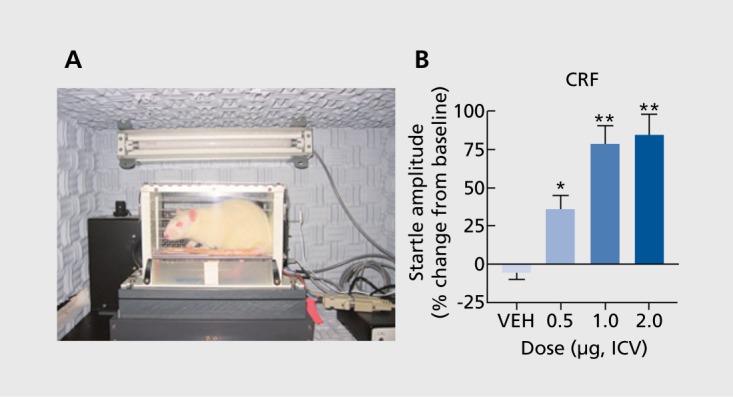
“Acoustic startle is a measurable “flinch” to a delivered white noise, that has an amplitude that can be quantified in units of force, and is hypothesized to reflect the state of alertness associated with increased anxiety (Lezak et al., 2017).”
From The Epigenetics of Anxiety Pathophysiology: A DNA Methylation and Histone Modification Focused Review (2023) · cites this paper as Lezak et al., 2017
The cited source says what the claim attributes to it.
In the citing paper
“For example, pairing an aversive unconditioned stimuli, such as a footshock, with a tone/sound, light, or a context/environment (neutral conditioned stimuli) can elicit fear responses to the conditioned stimuli in the absence of the footshock on re-exposure to the conditioned stimulus (Lezak et al., 2017).”
From The Epigenetics of Anxiety Pathophysiology: A DNA Methylation and Histone Modification Focused Review (2023) · cites this paper as Lezak et al., 2017
Self-check
Percentages, sums and reported differences re-computed from the paper’s own numbers.
The self-check needs the paper’s full text.
Citations
Cites
Diagnostic and Statistical Manual of Mental Disorders
American Psychiatric Association (2013) · doi:10.1176/appi.books.9780890425596 · Cited by 116,369
Effects of stress throughout the lifespan on the brain, behaviour and cognition
Lupien, S. J., McEwen, B. S., Gunnar, M. R., & Heim, C. (2009) · Nature Reviews Neuroscience · doi:10.1038/nrn2639 · Cited by 6,256
Toward the future of psychiatric diagnosis: the seven pillars of RDoC
Cuthbert, B. N., & Insel, T. R. (2013) · BMC Medicine · doi:10.1186/1741-7015-11-126 · Cited by 3,053
Essential role of BDNF in the mesolimbic dopamine pathway in social defeat stress
Berton, O., McClung, C. A., DiLeone, R. J., Krishnan, V., Renthal, W., Russo, S. J., Graham, D., Tsankova, N. M., Bolanos, C. A., Rios, M., et al. (2006) · Science · doi:10.1126/science.1120972 · Cited by 2,129
Willner, P. (1997) · Psychopharmacology · doi:10.1007/s002130050456 · Cited by 1,832
Willner, P. (2005) · Neuropsychobiology · doi:10.1159/000087097 · Cited by 1,605
A standardized protocol for repeated social defeat stress in mice
Golden, S. A., Covington, H. E., Berton, O., & Russo, S. J. (2011) · Nature Protocols · doi:10.1038/nprot.2011.361 · Cited by 1,581
Pellow, S., & File, S. E. (1986) · Pharmacology Biochemistry and Behavior · doi:10.1016/0091-3057(86)90552-6 · Cited by 1,534
Phasic vs Sustained Fear in Rats and Humans: Role of the Extended Amygdala in Fear vs Anxiety
Davis, M., Walker, D. L., Miles, L., & Grillon, C. (2010) · Neuropsychopharmacology · doi:10.1038/npp.2009.109 · Cited by 1,513
Bourin, M., & Hascoët, M. (2003) · European Journal of Pharmacology · doi:10.1016/s0014-2999(03)01274-3 · Cited by 1,440
Research works printed but not linked: 6
- Walker DL., 2008, Brain Struct Funct., 213, 29, 10.1007/s00429-008-0183-3 · DOI · Paper page
- Deacon RM., 2011, J Vis Exp., doi:10.3791
- Nemeroff CB., 2004, J Clin Psychiatry., 65, 18
- Pryce CR., 2002, News Physiol Sci., 17, 150
- Hamm AO., 2014, Restor Neurol Neurosci., 32, 79
- Davis M., 2008, Rev Neurosci., 19, 171
Cited by
Sorted by citations
Items 201–288 of 288
Perle, K. M. D. L. (2021) · Wiley eBooks · doi:10.1002/9781119624608.ch17 · Cited by 3
Emotional Vocalizations Alter Behaviors and Neurochemical Release into the AmygdalaPreprint
Ghasemahmad, Z., Mrvelj, A., Panditi, R., Sharma, B. K., Perumal, K. D., & Wenstrup, J. J. (2022) · bioRxiv (Cold Spring Harbor Laboratory) · doi:10.1101/2022.07.02.498564 · Cited by 3
López-Lariz, C. H., & Marichal‐Cancino, B. A. (2025) · Neuroscience · doi:10.1016/j.neuroscience.2025.06.016 · Cited by 2
Ortiz‐Valladares, M., Amezcua-Cárdenas, D., Pedraza‐Medina, R., Peregrino-Ramírez, C., & Rojas-Cobián, E. (2025) · Behavioural Brain Research · doi:10.1016/j.bbr.2025.115745 · Cited by 3
Devereaux, J., Robinson, A. M., Stavely, R. G., Davidson, M., Filippone, R. T., Ephraim, R., Kiatos, D., Apostolopoulos, V., & Nurgali, K. (2025) · Journal of Neuroinflammation · doi:10.1186/s12974-025-03536-x · Cited by 2
Almada-Corral, A., Santiago‐López, L., Garibay-Valdéz, E., Olivas-Bernal, C. A., Martínez‐Porchas, M., Garcia, H. S., Mata‐Haro, V., Vallejo‐Córdoba, B., González-Córdova, A. F., & Hernández‐Mendoza, A. (2025) · Food Research International · doi:10.1016/j.foodres.2025.117861 · Cited by 2
Stress Detection Using Natural Language Processing and Machine Learning Over Social Interaction
Rajput, G. K., Chakravarty, A., Saxena, A. K., Kumar, S., Kumar, L., & Goel, A. (2025) · doi:10.1109/cises66934.2025.11265359 · Cited by 2
Štolhoferová, I., Holubová, K., Vobrubová, B., Kaftanová, B., & Frynta, D. (2020) · Behavioural Processes · doi:10.1016/j.beproc.2020.104252 · Cited by 2
Farn, S., Cheng, K.-H., Huang, Y.-R., Lee, S.-Y., Chen, J.-T., & Chang, K. (2023) · Pharmaceuticals · doi:10.3390/ph16030417 · Cited by 2
Gohar, A., Ali, G., Rashid, U., Rauf, K., Arif, M., Khan, M. S., Alkahraman, Y. M., & Sewell, R. D. E. (2023) · Drug Design Development and Therapy · doi:10.2147/dddt.s407229 · Cited by 2
Kravchenko, E. V., Savanets, O. N., Olgomets, L. M., Бородина, К. В., Golubovich, V. P., Zilberman, R. D., Бизунок, Н. А., & Дубовик, Б. В. (2024) · Proceedings of the National Academy of Sciences of Belarus Biological Series · doi:10.29235/1029-8940-2024-69-2-120-133 · Cited by 2
Punishment Risk Task: Monitoring anxiogenic states during goal directed actions in micePreprint
Parker, K. E., Arackal, J. S., Hunter, S. C., Hammarsten, C., & McCall, J. (2024) · bioRxiv · doi:10.1101/2022.10.30.514458 · Cited by 2
Geeva, Raghavan, V., Thangavel, M., & Narayan, S. (2020) · Toxicology and Environmental Health Sciences · doi:10.1007/s13530-020-00066-2 · Cited by 1
Endothelin Modulates Rhythm Disturbances and Autonomic Responses to Acute Emotional Stress in Rats
Mouchtouri, E.-T., Konstantinou, T., Lekkas, P., Lianopoulou, A., Kotsaridou, Z., Mourouzis, I. S., Pantos, C. I., & Kolettis, T. M. (2023) · Biology · doi:10.3390/biology12111401 · Cited by 1
Behavioral comorbidities of early-life seizures: Insights from developmental studies in rats
Grígelová, A., Mikulecká, A., & Kubová, H. (2025) · Epilepsy & Behavior · doi:10.1016/j.yebeh.2025.110307 · Cited by 1
Winkler, G. A., & Grahame, N. J. (2025) · Alcoholism Clinical and Experimental Research · doi:10.1111/acer.70015 · Cited by 1
Welzel, B., Schmidt, R., & Löscher, W. (2025) · Neuropharmacology · doi:10.1016/j.neuropharm.2025.110506 · Cited by 1
Hsu, F.-Y., Chiu, W., Suk, F., Lee, C.-Y., Hsu, M.-H., & Liao, Y. (2025) · npj gut and liver. · doi:10.1038/s44355-025-00023-1 · Cited by 1
Fuochi, S., Bienboire‐Frosini, C., Descout, E., Marcet‐Rius, M., Pageat, P., & Cozzi, A. (2025) · Animals · doi:10.3390/ani15223278 · Cited by 1
Restrepo-Lozano, J. M., Teixeira, M., Hernández, G., Miranda, L., Mahmud, A., Schmidt, M. V., & Flores, C. (2025) · NPP—Digital Psychiatry and Neuroscience · doi:10.1038/s44277-025-00047-8 · Cited by 1
Radahmadi, M., & Farahbakhsh, Z. Z. (2025) · Advanced Biomedical Research · doi:10.4103/abr.abr_467_24 · Cited by 1
Pelarin, V., Tavares, L. R. R., Reis‐Silva, L. L., Barretto‐de‐Souza, L., da Silva, G. B., Avalo-Zuluaga, J. H., Benini, R., Wood, S. K., & Crestani, C. C. (2026) · Progress in Neuro-Psychopharmacology and Biological Psychiatry · doi:10.1016/j.pnpbp.2026.111716 · Cited by 1
Gautier, M. K., King, K., Han, Y., Said, H., Alameh, M., Wang, X., Hong, X., Musunuru, K., & Ahrens‐Nicklas, R. C. (2026) · Molecular Therapy Advances · doi:10.1016/j.omta.2026.201760 · Cited by 1
Anxiety and peripheral artery disease
Golledge, J., Smolderen, K. G. E., & Thanigaimani, S. (2026) · Clinical Science · doi:10.1042/cs20258419 · Cited by 1
Benson, A. A., & Gao, W. (2026) · Neuroscience & Biobehavioral Reviews · doi:10.1016/j.neubiorev.2026.106762 · Cited by 2
Meftahi, G. H., Jahromi, G. P., Gholipour, N., & Bahari, Z. (2021) · کومش · doi:10.52547/koomesh.23.2.250 · Cited by 1
Yu, W. S., Guan, L., Tan, S. Z. K., Shrestha, S., Or, Y. Z., Lufkin, T., Lin, V. C. L., & Lim, L. W. (2022) · PubMed Central · doi:10.22038/ijbms.2022.63044.13932 · Cited by 1
Olayiwola, G. (2022) · African Journal of Traditional Complementary and Alternative Medicines · doi:10.21010/ajtcamv18i1.2 · Cited by 1
Pinna Edge Biopsy of 7 and 21 Day Old C57BL/6 Mice as a Method for Identification and Genotyping
Chen, D. D., Molk, D. M., Palley, L. S., & Jarrell, D. M. (2023) · Journal of the American Association for Laboratory Animal Science · doi:10.30802/aalas-jaalas-23-000022 · Cited by 1
Սիմոնյան, Կ. Վ., Darbinyan, L., Hambardzumyan, L. E., Manukyan, L., & Chavushyan, V. A. (2025) · BMC Complementary Medicine and Therapies · doi:10.1186/s12906-024-04715-8 · Cited by 1
Alolayan, S. A., & Alhowail, A. H. (2025) · Frontiers in Pharmacology · doi:10.3389/fphar.2025.1638527 · Cited by 1
Leite, F. R. J. (2020) · Research & Investigations in Sports Medicine · doi:10.31031/rism.2020.06.000635 · Cited by 1
Teal, L. B., Ingram, S., Bubser, M., McClure, E. W., & Jones, C. K. (2023) · Advances in neurobiology · doi:10.1007/978-3-031-21054-9_3 · Cited by 2
Effect of high-fat diet-induced obesity on maternal mouse behaviour prepartum and postpartum
Moazzam, S. (2021) · Mspace (University of Manitoba) · Cited by 1
Bonauto, S. M., Greuel, O. M., & Honeycutt, J. A. (2022) · doi:10.31234/osf.io/e5sm7 · Cited by 1
Emotional Vocalizations Alter Behaviors and Neurochemical Release into the AmygdalaPreprint
Ghasemahmad, Z., Mrvelj, A., Panditi, R., Sharma, B. K., Perumal, K. D., & Wenstrup, J. J. (2024) · eLife · doi:10.7554/elife.88838.2 · Cited by 1
Rudolph, S., Guo, C., Pashkovski, S. L., Osorno, T., Gillis, W. F., Krauss, J., Nyitrai, H., Flaquer, I., El-Rifai, M., Datta, S. R., et al. (2019) · bioRxiv (Cold Spring Harbor Laboratory) · doi:10.1101/2019.12.27.889014
Bączyńska, E., Krzystyniak, A., Zaręba-Kozioł, M., Figiel, I., Włodarczyk, J., & Wójtowicz, T. (2020) · Kosmos · doi:10.36921/kos.2020_2637
Adolescent alcohol binge-drinking induces delayed appearance of behavioral defects in micePreprint
Hees, L. V., Didone, V., Charlet‐Briart, M., Ingelgom, T. V., Alexandre, A., Quertemont, É., Nguyen, L., & Laguesse, S. (2020) · bioRxiv (Cold Spring Harbor Laboratory) · doi:10.1101/2020.08.11.245878
The Development of Anxiety and Exploration in Two Species of the African Striped Mouse Rhabdomys
Mackay, M. K., & Pillay, N. (2021) · Behavior Genetics · doi:10.1007/s10519-021-10054-y
Meftahi, G. H., Jahromi, G. P., Gholipour, N., & Bahari, Z. (2021) · doi:10.29252/koomesh.23.2.250
Stress Hormones and the Gut Microbiota Composition and Function
Neuman, H. (2021) · Elsevier eBooks · doi:10.1016/b978-0-12-819265-8.00070-x
Bates, K. C. (2021) · Digital Commons - Longwood (Longwood University)
Enhanced Brain Uptake and Behaviour Study of Buspirone Loaded in situ Nanoemulsion Gel
Tripathi, K., & Manna, N. K. (2022) · International Journal of Pharmacology · doi:10.3923/ijp.2022.543.550
Menshanov, P. N., Bannova, A. V., & Дыгало, Н. Н. (2022) · Evolutionary Biology · doi:10.1007/s11692-022-09571-3
Human microbiome and neurological disorders
Saini, V., & Maurya, P. K. (2022) · Elsevier eBooks · doi:10.1016/b978-0-323-91313-3.00016-7
Teratología conductual: un apasionante campo de trabajo transdisciplinar
Ortega, M. D. P. S. (2022) · Editorial Universidad Católica de Colombia eBooks · doi:10.14718/9786287554320.2022.9
Exploring the Associative Determinants of Tolerance to the Effects of Cannabis on LocomotionPreprint
Varas, F. I., Míguez, G., Quezada-Scholz, V. E., Ibáñez-Jiménez, E., Contreras, C. A., Ramírez, S., Badilla, J., Alfaro, F., Bertin, F., Bustamante, J., et al. (2023) · doi:10.31234/osf.io/rjy9c
Emotional Vocalizations Alter Behaviors and Neurochemical Release into the AmygdalaPreprint
Ghasemahmad, Z., Mrvelj, A., Panditi, R., Sharma, B. K., Perumal, K. D., & Wenstrup, J. J. (2023) · eLife · doi:10.7554/elife.88838.1 · Cited by 1
Jacobs, D. S., Bogachuk, A. P., & Moghaddam, B. (2023) · bioRxiv (Cold Spring Harbor Laboratory) · doi:10.1101/2023.08.17.553761
Nayan, N. M., Husin, A., Kadir, S. H. S. A., Siran, R., & Ali, N. F. (2023) · Research Square · doi:10.21203/rs.3.rs-3332532/v1
Threat-Dependent Scaling of Prelimbic Dynamics to Enhance Fear RepresentationPreprint
Casanova, J. P., Pouget, C., Treiber, N., Agarwal, I., Brimble, M. A., & Vetere, G. (2023) · SSRN Electronic Journal · doi:10.2139/ssrn.4619303
Behavioral and biological regulators of hypervigilance following early life adversity
Granata, L. E. (2023) · Digital Repository Service (Northeastern University) · doi:10.17760/d20487635
Emotional Vocalizations Alter Behaviors and Neurochemical Release into the AmygdalaPreprint
Ghasemahmad, Z., Mrvelj, A., Panditi, R., Sharma, B. K., Perumal, K. D., & Wenstrup, J. J. (2024) · eLife · doi:10.7554/elife.88838.3
Peptídeos bioativos ansiolíticos moduladores de receptores GABA A
Falbel, M. E. (2024) · Digital Library of Theses and Dissertations (Universidade de São Paulo) · doi:10.11606/d.9.2024.tde-22072024-094203
Ghrelin Regulates Food Intake in the Ventral Tegmental Area During Chronic Psychosocial Stress
Smith, A. (2024) · Carleton University's Institutional Repository (MacOdrum Library, Carleton University) · doi:10.22215/etd/2024-16006
Methodology for Studying Hypothalamic Regulation of Feeding Behaviors
Davenport, J. B., Güler, A. D., & Zhang, Q. (2024) · Methods and Protocols · doi:10.3390/mps7060086
The Impact of Early Life Experiences on Stress Neurobiology and the Development of Anxiety
Niu, Y., Camacho, M. C., Wu, S., & Humphreys, K. L. (2024) · Current topics in behavioral neurosciences · doi:10.1007/7854_2024_542
Understanding schizophrenia through animal models: The role of environmental stressors
Manojlović, M. (2024) · Arhiv za farmaciju · doi:10.5937/arhfarm74-54845
Lucich, A. C., Campos-Salazar, A. B., Matsuda, V. D. V., Cueva, K. Y., Carrillo, J. S., & Mercado, G. O. (2024) · Revista Colombiana de Ciencias Químico Farmacéuticas · doi:10.15446/rcciquifa.v52n3.111080
Puchik, M. M., Shits, D. D., Sysoev, Y. I., Chernov, N. M., Titovich, I. A., & Okovityi, S. V. (2025) · Drug development & registration · doi:10.33380/2305-2066-2025-14-2-1993
Varas, F. I., Míguez, G., Quezada-Scholz, V. E., Ibáñez-Jiménez, E., Aguilar, C. M. D., Ramírez, S., Badilla, J., Alfaro, F., Bertin, F., Bustamante, J., et al. (2025) · Drug and Alcohol Dependence Reports · doi:10.1016/j.dadr.2025.100344
Impact of Extreme Temperature Exposure on Rat Behavior: A Comprehensive Review
Kumari, A., & Sinha, R. K. (2025) · International Journal of Agricultural and Applied Sciences · doi:10.52804/ijaas2025.6112
Pavlov, V. M., Паликов, В. А., Fedotova, A. Y., Shinelev, M. V., Pakhomova, I. A., Kazakova, M., Baidarova, S. I., & Dyachenko, I. A. (2025) · Bulletin of Experimental Biology and Medicine · doi:10.1007/s10517-025-06419-6
Vitale, E. M., Ford, E. G., Ahern, M. S., & Lonstein, J. S. (2025) · Journal of Psychopharmacology · doi:10.1177/02698811251340909
IRF8 deficiency causes anxiety-like behavior in a sex-dependent mannerPreprint
Zhu, S., Saeki, K., Karlsson, R., Abebe, D. T., & Ozato, K. (2025) · bioRxiv (Cold Spring Harbor Laboratory) · doi:10.1101/2025.09.02.673764
Preclinical Models of Emotional Dysregulations in Animals
Bittar, T. P., Bordes, J., Nicolas, C., Calhoon, G. G., & Beyeler, A. (2025) · Cambridge University Press eBooks · doi:10.1017/9781009342919.039
Armony, J., & Vuilleumier, P. (2025) · Cambridge University Press eBooks · doi:10.1017/9781009342919.035
Acoustic features of and behavioral responses to emotionally intense mouse vocalizations
Ghasemahmad, Z., Perumal, K. D., Sharma, B. K., Panditi, R., & Wenstrup, J. J. (2025) · Behavioural Brain Research · doi:10.1016/j.bbr.2025.115824
Mazaheri, M. M., Radahmadi, M., & Sharifi, M. R. (2025) · Physiology & Behavior · doi:10.1016/j.physbeh.2025.115177
How stress, anxiety, and fear affect eating
Carr, J. A. (2025) · Elsevier eBooks · doi:10.1016/b978-0-443-29218-7.00006-7
Serotonin receptor 4 in the ventral CA3 regulates agomelatine-induced anxiolytic-like behaviors.
Liu, X.-H., Naveed, M., Hu, X.-Y., Zhu, L.-L., Meng, F., Zhou, Q.-G., & Zhang, J. (2025) · Acta Pharmacologica Sinica · doi:10.1038/s41401-025-01692-7
Vasanthi, S. S., Rao, N. S., Samidurai, M., Massey, N., Meyer, C., Gage, M., Kharate, M., Almanza, A., Wachter, L., Mafuta, C., et al. (2023) · Figshare · doi:10.6084/m9.figshare.23672613
Ameliorative Effect of Valeric Acid Against Psychophysiological Chronic Unpredictable Stress
Kumari, B., Singh, G. K., Modi, G. P., Chandpa, H. H., Singh, R. B., Rai, G., Priya, K., & Singh, D. K. (2026) · Biomedicines · doi:10.3390/biomedicines14040795
Genry, L. T., Marble, C. W., Moline, B. C., McGinnis, P. J., Kramer, C., Matson, S., Reedich, E. J., Avila, E. M., Santos, T., Dowaliby, L., et al. (2026) · bioRxiv (Cold Spring Harbor Laboratory) · doi:10.64898/2026.06.30.735396
Chen, K., Li, N., Ren, A., Yang, L., Xie, P., Gao, Y., Li, Y., Tang, Y. F., Zhang, R. Y., Pan, H., et al. (2026) · Chemical Engineering Journal · doi:10.1016/j.cej.2026.179188
Lauraine, E., & Rincón‐Cortés, M. (2026) · Behavioural Brain Research · doi:10.1016/j.bbr.2026.116386
Jaswal, P., Chaudhary, R., Basu, J., Bag, S., Gupta, S., & Bansal, S. (2026) · Journal of Pharmacology and Pharmacotherapeutics · doi:10.1177/0976500x261462646
Pharmacological investigation of Hamelia patens leaves for central nervous system activity in rats
Azgaonkar, S. V., Mendonça, L. M. F. E., & Katkar, A. R. (2026) · Indian Journal of Physiology and Pharmacology · doi:10.25259/ijpp_86_2026
Rauch, E., Ari, C., D’Agostino, D. P., & Kovács, Z. (2026) · Pharmaceuticals · doi:10.3390/ph19091359
Exploring emotional expression in invertebrates: mechanisms, functions and phylogeny
Baciadonna, L., Macri, C., Baracchi, D., & Giurfa, M. (2026) · Philosophical Transactions of the Royal Society B Biological Sciences · doi:10.1098/rstb.2025.0146
Decoding Anxiety Circuits by Integrating Behavioral Assays with Neural Recordings
Bordes, J., Ricci, D., Stont, L., Bittar, T. P., & Beyeler, A. (2026) · Neuromethods · doi:10.1007/978-1-0716-5599-3_17
Irshad, N., Ghafari, H., Esmaeili, S., Aminianfar, H., & Ghazi‐Khansari, M. (2026) · European Journal of Pharmacology · doi:10.1016/j.ejphar.2026.179423
IRF8 deficiency causes anxiety-like behavior with sex differences
Zhu, S., Saeki, K., Yamada, L., Karlsson, R., Abebe, D., & Ozato, K. (2026) · Brain Behavior & Immunity - Health · doi:10.1016/j.bbih.2026.101395
Metadata
- Authors
- Lezak, K. R., Missig, G., & Carlezon Jr, W. A.
- Affiliations
- Harvard University (US)
- Behavioral Genetics Laboratory, Department of Psychiatry, McLean Hospital, Harvard Medical School, Belmont, Massachusetts, USA
- Venue
- Dialogues in Clinical Neuroscience
- Publisher
- Informa UK Limited
- Published
- 2017-06-30
- Volume
- 19
- Issue
- 2
- Pages
- 181-191
- ISSN
- 1294-8322 (ISSN-L)
- 1958-5969
- PMC
- PMC5573562
- OpenAlex
- W2984369896
- Cited by
- 290
- References
- 100
- Citations by year
- 2026: 16 · 2025: 39 · 2024: 35 · 2023: 45 · 2022: 47 · 2021: 39 · 2020: 36 · 2019: 25 · 2018: 7 · 2017: 1
- FWCI
- 10.27
- Type
- journal article
- Language
- en
- Open access
- diamond
- doi.org
- Licence
- Locations
- Dialogues in Clinical Neuroscience (publishedVersion, cc-by-nc-nd)
- PubMed Central (publishedVersion, cc-by-nc-nd)
- PubMed (publishedVersion)
- Funders
- National Institutes of Health (5r01mh063266-25)
- National Institute of Mental Health (R01-MH063266)
- Topics
- Life Sciences › Neuroscience › Behavioral Neuroscience › Stress Responses and Cortisol
- Life Sciences › Neuroscience › Cellular and Molecular Neuroscience › Neurotransmitter Receptor Influence on Behavior
- Life Sciences › Neuroscience › Cognitive Neuroscience › Memory and Neural Mechanisms
- Keywords
- anxiety, stress, anxiety-related disorders, stress responsiveness, translational research, behavioral tests
- MeSH terms
- Animals, Anxiety Disorders, Behavior, Animal, Disease Models, Animal, Biomedical Research, Mice, Rats, Translational Research, Biomedical
About these checks
Registry, retraction, Cites and statistics results are computed, not judged, with one exception: a printed reference that no index lists is read once by a model before it counts as a citation error. Claims are extracted by a model and kept only when their quote appears verbatim in the text; each cited source is then checked, with a model’s help, for whether it says what the claim relies on. Those verdicts can be wrong — read the claim’s quote and the cited source before relying on one.
Statistics and arithmetic are recomputed, not judged.
Confidence bands are shown only for fields calibrated on our annotated test set. None is calibrated yet, so no band is shown.
What counts as a claim ›How we measure confidence ›How we check this ›
Are you an author, or do you see a problem with this page? Request a review
