

The DOI matches its Crossref record; 100 of the 100 references it cites were found in a registry or an index.
Behavioral methods to study anxiety in rodents
Open accessAbstract
Stress is a precipitating factor for anxiety-related disorders, which are among the leading forms of psychiatric illness and impairment in the modern world. Rodent-based behavioral tests and models are widely used to understand the mechanisms by which stress triggers anxiety-related behaviors and to identify new treatments for anxiety-related disorders. Although substantial progress has been made and many of the key neural circuits and molecular pathways mediating stress responsiveness have been characterized, these advances have thus far failed to translate into fundamentally new treatments that are safer and more efficacious in humans. The purpose of this article is to describe methods that have been historically used for this type of research and to highlight new approaches that align with recent conceptualizations of disease symptomatology and that may ultimately prove to be more fruitful in facilitating the development of improved therapeutics.
Overview
The claims and statistics of this paper haven’t been checked yet.
Run the check — free, no account needed. It reads the open-access text and checks the sources it cites.
Integrity signals
Registry
Cites
Statistics
Figures
Verification
Claims the paper makes
The claims and statistics of this paper haven’t been checked yet.
Run the check — free, no account needed. It reads the open-access text and checks the sources it cites.
Claims other papers make about this one
Each is checked against this paper’s own text: does it say what the citing paper says it does?
The cited source says what the claim attributes to it.
In the citing paper
“Symptoms of mental illnesses are accompanied by emotional, cognitive, and motivational aspects that are not attributable to the lower mammal species being studied (Lezak et al., 2017).”
From The Epigenetics of Anxiety Pathophysiology: A DNA Methylation and Histone Modification Focused Review (2023) · cites this paper as Lezak et al., 2017
The cited source says what the claim attributes to it.
In the citing paper
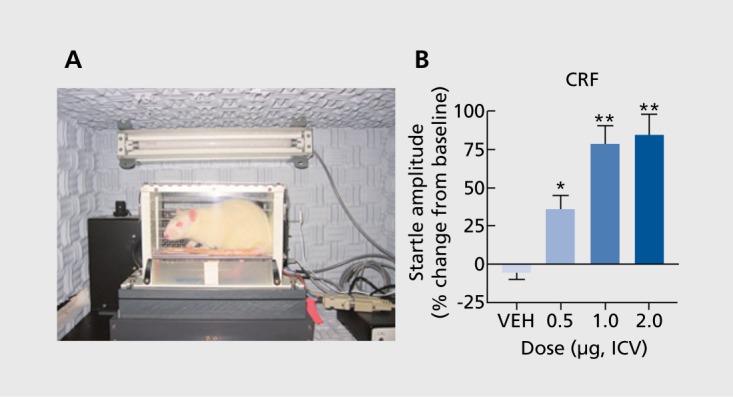
“Acoustic startle is a measurable “flinch” to a delivered white noise, that has an amplitude that can be quantified in units of force, and is hypothesized to reflect the state of alertness associated with increased anxiety (Lezak et al., 2017).”
From The Epigenetics of Anxiety Pathophysiology: A DNA Methylation and Histone Modification Focused Review (2023) · cites this paper as Lezak et al., 2017
The cited source says what the claim attributes to it.
In the citing paper
“For example, pairing an aversive unconditioned stimuli, such as a footshock, with a tone/sound, light, or a context/environment (neutral conditioned stimuli) can elicit fear responses to the conditioned stimuli in the absence of the footshock on re-exposure to the conditioned stimulus (Lezak et al., 2017).”
From The Epigenetics of Anxiety Pathophysiology: A DNA Methylation and Histone Modification Focused Review (2023) · cites this paper as Lezak et al., 2017
Self-check
Percentages, sums and reported differences re-computed from the paper’s own numbers.
The self-check needs the paper’s full text.
Citations
Cites
Diagnostic and Statistical Manual of Mental Disorders
American Psychiatric Association (2013) · doi:10.1176/appi.books.9780890425596 · Cited by 116,369
Effects of stress throughout the lifespan on the brain, behaviour and cognition
Lupien, S. J., McEwen, B. S., Gunnar, M. R., & Heim, C. (2009) · Nature Reviews Neuroscience · doi:10.1038/nrn2639 · Cited by 6,256
Toward the future of psychiatric diagnosis: the seven pillars of RDoC
Cuthbert, B. N., & Insel, T. R. (2013) · BMC Medicine · doi:10.1186/1741-7015-11-126 · Cited by 3,053
Essential role of BDNF in the mesolimbic dopamine pathway in social defeat stress
Berton, O., McClung, C. A., DiLeone, R. J., Krishnan, V., Renthal, W., Russo, S. J., Graham, D., Tsankova, N. M., Bolanos, C. A., Rios, M., et al. (2006) · Science · doi:10.1126/science.1120972 · Cited by 2,129
Willner, P. (1997) · Psychopharmacology · doi:10.1007/s002130050456 · Cited by 1,832
Willner, P. (2005) · Neuropsychobiology · doi:10.1159/000087097 · Cited by 1,605
A standardized protocol for repeated social defeat stress in mice
Golden, S. A., Covington, H. E., Berton, O., & Russo, S. J. (2011) · Nature Protocols · doi:10.1038/nprot.2011.361 · Cited by 1,581
Pellow, S., & File, S. E. (1986) · Pharmacology Biochemistry and Behavior · doi:10.1016/0091-3057(86)90552-6 · Cited by 1,534
Phasic vs Sustained Fear in Rats and Humans: Role of the Extended Amygdala in Fear vs Anxiety
Davis, M., Walker, D. L., Miles, L., & Grillon, C. (2010) · Neuropsychopharmacology · doi:10.1038/npp.2009.109 · Cited by 1,513
Bourin, M., & Hascoët, M. (2003) · European Journal of Pharmacology · doi:10.1016/s0014-2999(03)01274-3 · Cited by 1,440
Research works printed but not linked: 6
- Walker DL., 2008, Brain Struct Funct., 213, 29, 10.1007/s00429-008-0183-3 · DOI · Paper page
- Deacon RM., 2011, J Vis Exp., doi:10.3791
- Nemeroff CB., 2004, J Clin Psychiatry., 65, 18
- Pryce CR., 2002, News Physiol Sci., 17, 150
- Hamm AO., 2014, Restor Neurol Neurosci., 32, 79
- Davis M., 2008, Rev Neurosci., 19, 171
Cited by
Sorted by citations
Neurobiological links between stress and anxiety
Daviu, N., Bruchas, M. R., Moghaddam, B., Sandi, C., & Beyeler, A. (2019) · Neurobiology of Stress · doi:10.1016/j.ynstr.2019.100191 · Cited by 591
Understanding stress: Insights from rodent models
Atrooz, F., Alkadhi, K. A., & Salim, S. (2021) · Current Research in Neurobiology · doi:10.1016/j.crneur.2021.100013 · Cited by 213
Animal Models of Depression: What Can They Teach Us about the Human Disease?
Becker, M., Pinhasov, A., & Ornoy, A. (2021) · Diagnostics · doi:10.3390/diagnostics11010123 · Cited by 194
Quantified Coexpression Analysis of Central Amygdala Subpopulations
McCullough, K. M., Morrison, F. G., Hartmann, J., Carlezon, W. A., & Ressler, K. J. (2018) · eNeuro · doi:10.1523/eneuro.0010-18.2018 · Cited by 149
Chari, T., Griswold, S., Andrews, N. A., & Fagiolini, M. (2020) · Frontiers in Behavioral Neuroscience · doi:10.3389/fnbeh.2020.00113 · Cited by 151
Long-Term Behavioral Effects of Post-weaning Social Isolation in Males and Females
Walker, D. M., Cunningham, A. M., Gregory, J. K., & Nestler, E. J. (2019) · Frontiers in Behavioral Neuroscience · doi:10.3389/fnbeh.2019.00066 · Cited by 146
The role of vitamin C in stress-related disorders
Moritz, B., Schmitz, A. E., Rodrigues, A. L. S., Dafré, A. L., & Cunha, M. P. (2020) · The Journal of Nutritional Biochemistry · doi:10.1016/j.jnutbio.2020.108459 · Cited by 138
Measuring behavior in the home cage: study design, applications, challenges, and perspectives
Grieco, F., Bernstein, B. J., Biemans, B., Bikovski, L., Burnett, C. J., Cushman, J. D., van Dam, E. A., Fry, S. A., Richmond-Hacham, B., Homberg, J. R., et al. (2021) · Frontiers in Behavioral Neuroscience · doi:10.3389/fnbeh.2021.735387 · Cited by 109
Kinlein, S. A., & Karatsoreos, I. N. (2019) · Frontiers in Neuroendocrinology · doi:10.1016/j.yfrne.2019.100819 · Cited by 102
Endocannabinoids, cannabinoids and the regulation of anxiety
Petrie, G. N., Nastase, A. S., Aukema, R. J., & Hill, M. N. (2021) · Neuropharmacology · doi:10.1016/j.neuropharm.2021.108626 · Cited by 91
Li, Y., Missig, G., Finger, B. C., Landino, S. M., Alexander, A. J., Mokler, E. L., Robbins, J. O., Manasian, Y., Kim, W., Kim, K., et al. (2018) · Journal of Neuroscience · doi:10.1523/jneurosci.3642-17.2018 · Cited by 86
Self-citationJones, S. K., McCarthy, D. M., Vied, C., Stanwood, G. D., Schatschneider, C. W., & Bhide, P. G. (2022) · Proceedings of the National Academy of Sciences · doi:10.1073/pnas.2213120119 · Cited by 77
Açıkgöz, B., Dalkiran, B., & Dayı, A. (2022) · Behavioural Processes · doi:10.1016/j.beproc.2022.104670 · Cited by 82
Social instability is an effective chronic stress paradigm for both male and female mice
Yohn, C. N., Ashamalla, S. A., Bokka, L., Gergues, M. M., Garino, A., & Samuels, B. A. (2019) · Neuropharmacology · doi:10.1016/j.neuropharm.2019.107780 · Cited by 71
Genetic insights into the neurobiology of anxiety
Koskinen, M.-K., & Hovatta, I. (2023) · Trends in Neurosciences · doi:10.1016/j.tins.2023.01.007 · Cited by 73
Gargouri, B., Bhatia, H. S., Bouchard, M., Fiebich, B. L., & Fetoui, H. (2018) · Toxicology Letters · doi:10.1016/j.toxlet.2018.05.020 · Cited by 58
Exploring the light/dark box test: Protocols and implications for neuroscience research
Campos‐Cardoso, R., Godoy, L. D., Lazarini-Lopes, W., Novaes, L. S., dos Santos, N. B., Perfetto, J. G., Garcia‐Cairasco, N., Munhoz, C. D., & Padovan, C. M. (2022) · Journal of Neuroscience Methods · doi:10.1016/j.jneumeth.2022.109748 · Cited by 56
Role of the Bed Nucleus of the Stria Terminalis in PTSD: Insights From Preclinical Models
Miles, O. W., & Maren, S. (2019) · Frontiers in Behavioral Neuroscience · doi:10.3389/fnbeh.2019.00068 · Cited by 59
Tabassum, S., Misrani, A., Huang, H., Zhang, Z.-Y., Li, Q.-W., & Long, C. (2023) · Molecular Neurobiology · doi:10.1007/s12035-023-03395-8 · Cited by 58
Rudolph, S., Guo, C., Pashkovski, S. L., Osorno, T., Gillis, W. F., Krauss, J., Nyitrai, H., Flaquer, I., El-Rifai, M., Datta, S. R., et al. (2020) · Cell Reports · doi:10.1016/j.celrep.2020.108338 · Cited by 56
Fear contagion in zebrafish: a behaviour affected by familiarity
Silva, P. F., de Leániz, C. G., & Luchiari, A. C. (2019) · Animal Behaviour · doi:10.1016/j.anbehav.2019.05.004 · Cited by 54
Missig, G., Mokler, E. L., Robbins, J. O., Alexander, A. J., McDougle, C. J., & Carlezon, W. A. (2017) · Neuropsychopharmacology · doi:10.1038/npp.2017.243 · Cited by 54
Self-citationEs-safi, I., Mechchate, H., Amaghnouje, A., Elbouzidi, A., Bouhrim, M., Bencheikh, N., Hano, C., & Bousta, D. (2021) · Plants · doi:10.3390/plants10081573 · Cited by 53
Medial prefrontal cortex encoding of stress and anxiety
Jacobs, D. S., & Moghaddam, B. (2021) · International review of neurobiology · doi:10.1016/bs.irn.2020.11.014 · Cited by 49
Paternal transgenerational epigenetic mechanisms mediating stress phenotypes of offspring
Cunningham, A. M., Walker, D. M., & Nestler, E. J. (2019) · European Journal of Neuroscience · doi:10.1111/ejn.14582 · Cited by 50
Börchers, S., Krieger, J.-P., Asker, M., Marić, I., & Skibicka, K. P. (2022) · Psychoneuroendocrinology · doi:10.1016/j.psyneuen.2022.105733 · Cited by 54
Digital devices and continuous telemetry: opportunities for aligning psychiatry and neuroscience
Baker, J. T., Germine, L. T., Ressler, K. J., Rauch, S. L., & Carlezon, W. A. (2018) · Neuropsychopharmacology · doi:10.1038/s41386-018-0172-z · Cited by 45
Sleep as a translationally-relevant endpoint in studies of autism spectrum disorder (ASD)
Missig, G., McDougle, C. J., & Carlezon, W. A. (2019) · Neuropsychopharmacology · doi:10.1038/s41386-019-0409-5 · Cited by 49
Self-citationMarchisella, F., Creutzberg, K. C., Begni, V., Sanson, A., Wearick‐Silva, L. E., Tractenberg, S. G., Orso, R., Kestering-Ferreira, É., Grassi‐Oliveira, R., & Riva, M. A. (2021) · Frontiers in Cell and Developmental Biology · doi:10.3389/fcell.2021.653384 · Cited by 50
Amirazodi, F., Mehrabi, A., Amirazodi, M., Parsania, S., Rajizadeh, M. A., & Esmaeilpour, K. (2020) · Experimental Aging Research · doi:10.1080/0361073x.2020.1754015 · Cited by 45
McCullough, K. M., Missig, G., Robble, M. A., Foilb, A. R., Wells, A. M., Hartmann, J., Anderson, K. J., Neve, R. L., Nestler, E. J., Ressler, K. J., et al. (2021) · Biological Psychiatry · doi:10.1016/j.biopsych.2020.12.030 · Cited by 44
Self-citationSałaciak, K., & Pytka, K. (2021) · Pharmacology & Therapeutics · doi:10.1016/j.pharmthera.2021.107872 · Cited by 42
Persaud, N. S., & Cates, H. M. (2023) · eneuro · doi:10.1523/eneuro.0109-21.2021 · Cited by 41
“Symptoms of mental illnesses are accompanied by emotional, cognitive, and motivational aspects that are not attributable to the lower mammal species being studied (Lezak et al., 2017).”
BackgroundZheng, H., Reiner, D. J., Hayes, M. R., & Rinaman, L. (2019) · Journal of Neuroscience · doi:10.1523/jneurosci.2180-18.2019 · Cited by 42
Octopamine mediates sugar relief from a chronic-stress-induced depression-like state in Drosophila
Hermanns, T., Graf-Boxhorn, S., Poeck, B., & Strauß, R. (2022) · Current Biology · doi:10.1016/j.cub.2022.07.016 · Cited by 37
Chronic colitis-induced visceral pain is associated with increased anxiety during quiescent phase
Salameh, É., Méleine, M., Gourcerol, G., do-Rego, J.-C., do Rego, J. L., Legrand, R., Breton, J., Aziz, M., Guérin, C., Coëffier, M., et al. (2019) · American Journal of Physiology-Gastrointestinal and Liver Physiology · doi:10.1152/ajpgi.00248.2018 · Cited by 40
Modeling Parkinson's disease‐related symptoms in alpha‐synuclein overexpressing mice
Aniszewska, A., Bergström, J. J. E., Ingelsson, M., & Ekmark‐Lewén, S. (2022) · Brain and Behavior · doi:10.1002/brb3.2628 · Cited by 39
Measuring Cities with Software-Defined Sensors
Catlett, C., Beckman, P., Ferrier, N., Nusbaum, H. C., Papka, M. E., Berman, M. G., & Sankaran, R. (2020) · Journal of Social Computing · doi:10.23919/jsc.2020.0003 · Cited by 39
Scott, H., Phillips, T. J., Sze, Y., Alfieri, A., Rogers, M. F., Volpato, V., Case, C. P., & Brunton, P. J. (2020) · Neurobiology of Stress · doi:10.1016/j.ynstr.2020.100281 · Cited by 43
Fitzgerald, E., Parent, C. I., Kee, M. Z. L., & Meaney, M. J. (2021) · Frontiers in Human Neuroscience · doi:10.3389/fnhum.2021.635304 · Cited by 41
Boukholda, K., Gargouri, B., Aouey, B., Attaai, A., Elkodous, M. A., Najimi, M., Fiebich, B. L., Bouchard, M., & Fetoui, H. (2021) · NanoImpact · doi:10.1016/j.impact.2021.100358 · Cited by 39
Bloch, S., Holleran, K. M., Kash, T. L., Vazey, E. M., Rinker, J. A., Lebonville, C. L., O’Hara, K., Lopez, M. F., Jones, S. R., Grant, K. A., et al. (2022) · Alcohol · doi:10.1016/j.alcohol.2022.02.001 · Cited by 38
León‐Rodríguez, A., Fernández‐Arjona, M. D. M., Grondona, J. M., Pedraza, C., & López-Ávalos, M. D. (2022) · Scientific Reports · doi:10.1038/s41598-022-15617-5 · Cited by 41
Phosphodiesterase inhibitors in psychiatric disorders
Sadeghi, M. A., Nassireslami, E., Zoshk, M. Y., Hosseini, Y., Abbasian, K., & Chamanara, M. (2023) · Psychopharmacology · doi:10.1007/s00213-023-06361-3 · Cited by 34
Pituitary Adenylate Cyclase-Activating Peptide (PACAP) Signaling and the Dark Side of Addiction
Miles, O. W., May, V., & Hammack, S. E. (2018) · Journal of Molecular Neuroscience · doi:10.1007/s12031-018-1147-6 · Cited by 34
Ketamine effects on anxiety and fear-related behaviors: Current literature evidence and new findings
Silote, G. P., de Oliveira, S. F. S., Ribeiro, D. E., Machado, M. S., Andreatini, R., Joca, S. R. L., & Beijamini, V. (2020) · Progress in Neuro-Psychopharmacology and Biological Psychiatry · doi:10.1016/j.pnpbp.2020.109878 · Cited by 33
Translational models of stress and resilience: An applied neuroscience methodology review
Albayrak, Z. S., Vaz, A., Bordes, J., Ünlü, S., Sep, M. S. C., Vinkers, C. H., Pinto, L., & Eser, H. Y. (2024) · Neuroscience Applied · doi:10.1016/j.nsa.2024.104064 · Cited by 43
Mograbi, K. D. M., Suchecki, D., da Silva, S. G., Covolan, L., & Hamani, C. (2020) · Stress · doi:10.1080/10253890.2020.1712355 · Cited by 35
Pace, S. A., Christensen, C. W., Schackmuth, M. K., Wallace, T., McKlveen, J. M., Beischel, W. J., Morano, R. L., Scheimann, J. R., Wilson, S. P., Herman, J. P., et al. (2020) · Neurobiology of Stress · doi:10.1016/j.ynstr.2020.100274 · Cited by 32
Emotion in action: When emotions meet motor circuits
Braine, A., & Georges, F. E. (2023) · Neuroscience & Biobehavioral Reviews · doi:10.1016/j.neubiorev.2023.105475 · Cited by 37
Epigenetic mechanisms underlying stress-induced depression
de Carvalho, L. M., Chen, W.-Y., & Lasek, A. W. (2020) · International review of neurobiology · doi:10.1016/bs.irn.2020.08.001 · Cited by 33
Koehl, M., Ladevèze, E., Catania, C., Cota, D., & Abrous, D. N. (2021) · Translational Psychiatry · doi:10.1038/s41398-020-01187-5 · Cited by 31
de Abreu, M. S., Giacomini, A. C. V. V., Demin, K. A., Galstyan, D. S., Zabegalov, K. N., Kolesnikova, T. O., Amstislavskaya, T. G., Strekalova, T. V., Petersen, E. V., & Kalueff, A. V. (2021) · Pharmacology Biochemistry and Behavior · doi:10.1016/j.pbb.2021.173205 · Cited by 31
Cardiovascular therapeutics: A new potential for anxiety treatment?
Repova, K., Aziriova, S., Krajcirovicova, K., & Šimko, F. (2022) · Medicinal Research Reviews · doi:10.1002/med.21875 · Cited by 30
Anxiety Behavior in Pigs (Sus scrofa) Decreases Through Affiliation and May Anticipate Threat
Norscia, I., Collarini, E., & Cordoni, G. (2021) · Frontiers in Veterinary Science · doi:10.3389/fvets.2021.630164 · Cited by 30
Castañeda-Miranda, R., Cáceres, A., Velásquez, D., Rodríguez, C. A., Morales, D., & Castillo, A. (2021) · Journal of Ethnopharmacology · doi:10.1016/j.jep.2021.114746 · Cited by 29
Wang, T., Han, W., Chitre, A. S., Polesskaya, O., Woods, L. C. S., Palmer, A. A., & Chen, H. (2018) · Scientific Reports · doi:10.1038/s41598-018-36263-w · Cited by 28
Li, Y., Dong, Y., Yang, L.-D., Tucker, L., Yang, B.-C., Zong, X.-M., Hamblin, M. R., & Zhang, Q.-G. (2021) · Translational Psychiatry · doi:10.1038/s41398-021-01389-5 · Cited by 27
Baicalein prevents stress-induced anxiety behaviors in zebrafish model
Selvaraj, L. K., Jeyabalan, S., Wong, L. S., Sekar, M., Logeshwari, B., Umamaheswari, S., Premkumar, S., Sekar, R. T., Begum, M. Y., Gan, S. H., et al. (2022) · Frontiers in Pharmacology · doi:10.3389/fphar.2022.990799 · Cited by 27
Kay, V. R., Rätsep, M. T., Figueiró-Filho, E. A., & Croy, B. A. (2019) · Biology of Reproduction · doi:10.1093/biolre/ioz095 · Cited by 30
Behavioral analysis of motor and non-motor impairment in rodent models of Parkinson's disease
Sheta, R., Bérard, M., Musiol, D., Martínez-Drudis, L., & Oueslati, A. (2024) · Frontiers in Aging Neuroscience · doi:10.3389/fnagi.2024.1464706 · Cited by 26
Polyherbal Formulation Enhancing Cerebral Slow Waves in Sleeping Rats
Yamashiro, K., Aoki, M., Matsumoto, N., & Ikegaya, Y. (2020) · Biological and Pharmaceutical Bulletin · doi:10.1248/bpb.b20-00285 · Cited by 27
Using deep learning to study emotional behavior in rodent models
Kuo, J. Y., Denman, A. J., Beacher, N. J., Glanzberg, J. T., Zhang, Y., Li, Y., & Lin, D. (2022) · Frontiers in Behavioral Neuroscience · doi:10.3389/fnbeh.2022.1044492 · Cited by 28
Bonauto, S. M., Greuel, O. M., & Honeycutt, J. A. (2023) · Neuroscience & Biobehavioral Reviews · doi:10.1016/j.neubiorev.2023.105396 · Cited by 24
A new 3-hit mouse model of schizophrenia built on genetic, early and late factors
Bouët, V., Percelay, S., Leroux, E., Diarra, B., Léger, M., Delcroix, N., Andrieux, A., Dollfus, S., Fréret, T., & Boulouard, M. (2020) · Schizophrenia Research · doi:10.1016/j.schres.2020.11.043 · Cited by 25
Effects of repeated adolescent exposure to cannabis smoke on cognitive outcomes in adulthood
Hernandez, C. M., Orsini, C. A., Blaes, S. L., Bizon, J. L., Febo, M., Bruijnzeel, A. W., & Setlow, B. (2021) · Journal of Psychopharmacology · doi:10.1177/0269881120965931 · Cited by 25
Gailus, B., Naundorf, H., Welzel, L., Johne, M., Römermann, K., Kaila, K., & Löscher, W. (2021) · Epilepsia · doi:10.1111/epi.17050 · Cited by 28
Hylander, B. L., Repasky, E. A., & Sexton, S. (2022) · Animals · doi:10.3390/ani12030371 · Cited by 28
Deep learning based thermal image segmentation for laboratory animals tracking
Mazur-Milecka, M., & Rumiński, J. (2020) · Quantitative InfraRed Thermography Journal · doi:10.1080/17686733.2020.1720344 · Cited by 24
Soler, I., Yun, S., Reynolds, R. P., Whoolery, C. W., Tran, F. H., Kumar, P. L., Rong, Y., DeSalle, M. J., Gibson, A. D., Stowe, A. M., et al. (2021) · Frontiers in Behavioral Neuroscience · doi:10.3389/fnbeh.2021.722780 · Cited by 25
Carter, J. S., Kearns, A., Vollmer, K. M., García‐Keller, C., Weber, R. A., Baker, N. L., Kalivas, P. W., & Reichel, C. M. (2020) · Psychopharmacology · doi:10.1007/s00213-020-05486-z · Cited by 25
Vendor differences in anxiety-like behaviors in female and male Sprague Dawley rats
Tsuda, M. C., Mahdi, S., Namchuk, A. B., Wu, T. J., & Lucki, I. (2020) · Physiology & Behavior · doi:10.1016/j.physbeh.2020.113131 · Cited by 24
A Need for Consistency in Behavioral Phenotyping for ASD: Analysis of the Valproic Acid Model
Larner, O., Roberts, J. E., Twiss, J. L., & Freeman, L. R. (2021) · Autism Research and Treatment · doi:10.1155/2021/8863256 · Cited by 25
Pahlavan, S., Ashtiani, S. J., & Mirbozorgi, S. A. (2024) · IEEE Transactions on Biomedical Circuits and Systems · doi:10.1109/tbcas.2024.3396191 · Cited by 23
Effects of Dietary Methionine Restriction on Cognition in Mice
Lail, H. L., Mabb, A. M., Parent, M. B., Pinheiro, F., & Wanders, D. (2023) · Nutrients · doi:10.3390/nu15234950 · Cited by 23
Fesharaki‐Zadeh, A., Miyauchi, J. T., Laurent-Ariot, K. S., Tsirka, S. E., & Bergold, P. J. (2020) · ASN NEURO · doi:10.1177/1759091420979567 · Cited by 23
Mejía-Chávez, S., Venebra-Muñoz, A., García‐García, F., Corona-Morales, A. A., & Vargas, A. E. O. (2021) · Frontiers in Behavioral Neuroscience · doi:10.3389/fnbeh.2021.651263 · Cited by 22
Marwari, S., Poulsen, A., Shih, N., Lakshminarayanan, R., Kini, R. M., Johannes, C. W., Dymock, B. W., & Dawe, G. S. (2019) · British Journal of Pharmacology · doi:10.1111/bph.14774 · Cited by 22
Magdy, Y., Kamar, S. A., Habib, M. Z., Rady, H. Y., Rabei, M. R., & Khedr, S. A. (2025) · Psychopharmacology · doi:10.1007/s00213-025-06834-7 · Cited by 20
Camargo, A., Dalmagro, A. P., Fraga, D. B., Rosa, J. M., Zeni, A. L. B., Kaster, M. P., & Rodrigues, A. L. S. (2021) · Psychopharmacology · doi:10.1007/s00213-021-05879-8 · Cited by 20
Tran, T., Mach, J., Gemikonakli, G., Wu, H. C., Allore, H. G., Howlett, S. E., Little, C. B., & Hilmer, S. N. (2022) · Scientific Reports · doi:10.1038/s41598-022-06039-4 · Cited by 21
Vasanthi, S. S., Rao, N. S., Samidurai, M., Massey, N., Meyer, C., Gage, M., Kharate, M., Almanza, A., Wachter, L., Mafuta, C., et al. (2023) · Journal of Neuroinflammation · doi:10.1186/s12974-023-02847-1 · Cited by 20
Correia, R. G., Coimbra, B., Domingues, A. V., Wezik, M., Vieitas‐Gaspar, N., Gaspar, R., Sousa, N., Pinto, L., Rodrigues, A. J., & Soares‐Cunha, C. (2023) · Journal of Psychiatry and Neuroscience · doi:10.1503/jpn.220111 · Cited by 20
Zhu, Q., Yang, Y., Lao, Z., Zhong, Y., Zhang, K., & Zhao, S. (2020) · Pest Management Science · doi:10.1002/ps.5978 · Cited by 20
Gerasimenko, M., Lopatina, O. L., Shabalova, A. A., Михайлович, Ч. С., Salmina, A. B., Yokoyama, S., Goto, H., Okamoto, H., Yamamoto, Y., Ishihara, K., et al. (2020) · PLoS ONE · doi:10.1371/journal.pone.0244022 · Cited by 19
de Abreu, M. S., Giacomini, A. C. V. V., Genário, R., dos Santos, B. E., Marcon, L., Demin, K. A., Galstyan, D. S., Strekalova, T., Amstislavskaya, T. G., & Kalueff, A. V. (2020) · Neuroscience & Biobehavioral Reviews · doi:10.1016/j.neubiorev.2020.12.014 · Cited by 20
Comparing Pears to Apples: Unlike Dogs, Cats Need Habituation before Lab Tests
Uccheddu, S., Miklósi, Á., Gintner, S., & Gácsi, M. (2022) · Animals · doi:10.3390/ani12213046 · Cited by 19
Zebrafish, a biological model for pharmaceutical research for the management of anxiety
Chahardehi, A. M., Hosseini, Y., Mahdavi, S. M., & Naseh, I. (2023) · Molecular Biology Reports · doi:10.1007/s11033-023-08263-1 · Cited by 19
Sahini, S. N. M., Hazalin, N. A. M. N., Srikumar, B. N., Chellammal, H. S. J., & Singh, G. K. S. (2023) · Neurobiology of Learning and Memory · doi:10.1016/j.nlm.2023.107880 · Cited by 22
Salazar, A. L., & Centanni, S. W. (2024) · Alcohol · doi:10.1016/j.alcohol.2024.07.004 · Cited by 19
da Silva, C. S., Calió, M. L., Mosini, A. C., Pires, J. M., Rêgo, D. B., Mello, L. E., & Leslie, A. T. F. S. (2019) · Frontiers in Behavioral Neuroscience · doi:10.3389/fnbeh.2019.00240 · Cited by 21
Neira, S., Hassanein, L. A., Stanhope, C. M., Buccini, M. C., D’Ambrosio, S., Flanigan, M. E., Haun, H. L., Boyt, K. M., Bains, J. S., & Kash, T. L. (2022) · Alcoholism Clinical and Experimental Research · doi:10.1111/acer.14901 · Cited by 21
Rehman, M., Chaudhary, R., Rajput, S., Agarwal, V., Kaushik, A. S., Srivastava, S., Srivastava, S., Singh, R., Aziz, I., Singh, S. P., et al. (2023) · Physiology & Behavior · doi:10.1016/j.physbeh.2023.114207 · Cited by 18
Smith, A., Hyland, L., Al-Ansari, H., Watts, B., Silver, Z. A., Wang, L., Dahir, M., Akgun, A., Telfer, A., & Abizaid, A. B. (2023) · Hormones and Behavior · doi:10.1016/j.yhbeh.2023.105412 · Cited by 18
Mehrhoff, E. A., Booher, W. C., Hutchinson, J., Schumacher, G., Borski, C., Lowry, C. A., Hoeffer, C. A., & Ehringer, M. A. (2023) · Physiology & Behavior · doi:10.1016/j.physbeh.2023.114343 · Cited by 17
Gargouri, B., Bouchard, M., Saliba, S. W., Fetoui, H., & Fiebich, B. L. (2019) · Behavioural Brain Research · doi:10.1016/j.bbr.2019.04.012 · Cited by 16
Burn, C. C., Mazlan, N. H., Chancellor, N. M., & Wells, D. J. (2021) · Animals · doi:10.3390/ani11061664 · Cited by 16
Meneses, C. S., Valdés, M., Garrido‐Suárez, B. B., & Garrido, G. (2023) · Phytotherapy Research · doi:10.1002/ptr.7830 · Cited by 16
Chen, Y., Tong, S., Xu, Y., Xu, Y., Wu, Z., Zhu, X., Wang, X., Li, C., Lin, C., Li, X., et al. (2024) · CNS Neuroscience & Therapeutics · doi:10.1111/cns.70035 · Cited by 15
The darkness and the light: diurnal rodent models for seasonal affective disorder
Shankar, A., & Williams, C. T. (2021) · Disease Models & Mechanisms · doi:10.1242/dmm.047217 · Cited by 16
Metadata
- Authors
- Lezak, K. R., Missig, G., & Carlezon Jr, W. A.
- Affiliations
- Harvard University (US)
- Behavioral Genetics Laboratory, Department of Psychiatry, McLean Hospital, Harvard Medical School, Belmont, Massachusetts, USA
- Venue
- Dialogues in Clinical Neuroscience
- Publisher
- Informa UK Limited
- Published
- 2017-06-30
- Volume
- 19
- Issue
- 2
- Pages
- 181-191
- ISSN
- 1294-8322 (ISSN-L)
- 1958-5969
- PMC
- PMC5573562
- OpenAlex
- W2984369896
- Cited by
- 290
- References
- 100
- Citations by year
- 2026: 16 · 2025: 39 · 2024: 35 · 2023: 45 · 2022: 47 · 2021: 39 · 2020: 36 · 2019: 25 · 2018: 7 · 2017: 1
- FWCI
- 10.27
- Type
- journal article
- Language
- en
- Open access
- diamond
- doi.org
- Licence
- Locations
- Dialogues in Clinical Neuroscience (publishedVersion, cc-by-nc-nd)
- PubMed Central (publishedVersion, cc-by-nc-nd)
- PubMed (publishedVersion)
- Funders
- National Institutes of Health (5r01mh063266-25)
- National Institute of Mental Health (R01-MH063266)
- Topics
- Life Sciences › Neuroscience › Behavioral Neuroscience › Stress Responses and Cortisol
- Life Sciences › Neuroscience › Cellular and Molecular Neuroscience › Neurotransmitter Receptor Influence on Behavior
- Life Sciences › Neuroscience › Cognitive Neuroscience › Memory and Neural Mechanisms
- Keywords
- anxiety, stress, anxiety-related disorders, stress responsiveness, translational research, behavioral tests
- MeSH terms
- Animals, Anxiety Disorders, Behavior, Animal, Disease Models, Animal, Biomedical Research, Mice, Rats, Translational Research, Biomedical
About these checks
Registry, retraction, Cites and statistics results are computed, not judged, with one exception: a printed reference that no index lists is read once by a model before it counts as a citation error. Claims are extracted by a model and kept only when their quote appears verbatim in the text; each cited source is then checked, with a model’s help, for whether it says what the claim relies on. Those verdicts can be wrong — read the claim’s quote and the cited source before relying on one.
Statistics and arithmetic are recomputed, not judged.
Confidence bands are shown only for fields calibrated on our annotated test set. None is calibrated yet, so no band is shown.
What counts as a claim ›How we measure confidence ›How we check this ›
Are you an author, or do you see a problem with this page? Request a review
