

The DOI matches its Crossref record; 100 of the 100 references it cites were found in a registry or an index.
Behavioral methods to study anxiety in rodents
Open accessAbstract
Stress is a precipitating factor for anxiety-related disorders, which are among the leading forms of psychiatric illness and impairment in the modern world. Rodent-based behavioral tests and models are widely used to understand the mechanisms by which stress triggers anxiety-related behaviors and to identify new treatments for anxiety-related disorders. Although substantial progress has been made and many of the key neural circuits and molecular pathways mediating stress responsiveness have been characterized, these advances have thus far failed to translate into fundamentally new treatments that are safer and more efficacious in humans. The purpose of this article is to describe methods that have been historically used for this type of research and to highlight new approaches that align with recent conceptualizations of disease symptomatology and that may ultimately prove to be more fruitful in facilitating the development of improved therapeutics.
Overview
The claims and statistics of this paper haven’t been checked yet.
Run the check — free, no account needed. It reads the open-access text and checks the sources it cites.
Integrity signals
Registry
Cites
Statistics
Figures
Verification
Claims the paper makes
The claims and statistics of this paper haven’t been checked yet.
Run the check — free, no account needed. It reads the open-access text and checks the sources it cites.
Claims other papers make about this one
Each is checked against this paper’s own text: does it say what the citing paper says it does?
The cited source says what the claim attributes to it.
In the citing paper
“Symptoms of mental illnesses are accompanied by emotional, cognitive, and motivational aspects that are not attributable to the lower mammal species being studied (Lezak et al., 2017).”
From The Epigenetics of Anxiety Pathophysiology: A DNA Methylation and Histone Modification Focused Review (2023) · cites this paper as Lezak et al., 2017
The cited source says what the claim attributes to it.
In the citing paper
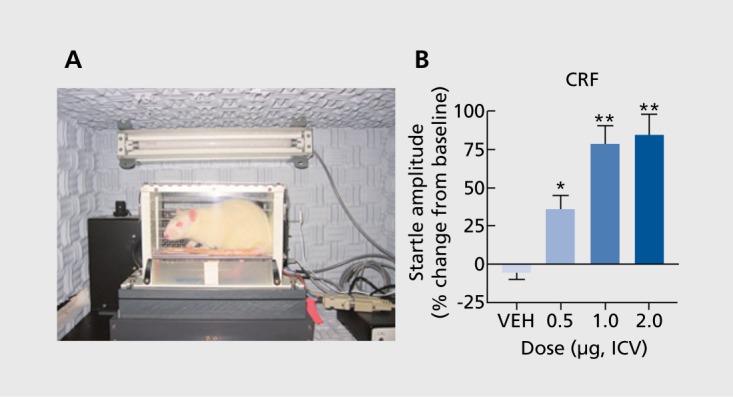
“Acoustic startle is a measurable “flinch” to a delivered white noise, that has an amplitude that can be quantified in units of force, and is hypothesized to reflect the state of alertness associated with increased anxiety (Lezak et al., 2017).”
From The Epigenetics of Anxiety Pathophysiology: A DNA Methylation and Histone Modification Focused Review (2023) · cites this paper as Lezak et al., 2017
The cited source says what the claim attributes to it.
In the citing paper
“For example, pairing an aversive unconditioned stimuli, such as a footshock, with a tone/sound, light, or a context/environment (neutral conditioned stimuli) can elicit fear responses to the conditioned stimuli in the absence of the footshock on re-exposure to the conditioned stimulus (Lezak et al., 2017).”
From The Epigenetics of Anxiety Pathophysiology: A DNA Methylation and Histone Modification Focused Review (2023) · cites this paper as Lezak et al., 2017
Self-check
Percentages, sums and reported differences re-computed from the paper’s own numbers.
The self-check needs the paper’s full text.
Citations
Cites
Diagnostic and Statistical Manual of Mental Disorders
American Psychiatric Association (2013) · doi:10.1176/appi.books.9780890425596 · Cited by 116,369
Effects of stress throughout the lifespan on the brain, behaviour and cognition
Lupien, S. J., McEwen, B. S., Gunnar, M. R., & Heim, C. (2009) · Nature Reviews Neuroscience · doi:10.1038/nrn2639 · Cited by 6,256
Toward the future of psychiatric diagnosis: the seven pillars of RDoC
Cuthbert, B. N., & Insel, T. R. (2013) · BMC Medicine · doi:10.1186/1741-7015-11-126 · Cited by 3,053
Essential role of BDNF in the mesolimbic dopamine pathway in social defeat stress
Berton, O., McClung, C. A., DiLeone, R. J., Krishnan, V., Renthal, W., Russo, S. J., Graham, D., Tsankova, N. M., Bolanos, C. A., Rios, M., et al. (2006) · Science · doi:10.1126/science.1120972 · Cited by 2,129
Willner, P. (1997) · Psychopharmacology · doi:10.1007/s002130050456 · Cited by 1,832
Willner, P. (2005) · Neuropsychobiology · doi:10.1159/000087097 · Cited by 1,605
A standardized protocol for repeated social defeat stress in mice
Golden, S. A., Covington, H. E., Berton, O., & Russo, S. J. (2011) · Nature Protocols · doi:10.1038/nprot.2011.361 · Cited by 1,581
Pellow, S., & File, S. E. (1986) · Pharmacology Biochemistry and Behavior · doi:10.1016/0091-3057(86)90552-6 · Cited by 1,534
Phasic vs Sustained Fear in Rats and Humans: Role of the Extended Amygdala in Fear vs Anxiety
Davis, M., Walker, D. L., Miles, L., & Grillon, C. (2010) · Neuropsychopharmacology · doi:10.1038/npp.2009.109 · Cited by 1,513
Bourin, M., & Hascoët, M. (2003) · European Journal of Pharmacology · doi:10.1016/s0014-2999(03)01274-3 · Cited by 1,440
Preliminary report of a simple animal behavior model for the anxiolytic effects of benzodiazepines
Crawley, J. N., & Goodwin, F. K. (1980) · Pharmacology Biochemistry and Behavior · doi:10.1016/0091-3057(80)90067-2 · Cited by 1,432
The 5-choice serial reaction time task: behavioural pharmacology and functional neurochemistry
Robbins, T. (2002) · Psychopharmacology · doi:10.1007/s00213-002-1154-7 · Cited by 1,282
Maternal immune activation: Implications for neuropsychiatric disorders
Estes, M. L., & McAllister, A. K. (2016) · Science · doi:10.1126/science.aag3194 · Cited by 1,206
The long-term behavioural consequences of prenatal stress
Weinstock, M. (2008) · Neuroscience & Biobehavioral Reviews · doi:10.1016/j.neubiorev.2008.03.002 · Cited by 1,098
Neural organization of the defensive behavior system responsible for fear
Fanselow, M. S. (1994) · Psychonomic Bulletin & Review · doi:10.3758/bf03210947 · Cited by 1,000
Handley, S. L., & Mithani, S. (1984) · Naunyn-Schmiedeberg s Archives of Pharmacology · doi:10.1007/bf00504983 · Cited by 974
The chronic mild stress (CMS) model of depression: History, evaluation and usage
Willner, P. (2017) · Neurobiology of Stress · doi:10.1016/j.ynstr.2016.08.002 · Cited by 959
Role of the bed nucleus of the stria terminalis versus the amygdala in fear, stress, and anxiety
Walker, D. L., Toufexis, D. J., & Davis, M. (2003) · European Journal of Pharmacology · doi:10.1016/s0014-2999(03)01282-2 · Cited by 838
CAN SOCIAL INTERACTION BE USED TO MEASURE ANXIETY?
File, S. E., & Hyde, J. R. G. (1978) · British Journal of Pharmacology · doi:10.1111/j.1476-5381.1978.tb07001.x · Cited by 808
Post-traumatic stress disorder is associated with PACAP and the PAC1 receptor
Ressler, K. J., Mercer, K. B., Bradley, B., Jovanovic, T., Mahan, A., Kerley, K., Norrholm, S. D., Kilaru, V., Smith, A. K., Myers, A. J., et al. (2011) · Nature · doi:10.1038/nature09856 · Cited by 800
A review of 25 years of the social interaction test
File, S. E., & Seth, P. (2003) · European Journal of Pharmacology · doi:10.1016/s0014-2999(03)01273-1 · Cited by 763
Mapping Sub-Second Structure in Mouse Behavior
Wiltschko, A. B., Johnson, M. J., Iurilli, G., Peterson, R. E., Katon, J. M., Pashkovski, S. L., Abraira, V. E., Adams, R. P., & Datta, S. R. (2015) · Neuron · doi:10.1016/j.neuron.2015.11.031 · Cited by 760
Walker, D. L., & Davis, M. (1997) · The Journal of Neuroscience · doi:10.1523/jneurosci.17-23-09375.1997 · Cited by 627
(2004) · PubMed · Cited by 567
Stress-restress: Effects on ACTH and fast feedback
Liberzon, I., Krstov, M., & Young, E. A. (1997) · Psychoneuroendocrinology · doi:10.1016/s0306-4530(97)00044-9 · Cited by 556
Are different parts of the extended amygdala involved in fear versus anxiety?
Davis, M. (1998) · Biological Psychiatry · doi:10.1016/s0006-3223(98)00288-1 · Cited by 545
Startle reactivity and anxiety disorders: aversive conditioning, context, and neurobiology
Grillon, C. (2002) · Biological Psychiatry · doi:10.1016/s0006-3223(02)01665-7 · Cited by 514
REM sleep dysregulation in depression: state of the art
Palagini, L., Baglioni, C., Ciapparelli, A., Gemignani, A., & Riemann, D. (2013) · Sleep Medicine Reviews · doi:10.1016/j.smrv.2012.11.001 · Cited by 513
Crawley, J. N. (1981) · Pharmacology Biochemistry and Behavior · doi:10.1016/0091-3057(81)90007-1 · Cited by 508
Mechanisms of late-onset cognitive decline after early-life stress
Brunson, K. L., Kramár, E., Lin, B., Chen, Y., Colgin, L. L., Yanagihara, T. K., Lynch, G., & Baram, T. Z. (2005) · The Journal of Neuroscience · doi:10.1523/jneurosci.2281-05.2005 · Cited by 479
Elliott, R., Sahakian, B. J., McKay, A. P., Herrod, J. J., Robbins, T. W., & Paykel, E. S. (1996) · Psychological Medicine · doi:10.1017/s0033291700035303 · Cited by 469
Sexually divergent expression of active and passive conditioned fear responses in rats
Gruene, T. M., Flick, K., Stefano, A., Shea, S. D., & Shansky, R. M. (2015) · eLife · doi:10.7554/elife.11352 · Cited by 462
Giovanoli, S., Engler, H., Engler, A., Richetto, J., Voget, M., Willi, R., Winter, C., Riva, M. A., Mortensen, P. B., Feldon, J., et al. (2013) · Science · doi:10.1126/science.1228261 · Cited by 459
Cognitive performance in tests sensitive to frontal lobe dysfunction in the elderly depressed
Beats, B. C., Sahakian, B. J., & Levy, R. (1996) · Psychological Medicine · doi:10.1017/s0033291700035662 · Cited by 457
Defensive behavior in rats towards predatory odors: a review
Dielenberg, R. A., & McGregor, I. S. (2001) · Neuroscience & Biobehavioral Reviews · doi:10.1016/s0149-7634(01)00044-6 · Cited by 453
Dulawa, S. C., & Hen, R. (2005) · Neuroscience & Biobehavioral Reviews · doi:10.1016/j.neubiorev.2005.03.017 · Cited by 448
Psychological measures of prenatal stress as predictors of infant temperament
HUIZINK, A. C., ROBLES DE MEDINA, P. G., MULDER, E. J. H., VISSER, G. H. A., & BUITELAAR, J. K. (2002) · Journal of the American Academy of Child & Adolescent Psychiatry · doi:10.1097/00004583-200209000-00008 · Cited by 409
Ivy, A. S., Brunson, K. L., Sandman, C., & Baram, T. Z. (2008) · Neuroscience · doi:10.1016/j.neuroscience.2008.04.019 · Cited by 407
Social stress, therapeutics and drug abuse: Preclinical models of escalated and depressed intake
MICZEK, K., YAP, J., & COVINGTONIII, H. (2008) · Pharmacology & Therapeutics · doi:10.1016/j.pharmthera.2008.07.006 · Cited by 338
Walker, D. L., Miles, L. A., & Davis, M. (2009) · Progress in Neuro-Psychopharmacology and Biological Psychiatry · doi:10.1016/j.pnpbp.2009.06.022 · Cited by 331
Single prolonged stress: toward an animal model of posttraumatic stress disorder
Yamamoto, S., Morinobu, S., Takei, S., Fuchikami, M., Matsuki, A., Yamawaki, S., & Liberzon, I. (2009) · Depression and Anxiety · doi:10.1002/da.20629 · Cited by 316
Hypothalamic CRH neurons orchestrate complex behaviours after stress
Füzesi, T., Daviu, N., Wamsteeker Cusulin, J. I., Bonin, R. P., & Bains, J. S. (2016) · Nature Communications · doi:10.1038/ncomms11937 · Cited by 316
Haskell, S. G., Gordon, K. S., Mattocks, K. M., Duggal, M., Erdos, J., Justice, A. C., & Brandt, C. (2010) · Journal of Women s Health · doi:10.1089/jwh.2008.1262 · Cited by 305
Attack and defense in rodents as ethoexperimental models for the study of emotion
Blanchard, R. J., & Blanchard, D. C. (1989) · Progress in Neuro-Psychopharmacology and Biological Psychiatry · doi:10.1016/0278-5846(89)90105-x · Cited by 296
Borcherding, B. G., Rendleman, R. L., & Walkup, J. T. (2017) · Elsevier eBooks · doi:10.1016/b978-0-323-37101-8.00060-6 · Cited by 286
Naturalistic rodent models of chronic early‐life stress
Molet, J., Maras, P. M., Avishai‐Eliner, S., & Baram, T. Z. (2014) · Developmental Psychobiology · doi:10.1002/dev.21230 · Cited by 282
DAVIS, M., Walker, D. L., & LEE, Y. (1997) · Annals of the New York Academy of Sciences · doi:10.1111/j.1749-6632.1997.tb48289.x · Cited by 280
Animal models of anxiety in mice
Bourin, M., Petit‐Demoulière, B., Dhonnchadha, B. Á. N., & Hascoët, M. (2007) · Fundamental and Clinical Pharmacology · doi:10.1111/j.1472-8206.2007.00526.x · Cited by 277
Spatiotemporal Dynamics of Error Processing Dysfunctions in Major Depressive Disorder
Holmes, A. J., & Pizzagalli, D. A. (2008) · Archives of General Psychiatry · doi:10.1001/archgenpsychiatry.2007.19 · Cited by 277
Social defeat stress induces a depression-like phenotype in adolescent male c57BL/6 mice
Iñiguez, S. D., Riggs, L. M., Nieto, S. J., Dayrit, G., Zamora, N. N., Shawhan, K. L., Cruz, B., & Warren, B. L. (2014) · Stress · doi:10.3109/10253890.2014.910650 · Cited by 269
Sleep and REM sleep disturbance in the pathophysiology of PTSD: the role of extinction memory
Pace-Schott, E. F., Germain, A., & Milad, M. R. (2015) · Biology of Mood & Anxiety Disorders · doi:10.1186/s13587-015-0018-9 · Cited by 255
Walker, D. L., & Davis, M. (2008) · Brain Structure and Function · doi:10.1007/s00429-008-0183-3 · Cited by 231
Hammack, S. E., Cheung, J., Rhodes, K. M., Schutz, K. C., Falls, W. A., Braas, K. M., & May, V. (2009) · Psychoneuroendocrinology · doi:10.1016/j.psyneuen.2008.12.013 · Cited by 230
Nishi, M., Horii‐Hayashi, N., & Sasagawa, T. (2014) · Frontiers in Neuroscience · doi:10.3389/fnins.2014.00166 · Cited by 227
Behavioral consequences in animal tests of anxiety and exploration of exposure to cat odor
Zangrossi, H., & File, S. E. (1992) · Brain Research Bulletin · doi:10.1016/0361-9230(92)90072-6 · Cited by 224
Yamamoto, S., Morinobu, S., Fuchikami, M., Kurata, A., Kozuru, T., & Yamawaki, S. (2008) · Neuropsychopharmacology · doi:10.1038/sj.npp.1301605 · Cited by 224
Immobilisation stress induces a paradoxical sleep rebound in rat
Rampin, C., Cespuglio, R., Chastrette, N., & Jouvet, M. (1991) · Neuroscience Letters · doi:10.1016/0304-3940(91)90532-x · Cited by 221
Prenatal maternal cortisol levels and infant behavior during the first 5 months
de Weerth, C., van Hees, Y., & Buitelaar, J. K. (2003) · Early Human Development · doi:10.1016/s0378-3782(03)00088-4 · Cited by 220
Kinsey, S. G., Bailey, M. T., Sheridan, J. F., Padgett, D. A., & Avitsur, R. (2007) · Brain, Behavior, and Immunity · doi:10.1016/j.bbi.2006.11.001 · Cited by 190
Waddell, J., Morris, R. W., & Bouton, M. E. (2006) · Behavioral Neuroscience · doi:10.1037/0735-7044.120.2.324 · Cited by 183
Changes in sleep architecture following chronic mild stress
Cheeta, S., Ruigt, G. S. F., Proosdij, J. N. V., & Willner, P. (1997) · Biological Psychiatry · doi:10.1016/s0006-3223(96)00058-3 · Cited by 183
van Oers, H. J. J., de Kloet, E. R., & Levine, S. D. (1998) · Developmental Brain Research · doi:10.1016/s0165-3806(98)00143-6 · Cited by 177
Stress-induced changes in sleep in rodents: Models and mechanisms
Pawlyk, A. C., Morrison, A. R., Ross, R. J., & Brennan, F. X. (2008) · Neuroscience & Biobehavioral Reviews · doi:10.1016/j.neubiorev.2007.06.001 · Cited by 176
Sex as a Biological Variable: Who, What, When, Why, and How
Bale, T. L., & Epperson, C. N. (2016) · Neuropsychopharmacology · doi:10.1038/npp.2016.215 · Cited by 175
Animal models for screening anxiolytic-like drugs: a perspective.
Bourin, M. (2015) · Dialogues in Clinical Neuroscience · doi:10.31887/dcns.2015.17.3/mbourin · Cited by 163
Donahue, R. J., Muschamp, J. W., Russo, S. J., Nestler, E. J., & Carlezon, W. A. (2014) · Biological Psychiatry · doi:10.1016/j.biopsych.2013.12.014 · Cited by 161
Trainor, B. C., Pride, M. C., Villalon Landeros, R., Knoblauch, N. W., Takahashi, E. Y., Silva, A. L., & Crean, K. K. (2011) · PLoS ONE · doi:10.1371/journal.pone.0017405 · Cited by 157
Ducottet, C., & Belzung, C. (2004) · Behavioural Brain Research · doi:10.1016/j.bbr.2004.05.018 · Cited by 151
Chronic mild stress-induced anhedonia model of depression
Moreau, J. ‐., Scherschlicht, R., Jenck, F., & Martin, J. R. (1995) · Behavioural Pharmacology · doi:10.1097/00008877-199511000-00003 · Cited by 144
Animal Models for Predicting Clinical Efficacy of Anxiolytic Drugs: Social Behaviour
File, S. E. (2008) · Neuropsychobiology · doi:10.1159/000118163 · Cited by 141
Mouse strain differences in autonomic responses to stress
van Bogaert, M. J. V., Groenink, L., Oosting, R. S., Westphal, K. G. C., van der Gugten, J., & Olivier, B. (2005) · Genes Brain & Behavior · doi:10.1111/j.1601-183x.2005.00143.x · Cited by 138
Effect of paroxetine on enhanced contextual fear induced by single prolonged stress in rats
Takahashi, T., Morinobu, S., Iwamoto, Y., & Yamawaki, S. (2006) · Psychopharmacology · doi:10.1007/s00213-006-0545-6 · Cited by 138
Stimulus-preceding negativity induced by fear: a manifestation of affective anticipation
Böcker, K. B. E., Baas, J. M. P., Kenemans, J. L., & Verbaten, M. N. (2001) · International Journal of Psychophysiology · doi:10.1016/s0167-8760(01)00180-5 · Cited by 128
Babri, S., Doosti, M.-H., & Salari, A. (2013) · Brain Behavior and Immunity · doi:10.1016/j.bbi.2013.12.003 · Cited by 120
Molle, R. D., Portella, A. K., Goldani, M. Z., Kapczinski, F. P., Leistner‐Segal, S., Salum, G. A., Manfro, G. G., & Silveira, P. P. (2012) · Translational Psychiatry · doi:10.1038/tp.2012.126 · Cited by 114
Paine, T. A., Tomasiewicz, H. C., Zhang, K., & Carlezon, W. A. (2007) · Biological Psychiatry · doi:10.1016/j.biopsych.2006.11.017 · Cited by 104
Light-enhanced startle: further pharmacological and behavioral characterization
Walker, D. L., & Davis, M. (2002) · Psychopharmacology · doi:10.1007/s002130100913 · Cited by 101
Early Life Stress: Long-Term Physiological Impact in Rodents and Primates
Pryce, C. R., Rüedi‐Bettschen, D., Dettling, A. C., & Feldon, J. (2002) · Physiology · doi:10.1152/nips.01367.2001 · Cited by 96
Yohimbine — facilitated acoustic startle reflex in humans
Morgan, C. A., Southwick, S. M., Grillon, C., Davis, M., Krystal, J. H., & Charney, D. S. (1993) · Psychopharmacology · doi:10.1007/bf02251291 · Cited by 87
Sleep and EEG Phenotyping in Mice
Mang, G. M., & Franken, P. (2012) · Current Protocols in Mouse Biology · doi:10.1002/9780470942390.mo110126 · Cited by 84
High-throughput analysis of behavior for drug discovery
Alexandrov, V., Brunner, D., Hanania, T., & Leahy, E. (2015) · European Journal of Pharmacology · doi:10.1016/j.ejphar.2014.11.047 · Cited by 81
Shimamoto, A., DeBold, J. F., Holly, E. N., & Miczek, K. A. (2011) · Psychopharmacology · doi:10.1007/s00213-011-2364-7 · Cited by 81
Acoustic Startle Reflex in Rhesus Monkeys: A Review
Davis, M., Antoniadis, E. A., Amaral, D. G., & Winslow, J. T. (2008) · Reviews in the Neurosciences · doi:10.1515/revneuro.2008.19.2-3.171 · Cited by 80
Vázquez-Palacios, G., & Velázquez‐Moctezuma, J. (2000) · Physiology & Behavior · doi:10.1016/s0031-9384(00)00285-7 · Cited by 72
de Jongh, R., Groenink, L., van der Gugten, J., & Olivier, B. (2002) · Psychopharmacology · doi:10.1007/s002130100914 · Cited by 70
Effects of threat of shock, shock electrode placement and darkness on startle
Grillon, C., & Ameli, R. (1998) · International Journal of Psychophysiology · doi:10.1016/s0167-8760(97)00072-x · Cited by 68
Mühlberger, A., Wieser, M. J., & Pauli, P. (2007) · Biological Psychology · doi:10.1016/j.biopsycho.2007.09.004 · Cited by 63
Lundt, A., Wormuth, C., Siwek, M. E., Müller, R., Ehninger, D., Henseler, C., Broich, K., Papazoglou, A., & Weiergräber, M. (2015) · Neural Plasticity · doi:10.1155/2016/8213878 · Cited by 61
Veer, A. V., Yano, J. M., Carroll, F. I., Cohen, B. M., & Carlezon, W. A. (2012) · Neuropsychopharmacology · doi:10.1038/npp.2012.151 · Cited by 58
Bonnet, C., Léger, L., Baubet, V., Debilly, G., & Cespuglio, R. (1997) · Brain Research · doi:10.1016/s0006-8993(96)01390-x · Cited by 54
Ramikie, T. S., & Ressler, K. J. (2016) · Dialogues in Clinical Neuroscience · doi:10.31887/dcns.2016.18.4/kressler · Cited by 54
Mental health: Depression needs large human-genetics studies
Hyman, S. (2014) · Nature · doi:10.1038/515189a · Cited by 46
Hyponeophagia: A Measure of Anxiety in the Mouse
Deacon, R. M. J. (2011) · Journal of Visualized Experiments · doi:10.3791/2613 · Cited by 43
Influence of some biologically meaningful odorants on the vigilance states of the rat
Cattarelli, M., & Chanel, J. (1979) · Physiology & Behavior · doi:10.1016/0031-9384(79)90186-0 · Cited by 42
Hamm, A. O., Richter, J., & Pané‐Farré, C. A. (2014) · Restorative Neurology and Neuroscience · doi:10.3233/rnn-139011 · Cited by 39
Sanford, L. D., Yang, L., Wellman, L. L., Dong, E., & Tang, X. (2008) · Brain Research · doi:10.1016/j.brainres.2007.11.007 · Cited by 28
Boland, E. M., & Ross, R. J. M. (2015) · Psychiatric Clinics of North America · doi:10.1016/j.psc.2015.07.005 · Cited by 26
Donahue, R. J., Venkataraman, A., Carroll, F. I., Meloni, E. G., & Carlezon, W. A. (2015) · Biological Psychiatry · doi:10.1016/j.biopsych.2015.06.013 · Cited by 25
Chan, J. C., Houghton, A. B., & Bale, T. L. (2017) · Neuropsychopharmacology · doi:10.1038/npp.2017.66 · Cited by 24
Abnormal error processing in depressive states: a translational examination in humans and rats
Beard, C., Donahue, R. J., Dillon, D. G., Veer, A. V., Webber, C. J., Lee, J., Barrick, E. M., Hsu, K. J., Foti, D., Carroll, F. I., et al. (2015) · Translational Psychiatry · doi:10.1038/tp.2015.54 · Cited by 22
Research works printed but not linked: 6
- Walker DL., 2008, Brain Struct Funct., 213, 29, 10.1007/s00429-008-0183-3 · DOI · Paper page
- Deacon RM., 2011, J Vis Exp., doi:10.3791
- Nemeroff CB., 2004, J Clin Psychiatry., 65, 18
- Pryce CR., 2002, News Physiol Sci., 17, 150
- Hamm AO., 2014, Restor Neurol Neurosci., 32, 79
- Davis M., 2008, Rev Neurosci., 19, 171
Cited by
Sorted by citations
Neurobiological links between stress and anxiety
Daviu, N., Bruchas, M. R., Moghaddam, B., Sandi, C., & Beyeler, A. (2019) · Neurobiology of Stress · doi:10.1016/j.ynstr.2019.100191 · Cited by 591
Understanding stress: Insights from rodent models
Atrooz, F., Alkadhi, K. A., & Salim, S. (2021) · Current Research in Neurobiology · doi:10.1016/j.crneur.2021.100013 · Cited by 213
Animal Models of Depression: What Can They Teach Us about the Human Disease?
Becker, M., Pinhasov, A., & Ornoy, A. (2021) · Diagnostics · doi:10.3390/diagnostics11010123 · Cited by 194
Quantified Coexpression Analysis of Central Amygdala Subpopulations
McCullough, K. M., Morrison, F. G., Hartmann, J., Carlezon, W. A., & Ressler, K. J. (2018) · eNeuro · doi:10.1523/eneuro.0010-18.2018 · Cited by 149
Chari, T., Griswold, S., Andrews, N. A., & Fagiolini, M. (2020) · Frontiers in Behavioral Neuroscience · doi:10.3389/fnbeh.2020.00113 · Cited by 151
Metadata
- Authors
- Lezak, K. R., Missig, G., & Carlezon Jr, W. A.
- Affiliations
- Harvard University (US)
- Behavioral Genetics Laboratory, Department of Psychiatry, McLean Hospital, Harvard Medical School, Belmont, Massachusetts, USA
- Venue
- Dialogues in Clinical Neuroscience
- Publisher
- Informa UK Limited
- Published
- 2017-06-30
- Volume
- 19
- Issue
- 2
- Pages
- 181-191
- ISSN
- 1294-8322 (ISSN-L)
- 1958-5969
- PMC
- PMC5573562
- OpenAlex
- W2984369896
- Cited by
- 290
- References
- 100
- Citations by year
- 2026: 16 · 2025: 39 · 2024: 35 · 2023: 45 · 2022: 47 · 2021: 39 · 2020: 36 · 2019: 25 · 2018: 7 · 2017: 1
- FWCI
- 10.27
- Type
- journal article
- Language
- en
- Open access
- diamond
- doi.org
- Licence
- Locations
- Dialogues in Clinical Neuroscience (publishedVersion, cc-by-nc-nd)
- PubMed Central (publishedVersion, cc-by-nc-nd)
- PubMed (publishedVersion)
- Funders
- National Institutes of Health (5r01mh063266-25)
- National Institute of Mental Health (R01-MH063266)
- Topics
- Life Sciences › Neuroscience › Behavioral Neuroscience › Stress Responses and Cortisol
- Life Sciences › Neuroscience › Cellular and Molecular Neuroscience › Neurotransmitter Receptor Influence on Behavior
- Life Sciences › Neuroscience › Cognitive Neuroscience › Memory and Neural Mechanisms
- Keywords
- anxiety, stress, anxiety-related disorders, stress responsiveness, translational research, behavioral tests
- MeSH terms
- Animals, Anxiety Disorders, Behavior, Animal, Disease Models, Animal, Biomedical Research, Mice, Rats, Translational Research, Biomedical
About these checks
Registry, retraction, Cites and statistics results are computed, not judged, with one exception: a printed reference that no index lists is read once by a model before it counts as a citation error. Claims are extracted by a model and kept only when their quote appears verbatim in the text; each cited source is then checked, with a model’s help, for whether it says what the claim relies on. Those verdicts can be wrong — read the claim’s quote and the cited source before relying on one.
Statistics and arithmetic are recomputed, not judged.
Confidence bands are shown only for fields calibrated on our annotated test set. None is calibrated yet, so no band is shown.
What counts as a claim ›How we measure confidence ›How we check this ›
Are you an author, or do you see a problem with this page? Request a review
