

Life Experiences in Neuromuscular Tracheotomized Patients in Times of Covid-19
Open accessThe DOI matches its Crossref record; 56 of the 56 references it cites were found in a registry or an index; 19 of the 41 sources its claims cite were checked for support.
Abstract
Background: The management of tracheotomy at home can be very complex, affecting the patient's quality of life. Objectives: This case series study aimed to explore the experiences of patients affected by neuromuscular diseases (NMD) concerning tracheostomy and Invasive Mechanical Ventilation (IMV) management at home during the COVID-19 health emergency in Italy. Methods: Semi-structured interviews and the following instruments were used: Connor and Davidson Resilience Scale (CD-RISC-25); Acceptance and Action Questionnaire-II (AAQ-II); State-Trait Anxiety Inventory (STAI); Langer Mindfulness Scale (LMS). Descriptive analyses, correlations, and qualitative analyses were carried out. Results: 22 patients [50% female, mean age = 50.2 (SD = 21.2)] participated in the study. Participants who showed high levels of dispositional mindfulness in terms of novelty-seeking (r = 0.736, p = 0.013) and novelty production (r = 0.644, p = 0.033) were those with higher resilience. The main emotion that emerged was the fear of contagion (19 patients, 86.36%), due to the previous fragile condition, leading to a significant sense of abandonment. The tracheostomy's perception is seen in extremes as a lifesaver or a condemnation. The relationship with the health professionals moves from satisfaction to a feeling of abandonment with a lack of preparation. Conclusions: The relationship between resilience, flexibility, state anxiety and dispositional mindfulness offers ways to reinforce tracheostomy management at home, even in critical periods when going to the hospital may be difficult. © 2023 - The authors.
Overview
CoChat Summary
## TL;DR
This prospective multicentre case series explored how 22 neuromuscular patients with permanent tracheostomy experienced home invasive mechanical ventilation during the COVID-19 emergency in Italy, combining questionnaires with interviews. The study found that fear of contagion and feelings of abandonment were common, while higher resilience was associated with higher dispositional mindfulness, especially novelty-seeking.
## Key findings
- 22 patients participated; 50% were female and mean age was 50.2 (SD 21.2) years.
- In the quantitative analysis, higher resilience was associated with higher dispositional mindfulness:
- novelty-seeking: r = 0.736, p = 0.013
- novelty production: r = 0.644, p = 0.033
- Specific resilience subscales also correlated with mindfulness:
- personal competence and tenacity with novelty-seeking: r = 0.745, p = 0.012
- self-confidence and emotion management with novelty-seeking: r = 0.691, p = 0.023
- positive acceptance of change and secure relationships with novelty-seeking: r = 0.829, p = 0.002
- In the interviews, the main emotion was fear of contagion in 19 patients (86.36%), along with strong themes of abandonment, isolation, and mixed views of tracheostomy as either “a lifesaver” or “a condemnation.”
## Methods
- Design: Prospective multicentre quanti-qualitative case series based on Interpretative Phenomenological Analysis (IPA); reported according to COREQ.
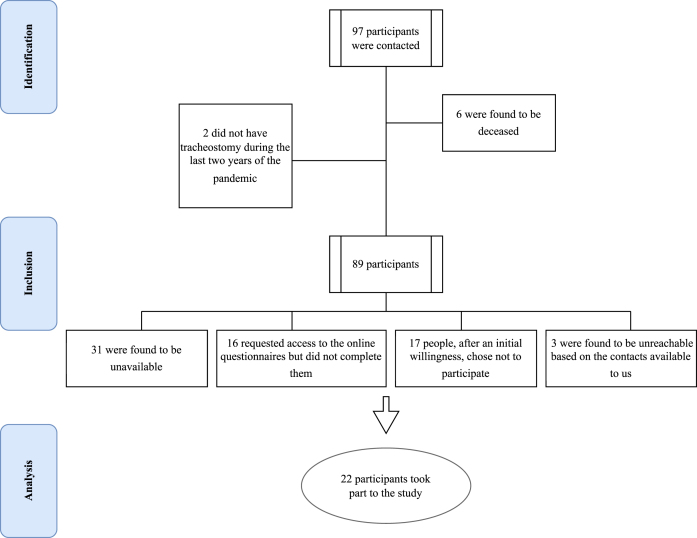
- Sample/data: Purposive recruitment from two Italian centers between 10 Dec 2021 and 30 Apr 2022; 22 adults with neuromuscular disease and tracheostomy during the COVID-19 pandemic, with 5 accepting semi-structured interviews.
- Main analysis: Semi-structured interviews plus CD-RISC-25, AAQ-II, STAI, and LMS; descriptive statistics, Spearman rank correlations, and qualitative IPA thematic analysis using NVivo 12 and Jamovi 2.2.2.
## Limitations
- The paper explicitly states: small sample size, limited to two centres and those who participated; QoL was not evaluated; some questions left room for “many other items not explored”; and not all participants were seen in person, limiting clinical data such as blood gas analysis, spirometry, and night-time polygraphy.
- The text also makes evident that only 5 of 22 participants completed interviews, so the qualitative findings come from a very small subset; this is an evident limitation from the reported participation numbers.
- The study notes that none of the participants tested positive for COVID-19, but it had no information about family members, which is an evidence gap stated in the text.
Model-written summary. Check it against the paper before relying on it.
Integrity signals
Registry
Cites
Statistics
Figures
Verification
Claims the paper makes
9 Valid · 1 Not valid · 9 Not checked · 56 Own results and interpretations
A result the paper reports from its own data — it cites no other source for it, so there is none to check. The quote shows it is in the paper.
In the paper
“Considering the subscale of novelty production inherent to the LMS, however, high levels are found where there are high scores in self-confidence and emotion management (r = 0.686, p = 0.020) and positive acceptance of change and secure relationships (r = 0.739, p = 0.009).”
§ Life Experiences in Neuromuscular Tracheotomized Patients in Times of Covid-19 > RESULTS > The relationships between resilience, flexibility, state anxiety and dispositional mindfulness
plainstates an association- Asserted: passes — The authors put it forward as true.
- Checkable: passes — It can be checked against evidence.
- Load-bearing: unclear — It is unclear whether the paper’s conclusions depend on it.
- Based: passes — The paper gives a reason why it holds.
A result the paper reports from its own data — it cites no other source for it, so there is none to check. The quote shows it is in the paper.
In the paper
“Three participants (17.6%) had the opportunity to discuss extensively with the doctors and a psychologist and 3 other participants referred that it was unexpected and practised in an emergency context (3; 17.6%).”
§ Life Experiences in Neuromuscular Tracheotomized Patients in Times of Covid-19 > RESULTS > From Non-Invasive Ventilation Support (NVS) to tracheostomy: A journey through metaphors
plainn = 3- Asserted: passes — The authors put it forward as true.
- Checkable: passes — It can be checked against evidence.
- Load-bearing: unclear — It is unclear whether the paper’s conclusions depend on it.
- Based: passes — The paper gives a reason why it holds.
A result the paper reports from its own data — it cites no other source for it, so there is none to check. The quote shows it is in the paper.
In the paper
“Isolation and abandonment, on the other hand, are the emotions mainly described by 4 of the participants (80% ; 6% coverage) concerning the entire period of the medical emergency.”
§ Life Experiences in Neuromuscular Tracheotomized Patients in Times of Covid-19 > RESULTS > Emotions
plainn = 4- Asserted: passes — The authors put it forward as true.
- Checkable: passes — It can be checked against evidence.
- Load-bearing: unclear — It is unclear whether the paper’s conclusions depend on it.
- Based: passes — The paper gives a reason why it holds.
A result the paper reports from its own data — it cites no other source for it, so there is none to check. The quote shows it is in the paper.
In the paper
“Specifically, the subscale of personal competence and tenacity correlates positively with dispositional mindfulness in terms of novelty seeking (r = 0.745, p = 0.012).”
- Also stated in: § DISCUSSION This study for the first time in the literature explored the experiences of patients affected by NMD and CRF living with tracheotomies and HIMV during the COVID-19 pandemic period. Results raised the presence of patients with diverse backgrounds and marital and educational statuses and it is still unknown how these factors may help approach the stress pandemic related in different ways [29, 39]. The mean age of patients involved was 50±21 ranging between young adult and elderly stages of life with a long disease course behind a mean of 10 years from diagnosis. Interestingly, the predisposition to mindfulness and flexibility to novelty-seeking appears to be the winning strategy for higher resilience. Moreover, personal competence and tenacity statistically significantly correlate to a positive mindfulness predisposition. Thus, novelty-seeking positively also correlates with higher levels of self-confidence and emotion management with positive acceptance of change and secure relationships. In the late stages of ALS disease, the literature describes that patients undergoing long-term IMV may develop changes in personality causing a higher level of distress for their selves and their caregivers [40]. Moreover, the level of depression among patients affected by NMD diseases is higher compared to the general population [41]. Indeed, it has been found that the more negative the patients’ approach and behaviours to the illness and stressors, the higher the connected caregivers’ burden [42]. The positive and mindfulness approach to novelty seeking, therefore, may be of help in coping with the distress related to ALS and other chronic respiratory diseases even in periods of intense psychological distress such as the recent pandemic has been. Studies in the literature describe coping strategies of long terms patients and carers which can be of help in improving the QoL of both living with the distress of ALS disease [43]. Moreover, this mindfulness novelty-seeking coping strategy can also be implemented through group-based intervention which may help address the lack among patients and caregivers to improve the care burden, anxiety, and/or depression [44–46]. Another interesting point that was highlighted in the interviews is that even though the idea of tracheotomy was anticipated before the rescue event third of the participants received it in an emergency setting. As prior research studies showed, most patients undergo tracheotomy without any consent or proper long and exhaustive discussion with the caring physician because the procedure is performed during an emergency [47, 48]. Also, in our experience for some neuromuscular patients tracheotomy is performed in an acute setting telling them that it could be temporary and can be removed in a longer or shorter time. All these stressful experiences sum up in patients’ and caregivers’ lives and resonate with their experiences during a period of more intense stress such as during the pandemic [49]. One of the major problem with the continuous use of the NIV is interface intolerance or lack of interface rotational strategy which may lead to emergency tracheotomy [50]. The tracheostomy is seen by patients in a way that often is contra posed. Indeed, if from one side HIMV is seen with a positive connotation as “a way out”, what “keeps me alive”, or even “an angel who runs to save me”; from the other side is seen as “the anteroom of death”, “like a robot”, or” salvation, but at the same time an impediment”. These feelings of fear and sadness tracheotomy related may be implemented by the small percentage of patients interviewed that use open ventilation [3 (13.63%)] or pronation valves [3 (13.63%)]. The first is a modality of ventilation and the second one is a one-side direction valve respectively which allows patients to speak again despite the presence of the tracheotomy and HIMV. The inability to speak again enhances the feeling of abandonment and separation. Patients with tracheostomy and mechanical ventilation have an impaired cough mechanism. Coughing is an important defence mechanism to remove irritants, pollutants, bacteria, phlegm or any foreign objects (food, liquids, secretions) that have entered the airway, thus preventing aspiration pneumonia [51]. When the material enters below the vocal folds and into the airway, this is termed aspiration. As shown by Chatwin, normal trans tracheal suctioning with a catheter is not completely effective in more than 90% of cases and thus peripheral secretions are not removed [52]. Mechanical insufflation-exhalation (MI-E) applied to the tracheostomy cannula in patients with amyotrophic lateral sclerosis (ALS) undergoing invasive home mechanical ventilation is an effective procedure for managing bronchial secretions [53]. Interestingly, cough machines are still not used in most neuromuscular patients interviewed (60%). The reasons behind this were not explored and we do not know whether this is related to the fact that physicians who perform the emergency tracheotomy (ICU, ENT), Respiratory and Neurology physicians are still not aware of the importance of the bronchial clearance secretions during IMV, or to continuing to use it after the tracheotomy if before hands the patients were using it non-invasively [54]. Another possible explanation could be related to the delay in the delivery of the cough machine due to the pandemic and the manufacturing crisis around the world. Unfortunately, only a small group of patients tracheotomized were able to complete the semi-structured interviews concerning feelings and how they adjusted to the tracheostomy management. This was mainly because of communication issues and fatigue expressed by the patients at the time of the call. However, from the very few interviews gathered, four themes were explored “emotions”, “challenges and difficulties”, “relationships”, and “satisfaction”. In the emotions, patients expressed an intense sense of abandonment and isolation. These feelings were further expressed in the second theme of “challenges and difficulties” as a sense of helplessness and confusion. The sense of abandonment is a common feeling experienced by individuals who are affected by chronic illnesses like neuromuscular diseases and use tracheostomy. The COVID-19 pandemic has added additional stress to these persons and may exacerbate feelings of abandonment. Reduced access to in-person support and healthcare services, as well as increased social isolation, may contribute to these feelings [22, 55]. It is important for individuals to seek out available resources, such as virtual support groups, telehealth services, and mental health services, to help cope with these feelings. Telehealth allows individuals with neuromuscular disease to receive mental health support from the comfort and safety of their own homes, which can be especially important for those who are immunocompromised. Additionally, telehealth services can help address barriers to care, such as transportation and mobility limitations, that may make in-person appointments challenging for individuals with neuromuscular disease. Overall, telehealth psychological support can help improve the mental and emotional well-being of individuals with the neuromuscular disease during the pandemic. In the “relationship” theme the absence of usual figures of health care providers who were used to visiting their homes contributed to the sense of isolation which is interconnected with the last theme of “satisfaction”. Indeed, the pandemic period created a sudden hiatus, a complete lack of services meeting their needs and a lack of continuity of care. This continued at least until the start of telemedicine which is not jet provided everywhere nor with continuity [29, 56]. · plain
“Moreover, personal competence and tenacity statistically significantly correlate to a positive mindfulness predisposition.”
- Also stated in: § CONCLUSIONS · plain
“Moreover, personal competence and tenacity statistically significantly correlate to a positive mindfulness predisposition.”
§ Life Experiences in Neuromuscular Tracheotomized Patients in Times of Covid-19 > RESULTS > The relationships between resilience, flexibility, state anxiety and dispositional mindfulness
plainstates an association- Asserted: passes — The authors put it forward as true.
- Checkable: passes — It can be checked against evidence.
- Load-bearing: passes — The paper’s conclusions depend on it.
- Based: passes — The paper gives a reason why it holds.
- Also stated in: § DISCUSSION This study for the first time in the literature explored the experiences of patients affected by NMD and CRF living with tracheotomies and HIMV during the COVID-19 pandemic period. Results raised the presence of patients with diverse backgrounds and marital and educational statuses and it is still unknown how these factors may help approach the stress pandemic related in different ways [29, 39]. The mean age of patients involved was 50±21 ranging between young adult and elderly stages of life with a long disease course behind a mean of 10 years from diagnosis. Interestingly, the predisposition to mindfulness and flexibility to novelty-seeking appears to be the winning strategy for higher resilience. Moreover, personal competence and tenacity statistically significantly correlate to a positive mindfulness predisposition. Thus, novelty-seeking positively also correlates with higher levels of self-confidence and emotion management with positive acceptance of change and secure relationships. In the late stages of ALS disease, the literature describes that patients undergoing long-term IMV may develop changes in personality causing a higher level of distress for their selves and their caregivers [40]. Moreover, the level of depression among patients affected by NMD diseases is higher compared to the general population [41]. Indeed, it has been found that the more negative the patients’ approach and behaviours to the illness and stressors, the higher the connected caregivers’ burden [42]. The positive and mindfulness approach to novelty seeking, therefore, may be of help in coping with the distress related to ALS and other chronic respiratory diseases even in periods of intense psychological distress such as the recent pandemic has been. Studies in the literature describe coping strategies of long terms patients and carers which can be of help in improving the QoL of both living with the distress of ALS disease [43]. Moreover, this mindfulness novelty-seeking coping strategy can also be implemented through group-based intervention which may help address the lack among patients and caregivers to improve the care burden, anxiety, and/or depression [44–46]. Another interesting point that was highlighted in the interviews is that even though the idea of tracheotomy was anticipated before the rescue event third of the participants received it in an emergency setting. As prior research studies showed, most patients undergo tracheotomy without any consent or proper long and exhaustive discussion with the caring physician because the procedure is performed during an emergency [47, 48]. Also, in our experience for some neuromuscular patients tracheotomy is performed in an acute setting telling them that it could be temporary and can be removed in a longer or shorter time. All these stressful experiences sum up in patients’ and caregivers’ lives and resonate with their experiences during a period of more intense stress such as during the pandemic [49]. One of the major problem with the continuous use of the NIV is interface intolerance or lack of interface rotational strategy which may lead to emergency tracheotomy [50]. The tracheostomy is seen by patients in a way that often is contra posed. Indeed, if from one side HIMV is seen with a positive connotation as “a way out”, what “keeps me alive”, or even “an angel who runs to save me”; from the other side is seen as “the anteroom of death”, “like a robot”, or” salvation, but at the same time an impediment”. These feelings of fear and sadness tracheotomy related may be implemented by the small percentage of patients interviewed that use open ventilation [3 (13.63%)] or pronation valves [3 (13.63%)]. The first is a modality of ventilation and the second one is a one-side direction valve respectively which allows patients to speak again despite the presence of the tracheotomy and HIMV. The inability to speak again enhances the feeling of abandonment and separation. Patients with tracheostomy and mechanical ventilation have an impaired cough mechanism. Coughing is an important defence mechanism to remove irritants, pollutants, bacteria, phlegm or any foreign objects (food, liquids, secretions) that have entered the airway, thus preventing aspiration pneumonia [51]. When the material enters below the vocal folds and into the airway, this is termed aspiration. As shown by Chatwin, normal trans tracheal suctioning with a catheter is not completely effective in more than 90% of cases and thus peripheral secretions are not removed [52]. Mechanical insufflation-exhalation (MI-E) applied to the tracheostomy cannula in patients with amyotrophic lateral sclerosis (ALS) undergoing invasive home mechanical ventilation is an effective procedure for managing bronchial secretions [53]. Interestingly, cough machines are still not used in most neuromuscular patients interviewed (60%). The reasons behind this were not explored and we do not know whether this is related to the fact that physicians who perform the emergency tracheotomy (ICU, ENT), Respiratory and Neurology physicians are still not aware of the importance of the bronchial clearance secretions during IMV, or to continuing to use it after the tracheotomy if before hands the patients were using it non-invasively [54]. Another possible explanation could be related to the delay in the delivery of the cough machine due to the pandemic and the manufacturing crisis around the world. Unfortunately, only a small group of patients tracheotomized were able to complete the semi-structured interviews concerning feelings and how they adjusted to the tracheostomy management. This was mainly because of communication issues and fatigue expressed by the patients at the time of the call. However, from the very few interviews gathered, four themes were explored “emotions”, “challenges and difficulties”, “relationships”, and “satisfaction”. In the emotions, patients expressed an intense sense of abandonment and isolation. These feelings were further expressed in the second theme of “challenges and difficulties” as a sense of helplessness and confusion. The sense of abandonment is a common feeling experienced by individuals who are affected by chronic illnesses like neuromuscular diseases and use tracheostomy. The COVID-19 pandemic has added additional stress to these persons and may exacerbate feelings of abandonment. Reduced access to in-person support and healthcare services, as well as increased social isolation, may contribute to these feelings [22, 55]. It is important for individuals to seek out available resources, such as virtual support groups, telehealth services, and mental health services, to help cope with these feelings. Telehealth allows individuals with neuromuscular disease to receive mental health support from the comfort and safety of their own homes, which can be especially important for those who are immunocompromised. Additionally, telehealth services can help address barriers to care, such as transportation and mobility limitations, that may make in-person appointments challenging for individuals with neuromuscular disease. Overall, telehealth psychological support can help improve the mental and emotional well-being of individuals with the neuromuscular disease during the pandemic. In the “relationship” theme the absence of usual figures of health care providers who were used to visiting their homes contributed to the sense of isolation which is interconnected with the last theme of “satisfaction”. Indeed, the pandemic period created a sudden hiatus, a complete lack of services meeting their needs and a lack of continuity of care. This continued at least until the start of telemedicine which is not jet provided everywhere nor with continuity [29, 56]. · plain
A result the paper reports from its own data — it cites no other source for it, so there is none to check. The quote shows it is in the paper.
In the paper
“Similarly, novelty-seeking correlates positively with a high level of self-confidence and emotion management (r = 0.691, p = 0.023) as well as with positive acceptance of change and secure relationships (r = 0.829, p = 0.002).”
- Also stated in: § DISCUSSION This study for the first time in the literature explored the experiences of patients affected by NMD and CRF living with tracheotomies and HIMV during the COVID-19 pandemic period. Results raised the presence of patients with diverse backgrounds and marital and educational statuses and it is still unknown how these factors may help approach the stress pandemic related in different ways [29, 39]. The mean age of patients involved was 50±21 ranging between young adult and elderly stages of life with a long disease course behind a mean of 10 years from diagnosis. Interestingly, the predisposition to mindfulness and flexibility to novelty-seeking appears to be the winning strategy for higher resilience. Moreover, personal competence and tenacity statistically significantly correlate to a positive mindfulness predisposition. Thus, novelty-seeking positively also correlates with higher levels of self-confidence and emotion management with positive acceptance of change and secure relationships. In the late stages of ALS disease, the literature describes that patients undergoing long-term IMV may develop changes in personality causing a higher level of distress for their selves and their caregivers [40]. Moreover, the level of depression among patients affected by NMD diseases is higher compared to the general population [41]. Indeed, it has been found that the more negative the patients’ approach and behaviours to the illness and stressors, the higher the connected caregivers’ burden [42]. The positive and mindfulness approach to novelty seeking, therefore, may be of help in coping with the distress related to ALS and other chronic respiratory diseases even in periods of intense psychological distress such as the recent pandemic has been. Studies in the literature describe coping strategies of long terms patients and carers which can be of help in improving the QoL of both living with the distress of ALS disease [43]. Moreover, this mindfulness novelty-seeking coping strategy can also be implemented through group-based intervention which may help address the lack among patients and caregivers to improve the care burden, anxiety, and/or depression [44–46]. Another interesting point that was highlighted in the interviews is that even though the idea of tracheotomy was anticipated before the rescue event third of the participants received it in an emergency setting. As prior research studies showed, most patients undergo tracheotomy without any consent or proper long and exhaustive discussion with the caring physician because the procedure is performed during an emergency [47, 48]. Also, in our experience for some neuromuscular patients tracheotomy is performed in an acute setting telling them that it could be temporary and can be removed in a longer or shorter time. All these stressful experiences sum up in patients’ and caregivers’ lives and resonate with their experiences during a period of more intense stress such as during the pandemic [49]. One of the major problem with the continuous use of the NIV is interface intolerance or lack of interface rotational strategy which may lead to emergency tracheotomy [50]. The tracheostomy is seen by patients in a way that often is contra posed. Indeed, if from one side HIMV is seen with a positive connotation as “a way out”, what “keeps me alive”, or even “an angel who runs to save me”; from the other side is seen as “the anteroom of death”, “like a robot”, or” salvation, but at the same time an impediment”. These feelings of fear and sadness tracheotomy related may be implemented by the small percentage of patients interviewed that use open ventilation [3 (13.63%)] or pronation valves [3 (13.63%)]. The first is a modality of ventilation and the second one is a one-side direction valve respectively which allows patients to speak again despite the presence of the tracheotomy and HIMV. The inability to speak again enhances the feeling of abandonment and separation. Patients with tracheostomy and mechanical ventilation have an impaired cough mechanism. Coughing is an important defence mechanism to remove irritants, pollutants, bacteria, phlegm or any foreign objects (food, liquids, secretions) that have entered the airway, thus preventing aspiration pneumonia [51]. When the material enters below the vocal folds and into the airway, this is termed aspiration. As shown by Chatwin, normal trans tracheal suctioning with a catheter is not completely effective in more than 90% of cases and thus peripheral secretions are not removed [52]. Mechanical insufflation-exhalation (MI-E) applied to the tracheostomy cannula in patients with amyotrophic lateral sclerosis (ALS) undergoing invasive home mechanical ventilation is an effective procedure for managing bronchial secretions [53]. Interestingly, cough machines are still not used in most neuromuscular patients interviewed (60%). The reasons behind this were not explored and we do not know whether this is related to the fact that physicians who perform the emergency tracheotomy (ICU, ENT), Respiratory and Neurology physicians are still not aware of the importance of the bronchial clearance secretions during IMV, or to continuing to use it after the tracheotomy if before hands the patients were using it non-invasively [54]. Another possible explanation could be related to the delay in the delivery of the cough machine due to the pandemic and the manufacturing crisis around the world. Unfortunately, only a small group of patients tracheotomized were able to complete the semi-structured interviews concerning feelings and how they adjusted to the tracheostomy management. This was mainly because of communication issues and fatigue expressed by the patients at the time of the call. However, from the very few interviews gathered, four themes were explored “emotions”, “challenges and difficulties”, “relationships”, and “satisfaction”. In the emotions, patients expressed an intense sense of abandonment and isolation. These feelings were further expressed in the second theme of “challenges and difficulties” as a sense of helplessness and confusion. The sense of abandonment is a common feeling experienced by individuals who are affected by chronic illnesses like neuromuscular diseases and use tracheostomy. The COVID-19 pandemic has added additional stress to these persons and may exacerbate feelings of abandonment. Reduced access to in-person support and healthcare services, as well as increased social isolation, may contribute to these feelings [22, 55]. It is important for individuals to seek out available resources, such as virtual support groups, telehealth services, and mental health services, to help cope with these feelings. Telehealth allows individuals with neuromuscular disease to receive mental health support from the comfort and safety of their own homes, which can be especially important for those who are immunocompromised. Additionally, telehealth services can help address barriers to care, such as transportation and mobility limitations, that may make in-person appointments challenging for individuals with neuromuscular disease. Overall, telehealth psychological support can help improve the mental and emotional well-being of individuals with the neuromuscular disease during the pandemic. In the “relationship” theme the absence of usual figures of health care providers who were used to visiting their homes contributed to the sense of isolation which is interconnected with the last theme of “satisfaction”. Indeed, the pandemic period created a sudden hiatus, a complete lack of services meeting their needs and a lack of continuity of care. This continued at least until the start of telemedicine which is not jet provided everywhere nor with continuity [29, 56]. · plain
“Thus, novelty-seeking positively also correlates with higher levels of self-confidence and emotion management with positive acceptance of change and secure relationships.”
§ Life Experiences in Neuromuscular Tracheotomized Patients in Times of Covid-19 > RESULTS > The relationships between resilience, flexibility, state anxiety and dispositional mindfulness
plainstates an association- Asserted: passes — The authors put it forward as true.
- Checkable: passes — It can be checked against evidence.
- Load-bearing: passes — The paper’s conclusions depend on it.
- Based: passes — The paper gives a reason why it holds.
- Also stated in: § DISCUSSION This study for the first time in the literature explored the experiences of patients affected by NMD and CRF living with tracheotomies and HIMV during the COVID-19 pandemic period. Results raised the presence of patients with diverse backgrounds and marital and educational statuses and it is still unknown how these factors may help approach the stress pandemic related in different ways [29, 39]. The mean age of patients involved was 50±21 ranging between young adult and elderly stages of life with a long disease course behind a mean of 10 years from diagnosis. Interestingly, the predisposition to mindfulness and flexibility to novelty-seeking appears to be the winning strategy for higher resilience. Moreover, personal competence and tenacity statistically significantly correlate to a positive mindfulness predisposition. Thus, novelty-seeking positively also correlates with higher levels of self-confidence and emotion management with positive acceptance of change and secure relationships. In the late stages of ALS disease, the literature describes that patients undergoing long-term IMV may develop changes in personality causing a higher level of distress for their selves and their caregivers [40]. Moreover, the level of depression among patients affected by NMD diseases is higher compared to the general population [41]. Indeed, it has been found that the more negative the patients’ approach and behaviours to the illness and stressors, the higher the connected caregivers’ burden [42]. The positive and mindfulness approach to novelty seeking, therefore, may be of help in coping with the distress related to ALS and other chronic respiratory diseases even in periods of intense psychological distress such as the recent pandemic has been. Studies in the literature describe coping strategies of long terms patients and carers which can be of help in improving the QoL of both living with the distress of ALS disease [43]. Moreover, this mindfulness novelty-seeking coping strategy can also be implemented through group-based intervention which may help address the lack among patients and caregivers to improve the care burden, anxiety, and/or depression [44–46]. Another interesting point that was highlighted in the interviews is that even though the idea of tracheotomy was anticipated before the rescue event third of the participants received it in an emergency setting. As prior research studies showed, most patients undergo tracheotomy without any consent or proper long and exhaustive discussion with the caring physician because the procedure is performed during an emergency [47, 48]. Also, in our experience for some neuromuscular patients tracheotomy is performed in an acute setting telling them that it could be temporary and can be removed in a longer or shorter time. All these stressful experiences sum up in patients’ and caregivers’ lives and resonate with their experiences during a period of more intense stress such as during the pandemic [49]. One of the major problem with the continuous use of the NIV is interface intolerance or lack of interface rotational strategy which may lead to emergency tracheotomy [50]. The tracheostomy is seen by patients in a way that often is contra posed. Indeed, if from one side HIMV is seen with a positive connotation as “a way out”, what “keeps me alive”, or even “an angel who runs to save me”; from the other side is seen as “the anteroom of death”, “like a robot”, or” salvation, but at the same time an impediment”. These feelings of fear and sadness tracheotomy related may be implemented by the small percentage of patients interviewed that use open ventilation [3 (13.63%)] or pronation valves [3 (13.63%)]. The first is a modality of ventilation and the second one is a one-side direction valve respectively which allows patients to speak again despite the presence of the tracheotomy and HIMV. The inability to speak again enhances the feeling of abandonment and separation. Patients with tracheostomy and mechanical ventilation have an impaired cough mechanism. Coughing is an important defence mechanism to remove irritants, pollutants, bacteria, phlegm or any foreign objects (food, liquids, secretions) that have entered the airway, thus preventing aspiration pneumonia [51]. When the material enters below the vocal folds and into the airway, this is termed aspiration. As shown by Chatwin, normal trans tracheal suctioning with a catheter is not completely effective in more than 90% of cases and thus peripheral secretions are not removed [52]. Mechanical insufflation-exhalation (MI-E) applied to the tracheostomy cannula in patients with amyotrophic lateral sclerosis (ALS) undergoing invasive home mechanical ventilation is an effective procedure for managing bronchial secretions [53]. Interestingly, cough machines are still not used in most neuromuscular patients interviewed (60%). The reasons behind this were not explored and we do not know whether this is related to the fact that physicians who perform the emergency tracheotomy (ICU, ENT), Respiratory and Neurology physicians are still not aware of the importance of the bronchial clearance secretions during IMV, or to continuing to use it after the tracheotomy if before hands the patients were using it non-invasively [54]. Another possible explanation could be related to the delay in the delivery of the cough machine due to the pandemic and the manufacturing crisis around the world. Unfortunately, only a small group of patients tracheotomized were able to complete the semi-structured interviews concerning feelings and how they adjusted to the tracheostomy management. This was mainly because of communication issues and fatigue expressed by the patients at the time of the call. However, from the very few interviews gathered, four themes were explored “emotions”, “challenges and difficulties”, “relationships”, and “satisfaction”. In the emotions, patients expressed an intense sense of abandonment and isolation. These feelings were further expressed in the second theme of “challenges and difficulties” as a sense of helplessness and confusion. The sense of abandonment is a common feeling experienced by individuals who are affected by chronic illnesses like neuromuscular diseases and use tracheostomy. The COVID-19 pandemic has added additional stress to these persons and may exacerbate feelings of abandonment. Reduced access to in-person support and healthcare services, as well as increased social isolation, may contribute to these feelings [22, 55]. It is important for individuals to seek out available resources, such as virtual support groups, telehealth services, and mental health services, to help cope with these feelings. Telehealth allows individuals with neuromuscular disease to receive mental health support from the comfort and safety of their own homes, which can be especially important for those who are immunocompromised. Additionally, telehealth services can help address barriers to care, such as transportation and mobility limitations, that may make in-person appointments challenging for individuals with neuromuscular disease. Overall, telehealth psychological support can help improve the mental and emotional well-being of individuals with the neuromuscular disease during the pandemic. In the “relationship” theme the absence of usual figures of health care providers who were used to visiting their homes contributed to the sense of isolation which is interconnected with the last theme of “satisfaction”. Indeed, the pandemic period created a sudden hiatus, a complete lack of services meeting their needs and a lack of continuity of care. This continued at least until the start of telemedicine which is not jet provided everywhere nor with continuity [29, 56]. · plain
26 more claims
Create a free account to see all 75 claims and to verify the 1 reference still open.
- Probably not a substantial claim. 26
- It may state two separate claims as one. 24
Citations
Cites
Tong, A., Sainsbury, P., & Craig, J. (2007) · International Journal for Quality in Health Care · doi:10.1093/intqhc/mzm042 · Cited by 42,509
The Montreal Cognitive Assessment, MoCA: a brief screening tool for mild cognitive impairment
Nasreddine, Z. S., Phillips, N. A., Bédirian, V., Charbonneau, S., Whitehead, V., Collin, I., Cummings, J. L., & Chertkow, H. (2005) · Journal of the American Geriatrics Society · doi:10.1111/j.1532-5415.2005.53221.x · Cited by 25,553 · cited 1×
“– Exclusion criteria: the presence of cognitive impairments that significantly limited comprehension of the contents of the tests carried out and the interview, assessed using the Edinburgh Cognitive and Behavioural ALS Screen (ECAS) [32] in the case of patients with ALS or The Montreal Cognitive Assessment (MOCA) in…”
MethodDevelopment of a new resilience scale: The Connor-Davidson Resilience Scale (CD-RISC)
Connor, K. M., & Davidson, J. R. T. (2003) · Depression and Anxiety · doi:10.1002/da.10113 · Cited by 11,793 · cited 2×
“– Connor and Davidson’s Resilience Scale (CDRISC-25) [34], consists of five factors: 1.”
BackgroundBond, F. W., Hayes, S. C., Baer, R. A., Carpenter, K. M., Guenole, N., Orcutt, H. K., Waltz, T., & Zettle, R. D. (2011) · Behavior Therapy · doi:10.1016/j.beth.2011.03.007 · Cited by 3,950 · cited 2×
“– Acceptance and Action Questionnaire-II (AAQII) [35], is designed to detect flexibility, and an individual’s ability to cope with, accept, and adjust to difficult situations [36].”
BackgroundState-Trait Anxiety Inventory for Adults
Spielberger, C. D. (2012) · PsycTESTS Dataset · doi:10.1037/t06496-000 · Cited by 3,479 · cited 3×
“– State-Trait Anxiety Inventory (STAI) [37], designed to detect trait anxiety.”
Psychological flexibility as a fundamental aspect of health
Kashdan, T. B., & Rottenberg, J. (2010) · Clinical Psychology Review · doi:10.1016/j.cpr.2010.03.001 · Cited by 3,054 · cited 1×
“– Acceptance and Action Questionnaire-II (AAQII) [35], is designed to detect flexibility, and an individual’s ability to cope with, accept, and adjust to difficult situations [36].”
BackgroundInterpretative phenomenological analysis.
Smith, J. A., & Shinebourne, P. (2012) · APA handbook of research methods in psychology, Vol 2: Research designs: Quantitative, qualitative, neuropsychological, and biological. · doi:10.1037/13620-005 · Cited by 1,634
Response Burden and Questionnaire Length: Is Shorter Better? A Review and Meta-analysis
Rolstad, S., Adler, J., & Rydén, A. (2011) · Value in Health · doi:10.1016/j.jval.2011.06.003 · Cited by 945 · cited 1×
“The reason for this is the length of the usual QoL questionnaires and the relatively small time available for each interview given the weakness of the patients involved [58].”
BackgroundInterpretative Phenomenological Analysis
(2008) · The SAGE Dictionary of Qualitative Management Research · doi:10.4135/9780857020109.n53 · Cited by 691
Krishnamoorthy, Y., Nagarajan, R., Saya, G. K., & Menon, V. (2020) · Psychiatry Research · doi:10.1016/j.psychres.2020.113382 · Cited by 550 · cited 1×
“Results raised the presence of patients with diverse backgrounds and marital and educational statuses and it is still unknown how these factors may help approach the stress pandemic related in different ways [29, 39].”
Background
Research works printed but not linked: 3
- Hirano YM, Yamazaki Y, Shimizu J, Togari T, Bryce TJ. Ventilator dependence and expressions of need: A study of patients with amyotrophic lateral sclerosis in Japan. Soc Sci Med. 2006; 62(6): 1403– 13. 16263201 · DOI · Paper page
- Ceriana P, Surbone S, Segagni D, Schreiber A, Carlucci A. Decision-making for tracheostomy in amyotrophic lateral sclerosis (ALS): A retrospective study. Amyotroph Lateral Scler Front Degener. 2017; 18(7–8): 492– 7. 28457142 · DOI · Paper page
- Bach JR. Amyotrophic lateral sclerosis. Chest. 2002; 122(1): 92– 8. 12114343 · DOI · Paper page
Cited by
Annunziata, A., Calabrese, C., Simioli, F., Coppola, A., Pierucci, P., Mariniello, D. F., & Fiorentino, G. (2023) · Journal of Clinical Medicine · doi:10.3390/jcm12185866 · Cited by 20
“During COVID-19 pandemic waves, the serious impacts of undergoing an urgent tracheotomy for patients affected by neuromuscolar diseases due to poor NIV compliance and/or lack of clinical follow-up have been demonstrated to have an heavy impact on both patients’ and caregivers’ mental health [7,8].”
BackgroundSelf-citationCalderone, A., Corallo, F., Cardile, D., Rifici, C., Caminiti, F., Conti‐Nibali, V., Filoni, S., & Calabrò, R. S. (2025) · Brain and Behavior · doi:10.1002/brb3.70517 · Cited by 5
“Communication challenges, especially in Michigan, were a significant cause of stress and frustration (Haring et al. 2022), whereas in Italy, patients with neuromuscular diseases faced increased psychological distress, including anxiety, during the pandemic (Volpato et al. 2023).”
Influential
Metadata
- Authors
- Volpato, E., Pierucci, P., De Candia, M. L., Casparrini, M., Volpi, V., Pagnini, F., Carpagnano, G. E., & Banfi, P.
- Affiliations
- Università Cattolica del Sacro Cuore (IT)
- Azienda Universitaria Ospedaliera Consorziale - Policlinico Bari (IT)
- Cardiothoracic Department, Respiratory and Critical care Unit Bari Policlinic University Hospital, B. Section of Respiratory Diseases, Department of Basic Medical Science Neuroscience and Sense Organs, University of Bari ‘Aldo Moro’, Bari, Italy
- Don Carlo Gnocchi Foundation (IT)
- Corresponding author
- Volpato, Eleonora
- ORCID
- Venue
- Journal of Neuromuscular Diseases
- Publisher
- SAGE Publications
- Published
- 2023-05-13
- Volume
- 10
- Issue
- 4
- Pages
- 517-529
- ISSN
- 2214-3599 (ISSN-L)
- 2214-3602
- PMC
- PMC10357166
- OpenAlex
- W4376640235
- Cited by
- 2
- References
- 56
- Citations by year
- 2025: 1 · 2023: 1
- FWCI
- 0.58
- Type
- journal article
- Language
- en
- Open access
- hybrid
- doi.org
- Licence
- Locations
- Journal of Neuromuscular Diseases (publishedVersion, cc-by-nc)
- PubMed Central (publishedVersion, cc-by-nc)
- PubMed (publishedVersion)
- Lirias (submittedVersion, cc-by-nc)
- Topics
- Social Sciences › Psychology › Clinical Psychology › COVID-19 and Mental Health
- Health Sciences › Medicine › Pulmonary and Respiratory Medicine › Tracheal and airway disorders
- Health Sciences › Nursing › Research and Theory › Nursing care and research
- Keywords
- neuromuscular disorders, tracheostomy, invasive mechanical ventilation, COVID-19 pandemic, patient experience, resilience, trait mindfulness, anxiety, fear of contagion, patient abandonment, patient-provider relationship, quality of life
- MeSH terms
- COVID-19, Emotions, Female, Humans, Life Change Events, Male, Middle Aged, Quality of Life, Respiration, Artificial
About these checks
Registry, retraction, Cites and statistics results are computed, not judged, with one exception: a printed reference that no index lists is read once by a model before it counts as a citation error. Claims are extracted by a model and kept only when their quote appears verbatim in the text; each cited source is then checked, with a model’s help, for whether it says what the claim relies on. Those verdicts can be wrong — read the claim’s quote and the cited source before relying on one.
The claim verdicts this report counts are experimental: their accuracy is not yet measured.
A language model drew the claims from the paper on 2026-10-11, under version 3 of the claim definition (model deepseek-v4.1-flash, prompt extract-v3).
A second model labelled each claim on 2026-10-11 (model jev-1.13-20260917, definition revision gold-guideline-v0.2).
Statistics and arithmetic are recomputed, not judged.
Confidence bands are shown only for fields calibrated on our annotated test set. None is calibrated yet, so no band is shown.
What counts as a claim ›How we measure confidence ›How we check this ›
Are you an author, or do you see a problem with this page? Request a review
Data sources
Bibliographic data: Semantic Scholar, OpenAlex, Crossref.
Contains information from the Semantic Scholar Academic Graph Datasets, made available under the ODC Attribution License (ODC-BY 1.0).
Semantic Scholar’s data is described in: Kinney, R., et al. (2023). The Semantic Scholar Open Data Platform. arXiv:2301.10140.
