

The DOI matches its Crossref record; 201 of the 201 references it cites were found in a registry or an index.
Gut microbiome and aging: Physiological and mechanistic insights
Open accessAbstract
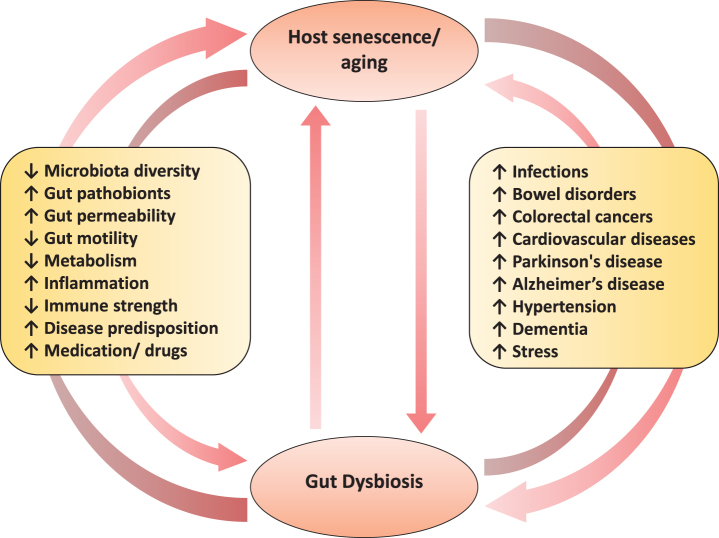
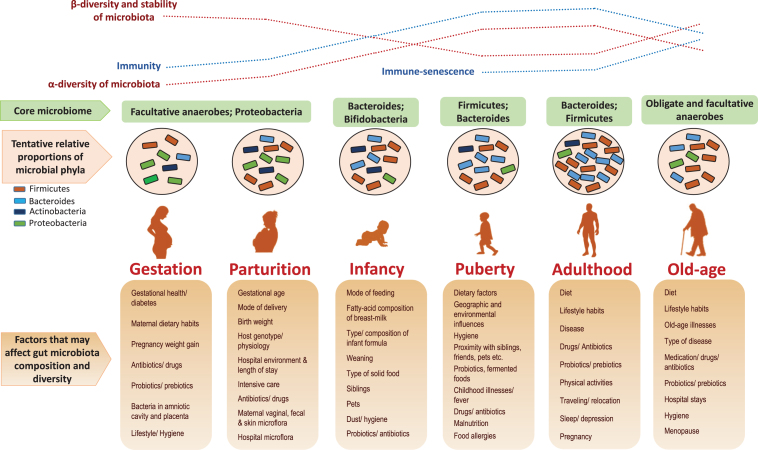
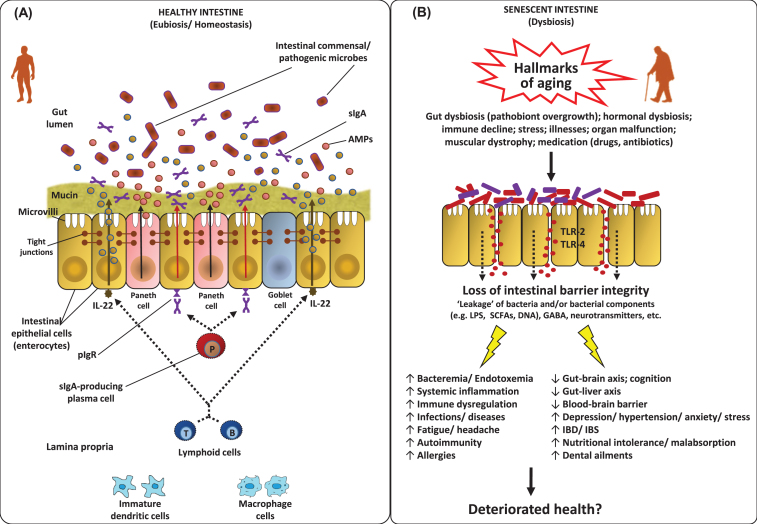
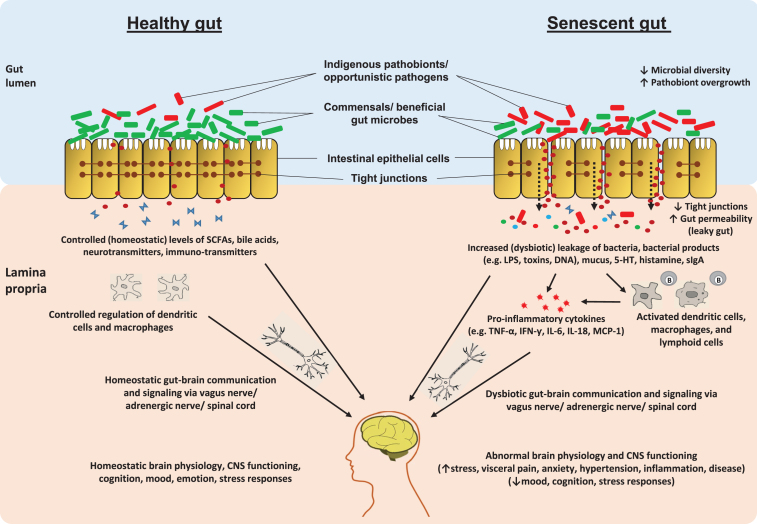
) and is exposed to innumerable microorganisms from the mother as well as the surrounding environment. Concurrently, the host responses to these microbes during early life manifest during the development of an otherwise hitherto immature immune system. The human gut microbiome, which comprises an extremely diverse and complex community of microorganisms inhabiting the intestinal tract, keeps on fluctuating during different stages of life. While these deviations are largely natural, inevitable and benign, recent studies show that unsolicited perturbations in gut microbiota configuration could have strong impact on several features of host health and disease. Our microbiota undergoes the most prominent deviations during infancy and old age and, interestingly, our immune health is also in its weakest and most unstable state during these two critical stages of life, indicating that our microbiota and health develop and age hand-in-hand. However, the mechanisms underlying these interactions are only now beginning to be revealed. The present review summarizes the evidences related to the age-associated changes in intestinal microbiota and vice-versa, mechanisms involved in this bi-directional relationship, and the prospective for development of microbiota-based interventions such as probiotics for healthy aging.
Overview
The claims and statistics of this paper haven’t been checked yet.
Run the check — free, no account needed. It reads the open-access text and checks the sources it cites.
Integrity signals
Registry
Cites
Statistics
Figures
Verification
Claims the paper makes
The claims and statistics of this paper haven’t been checked yet.
Run the check — free, no account needed. It reads the open-access text and checks the sources it cites.
Claims other papers make about this one
Each is checked against this paper’s own text: does it say what the citing paper says it does?
In the citing paper
“Although continued development of the microbiota in adolescence has been indicated in some studies, a core, albeit individualized, microbial profile develops in adulthood that is relatively stable and resilient in the absence of extreme external stressors (e.g., dietary changes or antibiotic treatment) (233-235).”
From Diet and the Microbiota–Gut–Brain Axis: Sowing the Seeds of Good Mental Health (2021) · cites this paper as [235]
In the citing paper
“In general, microbial diversity decreases and numbers of beneficial bacteria (bifidobacteria, lactobacilli, Clostridium cluster XIVa, F. prausnitzii) reduce, whereas facultative anaerobes and opportunists or even proinflammatory pathogenic bacteria (Escherichia spp., Enterobacteriaceae spp., Bacteroides spp., C. difficile, etc.) increase when compared with younger individuals (235, 295, 296).”
From Diet and the Microbiota–Gut–Brain Axis: Sowing the Seeds of Good Mental Health (2021) · cites this paper as [235]
In the citing paper
“The gut microbiome can modulate many of the host physiological processes including metabolism, cognitive function, innate immunity as well as cellular senescence, thereby potentially contributing to frailty, dysfunction, and disease (44,47).”
From Senolytic Combination of Dasatinib and Quercetin Alleviates Intestinal Senescence and Inflammation and Modulates the Gut Microbiome in Aged Mice (2021) · cites this paper as [44]
In the citing paper
“Emerging evidence suggests that the gut microbiota imbalance (dysbiosis) is associated with the development of age-associated disorders and reduced survival (44).”
From Senolytic Combination of Dasatinib and Quercetin Alleviates Intestinal Senescence and Inflammation and Modulates the Gut Microbiome in Aged Mice (2021) · cites this paper as [44]
In the citing paper
“The microbiota change drastically over the course of host’s lifetime, and aging is correlated with a reduction in microbial diversity and alterations in microbiota composition (24,44).”
From Senolytic Combination of Dasatinib and Quercetin Alleviates Intestinal Senescence and Inflammation and Modulates the Gut Microbiome in Aged Mice (2021) · cites this paper as [44]
Self-check
Percentages, sums and reported differences re-computed from the paper’s own numbers.
The self-check needs the paper’s full text.
Citations
Cites
López-Otín, C., Blasco, M. A., Partridge, L., Serrano, M., & Kroemer, G. (2013) · Cell · doi:10.1016/j.cell.2013.05.039 · Cited by 14,982
An obesity-associated gut microbiome with increased capacity for energy harvest
Turnbaugh, P. J., Ley, R. E., Mahowald, M. A., Magrini, V., Mardis, E. R., & Gordon, J. I. (2006) · Nature · doi:10.1038/nature05414 · Cited by 12,444
Diet rapidly and reproducibly alters the human gut microbiome
David, L. A., Maurice, C. F., Carmody, R. N., Gootenberg, D. B., Button, J. E., Wolfe, B. E., Ling, A. V., Devlin, A. S., Varma, Y., Fischbach, M. A., et al. (2014) · Nature · doi:10.1038/nature12820 · Cited by 10,100
Hill (2014) · doi:10.1038/nrgastro.2014.66 · Cited by 9,592
Dietary Modulation of the Human Colonic Microbiota: Introducing the Concept of Prebiotics
Gibson, G. R., & Roberfroid, M. B. (1995) · Journal of Nutrition · doi:10.1093/jn/125.6.1401 · Cited by 7,659
De Filippo, C., Cavalieri, D., Di Paola, M., Ramazzotti, M., Poullet, J. B., Massart, S., Collini, S., Pieraccini, G., & Lionetti, P. (2010) · Proceedings of the National Academy of Sciences · doi:10.1073/pnas.1005963107 · Cited by 5,579
Role of the microbiota in immunity and inflammation.
Belkaid, Y., & Hand, T. W. (2014) · Cell · doi:10.1016/j.cell.2014.03.011 · Cited by 5,385
Inflamm‐aging: An Evolutionary Perspective on Immunosenescence
FRANCESCHI, C., BONAFÈ, M., VALENSIN, S., OLIVIERI, F., DE LUCA, M., OTTAVIANI, E., & DE BENEDICTIS, G. (2000) · Annals of the New York Academy of Sciences · doi:10.1111/j.1749-6632.2000.tb06651.x · Cited by 5,358
Cani, P. D., Bibiloni, R., Knauf, C., Waget, A., Neyrinck, A. M., Delzenne, N. M., & Burcelin, R. (2008) · Diabetes · doi:10.2337/db07-1403 · Cited by 4,819
Dominguez-Bello, M. G., Costello, E. K., Contreras, M., Magris, M., Hidalgo, G., Fierer, N., & Knight, R. (2010) · Proceedings of the National Academy of Sciences · doi:10.1073/pnas.1002601107 · Cited by 4,774
Research works printed but not linked: 13
- Kenyon CJ, 2010, Nature, 464
- Buford TW, 2017, Microbiome, 5, 1
- Collado MC, 2016, Sci Re, 6, 23129
- Gavini F, 2001, Microb Ecol Health Dis, 13, 40
- Yamada M, 2012, J Frailty Aging, 1, 64
- Paun A, 2016, Diabetes, 17, 469
- Stevens BR, 2017, Gut
- Valentini L, 2014, Physiol Ree, 2, 00281
- Lahtinen SJ, 2009, Age(Dordr), 31, 59
- Pitkala KH, 2007, J Nutr Health Aging, 11, 305
- An HM, 2010, J Nutr, 9
- Bouhnik Y, 2007, Nutr J, 6
- Konturek PC, 2015, J Physiol pharmacol, 66, 483
Cited by
Sorted by citations
Items 501–600 of 666
Evaluation of the Effects of Probiotics and Prebiotics on the Salmonella typhi Infections.
Salman, R. A., Jameel, S. K., & Shakir, S. M. (2023) · PubMed Central · doi:10.22092/ari.2022.359937.2519 · Cited by 3
THE ROLE OF PROBIOTIC SUPPLEMENTATION ON THE IMMUNE SYSTEM IN ELDERLY
Shalim, C. P., Yoewono, A., Utomo, Y., & Kuswardhani, R. T. (2019) · International Journal of Medical and Biomedical Studies · doi:10.32553/ijmbs.v3i8.492 · Cited by 3
Butler, M. J., Blackwell, J. A., Sanchez, A. A., Sanders, H. F., Kolonay, D., Jantsch, J., Muscat, S. M., Caetano‐Silva, M. E., Shrestha, A., Lim, C. K. Y., et al. (2025) · Brain Behavior and Immunity · doi:10.1016/j.bbi.2025.106220 · Cited by 2
Gut microbiota as a causal mediator linking inflammatory cytokines and ageing phenotypes
Liu, Q., Li, W., Diao, W., Shi, W., Li, Y., Cai, Y., & Cai, X. (2025) · Biogerontology · doi:10.1007/s10522-025-10369-x · Cited by 2
Drinković, D., Holland, D., Zhou, L., Taylor, S., Bhally, H. S., Upton, A., Beatson, S. A., & Briggs, S. E. (2025) · Antimicrobial Resistance and Infection Control · doi:10.1186/s13756-025-01685-5 · Cited by 2
Cho, J. M., Park, S.-K., Babu, A. K. S., Mookherjee, S., Hansen, M., Petersen, C., Zhong, Y., Jalili, T., Robeson, M. S., Wankhade, U. D., et al. (2026) · American Journal of Physiology-Gastrointestinal and Liver Physiology · doi:10.1152/ajpgi.00354.2025 · Cited by 2
Microbiome and human aging (literature review)
Shyrobokov, V., Yankovskyi, D., & Dyment, H. (2019) · JOURNAL OF THE NATIONAL ACADEMY OF MEDICAL SCIENCES OF UKRAINE · doi:10.37621/jnamsu-2019-4-463-475 · Cited by 2
Gut Microbiome and Its Role in Enteric Infections with Microbial Pathogens
Galleher, C., van Megesen, K., Resnicow, A., Manning, J., Recalde, L., Hurtado, K., & Garcia, W. J. (2020) · Springer eBooks · doi:10.1007/978-3-030-47384-6_9 · Cited by 2
The Potential Impact of Ayurvedic Traditional Bhasma on SARS-CoV- 2- Induced Pathogenesis
Kumar, P., Jayakumar, R., Dash, M. K., & Joshi, N. (2022) · Current Traditional Medicine · doi:10.2174/2215083808666220321145803 · Cited by 2
Ernesto, J. T., Damásio, C. M., Gontijo, V. S., Gasparotto, J., & Viegas, C. (2023) · Exploration of Neuroprotective Therapy · doi:10.37349/ent.2023.00038 · Cited by 2
Addressing the Missing Links in Cardiovascular Aging
Dinetz, E., Zeballos-Palacios, C. L., & Martinez, C. A. (2024) · Clinical Interventions in Aging · doi:10.2147/cia.s457180 · Cited by 2
Dysbiosis–epigenetics–immune system interaction and ageing health problems
Eshkoor, S. A., & Fanijavadi, S. (2024) · Journal of Medical Microbiology · doi:10.1099/jmm.0.001921 · Cited by 2
ImmunoMet Oncogenesis: A New Concept to Understand the Molecular Drivers of Cancer
Sirajee, R., Khatib, S. E., Dieleman, L. A., Salla, M., & Baksh, S. (2025) · Journal of Clinical Medicine · doi:10.3390/jcm14051620 · Cited by 2
When your heart depends on your gut feelings
Musumeci, L., Oury, C., & Lancellotti, P. (2020) · Revista Española de Cardiología (English Edition) · doi:10.1016/j.rec.2020.03.006 · Cited by 2
Gut Microbial Metabolites as Diagnostic Biomarkers
Taleuzzaman, M., Anupam, Verma, M., Chaudhary, K., & Choudhary, R. (2025) · BENTHAM SCIENCE PUBLISHERS eBooks · doi:10.2174/9789815324549125010012 · Cited by 2
Chang, R., Wei, J. C., Lin, M., Hung, Y., & Hung, C. (2020) · Journal of Infection · doi:10.1016/j.jinf.2020.06.026 · Cited by 2
Bobyr, V. V., Stechenko, L. О., Широбоков, В. П., Nazarchuk, O. A., & Rymsha, О. V. (2020) · Reports of Morphology · doi:10.31393/morphology-journal-2020-26(2)-07 · Cited by 2
ROSENBERG, E. B. (2021) · The microbiomes of humans, animals, plants, and the environment · doi:10.1007/978-3-030-65317-0_3 · Cited by 2
Probiotics and Prebiotics in Healthy Ageing
Kadam, A., Kadam, D., Tungare, K., & Shah, H. S. (2021) · Healthy ageing and longevity · doi:10.1007/978-3-030-83017-5_5 · Cited by 2
SARS-CoV-2 Liability: The Hidden Mystery Behind Its Presentation in Children
Esfehani, R. J., Aelami, M. H., Kalat, A. R., Soleimanpour, S., Pasdar, Z., Khazaei, M., Pasdar, A., & Avan, A. (2021) · Advances in experimental medicine and biology · doi:10.1007/978-3-030-85113-2_13 · Cited by 2
Gut Microbiome and Virome: Anti-Aging Interventions
Singh, B., Mal, G., Sharma, D., Nakshabandi, A., & Marotta, F. (2023) · Healthy ageing and longevity · doi:10.1007/978-3-031-14023-5_4 · Cited by 2
Self-citationCOVID-19, МИКРОБИОМ КИШЕЧНИКА И НАТУРАЛЬНЫЕ ПРОДУКТЫ ПИТАНИЯ (ОБЗОР)
Indershiyev, V., Тасбулатовна, Е. Л., Мусаев, А. Т., Мамбетова, И. З., Мусаев, А. А., РАХИМБАЕВА, Ж. Б., & Джунусова, Ж. С. (2023) · Фтизиопульмонология · doi:10.26212/2227-1937.2023.12.56.002 · Cited by 2
Metformin Modulates the Mechanisms of Ageing
Cătoi, A. F., Andreicuț, A. D., Vodnar, D. C., Szabó, K., Corina, A., Arsene, A. L., Ștefan, S., Stoica, R. A., & Rizzo, M. (2019) · IntechOpen eBooks · doi:10.5772/intechopen.89431 · Cited by 2
High-fat Diet Induced Dysbiosis & Amelioration by Astaxanthin
Haasbroek, K., Takabe, W., Yagi, M., & Yonei, Y. (2019) · Rad Hrvatske akademije znanosti i umjetnosti Medicinske znanosti · doi:10.21857/9xn31crexy · Cited by 2
Gut Microbiota and Aging: A Broad Perspective
Pitchumoni, C. S., Mishra, S. P., & Yadav, H. (2020) · Springer eBooks · doi:10.1007/978-3-319-90761-1_59-1 · Cited by 2
Self-citationNavarro‐Tapia, E., Chenoll, E., Rueda, J. M. W., & Ramón, D. (2021) · Elsevier eBooks · doi:10.1016/b978-0-12-819265-8.00105-4 · Cited by 1
Kaur, S., Diwan, F., & Reddersen, B. (2022) · Applied Microbiology Theory & Technology · doi:10.37256/amtt.4120232096 · Cited by 1
Symbiotic association of gut microbiome in health and diseases at ageing
Mane, S. S., Patel, D. A., & Patil, P. C. (2023) · Elsevier eBooks · doi:10.1016/b978-0-323-99334-0.00049-9 · Cited by 1
The Microbial and Metabolic Link Between Gut and Brain
Salamalek, R., Shareef, Y., Abdulridha, F., & Soliman, S. S. M. (2025) · Springer eBooks · doi:10.1007/978-981-96-1305-2_17 · Cited by 1
Interplay of miR-243 and microbial interactions in aging and transgenerational immunity
Kumar, A., Mir, D. A., & Khan, M. R. (2025) · Gut Microbes · doi:10.1080/19490976.2025.2537750 · Cited by 1
Zhu, X., Luo, Y., Zhang, Y., Zhou, H., Xiang, J., Su, Y., & Chen, L. (2025) · Biotechnology and Applied Biochemistry · doi:10.1002/bab.70063 · Cited by 1
Decoding the Gut Microbiota: Mechanisms of Host-Microbe Interactions and Inflammatory Pathologies
Richie, T. G., & Lee, S. T. M. (2025) · Digestion · doi:10.1159/000549457 · Cited by 1
Mirzay-Razaz, J., Koochakpoor, G., Hassanghomi, M., Ajami, M., Hosseini‐Esfahani, F., & Mirmiran, P. (2023) · Iranian Red Crescent Medical Journal · doi:10.32592/ircmj.2023.25.6.1794 · Cited by 1
Bridging Gaps in Aging Research and Policy: Microbiome, Sex, and Nutrition Perspectives
Jain, S., & Yadav, H. (2023) · Public Policy & Aging Report · doi:10.1093/ppar/prad024 · Cited by 1
Self-citationAging, Causes, and Rejuvenation of Hematopoietic Stem Cells
Chen, Z., Ju, Z., & Sun, Y. (2023) · Advances in experimental medicine and biology · doi:10.1007/978-981-99-7471-9_12 · Cited by 1
Irritable Bowel Syndrome in the Elderly Population: A Comprehensive Review
Oba, E. R. V., Morán, A. C. A., Cortés, E. C., Oba, M. I. V., Loeza, B. M. L., & Rodríguez-Orozco, A. R. (2024) · Cureus · doi:10.7759/cureus.68156 · Cited by 2
Microbiome and Human Health: Recent Insights and Future Directions
Fahmy, A. M. (2024) · Premier journal of public health. · doi:10.70389/pjph.100002 · Cited by 1
Grosso, F., Zanetti, D., & Sanna, S. (2025) · Aging · doi:10.18632/aging.206293 · Cited by 1
Physiological Basis of Immune Function Among Geriatric Population and Nutrition: A Narrative Review
Sai, A., Komarraju, S., Sathyanath, D., & Muralidharan, S. (2025) · Journal of Pharmacy And Bioallied Sciences · doi:10.4103/jpbs.jpbs_485_25 · Cited by 1
Targeting the gut-brain axis: The therapeutic potential of exercise in age-related multimorbidity
Chen, S., & Wang, C. (2026) · Advanced Exercise and Health Science · doi:10.1016/j.aehs.2026.02.002 · Cited by 1
Cuando el corazón depende del tracto digestivo
Musumeci, L., Oury, C., & Lancellotti, P. (2020) · Revista Española de Cardiología · doi:10.1016/j.recesp.2020.03.005 · Cited by 1
Probiotics, Prebiotics and Skin
Addor, F. A. S. (2021) · Elsevier eBooks · doi:10.1016/b978-0-12-819265-8.00020-6 · Cited by 1
Dietary Fatty Acids, Gut Microbiome, and Gut–Brain Communication: A Current Perspective
Anand, S. K., Sukrutha, S. K., Shilpa, B. R., & Nagarathna, A. (2022) · Nutritional neurosciences · doi:10.1007/978-981-19-4530-4_8 · Cited by 1
The gut microbiome and severity of SARS-CoV-2 infection: what is the link?
Robalino, J. G., Salazar, P., Muñóz, N., Tene, D. M., & Pedreáñez, A. B. (2022) · Novel Research in Microbiology Journal · doi:10.21608/nrmj.2022.253262 · Cited by 1
Lung and Gut Microbiota Interactions with Air Pollution and Aging in Human Chronic Diseases
Mohammed, A. N., & Yadav, J. S. (2023) · Healthy ageing and longevity · doi:10.1007/978-3-031-14023-5_11 · Cited by 1
Schaly, S., & Prakash, S. (2023) · Healthy ageing and longevity · doi:10.1007/978-3-031-14023-5_10 · Cited by 1
Gut Microbiota Throughout the Lifespan
Ishiguro, E. E., Haskey, N., & Campbell, K. (2023) · Elsevier eBooks · doi:10.1016/b978-0-323-91387-4.00006-5 · Cited by 1
Consultants, M. I. D., Hise, N. V., Tillotson, G., Meehan, J., Ghera, E., Harting, B. P., & Nathan, R. V. (2023) · Private Practice Infectious Disease · doi:10.55636/ppid3020001 · Cited by 1
Microbiota and Microbiome in Dermatology: Clues to New Treatments
Kathuria, S., & Lotti, T. (2023) · Springer eBooks · doi:10.1007/978-3-031-15130-9_152 · Cited by 1
The Ageing Microbiome, Pharmaceutical Considerations, and Therapeutic Opportunities
Favaron, A., McCoubrey, L. E., Elbadawi, M., Basit, A. W., & Orlu, M. (2023) · AAPS advances in the pharmaceutical sciences series · doi:10.1007/978-3-031-35811-1_8 · Cited by 2
The Gut Microbiota and NDG: What Is the Interplay
Haiba, S., Idriss, S., & Awad, M. (2024) · Springer eBooks · doi:10.1007/978-981-19-3949-5_30-1 · Cited by 1
Tambunan, A., Rianti, P., Priyanto, J. A., Darusman, H. S., & Kyes, R. C. (2024) · Indonesian Journal of Primatology · doi:10.29244/primatology.3.01.1-17 · Cited by 1
Gut microbiota and geriatric health
Nayak, K., Gopan, A., ., P., Muraleedharan, A., Varghese, A., Patil, A., & Manokaran, K. (2024) · Reviews in Medical Microbiology · doi:10.1097/mrm.0000000000000398 · Cited by 1
Impact of COVID-19 on gut–lung microbiota a mini review
Emadi, R., Yousefi, P., & Tabibzadeh, A. (2025) · Reviews in Medical Microbiology · doi:10.1097/mrm.0000000000000423 · Cited by 1
Oyono, M. G., Kenmoe, S., Ebogo‐Belobo, J. T., Javeres, M. N. L., Mireille, K. P., Kamguia, L. M., Mpotje, T., & Nono, J. K. (2025) · PLoS neglected tropical diseases · doi:10.1371/journal.pntd.0012844 · Cited by 1
Probiotics Potentials of Fermented Rice for Sustainable Health and Well-being
Nwinyi, O. C., & Dango, Z. G. (2025) · IOP Conference Series Earth and Environmental Science · doi:10.1088/1755-1315/1492/1/012003 · Cited by 1
Gastrointestinal Tract and COVID-19
Lelo, A. P., & Zinedine, A. (2021) · Advances in medical diagnosis, treatment, and care (AMDTC) book series · doi:10.4018/978-1-7998-8225-1.ch008 · Cited by 1
Inflammation, stress, and gut-brain axis as therapeutic targets in bipolar disorder
Vaccariello, E. D., & Nguyen, T. T. (2022) · Elsevier eBooks · doi:10.1016/b978-0-12-821398-8.00008-4 · Cited by 1
Gut Microbiota and Aging: A Broad Perspective
Pitchumoni, C. S., Mishra, S. P., & Yadav, H. (2021) · Springer eBooks · doi:10.1007/978-3-030-30192-7_59 · Cited by 1
Self-citationMicrobiome in Pulmonary Tuberculosis
Rakshit, A., Verma, A., Verma, S., Bhatti, G. K., Khurana, A., Bhatti, J. S., Jawalekar, S. S., & Navik, U. (2022) · Springer eBooks · doi:10.1007/978-981-16-8957-4_11 · Cited by 1
Aging: Impact of Gut Microbiota
Anand, S. K., Lakshmikanth, R. R. N. R., Ramaiah, M. K., Jayashree, D. R., & Ravikiran, T. (2022) · Nutritional neurosciences · doi:10.1007/978-981-19-4530-4_5 · Cited by 1
Pentapeptide WN5 targets the gut microbiota in alleviating Alzheimer’s disease pathologies
Amakye, W. K., Ren, Z., Wang, M., Yao, M., & Ren, J. (2023) · Nutrition and Healthy Aging · doi:10.3233/nha-220168 · Cited by 1
Studying Changes of the Human Gut Microbiome In Response to Sweeteners Using RapidAIM
Wang, W. (2021) · uO Research (University of Ottawa) · doi:10.20381/ruor-26509 · Cited by 1
Editorial for the special issue on “microbiomes in extremes of aging”
Yadav, H., Badal, V. D., Masternak, M. M., & Leeuwenburgh, C. (2024) · Experimental Gerontology · doi:10.1016/j.exger.2024.112663 · Cited by 1
Self-citationNew Fatal Case of Kounis Syndrome Triggered by Metamizole: A Case Report
Moreno Diaz, R., & Garcia Garcia, A. (2018) · Journal of Aesthetic & Reconstructive Surgery · doi:10.4172/2472-1905.100046
Macnair, P. (2019) · InnovAiT Education and inspiration for general practice · doi:10.1177/1755738019857761
Keebaugh, E. S., Williams, L. D., & Ja, W. W. (2019) · Springer eBooks · doi:10.1007/978-3-030-28737-5_12
Fecal Transplant: How an Ancient Therapy Is Finding a New Use in Today’s Antibiotic-Resistant Era
McBeth, A., & Dobner, P. (2019) · Journal of Restorative Medicine · doi:10.14200/jrm.2019.0117 · Cited by 1
The Microbiome and Brain Health
Norling, S. L. (2020) · Springer eBooks · doi:10.1007/978-3-030-30730-1_25
Karamalegos, A. A., Vazquez-Prada, M., & Ezcurra, M. (2020) · Healthy ageing and longevity · doi:10.1007/978-3-030-52663-4_14
Tăcutu, R., Toren, D., Ursu, E., Bunu, G., & Mracica, T. B. (2020) · Healthy ageing and longevity · doi:10.1007/978-3-030-52663-4_5
Dysbiosis Of The Gut Microbiome Associated With Parkinson’s Disease Pathophysiology
Mierau, P. C. (2019) · UA Campus Repository (The University of Arizona)
Multi-omic analysis reveals the anti-aging impact of sulforaphane on the microbiome and metabolomePreprint
Jun, S., Cheema, A. K., Bose, C., Boerma, M., Palade, P., Awasthi, S., & Singh, S. P. (2020) · Research Square · doi:10.21203/rs.3.rs-43818/v1
The Role of Microbiota in Gut Inflammation and Sepsis
Glibetić, N., Aan, F. J., Montoya-Uribe, V., & Matter, M. L. (2021) · Elsevier eBooks · doi:10.1016/b978-0-12-819265-8.00023-1
Frieling, T. (2021) · Die Gastroenterologie · doi:10.1007/s11377-021-00553-z
Coronavirus infection and gut microbiota
Дамировна, С. Д., & Abdulkhakov, S. R. (2021) · Kazan medical journal · doi:10.17816/kmj2021-518
The Potential Role of Vitamin B12 in the Prevention of COVID-19 Complications: A Narrative Review
Rai, S., Sindhu, Prajna, P., Shamantha Rai, B., & Pakkala, P. G. R. (2021) · Journal of Pure and Applied Microbiology · doi:10.22207/jpam.15.4.04
Change of Intestinal Microbiome in Patients with Coronavirus Infection
Mishina, M. M., Kotsar, O. V., Почерніна, М. Г., Kochnieva, O. V., & Селіванов, Є. В. (2021) · Ukraïnsʹkij žurnal medicini bìologìï ta sportu · doi:10.26693/jmbs06.05.022
Impact of the Microbiome on Oral Biopharmaceutics
McCoubrey, L. E., Batchelor, H. K., Basit, A. W., Gaisford, S., & Orlu, M. (2021) · Wiley eBooks · doi:10.1002/9781119678366.ch17
Probiotics and the gut-brain axis
Silveira, A. K., Gasparotto, J., & Moreira, J. C. F. (2022) · Elsevier eBooks · doi:10.1016/b978-0-323-85170-1.00001-4
(2020) · Вестник Российского государственного медицинского университета · doi:10.24075/vrgmu.2020-04
(2020) · Bulletin of Russian State Medical University · doi:10.24075/brsmu.2020-04
Geriatrics and translational research
Bharadwaj, S., & Palaniswamy, S. R. (2022) · Elsevier eBooks · doi:10.1016/b978-0-323-91003-3.00018-0
Impact of gut-derived metabollites on substrate metabolism and metabolic health
Gonzalez Hernandez Manuel, A. (2020) · Research Publications (Maastricht University) · doi:10.26481/dis.20201027mgh
Research Progress on Intestinal Microecology and Novel Coronavirus Infection
(2022) · Journal of Contemporary Medical Practice · doi:10.53469/jcmp.2022.04(06).34
A treatise on a healthy microbiome: contribution to human health and disease prevention
Bagchi, D., Banik, S. P., & Downs, B. W. (2022) · Elsevier eBooks · doi:10.1016/b978-0-12-822238-6.00032-7
Gut Microbiome Brain Axis: An Introduction
Anand, S. K., Mishra, S. K., & Samlin, J. (2022) · Nutritional neurosciences · doi:10.1007/978-981-19-4530-4_1
Kasprowicz, J. N., & Savi, D. C. (2022) · VITTALLE - Revista de Ciências da Saúde · doi:10.14295/vittalle.v34i3.13950
The Nutritional Links for Gut Microbial Dysbiosis and its Metabolic and Endocrinal Fallouts
Nikhra, V. (2022) · Gastroenterology & Hepatology International Journal · doi:10.23880/ghij-16000198
Gut Microbiota and Eating Disorders on the Extremes of Aging
Miller, B. C., Mishra, S. P., Jain, S., Marotta, F., & Yadav, H. (2023) · Healthy ageing and longevity · doi:10.1007/978-3-031-14023-5_6
Self-citationAging Gut Microbiota and Sarcopenia Signaling
Jain, S. M., Das, A., Banerjee, A., Castillo, M. J., Marotta, F., Radhakrishnan, A., & Pathak, S. (2023) · Healthy ageing and longevity · doi:10.1007/978-3-031-14023-5_12
Self-citationOmics approaches in aging research
Patnaik, P. K., Barlit, H., Shoushtari, S. I., & Labunskyy, V. M. (2023) · Elsevier eBooks · doi:10.1016/b978-0-12-823679-6.00016-3
In Vitro and In Vivo Effectiveness of GPK/B2O, A Phytocomplex in Two Experimental Flu Virus Models
Fang, H. (2021) · Open Access Journal of Pharmaceutical Research · doi:10.23880/oajpr-16000228
Gut Microbiome and Its Metabolites in Ageing
Dutta, S., & Duttaroy, A. K. (2023) · Springer eBooks · doi:10.1007/978-981-99-0534-8_10
Mechanistic Insights of Dietary Modulation on Gut Microflora and Associated Physiological Changes
Yadav, A., Hamsa, S., Tiwari, R., Bharti, A., Dhewa, T., Mehrotra, R., & Verma, P. (2023) · Wiley eBooks · doi:10.1002/9781394229116.ch3
Application of intestinal microecological preparations in the health of the elderly
Lin, J., & Wang, H. (2023) · International Conference on Modern Medicine and Global Health (ICMMGH) · doi:10.1117/12.2692641
Metadata
- Authors
- Nagpal, R., Mainali, R., Ahmadi, S., Wang, S., Singh, R., Kavanagh, K., Kitzman, D. W., Kushugulova, A., Marotta, F., & Yadav, H.
- Affiliations
- Atrium Health Wake Forest Baptist (US)
- Wake Forest University Health Sciences (US)
- Nazarbayev University (KZ)
- ReGenera Research and Development for Aging Interventions, and San Babila Clinic, Corso Matteotti 1/A, Milano, Italy
- Corresponding author
- Yadav, Hariom
- ORCID
- Venue
- Nutrition and Healthy Aging
- Publisher
- SAGE Publications
- Published
- 2017-11-06
- Volume
- 4
- Issue
- 4
- Pages
- 267-285
- ISSN
- 2451-9480 (ISSN-L)
- 2451-9502
- PMC
- PMC6004897
- OpenAlex
- W2767624273
- Cited by
- 670
- References
- 200
- Citations by year
- 2026: 44 · 2025: 69 · 2024: 93 · 2023: 73 · 2022: 103 · 2021: 118 · 2020: 116 · 2019: 48 · 2018: 6
- FWCI
- 4.35
- Type
- journal article
- Language
- en
- Open access
- hybrid
- doi.org
- Licence
- Locations
- Nutrition and Healthy Aging (publishedVersion, cc-by-nc)
- Europe PMC (PubMed Central) (publishedVersion, cc-by-nc)
- PubMed Central (publishedVersion, cc-by-nc)
- PubMed (publishedVersion)
- Nazarbayev University Repository (Nazarbayev University) (submittedVersion)
- Funders
- National Institutes of Health (P30AG12232, R01AG18915)
- Wake Forest School of Medicine
- National Institute on Aging (R01AG018915, R37AG018915, P30AG021332)
- Topics
- Life Sciences › Biochemistry, Genetics and Molecular Biology › Molecular Biology › Gut microbiota and health
- Life Sciences › Agricultural and Biological Sciences › Food Science › Probiotics and Fermented Foods
- Health Sciences › Dentistry › Periodontics › Oral microbiology and periodontitis research
- Keywords
- gut microbiota, aging, microbiota-immune interactions, immune system development, infancy, probiotics, microbiota-targeted interventions, healthy aging
About these checks
Registry, retraction, Cites and statistics results are computed, not judged, with one exception: a printed reference that no index lists is read once by a model before it counts as a citation error. Claims are extracted by a model and kept only when their quote appears verbatim in the text; each cited source is then checked, with a model’s help, for whether it says what the claim relies on. Those verdicts can be wrong — read the claim’s quote and the cited source before relying on one.
Statistics and arithmetic are recomputed, not judged.
Confidence bands are shown only for fields calibrated on our annotated test set. None is calibrated yet, so no band is shown.
What counts as a claim ›How we measure confidence ›How we check this ›
Are you an author, or do you see a problem with this page? Request a review
