

The DOI matches its Crossref record; 201 of the 201 references it cites were found in a registry or an index.
Gut microbiome and aging: Physiological and mechanistic insights
Open accessAbstract
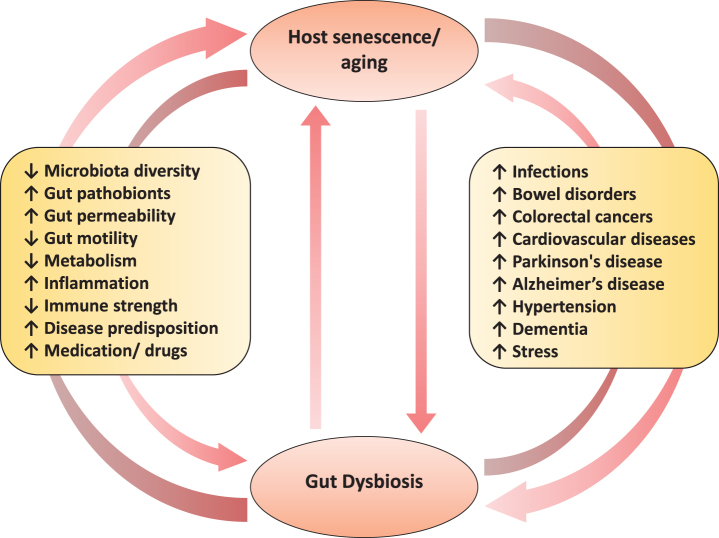
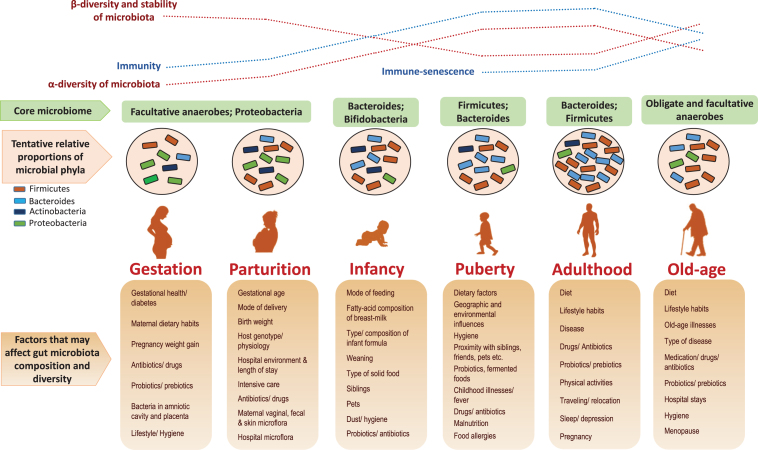
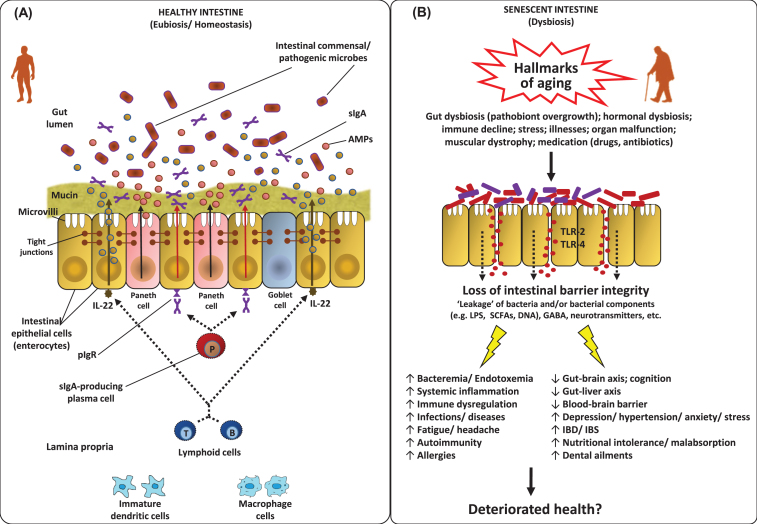
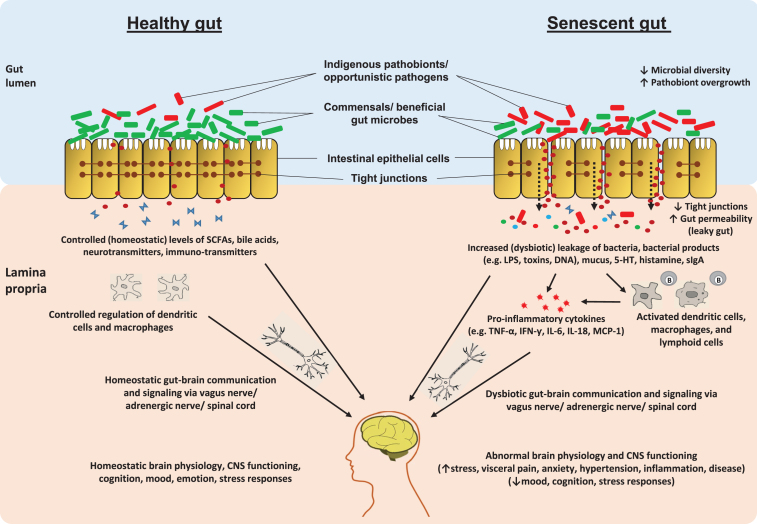
) and is exposed to innumerable microorganisms from the mother as well as the surrounding environment. Concurrently, the host responses to these microbes during early life manifest during the development of an otherwise hitherto immature immune system. The human gut microbiome, which comprises an extremely diverse and complex community of microorganisms inhabiting the intestinal tract, keeps on fluctuating during different stages of life. While these deviations are largely natural, inevitable and benign, recent studies show that unsolicited perturbations in gut microbiota configuration could have strong impact on several features of host health and disease. Our microbiota undergoes the most prominent deviations during infancy and old age and, interestingly, our immune health is also in its weakest and most unstable state during these two critical stages of life, indicating that our microbiota and health develop and age hand-in-hand. However, the mechanisms underlying these interactions are only now beginning to be revealed. The present review summarizes the evidences related to the age-associated changes in intestinal microbiota and vice-versa, mechanisms involved in this bi-directional relationship, and the prospective for development of microbiota-based interventions such as probiotics for healthy aging.
Overview
The claims and statistics of this paper haven’t been checked yet.
Run the check — free, no account needed. It reads the open-access text and checks the sources it cites.
Integrity signals
Registry
Cites
Statistics
Figures
Verification
Claims the paper makes
The claims and statistics of this paper haven’t been checked yet.
Run the check — free, no account needed. It reads the open-access text and checks the sources it cites.
Claims other papers make about this one
Each is checked against this paper’s own text: does it say what the citing paper says it does?
In the citing paper
“Although continued development of the microbiota in adolescence has been indicated in some studies, a core, albeit individualized, microbial profile develops in adulthood that is relatively stable and resilient in the absence of extreme external stressors (e.g., dietary changes or antibiotic treatment) (233-235).”
From Diet and the Microbiota–Gut–Brain Axis: Sowing the Seeds of Good Mental Health (2021) · cites this paper as [235]
In the citing paper
“In general, microbial diversity decreases and numbers of beneficial bacteria (bifidobacteria, lactobacilli, Clostridium cluster XIVa, F. prausnitzii) reduce, whereas facultative anaerobes and opportunists or even proinflammatory pathogenic bacteria (Escherichia spp., Enterobacteriaceae spp., Bacteroides spp., C. difficile, etc.) increase when compared with younger individuals (235, 295, 296).”
From Diet and the Microbiota–Gut–Brain Axis: Sowing the Seeds of Good Mental Health (2021) · cites this paper as [235]
In the citing paper
“The gut microbiome can modulate many of the host physiological processes including metabolism, cognitive function, innate immunity as well as cellular senescence, thereby potentially contributing to frailty, dysfunction, and disease (44,47).”
From Senolytic Combination of Dasatinib and Quercetin Alleviates Intestinal Senescence and Inflammation and Modulates the Gut Microbiome in Aged Mice (2021) · cites this paper as [44]
In the citing paper
“Emerging evidence suggests that the gut microbiota imbalance (dysbiosis) is associated with the development of age-associated disorders and reduced survival (44).”
From Senolytic Combination of Dasatinib and Quercetin Alleviates Intestinal Senescence and Inflammation and Modulates the Gut Microbiome in Aged Mice (2021) · cites this paper as [44]
In the citing paper
“The microbiota change drastically over the course of host’s lifetime, and aging is correlated with a reduction in microbial diversity and alterations in microbiota composition (24,44).”
From Senolytic Combination of Dasatinib and Quercetin Alleviates Intestinal Senescence and Inflammation and Modulates the Gut Microbiome in Aged Mice (2021) · cites this paper as [44]
Self-check
Percentages, sums and reported differences re-computed from the paper’s own numbers.
The self-check needs the paper’s full text.
Citations
Cites
López-Otín, C., Blasco, M. A., Partridge, L., Serrano, M., & Kroemer, G. (2013) · Cell · doi:10.1016/j.cell.2013.05.039 · Cited by 14,982
An obesity-associated gut microbiome with increased capacity for energy harvest
Turnbaugh, P. J., Ley, R. E., Mahowald, M. A., Magrini, V., Mardis, E. R., & Gordon, J. I. (2006) · Nature · doi:10.1038/nature05414 · Cited by 12,444
Diet rapidly and reproducibly alters the human gut microbiome
David, L. A., Maurice, C. F., Carmody, R. N., Gootenberg, D. B., Button, J. E., Wolfe, B. E., Ling, A. V., Devlin, A. S., Varma, Y., Fischbach, M. A., et al. (2014) · Nature · doi:10.1038/nature12820 · Cited by 10,100
Hill (2014) · doi:10.1038/nrgastro.2014.66 · Cited by 9,592
Dietary Modulation of the Human Colonic Microbiota: Introducing the Concept of Prebiotics
Gibson, G. R., & Roberfroid, M. B. (1995) · Journal of Nutrition · doi:10.1093/jn/125.6.1401 · Cited by 7,659
De Filippo, C., Cavalieri, D., Di Paola, M., Ramazzotti, M., Poullet, J. B., Massart, S., Collini, S., Pieraccini, G., & Lionetti, P. (2010) · Proceedings of the National Academy of Sciences · doi:10.1073/pnas.1005963107 · Cited by 5,579
Role of the microbiota in immunity and inflammation.
Belkaid, Y., & Hand, T. W. (2014) · Cell · doi:10.1016/j.cell.2014.03.011 · Cited by 5,385
Inflamm‐aging: An Evolutionary Perspective on Immunosenescence
FRANCESCHI, C., BONAFÈ, M., VALENSIN, S., OLIVIERI, F., DE LUCA, M., OTTAVIANI, E., & DE BENEDICTIS, G. (2000) · Annals of the New York Academy of Sciences · doi:10.1111/j.1749-6632.2000.tb06651.x · Cited by 5,358
Cani, P. D., Bibiloni, R., Knauf, C., Waget, A., Neyrinck, A. M., Delzenne, N. M., & Burcelin, R. (2008) · Diabetes · doi:10.2337/db07-1403 · Cited by 4,819
Dominguez-Bello, M. G., Costello, E. K., Contreras, M., Magris, M., Hidalgo, G., Fierer, N., & Knight, R. (2010) · Proceedings of the National Academy of Sciences · doi:10.1073/pnas.1002601107 · Cited by 4,774
Research works printed but not linked: 13
- Kenyon CJ, 2010, Nature, 464
- Buford TW, 2017, Microbiome, 5, 1
- Collado MC, 2016, Sci Re, 6, 23129
- Gavini F, 2001, Microb Ecol Health Dis, 13, 40
- Yamada M, 2012, J Frailty Aging, 1, 64
- Paun A, 2016, Diabetes, 17, 469
- Stevens BR, 2017, Gut
- Valentini L, 2014, Physiol Ree, 2, 00281
- Lahtinen SJ, 2009, Age(Dordr), 31, 59
- Pitkala KH, 2007, J Nutr Health Aging, 11, 305
- An HM, 2010, J Nutr, 9
- Bouhnik Y, 2007, Nutr J, 6
- Konturek PC, 2015, J Physiol pharmacol, 66, 483
Cited by
Sorted by citations
Malnutrition in Older Adults—Recent Advances and Remaining Challenges
Norman, K., Haß, U., & Pirlich, M. (2021) · Nutrients · doi:10.3390/nu13082764 · Cited by 905
The Gut Microbiota and Inflammation: An Overview
Bander, Z. A., Nitert, M. D., Mousa, A., & Naderpoor, N. (2020) · International Journal of Environmental Research and Public Health · doi:10.3390/ijerph17207618 · Cited by 804
The Gut Virome Database Reveals Age-Dependent Patterns of Virome Diversity in the Human Gut
Gregory, A., Zablocki, O., Zayed, A. A., Howell, A., Bolduc, B., & Sullivan, M. B. (2020) · Cell Host & Microbe · doi:10.1016/j.chom.2020.08.003 · Cited by 656
Nagpal, R., Neth, B. J., Wang, S., Craft, S., & Yadav, H. (2019) · EBioMedicine · doi:10.1016/j.ebiom.2019.08.032 · Cited by 653
Self-citationAntimicrobial Stewardship: Fighting Antimicrobial Resistance and Protecting Global Public Health
Majumder, M. A. A., Rahman, S., Cohall, D., Bharatha, A., Singh, K., Haque, M., & Hilaire, M. G.-S. (2020) · Infection and Drug Resistance · doi:10.2147/idr.s290835 · Cited by 694
Gut microbiota and Covid-19- possible link and implications
Dhar, D., & Mohanty, A. (2020) · Virus Research · doi:10.1016/j.virusres.2020.198018 · Cited by 625
Rosser, E. C., Piper, C. J. M., Matei, D. E., Blair, P. A., Rendeiro, A. F., Orford, M., Alber, D. G., Krausgruber, T., Catalan, D., Klein, N., et al. (2020) · Cell Metabolism · doi:10.1016/j.cmet.2020.03.003 · Cited by 579
A Comprehensive Review on the Role of the Gut Microbiome in Human Neurological Disorders
Sorboni, S. G., Moghaddam, H. S., Esfehani, R. J., & Soleimanpour, S. (2022) · Clinical Microbiology Reviews · doi:10.1128/cmr.00338-20 · Cited by 586
The Microbiota–Gut–Brain Axis in Psychiatric Disorders
Góralczyk-Bińkowska, A., Szmajda‐Krygier, D., & Kozłowska, E. (2022) · International Journal of Molecular Sciences · doi:10.3390/ijms231911245 · Cited by 569
Diet and the Microbiota–Gut–Brain Axis: Sowing the Seeds of Good Mental Health
Berding, K., Vlckova, K., Marx, W., Schellekens, H., Stanton, C., Clarke, G., Jacka, F., Dinan, T. G., & Cryan, J. F. (2021) · Advances in Nutrition · doi:10.1093/advances/nmaa181 · Cited by 451
The aging gut microbiome and its impact on host immunity
Bosco, N., & Noti, M. (2021) · Genes and Immunity · doi:10.1038/s41435-021-00126-8 · Cited by 435
Diet, Microbiota and Gut-Lung Connection
Anand, S., & Mande, S. S. (2018) · Frontiers in Microbiology · doi:10.3389/fmicb.2018.02147 · Cited by 423
Zhu, X., Chen, Z., Shen, W., Huang, G., Sedivy, J. M., Wang, H., & Ju, Z. (2021) · Signal Transduction and Targeted Therapy · doi:10.1038/s41392-021-00646-9 · Cited by 425
Bao, H., Cao, J., Chen, M., Min, C., Chen, W., Chen, X., Chen, Y., Chen, Y., Chen, Y., Chen, Z., et al. (2023) · Science China Life Sciences · doi:10.1007/s11427-023-2305-0 · Cited by 402
Self-citationGut-derived low-grade endotoxaemia, atherothrombosis and cardiovascular disease
Violi, F., Cammisotto, V., Bartimoccia, S., Pignatelli, P., Carnevale, R., & Nocella, C. (2022) · Nature Reviews Cardiology · doi:10.1038/s41569-022-00737-2 · Cited by 400
Meta‐Analysis of Gut Dysbiosis in Parkinson's Disease
Nishiwaki, H., Ito, M., Ishida, T., Hamaguchi, T., Maeda, T., Kashihara, K., Tsuboi, Y., Ueyama, J., Shimamura, T., Mori, H., et al. (2020) · Movement Disorders · doi:10.1002/mds.28119 · Cited by 370
Gut–organ axis: a microbial outreach and networking
Ahlawat, S., Asha, A., & Sharma, K. K. (2020) · Letters in Applied Microbiology · doi:10.1111/lam.13333 · Cited by 372
Oral microbiome: a review of its impact on oral and systemic health
Rajasekaran, J. J., Krishnamurthy, H. K., Bosco, J., Jayaraman, V., Krishna, K., Wang, T., & Bei, K. (2024) · Microorganisms · doi:10.3390/microorganisms12091797 · Cited by 272
Human gut microbiome aging clock based on taxonomic profiling and deep learning
Galkin, F., Mamoshina, P., Aliper, A., Lane, E., Moskalev, V., Gladyshev, V. N., & Zhavoronkov, A. (2020) · iScience · doi:10.1016/j.isci.2020.101199 · Cited by 292
Microbiota succession throughout life from the cradle to the grave
Martino, C., Dilmore, A. H., Burcham, Z. M., Metcalf, J. L., Jeste, D., & Knight, R. (2022) · Nature Reviews Microbiology · doi:10.1038/s41579-022-00768-z · Cited by 275
Aging Hallmarks and Progression and Age-Related Diseases: A Landscape View of Research Advancement
Tenchov, R., Sasso, J. M., Wang, X., & Zhou, Q. A. (2024) · ACS Chemical Neuroscience · doi:10.1021/acschemneuro.3c00531 · Cited by 276
Bacteriocin-Producing Probiotic Lactic Acid Bacteria in Controlling Dysbiosis of the Gut Microbiota
Anjana, A., & Tiwari, S. K. (2022) · Frontiers in Cellular and Infection Microbiology · doi:10.3389/fcimb.2022.851140 · Cited by 296
Ketogenic Diet and Microbiota: Friends or Enemies?
Paoli, A., Mancin, L., Bianco, A., Thomas, E., Mota, J. F., & Piccini, F. (2019) · Genes · doi:10.3390/genes10070534 · Cited by 276
Ahmadi, S., Wang, S., Nagpal, R., Wang, B., Jain, S., Razazan, A. P., Mishra, S. P., Zhu, X., Wang, Z., Kavanagh, K., et al. (2020) · JCI Insight · doi:10.1172/jci.insight.132055 · Cited by 266
Self-citationNi, Y., Yang, X., Zheng, L., Wang, Z., Wu, L., Jiang, J., Yang, T., Ma, L., & Fu, Z. (2019) · Molecular Nutrition & Food Research · doi:10.1002/mnfr.201900603 · Cited by 255
Synergistic anti-inflammatory effects and mechanisms of combined phytochemicals
Zhang, L., Virgous, C. K., & Si, H. (2019) · The Journal of Nutritional Biochemistry · doi:10.1016/j.jnutbio.2019.03.009 · Cited by 260
Saccon, T. D., Nagpal, R., Yadav, H., Cavalcante, M. B., Nunes, A. D. D. C., Schneider, A., Gesing, A., Hughes, B., Yousefzadeh, M., Tchkonia, T., et al. (2021) · The Journals of Gerontology: Series A · doi:10.1093/gerona/glab002 · Cited by 247
Self-citationThe role of T cells in age-related diseases
Carrasco, E., Heras, M. M. G. D. L., Gabandé‐Rodríguez, E., Desdín-Micó, G., Aranda, J. F., & Mittelbrunn, M. (2021) · Nature reviews. Immunology · doi:10.1038/s41577-021-00557-4 · Cited by 250
Livshits, G., & Kalinkovich, A. (2019) · Ageing Research Reviews · doi:10.1016/j.arr.2019.100980 · Cited by 245
Oral–Gut Microbiome Axis in Gastrointestinal Disease and Cancer
Park, S.-Y., Hwang, B.-O., Lim, M., Ok, S.-H., Lee, S., Chun, K., Park, K.-K., Hu, Y., Chung, W., & Song, N. (2021) · Cancers · doi:10.3390/cancers13092124 · Cited by 247
Wang, S., Ahmadi, S., Nagpal, R., Jain, S., Mishra, S. P., Kavanagh, K., Zhu, X., Wang, Z., McClain, D. A., Kritchevsky, S. B., et al. (2019) · GeroScience · doi:10.1007/s11357-019-00137-4 · Cited by 235
Self-citationSarris, J., Ravindran, A., Yatham, L., Marx, W., Rucklidge, J., McIntyre, R., Akhondzadeh, S., Benedetti, F., Caneo, C., Cramer, H., et al. (2022) · World Journal of Biological Psychiatry · doi:10.1080/15622975.2021.2013041 · Cited by 190
Inflammaging: Implications in Sarcopenia
Antuña, E., Cachán-Vega, C., Bermejo-Millo, J. C., Potes, Y., Caballero, B., Vega‐Naredo, I., Coto‐Montes, A. M., & García-González, C. (2022) · International Journal of Molecular Sciences · doi:10.3390/ijms232315039 · Cited by 234
Vaiserman, A. M., Romanenko, M., Півень, Л. В., Moseiko, V., Lushchak, O. V., Kryzhanovska, N., Gurianov, V. G., & Koliada, A. K. (2020) · BMC Microbiology · doi:10.1186/s12866-020-01903-7 · Cited by 220
The links between the gut microbiome, aging, modern lifestyle and Alzheimer's disease
Askarova, S., Umbayev, B., Masoud, A.-R., Kaiyrlykyzy, A., Safarova, Y., Tsoy, A., Olzhayev, F., & Kushugulova, A. (2020) · Frontiers in Cellular and Infection Microbiology · doi:10.3389/fcimb.2020.00104 · Cited by 208
Self-citationBana, B., & Cabreiro, F. (2019) · Annual Review of Genetics · doi:10.1146/annurev-genet-112618-043650 · Cited by 212
Nagpal, R., Neth, B. J., Wang, S., Mishra, S. P., Craft, S., & Yadav, H. (2020) · EBioMedicine · doi:10.1016/j.ebiom.2020.102950 · Cited by 197
Self-citationThe human gut microbiome and aging
Bradley, E. S., & Haran, J. P. (2024) · Gut Microbes · doi:10.1080/19490976.2024.2359677 · Cited by 197
The Role of Gut Dysbiosis in the Pathophysiology of Neuropsychiatric Disorders
Anand, N., Gorantla, V. R., & Chidambaram, S. B. (2022) · Cells · doi:10.3390/cells12010054 · Cited by 194
Unveiling the Role of Inflammation and Oxidative Stress on Age-Related Cardiovascular Diseases
de Almeida, A. J. P. O., Rezende, M. S. D. A., Dantas, S. H., Silva, S. D. L., de Oliveira, J. C. P. L., de Azevedo, F. D. L. A. A., Alves, R. M. F. R., de Menezes, G. M. S., dos Santos, P. F., Gonçalves, T. A. F., et al. (2020) · Oxidative Medicine and Cellular Longevity · doi:10.1155/2020/1954398 · Cited by 173
Kandpal, M., Indari, O., Baral, B., Jakhmola, S., Tiwari, D., Bhandari, V., Pandey, R. K., Bala, K., Sonawane, A., & Jha, H. C. (2022) · Metabolites · doi:10.3390/metabo12111064 · Cited by 177
Age and the aging process significantly alter the small bowel microbiome
Leite, G., Pimentel, M., Barlow, G. M., Chang, C. Y.-Y., Hosseini, A., Wang, J., Parodi, G., Sedighi, R., Rezaie, A. R., & Mathur, R. (2021) · Cell Reports · doi:10.1016/j.celrep.2021.109765 · Cited by 162
Pharmacological basis and new insights of resveratrol action in the cardiovascular system
Cheng, C. K., Luo, J., Lau, C. W., Chen, Z., Tian, X. Y., & Huang, Y. (2019) · British Journal of Pharmacology · doi:10.1111/bph.14801 · Cited by 166
van Deuren, T., Blaak, E. E., & Canfora, E. E. (2022) · Obesity Reviews · doi:10.1111/obr.13498 · Cited by 169
Lee, J., Venna, V. R., Durgan, D. J., Shi, H., Hudobenko, J., Putluri, N., Petrosino, J. F., McCullough, L. D., & Bryan, R. M. (2020) · Gut Microbes · doi:10.1080/19490976.2020.1814107 · Cited by 151
Evolution of the Human Diet and Its Impact on Gut Microbiota, Immune Responses, and Brain Health
Olmo, B. M. G., Butler, M. J., & Barrientos, R. M. (2021) · Nutrients · doi:10.3390/nu13010196 · Cited by 161
Wong, C. B., Odamaki, T., & Xiao, J. (2019) · Journal of Functional Foods · doi:10.1016/j.jff.2019.02.002 · Cited by 151
The microbiome: An emerging key player in aging and longevity
Kim, M., & Benayoun, B. A. (2020) · Translational Medicine of Aging · doi:10.1016/j.tma.2020.07.004 · Cited by 144
The gut microbiome: what the oncologist ought to know
Lee, K. A., Luong, M., Shaw, H. M., Nathan, P., Bataille, V. A., & Spector, T. D. (2021) · British Journal of Cancer · doi:10.1038/s41416-021-01467-x · Cited by 154
Ahmadi, S., Razazan, A. P., Nagpal, R., Jain, S., Wang, B., Mishra, S. P., Wang, S., Justice, J. N., Ding, J., McClain, D. A., et al. (2020) · The Journals of Gerontology Series A · doi:10.1093/gerona/glaa056 · Cited by 144
Self-citationLiu, A., Lv, H., Wang, H., Yang, H. B., Li, Y., & Qian, J. (2020) · The Journals of Gerontology Series A · doi:10.1093/gerona/glz263 · Cited by 150
Gut Microbiota during Dietary Restrictions: New Insights in Non-Communicable Diseases
Rinninella, E., Cintoni, M., Raoul, P. C., Ianiro, G., Laterza, L., Lopetuso, L. R., Ponziani, F. R., Gasbarrini, A., & Mele, M. C. (2020) · Microorganisms · doi:10.3390/microorganisms8081140 · Cited by 153
Chronic circadian misalignment accelerates immune senescence and abbreviates lifespan in mice
Inokawa, H., Umemura, Y. M., Shimba, A., Kawakami, E., Koike, N., Tsuchiya, Y., Ohashi, M., Minami, Y., Cui, G., Asahi, T., et al. (2020) · Scientific Reports · doi:10.1038/s41598-020-59541-y · Cited by 137
Metabolomic analysis in inflammatory bowel disease: A systematic review
Gallagher, K., Catesson, A., Griffin, J. L., Holmes, E., & Williams, H. R. T. (2021) · Journal of Crohn's and Colitis · doi:10.1093/ecco-jcc/jjaa227 · Cited by 133
Del Bo', C., Bernardi, S., Cherubini, A., Porrini, M., Gargari, G., Hidalgo-Liberona, N., González-Domínguez, R., Zamora-Ros, R., Peron, G., Marino, M., et al. (2021) · Clinical Nutrition · doi:10.1016/j.clnu.2020.12.014 · Cited by 133
Widespread sex dimorphism in aging and age-related diseases
Sampathkumar, N. K., Bravo, J. I., Chen, Y., Danthi, P. S., Donahue, E. K., Lai, R. W., Lu, R. J., Randall, L. T., Vinson, N. M., & Benayoun, B. A. (2019) · Human Genetics · doi:10.1007/s00439-019-02082-w · Cited by 130
Ticinesi, A., Mancabelli, L., Tagliaferri, S., Nouvenne, A., Milani, C., Rio, D. D., Lauretani, F., Maggio, M. G., Ventura, M., & Meschi, T. (2020) · International Journal of Molecular Sciences · doi:10.3390/ijms21238946 · Cited by 138
Santus, W., Devlin, J. R., & Behnsen, J. (2021) · Infection and Immunity · doi:10.1128/iai.00648-20 · Cited by 142
Gut microbes in neurocognitive and mental health disorders
Halverson, T., & Alagiakrishnan, K. (2020) · Annals of Medicine · doi:10.1080/07853890.2020.1808239 · Cited by 125
Calder, P. C., Ortega, E. F., Meydani, S. N., Adkins, Y. C., Stephensen, C. B., Thompson, B., & Zwickey, H. L. (2022) · Advances in Nutrition · doi:10.1093/advances/nmac052 · Cited by 133
Intestinal Flora as a Potential Strategy to Fight SARS-CoV-2 Infection
He, L., Ren, L., Li, J., Wu, Y.-N., Li, X., & Zhang, L. (2020) · Frontiers in Microbiology · doi:10.3389/fmicb.2020.01388 · Cited by 135
Kahleová, H., Rembert, E., Alwarith, J., Yonas, W., Tura, A., Holubkov, R., Agnello, M., Chutkan, R. K., & Barnard, N. D. (2020) · Nutrients · doi:10.3390/nu12102917 · Cited by 126
Immune aging in diabetes and its implications in wound healing
Moura, J., Madureira, P., Leal, E. C., Fonseca, A. C., & Carvalho, E. (2019) · Clinical Immunology · doi:10.1016/j.clim.2019.02.002 · Cited by 122
Gut microbiota and old age: Modulating factors and interventions for healthy longevity
Coman, V., & Vodnar, D. C. (2020) · Experimental Gerontology · doi:10.1016/j.exger.2020.111095 · Cited by 129
The Microbiota-Gut-Immune-Glia (MGIG) Axis in Major Depression
Rudzki, L., & Maes, M. H. J. (2020) · Molecular Neurobiology · doi:10.1007/s12035-020-01961-y · Cited by 115
Sun, M., Ma, K., Wen, J., Wang, G., Zhang, C., Li, Q., Bao, X., & Wang, H. (2020) · Journal of Alzheimer’s Disease · doi:10.3233/jad-190872 · Cited by 113
Segregation of age-related skin microbiome characteristics by functionality
Kim, H.-J., Kim, J. J., Myeong, N. R., Kim, T., Kim, D., An, S., Kim, H., Park, T., Jang, S. I., Yeon, J. H., et al. (2019) · Scientific Reports · doi:10.1038/s41598-019-53266-3 · Cited by 113
García-Gutiérrez, E., Narbad, A., & Rodríguez, J. M. (2020) · Frontiers in Neuroscience · doi:10.3389/fnins.2020.578666 · Cited by 118
Inflammatory signaling regulates hematopoietic stem and progenitor cell development and homeostasis
Collins, A., Mitchell, C. A., & Passegué, E. (2021) · Journal of Experimental Medicine · doi:10.1084/jem.20201545 · Cited by 111
Risk Factors of Severe COVID-19: A Review of Host, Viral and Environmental Factors
Zsichla, L., & Müller, V. (2023) · Viruses · doi:10.3390/v15010175 · Cited by 121
Prokopidis, K., Chambers, E. S., Lochlainn, M. N., & Witard, O. C. (2021) · Frontiers in Physiology · doi:10.3389/fphys.2021.770455 · Cited by 115
Settanni, C. R., Ianiro, G., Bibbò, S., Cammarota, G., & Gasbarrini, A. (2021) · Progress in Neuro-Psychopharmacology and Biological Psychiatry · doi:10.1016/j.pnpbp.2021.110258 · Cited by 106
COPD and the gut-lung axis: the therapeutic potential of fibre
Vaughan, A., Frazer, Z. A., Hansbro, P. M., & Yang, I. A. (2019) · Journal of Thoracic Disease · doi:10.21037/jtd.2019.10.40 · Cited by 101
The Human Gut Phageome: Origins and Roles in the Human Gut Microbiome
Townsend, E. M., Kelly, L., Muscatt, G., Box, J. D., Hargraves, N., Lilley, D., & Jameson, E. (2021) · Frontiers in Cellular and Infection Microbiology · doi:10.3389/fcimb.2021.643214 · Cited by 108
The Human Gut Microbiome as a Potential Factor in Autism Spectrum Disorder
Alharthi, A., Alhazmi, S., Alburae, N. A., & Bahieldin, A. (2022) · International Journal of Molecular Sciences · doi:10.3390/ijms23031363 · Cited by 126
The untwining of immunosenescence and aging
Xu, W., Wong, G. C. L., Hwang, Y. Y., & Larbi, A. (2020) · Seminars in Immunopathology · doi:10.1007/s00281-020-00824-x · Cited by 105
Curcumin as Prospective Anti-Aging Natural Compound: Focus on Brain
Benameur, T., Soleti, R., Panaro, M. A., Torre, M. E. L., Monda, V., Messina, G., & Porro, C. (2021) · Molecules · doi:10.3390/molecules26164794 · Cited by 105
Luo, D., Chen, K., Li, J., Fang, Z., Pang, H., Yin, Y., Rong, X., & Guo, J. (2019) · Biomedicine & Pharmacotherapy · doi:10.1016/j.biopha.2019.109550 · Cited by 102
Han, M., Yang, K., Yang, P., Zhong, C., Chen, C., Wang, S., Lu, Q., & Ning, K. (2020) · Gut Microbes · doi:10.1080/19490976.2020.1842991 · Cited by 102
Self-citationLarson, P. J., Zhou, W. L., Santiago, A., Driscoll, S., Fleming, E. S., Voigt, A. Y., Chun, O. K., Grady, J. J., Kuchel, G. A., Robison, J. T., et al. (2022) · Nature Aging · doi:10.1038/s43587-022-00287-9 · Cited by 104
Wu, L. H., Zeng, T., Deligios, M., Milanesi, L., Langille, M. G. I., Zinellu, A., Rubino, S., Carru, C., & Kelvin, D. J. (2020) · mSphere · doi:10.1128/msphere.00558-19 · Cited by 96
Wu, L., Xie, X., Li, Y., Liang, T., Zhong, H., Yang, L., Yu, X., Zhang, J., Ding, Y., & Wu, Q. (2022) · npj Biofilms and Microbiomes · doi:10.1038/s41522-022-00366-0 · Cited by 102
Curcumin nanoformulations to combat aging-related diseases
Mahjoob, M., & Stochaj, U. (2021) · Ageing Research Reviews · doi:10.1016/j.arr.2021.101364 · Cited by 93
Microbiome diurnal rhythmicity and its impact on host physiology and disease risk
Nobs, S. P., Tuganbaev, T., & Elinav, E. (2019) · EMBO Reports · doi:10.15252/embr.201847129 · Cited by 91
Microbial BMAA and the Pathway for Parkinson’s Disease Neurodegeneration
Nunes‐Costa, D., Magalhães, J. D., G-Fernandes, M., Cardoso, S. M., & Empadinhas, N. (2020) · Frontiers in Aging Neuroscience · doi:10.3389/fnagi.2020.00026 · Cited by 93
Functional microbiome deficits associated with ageing: Chronological age threshold
Ruiz‐Ruiz, S., Sánchez-Carrillo, S., Ciordia, S., Mena, M. C., Méndez–García, C., Rojo, D., Bargiela, R., Zubeldia‐Varela, E., Martínez‐Martínez, M., Barbas, C., et al. (2019) · Aging Cell · doi:10.1111/acel.13063 · Cited by 89
The emerging role of probiotics in neurodegenerative diseases: new hope for Parkinson’s disease?
d’Angelo, M., Cimini, A., Castelli, V., Quintiliani, M., Benedetti, E., & Cifone, M. G. (2020) · Neural Regeneration Research · doi:10.4103/1673-5374.295270 · Cited by 95
Interventions on Gut Microbiota for Healthy Aging
Zeppa, S. D., Agostini, D., Ferrini, F., Gervasi, M., Barbieri, E., Bartolacci, A., Piccoli, G., Saltarelli, R., Sestili, P., & Stocchi, V. (2022) · Cells · doi:10.3390/cells12010034 · Cited by 98
The role of the gut microbiome and diet in the pathogenesis of non-alcoholic fatty liver disease
Jennison, E., & Byrne, C. D. (2020) · Clinical and Molecular Hepatology · doi:10.3350/cmh.2020.0129 · Cited by 91
Navarro‐Tapia, E., Sebastiani, G., Sailer, S., Almeida-Toledano, L., Serra-Delgado, M., García‐Algar, Ó., & Andreu-Férnández, V. (2020) · Nutrients · doi:10.3390/nu12082243 · Cited by 86
The gut microbiome and Alzheimer’s disease: Complex and bidirectional interactions
Tarawneh, R. M., & Penhos, E. (2022) · Neuroscience & Biobehavioral Reviews · doi:10.1016/j.neubiorev.2022.104814 · Cited by 92
Probiotics in Prevention and Treatment of COVID-19: Current Perspective and Future Prospects
Kurian, S. J., Unnikrishnan, M. K., Miraj, S. S., Bagchi, D., Banerjee, M., Reddy, B. S., Rodrigues, G. S., Manu, M. K., Saravu, K., Mukhopadhyay, C., et al. (2021) · Archives of Medical Research · doi:10.1016/j.arcmed.2021.03.002 · Cited by 95
Metabolomics Signatures of Aging: Recent Advances
Adav, S. S., & Wang, Y. (2021) · Aging and Disease · doi:10.14336/ad.2020.0909 · Cited by 95
Bellucci, A., Bubacco, L., Longhena, F., Parrella, E., Faustini, G., Porrini, V., Bono, F., Missale, C., & Pizzi, M. (2020) · Frontiers in Aging Neuroscience · doi:10.3389/fnagi.2020.00068 · Cited by 82
Influence of the Mediterranean Diet on Healthy Aging
Andreo-López, M. C., Contreras-Bolívar, V., Muñoz‐Torres, M., García-Fontana, B., & García‐Fontana, C. (2023) · International Journal of Molecular Sciences · doi:10.3390/ijms24054491 · Cited by 94
Munteanu, C., & Schwartz, B. (2024) · International Journal of Molecular Sciences · doi:10.3390/ijms25158250 · Cited by 93
Gut, oral and skin microbiome of Indian patrilineal families reveal perceptible association with age
Chaudhari, D. S., Dhotre, D. P., Agarwal, D. M., Gaike, A. H., Bhalerao, D., Jadhav, P., Mongad, D., Lubree, H., Sinkar, V. P., Patil, U. K., et al. (2020) · Scientific Reports · doi:10.1038/s41598-020-62195-5 · Cited by 82
Abnormalities in microbiota/butyrate/FFAR3 signaling in aging gut impair brain function
Mishra, S. P., Jain, S., Wang, B., Wang, S., Miller, B. C., Lee, J.-Y., Borlongan, C. V., Jiang, L., Pollak, J., Taraphder, S., et al. (2024) · JCI Insight · doi:10.1172/jci.insight.168443 · Cited by 93
Self-citationHolmes, A., Finger, C. E., Morales‐Scheihing, D., Lee, J., & McCullough, L. D. (2020) · Translational research · doi:10.1016/j.trsl.2020.07.012 · Cited by 88
Metformin in therapeutic applications in human diseases: its mechanism of action and clinical study
Du, Y., Zhu, Y., Zhou, Y., Ding, J., & Liu, J. (2022) · Molecular Biomedicine · doi:10.1186/s43556-022-00108-w · Cited by 84
Metadata
- Authors
- Nagpal, R., Mainali, R., Ahmadi, S., Wang, S., Singh, R., Kavanagh, K., Kitzman, D. W., Kushugulova, A., Marotta, F., & Yadav, H.
- Affiliations
- Atrium Health Wake Forest Baptist (US)
- Wake Forest University Health Sciences (US)
- Nazarbayev University (KZ)
- ReGenera Research and Development for Aging Interventions, and San Babila Clinic, Corso Matteotti 1/A, Milano, Italy
- Corresponding author
- Yadav, Hariom
- ORCID
- Venue
- Nutrition and Healthy Aging
- Publisher
- SAGE Publications
- Published
- 2017-11-06
- Volume
- 4
- Issue
- 4
- Pages
- 267-285
- ISSN
- 2451-9480 (ISSN-L)
- 2451-9502
- PMC
- PMC6004897
- OpenAlex
- W2767624273
- Cited by
- 670
- References
- 200
- Citations by year
- 2026: 44 · 2025: 69 · 2024: 93 · 2023: 73 · 2022: 103 · 2021: 118 · 2020: 116 · 2019: 48 · 2018: 6
- FWCI
- 4.35
- Type
- journal article
- Language
- en
- Open access
- hybrid
- doi.org
- Licence
- Locations
- Nutrition and Healthy Aging (publishedVersion, cc-by-nc)
- Europe PMC (PubMed Central) (publishedVersion, cc-by-nc)
- PubMed Central (publishedVersion, cc-by-nc)
- PubMed (publishedVersion)
- Nazarbayev University Repository (Nazarbayev University) (submittedVersion)
- Funders
- National Institutes of Health (P30AG12232, R01AG18915)
- Wake Forest School of Medicine
- National Institute on Aging (R01AG018915, R37AG018915, P30AG021332)
- Topics
- Life Sciences › Biochemistry, Genetics and Molecular Biology › Molecular Biology › Gut microbiota and health
- Life Sciences › Agricultural and Biological Sciences › Food Science › Probiotics and Fermented Foods
- Health Sciences › Dentistry › Periodontics › Oral microbiology and periodontitis research
- Keywords
- gut microbiota, aging, microbiota-immune interactions, immune system development, infancy, probiotics, microbiota-targeted interventions, healthy aging
About these checks
Registry, retraction, Cites and statistics results are computed, not judged, with one exception: a printed reference that no index lists is read once by a model before it counts as a citation error. Claims are extracted by a model and kept only when their quote appears verbatim in the text; each cited source is then checked, with a model’s help, for whether it says what the claim relies on. Those verdicts can be wrong — read the claim’s quote and the cited source before relying on one.
Statistics and arithmetic are recomputed, not judged.
Confidence bands are shown only for fields calibrated on our annotated test set. None is calibrated yet, so no band is shown.
What counts as a claim ›How we measure confidence ›How we check this ›
Are you an author, or do you see a problem with this page? Request a review
