

The DOI matches its Crossref record; 299 of the 302 references it cites were found in a registry or an index, and 1 are not checked yet.
Photodynamic Therapy for the Treatment and Diagnosis of Cancer–A Review of the Current Clinical Status
Open accessAbstract
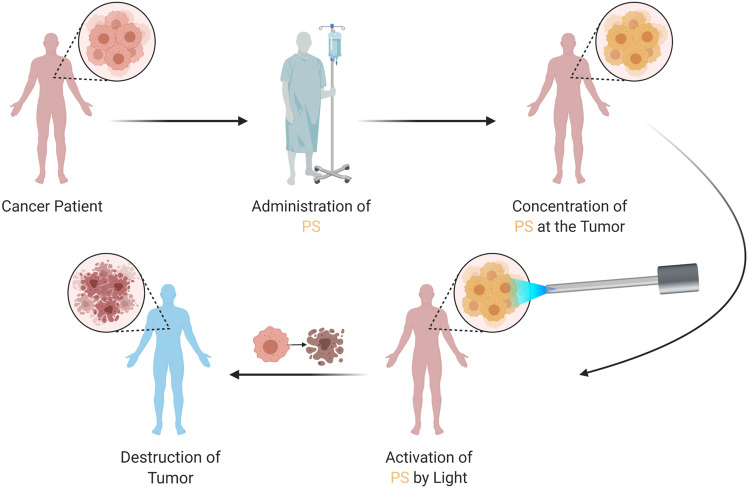
Photodynamic therapy (PDT) has been used as an anti-tumor treatment method for a long time and photosensitizers (PS) can be used in various types of tumors. Originally, light is an effective tool that has been used in the treatment of diseases for ages. The effects of combination of specific dyes with light illumination was demonstrated at the beginning of 20th century and novel PDT approaches have been developed ever since. Main strategies of current studies are to reduce off-target effects and improve pharmacokinetic properties. Given the high interest and vast literature about the topic, approval of PDT as the first drug/device combination by the FDA should come as no surprise. PDT consists of two stages of treatment, combining light energy with a PS in order to destruct tumor cells after activation by light. In general, PDT has fewer side effects and toxicity than chemotherapy and/or radiotherapy. In addition to the purpose of treatment, several types of PSs can be used for diagnostic purposes for tumors. Such approaches are called photodynamic diagnosis (PDD). In this Review, we provide a general overview of the clinical applications of PDT in cancer, including the diagnostic and therapeutic approaches. Assessment of PDT therapeutic efficacy in the clinic will be discussed, since identifying predictors to determine the response to treatment is crucial. In addition, examples of PDT in various types of tumors will be discussed. Furthermore, combination of PDT with other therapy modalities such as chemotherapy, radiotherapy, surgery and immunotherapy will be emphasized, since such approaches seem to be promising in terms of enhancing effectiveness against tumor. The combination of PDT with other treatments may yield better results than by single treatments. Moreover, the utilization of lower doses in a combination therapy setting may cause less side effects and better results than single therapy. A better understanding of the effectiveness of PDT in a combination setting in the clinic as well as the optimization of such complex multimodal treatments may expand the clinical applications of PDT.
Overview
The claims and statistics of this paper haven’t been checked yet.
Run the check — free, no account needed. It reads the open-access text and checks the sources it cites.
Integrity signals
Registry
Cites
Statistics
Figures
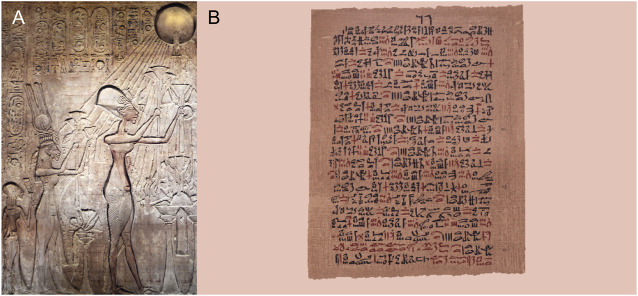
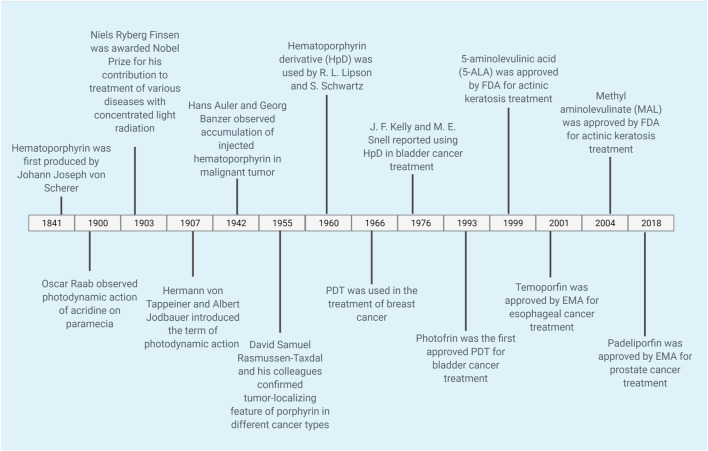
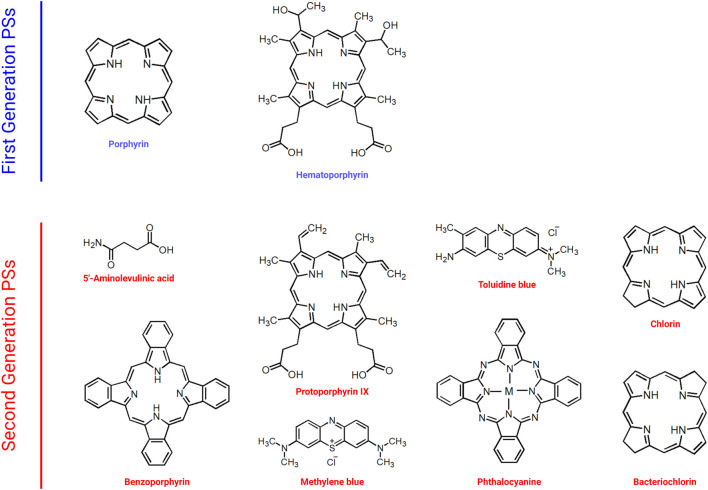
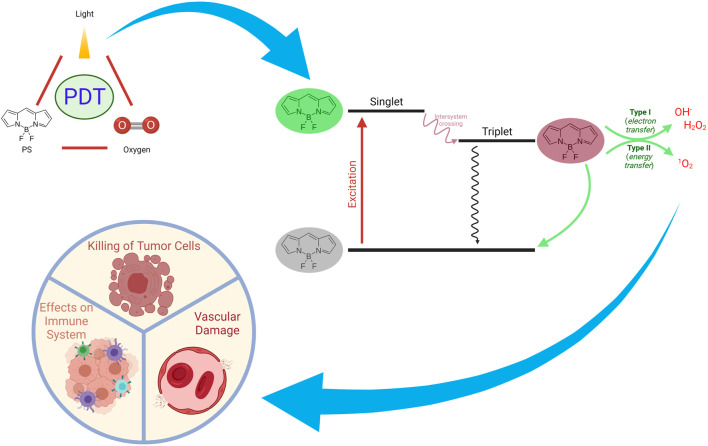
Verification
Claims the paper makes
The claims and statistics of this paper haven’t been checked yet.
Run the check — free, no account needed. It reads the open-access text and checks the sources it cites.
Claims other papers make about this one
Each is checked against this paper’s own text: does it say what the citing paper says it does?
The cited source says what the claim attributes to it.
In the citing paper
“The damaging properties of singlet oxygen can be effectively used in photo-dynamic therapy (PDT), used for example in cancer treatment, in which singlet oxygen is formed by the light-induced excitation of a suitable photosensitizer (Gunaydin et al. 2021).”
From Reactive Oxygen Species, Toxicity, Oxidative Stress, and Antioxidants: Chronic Diseases and Aging (2023) · cites this paper as Gunaydin et al. 2021
Self-check
Percentages, sums and reported differences re-computed from the paper’s own numbers.
The self-check needs the paper’s full text.
Citations
Cites
Sung, H., Ferlay, J., Siegel, R. L., Laversanne, M., Soerjomataram, I., Jemal, A., & Bray, F. (2021) · CA: A Cancer Journal for Clinicians · doi:10.3322/caac.21660 · Cited by 108,699
Bray, F., Ferlay, J., Soerjomataram, I., Siegel, R. L., Torre, L. A., & Jemal, A. (2018) · CA: A Cancer Journal for Clinicians · doi:10.3322/caac.21492 · Cited by 84,109
Siegel, R. L., Miller, K. D., & Jemal, A. (2020) · CA: A Cancer Journal for Clinicians · doi:10.3322/caac.21590 · Cited by 20,444
Understanding the Warburg Effect: The Metabolic Requirements of Cell Proliferation
Vander Heiden, M. G., Cantley, L. C., & Thompson, C. B. (2009) · Science · doi:10.1126/science.1160809 · Cited by 16,197
Engineering precision nanoparticles for drug delivery
Mitchell, M. J., Billingsley, M. M., Haley, R. M., Wechsler, M. E., Peppas, N. A., & Langer, R. (2021) · Nature Reviews Drug Discovery · doi:10.1038/s41573-020-0090-8 · Cited by 7,933
Photodynamic therapy for cancer
Dolmans, D. E. J. G. J., Fukumura, D., & Jain, R. K. (2003) · Nature reviews. Cancer · doi:10.1038/nrc1071 · Cited by 6,850
Photodynamic therapy of cancer: An update
Agostinis, P., Berg, K., Cengel, K. A., Foster, T. H., Girotti, A. W., Gollnick, S. O., Hahn, S. M., Hamblin, M. R., Juzeniene, A., Kessel, D., et al. (2011) · CA: A Cancer Journal for Clinicians · doi:10.3322/caac.20114 · Cited by 5,145
A Perspective on Cancer Cell Metastasis
Chaffer, C. L., & Weinberg, R. A. (2011) · Science · doi:10.1126/science.1203543 · Cited by 4,905
Why Do Cancers Have High Aerobic Glycolysis?
Gatenby, R. A., & Gillies, R. J. (2004) · Nature reviews. Cancer · doi:10.1038/nrc1478 · Cited by 4,784
Dougherty, T. J., Gomer, C. J., Henderson, B. W., Jori, G., Kessel, D., Korbelik, M., Moan, J., & Peng, Q. (1998) · JNCI Journal of the National Cancer Institute · doi:10.1093/jnci/90.12.889 · Cited by 4,716
Research works printed but not linked: 6
- Bryan, 1930, The Papyrus Ebers/Translated from the German Version by Cyril P. Bryan ... With an Introduction by Professor J. Elliot Smith
- Ebers, 1875, Papyros Ebers: Das Hermetische Buch über die Arzneimittel der alten Ägypter in hieratischer Schrift (Band 1): Einleitung und Text
- Goldberg, 1930, Heliotherapy, Arch. Phys. Ther., 11, 263
- Moser, 1998, Photodynamic Tumor Therapy: 2nd and 3rd Generation Photosensitizers
- The Nobel Prize in Physiology or Medicine 1903
- Raab, 1900, Uber die wirkung Fluorescirender Stoffe auf Infusorien, Z. Biol., 39, 524
Cited by
Sorted by citations
Reactive Oxygen Species, Toxicity, Oxidative Stress, and Antioxidants: Chronic Diseases and Aging
Jomova, K., Raptova, R., Alomar, S. Y., Alwasel, S. H., Nepovimova, E., Kuca, K., & Valko, M. (2023) · Archives of Toxicology · doi:10.1007/s00204-023-03562-9 · Cited by 2,638
Phototherapy in cancer treatment: strategies and challenges
Cai, Y., Chai, T., Nguyen, W., Liu, J., Xiao, E., Ran, X., Ran, Y., Du, D., Chen, W., & Chen, X. (2025) · Signal Transduction and Targeted Therapy · doi:10.1038/s41392-025-02140-y · Cited by 453
Recent Advances in 3D Printing of Smart Scaffolds for Bone Tissue Engineering and Regeneration
Yuan, X., Zhu, W., Yang, Z., He, N., Chen, F., Han, X., & Zhou, K. (2024) · Advanced Materials · doi:10.1002/adma.202403641 · Cited by 364
Controlling the biodistribution and clearance of nanomedicines
Cabral, H., Li, J., Miyata, K., & Kataoka, K. (2023) · Nature Reviews Bioengineering · doi:10.1038/s44222-023-00138-1 · Cited by 303
Which cell death modality wins the contest for photodynamic therapy of cancer?
Mishchenko, T. A., Balalaeva, I. V., Gorokhova, A. A., Vedunova, M. V., & Krysko, D. V. (2022) · Cell Death and Disease · doi:10.1038/s41419-022-04851-4 · Cited by 293
Metadata
- Authors
- Gunaydin, G., Gedik, M. E., & Ayan, S.
- Affiliations
- Hacettepe University Hospital (TR)
- Bilkent University (TR)
- Corresponding author
- Ayan, Seylan
- Venue
- Frontiers in Chemistry
- Publisher
- Frontiers Media SA
- Published
- 2021-08-02
- Volume
- 9
- Pages
- 686303-686303
- ISSN
- 2296-2646 (ISSN-L)
- PMC
- PMC8365093
- OpenAlex
- W3189011149
- Cited by
- 402
- References
- 302
- Citations by year
- 2026: 47 · 2025: 70 · 2024: 106 · 2023: 103 · 2022: 64 · 2021: 12
- FWCI
- 11.45
- Type
- journal article
- Language
- en
- Open access
- gold
- doi.org
- Licence
- Locations
- Frontiers in Chemistry (publishedVersion, cc-by)
- PubMed Central (publishedVersion, cc-by)
- PubMed (publishedVersion)
- DOAJ (DOAJ: Directory of Open Access Journals) (submittedVersion, cc-by-sa)
- Topics
- Life Sciences › Biochemistry, Genetics and Molecular Biology › Cancer Research › Photodynamic Therapy Research Studies
- Physical Sciences › Engineering › Biomedical Engineering › Nanoplatforms for cancer theranostics
- Health Sciences › Medicine › Dermatology › Nonmelanoma Skin Cancer Studies
- Keywords
- photodynamic therapy, photodynamic diagnosis, photosensitizers, cancer therapy, combination therapy, multimodal cancer therapy, predictors of treatment response, off-target effects, photosensitizer pharmacokinetics
About these checks
Registry, retraction, Cites and statistics results are computed, not judged, with one exception: a printed reference that no index lists is read once by a model before it counts as a citation error. Claims are extracted by a model and kept only when their quote appears verbatim in the text; each cited source is then checked, with a model’s help, for whether it says what the claim relies on. Those verdicts can be wrong — read the claim’s quote and the cited source before relying on one.
Statistics and arithmetic are recomputed, not judged.
Confidence bands are shown only for fields calibrated on our annotated test set. None is calibrated yet, so no band is shown.
What counts as a claim ›How we measure confidence ›How we check this ›
Are you an author, or do you see a problem with this page? Request a review
