

The DOI matches its Crossref record; 218 of the 220 references it cites were found in a registry or an index.
The pathophysiology of osteoporosis in obesity and type 2 diabetes in aging women and men: The mechanisms and roles of increased bone marrow adiposity
Open accessAbstract
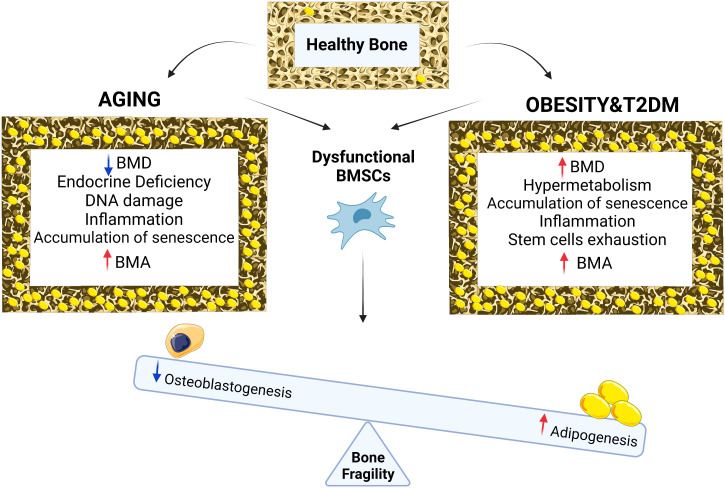
Osteoporosis is defined as a systemic skeletal disease characterized by decreased bone mass and micro-architectural deterioration leading to increased fracture risk. Osteoporosis incidence increases with age in both post-menopausal women and aging men. Among other important contributing factors to bone fragility observed in osteoporosis, that also affect the elderly population, are metabolic disturbances observed in obesity and Type 2 Diabetes (T2D). These metabolic complications are associated with impaired bone homeostasis and a higher fracture risk. Expansion of the Bone Marrow Adipose Tissue (BMAT), at the expense of decreased bone formation, is thought to be one of the key pathogenic mechanisms underlying osteoporosis and bone fragility in obesity and T2D. Our review provides a summary of mechanisms behind increased Bone Marrow Adiposity (BMA) during aging and highlights the pre-clinical and clinical studies connecting obesity and T2D, to BMA and bone fragility in aging osteoporotic women and men.
Overview
The claims and statistics of this paper haven’t been checked yet.
Run the check — free, no account needed. It reads the open-access text and checks the sources it cites.
Integrity signals
Registry
Cites
Statistics
Figures
Verification
Claims the paper makes
The claims and statistics of this paper haven’t been checked yet.
Run the check — free, no account needed. It reads the open-access text and checks the sources it cites.
Claims other papers make about this one
Each is checked against this paper’s own text: does it say what the citing paper says it does?
The cited source says what the claim attributes to it.
In the citing paper
“As aging-related osteoporosis typically features low bone mass, microarchitectural alterations and bone marrow adipose tissue expansion40–42, our findings suggest that AD mice at a younger age recapitulate an aged skeletal phenotype.”
From Serum amyloid P secreted by bone marrow adipocytes drives skeletal amyloidosis (2025) · cites this paper as [40]
Self-check
Percentages, sums and reported differences re-computed from the paper’s own numbers.
The self-check needs the paper’s full text.
Citations
Cites
López-Otín, C., Blasco, M. A., Partridge, L., Serrano, M., & Kroemer, G. (2013) · Cell · doi:10.1016/j.cell.2013.05.039 · Cited by 14,982 · cited 1×
“Aging is defined as a gradual loss of normal tissue homeostasis and progressive deterioration of the organ functions, due to accumulation of cellular/DNA damage and senescence throughout aging (11).”
BackgroundThe senescence-associated secretory phenotype: the dark side of tumor suppression
Coppé, J.-P., Desprez, P.-Y., Krtolica, A., & Campisi, J. (2010) · Annual Review of Pathology: Mechanisms of Disease · doi:10.1146/annurev-pathol-121808-102144 · Cited by 5,206
An estimate of the worldwide prevalence and disability associated with osteoporotic fractures
Johnell, O., & Kanis, J. (2006) · Osteoporosis International · doi:10.1007/s00198-006-0172-4 · Cited by 4,770 · cited 1×
“It is the most common bone disease worldwide, affecting more than 200 million people and causing more than 9 million fractures in the year 2000 (2).”
BackgroundJohnston, C., & Slemenda, C. (1992) · Southern medical journal (Birmingham, Ala. Print) · doi:10.1097/00007611-199208001-00002 · Cited by 3,785
Adipose tissue, adipokines, and inflammation
Fantuzzi, G. (2005) · Journal of Allergy and Clinical Immunology · doi:10.1016/j.jaci.2005.02.023 · Cited by 2,606
Kanis, J. А., & Kanis, J. А. (1994) · Osteoporosis International · doi:10.1007/bf01622200 · Cited by 2,532
Cellular senescence in aging and age-related disease: from mechanisms to therapy
Childs, B. G., Durik, M., Baker, D. J., & van Deursen, J. M. (2015) · Nature Medicine · doi:10.1038/nm.4000 · Cited by 2,363
Lips, P. (2001) · Endocrine reviews · doi:10.1210/edrv.22.4.0437 · Cited by 2,203
Obesity-induced inflammatory changes in adipose tissue
Wellen, K. E., & Hotamisligil, G. S. (2003) · Journal of Clinical Investigation · doi:10.1172/jci200320514 · Cited by 1,823
Cellular senescence and the senescent secretory phenotype: therapeutic opportunities
Tchkonia, T., Zhu, Y., van Deursen, J., Campisi, J., & Kirkland, J. L. (2013) · Journal of Clinical Investigation · doi:10.1172/jci64098 · Cited by 1,774
Research works printed but not linked: 4
- Rozman, 1989, Age-related variations of fat tissue fraction in normal human bone marrow depend both on size and number of adipocytes: a stereological study, Exp Hematol, 17
- Kearns, 2008, Receptor activator of nuclear factor kappaB ligand and osteoprotegerin regulation of bone remodeling in health and disease, Endocr Rev, 29, 10.1210/er.2007-0014 · DOI · Paper page
- Carter, 2014, Physical activity and bone health, Mo Med, 111, 59
- Karimifar, 2012, Evaluation of bone loss in diabetic postmenopausal women, J Res Med Sci, 17
Cited by
Sorted by citations
Links among Obesity, Type 2 Diabetes Mellitus, and Osteoporosis: Bone as a Target
Martiniaková, M., Bíro, R., Pénzes, N., Šarocká, A., Kováčová, V., Mondočková, V., & Omelka, R. (2024) · International Journal of Molecular Sciences · doi:10.3390/ijms25094827 · Cited by 106
“More than 30 million people in Europe are expected to be affected by osteoporosis by 2050 [7–9].”
BackgroundInfluentialThe multi-faceted nature of age-associated osteoporosis
Smit, A. E., Meijer, O. C., & Winter, E. M. (2024) · Bone Reports · doi:10.1016/j.bonr.2024.101750 · Cited by 78
“In addition, several disorders that are associated with age, such as diabetes mellitus (DM) and obesity, both induce bone marrow adipogenesis and reduce bone formation (Ali et al., 2022).”
BackgroundObesity and lipid metabolism in the development of osteoporosis (Review)
Wang, X., Zhang, C., Zhao, G.-T., Yang, K., & Tao, L. (2024) · International Journal of Molecular Medicine · doi:10.3892/ijmm.2024.5385 · Cited by 70
“Based on the balance of osteo‑ genesis and adipogenesis, the expansion of bone marrow adipose tissue is common in populations at a high risk for osteoporosis, leading to decreased bone formation (24).”
BackgroundZhang, Y.-S., He, X., Wang, K., Xue, Y., Hu, S.-H., Jin, Y.-S., Zhu, G., Rui, Y.-J., & Shi, Q. (2024) · Journal of Advanced Research · doi:10.1016/j.jare.2024.04.013 · Cited by 49
“Accumulating evidence affirms that obesity is deeply involved in osteoporosis [35]; however, its relevant mechanism should be strongly emphasized.”
Endocrinal metabolic regulation on the skeletal system in post-menopausal women
Thapa, S., Nandy, A., & Rendina-Ruedy, E. (2022) · Frontiers in Physiology · doi:10.3389/fphys.2022.1052429 · Cited by 53
“, 2009), as well as during obesity (Elia, 2012; Rinonapoli et al., 2021; Ali et al., 2022).”
BackgroundBone health in adults with obesity before and after interventions to promote weight loss
Paccou, J., & Compston, J. E. (2024) · The Lancet Diabetes & Endocrinology · doi:10.1016/s2213-8587(24)00163-3 · Cited by 47
Hu, K., Edelen, E. D., Zhuo, W., Khan, A. A., Orbegoso, J., Greenfield, L., Rahi, B., Griffin, M. J., Ilich, J. Z., & Kelly, O. J. (2023) · Metabolites · doi:10.3390/metabo13101056 · Cited by 34
“This ‘fattening’ of bone, coupled with reduced bone formation, decreases trabecular bone density, resulting in a higher risk for fractures [126].”
BackgroundTrabecular Bone Score (TBS) in Individuals with Type 2 Diabetes Mellitus: An Updated Review
Trandafir, A., Sima, O.-C., Gheorghe, A., Ciuche, A., Cucu, A.-P., Nistor, C., & Carsote, M. (2023) · Journal of Clinical Medicine · doi:10.3390/jcm12237399 · Cited by 29
“…contributing to the risk of fracture in T2DM, diabetic bone disease representing a major co-morbidity as part of an already complicated panel, [17–19], noting once again the role of understanding and studding the bone fragility in T2DM due to the increased burden in terms of morbidity and even…”
BackgroundDeep learning and genome-wide association meta-analyses of bone marrow adiposity in the UK Biobank
Xu, W., Mesa‐Eguiagaray, I., Morris, D. M., Wang, C., Gray, C. D., Sjöström, S., Papanastasiou, G., Badr, S., Paccou, J., Li, X., et al. (2025) · Nature Communications · doi:10.1038/s41467-024-55422-4 · Cited by 28
“We alsoperformed Sex x Genotype interaction analysis, which did not fi nd P-sex genome-wide signi fi cant for any of the lead SNPs in four bone regions (Supplementary Data 53).”
Cai, G., Song, X., Luo, H., Dai, G.-Y., Zhang, H., Jiang, D., Lei, X., Chen, H., & Zhang, L.-W. (2024) · Molecular and Cellular Endocrinology · doi:10.1016/j.mce.2024.112382 · Cited by 23
Common Regulators of Lipid Metabolism and Bone Marrow Adiposity in Postmenopausal Women
Kim, D.-Y., & Ko, S. (2023) · Pharmaceuticals · doi:10.3390/ph16020322 · Cited by 22
“Taken together, the loss of E2 is associated with rapid bone loss, osteoporosis, and an increased risk of fracture [93] as well as an increased BMA, as demonstrated by animal studies [11,83].”
BackgroundWang, K., Zhao, X., Yang, S., Qi, X., Li, A., & Yu, W. (2024) · Comprehensive Reviews in Food Science and Food Safety · doi:10.1111/1541-4337.13374 · Cited by 18
Serum amyloid P secreted by bone marrow adipocytes drives skeletal amyloidosis
Kumar, S., Song, K., Wang, J., Baghel, M. S., Zeng, Y., Shen, K., Zheng, J., Crane, J., Demehri, S., Gao, P., et al. (2025) · Nature Aging · doi:10.1038/s43587-025-00924-z · Cited by 16
“Quantification by ELISA revealed increased human Aβ 1–40 and Aβ 1–42 levels in the bone marrow of AD mice compared to that of WT mice (Fig.”
Luo, W., Li, X.-Z., Zhou, Y., Xu, D., & Qiao, Y. (2024) · Scientific Reports · doi:10.1038/s41598-024-65571-7 · Cited by 16
Exploring the Interplay between Bone Marrow Stem Cells and Obesity
Moscatelli, F., Monda, A., Messina, G., Picciocchi, E., Monda, M., di Padova, M., Monda, V., Mezzogiorno, A., Dipace, A., Limone, P., et al. (2024) · International Journal of Molecular Sciences · doi:10.3390/ijms25052715 · Cited by 17
“Reduced endogenous antioxidant production is another effect of estrogen deficiency [37].”
BackgroundWang, L., Liu, Y.-D., Li, K., Zhang, W.-S., Yuan, Y., Ma, K.-K., Zhou, F.-Y., Cheng, Z.-T., Geng, J., Su, Y.-B., et al. (2024) · Obesity · doi:10.1002/oby.24040 · Cited by 13
“On the contrary, the response of BMAT to obesity is less clear, and some studies have reported no change or some increase in BMAT [26] depending on the diabetic status.”
BackgroundEmerzian, S. R., Jóhannesdóttir, F., Yu, E. W.-Y., & Bouxsein, M. (2024) · JBMR Plus · doi:10.1093/jbmrpl/ziae003 · Cited by 13
“30,31 The aim of this review is to discuss the key findings from studies that have used noninvasive imaging to assess skeletal outcomes in adults with T1D and T2D.”
BackgroundTherapeutic applications of miRNA in the management of obesity and osteoporosis
Abolhasani, S., Ahmadi, Y., Rostami, Y., Zendeh, M. B., & Fattahi, D. (2025) · Journal of Diabetes and Metabolic Disorders · doi:10.1007/s40200-025-01589-6 · Cited by 12
“Therefore, the dual burden of obesity and osteoporosis can create a vicious cycle, wherein the presence of one condition exacerbates the other, leading to a heightened risk of fractures and other skeletal-related events [11].”
Guimarães, G. C., Coelho, J. B. C., Silva, J. G. O., de Sant’Ana, A. C. C., de Sá, C. A. C., Moreno, J. M., Reis, L. M., & Guimarães, C. S. D. O. (2023) · Osteoporosis International · doi:10.1007/s00198-023-06991-5 · Cited by 19
“Metabolic disturbances observed in obese and T2D patients contribute to BMAT expansion and bone fragility, both of which are considered underlying mechanisms involved in the pathogenesis of osteoporosis [81].”
Adipocyte–Tumor Interactions in the Bone Marrow Niche: Implications for Metastasis and Therapy
Dabaliz, A., Hakawati, M. N. A., Alrashdan, N., Alrashdan, S., Bakir, M. A., & Mohammad, K. S. (2025) · International Journal of Molecular Sciences · doi:10.3390/ijms26199781 · Cited by 14
“This shift contributes to bone fragility and osteoporosis [183].”
Bone marrow adipocytes provide early sign for progression from MGUS to multiple myeloma
El-Masri, B. M., Leka, B., Mustapha, F., Gundesen, M. T., Hinge, M., Lund, T., Andersen, T. L., Diaz‐delCastillo, M., & Jafari, A. (2024) · Oncotarget · doi:10.18632/oncotarget.28548 · Cited by 10
Self-citationTao, B., Shen, X.-M., Li, G.-F., Wu, X.-Y., Yang, Y., Sheng, C., Zhang, Y., Wang, L., Zhao, Z.-Y., Song, Q., et al. (2025) · Journal of Diabetes · doi:10.1111/1753-0407.70091 · Cited by 10
“These changes are directly associated with decreased bone mechanical performance and an increased fracture risk [15].”
Artificial intelligence–based diabetes risk prediction from longitudinal DXA bone measurements
Khan, S., & Shah, Z. (2025) · Scientific Reports · doi:10.1038/s41598-025-10136-5 · Cited by 9
KIAA1199 (CEMIP) regulates adipogenesis and whole-body energy metabolism
Chen, L., Shi, K., Ditzel, N., Qiu, W., Tencerová, M., Nielsen, L. H. D., Figeac, F., Rauch, A., Liu, Y., Tao, J., et al. (2025) · Bone Research · doi:10.1038/s41413-025-00415-2 · Cited by 9
“25 Under physiological conditions, BMAT is thought to provide energy needed for of bone remodeling and thus exhibits signi fi cant changes in metabolic bone diseases.”
Self-citationLeanza, G., Faraj, M., Cannata, F., Viola, V., Pellegrini, N., Tramontana, F., Pedone, C., Vadalà, G., Piccoli, A., Strollo, R., et al. (2026) · Metabolism · doi:10.1016/j.metabol.2026.156492 · Cited by 10
Cursano, M. C., Valsecchi, A. A., Pantano, F., Maïo, M. D., Procopio, G., Berruti, A., Bertoldo, F., Tucci, M., Giorgi, U. D., Santini, D., et al. (2024) · ESMO Open · doi:10.1016/j.esmoop.2024.103484 · Cited by 8
Ji, S., Zhao, B., Gao, Y., Xie, J., Han, H., Wu, Q., & Yang, D. (2024) · Frontiers in Pharmacology · doi:10.3389/fphar.2024.1367806 · Cited by 8
Materozzi, M., Resnati, M., Facchi, C., Trudu, M., Orfanelli, U., Perini, T., Gennari, L., Milan, E., & Cenci, S. (2024) · Scientific Reports · doi:10.1038/s41598-024-57898-y · Cited by 9
“In disease, however, the disruption of this balance, due to metabolic, hormonal, or genetic alterations generally results in deregulated bone resorption by OCs, leading to net bone loss and skeletal fragility 1,11–13 .”
Yang, Z., Liang, J., Shi, D., Tuo, C., Wu, Y., & Zhang, F. (2025) · Scientific Reports · doi:10.1038/s41598-025-13217-7 · Cited by 7
“This may be attributed to increased mechanical loading and metabolic disturbances associated with obesity, which can intensify stress at the fusion segment and promote bone loss, especially in elderly female patients 30 .”
Bone marrow adipocytes in cancer: Mechanisms, models, and therapeutic implications
Bessot, A., Gunter, J. H., McGovern, J., & Bock, N. (2025) · Biomaterials · doi:10.1016/j.biomaterials.2025.123341 · Cited by 9
Assessment of osteoporosis and vertebral fractures with T1- and T2-weighted MRI scans
Din, R. U., Wang, L., Cheng, X., & Yang, H. (2025) · Archives of Osteoporosis · doi:10.1007/s11657-025-01509-4 · Cited by 7
“Aging and a lack of sex hormones are responsible for decreasing osteoblastogenesis while increasing adipogenesis [35].”
Ketogenic diet and β-hydroxybutyrate in osteoporosis: current progress and controversy
Luo, C., Dai, Z., He, W., He, Y., Yang, P. C., Huang, M., Li, J., Xu, Y., & Huang, W. G. (2025) · Frontiers in Nutrition · doi:10.3389/fnut.2025.1508695 · Cited by 7
Are Dietary Patterns Relevant for Reducing the Risk of Fractures and Sarcopenia?
Welch, A. A., Scott, J., Cameron, D., & Yates, M. M. (2025) · Current Osteoporosis Reports · doi:10.1007/s11914-024-00899-7 · Cited by 8
Rinne, C., Soultoukis, G., Oveisi, M., Leer, M., Schmidt-Bleek, O., Burkhardt, L.-M., Bucher, C., Moussa, E. A., Makhlouf, M., Duda, G. N., et al. (2024) · Frontiers in Endocrinology · doi:10.3389/fendo.2024.1394263 · Cited by 7
Oxidative stress and bone marrow adipocytes: Molecular mechanisms and possible implications
Tao, H.-Q., Ge, G.-R., Chen, K., Chen, T.-R., Li, W.-M., Yang, P., Che, Y., Wang, Y.-F., Chen, W.-L., Yu, H., et al. (2026) · Journal of Orthopaedic Translation · doi:10.1016/j.jot.2025.101038 · Cited by 6
“Within the hypoxic bone environment, BMAT plays an important role in storing energy, secreting adipokines, and targeting them toward adjacent bone cells [25].”
Varzideh, F., Farroni, E., Kaunsakar, U., Eiwaz, M. B., Jankauskas, S., & Santulli, G. (2025) · Cellular and Molecular Life Sciences · doi:10.1007/s00018-024-05546-z · Cited by 6
Nishimura, H., Murata, Y., Mullen, M. T., Yamaura, K., Singer, J., Huard, C., Lind, D. R. G., Hambright, W. S., Bahney, C. S., Philippon, M. J., et al. (2025) · Journal of Tissue Engineering and Regenerative Medicine · doi:10.1155/term/9187855 · Cited by 6
“Tis is especially important in the setting of age-related bone diseases where there is a reduction in cellular osteogenic capacity, leading to decreased bone mineral density in osteopenia/osteoporosis, as well as an accumulation of fatty tissue within the bone marrow [2, 3].”
Machine Learning Empowered Osteoporosis Prediction: A Comparative Analysis
Singh, Y., Ghosh, D., Gourisaria, M., Jena, J. J., Patra, S., & Panda, A. R. (2024) · International Conference Electronic Systems, Signal Processing and Computing Technologies [ICESC-] · doi:10.1109/icesc60852.2024.10689842 · Cited by 6
“Osteoporosis can be defined as a systematic disease of bones characterized by reduced bone mass and micro-architectural degradation leading to elevated fracture risk [1].”
BackgroundAzizollahi, F., Oroojalian, F., Vatanchian, M., Zak, A., Khodabandeh, A., Moqadam, K. H., & Havakhah, S. (2026) · Journal of Drug Delivery Science and Technology · doi:10.1016/j.jddst.2025.107745 · Cited by 5
Lin, Y., Xu, Y., Zhou, S., Liu, J., Zhang, M., Zhang, B., & Chen, H. (2025) · Pharmaceuticals · doi:10.3390/ph18121809 · Cited by 6
“Generally, diabetes contributes to osteoporosis through various mechanisms, including interference with metabolic processes and the effects of reactive oxygen species and inflammatory molecules [21,22].”
Nurkolis, F., Utami, T. W., Alatas, A. I., Wicaksono, D., Kurniawan, R., Ratmandhika, S. R., Sukarno, K. T., Pahu, Y. G. P., Kim, B., Tallei, T. E., et al. (2024) · Frontiers in Aging · doi:10.3389/fragi.2024.1462569 · Cited by 5
Li, D., Li, J., Li, Y., Dong, W., & Lin, Z. (2024) · Frontiers in Public Health · doi:10.3389/fpubh.2024.1462169 · Cited by 6
Deng, X., Wu, X.-N., Sun, Z.-Y., Liu, Q.-Y., & Yuan, G. (2024) · Osteoporosis International · doi:10.1007/s00198-024-07163-9 · Cited by 5
Din, R. U., Nishtar, T., Cheng, X., & Yang, H.-S. (2024) · La radiologia medica · doi:10.1007/s11547-024-01814-x · Cited by 5
“Additionally, reactive oxygen species and oxidative stress levels increase with aging, impairing osteoblast formation and promoting adipocyte differentiation [31].”
InfluentialPan, R., & Li, Y. (2024) · Journal of Orthopaedic Surgery and Research · doi:10.1186/s13018-024-04991-7 · Cited by 3
“The ‘fattening’ of bones, coupled with reduced bone formation, lowers trabecular bone density, leading to a higher risk of fractures [40].”
BackgroundYan, H.-L., Li, Z., & Zhang, Z.-W. (2024) · Medicine · doi:10.1097/md.0000000000039138 · Cited by 4
Ramadan, A., Etrusco, A., D'Amato, A., Laganà, A. S., Chiantera, V., Zgheib, C., Shoucair, H., Alakrah, W., Yared, G., & Sleiman, Z. (2024) · MITAT. Minimally invasive therapy & allied technologies · doi:10.1080/13645706.2024.2376837 · Cited by 4
“…becomes absolutely necessary in the case of high-complexity surgeries [38–41] and with obese patients, since the latter, in addition to involving a whole range of health problems known to the patient [42–45], makes dissection and identification of anatomical structures extremely difficult [46,47].”
Usefulness of DXA-based bone strain index in postmenopausal women with type 2 diabetes mellitus
Bonaccorsi, G., Sciavicco, G., Rinaudo, L., Brigato, A., Fiorella, G., Carnevale, A., Ulivieri, F. M., & Messina, C. (2024) · Archives of Osteoporosis · doi:10.1007/s11657-024-01411-5 · Cited by 4
Du, A., Xu, R., Yang, Q., Lu, Y., & Luo, X. (2024) · Journal of Cellular and Molecular Medicine · doi:10.1111/jcmm.18141 · Cited by 4
“17 The mechanisms underlying bone fractured in T2D are diverse and unresolved.”
BackgroundLi, H., Xu, Q., Ye, Y.-L., Chang, B., Wang, R., & Li, G.-W. (2024) · BMC Public Health · doi:10.1186/s12889-023-17494-7 · Cited by 4
“In addition, the hypermetabolic status of bone marrow stromal cells, and an accelerated senescent bone marrow microenvironment (such as expanded bone marrow adipose tissue) in obese individuals, leads to increased bone fragility [36].”
BackgroundLu, Z., Cao, H., & Hu, X.-Y. (2023) · Journal of Environmental and Public Health · doi:10.1155/2023/7571696 · Cited by 4
RetractedGut microbiota orchestrates bone homeostasis: a multi-pathway network from intestine to skeleton
Gong, Y., Ma, X., Wang, L., Zhang, P., Liu, T., Li, Y. D., & Dong, W. (2026) · Frontiers in Endocrinology · doi:10.3389/fendo.2026.1767726 · Cited by 5
“Obesity, hyperglycemia, and dyslipidemia are established risk factors for OP, and persons who are obese and diabetic frequently present with concomitant OP (136).”
Yu, H.-D., Chen, R., Sun, S., & Zhou, R. (2026) · European Journal of Medical Research · doi:10.1186/s40001-026-04162-w · Cited by 3
“First, most relevant investigations have predominantly focused on the clinical implications and pathogenic mechanisms linking BMAT to osteoporosis and skeletal fragility in ageing humans with obesity or type 2 diabetes [3, 5, 34, 98].”
Ahmad, I., Gbr, S. S. A. E., Naggar, B. M. M. A. E., Abdelwahab, M. K., Elsaghier, E. O., Mohammed, D., Mohamed, M. A., Mohamed, M. S., El-Rahim, M. M. M. A. A., & attar, S. E. (2024) · BMC Women's Health · doi:10.1186/s12905-024-03311-9 · Cited by 3
Zhang, X.-T., Qiu, W.-Y., Huang, J.-J., Pang, X., Su, Y., Ye, J.-L., Zhou, S., Tang, Z.-X., Wang, R.-M., & Su, R.-S. (2024) · Journal of diabetes and its complications · doi:10.1016/j.jdiacomp.2024.108805 · Cited by 3
The role of vascular aging, bone marrow and immune system in hypertension
Chen, Y., Yang, M., Xie, W., & Hong, H. (2026) · Cell Death Discovery · doi:10.1038/s41420-025-02851-9 · Cited by 2
“The accumulation of fat cells within the bone marrow is a critical characteristic feature of bone marrow aging process [77].”
Yang, T.-J., Chen, T.-X., Zhang, Y., Luo, Y., & Wen, P.-P. (2025) · Frontiers in Medicine · doi:10.3389/fmed.2025.1653037 · Cited by 3
Yin, Q., Liu, Y., Yin, F., Xiao, W.-Y., Guan, Z.-W., & Gu, J. (2025) · Journal of Orthopaedic Surgery and Research · doi:10.1186/s13018-025-06065-8 · Cited by 2
“…that obesity might protect against OP, but this is refuted by the fact that obese individuals have a significantly higher risk of fractures, likely due to systemic inflammation affecting bone metabolism and increased adipogenesis leading to reduced bone mass in obese populations [11, 20–22].”
Tang, H., Zhao, J., Yan, X., Zheng, Z.-Y., Bai, W., Tang, Z., & Liu, X. (2025) · Journal of Multidisciplinary Healthcare · doi:10.2147/jmdh.s529217 · Cited by 2
“11 Sheng et al, however, found no significant association between overweight and obesity (assessed by BMI) and cervical diseases in a cross-sectional sample from the 2014 Medical Expenditure Panel Study (MEPS) (n = 23,048), which is considered representative of the US population.”
Birkeland, E., Bamigbetan, W., Molven, K. D., Thorsby, P., Gulseth, H., Aas, A.-M., & Dahl, C. (2025) · Archives of Osteoporosis · doi:10.1007/s11657-025-01556-x · Cited by 2
Association of the Chinese visceral adiposity index with marrow adiposity in postmenopausal females
Zuo, X., Miao, Z.-Y., Xu, R., Shi, D., Chang, S.-X., Li, G.-W., & Luo, P. (2025) · Frontiers in Endocrinology · doi:10.3389/fendo.2025.1542516 · Cited by 2
“Research suggests that the expansion of visceral fat is closely linked to increased adipocyte formation within the bone marrow microenvironment (37, 38).”
Klinaku, F. T., Comi, L., Giglione, C., & Magni, P. (2024) · Journal of Endocrinological Investigation · doi:10.1007/s40618-024-02516-x · Cited by 4
Freitas, B. P., Cândido, L. M., Wagner, K. J. P., Lacerda, A. C. R., Mendonça, V. A., Micheli, R. D., Sartório, A., de Avelar, N. C. P., & Danielewicz, A. L. (2024) · Healthcare · doi:10.3390/healthcare12161625 · Cited by 2
“These factors accelerate cartilage wear, contribute to muscle mass loss, and disrupt bone metabolism, leading to reduced bone quality and increased risk of functional impairments [28].”
BackgroundHe, P., Yang, Y.-Q., Wang, H., Zhang, Y.-Q., Gu, Y., Hong, C., Bo, L., Deng, F.-Y., & Lei, S.-F. (2024) · Frontiers in Endocrinology · doi:10.3389/fendo.2024.1325320 · Cited by 2
Aging-related metabolic dysregulation in osteoporosis: mechanisms and therapeutic strategies
Bai, R., Huang, Z.-S., Tian, X., Liu, Y.-K., Wang, Y., Su, Y., Li, M.-J., Cheng, C., Wu, J., Zha, Y.-J., et al. (2026) · Frontiers in Aging · doi:10.3389/fragi.2026.1886673 · Cited by 1
Yu, X., Zhu, M., Luo, X., Hu, J., Wang, S., Xu, Q., Liu, X., Zhang, B., Zhan, H., & Zhang, S. Y. (2026) · The FASEB Journal · doi:10.1096/fj.202502919rr · Cited by 1
Epigenetic transcriptional regulation of skeletal aging: The emerging role of m6A methylation
Song, C., Song, G., Zhang, S., Zhao, H., Wen, Z., Chen, Y., Chen, X., Liu, B., Ni, Q., & Fan, D.-P. (2026) · Journal of Orthopaedic Translation · doi:10.1016/j.jot.2026.101088 · Cited by 1
“While excessive adipose tissue can exert mechanical loading on bones, potentially inducing a compensatory increase in BMD, it concurrently promotes chronic low-grade inflammation and hormonal dysregulation which exert deleterious effects on bone homeostasis [6,7].”
Gong, M., Cao, T., Feng, X.-M., Ding, J., Fan, N., He, Y., & Yan, Y.-X. (2026) · NMCD. Nutrition Metabolism and Cardiovascular Diseases · doi:10.1016/j.numecd.2026.104704 · Cited by 1
The Broken Cradle: Bone Marrow Stem Cell Niche Remodelling in Diabetes
Kum, J. J. Y., Howlett, C. J., & Khan, Z. A. (2025) · Stem Cell Reviews and Reports · doi:10.1007/s12015-025-11038-9 · Cited by 1
“Recent work has expanded this paradigm, as bone marrow adiposity is now recognized as a shared pathogenic mechanism linking osteoporosis, diabetes, and obesity, with marrow adipocytes actively secreting pro-inflammatory cytokines and adipokines that impair bone remodeling [ 104].”
Li, L.-W., Ma, Y., He, X., Cao, M.-Y., Zheng, E., & Leng, J. (2025) · BMC Geriatrics · doi:10.1186/s12877-025-06826-4 · Cited by 1
“Obesity can lead to alterations in the cellular structure and molecular networks of the bone microenvironment, causing changes in the volume of trabeculae and bone cortex, while increasing the mass of bone marrow adipose tissue, which has a deleterious impact on bone mass and strength [29].”
Diabetes Burnout Among the Elderly With Type 2 Diabetes
Muntamah, U., Siyamti, D., & Sianturi, M. (2025) · Window of Health : Jurnal Kesehatan · doi:10.33096/woh.vi.2615 · Cited by 1
“25 These biomedical mechanisms, when combined with cultural expectations and gendered roles, highlight the multifactorial nature of diabetes burnout in elderly women in Indonesia.”
The association between body roundness index and lumbar marrow fat content in postmenopausal women.
Luo, P., Miao, Z.-Y., Guo, M.-Y., Qin, L., Xu, R., Lu, L., Wang, Y., & Li, G.-W. (2025) · Bone · doi:10.1016/j.bone.2025.117684 · Cited by 1
Polypharmacy and Bone Health in Patients with Type 2 Diabetes Mellitus: A Narrative Review
Kashmoola, I. O., Mohammad, S. H., & Alsaaty, M. (2025) · Journal of Bone Metabolism · doi:10.11005/jbm.25.975 · Cited by 1
“[22] Likewise, in patients with T2DM, CKD disturbs homeostasis of minerals resulting in bone and mineral disorders.”
Li, W., Wang, W., Zhang, M., Chen, Q., Li, F., & Li, S. (2025) · Frontiers in Endocrinology · doi:10.3389/fendo.2024.1518656 · Cited by 1
Xu, L., & Cao, Y. (2025) · Archives of Dermatological Research · doi:10.1007/s00403-025-03805-y · Cited by 1
Liu, X., Lou, Y., Chang, Z., Gu, C.-Y., Du, B., & Sun, G.-Q. (2025) · Clinics · doi:10.1016/j.clinsp.2025.100674 · Cited by 1
“7,27 In fact, osteoporosis and fracture risk increases along with age, independently from body weight, and, in menopause, the abrupt decrease of estrogen is the primary cause of osteoporosis.”
Opportunistic Computed Tomography
Reid, J., Tobin, J., McCrosson, M., Rivas, G., Rothwell, S., Ravinsky, R., & Lawrence, J. (2024) · Clinical Spine Surgery · doi:10.1097/bsd.0000000000001710 · Cited by 1
HDL levels modulate the impact of type 2 diabetes susceptibility alleles in older adults
Sullivan, S. O. ’., Hageh, C. A., Henschel, A., Chacar, S., Abchee, A., Zalloua, P., & Nader, M. (2024) · Lipids in Health and Disease · doi:10.1186/s12944-024-02039-7 · Cited by 1
“Indeed several chronic diseases and ageing share pathophysiological processes under-pinned by disruption of signal pathways at the molecular and cellular level [19–21].”
BackgroundAnalysis of Shared Mechanisms and Chinese Herbal Medicines Between Osteoporosis and Type 2 Diabetes
Yang, H., Luo, F., & Xiong, Z. (2023) · Pharmacognosy Magazine · doi:10.1177/09731296231215568 · Cited by 1
“Several factors, including hyperglycemia, oxidative stress, alterations in relevant cytokines and hormone levels, and the use of antidiabetic medications, have been implicated in the development of OP in individuals with T2D (Ali et al., 2022; Mo et al., 2022).”
BackgroundResearch Progress of Irisin in Obesity and Related Metabolic Diseases
张, 怡. (2023) · Advances in Clinical Medicine · doi:10.12677/acm.2023.13122830 · Cited by 1
Lai, C.-H., LI, Y.-T., Wu, T.-S., & Wu, C.-T. (2026) · Archives of Osteoporosis · doi:10.1007/s11657-026-01785-8
Barreno-Avila, J. D., Toapanta, K. E. S., Barreno, C. I. S., & Laura, G. G. I. (2026) · Impact Research Journal · doi:10.63380/irj.v4n2.2026.423
Peng, D.-C., Liang, C.-T., Li, Y.-X., Tan, J.-Q., Jiang, K.-L., Song, Z.-Y., Guo, X.-Y., & Wang, H.-K. (2026) · Frontiers in Endocrinology · doi:10.3389/fendo.2026.1927444
Bach, U., Uslar, T., Fünning, C., Tombak, G., Frenes, K., Walter, J., Gerber, P. A., Beuschlein, F., Konukoglu, E., Frauenfelder, T., et al. (2026) · Skeletal Radiology · doi:10.1007/s00256-026-05381-2
Yuan, R., Cui, Y.-J., Sun, J., Liu, H.-R., Guo, J., Qi, Y.-P., Du, J., & Li, M.-Q. (2026) · Cellular Signalling · doi:10.1016/j.cellsig.2026.112946
Zhan, Z., Zheng, K., Tu, Y., Lan, C., & Zheng, L. (2026) · Frontiers in Cardiovascular Medicine · doi:10.3389/fcvm.2026.1847739
Xia, Z.-H., Wei, L.-L., Ji, J.-J., Wu, S.-B., Sun, Y., Zong, G.-Y., Li, X.-Y., Ye, Y.-X., Zhang, Y., & Huang, D.-G. (2026) · Cell Biology and Toxicology · doi:10.1007/s10565-026-10223-x
“The influence of obesity on the skeleton is context dependent and not uniformly protective (Ali et al. 2022).”
Zhang, S., Wang, H., Zhao, C., Zhu, C., Li, X., Su, Z., Zou, J., Wang, C., Zhang, L., Yuan, Y., et al. (2026) · Stem Cell Research & Therapy · doi:10.1186/s13287-026-05068-4 · Cited by 1
“…observations indicate a significant positive correlation between increased bone marrow fat content, visceral fat accumulation, and decreased bone mineral density as well as bone loss, a phenotypic association that is a typical clinical feature of age-related and postmenopausal osteoporosis [32–34].”
Cao, H., Zhong, L.-J., Zhong, F.-T., Lin, R.-Y., Chen, H.-J., Huang, J.-Q., & Wei, W. (2026) · Journal of Endocrinological Investigation · doi:10.1007/s40618-026-02899-z
Impact of Clinical Factors on Bone Microarchitecture in Patients with Turner Syndrome
Nardone, I., Sellasie, S. W., Zaccaria, S., Passeri, M., Giudice, L., Mattia, L., Giusto, C., Antonelli, R., Falcone, S., Giurato, L., et al. (2026) · Endocrine, Metabolic & Immune Disorders - Drug Targets · doi:10.2174/0118715303434041251216094435
Freiberger, R. N., López, C., Palma, M. B., Cevallos, C., Sviercz, F., Jarmoluk, P., García, M., Quarleri, J., & Delpino, M. (2026) · Tropical Medicine and Infectious Disease · doi:10.3390/tropicalmed11050112
“For instance, osteoporosis, the most prevalent bone remodeling disorder globally, often exhibits heightened marrow fat content [17,18].”
“One-stop-shop” medical imaging for osteoporosis and obese patients: a narrative review
Zhang, L., Lei, H., Li, Y., Yang, H., & Zhao, H. (2026) · Journal of Endocrinological Investigation · doi:10.1007/s40618-026-02810-w
“Obesity also regulates the expression of bone anabolic molecules and disrupts intracellular signaling cascades in bone tissue [12, 41].”
Zhu, Q., Wang, T., Lou, N., Yu, Z., Wang, Z., Guo, H., & Li, X. (2026) · Medicine · doi:10.1097/md.0000000000048107
“[47] A similar complex, nonlinear interaction was also indicated between age and weight in our study.”
循环炎症蛋白成纤维细胞生长因子21与骨质疏松以及骨折的关系研究
Zhou, K., Wang, Z., & Zhang, M. (2026) · Sichuan da xue xue bao. Yi xue ban = Journal of Sichuan University. Medical science edition · doi:10.12182/20260360107
Chiano, S. D., Diacinti, D., Cipriani, C., Diacinti, D., Paoli, E. D., Pepe, J., Lombardo, F., & Pallotti, F. (2026) · Endocrine · doi:10.1007/s12020-025-04499-y
López-Fagúndez, M., Piñeiro-Ramil, M., Pazos-Pérez, A., Guillán-Fresco, M., López, V., Eldjoudi, D. A., Bravo, S., Jorge-Mora, A., Alonso-Pérez, A., & Gómez, R. (2026) · Pharmaceutics · doi:10.3390/pharmaceutics18010119
“Specifically, increased bone marrow adiposity is a common feature of several bone disorders and has been associated with poor bone quality and a higher risk of fractures [20].”
Lv, H., Yi, H., Zhu, Y.-H., Wang, Y., Yang, Y.-X., Wang, X., Liang, L., Wang, J.-X., & Jiang, T. (2026) · Stem Cells International · doi:10.1155/sci/5507620
Chang, Y.-C., Chen, J.-C., Lin, S.-Y., Lin, K., Ho, P.-S., Chen, C.-H., Fu, Y.-C., & Lee, T.-C. (2025) · Kaohsiung Journal of Medical Sciences · doi:10.1002/kjm2.70124
Çavuşoğlu, E., & Gün, M. (2025) · Nurse Education in Practice · doi:10.1016/j.nepr.2025.104559
Wang, J.-J., Hu, J., Xu, Y.-F., Dai, W., Wu, J.-C., & Cao, Y.-H. (2025) · Diabetes, Metabolic Syndrome and Obesity : Targets and Therapy · doi:10.2147/dmso.s524654
“35 Glycated hemoglobin (HbA1c) has long been the gold standard for glycemic control and shown to be associated with various chronic complications of DM, such as diabetic retinopathy, diabetic nephropathy, and diabetic peripheral neuropathy.”
Metadata
- Authors
- Ali, D., Tencerova, M., Figeac, F., Kassem, M., & Jafari, A.
- Affiliations
- University of Southern Denmark (DK)
- University of Copenhagen (DK)
- Corresponding author
- Ali, Dalia
- Jafari, Abbas
- Venue
- Frontiers in Endocrinology
- Publisher
- Frontiers Media SA
- Published
- 2022-09-15
- Volume
- 13
- Pages
- 981487-981487
- ISSN
- 1664-2392 (ISSN-L)
- PMC
- PMC9520254
- OpenAlex
- W4295942629
- Cited by
- 122
- References
- 220
- Citations by year
- 2026: 25 · 2025: 42 · 2024: 43 · 2023: 10 · 2022: 2
- FWCI
- 5.32
- Type
- journal article
- Language
- en
- Open access
- gold
- doi.org
- Licence
- Locations
- Frontiers in Endocrinology (publishedVersion, cc-by)
- PubMed Central (publishedVersion, cc-by)
- PubMed (publishedVersion)
- Research at the University of Copenhagen (University of Copenhagen) (publishedVersion, cc-by)
- DOAJ (DOAJ: Directory of Open Access Journals) (submittedVersion, cc-by-sa)
- University of Southern Denmark Research Portal (University of Southern Denmark) (submittedVersion, cc-by)
- Funders
- Olav Thon Stiftelsen
- Grantová Agentura České Republiky
- Novo Nordisk Fonden
- Topics
- Health Sciences › Medicine › Orthopedics and Sports Medicine › Bone health and osteoporosis research
- Life Sciences › Biochemistry, Genetics and Molecular Biology › Molecular Biology › Bone Metabolism and Diseases
- Health Sciences › Medicine › Cardiology and Cardiovascular Medicine › Cardiovascular Disease and Adiposity
- Keywords
- osteoporosis, bone marrow adipose tissue, bone marrow adiposity, obesity, type 2 diabetes, aging, bone fragility, bone homeostasis, bone formation, fracture risk, postmenopausal women, older men
- MeSH terms
- Aged, Aging, Bone Marrow, Diabetes Mellitus, Type 2, Female, Humans, Male, Obesity, Osteoporosis, Adiposity, Fractures, Bone
About these checks
Registry, retraction, Cites and statistics results are computed, not judged, with one exception: a printed reference that no index lists is read once by a model before it counts as a citation error. Claims are extracted by a model and kept only when their quote appears verbatim in the text; each cited source is then checked, with a model’s help, for whether it says what the claim relies on. Those verdicts can be wrong — read the claim’s quote and the cited source before relying on one.
Statistics and arithmetic are recomputed, not judged.
Confidence bands are shown only for fields calibrated on our annotated test set. None is calibrated yet, so no band is shown.
What counts as a claim ›How we measure confidence ›How we check this ›
Are you an author, or do you see a problem with this page? Request a review
