

GLP−1 receptor agonists for the treatment of obesity: Role as a promising approach
Open accessThe DOI matches its Crossref record; 143 of the 145 references it cites were found in a registry or an index; 12 of the 131 sources its claims cite were checked for support.
Abstract
Obesity is a complex disease characterized by excessive fat accumulation which is caused by genetic, environmental and other factors. In recent years, there has been an increase in the morbidity, disability rate,and mortality due to obesity, making it great threat to people’s health and lives, and increasing public health care expenses. Evidence from previous studies show that weight loss can significantly reduce the risk of obesity-related complications and chronic diseases. Diet control, moderate exercise, behavior modification programs, bariatric surgery and prescription drug treatment are the major interventions used to help people lose weight. Among them, anti-obesity drugs have high compliance rates and cause noticeable short-term effects in reducing obese levels. However, given the safety or effectiveness concerns of anti-obesity drugs, many of the currently used drugs have limited clinical use. Glucagon-like peptide-1 receptor (GLP-1R) agonists are a group of drugs that targets incretin hormone action, and its receptors are widely distributed in nerves, islets, heart, lung, skin, and other organs. Several animal experiments and clinical trials have demonstrated that GLP-1R agonists are more effective in treating or preventing obesity. Therefore, GLP-1R agonists are promising agents for the treatment of obese individuals. This review describes evidence from previous research on the effects of GLP-1R agonists on obesity. We anticipate that this review will generate data that will help biomedical researchers or clinical workers develop obesity treatments based on GLP-1R agonists.
Overview
CoChat Summary
TL;DR
This narrative review summarizes evidence that GLP-1 receptor agonists, including short-acting and long-acting agents, reduce body weight in obese and diabetic populations and are promising anti-obesity treatments. It also briefly covers dual/triple incretin agonists and calls for more long-term safety and efficacy data, especially in non-diabetic and non-Western populations.
Key findings
- In the STEP1 trial, 1,961 non-diabetic adults with BMI ≥30 kg/m² or ≥27 kg/m² with weight-related comorbidities received semaglutide 2.4 mg weekly for 68 weeks and lost an average of 15.3 kg; 86.4% vs 31.5% achieved ≥5% weight loss, 69.1% vs 12.0% achieved ≥10%, and 50.5% vs 4.9% achieved ≥15% versus placebo.
- In STEP2, adults with overweight/obesity and type 2 diabetes lost -6.9 kg (-7%) with semaglutide 1 mg and -9.7 kg (-9.6%) with semaglutide 2.4 mg weekly.
- Liraglutide 3 mg daily produced average weight loss of 8.40 ± 7.3 kg over 56 weeks in 3,731 patients without type 2 diabetes; in another trial, liraglutide 1.2–3 mg daily gave 4.8–7.2 kg average weight loss versus 4.1 kg with orlistat.
- Tirzepatide 5–15 mg per week reduced body weight by 5.4–11.7 kg in the SURPASS 1–5 trials in patients with type 2 diabetes.
Methods
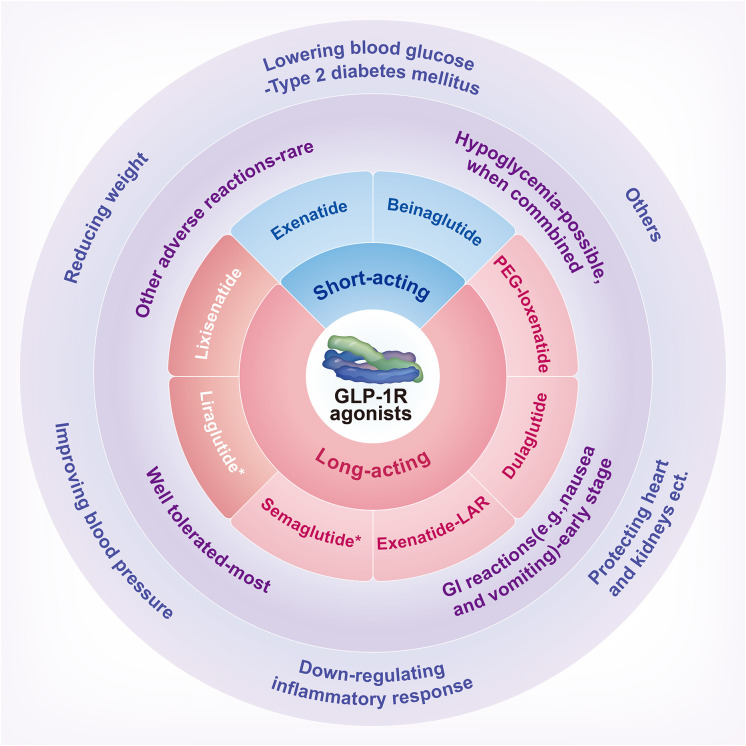
- Design: narrative review of GLP-1 receptor agonists for obesity treatment, including short-acting agents (beinaglutide, exenatide), once-daily agents (lixisenatide, liraglutide), once-weekly agents (semaglutide, dulaglutide, exenatide long-acting release, polyethylene glycol loxenatide), and dual/triple agonists.
- Data: evidence from prior animal experiments and human clinical trials, including named programs such as STEP, AWARD, GetGoal, SCALE, and SURPASS; the review also includes a comparison table of anti-obesity drugs and schematic figures.
- Analysis: narrative synthesis of cited studies, with no systematic search strategy, meta-analysis, or risk-of-bias assessment described.
Limitations
- The paper states that the mechanism of GLP-1R in treating obesity is still uncertain and that more clinical evidence is needed for long-term safety and efficacy.
- The paper states that except for liraglutide and semaglutide, there are few related clinical studies of other GLP-1R agonists, especially in obese or overweight people without diabetes.
- The paper states that the race of patients in semaglutide-related clinical studies is relatively small and that more clinical trials in Asian and African obese populations are expected; evident from the text, the review is narrative rather than systematic and does not report formal quality assessment or publication-bias checks.
Model-written summary. Check it against the paper before relying on it.
Integrity signals
Registry
Cites
Statistics
Figures
Verification
Claims the paper makes
8 Valid · 3 Not valid · 86 Not checked · 9 Own results and interpretations
The cited sources support only part of this claim — read each source’s verdict below.
In the paper
“Evidence from previous studies show that weight loss can significantly reduce the risk of obesity-related complications and chronic diseases.”
- Also stated in: § Introduction · boosted
“A systematic review and meta-analysis proved that weight loss had been shown to prevent and mitigate obesity-related complications (9).”
§ GLP−1 receptor agonists for the treatment of obesity: Role as a promising approach > Abstract
What the sources say
- Partly supportedcites [9] Ma C Avenell A Bolland M Hudson J Stewart F Robertson C. Effects of weight loss interventions for adults who are obese on mortality, cardiovascular disease, and cancer: systematic review and meta-analysis. BMJ (2017) 359: j4849. doi: 10.1136/bmj.j4849 29138133 PMC5682593 sourceExperimental — accuracy not yet measured
Our copy of Ma et al. (BMJ 2017) supports only part of the claim: the Abstract (Results) and Discussion report high quality evidence that weight loss interventions decreased all cause (premature) mortality (RR 0.82, 95% CI 0.71–0.95; 18% relative reduction, six fewer deaths per 1000) in adults with obesity (BMI ≥30, ≥1 year follow-up). But the same Discussion states 'We were unable to show effects on cardiovascular and cancer mortality, or participants developing cardiovascular events or new cancers,' and the Results (Meta-analyses) give non-significant estimates for cardiovascular mortality (RR 0.93, 0.67–1.31), cancer mortality (RR 0.58, 0.30–1.11), new cardiovascular events (RR 0.93, 0.83–1.04) and new cancers (RR 0.92, 0.63–1.36). So the sweeping assertion that weight loss 'significantly reduces the risk of obesity-related complications and chronic diseases' overstates this source, which shows a significant effect on premature mortality only, in adults who are obese; type 2 diabetes prevention is mentioned merely as an already proven benefit from other trials. (LLM, conf=0.78)
boostedstates a cause- Asserted: passes — The authors put it forward as true.
- Checkable: passes — It can be checked against evidence.
- Load-bearing: passes — The paper’s conclusions depend on it.
- Based: passes — The paper gives a reason why it holds.
- Also stated in: § Introduction · boosted
The cited sources support only part of this claim — read each source’s verdict below.
In the paper
“In GetGoal-S, a subanalysis of GetGoal-S and GetGoal-F1 studies, they found that LIXI could significantly reduce subjects’ body weight (− 1.76 ± 0.20 kg;-1.12 kg; -2.6/2.7 kg), respectively (72–74).”
§ GLP−1 receptor agonists for the treatment of obesity: Role as a promising approach > Experimental evidence of GLP-1R agonists > Long−acting GLP−1 receptor agonists: once-daily
What the sources say
- Supportedcites [72] Rosenstock J Hanefeld M Shamanna P Min KW Boka G Miossec P. Beneficial effects of once-daily lixisenatide on overall and postprandial glycemic levels without significant excess of hypoglycemia in type 2 diabetes inadequately controlled on a sulfonylurea with or without metformin (GetGoal-s). J Diabetes Complications (2014) 28: 386–92. doi: 10.1016/j.jdiacomp.2014.01.012 24650952 source
The Results (section 3.2.3, Body weight) report a significantly greater weight reduction with lixisenatide than placebo at Week 24, including the −1.76 ± 0.20 kg value. This GetGoal-S paper supports the first result in the citing sentence’s three-study list; the other values are not attributed to this source. (LLM, conf=0.92)
- Supportedcites [73] Bolli GB Munteanu M Dotsenko S Niemoeller E Boka G Wu Y. Efficacy and safety of lixisenatide once daily vs. placebo in people with type 2 diabetes insufficiently controlled on metformin (GetGoal-F1). Diabetes Med (2014) 31: 176–84. doi: 10.1111/dme.12328 24117597 source
The Body weight section (p. 5) reports significant weight reductions versus placebo in GetGoal-F1, with least-squares mean changes of −2.6 kg and −2.7 kg for its two lixisenatide regimens. This source supports the final pair of values in the citing sentence’s respective list; it does not report the GetGoal-S or subanalysis values attributed to the other citations. (LLM, conf=0.91)
- Partly supportedcites [74] Onishi Y Niemoeller E Ikeda Y Takagi H Yabe D Seino Y. Efficacy and safety of lixisenatide in Japanese patients with type 2 diabetes mellitus inadequately controlled by sulfonylurea with or without metformin: Subanalysis of G et G oal- s. J Diabetes Investig (2015) 6: 201–9. doi: 10.1111/jdi.12275 PMC4364855 25802728 sourceExperimental — accuracy not yet measured
The Results > Efficacy passage reports a −1.12 kg bodyweight change with lixisenatide in the Japanese GetGoal-S subanalysis, matching the figure attributed to this source. But the difference from placebo was not significant (P = 0.7628), as the Discussion also states. Thus the reported weight change is supported, but the claim that this subanalysis found a significant reduction is not. (LLM, conf=0.90)
plainstates a cause- Asserted: passes — The authors put it forward as true.
- Checkable: passes — It can be checked against evidence.
- Load-bearing: unclear — It is unclear whether the paper’s conclusions depend on it.
- Based: passes — The paper gives a reason why it holds.
- Supported
The cited sources support only part of this claim — read each source’s verdict below.
In the paper
“Studies in knock-out mice confirms the significant potential for novel triple-acting hybrid peptides as therapeutic options for obesity (128).”
§ GLP−1 receptor agonists for the treatment of obesity: Role as a promising approach > Others: GIPR/GLP-1R dual agonists and GIPR/GLP-1R/GCGR triagonists
What the sources say
- Partly supportedcites [128] Gault VA Bhat VK Irwin N Flatt PR Gault VA Bhat VK. A novel glucagon-like peptide-1 (GLP-1)/Glucagon hybrid peptide with triple-acting agonist activity at glucose-dependent insulinotropic polypeptide, GLP-1, and glucagon receptors and therapeutic potential in high fat-fed mice. J Biol Chem (2013) 288: 35581–91. doi: 10.1074/jbc.M113.512046 PMC3853303 24165127 sourceExperimental — accuracy not yet measured
The Abstract says knockout-mouse studies confirmed that the peptide acts through GIP, GLP-1, and glucagon receptors, and that the overall data suggest therapeutic promise for obesity. It does not say the knockout studies themselves confirmed that therapeutic potential; the cited sentence combines those two conclusions and strengthens the latter. (LLM, conf=0.84)
boostedstates a cause- Asserted: passes — The authors put it forward as true.
- Checkable: passes — It can be checked against evidence.
- Load-bearing: unclear — It is unclear whether the paper’s conclusions depend on it.
- Based: passes — The paper gives a reason why it holds.
- Partly supported
A conclusion the paper draws from its own results — it cites no other source for it, so there is none to check. The quote shows it is in the paper.
In the paper
“Therefore, GLP-1R agonists are promising agents for the treatment of obese individuals.”
§ GLP−1 receptor agonists for the treatment of obesity: Role as a promising approach > Abstract
plainstates a possible cause- Asserted: passes — The authors put it forward as true.
- Checkable: passes — It can be checked against evidence.
- Load-bearing: passes — The paper’s conclusions depend on it.
- Based: passes — The paper gives a reason why it holds.
In the paper
“Several animal experiments and clinical trials have demonstrated that GLP-1R agonists are more effective in treating or preventing obesity.”
- Also stated in: § Introduction · boosted
“Many clinical trials have proven GLP-1R agonists’ effectiveness and safety in treating or preventing obesity (14).”
§ GLP−1 receptor agonists for the treatment of obesity: Role as a promising approach > Abstract
What the sources say
- Not checked yetcites [14] Brown E Heerspink HJL Cuthbertson DJ Wilding JPH. SGLT2 inhibitors and GLP-1 receptor agonists: established and emerging indications. Lancet (2021) 398: 262–76. doi: 10.1016/S0140-6736(21)00536-5 34216571 source
boostedstates a cause- Asserted: passes — The authors put it forward as true.
- Checkable: passes — It can be checked against evidence.
- Load-bearing: passes — The paper’s conclusions depend on it.
- Based: passes — The paper gives a reason why it holds.
- Also stated in: § Introduction · boosted
32 more claims
Create a free account to see all 106 claims and to verify the 119 references still open.
- It may state two separate claims as one. 63
- Probably not a substantial claim. 12
Claims other papers make about this one
Each is checked against this paper’s own text: does it say what the citing paper says it does?
The source backs part of the claim, not all of it — or backs it for a different population, condition or comparison.
In the citing paper
“The most well-known mechanism through which GLP-1RAs affect weight loss is through the endocrine pathway, but its role in the nervous system should not be overlooked.415–417”
From Glucagon-like peptide-1 receptor: mechanisms and advances in therapy (2024) · cites this paper as [415]
Experimental — accuracy not yet measuredThe source backs part of the claim, not all of it — or backs it for a different population, condition or comparison.
In the citing paper
“Recent literature shows that GLP-1 receptor agonists are highly effective for weight loss and improving metabolic and cardiovascular health, often surpassing the results of lifestyle interventions alone, such as exercise and diet modification.”
From GLP-1 agonists and exercise: the future of lifestyle prioritization (2025) · cites this paper as [4]
Experimental — accuracy not yet measuredThe source backs part of the claim, not all of it — or backs it for a different population, condition or comparison.
In the citing paper
“GLP-1RAs, including liraglutide and semaglutide, can induce substantial weight loss (often 10–15% or more), improve cardiometabolic risk factors, including histological damage associated with metabolic dysfunction–associated steatohepatitis (MASH) (3), and reduce major adverse cardiovascular events in both diabetic and non-diabetic populations (1, 4–12).”
From GLP-1 agonists and exercise: the future of lifestyle prioritization (2025) · cites this paper as [4]
Experimental — accuracy not yet measuredThe source backs part of the claim, not all of it — or backs it for a different population, condition or comparison.
In the citing paper
“Current evidence strongly supports the efficacy of GLP-1 receptor agonists for inducing substantial weight loss, improving metabolic control, and reducing cardiovascular risk – often surpassing the short-term effects of exercise alone (4–10, 23).”
From GLP-1 agonists and exercise: the future of lifestyle prioritization (2025) · cites this paper as [4]
Experimental — accuracy not yet measured
1 more claim about this paper
Create a free account to see every claim other papers make about this one.
Citations
Cites
Once-Weekly Semaglutide in Adults with Overweight or Obesity
Wilding, J. P. H., Batterham, R. L., Calanna, S., Davies, M., Van Gaal, L. F., Lingvay, I., McGowan, B. M., Rosenstock, J., Tran, M. T. D., Wadden, T. A., et al. (2021) · New England Journal of Medicine · doi:10.1056/nejmoa2032183 · Cited by 5,205 · cited 3×
“However, obesity is a global health challenge with few drug options (100).”
BackgroundObesity: global epidemiology and pathogenesis
Blüher, M. (2019) · Nature Reviews Endocrinology · doi:10.1038/s41574-019-0176-8 · Cited by 5,126
European Guidelines for Obesity Management in Adults
Yumuk, V., Tsigos, C., Fried, M., Schindler, K., Busetto, L., Micic, D., & Toplak, H. (2015) · Obesity Facts · doi:10.1159/000442721 · Cited by 3,432
The Physiology of Glucagon-like Peptide 1
Holst, J. J. (2007) · Physiological Reviews · doi:10.1152/physrev.00034.2006 · Cited by 3,371 · cited 2×
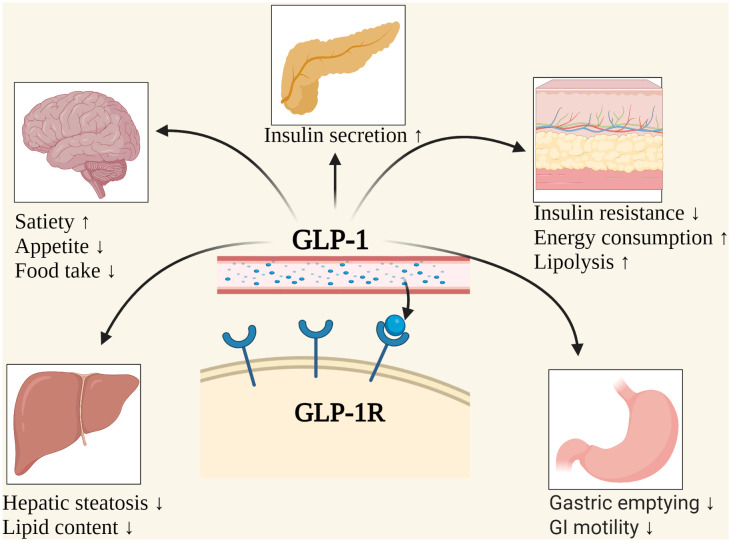
“In addition, the GLP-1 can inhibit postprandial gastric emptying and reduce gastric acid secretion, inhibit gastric and duodenal peristalsis by inhibiting vagus nerve, and increase the pressure of pylorus, thus reducing appetite, causing a reduction in body weight and participating in the so-called “ileal braking” eff…”
BackgroundGerstein, H. C., Colhoun, H. M., Dagenais, G. R., Diaz, R., Lakshmanan, M., Pais, P., Probstfield, J., Riesmeyer, J. S., Riddle, M. C., Rydén, L., et al. (2019) · The Lancet · doi:10.1016/s0140-6736(19)31149-3 · Cited by 3,163
Self-citationA Randomized, Controlled Trial of 3.0 mg of Liraglutide in Weight Management
Pi-Sunyer, X., Astrup, A., Fujioka, K., Greenway, F., Halpern, A., Krempf, M., Lau, D. C. W., le Roux, C. W., Violante Ortiz, R., Jensen, C. B., et al. (2015) · New England Journal of Medicine · doi:10.1056/nejmoa1411892 · Cited by 2,724
Lixisenatide in Patients with Type 2 Diabetes and Acute Coronary Syndrome
Pfeffer, M. A., Claggett, B., Diaz, R., Dickstein, K., Gerstein, H. C., Køber, L. V., Lawson, F. C., Ping, L., Wei, X., Lewis, E. F., et al. (2015) · New England Journal of Medicine · doi:10.1056/nejmoa1509225 · Cited by 2,409 · cited 1×
“The indication is to effectively reduce glycosylated hemoglobin levels in patients with T2DM by reducing fasting and postprandial blood glucose levels (61, 62).”
BackgroundMechanisms of Action and Therapeutic Application of Glucagon-like Peptide-1
Drucker, D. J. (2018) · Cell Metabolism · doi:10.1016/j.cmet.2018.03.001 · Cited by 2,170 · cited 4×
“In addition, the GLP-1 can inhibit postprandial gastric emptying and reduce gastric acid secretion, inhibit gastric and duodenal peristalsis by inhibiting vagus nerve, and increase the pressure of pylorus, thus reducing appetite, causing a reduction in body weight and participating in the so-called “ileal braking” eff…”
BackgroundInfluentialFuller, N. R., Colagiuri, S., Schofield, D., Olson, A. D., Shrestha, R., Holzapfel, C., Wolfenstetter, S. B., Holle, R., Ahern, A. L., Hauner, H., et al. (2013) · International Journal of Obesity · doi:10.1038/ijo.2012.139 · Cited by 2,117
Davies, M., Færch, L., Jeppesen, O. K., Pakseresht, A., Pedersen, S. D., Perreault, L., Rosenstock, J., Shimomura, I., Viljoen, A., Wadden, T. A., et al. (2021) · The Lancet · doi:10.1016/s0140-6736(21)00213-0 · Cited by 1,419
Research works printed but not linked: 3
- GLP-1 receptor agonists in the treatment of type 2 diabetes - state-of-the-art - PubMed. Available at: https://pubmed.ncbi.nlm.nih.gov/33068776/ (Accessed November 14, 2022).
- Forst T Pfützner A. Pharmacological profile, efficacy and safety of lixisenatide in type 2 diabetes mellitus. Expert Opin Pharmacother (2013) 14: 2281–96. doi: 10.1517/14656566.2013.838559 24087882 · DOI · Paper page
- Effect of weekly subcutaneous semaglutide vs daily liraglutide on body weight in adults with overweight or obesity without diabetes: The STEP 8 randomized clinical trial. Available at: https://pubmed.ncbi.nlm.nih.gov/?term=+Effect+of+Weekly+Subcutaneous+Semaglutide+vs+Daily+Liraglutide+on+Body+Weight+in+Adults+With+Overweight+or+Obesity+Without+Diabetes%3A+The+STEP+8+Randomized+Clinical+Trial&size=100 (Accessed August 10, 2022). PMC8753508 35015037
Cited by
Items 101–200 of 264
Sourianarayanane, A., Brydges, C. R., & McCullough, A. J. (2024) · Clinics and Research in Hepatology and Gastroenterology · doi:10.1016/j.clinre.2024.102402 · Cited by 9
From database to practice: the MBSAQIP in the surgical literature
Mosleh, K. A., Jawhar, N., Ghanem, O. M., & Clapp, B. L. (2024) · Surgery for Obesity and Related Diseases · doi:10.1016/j.soard.2024.02.007 · Cited by 7
Modulating the Secretome of Fat to Treat Heart Failure
Salyer, L. G., Wang, Y., Ma, X., Foryst‐Ludwig, A., Kintscher, U., Chennappan, S., Kontaridis, M. I., & McKinsey, T. A. (2025) · Circulation Research · doi:10.1161/circresaha.125.325593 · Cited by 8
Optimal Management of Obesity in Transplant Candidates and Recipients
Lam, J., Khan, M. Q., Watt, K. D. S., & Diwan, T. S. (2024) · Current Transplantation Reports · doi:10.1007/s40472-024-00434-8 · Cited by 8
Role of Glucagon-Like Peptide-1 Receptor Agonists in People With Infertility and Pregnancy
Finkle, J., & Brost, B. C. (2025) · Obstetrics and Gynecology · doi:10.1097/aog.0000000000005825 · Cited by 7
Stojkovska, A., Prelog, P. R., & Palandačić, A. K. (2025) · Journal of International Medical Research · doi:10.1177/03000605251349393 · Cited by 7
Deuterium trafficking, mitochondrial dysfunction, copper homeostasis, and neurodegenerative disease
Seneff, S., & Kyriakopoulos, A. M. (2025) · Frontiers in Molecular Biosciences · doi:10.3389/fmolb.2025.1639327 · Cited by 6
Mulcahy, J., DeLaRosby, A., & Norwood, T. (2025) · Physical Therapy · doi:10.1093/ptj/pzaf061 · Cited by 8
“17 Patients taking these medications feel “full” for longer periods after eating due to slowed gastric emptying.”
InfluentialWang, J., Qu, J., Ye, M., Feng, R., Hui, X., Yang, X., Jin, J., Tong, Q., Zhang, X., & Wang, Y. (2025) · Journal of Pharmaceutical Analysis · doi:10.1016/j.jpha.2025.101416 · Cited by 9
“Emerging evidence also supports cardiovascular benefits, including a reduced risk of major adverse cardiovascular events in high-risk populations [25,84].”
InfluentialSelf-citationAbdelrahman, R. M., Sharif, S. I., Musa, T. H., Musa, H. H., Arbab, I. A., Suleiman, M. H., Mohammed, K. A. E., Gasmallah, S. I., Mgbechidinma, C. L., Jalal, M., et al. (2025) · Obesity Medicine · doi:10.1016/j.obmed.2025.100640 · Cited by 9
Yoon, J. P., Park, S.-J., Kim, D.-H., Choi, Y., Lee, H., Kim, J.-Y., Cho, C., & Chung, S. W. (2025) · The American Journal of Sports Medicine · doi:10.1177/03635465251369517 · Cited by 7
“33 Nota-bly, GLP-1RAs have demonstrated protective effects against skeletal muscle atrophy induced by muscle disuse, nerve denervation, and glucocorticoid exposure.”
Cosmetic Considerations of Semaglutide
Baggett, A. D., Saadi, C. C., Saadi, R. A., & Patel, V. (2025) · Cosmetics · doi:10.3390/cosmetics12050221 · Cited by 6
Pharmacological Management of Diabesity: Current and Emerging Therapies
Galasso, M., Caporusso, M., Volatile, A., Verde, L., Esposito, K., Giorgino, F., Perrini, S., Colao, A., Barrea, L., & Muscogiuri, G. (2026) · Current Obesity Reports · doi:10.1007/s13679-025-00681-5 · Cited by 6
“These therapies have shown consistent reductions in BMI ranging from modest to clinically significant, often accompanied by preferential loss of visceral fat, which is particularly relevant given its association with insulin resistance, systemic inflammation, and cardiovascular risk [ 9].”
Chi, W., Song, J., Yazdanfard, S., Daggolu, J., & Varisco, T. J. (2024) · Research in Social and Administrative Pharmacy · doi:10.1016/j.sapharm.2024.01.004 · Cited by 6
Regional variation in weight change after the transition to dolutegravir in Uganda and South Africa
Migisha, R., Chen, G., Muyindike, W. R., Aung, T. N., Nanfuka, V., Komukama, N., Chandiwana, N. C., Shazi, G., Tien, D., Moosa, M. S., et al. (2024) · AIDS · doi:10.1097/qad.0000000000003888 · Cited by 8
A meta-analysis of the incidence of acne vulgaris in patients treated with GLP-1 agonists
Ogunremi, O. O., Ismail, S. F., Dhami, R. K., Newton, J., Kindle, S. A., & Kozmenko, V. V. (2024) · International Journal of Women’s Dermatology · doi:10.1097/jw9.0000000000000143 · Cited by 6
“,4–6 While at one time these medications were used off-label as weight loss medications, the compelling clinical trial evidence led to recent Food Drug Administration approval of these drugs for the purpose of chronic weight management in those who are overweight or obese.”
Eagle, S. R., & Henry, R. J. (2024) · Neurotrauma Reports · doi:10.1089/neur.2024.0040 · Cited by 6
Emerging pharmacological targets for alcohol use disorder
Brockway, D. F., & Crowley, N. A. (2024) · Alcohol · doi:10.1016/j.alcohol.2024.07.007 · Cited by 6
Biotechnology Revolution Shaping the Future of Diabetes Management
Kundnani, N. R., Lolescu, B. M., Dinu, A. R., Berceanu-Vaduva, D. M., Dumitrescu, P., Tamaș, T.-P., Sharma, A., & Popa, M.-D. (2024) · Biomolecules · doi:10.3390/biom14121563 · Cited by 7
GLP-1R/NPY2R regulate gene expression, ovarian and adrenal morphology in HFD mice
Khan, D., Sridhar, A., & Moffett, R. C. (2024) · Journal of Endocrinology · doi:10.1530/joe-24-0189 · Cited by 6
Aguggia, J. P., Fernández, G., Cassano, D., Mustafá, E. R., Rodríguez, S., Cantel, S., Fehrentz, J., Raingo, J., Schiöth, H. B., Habib, A. M., et al. (2024) · Endocrinology · doi:10.1210/endocr/bqae160 · Cited by 6
Liraglutide modulates morpho‐functional and inflammatory gastrointestinal responses in rats
do Nascimento, J. W. G., Cruz, D. M. N., Gama, L. A., Alves, W. D. L., Machado, M. P. R., Corá, L. A., & Américo, M. F. (2023) · European Journal of Clinical Investigation · doi:10.1111/eci.14112 · Cited by 7
Hysenaj, F., Lauber, M., Bast‐Habersbrunner, A., List, M., & Klingenspor, M. (2024) · Scientific Reports · doi:10.1038/s41598-024-63699-0 · Cited by 6
Vercalsteren, E., Karampatsi, D., Neicu, M., Romanitan, M. O., Haebel, P., Bleymehl, K., Nyström, T., Klein, T., Darsalia, V., & Patrone, C. (2025) · Diabetologia · doi:10.1007/s00125-025-06567-4 · Cited by 5
Translating Metabolic Interventions into Breast Cancer Therapy: A Comprehensive Review
Chen, L., Shiao, S. L., & Yuan, Y. (2025) · Life · doi:10.3390/life15101634 · Cited by 7
“In addition, GLP-1RAs have pleotropic effects on reducing plasma glucose, inducing weight loss, and immune modulation [92], resulting in their recent FDA approval for the treatment of obesity [93].”
Zhong, M., Wu, Z., Chen, Z., Wu, L., & Zhou, J. (2024) · Journal of Orthopaedic Surgery and Research · doi:10.1186/s13018-024-04665-4 · Cited by 5
“GLP-1R agonists are a class of drugs that are effective in treating or preventing obesity [45].”
BackgroundGLP-1RAs in patients with psoriasis
Paschou, I. A., Sali, E., Paschou, S. Α., Ψαλτοπούλου, Θ., Nicolaidou, E., & Stratigos, A. J. (2025) · HORMONES · doi:10.1007/s42000-025-00635-5 · Cited by 8
Koufakis, T., Patoulias, D., Apostolopoulou, M., Georgianos, P. I., & Popovic, D. S. (2025) · Expert Review of Clinical Pharmacology · doi:10.1080/17512433.2025.2559907 · Cited by 5
“Together, these findings suggest that tirzepatide may act not only by reshaping the gut microbiota but also by modulating gut – liver – immune signaling, thereby improving host metabolic homeostasis [17].”
邵倩, Xiong, J., Wu, J., Mao, J., & Hu, Q. (2026) · Frontiers in Molecular Biosciences · doi:10.3389/fmolb.2025.1729904 · Cited by 5
Khalil, O. R. S., Dargham, S. R., Jayyousi, A., Suwaidi, J. M. S. A., & Khalil, C. A. (2024) · Journal of Clinical Medicine · doi:10.3390/jcm13113174 · Cited by 5
Kaye, A. D., Lien, N., Vuong, C. A., Schmitt, M. H., Soorya, Y., Abubakar, B. A., Muiznieks, L., Embry, N. J., Siddaiah, H. B., Kaye, A. M., et al. (2024) · Cureus · doi:10.7759/cureus.76101 · Cited by 6
Kim, Y. J., Ihrie, V. M., Shi, P., Ihrie, M. D., Womble, J. T., Meares, A., Granek, J. A., Gunsch, C. K., & Ingram, J. L. (2025) · Journal of Asthma and Allergy · doi:10.2147/jaa.s478329 · Cited by 5
Li, W., Cai, R., Yin, B., Zhou, Y., Dong, X., Li, W., & Wen, J. (2025) · Biology · doi:10.3390/biology14050575 · Cited by 4
Advances in Microneedle Drug Delivery for Obesity: Mechanisms, Applications, and Perspectives
Wu, C., Zong, Z., Hua, F., Wu, J., Shen, Y., Tian, Y., & Chen, Y. (2025) · International Journal of Nanomedicine · doi:10.2147/ijn.s566132 · Cited by 6
Israel, A., Hassan, F., Merzon, E., Kurtam, J., Awad, J., Assalia, M., Green, I., Vinker, S., & Naffaa, M. E. (2026) · Therapeutic Advances in Musculoskeletal Disease · doi:10.1177/1759720x261425441 · Cited by 4
Tiwari, R. K., Ahmad, A., Chadha, M., Saha, K., Verma, H., Borgohain, K., & Shukla, R. (2024) · Current Diabetes Reviews · doi:10.2174/0115733998294919240506044544 · Cited by 5
Facial oedema and necrotic ulcers: a cutaneous reaction to liraglutide
Santana‐Gutiérrez, A., Bautista-Gómez, A. J., Guajardo, J. A. G., Rosales-Solis, G. M., Ocampo‐Candiani, J., & Muñoz‐Garza, F. Z. (2024) · Clinical and Experimental Dermatology · doi:10.1093/ced/llae398 · Cited by 4
Sridhar, A., Khan, D., Flatt, P. R., Moffett, R. C., & Irwin, N. (2023) · Peptides · doi:10.1016/j.peptides.2023.171093 · Cited by 6
Cassano, D., Aguggia, J. P., Giovanini, L., Heredia, F., Francesco, P. N. D., Andreoli, M. F., Schöth, H. B., Habib, A. M., Fernández, G., & Perelló, M. (2025) · Molecular and Cellular Endocrinology · doi:10.1016/j.mce.2025.112627 · Cited by 3
Lu, D., Maneechote, C., Thonusin, C., Tokuda, M., Chattipakorn, S. C., & Chattipakorn, N. (2025) · European Journal of Nutrition · doi:10.1007/s00394-025-03781-z · Cited by 3
Goyache, I., Valdés-Varela, L., Virto, R., Clemente‐Larramendi, I., Lópeź‐Yoldi, M., Romo‐Hualde, A., Gil, A. G., Milagro, F. I., & Aranaz, P. (2025) · Journal of Agricultural and Food Chemistry · doi:10.1021/acs.jafc.5c10238 · Cited by 3
GLP-1 Agonist Use Leads to Earlier Return of Bowel Function Following Lumbar Fusion
Fano, A. N., Oris, R. J., Dalton, J., Baidya, J., Ng, M. K., Baek, G., Tarawneh, O. H., Narayanan, R., Huang, R., Olson, J., et al. (2025) · Spine · doi:10.1097/brs.0000000000005598 · Cited by 4
Metabolic and inflammatory axes of insulin resistance in normoglycemic adults with high HIV burden
Liweleya, S., Halubanza, B., Muchaili, L., Mweene, B. C., Siame, L., Lwiindi, P. C., Hamooya, B. M., Povia, J. P., Chabala, F. M., Sinkala, M., et al. (2026) · PLOS Global Public Health · doi:10.1371/journal.pgph.0005589 · Cited by 4
“The obese IR phenotype may require anti-inflammatory therapies, visceral fat reduction, and endothelial-protective strategies such as GLP-1 agonists [47], or Peroxisome proliferator-activated receptor gamma (PPAR γ ) modulators [48,49].”
Mercadal-Orfila, G., Taltavull, J. L., Cuatrecasas, G., García, J. M., Maestre-Fullana, M. A., & Herrera-Pérez, S. (2026) · Frontiers in Endocrinology · doi:10.3389/fendo.2025.1731194 · Cited by 5
GLP-1 receptor agonists in asthma: targeting metabolic-inflammatory crossroads
O’Brien, H., Franciosi, A. N., & Butler, M. W. (2026) · Current Opinion in Pulmonary Medicine · doi:10.1097/mcp.0000000000001249 · Cited by 3
Pahulu, I., Calumpit, M., Tominez, P., Shih, J. J., Ebrahimi, S., DeVille, N. V., Samoa, R. A., Moin, T., Sedrak, M. S., Valle, L., et al. (2026) · JNCI Cancer Spectrum · doi:10.1093/jncics/pkag014 · Cited by 4
“17,37,39,44,47,50,51,61 To our knowledge, there is only one active clinical trial (NCT06908694; GAIN PC CONTROL) investigating the safety and tolerability of semaglutide on men with prostate cancer.”
Olsen, M. B., GRIFFIN, J., Hövelmann, U., Macura, S., Hagen, B. F., Hesse, D., & Heise, T. (2026) · Diabetes Obesity and Metabolism · doi:10.1111/dom.70753 · Cited by 4
Basta, D., Refaei, A. H. A., Msinjili, L., Frishman, W. H., & Lebovics, E. (2026) · Cardiology in Review · doi:10.1097/crd.0000000000001298 · Cited by 3
Topolski, K., Tłoczek, W., Śliwa, W., Twardowska, D., Jelonek, B., Tomczak, B., Porada, D., Wandasiewicz, M., Klubikowska, K., & Wandzel, M. (2026) · Quality in Sport · doi:10.12775/qs.2026.55.71600 · Cited by 3
Buonanno, S., Gaggiano, C., Baldi, C., Cantarini, L., Frediani, B., & Gentileschi, S. (2026) · Journal of Personalized Medicine · doi:10.3390/jpm16060284 · Cited by 3
Wachiraphansakul, N., Vongchaiudomchoke, T., Manosroi, W., & Nochaiwong, S. (2024) · PLoS ONE · doi:10.1371/journal.pone.0297488 · Cited by 3
Current options in obesity pharmacotherapy for children and adolescents
Jung, H. W. (2024) · Precision and Future Medicine · doi:10.23838/pfm.2024.00093 · Cited by 3
Ammatalli, N. K. R., Kuricheti, S. S. S. K., Veeramachaneni, S., Koo, Y. K., Ramanathan, G., & Yalamanchi, A. (2024) · Food & Nutrition Research · doi:10.29219/fnr.v68.10745 · Cited by 5
“…a significant role of GLP-1 in thermogenesis via WAT to BAT transformation has been established in preclinical and clinical studies, and the use of GLP-1 receptor agonists has emerged as an attractive therapeutic approach for the managing body weight and healthy blood sugar levels (44–46).”
BackgroundLombardi, L., Granger, L. A., Shattock, R. J., & Williams, D. R. (2024) · The Journal of Organic Chemistry · doi:10.1021/acs.joc.4c02178 · Cited by 3
Lei, W. S., Chen, X., Zhao, L., Daley, T. C., Phillips, B., Rickels, M. R., Kelly, A. T., & Kindler, J. M. (2025) · Journal of Clinical & Translational Endocrinology · doi:10.1016/j.jcte.2025.100392 · Cited by 4
Almaski, I. E. M., Alalwani, Y. J., Alshammari, R. S., Alassiri, R., Jathmi, S. A. S., Alhadi, A. M., Al‐Zahrani, A. A., Alzahrani, M. A., Azzam, A. Y., & Maani, T. A. (2025) · Metabolism Open · doi:10.1016/j.metop.2025.100376 · Cited by 3
“…as glucagon-like peptide-1 receptor agonists, demonstrate promise in achieving significant weight loss and significant cardiovascular improvements, the response to medication remains variable, and we anticipate that a group of patients will not tolerate these medications due to side effects [4].”
Exploring Conformational Transitions in Biased and Balanced Ligand Binding of GLP-1R
Xu, M., Vogel, H., & Yuan, S. (2025) · Molecules · doi:10.3390/molecules30153216 · Cited by 3
Fragner, M., Parikh, M. A., Jackson, K. A., Schwartzman, M. L., Frishman, W. H., & Peterson, S. J. (2024) · Cardiology in Review · doi:10.1097/crd.0000000000000711 · Cited by 4
Reed, J., Higginbotham, V., Bain, S. C., & Kanamarlapudi, V. (2024) · International Journal of Molecular Sciences · doi:10.3390/ijms25126331 · Cited by 3
“Therefore, GLP-1-based therapies are a promising treatment option for the multifactorial disease T2D, given their potential to alleviate the systemic pathology associated with this disease via direct and indirect mechanisms [8–10].”
BackgroundMeléndez‐Martínez, D., Morales-Martinez, A., Sierra-Valdez, F. J., Cossío-Ramírez, R., Lozano, O., Mayolo‐Deloisa, K., Rito‐Palomares, M., & Benavides, J. (2024) · Computers in Biology and Medicine · doi:10.1016/j.compbiomed.2024.109049 · Cited by 4
TERAPIAS FARMACOLÓGICAS PARA TRATAR OBESIDADE: ANÁLISE DE EFEITO E EFICÁCIA
Freitas, T. M., Mota, F. L. D. O., & Pinheiro, A. P. (2024) · Revista Foco · doi:10.54751/revistafoco.v17n10-082 · Cited by 7
Repanovici, A., Rogozea, L. M., & Pantea, I. (2024) · American Journal of Therapeutics · doi:10.1097/mjt.0000000000001805 · Cited by 7
Enhanced Transdermal Delivery of Liraglutide for Sustained Obesity Management
Chen, N., Zeng, Z., Chen, H., Liu, H., Zhang, Z., Ke, F., Ji, X., Liu, L., Zhang, Z., & Chen, Y. (2025) · Langmuir · doi:10.1021/acs.langmuir.5c00949 · Cited by 3
GLP-1R agonists protect against Alzheimer’s disease by rewiring energy regulation
Na, D., & Schneeberger, M. (2025) · Nature Aging · doi:10.1038/s43587-025-00881-7 · Cited by 4
GLP-1 medications versus surgery and balloon: evaluating cost-benefit in weight loss
Salazar, C. I. V., Lopez, S. Z. K., Rios, C. R., & Coutiño, L. F. G. (2025) · International Surgery Journal · doi:10.18203/2349-2902.isj20251200 · Cited by 2
Arrestins and opioid-independent analgesia
Didenko, O., & Wood, J. N. (2025) · Cell · doi:10.1016/j.cell.2025.07.008 · Cited by 2
Kim, J.-W. (2025) · Journal of Yeungnam Medical Science · doi:10.12701/jyms.2025.42.61 · Cited by 4
The Thyroid Twist: How GLP-1 Agonists Are Influencing Autoimmune Thyroid Care
Mazza, A. D. (2025) · Cureus · doi:10.7759/cureus.98153 · Cited by 5
“GLP-1 GLP-1 signaling has been shown to inhibit activation of the NLRP3 inflammasome, a key driver of innate immune-mediated inflammation, and to enhance Treg activity, suggesting a broader role in restoring immune tolerance [26,27].”
The β 2 ‐adrenoceptor agonist formoterol attenuates hallmarks of adrenal Cushing's syndrome
Cleveland, K. H., Lee, K.-S., Ponnalagu, D., Vicente, J. J., Parker, E. D., Lee, J. Y. E., Wordeman, L. G., & Scott, J. D. (2026) · British Journal of Pharmacology · doi:10.1111/bph.70370 · Cited by 2
“…the glucagon-like peptide-1 (GLP-1) receptor agonist, incretin mimetic exenatide (Byetta) was initially used to manage blood sugar levels in adults with type 2 diabetes but was later found to aid in weight loss, leading to its use in treating obesity in non-diabetic patients (Wang et al., 2023).”
Chang, S., Tang, Y., Wang, M., Zhu, S., Tan, X., Fan, X., Lu, L., Duan, B., & Shen, L. (2026) · Journal of Clinical Medicine · doi:10.3390/jcm15062121 · Cited by 2
Raza, H., Nizam, B., Padaniya, A., Farid, M. A., Nabi, A., Hasan, M. Q., Salih, M., Patel, A. H., Inam, N., Rehman, M. E. U., et al. (2026) · Brain and Behavior · doi:10.1002/brb3.71344 · Cited by 2
“Safety results were also evaluated, and our meta-analysis showed excess gastrointestinal events especially nausea and vomiting, as has been previously reported with diabetes and obesity trials (Cifuentes et al. 2021 ; Wang et al. 2023 ; Safar-Boueri et al. 2021 ).”
Glucagon‐Like Peptide‐1 Receptor Agonist Utilization Among Sleep Surgery Clinic Patients
Kutler, R. B., Lin, A., Zhang, L., Trackey, P., Rivera‐Diaz, A., Jelić, S., St‐Onge, M., & Cai, Y. (2026) · Otolaryngology · doi:10.1002/ohn.70231 · Cited by 2
“20,21 According to Food and Drug Administration (FDA) ‐ approved labeling, patients with diabetes, obesity, or overweight body mass index (BMI) with a weight ‐ related comorbidity (which could include OSA) are eligible for GLP ‐ 1 RA treatment.”
Shi, J., Abdel-Ghany, S. E., Abdelfattah, M. M., Hu, X., Wadan, A. S., & Sabit, H. (2026) · Signal Transduction and Targeted Therapy · doi:10.1038/s41392-026-02820-3 · Cited by 2
“259,260 At the population level, signals from a contemporary cohort of adults with overweight/obesity indicate lower overall cancer incidence among GLP-1RA users, with the largest reductions observed for endometrial and ovarian cancers; however, a small, nonde fi nitive excess for kidney cancer…”
The Patient’s Journey in Obesity within the United States: An Exercise of Resilience against Disease
Northam, K. A., Hinds, M., Bodepudi, S., & Stanford, F. C. (2024) · Life · doi:10.3390/life14091073 · Cited by 6
Genetic variants of the glucagon-like receptor-1 in obesity
Нікуліна, А. О. (2023) · European Journal of Clinical and Experimental Medicine · doi:10.15584/ejcem.2023.4.16 · Cited by 2
Winkler, G., Folyovich, A., Kis, J. T., Dancs, T., & Schandl, L. (2024) · Orvosi Hetilap · doi:10.1556/650.2024.33012 · Cited by 2
An Overview of Modern Strategies for Treating Obesity
Jędrasek, A., Barg, M., Biały-Karbowniczek, J., Bartela, A., & Wojtyła, K. (2024) · Journal of Education Health and Sport · doi:10.12775/jehs.2024.68.49506 · Cited by 2
Before you start: the safety of SGLT2 inhibitors for anti-obesity treatment
Meslamani, A. Z. A. (2025) · Expert Opinion on Drug Safety · doi:10.1080/14740338.2025.2573368 · Cited by 2
“…to variations in lean-mass preservation, GLP-1 receptor agonists (GLP-1RAs) reduce absolute weight more than SGLT-2 inhibitors (≈10–15 kg; 12–18% of baseline weight), with proportionate lean-mass losses of around 25% that accord with the ‘quarter-rule’ observed across pharma-cotherapies [113,119].”
Em, S. T., Parikh, M., Orandi, B. J., & Ren‐Fielding, C. J. (2024) · Metabolism and Target Organ Damage · doi:10.20517/mtod.2024.43 · Cited by 2
A novel GLP-1and FGF21 fusion protein for the treatment of non-alcoholic steatohepatitis (NASH)
Zhang, Z., Ma, Y., Xie, C., He, Y., Wang, D., Song, H., Yuan, M., & Zhang, X. (2024) · Advanced Pharmaceutical Bulletin · doi:10.34172/apb.43672 · Cited by 1
Self-citationCurrent status and perspectives of bariatric and metabolic surgery for obesity: a narrative review
Park, J.-H., & Kim, D. J. (2026) · Journal of Korean Medical Association · doi:10.5124/jkma.25.0118 · Cited by 1
Yang, Y., Xiong, C., Wei, X., Wang, X., Feijuan, K., Hu, Y., Li, W., Ma, Y., & Ding, X. (2026) · Biology of Reproduction · doi:10.1093/biolre/ioag065 · Cited by 1
Glucagon-like peptide 1 receptor agonists: anti-inflammatory effects in cardiovascular diseases
Bajić, Z., Šobot, T., Stojiljković, M. P., Djuric, D. M., & Škrbić, R. (2026) · Canadian Journal of Physiology and Pharmacology · doi:10.1139/cjpp-2026-0021 · Cited by 1
Xiao, S., Du, C., Zhang, N., Jiang, X., & Hu, T. (2026) · Frontiers in Endocrinology · doi:10.3389/fendo.2026.1823392 · Cited by 1
Ali, S. I., Samawia, K., hasan, Q. I., Majeed, A. A., Jebur, M. M., Akpo, M. O., Edo, G. I., & Umar, H. (2026) · Regenerative Engineering and Translational Medicine · doi:10.1007/s40883-026-00600-7 · Cited by 1
Chamma, N. M. G., Mercer, J. R., & Masson, M. L. (2026) · Journal of Functional Foods · doi:10.1016/j.jff.2026.107379 · Cited by 1
Atwiine, F., Mwesigwa, A., Mwesiga, D., Mwesigwa, P., Katumba, L., & Ogwang, P. E. (2024) · Journal of Experimental Pharmacology · doi:10.2147/jep.s458705 · Cited by 1
“6,11,35,36 39 More so, in resource limited settings, these drugs are very expensive and may not be affordable to the most of the population.”
BackgroundPossible Adverse Effects (AEs) of Semaglutide (Ozempic) Administration for the Latest Investigation
Bando, H. (2024) · doi:10.36502/2024/droa.6189 · Cited by 7
Bawazeer, N., Ganzal, S. B., Al-Hasinah, H. F., & AlRuthia, Y. S. (2025) · Healthcare · doi:10.3390/healthcare13141755 · Cited by 1
“These medications play a crucial role in improving metabolic health and facilitating weight loss [12,16].”
Evaluating Cardio-Protective Molecules by Efficacy Based on Weight Reduction and HbA1c Targets
Salmen, T., Pietroșel, V.-A., Urzica, F.-V., Visan, D.-E., Salmen, B.-M., Cîmpeanu, R.-C., Reurean‐Pintilei, D., Popoviciu, M. S., & Stoian, A. P. (2025) · Biomedicines · doi:10.3390/biomedicines13092306 · Cited by 1
Mechanisms behind corticosteroid resistance in obesity-induced airway inflammation – a review
Włodarczyk, P., Sułkowska, A., Matshaba, V. I., Czerwiński, F., & Piotrowski, I. (2024) · Journal of Medical Science · doi:10.20883/medical.e1034 · Cited by 2
Erdenebileg, Z., Damayanti, D. S., Park, J. M., Nogueira, R., Kim, Y. B., Choi, J., Kang, H., Choi, H. S., Baek, J.-H., & Chun, K. (2025) · Molecular Biomedicine · doi:10.1186/s43556-025-00389-x · Cited by 3
A Shift from Diabetic Clinical Therapy to Aesthetic Use: The Ozempic Phenomenon
Sibarani, N. T., Simanjuntak, A. A., Simanjuntak, D. M. P., Tuba, S., Priyono, A., Sumaryono, B., & Sari, E. P. (2026) · Journal of Biosciences and Medicines · doi:10.4236/jbm.2026.142019 · Cited by 1
Li, Z., Huang, J., Zhou, S., Luan, Y., Xie, H., Chen, Z., Xu, J., & Qian, J. (2026) · Journal of Diabetes Research · doi:10.1155/jdr/8893769 · Cited by 1
Experience with Netakimab and a GLP-1 agonist in patients with psoriasis and metabolic syndrome
Kruglova, L. S., Bridan-Rostovskaya, A. S., & Шатохина, Е. А. (2026) · Medical alphabet · doi:10.33667/2078-5631-2026-3-28-34 · Cited by 1
Abdelrahman, R. M., Musa, T. H., Arbab, I. A., Ahmed, E. O., Gasmallah, S. I., Jalal, M., Ahmed, W. R., & Fadul, K. H. (2026) · INQUIRY The Journal of Health Care Organization Provision and Financing · doi:10.1177/00469580261441498 · Cited by 2
Cronenberger, C., Amin, N. B., Le, V., Carvajal‐Gonzalez, S., Ashworth, A. L., Yi, E. C., Schuster, T., ZHANG, Y., Frederich, R. C., Friedman, G. S., et al. (2026) · The Journal of Clinical Pharmacology · doi:10.1002/jcph.70158 · Cited by 1
“6 However, the need for subcutaneous administration of the approved peptidic GLP-1R agonists (or strict fasting requirements for the oral formulation of semaglutide [Rybelsus] 7 ) represent potential barriers to patients.”
Łupina-Romaniuk, M., Kołodziejczyk, J., Pietrzak, M., Chawryło, A., Piecuch, D., Oleksińska, K., Świetlicka, G., Pietras, P., Stolarczyk, M., & Pracoń, K. (2026) · Quality in Sport · doi:10.12775/qs.2026.55.70903 · Cited by 2
Update on binge eating disorder: What general practitioners should know
Donker, T., & Hadinata, I. E. (2023) · Australian Journal of General Practice · doi:10.31128/ajgp-12-22-6649 · Cited by 2
“37 Glucagon-like peptide-1 receptor agonists (GLP-1 RA) are being recognised as effective tools in the management of obesity, 38 with both semaglutide and liraglutide currently registered by the TGA.”
BackgroundBoucher, A., Peters, M., & Jones, G. B. (2024) · Dermatology and Therapy · doi:10.1007/s13555-024-01234-9 · Cited by 1
“New classes of drugs are becoming available to effectively control HS [11], obesity [12], and nicotine addiction [13], and digital tools and communities are emerging to provide personalized, empathic, and culturally sensitive patient supports that have shown effectiveness for patients suffering…”
Background
Metadata
- Authors
- Wang, J.-Y., Wang, Q.-W., Yang, X.-Y., Yang, W., Li, D.-R., Jin, J.-Y., Zhang, H.-C., & Zhang, X.-F.
- Affiliations
- First Hospital of Jilin University (CN)
- ORCID
- Yang, Wei
- Venue
- Frontiers in Endocrinology
- Publisher
- Frontiers Media SA
- Published
- 2023-02-01
- Volume
- 14
- Pages
- 1085799-1085799
- ISSN
- 1664-2392 (ISSN-L)
- PMC
- PMC9945324
- OpenAlex
- W4319808936
- Cited by
- 248
- References
- 145
- Citations by year
- 2026: 56 · 2025: 86 · 2024: 88 · 2023: 18
- FWCI
- 9.01
- Type
- journal article
- Language
- en
- Open access
- gold
- doi.org
- Licence
- Locations
- Frontiers in Endocrinology (publishedVersion, cc-by)
- PubMed Central (publishedVersion, cc-by)
- PubMed (publishedVersion)
- DOAJ (DOAJ: Directory of Open Access Journals) (submittedVersion, cc-by-sa)
- Funders
- National Natural Science Foundation of China
- Topics
- Health Sciences › Medicine › Pharmacology (medical) › Pharmacology and Obesity Treatment
- Life Sciences › Neuroscience › Endocrine and Autonomic Systems › Regulation of Appetite and Obesity
- Health Sciences › Medicine › Endocrinology, Diabetes and Metabolism › Diabetes Treatment and Management
- Keywords
- GLP-1 receptor agonists, obesity treatment, incretins, anti-obesity drugs, weight loss, obesity complications, obesity pharmacotherapy
- MeSH terms
- Glucagon-Like Peptide-1 Receptor, Glucagon-Like Peptide-1 Receptor Agonists, Animals, Obesity, Weight Loss, Anti-Obesity Agents, Incretins
About these checks
Registry, retraction, Cites and statistics results are computed, not judged, with one exception: a printed reference that no index lists is read once by a model before it counts as a citation error. Claims are extracted by a model and kept only when their quote appears verbatim in the text; each cited source is then checked, with a model’s help, for whether it says what the claim relies on. Those verdicts can be wrong — read the claim’s quote and the cited source before relying on one.
The claim verdicts this report counts are experimental: their accuracy is not yet measured.
A language model drew the claims from the paper on 2026-10-04, under version 3 of the claim definition (model deepseek-v4.1-flash, prompt extract-v3).
A second model labelled each claim on 2026-10-04 (model jev-1.13-20260917, definition revision gold-guideline-v0.2).
Cited sources are checked with a language model’s help (qwen3.8-omni-flash and gpt-6-sol).
Statistics and arithmetic are recomputed, not judged.
Confidence bands are shown only for fields calibrated on our annotated test set. None is calibrated yet, so no band is shown.
What counts as a claim ›How we measure confidence ›How we check this ›
Are you an author, or do you see a problem with this page? Request a review
Data sources
Bibliographic data: Semantic Scholar, OpenAlex, Crossref.
Contains information from the Semantic Scholar Academic Graph Datasets, made available under the ODC Attribution License (ODC-BY 1.0).
Semantic Scholar’s data is described in: Kinney, R., et al. (2023). The Semantic Scholar Open Data Platform. arXiv:2301.10140.
