

GLP−1 receptor agonists for the treatment of obesity: Role as a promising approach
Open accessThe DOI matches its Crossref record; 143 of the 145 references it cites were found in a registry or an index; 12 of the 131 sources its claims cite were checked for support.
Abstract
Obesity is a complex disease characterized by excessive fat accumulation which is caused by genetic, environmental and other factors. In recent years, there has been an increase in the morbidity, disability rate,and mortality due to obesity, making it great threat to people’s health and lives, and increasing public health care expenses. Evidence from previous studies show that weight loss can significantly reduce the risk of obesity-related complications and chronic diseases. Diet control, moderate exercise, behavior modification programs, bariatric surgery and prescription drug treatment are the major interventions used to help people lose weight. Among them, anti-obesity drugs have high compliance rates and cause noticeable short-term effects in reducing obese levels. However, given the safety or effectiveness concerns of anti-obesity drugs, many of the currently used drugs have limited clinical use. Glucagon-like peptide-1 receptor (GLP-1R) agonists are a group of drugs that targets incretin hormone action, and its receptors are widely distributed in nerves, islets, heart, lung, skin, and other organs. Several animal experiments and clinical trials have demonstrated that GLP-1R agonists are more effective in treating or preventing obesity. Therefore, GLP-1R agonists are promising agents for the treatment of obese individuals. This review describes evidence from previous research on the effects of GLP-1R agonists on obesity. We anticipate that this review will generate data that will help biomedical researchers or clinical workers develop obesity treatments based on GLP-1R agonists.
Overview
CoChat Summary
TL;DR
This narrative review summarizes evidence that GLP-1 receptor agonists, including short-acting and long-acting agents, reduce body weight in obese and diabetic populations and are promising anti-obesity treatments. It also briefly covers dual/triple incretin agonists and calls for more long-term safety and efficacy data, especially in non-diabetic and non-Western populations.
Key findings
- In the STEP1 trial, 1,961 non-diabetic adults with BMI ≥30 kg/m² or ≥27 kg/m² with weight-related comorbidities received semaglutide 2.4 mg weekly for 68 weeks and lost an average of 15.3 kg; 86.4% vs 31.5% achieved ≥5% weight loss, 69.1% vs 12.0% achieved ≥10%, and 50.5% vs 4.9% achieved ≥15% versus placebo.
- In STEP2, adults with overweight/obesity and type 2 diabetes lost -6.9 kg (-7%) with semaglutide 1 mg and -9.7 kg (-9.6%) with semaglutide 2.4 mg weekly.
- Liraglutide 3 mg daily produced average weight loss of 8.40 ± 7.3 kg over 56 weeks in 3,731 patients without type 2 diabetes; in another trial, liraglutide 1.2–3 mg daily gave 4.8–7.2 kg average weight loss versus 4.1 kg with orlistat.
- Tirzepatide 5–15 mg per week reduced body weight by 5.4–11.7 kg in the SURPASS 1–5 trials in patients with type 2 diabetes.
Methods
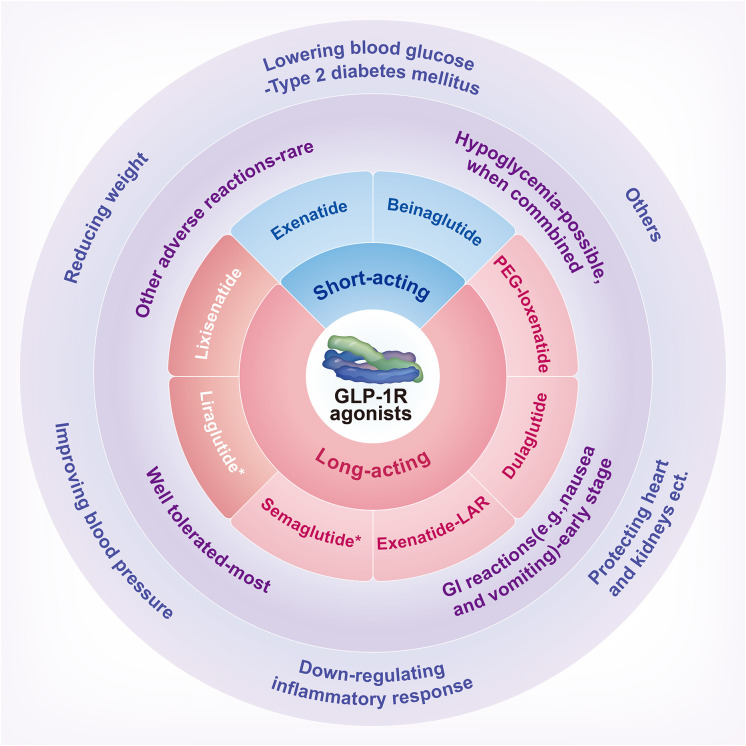
- Design: narrative review of GLP-1 receptor agonists for obesity treatment, including short-acting agents (beinaglutide, exenatide), once-daily agents (lixisenatide, liraglutide), once-weekly agents (semaglutide, dulaglutide, exenatide long-acting release, polyethylene glycol loxenatide), and dual/triple agonists.
- Data: evidence from prior animal experiments and human clinical trials, including named programs such as STEP, AWARD, GetGoal, SCALE, and SURPASS; the review also includes a comparison table of anti-obesity drugs and schematic figures.
- Analysis: narrative synthesis of cited studies, with no systematic search strategy, meta-analysis, or risk-of-bias assessment described.
Limitations
- The paper states that the mechanism of GLP-1R in treating obesity is still uncertain and that more clinical evidence is needed for long-term safety and efficacy.
- The paper states that except for liraglutide and semaglutide, there are few related clinical studies of other GLP-1R agonists, especially in obese or overweight people without diabetes.
- The paper states that the race of patients in semaglutide-related clinical studies is relatively small and that more clinical trials in Asian and African obese populations are expected; evident from the text, the review is narrative rather than systematic and does not report formal quality assessment or publication-bias checks.
Model-written summary. Check it against the paper before relying on it.
Integrity signals
Registry
Cites
Statistics
Figures
Verification
Claims the paper makes
8 Valid · 3 Not valid · 86 Not checked · 9 Own results and interpretations
The cited sources support only part of this claim — read each source’s verdict below.
In the paper
“Evidence from previous studies show that weight loss can significantly reduce the risk of obesity-related complications and chronic diseases.”
- Also stated in: § Introduction · boosted
“A systematic review and meta-analysis proved that weight loss had been shown to prevent and mitigate obesity-related complications (9).”
§ GLP−1 receptor agonists for the treatment of obesity: Role as a promising approach > Abstract
What the sources say
- Partly supportedcites [9] Ma C Avenell A Bolland M Hudson J Stewart F Robertson C. Effects of weight loss interventions for adults who are obese on mortality, cardiovascular disease, and cancer: systematic review and meta-analysis. BMJ (2017) 359: j4849. doi: 10.1136/bmj.j4849 29138133 PMC5682593 sourceExperimental — accuracy not yet measured
Our copy of Ma et al. (BMJ 2017) supports only part of the claim: the Abstract (Results) and Discussion report high quality evidence that weight loss interventions decreased all cause (premature) mortality (RR 0.82, 95% CI 0.71–0.95; 18% relative reduction, six fewer deaths per 1000) in adults with obesity (BMI ≥30, ≥1 year follow-up). But the same Discussion states 'We were unable to show effects on cardiovascular and cancer mortality, or participants developing cardiovascular events or new cancers,' and the Results (Meta-analyses) give non-significant estimates for cardiovascular mortality (RR 0.93, 0.67–1.31), cancer mortality (RR 0.58, 0.30–1.11), new cardiovascular events (RR 0.93, 0.83–1.04) and new cancers (RR 0.92, 0.63–1.36). So the sweeping assertion that weight loss 'significantly reduces the risk of obesity-related complications and chronic diseases' overstates this source, which shows a significant effect on premature mortality only, in adults who are obese; type 2 diabetes prevention is mentioned merely as an already proven benefit from other trials. (LLM, conf=0.78)
boostedstates a cause- Asserted: passes — The authors put it forward as true.
- Checkable: passes — It can be checked against evidence.
- Load-bearing: passes — The paper’s conclusions depend on it.
- Based: passes — The paper gives a reason why it holds.
- Also stated in: § Introduction · boosted
The cited sources support only part of this claim — read each source’s verdict below.
In the paper
“In GetGoal-S, a subanalysis of GetGoal-S and GetGoal-F1 studies, they found that LIXI could significantly reduce subjects’ body weight (− 1.76 ± 0.20 kg;-1.12 kg; -2.6/2.7 kg), respectively (72–74).”
§ GLP−1 receptor agonists for the treatment of obesity: Role as a promising approach > Experimental evidence of GLP-1R agonists > Long−acting GLP−1 receptor agonists: once-daily
What the sources say
- Supportedcites [72] Rosenstock J Hanefeld M Shamanna P Min KW Boka G Miossec P. Beneficial effects of once-daily lixisenatide on overall and postprandial glycemic levels without significant excess of hypoglycemia in type 2 diabetes inadequately controlled on a sulfonylurea with or without metformin (GetGoal-s). J Diabetes Complications (2014) 28: 386–92. doi: 10.1016/j.jdiacomp.2014.01.012 24650952 source
The Results (section 3.2.3, Body weight) report a significantly greater weight reduction with lixisenatide than placebo at Week 24, including the −1.76 ± 0.20 kg value. This GetGoal-S paper supports the first result in the citing sentence’s three-study list; the other values are not attributed to this source. (LLM, conf=0.92)
- Supportedcites [73] Bolli GB Munteanu M Dotsenko S Niemoeller E Boka G Wu Y. Efficacy and safety of lixisenatide once daily vs. placebo in people with type 2 diabetes insufficiently controlled on metformin (GetGoal-F1). Diabetes Med (2014) 31: 176–84. doi: 10.1111/dme.12328 24117597 source
The Body weight section (p. 5) reports significant weight reductions versus placebo in GetGoal-F1, with least-squares mean changes of −2.6 kg and −2.7 kg for its two lixisenatide regimens. This source supports the final pair of values in the citing sentence’s respective list; it does not report the GetGoal-S or subanalysis values attributed to the other citations. (LLM, conf=0.91)
- Partly supportedcites [74] Onishi Y Niemoeller E Ikeda Y Takagi H Yabe D Seino Y. Efficacy and safety of lixisenatide in Japanese patients with type 2 diabetes mellitus inadequately controlled by sulfonylurea with or without metformin: Subanalysis of G et G oal- s. J Diabetes Investig (2015) 6: 201–9. doi: 10.1111/jdi.12275 PMC4364855 25802728 sourceExperimental — accuracy not yet measured
The Results > Efficacy passage reports a −1.12 kg bodyweight change with lixisenatide in the Japanese GetGoal-S subanalysis, matching the figure attributed to this source. But the difference from placebo was not significant (P = 0.7628), as the Discussion also states. Thus the reported weight change is supported, but the claim that this subanalysis found a significant reduction is not. (LLM, conf=0.90)
plainstates a cause- Asserted: passes — The authors put it forward as true.
- Checkable: passes — It can be checked against evidence.
- Load-bearing: unclear — It is unclear whether the paper’s conclusions depend on it.
- Based: passes — The paper gives a reason why it holds.
- Supported
The cited sources support only part of this claim — read each source’s verdict below.
In the paper
“Studies in knock-out mice confirms the significant potential for novel triple-acting hybrid peptides as therapeutic options for obesity (128).”
§ GLP−1 receptor agonists for the treatment of obesity: Role as a promising approach > Others: GIPR/GLP-1R dual agonists and GIPR/GLP-1R/GCGR triagonists
What the sources say
- Partly supportedcites [128] Gault VA Bhat VK Irwin N Flatt PR Gault VA Bhat VK. A novel glucagon-like peptide-1 (GLP-1)/Glucagon hybrid peptide with triple-acting agonist activity at glucose-dependent insulinotropic polypeptide, GLP-1, and glucagon receptors and therapeutic potential in high fat-fed mice. J Biol Chem (2013) 288: 35581–91. doi: 10.1074/jbc.M113.512046 PMC3853303 24165127 sourceExperimental — accuracy not yet measured
The Abstract says knockout-mouse studies confirmed that the peptide acts through GIP, GLP-1, and glucagon receptors, and that the overall data suggest therapeutic promise for obesity. It does not say the knockout studies themselves confirmed that therapeutic potential; the cited sentence combines those two conclusions and strengthens the latter. (LLM, conf=0.84)
boostedstates a cause- Asserted: passes — The authors put it forward as true.
- Checkable: passes — It can be checked against evidence.
- Load-bearing: unclear — It is unclear whether the paper’s conclusions depend on it.
- Based: passes — The paper gives a reason why it holds.
- Partly supported
A conclusion the paper draws from its own results — it cites no other source for it, so there is none to check. The quote shows it is in the paper.
In the paper
“Therefore, GLP-1R agonists are promising agents for the treatment of obese individuals.”
§ GLP−1 receptor agonists for the treatment of obesity: Role as a promising approach > Abstract
plainstates a possible cause- Asserted: passes — The authors put it forward as true.
- Checkable: passes — It can be checked against evidence.
- Load-bearing: passes — The paper’s conclusions depend on it.
- Based: passes — The paper gives a reason why it holds.
In the paper
“Several animal experiments and clinical trials have demonstrated that GLP-1R agonists are more effective in treating or preventing obesity.”
- Also stated in: § Introduction · boosted
“Many clinical trials have proven GLP-1R agonists’ effectiveness and safety in treating or preventing obesity (14).”
§ GLP−1 receptor agonists for the treatment of obesity: Role as a promising approach > Abstract
What the sources say
- Not checked yetcites [14] Brown E Heerspink HJL Cuthbertson DJ Wilding JPH. SGLT2 inhibitors and GLP-1 receptor agonists: established and emerging indications. Lancet (2021) 398: 262–76. doi: 10.1016/S0140-6736(21)00536-5 34216571 source
boostedstates a cause- Asserted: passes — The authors put it forward as true.
- Checkable: passes — It can be checked against evidence.
- Load-bearing: passes — The paper’s conclusions depend on it.
- Based: passes — The paper gives a reason why it holds.
- Also stated in: § Introduction · boosted
32 more claims
Create a free account to see all 106 claims and to verify the 119 references still open.
- It may state two separate claims as one. 63
- Probably not a substantial claim. 12
Claims other papers make about this one
Each is checked against this paper’s own text: does it say what the citing paper says it does?
The source backs part of the claim, not all of it — or backs it for a different population, condition or comparison.
In the citing paper
“The most well-known mechanism through which GLP-1RAs affect weight loss is through the endocrine pathway, but its role in the nervous system should not be overlooked.415–417”
From Glucagon-like peptide-1 receptor: mechanisms and advances in therapy (2024) · cites this paper as [415]
Experimental — accuracy not yet measuredThe source backs part of the claim, not all of it — or backs it for a different population, condition or comparison.
In the citing paper
“Recent literature shows that GLP-1 receptor agonists are highly effective for weight loss and improving metabolic and cardiovascular health, often surpassing the results of lifestyle interventions alone, such as exercise and diet modification.”
From GLP-1 agonists and exercise: the future of lifestyle prioritization (2025) · cites this paper as [4]
Experimental — accuracy not yet measuredThe source backs part of the claim, not all of it — or backs it for a different population, condition or comparison.
In the citing paper
“GLP-1RAs, including liraglutide and semaglutide, can induce substantial weight loss (often 10–15% or more), improve cardiometabolic risk factors, including histological damage associated with metabolic dysfunction–associated steatohepatitis (MASH) (3), and reduce major adverse cardiovascular events in both diabetic and non-diabetic populations (1, 4–12).”
From GLP-1 agonists and exercise: the future of lifestyle prioritization (2025) · cites this paper as [4]
Experimental — accuracy not yet measuredThe source backs part of the claim, not all of it — or backs it for a different population, condition or comparison.
In the citing paper
“Current evidence strongly supports the efficacy of GLP-1 receptor agonists for inducing substantial weight loss, improving metabolic control, and reducing cardiovascular risk – often surpassing the short-term effects of exercise alone (4–10, 23).”
From GLP-1 agonists and exercise: the future of lifestyle prioritization (2025) · cites this paper as [4]
Experimental — accuracy not yet measured
1 more claim about this paper
Create a free account to see every claim other papers make about this one.
Citations
Cites
Once-Weekly Semaglutide in Adults with Overweight or Obesity
Wilding, J. P. H., Batterham, R. L., Calanna, S., Davies, M., Van Gaal, L. F., Lingvay, I., McGowan, B. M., Rosenstock, J., Tran, M. T. D., Wadden, T. A., et al. (2021) · New England Journal of Medicine · doi:10.1056/nejmoa2032183 · Cited by 5,205 · cited 3×
“However, obesity is a global health challenge with few drug options (100).”
BackgroundObesity: global epidemiology and pathogenesis
Blüher, M. (2019) · Nature Reviews Endocrinology · doi:10.1038/s41574-019-0176-8 · Cited by 5,126
European Guidelines for Obesity Management in Adults
Yumuk, V., Tsigos, C., Fried, M., Schindler, K., Busetto, L., Micic, D., & Toplak, H. (2015) · Obesity Facts · doi:10.1159/000442721 · Cited by 3,432
The Physiology of Glucagon-like Peptide 1
Holst, J. J. (2007) · Physiological Reviews · doi:10.1152/physrev.00034.2006 · Cited by 3,371 · cited 2×
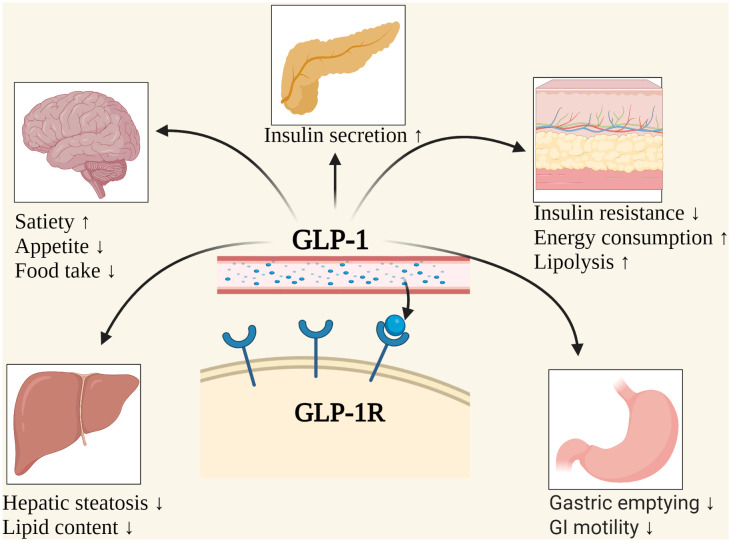
“In addition, the GLP-1 can inhibit postprandial gastric emptying and reduce gastric acid secretion, inhibit gastric and duodenal peristalsis by inhibiting vagus nerve, and increase the pressure of pylorus, thus reducing appetite, causing a reduction in body weight and participating in the so-called “ileal braking” eff…”
BackgroundGerstein, H. C., Colhoun, H. M., Dagenais, G. R., Diaz, R., Lakshmanan, M., Pais, P., Probstfield, J., Riesmeyer, J. S., Riddle, M. C., Rydén, L., et al. (2019) · The Lancet · doi:10.1016/s0140-6736(19)31149-3 · Cited by 3,163
Self-citationA Randomized, Controlled Trial of 3.0 mg of Liraglutide in Weight Management
Pi-Sunyer, X., Astrup, A., Fujioka, K., Greenway, F., Halpern, A., Krempf, M., Lau, D. C. W., le Roux, C. W., Violante Ortiz, R., Jensen, C. B., et al. (2015) · New England Journal of Medicine · doi:10.1056/nejmoa1411892 · Cited by 2,724
Lixisenatide in Patients with Type 2 Diabetes and Acute Coronary Syndrome
Pfeffer, M. A., Claggett, B., Diaz, R., Dickstein, K., Gerstein, H. C., Køber, L. V., Lawson, F. C., Ping, L., Wei, X., Lewis, E. F., et al. (2015) · New England Journal of Medicine · doi:10.1056/nejmoa1509225 · Cited by 2,409 · cited 1×
“The indication is to effectively reduce glycosylated hemoglobin levels in patients with T2DM by reducing fasting and postprandial blood glucose levels (61, 62).”
BackgroundMechanisms of Action and Therapeutic Application of Glucagon-like Peptide-1
Drucker, D. J. (2018) · Cell Metabolism · doi:10.1016/j.cmet.2018.03.001 · Cited by 2,170 · cited 4×
“In addition, the GLP-1 can inhibit postprandial gastric emptying and reduce gastric acid secretion, inhibit gastric and duodenal peristalsis by inhibiting vagus nerve, and increase the pressure of pylorus, thus reducing appetite, causing a reduction in body weight and participating in the so-called “ileal braking” eff…”
BackgroundInfluentialFuller, N. R., Colagiuri, S., Schofield, D., Olson, A. D., Shrestha, R., Holzapfel, C., Wolfenstetter, S. B., Holle, R., Ahern, A. L., Hauner, H., et al. (2013) · International Journal of Obesity · doi:10.1038/ijo.2012.139 · Cited by 2,117
Davies, M., Færch, L., Jeppesen, O. K., Pakseresht, A., Pedersen, S. D., Perreault, L., Rosenstock, J., Shimomura, I., Viljoen, A., Wadden, T. A., et al. (2021) · The Lancet · doi:10.1016/s0140-6736(21)00213-0 · Cited by 1,419
Buse, J. B., Henry, R. R., Han, J., Kim, D. D., Fineman, M. S., Baron, A. D., & for the Exenatide-113 Clinical Study Group (2004) · Diabetes Care · doi:10.2337/diacare.27.11.2628 · Cited by 1,346 · cited 1×
“The primary adverse reaction to EX is nausea, suggesting that nausea may be the primary mechanism of weight loss (52).”
BackgroundGLP-1 receptor agonists for individualized treatment of type 2 diabetes mellitus
Meier, J. J. (2012) · Nature Reviews Endocrinology · doi:10.1038/nrendo.2012.140 · Cited by 1,311 · cited 2×
“Nausea and vomiting are less frequent in patients receiving EX-LAR than in patients taking EX (114).”
BackgroundMethodAstrup, A., Rössner, S., Van Gaal, L., Rissanen, A., Niskanen, L., Al Hakim, M., Madsen, J., Rasmussen, M. F., & Lean, M. E. (2009) · The Lancet · doi:10.1016/s0140-6736(09)61375-1 · Cited by 1,163
Papagiannopoulos, I. A., Sideris, V. I., Boschmann, M., Koutsoni, O. S., & Dotsika, E. N. (2013) · Complementary Medicine Research · doi:10.1159/000357718 · Cited by 1,128
Wadden, T. A., Bailey, T. S., Billings, L. K., Davies, M., Frias, J. P., Koroleva, A., Lingvay, I., O’Neil, P. M., Rubino, D. M., Skovgaard, D., et al. (2021) · JAMA · doi:10.1001/jama.2021.1831 · Cited by 1,114 · cited 1×
“STEP 8 and STEP 3 showed similar results (101, 102).”
ResultDrucker, D. J., Buse, J. B., Taylor, K., Kendall, D. M., Trautmann, M., Zhuang, D., & Porter, L. (2008) · The Lancet · doi:10.1016/s0140-6736(08)61206-4 · Cited by 1,070
Rubino, D. M., Greenway, F. L., Khalid, U., O’Neil, P. M., Rosenstock, J., Sørrig, R., Wadden, T. A., Wizert, A., Garvey, W. T., STEP 8 Investigators, et al. (2022) · JAMA · doi:10.1001/jama.2021.23619 · Cited by 995
The Discovery and Development of Liraglutide and Semaglutide
Knudsen, L. B., & Lau, J. (2019) · Frontiers in Endocrinology · doi:10.3389/fendo.2019.00155 · Cited by 970 · cited 1×
“1 Semaglutide SMG is an analog of long-acting GLP-1, mainly used to control T2DM, and is also suitable for promoting weight loss in people with mild obesity (95, 96).”
BackgroundGutniak, M., Ørkov, C., Holst, J. J., Ahrén, B., & Efendić, S. (1992) · New England Journal of Medicine · doi:10.1056/nejm199205143262003 · Cited by 868 · cited 2×
“Frontiers in Endocrinology 02 GLP-1, a 30- or 31-amino-acid-long peptide hormone, is a gastrointestinal peptide secreted by the intestinal tract that potentiates insulin release and reduces glucagon’s concentration in physiological conditions (15, 16).”
BackgroundKhera, R., Murad, M. H., Chandar, A. K., Dulai, P. S., Wang, Z., Prokop, L. J., Loomba, R., Camilleri, M., & Singh, S. (2016) · JAMA · doi:10.1001/jama.2016.7602 · Cited by 865 · cited 3×
“TABLE 1 Anti-obesity drugs: principal categories, functions, side effects, half-life and usage (20, 21).”
Backgroundle Roux, C. W., Astrup, A., Fujioka, K., Greenway, F., Lau, D. C. W., Van Gaal, L., Ortiz, R. V., Wilding, J. P. H., Skjøth, T. V., Manning, L. S., et al. (2017) · The Lancet · doi:10.1016/s0140-6736(17)30069-7 · Cited by 850
on behalf of the NN8022-1923 Investigators, Wadden, T. A., Hollander, P., Klein, S., Niswender, K., Woo, V, Hale, P. M., & Aronne, L. (2013) · International Journal of Obesity · doi:10.1038/ijo.2013.120 · Cited by 842
on behalf of the NN8022-1807 Investigators, Astrup, A., Carraro, R., Finer, N., Harper, A., Kunesova, M., Lean, M. E. J., Niskanen, L., Rasmussen, M. F., Rissanen, A., et al. (2012) · International Journal of Obesity · doi:10.1038/ijo.2011.158 · Cited by 757 · cited 1×
“2 kg, the two-year extended experiment of which also showed similar results (88, 89).”
ResultGIP and GLP-1, the two incretin hormones: Similarities and differences
Seino, Y., Fukushima, M., & Yabe, D. (2010) · Journal of Diabetes Investigation · doi:10.1111/j.2040-1124.2010.00022.x · Cited by 746
Knudsen, L. B., Nielsen, P. F., Huusfeldt, P. O., Johansen, N. L., Madsen, K., Pedersen, F. Z., Thøgersen, H., Wilken, M., & Agersø, H. (2000) · Journal of Medicinal Chemistry · doi:10.1021/jm9909645 · Cited by 700
GLP-1 agonism stimulates brown adipose tissue thermogenesis and browning through hypothalamic AMPK
Beiroa, D., Imbernon, M., Gallego, R., Senra, A., Herranz, D., Villarroya, F., Serrano, M., Fernø, J., Salvador, J., Escalada, J., et al. (2014) · Diabetes · doi:10.2337/db14-0302 · Cited by 602 · cited 1×
“BN is a recombinant human GLP-1(7-36) acid, obtained by genetic engineering technology, and the amino acid sequence of its active component is the same as that of GLP-1 in the human body.”
BackgroundExon duplication and divergence in the human preproglucagon gene
Bell, G. I., Sanchez-Pescador, R., Laybourn, P. J., & Najarian, R. C. (1983) · Nature · doi:10.1038/304368a0 · Cited by 593 · cited 2×
“BN is a recombinant human GLP-1(7-36) acid, obtained by genetic engineering technology, and the amino acid sequence of its active component is the same as that of GLP-1 in the human body.”
BackgroundSGLT2 inhibitors and GLP-1 receptor agonists: established and emerging indications
Brown, E., Heerspink, H. J. L., Cuthbertson, D. J., & Wilding, J. P. H. (2021) · The Lancet · doi:10.1016/s0140-6736(21)00536-5 · Cited by 581
Alhadeff, A. L., Rupprecht, L. E., & Hayes, M. R. (2012) · Endocrinology · doi:10.1210/en.2011-1443 · Cited by 515 · cited 1×
“BN is a recombinant human GLP-1(7-36) acid, obtained by genetic engineering technology, and the amino acid sequence of its active component is the same as that of GLP-1 in the human body.”
BackgroundDungan, K. M., Povedano, S. T., Forst, T., González, J. G. G., Atisso, C., Sealls, W., & Fahrbach, J. L. (2014) · The Lancet · doi:10.1016/s0140-6736(14)60976-4 · Cited by 486
Hindbrain Neurons as an Essential Hub in the Neuroanatomically Distributed Control of Energy Balance
Grill, H. J., & Hayes, M. R. (2012) · Cell Metabolism · doi:10.1016/j.cmet.2012.06.015 · Cited by 485 · cited 2×
“BN is a recombinant human GLP-1(7-36) acid, obtained by genetic engineering technology, and the amino acid sequence of its active component is the same as that of GLP-1 in the human body.”
BackgroundMa, C., Avenell, A., Bolland, M., Hudson, J., Stewart, F., Robertson, C., Sharma, P., Fraser, C., & MacLennan, G. (2017) · BMJ · doi:10.1136/bmj.j4849 · Cited by 464
The Carbohydrate-Insulin Model of Obesity: Beyond “Calories In, Calories Out”
Ludwig, D. S., & Ebbeling, C. B. (2018) · JAMA Internal Medicine · doi:10.1001/jamainternmed.2018.2933 · Cited by 440
Orlistat-Associated Adverse Effects and Drug Interactions: A Critical Review
Filippatos, T. D., Derdemezis, C. S., Gazi, I. F., Nakou, E. S., Mikhailidis, D. P., & Elisaf, M. S. (2008) · Drug Safety · doi:10.2165/00002018-200831010-00005 · Cited by 434
Rosenstock, J., Allison, D., Birkenfeld, A. L., Blicher, T. M., Deenadayalan, S., Jacobsen, J. B., Serusclat, P., Violante, R., Watada, H., Davies, M., et al. (2019) · JAMA · doi:10.1001/jama.2019.2942 · Cited by 421 · cited 1×
“For both diabetic and non-diabetic patients, the drug can reduce weight (97, 98).”
BackgroundHow May GIP Enhance the Therapeutic Efficacy of GLP-1?
Samms, R. J., Coghlan, M. P., & Sloop, K. W. (2020) · Trends in Endocrinology & Metabolism · doi:10.1016/j.tem.2020.02.006 · Cited by 419
Dickson, S. L., Shirazi, R. H., Hansson, C., Bergquist, F., Nissbrandt, H., & Skibicka, K. P. (2012) · The Journal of Neuroscience · doi:10.1523/jneurosci.6326-11.2012 · Cited by 414 · cited 1×
“BN is a recombinant human GLP-1(7-36) acid, obtained by genetic engineering technology, and the amino acid sequence of its active component is the same as that of GLP-1 in the human body.”
BackgroundNauck, M. A., & D‘Alessio, D. A. (2022) · Cardiovascular Diabetology · doi:10.1186/s12933-022-01604-7 · Cited by 407
Attenuated GLP-1 secretion in obesity: cause or consequence
Ranganath, L. R., Beety, J. M., Morgan, L. M., Wright, J. W., Howland, R., & Marks, V (1996) · Gut · doi:10.1136/gut.38.6.916 · Cited by 394 · cited 1×
“BN is a recombinant human GLP-1(7-36) acid, obtained by genetic engineering technology, and the amino acid sequence of its active component is the same as that of GLP-1 in the human body.”
BackgroundBaggio, L. L., Huang, Q., Brown, T. J., & Drucker, D. J. (2004) · Gastroenterology · doi:10.1053/j.gastro.2004.04.063 · Cited by 372 · cited 2×
“BN is a recombinant human GLP-1(7-36) acid, obtained by genetic engineering technology, and the amino acid sequence of its active component is the same as that of GLP-1 in the human body.”
BackgroundMeier, J. J., Gallwitz, B., Salmen, S., Goetze, O., Holst, J. J., Schmidt, W. E., & Nauck, M. A. (2003) · The Journal of Clinical Endocrinology & Metabolism · doi:10.1210/jc.2003-030049 · Cited by 369
Moretto, T. J., Milton, D. R., Ridge, T. D., MacConell, L. A., Okerson, T., Wolka, A. M., & Brodows, R. G. (2008) · Clinical Therapeutics · doi:10.1016/j.clinthera.2008.08.006 · Cited by 350
Kanoski, S. E., Fortin, S. M., Arnold, M., Grill, H. J., & Hayes, M. R. (2011) · Endocrinology · doi:10.1210/en.2011-0174 · Cited by 347
Umpierrez, G., Tofé Povedano, S., Pérez Manghi, F., Shurzinske, L., & Pechtner, V. (2014) · Diabetes Care · doi:10.2337/dc13-2759 · Cited by 341
Obesity as a disease: no lightweight matter
Conway, B., & Rene, A. (2004) · Obesity Reviews · doi:10.1111/j.1467-789x.2004.00144.x · Cited by 322
Trends in weight regain following roux-en-Y gastric bypass (RYGB) bariatric surgery
Cooper, T. C., Simmons, E. B., Webb, K., Burns, J. L., & Kushner, R. F. (2015) · Obesity Surgery · doi:10.1007/s11695-014-1560-z · Cited by 305 · cited 2×
“BN is a recombinant human GLP-1(7-36) acid, obtained by genetic engineering technology, and the amino acid sequence of its active component is the same as that of GLP-1 in the human body.”
BackgroundInfluentialGLP-1 and weight loss: unraveling the diverse neural circuitry
Kanoski, S. E., Hayes, M. R., & Skibicka, K. P. (2016) · American Journal of Physiology-Regulatory, Integrative and Comparative Physiology · doi:10.1152/ajpregu.00520.2015 · Cited by 290
Riddle, M. C., Aronson, R., Home, P., Marre, M., Niemoeller, E., Miossec, P., Ping, L., Ye, J., & Rosenstock, J. (2013) · Diabetes Care · doi:10.2337/dc12-2454 · Cited by 288
Obesity subtypes, related biomarkers & heterogeneity
Mayoral, L. P.-C., Andrade, G. M., Mayoral, E. P.-C., Huerta, T. H., Canseco, S. P., Rodal Canales, F. J., Cabrera-Fuentes, H. A., Cruz, M. M., Pérez Santiago, A. D., Alpuche, J. J., et al. (2020) · Indian Journal of Medical Research · doi:10.4103/ijmr.ijmr_1768_17 · Cited by 277 · cited 1×
“The most important sub-groups reviewed include abnormal metabolic obesity, normal metabolic obesity, abnormal metabolic weight, normal metabolic weight, and sarcopenic obesity (3).”
BackgroundElkind-Hirsch, K., Marrioneaux, O., Bhushan, M., Vernor, D., & Bhushan, R. (2008) · The Journal of Clinical Endocrinology & Metabolism · doi:10.1210/jc.2008-0115 · Cited by 276 · cited 1×
“0 kg) (55), and 10 cases of metabolic syndrome (weight loss of 3.”
BackgroundNearly a decade on — trends, risk factors and policy implications in global obesity
Malik, V. S., Willet, W. C., & Hu, F. B. (2020) · Nature Reviews Endocrinology · doi:10.1038/s41574-020-00411-y · Cited by 273 · cited 1×
“In the past decade, obesity and related co-morbidities have become critical public health problems and serious medical conditions worldwide (1).”
BackgroundKaragiannis, T., Avgerinos, I., Liakos, A., Del Prato, S., Matthews, D. R., Tsapas, A., & Bekiari, E. (2022) · Diabetologia · doi:10.1007/s00125-022-05715-4 · Cited by 272
Giorgino, F., Benroubi, M., Sun, J.-H., Zimmermann, A. G., & Pechtner, V. (2015) · Diabetes Care · doi:10.2337/dc14-1625 · Cited by 268 · cited 12×
“DUL is a long-acting GLP-1R agonist which can promote insulin secretion, inhibit gastric emptying, and reduce appetite.”
BackgroundInfluentialRosenstock, J., Raccah, D., Korányi, L., Maffei, L., Boka, G., Miossec, P., & Gerich, J. E. (2013) · Diabetes Care · doi:10.2337/dc12-2709 · Cited by 253 · cited 1×
“Compared with LIXI, LIR is more effective in improving blood glucose and reducing weight, and both treatments are well tolerated (75, 77, 78).”
BackgroundMadsen, K., Knudsen, L. B., Agersoe, H., Nielsen, P. F., Thøgersen, H., Wilken, M., & Johansen, N. L. (2007) · Journal of Medicinal Chemistry · doi:10.1021/jm070861j · Cited by 244
Treatment Modalities of Obesity
Hainer, V., Toplak, H., & Mitrakou, A. (2008) · Diabetes Care · doi:10.2337/dc08-s265 · Cited by 231
Rosenstock, J., Klaff, L. J., Schwartz, S., Northrup, J., Holcombe, J. H., Wilhelm, K., & Trautmann, M. (2010) · Diabetes Care · doi:10.2337/dc09-1203 · Cited by 229 · cited 1×
“1 kg) (54), 60 cases of polycystic ovary syndrome (weight loss of 3.”
BackgroundEfficacy and Safety of the Once-Daily GLP-1 Receptor Agonist Lixisenatide in Monotherapy
Fonseca, V. A., Alvarado-Ruiz, R., Raccah, D., Boka, G., Miossec, P., Gerich, J. E., & on behalf of the EFC6018 GetGoal-Mono Study Investigators (2012) · Diabetes Care · doi:10.2337/dc11-1935 · Cited by 218 · cited 1×
“The indication is to effectively reduce glycosylated hemoglobin levels in patients with T2DM by reducing fasting and postprandial blood glucose levels (61, 62).”
Backgroundon behalf of the NN8022-1807 Investigators, Lean, M. E. J., Carraro, R., Finer, N., Hartvig, H., Lindegaard, M. L., Rössner, S., Van Gaal, L., & Astrup, A. (2014) · International Journal of Obesity · doi:10.1038/ijo.2013.149 · Cited by 210 · cited 1×
“Researchers believe that nausea/vomiting is related to greater weight loss (90).”
BackgroundFrias, J. P., Bonora, E., Nevarez Ruiz, L., Li, Y. G., Yu, Z., Milicevic, Z., Malik, R., Bethel, M. A., & Cox, D. A. (2021) · Diabetes Care · doi:10.2337/dc20-1473 · Cited by 199 · cited 1×
“5mg can provide glycosylated hemoglobin and weight loss related to clinically relevant doses and has similar safety (111).”
BackgroundGLP-1/glucagon receptor co-agonism for treatment of obesity
Sánchez-Garrido, M. A., Brandt, S. J., Clemmensen, C., Müller, T. D., DiMarchi, R. D., & Tschöp, M. H. (2017) · Diabetologia · doi:10.1007/s00125-017-4354-8 · Cited by 175
Ahrén, B., Leguizamo Dimas, A., Miossec, P., Saubadu, S., & Aronson, R. (2013) · Diabetes Care · doi:10.2337/dc12-2006 · Cited by 172 · cited 1×
“events of LIXI are gastrointestinal adverse reactions, mainly manifested as nausea and vomiting in the initial stage (75, 76).”
BackgroundLipotoxicity in Kidney, Heart, and Skeletal Muscle Dysfunction
Nishi, H., Higashihara, T., & Inagi, R. (2019) · Nutrients · doi:10.3390/nu11071664 · Cited by 172 · cited 1×
“Lipotoxicity induced by saturated free fatty acids plays a vital role in renal injury in obese patients (49).”
BackgroundSemaglutide as a promising antiobesity drug
Christou, G. A., Katsiki, N., Blundell, J., Fruhbeck, G., & Kiortsis, D. N. (2019) · Obesity Reviews · doi:10.1111/obr.12839 · Cited by 159 · cited 1×
“1 Semaglutide SMG is an analog of long-acting GLP-1, mainly used to control T2DM, and is also suitable for promoting weight loss in people with mild obesity (95, 96).”
BackgroundJendle, J., Grunberger, G., Blevins, T., Giorgino, F., Hietpas, R. T., & Botros, F. T. (2016) · Diabetes/Metabolism Research and Reviews · doi:10.1002/dmrr.2810 · Cited by 158
GLP-1 receptor agonist promotes brown remodelling in mouse white adipose tissue through SIRT1
Xu, F., Lin, B., Zheng, X., Chen, Z., Cao, H., Xu, H., Liang, H., & Weng, J. (2016) · Diabetologia · doi:10.1007/s00125-016-3896-5 · Cited by 157
Vrang, N., & Larsen, P. J. (2010) · Progress in Neurobiology · doi:10.1016/j.pneurobio.2010.07.003 · Cited by 153 · cited 2×
“In the central nervous system, proglucagon and proglucagon-derived peptides (GLP-1, glucagon-like peptide-2, GLP-2, and oxyntomodulin, OXM) are only present in a small group of neurons in the nucleus tractus solitarius (24, 25).”
BackgroundNext generation GLP-1/GIP/glucagon triple agonists normalize body weight in obese mice
Knerr, P. J., Mowery, S. A., Douros, J. D., Premdjee, B., Hjøllund, K. R., He, Y., Kruse Hansen, A. M., Olsen, A. K., Perez-Tilve, D., DiMarchi, R. D., et al. (2022) · Molecular Metabolism · doi:10.1016/j.molmet.2022.101533 · Cited by 152
Zhao, F., Zhou, Q., Cong, Z., Hang, K., Zou, X., Zhang, C., Chen, Y., Dai, A., Liang, A., Ming, Q., et al. (2022) · Nature Communications · doi:10.1038/s41467-022-28683-0 · Cited by 149
Glucagon Regulation of Energy Expenditure
Kleinert, M., Sachs, S., Habegger, K. M., Hofmann, S. M., & Müller, T. D. (2019) · International Journal of Molecular Sciences · doi:10.3390/ijms20215407 · Cited by 147 · cited 1×
“Its ability to increase energy expenditure has been known for over 60 years (125).”
BackgroundLiraglutide: A New Option for the Treatment of Obesity
Nuffer, W. A., & Trujillo, J. M. (2015) · Pharmacotherapy: The Journal of Human Pharmacology and Drug Therapy · doi:10.1002/phar.1639 · Cited by 146
Bolli, G. B., Munteanu, M., Dotsenko, S., Niemoeller, E., Boka, G., Wu, Y., & Hanefeld, M. (2014) · Diabetic Medicine · doi:10.1111/dme.12328 · Cited by 144
Nauck, M., Rizzo, M., Johnson, A., Bosch-Traberg, H., Madsen, J., & Cariou, B. (2016) · Diabetes Care · doi:10.2337/dc15-2479 · Cited by 143
Glucagon-like Peptide–1 Analogues for Type 2 Diabetes Mellitus: Current and Emerging Agents
Gallwitz, B. (2011) · Drugs · doi:10.2165/11592810-000000000-00000 · Cited by 142
Kooijman, S., Wang, Y., Parlevliet, E. T., Boon, M. R., Edelschaap, D., Snaterse, G., Pijl, H., Romijn, J. A., & Rensen, P. C. N. (2015) · Diabetologia · doi:10.1007/s00125-015-3727-0 · Cited by 140
Molecular, pharmacological and clinical aspects of liraglutide, a once-daily human GLP-1 analogue
Russell-Jones, D. (2009) · Molecular and Cellular Endocrinology · doi:10.1016/j.mce.2008.11.018 · Cited by 137
Alhadeff, A. L., Baird, J.-P., Swick, J., Hayes, M. R., & Grill, H. J. (2014) · Neuropsychopharmacology · doi:10.1038/npp.2014.74 · Cited by 134 · cited 2×
“BN is a recombinant human GLP-1(7-36) acid, obtained by genetic engineering technology, and the amino acid sequence of its active component is the same as that of GLP-1 in the human body.”
BackgroundSimonsen, L., Holst, J. J., & Deacon, C. F. (2006) · Diabetologia · doi:10.1007/s00125-005-0128-9 · Cited by 133 · cited 4×
“KEYWORDS GLP-1R agonists, obesity, weight-reducing drugs, metabolic diseases, dual agonism Abbreviations: BMI, Body mass index; BN, Beinaglutide; CRP, C-reactive protein; DPP-4, Dipeptidyl peptidase 4; DUL, Dulaglutide; EX, Exenatide EX-LAR, Long-acting release formulation of exenatide; FDA, Food and Drug Administrati…”
BackgroundInfluentialLatest approaches for the treatment of obesity
Jackson, V. M., Breen, D. M., Fortin, J.-P., Liou, A., Kuzmiski, J. B., Loomis, A. K., Rives, M.-L., Shah, B., & Carpino, P. A. (2015) · Expert Opinion on Drug Discovery · doi:10.1517/17460441.2015.1044966 · Cited by 132 · cited 2×
“It then develops into a weight disorder called obesity, defined as a BMI ≥30 kg/m(2) (2).”
BackgroundRosenstock, J., Hanefeld, M., Shamanna, P., Min, K. W., Boka, G., Miossec, P., Zhou, T., Muehlen-Bartmer, I., & Ratner, R. E. (2014) · Journal of Diabetes and its Complications · doi:10.1016/j.jdiacomp.2014.01.012 · Cited by 130
Is GLP‐1 a hormone: Whether and When?
D'Alessio, D. (2016) · Journal of Diabetes Investigation · doi:10.1111/jdi.12466 · Cited by 130 · cited 4×
“(18) demonstrated that circulating peptides mediate insulinotropic activity with either bariatric surgery or treatment with long-acting GLP-1R agonists.”
BackgroundInfluentialEffects of Exenatide Combined with Lifestyle Modification in Patients with Type 2 Diabetes
Apovian, C. M., Bergenstal, R. M., Cuddihy, R. M., Qu, Y., Lenox, S., Lewis, M. S., & Glass, L. C. (2010) · The American Journal of Medicine · doi:10.1016/j.amjmed.2009.11.019 · Cited by 127 · cited 2×
“A 24-week multicenter, randomized, double-blind, placebocontrolled clinical study conducted by Apovian (53) found that EX combined with lifestyle adjustment could significantly reduce the weight of patients, all of which were 6.”
BackgroundInfluentialGault, V. A., Bhat, V. K., Irwin, N., & Flatt, P. R. (2013) · Journal of Biological Chemistry · doi:10.1074/jbc.m113.512046 · Cited by 123
Barrington, P., Chien, J. Y., Showalter, H. D. H., Schneck, K., Cui, S., Tibaldi, F., Ellis, B., & Hardy, T. A. (2011) · Diabetes, Obesity and Metabolism · doi:10.1111/j.1463-1326.2011.01364.x · Cited by 120
Exposure-response analyses of liraglutide 3.0 mg for weight management
Wilding, J. P. H., Overgaard, R. V., Jacobsen, L. V., Jensen, C. B., & le Roux, C. W. (2016) · Diabetes, Obesity and Metabolism · doi:10.1111/dom.12639 · Cited by 102 · cited 1×
“Clinically, it is mainly used to treat T2DM and causes weight reduction when used in large doses (3mg/day) (83).”
BackgroundElkind-Hirsch, K. E., Chappell, N., Seidemann, E., Storment, J., & Bellanger, D. (2021) · The Journal of Clinical Endocrinology & Metabolism · doi:10.1210/clinem/dgab408 · Cited by 96 · cited 1×
“(117) found that after 24 weeks of drug treatment of once-weekly EX-LAR or dapagliflozin or co-administered, nondiabetic women with a BMI (≥30 kg/m(2) and ≤ 45 kg/m(2)) and polycystic ovary syndrome all lost weight.”
BackgroundGlucagon-like peptide 1 (GLP-1): a potent gut hormone with a possible therapeutic perspective
Nauck, M. A. (1998) · Acta Diabetologica · doi:10.1007/s005920050116 · Cited by 94 · cited 3×
“Frontiers in Endocrinology 02 GLP-1, a 30- or 31-amino-acid-long peptide hormone, is a gastrointestinal peptide secreted by the intestinal tract that potentiates insulin release and reduces glucagon’s concentration in physiological conditions (15, 16).”
BackgroundLixisenatide, a novel GLP-1 receptor agonist for the treatment of type 2 diabetes mellitus.
Christensen, M., Knop, F. K., Holst, J. J., & Vilsbøll, T. (2009) · PubMed · Cited by 84
Barnett, A. (2007) · Expert Opinion on Pharmacotherapy · doi:10.1517/14656566.8.15.2593 · Cited by 79
Smits, M. M., Tonneijck, L., Muskiet, M. H. A., Kramer, M. H. H., Cahen, D. L., & van Raalte, D. H. (2016) · Diabetes, Obesity and Metabolism · doi:10.1111/dom.12593 · Cited by 74
Glucagon-like peptide 1 (GLP-1) in the treatment of diabetes
Nauck, M. A. (2004) · Hormone and Metabolic Research · doi:10.1055/s-2004-826175 · Cited by 72
GLP-1 agonist to treat obesity and prevent cardiovascular disease: what have we achieved so far
Pedrosa, M. R., Franco, D. R., Gieremek, H. W., Vidal, C. M., Bronzeri, F., de Cassia Rocha, A., de Carvalho Cara, L. G., Fogo, S. L., & Eliaschewitz, F. G. (2022) · Current Atherosclerosis Reports · doi:10.1007/s11883-022-01062-2 · Cited by 68
Naltrexone ER/Bupropion ER: A Review in Obesity Management
Greig, S. L., & Keating, G. M. (2015) · Drugs · doi:10.1007/s40265-015-0427-5 · Cited by 65
Burmeister, M. A., Ayala, J., Drucker, D. J., & Ayala, J. E. (2013) · American Journal of Physiology-Endocrinology and Metabolism · doi:10.1152/ajpendo.00446.2012 · Cited by 64
Association between Obesity and Selected Morbidities: A Study of BRICS Countries
Shukla, A., Kumar, K., & Singh, A. (2014) · PLoS ONE · doi:10.1371/journal.pone.0094433 · Cited by 63
Pinelli, N. R., & Hurren, K. M. (2011) · Annals of Pharmacotherapy · doi:10.1345/aph.1q024 · Cited by 59
Mechanisms and clinical efficacy of lixisenatide for the management of type 2 diabetes
Horowitz, M., Rayner, C. K., & Jones, K. L. (2013) · Advances in Therapy · doi:10.1007/s12325-013-0009-4 · Cited by 58 · cited 1×
“Also, LIXI is well tolerated, and nausea and vomiting are the most commonly reported adverse events (66, 67).”
BackgroundExenatide once weekly for the treatment of type 2 diabetes
Malone, J., Trautmann, M., Wilhelm, K., Taylor, K., & Kendall, D. M. (2009) · Expert Opinion on Investigational Drugs · doi:10.1517/13543780902766802 · Cited by 55 · cited 1×
“Similarly, once-weekly EX-LAR preparation can be used as an anti-obesity treatment in patients without T2DM or impaired glucose tolerance (118).”
BackgroundZhang, F., Chen, Z., Wu, D., Tian, L., Chen, Q., Ye, Y., Chen, W., Wu, X., Wu, P., Yuan, W., et al. (2021) · iScience · doi:10.1016/j.isci.2021.103382 · Cited by 54
Bray, G. M. (2006) · American Journal of Health-System Pharmacy · doi:10.2146/ajhp050459 · Cited by 52
Review of endoscopic devices for weight reduction: old and new balloons and implantable prostheses
Tsesmeli, N., & Coumaros, D. (2009) · Endoscopy · doi:10.1055/s-0029-1215269 · Cited by 49 · cited 2×
“However, regarding weight loss, the results of using IGBs cannot be compared with bariatric surgery (11).”
BackgroundResultZhang, Y. L., Zhou, C., Li, X. F., Yang, M. N., Tao, L., Zheng, X. Y., & Jia, Y. S. (2019) · Obesity Science & Practice · doi:10.1002/osp4.342 · Cited by 49
RANGANATH, L., NORRIS, F., MORGAN, L., WRIGHT, J., & MARKS, V. (1999) · Clinical Science · doi:10.1042/cs0960335 · Cited by 47 · cited 2×
“BN is a recombinant human GLP-1(7-36) acid, obtained by genetic engineering technology, and the amino acid sequence of its active component is the same as that of GLP-1 in the human body.”
BackgroundTherapies for inter-relating diabetes and obesity – GLP-1 and obesity
Iepsen, E. W., Torekov, S. S., & Holst, J. J. (2014) · Expert Opinion on Pharmacotherapy · doi:10.1517/14656566.2014.965678 · Cited by 43 · cited 1×
“Clinical trials have shown that it has the potential to cause weight loss in non-diabetic obese individuals (57).”
BackgroundZhu, E., Yang, Y., Zhang, J., Li, Y., Li, C., Chen, L., & Sun, B. (2016) · Oncotarget · doi:10.18632/oncotarget.13189 · Cited by 42
Cowart, K. (2020) · Annals of Pharmacotherapy · doi:10.1177/1060028019889064 · Cited by 42
Treatment potential of the GLP-1 receptor agonists in type 2 diabetes mellitus: a review
Østergaard, L., Frandsen, C. S., & Madsbad, S. (2016) · Expert Review of Clinical Pharmacology · doi:10.1586/17512433.2016.1121808 · Cited by 38
Lixisenatide in type 2 diabetes: latest evidence and clinical usefulness
Anderson, S. L., & Trujillo, J. M. (2016) · Therapeutic Advances in Chronic Disease · doi:10.1177/2040622315609312 · Cited by 36
Kaneto, H., Takami, A., Spranger, R., Amano, A., Watanabe, D., & Niemoeller, E. (2020) · Diabetes, Obesity and Metabolism · doi:10.1111/dom.14005 · Cited by 36
PEREZ-MONTES DE OCA, A., PELLITERO, S., & PUIG-DOMINGO, M. (2021) · Minerva Endocrinology · doi:10.23736/s2724-6507.20.03369-6 · Cited by 36
Glucagon-Like Peptide-1 Receptor Agonists in the Treatment of Obesity
Jensterle, M., & Janež, A. (2023) · Hormone Research in Paediatrics · doi:10.1159/000521264 · Cited by 36
Lixisenatide (Adlyxin): A Once-Daily Incretin Mimetic Injection for Type-2 Diabetes.
Leon, N., LaCoursiere, R. J., Yarosh, D., & Patel, R. S. (2017) · PubMed Central · Cited by 35
Shuai, Y., Yang, G., Zhang, Q., Li, W., Luo, Y., Ma, J., Chen, D., Yang, J., Wang, X., Hu, J., et al. (2021) · Diabetes, Obesity and Metabolism · doi:10.1111/dom.14198 · Cited by 35 · cited 1×
“PEX-168 is a new agent of long-acting GLP-1R agonist, which is molecularly modified from EX via amino acid modification and PEGylation (119), the first GLP-1R agonist modified by PEG to achieve long-term pharmacological action (120, 121).”
BackgroundSelf-citationThe design and discovery of lixisenatide for the treatment of type 2 diabetes mellitus
Christensen, M., Miossec, P., Larsen, B. D., Werner, U., & Knop, F. K. (2014) · Expert Opinion on Drug Discovery · doi:10.1517/17460441.2014.942638 · Cited by 34 · cited 1×
“Also, LIXI is well tolerated, and nausea and vomiting are the most commonly reported adverse events (66, 67).”
BackgroundLixisenatide Reduces Chylomicron Triacylglycerol by Increased Clearance
Whyte, M. B., Shojaee-Moradie, F., Sharaf, S. E., Jackson, N. C., Fielding, B., Hovorka, R., Mendis, J., Russell-Jones, D., & Umpleby, A. M. (2019) · The Journal of Clinical Endocrinology & Metabolism · doi:10.1210/jc.2018-01176 · Cited by 32 · cited 1×
“The exact mechanism may be that LIXI reduces chylomicron triacylglycerol by delaying gastric emptying by increased clearance (69).”
BackgroundThe future of the GLP-1 receptor agonists
Hirsch, I. B. (2019) · JAMA · doi:10.1001/jama.2019.2941 · Cited by 30
Wang, Y., He, W., Wei, W., Mei, X., Yang, M., & Wang, Y. (2021) · Frontiers in Endocrinology · doi:10.3389/fendo.2021.622737 · Cited by 30
Management of type 2 diabetes: the role of incretin mimetics
Stonehouse, A. H., Holcombe, J. H., & Kendall, D. M. (2006) · Expert Opinion on Pharmacotherapy · doi:10.1517/14656566.7.15.2095 · Cited by 29
Yang, G.-R., Zhao, X.-L., Jin, F., Shi, L.-H., & Yang, J.-K. (2015) · The Journal of Clinical Pharmacology · doi:10.1002/jcph.386 · Cited by 29 · cited 1×
“It has the advantages of a prolonged administration interval (once a week), few adverse reactions in the digestive tract (122), and adverse effects reported ranging from ‘mild’ to ‘moderate’ (122, 123).”
BackgroundFang, X., Du, Z., Duan, C., Zhan, S., Wang, T., Zhu, M., Shi, J., Meng, J., Zhang, X., Yang, M., et al. (2021) · Life Sciences · doi:10.1016/j.lfs.2020.118966 · Cited by 29 · cited 3×
“KEYWORDS GLP-1R agonists, obesity, weight-reducing drugs, metabolic diseases, dual agonism Abbreviations: BMI, Body mass index; BN, Beinaglutide; CRP, C-reactive protein; DPP-4, Dipeptidyl peptidase 4; DUL, Dulaglutide; EX, Exenatide EX-LAR, Long-acting release formulation of exenatide; FDA, Food and Drug Administrati…”
BackgroundSelf-citationGLP-1R agonists for the treatment of obesity: a patent review (2015-present)
Liu, C., Zou, Y., & Qian, H. (2020) · Expert Opinion on Therapeutic Patents · doi:10.1080/13543776.2020.1811851 · Cited by 28
Lixisenatide: A New Daily GLP-1 Agonist for Type 2 Diabetes Management
McCarty, D., Coleman, M., & Boland, C. L. (2017) · Annals of Pharmacotherapy · doi:10.1177/1060028017689878 · Cited by 27
Potential use of exenatide for the treatment of obesity
Folli, F., & Guardado Mendoza, R. (2011) · Expert Opinion on Investigational Drugs · doi:10.1517/13543784.2011.630660 · Cited by 26 · cited 3×
“BN is a recombinant human GLP-1(7-36) acid, obtained by genetic engineering technology, and the amino acid sequence of its active component is the same as that of GLP-1 in the human body.”
BackgroundPharmacological profile, efficacy and safety of lixisenatide in type 2 diabetes mellitus
Forst, T., & Pfützner, A. (2013) · Expert Opinion on Pharmacotherapy · doi:10.1517/14656566.2013.838559 · Cited by 25 · cited 1×
“Along with its role in lowering blood glucose levels, LIXI has many other functions, such as cardiovascular benefits, delaying gastric emptying, protective effect on pancreatic beta-cells, and increased insulin mRNA expression and hormone secretion (65).”
BackgroundLiraglutide: A glucagon-like peptide-1 agonist for chronic weight management
Manigault, K., & Thurston, M. M. (2016) · The Consultant Pharmacist · doi:10.4140/tcp.n.2016.685 · Cited by 25
Norwood, P., Liutkus, J. F., Haber, H., Pintilei, E., Boardman, M. K., & Trautmann, M. E. (2012) · Clinical Therapeutics · doi:10.1016/j.clinthera.2012.09.007 · Cited by 24
Central pre-proglucagon derived peptides: Opportunities for treatment of obesity
Larsen, P., Vrang, N., & Tang-Christensen, M. (2003) · Current Pharmaceutical Design · doi:10.2174/1381612033454775 · Cited by 24
Lixisenatide for the treatment of type 2 diabetes
Petersen, A. B., Knop, F. K., & Christensen, M. (2013) · Drugs of Today · doi:10.1358/dot.2013.49.9.2020940 · Cited by 24 · cited 1×
“Furthermore, the dissociation rate with the receptor is slow, and the high affinity and slow dissociation with the receptor prolongs the time of pharmacological effect (58, 60).”
BackgroundHunt, B., Kragh, N., McConnachie, C. C., Valentine, W. J., Rossi, M. C., & Montagnoli, R. (2017) · Clinical Therapeutics · doi:10.1016/j.clinthera.2017.05.354 · Cited by 24
Gao, L., Huang, H., Zhang, L., Zhang, N., Fu, Y., Zhu, D., Bi, Y., & Feng, W. (2022) · Experimental and Clinical Endocrinology & Diabetes · doi:10.1055/a-1608-0345 · Cited by 24 · cited 1×
“A clinical study involving 78 non-diabetic overweight/obese patients found that BN may be a more effective treatment option for overweight/obese Chinese than metformin (43).”
BackgroundLiraglutide: a review of the first once-daily GLP-1 receptor agonist.
Bode, B. W. (2011) · PubMed · Cited by 21
Wang, G., Wu, P., Qiu, Y., Dong, X., Wang, Y., Chi, Y., Zhang, F., Li, Y., Zhang, J., Huang, Z., et al. (2021) · Archives of Endocrinology and Metabolism · doi:10.20945/2359-3997000000388 · Cited by 17
Polyethylene glycol loxenatide (PEX168) in subjects with renal impairment: A pharmacokinetic study
Wang, J., Huang, J., Li, W., Tang, S., Sun, J., Zhang, X., Liu, J., Yi, B., Liu, J., Zhang, X., et al. (2019) · British Journal of Clinical Pharmacology · doi:10.1111/bcp.14091 · Cited by 16
Self-citationZhang, Y., Li, Y., Zhao, J., Wang, C., Deng, B., Zhang, Q., & Shi, C. (2021) · Frontiers in Pharmacology · doi:10.3389/fphar.2021.781856 · Cited by 15 · cited 1×
“PEX-168 is a new agent of long-acting GLP-1R agonist, which is molecularly modified from EX via amino acid modification and PEGylation (119), the first GLP-1R agonist modified by PEG to achieve long-term pharmacological action (120, 121).”
BackgroundEffect of exenatide on fat deposition and a metabolic profile in patients with metabolic syndrome
González-Ortiz, M., Martínez-Abundis, E., Robles-Cervantes, J. A., & Ramos-Zavala, M. G. (2011) · Metabolic Syndrome and Related Disorders · doi:10.1089/met.2010.0025 · Cited by 14 · cited 1×
“7 kg) (56), among which the most common adverse reaction is still vomiting.”
BackgroundSTEP 1 for Effective Weight Control — Another First Step?
Ingelfinger, J. R., & Rosen, C. J. (2021) · New England Journal of Medicine · doi:10.1056/nejme2101705 · Cited by 14
Onishi, Y., Niemoeller, E., Ikeda, Y., Takagi, H., Yabe, D., & Seino, Y. (2015) · Journal of Diabetes Investigation · doi:10.1111/jdi.12275 · Cited by 13
Ding, B., Hu, Y., Yuan, L., Yan, R.-N., & Ma, J.-H. (2021) · Medicine · doi:10.1097/md.0000000000026086 · Cited by 13 · cited 1×
“The researcher believes that it may be related to the patient’s habit of excessive intake (44).”
BackgroundGuo, Z., Wu, Y., Zhu, L., Wang, Y., Wang, D., & Sun, X. (2021) · BMC Endocrine Disorders · doi:10.1186/s12902-021-00908-1 · Cited by 9
Lixisenatida en pacientes con diabetes tipo 2 y obesidad: más allá del control glucémico
Roca-Rodríguez, M. M., Muros de Fuentes, M. T., Piédrola-Maroto, G., Quesada-Charneco, M., Maraver-Selfa, S., Tinahones, F. J., & Mancha-Doblas, I. (2017) · Atención Primaria · doi:10.1016/j.aprim.2016.06.009 · Cited by 8
The Fat Bomb Exploded but no One Heard the Bang
Condon, C. (2006) · European Journal of Cardiovascular Nursing · doi:10.1016/j.ejcnurse.2005.12.003 · Cited by 5 · cited 1×
“In Europe, the incidence of obesity is five times higher than it was after World War II, and the number of obese people doubles yearly (4).”
BackgroundZhou, Y., Zhu, J., Wu, H., Deng, Y., & Ji, Q. (2021) · Diabetes Therapy · doi:10.1007/s13300-021-01139-2 · Cited by 4
Merchenthaler (1999) · doi:10.1002/(sici)1096-9861(19990111)403:2<261::aid-cne8>3.0.co;2-5
Research works printed but not linked: 3
- GLP-1 receptor agonists in the treatment of type 2 diabetes - state-of-the-art - PubMed. Available at: https://pubmed.ncbi.nlm.nih.gov/33068776/ (Accessed November 14, 2022).
- Forst T Pfützner A. Pharmacological profile, efficacy and safety of lixisenatide in type 2 diabetes mellitus. Expert Opin Pharmacother (2013) 14: 2281–96. doi: 10.1517/14656566.2013.838559 24087882 · DOI · Paper page
- Effect of weekly subcutaneous semaglutide vs daily liraglutide on body weight in adults with overweight or obesity without diabetes: The STEP 8 randomized clinical trial. Available at: https://pubmed.ncbi.nlm.nih.gov/?term=+Effect+of+Weekly+Subcutaneous+Semaglutide+vs+Daily+Liraglutide+on+Body+Weight+in+Adults+With+Overweight+or+Obesity+Without+Diabetes%3A+The+STEP+8+Randomized+Clinical+Trial&size=100 (Accessed August 10, 2022). PMC8753508 35015037
Cited by
Glucagon-like peptide-1 receptor: mechanisms and advances in therapy
Zheng, Z., Zong, Y., Ma, Y., Tian, Y., Pang, Y., Zhang, C., & Gao, J. (2024) · Signal Transduction and Targeted Therapy · doi:10.1038/s41392-024-01931-z · Cited by 1,036
Advance in peptide-based drug development: delivery platforms, therapeutics and vaccines
Xiao, W., Jiang, W., Chen, Z., Huang, Y., Mao, J., Zheng, W., Hu, Y., & Shi, J. (2025) · Signal Transduction and Targeted Therapy · doi:10.1038/s41392-024-02107-5 · Cited by 449
van Zuylen, M. L., Siegelaar, S. E., Plummer, M. P., Deane, A. M., Hermanides, J., & Hulst, A. H. (2024) · British Journal of Anaesthesia · doi:10.1016/j.bja.2024.01.001 · Cited by 132
Tobaiqy, M., & Elkout, H. (2024) · International Journal of Clinical Pharmacy · doi:10.1007/s11096-023-01694-7 · Cited by 88
“Weight reduction is undoubtedly essential for improving the outcomes for people with obesity and type 2 diabetes mellitus (T2DM) [1].”
BackgroundRegulation of CD8+ T cells by lipid metabolism in cancer progression
Tang, Y., Chen, Z., Zuo, Q., & Kang, Y. (2024) · Cellular and Molecular Immunology · doi:10.1038/s41423-024-01224-z · Cited by 137
Metadata
- Authors
- Wang, J.-Y., Wang, Q.-W., Yang, X.-Y., Yang, W., Li, D.-R., Jin, J.-Y., Zhang, H.-C., & Zhang, X.-F.
- Affiliations
- First Hospital of Jilin University (CN)
- ORCID
- Yang, Wei
- Venue
- Frontiers in Endocrinology
- Publisher
- Frontiers Media SA
- Published
- 2023-02-01
- Volume
- 14
- Pages
- 1085799-1085799
- ISSN
- 1664-2392 (ISSN-L)
- PMC
- PMC9945324
- OpenAlex
- W4319808936
- Cited by
- 248
- References
- 145
- Citations by year
- 2026: 56 · 2025: 86 · 2024: 88 · 2023: 18
- FWCI
- 9.01
- Type
- journal article
- Language
- en
- Open access
- gold
- doi.org
- Licence
- Locations
- Frontiers in Endocrinology (publishedVersion, cc-by)
- PubMed Central (publishedVersion, cc-by)
- PubMed (publishedVersion)
- DOAJ (DOAJ: Directory of Open Access Journals) (submittedVersion, cc-by-sa)
- Funders
- National Natural Science Foundation of China
- Topics
- Health Sciences › Medicine › Pharmacology (medical) › Pharmacology and Obesity Treatment
- Life Sciences › Neuroscience › Endocrine and Autonomic Systems › Regulation of Appetite and Obesity
- Health Sciences › Medicine › Endocrinology, Diabetes and Metabolism › Diabetes Treatment and Management
- Keywords
- GLP-1 receptor agonists, obesity treatment, incretins, anti-obesity drugs, weight loss, obesity complications, obesity pharmacotherapy
- MeSH terms
- Glucagon-Like Peptide-1 Receptor, Glucagon-Like Peptide-1 Receptor Agonists, Animals, Obesity, Weight Loss, Anti-Obesity Agents, Incretins
About these checks
Registry, retraction, Cites and statistics results are computed, not judged, with one exception: a printed reference that no index lists is read once by a model before it counts as a citation error. Claims are extracted by a model and kept only when their quote appears verbatim in the text; each cited source is then checked, with a model’s help, for whether it says what the claim relies on. Those verdicts can be wrong — read the claim’s quote and the cited source before relying on one.
The claim verdicts this report counts are experimental: their accuracy is not yet measured.
A language model drew the claims from the paper on 2026-10-04, under version 3 of the claim definition (model deepseek-v4.1-flash, prompt extract-v3).
A second model labelled each claim on 2026-10-04 (model jev-1.13-20260917, definition revision gold-guideline-v0.2).
Cited sources are checked with a language model’s help (qwen3.8-omni-flash and gpt-6-sol).
Statistics and arithmetic are recomputed, not judged.
Confidence bands are shown only for fields calibrated on our annotated test set. None is calibrated yet, so no band is shown.
What counts as a claim ›How we measure confidence ›How we check this ›
Are you an author, or do you see a problem with this page? Request a review
Data sources
Bibliographic data: Semantic Scholar, OpenAlex, Crossref.
Contains information from the Semantic Scholar Academic Graph Datasets, made available under the ODC Attribution License (ODC-BY 1.0).
Semantic Scholar’s data is described in: Kinney, R., et al. (2023). The Semantic Scholar Open Data Platform. arXiv:2301.10140.
