

GLP−1 receptor agonists for the treatment of obesity: Role as a promising approach
Open accessThe DOI matches its Crossref record; 143 of the 145 references it cites were found in a registry or an index; 12 of the 131 sources its claims cite were checked for support.
Abstract
Obesity is a complex disease characterized by excessive fat accumulation which is caused by genetic, environmental and other factors. In recent years, there has been an increase in the morbidity, disability rate,and mortality due to obesity, making it great threat to people’s health and lives, and increasing public health care expenses. Evidence from previous studies show that weight loss can significantly reduce the risk of obesity-related complications and chronic diseases. Diet control, moderate exercise, behavior modification programs, bariatric surgery and prescription drug treatment are the major interventions used to help people lose weight. Among them, anti-obesity drugs have high compliance rates and cause noticeable short-term effects in reducing obese levels. However, given the safety or effectiveness concerns of anti-obesity drugs, many of the currently used drugs have limited clinical use. Glucagon-like peptide-1 receptor (GLP-1R) agonists are a group of drugs that targets incretin hormone action, and its receptors are widely distributed in nerves, islets, heart, lung, skin, and other organs. Several animal experiments and clinical trials have demonstrated that GLP-1R agonists are more effective in treating or preventing obesity. Therefore, GLP-1R agonists are promising agents for the treatment of obese individuals. This review describes evidence from previous research on the effects of GLP-1R agonists on obesity. We anticipate that this review will generate data that will help biomedical researchers or clinical workers develop obesity treatments based on GLP-1R agonists.
Overview
CoChat Summary
TL;DR
This narrative review summarizes evidence that GLP-1 receptor agonists, including short-acting and long-acting agents, reduce body weight in obese and diabetic populations and are promising anti-obesity treatments. It also briefly covers dual/triple incretin agonists and calls for more long-term safety and efficacy data, especially in non-diabetic and non-Western populations.
Key findings
- In the STEP1 trial, 1,961 non-diabetic adults with BMI ≥30 kg/m² or ≥27 kg/m² with weight-related comorbidities received semaglutide 2.4 mg weekly for 68 weeks and lost an average of 15.3 kg; 86.4% vs 31.5% achieved ≥5% weight loss, 69.1% vs 12.0% achieved ≥10%, and 50.5% vs 4.9% achieved ≥15% versus placebo.
- In STEP2, adults with overweight/obesity and type 2 diabetes lost -6.9 kg (-7%) with semaglutide 1 mg and -9.7 kg (-9.6%) with semaglutide 2.4 mg weekly.
- Liraglutide 3 mg daily produced average weight loss of 8.40 ± 7.3 kg over 56 weeks in 3,731 patients without type 2 diabetes; in another trial, liraglutide 1.2–3 mg daily gave 4.8–7.2 kg average weight loss versus 4.1 kg with orlistat.
- Tirzepatide 5–15 mg per week reduced body weight by 5.4–11.7 kg in the SURPASS 1–5 trials in patients with type 2 diabetes.
Methods
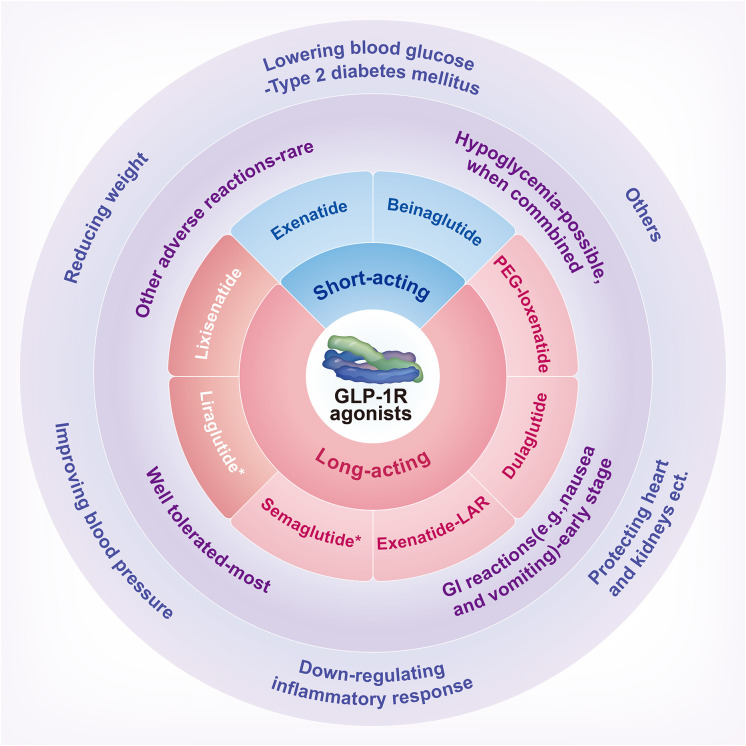
- Design: narrative review of GLP-1 receptor agonists for obesity treatment, including short-acting agents (beinaglutide, exenatide), once-daily agents (lixisenatide, liraglutide), once-weekly agents (semaglutide, dulaglutide, exenatide long-acting release, polyethylene glycol loxenatide), and dual/triple agonists.
- Data: evidence from prior animal experiments and human clinical trials, including named programs such as STEP, AWARD, GetGoal, SCALE, and SURPASS; the review also includes a comparison table of anti-obesity drugs and schematic figures.
- Analysis: narrative synthesis of cited studies, with no systematic search strategy, meta-analysis, or risk-of-bias assessment described.
Limitations
- The paper states that the mechanism of GLP-1R in treating obesity is still uncertain and that more clinical evidence is needed for long-term safety and efficacy.
- The paper states that except for liraglutide and semaglutide, there are few related clinical studies of other GLP-1R agonists, especially in obese or overweight people without diabetes.
- The paper states that the race of patients in semaglutide-related clinical studies is relatively small and that more clinical trials in Asian and African obese populations are expected; evident from the text, the review is narrative rather than systematic and does not report formal quality assessment or publication-bias checks.
Model-written summary. Check it against the paper before relying on it.
Integrity signals
Registry
Cites
Statistics
Figures
Verification
Claims the paper makes
8 Valid · 3 Not valid · 86 Not checked · 9 Own results and interpretations
The cited sources support only part of this claim — read each source’s verdict below.
In the paper
“Evidence from previous studies show that weight loss can significantly reduce the risk of obesity-related complications and chronic diseases.”
- Also stated in: § Introduction · boosted
“A systematic review and meta-analysis proved that weight loss had been shown to prevent and mitigate obesity-related complications (9).”
§ GLP−1 receptor agonists for the treatment of obesity: Role as a promising approach > Abstract
What the sources say
- Partly supportedcites [9] Ma C Avenell A Bolland M Hudson J Stewart F Robertson C. Effects of weight loss interventions for adults who are obese on mortality, cardiovascular disease, and cancer: systematic review and meta-analysis. BMJ (2017) 359: j4849. doi: 10.1136/bmj.j4849 29138133 PMC5682593 sourceExperimental — accuracy not yet measured
Our copy of Ma et al. (BMJ 2017) supports only part of the claim: the Abstract (Results) and Discussion report high quality evidence that weight loss interventions decreased all cause (premature) mortality (RR 0.82, 95% CI 0.71–0.95; 18% relative reduction, six fewer deaths per 1000) in adults with obesity (BMI ≥30, ≥1 year follow-up). But the same Discussion states 'We were unable to show effects on cardiovascular and cancer mortality, or participants developing cardiovascular events or new cancers,' and the Results (Meta-analyses) give non-significant estimates for cardiovascular mortality (RR 0.93, 0.67–1.31), cancer mortality (RR 0.58, 0.30–1.11), new cardiovascular events (RR 0.93, 0.83–1.04) and new cancers (RR 0.92, 0.63–1.36). So the sweeping assertion that weight loss 'significantly reduces the risk of obesity-related complications and chronic diseases' overstates this source, which shows a significant effect on premature mortality only, in adults who are obese; type 2 diabetes prevention is mentioned merely as an already proven benefit from other trials. (LLM, conf=0.78)
boostedstates a cause- Asserted: passes — The authors put it forward as true.
- Checkable: passes — It can be checked against evidence.
- Load-bearing: passes — The paper’s conclusions depend on it.
- Based: passes — The paper gives a reason why it holds.
- Also stated in: § Introduction · boosted
The cited sources support only part of this claim — read each source’s verdict below.
In the paper
“In GetGoal-S, a subanalysis of GetGoal-S and GetGoal-F1 studies, they found that LIXI could significantly reduce subjects’ body weight (− 1.76 ± 0.20 kg;-1.12 kg; -2.6/2.7 kg), respectively (72–74).”
§ GLP−1 receptor agonists for the treatment of obesity: Role as a promising approach > Experimental evidence of GLP-1R agonists > Long−acting GLP−1 receptor agonists: once-daily
What the sources say
- Supportedcites [72] Rosenstock J Hanefeld M Shamanna P Min KW Boka G Miossec P. Beneficial effects of once-daily lixisenatide on overall and postprandial glycemic levels without significant excess of hypoglycemia in type 2 diabetes inadequately controlled on a sulfonylurea with or without metformin (GetGoal-s). J Diabetes Complications (2014) 28: 386–92. doi: 10.1016/j.jdiacomp.2014.01.012 24650952 source
The Results (section 3.2.3, Body weight) report a significantly greater weight reduction with lixisenatide than placebo at Week 24, including the −1.76 ± 0.20 kg value. This GetGoal-S paper supports the first result in the citing sentence’s three-study list; the other values are not attributed to this source. (LLM, conf=0.92)
- Supportedcites [73] Bolli GB Munteanu M Dotsenko S Niemoeller E Boka G Wu Y. Efficacy and safety of lixisenatide once daily vs. placebo in people with type 2 diabetes insufficiently controlled on metformin (GetGoal-F1). Diabetes Med (2014) 31: 176–84. doi: 10.1111/dme.12328 24117597 source
The Body weight section (p. 5) reports significant weight reductions versus placebo in GetGoal-F1, with least-squares mean changes of −2.6 kg and −2.7 kg for its two lixisenatide regimens. This source supports the final pair of values in the citing sentence’s respective list; it does not report the GetGoal-S or subanalysis values attributed to the other citations. (LLM, conf=0.91)
- Partly supportedcites [74] Onishi Y Niemoeller E Ikeda Y Takagi H Yabe D Seino Y. Efficacy and safety of lixisenatide in Japanese patients with type 2 diabetes mellitus inadequately controlled by sulfonylurea with or without metformin: Subanalysis of G et G oal- s. J Diabetes Investig (2015) 6: 201–9. doi: 10.1111/jdi.12275 PMC4364855 25802728 sourceExperimental — accuracy not yet measured
The Results > Efficacy passage reports a −1.12 kg bodyweight change with lixisenatide in the Japanese GetGoal-S subanalysis, matching the figure attributed to this source. But the difference from placebo was not significant (P = 0.7628), as the Discussion also states. Thus the reported weight change is supported, but the claim that this subanalysis found a significant reduction is not. (LLM, conf=0.90)
plainstates a cause- Asserted: passes — The authors put it forward as true.
- Checkable: passes — It can be checked against evidence.
- Load-bearing: unclear — It is unclear whether the paper’s conclusions depend on it.
- Based: passes — The paper gives a reason why it holds.
- Supported
The cited sources support only part of this claim — read each source’s verdict below.
In the paper
“Studies in knock-out mice confirms the significant potential for novel triple-acting hybrid peptides as therapeutic options for obesity (128).”
§ GLP−1 receptor agonists for the treatment of obesity: Role as a promising approach > Others: GIPR/GLP-1R dual agonists and GIPR/GLP-1R/GCGR triagonists
What the sources say
- Partly supportedcites [128] Gault VA Bhat VK Irwin N Flatt PR Gault VA Bhat VK. A novel glucagon-like peptide-1 (GLP-1)/Glucagon hybrid peptide with triple-acting agonist activity at glucose-dependent insulinotropic polypeptide, GLP-1, and glucagon receptors and therapeutic potential in high fat-fed mice. J Biol Chem (2013) 288: 35581–91. doi: 10.1074/jbc.M113.512046 PMC3853303 24165127 sourceExperimental — accuracy not yet measured
The Abstract says knockout-mouse studies confirmed that the peptide acts through GIP, GLP-1, and glucagon receptors, and that the overall data suggest therapeutic promise for obesity. It does not say the knockout studies themselves confirmed that therapeutic potential; the cited sentence combines those two conclusions and strengthens the latter. (LLM, conf=0.84)
boostedstates a cause- Asserted: passes — The authors put it forward as true.
- Checkable: passes — It can be checked against evidence.
- Load-bearing: unclear — It is unclear whether the paper’s conclusions depend on it.
- Based: passes — The paper gives a reason why it holds.
- Partly supported
A conclusion the paper draws from its own results — it cites no other source for it, so there is none to check. The quote shows it is in the paper.
In the paper
“Therefore, GLP-1R agonists are promising agents for the treatment of obese individuals.”
§ GLP−1 receptor agonists for the treatment of obesity: Role as a promising approach > Abstract
plainstates a possible cause- Asserted: passes — The authors put it forward as true.
- Checkable: passes — It can be checked against evidence.
- Load-bearing: passes — The paper’s conclusions depend on it.
- Based: passes — The paper gives a reason why it holds.
In the paper
“Several animal experiments and clinical trials have demonstrated that GLP-1R agonists are more effective in treating or preventing obesity.”
- Also stated in: § Introduction · boosted
“Many clinical trials have proven GLP-1R agonists’ effectiveness and safety in treating or preventing obesity (14).”
§ GLP−1 receptor agonists for the treatment of obesity: Role as a promising approach > Abstract
What the sources say
- Not checked yetcites [14] Brown E Heerspink HJL Cuthbertson DJ Wilding JPH. SGLT2 inhibitors and GLP-1 receptor agonists: established and emerging indications. Lancet (2021) 398: 262–76. doi: 10.1016/S0140-6736(21)00536-5 34216571 source
boostedstates a cause- Asserted: passes — The authors put it forward as true.
- Checkable: passes — It can be checked against evidence.
- Load-bearing: passes — The paper’s conclusions depend on it.
- Based: passes — The paper gives a reason why it holds.
- Also stated in: § Introduction · boosted
32 more claims
Create a free account to see all 106 claims and to verify the 119 references still open.
- It may state two separate claims as one. 63
- Probably not a substantial claim. 12
Claims other papers make about this one
Each is checked against this paper’s own text: does it say what the citing paper says it does?
The source backs part of the claim, not all of it — or backs it for a different population, condition or comparison.
In the citing paper
“The most well-known mechanism through which GLP-1RAs affect weight loss is through the endocrine pathway, but its role in the nervous system should not be overlooked.415–417”
From Glucagon-like peptide-1 receptor: mechanisms and advances in therapy (2024) · cites this paper as [415]
Experimental — accuracy not yet measuredThe source backs part of the claim, not all of it — or backs it for a different population, condition or comparison.
In the citing paper
“Recent literature shows that GLP-1 receptor agonists are highly effective for weight loss and improving metabolic and cardiovascular health, often surpassing the results of lifestyle interventions alone, such as exercise and diet modification.”
From GLP-1 agonists and exercise: the future of lifestyle prioritization (2025) · cites this paper as [4]
Experimental — accuracy not yet measuredThe source backs part of the claim, not all of it — or backs it for a different population, condition or comparison.
In the citing paper
“GLP-1RAs, including liraglutide and semaglutide, can induce substantial weight loss (often 10–15% or more), improve cardiometabolic risk factors, including histological damage associated with metabolic dysfunction–associated steatohepatitis (MASH) (3), and reduce major adverse cardiovascular events in both diabetic and non-diabetic populations (1, 4–12).”
From GLP-1 agonists and exercise: the future of lifestyle prioritization (2025) · cites this paper as [4]
Experimental — accuracy not yet measuredThe source backs part of the claim, not all of it — or backs it for a different population, condition or comparison.
In the citing paper
“Current evidence strongly supports the efficacy of GLP-1 receptor agonists for inducing substantial weight loss, improving metabolic control, and reducing cardiovascular risk – often surpassing the short-term effects of exercise alone (4–10, 23).”
From GLP-1 agonists and exercise: the future of lifestyle prioritization (2025) · cites this paper as [4]
Experimental — accuracy not yet measured
1 more claim about this paper
Create a free account to see every claim other papers make about this one.
Citations
Cites
Once-Weekly Semaglutide in Adults with Overweight or Obesity
Wilding, J. P. H., Batterham, R. L., Calanna, S., Davies, M., Van Gaal, L. F., Lingvay, I., McGowan, B. M., Rosenstock, J., Tran, M. T. D., Wadden, T. A., et al. (2021) · New England Journal of Medicine · doi:10.1056/nejmoa2032183 · Cited by 5,205 · cited 3×
“However, obesity is a global health challenge with few drug options (100).”
BackgroundObesity: global epidemiology and pathogenesis
Blüher, M. (2019) · Nature Reviews Endocrinology · doi:10.1038/s41574-019-0176-8 · Cited by 5,126
European Guidelines for Obesity Management in Adults
Yumuk, V., Tsigos, C., Fried, M., Schindler, K., Busetto, L., Micic, D., & Toplak, H. (2015) · Obesity Facts · doi:10.1159/000442721 · Cited by 3,432
The Physiology of Glucagon-like Peptide 1
Holst, J. J. (2007) · Physiological Reviews · doi:10.1152/physrev.00034.2006 · Cited by 3,371 · cited 2×
“In addition, the GLP-1 can inhibit postprandial gastric emptying and reduce gastric acid secretion, inhibit gastric and duodenal peristalsis by inhibiting vagus nerve, and increase the pressure of pylorus, thus reducing appetite, causing a reduction in body weight and participating in the so-called “ileal braking” eff…”
BackgroundGerstein, H. C., Colhoun, H. M., Dagenais, G. R., Diaz, R., Lakshmanan, M., Pais, P., Probstfield, J., Riesmeyer, J. S., Riddle, M. C., Rydén, L., et al. (2019) · The Lancet · doi:10.1016/s0140-6736(19)31149-3 · Cited by 3,163
Self-citationA Randomized, Controlled Trial of 3.0 mg of Liraglutide in Weight Management
Pi-Sunyer, X., Astrup, A., Fujioka, K., Greenway, F., Halpern, A., Krempf, M., Lau, D. C. W., le Roux, C. W., Violante Ortiz, R., Jensen, C. B., et al. (2015) · New England Journal of Medicine · doi:10.1056/nejmoa1411892 · Cited by 2,724
Lixisenatide in Patients with Type 2 Diabetes and Acute Coronary Syndrome
Pfeffer, M. A., Claggett, B., Diaz, R., Dickstein, K., Gerstein, H. C., Køber, L. V., Lawson, F. C., Ping, L., Wei, X., Lewis, E. F., et al. (2015) · New England Journal of Medicine · doi:10.1056/nejmoa1509225 · Cited by 2,409 · cited 1×
“The indication is to effectively reduce glycosylated hemoglobin levels in patients with T2DM by reducing fasting and postprandial blood glucose levels (61, 62).”
BackgroundMechanisms of Action and Therapeutic Application of Glucagon-like Peptide-1
Drucker, D. J. (2018) · Cell Metabolism · doi:10.1016/j.cmet.2018.03.001 · Cited by 2,170 · cited 4×
“In addition, the GLP-1 can inhibit postprandial gastric emptying and reduce gastric acid secretion, inhibit gastric and duodenal peristalsis by inhibiting vagus nerve, and increase the pressure of pylorus, thus reducing appetite, causing a reduction in body weight and participating in the so-called “ileal braking” eff…”
BackgroundInfluentialFuller, N. R., Colagiuri, S., Schofield, D., Olson, A. D., Shrestha, R., Holzapfel, C., Wolfenstetter, S. B., Holle, R., Ahern, A. L., Hauner, H., et al. (2013) · International Journal of Obesity · doi:10.1038/ijo.2012.139 · Cited by 2,117
Davies, M., Færch, L., Jeppesen, O. K., Pakseresht, A., Pedersen, S. D., Perreault, L., Rosenstock, J., Shimomura, I., Viljoen, A., Wadden, T. A., et al. (2021) · The Lancet · doi:10.1016/s0140-6736(21)00213-0 · Cited by 1,419
Research works printed but not linked: 3
- GLP-1 receptor agonists in the treatment of type 2 diabetes - state-of-the-art - PubMed. Available at: https://pubmed.ncbi.nlm.nih.gov/33068776/ (Accessed November 14, 2022).
- Forst T Pfützner A. Pharmacological profile, efficacy and safety of lixisenatide in type 2 diabetes mellitus. Expert Opin Pharmacother (2013) 14: 2281–96. doi: 10.1517/14656566.2013.838559 24087882 · DOI · Paper page
- Effect of weekly subcutaneous semaglutide vs daily liraglutide on body weight in adults with overweight or obesity without diabetes: The STEP 8 randomized clinical trial. Available at: https://pubmed.ncbi.nlm.nih.gov/?term=+Effect+of+Weekly+Subcutaneous+Semaglutide+vs+Daily+Liraglutide+on+Body+Weight+in+Adults+With+Overweight+or+Obesity+Without+Diabetes%3A+The+STEP+8+Randomized+Clinical+Trial&size=100 (Accessed August 10, 2022). PMC8753508 35015037
Cited by
Glucagon-like peptide-1 receptor: mechanisms and advances in therapy
Zheng, Z., Zong, Y., Ma, Y., Tian, Y., Pang, Y., Zhang, C., & Gao, J. (2024) · Signal Transduction and Targeted Therapy · doi:10.1038/s41392-024-01931-z · Cited by 1,036
Advance in peptide-based drug development: delivery platforms, therapeutics and vaccines
Xiao, W., Jiang, W., Chen, Z., Huang, Y., Mao, J., Zheng, W., Hu, Y., & Shi, J. (2025) · Signal Transduction and Targeted Therapy · doi:10.1038/s41392-024-02107-5 · Cited by 449
van Zuylen, M. L., Siegelaar, S. E., Plummer, M. P., Deane, A. M., Hermanides, J., & Hulst, A. H. (2024) · British Journal of Anaesthesia · doi:10.1016/j.bja.2024.01.001 · Cited by 132
Tobaiqy, M., & Elkout, H. (2024) · International Journal of Clinical Pharmacy · doi:10.1007/s11096-023-01694-7 · Cited by 88
“Weight reduction is undoubtedly essential for improving the outcomes for people with obesity and type 2 diabetes mellitus (T2DM) [1].”
BackgroundRegulation of CD8+ T cells by lipid metabolism in cancer progression
Tang, Y., Chen, Z., Zuo, Q., & Kang, Y. (2024) · Cellular and Molecular Immunology · doi:10.1038/s41423-024-01224-z · Cited by 137
Berg, S., Stickle, H., Rose, S. J., & Nemec, E. C. (2025) · Obesity Reviews · doi:10.1111/obr.13929 · Cited by 111
“39 Semaglutide and tirzepatide are administered once weekly, while liraglutide is administered once daily.”
Min, J. S., Jo, S. J., Lee, S., Kim, D. Y., Kim, D. H., Lee, C. B., & Bae, S. K. (2025) · Drug Design Development and Therapy · doi:10.2147/dddt.s506957 · Cited by 133
“24 Based on these findings, two GLP-1 RAs were approved by the US FDA to treat obesity so far: liraglutide and semaglutide.”
Cytokines as key players in obesity low grade inflammation and related complications
Uti, D. E., Atangwho, I. J., Omang, W. A., Alum, E. U., Obeten, U. N., Udeozor, P. A., Agada, S. A., Bawa, I., & Ogbu, C. O. (2025) · Obesity Medicine · doi:10.1016/j.obmed.2025.100585 · Cited by 129
Ismaiel, A., Scarlata, G. G. M., Boitos, I., Leucuta, D.-C., Popa, S.-L., Al Srouji, N., Abenavoli, L., & Dumitrascu, D. L. (2025) · International Journal of Obesity · doi:10.1038/s41366-025-01859-6 · Cited by 99
“Consequently, these agents not only aid in glycemic control but also exhibit pronounced effects on body weight [5].”
Subramaniyan, V., & Hanim, Y. U. (2025) · International Journal of Obesity · doi:10.1038/s41366-025-01729-1 · Cited by 112
“These drugs offer a novel approach to obesity treatment, although their precise action mechanism and long-term safety and effectiveness require further clinical validation [83].”
Molecular mechanisms of semaglutide and liraglutide as a therapeutic option for obesity
Tamayo‐Trujillo, R., Ruiz‐Pozo, V. A., Cadena-Ullauri, S., Guevara‐Ramírez, P., Paz‐Cruz, E., Zambrano-Villacres, R., Simancas‐Racines, D., & Zambrano, A. K. (2024) · Frontiers in Nutrition · doi:10.3389/fnut.2024.1398059 · Cited by 100
“However, the low half-life of GLP-1 incretin could affect this process in individuals with DM2 or obesity (32, 33).”
BackgroundHampton, J. T., & Liu, W. R. (2024) · Chemical Reviews · doi:10.1021/acs.chemrev.4c00004 · Cited by 97
Do GLP-1 Analogs Have a Place in the Treatment of PCOS? New Insights and Promising Therapies
Szczesnowicz, A., Szeliga, A., Niwczyk, O., Bala, G., & Meczekalski, B. (2023) · Journal of Clinical Medicine · doi:10.3390/jcm12185915 · Cited by 83
“In a three-year trial focused on obesity and prediabetes, it was found that liraglutide at a dosage of 3mg exhibited potential health benefits by reducing diabetes risk among patients with obesity and prediabetes [22].”
BackgroundInfluentialAldhaleei, W. A., Abegaz, T. M., & Bhagavathula, A. S. (2024) · Pharmaceuticals · doi:10.3390/ph17020199 · Cited by 80
“Some GLP-1 RAs have also been approved and marketed specifically for weight loss based on evidence that they reduce food intake by stimulating insulin and inhibiting glucagon secretion postprandially [4].”
What Is Food Noise? A Conceptual Model of Food Cue Reactivity
Hayashi, D., Edwards, C., Emond, J. A., Gilbert-Diamond, D., Butt, M., Rigby, A., & Masterson, T. D. (2023) · Nutrients · doi:10.3390/nu15224809 · Cited by 80
“For example, GLP-1RAs have been shown to activate GLP-1 receptors in numerous tissues and organs in the human body, three of which are believed to be of particular relevance for weight management: the gastrointestinal tract, the pancreas, and parts of the central nervous system [2].”
BackgroundMłynarska, E., Bojdo, K., Bulicz, A., Frankenstein, H., Gąsior, M., Kustosik, N., Rysz, J., & Franczyk, B. (2025) · Current Issues in Molecular Biology · doi:10.3390/cimb47100787 · Cited by 108
“Like other GLP-1 receptor agonists, semaglutide’s main side effects are gastrointestinal, typically mild to moderate, and improve over time [113].”
Levy, S. M., Attia, A. S., Elshazli, R. M., Abdelmaksoud, A., Tatum, D. M., Aiash, H., & Toraih, E. A. (2024) · Cancers · doi:10.3390/cancers17010078 · Cited by 72
“Glucagon-like peptide-1 receptor agonists (GLP-1RAs), initially developed for type-2 diabetes management, have emerged as powerful tools in obesity treatment [1,2].”
Glucagon-like peptide-1 receptor agonists and muscle mass effects
Ceasovschih, A., Asaftei, A., Lupo, M. G., Kotlyarov, S., Bartušková, H., Balta, A., Sorodoc, V., Sorodoc, L., & Banach, M. (2025) · Pharmacological Research · doi:10.1016/j.phrs.2025.107927 · Cited by 64
Hamed, K. M., Alosaimi, M. N., Ali, B. A., Alghamdi, A. M., Alkhashi, T., Alkhaldi, S. S., Altowarqi, N. A., Alzahrani, H., Alshehri, A., Alkhaldi, R. K., et al. (2024) · Cureus · doi:10.7759/cureus.68390 · Cited by 96
Clarke, G. S., Page, A. J., & Eldeghaidy, S. (2024) · Pharmacology Research & Perspectives · doi:10.1002/prp2.70027 · Cited by 56
The effects of GLP‐1RA on inflammatory skin diseases: A comprehensive review
Paschou, I. A., Sali, E., Paschou, S. Α., Ψαλτοπούλου, Θ., Nicolaidou, E., & Stratigos, A. J. (2025) · Journal of the European Academy of Dermatology and Venereology · doi:10.1111/jdv.20694 · Cited by 56
The Gut Microbiome in Human Obesity: A Comprehensive Review
Borrego-Ruiz, A., & Borrego, J. J. (2025) · Biomedicines · doi:10.3390/biomedicines13092173 · Cited by 66
“…brown adipose tissue transplantation, fecal microbiota transplantation (FMT), glucagon-like peptide-1 receptor agonists, poly-agonist pharmacotherapies, ultrasound stimulation of the vagus nerve, and precision nutrition strategies, have shown promise for clinical application [15,23–28].”
Ahmed, I. A. B. (2024) · Journal of Obesity · doi:10.1155/2024/8056440 · Cited by 53
“It exerts its infuence by promoting insulin secretion while concurrently reducing glucagon levels [2].”
Lavu, M. S., Porto, J. R., Hecht, C. J., Kaelber, D. C., Sculco, P. K., Heckmann, N. D., & Kamath, A. F. (2024) · The Journal of Arthroplasty · doi:10.1016/j.arth.2024.06.008 · Cited by 47
Wiener, J. M., Sanghvi, P. A., Vlastaris, K., Mroz, T. E., Belding, J., Kaelber, D. C., Olson, T. E., Francis, K. P., Adams, J. S., Bernthal, N. M., et al. (2025) · Spine · doi:10.1097/brs.0000000000005283 · Cited by 52
Zisis, M., Chondrogianni, M. E., Ανδρουτσάκος, Θ., Rantos, I., Oikonomou, E. K., Chatzigeorgiou, A., & Kassi, E. N. (2025) · Biomolecules · doi:10.3390/biom15030324 · Cited by 48
Semaglutide Ameliorates Diabetic Neuropathic Pain by Inhibiting Neuroinflammation in the Spinal Cord
Lee, S.-O., Kuthati, Y., Huang, W.-H., & Wong, C. (2024) · Cells · doi:10.3390/cells13221857 · Cited by 46
“Several GLP-1 receptor agonists (GLP-1RAs) are approved for managing type 2 diabetes and facilitating weight control [38].”
The emerging role of glucagon-like peptide 1 in binge eating
Balantekin, K. N., Kretz, M. J., & Mietlicki-Baase, E. G. (2024) · Journal of Endocrinology · doi:10.1530/joe-23-0405 · Cited by 38
Kow, C. S., Ramachandram, D. S., Hasan, S. S., & Thiruchelvam, K. (2025) · Sleep Medicine · doi:10.1016/j.sleep.2025.02.010 · Cited by 42
Amin, N. B., Frederich, R. C., Tsamandouras, N., Haggag, A. Z., Schuster, T., Żmuda, W., Palmer, A., Vasas, S., Buckley, G., Smith, T. R., et al. (2024) · Diabetes Obesity and Metabolism · doi:10.1111/dom.16005 · Cited by 39
Yang, R., Zhang, L., Guo, J., Wang, N., Zhang, Q., Qi, Z., Wu, L., Qin, L., & Liu, T. (2025) · Journal of Translational Medicine · doi:10.1186/s12967-025-06302-y · Cited by 39
GLP‐1 agonists and the gut microbiome: A bidirectional relationship
Kamath, S., Chan, N. S. L., & Joyce, P. M. (2026) · British Journal of Clinical Pharmacology · doi:10.1002/bcp.70487 · Cited by 44
Guo, H., Yang, J., Huang, J., Xu, L., Lv, Y., Wang, Y., Ren, J., Feng, Y., Zheng, Q., & Li, L. (2025) · Obesity Pillars · doi:10.1016/j.obpill.2025.100162 · Cited by 32
“The FDA has approved GLP-1 receptor agonists such as Liraglutide, Semaglutide, and the GLP-1/GIP dual agonist Tirzepatide for the treatment of obesity [16 – 18].”
The Impact of Obesity on Inflammatory Bowel Disease
Kaazan, P., Seow, W., Yong, S., Heilbronn, L. K., & Segal, J. P. (2023) · Biomedicines · doi:10.3390/biomedicines11123256 · Cited by 36
Jiang, Y., Zhu, H., & Gong, F. (2024) · Diabetes Obesity and Metabolism · doi:10.1111/dom.16106 · Cited by 37
Unlocking the multifaceted roles of GLP-1: Physiological functions and therapeutic potential
AL-Noshokaty, T. M., Abdelhamid, R., Abdelmaksoud, N. M., Khaled, A., Hossam, M., Ahmed, R., Saber, T., Khaled, S., Elshaer, S. S., & Abulsoud, A. I. (2025) · Toxicology Reports · doi:10.1016/j.toxrep.2025.101895 · Cited by 30
Li, H., Yu, G., Huang, Q., Yang, B., Nie, J., Liu, Y., & Tu, X. (2024) · Biomedicine & Pharmacotherapy · doi:10.1016/j.biopha.2024.116150 · Cited by 38
Glucagon-like peptide-1 analogs: Miracle drugs are blooming?
Gong, B., Yao, Z., Zhou, C., Wang, W., Sun, L., & Han, J. D. J. (2024) · European Journal of Medicinal Chemistry · doi:10.1016/j.ejmech.2024.116342 · Cited by 29
Somani, S. S., Jain, S. S., Sarraju, A., Sandhu, A. T., Hernandez‐Boussard, T., & Rodríguez, F. (2024) · Communications Medicine · doi:10.1038/s43856-024-00566-z · Cited by 36
“These drugs were initially approved for the treatment of type 2 diabetes but have recently gained international attention for weight loss and cardiovascular risk reduction in obese patients with or without type II diabetes 4,5 .”
The power of three: Retatrutide’s role in modern obesity and diabetes therapy
Abdul-Rahman, T., Roy, P., Ahmed, F. K., Mueller-Gomez, J. L., Sarkar, S., Garg, N., Femi-Lawal, V. O., Wireko, A. A., Thaalibi, H. I., Hashmi, M. U., et al. (2024) · European Journal of Pharmacology · doi:10.1016/j.ejphar.2024.177095 · Cited by 27
Pharmacotherapy before and after bariatric surgery
Alabduljabbar, K. A., & le Roux, C. W. (2023) · Metabolism · doi:10.1016/j.metabol.2023.155692 · Cited by 30
Immunometabolic Interactions in Obesity: Implications for Therapeutic Strategies
Fei, Q., Huang, J., He, Y., Zhang, Y., Zhang, X., Wang, J., & Fu, Q. (2025) · Biomedicines · doi:10.3390/biomedicines13061429 · Cited by 32
“The complexity of obesity necessitates comprehensive treatment strategies that integrate immunomodulatory therapies with existing pharmacotherapies, such as metformin and GLP-1 receptor agonists, known for their efficacy in managing obesity and its metabolic consequences [124,125].”
Self-citationTong, Y., Huang, J., Chen, Y., Tu, M., & Wang, W. (2023) · Frontiers in Pharmacology · doi:10.3389/fphar.2023.1176206 · Cited by 27
“GLP-1 receptor agonists (GLP-1 RAs) are analogs of human native GLP-1 hormone that can increase plasma GLP-1 half-life and has widely used as hypoglycemic agents in T2DM (Wang et al., 2023).”
BackgroundAnti-obesity effects of olivetol in adult zebrafish model induced by short-term high-fat diet
Reshma, A., Tamilanban, T., Chitra, V., Subramaniyan, V., Gupta, G., Fuloria, N. K., Sekar, M., Fuloria, S., Sahu, R., Narayanan, J., et al. (2023) · Scientific Reports · doi:10.1038/s41598-023-44462-3 · Cited by 30
Effect of GLP-1 receptor agonists on weight and cardiovascular outcomes: A review
Raza, F. A., Altaf, R., Bashir, T., Asghar, F., Altaf, R., Tousif, S., Goyal, A., Mohammed, A., Mohammad, M. F., Anan, M., et al. (2024) · Medicine · doi:10.1097/md.0000000000040364 · Cited by 37
“[131] For elderly patients, it is crucial to weigh the risks associated with multiple medications and potential drug interactions, as GI side effects could increase the risk of dehydration.”
BackgroundDelvadia, P., Dhote, V. V., Mandloi, A. S., Soni, R., & Shah, J. (2025) · ACS Chemical Neuroscience · doi:10.1021/acschemneuro.4c00729 · Cited by 29
Liu, N., Cui, X., Guo, T., Wei, X., Sun, Y., Liu, J., Zhang, Y., Ma, W., Yan, W., & Chen, L. (2024) · Antioxidants · doi:10.3390/antiox13101246 · Cited by 31
Fernando, K., Connolly, D. L., Darcy, E., Evans, M., Hinchliffe, W., Holmes, P., & Strain, W. D. (2025) · Diabetes Therapy · doi:10.1007/s13300-025-01738-3 · Cited by 32
“GLP-1 and GLP-1/ GIP RAs can complement lifestyle interventions for individuals with overweight or obesity and at least one weight-related condition [96].”
Transforming steatotic liver disease management: The emerging role of GLP-1 receptor agonists
Jensen, E., Israelsen, M. E., & Krag, A. A. (2024) · Hepatology Communications · doi:10.1097/hc9.0000000000000561 · Cited by 25
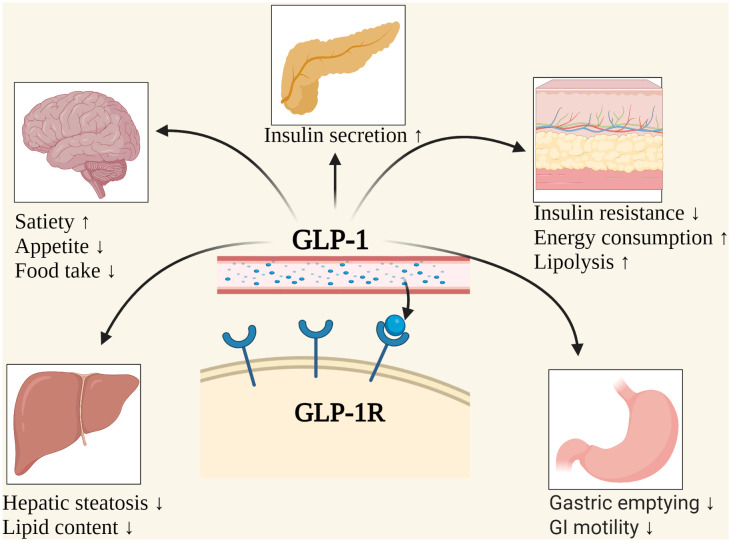
“[11,12] The mode of action is complex as GLP-1 receptor agonists work through multiple pathways in several organ systems (Figure 1).”
BackgroundThe interplay between endometriosis and obesity
Rahman, M. S., Park, Y., Hosseinirad, H., Shin, J., & Jeong, J. (2025) · Trends in Endocrinology and Metabolism · doi:10.1016/j.tem.2025.03.011 · Cited by 33
Rubinić, I., Kurtov, M., & Likić, R. (2024) · Pharmacology Research & Perspectives · doi:10.1002/prp2.1243 · Cited by 27
“30 Its secretion is stimulated by the presence of nutrients in the digestive system.”
BackgroundThe feasibility and outcomes of metabolic and bariatric surgery prior to neoplastic therapy
Parmar, C. D., Mosleh, K. A., Aeschbacher, P., Halfdanarson, T. R., McKenzie, T. J., Rosenthal, R. J., Ghanem, O. M., Heneghan, H., Brennan, D. J., Wilkinson, M., et al. (2024) · Surgery for Obesity and Related Diseases · doi:10.1016/j.soard.2024.02.008 · Cited by 21
Buonanno, S., Gaggiano, C., Terribili, R., Cantarini, L., Frediani, B., & Gentileschi, S. (2025) · Inflammation Research · doi:10.1007/s00011-025-02140-2 · Cited by 24
Havers, T., Held, S., Schönfelder, M., Geisler, S., & Wackerhage, H. (2025) · Sports Medicine · doi:10.1007/s40279-025-02263-w · Cited by 19
Harnessing GLP‐1 Receptor Agonists for Obesity Treatment: Prospects and Obstacles on the Horizon
Abdelrahman, R. M., Musa, T. H., Arbab, I. A., Suliman, M. H., Ahmed, E. O., Mohamed, A. N., Musa, H. H., Jalal, M., & Gasmallah, S. I. (2025) · Journal of Obesity · doi:10.1155/jobe/9919810 · Cited by 24
Reed, J., Bain, S. C., & Kanamarlapudi, V. (2024) · Diabetes Metabolic Syndrome and Obesity · doi:10.2147/dmso.s415934 · Cited by 24
“Interestingly, recent studies have found that chronic GLP-1R activation results in enhanced ATP production and upregulation of glycolytic enzymes which increases the potential of ATP production anaerobically.”
Arte, P. A., Tungare, K., Bhori, M., Jobby, R., & Aich, J. (2023) · Human Cell · doi:10.1007/s13577-023-01007-0 · Cited by 20
An adipocentric perspective of pancreatic lipotoxicity in diabetes pathogenesis
Risi, R., Vidal‐Puig, A., & Bidault, G. (2024) · Journal of Endocrinology · doi:10.1530/joe-23-0313 · Cited by 19
“Their effectiveness is reflected by their capacity to reduce body weight, AT inflammation and improve body fat distribution ( Wang et al. 2023).”
Backgroundde Moraes, F. C. A., Morbach, V., Sano, V. K. T., Fernandes, L. R., Kreuz, M., & Kelly, F. A. (2024) · Obesity Surgery · doi:10.1007/s11695-024-07384-1 · Cited by 21
Khan, T. T. S., Sheikh, Z., Maleknia, S. D., Oveissi, F., Fathi, A., Abrams, T., Ong, H. X., & Traini, D. (2024) · Expert Opinion on Drug Delivery · doi:10.1080/17425247.2024.2387110 · Cited by 21
“Although these approaches aim to correct the discrepancy between calorie intake and energy expenditure, they often fail to cause adequate weight loss due to the compensatory metabolic, neurochemical, and hormonal mechanisms [6,7].”
GLP-1 agonists and exercise: the future of lifestyle prioritization
Codella, R., Senesi, P., & Luzi, L. (2025) · Frontiers in Clinical Diabetes and Healthcare · doi:10.3389/fcdhc.2025.1720794 · Cited by 16
“…weight loss (often 10 – 15% or more), improve cardiometabolic risk factors, including histological damage associated with metabolic dysfunction – associated steatohepatitis (MASH) (3), and reduce major adverse cardiovascular events in both diabetic and non-diabetic populations (1, 4 – 12).”
Umpierrez, G. E., Pasquel, F. J., Duggan, E. W., & Galindo, R. J. (2024) · Journal of Diabetes Science and Technology · doi:10.1177/19322968241231565 · Cited by 19
Ye, W., Wu, W., Peng, S., Jiang, Z., Wang, W., Wang, G., Yang, B., Fan, J., Lu, A., Lu, C. T., et al. (2025) · Research · doi:10.34133/research.0879 · Cited by 22
Ahmad, N., Alruwayyes, A., AlArjani, A., Tawhari, A. M., Aldosri, A., Alahmari, A., & Balaha, M. F. H. (2026) · Medicine · doi:10.1097/md.0000000000047994 · Cited by 18
Survival and Recurrence With GLP-1 Receptor Agonists in Breast Cancer
Tatum, K. L., Dahman, B. A., Stevenson, A., Williford, S. E., Cassel, J. B., Zhao, H., Shen, J., McGuire, K. P., Diala, O. R., Oladimeji, R., et al. (2026) · JAMA Network Open · doi:10.1001/jamanetworkopen.2026.12133 · Cited by 20
Kong, G., Cao, G., Koh, J., Chan, S. P., Zhang, A. A. Y., Wong, E. S. P., Chong, B., Jauhari, S. M., Wang, J., Mehta, A., et al. (2024) · Diabetes Obesity and Metabolism · doi:10.1111/dom.15660 · Cited by 16
Self-citationAli, S., Baig, S., Wanninayake, S., Xavier, G. D. S., Dawson, C., Paisey, R., & Geberhiwot, T. (2023) · Diabetes Obesity and Metabolism · doi:10.1111/dom.15398 · Cited by 19
Obesity-Related Kidney Disease: A Growing Threat to Renal Health
León-Román, J. C., López-Martínez, M., Esteves, A., Ciudin, A., Núñez-Delgado, S., Álvarez, T., Lecube, A., Rico-Fontalvo, J. E., & Soler, M. J. (2025) · International Journal of Molecular Sciences · doi:10.3390/ijms26146641 · Cited by 19
Harnessing adiponectin for sepsis: current knowledge, clinical insights and future therapies
Gianoli, S., Tang, J., Odegard, K. C., Yuki, K., & Koutsogiannaki, S. (2025) · Critical Care · doi:10.1186/s13054-025-05516-2 · Cited by 16
Aguiar, A., de Medeiros, W. F., da Silva-Maia, J. K., Bezerra, I. W. L., Piuvezam, G., & Morais, A. H. D. A. (2024) · International Journal of Molecular Sciences · doi:10.3390/ijms25179646 · Cited by 16
“Examples include glucagon-like peptide 1, leptin, neuropeptide Y, and adiponectin [53–56].”
BackgroundGuo, S., Wei, L., Song, B., Hu, Y., Jiang, Z., Zhao, D., Xu, Y., Lin, Y.-W., Xu, S., Chen, S.-B., et al. (2023) · European Journal of Medicinal Chemistry · doi:10.1016/j.ejmech.2023.115729 · Cited by 14
Tummala, S., Gibbs, D. L., Chavarria, J. C., Alder, J., Avramis, I., & Rizkalla, J. (2025) · Journal of Orthopaedics · doi:10.1016/j.jor.2025.05.018 · Cited by 17
Park, S. K., & Choi, J. H. (2025) · Journal of Clinical Medicine · doi:10.3390/jcm14217586 · Cited by 13
“Aside from facilitating weight reduction and improving OSA, they also enhance cardio-metabolic outcomes such as glycemic management and blood pressure control [135,136].”
Syndromic and Monogenic Obesity: New Opportunities Due to Genetic-Based Pharmacological Treatment
Kalinderi, K., Goula, V., Sapountzi, E., Tsinopoulou, V. R., & Fidani, L. (2024) · Children · doi:10.3390/children11020153 · Cited by 22
“GLP-1R agonists may also be a novel alternative drug for patients with genetic obesity [73].”
BackgroundPeng, D., Yang, L., Si, L., Zhu, B., Wu, P., Li, Y., Tang, D., Liu, Y., & Zhang, Y. (2024) · Protein Expression and Purification · doi:10.1016/j.pep.2024.106477 · Cited by 17
Ali, A., Flatt, P. R., & Irwin, N. (2024) · Clinical Medicine Insights Endocrinology and Diabetes · doi:10.1177/11795514241238059 · Cited by 14
Menon, T., Lee, S. M. L., Gong, X. Y., Wong, S., Le, G. H., Kwan, A. T. H., Teopiz, K. M., Ho, R., Cao, B., Rhee, T. G., et al. (2024) · CNS Spectrums · doi:10.1017/s1092852924000531 · Cited by 20
“As a result, GLP-1RAs, such as exenatide and semaglutide are commonly administered as a treatment for obesity in type 2 diabetes mellitus (T2DM) and polycystic ovary syndrome 16 .”
Friesch, M., Fernando, M., Sheedy, E. F., Helenowski, I., Wool, L., Edwards, M., Brown, K. R., Lau, J. N., & Cohn, T. D. (2025) · Surgical Endoscopy · doi:10.1007/s00464-025-11838-7 · Cited by 13
Gender-Difference in Response to Treatment with Liraglutide 3.0 mg
Milani, I., Guarisco, G., Chinucci, M., Gaita, C., Leonetti, F., & Capoccia, D. (2024) · doi:10.20944/preprints202405.0568.v1 · Cited by 11
Combination therapy is it in the future for successfully treating peripheral diabetic neuropathy?
Yorek, M. A. (2024) · Frontiers in Endocrinology · doi:10.3389/fendo.2024.1357859 · Cited by 13
Sex-Differences in Response to Treatment with Liraglutide 3.0 mg
(2024) · doi:10.3390/jcm13123369 · Cited by 11
Al-Sabah, S. K., Al‐Khairi, I., Jamal, M. H., Qaddoumi, M. G., Al-Ajmi, F. A., Kumar, J., ABUKHALAF, N. A., Cherian, P., Madhu, D., Arefanian, H., et al. (2024) · Medical Principles and Practice · doi:10.1159/000540534 · Cited by 14
“Glucagon-like peptide 1 (GLP-1) receptor agonists, which simulate incretin hormone action, are currently widely used agents in the treatment of obesity and diabetes [9].”
BackgroundHampton, J. T., Dobie, C. R., Coleman, D. D., Cherif, M., Das, S. K., & Liu, W. R. (2025) · ACS Chemical Biology · doi:10.1021/acschembio.4c00725 · Cited by 13
Elmati, P. R., Jagirdhar, G. S. K., Qasba, R. K., Perez, A., Qasba, R. K., Bains, Y., Shah, M., & Surani, S. (2025) · The Open Respiratory Medicine Journal · doi:10.2174/0118743064372550250603061720 · Cited by 15
Semaglutide - properties, action and chromatographic analysis
Wasilewska, B., & Petruczynik, A. (2025) · Journal of Diabetes & Metabolic Disorders · doi:10.1007/s40200-025-01711-8 · Cited by 13
“GLP-1 takes part in regulating glucose levels in the bloodstream – it encourages the release of insulin from beta cells in the pancreas and reduces the release of glucagon [ 9 ].”
InfluentialKhatkar, P., Hubbard, J. C., Hill, L. J., Sinclair, A. J., & Mollan, S. P. (2023) · Expert Opinion on Investigational Drugs · doi:10.1080/13543784.2023.2288073 · Cited by 11
“Given the role of GLP-1 R agonists in managing obesity [56], it was important to note that there was no significant change in body mass index within the exenatide group at 12 weeks, indicating that the ICP effect was not driven by reduction in body weight, but likely by direct effect of the drug to…”
BackgroundDiscovery of Selenium-Containing Derivatives as Potent and Orally Bioavailable GLP-1R Agonists
Chen, X., Xu, S., Yang, S. C., Yu, Z.-Z., Chen, Y., Wu, H., Bao, Q., You, Q., Guo, X., & Jiang, Z. (2025) · Journal of Medicinal Chemistry · doi:10.1021/acs.jmedchem.4c02616 · Cited by 11
The Genetic Blueprint of Obesity: From Pathogenesis to Novel Therapies
Tonin, G., Eržen, S., Mlinarič, Z., Jurišić‐Eržen, D., Horvat, S., Kunej, T., & Klen, J. (2025) · Obesity Reviews · doi:10.1111/obr.13978 · Cited by 18
Przybyłowski, A., Górski, M. K., Gwioździk, W., & Polaniak, R. (2025) · Healthcare · doi:10.3390/healthcare13161967 · Cited by 18
Molecular mechanisms underlying sarcopenia in heart failure
Rutledge, C. A. (2024) · The Journal of Cardiovascular Aging · doi:10.20517/jca.2023.40 · Cited by 15
“Though GLP-1RA’s benefits in HF have been predominantly demonstrated in preclinical models, their mass adoption as weight-loss agents will likely affect HF and sarcopenia outcomes on a population level [74] .”
Gul, U., Aung, T., Martin, M., Farrukh, D. N., Shah, P., Lovely, Z. S., León, E. M., Alansaari, M., Maini, S., Fariduddin, M. M., et al. (2024) · Cureus · doi:10.7759/cureus.76519 · Cited by 16
Johnson, C. E., Sussman, W. B., & Weeda, E. R. (2024) · Diabetes Obesity and Metabolism · doi:10.1111/dom.15809 · Cited by 11
Harmantepe, A. T., Gönüllü, E., Fırtına, G., İlhan, O., Yüksel, A., & Karaman, K. (2025) · Langenbeck s Archives of Surgery · doi:10.1007/s00423-025-03607-w · Cited by 10
The impact of semaglutide use for weight loss on transforaminal lumbar interbody fusion outcomes
Khalid, S. I., Mirpuri, P., Massaad, E., Wang, R., Elsamadicy, A. A., Shin, J. H., & Adogwa, O. (2025) · Clinical Neurology and Neurosurgery · doi:10.1016/j.clineuro.2025.108952 · Cited by 11
“Unfortunately, contemporary strategies of exercise, diet, and behavioral therapy have only been moderately successful at ameliorating its disease burden, and the prevalence of obesity continues to grow in the United States [1].”
Hart, J., Mansour, H., Sawant, H., Chicko, M., Arthur, S., Haynes, J., & Borthakur, A. (2025) · International Journal of Molecular Sciences · doi:10.3390/ijms26157080 · Cited by 9
“Further, GLP1 receptor agonists have recently been approved as effective obesity therapeutics for weight loss [16,17], indicating that defective EEC function could be a key factor in obesity.”
Her, Q. L., Wang, T., Stürmer, T., Buse, J. B., Funk, M. J., Pate, V., & Webster‐Clark, M. (2025) · Diabetes Obesity and Metabolism · doi:10.1111/dom.70002 · Cited by 11
Obesity as a modifiable risk factor in patients with chronic kidney disease
Morales, E., Jenssen, T. G., Bevc, S., Miglinas, M., Martin, W. P., Theodorakopoulou, M. P., Jørgensen, M. B., & Trillini, M. (2025) · Nephrology Dialysis Transplantation · doi:10.1093/ndt/gfaf231 · Cited by 10
Pierro, F. D., Thacharodi, A., Kumaraswami, M., Suvorov, A. N., Zupet, J., & Zerbinati, N. (2026) · Microbial Cell Factories · doi:10.1186/s12934-026-02997-w · Cited by 12
Ivashkevich, D., Ponomarenko, A. I., Manzhulo, I., Sultanov, R. M., & Dyuizen, I. V. (2023) · Nutrients · doi:10.3390/nu15204345 · Cited by 8
“Meanwhile, glucagon-like peptide-1 receptor agonists (liraglutide, semaglutide) hold great promise for treatment [11].”
BackgroundDorneles, G. P., Algeri, E. D. B. D. O., Lauterbach, G., Pereira, M. G., & Fernandes, B. (2024) · Experimental and Clinical Endocrinology & Diabetes · doi:10.1055/a-2303-8558 · Cited by 9
“Previous systematic reviews identified the efficacy and safety profile of semaglutide treatment in both overweight and obese pa - tients with or without type 2 diabetes, reporting the benefits of semaglutide treatment in weight management [6, 15, 17].”
Background
Metadata
- Authors
- Wang, J.-Y., Wang, Q.-W., Yang, X.-Y., Yang, W., Li, D.-R., Jin, J.-Y., Zhang, H.-C., & Zhang, X.-F.
- Affiliations
- First Hospital of Jilin University (CN)
- ORCID
- Yang, Wei
- Venue
- Frontiers in Endocrinology
- Publisher
- Frontiers Media SA
- Published
- 2023-02-01
- Volume
- 14
- Pages
- 1085799-1085799
- ISSN
- 1664-2392 (ISSN-L)
- PMC
- PMC9945324
- OpenAlex
- W4319808936
- Cited by
- 248
- References
- 145
- Citations by year
- 2026: 56 · 2025: 86 · 2024: 88 · 2023: 18
- FWCI
- 9.01
- Type
- journal article
- Language
- en
- Open access
- gold
- doi.org
- Licence
- Locations
- Frontiers in Endocrinology (publishedVersion, cc-by)
- PubMed Central (publishedVersion, cc-by)
- PubMed (publishedVersion)
- DOAJ (DOAJ: Directory of Open Access Journals) (submittedVersion, cc-by-sa)
- Funders
- National Natural Science Foundation of China
- Topics
- Health Sciences › Medicine › Pharmacology (medical) › Pharmacology and Obesity Treatment
- Life Sciences › Neuroscience › Endocrine and Autonomic Systems › Regulation of Appetite and Obesity
- Health Sciences › Medicine › Endocrinology, Diabetes and Metabolism › Diabetes Treatment and Management
- Keywords
- GLP-1 receptor agonists, obesity treatment, incretins, anti-obesity drugs, weight loss, obesity complications, obesity pharmacotherapy
- MeSH terms
- Glucagon-Like Peptide-1 Receptor, Glucagon-Like Peptide-1 Receptor Agonists, Animals, Obesity, Weight Loss, Anti-Obesity Agents, Incretins
About these checks
Registry, retraction, Cites and statistics results are computed, not judged, with one exception: a printed reference that no index lists is read once by a model before it counts as a citation error. Claims are extracted by a model and kept only when their quote appears verbatim in the text; each cited source is then checked, with a model’s help, for whether it says what the claim relies on. Those verdicts can be wrong — read the claim’s quote and the cited source before relying on one.
The claim verdicts this report counts are experimental: their accuracy is not yet measured.
A language model drew the claims from the paper on 2026-10-04, under version 3 of the claim definition (model deepseek-v4.1-flash, prompt extract-v3).
A second model labelled each claim on 2026-10-04 (model jev-1.13-20260917, definition revision gold-guideline-v0.2).
Cited sources are checked with a language model’s help (qwen3.8-omni-flash and gpt-6-sol).
Statistics and arithmetic are recomputed, not judged.
Confidence bands are shown only for fields calibrated on our annotated test set. None is calibrated yet, so no band is shown.
What counts as a claim ›How we measure confidence ›How we check this ›
Are you an author, or do you see a problem with this page? Request a review
Data sources
Bibliographic data: Semantic Scholar, OpenAlex, Crossref.
Contains information from the Semantic Scholar Academic Graph Datasets, made available under the ODC Attribution License (ODC-BY 1.0).
Semantic Scholar’s data is described in: Kinney, R., et al. (2023). The Semantic Scholar Open Data Platform. arXiv:2301.10140.
