

Mechanisms of action and therapeutic applications of GLP-1 and dual GIP/GLP-1 receptor agonists
Open accessThe DOI matches its Crossref record; 271 of the 279 references it cites were found in a registry or an index.
Abstract
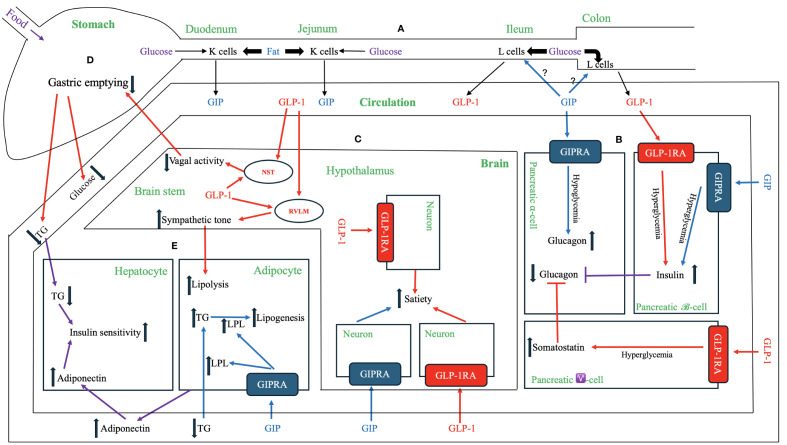
Glucose-dependent insulinotropic polypeptide (GIP) and glucagon-like peptide-1 (GLP-1) are two incretins that bind to their respective receptors and activate the downstream signaling in various tissues and organs. Both GIP and GLP-1 play roles in regulating food intake by stimulating neurons in the brain’s satiety center. They also stimulate insulin secretion in pancreatic β-cells, but their effects on glucagon production in pancreatic α-cells differ, with GIP having a glucagonotropic effect during hypoglycemia and GLP-1 exhibiting glucagonostatic effect during hyperglycemia. Additionally, GIP directly stimulates lipogenesis, while GLP-1 indirectly promotes lipolysis, collectively maintaining healthy adipocytes, reducing ectopic fat distribution, and increasing the production and secretion of adiponectin from adipocytes. Together, these two incretins contribute to metabolic homeostasis, preventing both hyperglycemia and hypoglycemia, mitigating dyslipidemia, and reducing the risk of cardiovascular diseases in individuals with type 2 diabetes and obesity. Several GLP-1 and dual GIP/GLP-1 receptor agonists have been developed to harness these pharmacological effects in the treatment of type 2 diabetes, with some demonstrating robust effectiveness in weight management and prevention of cardiovascular diseases. Elucidating the underlying cellular and molecular mechanisms could potentially usher in the development of new generations of incretin mimetics with enhanced efficacy and fewer adverse effects. The treatment guidelines are evolving based on clinical trial outcomes, shaping the management of metabolic and cardiovascular diseases.
Overview
The claims and statistics of this paper haven’t been checked yet.
Free: it reads the open-access text and checks the first 5 claims that cite a source we can check. Create a free account to check every claim.
Integrity signals
Registry
Cites
Statistics
Figures
Verification
Claims the paper makes
The claims and statistics of this paper haven’t been checked yet.
Free: it reads the open-access text and checks the first 5 claims that cite a source we can check. Create a free account to check every claim.
Claims other papers make about this one
Each is checked against this paper’s own text: does it say what the citing paper says it does?
The source backs part of the claim, not all of it — or backs it for a different population, condition or comparison.
In the citing paper
“In addition, GLP-1 inhibits gastric emptying and reduces bowel motility through a vagally mediated gastric braking mechanism [29,30].”
From Adherence and Persistence with GLP-1-Based Therapies: International Real-World Evidence and the Role of Nutritional and Lifestyle Support—A Narrative Review (2026) · cites this paper as [29]
Experimental — accuracy not yet measuredThe source backs part of the claim, not all of it — or backs it for a different population, condition or comparison.
In the citing paper
“Furthermore, GLP-1 enhances glucose-dependent insulin secretion from pancreatic beta cells and suppresses glucagon secretion from alpha cells, thereby reducing hepatic glucose output [29,30].”
From Adherence and Persistence with GLP-1-Based Therapies: International Real-World Evidence and the Role of Nutritional and Lifestyle Support—A Narrative Review (2026) · cites this paper as [29]
Experimental — accuracy not yet measuredThe cited source says what the claim attributes to it.
In the citing paper
“Therapeutic GLP-1 RAs are resistant to this enzymatic degradation, providing supraphysiological levels of receptor activation over extended periods [29,30].”
From Adherence and Persistence with GLP-1-Based Therapies: International Real-World Evidence and the Role of Nutritional and Lifestyle Support—A Narrative Review (2026) · cites this paper as [29]
Self-check
Percentages, sums and reported differences re-computed from the paper’s own numbers.
The self-check needs the paper’s full text.
Citations
Cites
Liraglutide and Cardiovascular Outcomes in Type 2 Diabetes
Marso, S. P., Daniels, G. H., Brown-Frandsen, K., Kristensen, P., Mann, J. F. E., Nauck, M. A., Nissen, S. E., Pocock, S., Poulter, N. R., Ravn, L. S., et al. (2016) · New England Journal of Medicine · doi:10.1056/nejmoa1603827 · Cited by 7,629
Semaglutide and Cardiovascular Outcomes in Patients with Type 2 Diabetes
Marso, S. P., Bain, S. C., Consoli, A., Eliaschewitz, F. G., Jódar, E., Leiter, L. A., Lingvay, I., Rosenstock, J., Seufert, J., Warren, M. L., et al. (2016) · New England Journal of Medicine · doi:10.1056/nejmoa1607141 · Cited by 6,900 · cited 1×
“…lixisenatide (250), the EXSCEL trial of exenatide ER (251), the LEARDER trial of liraglutide (252), the SUSTAIN-6 trial of subcutaneous semaglutide (253), the HARMONY trial of albiglutide (228), the REWIND trial of dulaglutide (254), the PIONEER trial of oral semaglutide (255), and the SELECT…”
BackgroundOnce-Weekly Semaglutide in Adults with Overweight or Obesity
Wilding, J. P. H., Batterham, R. L., Calanna, S., Davies, M., Van Gaal, L. F., Lingvay, I., McGowan, B. M., Rosenstock, J., Tran, M. T. D., Wadden, T. A., et al. (2021) · New England Journal of Medicine · doi:10.1056/nejmoa2032183 · Cited by 5,205
(2019) · doi:10.1161/cir.0000000000000677 · Cited by 4,501
β-Cell Deficit and Increased β-Cell Apoptosis in Humans With Type 2 Diabetes
Butler, A. E., Janson, J., Bonner-Weir, S., Ritzel, R., Rizza, R. A., & Butler, P. C. (2003) · Diabetes · doi:10.2337/diabetes.52.1.102 · Cited by 4,011
Tirzepatide Once Weekly for the Treatment of Obesity
Jastreboff, A. M., Aronne, L. J., Ahmad, N. N., Wharton, S., Connery, L., Alves, B., Kiyosue, A., Zhang, S., Liu, B., Bunck, M. C., et al. (2022) · New England Journal of Medicine · doi:10.1056/nejmoa2206038 · Cited by 3,838
Biology of Incretins: GLP-1 and GIP
Baggio, L. L., & Drucker, D. J. (2007) · Gastroenterology · doi:10.1053/j.gastro.2007.03.054 · Cited by 3,639 · cited 1×
“…of the postprandial insulin responses in healthy individuals and may be substantially reduced to 20% – 30% in individuals with type 2 diabetes mellitus (T2DM) (6, 7), a complex disorder arising from inadequate compensation of insulin secretion by pancreas to counter peripheral insulin resistance.”
BackgroundWeyer, C., Funahashi, T., Tanaka, S., Hotta, K., Matsuzawa, Y., Pratley, R. E., & Tataranni, P. A. (2001) · The Journal of Clinical Endocrinology & Metabolism · doi:10.1210/jcem.86.5.7463 · Cited by 3,541
Semaglutide and Cardiovascular Outcomes in Obesity without Diabetes
Lincoff, A. M., Brown-Frandsen, K., Colhoun, H. M., Deanfield, J., Emerson, S. S., Esbjerg, S., Hardt-Lindberg, S., Hovingh, G. K., Kahn, S. E., Kushner, R. F., et al. (2023) · New England Journal of Medicine · doi:10.1056/nejmoa2307563 · Cited by 3,236
Cited by
Items 101–200 of 341
Thermogenic Targets for Obesity Management in the Era of Incretin-Based Therapies
Soliman, S., Andrews‐Dickert, R., Ročić, P., & Mitov, M. I. (2025) · Pharmaceuticals · doi:10.3390/ph18101519 · Cited by 3
“The effects of GLP-1 and GIP on obesity, thermogenesis, and adipocyte activation are complex and modulated by several physiological and experimental variables [17].”
The Beneficial Effects of Glucagon-Like Peptide-1 Agonists on Blood Pressure: A Comprehensive Review
Gala, D., Botros, F., & Makaryus, A. N. (2025) · Reviews in Cardiovascular Medicine · doi:10.31083/rcm45204 · Cited by 3
“These agents mimic the incretin hormone GLP-1, enhancing insulin secretion, suppressing glucagon release, and delaying gastric emptying, making them effective in addressing hyperglycemia while exhibiting favorable effects on other metabolic parameters [3,4].”
Khalil, H. A., Hassanein, N. A., El-Yazbi, A. F., & Mahgoub, H. (2026) · BMC Chemistry · doi:10.1186/s13065-025-01716-7 · Cited by 4
“By targeting key incretin pathways, TIR functions as a glucose-dependent insulinotropic polypeptide (GIP) and GLP-1 receptor agonist [11].”
Zoubiri, H., Saiah, W., Otmane, A., Saidi, H., Makrelouf, M., Abderrahman, S. A., Haddam, A. E. M., & Koceir, E.-A. (2026) · International Journal of Molecular Sciences · doi:10.3390/ijms27031218 · Cited by 3
“However, it should be emphasized that there is a duality in the mechanism of action between GLP-1 and GIP [31].”
Glucagon-like peptide-1 agonists in children with obesity and type 2 diabetes. an umbrella review
Mirghani, H. O., Albishi, L. A., & Alblewi, S. M. (2026) · Frontiers in Endocrinology · doi:10.3389/fendo.2026.1777907 · Cited by 4
“This gastric effect is partly regulated through neural signaling pathways involving the vagal afferent nerves, brainstem nuclei such as the nucleus of the solitary tract, and vagal efferent fi bers (19).”
Al-Harbi, F. A., Alkuwaiti, M. A., Alaql, Y. B., Alsaif, A. K., Alessa, A. A., Alharbi, M., Alfalah, M., Alnaaim, S. A., AlHaddad, S. M., & Azzam, A. Y. (2026) · Annals of Clinical and Translational Neurology · doi:10.1002/acn3.70406 · Cited by 3
GLP-1 and GIP agonists in diabetes and obesity and the rise of dyspepsia
Masulli, M., Tack, J. F., Esposito, G., & Sarnelli, G. (2025) · Internal and Emergency Medicine · doi:10.1007/s11739-025-04117-9 · Cited by 3
“These drugs offer remarkable metabolic efficacy, including durable glycemic control, clinically meaningful weight loss, and cardiovascular benefits, leading to their rapid integration into both specialist and general medical practice [6].”
Alghamdi, F. A., Alshegifi, H., Alhuthayli, R., Helal, T., Huwait, T. A., Alharbi, T., Akbar, A. F., Alshehri, W., & Alsheikh, S. (2024) · Cureus · doi:10.7759/cureus.74345 · Cited by 3
HbA1c reduction strategies: An overview of pharmacological interventions
Upadhye, K. S., Patidar, H., Bamnia, N., & Yadav, N. K. (2025) · National Journal of Pharmacology and Therapeutics · doi:10.4103/njpt.njpt_72_24 · Cited by 2
Effects of Tirzepatide on Low-Density Lipoprotein Cholesterol Levels in Adults: A Systematic Review
Hong, I., Ramos, R. A. H., Krieger, S. D., Secades, D., Ortiz, M., Porras, L. F. M., Pacheco, A. L. P., & Esquivel, J. E. (2025) · Cureus · doi:10.7759/cureus.88390 · Cited by 2
“These mechanisms may explain the decreases in LDL seen in patients with tirzepatide therapy [14].”
Diabetic kidney disease: exploring mechanistic depths and the future of pharmacological intervention
Rakshe, P. S., & Gaikwad, A. B. (2025) · Naunyn-Schmiedeberg s Archives of Pharmacology · doi:10.1007/s00210-025-04534-9 · Cited by 3
“Preclinical investigation revealed that tirzepatide engaged the GIP receptors with an affinity comparable to that of native GIP, whereas its binding affinity for the GLP-1 receptor is approximately fivefold lower than that of native GLP-1 (Liu 2024).”
InfluentialLiu, X., Gong, B., Wang, T., Hu, G., Han, J. D. J., & Sun, L. (2025) · International Journal of Biological Macromolecules · doi:10.1016/j.ijbiomac.2025.147553 · Cited by 3
Huang, H., Ou, Y., Lin, C. Y., & Lan, K. (2025) · Gynecology and Minimally Invasive Therapy · doi:10.4103/gmit.gmit-d-25-00082 · Cited by 3
Effects of incretin drugs on glycemic control and body weight
Levitskaya, A. N., Demidova, T. Y., & Геннадьевна, Л. К. (2025) · FOCUS Endocrinology · doi:10.62751/2713-0177-2025-6-3-07 · Cited by 2
Sathambihai, T., Mathur, K., & Siddavaram, S. (2025) · Cureus · doi:10.7759/cureus.97410 · Cited by 2
“In the liver, free fatty acids are converted to acetyl-CoA, which produces NADH and FADH 2 for energy [7].”
Bhatia, R., Al-Bana, H., Mohamed, K., Amaefuna, C., Johnson, S. L., Munasinghe, B., Elkomi, R., Gillani, S. F., Beyene, E., Bisrat, M., et al. (2025) · Journal of Neurology · doi:10.1007/s00415-025-13560-9 · Cited by 2
“Once secreted, GLP-1 exerts multiple physiological effects: it enhances glucose-dependent insulin secretion from pancreatic β-cells, inhibits glucagon release from α-cells under hyperglycemic conditions, delays gastric emptying via vagally mediated pathways, and promotes satiety [13–15].”
Sipos, S., Jerkić, M., Rotstein, O. D., & Schweizer, T. A. (2025) · International Journal of Molecular Sciences · doi:10.3390/ijms27010045 · Cited by 2
“Glucagon-like peptide-1 receptor agonists (GLP-1RAs) and other incretin-based drugs are well-established treatments for type 2 diabetes mellitus (T2DM) and obesity due to their metabolic effects and favorable safety profiles [6].”
Kanu, C., Kimel, M., Clucas, C., GOETZ, I. A., Neff, L. M., Boye, K. S., & Karn, H. (2025) · Advances in Therapy · doi:10.1007/s12325-025-03460-9 · Cited by 4
Nassar, N., Khan, I. M., Elaziz, M. N. A., Alali, K., Nassar, R., & Wang, Z. (2026) · Food Science and Human Wellness · doi:10.26599/fshw.2025.9250877 · Cited by 2
Bonga, K. N., & Padhan, M. (2026) · Rambam Maimonides Medical Journal · doi:10.5041/rmmj.10565 · Cited by 2
Incretin-Based Therapies: A Novel Pathway in Addiction Treatment
Rosiejka, D., Joanna, M., Marcickiewicz, J., Bogdańska, A., Błażejewska, W., & Szulińska, M. (2026) · Journal of Clinical Medicine · doi:10.3390/jcm15041613 · Cited by 2
“GLP-1 analogs lower blood pressure through natriuretic effect [34,49,50].”
Pharmacist-led management of GLP-1 and GIP/GLP-1 receptor agonists in type 2 diabetes mellitus
Park, M. J., Bratley, A., Lauster, C. D., & Muench, S. (2026) · American Journal of Health-System Pharmacy · doi:10.1093/ajhp/zxag086 · Cited by 2
Future Directions in the Medical Treatment of Obesity: A Narrative Review
Bassatne, A., & Rizo, I. M. (2026) · Advances in Therapy · doi:10.1007/s12325-026-03576-6 · Cited by 2
“1) [63, 64].”
Personalized Diabetes Therapy Part 2—Individual Diabetes Treatment (Standard of Care Plus, SOC+)
Jantz, J., & Pfützner, A. (2026) · Journal of Personalized Medicine · doi:10.3390/jpm16040229 · Cited by 2
Tudosie, A. C., Marin, L.-M., Popa, S. G., & Golli, A. L. (2026) · International Journal of Molecular Sciences · doi:10.3390/ijms27083628 · Cited by 2
Fang, Q., Zhu, Y., Rao, M., & Liu, P. (2026) · Frontiers in Medicine · doi:10.3389/fmed.2026.1752341 · Cited by 2
“Although traditionally considered to have limited efficacy in patients with diabetes, recent studies indicate that, when acting synergistically with GLP-1, GIP enhances insulinotropic effects and improves overall metabolic homeostasis (20, 21).”
Zawilska, J. B., Zwierzyńska, E., & Wojcieszak, J. (2026) · International Journal of Molecular Sciences · doi:10.3390/ijms27104502 · Cited by 2
Zakharova, M. V., Kovalenko, A. A., Горгуль, Ю. А., Schwarz, A. P., Zubareva, O. E., Kharisova, A. R., Diespirov, G. P., & Zaitsev, A. V. (2026) · Biochemistry (Moscow) · doi:10.1134/s0006297926600857 · Cited by 4
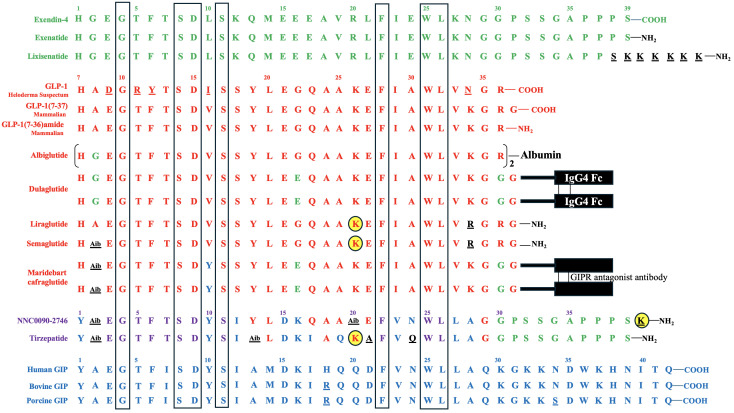
“Depending on their molecular structure, GLP-1 receptor agonists are divided into two main groups: human GLP-1 analogs (e.g., liraglutide, semaglutide, dulaglutide) and exen-din-4 derivatives (exenatide and lixisenatide) [216].”
Piraccini, B. M., Vaño-Galvan, S., Blume‐Peytavi, U., Ribet, V., & Mengeaud, V. (2026) · Dermatology and Therapy · doi:10.1007/s13555-026-01792-0 · Cited by 3
Sarić, M. M., Šikić, N. L., Sorić, T., Sarić, A., Ivanišin, A., Brodić, I., & Milić, M. (2026) · International Journal of Molecular Sciences · doi:10.3390/ijms27125495 · Cited by 2
“This likely influenced the magnitude of the observed differences, and direct comparisons using equipotent doses are still lacking [189,191].”
Infante, M., Ricordi, C., Pacifici, F., Pastore, D., Infante, R., Caprio, M., Chiereghin, F., Stefano, A. D., Frank, G., Rose, A. D., et al. (2026) · Nutrients · doi:10.3390/nu18132038 · Cited by 3
Mathai, L., Nair, B. G., & Alangode, A. (2026) · Toxins · doi:10.3390/toxins18070286 · Cited by 2
“It binds to the GLP-1 receptor (GLP-1R) present on the surface of pancreatic beta cells and increases the release of insulin, depending on glucose levels [134,135].”
Galasso, M., Verde, L., Patrone, R., Ragozzino, G., Annunziata, G., Colao, A., Barrea, L., & Muscogiuri, G. (2026) · Frontiers in Endocrinology · doi:10.3389/fendo.2026.1855886 · Cited by 2
Hawas, Y., Abouzid, M., Gadelmawla, A. F., Ewis, D. K., Khatatbeh, A. E., Negida, Y., & Negida, A. (2026) · Brain and Behavior · doi:10.1002/brb3.71702 · Cited by 2
“They provide a plausible basis for additive or complementary actions on neuronal and endothelial targets (Zhao et al. 2022 ; Liu 2024 ).”
Beyond metformin: the expanding landscape of Type 2 diabetes treatment
Ncube, K. N., & Malange, T. D. (2025) · SA pharmaceutical journal. · doi:10.36303/sapj.2299 · Cited by 2
Bizoń, A., Borkowska, J., Franik, G., & Piwowar, A. (2025) · International Journal of Molecular Sciences · doi:10.3390/ijms26157097 · Cited by 2
“Moreover, dual GLP-1/GIP RAs may offer greater benefits than GLP-1 monotherapy [50].”
Kanu, C., Clucas, C., Skalicky, A. M., Samuelson, A., GOETZ, I. A., Neff, L. M., Boye, K. S., & Karn, H. (2025) · Advances in Therapy · doi:10.1007/s12325-025-03386-2 · Cited by 3
“GIP and GLP-1 are gut peptides that are secreted after nutrient intake, and they regulate appetite (increase satiety, reduce hunger) [19].”
Bong, S. H. S., Teh, K. K., & Wong, V. W. (2026) · Clinical and Molecular Hepatology · doi:10.3350/cmh.2026.0125 · Cited by 3
Tirzepatide - role in obesity, health and physical wellness. Information overview
Hanslik, A., Mendak, M., Białek, A., Walczak, A., Hovagimyan, A., Olszanecka, M., & Olszanecki, T. (2025) · Quality in Sport · doi:10.12775/qs.2025.38.58191 · Cited by 1
Kwaah, P. A., Mensah, S., Carboo, A. K., Rashid, H. A., Agyemang, E. A., Appah, G., & Frimpong, S. K. (2025) · JACC Advances · doi:10.1016/j.jacadv.2025.101857 · Cited by 1
Wang, J., Qin, P., Kang, H., Jiang, Y., Zhang, H., Zhang, D., Li, Y., Xie, Y., Song, X., & Deng, C. (2025) · Chemistry & Biodiversity · doi:10.1002/cbdv.202500682 · Cited by 1
Glucagon-Like Peptide-1 Receptor Agonists in Gynecologic Surgery
Hsu, R. C., Han, E., Swartz, S., & Pacis, M. (2025) · Obstetrics and Gynecology · doi:10.1097/aog.0000000000006035 · Cited by 1
The physiologic and psychologic effects of glucagon-like peptide-1 receptor agonists
Bradwisch, S. A., Smith, E. M., Wilson-Mooney, C., & Donahue-Stathis, C. (2025) · Nursing · doi:10.1097/nsg.0000000000000223 · Cited by 1
Hilal, A., Afandi, B. O., & Almazrouei, R. A. (2025) · Cureus · doi:10.7759/cureus.94882 · Cited by 1
“This helps explain why good responses have also been observed in ABCC8-MODY [2].”
The Role of GLP-1 Analogues in the Treatment of Obesity-Related Asthma Phenotype
Radzik-Zając, J. (2025) · Biomedicines · doi:10.3390/biomedicines13112610 · Cited by 1
“These drugs are approved by the Food and Drug Administration (FDA) [43].”
Coincidence of Autoimmune Diabetes Mellitus and Familial Partial Lipodystrophy
Krienke, M., Schmidt, H., Büttner, J., Tan, S., Schumann, I., & Miehle, K. (2025) · JCEM Case Reports · doi:10.1210/jcemcr/luaf265 · Cited by 1
“Moreover, GLP1-RAs increase glucose-dependent insulin synthesis, while decreasing glucagon levels [22].”
Turlej, K., Kowalczuk, D., Kasianik, V., Lazitskaya, D., Sobchynskyi, M., Milasheuskaya, V., Myrnyi, A., Kiełbaszewska, I., Surosz, N., & Miraniuk, K. (2025) · Quality in Sport · doi:10.12775/qs.2025.43.61264 · Cited by 1
Chan, Z. H., Omar, A. S., Gill, K., Volucke, G., Azhar, M. M., Haleem, S. M., Sia, J. E., Rahman, O. U., Ahmad, M., Shahid, N., et al. (2026) · Cardiology in Review · doi:10.1097/crd.0000000000001209 · Cited by 2
Large Library Docking for Polypharmacology
Wu, Y., Vigneron, S. F., Bráz, J. M., Srinivasan, K., Fink, E. A., Huang, X.-P., Xu, X., Huebner, H., Kim, J. Y., Wang, J., et al. (2026) · Journal of Medicinal Chemistry · doi:10.1021/acs.jmedchem.5c03810 · Cited by 2
Nowak, K., Dziewierz, A., Łupina, K., Szarpak, Ł., & Siudak, Z. (2026) · Diabetes Obesity and Metabolism · doi:10.1111/dom.70644 · Cited by 1
Extending Healthspan via GLP-1 Receptor Agonist: Insights and Perspectives
Chakrabarti, S. K., & Chattopadhyay, D. (2026) · Exploratory Research and Hypothesis in Medicine · doi:10.14218/erhm.2025.00036 · Cited by 1
Glucagon-like peptide-1 drugs, gastrointestinal function and critical illness
Nadkarni, A., Deane, A. M., & Plummer, M. P. (2026) · Current Opinion in Critical Care · doi:10.1097/mcc.0000000000001376 · Cited by 3
Uso off label da semaglutida (Ozempic®) por indivíduos não diabéticos para perda de peso
OLIVEIRA, C. C., BRAGA, L. H. G., JORDÃO, P. A., & Silva, C. A. (2026) · Revista científica FACS. · doi:10.70159/rcfacs.v26.925 · Cited by 1
Metabolic Flux Adaptations During GLP-1 Receptor Agonist Therapy: Redox Implications
Lee, J., You, J. H., Park, H. J., Roh, J.-L., & Paek, S. H. (2026) · Current Obesity Reports · doi:10.1007/s13679-026-00709-4 · Cited by 3
“In nutrient-replete states, GLP-1–induced insulin signaling suppresses adipose lipolysis, whereas during reduced caloric intake and relative glucose scarcity, lipid substrates become the dominant oxidative fuel [59, 60 ].”
Paceana, M.-A., Mititelu-Tarțău, L., Boboc, I. K. Ş., Oancea, C. N., Berbecaru-Iovan, A., Foia, C. I., Tartau, C. G., & Bogdán, M. (2026) · Pharmaceutics · doi:10.3390/pharmaceutics18050620 · Cited by 1
“Tirzepatide has shown superior metabolic effects, particularly in weight reduction [19], but the direct impact on stroke outcomes remains insufficiently characterized.”
Galiano, Á., & Notario-Pérez, F. (2026) · Journal of Computer-Aided Molecular Design · doi:10.1007/s10822-026-00836-z · Cited by 1
“It has recently been demonstrated that the use of dual agonists for GLP-1 and GIP receptors enhances weight and glycemic control [10].”
Chianetta, R., Giannitrapani, L., Lipari, A. G., Brunone, A., Cannizzo, C., Citarrella, R., Soresi, M., Liguori, A., Panera, N., Morisco, F., et al. (2026) · Biomolecules · doi:10.3390/biom16060797 · Cited by 2
“Dual agonists targeting both GLP-1 and GIP receptors are an emerging class of therapeutics with substantial potential in the management of MASLD [110].”
Boerhaave’s syndrome associated with glucagon-like peptide-1 receptor agonist use: a case report
Aubrey, J. M., Benner, C., & Lam, G. T. (2026) · Journal of Cardiothoracic Surgery · doi:10.1186/s13019-026-04214-6 · Cited by 1
“GLP-1 RAs delay gastric emptying by activating vagal afferent pathways, inhibiting antral contractions, and increasing pyloric sphincter tone, while suppressing gastric smooth muscle activity through reduced cholinergic and enhanced nitrergic signaling [1].”
InfluentialEfficacy and safety of semaglutide for obesity and hyperphagia in adults with Prader-Willi syndrome
Shahd, A., Bridges, N., & Goldstone, A. P. (2026) · Frontiers in Endocrinology · doi:10.3389/fendo.2026.1881392 · Cited by 1
“It plays a crucial role in glucose homeostasis by enhancing glucose-dependent insulin secretion (62), suppressing glucagon release and improving insulin sensitivity (63), delaying gastric emptying (64), and promoting satiety via central nervous system pathways (65).”
Lila, A. M., Korotaeva, T. V., Паневин, Т. С., & Zotkin, E. G. (2026) · Modern Rheumatology Journal · doi:10.14412/1996-7012-2026-3-84-90 · Cited by 1
Doğan, A., Yanılmaz, E. M. B., Karabaş, S. A., & Annac, E. (2026) · Journal of Pharmacy and Pharmacology · doi:10.1093/jpp/rgag065 · Cited by 1
Khan, I., Meenakshi, S., Abubakar, M., Kumar, N., Gaikwad, V. L., Rai, A., & Murti, K. (2026) · Endocrine · doi:10.1007/s12020-026-04686-5 · Cited by 2
“…may stimulate the Gs pathway, elevating cAMP levels to enhance glucose-stimulated insulin secretion (GSIS) at minimal cAMP concentrations, while concurrently diminishing β-arrestin recruitment to the GLP-1R, which can inhibit receptor internalization and functional desensitization [44, 153].”
InfluentialChen, Y., Zhang, Z. K., Liu, Z., Lv, T., Ye, M., Yan, J., & Zhang, M. (2026) · Frontiers in Neurology · doi:10.3389/fneur.2026.1858507 · Cited by 3
“…therapeutic agents for PD. Glucagon-like peptide-1 receptor agonists (GLP-1RAs), established for type 2 diabetes management (6), exhibit diverse therapeutic advantages, including glucose-dependent insulin secretion, preservation of glucose homeostasis, and reduction of insulin resistance (7, 8).”
Bujdei-Tebeică, I., Stoian, A. P., Mihai, D. A., Ștefan, S., & Serafinceanu, C. (2026) · Journal of Clinical Medicine · doi:10.3390/jcm15145671 · Cited by 1
Beyond glycemic control: clinical cardiovascular effects of tirzepatide—a narrative review
Alawad, A. O., Merghani, T. H., Fadelelmoula, T. E. Y., Elamin, N. A., Satti, S., Edris, A., Hakim, A., El-Hindi, R. F., Alhaj-Ali, A. A., Ibrahim, W. E., et al. (2026) · Therapeutic Advances in Endocrinology and Metabolism · doi:10.1177/20420188261469947 · Cited by 1
“56 These are distributed in the gastrointestinal (including pancreatic B-cells), cardiovascular, nervous, musculoskeletal, and immune systems.”
Beyond One-Size-Fits-All: Individually Tailored Dietary Interventions in Modern Obesity Care
Cozma-Petruț, A. P., Gherghel, M., Banc, R., Tișa, I. B., Stanciu, O., Coldea, T. E., Mudura, E., Miere, D., & Filip, L. A. (2026) · Nutrients · doi:10.3390/nu18162691 · Cited by 1
“Its role in appetite control has historically been considered modest relative to GLP-1, though preclinical evidence suggests central GIP receptor signaling may contribute to reductions in food intake [145,146].”
Plant-Derived Exosome-like Nanovesicles for Metabolic Dysfunction-Associated Steatotic Liver Disease
Kuang, T., Wang, L., Shi, Y., Cheng, J., & Pan, S. (2026) · Veterinary Sciences · doi:10.3390/vetsci13090851 · Cited by 1
“During the course of the disease, patients also need anti-obesity medications as adjunctive therapy, such as orlistat (a pancreatic lipase inhibitor), GLP-1 agonists (semaglutide, liraglutide), GIP/GLP-1 dual receptor agonists (tirzepatide), and statins (atorvastatin, rosuvastatin) [91–93].”
Effects of obesity on brain health and cognition
McEntee, C. M., Savelieff, M. G., Noureldein, M. H., Eid, S., Grisold, W., Hassenstab, J. J., & Feldman, E. L. (2026) · Nature Reviews Neurology · doi:10.1038/s41582-026-01251-6 · Cited by 2
“Although originally developed as an antidiabetic medication to improve hyperglycaemia 183 , these synthetic peptides were also shown to provide cognitive benefits in individuals with T2D 184 .”
Zhong, Y., Tan, X., Zhang, L., & Wu, C. (2026) · Frontiers in Pharmacology · doi:10.3389/fphar.2026.1916932 · Cited by 1
“These agents exert multiple beneficial effects, for patients with diabetes, characterized by the augmentation of glucose-dependent insulin secretion, the attenuation of gastric emptying, and the suppression of appetite and subsequent caloric consumption (Liu, 2024).”
Effects of GLP-1 receptor agonists on body weight and cardiovascular outcomes: a review
van Maren, S., van Doorn, E. P. M., Smits, M. M., Tack, C. J., van Rossum, E. F. C., & Messaoudi, S. E. (2026) · Netherlands Heart Journal · doi:10.1007/s12471-026-02073-3 · Cited by 1
Gastaldelli, A., Choi, E., Conde‐Knape, K., Göransson, O., Krook, A., Lehtonen, S. H., Roden, M., Schrauwen, P., Sparks, L. M., & Heni, M. (2026) · Diabetologia · doi:10.1007/s00125-026-06853-9 · Cited by 2
Goldfarb, E., Lifshits, L. A., Abramov, M. M., Bar, D. Z., Barbash, Z., Akiva, E., & Gal, M. (2026) · ACS Nutrition Science · doi:10.1021/acsnutrsci.6c00031 · Cited by 1
Cheng, R. Z., Levy, T. E., & Hunninghake, R. (2025) · Preprints.org · doi:10.20944/preprints202512.0217.v3 · Cited by 1
Cheng, R. Z., Levy, T. E., & Hunninghake, R. (2025) · Preprints.org · doi:10.20944/preprints202512.0217.v2 · Cited by 1
Once-Monthly Maridebart Cafraglutide in Obesity — A Phase 2 Trial
Jastreboff, A. M., Ryan, D. H., & Pannacciulli, N. (2025) · New England Journal of Medicine · doi:10.1056/nejmc2514331 · Cited by 1
Murugadoss, K., Venkatakrishnan, A. J., & Soundararajan, V. (2026) · Preprints.org · doi:10.64898/2026.04.23.26351609 · Cited by 1
Endocrinologia e Medicina Estética - Edição II
Freitas, G. B. L. D., POLACHINI, V. B., & Vascão, E. (2024) · doi:10.59290/978-65-6029-156-0
Recent Advances in Dietary and Drug Treatment of Obesity: Review Paper
Essa, S., Alganga, H., & Ebrahim, N. (2025) · Libyan Journal of Medical Research · doi:10.54361/ljmr.19.2.13 · Cited by 2
“They promote weight loss in patients with or without T2DM [26].”
Silva, D., Baur, L. A., & Fitzgerald, D. A. (2025) · Paediatric Respiratory Reviews · doi:10.1016/j.prrv.2025.08.001 · Cited by 1
A Neural Network Method for Assessing the Nutritional Requirements of a Patient With Type 2 Diabetes
Mwakalu, S. M., Omwenga, V. O., & Ogao, P. J. (2025) · Applied Computational Intelligence and Soft Computing · doi:10.1155/acis/9955073
Pérdida de la Visión por el Uso de Fármacos para la Obesidad y Diabetes
Lucas, D. B. D., Loayza, G. J. C., & Crespo, A. O. O. (2025) · Ciencia Latina Revista Científica Multidisciplinar · doi:10.37811/cl_rcm.v9i4.19470
MEHRA, C. G., Somasundaram, M., Goyal, A., Mukherjee, C., Sequeira, A., Jeny Joseline, J., & Kumar, S. (2025) · International Journal of Science and Research (IJSR) · doi:10.21275/sr25919183931 · Cited by 1
Investigating the Therapeutic Benefits of Cardamonin: A Comprehensive Analysis
Kumar, V., Kumar, D., Mundlia, J., Nishal, S., & Kumar, A. (2025) · Current Bioactive Compounds · doi:10.2174/0115734072343943250908045116
Harnessing Secretin: A Systematic Review of its Emerging Role in Metabolic and Reproductive Health
Mahawar, N., Saxena, G., Srivastava, A. K., Chhabra, B., & Chitme, H. R. (2025) · Bratislavské lekárske listy/Bratislava medical journal · doi:10.1007/s44411-025-00386-0
“The secretin/GCG peptide family remains the primary point of interest for development as researchers combine various members to form GLP-1/GCG co-agonists [38–42] and oxyntomodulin analogs [43, 44] and GLP-1 and GIP combinations [45, 46] as well as a GLP-1/GCG/GIP tri-agonist [47, 48].”
GLP-1 Receptor Agonists: Advances in Mechanism, Therapeutic Applications, and Future Perspectives
Pawar, M., Patil, C. S., Fakir, J. S., Pagar, D. S., & Mahajan, S. K. (2025) · BioMed Target Journal · doi:10.59786/bmtj.322 · Cited by 1
The Ozempic Generation: What the Interventional Radiologist Needs to Know About GLP ‐1 Agonists
Wani, S., Findakly, S., Phan, T. D., Lukies, M. W., Goh, G. S., Venn, G., Joseph, T., Koukounaras, J., & Clements, W. (2025) · Journal of Medical Imaging and Radiation Oncology · doi:10.1111/1754-9485.70045
Tirzepatide and metabolic surgery: complementary approaches for multimodal management of MASLD
Shi, Y. (2025) · Hepatology International · doi:10.1007/s12072-025-10962-9
Chmyr, N. V., Dutka, R. Y., Dronyk, I. S., Abrahamovych, K., Didenko, O., Drobinska, N., Fedechko, M. Y., Kobak, L., Ivasivka, R. S., Леонт’єва, З. Р., et al. (2025) · INTERNATIONAL JOURNAL OF ENDOCRINOLOGY (Ukraine) · doi:10.22141/2224-0721.21.7.2025.1637
Metabolik Hastalıkların Yönetiminde Glp-1 Reseptör Agonistlerinin Yeri
Köseoğlu, K., & Karahan, S. G. (2025) · Akademisyen Kitabevi eBooks · doi:10.37609/akya.3838.c1133
Farley, B., Radetich, E., D’Alessandro, J. S., & Bulaj, G. W. (2025) · Healthcare · doi:10.3390/healthcare13243220 · Cited by 2
Impact of Glucagon-Like Peptide-1 Receptor Agonists on Knee Arthroplasty Outcomes
Zaffar, H., Imran, M., & Rushd, F. (2025) · Indian Journal of Orthopaedics · doi:10.1007/s43465-025-01646-5 · Cited by 1
“GLP-1 RAs improves glycaemic control through several mechanisms, including enhancing insulin secretion, reducing glucagon levels and delaying gastric emptying [17].”
RNA binding protein HuD regulates the biosynthesis of glucagon-like peptide 1 in intestinal L-cells
Han, S., Jung, M., Ryu, S., Cha, S., Tak, H., Jeong, S. M., & Lee, E. K. (2025) · Biochemistry and Biophysics Reports · doi:10.1016/j.bbrep.2025.102415
“…mechanistic study of GLP-1 study: the very short half-life of native GLP-1 (~1 – 2 min) leads to rapid DPP-4 cleavage and clearance, and its largely paracrine/portal-endocrine mode of action from intestinal L cells, which cause steep spatial and temporal gradients after secretion [33 – 35].”
Nanomedicines targeting intestinal Fc receptor to enhance the oral delivery of antidiabetic peptides
Almeida, J. D. B. D. C. (2025) · Portuguese National Funding Agency for Science, Research and Technology (RCAAP Project by FCT)
Meiliana, A., Dewi, N. M., & Wijaya, A. (2025) · The Indonesian Biomedical Journal · doi:10.18585/inabj.v17i6.3583 · Cited by 1
“(21,22) At physiological levels, glucagon suppresses appetite, but during fasting, its effects may be limited by appetite-stimulating neuropeptides like ghrelin.”
Harnessing the gut-brain axis in the treatment of type 2 diabetes mellitus and obesity
Kotucha, K., Kapłon, K., Moś, M., Fiegler-Rudol, J., Pietryszyn-Bilińska, A., Dynarowicz, K., Aebisher, D., Wiench, R., & Kawczyk‐Krupka, A. (2025) · European Journal of Clinical and Experimental Medicine · doi:10.15584/ejcem.2025.4.24
“65,66,67 Food and Drug Administration -approved injectable GLP-1 analogues for the treatment of obesity include li-raglutide and semaglutide.”
Liu, L. J., & Chu, Q. (2026) · Journal of Engineering and Science in Medical Diagnostics and Therapy · doi:10.1115/1.4070794
New and Interesting Benefits with New Molecules in Obesity and Type 2 Diabetes
Páez, F. G., Barrios, S. Z., Bautista, L. E. C., Chong, L. D. P., & Velazquez, X. G. R. (2026) · IntechOpen eBooks · doi:10.5772/intechopen.1009256
ADVERSE EFFECTS OF GLP-1 RECEPTOR AGONISTS: A COMPREHENSIVE APPROACH
Sapeda, N., Lusarczyk, W., Truszyńska-Zawisza, A., Gorczyca, K., Młocek, A., Romanowska, Z., & Białas, A. (2025) · International Journal of Innovative Technologies in Social Science · doi:10.31435/ijitss.4(48).2025.4111
Anti-obesity drugs: comprehensive review and emerging therapies
Marne, P., Patil, S. D., Vora, A., MohdSiddique, M. U., Gadkari, Y. U., & Kurkute, P. (2026) · Endocrine · doi:10.1007/s12020-025-04528-w · Cited by 1
“Both circulating GIP and GLP-1 quickly metabolize into their inactive physiological form by the ubiquitous serum enzyme dipeptidyl peptidase 4 (DPP-4) [80 ].”
Metadata
- Authors
- Liu, Q. K.
- Affiliations
- Montgomery General Hospital (US)
- Corresponding author
- Liu, Qiyuan Keith
- Venue
- Frontiers in Endocrinology
- Publisher
- Frontiers Media SA
- Published
- 2024-07-24
- Volume
- 15
- Pages
- 1431292-1431292
- ISSN
- 1664-2392 (ISSN-L)
- PMC
- PMC11304055
- OpenAlex
- W4400956092
- Cited by
- 265
- References
- 279
- Citations by year
- 2026: 156 · 2025: 107 · 2024: 2
- FWCI
- 15.55
- Type
- journal article
- Language
- en
- Open access
- gold
- doi.org
- Licence
- Locations
- Frontiers in Endocrinology (publishedVersion, cc-by)
- PubMed Central (publishedVersion, cc-by)
- PubMed (publishedVersion)
- DOAJ (DOAJ: Directory of Open Access Journals) (submittedVersion, cc-by-sa)
- Topics
- Health Sciences › Medicine › Endocrinology, Diabetes and Metabolism › Diabetes Treatment and Management
- Life Sciences › Neuroscience › Endocrine and Autonomic Systems › Regulation of Appetite and Obesity
- Health Sciences › Medicine › Endocrinology, Diabetes and Metabolism › Adipokines, Inflammation, and Metabolic Diseases
- Keywords
- glucagon-like peptide-1, glucose-dependent insulinotropic polypeptide, GIP/GLP-1 receptor agonist, incretin mimetics, type 2 diabetes, obesity, insulin secretion, satiety, lipogenesis, lipolysis, adiponectin, cardiovascular disease prevention, weight management, dyslipidemia, metabolic homeostasis
- MeSH terms
- Glucagon-Like Peptide-1 Receptor, Glucagon-Like Peptide-1 Receptor Agonists, Animals, Diabetes Mellitus, Type 2, Gastric Inhibitory Polypeptide, Humans, Hypoglycemic Agents, Receptors, Gastrointestinal Hormone, Glucagon-Like Peptide 1, Incretins
About these checks
Registry, retraction, Cites and statistics results are computed, not judged, with one exception: a printed reference that no index lists is read once by a model before it counts as a citation error. Claims are extracted by a model and kept only when their quote appears verbatim in the text; each cited source is then checked, with a model’s help, for whether it says what the claim relies on. Those verdicts can be wrong — read the claim’s quote and the cited source before relying on one.
Statistics and arithmetic are recomputed, not judged.
Confidence bands are shown only for fields calibrated on our annotated test set. None is calibrated yet, so no band is shown.
What counts as a claim ›How we measure confidence ›How we check this ›
Are you an author, or do you see a problem with this page? Request a review
Data sources
Bibliographic data: Semantic Scholar, OpenAlex, Crossref.
Contains information from the Semantic Scholar Academic Graph Datasets, made available under the ODC Attribution License (ODC-BY 1.0).
Semantic Scholar’s data is described in: Kinney, R., et al. (2023). The Semantic Scholar Open Data Platform. arXiv:2301.10140.
