

Mechanisms of action and therapeutic applications of GLP-1 and dual GIP/GLP-1 receptor agonists
Open accessThe DOI matches its Crossref record; 271 of the 279 references it cites were found in a registry or an index.
Abstract
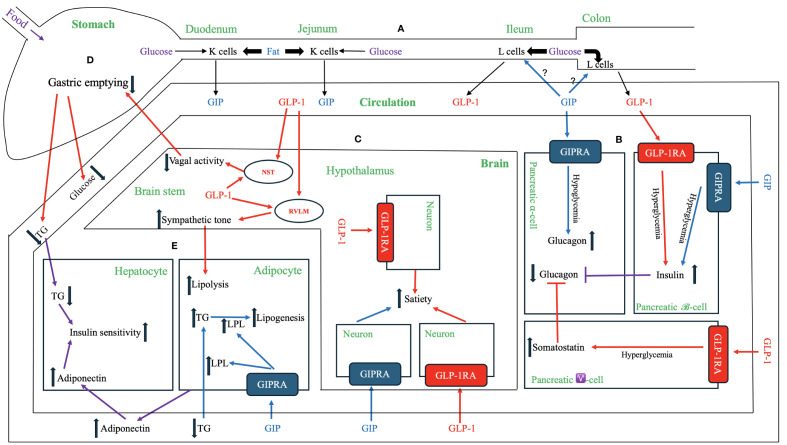
Glucose-dependent insulinotropic polypeptide (GIP) and glucagon-like peptide-1 (GLP-1) are two incretins that bind to their respective receptors and activate the downstream signaling in various tissues and organs. Both GIP and GLP-1 play roles in regulating food intake by stimulating neurons in the brain’s satiety center. They also stimulate insulin secretion in pancreatic β-cells, but their effects on glucagon production in pancreatic α-cells differ, with GIP having a glucagonotropic effect during hypoglycemia and GLP-1 exhibiting glucagonostatic effect during hyperglycemia. Additionally, GIP directly stimulates lipogenesis, while GLP-1 indirectly promotes lipolysis, collectively maintaining healthy adipocytes, reducing ectopic fat distribution, and increasing the production and secretion of adiponectin from adipocytes. Together, these two incretins contribute to metabolic homeostasis, preventing both hyperglycemia and hypoglycemia, mitigating dyslipidemia, and reducing the risk of cardiovascular diseases in individuals with type 2 diabetes and obesity. Several GLP-1 and dual GIP/GLP-1 receptor agonists have been developed to harness these pharmacological effects in the treatment of type 2 diabetes, with some demonstrating robust effectiveness in weight management and prevention of cardiovascular diseases. Elucidating the underlying cellular and molecular mechanisms could potentially usher in the development of new generations of incretin mimetics with enhanced efficacy and fewer adverse effects. The treatment guidelines are evolving based on clinical trial outcomes, shaping the management of metabolic and cardiovascular diseases.
Overview
The claims and statistics of this paper haven’t been checked yet.
Free: it reads the open-access text and checks the first 5 claims that cite a source we can check. Create a free account to check every claim.
Integrity signals
Registry
Cites
Statistics
Figures
Verification
Claims the paper makes
The claims and statistics of this paper haven’t been checked yet.
Free: it reads the open-access text and checks the first 5 claims that cite a source we can check. Create a free account to check every claim.
Claims other papers make about this one
Each is checked against this paper’s own text: does it say what the citing paper says it does?
The source backs part of the claim, not all of it — or backs it for a different population, condition or comparison.
In the citing paper
“In addition, GLP-1 inhibits gastric emptying and reduces bowel motility through a vagally mediated gastric braking mechanism [29,30].”
From Adherence and Persistence with GLP-1-Based Therapies: International Real-World Evidence and the Role of Nutritional and Lifestyle Support—A Narrative Review (2026) · cites this paper as [29]
Experimental — accuracy not yet measuredThe source backs part of the claim, not all of it — or backs it for a different population, condition or comparison.
In the citing paper
“Furthermore, GLP-1 enhances glucose-dependent insulin secretion from pancreatic beta cells and suppresses glucagon secretion from alpha cells, thereby reducing hepatic glucose output [29,30].”
From Adherence and Persistence with GLP-1-Based Therapies: International Real-World Evidence and the Role of Nutritional and Lifestyle Support—A Narrative Review (2026) · cites this paper as [29]
Experimental — accuracy not yet measuredThe cited source says what the claim attributes to it.
In the citing paper
“Therapeutic GLP-1 RAs are resistant to this enzymatic degradation, providing supraphysiological levels of receptor activation over extended periods [29,30].”
From Adherence and Persistence with GLP-1-Based Therapies: International Real-World Evidence and the Role of Nutritional and Lifestyle Support—A Narrative Review (2026) · cites this paper as [29]
Self-check
Percentages, sums and reported differences re-computed from the paper’s own numbers.
The self-check needs the paper’s full text.
Citations
Cites
Liraglutide and Cardiovascular Outcomes in Type 2 Diabetes
Marso, S. P., Daniels, G. H., Brown-Frandsen, K., Kristensen, P., Mann, J. F. E., Nauck, M. A., Nissen, S. E., Pocock, S., Poulter, N. R., Ravn, L. S., et al. (2016) · New England Journal of Medicine · doi:10.1056/nejmoa1603827 · Cited by 7,629
Semaglutide and Cardiovascular Outcomes in Patients with Type 2 Diabetes
Marso, S. P., Bain, S. C., Consoli, A., Eliaschewitz, F. G., Jódar, E., Leiter, L. A., Lingvay, I., Rosenstock, J., Seufert, J., Warren, M. L., et al. (2016) · New England Journal of Medicine · doi:10.1056/nejmoa1607141 · Cited by 6,900 · cited 1×
“…lixisenatide (250), the EXSCEL trial of exenatide ER (251), the LEARDER trial of liraglutide (252), the SUSTAIN-6 trial of subcutaneous semaglutide (253), the HARMONY trial of albiglutide (228), the REWIND trial of dulaglutide (254), the PIONEER trial of oral semaglutide (255), and the SELECT…”
BackgroundOnce-Weekly Semaglutide in Adults with Overweight or Obesity
Wilding, J. P. H., Batterham, R. L., Calanna, S., Davies, M., Van Gaal, L. F., Lingvay, I., McGowan, B. M., Rosenstock, J., Tran, M. T. D., Wadden, T. A., et al. (2021) · New England Journal of Medicine · doi:10.1056/nejmoa2032183 · Cited by 5,205
(2019) · doi:10.1161/cir.0000000000000677 · Cited by 4,501
β-Cell Deficit and Increased β-Cell Apoptosis in Humans With Type 2 Diabetes
Butler, A. E., Janson, J., Bonner-Weir, S., Ritzel, R., Rizza, R. A., & Butler, P. C. (2003) · Diabetes · doi:10.2337/diabetes.52.1.102 · Cited by 4,011
Tirzepatide Once Weekly for the Treatment of Obesity
Jastreboff, A. M., Aronne, L. J., Ahmad, N. N., Wharton, S., Connery, L., Alves, B., Kiyosue, A., Zhang, S., Liu, B., Bunck, M. C., et al. (2022) · New England Journal of Medicine · doi:10.1056/nejmoa2206038 · Cited by 3,838
Biology of Incretins: GLP-1 and GIP
Baggio, L. L., & Drucker, D. J. (2007) · Gastroenterology · doi:10.1053/j.gastro.2007.03.054 · Cited by 3,639 · cited 1×
“…of the postprandial insulin responses in healthy individuals and may be substantially reduced to 20% – 30% in individuals with type 2 diabetes mellitus (T2DM) (6, 7), a complex disorder arising from inadequate compensation of insulin secretion by pancreas to counter peripheral insulin resistance.”
BackgroundWeyer, C., Funahashi, T., Tanaka, S., Hotta, K., Matsuzawa, Y., Pratley, R. E., & Tataranni, P. A. (2001) · The Journal of Clinical Endocrinology & Metabolism · doi:10.1210/jcem.86.5.7463 · Cited by 3,541
Semaglutide and Cardiovascular Outcomes in Obesity without Diabetes
Lincoff, A. M., Brown-Frandsen, K., Colhoun, H. M., Deanfield, J., Emerson, S. S., Esbjerg, S., Hardt-Lindberg, S., Hovingh, G. K., Kahn, S. E., Kushner, R. F., et al. (2023) · New England Journal of Medicine · doi:10.1056/nejmoa2307563 · Cited by 3,236
Cited by
Items 201–300 of 341
Seibert, I. (2026) · Research in Therapeutic Sciences · doi:10.53520/rts2026.105184
From detection to intervention: nanotechnology-driven precision strategies in obesity management
Tantray, J., Khadam, V. K. R., Patel, A., Nagdev, S., & Prajapati, B. (2026) · Bulletin of the National Research Centre/Bulletin of the National Research Center · doi:10.1186/s42269-026-01397-9 · Cited by 1
Association of insulin and GH/IGF-1 derangements and heart failure: a narrative review
Cesaro, A., Calabrò, P., Ruvolo, A., & Fazio, S. (2026) · Exploration of Cardiology · doi:10.37349/ec.2026.101294
Svorį mazinantys vaistai ir diabeto kontrole
Jamali, K. (2025) · Lithuanian University of Health Sciences
Saldívar-Cerón, H. I. (2026) · Scientia Pharmaceutica · doi:10.3390/scipharm94010021
“…and GIPR, VK-2735 is positioned to couple established GLP-1-mediated satiety and glucose-dependent insulin secretion with a complementary incretin axis that may further modulate nutrient handling and adiposity-related biology, consistent with mechanistic work across the dual-agonist class [77].”
Lee, S., Sellig, M. T., Kim, M., Jayne, C., Seo, H. H., & Goh, G. S.-H. (2026) · Journal of the American Academy of Orthopaedic Surgeons · doi:10.5435/jaaos-d-25-00982
Incretin polyagonists as an alternative to bariatric surgery to manage obesity
Manoj, R. J., Fernandez, C. J., Nair, S., & Pappachan, J. M. (2026) · World Journal of Gastrointestinal Pathophysiology · doi:10.4291/wjgp.v17.i1.118132
“Critical to these advancements is the concept of biased vs balanced agonism: Balanced agonists engage receptors in a way that mimics physiological signaling, while biased agonists preferentially activate specific signaling pathways, such as those favoring weight loss or reduced side effects[12,14].”
Dual GIP/GLP-1 Receptor Agonists for Type 2 Diabetes: Efficacy and Metabolic Benefits
Nsubuga, E. (2026) · International Academic Association Journal of Scientific Research. · doi:10.59298/iaajsr/2026/1315564
Análogos do GLP-1: indicações terapêuticas, efeitos metabólicos e controvérsias clínicas
Alves, D. S., d´Avila, C. B., da Silva, I. M., FRANCISCO, M. S., Stecker, N. F., & Fonseca, S. D. (2026) · Editora Pasteur eBooks · doi:10.59290/0120029211
Joshi, R., Dwivedi, J., Singh, S., Paliwal, S., Sharma, S., Mishra, A., & Singh, S. (2026) · SN Comprehensive Clinical Medicine · doi:10.1007/s42399-026-02357-0
Chronopoulos, V., Kjellsson, M. C., & Lundqvist, M. (2026) · Journal of the Endocrine Society · doi:10.1210/jendso/bvag075
“The implications of this finding remain unclear, however, in particular because GIP exerts an opposite, stimulatory effect on glucagon, most likely via a direct effect on alpha cells [25].”
Efficacy of GLP-1 and GIP/GLP-1 Receptor Agonists on the Body Weight Management of Obesity
Timbrook, P. (2026) · Pepperdine Digital Commons (Pepperdine University)
Pekary, A. E., & Sattin, A. (2026) · Research Square · doi:10.21203/rs.3.rs-9162755/v1
Targeting Multiple Gut‐Brain Pathways in Obesity: Rationale for Combination Pharmacotherapy
Miras, A. D., & Hussain, M. (2026) · Obesity Science & Practice · doi:10.1002/osp4.70141 · Cited by 1
“As with GLP‐1, GIP is released from the small intestine in response to food intake, and GIP receptors are distributed throughout the pancreas, adipose tissue, and brain [20, 53]; however, GIP is not believed to alter gastric emptying [22].”
Safety of glucagon-like peptide-1 agonists: data from the Russian National pharmacovigilance system
Gomon, Y. М., Александровна, М. Е., Колбин, А. С., & Горелов, К. В. (2026) · Real-World Data & Evidence · doi:10.37489/2782-3784-myrwd-092
Cheung, N. (2026) · Frontiers in Aging · doi:10.3389/fragi.2026.1856979
“This choice aligns with the strongest negative TWAS program, namely, downregulation of glucose-stimulated insulin secretion, while still preserving incretin responsiveness (Liu, 2024).”
Why hyperinsulinemia is detrimental to weight loss: insights from type 1 diabetes
Martin, S., Kempf, K., & Kolb, H. (2026) · BMC Medicine · doi:10.1186/s12916-026-04849-1 · Cited by 1
“The magnitude of weight reduction correlated with the lowering of insulin levels [10, 11].”
Neuro-Adipose Signaling Pathways: How Brain–Adipose Communication Breakdowns Lead to Diabesity
Nassimbwa Kabanda, D. (2026) · NEWPORT INTERNATIONAL JOURNAL OF PUBLIC HEALTH AND PHARMACY · doi:10.59298/nijpp/2026/71107116
Hashem, I. E.-A., Abuajameia, B. H., & Akhtar, S. (2026) · Journal of drug targeting · doi:10.1080/1061186x.2026.2656880
“…muscle loss in the elderly, remains difficult to achieve [2]. in recent years, incretin-based therapies, most notably GlP-1 receptor agonist and dual GlP-1/GiP receptor agonist have transformed the management of t2Dm and obesity by improving glycemic control and promoting weight loss [3,4].”
Kato Jumba, K. (2026) · NEWPORT INTERNATIONAL JOURNAL OF PUBLIC HEALTH AND PHARMACY · doi:10.59298/nijpp/2026/716269
Zavala, G. M. F., Rodriguez, C. F. C., Carrion, P. C., Artiga, L. M., del Cid, Z. Y. M., Chia, J. E., & Valladares, C. (2026) · Cureus · doi:10.7759/cureus.106972
“Psychiatric adverse events were rarely reported, and most adverse effects were mild to moderate in severity, with few cases requiring discontinuation of treatment [16,19,22].”
INDIVIDUALIZED TREATMENT OF POLYCYSTIC OVARY SYNDROME: A MANIFESTATION-GUIDED PRACTICAL APPROACH
Kabakchieva, P. (2026) · Anti-Aging Eastern Europe · doi:10.56543/aaeeu.2026.5.1.02
Pelluri, R., Shaik, M. N., Mahadevan, S., Sridevi, B., Thommandru, S., Asmitha, T., Gummalla, V. P., Kongara, S., Nagasubramanian, V. R., Vishwas, H. N., et al. (2026) · Journal of Applied Pharmaceutical Science · doi:10.7324/japs.2026.284323
“Dysregulation of these systems has been associated with mood disorders such as depression and anxiety [9,26].”
New Horizons in Metabolic Health: Unveiling the Future of Drug Discovery and Development
Zhao, J., Qiu, Q., Zhang, J., & Tan, J. (2026) · Endocrine Metabolic & Immune Disorders - Drug Targets · doi:10.2174/0118715303453651260321115118
Al-Joubory, G. S. N., & Hussain, M. A. (2026) · SAS Journal of Medicine · doi:10.36347/sasjm.2026.v12i04.009
Muraszewska, E., Muraszewski, Ł., Kwitowska, P., Pyjecka, M., Ubysz, E., Król, A., Lewandowska, E., Łuczyński, C., Paczkowski, M., & Wręczycki, M. (2026) · Quality in Sport · doi:10.12775/qs.2026.54.70814
Fasinu, P. S., & Wilborn, T. W. (2026) · Elsevier eBooks · doi:10.1016/b978-0-443-44037-3.00655-2
Anti-GIP antibodies and future diabetes related risk: an eight-year prospective cohort study
Hashimoto, T., Ohtake, N., Okamoto, T., Zhang, B., Yoshida, Y., Takizawa, H., Yamaga, M., Yoshida, T., Kajiyama, A., Yagihashi, T., et al. (2026) · Frontiers in Endocrinology · doi:10.3389/fendo.2026.1811527
“For example, GIP primarily affects bone and adipose tissue, whereas GLP-1 acts on the heart, liver, and kidney (14, 15).”
Chondroprotective Effect of Semaglutide in Osteoarthritis: Association with Macrophage Polarization
Lei, D., Pang, C., Huang, H., He, Z., & Lu, L. (2026) · Journal of Biosciences and Medicines · doi:10.4236/jbm.2026.145015
Deller, M., Weiershaus, J., Held, S., & Brinkmann, C. K. (2026) · Diabetes Obesity and Metabolism · doi:10.1111/dom.70873
“These agents induce substantial weight loss, among others, through appetite suppression and the resulting CR [10].”
Degroote, L., Chrzanowski, J., Lemaître, P., Wouters, A., Bourgeois, S., Mulders, A. V., Pierreux, J., Coenen, S., Willems, L., Leuckx, G., et al. (2026) · Diabetologia · doi:10.1007/s00125-026-06750-1 · Cited by 1
“Glucagon-like peptide-1 (GLP-1) receptor (GLP-1R) agonists (GLP-1RAs) are agents that lower blood glucose in type 2 diabetes by stimulating insulin secretion and suppressing glucagon release [28].”
Bhavsar, D. (2025) · International Journal of Basic and Applied Sciences · doi:10.14419/n99q9v48
A rationally designed 18-amino acid peptide with potential as GLP-1 receptor agonist
Singh, A., Shadangi, S., & Rana, S. (2026) · Frontiers in Pharmacology · doi:10.3389/fphar.2026.1789257
“Eventually, in response to excessive glucose stress, the β -cells fail to produce sufficient insulin, leading to β -cell dysfunction and subsequent onset of a severe form of T2DM (Accili et al., 2025).”
InfluentialEnhanced Bioactivities of Fermented Rehmannia glutinosa via Catalpol-Mediated GLP-1R Signaling
You, E.-J., & Kim, B. R. (2026) · Current Issues in Molecular Biology · doi:10.3390/cimb48060559
“The observed activation of the GLP-1R/PKA/CREB axis supports the hypothesis that GLP-1 not only serves as an incretin hormone but also as a modulator of gut physiology under dietary or therapeutic interventions [30].”
McGuane, C., Farhadhar, N., Sharieff, K. A., Petrosky, S. N., & Alabasi, K. (2026) · Cureus · doi:10.7759/cureus.109731 · Cited by 1
“GIP receptor activation also has a glucagonotropic effect during hypoglycemia, resulting in superior glycemic control and weight loss, compared to GLP-1 RAs alone [39].”
Fąfara, M., Jeczkało, M., Kosiorowska, M., Kowalczyk, A., Lasoń, J., Makulska, M., Płachta, W., Sęk, W., Sieradzka, A., & Wegenko, C. M. (2026) · International Journal of Innovative Technologies in Social Science · doi:10.31435/ijitss.2(50).2026.5796
Baños, L. O. (2026) · Academica-e (Universidad Pública de Navarra)
Khalil, I., Sarker, P., Ria, S. G., Hossain, M. S., Akter, M. M., Rahman, M. T., & Kamrul-Hasan, A. B. M. (2026) · Catheterization and Cardiovascular Interventions · doi:10.1002/ccd.70668
Ozkan, O., Khanna, A., Rodriguez, L. R., Rapp, E., Pajiyar, A., Suthar, H. J., & Parikh, P. (2026) · International Journal of Advanced Research · doi:10.21474/ijar01/23462
Салухов, В. В., Arutyunov, G. P., Vasilyeva, I. A., Cherkashin, D. V., Prochik, Y. E., & Sukhotskaia, N. A. (2026) · Meditsinskiy sovet = Medical Council · doi:10.21518/ms2026-136
Yu, C., Ye, X., Zhao, H., 钱素婷, Xie, F., & Liu, Q. (2026) · Frontiers in Endocrinology · doi:10.3389/fendo.2026.1837504
“Similarly, C24-amidated bile acids selectively modulate TGR5 signaling, promoting anti-in fl ammatory responses and improving insulin sensitivity without disrupting bile acid homeostasis (39).”
Self-citationZarei, M., & Hajiani, Y. (2026) · Diabetology & Metabolic Syndrome · doi:10.1186/s13098-026-02196-y
“Additional mechanisms may involve favorable modulation of adipose tissue biology, including increased adiponectin levels and normalization of lipolysis, thereby reducing the flux of circulating free fatty acids to the liver [28].”
Zhang, M., Lu, K.-R., Han, J.-H., & Gong, G.-H. (2026) · World Journal of Diabetes · doi:10.4239/wjd.117887
Wu, X., Yang, Y., Cui, X., Li, X., & Li, Y. (2026) · Frontiers in Pharmacology · doi:10.3389/fphar.2026.1846714
“Based on receptor targeting profiles, the 15 agents were categorized into three main groups: GLP-1RAs (semaglutide, liraglutide, dulaglutide, exenatide, lixisenatide, orforglipron, polyethylene glycol loxenatide, efpeglenatide, ITCA 650); dual receptor agonists, including the GIP/GLP-1R agonist (tirzepatide) and the G…”
InfluentialEffect of emerging antiobesity and antidiabetic drugs on atherosclerosis
Armentaro, G., Severini, G., Pastura, C. A., Scarcelli, M. R., Cassano, V., & Sciacqua, A. (2026) · Internal and Emergency Medicine · doi:10.1007/s11739-026-04438-3
“Taken together, the transition from monoagonism to dual incretin receptor agonism represents a meaningful pharmacological advance, offering a broader and more potent metabolic programme through the simultaneous engagement of two complementary hormonal axes [14].”
Tanaka, Y., Ueno, H., Sawada, H., Konagata, A., Uchida, T., Uehira, Y., Kogo, F., Sekishima, A., Moritake, H., Yamaguchi, H., et al. (2026) · Frontiers in Endocrinology · doi:10.3389/fendo.2026.1868458
“Tirzepatide, a dual agonist targeting both the GLP-1 receptor and the glucose-dependent insulinotropic polypeptide (GIP) receptor, has been suggested to exert unique effects on insulin sensitivity and adipose tissue metabolism (13, 14).”
Sharma, V., & Verma, Y. (2026) · Research Square · doi:10.21203/rs.3.rs-10106611/v1
THE DARK SIDE OF GLP-1 ANALOGS: ADVERSE EFFECTS, LIMITATIONS, AND SAFETY CONCERNS
Dudzińska, K., Kaftan, A., Plenikowski, J., Kahsin, A., Kacprzak, S., Greluk, A., Żuk, J., Ciszewski, W., Jurewicz, A., & Plenikowska, Z. (2026) · International Journal of Innovative Technologies in Social Science · doi:10.31435/ijitss.2(50).2026.5655
Basso, A. L. F., Falcetti, E. M., Coelho, R. P., Maia, G. A., de Oliveira, L. R. B., Prates, F. F., & TREPICHE, S. D. (2026) · Research Society and Development · doi:10.33448/rsd-v15i6.51184 · Cited by 1
Dubaj, M., Piech, B., `Mzabi, S. K., Judzińska, A., Ignarska, J., Trojanowska, E., Sobczyńska, K., Terbosh, M., Osipowska, J., & Kwolek, M. (2026) · International Journal of Innovative Technologies in Social Science · doi:10.31435/ijitss.2(50).2026.5603
Simental‐Mendía, L. E., Barragán‐Zuñiga, L. J., & Reyes-Avitia, V. (2026) · High Blood Pressure & Cardiovascular Prevention · doi:10.1007/s40292-026-00812-6
“…receptor activation enhances insulin secretion and reduces appetite [ 37]; GIP improves insulin sensitivity and exerts a favorable energy balance [ 38]; and glucagon receptor activation stimulates lipolysis and increases energy expenditure, directly reducing visceral fat and overall body weight […”
Diniz, J. S., Pereira, G. D. L., Jardim, G. S., de Onofre, I. N., & Valle, T. I. (2026) · Congresso Médico Acadêmico UniFOA. · doi:10.47385/cmedunifoa.2737.2026
Batra, A., & Kumar, A. (2026) · International journal of biological and medical research · doi:10.65048/ijbmr.2026.17.3.8737.1080
Rasmussen, R. S., Nielsen, S. W., Alstrup, L., Larsson, T. S. W., Hansen, J. K., Pedersen, R. P., Vestergaard, M. B., Haddock, B., Johannesen, H. H., Larsson, H. B. W., et al. (2026) · Diabetologia · doi:10.1007/s00125-026-06788-1 · Cited by 1
“While GLP-1 receptor agonists promote satiety, delay gastric emptying and enhance insulin secretion in individuals with type 2 diabetes [38], the metabolic actions of GIP are less well defined, although GIP may exert both lipogenic and lipolytic actions [39].”
Shil, K. K. (2026) · European journal of medical research · doi:10.1186/s40001-026-04862-3
“…receptor agonists (GLP-1 RAs), along with newer dual and triple incretin agonists, mimic the actions of endogenous glucagon-like peptide-1 (GLP-1) and glucose-dependent insulinotropic polypeptide (GIP) to suppress appetite, enhance satiety, and lower the defended body-weight “set point” [25–27].”
GLP Medications and Severe Post-COVID-19 Outcomes Among Individuals with Type 2 Diabetes MellitusPreprint
Butzin-Dozier, Z., Wang, L., Ji, Y., Kumar, M. N., Anzalone, A. J., Hurwitz, E. G., Patel, R. C., Budhihartanto, A., Buse, J. B., Johnson, S., et al. (2026) · medRxiv · doi:10.64898/2026.07.03.26357246
Liu, M., Davis, X. D., Ko, C., Shen, L., Fitzgerald, M., Lo, C. C., & Tso, P. (2026) · Cells · doi:10.3390/cells15131229
“This unique ability to suppress the counter-regulatory stress-lipolysis axis further reinforces the glycemic protective role of ApoA-IV and distinguishes it from traditional incretin-based therapies, which primarily focus on insulin and glucagon secretion rather than systemic substrate flux [37,38].”
Üçgül, E., Menekşe, B., Helvacı, B. C., Uçan, B., & Çakal, E. (2026) · Gazi Medical Journal · doi:10.12996/gmj.2026.4631
The application of GLP-1 receptor agonists in obesity due to MC4R deficiency
Ding, M., Luo, Y., & Ji, L. (2026) · Metabolism and Target Organ Damage · doi:10.20517/mtod.2026.58
Saavedra, J. M., Chen, A. S., Starr, K. N. P., & Batsis, J. A. (2026) · Obesity · doi:10.1002/oby.70203
“Differences in dosing frequency are influenced by differing pharmacokinetic properties: semaglutide and tirzepatide exhibit half-lives of 160 and 120 h, respectively, compared to an upper limit of 15 h for liraglutide [43].”
Gastrointestinal and Extra-Metabolic Effects of GLP-1-Based Therapies: A Narrative Review
Geetha, S. S., Abbas, S. M. N. E., Saadi, A. R., Nair, S. A., & Elhassan, O. A. A. (2026) · JUNIOR RESEARCHERS · doi:10.52340/jr.2026.04.02.06
Kotanidou, S., Dampali, R., Devaja, O., Montalto, S. A., Godfrey, M., Papadopoulos, A., Daniilidis, A., Nikolettos, N., & Nikolettos, K. (2026) · Reproductive Medicine · doi:10.3390/reprodmed7030034
Kotlyarov, S. N., & Котлярова, А. А. (2026) · Pharmacoepidemiology · doi:10.3390/pharma5030025
“Glucagon-like peptide-1 (GLP-1) receptor agonists and dual GLP-1/glucose-dependent insulinotropic polypeptide (GIP) receptor agonists (such as tirzepatide) have taken center stage in modern pharmacotherapy algorithms for type 2 diabetes and obesity [11–14].”
Semaglutide and the Heart: Focus on Their Love–Hate Relationship
Khan, E., Fernandes, J., Gohel, V., Jain, R., Jayne, W., Peck, C., Shah, T. S., Shah, R. S., LaBarge, J., Ray, S. D., et al. (2026) · Hearts · doi:10.3390/hearts7030022
“Semaglutide is generally prescribed at one dose per week, while the half-life of endogenous GLP-1 in vivo is 2–3 min [20].”
InfluentialFrank, A. L., Mohli, I., Kaur, N., & Arnold, W. (2026) · Cureus · doi:10.7759/cureus.113316
“Concurrent activation of GIP receptors further augments insulin secretion in response to nutrient intake and may enhance β -cell responsiveness and insulin sensitivity [11,13].”
Abunada, S., Abunada, O., Vivek, F., Rathi, L., Muskan, F., Parkash, J., Nazeer, S., Anchal, F., Danial, F., Turesh, K., et al. (2026) · Diabetology & Metabolic Syndrome · doi:10.1186/s13098-026-02250-9
“Relative to control groups, a substantially greater proportion of individuals receiving ecnoglutide achieved target glycemic thresholds (HbA1c 7%), underscoring its efficacy in both treatment-naïve patients and those on background metformin therapy [19].”
Dyvapu, L. B., Murahari, M., Banjara, S. K., Mugisa, S., & Dumala, N. (2026) · ChemistrySelect · doi:10.1002/slct.73899
Kim, T., Seo, J., Kang, S., Kim, H. K., Lee, B., Lee, J., & Go, G. (2026) · Food Science and Biotechnology · doi:10.1007/s10068-026-02259-w
Natania, S. A. (2026) · Comprehensive physiology · doi:10.1002/cph4.70239
“On the other hand, GLP-1 suppresses orexigenic (hunger-driven) feeding behavior by blocking neuropeptide Y (NPY)/agouti-related peptide (AgRP) neurons through GABA-dependent transmission (Campos et al. 2022; Kim et al. 2024; Liu 2024; Wen et al. 2022).”
Zajdenverg, L., Santos, V. M., Rodrigues, A. C. M., Previdelli, L. K., & Negrato, C. A. (2026) · Diabetology & Metabolic Syndrome · doi:10.1186/s13098-026-02235-8
“It shares approximately 67% sequence homology with GIP and 50% with GLP-1, activating the GIPR with a potency comparable to the endogenous ligand while showing lower activity at the GLP-1R [27].”
Fang, Y.-Y., Bao, C.-Y., Liu, W., Xie, P.-F., Wang, C., Xiao-lin, Z., & Li, J. (2026) · Frontiers in Nutrition · doi:10.3389/fnut.2026.1899085
“However, peptide-based GLP-1RAs are generally associated with limitations such as the need for injectable administration, relatively high production costs, and potential gastrointestinal side effects (34).”
Palka, W., Moćko, P., Śladowska, K., Holko, P., & Kawalec, P. (2026) · Journal of Endocrinological Investigation · doi:10.1007/s40618-026-03006-y
INCRETIN DYSFUNCTION AND THE ROLE OF GLP-1 IN THE DEVELOPMENT OF PANCREATOGENIC DIABETES MELLITUS
Ганиев, А. К., Sabirova, R. A., & Alimbekova, L. U. (2026) · Journal of modern medicine · doi:10.67519/nshr.ztj.2026.03.044
Juszczyk, A. K., Pietrajtis, S. J., Sałapski, B. A., Brożyna, D. W., Kubicki, M., Grębosz, D., Piec, J., Komornik, W., Łebek, M., & Lis, K. (2026) · Quality in Sport · doi:10.12775/qs.2026.67.74171
Virgilio, N., Schön, C., Steiner, N., Schlageter, V., Wilhelm, M., Silva, C. I. F., Gevaert, E., & Prawitt, J. (2026) · Current Developments in Nutrition · doi:10.1016/j.cdnut.2026.109512
“The potential for synergistic GLP-1/GIP signaling is an area of emerging evidence [38,39].”
Nesterova, E. Y., Gladkikh, M. I., Burakova, I. Y., Korneeva, O. S., Dmitrievna, M. P., & Syromyatnikov, M. (2026) · Diabetology · doi:10.3390/diabetology7080153
“Their mechanism of action is based on mimicking the effects of the endogenous hormone GLP-1, leading to reduced glucose levels and appetite suppression [150].”
Myokines, Microbiota, and Neuroinflammation: Physical Activity Modulates the Gut–Brain Axis
Yang, Y., Yang, Y., Tang, Y., & Yang, W. (2026) · Immunological Investigations · doi:10.1080/08820139.2026.2689670
“Furthermore, investigational tools like fecal microbiota transplantation (FMT) may eventually serve to reset profoundly dysbiotic gut environments in select clinical cohorts, representing a complementary approach for severe cases (Liu, 2024; Philip Mani et al., 2024; Sharma et al., 2023).”
Kong, X., Song, J., Han, J., Zhao, Y., Yang, Y., Wang, S., & Yang, X. (2026) · Frontiers in Microbiology · doi:10.3389/fmicb.2026.1875128
“Gut microorganisms modulate glucose homeostasis by regulating GLP-1 levels (Liu, 2024; Gomes et al., 2018).”
The changing face of asthma – what's new in diagnosis and care?
Bostock, B. (2026) · Independent Nurse · doi:10.12968/indn.2026.8.20
Papastathopoulou, N. S., Neri, S., Assirelli, E., D’Amuri, A., Greco, S., Ciaffi, J., & Ursini, F. (2026) · Rheumatology Advances in Practice · doi:10.1093/rap/rkag105
Chen, Z.-Y., Liu, W.-T., Guo, Z., Guo, Y., Hou, J.-X., Rong, M.-P., Zheng, H.-J., & Cui, Z.-L. (2026) · Frontiers in Immunology · doi:10.3389/fimmu.2026.1891938
Paolinelli, M. J. A., Vallejos, A. A., Hidalgo, V. S., & Rivera, S. N. (2026) · Revista Confluencia · doi:10.52611/confluencia.2026.1721
“Estos medicamentos con efecto incretina se utilizan para el control glicémico en pacientes diabéticos y para el manejo de la obesidad, sin embargo, generan retraso del vaciamiento gástrico 22 .”
Tan, A. Y. F., Garhyan, P., & Tham, L. S. (2026) · The Journal of Clinical Pharmacology · doi:10.1002/jcph.70274
“…is especially important for modern incretin-based therapies (e.g., the dual agonists of glucose-dependent insulinotropic polypeptide [GIP] and GLP-1, 41 the triple agonists of GIP, GLP-1, and glucagon, 78 the dual agonists of GLP-1 and amylin, 79 and the dual agonists of amylin and calcitonin 80 ).”
Vadner, D. J., Brown, A. N., & Gold, M. H. (2026) · Dermatological Reviews · doi:10.1002/der2.70092
“By targeting both GIP and GLP‐1 pathways, tirzepatide produces synergistic metabolic effects, including enhanced insulin sensitivity, appetite suppression, and marked weight loss [7].”
Influentialdo Nascimento, M. E. B., Andrade, J. V. O., Machado, E. R., Mello, J. D. A., de Souza, K. B., Affonso, R. D. S., Assenço, N. F. V. D., de Araújo, N. R. M., Marques, F. R. G. M., & Marques, F. R. G. M. (2026) · DELOS Desarrollo Local Sostenible · doi:10.55905/rdelosv19.n84-069
PLANEJAMENTO REPRODUTIVO EM MULHERES EM USO DE AGONISTAS DO GLP-1: UMA REVISÃO INTEGRATIVA
do Nascimento, M. E. B., de Melo, A. B. O., Lobato, L. G., Cameli, R. O., Guimarães, F. C. N., Juchem, I. F. S., Ferreira, T. R., Andrade, J. V. O., Borges, P. M., Pereira, J. A., et al. (2026) · Brazilian Journal of Implantology and Health Sciences · doi:10.36557/2674-8169.2026v8n8p1574-1594
Grattão, M. C. R., Rodrigues, B. C., & Matiusso, C. C. I. (2026) · Brazilian Journal of Implantology and Health Sciences · doi:10.36557/2674-8169.2026v8n8p1765-1790
Nascimento, G. L. M., da Silva, B. W. V., de Souza, F. V., Corrêa, S. B. P., Machado, V. D. F., SILVA, I. R. D., Lopatiuk, C. E., SILVA, T. O. D., Andrade, A. N. D., & Castro, M. A. D. A. (2026) · Aracê. · doi:10.56238/arev8n8-136
Carlson, K., Kaur, J., Gaber, C. E., Reutrakul, S., & Kim, K. (2026) · Current Medical Research and Opinion · doi:10.1080/03007995.2026.2726017
Next-Generation GLP-1 Agonist Bioassays: Integrating Precision with Biological Relevance
Gräf, C., Reuter, J., Rüggeberg, S., Mohr, S., Petri, J., Gélinas, S., Niederhaus, B., Werner, U., Strebe, N., Zein, Z. E., et al. (2026) · International Journal of Molecular Sciences · doi:10.3390/ijms27188068
“In addition to their use in type 2 diabetes, GLP-1 agonist substances are used or being investigated for the following: Weight management: These medications promote weight loss by reducing appetite and slowing gastric emptying, making them effective for obesity treatment [3].”
InfluentialCardiovascular effects of incretin receptor agonists: beyond glycemic control
Ravić, M. P., Srejovic, I. M., Milosavljević, I., Novakovic, J. N., Jakovljević, V., Vučićević, K., Petrovic, D., & Muric, M. D. (2026) · Canadian Journal of Physiology and Pharmacology · doi:10.1139/cjpp-2026-0184
Peixoto, M. J. D., da Silva, V. W. C., Carvalho, G. S., Gomes, B. M., de Almeida, K. T. L., Collega, R., Montanhini, L. M., Guijo, V. D. S., Marques, L. M., Marques, M. C. M., et al. (2026) · Derecho y cambio social. · doi:10.54899/dcs.v23i96.7001
Bartkowiak, D., Jakubczyk, B., Lasota, A., Kopoczyński, Ł., Wiesner, M., Wodzinski, L., Boguszewski, K., Porazinski, H., Mlynarska, A., & Ratajski, O. (2026) · Cureus · doi:10.7759/cureus.116245
“GLP-1 receptor agonists target multiple brain regions, including the hypothalamus and the area postrema, where they activate satiety-stimulating neurons to reset body weight setpoints [12].”
InfluentialHe, Q., Shan, H., Hu, W., Xu, H. E., & Zhao, L. (2026) · Acta Pharmacologica Sinica · doi:10.1038/s41401-026-01923-5
Physiology and therapeutic insights of incretins in 2026: An update
Hirlemann, M., Phan, A., Carette, C., Beyec, J. L., Ledoux, S., & Gall, M. L. (2026) · Cahiers de Nutrition et de Diététique · doi:10.1016/j.cnd.2026.08.106
Wang, Y., Guo, C., Zhou, Y., Wei, Y., Sun, C., Li, P., & Zhang, S. (2026) · Diabetes Obesity and Metabolism · doi:10.1111/dom.71330
Jiang, W., Fukunaga, K., Kobayashi, T., Saheki, T., Yoshimura, T., Zhang, H., Ly, R., Imachi, H., & Murao, K. (2026) · International Journal of Molecular Sciences · doi:10.3390/ijms27188378
“…agonist therapy has clinically established systemic effects that can reduce major drivers of lipotoxic stress, including reduced energy intake and body weight, improved glycemic control, and beneficial cardiovascular, hepatic, and kidney outcomes in selected clinical settings [5,6,43,55,56].”
InfluentialCiołkosz, K., & Polak-Szczybyło, E. (2026) · Nutrients · doi:10.3390/nu18193131
“This dual mechanism is associated with several complementary effects relevant to obesity treatment, including: suppression of appetite, enhancement of satiety, indirect reduction in energy intake, improvement of glycemic control, reduction in body weight and adipose tissue mass [22,28].”
The Intersection of Diabetes and Gastrointestinal Health: A Narrative Review
Bi’aragh, S. H., Afsahi, R., Nasab, A. E., Khani, M., Rasouli, K., Ahangar, M. H., Soltani, A. S., & Pourahmad, R. (2026) · SN Comprehensive Clinical Medicine · doi:10.1007/s42399-026-02712-1
“Inappropriate regulation of glucagon secretion further contributes to postprandial hyperglycemia in type 2 diabetes [21, 24, 25] (Fig.”
Lee, Y. J. (2026) · Drug Targets and Therapeutics · doi:10.58502/dtt.26.0018
Metadata
- Authors
- Liu, Q. K.
- Affiliations
- Montgomery General Hospital (US)
- Corresponding author
- Liu, Qiyuan Keith
- Venue
- Frontiers in Endocrinology
- Publisher
- Frontiers Media SA
- Published
- 2024-07-24
- Volume
- 15
- Pages
- 1431292-1431292
- ISSN
- 1664-2392 (ISSN-L)
- PMC
- PMC11304055
- OpenAlex
- W4400956092
- Cited by
- 265
- References
- 279
- Citations by year
- 2026: 156 · 2025: 107 · 2024: 2
- FWCI
- 15.55
- Type
- journal article
- Language
- en
- Open access
- gold
- doi.org
- Licence
- Locations
- Frontiers in Endocrinology (publishedVersion, cc-by)
- PubMed Central (publishedVersion, cc-by)
- PubMed (publishedVersion)
- DOAJ (DOAJ: Directory of Open Access Journals) (submittedVersion, cc-by-sa)
- Topics
- Health Sciences › Medicine › Endocrinology, Diabetes and Metabolism › Diabetes Treatment and Management
- Life Sciences › Neuroscience › Endocrine and Autonomic Systems › Regulation of Appetite and Obesity
- Health Sciences › Medicine › Endocrinology, Diabetes and Metabolism › Adipokines, Inflammation, and Metabolic Diseases
- Keywords
- glucagon-like peptide-1, glucose-dependent insulinotropic polypeptide, GIP/GLP-1 receptor agonist, incretin mimetics, type 2 diabetes, obesity, insulin secretion, satiety, lipogenesis, lipolysis, adiponectin, cardiovascular disease prevention, weight management, dyslipidemia, metabolic homeostasis
- MeSH terms
- Glucagon-Like Peptide-1 Receptor, Glucagon-Like Peptide-1 Receptor Agonists, Animals, Diabetes Mellitus, Type 2, Gastric Inhibitory Polypeptide, Humans, Hypoglycemic Agents, Receptors, Gastrointestinal Hormone, Glucagon-Like Peptide 1, Incretins
About these checks
Registry, retraction, Cites and statistics results are computed, not judged, with one exception: a printed reference that no index lists is read once by a model before it counts as a citation error. Claims are extracted by a model and kept only when their quote appears verbatim in the text; each cited source is then checked, with a model’s help, for whether it says what the claim relies on. Those verdicts can be wrong — read the claim’s quote and the cited source before relying on one.
Statistics and arithmetic are recomputed, not judged.
Confidence bands are shown only for fields calibrated on our annotated test set. None is calibrated yet, so no band is shown.
What counts as a claim ›How we measure confidence ›How we check this ›
Are you an author, or do you see a problem with this page? Request a review
Data sources
Bibliographic data: Semantic Scholar, OpenAlex, Crossref.
Contains information from the Semantic Scholar Academic Graph Datasets, made available under the ODC Attribution License (ODC-BY 1.0).
Semantic Scholar’s data is described in: Kinney, R., et al. (2023). The Semantic Scholar Open Data Platform. arXiv:2301.10140.
