

The DOI matches its Crossref record; 320 of the 322 references it cites were found in a registry or an index, and 1 are not checked yet.
Use of Caenorhabditis elegans as a model to study Alzheimer’s disease and other neurodegenerative diseases
Open accessAbstract
Advances in research and technology has increased our quality of life, allowed us to combat diseases, and achieve increased longevity. Unfortunately, increased longevity is accompanied by a rise in the incidences of age-related diseases such as Alzheimer's disease (AD). AD is the sixth leading cause of death, and one of the leading causes of dementia amongst the aged population in the USA. It is a progressive neurodegenerative disorder, characterized by the prevalence of extracellular Aβ plaques and intracellular neurofibrillary tangles, derived from the proteolysis of the amyloid precursor protein (APP) and the hyperphosphorylation of microtubule-associated protein tau, respectively. Despite years of extensive research, the molecular mechanisms that underlie the pathology of AD remain unclear. Model organisms, such as the nematode, Caenorhabditis elegans, present a complementary approach to addressing these questions. C. elegans has many advantages as a model system to study AD and other neurodegenerative diseases. Like their mammalian counterparts, they have complex biochemical pathways, most of which are conserved. Genes in which mutations are correlated with AD have counterparts in C. elegans, including an APP-related gene, apl-1, a tau homolog, ptl-1, and presenilin homologs, such as sel-12 and hop-1. Since the neuronal connectivity in C. elegans has already been established, C. elegans is also advantageous in modeling learning and memory impairments seen during AD. This article addresses the insights C. elegans provide in studying AD and other neurodegenerative diseases. Additionally, we explore the advantages and drawbacks associated with using this model.
Overview
The claims and statistics of this paper haven’t been checked yet.
Run the check — free, no account needed. It reads the open-access text and checks the sources it cites.
Integrity signals
Registry
Cites
Statistics
Figures
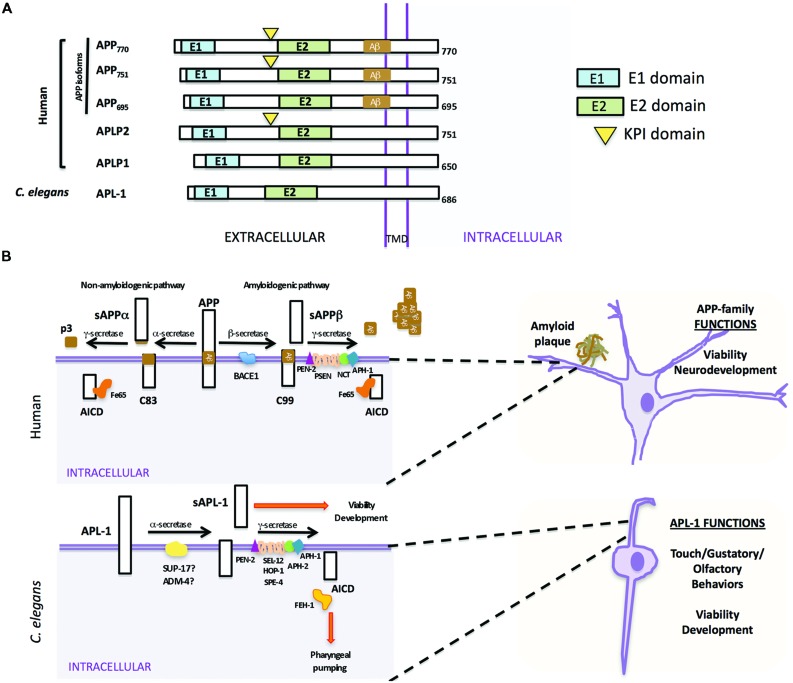
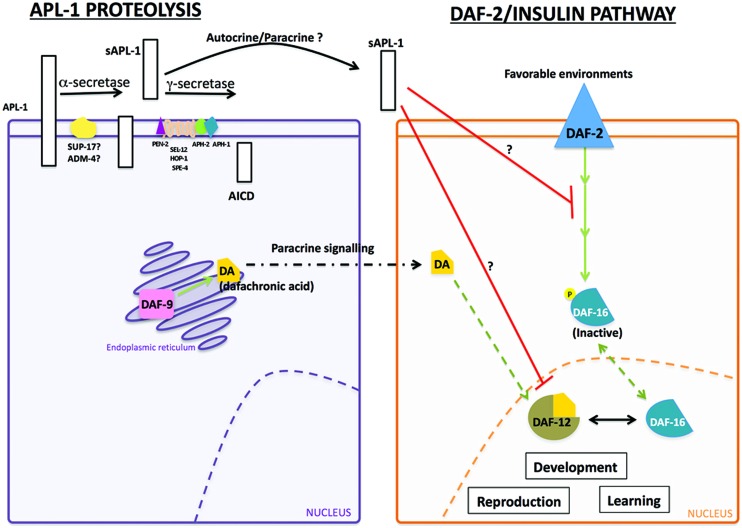
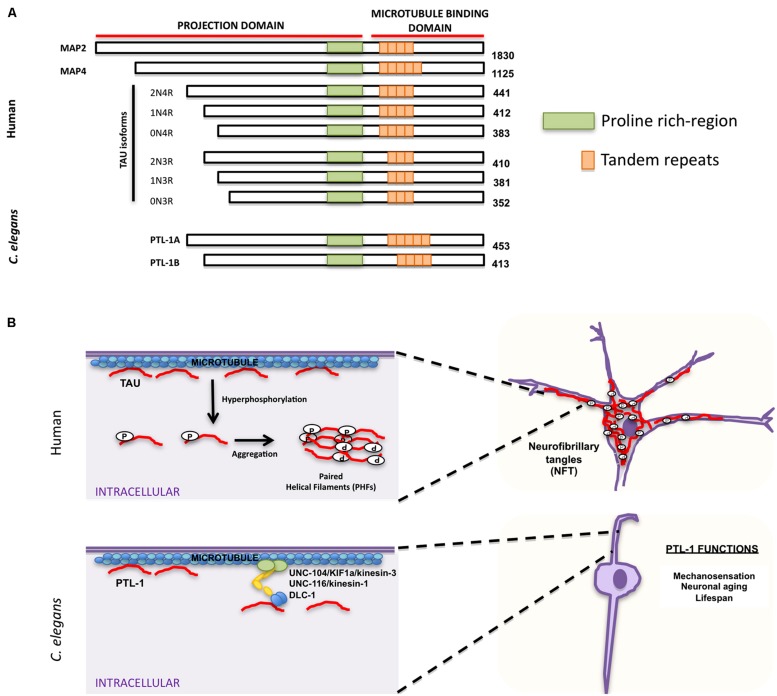
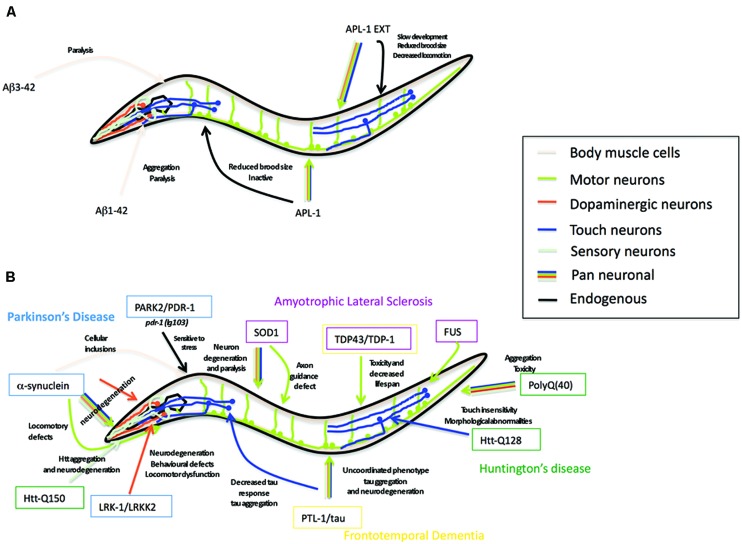
Verification
Claims the paper makes
The claims and statistics of this paper haven’t been checked yet.
Run the check — free, no account needed. It reads the open-access text and checks the sources it cites.
Claims other papers make about this one
Each is checked against this paper’s own text: does it say what the citing paper says it does?
In the citing paper
“The most notable example is the lack of Aβ in Drosophila and C. Elegans [1, 38].”
From Alzheimer's disease: experimental models and reality (2017) · cites this paper as [1]
Self-check
Percentages, sums and reported differences re-computed from the paper’s own numbers.
The self-check needs the paper’s full text.
Citations
Cites
THE GENETICS OF CAENORHABDITIS ELEGANS
Brenner, S. (1974) · Genetics · doi:10.1093/genetics/77.1.71 · Cited by 15,220
Amyloid oligomers exacerbate tau pathology in a mouse model of tauopathy
Selenica, M.-L. B., Brownlow, M., Jimenez, J. P., Lee, D. C., Pena, G., Dickey, C. A., Gordon, M. N., & Morgan, D. (2013) · Neurodegenerative Diseases · doi:10.1159/000337230 · Cited by 10,359
MACDONALD, M. (1993) · Cell · doi:10.1016/0092-8674(93)90585-e · Cited by 8,366
Mutation in the α-Synuclein Gene Identified in Families with Parkinson's Disease
Polymeropoulos, M. H., Lavedan, C., Leroy, E., Ide, S. E., Dehejia, A., Dutra, A., Pike, B., Root, H., Rubenstein, J., Boyer, R., et al. (1997) · Science · doi:10.1126/science.276.5321.2045 · Cited by 8,240
Ubiquitinated TDP-43 in Frontotemporal Lobar Degeneration and Amyotrophic Lateral Sclerosis
Neumann, M., Sampathu, D. M., Kwong, L. K., Truax, A. C., Micsenyi, M. C., Chou, T. T., Bruce, J., Schuck, T., Grossman, M., Clark, C. M., et al. (2006) · Science · doi:10.1126/science.1134108 · Cited by 6,576
A Receptor-Mediated Pathway for Cholesterol Homeostasis
Brown, M. S., & Goldstein, J. L. (1986) · Science · doi:10.1126/science.3513311 · Cited by 5,703
Mutations in the parkin gene cause autosomal recessive juvenile parkinsonism
Kitada, T., Asakawa, S., Hattori, N., Matsumine, H., Yamamura, Y., Minoshima, S., Yokochi, M., Mizuno, Y., & Shimizu, N. (1998) · Nature · doi:10.1038/33416 · Cited by 5,227
The 21-nucleotide let-7 RNA regulates developmental timing in Caenorhabditis elegans
Reinhart, B. J., Slack, F. J., Basson, M., Pasquinelli, A. E., Bettinger, J. C., Rougvie, A. E., Horvitz, H. R., & Ruvkun, G. (2000) · Nature · doi:10.1038/35002607 · Cited by 4,989
DeJesus-Hernandez, M., Mackenzie, I. R., Boeve, B. F., Boxer, A. L., Baker, M., Rutherford, N. J., Nicholson, A. M., Finch, N. A., Flynn, H., Adamson, J., et al. (2011) · Neuron · doi:10.1016/j.neuron.2011.09.011 · Cited by 4,936 · cited 2×
“It is expressed in multiple tissue types, including cerebellar cortex and spinal cord (DeJesus-Hernandez et al., 2011).”
BackgroundGoate, A., Chartier-Harlin, M.-C., Mullan, M., Brown, J., Crawford, F., Fidani, L., Giuffra, L., Haynes, A., Irving, N., James, L., et al. (1991) · Nature · doi:10.1038/349704a0 · Cited by 4,659
Cited by
Sorted by citations
The Amyloid-β Oligomer Hypothesis: Beginning of the Third Decade
Cline, E. N., Bicca, M. A., Viola, K. L., & Klein, W. L. (2018) · Journal of Alzheimer's Disease · doi:10.3233/jad-179941 · Cited by 870
Alzheimer's disease: experimental models and reality
Drummond, E., & Wisniewski, T. (2017) · Acta Neuropathologica · doi:10.1007/s00401-016-1662-x · Cited by 810
The C. elegans model in toxicity testing
Hunt, P. R. (2016) · Journal of Applied Toxicology · doi:10.1002/jat.3357 · Cited by 613
Phase separation and neurodegenerative diseases: a disturbance in the force
Zbinden, A., Pérez-Berlanga, M., De Rossi, P., & Polymenidou, M. (2020) · Developmental Cell · doi:10.1016/j.devcel.2020.09.014 · Cited by 500
Pohl, F., & Lin, P. K. T. (2018) · Molecules · doi:10.3390/molecules23123283 · Cited by 284
Caenorhabditis elegans as a Useful Model for Studying Aging Mutations
Zhang, S., Li, F., Zhou, T., Wang, G., & Li, Z. (2020) · Frontiers in Endocrinology · doi:10.3389/fendo.2020.554994 · Cited by 273
High-Throughput Screening Platforms in the Discovery of Novel Drugs for Neurodegenerative Diseases
Aldewachi, H. S., Al-Zidan, R. N., Conner, M. T., & Salman, M. M. (2021) · Bioengineering · doi:10.3390/bioengineering8020030 · Cited by 217
Griñán-Ferré, C., Bellver-Sanchis, A., Izquierdo, V., Corpas, R., Roig-Soriano, J., Chillón, M., Andres-Lacueva, C., Somogyvári, M., Sőti, C., Sanfeliu, C., et al. (2021) · Ageing Research Reviews · doi:10.1016/j.arr.2021.101271 · Cited by 208
Shen, P., Yue, Y., Zheng, J., & Park, Y. (2017) · Annual Review of Food Science and Technology · doi:10.1146/annurev-food-030117-012709 · Cited by 161
Genetics of FTLD : overview and what else we can expect from genetic studies
Pottier, C., Ravenscroft, T. A., Sanchez‐Contreras, M., & Rademakers, R. (2016) · Journal of Neurochemistry · doi:10.1111/jnc.13622 · Cited by 148
Mondal, S., Hegarty, E., Martin, C., Gökçe, S. K., Ghorashian, N., & Ben‐Yakar, A. (2016) · Nature Communications · doi:10.1038/ncomms13023 · Cited by 120
Silkworm, Bombyx mori, as an alternative model organism in toxicological research
Abdelli, N., Lü, P., & Keping, C. (2018) · Environmental Science and Pollution Research · doi:10.1007/s11356-018-3442-8 · Cited by 116
What Can We Learn About Human Disease from the Nematode C. elegans?
Apfeld, J., & Alper, S. (2018) · Methods in molecular biology · doi:10.1007/978-1-4939-7471-9_4 · Cited by 116
Leigh Syndrome: A Tale of Two Genomes
Bakare, A. B., Lesnefsky, E. J., & Iyer, S. (2021) · Frontiers in Physiology · doi:10.3389/fphys.2021.693734 · Cited by 101
Perfluorooctane Sulfonate (PFOS) Produces Dopaminergic Neuropathology in Caenorhabditis elegans
Sammi, S. R., Foguth, R. M., Nieves, C. S., De Perre, C., Wipf, P., McMurray, C. T., Lee, L. S., & Cannon, J. R. (2019) · Toxicological Sciences · doi:10.1093/toxsci/kfz191 · Cited by 93
Wang, C., Saar, V., Leung, K. L., Chen, L., & Wong, G. (2017) · Neurobiology of Disease · doi:10.1016/j.nbd.2017.10.003 · Cited by 86
Gao, W., Wang, W., Dong, X., & Sun, Y. P. (2020) · Small · doi:10.1002/smll.202002804 · Cited by 83
Panchal, K., & Tiwari, A. K. (2017) · Biomedicine & Pharmacotherapy · doi:10.1016/j.biopha.2017.03.001 · Cited by 85
Doxycycline Inhibits α-Synuclein-Associated Pathologies in Vitro and in Vivo
Dominguez-Meijide, A., Parrales, V., Vasili, E., González-Lizárraga, F., König, A., Lázaro, D. F., Lannuzel, A., Haik, S., Del Bel, E., Chehín, R., et al. (2021) · Neurobiology of Disease · doi:10.1016/j.nbd.2021.105256 · Cited by 81
Cogliati, S., Clementi, V., Francisco, M., Crespo, C., Argañaraz, F., & Grau, R. R. (2019) · Journal of Alzheimer s Disease · doi:10.3233/jad-190837 · Cited by 79
Alzheimer Disease: Clues from traditional and complementary medicine
Cooper, E. L., & Ma, M. J. (2017) · Journal of Traditional and Complementary Medicine · doi:10.1016/j.jtcme.2016.12.003 · Cited by 76
Tello, J. A., Williams, H., Eppler, R., Steinhilb, M. L., & Khanna, M. (2022) · Frontiers in Molecular Neuroscience · doi:10.3389/fnmol.2022.883358 · Cited by 77
Mimicking Human Pathophysiology in Organ‐on‐Chip Devices
Yeşil-Çeliktaş, Ö., Hassan, S., Miri, A. K., Maharjan, S., Al‐kharboosh, R., Quiñones‐Hinojosa, A., & Zhang, Y. S. (2018) · Advanced Biosystems · doi:10.1002/adbi.201800109 · Cited by 74
Enhancing metaproteomics—The value of models and defined environmental microbial systems
Herbst, F., Lünsmann, V., Kjeldal, H., Jehmlich, N., Tholey, A., von Bergen�, M., Nielsen, J. L., Hettich, R. L., Seifert, J., & Nielsen, P. H. (2015) · PROTEOMICS · doi:10.1002/pmic.201500305 · Cited by 75
Acrylamide induces locomotor defects and degeneration of dopamine neurons in Caenorhabditis elegans
Li, J., Li, D., Yang, Y., Xu, T., Li, P., & He, D. (2015) · Journal of Applied Toxicology · doi:10.1002/jat.3144 · Cited by 71
Iorio, R., Celenza, G., & Petricca, S. (2022) · Antioxidants · doi:10.3390/antiox11061199 · Cited by 75
Alzheimer's Disease and Sleep–Wake Disturbances: Amyloid, Astrocytes, and Animal Models
Vanderheyden, W. M., Lim, M. M., Musiek, E. S., & Gerstner, J. R. (2018) · Journal of Neuroscience · doi:10.1523/jneurosci.1135-17.2017 · Cited by 64
Xu, T., Li, P., Wu, S., Lei, L., & He, D. (2016) · Toxicology Research · doi:10.1039/c6tx00306k · Cited by 64
In vivo, in vitro and pharmacologic models of Parkinson's disease
Salari, S., & Bagheri, M. (2019) · Physiological Research · doi:10.33549/physiolres.933895 · Cited by 64
Oxidation and Antioxidation of Natural Products in the Model Organism Caenorhabditis elegans
Zhu, A., Zheng, F., Zhang, W., Li, L., Li, Y., Hu, H., Wu, Y., Bao, W., Li, G., Wang, Q., et al. (2022) · Antioxidants · doi:10.3390/antiox11040705 · Cited by 68
Tsai, C.-W., Tsai, R.-T., Liu, S., Chen, C., Tsai, M.-C., Chien, S.-H., Hung, H., Lin, S., Shyu, W., & Fu, R. (2017) · Cell Transplantation · doi:10.1177/0963689717738785 · Cited by 64
Pir, G. J., Choudhary, B. C., Mandelkow�, E., & Mandelkow, E. (2016) · Molecular Neurodegeneration · doi:10.1186/s13024-016-0096-1 · Cited by 65
Pohl, F., Teixeira‐Castro, A., Costa, M. D., Lindsay‐McGee, V., Fiúza-Fernandes, J., Goua, M., Bermano, G., Russell, W. R., Maciel, P., & Lin, P. K. T. (2019) · Frontiers in Neuroscience · doi:10.3389/fnins.2019.01091 · Cited by 59
Zhang, Z., Shen, Y., Luo, H., Zhang, F., Peng, D., Jing, L., Wu, Y., Xia, X., Song, Y., Li, W., et al. (2018) · Experimental Neurology · doi:10.1016/j.expneurol.2018.06.016 · Cited by 57
Manalo, R. V. M., & Medina, P. M. B. (2018) · Frontiers in Neuroscience · doi:10.3389/fnins.2018.00137 · Cited by 55
Model organism data evolving in support of translational medicine
Howe, D. G., Blake, J. A., Bradford, Y. M., Bult, C. J., Calvi, B. R., Engel, S. R., Kadin, J. A., Kaufman, T. C., Kishore, R., Laulederkind, S. J. F., et al. (2018) · Lab Animal · doi:10.1038/s41684-018-0150-4 · Cited by 54
C. elegans as a model organism for human mitochondrial associated disorders
Maglioni, S., & Ventura, N. (2016) · Mitochondrion · doi:10.1016/j.mito.2016.02.003 · Cited by 54
Bacteria and bacterial products: Foe and friends to Caenorhabditis elegans
Khan, F., Jain, S., & Oloketuyi, S. F. (2018) · Microbiological Research · doi:10.1016/j.micres.2018.06.012 · Cited by 54
From the Cover: Harmane-Induced Selective Dopaminergic Neurotoxicity in Caenorhabditis elegans
Sammi, S. R., Ağım, Z. S., & Cannon, J. R. (2017) · Toxicological Sciences · doi:10.1093/toxsci/kfx223 · Cited by 53
Modeling the neuroimmune system in Alzheimer’s and Parkinson’s diseases
Balestri, W., Sharma, R., da Silva, V. A., Bobotis, B. C., Curle, A. J., Kothakota, V., Kalantarnia, F., Hangad, M. V., Hoorfar, M., Jones, J., et al. (2024) · Journal of Neuroinflammation · doi:10.1186/s12974-024-03024-8 · Cited by 55
All Creatures Great and Small: New Approaches for Understanding Down Syndrome Genetics
Moyer, A. J., Gardiner, K., & Reeves, R. H. (2021) · Trends in Genetics · doi:10.1016/j.tig.2020.09.017 · Cited by 49
Protein Co-Aggregation Related to Amyloids: Methods of Investigation, Diversity, and Classification
Bondarev, S. A., Antonets, K. S., Kajava, A. V., Nizhnikov, A. A., & Zhouravleva, G. A. (2018) · International Journal of Molecular Sciences · doi:10.3390/ijms19082292 · Cited by 49
Opportunities and Challenges in Phenotypic Screening for Neurodegenerative Disease Research
Brown, D. G., & Wobst, H. J. (2019) · Journal of Medicinal Chemistry · doi:10.1021/acs.jmedchem.9b00797 · Cited by 47
Shanmuganathan, B., Sathya, S., Balasubramaniam, B., Balamurugan, K., & Devi, K. P. (2019) · Nitric Oxide · doi:10.1016/j.niox.2019.07.009 · Cited by 48
Álvarez, J., Álvarez-Illera, P., García-Casas, P., Fonteríz, R. I., & Montero, M. (2020) · Cells · doi:10.3390/cells9010204 · Cited by 48
Current progress of cerebral organoids for modeling Alzheimer's disease origins and mechanisms
Sreenivasamurthy, S., Laul, M., Zhao, N., Kim, T., & Zhu, D. (2022) · Bioengineering & Translational Medicine · doi:10.1002/btm2.10378 · Cited by 49
Akhoon, B. A., Choudhary, S., Tiwari, H., Kumar, A., Barik, M. R., Rathor, L., Pandey, R., & Nargotra, A. (2020) · Journal of Chemical Information and Modeling · doi:10.1021/acs.jcim.0c00496 · Cited by 46
Wang, Z., Zheng, P., Xie, Y., Chen, X., Solowij, N., Green, K., Chew, Y. L., & Huang, X. (2021) · The FASEB Journal · doi:10.1096/fj.202002724r · Cited by 48
Lü, M., Mishra, A., Boschetti, C., Lin, J., Liu, Y., Huang, H., Kaminski, C. F., Huang, Z., Tunnacliffe, A., & Schierle, G. S. K. (2021) · Oxidative Medicine and Cellular Longevity · doi:10.1155/2021/8842926 · Cited by 47
Soares, M. V., Mesadri, J., Gonçalves, D. F., Cordeiro, L. M., da Silva, A. F., Baptista, F. B. O., Wagner, R. C., Corte, C. L. D., Soares, F. A. A., & Ávila, D. S. (2022) · Environmental Pollution · doi:10.1016/j.envpol.2022.118856 · Cited by 44
Xu, K., Jia, H., Wang, Z., Feng, H., Li, L., Zhang, R., Durrani, S., Lin, F., & Wu, F. (2023) · Small · doi:10.1002/smll.202205890 · Cited by 43
Inhibiting Aβ toxicity in Alzheimer's disease by a pyridine amine derivative
Zhu, Z., Yang, T., Zhang, L., Liu, L., Yin, E., Zhang, C., Guo, Z., Chen, X., & Wang, X. (2019) · European Journal of Medicinal Chemistry · doi:10.1016/j.ejmech.2019.02.052 · Cited by 44
Caenorhabditis elegans: A transgenic model for studying age-associated neurodegenerative diseases
Rani, N., Alam, M. M., Jamal, A., Ghaffar, U. B., & Parvez, S. (2023) · Ageing Research Reviews · doi:10.1016/j.arr.2023.102036 · Cited by 42
Guo, Y., Yang, H., Huang, Z., Tian, S., Li, Q., Du, C., Chen, T., Liu, Y., Sun, H., & Liu, Z. (2020) · Molecules · doi:10.3390/molecules25030489 · Cited by 41
Ye, Y., Gu, Q., & Sun, X. (2020) · Comprehensive Reviews in Food Science and Food Safety · doi:10.1111/1541-4337.12654 · Cited by 43
Caenorhabditis elegans models of tauopathy
Pir, G. J., Choudhary, B. C., & Mandelkow�, E. (2017) · The FASEB Journal · doi:10.1096/fj.201701007 · Cited by 39
High-Content and High-Throughput In Vivo Drug Screening Platforms Using Microfluidics
Ben‐Yakar, A. (2019) · Assay and Drug Development Technologies · doi:10.1089/adt.2018.908 · Cited by 39
Studying Parkinson’s disease using Caenorhabditis elegans models in microfluidic devices
Youssef, K., Tandon, A., & Rezai, P. (2019) · Integrative Biology · doi:10.1093/intbio/zyz017 · Cited by 39
Neziri, S., Köseoğlu, A. E., Köseoğlu, G. D., Özgültekin, B., & Özgentürk, N. Ö. (2024) · Animal Models and Experimental Medicine · doi:10.1002/ame2.12487 · Cited by 40
Yen, P.-L., How, C. M., & Liao, V. H. (2020) · Chemosphere · doi:10.1016/j.chemosphere.2020.128594 · Cited by 37
Chen, Q.-X., Zhou, L., Long, T., Qin, D., Wang, Y., Ye, Y., Zhou, X., Wu, J., & Wu, A. (2022) · Pharmaceuticals · doi:10.3390/ph15081014 · Cited by 35
Senapati, S., Tripathi, K. K., Awad, K., & Rahimipour, S. (2024) · Small · doi:10.1002/smll.202311670 · Cited by 39
Lower vertebrate and invertebrate models of Alzheimer's disease – A review
Sharma, N., Khurana, N., & Muthuraman, A. (2017) · European Journal of Pharmacology · doi:10.1016/j.ejphar.2017.09.017 · Cited by 36
Role of Astrocytes in Manganese Neurotoxicity Revisited
Ke, T., Sidoryk‐Wȩgrzynowicz, M., Pajarillo, E. A. B., Rizor, A., Soares, F. A. A., Lee, E.-S., & Aschner, M. (2019) · Neurochemical Research · doi:10.1007/s11064-019-02881-7 · Cited by 35
Chen, X., Liao, D.-C., Sun, M., Cui, X.-H., & Wang, H. (2020) · Oxidative Medicine and Cellular Longevity · doi:10.1155/2020/3515609 · Cited by 35
Shi, L., Yu, X., Li, H., Wu, G.-S., & Luo, H. (2023) · Experimental Gerontology · doi:10.1016/j.exger.2023.112145 · Cited by 35
Zhao, L., Duan, Z., Wang, Y., Wang, M., Liu, Y., Wang, X., & Li, H. (2020) · Journal of Ethnopharmacology · doi:10.1016/j.jep.2020.113640 · Cited by 35
p21-Activated kinase 1 (PAK1) in aging and longevity: An overview
Mohankumar, A., Sundararaj, P., & Tawata, S. (2021) · Ageing Research Reviews · doi:10.1016/j.arr.2021.101443 · Cited by 34
Mass Histology to Quantify Neurodegeneration in Drosophila
Sunderhaus, E. R., & Kretzschmar, D. (2016) · Journal of Visualized Experiments · doi:10.3791/54809 · Cited by 33
A Systematic Review on Non-mammalian Models in Epilepsy Research
Arief, M. F. B. J., Choo, B. K. M., Yap, J. L., Kumari, Y., & Shaikh, M. F. (2018) · Frontiers in Pharmacology · doi:10.3389/fphar.2018.00655 · Cited by 32
Matis, I., Delivoria, D. C., Mavroidi, B., Papaevgeniou, N., Panoutsou, S., Bellou, S., Papavasileiou, K. D., Linardaki, Z. I., Stavropoulou, A. V., Vekrellis, K., et al. (2017) · Nature Biomedical Engineering · doi:10.1038/s41551-017-0144-3 · Cited by 32
Line excitation array detection fluorescence microscopy at 0.8 million frames per second
Martin, C., Li, T., Hegarty, E., Zhao, P., Mondal, S., & Ben‐Yakar, A. (2018) · Nature Communications · doi:10.1038/s41467-018-06775-0 · Cited by 31
Caenorhabditis elegans Models to Investigate the Mechanisms Underlying Tau Toxicity in Tauopathies
Natale, C., Barzago, M. M., & Diomede, L. (2020) · Brain Sciences · doi:10.3390/brainsci10110838 · Cited by 30
Cordeiro, L. M., Soares, M. V., da Silva, A. F., Machado, M. L., Baptista, F. B. O., da Silveira, T. L., Arantes, L. P., & Soares, F. A. A. (2021) · Nutritional Neuroscience · doi:10.1080/1028415x.2021.1956254 · Cited by 31
Kang, N., Luan, Y., Jiang, Y., Cheng, W., Liu, Y., Su, Z., Liu, Y., & Tan, P. (2022) · Frontiers in Pharmacology · doi:10.3389/fphar.2022.878631 · Cited by 31
Zhang, S., Liu, F., Li, J., Jing, C., Lü, J., Chen, X., Wang, D., Cao, D., Zhao, D., & Sun, L. (2023) · Biomedicine & Pharmacotherapy · doi:10.1016/j.biopha.2023.115442 · Cited by 32
Maglioni, S., Schiavi, A., Melcher, M., Brinkmann, V., Luo, Z., Laromaine, A., Raimundo, N., Meyer, J. N., Distelmaier, F., & Ventura, N. (2022) · Nature Communications · doi:10.1038/s41467-022-29972-4 · Cited by 32
Chen, Y., Wang, Y., Qin, Q., Zhang, Y., Xie, L., Xiao, J., Cao, Y., Su, Z., & Chen, Y. (2022) · Food & Function · doi:10.1039/d1fo02965g · Cited by 29
Research Models to Study Ferroptosis’s Impact in Neurodegenerative Diseases
Costa, I. D., Barbosa, D. J., Silva, V., Benfeito, S., Borges, F., Remião, F., & Silva, R. V. D. S. (2023) · Pharmaceutics · doi:10.3390/pharmaceutics15051369 · Cited by 30
Li, J., Li, T., Zhang, X., Tang, Y., Yang, J., & Le, W. (2013) · Neurobiology of Aging · doi:10.1016/j.neurobiolaging.2013.09.003 · Cited by 29
Multifunctional nano-enabled delivery systems in Alzheimer's disease management
Qian, C., Yuan, C., Li, C., Liu, H., & Wang, X. (2020) · Biomaterials Science · doi:10.1039/d0bm00756k · Cited by 28
Self-citationRyan, K. C., Ashkavand, Z., Sarasija, S., Laboy, J. T., Samarakoon, R., & Norman, K. R. (2021) · Aging Cell · doi:10.1111/acel.13472 · Cited by 27
Campos, T. D. L., Korhonen, P. K., Hofmann, A., Gasser, R. B., & Young, N. D. (2021) · Biotechnology Advances · doi:10.1016/j.biotechadv.2021.107822 · Cited by 28
Modulating Behavior in C. elegans Using Electroshock and Antiepileptic Drugs
Risley, M. G., Kelly, S. P., Jia, K., Grill, B. J., & Dawson-Scully, K. D. (2016) · PLoS ONE · doi:10.1371/journal.pone.0163786 · Cited by 29
Using WormBase: A Genome Biology Resource for Caenorhabditis elegans and Related Nematodes
Grove, C. A., Cain, S., Chen, W. J., Davis, P. A., Harris, T. W., Howe, K., Kishore, R., Lee, R., Paulini, M., Raciti, D., et al. (2018) · Methods in molecular biology · doi:10.1007/978-1-4939-7737-6_14 · Cited by 27
Sammi, S. R., Jameson, L. E., Conrow, K. D., Leung, M. C. K., & Cannon, J. R. (2022) · Frontiers in Toxicology · doi:10.3389/ftox.2022.826488 · Cited by 27
Imamura, T., Isozumi, N., Higashimura, Y., Koga, H., Segawa, T., Desaka, N., Takagi, H., Matsumoto, K., Ohki, S., & Mori, M. (2022) · Plant Foods for Human Nutrition · doi:10.1007/s11130-022-00951-w · Cited by 27
Land, M. H., Tóth, M. L., MacNair, L., Vanapalli, S. A., Lefever, T. W., Peters, E. N., & Bonn‐Miller, M. O. (2020) · Cannabis and Cannabinoid Research · doi:10.1089/can.2020.0103 · Cited by 27
Power, K. M., Akella, J. S., Gu, A., Walsh, J. D., Bellotti, S., Morash, M., Zhang, W., Ramadan, Y. H., Ross, N., Golden, A., et al. (2020) · PLoS Genetics · doi:10.1371/journal.pgen.1009052 · Cited by 27
Contributions of Animal Models to the Mechanisms and Therapies of Transthyretin Amyloidosis
Ibrahim, R. B., Liu, Y., Yeh, S.-Y., & Tsai, J. (2019) · Frontiers in Physiology · doi:10.3389/fphys.2019.00338 · Cited by 25
Human Brain Disorders: A Review
Naz, F., & Siddique, Y. H. (2020) · The Open Biology Journal · doi:10.2174/1874196702008010006 · Cited by 29
Caenorhabditis elegans as a possible model to screen anti-Alzheimer's therapeutics
Paul, D., Chipurupalli, S., Justin, A., Raja, K., & Mohankumar, S. K. (2020) · Journal of Pharmacological and Toxicological Methods · doi:10.1016/j.vascn.2020.106932 · Cited by 26
The contribution of C. elegans neurogenetics to understanding neurodegenerative diseases
Liang, J., McKinnon, I. A., & Rankin, C. H. (2020) · Journal of Neurogenetics · doi:10.1080/01677063.2020.1803302 · Cited by 28
Animal Models of Alzheimer’s Disease
Newman, M., Kretzschmar, D., Khan, I., Chen, M., Verdile, G., & Lardelli, M. T. (2017) · Elsevier eBooks · doi:10.1016/b978-0-12-809468-6.00040-1 · Cited by 25
Diomede, L., Romeo, M., Cagnotto, A., Rossi, A., Beeg, M., Stravalaci, M., Tagliavini, F., Fede, G. D., Gobbi, M., & Salmona, M. (2016) · Neurobiology of Disease · doi:10.1016/j.nbd.2016.01.006 · Cited by 23
Virus-Induced Membrane Fusion in Neurodegenerative Disorders
Osorio, C. P., Sfera, A., Anton, J. J., Thomas, K. G., Andronescu, C. V., Li, E., Yahia, R., Avalos, A. G., & Kozlakidis, Z. (2022) · Frontiers in Cellular and Infection Microbiology · doi:10.3389/fcimb.2022.845580 · Cited by 23
Wang, C., & Zheng, C. (2022) · Frontiers in Pharmacology · doi:10.3389/fphar.2022.875349 · Cited by 22
Switching On/Off Amyloid Plaque Formation in Transgenic Animal Models of Alzheimer’s Disease
Kozin, S. A., Kechko, O. I., Adzhubei, A. A., Makarov, A. А., & Mitkevich, V. A. (2023) · International Journal of Molecular Sciences · doi:10.3390/ijms25010072 · Cited by 21
Yanagi, K. S., Wu, Z. J., Amaya, J., Chapkis, N., Duffy, A., Hajdarovic, K. H., Held, A., Mathur, A. D., Russo, K., Ryan, V. H., et al. (2018) · Neuroscience · doi:10.1016/j.neuroscience.2018.10.033 · Cited by 22
Targeting the nervous system of the parasitic worm, Haemonchus contortus with quercetin
Goel, V., Sharma, S., Chakroborty, N. K., Singla, L. D., & Choudhury, D. (2023) · Heliyon · doi:10.1016/j.heliyon.2023.e13699 · Cited by 21
Metadata
- Authors
- Alexander, A. G., Marfil, V., & Li, C.
- Affiliations
- The Graduate Center, CUNY (US)
- City College of New York (US)
- Corresponding author
- Li, Chris
- Venue
- Frontiers in Genetics
- Publisher
- Frontiers Media SA
- Published
- 2014-09-05
- Volume
- 5
- Pages
- 279-279
- ISSN
- 1664-8021 (ISSN-L)
- PMC
- PMC4155875
- OpenAlex
- W1983814182
- Cited by
- 310
- References
- 322
- Citations by year
- 2026: 13 · 2025: 19 · 2024: 38 · 2023: 42 · 2022: 40 · 2021: 35 · 2020: 39 · 2019: 19 · 2018: 23 · 2017: 14 · 2016: 20 · 2015: 6 · 2014: 1
- FWCI
- 9.09
- Type
- journal article
- Language
- en
- Open access
- gold
- doi.org
- Licence
- cc-by
- Locations
- Frontiers in Genetics (publishedVersion, cc-by)
- Europe PMC (PubMed Central) (publishedVersion, cc-by)
- PubMed Central (publishedVersion, cc-by)
- PubMed (publishedVersion)
- CUNY Academic Works (City University of New York) (submittedVersion)
- DOAJ (DOAJ: Directory of Open Access Journals) (submittedVersion, cc-by-sa)
- Funders
- National Science Foundation
- National Institutes of Health
- National Institute on Aging (R01AG032042)
- National Institute of General Medical Sciences (R25GM056833)
- Topics
- Life Sciences › Neuroscience › Cellular and Molecular Neuroscience › Alzheimer's disease research and treatments
- Life Sciences › Biochemistry, Genetics and Molecular Biology › Aging › Genetics, Aging, and Longevity in Model Organisms
- Life Sciences › Neuroscience › Cellular and Molecular Neuroscience › Neurobiology and Insect Physiology Research
- Keywords
- Alzheimer's disease, Caenorhabditis elegans, neurodegenerative diseases, amyloid plaques, neurofibrillary tangles, amyloid precursor protein, tau hyperphosphorylation, presenilin, learning and memory impairment
About these checks
Registry, retraction, Cites and statistics results are computed, not judged, with one exception: a printed reference that no index lists is read once by a model before it counts as a citation error. Claims are extracted by a model and kept only when their quote appears verbatim in the text; each cited source is then checked, with a model’s help, for whether it says what the claim relies on. Those verdicts can be wrong — read the claim’s quote and the cited source before relying on one.
Statistics and arithmetic are recomputed, not judged.
Confidence bands are shown only for fields calibrated on our annotated test set. None is calibrated yet, so no band is shown.
What counts as a claim ›How we measure confidence ›How we check this ›
Are you an author, or do you see a problem with this page? Request a review
