

The DOI matches its Crossref record; 122 of the 122 references it cites were found in a registry or an index.
Intestinal Flora and Disease Mutually Shape the Regional Immune System in the Intestinal Tract
Open accessAbstract
. To protect the body from potential pathogens, the intestinal tract has evolved regional immune characteristics. These characteristics are defined by its unique structure, function, and microenvironment, which differ drastically from those of the common central and peripheral immune organs. The intestinal microenvironment created by the intestinal flora and its products significantly affects the immune function of the region. In turn, specific diseases regulate and influence the composition of the intestinal flora. A constant interplay occurs between the intestinal flora and immune system. Further, the intestinal microenvironment can be reconstructed by probiotic use or microbiota transplantation, functioning to recalibrate the immune homeostasis, while also contributing to the treatment or amelioration of diseases. In this review, we summarize the relationship between the intestinal flora and the occurrence and development of diseases as an in-turn effect on intestinal immunity. We also discuss improved immune function as it relates to non-specific and specific immunity. Further, we discuss the proliferation, differentiation and secretion of immune cells, within the intestinal region following remodeling of the microenvironment as a means to ameliorate and treat diseases. Finally, we suggest strategies for improved utilization of intestinal flora.
Overview
The claims and statistics of this paper haven’t been checked yet.
Run the check — free, no account needed. It reads the open-access text and checks the sources it cites.
Integrity signals
Registry
Cites
Statistics
Figures
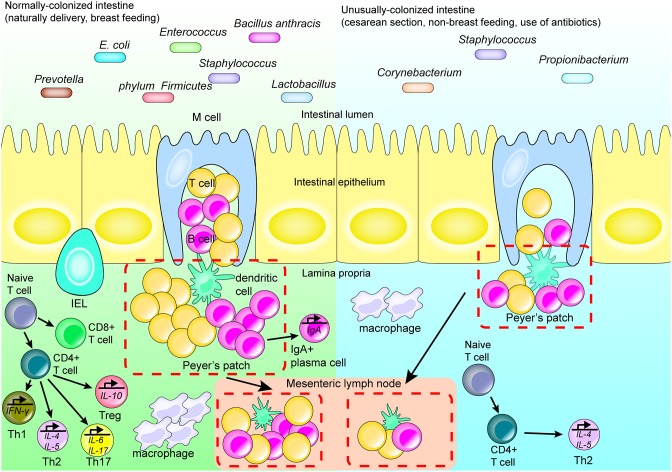
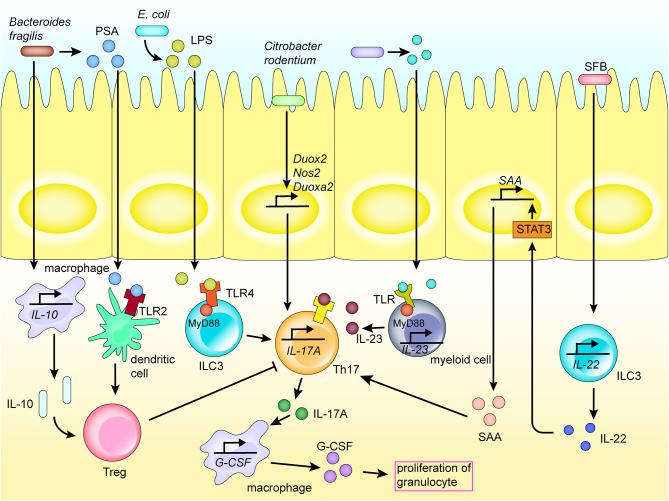
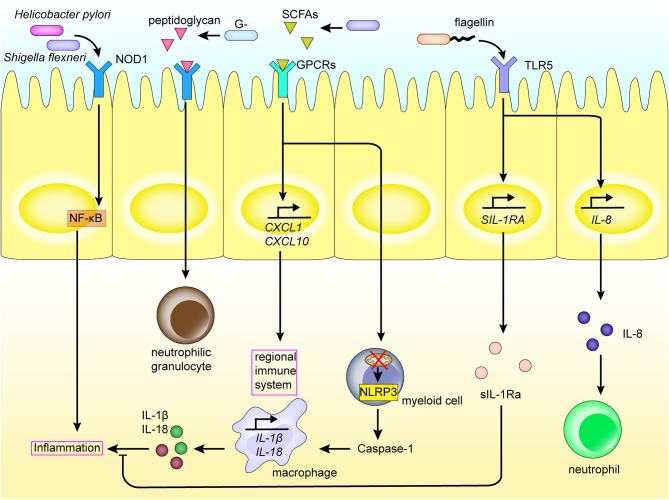
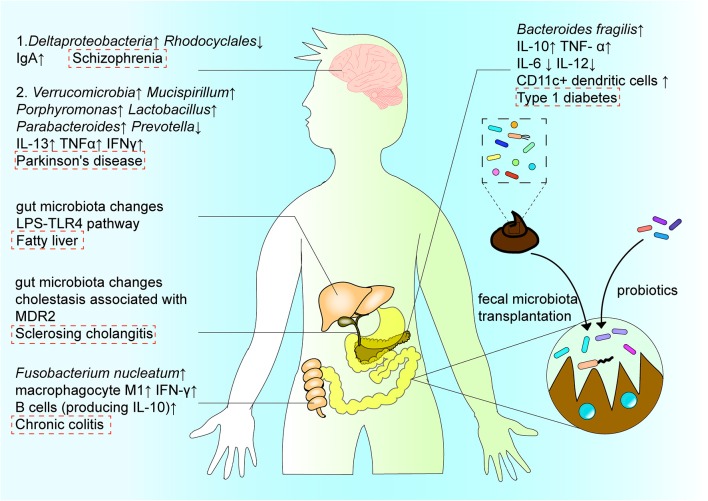
Verification
Claims the paper makes
The claims and statistics of this paper haven’t been checked yet.
Run the check — free, no account needed. It reads the open-access text and checks the sources it cites.
Claims other papers make about this one
Each is checked against this paper’s own text: does it say what the citing paper says it does?
In the citing paper
“The gut microbiota plays a role in human metabolism (including food and drug metabolism); gut homeostasis; maintenance of the integrity of the gut barrier; immune development, immunomodulation, and prevention of pathogens; and brain processes and behavior (15, 16).”
From Modulation of the gut–brain axis via the gut microbiota: a new era in treatment of amyotrophic lateral sclerosis (2023) · cites this paper as [16]
In the citing paper
“Studies have shown that the composition and products of the intestinal flora have a strong influence on immune response (16), and that the central nervous system is also influenced by the immune system (100).”
From Modulation of the gut–brain axis via the gut microbiota: a new era in treatment of amyotrophic lateral sclerosis (2023) · cites this paper as [16]
Self-check
Percentages, sums and reported differences re-computed from the paper’s own numbers.
The self-check needs the paper’s full text.
Citations
Cites
A human gut microbial gene catalogue established by metagenomic sequencing
MetaHIT Consortium, Qin, J., Li, R., Raes, J., Arumugam, M., Burgdorf, K. S., Manichanh, C., Nielsen, T., Pons, N., Levenez, F., et al. (2010) · Nature · doi:10.1038/nature08821 · Cited by 11,624
den Besten, G., van Eunen, K., Groen, A. K., Venema, K., Reijngoud, D.-J., & Bakker, B. M. (2013) · Journal of Lipid Research · doi:10.1194/jlr.r036012 · Cited by 5,048
Dominguez-Bello, M. G., Costello, E. K., Contreras, M., Magris, M., Hidalgo, G., Fierer, N., & Knight, R. (2010) · Proceedings of the National Academy of Sciences · doi:10.1073/pnas.1002601107 · Cited by 4,774
The gut microbiota--masters of host development and physiology
Sommer, F., & Bäckhed, F. (2013) · Nature Reviews Microbiology · doi:10.1038/nrmicro2974 · Cited by 3,681
Gut microbiota, metabolites and host immunity
Rooks, M. G., & Garrett, W. S. (2016) · Nature reviews. Immunology · doi:10.1038/nri.2016.42 · Cited by 3,409
Intestinal epithelial cells: regulators of barrier function and immune homeostasis
Peterson, L. W., & Artis, D. (2014) · Nature reviews. Immunology · doi:10.1038/nri3608 · Cited by 3,367
The Treatment-Naive Microbiome in New-Onset Crohn’s Disease
Gevers, D., Kugathasan, S., Denson, L. A., Vázquez-Baeza, Y., Van Treuren, W., Ren, B., Schwager, E., Knights, D., Song, S. J., Yassour, M., et al. (2014) · Cell Host & Microbe · doi:10.1016/j.chom.2014.02.005 · Cited by 3,220
Metabolomics — the link between genotypes and phenotypes
Fiehn, O. (2002) · Springer eBooks · doi:10.1007/978-94-010-0448-0_11 · Cited by 3,168
Gut Microbiota Metabolism of Dietary Fiber Influences Allergic Airway Disease and Hematopoiesis
Trompette, A., Gollwitzer, E. S., Yadava, K., Sichelstiel, A. K., Sprenger, N., Ngom-Bru, C., Blanchard, C., Junt, T., Nicod, L. P., Harris, N. L., et al. (2014) · Nature Medicine · doi:10.1038/nm.3444 · Cited by 2,862
Succession of microbial consortia in the developing infant gut microbiome
Koenig, J. E., Spor, A., Scalfone, N., Fricker, A. D., Stombaugh, J., Knight, R., Angenent, L. T., & Ley, R. E. (2011) · Proceedings of the National Academy of Sciences · doi:10.1073/pnas.1000081107 · Cited by 2,540
Cited by
Sorted by citations
Items 101–200 of 398
Xu, T., Sun, R., Zhang, Y., Zhang, C., Wang, Y., Wang, Z. A., & Du, Y. (2022) · Molecules · doi:10.3390/molecules27217622 · Cited by 18
Advancement in Therapeutic Intervention of Prebiotic-Based Nanoparticles for Colonic Diseases
Ren, Y., Nie, L., Luo, C., Zhu, S., & Zhang, X. (2022) · International Journal of Nanomedicine · doi:10.2147/ijn.s390102 · Cited by 18
Fan, X., Liu, Y., Li, S., Yang, Y., Zhao, Y., Li, W., Hao, J., Xu, Z., Zhang, B., Liu, W., et al. (2024) · Heliyon · doi:10.1016/j.heliyon.2024.e26270 · Cited by 17
Self-citationAdvances in fecal microbiota transplantation for the treatment of diabetes mellitus
Zhang, J., Wang, H., Liu, Y., Shi, M., Zhang, M., Zhang, H., & Chen, J. (2024) · Frontiers in Cellular and Infection Microbiology · doi:10.3389/fcimb.2024.1370999 · Cited by 19
Sun, X., Zhang, T., Zhao, Y., Yang, H. K., Li, Y., Sun, X., & Bian, X. (2025) · International Journal of Biological Macromolecules · doi:10.1016/j.ijbiomac.2025.146421 · Cited by 16
Tian, Y., & Zhang, D. (2022) · Gastroenterology Research and Practice · doi:10.1155/2022/2939921 · Cited by 17
Gut microbiome plays a vital role in post-stroke injury repair by mediating neuroinflammation
Huang, A., Ji, L., Li, Y., Li, Y., & Yu, Q. (2023) · International Immunopharmacology · doi:10.1016/j.intimp.2023.110126 · Cited by 20
Wang, M., Liu, Y., Zhong, L., Wu, F., & Wang, J. (2025) · Frontiers in Immunology · doi:10.3389/fimmu.2025.1533343 · Cited by 17
Pharmacological potential of natural medicine Astragali Radix in treating intestinal diseases
Wei, X., Leng, X., Liang, J., Liu, J., Chi, L., Deng, H., & Sun, D. (2024) · Biomedicine & Pharmacotherapy · doi:10.1016/j.biopha.2024.117580 · Cited by 15
Tian, Z., Hu, M., Wang, J., Mei, L., Zhu, X., Zhang, H., Jin, F., Shao, J., Wang, T., Wang, C., et al. (2022) · Frontiers in Cellular and Infection Microbiology · doi:10.3389/fcimb.2022.1022511 · Cited by 15
Lin, L., Jiang, Y., Lin, P., Ge, L., Wan, H., Dai, S., Zhang, R., Yao, J., Zeng, X., & Peng, Y. (2023) · Heliyon · doi:10.1016/j.heliyon.2023.e21870 · Cited by 15
Zhang, H., Liu, M., Song, F., Zhu, X., Lu, Q., & Liu, R. (2024) · Food Research International · doi:10.1016/j.foodres.2024.113938 · Cited by 16
Tea Polyphenols Prevent and Intervene in COVID-19 through Intestinal Microbiota
Xiang, Q., Cheng, L., Zhang, R., Liu, Y., Wu, Z., & Zhang, X. (2022) · Foods · doi:10.3390/foods11040506 · Cited by 15
The relationship between Clostridium butyricum and colorectal cancer
Liu, H., Xu, X., Liang, J., Wang, J., & Li, Y. (2022) · Journal of Cancer Research and Therapeutics · doi:10.4103/jcrt.jcrt_1565_21 · Cited by 15
Fan, W., Xia, T., Jiang, Y., Li, K., Han, J., Zhu, R., Hu, Y., Zhu, J., Nian, H., & Xin, H. (2025) · Phytotherapy Research · doi:10.1002/ptr.70001 · Cited by 14
Wang, Q., Lei, Y., Wang, J., Xu, X., Wang, L., Zhou, H., & Guo, Z. (2023) · Clinical Transplantation · doi:10.1111/ctr.15186 · Cited by 14
Metformin facilitates anti-PD-L1 efficacy through the regulation of intestinal microbiota
Zhao, X., Liu, C., Peng, L., & Wang, H. (2023) · Genes and Immunity · doi:10.1038/s41435-023-00234-7 · Cited by 14
Huang, J., Wang, X., Zhang, J., Li, Q., Zhang, P., Wu, C., Jia, Y., Su, H., & Sun, X. (2024) · World Allergy Organization Journal · doi:10.1016/j.waojou.2024.100969 · Cited by 13
Chen, L., Li, X., & Gu, Q. (2023) · Food Science & Nutrition · doi:10.1002/fsn3.3282 · Cited by 12
Self-citationYu, H., Wang, Y., Zhang, J., Wang, X., Wang, R., Bao, J., & Zhang, R. (2023) · Poultry Science · doi:10.1016/j.psj.2023.103097 · Cited by 14
Yao, L., Yang, Y., Yang, X., & Rezaei, M. J. (2024) · Molecular Neurobiology · doi:10.1007/s12035-024-04151-2 · Cited by 15
Human milk oligosaccharides: bridging the gap in intestinal microbiota between mothers and infants
Sun, W. C., Tao, L., Qian, C., Xue, P., Du, S.-S., & Tao, Y. (2025) · Frontiers in Cellular and Infection Microbiology · doi:10.3389/fcimb.2024.1386421 · Cited by 16
Mechanistic study of the effect of a high-salt diet on the intestinal barrier
Chen, L., Tang, J., Xia, Y., Wang, J., & Li-na, X. (2025) · Scientific Reports · doi:10.1038/s41598-025-88291-y · Cited by 15
Li, H., Zhang, Y., Du, S., Shen, J., Liu, X., & Jing, J. (2025) · Frontiers in Immunology · doi:10.3389/fimmu.2025.1543702 · Cited by 13
Macrophages and Tissue Homeostasis: From Physiological Functions to Disease Onset
Li, Y., Chen, H., & Zhou, S. (2025) · Frontiers in Bioscience-Landmark · doi:10.31083/fbl42706 · Cited by 12
Wu, H., Pang, M.-M., Li, Y., Huang, J.-J., Geng, S.-Z., Hong, J.-H., Liu, P.-M., & Yang, J.-J. (2026) · Journal of Nanobiotechnology · doi:10.1186/s12951-026-04083-0 · Cited by 12
Li, D., Yao, H., Zhu, X., Li, Z., & Zeng, X. (2022) · Environmental Science and Pollution Research · doi:10.1007/s11356-022-22145-2 · Cited by 12
Bai, S., Zhang, G., Han, Y., Ma, J., Bai, B., Gao, J., & Zhang, Z. (2023) · Nutrients · doi:10.3390/nu15112434 · Cited by 12
Wang, S., Cai, Q., Xu, L., Sun, Y., Wang, M., Wang, Y., Zhang, L., Li, K., & Ni, Z. (2023) · Psychopharmacology · doi:10.1007/s00213-023-06413-8 · Cited by 13
Ma, J., & Song, X. (2023) · World Journal of Psychiatry · doi:10.5498/wjp.v13.i10.724 · Cited by 12
Zhang, C., Xi, Y., Zhang, Y., He, P., Su, X., Li, Y., Zhang, M., Liu, H., Xiao, Y., & Shi, Y. (2024) · Heart & Lung · doi:10.1016/j.hrtlng.2024.01.002 · Cited by 12
Chen, Y., Li, Z., Bai, L., Lu, B., Peng, Y., Xu, P., Song, X., Bian, Y., Wang, X., & Zhao, S. (2024) · FEBS Open Bio · doi:10.1002/2211-5463.13800 · Cited by 12
Xiang, Q., Chen, Z., Ji, X., Ji, Y., Wang, J., Liu, Y.-C., Zhou, X.-C., Li, Q., Li, C., & Zhang, A. (2024) · Heliyon · doi:10.1016/j.heliyon.2024.e29404 · Cited by 12
Gupta, P., & Poluri, K. M. (2021) · ACS Bio & Med Chem Au · doi:10.1021/acsbiomedchemau.1c00034 · Cited by 12
Jie, Z., Yu, L., Yi, F., Zhang, H., Li, F., Li, X., Wei, Y. Z., & Wang, Z. (2022) · Evidence-based Complementary and Alternative Medicine · doi:10.1155/2022/5394514 · Cited by 11
Self-citationWen, Y., Feng, S., Dai, H., Mao, M., Zhou, Z., Li, B., Wang, C., Cai, X., Li, S., Yang, J., et al. (2021) · Neuroscience Letters · doi:10.1016/j.neulet.2022.136741 · Cited by 11
Edible bird’s nest plays an immune regulation by influencing intestinal flora changes in mice
Li, C., Xu, X., Lin, X., Yuan, M., Wang, D., & Zhang, X. (2024) · Journal of Functional Foods · doi:10.1016/j.jff.2024.106254 · Cited by 13
Ye, H.-M., Li, Z., Zhang, P., Kang, Z., & Zhou, D.-S. (2024) · Chinese Journal of Integrative Medicine · doi:10.1007/s11655-024-3766-9 · Cited by 12
Sun, D., Wang, C., Wu, H., Wang, D., Xiang, W., & Zou, J. (2024) · Aquaculture Reports · doi:10.1016/j.aqrep.2024.102263 · Cited by 12
Gut microbiota, allergic rhinitis, vasomotor rhinitis, Mendelian randomization, causal association
Lin, X., Hu, X., Zhang, J., Luo, J., Qin, G., & Jiang, L. (2024) · Brazilian Journal of Otorhinolaryngology · doi:10.1016/j.bjorl.2024.101491 · Cited by 13
Wu, Y., Zhang, L., Zheng, H., Huang, W., Zhang, X., Ji, W., Ma, R., Mao, X., Huang, Y., Liu, X., et al. (2024) · Veterinary Microbiology · doi:10.1016/j.vetmic.2024.110330 · Cited by 11
Self-citationThe changes of intestinal flora and metabolites in atopic dermatitis mice
Wang, F., Wang, Z., & Qu, L. (2024) · Frontiers in Microbiology · doi:10.3389/fmicb.2024.1462491 · Cited by 11
Zhu, L., Lv, B., Gao, Y., & Qin, D. (2025) · Archives of Biochemistry and Biophysics · doi:10.1016/j.abb.2025.110341 · Cited by 11
Single-Cell RNA Sequencing for Analyzing the Intestinal Tract in Healthy and Diseased Individuals
Yan, H., Ye, Y., Zhao, H., Zuo, H., & Li, Y. (2022) · Frontiers in Cell and Developmental Biology · doi:10.3389/fcell.2022.915654 · Cited by 11
Liu, X., Xi, C., Li, W., Su, H., Yang, H., Bai, Z., Tian, Y., & Song, S. (2023) · International Journal of Molecular Sciences · doi:10.3390/ijms242216425 · Cited by 11
Zhang, X., Yang, X., Zhang, S., Wang, J., Wang, M., Ma, T., Wan, M., Lv, X., Yan, T., & Jia, Y. (2023) · Journal of Pharmacy and Pharmacology · doi:10.1093/jpp/rgad014 · Cited by 10
Self-citationWang, Y., Pu, Z., Zhang, Y., Du, Z., Guo, Z., & Bai, Q. (2022) · Behavioural Brain Research · doi:10.1016/j.bbr.2022.114240 · Cited by 10
Yan, Z., Zheng, Z., Xia, T., Ni, Z., Dou, Y., & Liu, X. (2024) · American Journal of Reproductive Immunology · doi:10.1111/aji.13824 · Cited by 10
Fang, H., Li, H., Chen, Y., Liu, X., Zhao, J., Ross, R. P., Stanton, C., Chen, W., & Yang, B. K. (2024) · Food Bioscience · doi:10.1016/j.fbio.2024.104058 · Cited by 10
Wang, Y., Zhang, J., Wang, X., Wang, R., Zhang, H., Zhang, R., & Bao, J. (2024) · Poultry Science · doi:10.1016/j.psj.2024.103816 · Cited by 10
Zhang, H., Xiang, X., Wang, C., Li, T., Xiao, X., & He, L. (2024) · Frontiers in Microbiology · doi:10.3389/fmicb.2024.1414486 · Cited by 10
Pre- and Post-treatment Levels of Plasma Metabolites in Patients With Bipolar Depression
Guo, X., Wu, P., Cui, X., Jia, J., Bao, S., Yu, F., Ma, L., Cao, X.-X., & Ren, Y. (2021) · Frontiers in Psychiatry · doi:10.3389/fpsyt.2021.747595 · Cited by 10
Cogswell, A. C., Jo, S., Ferguson, N., Gupta, K. H., & Barker, E. (2022) · Journal of Virology · doi:10.1128/jvi.00235-22 · Cited by 11
A Promising Insight: The Potential Influence and Therapeutic Value of the Gut Microbiota in GI GVHD
Li, J., Zhang, X., Chen, Y., Zheng, Q., Zhao, M., & Jiang, H. (2022) · Oxidative Medicine and Cellular Longevity · doi:10.1155/2022/2124627 · Cited by 10
Wei, S., Chen, L., Yang, F.-Y., Yang, F., & Wang, S. (2023) · Neural Regeneration Research · doi:10.4103/1673-5374.369102 · Cited by 11
Modulating effect of Xuanfei Baidu granule on host metabolism and gut microbiome in rats
He, Q., Shi, Y., Xing, H., Tang, Q., Liu, J., Li, C., Zhang, H., Zhang, B., Zhang, J., & Chen, X. (2022) · Frontiers in Pharmacology · doi:10.3389/fphar.2022.922642 · Cited by 10
Liu, J., Zhang, S., & Weng, H. (2024) · Food & Function · doi:10.1039/d4fo02963a · Cited by 9
Self-citationGut Microbiota and Metabolite Profiles Associated With Functional Constipation Severity
Wang, J., He, J., Liu, D., Zhang, T., Wu, Y., & Xie, M. (2024) · Microbiology and Immunology · doi:10.1111/1348-0421.13187 · Cited by 10
Cheng, C., Du, J., Tao, J., & Cheng, D. (2025) · Microorganisms · doi:10.3390/microorganisms13010087 · Cited by 9
Ultrasound‐assisted glycation and the allergenicity of α‐lactalbumin
Wang, X., Wang, H., Ye, Y., Yang, P., Liu, G., Hu, Y., & Tu, Z. (2022) · Journal of the Science of Food and Agriculture · doi:10.1002/jsfa.12293 · Cited by 9
Ping, Y., Li, C., Wang, L., & Zhao, H. L. (2023) · Frontiers in Endocrinology · doi:10.3389/fendo.2022.1102605 · Cited by 9
Shengu granules ameliorate ovariectomy-induced osteoporosis by the gut-bone-immune axis
Chen, X., Li, W., Zeng, J. Y., Dong, Y. P., Qiu, J. M., Zhang, B., Wang, D., Liu, J., & Lyu, Z. H. (2024) · Frontiers in Microbiology · doi:10.3389/fmicb.2024.1320500 · Cited by 9
Association between Intestinal Microecological Changes and Atherothrombosis
Zhuo, X., Luo, H., Lei, R., Lou, X., Bian, J., Guo, J., Luo, H., Zhang, X., Jiao, Q., & Gong, W. (2023) · Microorganisms · doi:10.3390/microorganisms11051223 · Cited by 12
Li, D., Yao, H., Li, Y., Li, Z., Yang, X., Zhu, X., & Zeng, X. (2022) · Environmental Science and Pollution Research · doi:10.1007/s11356-022-24994-3 · Cited by 8
Ge, C., Luo, X., Lv, Y., Wu, L., Hu, Z., Huang, W., Zhan, S., Shen, X., Hui, C., Yu, D., et al. (2024) · Chemosphere · doi:10.1016/j.chemosphere.2024.142571 · Cited by 10
Qu, Q., Ma, Y., Gao, X., Lin, Y., Guan, Y., Wang, Z., Zhang, W., Jin, W., Guo, A., Lv, W., et al. (2025) · Journal of Agricultural and Food Chemistry · doi:10.1021/acs.jafc.5c05382 · Cited by 10
Fatima, S. N., Arif, F., Khalid, R., Khan, M., & Naseem, K. (2025) · Microbial Pathogenesis · doi:10.1016/j.micpath.2025.107882 · Cited by 11
Huang, K.-Y., Liang, B., Zhang, X., Chen, H., Ma, N., Lan, J.-L., Li, D., Zhou, Z., & Yang, M. (2023) · Gut Pathogens · doi:10.1186/s13099-023-00572-x · Cited by 8
Song, Y., Yu, J., Wang, B., Wen, Q., Zhong, Y., Wu, M., & Zheng, X. (2023) · Letters in Applied Microbiology · doi:10.1093/lambio/ovad140 · Cited by 8
The Role of the Trace Element Selenium in Inflammatory Bowel Disease
Hu, R., Xiao, J., & Fan, L. (2024) · Biological Trace Element Research · doi:10.1007/s12011-024-04074-y · Cited by 9
Bibliometric and visual analysis of fecal microbiota transplantation research from 2012 to 2021
Zhang, F., Yang, P., Chen, Y., Wang, R., Liu, B., Wang, J., Yuan, M., & Zhang, L. (2022) · Frontiers in Cellular and Infection Microbiology · doi:10.3389/fcimb.2022.1057492 · Cited by 9
Wang, X., Zhu, Q., & Li, Y. (2023) · International Journal of Biological Macromolecules · doi:10.1016/j.ijbiomac.2023.125402 · Cited by 8
Enhancing bile tolerance of Lactobacilli is involved in the hypolipidemic effects of liraglutide
Wang, C., Hu, H., Dong, Q., Huang, R., Zhao, W., Song, Y., Li, Z., Wang, N., Zhang, T., & Luo, X. (2021) · Bioscience Biotechnology and Biochemistry · doi:10.1093/bbb/zbab053 · Cited by 7
Mechanism of Insomnia After Stroke Based on Intestinal Flora
Wang, Y., Pan, L., & Guan, R. (2024) · International Journal of General Medicine · doi:10.2147/ijgm.s488714 · Cited by 7
Tao, Y., Yi, X., Zhou, X., Qu, J., Tuyiringire, D., Wang, A., & Zhang, Y. (2025) · The Science of The Total Environment · doi:10.1016/j.scitotenv.2025.179102 · Cited by 7
An, P. P., Liang, X., Yao, X. Y., Liao, Z., Tang, Y. C., Cao, N., Wang, Z., Wang, W. J., Niu, H. Y., Tang, C. X., et al. (2025) · Probiotics and Antimicrobial Proteins · doi:10.1007/s12602-025-10576-5 · Cited by 8
Plateau Environment, Gut Microbiota, and Depression: A Possible Concealed Connection?
Qiao, Y., Cheng, R., Li, X., Zheng, H., Guo, J., Wei, L., Gao, T., & Bi, H. (2025) · Current Issues in Molecular Biology · doi:10.3390/cimb47070487 · Cited by 9
Self-citationEffects of Pu-erh and Dian Hong tea polyphenols on the gut-liver axis in mice
Wang, N., Lan, C., Mehmood, M. A., He, M., Xiao, X., Li, L., Liao, D., Xu, K., Mo, S., Zhang, P., et al. (2023) · AMB Express · doi:10.1186/s13568-023-01565-4 · Cited by 7
Intestinal Flora in Chemotherapy Resistance of Biliary Pancreatic Cancer
Bai, L., Yan, X.-D., Lv, J., Qi, P., Song, X., & Zhang, L. (2023) · Biology · doi:10.3390/biology12081151 · Cited by 7
Peng, D., Wang, Y., Yao, Y., Yang, Z., Wu, S., Zeng, K., Hu, X., & Zhao, Y. D. (2024) · Molecular and Cellular Biochemistry · doi:10.1007/s11010-023-04904-y · Cited by 8
Li, R., Yang, H., Xue, Y., & Xianqin, L. (2024) · PubMed Central · doi:10.19852/j.cnki.jtcm.20230510.001 · Cited by 7
Exploring the pathogenesis of RA through the gut‐articular axis‐dysbiosis a potential factor
Wang, S., Liu, Y., Zou, X., Pan, M., Wan, Q., & Chu, X. (2024) · Clinical Anatomy · doi:10.1002/ca.24215 · Cited by 7
The potential role of gut microbiota in the occurrence and development of endometriosis
Guo, J., Yan, X., & Han, L. (2024) · Frontiers in Cellular and Infection Microbiology · doi:10.3389/fcimb.2024.1454931 · Cited by 8
Huang, W., Jiang, T., He, J., Ruan, J., Wu, B., Tao, R., Xu, P., Wang, Y., Chen, R., Wang, H., et al. (2025) · Probiotics and Antimicrobial Proteins · doi:10.1007/s12602-025-10471-z · Cited by 7
Intestinal flora was associated with occurrence risk of chronic non-communicable diseases
Jiang, G., Li, H.-Y., Xie, L., Fan, J.-Y., Li, S., Yu, W., Xu, Y.-T., He, M., Jiang, Y., Bai, X., et al. (2025) · World Journal of Gastroenterology · doi:10.3748/wjg.v31.i11.103507 · Cited by 7
Gu, Q., Jiang, Z., Li, K., Li, Y., Yan, X., McClements, D. J., Ma, C., & Liu, F. (2024) · Food & Function · doi:10.1039/d4fo00258j · Cited by 7
Wang, T., Xiong, K., He, Y., Feng, B., Guo, L., Gu, J., Zhang, M., Wang, H., & Wu, X. (2024) · American Journal of Physiology-Endocrinology and Metabolism · doi:10.1152/ajpendo.00113.2024 · Cited by 7
Yang, P. C., Bai, H., Yan, T., Xu, X., Tang, X., Song, B., Liu, Y., Lü, Y., Liu, P., Tu, W., et al. (2025) · Journal of Translational Medicine · doi:10.1186/s12967-025-06197-9 · Cited by 6
Self-citationZhang, M., Sun, X., Yu, X., Li, X., Zhang, X., Zhang, R., Lu, H., Wang, Y., Xue, F., Zhang, T., et al. (2025) · Frontiers in Microbiology · doi:10.3389/fmicb.2025.1522191 · Cited by 6
Self-citationFu, M., Liao, M., Qin, Y., He, L., Zheng, Z., Zhao, Y., Liu, Q., Zhang, Y., & Zhao, X. (2025) · Fish & Shellfish Immunology · doi:10.1016/j.fsi.2025.110267 · Cited by 6
The association between the gut microbiome and antituberculosis drug-induced liver injury
Pei, S., Yang, L., Gao, H., Liu, Y., Lu, J., Dai, E. H., Meng, C., Feng, F., & Wang, Y. (2025) · Frontiers in Pharmacology · doi:10.3389/fphar.2025.1512815 · Cited by 6
Wāng, Y. (2025) · Trends in Food Science & Technology · doi:10.1016/j.tifs.2025.105265 · Cited by 7
Li, K., Liu, P., Liu, M., Ye, J., & Zhu, L. (2024) · BMC Cardiovascular Disorders · doi:10.1186/s12872-023-03703-z · Cited by 7
Wang, K., Li, G., Yang, Z. H., Yang, F., Sun, Y., Duan, G., Sun, W., Zhou, K., He, J., & Dai, F. (2024) · Frontiers in Microbiology · doi:10.3389/fmicb.2023.1292082 · Cited by 6
Self-citationZhang, J., Dong, C., Lin, Y., Shang, L., Ma, J., Hu, R., & Wang, H. (2024) · Molecular and Clinical Oncology · doi:10.3892/mco.2024.2736 · Cited by 6
Li, P., Zhang, S., Mo, Y., Zhang, L., Wang, Y., Xiong, F., Zhang, S., Liu, J., Xu, Y., Zeng, Z., et al. (2020) · Oncology Letters · doi:10.3892/ol.2020.12165 · Cited by 6
Self-citationAnalysis of the intestinal flora in patients with primary liver cancer*
Liu, C., Sun, G., Wang, H., Shang, G., Xiong, Y., & Zou, X. (2023) · Oncology and Translational Medicine · doi:10.1007/s10330-022-0575-5 · Cited by 6
Cui, Z., Li, Z., Dong, W., Qiu, L., Zhang, J., & Wang, S. (2023) · Molecules · doi:10.3390/molecules28176307 · Cited by 6
Liu, H., Li, F., Tang, H., Chen, B., Geng, Y., Chen, D., Ouyang, P., Li, L., & Huang, X. (2023) · Frontiers in Microbiology · doi:10.3389/fmicb.2023.1223723 · Cited by 6
Xiong, W., Cao, X., Chen, K., He, C., Wang, X., Guo, H., Hua, H., Xiang, X., Chu, X., Dong, Y., et al. (2024) · Aquaculture · doi:10.1016/j.aquaculture.2024.740813 · Cited by 6
Self-citation
Metadata
- Authors
- Zhou, B., Yuan, Y., Zhang, S., Guo, C., Li, X., Li, G., Xiong, W., & Zeng, Z.
- Affiliations
- Central South University (CN)
- Corresponding author
- Zeng, Zhaoyang
- Venue
- Frontiers in Immunology
- Publisher
- Frontiers Media SA
- Published
- 2020-04-03
- Volume
- 11
- Pages
- 575-575
- ISSN
- 1664-3224 (ISSN-L)
- PMC
- PMC7147503
- OpenAlex
- W3014654467
- Cited by
- 396
- References
- 122
- Citations by year
- 2026: 41 · 2025: 103 · 2024: 114 · 2023: 70 · 2022: 47 · 2021: 16 · 2020: 3
- FWCI
- 3.25
- Type
- journal article
- Language
- en
- Open access
- gold
- doi.org
- Licence
- Locations
- Frontiers in Immunology (publishedVersion, cc-by)
- PubMed Central (publishedVersion, cc-by)
- PubMed (publishedVersion)
- DOAJ (DOAJ: Directory of Open Access Journals) (submittedVersion, cc-by-sa)
- Funders
- National Natural Science Foundation of China (81672993, 81702907, 81772928, 81803025)
- Topics
- Life Sciences › Biochemistry, Genetics and Molecular Biology › Molecular Biology › Gut microbiota and health
- Life Sciences › Agricultural and Biological Sciences › Food Science › Probiotics and Fermented Foods
- Health Sciences › Medicine › Gastroenterology › Gastrointestinal motility and disorders
- Keywords
- gut microbiota, intestinal immunity, regional immunity, intestinal microenvironment, immune homeostasis, probiotics, microbiota transplantation, innate immunity, adaptive immunity, immune cell differentiation, immune cell proliferation
- MeSH terms
- Gastrointestinal Microbiome, Animals, Humans, Intestinal Mucosa, Immunity, Mucosal
About these checks
Registry, retraction, Cites and statistics results are computed, not judged, with one exception: a printed reference that no index lists is read once by a model before it counts as a citation error. Claims are extracted by a model and kept only when their quote appears verbatim in the text; each cited source is then checked, with a model’s help, for whether it says what the claim relies on. Those verdicts can be wrong — read the claim’s quote and the cited source before relying on one.
Statistics and arithmetic are recomputed, not judged.
Confidence bands are shown only for fields calibrated on our annotated test set. None is calibrated yet, so no band is shown.
What counts as a claim ›How we measure confidence ›How we check this ›
Are you an author, or do you see a problem with this page? Request a review
