

The DOI matches its Crossref record; 221 of the 222 references it cites were found in a registry or an index.
Current Challenges in Vaccinology
Open accessAbstract
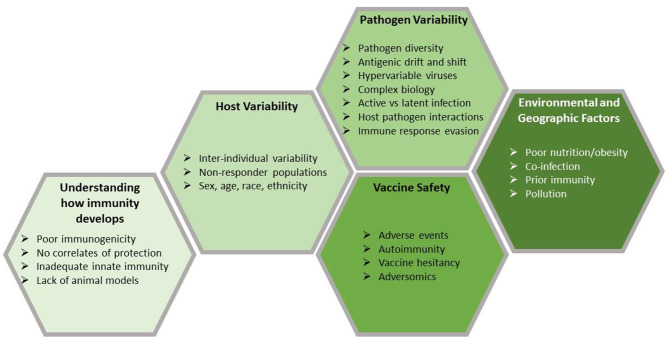
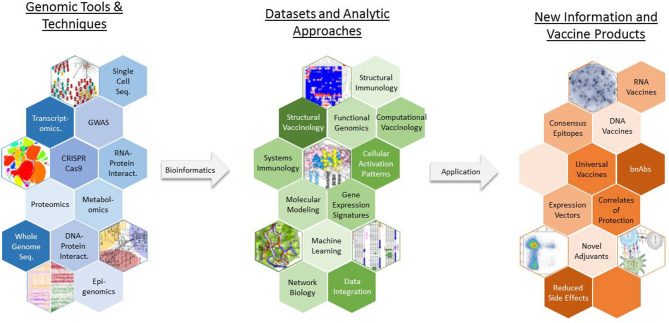
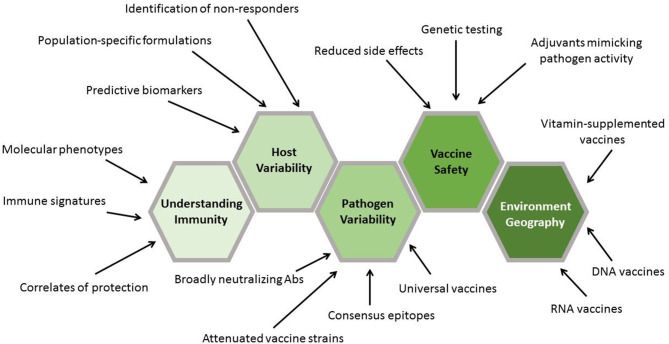
The development of vaccines, which prime the immune system to respond to future infections, has led to global declines in morbidity and mortality from dreadful infectious communicable diseases. However, many pathogens of public health importance are highly complex and/or rapidly evolving, posing unique challenges to vaccine development. Several of these challenges include an incomplete understanding of how immunity develops, host and pathogen genetic variability, and an increased societal skepticism regarding vaccine safety. In particular, new high-dimensional omics technologies, aided by bioinformatics, are driving new vaccine development (vaccinomics). Informed by recent insights into pathogen biology, host genetic diversity, and immunology, the increasing use of genomic approaches is leading to new models and understanding of host immune system responses that may provide solutions in the rapid development of novel vaccine candidates.
Overview
The claims and statistics of this paper haven’t been checked yet.
Run the check — free, no account needed. It reads the open-access text and checks the sources it cites.
Integrity signals
Registry
Cites
Statistics
Figures
Verification
Claims the paper makes
The claims and statistics of this paper haven’t been checked yet.
Run the check — free, no account needed. It reads the open-access text and checks the sources it cites.
Claims other papers make about this one
Each is checked against this paper’s own text: does it say what the citing paper says it does?
In the citing paper
“Despite their evident success, however, conventional vaccines do not effectively tackle pathogens such as the malaria parasite Plasmodium falciparum, hepatitis C and human immunodeficiency virus (HIV), which evade immune surveillance2.”
From mRNA vaccines for infectious diseases: principles, delivery and clinical translation (2021) · cites this paper as [2]
Self-check
Percentages, sums and reported differences re-computed from the paper’s own numbers.
The self-check needs the paper’s full text.
Citations
Cites
Multi-omics approaches to disease
Hasin, Y., Seldin, M., & Lusis, A. (2017) · Genome Biology · doi:10.1186/s13059-017-1215-1 · Cited by 2,953
InnateDB: systems biology of innate immunity and beyond—recent updates and continuing curation
Breuer, K., Foroushani, A. B. K., Laird, M. R., Chen, C. C. L., Sribnaia, A., Lo, R., Winsor, G. L., Hancock, R. E. W., Brinkman, F. S. L., & Lynn, D. J. (2012) · Nucleic Acids Research · doi:10.1093/nar/gks1147 · Cited by 1,253
MicroRNA in Control of Gene Expression: An Overview of Nuclear Functions
Catalanotto, C., Cogoni, C., & Zardo, G. (2016) · International Journal of Molecular Sciences · doi:10.3390/ijms17101712 · Cited by 1,238
Characterization of Peptides Bound to the Class I MHC Molecule HLA-A2.1 by Mass Spectrometry
Hunt, D. F., Henderson, R. A., Shabanowitz, J., Sakaguchi, K., Michel, H., Sevilir, N., Cox, A. L., Appella, E., & Engelhard, V. H. (1992) · Science · doi:10.1126/science.1546328 · Cited by 1,198
Systems biology approach predicts immunogenicity of the yellow fever vaccine in humans
Querec, T. D., Akondy, R. S., Lee, E. K., Cao, W., Nakaya, H. I., Teuwen, D. E., Pirani, A. M., Gernert, K. M., Deng, J., Marzolf, B., et al. (2008) · Nature Immunology · doi:10.1038/ni.1688 · Cited by 1,123
Variation in the Human Immune System Is Largely Driven by Non-Heritable Influences
Brodin, P., Jojic, V., Gao, T., Bhattacharya, S., Angel, C. J. L., Furman, D., Shen-Orr, S., Dekker, C. L., Swan, G. E., Butte, A. J., et al. (2015) · Cell · doi:10.1016/j.cell.2014.12.020 · Cited by 1,065
Centers for Disease Control and Prevention (CDC)
García-Basteiro, A. L. (2011) · Encyclopedia of Disaster Relief · doi:10.4135/9781412994064.n25 · Cited by 1,021
Bhattacharya, S., Dunn, P. J., Thomas, C. G., Smith, B., Schaefer, H., Chen, J., Hu, Z., Zalocusky, K. A., Shankar, R., Shen-Orr, S. S., et al. (2018) · Scientific Data · doi:10.1038/sdata.2018.15 · Cited by 788
Li, S., Rouphael, N., Duraisingham, S., Romero‐Steiner, S., Presnell, S., Davis, C. W., Schmidt, D. S., Johnson, S. E., Milton, A., Rajam, G., et al. (2013) · Nature Immunology · doi:10.1038/ni.2789 · Cited by 772
Adaptive evolution of highly mutable loci in pathogenic bacteria
Moxon, E. R., Rainey, P. B., Nowak, M. A., & Lenski, R. E. (1994) · Current Biology · doi:10.1016/s0960-9822(00)00005-1 · Cited by 755
Cited by
Sorted by citations
mRNA vaccines for infectious diseases: principles, delivery and clinical translation
Chaudhary, N., Weissman, D., & Whitehead, K. A. (2021) · Nature Reviews Drug Discovery · doi:10.1038/s41573-021-00283-5 · Cited by 1,555
mRNA vaccines in disease prevention and treatment
Zhang, G., Tang, T., Chen, Y., Huang, X., & Liang, T. (2023) · Signal Transduction and Targeted Therapy · doi:10.1038/s41392-023-01579-1 · Cited by 273
Han, X., Alu, A., Liu, H., Shi, Y., Wei, X., Cai, L., & Wei, Y. (2022) · Bioactive Materials · doi:10.1016/j.bioactmat.2022.01.011 · Cited by 165
Knife’s edge: Balancing immunogenicity and reactogenicity in mRNA vaccines
Lee, J., Woodruff, M. C., Kim, E. H., & Nam, J. (2023) · Experimental & Molecular Medicine · doi:10.1038/s12276-023-00999-x · Cited by 141
Nanomedicine for COVID-19: the role of nanotechnology in the treatment and diagnosis of COVID-19
Vahedifard, F., & Chakravarthy, K. V. (2021) · Emergent Materials · doi:10.1007/s42247-021-00168-8 · Cited by 129
Viral hepatitis update: Progress and perspectives
Pisano, M. B., Giadans, C. G., Flichman, D., Re, V. E., Preciado, M. V., & Valva, P. (2021) · World Journal of Gastroenterology · doi:10.3748/wjg.v27.i26.4018 · Cited by 118
Asadi, K., & Gholami, A. (2021) · International Journal of Biological Macromolecules · doi:10.1016/j.ijbiomac.2021.04.005 · Cited by 98
mRNA Vaccine Development for Emerging Animal and Zoonotic Diseases
Le, T., Sun, C., Chang, J., Zhang, G., & Yin, X. (2022) · Viruses · doi:10.3390/v14020401 · Cited by 99
Deshmukh, R., Sethi, P., Singh, B., Shiekmydeen, J., Salave, S., Patel, R. J., Ali, N., Rashid, S., Elossaily, G. M., & Kumar, A. (2024) · Pharmaceutics · doi:10.3390/pharmaceutics16081076 · Cited by 60
Vaccinomics: a future avenue for vaccine development against emerging pathogens
de la Fuente, J., & Contreras, M. (2021) · Expert Review of Vaccines · doi:10.1080/14760584.2021.1987222 · Cited by 48
Vaccines and Antivirals: Grand Challenges and Great Opportunities
Andreï, G. (2021) · Frontiers in Virology · doi:10.3389/fviro.2021.666548 · Cited by 48
Saha, A., Roy, S. G., Dwivedi, R., Tripathi, P., Kumar, K., Nambiar, S. M., & Pathak, R. (2025) · Vaccines · doi:10.3390/vaccines13040424 · Cited by 47
Prophylactic and therapeutic vaccine development: advancements and challenges
Weerarathna, I. N., Doelakeh, E. S., Kiwanuka, L., Kumar, P., & Arora, S. (2024) · Molecular Biomedicine · doi:10.1186/s43556-024-00222-x · Cited by 47
Wagoner, Z. W., Yates, T. B., Hernandez‐Davies, J. E., Sureshchandra, S., Joloya, E. M., Jain, A., de Assis, R., Kastenschmidt, J. M., Sorn, A. M., Mitul, M. T., et al. (2025) · Cell stem cell · doi:10.1016/j.stem.2025.01.014 · Cited by 30
A Structural View at Vaccine Development against M. tuberculosis
Romanò, M., Squeglia, F., Kramarska, E., Barra, G., Choi, H., Kim, H., Ruggiero, A., & Berisio, R. (2023) · Cells · doi:10.3390/cells12020317 · Cited by 27
Nonclinical safety evaluation of a novel ionizable lipid for mRNA delivery
Broudic, K., Amberg, A., Schaefer, M. K., Spirkl, H.-P., Bernard, M., & Désert, P. (2022) · Toxicology and Applied Pharmacology · doi:10.1016/j.taap.2022.116143 · Cited by 25
Principles in Immunology for the Design and Development of Vaccines
Meyer, C. U., & Zepp, F. (2021) · Methods in molecular biology · doi:10.1007/978-1-0716-1884-4_2 · Cited by 23
Advancing mRNA Therapeutics: The Role and Future of Nanoparticle Delivery Systems
Li, J., Zhang, Y., Yang, Y., & Sun, T. (2024) · Molecular Pharmaceutics · doi:10.1021/acs.molpharmaceut.4c00276 · Cited by 24
Advances in Nanotechnology Research in Food Production, Nutrition, and Health
Han, K., Yang, H., Fan, D., & Deng, J. (2025) · Nutrients · doi:10.3390/nu17152443 · Cited by 24
Gu, J., Xu, Z., Liu, Q., Tang, S., Zhang, W., Xie, S., Chen, X., Chen, J., Yong, K., Yang, C., et al. (2023) · Advanced Healthcare Materials · doi:10.1002/adhm.202302409 · Cited by 20
Kumar, P., Kumar, P., Shrivastava, A., Dar, M. A., Lokhande, K. B., Singh, N., Singh, A., Ravichandiran, V., & Mandal, D. (2023) · International Journal of Biological Macromolecules · doi:10.1016/j.ijbiomac.2023.127567 · Cited by 17
Nano-Carriers of COVID-19 Vaccines: The Main Pillars of Efficacy
Constantin, C., Pisani, A., Bardi, G., & Neagu, M. T. (2021) · Nanomedicine · doi:10.2217/nnm-2021-0250 · Cited by 15
Therapeutic Potentials of Immunometabolomic Modulations Induced by Tuberculosis Vaccination
Rawat, B. S., Kumar, D., Soni, V., & Rosenn, E. H. (2022) · Vaccines · doi:10.3390/vaccines10122127 · Cited by 15
Quantum vaccinomics platforms to advance in vaccinology
de la Fuente, J., & Contreras, M. (2023) · Frontiers in Immunology · doi:10.3389/fimmu.2023.1172734 · Cited by 14
Abernathy, M. E., Dam, K.-M. A., Esswein, S. R., Jette, C. A., & Björkman, P. J. (2021) · Viruses · doi:10.3390/v13102106 · Cited by 12
Lucero‐Prisno, D. E., Okesanya, O. J., Agboola, A. O., Adebayo, U. O., Adigun, O. A., Ahmed, M. M., Olaleke, N. O., Oso, T. A., Tan, M. I. R. S., Ogaya, J. B., et al. (2025) · Next Bioengineering · doi:10.1016/j.nxbio.2025.100003 · Cited by 17
Advancements in viral vaccine development: from traditional to modern approaches
Kumar, A., Ahmad, F., Sah, B. K., Aljabali, A. A. A., Mishra, Y., & Mishra, V. K. (2025) · Exploration of Immunology · doi:10.37349/ei.2025.1003203 · Cited by 14
Graph-theoretical formulation of the generalized epitope-based vaccine design problem
Dorigatti, E., & Schubert, B. (2020) · PLoS Computational Biology · doi:10.1371/journal.pcbi.1008237 · Cited by 13
Mishra, N., Quon, A. S., Nguyen, A., Papazyan, E. K., Hao, Y., & Liu, Y. (2023) · ACS Applied Bio Materials · doi:10.1021/acsabm.3c00391 · Cited by 13
Virus-like particles in poultry disease: an approach to effective and safe vaccination
Raji, A. A., Dastjerdi, P. Z., & Omar, A. R. (2024) · Frontiers in Veterinary Science · doi:10.3389/fvets.2024.1405605 · Cited by 12
Wei, Z., Zhang, S., Wang, X., Xue, Y., Dang, S., & Zhai, J. (2025) · Frontiers in Immunology · doi:10.3389/fimmu.2025.1524317 · Cited by 16
RNA Vaccines: Yeast as a Novel Antigen Vehicle
Silva, A. J. D., de Sousa, M. M. G., de Macêdo, L. S., Franca-Neto, P. L., de Moura, I. A., Espinoza, B. C. F., Invenção, M. D. C. V., de Pinho, S. S., da Gama, M. A. T. M., & de Freitas, A. C. (2023) · Vaccines · doi:10.3390/vaccines11081334 · Cited by 12
The Nature of the Problem of Immunity and its SolutionPreprint
Ola, P. (2022) · OSF Preprints (OSF Preprints) · doi:10.31219/osf.io/zmqsg · Cited by 11
Dudley, M. Z., Gerber, J. E., Ni, H. B., Blunt, M., Holroyd, T. A., Carleton, B., Poland, G. A., & Salmon, D. A. (2023) · Vaccine · doi:10.1016/j.vaccine.2023.02.009 · Cited by 10
Self-citationRecent Global Trends in Vaccinology, Advances and Challenges
Aqib, A. I., Anjum, A. A., Islam, M. A., Murtaza, A., & Rehman, A. U. (2023) · Vaccines · doi:10.3390/vaccines11030520 · Cited by 10
Effects of the age of vaccination on the humoral responses to a human papillomavirus vaccine
Nicoli, F., Mantelli, B., Gallerani, E., Telatin, V., Squarzon, L., Masiero, S., Gavioli, R., Palù, G., Barzon, L., & Caputo, A. (2022) · npj Vaccines · doi:10.1038/s41541-022-00458-0 · Cited by 10
Jaishwal, P., Jha, K., & Singh, S. P. (2024) · International Journal of Biological Macromolecules · doi:10.1016/j.ijbiomac.2024.134012 · Cited by 10
Methods integrating innate and adaptive immune responses in human in vitro immunization assays
Bowley, T. Y., Lenz, K. D., Shanker, A., & Kubicek-Sutherland, J. Z. (2025) · Frontiers in Immunology · doi:10.3389/fimmu.2025.1584852 · Cited by 8
Pharmacogenomics and Vaccine Development
Poland, G. A., Ovsyannikova, I. G., & Kennedy, R. B. (2021) · Clinical Pharmacology & Therapeutics · doi:10.1002/cpt.2288 · Cited by 8
Self-citationPayne, C. J., Grace, K., Phuong, V. H., Phước, N. N., Dung, T. T., Phước, L. H., & Crumlish, M. (2023) · Frontiers in Marine Science · doi:10.3389/fmars.2023.1270968 · Cited by 7
Sarker, A., Rahman, M. M., Khatun, C., Barai, C., Roy, N., Aziz, M. A., Faruqe, M. O., & Hossain, M. T. (2024) · PLoS ONE · doi:10.1371/journal.pone.0302120 · Cited by 7
RetractedPrecise Therapy Using the Selective Endogenous Encapsidation for Cellular Delivery Vector System
Tatarūnas, V., Čiapienė, I., & Giedraitienė, A. (2024) · Pharmaceutics · doi:10.3390/pharmaceutics16020292 · Cited by 7
Vega, E., Burgos, J. M., Souto, E. B., García, M. L., Pujol, M., & Sánchez‐López, E. (2024) · Expert Opinion on Drug Delivery · doi:10.1080/17425247.2024.2400293 · Cited by 6
Zhang, M., Wang, C., Pan, J., Cui, H., & Zhao, X. (2024) · International Immunopharmacology · doi:10.1016/j.intimp.2024.113784 · Cited by 7
Bhakta, S., Choudhury, S., Paul, J., & Bhattacharya, A. (2021) · Elsevier eBooks · doi:10.1016/b978-0-323-85844-1.00006-4 · Cited by 6
Haralambieva, I. H., Chen, J., Quach, H. Q., Ratishvili, T., Warner, N. D., Ovsyannikova, I. G., Poland, G. A., & Kennedy, R. B. (2024) · Frontiers in Immunology · doi:10.3389/fimmu.2024.1358477 · Cited by 6
Self-citationMovement disorders, cerebral palsy and vaccination
Libá, Z., Kraus, J., Necas, T., Necas, J., Klugar, M., & Kršek, P. (2021) · European Journal of Paediatric Neurology · doi:10.1016/j.ejpn.2021.12.006 · Cited by 5
Choi, J. Y., Mahadik, B. P., & Fisher, J. P. (2021) · Essays in Biochemistry · doi:10.1042/ebc20200105 · Cited by 5
Sugandhi, V. V., Gadhave, D. G., Khot, S. V., Jadhav, K., Patel, D., Thapa, R., Verma, R. K., Rojekar, S. V., Patil, N. G., Jha, S. K., et al. (2025) · Journal of Drug Delivery Science and Technology · doi:10.1016/j.jddst.2025.106960 · Cited by 4
Miles, S., Mourglia‐Ettlin, G., & Chabalgoity, J. A. (2026) · Vaccine · doi:10.1016/j.vaccine.2026.128392 · Cited by 4
A Commentary on Multi-omics Data Integration in Systems Vaccinology
Shannon, C. P., Lee, A. H., Tebbutt, S. J., & Singh, A. (2024) · Journal of Molecular Biology · doi:10.1016/j.jmb.2024.168522 · Cited by 4
Vaccine Based Approaches for the Prevention and Treatment of Neurological Disease
Aderinto, N., Abraham, I. C., Olatunji, G. D., Kokori, E., Ashinze, P. T., Babawale, E. A., Alabi, B. O., Opeyemi, O. D., Babalola, A. E., Ayoola, O. I., et al. (2025) · Current Treatment Options in Neurology · doi:10.1007/s11940-025-00827-9 · Cited by 5
Myopericarditis after COVID-19 vaccination: unexpected but not unprecedented
Ryan, M., & Montgomery, J. (2022) · The Lancet Respiratory Medicine · doi:10.1016/s2213-2600(22)00091-1 · Cited by 4
Mosa, A. I., Campo, D. S., Khudyakov, Y. E., Haidar, M. A., Gehring, A. J., Zahoor, M. A., Ball, J. K., Urbanowicz, R. A., & Feld, J. J. (2023) · Proceedings of the National Academy of Sciences · doi:10.1073/pnas.2220294120 · Cited by 4
Application of gold nanoparticles in vaccine development
Farfán-Castro, S., García-Soto, M. J., Aguilar‐Aguilar, A., González‐Ortega, O., & Rosales‐Mendoza, S. (2024) · Elsevier eBooks · doi:10.1016/b978-0-443-19061-2.00003-1 · Cited by 4
Immunoinformatics-guided vaccine design: A review with case study on Marburg virus
Rao, D. F., Patel, S., & Pandya, H. A. (2025) · Biochemical and Biophysical Research Communications · doi:10.1016/j.bbrc.2025.152572 · Cited by 3
Genovese, G., Rizzo, C. E., Bartucciotto, L., Calderone, S. M., Loddo, F., Leonforte, F., Mistretta, A., Squeri, R., & Genovese, C. (2026) · Epidemiologia · doi:10.3390/epidemiologia7010019 · Cited by 4
Medhasi, S., Sriwarom, A., Permpalung, N., Torvorapanit, P., Plongla, R., Chindamporn, A., & Worasilchai, N. (2024) · Human Vaccines & Immunotherapeutics · doi:10.1080/21645515.2024.2304372 · Cited by 3
Domnich, A., Orsi, A., Lai, P. L., Massaro, E., Trombetta, C.-S., Pastorino, J., Roihl, C., Pianta, M., Icardi, G., & Panatto, D. (2025) · Medicina · doi:10.3390/medicina61010067 · Cited by 3
The mental health implication of mpox: Enhancing care with genetic insights
Ejiohuo, O. (2025) · Journal of Public Health in Africa · doi:10.4102/jphia.v16i1.786 · Cited by 3
Major locus on ECA18 influences effectiveness of GonaCon vaccine in feral horses
Thompson, M. A., McCann, B. E., Simmons, R. B., & Rhen, T. (2022) · Journal of Reproductive Immunology · doi:10.1016/j.jri.2022.103779 · Cited by 3
Gbédandé, K., Ibitokou, S. A., Endrino, M. J., Yap, G. S., Brown, M. G., & Stephens, R. (2024) · iScience · doi:10.1016/j.isci.2024.111468 · Cited by 3
Asfaw, M., Senbit, M., Yesuf, M., Fenta, M. D., Birhan, G., Abat, A. S., & Ibrahim, S. M. (2022) · Infection and Drug Resistance · doi:10.2147/idr.s365745 · Cited by 3
Genetic origins of microbial virulence
Chatterjee, S. (2025) · Elsevier eBooks · doi:10.1016/b978-0-443-31554-1.00010-8 · Cited by 3
Mandatory Childhood Vaccinations in Poland—The Art of Preventing the PreventablePreprint
Kamińska, A., & Plata‐Nazar, K. (2023) · Preprints.org · doi:10.20944/preprints202311.0261.v1 · Cited by 2
Bhattacharya, M., Chatterjee, S., Das, A., Lee, S., & Chakraborty, C. (2025) · Vaccine · doi:10.1016/j.vaccine.2025.128051 · Cited by 2
Lee, S., Kim, J., Kim, B., Kim, B.-S., Shin, J., Choi, J., Kim, M., Seo, Y. H., Kim, B. H., Lim, K. S., et al. (2026) · Discover Applied Sciences · doi:10.1007/s42452-025-08209-1 · Cited by 2
Nanovaccines in cancer immunoprevention and immunotherapy: Current insights and future directions
Uti, D. E., Alum, E. U., & Ugwu, O. P.-C. (2026) · Cancer Treatment and Research Communications · doi:10.1016/j.ctarc.2026.101166 · Cited by 2
Enhancing mRNA therapeutics production: A platform technology approach through IVT modeling insights
Ahmed, M., Nair, A., Middleton, J., Loveday, K. A., Brown, S., Kis, Z., & Cordiner, J. (2026) · Results in Engineering · doi:10.1016/j.rineng.2026.110088 · Cited by 2
Zare‐Zardini, H., Saberian, E., Jenča, A., Jenča, A., Petrášová, A., & Jenčová, J. (2024) · Vaccines · doi:10.3390/vaccines12060660 · Cited by 2
Ullah, A., Azam, S., Ahmad, S., Khan, I., Alammari, D. M., Abassi, S. W., Wei, D., Alshabrmi, F. M., Aljasir, M. A., & Alatawi, E. A. (2025) · Biochemistry and Biophysics Reports · doi:10.1016/j.bbrep.2025.102082 · Cited by 2
Why not the ‘marker’ or DIVA vaccines for the control of emerging infectious diseases of humans?
Singh, A. (2021) · Vaccine · doi:10.1016/j.vaccine.2021.01.069 · Cited by 2
AI-Assisted Vaccine Design and Development in Immunological Disorders
Tavare, N., Singh, R., & Barage, S. H. (2025) · Advances in computational intelligence and robotics book series · doi:10.4018/979-8-3693-9725-1.ch006 · Cited by 1
Oladipo, E. K., Irewolede, B. A., Aderibigbe, K. A., Hammed, O. S., Jegede, A. J., Opeyemi, O. H., Adaeze, C. J., Adedotun, O. J., Adebola, A. M., Dorcas, A. O., et al. (2026) · In Silico Pharmacology · doi:10.1007/s40203-026-00587-7 · Cited by 1
mRNA vaccines for viral diseases: mechanism, advances, and future perspective
Chakraborty, B., & Singh, T. (2026) · Molecular Biology Reports · doi:10.1007/s11033-026-11856-1 · Cited by 1
Rashid, M. H. A., Saha, D., & Mandal, S. C. (2022) · Elsevier eBooks · doi:10.1016/b978-0-323-90750-7.00004-1 · Cited by 1
Nadeem, R., Maghraby, A. S., Abd‐Elshafy, D. N., Barakat, A., & Bahgat, M. M. (2023) · Clinical and Experimental Vaccine Research · doi:10.7774/cevr.2023.12.1.47 · Cited by 1
Garse, S., Dokhale, S., Bhandari, G. K., Kapadiya, V., Prabhakar, K., & Devarajan, S. (2024) · Elsevier eBooks · doi:10.1016/b978-0-443-15526-0.00002-0 · Cited by 1
Gut microbiota modulate immune responses to orally and parenterally administered rotavirus in mice
Shi, Z., Moon, S.-S., Zou, J., Wang, Y., Bhatnagar, N., Ngo, V. L., Wang, X., Wang, H., Bessey, T. K., Hull, J. J., et al. (2025) · npj Vaccines · doi:10.1038/s41541-025-01126-9 · Cited by 1
Brief Introduction of Measles Virus and Its Therapeutic Strategies
Nascimento, I. J. D. S., Santos-Júnior, P. F. D. S., & da Silva‐Júnior, E. F. (2021) · Springer eBooks · doi:10.1007/978-3-030-71165-8_23 · Cited by 1
The Art of Oncoimmunovaccinomics
Ikrar, T., & Anurogo, D. (2021) · World Journal of Vaccines · doi:10.4236/wjv.2021.114007 · Cited by 1
Voit, K., Timmermann, C., Orzechowski, M., & Steger, F. (2023) · Frontiers in Public Health · doi:10.3389/fpubh.2023.995683 · Cited by 1
The Nature of the Problem of Immunity and its SolutionPreprint
Ola, P. (2022) · doi:10.22541/au.165926450.03622785/v1 · Cited by 1
Nanotechnology and Vaccine Development
Jetha, K. L., Bharadia, P. D., & Patel, M. P. (2024) · doi:10.1002/9781394175482.ch3 · Cited by 1
Charting targeted courses for vaccination
(2025) · Nature Biomedical Engineering · doi:10.1038/s41551-025-01366-z · Cited by 1
McCarty, M., Hernández, S. A., Malfetano, J., Leao, A. C., Villar, M. J., Yang, X., Chen, Y.-L., Lee, J., Liu, Z., Strych, U., et al. (2026) · bioRxiv (Cold Spring Harbor Laboratory) · doi:10.64898/2026.01.08.698480 · Cited by 1
Expected and Unexpected Effects of Vaccination
Martinón‐Torres, F. (2021) · Springer eBooks · doi:10.1007/978-3-030-77173-7_1
Covid-19: Estratégias gerais nas instituições de ensino
Troca, R. S., Mundim, F. G. L., & Salomé, G. M. (2022) · doi:10.22533/at.ed.938222511
Персоніфікований підхід у вакцинопрофілактиці в умовах воєнного та повоєнного часу
Смілянська, М. В., Волянський, А., Мороз, М., & Звєрєва, Н. (2024) · InterConf · doi:10.51582/interconf.19-20.02.2024.045
Anais Eletrônicos do XX Congresso de Iniciação Científica da Univás - 2023
Mendonça, A. R. D. A., Lopes, A. N., Silva, A. M. F., Salles, A. C., Carlos, B. L., Pereira, D. H., de Castro, F. E., dos Santos, M. A., Nogueira, J. P. D. F., Neto, J. D. D. S., et al. (2023) · doi:10.54665/9786585924016
Systems Biology in the Field of Vaccine Development
Okay, S. (2024) · RNA technologies · doi:10.1007/978-3-031-62178-9_12
Patil, A., Nagulwar, V. P., Yadav, S. K., Tabassum, F., & Gautam, S. S. (2024) · Springer eBooks · doi:10.1007/978-981-97-5272-0_7
Immunological and Immunogenetic Aspects of Vaccination against Measles
Фомичев, В. И., Михайловна, Х. С., & Vilnits, A. A. (2025) · Epidemiology and Vaccinal Prevention · doi:10.31631/2073-3046-2025-24-3-114-122
The Future of Vaccine IP Right
Raghuwanshi, V., Jain, S. K., & Soni, S. (2025) · BENTHAM SCIENCE PUBLISHERS eBooks · doi:10.2174/9789815274769125010010
The State of Public Opinion on the Immunoprophylaxis of Infectious Diseases
Solov’yov, D. V., Glinenko, V. M., Sapozhnikova, E. V., Smirnova, O. A., Korabelnikova, M. I., Васильевич, Д. Д., Vlasenko, N. V., Panasyuk, Y. V., Nikitina, G. Y., & Кузин, С. Н. (2025) · Epidemiology and Vaccinal Prevention · doi:10.31631/2073-3046-2025-24-4-42-51
Effect of Particle Synthesis Method on Protein Release and Stability
Sanchez, D., & Narasimhan, B. (2025) · Journal of Biomedical Materials Research Part B Applied Biomaterials · doi:10.1002/jbm.b.35685
Madhavrao, C., Bai, K. M., Chenchula, S., & SHARMA, S. K. (2025) · Introduction to Basics of Pharmacology and Toxicology · doi:10.1007/978-981-95-1920-0_19
Yu, R., Hasan, A., Ibrahim, M. K., Alonazi, W. B., & Li, B. (2025) · Frontiers in Immunology · doi:10.3389/fimmu.2025.1719398
Olatunde, S. K., Oyedele, A. O., Alli, Y. A., Oladipo, E. K., Ajisafe, H. M., & Abiodun, C. S. (2026) · Next research. · doi:10.1016/j.nexres.2026.101398
Baroni, L. N., Picinin, N. G., Nastaro, C. D., Marana, S. R., Moreno, A. C. R., & Ferreira, R. D. C. C. (2026) · Journal of Biological Education · doi:10.1080/00219266.2026.2628790
Metadata
- Authors
- Kennedy, R. B., Ovsyannikova, I. G., Palese, P., & Poland, G. A.
- Affiliations
- Mayo Clinic (US)
- Icahn School of Medicine at Mount Sinai (US)
- Corresponding author
- Kennedy, Richard B.
- Venue
- Frontiers in Immunology
- Publisher
- Frontiers Media SA
- Published
- 2020-06-25
- Volume
- 11
- Pages
- 1181-1181
- ISSN
- 1664-3224 (ISSN-L)
- PMC
- PMC7329983
- OpenAlex
- W3033639218
- Cited by
- 113
- References
- 222
- Citations by year
- 2026: 22 · 2025: 24 · 2024: 21 · 2023: 16 · 2022: 12 · 2021: 17 · 2020: 1
- FWCI
- 1.10
- Type
- journal article
- Language
- en
- Open access
- gold
- doi.org
- Licence
- Locations
- Frontiers in Immunology (publishedVersion, cc-by)
- PubMed Central (publishedVersion, cc-by)
- PubMed (publishedVersion)
- DOAJ (DOAJ: Directory of Open Access Journals) (submittedVersion, cc-by-sa)
- Funders
- National Institutes of Health (R01AI033144, R01AI121054, R01AI127365, R01AI132348, R01AI138965, R37AI048793, U01AI089859)
- Topics
- Life Sciences › Biochemistry, Genetics and Molecular Biology › Molecular Biology › vaccines and immunoinformatics approaches
- Life Sciences › Immunology and Microbiology › Immunology › Immune responses and vaccinations
- Health Sciences › Medicine › Infectious Diseases › SARS-CoV-2 and COVID-19 Research
- Keywords
- vaccine development, vaccinomics, host genetic variation, host immune response, omics technologies, bioinformatics, infectious disease prevention, emerging pathogens
- MeSH terms
- Vaccinology, Animals, Communicable Disease Control, Humans, Vaccines, Computational Biology
About these checks
Registry, retraction, Cites and statistics results are computed, not judged, with one exception: a printed reference that no index lists is read once by a model before it counts as a citation error. Claims are extracted by a model and kept only when their quote appears verbatim in the text; each cited source is then checked, with a model’s help, for whether it says what the claim relies on. Those verdicts can be wrong — read the claim’s quote and the cited source before relying on one.
Statistics and arithmetic are recomputed, not judged.
Confidence bands are shown only for fields calibrated on our annotated test set. None is calibrated yet, so no band is shown.
What counts as a claim ›How we measure confidence ›How we check this ›
Are you an author, or do you see a problem with this page? Request a review
