

Gut microbiota-derived short-chain fatty acids regulate gastrointestinal tumor immunity: a novel therapeutic strategy?
Open accessThe DOI matches its Crossref record; 138 of the 140 references it cites were found in a registry or an index.
Abstract
Tumor immune microenvironment (TIME), a tumor-derived immune component, is proven to be closely related to the development, metastasis, and recurrence of tumors. Gut microbiota and its fermented-metabolites short-chain fatty acids (SCFAs) play a critical role in maintaining the immune homeostasis of gastrointestinal tumors. Consisting mainly of acetate, propionate, and butyrate, SCFAs can interact with G protein-coupled receptors 43 of T helper 1 cell or restrain histone deacetylases (HDACs) of cytotoxic T lymphocytes to exert immunotherapy effects. Studies have shed light on SCFAs can mediate the differentiation and function of regulatory T cells, as well as cytokine production in TIME. Additionally, SCFAs can alter epigenetic modification of CD8+ T cells by inhibiting HDACs to participate in the immune response process. In gastrointestinal tumors, the abundance of SCFAs and their producing bacteria is significantly reduced. Direct supplementation of dietary fiber and probiotics, or fecal microbiota transplantation to change the structure of gut microbiota can both increase the level of SCFAs and inhibit tumor development. The mechanism by which SCFAs modulate the progression of gastrointestinal tumors has been elucidated in this review, aiming to provide prospects for the development of novel immunotherapeutic strategies.
Overview
The claims and statistics of this paper haven’t been checked yet.
Free: it reads the open-access text and checks the first 5 claims that cite a source we can check. Create a free account to check every claim.
Integrity signals
Registry
Cites
Statistics
Figures
Verification
Claims the paper makes
The claims and statistics of this paper haven’t been checked yet.
Free: it reads the open-access text and checks the first 5 claims that cite a source we can check. Create a free account to check every claim.
Claims other papers make about this one
Each is checked against this paper’s own text: does it say what the citing paper says it does?
In the citing paper
“the biological plausibility of this diet-microbiota-immune axis rests on the idea that microbial breakdown of dietary fiber and other prebiotic foods results in the production of immunomodulatory metabolites.13,137,138”
From Melanoma and microbiota: Current understanding and future directions (2024) · cites this paper as [137]
Self-check
Percentages, sums and reported differences re-computed from the paper’s own numbers.
The self-check needs the paper’s full text.
Citations
Cites
Sung, H., Ferlay, J., Siegel, R. L., Laversanne, M., Soerjomataram, I., Jemal, A., & Bray, F. (2021) · CA: A Cancer Journal for Clinicians · doi:10.3322/caac.21660 · Cited by 108,699
Parada Venegas, D., De la Fuente, M. K., Landskron, G., González, M. J., Quera, R., Dijkstra, G., Harmsen, H. J. M., Faber, K. N., & Hermoso, M. A. (2019) · Frontiers in Immunology · doi:10.3389/fimmu.2019.00277 · Cited by 3,820 · cited 1×
“As key regulators of immune function, SCFAs can regulate T cells, B cells, macrophages, and other immune cells (3).”
BackgroundCarbohydrate quality and human health: a series of systematic reviews and meta-analyses
Reynolds, A., Mann, J., Cummings, J., Winter, N., Mete, E., & Te Morenga, L. (2019) · The Lancet · doi:10.1016/s0140-6736(18)31809-9 · Cited by 1,630
Park, J., Kim, M., Kang, S. G., Jannasch, A. H., Cooper, B., Patterson, J., & Kim, C. H. (2015) · Mucosal Immunology · doi:10.1038/mi.2014.44 · Cited by 1,307 · cited 1×
“Whatever the polarization conditions, SCFAs promoted interleukin (IL)-10 expression, but could only facilitate the production of IL-17 or interferon-g (IFN-g) under specific environments (54).”
BackgroundReck, M., Rodríguez-Abreu, D., Robinson, A. G., Hui, R., Csőszi, T., Fülöp, A., Gottfried, M., Peled, N., Tafreshi, A., Cuffe, S., et al. (2021) · Journal of Clinical Oncology · doi:10.1200/jco.21.00174 · Cited by 1,159 · cited 1×
“The treatment scheme based on the immune system, such as immune checkpoint inhibitors (ICIs), has been applied in the clinic (6, 7).”
MethodCD8+ T cell differentiation and dysfunction in cancer
Philip, M., & Schietinger, A. (2022) · Nature Reviews Immunology · doi:10.1038/s41577-021-00574-3 · Cited by 1,052 · cited 1×
“T cells are vital cells in TIME, especially decreased infiltration or dysfunction of T cells leads to poor clinical results in many cancer treatments (53).”
BackgroundYang, W., Yu, T., Huang, X., Bilotta, A. J., Xu, L., Lu, Y., Sun, J., Pan, F., Zhou, J., Zhang, W., et al. (2020) · Nature Communications · doi:10.1038/s41467-020-18262-6 · Cited by 1,042 · cited 1×
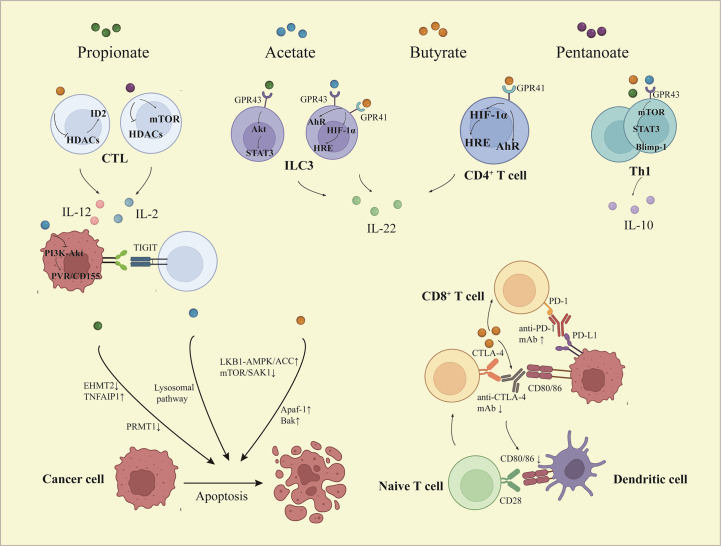
“Meanwhile, butyrate-promoted HIF-1a combination with the HRE of the IL-22 promoter involved histone acetylation (Figure 2) (57).”
BackgroundWild Mouse Gut Microbiota Promotes Host Fitness and Improves Disease Resistance
Rosshart, S. P., Vassallo, B. G., Angeletti, D., Hutchinson, D. S., Morgan, A. P., Takeda, K., Hickman, H. D., McCulloch, J. A., Badger, J. H., Ajami, N. J., et al. (2017) · Cell · doi:10.1016/j.cell.2017.09.016 · Cited by 862 · cited 1×
“Treatment of dextran sulfate sodium or azoxymethane can induce CRC in laboratory mice, and FMT from wild mice to experimental mice could improve this process (128).”
BackgroundLuu, M., Riester, Z., Baldrich, A., Reichardt, N., Yuille, S., Busetti, A., Klein, M., Wempe, A., Leister, H., Raifer, H., et al. (2021) · Nature Communications · doi:10.1038/s41467-021-24331-1 · Cited by 771 · cited 4×
“Pentanoate Clostridioides difficile; Megasphaera massiliensis (48) Increased the function of mTOR as a central cellular metabolic sensor and inhibited class I HDAC activity to enhance the anti-tumor activity of CTLs and CAR T cells (9), same as butyrate;”
BackgroundInfluentialHe, Y., Fu, L., Li, Y., Wang, W., Gong, M., Zhang, J., Dong, X., Huang, J., Wang, Q., Mackay, C. R., et al. (2021) · Cell Metabolism · doi:10.1016/j.cmet.2021.03.002 · Cited by 729 · cited 2×
“In addition, the level of butyrate was high in the serum of responder patients compared to nonresponder patients in CRC (61).”
Background
Research works printed but not linked: 1
- Kang J Sun M Chang Y Chen H Zhang J Liang X. Butyrate ameliorates colorectal cancer through regulating intestinal microecological disorders. Anticancer Drugs (2023) 34(2): 227–37. doi: 10.1097/cad.0000000000001413 PMC9815807 36305358 · DOI
Cited by
Effects of dietary intervention on human diseases: molecular mechanisms and therapeutic potential
Xiao, Y.-L., Gong, Y., Qi, Y.-J., Shao, Z.-M., & Jiang, Y.-Z. (2024) · Signal Transduction and Targeted Therapy · doi:10.1038/s41392-024-01771-x · Cited by 202
“285 Metabolic and epigenetic reprogramming enables pentanoate and butyrate to enhance the effectiveness of cancer immunotherapy by boosting the antitumor activity of antigen-speci fi c cytotoxic T lymphocytes and ROR1-targeting chimeric antigen receptor (CAR)-”
BackgroundA Comprehensive Review of the Triangular Relationship among Diet–Gut Microbiota–Inflammation
Randeni, N., Bordiga, M., & Xu, B. (2024) · International Journal of Molecular Sciences · doi:10.3390/ijms25179366 · Cited by 128
Peng, K., Xiao, S., Xia, S., Li, C.-L., Yu, H., & Yu, Q. (2024) · Journal of Agricultural and Food Chemistry · doi:10.1021/acs.jafc.4c04456 · Cited by 120
Melanoma and microbiota: Current understanding and future directions
Routy, B., Jackson, T., Mählmann, L., Baumgartner, C. K., Blaser, M., Byrd, A., Corvaia, N., Couts, K., Davar, D., Derosa, L., et al. (2024) · Cancer Cell · doi:10.1016/j.ccell.2023.12.003 · Cited by 89
Microbiome as a biomarker and therapeutic target in pancreatic cancer
Pourali, G., Kazemi, D., Chadeganipour, A. S., Arastonejad, M., Kashani, S. N., Pourali, R., Maftooh, M., Akbarzade, H., Fiuji, H., Hassanian, S. M., et al. (2024) · BMC Microbiology · doi:10.1186/s12866-023-03166-4 · Cited by 78
Opperman, C. J., Majzoobi, M., Farahnaky, A., Shah, R., Van, T. T. H., Ratanpaul, V., Blanch, E. W., Brennan, C. S., & Eri, R. D. (2025) · Food Research International · doi:10.1016/j.foodres.2025.115843 · Cited by 82
Qu, S., Gao, Y., Ma, J., & Yan, Q. (2023) · Biomedicine & Pharmacotherapy · doi:10.1016/j.biopha.2023.115773 · Cited by 56
Gut Microbiota and Derived Short-Chain Fatty Acids Are Linked to Evolution of Heart Failure Patients
Modrego, J., Ortega‐Hernández, A., Artaza, J. G., Restrepo-Córdoba, M. A., Bäuerl, C., Cortés-Macías, E., Sánchez-González, S., Esteban‐Fernández, A., Pérez‐Villacastín, J., Collado, M. C., et al. (2023) · International Journal of Molecular Sciences · doi:10.3390/ijms241813892 · Cited by 59
“In recent years, several studies have investigated the mechanisms of butyrate at the cellular and systemic levels and its potential therapeutic use in different pathologies [53,54].”
BackgroundXu, Q., Gao, J., Zhao, R., Li, H., Cui, H., Yuan, Z., Ren, H., Cao, B., & Wei, B. (2024) · Pharmacological Research · doi:10.1016/j.phrs.2024.107278 · Cited by 49
Pi, Y., Fang, M., Li, Y., Cai, L., Han, R., Sun, W., Jiang, X., Chen, L., Du, J., Zhu, Z., et al. (2024) · Nutrients · doi:10.3390/nu16172838 · Cited by 60
“SCFAs are considered to play important roles in the maintenance of intestinal health [68], IR [69], lipid metabolism [70], inflammation regulation [70], and energy homeostasis [71], thus affecting metabolic functions.”
BackgroundGut microbial metabolites: Shaping future diagnosis and treatment against gastrointestinal cancer
Gou, H., Zeng, R., Lau, H. C.-H., & Yu, J. Q. (2024) · Pharmacological Research · doi:10.1016/j.phrs.2024.107373 · Cited by 51
The role of short-chain fatty acids in cancer prevention and cancer treatment
Kalyanaraman, B., Cheng, G., & Hardy, M. (2024) · Archives of Biochemistry and Biophysics · doi:10.1016/j.abb.2024.110172 · Cited by 34
“SCFAs affect the tumor microenvironment through modulating immune cell differentiation, inflammation, angiogenesis, and epigenetics [34].”
Gut Microbiota Secondary Metabolites: Key Roles in GI Tract Cancers and Infectious Diseases
Anwer, E. K. E., Ajagbe, M., Sherif, M. A., Musaibah, A. S., Mahmoud, S., ElBanbi, A., & Abdelnaser, A. (2025) · Biomedicines · doi:10.3390/biomedicines13010100 · Cited by 36
Sun, C., Zhu, J., Sun, X., Zhang, Z., Sun, Y., Jin, Y., & Wu, T. (2025) · Journal of Advanced Research · doi:10.1016/j.jare.2025.12.032 · Cited by 36
“Consequently, butyrate is being explored as a potential early biomarker prior to metastasis [184].”
Zhu, X., Zhang, X., Shen, J., Zheng, S., Li, H., Han, B., Zhang, C., Chen, M., Sun, Q., & Wu, J. (2024) · Phytomedicine · doi:10.1016/j.phymed.2024.155413 · Cited by 27
Self-citationContribution of the seminal microbiome to paternal programming
Kilama, J., Dahlen, C. R., Reynolds, L. P., & Amat, S. (2024) · Biology of Reproduction · doi:10.1093/biolre/ioae068 · Cited by 26
“These findings have been supported by a recent study which indicated that microbial metabolites like butyrate can impede crucial epigenetic enzymes, including histone deacetylases [218].”
BackgroundMicrobes and medicines: interrelationships between pharmaceuticals and the gut microbiome
Al-Btoosh, S., Donnelly, R. F., & KELLY, S. C. (2025) · Gut Microbes · doi:10.1080/19490976.2025.2604867 · Cited by 28
Zhang, Y., Wang, H., Qin, G., Shi, J., Zhang, H., Gao, J., & Han, J. (2025) · International Immunopharmacology · doi:10.1016/j.intimp.2025.114702 · Cited by 19
Chałaśkiewicz, K., Kępka-Borkowska, K., Starzyński, R. R., Ogłuszka, M., Borkowski, M., Poławska, E., Lepczyński, A., Lichwiarska, E., Sultana, S., Kalra, G., et al. (2025) · International Journal of Molecular Sciences · doi:10.3390/ijms26178258 · Cited by 26
“SCFAs engage G-protein-coupled receptors (e.g., GPR41, GPR43), inhibit histone deacetylases (HDACs), and epigenetically regulate immune genes to promote anti-inflammatory responses [79,80].”
Zhang, F., Li, M., Zhou, H., Zhong, X., Zhang, Z., Meng, X., Jiang, Y., Wang, T., & Li, N. (2025) · Frontiers in Immunology · doi:10.3389/fimmu.2025.1674163 · Cited by 21
“Studies found that acetate downregulates PVR/CD155 expression levels by inhibiting the PI3K/AKT signaling pathway, thereby enhancing the anti-tumor activity of CD8 + T cells (145).”
Yang, M., Mao, S., Duan, J., & Xiao, P. (2025) · Carbohydrate Polymers · doi:10.1016/j.carbpol.2025.124723 · Cited by 19
Xu, K., Motiwala, Z. Y., Corona‐Avila, I., Makhanasa, D., Alkahalifeh, L., & Khan, M. W. (2025) · Technology in Cancer Research & Treatment · doi:10.1177/15330338251331960 · Cited by 25
A Comprehensive Review of the Triangular Relationship Among Diet, Gut Microbiota, and Aging
Ramasinghe, C., Bordiga, M., & Xu, B. (2025) · International Journal of Molecular Sciences · doi:10.3390/ijms26188785 · Cited by 26
“However, epithelial integrity and alleviating age-related pathology can be improved by transplanting microbiota from young donors, confirming a causal role of gut microbial balance in preserving the gut barrier during aging [126].”
InfluentialElango, A., Nesam, V. D., Sukumar, P., Lawrence, I., & Radhakrishnan, A. (2024) · Archives of Microbiology · doi:10.1007/s00203-024-03914-8 · Cited by 15
“In addition, the inhibiting activity of HDACs by SCFAs, results in the alteration of the epigenetics of CD8 + T cells thereby, inducing the immune response of the host cells (Dong et al. 2023).”
Harnessing probiotic foods: managing cancer through gut health
Thapa, D., Kumar, V., Naik, B., Kumar, V., Gupta, A. K., Mohanta, Y. K., Mishra, B., & Rustagi, S. (2024) · Food Science and Biotechnology · doi:10.1007/s10068-024-01638-5 · Cited by 21
“Butyrate enhances anti-tumor activity by inhibiting class I HDAC activity, slowing proliferation, promoting apoptosis, improving intestinal integrity, and affecting cancer stromatogenesis (Dong et al., 2023).”
Ascanta, P., Hanganu, A., Marinaș, I. C., Hidalgo, J., Pîrcălăbioru, G. G., Chifiriuc, M. C., & Tenea, G. N. (2025) · Food Bioscience · doi:10.1016/j.fbio.2025.106600 · Cited by 16
Wang, Y., Wang, X., Li, W., Huang, H., Di, C., & Yang, Q. (2025) · Journal of Ethnopharmacology · doi:10.1016/j.jep.2025.119723 · Cited by 13
Self-citationMurovec, B., Deutsch, L., & Stres, B. (2024) · Frontiers in Microbiology · doi:10.3389/fmicb.2024.1426407 · Cited by 14
Profir, M., Roşu, O., Creţoiu, S. M., & Gașpar, B. S. (2024) · Microorganisms · doi:10.3390/microorganisms12050955 · Cited by 12
“In addition, end products of gut microbial metabolism, like short-chain fatty acids (SCFAs), also play a key role in homeostasis and are implicated Microorganisms 2024 , 12 , 955 2 of 25 in GI cancer development and progression [4].”
Host-microbiota interactions in genitourinary cancer immunotherapy
Xu, X., Cui, J., Li, W., Xu, Y., Yuan, S., Zeng, X., & Li, B. (2025) · Seminars in Cancer Biology · doi:10.1016/j.semcancer.2025.07.005 · Cited by 12
Zhong, J., Guo, L., Wang, Y., Jiang, X., Wang, C., Xiao, Y., Wang, Y., Zhou, F., Wu, C., Chen, L., et al. (2024) · Research · doi:10.34133/research.0389 · Cited by 12
Self-citationMicrobiome—Stealth Regulator of Breast Homeostasis and Cancer Metastasis
Furuta, S. (2024) · Cancers · doi:10.3390/cancers16173040 · Cited by 10
Anticancer Potential of Prebiotics: Targeting Estrogen Receptors and PI3K/AKT/mTOR in Breast Cancer
Sabit, H., Abouelnour, S., Hassen, B. M., Magdy, S., Yasser, A., Wadan, A.-H. S., Abdel-Ghany, S. E., Radwan, F. F. Y., Alqosaibi, A. I., Hafiz, H., et al. (2025) · Biomedicines · doi:10.3390/biomedicines13040990 · Cited by 17
Application of bifidobacterium in tumor therapy
Kong, Y., Bai, H., Deng, F., Zhao, Y., Li, Q., & Chang, L. (2025) · Frontiers in Oncology · doi:10.3389/fonc.2025.1551924 · Cited by 13
“…Bi fi dobacterium improves gut microbiota homeostasis, strengthens gut barrier function, and activates innate immune signaling pathways through pattern recognition receptors (such as TLR2/4), promoting the in fi ltration and functional recovery of T cells in the distal tumor microenvironment (66).”
The Gut–Brain Axis in Brain Tumors: Insights into Tumor Development, Progression, and Therapy
Scuderi, S. A., Ardizzone, A., Calcaterra, E., Palermo, N., Luca, F. D., Catalfamo, A., Esposito, E., & Capra, A. P. (2025) · Biomedicines · doi:10.3390/biomedicines13092172 · Cited by 15
Communication between gut microbiota-derived metabolites and the tumor microenvironment
Hu, X., Li, B., Li, Y., Liang, Y., & Huang, T. (2025) · Frontiers in Immunology · doi:10.3389/fimmu.2025.1649438 · Cited by 11
Advances in Nanomedicine-Mediated Modulation of the Microbiome for Cancer Therapy
Huang, Y., Zhang, Z., Xue, L., Zhang, X., & He, C. (2025) · International Journal of Nanomedicine · doi:10.2147/ijn.s558099 · Cited by 11
Bacteriophages, Antibiotics and Probiotics: Exploring the Microbial Battlefield of Colorectal Cancer
Volovat, C. C., Cosovanu, M. A., Ostafe, M.-R., Augustin, I. G., Volovat, C., Georgescu, B., & Volovat, S. R. (2025) · International Journal of Molecular Sciences · doi:10.3390/ijms26167837 · Cited by 8
Advances in the Gut‐Lung Axis and Bronchial Asthma: From Mechanisms to Therapeutic Potential
Zheng, T., Huang, Y., & Yao, H. (2025) · Clinical and Translational Allergy · doi:10.1002/clt2.70128 · Cited by 12
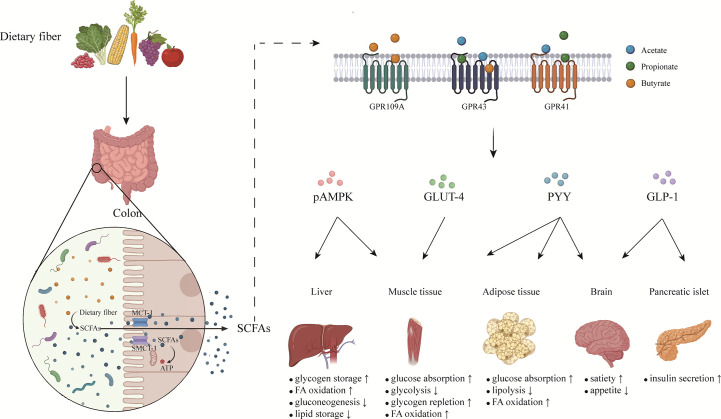
“Short‐chain fatty acids, defined as volatile fatty acids containing fewer than six carbon atoms [70], are microbial fermentation products predominantly comprising acetate, propionate, and butyrate [78].”
Metabolic Reprogramming in Colorectal Cancer: The Impact of Fatty Acid Metabolism
Zhuang, Z., Chen, Y., Yao, Y., & Zhu, X. (2025) · Human Mutation · doi:10.1155/humu/9567214 · Cited by 7
“The development and progression of CRC is strongly associated with the levels of SCFAs, and it has been demonstrated that supple-menting with SCFAs or introducing bacteria that produce them can hinder tumor growth [33].”
Meng, Y., Tian, J., Li, X. X., & Zhou, X. (2025) · Frontiers in Nutrition · doi:10.3389/fnut.2025.1655051 · Cited by 11
“The rise in fecal butyrate parallels previous findings demonstrating SCFAs’ capacity to maintain intestinal barrier integrity and modulate neuroimmune pathways, potentially mitigating cancer-related psychological distress (33).”
Chen, J., Li, W., Yang, L., Li, J., Wang, S., Chen, Z., Xu, S., Wen, M., Liang, J., Hu, Z., et al. (2025) · Biomedicine & Pharmacotherapy · doi:10.1016/j.biopha.2025.118560 · Cited by 8
Li, S., Zhu, X., Qin, B.-C., & Chen, M. (2025) · Frontiers in Pharmacology · doi:10.3389/fphar.2025.1667731 · Cited by 14
Díaz-Rivera, J., Rodríguez-Rivera, M. A., Meléndez-Vázquez, N. M., Godoy‐Vitorino, F., & Dorta-Estremera, S. M. (2024) · Cancers · doi:10.3390/cancers16112065 · Cited by 7
Leonov, G. E., Николаевна, Л. Е., Varaeva, Y. R., & Starodubova, A. V. (2025) · Current Nutrition Reports · doi:10.1007/s13668-025-00679-4 · Cited by 5
“SCFAs exert diverse effects on various tissues and cell types through multiple mechanisms [44].”
The Father’s Microbiome: A Hidden Contributor to Fetal and Long-Term Child Health
Zambella, E., Inversetti, A., Salerno, S., Mueller, M., & Simone, N. D. (2025) · Biology · doi:10.3390/biology14081002 · Cited by 9
“Thus, it was recently found that they are involved in epigenetic modifications, including DNA and histone methylation and acetylation [58], and that butyrate can inhibit histone deacetylases (HDACs) [59].”
Strategic modulation of the gastrointestinal microbiome to enhance pancreatic cancer immunotherapy
Jagwani, S., Musumeci, L., Flores, L., Mackenzie, G. G., & Amiji, M. M. (2025) · Drug Discovery Today · doi:10.1016/j.drudis.2025.104528 · Cited by 6
Chen, H., Lou, G., Meng, F., Zhang, Y., Kuang, H., & Yang, D. (2026) · Frontiers in Immunology · doi:10.3389/fimmu.2026.1734792 · Cited by 5
“Furthermore, these dietary habits contribute to maintaining a low-toxicity bile acid pool, collectively preserving the health of the intestinal epithelium and reducing the risk of tumor occurrence (191 – 193).”
Fatty acid in the tumor microenvironment: Perspectives for immunotherapy
Li, T., Bie, Y.-R., Chen, S.-M., Shang, Y., & Hu, P. (2025) · Critical Reviews in Oncology/Hematology · doi:10.1016/j.critrevonc.2025.104878 · Cited by 5
The Microbiota in Cancer: A Secondary Player or a Protagonist?
García, A. M. G., Lopez-Munoz, F. J., & García‐Rico, E. (2024) · Current Issues in Molecular Biology · doi:10.3390/cimb46080463 · Cited by 6
“This interaction is reciprocal, as ROR γ t+ cells also shape the composition of the gut microbiota, promoting a symbiotic relationship that is essential for gut health [103].”
BackgroundWang, S. M., Zhang, M. F., Pan, Q. H., Yu, T., Lei, R. L., & Li, Q. (2024) · World Journal of Oncology · doi:10.14740/wjon1960 · Cited by 4
Kolour, H. R., Eshaghi, H., Shams, E., Sanjabi, F., Nobili, S., Raeisi, H., Sadeghi, A., Mojarad, E. N., & Fatemi, N. (2025) · World Journal of Microbiology and Biotechnology · doi:10.1007/s11274-025-04457-w · Cited by 8
“In a male mouse model, the microbiota played a role in promoting HCC development through the regulation of bile acids and miRNAs.”
InfluentialThe role of the microbiome in immune checkpoint inhibitor colitis and hepatitis
Ryan, T., Ling, S., Trinh, A., & Segal, J. P. (2024) · Best Practice & Research Clinical Gastroenterology · doi:10.1016/j.bpg.2024.101945 · Cited by 4
Ho, P.-Y., Koh, Y., Lin, W., Ho, C., Majeed, A., Ho, C., & Pan, M. (2025) · Journal of Agricultural and Food Chemistry · doi:10.1021/acs.jafc.5c05807 · Cited by 5
Suo, L., Li, R., Chen, M., Ma, X., Ren, D., & Wang, J. (2025) · Anaerobe · doi:10.1016/j.anaerobe.2025.103016 · Cited by 4
Liu, X., Tang, H., Huang, X., & Xu, M. (2023) · Future Microbiology · doi:10.2217/fmb-2023-0148 · Cited by 3
Dietary interventions to augment immunity: A bibliometric analysis
Zheng, Z., Hou, R., Lin, S., Sriboonvorakul, N., & Hu, J. (2024) · Journal of Functional Foods · doi:10.1016/j.jff.2024.106625 · Cited by 4
Li, X., Lin, H., Peng, J., & Gong, J. (2025) · Frontiers in Cellular and Infection Microbiology · doi:10.3389/fcimb.2024.1453286 · Cited by 3
Saikia, T., Patowary, L., Sadhu, P., & Laloo, D. (2025) · Cancer drug discovery and develogment/Cancer drug discovery and development · doi:10.1007/978-3-031-86065-2_15 · Cited by 3
Non-small Cell Lung Cancer, Immunotherapy and the Influence of Gut Microbiome
Raziq, M. F., Manzoor, H., & Kayani, M. U. R. (2025) · Current Microbiology · doi:10.1007/s00284-025-04408-6 · Cited by 4
DeepCRC: Precision Colorectal Cancer Diagnosis Using Deep Learning and Metagenomic Biomarkers
Wang, H., Li, Y., Feng, Y. X., Shen, K., Lu, C. F., & Xie, Z. (2024) · IEEE International Conference on Bioinformatics and Biomedicine (BIBM) · doi:10.1109/bibm62325.2024.10822422 · Cited by 3
“Butyrate is an SCFA with known protective effects against CRC by inducing apoptosis in cancer cells and regulating immune responses [43].”
Farley, M. J., Scanlon, B., Crichton, M., Bigaran, A., Barnes, A., Hart, N. H., Yates, P. M., Eastgate, M. A., & Alexander, K. E. (2025) · Current Oncology Reports · doi:10.1007/s11912-025-01714-x · Cited by 2
“Furthermore, gut microbiota produces anti-inflammatory short chain fatty acids that have protective effects on the gastro - intestinal tract which may be beneficial in the management of gastrointestinal irAEs [66].”
Li-zhi, H., Wang, Z.-J., Yao, K., Yang, K.-F., Xu, R., Zhan, X.-Y., Zhou, M.-S., & Jia, H. (2026) · Journal of Translational Medicine · doi:10.1186/s12967-025-07672-z · Cited by 2
“These changes alter the local immune homeostasis and drives early activation of NF-κB signaling to form a pro-inflammatory microenvironment [93, 94].”
Biointelligent Reframing of Colorectal Cancer: From Somatic Mutation to Systemic Coherence
Esawy, M. A., & Reyed, R. M. (2026) · Advances in computational intelligence and robotics book series · doi:10.4018/979-8-3373-3121-8.ch003 · Cited by 2
Relationship Between Gut Microbiota and Cancer Neuro‐Immunity
Wang, D., Cui, R., You, C., Zheng, W., Wang, L., Yang, Y., Yu, H., & Cui, B. (2026) · Microbial Biotechnology · doi:10.1111/1751-7915.70336 · Cited by 3
Dahiya, D., & Nigam, P. S. N. (2026) · Applied Sciences · doi:10.3390/app16084023 · Cited by 3
Synbiotics as a Microbiome-Based Strategy in Colorectal Cancer
Procopciuc, L. M., Hangan, A. C., & Lucaciu, R. L. (2026) · Nutrients · doi:10.3390/nu18101591 · Cited by 3
“These findings highlight the importance of synbiotics in modulating both cellular and molecular mechanisms associated with CRC progression [155].”
Molecular studies on the impact of microbiome on anticancer drug resistance
Zhou, K., Lu, P., Xu, H., Wang, L., & Liang, X. (2026) · Frontiers in Immunology · doi:10.3389/fimmu.2026.1848345 · Cited by 2
“SCFAs can engage with G protein-coupled receptors 41 and 43 or inhibit histone deacetylases to produce immunotherapeutic effects (44).”
Mechanistic Studies on the Antidiabetic Properties of Gallotannins
Li, X., Wu, W., Liu, Y., Zhao, J., Gui, Y., Wang, H., Wang, L., Luo, Y., Zhou, G., YuMin, H., et al. (2024) · Current Pharmaceutical Design · doi:10.2174/0113816128338114241021110221 · Cited by 2
Gut Microbiota’s role in lipoma development: evidence from mendelian randomization
Li, Y., Chen, J., Yao, H., Xu, X., Zheng, X., Wang, Y., & Wang, W. (2024) · Frontiers in Genetics · doi:10.3389/fgene.2024.1430671 · Cited by 2
Bertoldi, M. C. A., da Silva, P. D. S., Bello, S. R. D. B., Pazello, C. T., Zarpellon, R. S. M., Venturelli, A. C., & Silva, R. W. (2024) · Research Society and Development · doi:10.33448/rsd-v13i12.47647 · Cited by 2
Gao, Y., Lin, J., Liu, D., Zhao, W., Pei, J., & El‐Aty, A. M. A. (2025) · International Journal of Biological Macromolecules · doi:10.1016/j.ijbiomac.2025.146637 · Cited by 1
Chen, M., Zhao, F., Wang, X., Zhang, H., Yang, R., Liu, Y., Si, Z., Fang, H., Cheng, Z., Zhao, L., et al. (2025) · International Journal of Biological Macromolecules · doi:10.1016/j.ijbiomac.2025.148581 · Cited by 2
Self-citationNie, R., Luo, H.-M., Liu, Y., Wang, S., Hou, Y., Chen, C., Wang, H., Lv, H.-L., Tao, X., Jing, Z.-H., et al. (2026) · Frontiers in Cell and Developmental Biology · doi:10.3389/fcell.2025.1729265 · Cited by 1
Chen, B., Gg, C., Leng, X., Li, Q., Wu, W., Wu, W., Liu, Z., Zhong, Z., Zheng, X., Kang, W., et al. (2026) · Advanced Science · doi:10.1002/advs.202519949 · Cited by 2
“SCFAs produced by gut microbes have been shown to regulate the expression of miRNAs, such as miR-223, which plays a critical role in inflammatory responses [ 138, 139 ].”
Liu, X., Cai, R., Meng, Y., Xu, Y., Wang, B., Liu, M., Wang, Y., Yu, Y., Lu, C., Wei, Y., et al. (2026) · Critical Reviews in Oncology/Hematology · doi:10.1016/j.critrevonc.2026.105220 · Cited by 1
Self-citationVishwakarma, M., Anitha, K., Ashique, S., & Mishra, N. (2026) · Drug Discovery Today · doi:10.1016/j.drudis.2026.104697 · Cited by 1
Fatty Acid Metabolism in Health and Cancer: From Fundamental Mechanisms to Therapeutic Application
Hang, N., Zhao, R., Zhang, F., Guo, D., Li, Q., Shen, Z., Gao, R., Gao, C., Xie, Z., Fu, S., et al. (2026) · MedComm · doi:10.1002/mco2.70749 · Cited by 1
“…gut microbiota metabolism, play multifaceted roles in cancer prevention and treatment by targeting mutated genes and dysregulated pathways in tumors, promoting tumor suppressor expression, modulating energy metabolism and signaling pathways, and influencing gene expression in the TME [ 460 –462 ].”
Chi, X., Jia, L., Wang, Y., Liu, C., Wang, S., Liu, Z., Zhang, G., & Xu, B. (2026) · International Journal of Nanomedicine · doi:10.2147/ijn.s609268 · Cited by 1
Gut–lung axis in radiation-induced lung injury: mechanisms and interventions
Zhou, P., Jiang, X., Zhang, H., Jiang, S., Zhang, X., Ma, C., & Bai, X. (2026) · Frontiers in Immunology · doi:10.3389/fimmu.2026.1806833 · Cited by 1
Resistant starch: in vitro fecal fermentation characteristics and health implications
Xiong, W., Zhang, B., Bodjrenou, D. M., & Dhital, S. (2025) · Elsevier eBooks · doi:10.1016/b978-0-443-15700-4.00012-2 · Cited by 1
Wen, M., Shen, F., Zhu, H., Changhui, D., Shen, J., Wang, C., Yong, Z., & Qian, H. (2023) · SSRN Electronic Journal · doi:10.2139/ssrn.4664812
Controlling treatment toxicity in ovarian cancer to prime the patient for tumor extinction therapyPreprint
Gallagher, K., Sousa, R. S., Gatenbee, C., Schenck, R. O., Chen, P., Citak, T., Leither, S., Mazzacurati, L., Xella, A., Zhou, Z., et al. (2025) · bioRxiv (Cold Spring Harbor Laboratory) · doi:10.1101/2025.07.10.664235
“This ratio has been shown to be a key modulator of immune state, shifting the immune environment from anti-to pro-tumor activity as P increases from 0 to 1 (corresponding to a relative depletion of SCFAs; [26, 27]).”
Sun, W. S., Wang, P., Jingwen, X., Jiayuan, H., Ali, A. M. M., & Wu, L. (2025) · Egyptian Journal of Bronchology · doi:10.1186/s43168-025-00480-5 · Cited by 1
SCF complex: Master regulator of metabolic adaptations in cancer cells
Bandaru, N., Bhatt, S., Dudhe, P. B., & Gambhire, M. S. (2025) · Elsevier eBooks · doi:10.1016/b978-0-443-33459-7.00007-7
Greier, M. D. C., Dudás, J., Hartl, R., Schmutzler, L., & Hofauer, B. G. (2026) · Frontiers in Nutrition · doi:10.3389/fnut.2026.1731077
“Similarly, SCFAs have been shown to expand regulatory T cell populations via G-protein coupled receptors and epigenetic modulation (21, 22).”
Bioproduction of short- and medium-chain fatty acids
Grigore‐Gurgu, L., Horincar, G., Oprișanu, M., Cotârleț, M., & Bahrim, G. E. (2026) · Elsevier eBooks · doi:10.1016/b978-0-12-819533-8.00001-4
Modern view on the role of microbiota in chemotherapy in children
Islamgulov, A. K., Murtazin, A. A., Malievsky, V. A., Кальметьева, Л. Р., Dd, P., Davletbayeva, G. A., & Раилевна, Г. Г. (2026) · Russian Journal of Oncology · doi:10.17816/onco696672
Wang, X., Wang, B., Ding, S., Wu, T., Qu, W., & Zheng, L. T. (2026) · Discover Oncology · doi:10.1007/s12672-026-05132-8
“Butyrate has been reported to have anticancer effects, including suppression of inflammation and tumor growth [41], and can regulate gene expression through epigenetic mechanisms such as KEAP1 methylation and NRF2-ARE signaling inhibition [42, 43], thereby enhancing its anticancer effects.”
Self-citationThe Gut–Liver Axis in HCC Immunotherapy
Taliente, F., Rose, A. M. D., Maresca, P., Iacobelli, V., Campisi, A., Stella, L., Creta, E., Ponziani, F. R., & Giuliante, F. (2026) · Gastroenterology Insights · doi:10.3390/gastroent17020034
“SCFAs have been shown to enhance the effector function of cytotoxic CD8+ T cells, modulate antigen-presenting cell activity, and reduce the accumulation of immunosuppressive populations such as regulatory T cells and myeloid-derived suppressor cells [29].”
The circadian architecture of tumor immunity: mechanistic insights and treatment strategies
Wang, H. Y., Guo, B., Li, D., Liu, Y., Cheng, K., Zhang, W., & Liang, H. (2026) · Biomarker Research · doi:10.1186/s40364-026-00972-6
“This acidic niche suppresses cytotoxic T cell function and enhances the activity of immunosuppressive cell populations, including Tregs and TAMs, thereby facilitating immune evasion and tumor progression [56, 202–204].”
Microbiome—pancreatic cancer crosstalk: From tumor biology to therapeutic intervention
薛玉芹, Ye, J., Wang, S., Liu, M., Dai, F., Bai, M., Wang, Y., Savoji, A., Wang, Y., Hylemon, P. B., et al. (2026) · iMetaOmics. · doi:10.1002/imo2.70126
“Short ‐ chain fatty acids and trimethylamine N ‐ oxide modulate signaling pathways targeted by TKIs, including MAPK and PI3K/Akt, potentially reducing drug activity [150, 242, 243].”
Jiang, X., Huang, Y., & Jiang, H. (2026) · Frontiers in Cellular and Infection Microbiology · doi:10.3389/fcimb.2026.1779580
Sharma, R., Thakur, A., Sharma, S., Prabhakar, P. K., Sharma, R., & Jeet, K. (2026) · Springer eBooks · doi:10.1007/978-981-92-0477-9_11
Ren, H., Chen, Q., Aikelaimuc, M., Qin, L., Zhang, G., Liu, L., & Jia, J. (2026) · Animals · doi:10.3390/ani16172644
“Recent research indicates that probiotics can help restore the microbial homeostasis of the gastrointestinal tract (GIT) and provide beneficial short-chain fatty acids (SCFAs) [20,21].”
Liu, Z., Bai, M., Han, L., & Li, Z. (2026) · Frontiers in Microbiology · doi:10.3389/fmicb.2026.1862223
Jin, H., Sun, H., & Yang, J. (2026) · Molecular Biology Reports · doi:10.1007/s11033-026-12639-4
Short-Chain Fatty Acids at the Crossroads of Microbiota, Immunometabolism, and Inflammation
Rolek, Ł., Sowa, A., Czosnek, M., Grywalska, E., Mertowska, P., & Mertowski, S. (2026) · Biomedicines · doi:10.3390/biomedicines14091967
“…into actionable clinical protocols by designing interventions that increase endogenous SCFA levels or precisely mimic their receptor-mediated and epigenetic effects, thereby enabling the safe resolution of the inflammatory response in both systemic and localized diseases Figure 11 [34,152].”
Cui, X., & Du, W. (2026) · Journal of Cellular Physiology · doi:10.1002/jcp.70222
“Among them, SCFAs, tryptophan metabolites, and bile acid derivatives are considered candidate signaling molecules most closely related to the gut–intervertebral disc axis (Liu, Xiong, et al. 2025; Dong et al. 2023).”
Jiang, Y., Wang, K., Feng, H., You, Y., Dai, P., Wang, Z., Hu, R., Peng, Q., Zou, H., Xiao, J., et al. (2026) · Animal nutrition · doi:10.1016/j.aninu.2026.03.016
Metadata
- Authors
- Dong, Y., Zhang, K., Wei, J., Ding, Y., Wang, X., Hou, H., Wu, J., Liu, T., Wang, B., & Cao, H.
- Affiliations
- Tianjin Medical University General Hospital (CN)
- Corresponding author
- Cao, Hailong
- ORCID
- Venue
- Frontiers in Immunology
- Publisher
- Frontiers Media SA
- Published
- 2023-04-14
- Volume
- 14
- Pages
- 1158200-1158200
- ISSN
- 1664-3224 (ISSN-L)
- PMC
- PMC10140337
- OpenAlex
- W4365516124
- Cited by
- 107
- References
- 140
- Citations by year
- 2026: 36 · 2025: 41 · 2024: 25 · 2023: 5
- FWCI
- 2.82
- Type
- journal article
- Language
- en
- Open access
- gold
- doi.org
- Licence
- Locations
- Frontiers in Immunology (publishedVersion, cc-by)
- PubMed Central (publishedVersion, cc-by)
- PubMed (publishedVersion)
- DOAJ (DOAJ: Directory of Open Access Journals) (submittedVersion, cc-by-sa)
- Funders
- National Natural Science Foundation of China (82070545, 82100574, 81970477)
- Topics
- Life Sciences › Biochemistry, Genetics and Molecular Biology › Molecular Biology › Gut microbiota and health
- Life Sciences › Immunology and Microbiology › Immunology › Immune cells in cancer
- Health Sciences › Medicine › Oncology › Cancer Immunotherapy and Biomarkers
- Keywords
- gut microbiota, short-chain fatty acids, gastrointestinal cancer, tumor immune microenvironment, butyrate, histone deacetylase, GPR43, regulatory T cells, CD8+ T cells, epigenetic modifications, dietary fiber, probiotics, fecal microbiota transplantation, immunotherapy
- MeSH terms
- Gastrointestinal Microbiome, Butyrates, Fatty Acids, Volatile, Gastrointestinal Neoplasms, Humans, CD8-Positive T-Lymphocytes, Tumor Microenvironment
About these checks
Registry, retraction, Cites and statistics results are computed, not judged, with one exception: a printed reference that no index lists is read once by a model before it counts as a citation error. Claims are extracted by a model and kept only when their quote appears verbatim in the text; each cited source is then checked, with a model’s help, for whether it says what the claim relies on. Those verdicts can be wrong — read the claim’s quote and the cited source before relying on one.
Statistics and arithmetic are recomputed, not judged.
Confidence bands are shown only for fields calibrated on our annotated test set. None is calibrated yet, so no band is shown.
What counts as a claim ›How we measure confidence ›How we check this ›
Are you an author, or do you see a problem with this page? Request a review
Data sources
Bibliographic data: Semantic Scholar, OpenAlex, Crossref.
Contains information from the Semantic Scholar Academic Graph Datasets, made available under the ODC Attribution License (ODC-BY 1.0).
Semantic Scholar’s data is described in: Kinney, R., et al. (2023). The Semantic Scholar Open Data Platform. arXiv:2301.10140.
