

The DOI matches its Crossref record; 7 of the 7 references it cites were found in a registry or an index.
Fusobacterium nucleatum: The Opportunistic Pathogen of Periodontal and Peri-Implant Diseases
Abstract
Peri-implant diseases are considered to be a chronic destructive inflammatory destruction/damage occurring in soft and hard peri-implant tissues during the patient’s perennial use after implant restoration and have attracted much attention because of their high incidence. Although most studies seem to suggest that the pathogenesis of peri-implant diseases is similar to that of periodontal diseases and that both begin with microbial infection, the specific mechanism of peri-implant diseases remains unclear. As an oral opportunistic pathogen, Fusobacterium nucleatum ( F. nucleatum ) has been demonstrated to be vital for the occurrence and development of many oral infectious diseases, especially periodontal diseases. More notably, the latest relevant studies suggest that F. nucleatum may contribute to the occurrence and development of peri-implant diseases. Considering the close connection between peri-implant diseases and periodontal diseases, a summary of the role of Fusobacterium nucleatum in periodontal diseases may provide more research directions and ideas for the peri-implantation mechanism. In this review, we summarize the effects of F. nucleatum on periodontal diseases by biofilm formation, host infection, and host response, and then we establish the relationship between periodontal and peri-implant diseases. Based on the above aspects, we discuss the importance and potential value of F. nucleatum in peri-implant diseases.
Overview
The claims and statistics of this paper haven’t been checked yet.
Run the check — free, no account needed. It reads the open-access text and checks the sources it cites.
Integrity signals
Registry
Cites
Statistics
Figures
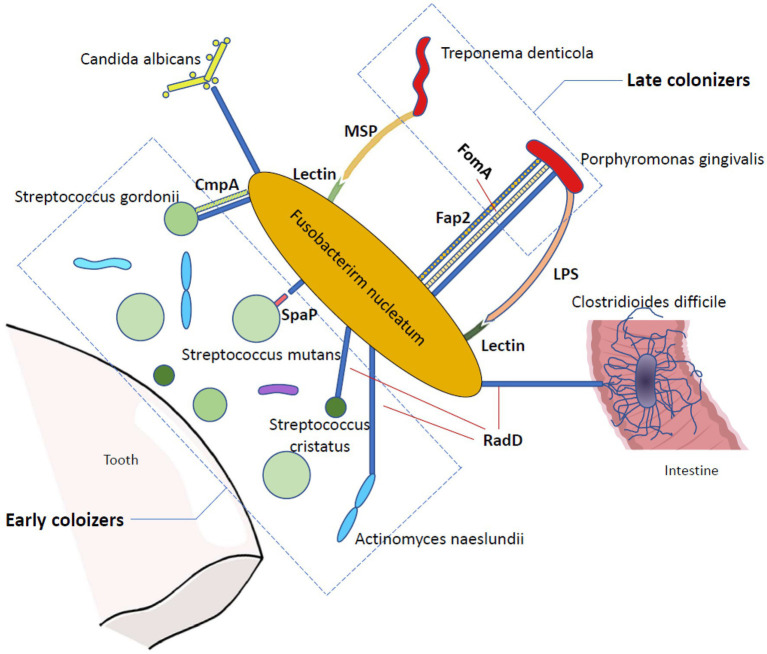
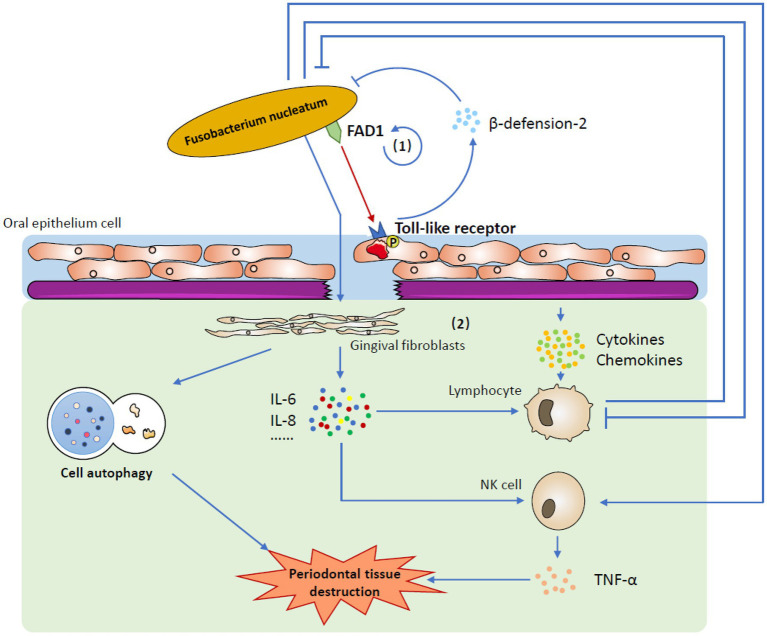
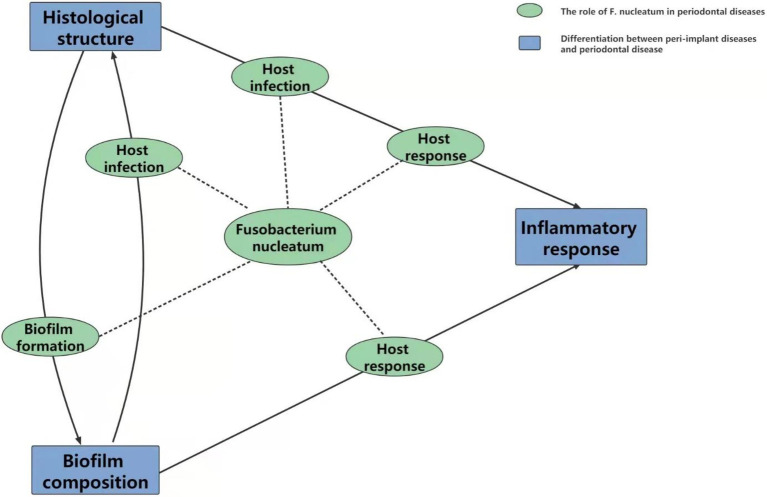
Verification
Claims the paper makes
The claims and statistics of this paper haven’t been checked yet.
Run the check — free, no account needed. It reads the open-access text and checks the sources it cites.
Claims other papers make about this one
Each is checked against this paper’s own text: does it say what the citing paper says it does?
In the citing paper
“Beyond its role in oral disease, Fusobacterium nucleatum has also been associated with cerebral small vessel disease and asymptomatic brain injury in patients with ischemic stroke [43,44].”
From Severity-dependent alterations in oral microbiota and antibiotic resistance in children with dental fluorosis (2026) · cites this paper as [43]
In the citing paper
“as a well-recognized opportunistic pathogen associated with periodontal disease [43].”
From Severity-dependent alterations in oral microbiota and antibiotic resistance in children with dental fluorosis (2026) · cites this paper as [43]
Self-check
Percentages, sums and reported differences re-computed from the paper’s own numbers.
The self-check needs the paper’s full text.
Citations
Cites
The Oral Microbiota: Dynamic Communities and Host Interactions
Lamont, R. J., Koo, H., & Hajishengallis, G. (2018) · Nature Reviews Microbiology · doi:10.1038/s41579-018-0089-x · Cited by 2,217
Oral multispecies biofilm development and the key role of cell–cell distance
Kolenbrander, P. E., Palmer, R. J., Periasamy, S., & Jakubovics, N. S. (2010) · Nature Reviews Microbiology · doi:10.1038/nrmicro2381 · Cited by 1,309
Berglundh, T., Armitage, G., Araujo, M. G., Avila‐Ortiz, G., Blanco, J., Camargo, P. M., Chen, S., Cochran, D., Derks, J., Figuero, E., et al. (2018) · Journal of Periodontology · doi:10.1002/jper.17-0739 · Cited by 861
Schwarz, F., Derks, J., Monje, A., & Wang, H. (2018) · Journal of Periodontology · doi:10.1002/jper.16-0350 · Cited by 723
The role of the microbiota in periodontal disease
Curtis, M. A., Diaz, P. I., & Van Dyke, T. E. (2020) · Periodontology 2000 · doi:10.1111/prd.12296 · Cited by 698
Han, Y. W., Shi, W., Huang, G. T.-J., Kinder Haake, S., Park, N.-H., Kuramitsu, H., & Genco, R. J. (2000) · Infection and Immunity · doi:10.1128/iai.68.6.3140-3146.2000 · Cited by 435
Heitz‐Mayfield, L. J. A., & Salvi, G. E. (2018) · Journal of Periodontology · doi:10.1002/jper.16-0488 · Cited by 307
Research works printed but not linked: 107
- Ahn, Caveolin-1 serves as a negative effector in senescent human gingival fibroblasts during Fusobacterium nucleatum infection, Mol Oral Microbiol, 32, 236, 10.1111/omi.12167 · DOI
- Ahn, Transcriptome profiling analysis of senescent gingival fibroblasts in response to Fusobacterium nucleatum infection, PLoS One, 12, e0188755, 10.1371/journal.pone.0188755 · DOI
- Albrektsson, 2016, “Peri-Implantitis”: a complication of a foreign body or a man-made “disease”. Facts and fiction, Clin. Implant. Dent. Relat. Res., 18, 840, 10.1111/cid.12427 · DOI
- Arciola, 2018, Implant infections: adhesion, biofilm formation and immune evasion, Nat. Rev. Microbiol., 16, 397, 10.1038/s41579-018-0019-y · DOI
- Belibasakis, 2014, Microbiological and immuno-pathological aspects of peri-implant diseases, Arch. Oral Biol., 59, 66, 10.1016/j.archoralbio.2013.09.013 · DOI
- Belibasakis, 2021, Microbial community-driven etiopathogenesis of peri-implantitis, J. Dent. Res., 100, 21, 10.1177/0022034520949851 · DOI · Paper page
- Berglundh, Peri-implant diseases and conditions: consensus report of workgroup 4 of the 2017 world workshop on the classification of periodontal and peri-implant diseases and conditions, J. Clin. Periodontol., 45, S286, 10.1111/jcpe.12957 · DOI · Paper page
- Berglundh, 1991, The soft tissue barrier at implants and teeth, Clin. Oral Implants Res., 2, 81, 10.1034/j.1600-0501.1991.020206.x · DOI
- Bhattacharyya, 2016, FAD-I, a Fusobacterium nucleatum cell wall-associated diacylated lipoprotein that mediates human beta defensin 2 induction through toll-like receptor-1/2 (TLR-1/2) and TLR-2/6, Infect. Immun., 84, 1446, 10.1128/IAI.01311-15 · DOI
- Bower, 1989, Clinical and microscopic findings in edentulous patients 3 years after incorporation of osseointegrated implant-supported bridgework, J. Clin. Periodontol., 16, 580, 10.1111/j.1600-051x.1989.tb02141.x · DOI
- Brennan, 2019, Fusobacterium nucleatum—symbiont, opportunist and oncobacterium, Nat. Rev. Microbiol., 17, 156, 10.1038/s41579-018-0129-6 · DOI · Paper page
- Buser, 2017, Modern implant dentistry based on osseointegration: 50 years of progress, current trends and open questions, Periodontol., 73, 7, 10.1111/prd.12185 · DOI
- Busscher, 2010, Biofilm formation on dental restorative and implant materials, J. Dent. Res., 89, 657, 10.1177/0022034510368644 · DOI
- Carcuac, 2014, Composition of human peri-implantitis and periodontitis lesions, J. Dent. Res., 93, 1083, 10.1177/0022034514551754 · DOI
- Charalampakis, 2015, Microbiome of peri-implant infections: lessons from conventional, molecular and metagenomic analyses, Virulence, 6, 183, 10.4161/21505594.2014.980661 · DOI
- Chaushu, 2012, Direct recognition of Fusobacterium nucleatum by the NK cell natural cytotoxicity receptor NKp46 aggravates periodontal disease, PLoS Pathog., 8, e1002601, 10.1371/journal.ppat.1002601 · DOI
- Chung, 2017, Antimicrobial peptides as potential anti-biofilm agents against multidrug-resistant bacteria, J. Microbiol. Immunol. Infect., 50, 405, 10.1016/j.jmii.2016.12.005 · DOI
- Dabija-Wolter, 2009, Fusobacterium nucleatum enters normal human oral fibroblasts in vitro, J. Periodontol., 80, 1174, 10.1902/jop.2009.090051 · DOI
- De Andrade, 2021, Differential involvement of the canonical and noncanonical inflammasomes in the immune response against infection by the periodontal bacteria Porphyromonas gingivalis and Fusobacterium nucleatum, Curr. Res. Microb. Sci., 2, 100023, 10.1016/j.crmicr.2021.100023 · DOI
- de Waal, 2017, Microbial characteristics of peri-implantitis: a case-control study, J. Periodontol., 88, 209, 10.1902/jop.2016.160231 · DOI
- Del Pozo, 2018, Biofilm-related disease, Expert Rev. Anti-Infect. Ther., 16, 51, 10.1080/14787210.2018.1417036 · DOI
- Dionigi, 2020, Cellular expression of DNA damage/repair and reactive oxygen/nitrogen species in human periodontitis and peri-implantitis lesions, J. Clin. Periodontol., 47, 1466, 10.1111/jcpe.13370 · DOI
- Donos, 2018, The periodontal pocket, Periodontol., 2000, 7, 10.1111/prd.12203 · DOI
- Dukka, 2021, Is bleeding on probing a reliable clinical indicator of peri-implant diseases?, J. Periodontol., 92, 1669, 10.1002/JPER.20-0890 · DOI
- Edwards, 2006, Fusobacterium nucleatum transports noninvasive Streptococcus cristatus into human epithelial cells, Infect. Immun., 74, 654, 10.1128/IAI.74.1.654-662.2006 · DOI
- Edwards, 2007, Association of a high-molecular weight arginine-binding protein of Fusobacterium nucleatum ATCC 10953 with adhesion to secretory immunoglobulin A and coaggregation with Streptococcus cristatus, Oral Microbiol. Immunol., 22, 217, 10.1111/j.1399-302X.2006.00343.x · DOI
- Engevik, 2021, Fusobacterium nucleatum adheres to Clostridioides difficile via the RadD adhesin to enhance biofilm formation in intestinal mucus, Gastroenterology, 160, 1301, 10.1053/j.gastro.2020.11.034 · DOI
- Fardini, 2011, Fusobacterium nucleatum adhesin FadA binds vascular endothelial cadherin and alters endothelial integrity, Mol. Microbiol., 82, 1468, 10.1111/j.1365-2958.2011.07905.x · DOI
- Gatti, 2008, Outcome of dental implants in partially edentulous patients with and without a history of periodontitis: a 5-year interim analysis of a cohort study, Eur. J. Oral Implantol., 1, 45, 10.1259/dmfr/75888462 · DOI
- Ghensi, 2020, Strong oral plaque microbiome signatures for dental implant diseases identified by strain-resolution metagenomics, NPJ Biofilms Microbiomes, 6, 47, 10.1038/s41522-020-00155-7 · DOI
- Ghosh, 2018, Conceptual perspectives: bacterial antimicrobial peptide induction as a novel strategy for symbiosis with the human host, Front. Microbiol., 9, 302, 10.3389/fmicb.2018.00302 · DOI
- Gualini, 2003, Immunohistochemical characteristics of inflammatory lesions at implants, J. Clin. Periodontol., 30, 14, 10.1034/j.1600-051x.2003.300103.x · DOI
- Guo, 2017, Streptococcus mutans SpaP binds to RadD of Fusobacterium nucleatum ssp. polymorphum, Mol Oral Microbiol, 32, 355, 10.1111/omi.12177 · DOI
- Gupta, 2010, Fusobacterium nucleatum-associated beta-defensin inducer (FAD-I): identification, isolation, and functional evaluation, J. Biol. Chem., 285, 36523, 10.1074/jbc.M110.133140 · DOI
- Gurlek, 2017, Biomarkers and bacteria around implants and natural teeth in the same individuals, J. Periodontol., 88, 752, 10.1902/jop.2017.160751 · DOI
- Gursoy, 2010, Biofilm formation enhances the oxygen tolerance and invasiveness of Fusobacterium nucleatum in an oral mucosa culture model, J. Periodontol., 81, 1084, 10.1902/jop.2010.090664 · DOI
- Hallstrom, 2012, Systemic antibiotics and debridement of peri-implant mucositis. A randomized clinical trial, J. Clin. Periodontol., 39, 574, 10.1111/j.1600-051X.2012.01884.x · DOI
- Han, 2015, Fusobacterium nucleatum: a commensal-turned pathogen, Curr. Opin. Microbiol., 23, 141, 10.1016/j.mib.2014.11.013 · DOI
- Han, 2005, Identification and characterization of a novel adhesin unique to oral fusobacteria, J. Bacteriol., 187, 5330, 10.1128/JB.187.15.5330-5340.2005 · DOI
- Handley, 1991, Streptococcus crista sp. nov., a viridans streptococcus with tufted fibrils, isolated from the human oral cavity and throat, Int. J. Syst. Bacteriol., 41, 543, 10.1099/00207713-41-4-543 · DOI
- Horiuchi, 2020, Synergistic biofilm formation by Parvimonas micra and Fusobacterium nucleatum, Anaerobe, 62, 102100, 10.1016/j.anaerobe.2019.102100 · DOI
- Ivanovski, 2018, Comparison of peri-implant and periodontal marginal soft tissues in health and disease, Periodontol., 76, 116, 10.1111/prd.12150 · DOI
- Jang, 2017, Relatively low invasive capacity of Porphyromonas gingivalis strains into human gingival fibroblasts in vitro, Arch. Oral Biol., 83, 265, 10.1016/j.archoralbio.2017.08.007 · DOI
- Jiang, 2021, The temporal shift of peri-implant microbiota during the biofilm formation and maturation in a canine model, Microb. Pathog., 158, 105100, 10.1016/j.micpath.2021.105100 · DOI
- Johnson, 2018, Oral infection of mice with Fusobacterium nucleatum results in macrophage recruitment to the dental pulp and bone resorption, Biom. J., 41, 184, 10.1016/j.bj.2018.05.001 · DOI
- Kang, 2019, Fusobacterium nucleatum facilitates apoptosis, ROS generation, and inflammatory cytokine production by activating AKT/MAPK and NF-kappaB signaling pathways in human gingival fibroblasts, Oxidative Med. Cell. Longev., 2019, 1681972, 10.1155/2019/1681972 · DOI
- Kaplan, 2009, The Fusobacterium nucleatum outer membrane protein RadD is an arginine-inhibitable adhesin required for inter-species adherence and the structured architecture of multispecies biofilm, Mol. Microbiol., 71, 35, 10.1111/j.1365-2958.2008.06503.x · DOI
- Kaplan, 2010, Fusobacterium nucleatum outer membrane proteins Fap2 and RadD induce cell death in human lymphocytes, Infect. Immun., 78, 4773, 10.1128/IAI.00567-10 · DOI
- Kinane, 2017, Periodontal diseases, Nat. Rev. Dis. Primers, 3, 17038, 10.1038/nrdp.2017.38 · DOI · Paper page
- Kinder, 1993, Localization of the Fusobacterium nucleatum T18 adhesin activity mediating coaggregation with Porphyromonas gingivalis T22, J. Bacteriol., 175, 840, 10.1128/jb.175.3.840-850.1993 · DOI
- Kotsakis, 2021, Peri-implantitis is not periodontitis: Scientific discoveries shed light on microbiome-biomaterial interactions that may determine disease phenotype, Periodontol., 86, 231, 10.1111/prd.12372 · DOI
- Krisanaprakornkit, 2000, Inducible expression of human beta-defensin 2 by Fusobacterium nucleatum in oral epithelial cells: multiple signaling pathways and role of commensal bacteria in innate immunity and the epithelial barrier, Infect. Immun., 68, 2907, 10.1128/IAI.68.5.2907-2915.2000 · DOI
- Lee, 2012, Residual periodontal pockets are a risk indicator for peri-implantitis in patients treated for periodontitis, Clin. Oral Implants Res., 23, 325, 10.1111/j.1600-0501.2011.02264.x · DOI
- Leonhardt, 2003, Five-year clinical, microbiological, and radiological outcome following treatment of peri-implantitis in man, J. Periodontol., 74, 1415, 10.1902/jop.2003.74.10.1415 · DOI
- Leonhardt, 1999, Microbial findings at failing implants, Clin. Oral Implants Res., 10, 339, 10.1034/j.1600-0501.1999.100501.x · DOI
- Lima, 2017, Identification and characterization of a novel Fusobacterium nucleatum adhesin involved in physical interaction and biofilm formation with Streptococcus gordonii, Microbiology, 6, e00444, 10.1002/mbo3.444 · DOI
- Liu, 2014, Detection of Fusobacterium nucleatum and fadA adhesin gene in patients with orthodontic gingivitis and non-orthodontic periodontal inflammation, PLoS One, 9, e85280, 10.1371/journal.pone.0085280 · DOI
- Lopez, 2006, Effects of metronidazole plus amoxicillin as the only therapy on the microbiological and clinical parameters of untreated chronic periodontitis, J. Clin. Periodontol., 33, 648, 10.1111/j.1600-051X.2006.00957.x · DOI
- Magana, 2020, The value of antimicrobial peptides in the age of resistance, Lancet Infect. Dis., 20, e216, 10.1016/S1473-3099(20)30327-3 · DOI
- Martinez, 2021, Periodontal diseases and depression: a pre-clinical in vivo study, J. Clin. Periodontol., 48, 503, 10.1111/jcpe.13420 · DOI
- Maximo, 2009, Short-term clinical and microbiological evaluations of peri-implant diseases before and after mechanical anti-infective therapies, Clin. Oral Implants Res., 20, 99, 10.1111/j.1600-0501.2008.01618.x · DOI
- Meng, 2021, Fusobacterium nucleatum secretes amyloid-like FadA to enhance pathogenicity, EMBO Rep., 22, e52891, 10.15252/embr.202152891 · DOI
- Meyer, 2017, Experimental mucositis and experimental gingivitis in persons aged 70 or over. Clinical and biological responses, Clin. Oral Implants Res., 28, 1005, 10.1111/clr.12912 · DOI
- Mombelli, 2011, The characteristics of biofilms in peri-implant disease, J. Clin. Periodontol., 38, 203, 10.1111/j.1600-051X.2010.01666.x · DOI
- Monje, 2021, Microbial and host-derived biomarker changes during ligature-induced and spontaneous peri-implantitis in the beagle dog, J. Periodontal Res., 56, 93, 10.1111/jre.12797 · DOI
- Moon, 1999, The barrier between the keratinized mucosa and the dental implant. An experimental study in the dog, J. Clin. Periodontol., 26, 658, 10.1034/j.1600-051x.1999.261005.x · DOI
- Naruishi, 2018, Biological effects of interleukin-6 on gingival fibroblasts: cytokine regulation in periodontitis, J. Cell. Physiol., 233, 6393, 10.1002/jcp.26521 · DOI
- Nithianantham, 2009, Crystal structure of FadA adhesin from Fusobacterium nucleatum reveals a novel oligomerization motif, the leucine chain, J. Biol. Chem., 284, 3865, 10.1074/jbc.M805503200 · DOI
- Papathanasiou, 2016, Prevalence, etiology and treatment of peri-implant mucositis and peri-implantitis: a survey of periodontists in the United States, J. Periodontol., 87, 493, 10.1902/jop.2015.150476 · DOI
- Persson, 2014, Cluster of bacteria associated with peri-implantitis, Clin. Implant. Dent. Relat. Res., 16, 783, 10.1111/cid.12052 · DOI
- Pollanen, 2012, Fusobacterium nucleatum biofilm induces epithelial migration in an organotypic model of dento-gingival junction, J. Periodontol., 83, 1329, 10.1902/jop.2012.110535 · DOI
- Polymeri, 2021, Submucosal microbiome of peri-implant sites: a cross-sectional study, J. Clin. Periodontol., 48, 1228, 10.1111/jcpe.13502 · DOI
- Renvert, 2018, Peri-implant health, peri-implant mucositis, and peri-implantitis: case definitions and diagnostic considerations, J. Periodontol., 89, S304, 10.1002/JPER.17-0588 · DOI · Paper page
- Reyes, 2021, Porphyromonas gingivalis, Trends Microbiol., 29, 376, 10.1016/j.tim.2021.01.010 · DOI
- Ritzer, 2017, Diagnosing peri-implant disease using the tongue as a 24/7 detector, Nat. Commun., 8, 264, 10.1038/s41467-017-00340-x · DOI
- Rosen, 2008, Coaggregation of Treponema denticola with Porphyromonas gingivalis and Fusobacterium nucleatum is mediated by the major outer sheath protein of Treponema denticola, FEMS Microbiol. Lett., 289, 59, 10.1111/j.1574-6968.2008.01373.x · DOI
- Rosen, 2006, Coaggregation of Porphyromonas gingivalis and Fusobacterium nucleatum PK 1594 is mediated by capsular polysaccharide and lipopolysaccharide, FEMS Microbiol. Lett., 256, 304, 10.1111/j.1574-6968.2006.00131.x · DOI
- Rubinstein, 2019, Fusobacterium nucleatum promotes colorectal cancer by inducing Wnt/beta-catenin modulator Annexin A1, EMBO Rep., 20, e47638, 10.15252/embr.201847638 · DOI
- Sahrmann, 2020, The microbiome of peri-implantitis: a systematic review and meta-analysis, Microorganisms, 8, 661, 10.3390/microorganisms8050661 · DOI
- Salvi, 2017, Prevalence and mechanisms of peri-implant diseases, J. Dent. Res., 96, 31, 10.1177/0022034516667484 · DOI
- Sanchez, 2011, Structure, viability and bacterial kinetics of an in vitro biofilm model using six bacteria from the subgingival microbiota, J. Periodontal Res., 46, 252, 10.1111/j.1600-0765.2010.01341.x · DOI · Paper page
- Sandhu, 2018, Clostridioides difficile, Trends Microbiol., 26, 1049, 10.1016/j.tim.2018.09.004 · DOI
- Sanz-Martin, 2017, Exploring the microbiome of healthy and diseased peri-implant sites using Illumina sequencing, J. Clin. Periodontol., 44, 1274, 10.1111/jcpe.12788 · DOI
- Schincaglia, 2017, Clinical, immune, and microbiome traits of gingivitis and peri-implant mucositis, J. Dent. Res., 96, 47, 10.1177/0022034516668847 · DOI
- Smith, 2017, Chronic periodontitis and implant dentistry, Periodontol, 2000, 63, 10.1111/prd.12190 · DOI
- Stokowa-Soltys, 2021, Fusobacterium nucleatum—Friend or foe?, J. Inorg. Biochem., 224, 111586, 10.1016/j.jinorgbio.2021.111586 · DOI
- Tamura, 2013, Analysis of bacterial flora associated with peri-implantitis using obligate anaerobic culture technique and 16S rDNA gene sequence, Int. J. Oral Maxillofac. Implants, 28, 1521, 10.11607/jomi.2570 · DOI
- Tarnow, 2016, Increasing prevalence of peri-implantitis: how will we manage?, J. Dent. Res., 95, 7, 10.1177/0022034515616557 · DOI
- Temoin, 2012, Signal peptide of FadA adhesin from Fusobacterium nucleatum plays a novel structural role by modulating the filament’s length and width, FEBS Lett., 586, 1, 10.1016/j.febslet.2011.10.047 · DOI
- Teughels, 2006, Effect of material characteristics and/or surface topography on biofilm development, Clin. Oral Implants Res., 17, 68, 10.1111/j.1600-0501.2006.01353.x · DOI
- Thurnheer, 2019, Fusobacterium species and subspecies differentially affect the composition and architecture of supra- and subgingival biofilms models, Front. Microbiol., 10, 1716, 10.3389/fmicb.2019.01716 · DOI
- Ting, 2018, Peri-implantitis: a comprehensive overview of systematic reviews, J. Oral Implantol., 44, 225, 10.1563/aaid-joi-D-16-00122 · DOI
- Tonon, 2021, Anti-biofilm effect of ozonized physiological saline solution on peri-implant-related biofilm, J. Periodontol., 92, 1151, 10.1002/Jper.20-0333 · DOI
- Virto, 2022, Antimicrobial effects of a new brushing solution concept on a multispecies in vitro biofilm model growing on titanium surfaces, Clin. Oral Implants Res., 33, 209, 10.1111/clr.13884 · DOI
- Wang, 2021, Machine learning-assisted immune profiling stratifies peri-implantitis patients with unique microbial colonization and clinical outcomes, Theranostics, 11, 6703, 10.7150/thno.57775 · DOI
- Wassing, 2021, Modulation of human beta-defensin 2 expression by pathogenic Neisseria meningitidis and commensal lactobacilli, Antimicrob. Agents Chemother., 65, e02002, 10.1128/AAC.02002-20 · DOI
- Wei, 2021, Graphene-reinforced titanium enhances soft tissue seal, Front. Bioeng. Biotechnol., 9, 665305, 10.3389/fbioe.2021.665305 · DOI
- Wu, 2015, Cellular components mediating coadherence of Candida albicans and Fusobacterium nucleatum, J. Dent. Res., 94, 1432, 10.1177/0022034515593706 · DOI
- Wu, 2021, Genetic and molecular determinants of polymicrobial interactions in Fusobacterium nucleatum, Proc. Natl. Acad. Sci. U. S. A., 118, e2006482118, 10.1073/pnas.2006482118 · DOI
- Xu, 2007, FadA from Fusobacterium nucleatum utilizes both secreted and nonsecreted forms for functional oligomerization for attachment and invasion of host cells, J. Biol. Chem., 282, 25000, 10.1074/jbc.M611567200 · DOI
- Yeh, 2019, Identification of microbiota in peri-implantitis pockets by matrix-assisted laser desorption/ionization time-of-flight mass spectrometry, Sci. Rep., 9, 774, 10.1038/s41598-018-37450-5 · DOI
- Yin, 2007, Activation of protective responses in oral epithelial cells by Fusobacterium nucleatum and human beta-defensin-2, J. Med. Microbiol., 56, 976, 10.1099/jmm.0.47198-0 · DOI
- Yu, 2019, Intra-oral single-site comparisons of periodontal and peri-implant microbiota in health and disease, Clin. Oral Implants Res., 30, 760, 10.1111/clr.13459 · DOI
- Yuan, 2021, Comparative analyses of the soft tissue interfaces around teeth and implants: insights from a pre-clinical implant model, J. Clin. Periodontol., 48, 745, 10.1111/jcpe.13446 · DOI
- Zhang, 2021, Porphyromonas gingivalis outer membrane vesicles inhibit the invasion of Fusobacterium nucleatum into oral epithelial cells by downregulating FadA and FomA, J. Periodontol., 10.1002/JPER.21-0144 · DOI
- Zhang, 2019, Metatranscriptomic analysis of an in vitro biofilm model reveals strain-specific interactions among multiple bacterial species, J. Oral Microbiol., 11, 1599670, 10.1080/20002297.2019.1599670 · DOI
- Zhuang, 2016, Periodontal and peri-implant microbiota in patients with healthy and inflamed periodontal and peri-implant tissues, Clin. Oral Implants Res., 27, 13, 10.1111/clr.12508 · DOI
Cited by
Sorted by citations
Xia, Y., Peng, S., Yu, J., Wang, Y., Ye, Y., Liu, M., Shang, L., Cui, X., Wang, P., & Ding, Z. (2026) · Journal of Oral Microbiology · doi:10.1080/20002297.2026.2714622
Metadata
- Authors
- Chen, Y., Shi, T., Li, Y., Huang, L., & Yin, D.
- Venue
- Frontiers in Microbiology
- Publisher
- Frontiers Media SA
- Published
- 2022-03-11
- Volume
- 13
- ISSN
- 1664-302X
- PMC
- PMC8966671
- Cited by
- 75
- References
- 7
- Funders
- Sichuan University (RCDWJS2021-6, RD-02-202009)
About these checks
Registry, retraction, Cites and statistics results are computed, not judged, with one exception: a printed reference that no index lists is read once by a model before it counts as a citation error. Claims are extracted by a model and kept only when their quote appears verbatim in the text; each cited source is then checked, with a model’s help, for whether it says what the claim relies on. Those verdicts can be wrong — read the claim’s quote and the cited source before relying on one.
Statistics and arithmetic are recomputed, not judged.
Confidence bands are shown only for fields calibrated on our annotated test set. None is calibrated yet, so no band is shown.
What counts as a claim ›How we measure confidence ›How we check this ›
Are you an author, or do you see a problem with this page? Request a review
