

The DOI matches its Crossref record; 159 of the 159 references it cites were found in a registry or an index.
Interactions by Disorder – A Matter of Context
Open accessAbstract
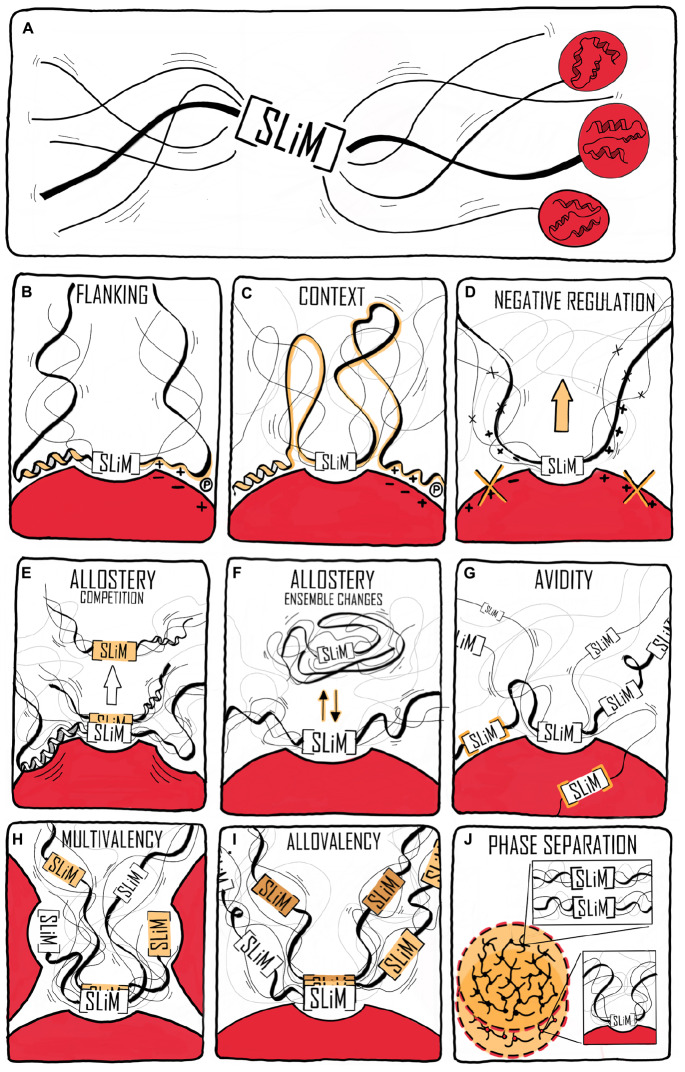
Living organisms depend on timely and organized interactions between proteins linked in interactomes of high complexity. The recent increased precision by which protein interactions can be studied, and the enclosure of intrinsic structural disorder, suggest that it is time to zoom out and embrace protein interactions beyond the most central points of physical encounter. The present paper discusses protein-protein interactions in the view of structural disorder with an emphasis on flanking regions and contexts of disorder-based interactions. Context constitutes an overarching concept being of physicochemical, biomolecular, and physiological nature, but it also includes the immediate molecular context of the interaction. For intrinsically disordered proteins, which often function by exploiting short linear motifs, context contributes in highly regulatory and decisive manners and constitute a yet largely unrecognized source of interaction potential in a multitude of biological processes. Through selected examples, this review emphasizes how multivalency, charges and charge clusters, hydrophobic patches, dynamics, energetic frustration, and ensemble redistribution of flanking regions or disordered contexts are emerging as important contributors to allosteric regulation, positive and negative cooperativity, feedback regulation and negative selection in binding. The review emphasizes that understanding context, and in particular the role the molecular disordered context and flanking regions take on in protein interactions, constitute an untapped well of energetic modulation potential, also of relevance to drug discovery and development.
Overview
The claims and statistics of this paper haven’t been checked yet.
Run the check — free, no account needed. It reads the open-access text and checks the sources it cites.
Integrity signals
Registry
Cites
Statistics
Figures
Verification
Claims the paper makes
The claims and statistics of this paper haven’t been checked yet.
Run the check — free, no account needed. It reads the open-access text and checks the sources it cites.
Claims other papers make about this one
Each is checked against this paper’s own text: does it say what the citing paper says it does?
In the citing paper
“Although there are clear context dependent modulations of intrinsic sequence-ensemble relationships, these modulations range from being negligible to predictable based on the sequence features of IDRs and the types of folded domains to which IDRs are tethered.80,81”
From AlphaFold and Implications for Intrinsically Disordered Proteins (2021) · cites this paper as [81]
Self-check
Percentages, sums and reported differences re-computed from the paper’s own numbers.
The self-check needs the paper’s full text.
Citations
Cites
Principles that Govern the Folding of Protein Chains
Anfinsen, C. B. (1973) · Science · doi:10.1126/science.181.4096.223 · Cited by 7,096 · cited 1×
“…the importance of context in the understanding of proteins was formulated by Christian B. Anfinsen stating “ that the native conformation is determined by the totality of interatomic interactions and hence by the amino acid sequence, in a given environment ” (Anfinsen et al., 1961; Anfinsen, 1973).”
BackgroundBiomolecular condensates: organizers of cellular biochemistry
Banani, S. F., Lee, H. O., Hyman, A. A., & Rosen, M. K. (2017) · Nature Reviews Molecular Cell Biology · doi:10.1038/nrm.2017.7 · Cited by 6,058 · cited 1×
“Localization of NPM1 within nucleoli depends upon its ability to undergo LLPS with Arg-motif containing proteins and ribosomal RNA (Mitrea et al., 2016; Banani et al., 2017).”
BackgroundAlberti, S., Gladfelter, A., & Mittag, T. (2019) · Cell · doi:10.1016/j.cell.2018.12.035 · Cited by 2,856 · cited 2×
“Additional examples illustrate how IDRs with multiple interacting motifs can participate in LLPS mediated by weak multivalent interactions (Boija et al., 2018; Alberti et al., 2019).”
BackgroundSensors and regulators of intracellular pH
Casey, J. R., Grinstein, S., & Orlowski, J. (2010) · Nature Reviews Molecular Cell Biology · doi:10.1038/nrm2820 · Cited by 2,218 · cited 1×
“Thus, depending on location (Casey et al., 2010), IDPs may compact, gain secondary structure, or engage in folding or partial folding when the pH changes.”
BackgroundA signature motif in transcriptional co-activators mediates binding to nuclear receptors
Heery, D. M., Kalkhoven, E., Hoare, S., & Parker, M. G. (1997) · Nature · doi:10.1038/42750 · Cited by 2,128
Role of the CLOCK Protein in the Mammalian Circadian Mechanism
Gekakis, N., Staknis, D., Nguyen, H. B., Davis, F. C., Wilsbacher, L. D., King, D. P., Takahashi, J. S., & Weitz, C. J. (1998) · Science · doi:10.1126/science.280.5369.1564 · Cited by 2,035
Wang, J., Choi, J.-M., Holehouse, A., Lee, H. O., Zhang, X., Jahnel, M., Maharana, S., Lemaitre, R., Pozniakovsky, A., Drechsel, D., et al. (2018) · Cell · doi:10.1016/j.cell.2018.06.006 · Cited by 1,876 · cited 1×
“In phase separation, the context of the disordered chain also has implications for interactions as explained by the stickers-and-spacers model of phase separation developed based on studies of RNA-binding proteins with prion-like domains (Wang et al., 2018; Martin et al., 2020).”
BackgroundBoija, A., Klein, I. A., Sabari, B. R., Dall’Agnese, A., Coffey, E. L., Zamudio, A. V., Li, C. H., Shrinivas, K., Manteiga, J. C., Hannett, N. M., et al. (2018) · Cell · doi:10.1016/j.cell.2018.10.042 · Cited by 1,815 · cited 6×
“Furthermore, for a mutant of GCN4 in which the aromatic residues of the hydrophobic patches were changed to Ala, incorporation into MED15 droplets was attenuated (Boija et al., 2018).”
BackgroundInfluentialPCNA, the Maestro of the Replication Fork
Moldovan, G.-L., Pfander, B., & Jentsch, S. (2007) · Cell · doi:10.1016/j.cell.2007.05.003 · Cited by 1,796 · cited 2×
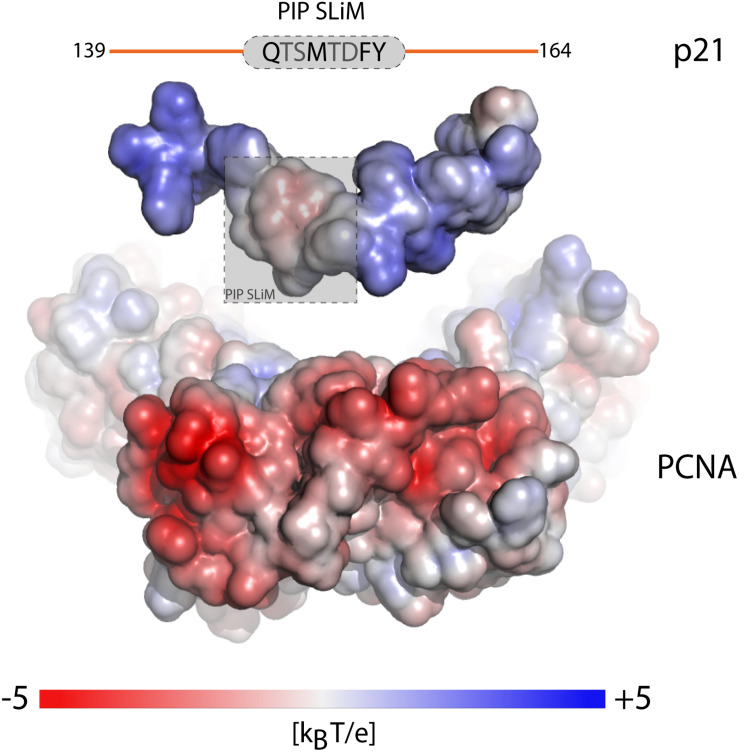
“PCNA has an enormous interactome (Moldovan et al., 2007; Prestel et al., 2019) 1 ), and the APIM motif [KR] (cid:127)(cid:56) 2 [KR] for cytosolic partners (Gilljam et al., 2009; Sebesta et al., 2017).”
BackgroundBoisvert, F., van Koningsbruggen, S., de Navascués, J., & Lamond, A. I. (2007) · Nature Reviews Molecular Cell Biology · doi:10.1038/nrm2184 · Cited by 1,671 · cited 1×
“The nucleolus, a membrane-less compartment, is the site of ribosome biogenesis (Boisvert et al., 2007).”
Background
Cited by
Sorted by citations
The molecular basis for cellular function of intrinsically disordered protein regions
Holehouse, A. S., & Kragelund, B. B. (2023) · Nature Reviews Molecular Cell Biology · doi:10.1038/s41580-023-00673-0 · Cited by 741
“…presence of osmolytes or ions; (ii) the chemical context of the IDR, namely, PTMs and changes in pH leading to protonation and deprotonation effects 41 ; and (iii) the structural context, that is, the presence or absence Intrinsically disordered regions (IDRs) have critical cellular roles across…”
AlphaFold and Implications for Intrinsically Disordered Proteins
Ruff, K. M., & Pappu, R. V. (2021) · Journal of Molecular Biology · doi:10.1016/j.jmb.2021.167208 · Cited by 635
Abyzov, A., Blackledge, M., & Zweckstetter, M. (2022) · Chemical Reviews · doi:10.1021/acs.chemrev.1c00774 · Cited by 215
Brocca, S., Grandori, R., Longhi, S., & Uversky, V. N. (2020) · International Journal of Molecular Sciences · doi:10.3390/ijms21239045 · Cited by 193
ELM—the Eukaryotic Linear Motif resource—2024 update
Kumar, M., Michael, S., Alvarado-Valverde, J., Zeke, A., Lázár, T., Glavina, J., Nagy‐Kanta, E., Donagh, J. M., Kálmán, Z. E., Pascarelli, S., et al. (2023) · Nucleic Acids Research · doi:10.1093/nar/gkad1058 · Cited by 185
“SLiMs bind partner protein domains with moderate affinity and therefore in many contexts they exhibit co-operativity to achieve their functional output ( 22–24 ).”
Background
Metadata
- Authors
- Bugge, K., Brakti, I., Fernandes, C. B., Dreier, J. E., Lundsgaard, J. E., Olsen, J. G., Skriver, K., & Kragelund, B. B.
- Affiliations
- University of Copenhagen (DK)
- Corresponding author
- Skriver, Karen
- Kragelund, Birthe B.
- ORCID
- Venue
- Frontiers in Molecular Biosciences
- Publisher
- Frontiers Media SA
- Published
- 2020-06-16
- Volume
- 7
- Pages
- 110-110
- ISSN
- 2296-889X (ISSN-L)
- PMC
- PMC7308724
- OpenAlex
- W3036355682
- Cited by
- 155
- References
- 159
- Citations by year
- 2026: 16 · 2025: 21 · 2024: 20 · 2023: 31 · 2022: 34 · 2021: 24 · 2020: 9
- FWCI
- 2.35
- Type
- journal article
- Language
- en
- Open access
- gold
- doi.org
- Licence
- Locations
- Frontiers in Molecular Biosciences (publishedVersion, cc-by)
- PubMed Central (publishedVersion, cc-by)
- PubMed (publishedVersion)
- Research at the University of Copenhagen (University of Copenhagen) (publishedVersion, cc-by)
- DOAJ (DOAJ: Directory of Open Access Journals) (submittedVersion, cc-by-sa)
- Funders
- Novo Nordisk Fonden
- Topics
- Life Sciences › Biochemistry, Genetics and Molecular Biology › Molecular Biology › Protein Structure and Dynamics
- Life Sciences › Biochemistry, Genetics and Molecular Biology › Molecular Biology › Protein Interaction Studies and Fluorescence Analysis
- Life Sciences › Biochemistry, Genetics and Molecular Biology › Molecular Biology › 14-3-3 protein interactions
- Keywords
- protein-protein interaction, intrinsically disordered proteins, structural disorder, flanking regions, context-dependent interactions, short linear motifs, multivalency, charge clusters, hydrophobic patch, allosteric regulation, feedback regulation, protein-protein interaction network, drug discovery
About these checks
Registry, retraction, Cites and statistics results are computed, not judged, with one exception: a printed reference that no index lists is read once by a model before it counts as a citation error. Claims are extracted by a model and kept only when their quote appears verbatim in the text; each cited source is then checked, with a model’s help, for whether it says what the claim relies on. Those verdicts can be wrong — read the claim’s quote and the cited source before relying on one.
Statistics and arithmetic are recomputed, not judged.
Confidence bands are shown only for fields calibrated on our annotated test set. None is calibrated yet, so no band is shown.
What counts as a claim ›How we measure confidence ›How we check this ›
Are you an author, or do you see a problem with this page? Request a review
