

The DOI matches its Crossref record; 155 of the 156 references it cites were found in a registry or an index, and 1 are not checked yet.
The low-density lipoprotein receptor-related protein 1 and amyloid-β clearance in Alzheimer’s disease
Open accessAbstract
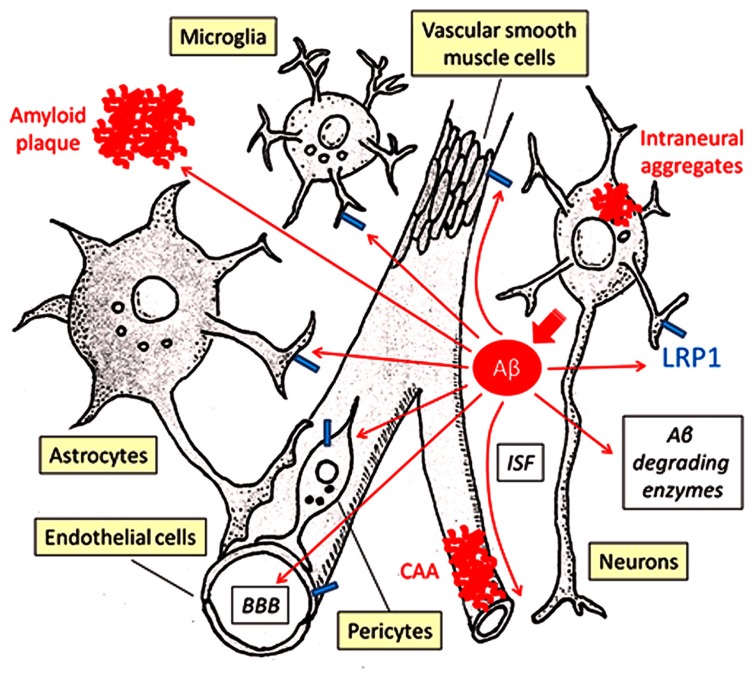
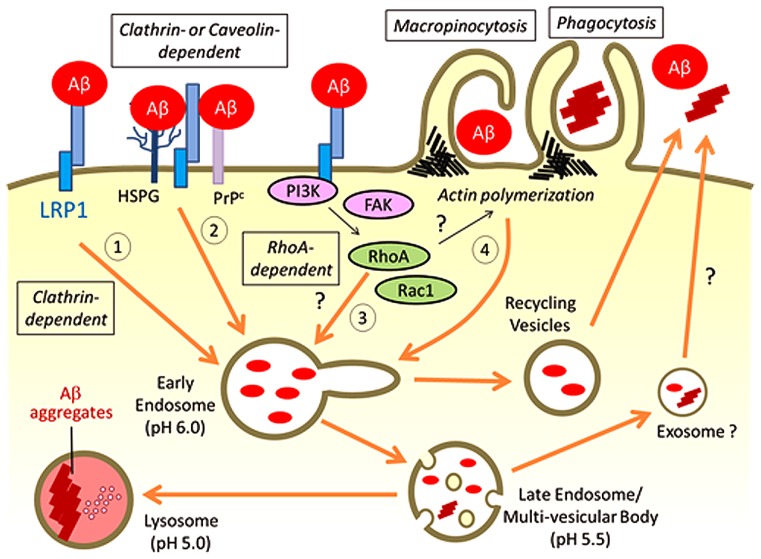
Accumulation and aggregation of amyloid-β (Aβ) peptides in the brain trigger the development of progressive neurodegeneration and dementia associated with Alzheimer's disease (AD). Perturbation in Aβ clearance, rather than Aβ production, is likely the cause of sporadic, late-onset AD, which accounts for the majority of AD cases. Since cellular uptake and subsequent degradation constitute a major Aβ clearance pathway, the receptor-mediated endocytosis of Aβ has been intensely investigated. Among Aβ receptors, the low-density lipoprotein receptor-related protein 1 (LRP1) is one of the most studied receptors. LRP1 is a large endocytic receptor for more than 40 ligands, including apolipoprotein E, α2-macroglobulin and Aβ. Emerging in vitro and in vivo evidence demonstrates that LRP1 is critically involved in brain Aβ clearance. LRP1 is highly expressed in a variety of cell types in the brain including neurons, vascular cells and glial cells, where LRP1 functions to maintain brain homeostasis and control Aβ metabolism. LRP1-mediated endocytosis regulates cellular Aβ uptake by binding to Aβ either directly or indirectly through its co-receptors or ligands. Furthermore, LRP1 regulates several signaling pathways, which also likely influences Aβ endocytic pathways. In this review, we discuss how LRP1 regulates the brain Aβ clearance and how this unique endocytic receptor participates in AD pathogenesis. Understanding of the mechanisms underlying LRP1-mediated Aβ clearance should enable the rational design of novel diagnostic and therapeutic strategies for AD.
Overview
The claims and statistics of this paper haven’t been checked yet.
Run the check — free, no account needed. It reads the open-access text and checks the sources it cites.
Integrity signals
Registry
Cites
Statistics
Figures
Verification
Claims the paper makes
The claims and statistics of this paper haven’t been checked yet.
Run the check — free, no account needed. It reads the open-access text and checks the sources it cites.
Claims other papers make about this one
Each is checked against this paper’s own text: does it say what the citing paper says it does?
The source backs part of the claim, not all of it — or backs it for a different population, condition or comparison.
In the citing paper
“Studies indicate that APOE binding is integral to some of these processes [16–20] with differences in APOE isoform-specific receptor binding affinity and lipid interactions affecting neuroinflammation, tau pathology, and amyloid plaque dynamics [21–24].”
From APOE Christchurch enhances a disease-associated microglial response to plaque but suppresses response to tau pathology (2025) · cites this paper as [18]
Experimental — accuracy not yet measuredThe source backs part of the claim, not all of it — or backs it for a different population, condition or comparison.
In the citing paper
“Collectively, these recent findings underscore the influence of APOE and APOE3Ch on both Aβ and tau pathology, either directly or through downstream effects such as neuroinflammation.”
From APOE Christchurch enhances a disease-associated microglial response to plaque but suppresses response to tau pathology (2025) · cites this paper as [18]
Experimental — accuracy not yet measuredThe source backs part of the claim, not all of it — or backs it for a different population, condition or comparison.
In the citing paper
“LRP1 has the ability to endocytose an array of ligands, including apoE and Aβ, in a highly efficient manner, by coupling to other transmembrane proteins (5,10).”
From APOE4-mediated amyloid-β pathology depends on its neuronal receptor LRP1 (2019) · cites this paper as [10]
Experimental — accuracy not yet measuredThe source backs part of the claim, not all of it — or backs it for a different population, condition or comparison.
In the citing paper
“LRP1 mediates and regulates the endocytosis of > 30 ligands, including apolipoprotein E (APOE) and amyloid-β (Aβ) [21–27]”
From LRP1 is a neuronal receptor for α-synuclein uptake and spread (2022) · cites this paper as [21]
Experimental — accuracy not yet measuredThe source backs part of the claim, not all of it — or backs it for a different population, condition or comparison.
In the citing paper
“LRP1 mediates and regulates the endocytosis of > 30 ligands, including apolipoprotein E (APOE) and amyloid-β (Aβ) [21–27]”
From LRP1 is a neuronal receptor for α-synuclein uptake and spread (2022) · cites this paper as [26]
Experimental — accuracy not yet measured
The cited source says what the claim attributes to it.
In the citing paper
“Receptors such as LRP1 can regulate APP endocytosis and amyloidogenic processing while also mediating cellular uptake and clearance of extracellular Aβ (Kanekiyo and Bu, 2014; Kanekiyo et al., 2013; Van Gool et al., 2019).”
From Isogenic human stem cell models reveal mutation-dependent protective mechanisms of APOE3 Christchurch (2026) · cites this paper as Kanekiyo and Bu, 2014
The cited source says what the claim attributes to it.
In the citing paper
“A major apoE receptor in the brain is LDL receptor-related protein 1 (LRP1), which is abundantly expressed in a variety of brain cell types in particular neurons.”
From APOE4-mediated amyloid-β pathology depends on its neuronal receptor LRP1 (2019) · cites this paper as [10]
The cited source says what the claim attributes to it.
In the citing paper
“because LRP1 plays a critical role in maintaining brain homeostasis (5,10).”
From APOE4-mediated amyloid-β pathology depends on its neuronal receptor LRP1 (2019) · cites this paper as [10]
The cited source says what the claim attributes to it.
In the citing paper
“neurons, astrocytes and microglia use LRP1 to uptake Aβ (28)”
From LRPAP1 is released from activated microglia and inhibits microglial phagocytosis and amyloid beta aggregation (2023) · cites this paper as [28]
In the citing paper
“LRP1 and related receptors of the LDL receptor family are known to mediate endocytosis or phagocytosis of a wide range of extracellular targets, including Aβ, TAU, ApoE and apoptotic cells, via ligand binding to these receptors (6, 28, 52).”
From LRPAP1 is released from activated microglia and inhibits microglial phagocytosis and amyloid beta aggregation (2023) · cites this paper as [28]
Self-check
Percentages, sums and reported differences re-computed from the paper’s own numbers.
The self-check needs the paper’s full text.
Citations
Cites
1 retracted
RETRACTED ARTICLE: Pericyte loss influences Alzheimer-like neurodegeneration in mice
Sagare, A. P., Bell, R. D., Zhao, Z., Ma, Q., Winkler, E. A., Ramanathan, A., & Zlokovic, B. V. (2013) · Nature Communications · doi:10.1038/ncomms3932 · Cited by 589
RetractedThe Amyloid Hypothesis of Alzheimer’s Disease: Progress and Problems on the Road to Therapeutics
Hardy, J., & Selkoe, D. J. (2002) · Science · doi:10.1126/science.1072994 · Cited by 13,864
Corder, E. H., Saunders, A. M., Strittmatter, W. J., Schmechel, D. E., Gaskell, P. C., Small, G. W., Roses, A. D., Haines, J. L., & Pericak-Vance, M. A. (1993) · Science · doi:10.1126/science.8346443 · Cited by 9,429
Apolipoprotein E and Alzheimer disease: risk, mechanisms and therapy
Liu, C.-C., Kanekiyo, T., Xu, H., & Bu, G. (2013) · Nature Reviews Neurology · doi:10.1038/nrneurol.2012.263 · Cited by 3,459
Self-citation2013 Alzheimer's disease facts and figures
Thies, W. H., & Bleiler, L. (2013) · Alzheimer s & Dementia · doi:10.1016/j.jalz.2013.02.003 · Cited by 3,372
Harold, D., Abraham, R., Hollingworth, P., Sims, R., Gerrish, A., Hamshere, M. L., Pahwa, J. S., Moskvina, V., Dowzell, K., Williams, A., et al. (2009) · Nature Genetics · doi:10.1038/ng.440 · Cited by 3,326
Blennow, K., de Leon, M. J., & Zetterberg, H. (2006) · The Lancet · doi:10.1016/s0140-6736(06)69113-7 · Cited by 3,134
TREM2 Variants in Alzheimer's Disease
Guerreiro, R., Wojtas, A., Bras, J., Carrasquillo, M., Rogaeva, E., Majounie, E., Cruchaga, C., Sassi, C., Kauwe, J. S. K., Younkin, S., et al. (2013) · New England Journal of Medicine · doi:10.1056/nejmoa1211851 · Cited by 3,020
Neurovascular pathways to neurodegeneration in Alzheimer’s disease and other disorders
Zlokovic, B. V. (2011) · Nature Reviews Neuroscience · doi:10.1038/nrn3114 · Cited by 2,969
Genome-wide association study identifies variants at CLU and CR1 associated with Alzheimer's disease
the European Alzheimer's Disease Initiative Investigators, Lambert, J.-C., Heath, S., Even, G., Campion, D., Sleegers, K., Hiltunen, M., Combarros, O., Zelenika, D., Bullido, M. J., et al. (2009) · Nature Genetics · doi:10.1038/ng.439 · Cited by 2,234
Cited by
Sorted by citations
Items 101–200 of 281
Focused ultrasound mitigates pathology and improves spatial memory in Alzheimer's mice and patients
Karakatsani, M. E., Ji, R., Murillo, M. F., Kugelman, T., Kwon, N., Lao, Y., Liu, K., Pouliopoulos, A. N., Honig, L. S., Duff, K., et al. (2023) · Theranostics · doi:10.7150/thno.79898 · Cited by 49
Tajbakhsh, A., Read, M. I., Barreto, G. E., Ávila-Rodriguez, M., Hayat, S. M. G., & Sahebkar, A. (2021) · European Journal of Pharmacology · doi:10.1016/j.ejphar.2021.173873 · Cited by 41
Shen, X., Li, H., Zhang, B., Li, Y., & Zhu, Z. (2025) · International Journal of Molecular Sciences · doi:10.3390/ijms26199793 · Cited by 45
Vascular mTOR-dependent mechanisms linking the control of aging to Alzheimer's disease
Galván, V., & Hart, M. J. (2015) · Biochimica et Biophysica Acta (BBA) - Molecular Basis of Disease · doi:10.1016/j.bbadis.2015.11.010 · Cited by 41
The Role of Apolipoprotein E Isoforms in Alzheimer’s Disease
Roda, A. R., Montoliu‐Gaya, L., & Villegas, S. (2019) · Journal of Alzheimer s Disease · doi:10.3233/jad-180740 · Cited by 41
Li, G., Kim, C., Kim, J., Yoon, H., Zhou, H., & Kim, J. (2015) · Journal of Alzheimer's Disease · doi:10.3233/jad-150024 · Cited by 39
Primate-specific miR-603 is implicated in the risk and pathogenesis of Alzheimer's disease
Zhang, C., Lu, J., Liu, B., Cui, Q., & Wang, Y. (2016) · Aging · doi:10.18632/aging.100887 · Cited by 41
Knockin’ on heaven’s door: Molecular mechanisms of neuronal tau uptake
La‐Rocque, S. D., Moretto, E., Butnaru, I., & Schiavo, G. (2020) · Journal of Neurochemistry · doi:10.1111/jnc.15144 · Cited by 46
Uchida, K. (2022) · Cells · doi:10.3390/cells11050919 · Cited by 41
Gao, H., Song, R., Li, Y., Zhang, W., Wan, Z., Wang, Y., Zhang, H., & Han, S. (2020) · Journal of Agricultural and Food Chemistry · doi:10.1021/acs.jafc.0c05677 · Cited by 38
Lung endothelium, tau, and amyloids in health and disease
Balczon, R., Lin, M. T., Voth, S. B., Nelson, A. R., Schupp, J. C., Wagener, B. M., Pittet, J., & Stevens, T. (2023) · Physiological Reviews · doi:10.1152/physrev.00006.2023 · Cited by 40
Amro, Z., Yool, A. J., & Collins‐Praino, L. E. (2021) · Brain Behavior & Immunity - Health · doi:10.1016/j.bbih.2021.100242 · Cited by 39
Role of Microglia in Regulating Cholesterol and Tau Pathology in Alzheimer’s Disease
Nanjundaiah, S., Chidambaram, H., Chandrashekar, M., & Chinnathambi, S. (2021) · Cellular and Molecular Neurobiology · doi:10.1007/s10571-020-00883-6 · Cited by 36
Nam, K. N., Mounier, A., Fitz, N. F., Wolfe, C. M., Schug, J., Lefterov, I. M., & Koldamova, R. P. (2016) · Scientific Reports · doi:10.1038/srep24048 · Cited by 36
Lee, J., Lee, H., Lee, H. G., Shin, M., Shin, M.-G., Seo, J., Lee, E. J., Park, S. A., & Park, S. (2023) · Nature Communications · doi:10.1038/s41467-023-44319-3 · Cited by 37
Amyloid-β and heart failure in Alzheimer’s disease: the new vistas
Al-Kuraishy, H. M., Sulaiman, G. M., Mohammed, H. A., Mohammed, S. G., Al-Gareeb, A. I., Albuhadily, A. K., Dawood, R. A., Ali, A. A., & Abu-Alghayth, M. H. (2025) · Frontiers in Medicine · doi:10.3389/fmed.2025.1494101 · Cited by 37
The Interplay Between Apolipoprotein E4 and the Autophagic–Endocytic–Lysosomal Axis
Schmukler, E., Michaelson, D. M., & Pinkas-Kramarski, R. (2018) · Molecular Neurobiology · doi:10.1007/s12035-018-0892-4 · Cited by 35
Passarella, D., Ciampi, S., Liberto, V. D., Zuccarini, M., Ronci, M., Medoro, A., Foderà, E., Frinchi, M., Mignogna, D., Russo, C., et al. (2022) · International Journal of Molecular Sciences · doi:10.3390/ijms23168921 · Cited by 38
APOE2 mitigates disease-related phenotypes in an isogenic hiPSC-based model of Alzheimer’s disease
Brookhouser, N., Raman, S., Frisch, C., Srinivasan, G., & Brafman, D. A. (2021) · Molecular Psychiatry · doi:10.1038/s41380-021-01076-3 · Cited by 33
Metabolic Diffusion in Neuropathologies: The Relevance of Brain-Liver Axis
Vegas‐Suárez, S., Simón, J., Martínez‐Chantar, M. L., & Moratalla, R. (2022) · Frontiers in Physiology · doi:10.3389/fphys.2022.864263 · Cited by 35
Gan, M., Jiang, P., McLean, P. J., Kanekiyo, T., & Bu, G. (2014) · PLoS ONE · doi:10.1371/journal.pone.0113237 · Cited by 32
Self-citationMishra, A., Yao, X., Saxena, A., Gordon, E. M., Kaler, M. M., Cuento, R. A., Barochia, A. V., Dagur, P. K., McCoy, J. P., Keeran, K. J., et al. (2017) · Journal of Allergy and Clinical Immunology · doi:10.1016/j.jaci.2017.10.044 · Cited by 34
Zhang, S., Asghar, S., Zhu, C., Ye, J., Lin, L., Liu, X., Hu, Z., Chen, Z., Shao, F., & Xiao, Y. (2021) · Journal of Controlled Release · doi:10.1016/j.jconrel.2021.05.044 · Cited by 32
Metabolite Clearance During Wakefulness and Sleep
Hladky, S. B., & Barrand, M. A. (2017) · Handbook of experimental pharmacology · doi:10.1007/164_2017_37 · Cited by 36
Gwon, Y., Kam, T., Kim, S.-H., Song, S., Park, H., Lim, B., Lee, H., Lee, W., Jo, D., & Jung, Y. (2018) · Journal of Neuroscience · doi:10.1523/jneurosci.1996-17.2018 · Cited by 33
Microglia Impede Oligodendrocyte Generation in Aged Brain
Luan, W., Qi, X., Liang, F., Zhang, X., Jin, Z., Shi, L., Luo, B., & Dai, X. (2021) · Journal of Inflammation Research · doi:10.2147/jir.s338242 · Cited by 32
Tobeh, N. S., & Bruce, K. D. (2023) · Frontiers in Aging Neuroscience · doi:10.3389/fnagi.2023.1259012 · Cited by 35
Yang, P., Li, Y., Qian, K., Zhou, L., Cheng, Y., Wu, J., Xu, M., Wang, T., Yang, X., Mu, Y., et al. (2024) · ACS Nano · doi:10.1021/acsnano.4c00480 · Cited by 31
Engineering Brain-Specific Pericytes from Human Pluripotent Stem Cells
Jeske, R., Albo, J., Marzano, M., Bejoy, J., & Li, Y. (2020) · Tissue Engineering Part B Reviews · doi:10.1089/ten.teb.2020.0091 · Cited by 33
Morrone, C. D., Liu, M., Black, S. E., & McLaurin, J. (2015) · Frontiers in Aging Neuroscience · doi:10.3389/fnagi.2015.00064 · Cited by 26
Tran, K. M., Kwang, N. E., Butler, C. A., Gomez-Arboledas, A., Kawauchi, S., Mar, C., Chao, D., Barahona, R. A., Da Cunha, C., Tsourmas, K. I., et al. (2025) · Molecular Neurodegeneration · doi:10.1186/s13024-024-00793-x · Cited by 28
Yavari, M., Kalupahana, N. S., Harris, B. N., Ramalingam, L., Zu, Y., Kahathuduwa, C. N., & Moustaïd‐Moussa, N. (2025) · Nutrients · doi:10.3390/nu17071203 · Cited by 29
Gulej, R., Patai, R., Ungvari, A., Kállai, A., Tarantini, S., Yabluchanskiy, A., Huffman, D. M., Conboy, M. J., Conboy, I. M., Mika Kivimaki, B., et al. (2025) · GeroScience · doi:10.1007/s11357-025-01657-y · Cited by 29
Heiss, J. K., Barrett, J., Yu, Z., Haas, L. T., Kostylev, M. A., & Strittmatter, S. M. (2016) · Cerebral Cortex · doi:10.1093/cercor/bhw188 · Cited by 30
Post-translational regulation of the β-secretase BACE1
Araki, W. (2016) · Brain Research Bulletin · doi:10.1016/j.brainresbull.2016.04.009 · Cited by 26
Cartocci, V., Segatto, M., Di Tunno, I., Leone, S., Pfrieger, F. W., & Pallottini, V. (2016) · Journal of Cellular Biochemistry · doi:10.1002/jcb.25500 · Cited by 28
Masuda, T., Hoshiyama, T., Uemura, T., Hirayama‐Kurogi, M., Ogata, S., Furukawa, A., Couraud, P., Furihata, T., Ito, S., & Ohtsuki, S. (2019) · Molecular Pharmaceutics · doi:10.1021/acs.molpharmaceut.9b00114 · Cited by 30
The therapeutic potential of probucol and probucol analogues in neurodegenerative diseases
Sharif, A., Mamo, J. C. L., Lam, V., Al‐Salami, H., Mooranian, A., Watts, G. F., Clarnette, R., Luna, G., & Takechi, R. (2024) · Translational Neurodegeneration · doi:10.1186/s40035-024-00398-w · Cited by 29
Wu, C., Lin, T., Ding, Q., Zhang, N., Ou, Z.-T., Cai, G., Chen, H., Xu, J.-Y., Li, G., Pei, Z., et al. (2022) · Mediators of Inflammation · doi:10.1155/2022/2140524 · Cited by 29
Ma, L., Fei, Y., Wang, X., Wu, S., Du, J., Zhu, M., Jin, L., Li, M., Liu, X., Zhai, J., et al. (2017) · Journal of Molecular Neuroscience · doi:10.1007/s12031-017-0892-2 · Cited by 28
Heart and Brain: Complex Relationships for Left Ventricular Dysfunction
Daniele, G., DiLucia, S., Masci, P. G., & del Monte, F. (2020) · Current Cardiology Reports · doi:10.1007/s11886-020-01318-w · Cited by 27
Oue, H., Yamazaki, Y., Qiao, W., Yuanxin, C., Ren, Y., Kurti, A., Shue, F., Parsons, T. M., Perkerson, R. B., Kawatani, K., et al. (2023) · JCI Insight · doi:10.1172/jci.insight.163822 · Cited by 26
Self-citationLRP1 Downregulates the Alzheimer’s β-Secretase BACE1 by Modulating Its Intraneuronal Trafficking
Tanokashira, D., Motoki, K., Minegishi, S., Hosaka, A., Mamada, N., Tamaoka, A., Okada, T., Lakshmana, M. K., & Araki, W. (2015) · eNeuro · doi:10.1523/eneuro.0006-15.2015 · Cited by 25
Chandrashekar, D. V., Roules, G. C., Jagadeesan, N., Panchal, U. R., Oyegbesan, A., Imiruaye, O. E., Zhang, H., Garcia, J., Kaur, K., Win, S., et al. (2024) · Neurobiology of Disease · doi:10.1016/j.nbd.2024.106570 · Cited by 27
Alshahrani, S. M., Al-Kuraishy, H. M., Al-Gareeb, A. I., Albuhadily, A. K., Shokr, M. M., Kadasah, S. F., Alexiou, A. T., Papadakis, M., & Batiha, G. E. (2025) · European Journal of Pharmacology · doi:10.1016/j.ejphar.2025.177830 · Cited by 27
Impaired autophagy in amyloid-beta pathology: A traditional review of recent Alzheimer's research
Yuan, M., Wang, Y., Huang, Z., Jing, F., Qiao, P., Zou, Q., Li, J., & Cai, Z. (2022) · Journal of Biomedical Research · doi:10.7555/jbr.36.20220145 · Cited by 26
Amyloid futures in the expanding pathology of brain aging and dementia
Thorwald, M. A., Silva, J. A., Head, E., & Finch, C. E. (2022) · Alzheimer s & Dementia · doi:10.1002/alz.12896 · Cited by 24
Kwak, D. E., Ko, T., Koh, H. S., Ji, Y. W., Shin, J., Kim, K., Kim, H. Y., Lee, H. K., & Kim, Y. S. (2020) · PLoS ONE · doi:10.1371/journal.pone.0227618 · Cited by 25
Han, Z., Yuan, M., Nguyen, N., Zhou, H.-C. “., Hubbard, J. E., & Wang, Y. (2024) · Coordination Chemistry Reviews · doi:10.1016/j.ccr.2024.215926 · Cited by 23
Ding, Y., Palecek, S. P., & Shusta, E. V. (2024) · Fluids and Barriers of the CNS · doi:10.1186/s12987-024-00580-2 · Cited by 22
Na, H., Yang, J. B., Zhang, Z., Gan, Q., Tian, H., Rajab, I. M., Potempa, L. A., Tao, Q., & Qiu, W. Q. (2023) · Neurobiology of Aging · doi:10.1016/j.neurobiolaging.2023.02.013 · Cited by 27
Protein structures in Alzheimer's disease: The basis for rationale therapeutic design
Montoliu‐Gaya, L., & Villegas, S. (2015) · Archives of Biochemistry and Biophysics · doi:10.1016/j.abb.2015.10.005 · Cited by 24
Pathology of Amyloid-β (Aβ) Peptide Peripheral Clearance in Alzheimer’s Disease
Tsoy, A., Umbayev, B. A., Kassenova, A., Kaupbayeva, B., & Askarova, S. (2024) · International Journal of Molecular Sciences · doi:10.3390/ijms252010964 · Cited by 24
Qadir, A. M., Omer, R. A., Sulaiman, S. H., & Barzani, H. A. H. (2026) · Metabolic Brain Disease · doi:10.1007/s11011-025-01778-5 · Cited by 22
Wu, K., Xu, C., Qiu, G., Guo, Q., Chen, C., Liu, W., Liu, J., Liu, K., & Zhu, F. (2022) · Frontiers in Aging Neuroscience · doi:10.3389/fnagi.2022.1012219 · Cited by 21
Wang, X., Miao, Y., Abulizi, J., Fu, L., Mo, Y., Wei-guo, X., & Li, Z. (2016) · Evidence-based Complementary and Alternative Medicine · doi:10.1155/2016/7603975 · Cited by 21
Liver Health and Dementia in an Italian Older Population: Findings From the Salus in Apulia Study
Lampignano, L., Donghia, R., Griseta, C., Lagravinese, G., Sciarra, S., Zupo, R., Castellana, F., Bortone, I., Guerra, V., Tirelli, S., et al. (2021) · Frontiers in Aging Neuroscience · doi:10.3389/fnagi.2021.748888 · Cited by 21
Huang, R., Gao, Y., Duan, Q., Zhang, Q., He, P., Chen, J., Ma, G., Wang, L., Zhang, Y., Nie, K., et al. (2022) · Molecular Neurobiology · doi:10.1007/s12035-022-03119-4 · Cited by 20
Analysis of Cerebral Small Vessel Changes in AD Model Mice
Shibly, A. Z., Sheikh, A. M., Michikawa, M., Tabassum, S., Azad, A. K., Zhou, X., Zhang, Y., Yano, S., & Nagai, A. (2022) · Biomedicines · doi:10.3390/biomedicines11010050 · Cited by 21
Proust, A. M., Barat, C., Lebœuf, M., Drouin, J., Gagnon, M., Vanasse, F., & Tremblay, M. J. (2020) · Glia · doi:10.1002/glia.23833 · Cited by 19
Araki, W. (2023) · Cells · doi:10.3390/cells12101386 · Cited by 20
Jin, Y., Kim, T., & Kang, H. (2023) · Physiology & Behavior · doi:10.1016/j.physbeh.2023.114145 · Cited by 18
Ranking the risk factors for Alzheimer’s disease; findings from the UK Biobank study
Allwright, M., Mundell, H. D., McCorkindale, A. N., Lindley, R. I., Austin, P. J., Guennewig, B., & Sutherland, G. T. (2023) · Aging Brain · doi:10.1016/j.nbas.2023.100081 · Cited by 19
Amyloid‐β in Alzheimer's disease: Structure, toxicity, distribution, treatment, and prospects
Yu, Y., Yu, S., Battaglia, G., & Tian, X. (2024) · Ibrain · doi:10.1002/ibra.12155 · Cited by 19
Study of Exosomes Shed New Light on Physiology of Amyloidogenesis
van Niel, G. (2016) · Cellular and Molecular Neurobiology · doi:10.1007/s10571-016-0357-0 · Cited by 20
Choi, H. W., Wang, L., Powell, A. F., Strickler, S. R., Wang, D., Dempsey, D. A., Schroeder, F. C., & Klessig, D. F. (2019) · Scientific Reports · doi:10.1038/s41598-019-49234-6 · Cited by 20
Therapeutic Potential of Direct Clearance of the Amyloid-β in Alzheimer’s Disease
Kim, D., & Priefer, R. (2020) · Brain Sciences · doi:10.3390/brainsci10020093 · Cited by 18
Meta-Analysis of APP Expression Modulated by SARS-CoV-2 Infection via the ACE2 Receptor
Caradonna, A., Patel, T. R., Toleska, M., Alabed, S. T., & Chang, S. L. (2022) · International Journal of Molecular Sciences · doi:10.3390/ijms23031182 · Cited by 18
Wu, B., Liu, Y., Li, H., Zhu, L., Zeng, L., Zhang, Z., & Peng, W. (2023) · Neural Regeneration Research · doi:10.4103/1673-5374.391305 · Cited by 22
Cerebral amyloid angiopathy and the immune system
Munsterman, D., Falcione, S. R., Long, R., Boghozian, R., Joy, T., Camicioli, R. M., Smith, E. E., & Jickling, G. C. (2024) · Alzheimer s & Dementia · doi:10.1002/alz.13826 · Cited by 16
Cai, H., Cai, T., Zheng, H., Liu, L., Zhou, L., Xile, P., Zhan, Q., Wang, Y., Yang, C., Guo, Z., et al. (2020) · Rejuvenation Research · doi:10.1089/rej.2019.2182 · Cited by 16
Chin-Chan, M., Cobos-Puc, L. E., Alvarado-Cruz, I., Bayar, M., & Ermolaeva, M. (2019) · JBIC Journal of Biological Inorganic Chemistry · doi:10.1007/s00775-019-01739-1 · Cited by 16
Amyloid –β pathology in Alzheimer’s disease: A nano delivery approach
Meghana, G. S., Gowda, D., Chidambaram, S. B., & Osmani, R. A. M. (2023) · Vibrational Spectroscopy · doi:10.1016/j.vibspec.2023.103510 · Cited by 17
Royse, M. K., Fowler, M., Mai, A. K., He, Y., Durante, M. R., Buist, N., Procopio, A. T., Xu, J., & Omid Veiseh, A. (2024) · Biomaterials Science · doi:10.1039/d4bm00663a · Cited by 15
Darabi, S., Gorgich, E. A. C., Moradi, F., & Rustamzadeh, A. (2025) · IBRO Neuroscience Reports · doi:10.1016/j.ibneur.2025.01.004 · Cited by 13
Role of Cav-1 in HIV-1 Tat-Induced Dysfunction of Tight Junctions and Aβ-Transferring Proteins
Zou, M., Huang, W., Jiang, W., Wu, Y., & Chen, Q. (2019) · Oxidative Medicine and Cellular Longevity · doi:10.1155/2019/3403206 · Cited by 14
Wang, J., Meng, X., Jialun, Y., Tang, Y., Zeng, F., Wang, Y., Chen, Z., Chen, D., Zou, R., & Liu, W. (2025) · Neurochemical Research · doi:10.1007/s11064-025-04350-w · Cited by 15
Ferrari, I., Limiti, E., Giannitelli, S. M., Trombetta, M., Rainer, A., D’Amelio, M., Barbera, L. L., & Gori, M. (2025) · International Journal of Molecular Sciences · doi:10.3390/ijms26199478 · Cited by 15
Reid, K. M., & Brown, G. C. (2023) · Frontiers in Immunology · doi:10.3389/fimmu.2023.1286474 · Cited by 13
Roy, S., Saha, P., Bose, D., Trivedi, A., More, M., Lin, C., Wu, J., Oakes, M., & Chatterjee, S. (2024) · Scientific Reports · doi:10.1038/s41598-024-60664-9 · Cited by 13
Angiotensin II and Amyloid-β Synergistically Induce Brain Vascular Smooth Muscle Cell Senescence
Bai, H., Min, L., Shan, B., Iwanami, J., Kan‐no, H., Kanagawa, M., Mogi, M., & Horiuchi, M. (2020) · American Journal of Hypertension · doi:10.1093/ajh/hpaa218 · Cited by 13
Estudillo, E., López-Ornelas, A., Rodríguez-Oviedo, A., Cruz, N. G. D. L., Vargas-Hernández, M. A., & Jiménez, A. (2023) · Neural Regeneration Research · doi:10.4103/1673-5374.373672 · Cited by 14
Kang, S., Lee, J., Ali, D. N., Choi, S. H., Nesbitt, J. J., Min, H.-K. P., Trushina, E. V., & Choi, D. (2024) · Scientific Reports · doi:10.1038/s41598-024-75202-w · Cited by 16
Liver function and Alzheimer's brain pathologies: A longitudinal study
Kim, J. W., Byun, M. S., Yi, D., Jung, J. H., Kong, N., Chang, Y. Y., Jung, G., Ahn, H., Lee, J.-Y., Kang, K. M., et al. (2025) · The Journal of Prevention of Alzheimer s Disease · doi:10.1016/j.tjpad.2024.100012 · Cited by 14
Meraz‐Ríos, M. A., Rochín-Hernández, L. J., Ramírez-Reyes, L., Figueroa‐Corona, M. D. P., Sánchez-González, V., Orozco-Barajas, M., & Jiménez-Acosta, M. A. (2023) · International Journal of Molecular Sciences · doi:10.3390/ijms241612606 · Cited by 11
Iron homeostasis and post-hemorrhagic hydrocephalus: a review
Pan, S., Hale, A. T., Lemieux, M., Raval, D. K., Garton, T. P., Sadler, B. E., Mahaney, K. B., & Strahle, J. M. (2024) · Frontiers in Neurology · doi:10.3389/fneur.2023.1287559 · Cited by 11
Blood–Brain Barrier Transport of Alzheimer’s Amyloid β-Peptide
Nelson, A. R., Sagare, A. P., & Zloković, B. V. (2016) · Elsevier eBooks · doi:10.1016/b978-0-12-802173-6.00009-5 · Cited by 12
Shepherd, C. E., Affleck, A. J., Bahar, A. Y., Carew‐Jones, F., Gregory, G., Small, D. H., & Halliday, G. M. (2020) · Brain and Behavior · doi:10.1002/brb3.1672 · Cited by 11
Systems biology of Alzheimer’s Disease: a scoping review of key pathways and mechanisms
Bice, P. J., Nho, K. T., Ertekin‐Taner, N., & Saykin, A. J. (2026) · Molecular Neurodegeneration · doi:10.1186/s13024-026-00934-4 · Cited by 14
Unraveling the Role of LRP1 in Alzheimer’s Disease: A Focus on Aβ Clearance and the Liver-Brain Axis
Yang, W., Wei, Z., & Wang, T. (2025) · Journal of Molecular Neuroscience · doi:10.1007/s12031-025-02339-2 · Cited by 14
Hossain, M. M., Adhikari, J., Dutta, A., Khandaker, A., Islam, S., Rahman, M. M., & Shibly, A. Z. (2025) · PLOS One · doi:10.1371/journal.pone.0331339 · Cited by 11
Osborne, O., Kowalczyk, J., Louis, K. D. P., Daftari, M., Colbert, B., Naranjo, O., Torices, S., Andras, I. E., Dykxhoorn, D. M., & Toborek, M. J. (2022) · Extracellular Vesicles and Circulating Nucleic Acids · doi:10.20517/evcna.2022.22 · Cited by 11
The action of neuropeptide AF on passive avoidance learning. Involvement of neurotransmitters
Palotai, M., Telegdy, G., Bagosi, Z., & Jászberényi, M. (2015) · Neurobiology of Learning and Memory · doi:10.1016/j.nlm.2015.11.011 · Cited by 12
Association between LRP1 C766T polymorphism and Alzheimer’s disease susceptibility: a meta-analysis
Wang, Y., Liu, S., Wang, J., Zhang, J., Hua, Y., Li, H. L., Tan, H., Kuai, B., Wang, B., & Sheng, S. (2017) · Scientific Reports · doi:10.1038/s41598-017-08335-w · Cited by 11
Li, P., Wu, J., Li, Z., & Feng, X.-W. (2015) · Sleep And Breathing · doi:10.1007/s11325-015-1200-4 · Cited by 11
LRP1 at the crossroads of Aβ clearance and therapeutic targeting in Alzheimer’s disease
Deng, Y., Yin, H., Lu, Z., Lan, H., Liu, W., Zuo, C., Pan, N., Tian, X., & Gong, Q. (2026) · Frontiers in Aging Neuroscience · doi:10.3389/fnagi.2025.1669405 · Cited by 13
Lead Acetate Exposure and Cerebral Amyloid Accumulation: Mechanistic Evaluations in APP/PS1 Mice
Gu, H., Liu, L. L., Wu, A., Yu, Y., Emir, U. E., Sawiak, S. J., Territo, P. R., Farlow, M. R., Zheng, W., & Du, Y. (2024) · Environmental Health Perspectives · doi:10.1289/ehp14384 · Cited by 14
Nanni, S. B., Pratt, J., Beauchemin, D., Haidara, K., & Annabi, B. (2016) · Biomarkers in Cancer · doi:10.4137/bic.s38894 · Cited by 8
Tijms, B. M., Vromen, E. M., Mjaavatten, O., Holstege, H., Reus, L. M., van der Lee, S., Wesenhagen, K. E., Lorenzini, L., Vermunt, L., Venkatraghavan, V., et al. (2023) · doi:10.1101/2023.05.10.23289793 · Cited by 10
Zhao, Z., Hood, R. J., Ong, L. K., Pietrogrande, G., Sanchez‐Bezanilla, S., Warren, K. E., Ilicic, M., Kluge, M. G., TeBay, C., Ottersen, O. P., et al. (2021) · Frontiers in Neurology · doi:10.3389/fneur.2021.585189 · Cited by 7
Metadata
- Authors
- Kanekiyo, T., & Bu, G.
- Affiliations
- Mayo Clinic (US)
- Corresponding author
- Kanekiyo, Takahisa
- Venue
- Frontiers in Aging Neuroscience
- Publisher
- Frontiers Media SA
- Published
- 2014-05-20
- Volume
- 6
- Pages
- 93-93
- ISSN
- 1663-4365 (ISSN-L)
- PMC
- PMC4033011
- OpenAlex
- W2003708432
- Cited by
- 281
- References
- 156
- Citations by year
- 2026: 23 · 2025: 28 · 2024: 25 · 2023: 34 · 2022: 25 · 2021: 27 · 2020: 18 · 2019: 20 · 2018: 17 · 2017: 23 · 2016: 20 · 2015: 17 · 2014: 3
- FWCI
- 2.46
- Type
- journal article
- Language
- en
- Open access
- gold
- doi.org
- Licence
- cc-by
- Locations
- Frontiers in Aging Neuroscience (publishedVersion, cc-by)
- Europe PMC (PubMed Central) (publishedVersion, cc-by)
- PubMed Central (publishedVersion, cc-by)
- PubMed (publishedVersion)
- DOAJ (DOAJ: Directory of Open Access Journals) (submittedVersion, cc-by-sa)
- Rare & Special e-Zone (The Hong Kong University of Science and Technology) (submittedVersion)
- Funders
- Alzheimer's Association
- National Institutes of Health
- National Institute on Aging (P01AG030128, R01AG027924, RF1AG046205, R01AG046205, R01AG035355)
- National Institute of Neurological Disorders and Stroke (P01NS074969)
- Topics
- Life Sciences › Neuroscience › Cellular and Molecular Neuroscience › Alzheimer's disease research and treatments
- Life Sciences › Neuroscience › Neurology › Barrier Structure and Function Studies
- Life Sciences › Neuroscience › Neurology › Neuroinflammation and Neurodegeneration Mechanisms
- Keywords
- LRP1, amyloid-beta clearance, Alzheimer's disease, receptor-mediated endocytosis, co-receptors, apolipoprotein E, alpha2-macroglobulin, amyloid-beta aggregation, neurodegeneration, glial cells, vascular cells, signaling pathways
About these checks
Registry, retraction, Cites and statistics results are computed, not judged, with one exception: a printed reference that no index lists is read once by a model before it counts as a citation error. Claims are extracted by a model and kept only when their quote appears verbatim in the text; each cited source is then checked, with a model’s help, for whether it says what the claim relies on. Those verdicts can be wrong — read the claim’s quote and the cited source before relying on one.
Statistics and arithmetic are recomputed, not judged.
Confidence bands are shown only for fields calibrated on our annotated test set. None is calibrated yet, so no band is shown.
What counts as a claim ›How we measure confidence ›How we check this ›
Are you an author, or do you see a problem with this page? Request a review
