

The DOI matches its Crossref record; 155 of the 156 references it cites were found in a registry or an index, and 1 are not checked yet.
The low-density lipoprotein receptor-related protein 1 and amyloid-β clearance in Alzheimer’s disease
Open accessAbstract
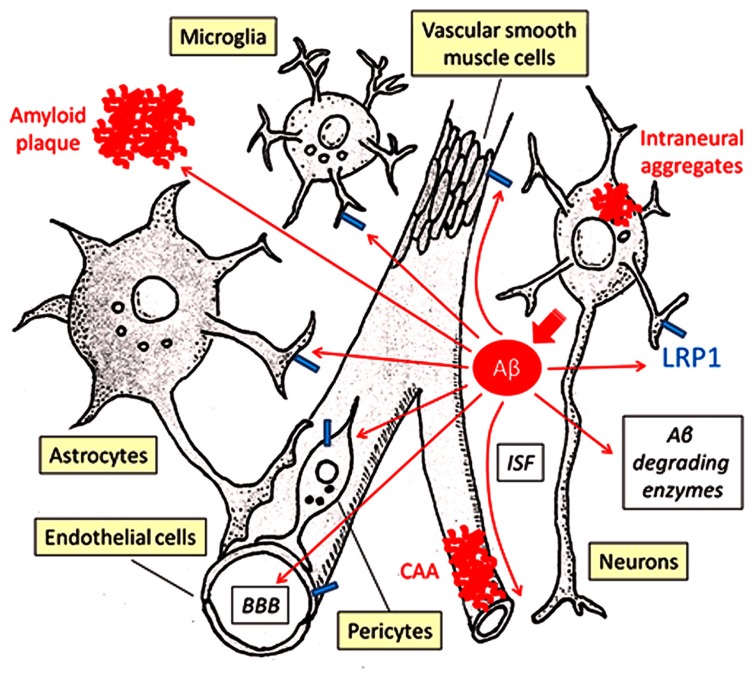
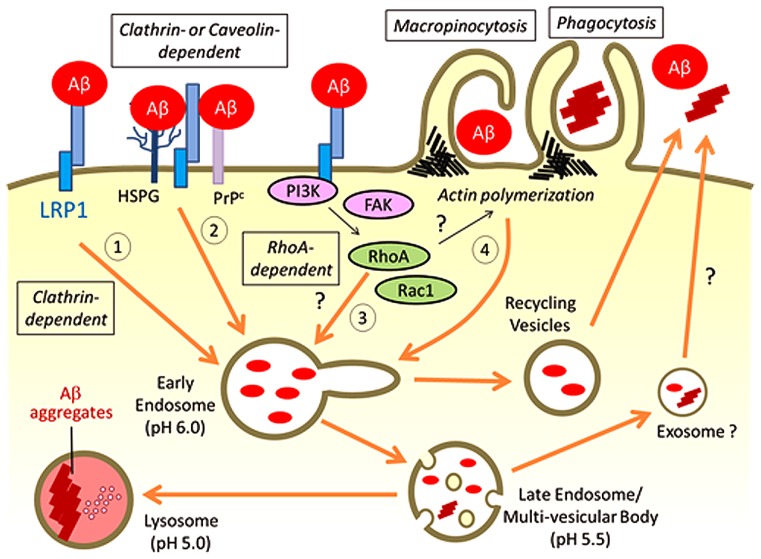
Accumulation and aggregation of amyloid-β (Aβ) peptides in the brain trigger the development of progressive neurodegeneration and dementia associated with Alzheimer's disease (AD). Perturbation in Aβ clearance, rather than Aβ production, is likely the cause of sporadic, late-onset AD, which accounts for the majority of AD cases. Since cellular uptake and subsequent degradation constitute a major Aβ clearance pathway, the receptor-mediated endocytosis of Aβ has been intensely investigated. Among Aβ receptors, the low-density lipoprotein receptor-related protein 1 (LRP1) is one of the most studied receptors. LRP1 is a large endocytic receptor for more than 40 ligands, including apolipoprotein E, α2-macroglobulin and Aβ. Emerging in vitro and in vivo evidence demonstrates that LRP1 is critically involved in brain Aβ clearance. LRP1 is highly expressed in a variety of cell types in the brain including neurons, vascular cells and glial cells, where LRP1 functions to maintain brain homeostasis and control Aβ metabolism. LRP1-mediated endocytosis regulates cellular Aβ uptake by binding to Aβ either directly or indirectly through its co-receptors or ligands. Furthermore, LRP1 regulates several signaling pathways, which also likely influences Aβ endocytic pathways. In this review, we discuss how LRP1 regulates the brain Aβ clearance and how this unique endocytic receptor participates in AD pathogenesis. Understanding of the mechanisms underlying LRP1-mediated Aβ clearance should enable the rational design of novel diagnostic and therapeutic strategies for AD.
Overview
The claims and statistics of this paper haven’t been checked yet.
Run the check — free, no account needed. It reads the open-access text and checks the sources it cites.
Integrity signals
Registry
Cites
Statistics
Figures
Verification
Claims the paper makes
The claims and statistics of this paper haven’t been checked yet.
Run the check — free, no account needed. It reads the open-access text and checks the sources it cites.
Claims other papers make about this one
Each is checked against this paper’s own text: does it say what the citing paper says it does?
The source backs part of the claim, not all of it — or backs it for a different population, condition or comparison.
In the citing paper
“Studies indicate that APOE binding is integral to some of these processes [16–20] with differences in APOE isoform-specific receptor binding affinity and lipid interactions affecting neuroinflammation, tau pathology, and amyloid plaque dynamics [21–24].”
From APOE Christchurch enhances a disease-associated microglial response to plaque but suppresses response to tau pathology (2025) · cites this paper as [18]
Experimental — accuracy not yet measuredThe source backs part of the claim, not all of it — or backs it for a different population, condition or comparison.
In the citing paper
“Collectively, these recent findings underscore the influence of APOE and APOE3Ch on both Aβ and tau pathology, either directly or through downstream effects such as neuroinflammation.”
From APOE Christchurch enhances a disease-associated microglial response to plaque but suppresses response to tau pathology (2025) · cites this paper as [18]
Experimental — accuracy not yet measuredThe source backs part of the claim, not all of it — or backs it for a different population, condition or comparison.
In the citing paper
“LRP1 has the ability to endocytose an array of ligands, including apoE and Aβ, in a highly efficient manner, by coupling to other transmembrane proteins (5,10).”
From APOE4-mediated amyloid-β pathology depends on its neuronal receptor LRP1 (2019) · cites this paper as [10]
Experimental — accuracy not yet measuredThe source backs part of the claim, not all of it — or backs it for a different population, condition or comparison.
In the citing paper
“LRP1 mediates and regulates the endocytosis of > 30 ligands, including apolipoprotein E (APOE) and amyloid-β (Aβ) [21–27]”
From LRP1 is a neuronal receptor for α-synuclein uptake and spread (2022) · cites this paper as [21]
Experimental — accuracy not yet measuredThe source backs part of the claim, not all of it — or backs it for a different population, condition or comparison.
In the citing paper
“LRP1 mediates and regulates the endocytosis of > 30 ligands, including apolipoprotein E (APOE) and amyloid-β (Aβ) [21–27]”
From LRP1 is a neuronal receptor for α-synuclein uptake and spread (2022) · cites this paper as [26]
Experimental — accuracy not yet measured
The cited source says what the claim attributes to it.
In the citing paper
“Receptors such as LRP1 can regulate APP endocytosis and amyloidogenic processing while also mediating cellular uptake and clearance of extracellular Aβ (Kanekiyo and Bu, 2014; Kanekiyo et al., 2013; Van Gool et al., 2019).”
From Isogenic human stem cell models reveal mutation-dependent protective mechanisms of APOE3 Christchurch (2026) · cites this paper as Kanekiyo and Bu, 2014
The cited source says what the claim attributes to it.
In the citing paper
“A major apoE receptor in the brain is LDL receptor-related protein 1 (LRP1), which is abundantly expressed in a variety of brain cell types in particular neurons.”
From APOE4-mediated amyloid-β pathology depends on its neuronal receptor LRP1 (2019) · cites this paper as [10]
The cited source says what the claim attributes to it.
In the citing paper
“because LRP1 plays a critical role in maintaining brain homeostasis (5,10).”
From APOE4-mediated amyloid-β pathology depends on its neuronal receptor LRP1 (2019) · cites this paper as [10]
The cited source says what the claim attributes to it.
In the citing paper
“neurons, astrocytes and microglia use LRP1 to uptake Aβ (28)”
From LRPAP1 is released from activated microglia and inhibits microglial phagocytosis and amyloid beta aggregation (2023) · cites this paper as [28]
In the citing paper
“LRP1 and related receptors of the LDL receptor family are known to mediate endocytosis or phagocytosis of a wide range of extracellular targets, including Aβ, TAU, ApoE and apoptotic cells, via ligand binding to these receptors (6, 28, 52).”
From LRPAP1 is released from activated microglia and inhibits microglial phagocytosis and amyloid beta aggregation (2023) · cites this paper as [28]
Self-check
Percentages, sums and reported differences re-computed from the paper’s own numbers.
The self-check needs the paper’s full text.
Citations
Cites
1 retracted
RETRACTED ARTICLE: Pericyte loss influences Alzheimer-like neurodegeneration in mice
Sagare, A. P., Bell, R. D., Zhao, Z., Ma, Q., Winkler, E. A., Ramanathan, A., & Zlokovic, B. V. (2013) · Nature Communications · doi:10.1038/ncomms3932 · Cited by 589
RetractedThe Amyloid Hypothesis of Alzheimer’s Disease: Progress and Problems on the Road to Therapeutics
Hardy, J., & Selkoe, D. J. (2002) · Science · doi:10.1126/science.1072994 · Cited by 13,864
Corder, E. H., Saunders, A. M., Strittmatter, W. J., Schmechel, D. E., Gaskell, P. C., Small, G. W., Roses, A. D., Haines, J. L., & Pericak-Vance, M. A. (1993) · Science · doi:10.1126/science.8346443 · Cited by 9,429
Apolipoprotein E and Alzheimer disease: risk, mechanisms and therapy
Liu, C.-C., Kanekiyo, T., Xu, H., & Bu, G. (2013) · Nature Reviews Neurology · doi:10.1038/nrneurol.2012.263 · Cited by 3,459
Self-citation2013 Alzheimer's disease facts and figures
Thies, W. H., & Bleiler, L. (2013) · Alzheimer s & Dementia · doi:10.1016/j.jalz.2013.02.003 · Cited by 3,372
Harold, D., Abraham, R., Hollingworth, P., Sims, R., Gerrish, A., Hamshere, M. L., Pahwa, J. S., Moskvina, V., Dowzell, K., Williams, A., et al. (2009) · Nature Genetics · doi:10.1038/ng.440 · Cited by 3,326
Blennow, K., de Leon, M. J., & Zetterberg, H. (2006) · The Lancet · doi:10.1016/s0140-6736(06)69113-7 · Cited by 3,134
TREM2 Variants in Alzheimer's Disease
Guerreiro, R., Wojtas, A., Bras, J., Carrasquillo, M., Rogaeva, E., Majounie, E., Cruchaga, C., Sassi, C., Kauwe, J. S. K., Younkin, S., et al. (2013) · New England Journal of Medicine · doi:10.1056/nejmoa1211851 · Cited by 3,020
Neurovascular pathways to neurodegeneration in Alzheimer’s disease and other disorders
Zlokovic, B. V. (2011) · Nature Reviews Neuroscience · doi:10.1038/nrn3114 · Cited by 2,969
Genome-wide association study identifies variants at CLU and CR1 associated with Alzheimer's disease
the European Alzheimer's Disease Initiative Investigators, Lambert, J.-C., Heath, S., Even, G., Campion, D., Sleegers, K., Hiltunen, M., Combarros, O., Zelenika, D., Bullido, M. J., et al. (2009) · Nature Genetics · doi:10.1038/ng.439 · Cited by 2,234
Cited by
Sorted by citations
A systemic view of Alzheimer disease — insights from amyloid-β metabolism beyond the brain
Wang, J., Gu, B. J., Masters, C. L., & Wang, Y.-J. (2017) · Nature Reviews Neurology · doi:10.1038/nrneurol.2017.111 · Cited by 808
Suppression of glymphatic fluid transport in a mouse model of Alzheimer's disease
Peng, W., Achariyar, T. M., Li, B., Liao, Y., Mestre, H., Hitomi, E., Regan, S., Kasper, T., Peng, S., Ding, F., et al. (2016) · Neurobiology of Disease · doi:10.1016/j.nbd.2016.05.015 · Cited by 580
Promoting the clearance of neurotoxic proteins in neurodegenerative disorders of ageing
Boland, B., Yu, W. H., Corti, O., Mollereau, B., Henriques, A., Bézard, E., Pastores, G., Rubinsztein, D. C., Nixon, R. A., Duchen, M. R., et al. (2018) · Nature Reviews Drug Discovery · doi:10.1038/nrd.2018.109 · Cited by 566
Amyloid-Beta: A Crucial Factor in Alzheimer's Disease
Sadigh‐Eteghad, S., Sabermarouf, B., Majdi, A., Talebi, M., Farhoudi, M., & Mahmoudi, J. (2014) · Medical Principles and Practice · doi:10.1159/000369101 · Cited by 563
Lipopolysaccharide-induced neuroinflammation as a bridge to understand neurodegeneration
Batista, C. R. A., Gomes, G. F., Candelario-Jalil, E., Fiebich, B. L., & de Oliveira, A. C. P. (2019) · International Journal of Molecular Sciences · doi:10.3390/ijms20092293 · Cited by 529
Endothelial LRP1 transports amyloid-β1–42 across the blood-brain barrier
Storck, S. E., Meister, S., Nahrath, J., Meißner, J. N., Schubert, N., Di Spiezio, A., Baches, S., Vandenbroucke, R. E., Bouter, Y., Prikulis, I., et al. (2015) · Journal of Clinical Investigation · doi:10.1172/jci81108 · Cited by 477
Blood-Brain Barrier Dysfunction and the Pathogenesis of Alzheimer’s Disease
Yamazaki, Y., & Kanekiyo, T. (2017) · International Journal of Molecular Sciences · doi:10.3390/ijms18091965 · Cited by 451
Self-citationRole of Blood-Brain Barrier in Alzheimer’s Disease
Cai, Z., Qiao, P.-F., Wan, C.-Q., Cai, M., Zhou, N.-K., & Li, Q. (2018) · Journal of Alzheimer's Disease · doi:10.3233/jad-180098 · Cited by 370
Więckowska-Gacek, A., Mietelska-Porowska, A., Wydrych, M., & Wojda, U. (2021) · Ageing Research Reviews · doi:10.1016/j.arr.2021.101397 · Cited by 343
A Consensus Definitive Classification of Scavenger Receptors and Their Roles in Health and Disease
PrabhuDas, M., Baldwin, C. L., Bollyky, P. L., Bowdish, D. M. E., Drickamer, K., Febbraio, M., Herz, J., Kobzik, L., Krieger, M., Loike, J. D., et al. (2017) · The Journal of Immunology · doi:10.4049/jimmunol.1700373 · Cited by 343
β-Amyloid: the key peptide in the pathogenesis of Alzheimer’s disease
Sun, X., Chen, W., & Wang, Y. (2015) · Frontiers in Pharmacology · doi:10.3389/fphar.2015.00221 · Cited by 340
ApoE Cascade Hypothesis in the pathogenesis of Alzheimer’s disease and related dementias
Martens, Y. A., Zhao, N., Liu, C.-C., Kanekiyo, T., Yang, A. J., Goate, A. M., Holtzman, D. M., & Bu, G. (2022) · Neuron · doi:10.1016/j.neuron.2022.03.004 · Cited by 316
Self-citationShinohara, M., Tachibana, M., Kanekiyo, T., & Bu, G. (2017) · Journal of Lipid Research · doi:10.1194/jlr.r075796 · Cited by 297
Self-citationMicroglia in Alzheimer’s disease: pathogenesis, mechanisms, and therapeutic potentials
Miao, J., Ma, H., Yang, Y., Liao, Y., Lin, C., Zheng, J., Yu, M., & Lan, J. (2023) · Frontiers in Aging Neuroscience · doi:10.3389/fnagi.2023.1201982 · Cited by 293
Astrocytic LRP1 Mediates Brain Aβ Clearance and Impacts Amyloid Deposition
Liu, C.-C., Hu, J., Zhao, N., Wang, J., Wang, N., Cirrito, J. R., Kanekiyo, T., Holtzman, D. M., & Bu, G. (2017) · The Journal of Neuroscience · doi:10.1523/jneurosci.3442-16.2017 · Cited by 267
Self-citationXiao, Q., Yan, P., Ma, X., Liu, H., Perez, R., Zhu, A., Gonzales, E., Tripoli, D. L., Czerniewski, L., Ballabio, A., et al. (2015) · The Journal of Neuroscience · doi:10.1523/jneurosci.0705-15.2015 · Cited by 238
The role of ABCA7 in Alzheimer’s disease: evidence from genomics, transcriptomics and methylomics
De Roeck, A., Van Broeckhoven, C., & Sleegers, K. (2019) · Acta Neuropathologica · doi:10.1007/s00401-019-01994-1 · Cited by 212
Hladky, S. B., & Barrand, M. A. (2018) · Fluids and Barriers of the CNS · doi:10.1186/s12987-018-0113-6 · Cited by 206
Ramanathan, A., Nelson, A. R., Sagare, A. P., & Zlokovic, B. V. (2015) · Frontiers in Aging Neuroscience · doi:10.3389/fnagi.2015.00136 · Cited by 205
Tijms, B. M., Vromen, E. M., Mjaavatten, O., Holstege, H. H., Reus, L. M., van der Lee, S. J., Wesenhagen, K. E. J., Lorenzini, L., Vermunt, L., Venkatraghavan, V., et al. (2024) · Nature Aging · doi:10.1038/s43587-023-00550-7 · Cited by 237
Benefits of exercise training on cerebrovascular and cognitive function in ageing
Bliss, E., Wong, R. H. X., Howe, P. R. C., & Mills, D. E. (2020) · Journal of Cerebral Blood Flow & Metabolism · doi:10.1177/0271678x20957807 · Cited by 226
Ruan, S., Zhou, Y., Jiang, X., & Gao, H. (2021) · Advanced Science · doi:10.1002/advs.202004025 · Cited by 200
The Role of APOE and TREM2 in Alzheimer′s Disease—Current Understanding and Perspectives
Wolfe, C. M., Fitz, N. F., Nam, K. N., Lefterov, I. M., & Koldamova, R. P. (2018) · International Journal of Molecular Sciences · doi:10.3390/ijms20010081 · Cited by 201
Profiling the human hippocampal proteome at all pathologic stages of Alzheimer's disease
Hondius, D., van Nierop, P., Li, K. W., Hoozemans, J. J. M., van der Schors, R. C., van Haastert, E. S., van der Vies, S. M., Rozemüller, A. J. M., & Smit, A. B. (2016) · Alzheimer s & Dementia · doi:10.1016/j.jalz.2015.11.002 · Cited by 163
Cerebral Iron Deposition in Neurodegeneration
Dušek, P., Hofer, T., Alexander, J., Roos, P. M., & Aaseth, J. (2022) · Biomolecules · doi:10.3390/biom12050714 · Cited by 170
APOE4-mediated amyloid-β pathology depends on its neuronal receptor LRP1
Tachibana, M., Holm, M.-L., Liu, C.-C., Shinohara, M., Aikawa, T., Oue, H., Yamazaki, Y., Martens, Y. A., Murray, M. E., Sullivan, P. M., et al. (2019) · Journal of Clinical Investigation · doi:10.1172/jci124853 · Cited by 156
Self-citationLRP1 modulates the microglial immune response via regulation of JNK and NF‐ΚB signaling pathways
Yang, L., Liu, C.-C., Zheng, H., Kanekiyo, T., Atagi, Y., Jia, L., Wang, D., N’songo, A., Can, D., Xu, H., et al. (2016) · Journal of Neuroinflammation · doi:10.1186/s12974-016-0772-7 · Cited by 129
Self-citationMillan, M. J. (2017) · Progress in Neurobiology · doi:10.1016/j.pneurobio.2017.03.004 · Cited by 151
Liver Dysfunction as a Novel Player in Alzheimer’s Progression: Looking Outside the Brain
Estrada, L. D., Ahumada, P., Cabrera, D., & Arab, J. P. (2019) · Frontiers in Aging Neuroscience · doi:10.3389/fnagi.2019.00174 · Cited by 144
Cell of all trades: oligodendrocyte precursor cells in synaptic, vascular, and immune functionPreprint
Akay, L. A., Effenberger, A. H., & Tsai, L. (2021) · Genes & Development · doi:10.1101/gad.344218.120 · Cited by 150
Neuronal LRP1 Regulates Glucose Metabolism and Insulin Signaling in the Brain
Liu, C., Hu, J., Tsai, C., Yue, M., Melrose, H. L., Kanekiyo, T., & Bu, G. (2015) · Journal of Neuroscience · doi:10.1523/jneurosci.5180-14.2015 · Cited by 145
Self-citationGoulay, R., Romo, L. M., Hol, E. M., & Dijkhuizen, R. M. (2019) · Translational Stroke Research · doi:10.1007/s12975-019-00755-2 · Cited by 144
Physical Exercise Enhances Neuroplasticity and Delays Alzheimer’s Disease
Lin, T.-W., Tsai, S., & Kuo, Y. (2018) · Brain Plasticity · doi:10.3233/bpl-180073 · Cited by 151
Chen, F., Dong, R. R., Zhong, K. L., Ghosh, A., Tang, S. S., Long, Y., Hu, M. Y., Miao, M. X., Liao, J. M., Sun, H. B., et al. (2015) · Neuropharmacology · doi:10.1016/j.neuropharm.2015.07.023 · Cited by 137
Pathological changes within the cerebral vasculature in Alzheimer’s disease: New perspectives
Fisher, R. A., Miners, J. S., & Love, S. (2022) · Brain Pathology · doi:10.1111/bpa.13061 · Cited by 133
ABCA7 and Pathogenic Pathways of Alzheimer’s Disease
Aikawa, T., Holm, M., & Kanekiyo, T. (2018) · Brain Sciences · doi:10.3390/brainsci8020027 · Cited by 128
Self-citationCano, A., Turowski, P., Ettcheto, M., Duskey, J. T., Tosi, G., Sánchez-López, E., García, M. L., Camins, A., Souto, E. B., Ruiz, A., et al. (2021) · Journal of Nanobiotechnology · doi:10.1186/s12951-021-00864-x · Cited by 122
Contribution of astrocytes to neuropathology of neurodegenerative diseases
Acıoğlu, Ç., Li, L., & Elkabes, S. (2021) · Brain Research · doi:10.1016/j.brainres.2021.147291 · Cited by 119
LRP1 is a neuronal receptor for α-synuclein uptake and spread
Chen, K., Martens, Y. A., Meneses, A., Ryu, D. H., Lu, W., Raulin, A. C., Li, F., Zhao, J., Chen, Y., Jin, Y., et al. (2022) · Molecular Neurodegeneration · doi:10.1186/s13024-022-00560-w · Cited by 115
Self-citationApproaches to CNS Drug Delivery with a Focus on Transporter-Mediated Transcytosis
Razzak, R. A., Florence, G. J., & Gunn‐Moore, F. J. (2019) · International Journal of Molecular Sciences · doi:10.3390/ijms20123108 · Cited by 118
Kerry, R. G., Ukhurebor, K. E., Kumari, S., Maurya, G. K., Patra, S., Panigrahi, B., Majhi, S., Rout, J. R., Rodríguez-Torres, M. D. P., Das, G., et al. (2021) · Biomaterials Science · doi:10.1039/d0bm02164d · Cited by 115
APP Receptor? To Be or Not To Be
Deyts, C., Thinakaran, G., & Parent, A. (2016) · Trends in Pharmacological Sciences · doi:10.1016/j.tips.2016.01.005 · Cited by 121
Kim, S., Jung, U. J., & Kim, S. R. (2025) · Journal of Clinical Medicine · doi:10.3390/jcm14020386 · Cited by 129
Kjærgaard, K., Mikkelsen, A. C. D., Wernberg, C. W., Grønkjær, L. L., Eriksen, P. L., Damholdt, M. F., Mookerjee, R. P., Vilstrup, H., Lauridsen, M. M., & Thomsen, K. L. (2021) · Journal of Clinical Medicine · doi:10.3390/jcm10040673 · Cited by 116
The Glymphatic System: A Novel Therapeutic Target for Stroke Treatment
Lv, T., Zhao, B., Hu, Q., & Zhang, X. (2021) · Frontiers in Aging Neuroscience · doi:10.3389/fnagi.2021.689098 · Cited by 107
Role of transient receptor potential ankyrin 1 channels in Alzheimer’s disease
Lee, K.-I., Lee, H., Lin, H., Tsay, H.-J., Tsai, F.-C., Shyue, S., & Lee, T. (2016) · Journal of Neuroinflammation · doi:10.1186/s12974-016-0557-z · Cited by 113
Effects of Tea Catechins on Alzheimer’s Disease: Recent Updates and Perspectives
Ide, K., Matsuoka, N., Yamada, H., Furushima, D., & Kawakami, K. (2018) · Molecules · doi:10.3390/molecules23092357 · Cited by 103
Habib, A., Sawmiller, D. R., & Tan, J. (2016) · Journal of Neuroscience Research · doi:10.1002/jnr.23823 · Cited by 95
Reid, M. J., Beltran-Lobo, P., Johnson, L., Perez‐Nievas, B. G., & Noble, W. J. (2020) · Frontiers in Neurology · doi:10.3389/fneur.2020.572850 · Cited by 98
Functional Roles of the Interaction of APP and Lipoprotein Receptors
Pohlkamp, T., Wasser, C. R., & Herz, J. (2017) · Frontiers in Molecular Neuroscience · doi:10.3389/fnmol.2017.00054 · Cited by 92
The relationship between amyloid-beta and brain capillary endothelial cells in Alzheimer’s disease
Su, Q., Guo, J.-H., Zhang, Y.-L., Wang, J., & Zhang, Z.-N. (2022) · Neural Regeneration Research · doi:10.4103/1673-5374.335829 · Cited by 91
Tachibana, M., Yamazaki, Y., Liu, C., Bu, G., & Kanekiyo, T. (2017) · Experimental Neurology · doi:10.1016/j.expneurol.2017.10.023 · Cited by 92
Self-citationArtificial apolipoprotein corona enables nanoparticle brain targeting
Magro, R. D., Albertini, B., Beretta, S., Rigolio, R., Donzelli, E., Chiorazzi, A., Ricci, M., Blasi, P., & Sancini, G. (2017) · Nanomedicine Nanotechnology Biology and Medicine · doi:10.1016/j.nano.2017.11.008 · Cited by 93
Blood–Brain Barrier and Neurodegenerative Diseases—Modeling with iPSC-Derived Brain Cells
Wu, Y., Sonninen, T.-M., Peltonen, S., Koıstınaho, J., & Lehtonen, Š. (2021) · International Journal of Molecular Sciences · doi:10.3390/ijms22147710 · Cited by 91
Prion Protein as a Toxic Acceptor of Amyloid-β Oligomers
Purro, S. A., Nicoll, A. J., & Collinge, J. (2017) · Biological Psychiatry · doi:10.1016/j.biopsych.2017.11.020 · Cited by 81
Meng, W., Adams, M. J., Hébert, H. L., Deary, I. J., McIntosh, A. M., & Smith, B. H. (2018) · EBioMedicine · doi:10.1016/j.ebiom.2018.01.023 · Cited by 83
Lysosomal Stress Response (LSR): Physiological Importance and Pathological Relevance
Lakpa, K. L., Khan, N., Afghah, Z., Chen, X., & Geiger, J. D. (2021) · Journal of Neuroimmune Pharmacology · doi:10.1007/s11481-021-09990-7 · Cited by 81
Therapeutic role of rifampicin in Alzheimer's disease
Yuluğ, B., Hanoğlu, L., Ozansoy, M., Isık, D., Kılıç, Ü., Kılıç, E., & Schabitz, W. R. (2018) · Psychiatry and Clinical Neurosciences · doi:10.1111/pcn.12637 · Cited by 81
Qi, X.-M., & Ma, J. (2017) · Translational Neurodegeneration · doi:10.1186/s40035-017-0091-7 · Cited by 86
Factor XII in coagulation, inflammation and beyond
Didiášová, M., Wujak, L. A., Schaefer, L., & Wygrecka, M. (2018) · Cellular Signalling · doi:10.1016/j.cellsig.2018.08.006 · Cited by 80
Cerebrovascular Senescence Is Associated With Tau Pathology in Alzheimer's Disease
Bryant, A. G., Hu, M., Carlyle, B. C., Arnold, S. E., Frosch, M. P., Das, S., Hyman, B. T., & Bennett, R. E. (2020) · Frontiers in Neurology · doi:10.3389/fneur.2020.575953 · Cited by 79
Ullah, R., Park, T. J., Huang, X., & Kim, M. O. (2021) · Ageing Research Reviews · doi:10.1016/j.arr.2021.101451 · Cited by 78
Obesity and Alzheimer’s disease: Molecular bases
Picone, P., Carlo, M. D., & Nuzzo, D. (2020) · European Journal of Neuroscience · doi:10.1111/ejn.14758 · Cited by 77
Glial Draper Rescues Aβ Toxicity in aDrosophilaModel of Alzheimer's Disease
Ray, A., Speese, S. D., & Logan, M. A. (2017) · Journal of Neuroscience · doi:10.1523/jneurosci.0862-17.2017 · Cited by 79
Eggert, S., Thomas, C., Kins, S., & Hermey, G. (2017) · Molecular Neurobiology · doi:10.1007/s12035-017-0806-x · Cited by 75
Divecha, Y. A., Rampes, S., Tromp, S., Boyanova, S., Fleckney, A. L., Fidanboylu, M., & Thomas, S. A. (2025) · Pharmacological Reviews · doi:10.1016/j.pharmr.2025.100052 · Cited by 83
Roles of low-density lipoprotein receptor-related protein 1 in tumors
Xing, P., Liao, Z., Ren, Z., Zhao, J. L., Song, F., Wang, G., Chen, K., & Yang, J. (2016) · 癌症:英文版 · doi:10.1186/s40880-015-0064-0 · Cited by 74
Melatonin: A potential nighttime guardian against Alzheimer’s
Zhang, Z., Xue, P., Bendlin, B. B., Zetterberg, H., Felice, F. G. D., Tan, X. W., & Benedict, C. (2024) · Molecular Psychiatry · doi:10.1038/s41380-024-02691-6 · Cited by 76
Bres, E. E., & Faissner, A. (2019) · Frontiers in Cell and Developmental Biology · doi:10.3389/fcell.2019.00031 · Cited by 73
An endothelial link between the benefits of physical exercise in dementia
Trigiani, L. J., & Hamel, É. (2017) · Journal of Cerebral Blood Flow & Metabolism · doi:10.1177/0271678x17714655 · Cited by 69
Lin, J.-P., Mironova, Y. A., Shrager, P., & Giger, R. J. (2017) · eLife · doi:10.7554/elife.30498 · Cited by 64
Abyadeh, M., Gupta, V., Gupta, V. B., Chitranshi, N., Wu, Y., Amirkhani, A., Meyfour, A., Sheriff, S., Shen, T., Dhiman, K., et al. (2021) · Aging and Disease · doi:10.14336/ad.2021.0719 · Cited by 65
Therapeutic functions of astrocytes to treat α-synuclein pathology in Parkinson’s disease
Yang, Y., Song, J., Choi, Y. R., Kim, S. H., Seok, M., Wulansari, N., Darsono, W. H. W., Kwon, O., Chang, M., Park, S. M., et al. (2022) · Proceedings of the National Academy of Sciences · doi:10.1073/pnas.2110746119 · Cited by 61
Kim, S., Cho, Y.-S., Kim, Y., Park, J., Yoo, S., Gwak, J., Kim, Y., Gwon, Y., Kam, T., & Jung, Y. (2023) · Autophagy · doi:10.1080/15548627.2023.2181614 · Cited by 65
Transcriptional Effects of ApoE4: Relevance to Alzheimer’s Disease
Theendakara, V., Peters-Libeu, C. A., Bredesen, D. E., & Rao, R. V. (2018) · Molecular Neurobiology · doi:10.1007/s12035-017-0757-2 · Cited by 63
Yuan, T., Chu, C., Shi, R., Cui, T., Zhang, X., Zhao, Y., Shi, X., Yan, H., Pan, J., Qian, R., et al. (2019) · Journal of Agricultural and Food Chemistry · doi:10.1021/acs.jafc.9b01436 · Cited by 65
Positive Feedback Loops in Alzheimer’s Disease: The Alzheimer’s Feedback Hypothesis
Doig, A. J. (2018) · Journal of Alzheimer s Disease · doi:10.3233/jad-180583 · Cited by 67
Apolipoprotein E Inhibits Cerebrovascular Pericyte Mobility through a RhoA Protein-mediated Pathway
Casey, C. S., Atagi, Y., Yamazaki, Y., Shinohara, M., Tachibana, M., Fu, Y., Bu, G., & Kanekiyo, T. (2015) · Journal of Biological Chemistry · doi:10.1074/jbc.m114.625251 · Cited by 63
Self-citationRole of the Lipid Membrane and Membrane Proteins in Tau Pathology
Bok, E., Leem, E., Lee, B.-R., Lee, J. M., Yoo, C. J., Lee, E. M., & Kim, J. (2021) · Frontiers in Cell and Developmental Biology · doi:10.3389/fcell.2021.653815 · Cited by 61
Zebrafish and Medaka: Important Animal Models for Human Neurodegenerative Diseases
Wang, J., & Cao, H. (2021) · International Journal of Molecular Sciences · doi:10.3390/ijms221910766 · Cited by 63
Zhao, B., Liu, P., Wei, M., Li, Y., Liu, J., Ma, L., Shang, S., Jiang, Y., Huo, K., Wang, J., et al. (2019) · Neurochemical Research · doi:10.1007/s11064-019-02719-2 · Cited by 63
Gool, B. V., Dedieu, S., Emonard, H., & Roebroek, A. (2015) · Frontiers in Pharmacology · doi:10.3389/fphar.2015.00271 · Cited by 59
Kabir, M. T., Uddin, M. S., Jeandet, P., Emran, T. B., Mitra, S., Albadrani, G. M., Sayed, A. A., Abdel‐Daim, M. M., & Simal‐Gándara, J. (2021) · Marine Drugs · doi:10.3390/md19050251 · Cited by 65
Ankul Singh, S., & Vellapandian, C. (2023) · Current Drug Metabolism · doi:10.2174/1389200224666230608110349 · Cited by 60
Rescuing effects of RXR agonist bexarotene on aging-related synapse loss depend on neuronal LRP1
Tachibana, M., Shinohara, M., Yamazaki, Y., Liu, C., Rogers, J. T., Bu, G., & Kanekiyo, T. (2015) · Experimental Neurology · doi:10.1016/j.expneurol.2015.12.003 · Cited by 57
Self-citationTargeting Alzheimer’s disease with multimodal polypeptide-based nanoconjugates
Duro‐Castaño, A., Borrás, C., Herranz‐Pérez, V., Blanco-Gandía, M. C., Conejos‐Sánchez, I., Armiñán, A., Mas‐Bargues, C., Inglés, M., Miñarro, J., Rodríguez‐Arias, M., et al. (2021) · Science Advances · doi:10.1126/sciadv.abf9180 · Cited by 58
Blood-Brain Barrier Integrity and Clearance of Amyloid-β from the BBB
Cockerill, I., Oliver, J.-A. N., Xu, H., Fu, B. M., & Zhu, D. (2018) · Advances in experimental medicine and biology · doi:10.1007/978-3-319-96445-4_14 · Cited by 60
Bilousova, T. V., Melnik, M., Miyoshi, E., Gonzalez, B. L., Poon, W. W., Vinters, H. V., Miller, C. A., Corrada, M. M., Kawas, C. H., Hatami, A., et al. (2019) · American Journal Of Pathology · doi:10.1016/j.ajpath.2019.04.010 · Cited by 57
CuII Binding Properties of N-Truncated Aβ Peptides: In Search of Biological Function
Stefaniak, E., & Bal, W. (2019) · Inorganic Chemistry · doi:10.1021/acs.inorgchem.9b01399 · Cited by 56
Mehla, J., Singh, I., Diwan, D., Nelson, J. W., Lawrence, M., Lee, E., Bauer, A. Q., Holtzman, D. M., & Zipfel, G. J. (2021) · Acta Neuropathologica Communications · doi:10.1186/s40478-021-01293-5 · Cited by 52
Jeong, S., Oh, Y. H., Choi, S., Chang, J., Kim, S. M., Son, J. S., Lee, G., Ahn, J. C., Lee, D. H., Koo, B. K., et al. (2022) · Clinical and Molecular Hepatology · doi:10.3350/cmh.2021.0332 · Cited by 49
The Functions and Phenotypes of Microglia in Alzheimer’s Disease
Fujikawa, R., & Tsuda, M. (2023) · Cells · doi:10.3390/cells12081207 · Cited by 58
Incident Dementia in Elderly Patients with Nonalcoholic Fatty Liver Disease in Germany
Labenz, C., Kostev, K., Kaps, L., Galle, P. R., & Schattenberg, J. M. (2020) · Digestive Diseases and Sciences · doi:10.1007/s10620-020-06644-1 · Cited by 47
Chen, Y., Jin, H., Chen, J., Li, J., Găman, M., & Zou, Z. (2025) · Cell Death Discovery · doi:10.1038/s41420-025-02600-y · Cited by 56
Downregulation of protein phosphatase 2A by apolipoprotein E: Implications for Alzheimer's disease
Theendakara, V. P., Bredesen, D. E., & Rao, R. V. (2017) · Molecular and Cellular Neuroscience · doi:10.1016/j.mcn.2017.07.002 · Cited by 45
Chen, J., Xiang, P., Duro-Castano, A., Cai, H., Guo, B., Liu, X., Yu, Y., Lui, S., Luo, K., Ke, B., et al. (2025) · Signal Transduction and Targeted Therapy · doi:10.1038/s41392-025-02426-1 · Cited by 45
β-amyloid and Oxidative Stress: Perspectives in Drug Development
Caruso, G., Spampinato, S. F., Cardaci, V., Caraci, F., Sortino, M. A., & Merlo, S. (2019) · Current Pharmaceutical Design · doi:10.2174/1381612825666191209115431 · Cited by 45
McMillan, I. O., Li, J., & Wang, L. (2023) · American Journal of Physiology-Cell Physiology · doi:10.1152/ajpcell.00247.2022 · Cited by 49
Guo, H.-D., Zhu, J., Tian, J.-X., Shao, S.-J., Xu, Y., Mou, F.-F., Han, X.-J., Yu, Z., Chen, J., Zhang, D., et al. (2016) · Acupuncture in Medicine · doi:10.1136/acupmed-2015-010894 · Cited by 42
Israel, L. L., Galstyan, A., Cox, A., Shatalova, E. S., Sun, T., Rashid, M.-H., Grodzinski, Z., Chiechi, A., Fuchs, D.-T., Patil, R., et al. (2022) · ACS Nano · doi:10.1021/acsnano.1c10034 · Cited by 41
Metadata
- Authors
- Kanekiyo, T., & Bu, G.
- Affiliations
- Mayo Clinic (US)
- Corresponding author
- Kanekiyo, Takahisa
- Venue
- Frontiers in Aging Neuroscience
- Publisher
- Frontiers Media SA
- Published
- 2014-05-20
- Volume
- 6
- Pages
- 93-93
- ISSN
- 1663-4365 (ISSN-L)
- PMC
- PMC4033011
- OpenAlex
- W2003708432
- Cited by
- 281
- References
- 156
- Citations by year
- 2026: 23 · 2025: 28 · 2024: 25 · 2023: 34 · 2022: 25 · 2021: 27 · 2020: 18 · 2019: 20 · 2018: 17 · 2017: 23 · 2016: 20 · 2015: 17 · 2014: 3
- FWCI
- 2.46
- Type
- journal article
- Language
- en
- Open access
- gold
- doi.org
- Licence
- cc-by
- Locations
- Frontiers in Aging Neuroscience (publishedVersion, cc-by)
- Europe PMC (PubMed Central) (publishedVersion, cc-by)
- PubMed Central (publishedVersion, cc-by)
- PubMed (publishedVersion)
- DOAJ (DOAJ: Directory of Open Access Journals) (submittedVersion, cc-by-sa)
- Rare & Special e-Zone (The Hong Kong University of Science and Technology) (submittedVersion)
- Funders
- Alzheimer's Association
- National Institutes of Health
- National Institute on Aging (P01AG030128, R01AG027924, RF1AG046205, R01AG046205, R01AG035355)
- National Institute of Neurological Disorders and Stroke (P01NS074969)
- Topics
- Life Sciences › Neuroscience › Cellular and Molecular Neuroscience › Alzheimer's disease research and treatments
- Life Sciences › Neuroscience › Neurology › Barrier Structure and Function Studies
- Life Sciences › Neuroscience › Neurology › Neuroinflammation and Neurodegeneration Mechanisms
- Keywords
- LRP1, amyloid-beta clearance, Alzheimer's disease, receptor-mediated endocytosis, co-receptors, apolipoprotein E, alpha2-macroglobulin, amyloid-beta aggregation, neurodegeneration, glial cells, vascular cells, signaling pathways
About these checks
Registry, retraction, Cites and statistics results are computed, not judged, with one exception: a printed reference that no index lists is read once by a model before it counts as a citation error. Claims are extracted by a model and kept only when their quote appears verbatim in the text; each cited source is then checked, with a model’s help, for whether it says what the claim relies on. Those verdicts can be wrong — read the claim’s quote and the cited source before relying on one.
Statistics and arithmetic are recomputed, not judged.
Confidence bands are shown only for fields calibrated on our annotated test set. None is calibrated yet, so no band is shown.
What counts as a claim ›How we measure confidence ›How we check this ›
Are you an author, or do you see a problem with this page? Request a review
