

The DOI matches its Crossref record; 155 of the 156 references it cites were found in a registry or an index, and 1 are not checked yet.
The low-density lipoprotein receptor-related protein 1 and amyloid-β clearance in Alzheimer’s disease
Open accessAbstract
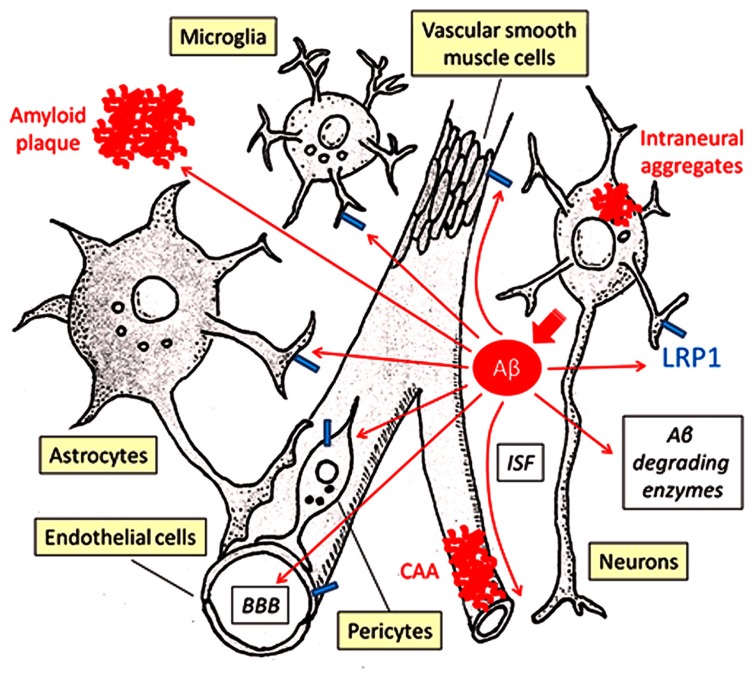
Accumulation and aggregation of amyloid-β (Aβ) peptides in the brain trigger the development of progressive neurodegeneration and dementia associated with Alzheimer's disease (AD). Perturbation in Aβ clearance, rather than Aβ production, is likely the cause of sporadic, late-onset AD, which accounts for the majority of AD cases. Since cellular uptake and subsequent degradation constitute a major Aβ clearance pathway, the receptor-mediated endocytosis of Aβ has been intensely investigated. Among Aβ receptors, the low-density lipoprotein receptor-related protein 1 (LRP1) is one of the most studied receptors. LRP1 is a large endocytic receptor for more than 40 ligands, including apolipoprotein E, α2-macroglobulin and Aβ. Emerging in vitro and in vivo evidence demonstrates that LRP1 is critically involved in brain Aβ clearance. LRP1 is highly expressed in a variety of cell types in the brain including neurons, vascular cells and glial cells, where LRP1 functions to maintain brain homeostasis and control Aβ metabolism. LRP1-mediated endocytosis regulates cellular Aβ uptake by binding to Aβ either directly or indirectly through its co-receptors or ligands. Furthermore, LRP1 regulates several signaling pathways, which also likely influences Aβ endocytic pathways. In this review, we discuss how LRP1 regulates the brain Aβ clearance and how this unique endocytic receptor participates in AD pathogenesis. Understanding of the mechanisms underlying LRP1-mediated Aβ clearance should enable the rational design of novel diagnostic and therapeutic strategies for AD.
Overview
The claims and statistics of this paper haven’t been checked yet.
Run the check — free, no account needed. It reads the open-access text and checks the sources it cites.
Integrity signals
Registry
Cites
Statistics
Figures
Verification
Claims the paper makes
The claims and statistics of this paper haven’t been checked yet.
Run the check — free, no account needed. It reads the open-access text and checks the sources it cites.
Claims other papers make about this one
Each is checked against this paper’s own text: does it say what the citing paper says it does?
The source backs part of the claim, not all of it — or backs it for a different population, condition or comparison.
In the citing paper
“Studies indicate that APOE binding is integral to some of these processes [16–20] with differences in APOE isoform-specific receptor binding affinity and lipid interactions affecting neuroinflammation, tau pathology, and amyloid plaque dynamics [21–24].”
From APOE Christchurch enhances a disease-associated microglial response to plaque but suppresses response to tau pathology (2025) · cites this paper as [18]
Experimental — accuracy not yet measuredThe source backs part of the claim, not all of it — or backs it for a different population, condition or comparison.
In the citing paper
“Collectively, these recent findings underscore the influence of APOE and APOE3Ch on both Aβ and tau pathology, either directly or through downstream effects such as neuroinflammation.”
From APOE Christchurch enhances a disease-associated microglial response to plaque but suppresses response to tau pathology (2025) · cites this paper as [18]
Experimental — accuracy not yet measuredThe source backs part of the claim, not all of it — or backs it for a different population, condition or comparison.
In the citing paper
“LRP1 has the ability to endocytose an array of ligands, including apoE and Aβ, in a highly efficient manner, by coupling to other transmembrane proteins (5,10).”
From APOE4-mediated amyloid-β pathology depends on its neuronal receptor LRP1 (2019) · cites this paper as [10]
Experimental — accuracy not yet measuredThe source backs part of the claim, not all of it — or backs it for a different population, condition or comparison.
In the citing paper
“LRP1 mediates and regulates the endocytosis of > 30 ligands, including apolipoprotein E (APOE) and amyloid-β (Aβ) [21–27]”
From LRP1 is a neuronal receptor for α-synuclein uptake and spread (2022) · cites this paper as [21]
Experimental — accuracy not yet measuredThe source backs part of the claim, not all of it — or backs it for a different population, condition or comparison.
In the citing paper
“LRP1 mediates and regulates the endocytosis of > 30 ligands, including apolipoprotein E (APOE) and amyloid-β (Aβ) [21–27]”
From LRP1 is a neuronal receptor for α-synuclein uptake and spread (2022) · cites this paper as [26]
Experimental — accuracy not yet measured
The cited source says what the claim attributes to it.
In the citing paper
“Receptors such as LRP1 can regulate APP endocytosis and amyloidogenic processing while also mediating cellular uptake and clearance of extracellular Aβ (Kanekiyo and Bu, 2014; Kanekiyo et al., 2013; Van Gool et al., 2019).”
From Isogenic human stem cell models reveal mutation-dependent protective mechanisms of APOE3 Christchurch (2026) · cites this paper as Kanekiyo and Bu, 2014
The cited source says what the claim attributes to it.
In the citing paper
“A major apoE receptor in the brain is LDL receptor-related protein 1 (LRP1), which is abundantly expressed in a variety of brain cell types in particular neurons.”
From APOE4-mediated amyloid-β pathology depends on its neuronal receptor LRP1 (2019) · cites this paper as [10]
The cited source says what the claim attributes to it.
In the citing paper
“because LRP1 plays a critical role in maintaining brain homeostasis (5,10).”
From APOE4-mediated amyloid-β pathology depends on its neuronal receptor LRP1 (2019) · cites this paper as [10]
The cited source says what the claim attributes to it.
In the citing paper
“neurons, astrocytes and microglia use LRP1 to uptake Aβ (28)”
From LRPAP1 is released from activated microglia and inhibits microglial phagocytosis and amyloid beta aggregation (2023) · cites this paper as [28]
In the citing paper
“LRP1 and related receptors of the LDL receptor family are known to mediate endocytosis or phagocytosis of a wide range of extracellular targets, including Aβ, TAU, ApoE and apoptotic cells, via ligand binding to these receptors (6, 28, 52).”
From LRPAP1 is released from activated microglia and inhibits microglial phagocytosis and amyloid beta aggregation (2023) · cites this paper as [28]
Self-check
Percentages, sums and reported differences re-computed from the paper’s own numbers.
The self-check needs the paper’s full text.
Citations
Cites
1 retracted
RETRACTED ARTICLE: Pericyte loss influences Alzheimer-like neurodegeneration in mice
Sagare, A. P., Bell, R. D., Zhao, Z., Ma, Q., Winkler, E. A., Ramanathan, A., & Zlokovic, B. V. (2013) · Nature Communications · doi:10.1038/ncomms3932 · Cited by 589
RetractedThe Amyloid Hypothesis of Alzheimer’s Disease: Progress and Problems on the Road to Therapeutics
Hardy, J., & Selkoe, D. J. (2002) · Science · doi:10.1126/science.1072994 · Cited by 13,864
Corder, E. H., Saunders, A. M., Strittmatter, W. J., Schmechel, D. E., Gaskell, P. C., Small, G. W., Roses, A. D., Haines, J. L., & Pericak-Vance, M. A. (1993) · Science · doi:10.1126/science.8346443 · Cited by 9,429
Apolipoprotein E and Alzheimer disease: risk, mechanisms and therapy
Liu, C.-C., Kanekiyo, T., Xu, H., & Bu, G. (2013) · Nature Reviews Neurology · doi:10.1038/nrneurol.2012.263 · Cited by 3,459
Self-citation2013 Alzheimer's disease facts and figures
Thies, W. H., & Bleiler, L. (2013) · Alzheimer s & Dementia · doi:10.1016/j.jalz.2013.02.003 · Cited by 3,372
Harold, D., Abraham, R., Hollingworth, P., Sims, R., Gerrish, A., Hamshere, M. L., Pahwa, J. S., Moskvina, V., Dowzell, K., Williams, A., et al. (2009) · Nature Genetics · doi:10.1038/ng.440 · Cited by 3,326
Blennow, K., de Leon, M. J., & Zetterberg, H. (2006) · The Lancet · doi:10.1016/s0140-6736(06)69113-7 · Cited by 3,134
TREM2 Variants in Alzheimer's Disease
Guerreiro, R., Wojtas, A., Bras, J., Carrasquillo, M., Rogaeva, E., Majounie, E., Cruchaga, C., Sassi, C., Kauwe, J. S. K., Younkin, S., et al. (2013) · New England Journal of Medicine · doi:10.1056/nejmoa1211851 · Cited by 3,020
Neurovascular pathways to neurodegeneration in Alzheimer’s disease and other disorders
Zlokovic, B. V. (2011) · Nature Reviews Neuroscience · doi:10.1038/nrn3114 · Cited by 2,969
Genome-wide association study identifies variants at CLU and CR1 associated with Alzheimer's disease
the European Alzheimer's Disease Initiative Investigators, Lambert, J.-C., Heath, S., Even, G., Campion, D., Sleegers, K., Hiltunen, M., Combarros, O., Zelenika, D., Bullido, M. J., et al. (2009) · Nature Genetics · doi:10.1038/ng.439 · Cited by 2,234
Decreased Clearance of CNS β-Amyloid in Alzheimer’s Disease
Mawuenyega, K. G., Sigurdson, W., Ovod, V., Munsell, L., Kasten, T., Morris, J. C., Yarasheski, K. E., & Bateman, R. J. (2010) · Science · doi:10.1126/science.1197623 · Cited by 2,078
Initiative, T. A. D. N., Hollingworth, P., CHARGE consortium, EADI1 consortium, Harold, D., Sims, R., Gerrish, A., Lambert, J.-C., Carrasquillo, M. M., Abraham, R., et al. (2011) · Nature Genetics · doi:10.1038/ng.803 · Cited by 1,997
Naj, A. C., Jun, G., Beecham, G. W., Wang, L.-S., Vardarajan, B. N., Buros, J., Gallins, P. J., Buxbaum, J. D., Jarvik, G. P., Crane, P. K., et al. (2011) · Nature Genetics · doi:10.1038/ng.801 · Cited by 1,901
Heparan Sulfate ProteoglycansPreprint
Sarrazin, S., Lamanna, W. C., & Esko, J. D. (2011) · Cold Spring Harbor Perspectives in Biology · doi:10.1101/cshperspect.a004952 · Cited by 1,605
Cellular prion protein mediates impairment of synaptic plasticity by amyloid-β oligomers
Laurén, J., Gimbel, D. A., Nygaard, H. B., Gilbert, J. W., & Strittmatter, S. M. (2009) · Nature · doi:10.1038/nature07761 · Cited by 1,560
Pathways of clathrin-independent endocytosis
Mayor, S., & Pagano, R. E. (2007) · Nature Reviews Molecular Cell Biology · doi:10.1038/nrm2216 · Cited by 1,556
Gardai, S. J., McPhillips, K. A., Frasch, S. C., Janssen, W. J., Starefeldt, A., Murphy-Ullrich, J. E., Bratton, D. L., Oldenborg, P.-A., Michalak, M., & Henson, P. M. (2005) · Cell · doi:10.1016/j.cell.2005.08.032 · Cited by 1,473
Shibata, M., Yamada, S., Kumar, S. R., Calero, M., Bading, J., Frangione, B., Holtzman, D. M., Miller, C. A., Strickland, D. K., Ghiso, J., et al. (2000) · Journal of Clinical Investigation · doi:10.1172/jci10498 · Cited by 1,413
Strittmatter, W. J., Weisgraber, K. H., Huang, D. Y., Dong, L. M., Salvesen, G. S., Pericak-Vance, M., Schmechel, D., Saunders, A. M., Goldgaber, D., & Roses, A. D. (1993) · Proceedings of the National Academy of Sciences · doi:10.1073/pnas.90.17.8098 · Cited by 1,363
Apolipoprotein E controls cerebrovascular integrity via cyclophilin A
Bell, R. D., Winkler, E. A., Singh, I., Sagare, A. P., Deane, R., Wu, Z., Holtzman, D. M., Betsholtz, C., Armulik, A., Sallstrom, J., et al. (2012) · Nature · doi:10.1038/nature11087 · Cited by 1,293 · cited 1×
“Furthermore, apoE4 activates the cyclophilin A-MMP9 pathway through LRP1 in pericytes, leading to damages of BBB integrity (Bell et al., 2012).”
BackgroundKrieger, M., & Krieger, J. (1994) · Annual Review of Biochemistry · doi:10.1146/annurev.biochem.63.1.601 · Cited by 1,169
Apolipoprotein E and its receptors in Alzheimer's disease: pathways, pathogenesis and therapy
Bu, G. (2009) · Nature Reviews Neuroscience · doi:10.1038/nrn2620 · Cited by 1,168
Self-citationThe neuronal sortilin-related receptor SORL1 is genetically associated with Alzheimer disease
Rogaeva, E., Meng, Y., Lee, J. H., Gu, Y., Kawarai, T., Zou, F., Katayama, T., Baldwin, C. T., Cheng, R., Hasegawa, H., et al. (2007) · Nature Genetics · doi:10.1038/ng1943 · Cited by 1,167
Namba, Y., Tomonaga, M., Kawasaki, H., Otomo, E., & Ikeda, K. (1991) · Brain Research · doi:10.1016/0006-8993(91)91092-f · Cited by 1,157
ApoE-Directed Therapeutics Rapidly Clear β-Amyloid and Reverse Deficits in AD Mouse Models
Cramer, P. E., Cirrito, J. R., Wesson, D. W., Lee, C. Y. D., Karlo, J. C., Zinn, A. E., Casali, B. T., Restivo, J. L., Goebel, W. D., James, M. J., et al. (2012) · Science · doi:10.1126/science.1217697 · Cited by 1,050
Neurotoxicity of Amyloid -Protein: Synaptic and Network Dysfunction
Mucke, L., & Selkoe, D. J. (2012) · Cold Spring Harbor Perspectives in Medicine · doi:10.1101/cshperspect.a006338 · Cited by 1,000
Herz, J., Hamann, U., Rogne, S., Myklebost, O., Gausepohlꝉ, H., & Stanley, K. K. (1988) · The EMBO Journal · doi:10.1002/j.1460-2075.1988.tb03306.x · Cited by 955
Adult mouse astrocytes degrade amyloid-β in vitro and in situ
Wyss-Coray, T., Loike, J. D., Brionne, T. C., Lu, E., Anankov, R., Yan, F., Silverstein, S. C., & Husemann, J. (2003) · Nature Medicine · doi:10.1038/nm838 · Cited by 909
LRP: a multifunctional scavenger and signaling receptor
Herz, J., & Strickland, D. K. (2001) · Journal of Clinical Investigation · doi:10.1172/jci13992 · Cited by 908
LRP: a multifunctional scavenger and signaling receptor
Herz, J., & Strickland, D. K. (2001) · Journal of Clinical Investigation · doi:10.1172/jci200113992 · Cited by 908
Alzheimer Disease as a Vascular Disorder
de la Torre, J. C. (2002) · Stroke · doi:10.1161/01.str.0000014421.15948.67 · Cited by 852
LRP/Amyloid β-Peptide Interaction Mediates Differential Brain Efflux of Aβ Isoforms
Deane, R., Wu, Z., Sagare, A., Davis, J., Du Yan, S., Hamm, K., Xu, F., Parisi, M., LaRue, B., Hu, H. W., et al. (2004) · Neuron · doi:10.1016/j.neuron.2004.07.017 · Cited by 828
The Alzheimer’s disease mitochondrial cascade hypothesis: progress and perspectives
Swerdlow, R. H., Burns, J. M., & Khan, S. M. (2014) · Biochimica et Biophysica Acta (BBA) - Molecular Basis of Disease · doi:10.1016/j.bbadis.2013.09.010 · Cited by 786 · cited 1×
“…LRP1 levels in endothelial cells in a dose-dependent manner (Deane et al., 2004), hypoxia or reactive oxygen species, conditions often detected in AD (Fanelli et al., 2013; Swerdlow et al., 2013), reduced LRP1 expression in vascular smooth muscle cells (Bell et al., 2009; Kanekiyo et al., 2012).”
BackgroundApolipoprotein E and Apolipoprotein E Receptors: Normal Biology and Roles in Alzheimer Disease
Holtzman, D. M., Herz, J., & Bu, G. (2012) · Cold Spring Harbor Perspectives in Medicine · doi:10.1101/cshperspect.a006312 · Cited by 782
Self-citationapoE isoform–specific disruption of amyloid β peptide clearance from mouse brain
Deane, R., Sagare, A., Hamm, K., Parisi, M., Lane, S., Finn, M. B., Holtzman, D. M., & Zlokovic, B. V. (2008) · Journal of Clinical Investigation · doi:10.1172/jci36663 · Cited by 771
Lillis, A. P., Van Duyn, L. B., Murphy-Ullrich, J. E., & Strickland, D. K. (2008) · Physiological Reviews · doi:10.1152/physrev.00033.2007 · Cited by 669
Andersen, O. M., Reiche, J., Schmidt, V., Gotthardt, M., Spoelgen, R., Behlke, J., von Arnim, C. A. F., Breiderhoff, T., Jansen, P., Wu, X., et al. (2005) · Proceedings of the National Academy of Sciences · doi:10.1073/pnas.0503689102 · Cited by 655
ApoE and Aβ in Alzheimer’s Disease: Accidental Encounters or Partners?
Kanekiyo, T., Xu, H., & Bu, G. (2014) · Neuron · doi:10.1016/j.neuron.2014.01.045 · Cited by 608
Self-citationKowal, R. C., Herz, J., Goldstein, J. L., Esser, V., & Brown, M. S. (1989) · Proceedings of the National Academy of Sciences · doi:10.1073/pnas.86.15.5810 · Cited by 595
LRP: Role in Vascular Wall Integrity and Protection from Atherosclerosis
Boucher, P., Gotthardt, M., Li, W., Anderson, R. G. W., & Herz, J. (2003) · Science · doi:10.1126/science.1082095 · Cited by 581
Apolipoprotein E promotes astrocyte colocalization and degradation of deposited amyloid-β peptides
Koistinaho, M., Lin, S., Wu, X., Esterman, M., Koger, D., Hanson, J., Higgs, R., Liu, F., Malkani, S., Bales, K. R., et al. (2004) · Nature Medicine · doi:10.1038/nm1058 · Cited by 571
Wileman, T. E., Harding, C., & Stahl, P. D. (1985) · Biochemical Journal · doi:10.1042/bj2320001 · Cited by 566
Strickland, D. K., Ashcom, J. D., Williams, S., Burgess, W. H., Migliorini, M., & Argraves, W. S. (1990) · Journal of Biological Chemistry · doi:10.1016/s0021-9258(18)38172-9 · Cited by 558
Verghese, P. B., Castellano, J. M., Garai, K., Wang, Y., Jiang, H., Shah, A., Bu, G., Frieden, C., & Holtzman, D. M. (2013) · Proceedings of the National Academy of Sciences · doi:10.1073/pnas.1220484110 · Cited by 556
Self-citationRAGE, LRP-1, and amyloid-beta protein in Alzheimer’s disease
Donahue, J. E., Flaherty, S. L., Johanson, C. E., Duncan, J. A., Silverberg, G. D., Miller, M. C., Tavares, R., Yang, W., Wu, Q., Sabo, E., et al. (2006) · Acta Neuropathologica · doi:10.1007/s00401-006-0115-3 · Cited by 519
A Cell Surface Receptor Complex for Fibrillar β-Amyloid Mediates Microglial Activation
Bamberger, M. E., Harris, M. E., McDonald, D. R., Husemann, J., & Landreth, G. E. (2003) · The Journal of Neuroscience · doi:10.1523/jneurosci.23-07-02665.2003 · Cited by 501
Astrocytes in Alzheimer's Disease
Verkhratsky, A., Olabarria, M., Noristani, H. N., Yeh, C., & Rodriguez, J. J. (2010) · Neurotherapeutics · doi:10.1016/j.nurt.2010.05.017 · Cited by 470
Lipoprotein receptors in the nervous system
Herz, J., & Bock, H. H. (2002) · Annual Review of Biochemistry · doi:10.1146/annurev.biochem.71.110601.135342 · Cited by 457
Heparan sulfate proteoglycan as a cell-surface endocytosis receptor
Christianson, H. C., & Belting, M. (2014) · Matrix Biology · doi:10.1016/j.matbio.2013.10.004 · Cited by 429
Amyloid seeds formed by cellular uptake, concentration, and aggregation of the amyloid-beta peptide
Hu, X., Crick, S. L., Bu, G., Frieden, C., Pappu, R. V., & Lee, J.-M. (2009) · Proceedings of the National Academy of Sciences · doi:10.1073/pnas.0911281106 · Cited by 426 · cited 1×
“…a strong ability to degrade Aβ, any disturbances of this pathway or when the accumulation of Aβ exceeds its degradation capacity could lead to Aβ aggregation in the lysosomes (Hu et al., 2009; Li et al., 2012), thus accelerating intraneuronal Aβ aggregation and deposition (Eimer and Vassar, 2013).”
BackgroundSelf-citationEimer, W. A., & Vassar, R. (2013) · Molecular Neurodegeneration · doi:10.1186/1750-1326-8-2 · Cited by 425 · cited 1×
“…a strong ability to degrade Aβ, any disturbances of this pathway or when the accumulation of Aβ exceeds its degradation capacity could lead to Aβ aggregation in the lysosomes (Hu et al., 2009; Li et al., 2012), thus accelerating intraneuronal Aβ aggregation and deposition (Eimer and Vassar, 2013).”
BackgroundMicroglia Mediate the Clearance of Soluble Aβ through Fluid Phase Macropinocytosis
Mandrekar, S., Jiang, Q., Lee, C. Y. D., Koenigsknecht-Talboo, J., Holtzman, D. M., & Landreth, G. E. (2009) · The Journal of Neuroscience · doi:10.1523/jneurosci.5572-08.2009 · Cited by 415
Kounnas, M. Z., Moir, R. D., Rebeck, G. W., Bush, A. I., Argraves, W. S., Tanzi, R. E., Hyman, B. T., & Strickland, D. K. (1995) · Cell · doi:10.1016/0092-8674(95)90320-8 · Cited by 401
Sehgal, N., Gupta, A., Valli, R. K., Joshi, S. D., Mills, J. T., Hamel, E., Khanna, P., Jain, S. C., Thakur, S. S., & Ravindranath, V. (2012) · Proceedings of the National Academy of Sciences · doi:10.1073/pnas.1112209109 · Cited by 390
Clearance of amyloid-β by circulating lipoprotein receptors
Sagare, A., Deane, R., Bell, R. D., Johnson, B., Hamm, K., Pendu, R., Marky, A., Lenting, P. J., Wu, Z., Zarcone, T., et al. (2007) · Nature Medicine · doi:10.1038/nm1635 · Cited by 373
Proteolytic Degradation of Amyloid -Protein
Saido, T., & Leissring, M. A. (2012) · Cold Spring Harbor Perspectives in Medicine · doi:10.1101/cshperspect.a006379 · Cited by 368
Liu, Q., Zerbinatti, C. V., Zhang, J., Hoe, H.-S., Wang, B., Cole, S. L., Herz, J., Muglia, L., & Bu, G. (2007) · Neuron · doi:10.1016/j.neuron.2007.08.008 · Cited by 364
Self-citationKang, D. E., Pietrzik, C. U., Baum, L., Chevallier, N., Merriam, D. E., Kounnas, M. Z., Wagner, S. L., Troncoso, J. C., Kawas, C. H., Katzman, R., et al. (2000) · Journal of Clinical Investigation · doi:10.1172/jci11013 · Cited by 354
Mechanisms to explain the reverse perivascular transport of solutes out of the brain
Schley, D., Carare-Nnadi, R., Please, C. P., Perry, V. H., & Weller, R. O. (2006) · Journal of Theoretical Biology · doi:10.1016/j.jtbi.2005.07.005 · Cited by 293
Blood–brain-barriers in aging and in Alzheimer’s disease
Marques, F., Sousa, J. C., Sousa, N., & Palha, J. A. (2013) · Molecular Neurodegeneration · doi:10.1186/1750-1326-8-38 · Cited by 285
Neuronal Clearance of Amyloid-β by Endocytic Receptor LRP1
Kanekiyo, T., Cirrito, J. R., Liu, C.-C., Shinohara, M., Li, J., Schuler, D. R., Shinohara, M., Holtzman, D. M., & Bu, G. (2013) · The Journal of Neuroscience · doi:10.1523/jneurosci.3487-13.2013 · Cited by 280
Self-citationKim, J., Castellano, J. M., Jiang, H., Basak, J. M., Parsadanian, M., Pham, V., Mason, S. M., Paul, S. M., & Holtzman, D. M. (2009) · Neuron · doi:10.1016/j.neuron.2009.11.013 · Cited by 274 · cited 2×
“REVIEW ARTICLE published: 20 May 2014 doi: 10.3389/fnagi.2014.00093 The low-density lipoprotein receptor-related protein 1 and amyloid-β clearance in Alzheimer’s disease Takahisa Kanekiyo* and Guojun Bu”
BackgroundInfluentialUlery, P. G., Beers, J., Mikhailenko, I., Tanzi, R. E., Rebeck, G. W., Hyman, B. T., & Strickland, D. K. (2000) · Journal of Biological Chemistry · doi:10.1074/jbc.275.10.7410 · Cited by 271
The prion protein and lipid rafts (Review)
Taylor, D. R., & Hooper, N. M. (2006) · Molecular Membrane Biology · doi:10.1080/09687860500449994 · Cited by 270
Liu, Q., Trotter, J., Zhang, J., Peters, M. M., Cheng, H., Bao, J., Han, X., Weeber, E. J., & Bu, G. (2010) · The Journal of Neuroscience · doi:10.1523/jneurosci.4067-10.2010 · Cited by 268
Self-citationSRF and myocardin regulate LRP-mediated amyloid-β clearance in brain vascular cells
Bell, R. D., Deane, R., Chow, N., Long, X., Sagare, A., Singh, I., Streb, J. W., Guo, H., Rubio, A., Van Nostrand, W., et al. (2009) · Nature Cell Biology · doi:10.1038/ncb1819 · Cited by 261
Zlokovic, B. V., Deane, R., Sagare, A. P., Bell, R. D., & Winkler, E. A. (2010) · Journal of Neurochemistry · doi:10.1111/j.1471-4159.2010.07002.x · Cited by 261
The Low Density Lipoprotein Receptor-related Protein (LRP) Is a Novel β-Secretase (BACE1) Substrate
von Arnim, C. A. F., Kinoshita, A., Peltan, I. D., Tangredi, M. M., Herl, L., Lee, B. M., Spoelgen, R., Hshieh, T. T., Ranganathan, S., Battey, F. D., et al. (2005) · Journal of Biological Chemistry · doi:10.1074/jbc.m414248200 · Cited by 258
Low levels of copper disrupt brain amyloid-β homeostasis by altering its production and clearance
Singh, I., Sagare, A. P., Coma, M., Perlmutter, D., Gelein, R. M., Bell, R. D., Deane, R. J., Zhong, E., Parisi, M., Ciszewski, J. M., et al. (2013) · Proceedings of the National Academy of Sciences · doi:10.1073/pnas.1302212110 · Cited by 253
Riddell, D. R., Zhou, H., Comery, T. A., Kouranova, E., Lo, C. F., Warwick, H. K., Ring, R. H., Kirksey, Y., Aschmies, S., Xu, J., et al. (2007) · Molecular and Cellular Neuroscience · doi:10.1016/j.mcn.2007.01.011 · Cited by 244
May, P., Rohlmann, A., Bock, H. H., Zurhove, K., Marth, J. D., Schomburg, E. D., Noebels, J. L., Beffert, U., Sweatt, J. D., Weeber, E. J., et al. (2004) · Molecular and Cellular Biology · doi:10.1128/mcb.24.20.8872-8883.2004 · Cited by 236
Li, Y., Marzolo, M., van Kerkhof, P., Strous, G. J., & Bu, G. (2000) · Journal of Biological Chemistry · doi:10.1074/jbc.m000490200 · Cited by 235
Self-citationRebeck, G. W., Harr, S. D., Hyman, B. T., & Strickland, D. K. (1995) · Annals of Neurology · doi:10.1002/ana.410370212 · Cited by 232
Fluid biomarkers in Alzheimer’s disease – current concepts
Rosén, C., Hansson, O., Blennow, K., & Zetterberg, H. (2013) · Molecular Neurodegeneration · doi:10.1186/1750-1326-8-20 · Cited by 221
Jehle, A. W., Gardai, S. J., Li, S., Linsel‐Nitschke, P., Morimoto, K., Janssen, W. J., Vandivier, R. W., Wang, N., Greenberg, S., Dale, B. M., et al. (2006) · The Journal of Cell Biology · doi:10.1083/jcb.200601030 · Cited by 213
α 2 -macroglobulin associates with β-amyloid peptide and prevents fibril formation
Hughes, S. R., Khorkova, O., Goyal, S., Knäblein, J., Heroux, J. A., Riedel, N. G., & Sahasrabudhe, S. R. (1998) · Proceedings of the National Academy of Sciences · doi:10.1073/pnas.95.6.3275 · Cited by 212
Kanekiyo, T., Zhang, J., Liu, Q., Liu, C.-C., Zhang, L., & Bu, G. (2011) · The Journal of Neuroscience · doi:10.1523/jneurosci.5491-10.2011 · Cited by 212
Self-citationLRP1 in Brain Vascular Smooth Muscle Cells Mediates Local Clearance of Alzheimer's Amyloid-β
Kanekiyo, T., Liu, C.-C., Shinohara, M., Li, J., & Bu, G. (2012) · The Journal of Neuroscience · doi:10.1523/jneurosci.3987-12.2012 · Cited by 211
Self-citationKim, J., Jiang, H., Park, S., Eltorai, A. E. M., Stewart, F. R., Yoon, H., Basak, J. M., Finn, M. B., & Holtzman, D. M. (2011) · The Journal of Neuroscience · doi:10.1523/jneurosci.3773-11.2011 · Cited by 204 · cited 1×
“While decreased apoE levels reduce Aβ deposition (Kim et al., 2011; Bien-Ly et al., 2012), the pharmacological approaches to increase lipidated apoE by liver X receptor (LXR) and retinoid X receptor (RXR) agonists facilitate Aβ clearance and restore cognitive function in amyloid model mice (Riddell…”
BackgroundNarita, M., Holtzman, D. M., Schwartz, A. L., & Bu, G. (1997) · Journal of Neurochemistry · doi:10.1046/j.1471-4159.1997.69051904.x · Cited by 204
Self-citationBasak, J. M., Verghese, P. B., Yoon, H., Kim, J., & Holtzman, D. M. (2012) · Journal of Biological Chemistry · doi:10.1074/jbc.m111.288746 · Cited by 192
Amyloid efflux transporter expression at the blood-brain barrier declines in normal aging
Silverberg, G. D., Messier, A. A., Miller, M. C., Machan, J. T., Majmudar, S. S., Stopa, E. G., Donahue, J. E., & Johanson, C. E. (2010) · Journal of Neuropathology & Experimental Neurology · doi:10.1097/nen.0b013e3181f46e25 · Cited by 191
Terwel, D., Steffensen, K. R., Verghese, P. B., Kummer, M. P., Gustafsson, J.-Å., Holtzman, D. M., & Heneka, M. T. (2011) · The Journal of Neuroscience · doi:10.1523/jneurosci.6546-10.2011 · Cited by 190
Bu, G., Maksymovitch, E. A., Nerbonne, J. M., & Schwartz, A. L. (1994) · Journal of Biological Chemistry · doi:10.1016/s0021-9258(17)32340-2 · Cited by 185
Self-citationLi, J., Kanekiyo, T., Shinohara, M., Zhang, Y., LaDu, M. J., Xu, H., & Bu, G. (2012) · Journal of Biological Chemistry · doi:10.1074/jbc.m112.420224 · Cited by 179
Self-citationLee, C. Y. D., Tse, W., Smith, J. D., & Landreth, G. E. (2012) · Journal of Biological Chemistry · doi:10.1074/jbc.m111.295451 · Cited by 178 · cited 1×
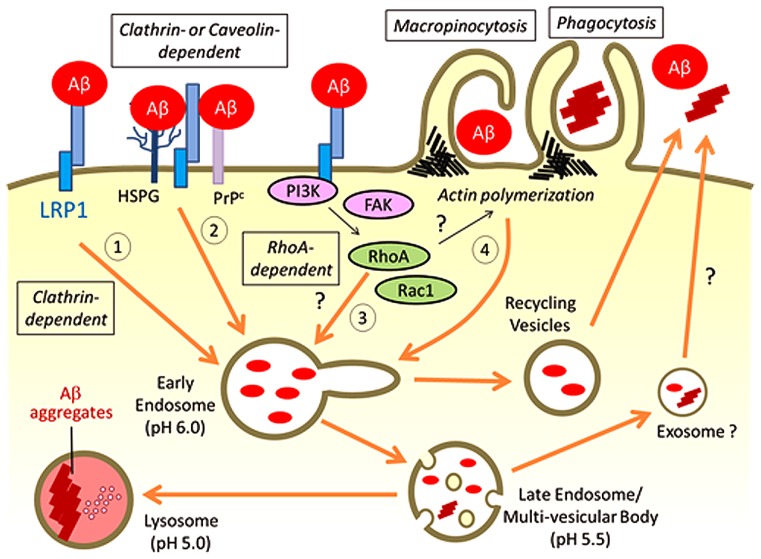
“Internalized Aβ has been shown to predominantly traffic through the endosome/lysosome pathways for degradation (Figure 2; Basak et al., 2012; Lee et al., 2012; Li et al., 2012).”
BackgroundLDL Receptor–Related Protein-1
Gonias, S. L., & Campana, W. M. (2014) · The American Journal of Pathology · doi:10.1016/j.ajpath.2013.08.029 · Cited by 175
Bien-Ly, N., Gillespie, A. K., Walker, D., Yoon, S. Y., & Huang, Y. (2012) · The Journal of Neuroscience · doi:10.1523/jneurosci.0033-12.2012 · Cited by 170
Qosa, H., Abuznait, A. H., Hill, R. A., & Kaddoumi, A. (2012) · Journal of Alzheimer s Disease · doi:10.3233/jad-2012-120319 · Cited by 167
Expression of APP pathway mRNAs and proteins in Alzheimer’s disease
Matsui, T., Ingelsson, M., Fukumoto, H., Ramasamy, K., Kowa, H., Frosch, M. P., Irizarry, M. C., & Hyman, B. T. (2007) · Brain Research · doi:10.1016/j.brainres.2007.05.050 · Cited by 162
The low density lipoprotein receptor
Schneider, W. J. (1989) · Biochimica et Biophysica Acta (BBA) - Reviews on Biomembranes · doi:10.1016/0304-4157(89)90023-3 · Cited by 161
Rushworth, J. V., Jarosz-Griffiths, H., Watt, N. T., & Hooper, N. M. (2013) · Journal of Biological Chemistry · doi:10.1074/jbc.m112.400358 · Cited by 157
Liver X receptor activation restores memory in aged AD mice without reducing amyloid
Vanmierlo, T., Rutten, K., Dederen, J., Bloks, V. W., van Vark-van der Zee, L. C., Kuipers, F., Kiliaan, A., Blokland, A., Sijbrands, E. J. G., Steinbusch, H., et al. (2011) · Neurobiology of Aging · doi:10.1016/j.neurobiolaging.2009.07.005 · Cited by 154
Neurovascular Defects and Faulty Amyloid-β Vascular Clearance in Alzheimer's Disease
Sagare, A. P., Bell, R. D., & Zloković, B. V. (2012) · Journal of Alzheimer s Disease · doi:10.3233/jad-2012-129037 · Cited by 152
γ-Secretase Limits the Inflammatory Response Through the Processing of LRP1
Zurhove, K., Nakajima, C., Herz, J., Bock, H. H., & May, P. (2008) · Science Signaling · doi:10.1126/scisignal.1164263 · Cited by 151
Sorting nexin 17 facilitates LRP recycling in the early endosome
van Kerkhof, P., Lee, J., McCormick, L., Tetrault, E., Lu, W., Schoenfish, M., Oorschot, V., Strous, G. J., Klumperman, J., & Bu, G. (2005) · The EMBO Journal · doi:10.1038/sj.emboj.7600756 · Cited by 148
Self-citationJaeger, L. B., Dohgu, S., Hwang, M. C., Farr, S. A., Murphy, M. P., Fleegal, M. A., Lynch, J. L., Robinson, S. M., Niehoff, M. L., Johnson, S. N., et al. (2009) · Journal of Alzheimer s Disease · doi:10.3233/jad-2009-1074 · Cited by 142
Neels, J. G., van den Berg, B. M. M., Lookene, A., Olivecrona, G., Pannekoek, H., & van Zonneveld, A.-J. (1999) · Journal of Biological Chemistry · doi:10.1074/jbc.274.44.31305 · Cited by 142
LRP1 mediates bidirectional transcytosis of amyloid-β across the blood-brain barrier
Pflanzner, T., Janko, M. C., André-Dohmen, B., Reuss, S., Weggen, S., Roebroek, A. J. M., Kuhlmann, C. R. W., & Pietrzik, C. U. (2011) · Neurobiology of Aging · doi:10.1016/j.neurobiolaging.2010.05.025 · Cited by 141
Wilhelmus, M. M. M., Otte-Höller, I., van Triel, J. J. J., Veerhuis, R., Maat-Schieman, M. L. C., Bu, G., de Waal, R. M. W., & Verbeek, M. M. (2007) · The American Journal of Pathology · doi:10.2353/ajpath.2007.070050 · Cited by 138
Self-citationLow-Density Lipoprotein Receptor–Related Protein-1
Strickland, D. K., Au, D. T., Cunfer, P., & Muratoglu, S. C. (2014) · Arteriosclerosis Thrombosis and Vascular Biology · doi:10.1161/atvbaha.113.301924 · Cited by 137
Taylor, D. R., & Hooper, N. M. (2007) · Biochemical Journal · doi:10.1042/bj20061736 · Cited by 133
Li, Y., Lu, W., Marzolo, M. P., & Bu, G. (2001) · Journal of Biological Chemistry · doi:10.1074/jbc.m101589200 · Cited by 131
Self-citationLigand binding to LRP1 transactivates Trk receptors by a Src family kinase-dependent pathway.
Shi, Y., Mantuano, E., Inoue, G., Campana, W. M., & Gonias, S. L. (2009) · Science Signaling · doi:10.1126/scisignal.2000188 · Cited by 130
Complement receptor 1 (CR1) and Alzheimer's disease
Crehan, H., Holton, P., Wray, S., Pocock, J., Guerreiro, R., & Hardy, J. (2012) · Immunobiology · doi:10.1016/j.imbio.2011.07.017 · Cited by 129
Zerbinatti, C. V., Wahrle, S. E., Kim, H., Cam, J. A., Bales, K., Paul, S. M., Holtzman, D. M., & Bu, G. (2006) · Journal of Biological Chemistry · doi:10.1074/jbc.m604436200 · Cited by 129
Self-citationSoluble Low Density Lipoprotein Receptor-related Protein (LRP) Circulates in Human Plasma
Quinn, K., Grimsley, P. G., Dai, Y.-P., Tapner, M. J., Chesterman, C. N., & Owensby, D. A. (1997) · Journal of Biological Chemistry · doi:10.1074/jbc.272.38.23946 · Cited by 128
Functional Role of Lipoprotein Receptors in Alzheimers Disease
Pietrzik, C. U., & Jaeger, S. (2008) · Current Alzheimer Research · doi:10.2174/156720508783884675 · Cited by 127
Farrer, L. A. (1997) · JAMA · doi:10.1001/jama.1997.03550160069041 · Cited by 124 · cited 1×
“Since the APOE 4 allele increases the risk for late-onset Alzheimer’s disease (AD) compared with the APOE 2 and 3 alleles (Corder et al., 1993; Farrer et al., 1997), LDLR family has been vigorously studied as a target to explore the complex pathogenesis of AD.”
BackgroundShinohara, M., Sato, N., Kurinami, H., Takeuchi, D., Takeda, S., Shimamura, M., Yamashita, T., Uchiyama, Y., Rakugi, H., & Morishita, R. (2010) · Journal of Biological Chemistry · doi:10.1074/jbc.m110.102277 · Cited by 122
LRP1 shedding in human brain: roles of ADAM10 and ADAM17
Liu, Q., Zhang, J., Tran, H., Verbeek, M. M., Reiss, K., Estus, S., & Bu, G. (2009) · Molecular Neurodegeneration · doi:10.1186/1750-1326-4-17 · Cited by 116
Self-citationFuentealba, R. A., Liu, Q., Zhang, J., Kanekiyo, T., Hu, X., Lee, J.-M., LaDu, M. J., & Bu, G. (2010) · PLoS ONE · doi:10.1371/journal.pone.0011884 · Cited by 116
Self-citationShinohara, M., Fujioka, S., Murray, M. E., Wojtas, A., Baker, M., Rovelet-Lecrux, A., Rademakers, R., Das, P., Parisi, J. E., Graff-Radford, N. R., et al. (2014) · Brain · doi:10.1093/brain/awu046 · Cited by 115
Self-citationβ‐Amyloid is transmitted via neuronal connections along axonal membranes
Song, H., Shim, S., Kim, D., Won, S., Joo, S., Kim, S., Jeon, N. L., & Yoon, S. (2013) · Annals of Neurology · doi:10.1002/ana.24029 · Cited by 115
Tamaki, C., Ohtsuki, S., & Terasaki, T. (2007) · Molecular Pharmacology · doi:10.1124/mol.107.036913 · Cited by 111
Obermoeller-McCormick, L. M., Li, Y., Osaka, H., FitzGerald, D. J., Schwartz, A. L., & Bu, G. (2001) · Journal of Cell Science · doi:10.1242/jcs.114.5.899 · Cited by 110
Self-citationQiu, Z., Strickland, D. K., Hyman, B. T., & Rebeck, G. W. (1999) · Journal of Neurochemistry · doi:10.1046/j.1471-4159.1999.0731393.x · Cited by 107
Spuch, C., Ortolano, S., & Navarro, C. (2012) · Frontiers in Physiology · doi:10.3389/fphys.2012.00269 · Cited by 107
Muratoglu, S. C., MIKHAILENKO, I. A., Newton, C. S., Migliorini, M. M., & Strickland, D. K. (2010) · Journal of Biological Chemistry · doi:10.1074/jbc.m109.046672 · Cited by 105
(2008) · doi:10.1074/jbc.m801487200 · Cited by 105
Self-citationGaultier, A., Arandjelovic, S., Niessen, S., Overton, C. D., Linton, M. F., Fazio, S., Campana, W. M., Cravatt, B. F., & Gonias, S. L. (2008) · Blood · doi:10.1182/blood-2007-12-127613 · Cited by 104
Apolipoprotein E Receptors Mediate the Effects of β-Amyloid on Astrocyte Cultures
LaDu, M. J., Shah, J. A., Reardon, C. A., Getz, G. S., Bu, G., Hu, J., Guo, L., & Van Eldik, L. J. (2000) · Journal of Biological Chemistry · doi:10.1074/jbc.m000602200 · Cited by 103
Self-citationTorres, M., Jiménez, S., Sanchez-Varo, R. M., Navarro, V., Trujillo‐Estrada, L., Sánchez‐Mejías, E., Carmona, I., Dávila, J. C., Vizuete, M., Gutiérrez, A., et al. (2012) · Molecular Neurodegeneration · doi:10.1186/1750-1326-7-59 · Cited by 103
Weaver, A. M., Hussaini, I. M., Mazar, A. P., Henkin, J., & Gonias, S. L. (1997) · Journal of Biological Chemistry · doi:10.1074/jbc.272.22.14372 · Cited by 98
Cam, J. A., Zerbinatti, C., Li, Y., & Bu, G. (2005) · Journal of Biological Chemistry · doi:10.1074/jbc.m500613200 · Cited by 96
Self-citationArélin, K., Kinoshita, A., Whelan, C. M., Irizarry, M. C., Rebeck, G. W., Strickland, D. K., & Hyman, B. T. (2002) · Molecular Brain Research · doi:10.1016/s0169-328x(02)00203-6 · Cited by 92
Nazer, B., Hong, S., & Selkoe, D. J. (2008) · Neurobiology of Disease · doi:10.1016/j.nbd.2007.12.005 · Cited by 90
Fanelli, F., Sepe, S., D’Amelio, M., Bernardi, C., Cristiano, L., Cimini, A., Cecconi, F., Cerù, M. P., & Moreno, S. (2013) · Molecular Neurodegeneration · doi:10.1186/1750-1326-8-8 · Cited by 79
Henderson, S. J., Andersson, C., Narwal, R., Janson, J., Goldschmidt, T. J., Appelkvist, P., Bogstedt, A., Steffen, A.-C., Haupts, U. M., Tebbe, J., et al. (2013) · Brain · doi:10.1093/brain/awt308 · Cited by 78
Mantuano, E., Jo, M., Gonias, S. L., & Campana, W. M. (2010) · Journal of Biological Chemistry · doi:10.1074/jbc.m109.085126 · Cited by 74
Low density lipoprotein receptor-related protein: regulation of the plasma membrane proteome
Wu, L., Salicioni, A. M., & Gonias, S. L. (2004) · Thrombosis and Haemostasis · doi:10.1160/th04-01-0023 · Cited by 70
Wilsie, L. C., & Orlando, R. A. (2003) · Journal of Biological Chemistry · doi:10.1074/jbc.m208786200 · Cited by 68
Gu, H., Wei, X., Monnot, A. D., Fontanilla, C. V., Behl, M., Farlow, M. R., Zheng, W., & Du, Y. (2010) · Neuroscience Letters · doi:10.1016/j.neulet.2010.12.017 · Cited by 67
Competition of Aβ amyloid peptide and apolipoprotein E for receptor-mediated endocytosis
Winkler, K., Scharnagl, H., Tisljar, U., Hoschützky, H., Friedrich, I., Hoffmann, M. M., Hüttinger, M., Wieland, H., & März, W. (1999) · Journal of Lipid Research · doi:10.1016/s0022-2275(20)32449-4 · Cited by 66
The low‐density lipoprotein receptor‐related protein‐1 associates transiently with lipid rafts
Wu, L., & Gonias, S. L. (2005) · Journal of Cellular Biochemistry · doi:10.1002/jcb.20596 · Cited by 65
Fujiyoshi, M., Tachikawa, M., Ohtsuki, S., Ito, S., Uchida, Y., Akanuma, S., Kamiie, J., Hashimoto, T., Hosoya, K., Iwatsubo, T., et al. (2011) · Journal of Neurochemistry · doi:10.1111/j.1471-4159.2011.07311.x · Cited by 63
Endocytic pathways mediating oligomeric Aβ42 neurotoxicity
Yu, C., Nwabuisi‐Heath, E., Laxton, K., & LaDu, M. J. (2010) · Molecular Neurodegeneration · doi:10.1186/1750-1326-5-19 · Cited by 63
Walker, J. R., Pacoma, R., Watson, J., Ou, W., Alves, J., Mason, D. E., Peters, E. C., Urbina, H. D., Welzel, G., Althage, A., et al. (2013) · Journal of Neuroscience · doi:10.1523/jneurosci.3407-12.2013 · Cited by 59
Jen, A., Parkyn, C. J., Mootoosamy, R. C., Ford, M. J., Warley, A., Liu, Q., Bu, G., Baskakov, I. V., Moestrup, S. K., McGuinness, L., et al. (2010) · Journal of Cell Science · doi:10.1242/jcs.058099 · Cited by 57
Self-citationShinohara, M., Petersen, R. C., Dickson, D. W., & Bu, G. (2013) · Acta Neuropathologica · doi:10.1007/s00401-013-1086-9 · Cited by 56
Self-citationDirect interaction between CD91 and C1q
Duus, K., Hansen, E. W., Tacnet‐Delorme, P., Frachet, P., Arlaud, G. J., Thielens, N. M., & Houen, G. (2010) · FEBS Journal · doi:10.1111/j.1742-4658.2010.07762.x · Cited by 50
LRP1 is critical for the surface distribution and internalization of the NR2B NMDA receptor subtype
Maier, W., Bednorz, M., Meister, S., Roebroek, A., Weggen, S., Schmitt, U., & Pietrzik, C. U. (2013) · Molecular Neurodegeneration · doi:10.1186/1750-1326-8-25 · Cited by 50
Ito, S., Ueno, T., Ohtsuki, S., & Terasaki, T. (2010) · Journal of Neurochemistry · doi:10.1111/j.1471-4159.2010.06708.x · Cited by 48
Receptor-associated Protein Interacts with Amyloid-β Peptide and Promotes Its Cellular Uptake
Kanekiyo, T., & Bu, G. (2009) · Journal of Biological Chemistry · doi:10.1074/jbc.m109.015032 · Cited by 44
Self-citationDedieu, S., & Langlois, B. (2008) · Cell Adhesion & Migration · doi:10.4161/cam.2.2.6374 · Cited by 44
Sagare, A. P., Bell, R. D., Srivastava, A., Sengillo, J. D., Singh, I., Nishida, Y., Chow, N., & Zloković, B. V. (2013) · Journal of Biological Chemistry · doi:10.1074/jbc.m112.439570 · Cited by 42
Late endocytic dysfunction as a putative cause of amyloid fibril formation in Alzheimer’s disease
Yuyama, K., & Yanagisawa, K. (2009) · Journal of Neurochemistry · doi:10.1111/j.1471-4159.2009.06046.x · Cited by 40
Alzheimer's disease genetics: lessons to improve disease modelling
Guerreiro, R. J., & Hardy, J. (2011) · Biochemical Society Transactions · doi:10.1042/bst0390910 · Cited by 33
Glypican‐1 facilitates prion conversion in lipid rafts
Hooper, N. M. (2010) · Journal of Neurochemistry · doi:10.1111/j.1471-4159.2010.06936.x · Cited by 29
Uptake of Aβ 1–40- and Aβ 1–42-coated yeast by microglial cells: a role for LRP
Laporte, V., Lombard, Y., Levy-Benezra, R., Tranchant, C., Poindron, P., & Warter, J.-M. (2004) · Journal of Leukocyte Biology · doi:10.1189/jlb.1203620 · Cited by 27
Apolipoprotein E and Alzheimer's
BOCKXMEER, F. M. V. (1995) · Nature · doi:10.1038/375285b0 · Cited by 27
Schreiber, M. A., Bird, T. D., & Tsuang, D. W. (2014) · Current Behavioral Neuroscience Reports · doi:10.1007/s40473-014-0026-x · Cited by 25
Orriols, N. J., & Egea, M. A. M. (2015) · Cited by 25
Overcoming barriers and thresholds – signaling of oligomeric Aβ through the prion protein to Fyn
Wang, H., Ren, C. H., Gunawardana, C. G., & Schmitt‐Ulms, G. (2013) · Molecular Neurodegeneration · doi:10.1186/1750-1326-8-24 · Cited by 18
[Apolipoprotein E and its receptors in Alzheimer's disease].
Ikeda, K. (1996) · PubMed · Cited by 10
Lehmann, S. (2002) · PubMed · Cited by 5
Cited by
Sorted by citations
A systemic view of Alzheimer disease — insights from amyloid-β metabolism beyond the brain
Wang, J., Gu, B. J., Masters, C. L., & Wang, Y.-J. (2017) · Nature Reviews Neurology · doi:10.1038/nrneurol.2017.111 · Cited by 808
Suppression of glymphatic fluid transport in a mouse model of Alzheimer's disease
Peng, W., Achariyar, T. M., Li, B., Liao, Y., Mestre, H., Hitomi, E., Regan, S., Kasper, T., Peng, S., Ding, F., et al. (2016) · Neurobiology of Disease · doi:10.1016/j.nbd.2016.05.015 · Cited by 580
Promoting the clearance of neurotoxic proteins in neurodegenerative disorders of ageing
Boland, B., Yu, W. H., Corti, O., Mollereau, B., Henriques, A., Bézard, E., Pastores, G., Rubinsztein, D. C., Nixon, R. A., Duchen, M. R., et al. (2018) · Nature Reviews Drug Discovery · doi:10.1038/nrd.2018.109 · Cited by 566
Amyloid-Beta: A Crucial Factor in Alzheimer's Disease
Sadigh‐Eteghad, S., Sabermarouf, B., Majdi, A., Talebi, M., Farhoudi, M., & Mahmoudi, J. (2014) · Medical Principles and Practice · doi:10.1159/000369101 · Cited by 563
Lipopolysaccharide-induced neuroinflammation as a bridge to understand neurodegeneration
Batista, C. R. A., Gomes, G. F., Candelario-Jalil, E., Fiebich, B. L., & de Oliveira, A. C. P. (2019) · International Journal of Molecular Sciences · doi:10.3390/ijms20092293 · Cited by 529
Metadata
- Authors
- Kanekiyo, T., & Bu, G.
- Affiliations
- Mayo Clinic (US)
- Corresponding author
- Kanekiyo, Takahisa
- Venue
- Frontiers in Aging Neuroscience
- Publisher
- Frontiers Media SA
- Published
- 2014-05-20
- Volume
- 6
- Pages
- 93-93
- ISSN
- 1663-4365 (ISSN-L)
- PMC
- PMC4033011
- OpenAlex
- W2003708432
- Cited by
- 281
- References
- 156
- Citations by year
- 2026: 23 · 2025: 28 · 2024: 25 · 2023: 34 · 2022: 25 · 2021: 27 · 2020: 18 · 2019: 20 · 2018: 17 · 2017: 23 · 2016: 20 · 2015: 17 · 2014: 3
- FWCI
- 2.46
- Type
- journal article
- Language
- en
- Open access
- gold
- doi.org
- Licence
- cc-by
- Locations
- Frontiers in Aging Neuroscience (publishedVersion, cc-by)
- Europe PMC (PubMed Central) (publishedVersion, cc-by)
- PubMed Central (publishedVersion, cc-by)
- PubMed (publishedVersion)
- DOAJ (DOAJ: Directory of Open Access Journals) (submittedVersion, cc-by-sa)
- Rare & Special e-Zone (The Hong Kong University of Science and Technology) (submittedVersion)
- Funders
- Alzheimer's Association
- National Institutes of Health
- National Institute on Aging (P01AG030128, R01AG027924, RF1AG046205, R01AG046205, R01AG035355)
- National Institute of Neurological Disorders and Stroke (P01NS074969)
- Topics
- Life Sciences › Neuroscience › Cellular and Molecular Neuroscience › Alzheimer's disease research and treatments
- Life Sciences › Neuroscience › Neurology › Barrier Structure and Function Studies
- Life Sciences › Neuroscience › Neurology › Neuroinflammation and Neurodegeneration Mechanisms
- Keywords
- LRP1, amyloid-beta clearance, Alzheimer's disease, receptor-mediated endocytosis, co-receptors, apolipoprotein E, alpha2-macroglobulin, amyloid-beta aggregation, neurodegeneration, glial cells, vascular cells, signaling pathways
About these checks
Registry, retraction, Cites and statistics results are computed, not judged, with one exception: a printed reference that no index lists is read once by a model before it counts as a citation error. Claims are extracted by a model and kept only when their quote appears verbatim in the text; each cited source is then checked, with a model’s help, for whether it says what the claim relies on. Those verdicts can be wrong — read the claim’s quote and the cited source before relying on one.
Statistics and arithmetic are recomputed, not judged.
Confidence bands are shown only for fields calibrated on our annotated test set. None is calibrated yet, so no band is shown.
What counts as a claim ›How we measure confidence ›How we check this ›
Are you an author, or do you see a problem with this page? Request a review
