

The DOI matches its Crossref record; 139 of the 139 references it cites were found in a registry or an index.
Serotonin-prefrontal cortical circuitry in anxiety and depression phenotypes: pivotal role of pre- and post-synaptic 5-HT1A receptor expression
Open accessAbstract
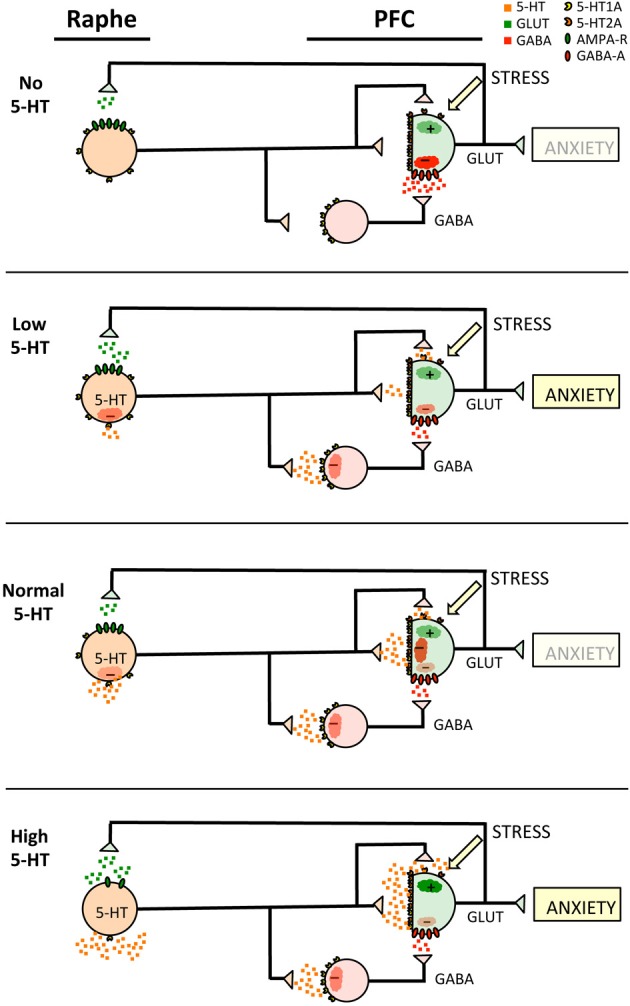
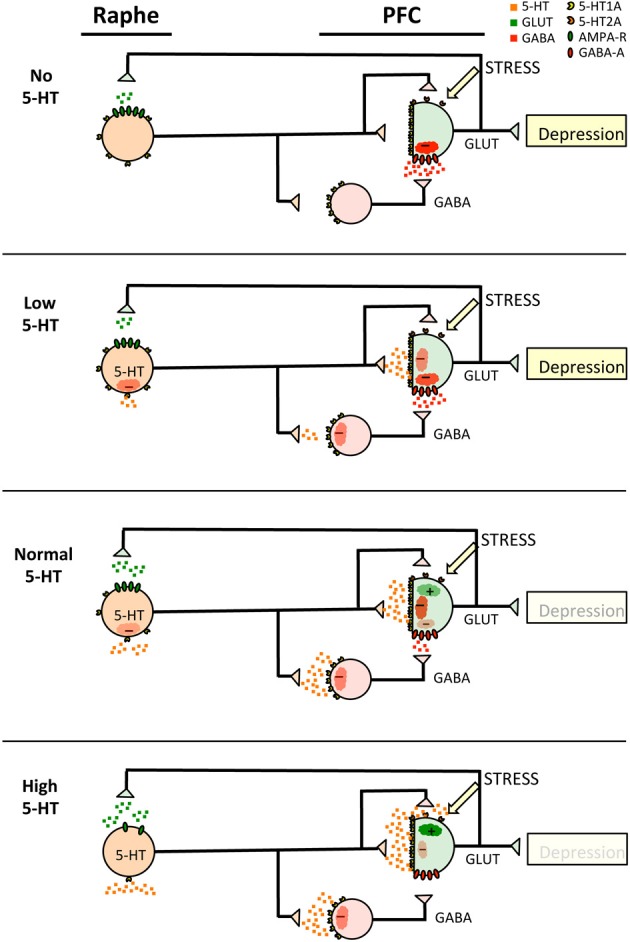
Decreased serotonergic activity has been implicated in anxiety and major depression, and antidepressants directly or indirectly increase the long-term activity of the serotonin system. A key component of serotonin circuitry is the 5-HT1A autoreceptor, which functions as the major somatodendritic autoreceptor to negatively regulate the "gain" of the serotonin system. In addition, 5-HT1A heteroreceptors are abundantly expressed post-synaptically in the prefrontal cortex (PFC), amygdala, and hippocampus to mediate serotonin actions on fear, anxiety, stress, and cognition. Importantly, in the PFC 5-HT1A heteroreceptors are expressed on at least two antagonist neuronal populations: excitatory pyramidal neurons and inhibitory interneurons. Rodent models implicate the 5-HT1A receptor in anxiety- and depression-like phenotypes with distinct roles for pre- and post-synaptic 5-HT1A receptors. In this review, we present a model of serotonin-PFC circuitry that integrates evidence from mouse genetic models of anxiety and depression involving knockout, suppression, over-expression, or mutation of genes of the serotonin system including 5-HT1A receptors. The model postulates that behavioral phenotype shifts as serotonin activity increases from none (depressed/aggressive not anxious) to low (anxious/depressed) to high (anxious, not depressed). We identify a set of conserved transcription factors including Deaf1, Freud-1/CC2D1A, Freud-2/CC2D1B and glucocorticoid receptors that may confer deleterious regional changes in 5-HT1A receptors in depression, and how future treatments could target these mechanisms. Further studies to specifically test the roles and regulation of pyramidal vs. interneuronal populations of 5-HT receptors are needed better understand the role of serotonin in anxiety and depression and to devise more effective targeted therapeutic approaches.
Overview
The claims and statistics of this paper haven’t been checked yet.
Run the check — free, no account needed. It reads the open-access text and checks the sources it cites.
Integrity signals
Registry
Cites
Statistics
Figures
Verification
Claims the paper makes
The claims and statistics of this paper haven’t been checked yet.
Run the check — free, no account needed. It reads the open-access text and checks the sources it cites.
Claims other papers make about this one
Each is checked against this paper’s own text: does it say what the citing paper says it does?
The cited source says what the claim attributes to it.
In the citing paper
“Up-regulated serotonin 1A receptors may result from a 5-HT1A gene promoter polymorphism that causes overexpression of autoreceptors as a result of less binding of inhibitory transcription factors in serotonin neurons (120, 121).”
From A brain-centric model of suicidal behavior (2020) · cites this paper as [120]
Self-check
Percentages, sums and reported differences re-computed from the paper’s own numbers.
The self-check needs the paper’s full text.
Citations
Cites
Whiteford, H. A., Degenhardt, L., Rehm, J., Baxter, A. J., Ferrari, A. J., Erskine, H. E., Charlson, F. J., Norman, R. E., Flaxman, A. D., Johns, N., et al. (2013) · The Lancet · doi:10.1016/s0140-6736(13)61611-6 · Cited by 6,006
Depression: a new animal model sensitive to antidepressant treatments
PORSOLT, R. D., LE PICHON, M., & JALFRE, M. (1977) · Nature · doi:10.1038/266730a0 · Cited by 4,451
Requirement of hippocampal neurogenesis for the behavioral effects of antidepressants
Santarelli, L., Saxe, M., Gross, C., Surget, A., Battaglia, F., Dulawa, S., Weisstaub, N., Lee, J., Duman, R., Arancio, O., et al. (2003) · Science · doi:10.1126/science.1083328 · Cited by 4,321
Trivedi, M. H., Rush, A. J., Wisniewski, S. R., Nierenberg, A. A., Warden, D., Ritz, L., Norquist, G., Howland, R. H., Lebowitz, B., McGrath, P. J., et al. (2006) · American Journal of Psychiatry · doi:10.1176/appi.ajp.163.1.28 · Cited by 3,879
A review of central 5-HT receptors and their function
Barnes, N. M., & Sharp, T. (1999) · Neuropharmacology · doi:10.1016/s0028-3908(99)00010-6 · Cited by 3,211
The molecular neurobiology of depression
Krishnan, V., & Nestler, E. J. (2008) · Nature · doi:10.1038/nature07455 · Cited by 2,889
The use of a plus-maze to measure anxiety in the mouse
Lister, R. G. (1987) · Psychopharmacology · doi:10.1007/bf00177912 · Cited by 2,617
Synthesis of Serotonin by a Second Tryptophan Hydroxylase Isoform
Walther, D. J., Peter, J., Bashammakh, S., Hörtnagl, H., Voits, M., Fink, H., & Bäder, M. (2003) · Science · doi:10.1126/science.1078197 · Cited by 1,576
Caspi, A., Hariri, A. R., Holmes, A., Uher, R., & Moffitt, T. E. (2010) · American Journal of Psychiatry · doi:10.1176/appi.ajp.2010.09101452 · Cited by 1,346
Targeting abnormal neural circuits in mood and anxiety disorders: from the laboratory to the clinic
Ressler, K. J., & Mayberg, H. S. (2007) · Nature Neuroscience · doi:10.1038/nn1944 · Cited by 1,007
Research works printed but not linked: 1
- Newman-Tancredi, 2012, Gene polymorphism at serotonin 5-HT1A receptors: moving towards personalized medicine for psychosis and mood deficits, 337
Cited by
Sorted by citations
Anatomically defined and functionally distinct dorsal raphe serotonin sub-systems
Ren, J., Friedmann, D., Xiong, J., Liu, C. D., Ferguson, B. R., Weerakkody, T., DeLoach, K. E., Ran, C., Pun, A., Sun, Y., et al. (2018) · Cell · doi:10.1016/j.cell.2018.07.043 · Cited by 498
Neuroplasticity Underlying the Comorbidity of Pain and Depression
Doan, L., Manders, T. R., & Wang, J. (2015) · Neural Plasticity · doi:10.1155/2015/504691 · Cited by 304
Barnes, N. M., Ahern, G. P., Bécamel, C., Bockaert, J., Camilleri, M., Chaumont‐Dubel, S., Claeysen, S., Cunningham, K. A., Fone, K. C. F., Gershon, M. D., et al. (2020) · Pharmacological Reviews · doi:10.1124/pr.118.015552 · Cited by 274
Liu, Y., Zhao, J., & Guo, W. (2018) · Frontiers in Psychology · doi:10.3389/fpsyg.2018.02201 · Cited by 268
A brain-centric model of suicidal behavior
Mann, J. J., & Rizk, M. M. (2020) · American Journal of Psychiatry · doi:10.1176/appi.ajp.2020.20081224 · Cited by 214
Ko, J. (2017) · Frontiers in Neural Circuits · doi:10.3389/fncir.2017.00041 · Cited by 229
The 5-HT1A receptor: Signaling to behavior
Albert, P. R., & Vahid-Ansari, F. (2018) · Biochimie · doi:10.1016/j.biochi.2018.10.015 · Cited by 221
Self-citationStress Modulation of Opposing Circuits in the Bed Nucleus of the Stria Terminalis
Daniel, S., & Rainnie, D. G. (2015) · Neuropsychopharmacology · doi:10.1038/npp.2015.178 · Cited by 224
Li, J., Cai, T., Jiang, Y. W., Chen, H., He, X., Chen, C., Li, X., Shao, Q., Xia, R., Li, Z., et al. (2015) · Molecular Psychiatry · doi:10.1038/mp.2015.40 · Cited by 212
Optogenetic dissection of medial prefrontal cortex circuitry
Riga, D., Matos, M. R., Glas, A., Smit, A. B., Spijker, S., & Van den Oever, M. C. (2014) · Frontiers in Systems Neuroscience · doi:10.3389/fnsys.2014.00230 · Cited by 208
Nimgampalle, M., Chakravarthy, H., Sharma, S., Shree, S., Bhat, A. R., Pradeepkiran, J. A., & Devanathan, V. (2023) · Ageing Research Reviews · doi:10.1016/j.arr.2023.101994 · Cited by 207
Stress in fathers in the perinatal period: A systematic review
Philpott, L. F., Leahy-Warren, P., FitzGerald, S., & Savage, E. (2017) · Midwifery · doi:10.1016/j.midw.2017.09.016 · Cited by 206
Du, X., & Pang, T. Y. (2015) · Frontiers in Psychiatry · doi:10.3389/fpsyt.2015.00032 · Cited by 221
Major Depression: One Brain, One Disease, One Set of Intertwined Processes
Filatova, E. V., Shadrina, M. I., & Slominsky, P. A. (2021) · Cells · doi:10.3390/cells10061283 · Cited by 186
Li, Y.-F. (2020) · Pharmacology & Therapeutics · doi:10.1016/j.pharmthera.2020.107494 · Cited by 158
Regulation of neuronal communication by G protein‐coupled receptors
Huang, Y., & Thathiah, A. (2015) · FEBS Letters · doi:10.1016/j.febslet.2015.05.007 · Cited by 139
Linalool Odor-Induced Anxiolytic Effects in Mice
Harada, H., Kashiwadani, H., Kanmura, Y., & Kuwaki, T. (2018) · Frontiers in Behavioral Neuroscience · doi:10.3389/fnbeh.2018.00241 · Cited by 134
Anxiety in fathers in the perinatal period: A systematic review
Philpott, L. F., Savage, E., FitzGerald, S., & Leahy-Warren, P. (2019) · Midwifery · doi:10.1016/j.midw.2019.05.013 · Cited by 112
de Almeida, R. M. M., Cabral, J. C. C., & Narvaes, R. F. (2015) · Physiology & Behavior · doi:10.1016/j.physbeh.2015.02.053 · Cited by 116
Tian, P., Zou, R., Song, L., Zhang, X., Jiang, B., Wang, G., Lee, Y. K., Zhao, J., Zhang, H., & Chen, W. (2019) · Food & Function · doi:10.1039/c9fo01630a · Cited by 107
Serotonin and motherhood: From molecules to mood
Pawluski, J. L., Li, M., & Lonstein, J. S. (2019) · Frontiers in Neuroendocrinology · doi:10.1016/j.yfrne.2019.03.001 · Cited by 107
Altered serotonergic circuitry in SSRI-resistant major depressive disorder patient-derived neurons
Vadodaria, K. C., Ji, Y., Skime, M. K., Paquola, A. C. M., Nelson, T. J., Hall‐Flavin, D. K., Heard, K. J., Fredlender, C., Deng, Y., Elkins, J., et al. (2019) · Molecular Psychiatry · doi:10.1038/s41380-019-0377-5 · Cited by 98
Lu, Q., Mouri, A., Yang, Y., Kunisawa, K., Teshigawara, T., Hirakawa, M., Mori, Y., Yamamoto, Y., Libo, Z., Nabeshima, T., et al. (2019) · Behavioural Brain Research · doi:10.1016/j.bbr.2019.112053 · Cited by 98
Artigas, F., Bortolozzi, A. A., & Celada, P. (2017) · European Neuropsychopharmacology · doi:10.1016/j.euroneuro.2017.10.032 · Cited by 96
Functional Selectivity and Antidepressant Activity of Serotonin 1A Receptor Ligands
Chilmończyk, Z., Bojarski, A. J., Pilc, A., & Sylte, I. (2015) · International Journal of Molecular Sciences · doi:10.3390/ijms160818474 · Cited by 89
Otsuka, T., Nishii, A., Amemiya, S., Kubota, N., Nishijima, T., & Kita, I. (2016) · Behavioural Brain Research · doi:10.1016/j.bbr.2015.10.055 · Cited by 86
Newman‐Tancredi, A., Depoortère, R., Kleven, M. S., Kołaczkowski, M., & Zimmer, L. (2021) · Pharmacology & Therapeutics · doi:10.1016/j.pharmthera.2021.107937 · Cited by 83
Old Friends, immunoregulation, and stress resilience
Langgartner, D., Lowry, C. A., & Reber, S. O. (2018) · Pflügers Archiv - European Journal of Physiology · doi:10.1007/s00424-018-2228-7 · Cited by 76
Vahid-Ansari, F., Daigle, M., Manzini, M. C., Tanaka, K. F., Hen, R., Geddes, S. D., Béïque, J.-C., James, J., Merali, Z., & Albert, P. R. (2017) · Journal of Neuroscience · doi:10.1523/jneurosci.1668-17.2017 · Cited by 73
Self-citationAlbert, P. R., François, B. L., & Vahid-Ansari, F. (2019) · Journal of Psychiatry and Neuroscience · doi:10.1503/jpn.180209 · Cited by 73
Self-citationRewiring of the Serotonin System in Major Depression
Vahid-Ansari, F., & Albert, P. R. (2021) · Frontiers in Psychiatry · doi:10.3389/fpsyt.2021.802581 · Cited by 76
Self-citationDeletion of TDO2, IDO-1 and IDO-2 differentially affects mouse behavior and cognitive function
Too, L. K., Li, K. M., Suarna, C., Maghzal, G. J., Stocker, R., McGregor, I. S., & Hunt, N. H. (2016) · Behavioural Brain Research · doi:10.1016/j.bbr.2016.06.018 · Cited by 68
L-Dopa and Brain Serotonin System Dysfunction
Stansley, B. J., & Yamamoto, B. K. (2015) · Toxics · doi:10.3390/toxics3010075 · Cited by 73
Roberts, C., Sahakian, B. J., & Robbins, T. W. (2020) · Neuroscience & Biobehavioral Reviews · doi:10.1016/j.neubiorev.2020.09.001 · Cited by 63
A heritable profile of six miRNAs in autistic patients and mouse models
Özkul, Y., Taheri, S., Bayramov, K. K., Şener, E. F., Mehmetbeyoğlu, E., Öztop, D. B., Aybuga, F., Tufan, E., Bayramov, R., Dolu, N., et al. (2020) · Scientific Reports · doi:10.1038/s41598-020-65847-8 · Cited by 60
Molecular Adaptations to Social Defeat Stress and Induced Depression in Mice
Bondar, N. P., Bryzgalov, L. O., Ershov, N., Gusev, F. E., Reshetnikov, V. V., Avgustinovich, D. F., Tenditnik, M. V., Rogaev, E. I., & Merkulova, T. I. (2017) · Molecular Neurobiology · doi:10.1007/s12035-017-0586-3 · Cited by 59
Differential serotonergic innervation of the amygdala in bonobos and chimpanzees
Stimpson, C. D., Barger, N., Taglialatela, J. P., Gendron‐Fitzpatrick, A., Hof, P. R., Hopkins, W. D., & Sherwood, C. C. (2015) · Social Cognitive and Affective Neuroscience · doi:10.1093/scan/nsv128 · Cited by 60
Mulkey, M., Hardin, S. R., Olson, D. M., & Munro, C. L. (2018) · Clinical Nurse Specialist · doi:10.1097/nur.0000000000000384 · Cited by 59
Selvaraj, S., Walker, C. P. R., Arnone, D., Cao, B., Faulkner, P., Cowen, P. J., Roiser, J. P., & Howes, O. D. (2017) · Neuropsychopharmacology · doi:10.1038/npp.2017.166 · Cited by 57
Nathan, F. M., Ogawa, S., & Parhar, I. S. (2015) · Journal of Neurochemistry · doi:10.1111/jnc.13105 · Cited by 59
Garcia‐García, Á. L., Meng, Q., Canetta, S., Gardier, A. M., Guiard, B. P., Kellendonk, C., Dranovsky, A., & Leonardo, E. D. (2017) · Cell Reports · doi:10.1016/j.celrep.2017.01.021 · Cited by 63
Vahid-Ansari, F., Zhang, M., Zahrai, A., & Albert, P. R. (2019) · Frontiers in Neuroscience · doi:10.3389/fnins.2019.00404 · Cited by 59
Self-citationDeath and consciousness––an overview of the mental and cognitive experience of death
Parnia, S. (2014) · Annals of the New York Academy of Sciences · doi:10.1111/nyas.12582 · Cited by 56
Pytka, K., Partyka, A., Jastrzębska‐Więsek, M., Siwek, A., Głuch‐Lutwin, M., Mordyl, B., Kazek, G., Rapacz, A., Olczyk, A., Gałuszka, A., et al. (2015) · PLoS ONE · doi:10.1371/journal.pone.0142499 · Cited by 53
Yamashita, M. (2020) · International Journal of Tryptophan Research · doi:10.1177/1178646920936279 · Cited by 54
Implantable Flexible Multielectrode Arrays for Multi-Site Sensing of Serotonin Tonic Levels
Castagnola, E., Robbins, E. M., Krahe, D. D., Wu, B., Pwint, M. Y., Cao, Q., & Cui, X. T. (2023) · Biosensors and Bioelectronics · doi:10.1016/j.bios.2023.115242 · Cited by 54
Zahrai, A., Vahid-Ansari, F., Daigle, M., & Albert, P. R. (2020) · Translational Psychiatry · doi:10.1038/s41398-020-01008-9 · Cited by 54
Self-citationBian, Z., Zhang, W., Tang, J., Fei, Q., Hu, M.-M., Chen, X., Su, L., Fei, C., Ji, D., Mao, C., et al. (2021) · Frontiers in Pharmacology · doi:10.3389/fphar.2021.752211 · Cited by 48
FGFR1–5-HT1A Heteroreceptor Complexes: Implications for Understanding and Treating Major Depression
Borroto‐Escuela, D. O., Tarakanov, A. O., & Fuxé, K. (2015) · Trends in Neurosciences · doi:10.1016/j.tins.2015.11.003 · Cited by 50
Huang, Y., Choong, L. C., Panyod, S., Lin, Y., Huang, H., Lu, K., Wu, W., & Sheen, L. (2021) · Phytotherapy Research · doi:10.1002/ptr.7091 · Cited by 46
Retinoic acid and depressive disorders: Evidence and possible neurobiological mechanisms
Hu, P., van Dam, A., Wang, Y., Lucassen, P. J., & Zhou, J.-N. (2020) · Neuroscience & Biobehavioral Reviews · doi:10.1016/j.neubiorev.2020.02.013 · Cited by 48
Kumar, U., Medel‐Matus, J., Redwine, H. M., Shin, D. H., Hensler, J. G., Sankar, R., & Mazarati, A. M. (2016) · Epilepsia · doi:10.1111/epi.13321 · Cited by 45
Chronic l-Dopa Decreases Serotonin Neurons in a Subregion of the Dorsal Raphe Nucleus
Stansley, B. J., & Yamamoto, B. K. (2014) · Journal of Pharmacology and Experimental Therapeutics · doi:10.1124/jpet.114.218966 · Cited by 44
Nonhuman Primate Models of Depression: Effects of Early Experience and Stress
Worlein, J. M. (2014) · ILAR Journal · doi:10.1093/ilar/ilu030 · Cited by 45
IL-4 Knock Out Mice Display Anxiety-Like Behavior
Moon, M. L., Joesting, J. J., Blevins, N. A., Lawson, M. A., Gainey, S. J., Towers, A. E., McNeil, L. K., & Freund, G. G. (2015) · Behavior Genetics · doi:10.1007/s10519-015-9714-x · Cited by 42
Sałaciak, K., & Pytka, K. (2021) · Pharmacology & Therapeutics · doi:10.1016/j.pharmthera.2021.107872 · Cited by 42
Todorović, N., & Filipović, D. (2017) · Pharmacology Biochemistry and Behavior · doi:10.1016/j.pbb.2017.10.006 · Cited by 41
Meloni, M., Puligheddu, M., Carta, M., Cannas, A., Figorilli, M., & Defazio, G. (2020) · European Journal of Neurology · doi:10.1111/ene.14179 · Cited by 40
Newman‐Tancredi, A., Martel, J., Cosi, C., Heusler, P., Lestienne, F., Varney, M. A., & Cussac, D. (2017) · Journal of Pharmacy and Pharmacology · doi:10.1111/jphp.12762 · Cited by 39
Moradikor, N., Dadkhah, M., Ghanbari, A., Rashidipour, H., Bandegi, A. R., Barati, M., Kokhaei, P., & Rashidy‐Pour, A. (2020) · Neuropsychiatric Disease and Treatment · doi:10.2147/ndt.s247599 · Cited by 41
Anger Emotional Stress Influences VEGF/VEGFR2 and Its Induced PI3K/AKT/mTOR Signaling Pathway
Sun, P., Wei, S., Wei, X., Wang, J., Zhang, Y., Qiao, M., & Wu, J. (2016) · Neural Plasticity · doi:10.1155/2016/4129015 · Cited by 38
Wolf, D., Klasen, M., Eisner, P. D., Zepf, F. D., Zvyagintsev, M., Palomero‐Gallagher, N., Weber, R., Eisert, A., & Mathiak, K. (2018) · Brain Structure and Function · doi:10.1007/s00429-018-1693-2 · Cited by 40
Enhanced activity of pyramidal neurons in the infralimbic cortex drives anxiety behavior
Berg, L., Eckardt, J., & Masseck, O. A. (2019) · PLOS ONE · doi:10.1371/journal.pone.0210949 · Cited by 38
Kuniishi, H., Ichisaka, S., Matsuda, S., Futora, E., Harada, R., & Hata, Y. (2017) · Frontiers in Behavioral Neuroscience · doi:10.3389/fnbeh.2016.00250 · Cited by 34
Shah, D., Blockx, I., Keliris, G. A., Kara, F., Jonckers, E., Verhoye, M., & der Linden, A. V. (2015) · Brain Structure and Function · doi:10.1007/s00429-015-1087-7 · Cited by 37
Vidal, B., Sebti, J., Verdurand, M., Fieux, S., Billard, T., Streichenberger, N., Troakes, C., Newman‐Tancredi, A., & Zimmer, L. (2016) · Neuropharmacology · doi:10.1016/j.neuropharm.2016.05.009 · Cited by 40
Swenson, K. S., Wulschner, L. E. G., Hoelscher, V. M., Folts, L. M., Korth, K. M., Oh, W. C., & Bates, E. A. (2023) · Molecular Psychiatry · doi:10.1038/s41380-023-02130-y · Cited by 38
François, B. L., Zhang, L., Mahajan, G., Stockmeier, C. A., Friedman, E., & Albert, P. R. (2018) · Journal of Neuroscience · doi:10.1523/jneurosci.0902-18.2018 · Cited by 39
Self-citationŚniecikowska, J., Głuch‐Lutwin, M., Bucki, A., Więckowska, A., Siwek, A., Jastrzębska‐Więsek, M., Partyka, A., Wilczyńska, D., Pytka, K., Pociecha, K., et al. (2019) · Journal of Medicinal Chemistry · doi:10.1021/acs.jmedchem.9b00062 · Cited by 36
Kafeshani, M., Feizi, A., Esmaillzadeh, A., Keshteli, A. H., Afshar, H., Roohafza, H., & Adibi, P. (2019) · International Journal for Vitamin and Nutrition Research · doi:10.1024/0300-9831/a000589 · Cited by 36
Wallis, C. U., Cockcroft, G. J., Cardinal, R. N., Roberts, A. C., & Clarke, H. F. (2019) · Cerebral Cortex · doi:10.1093/cercor/bhz015 · Cited by 30
Turcotte-Cardin, V., Vahid-Ansari, F., Luckhart, C., Daigle, M., Geddes, S. D., Tanaka, K. F., Hen, R., James, J., Merali, Z., Béïque, J.-C., et al. (2019) · The Journal of Neuroscience · doi:10.1523/jneurosci.0352-18.2018 · Cited by 36
“Depression-like behavior is associated with reduced 5-HT in mouse models (Albert et al., 2014).”
BackgroundAbautret-Daly, Á., Dempsey, E., Riestra, S., de Francisco-García, R., Parra‐Blanco, A., Rodrigo, L., Medina, C., Connor, T. J., & Harkin, A. (2017) · International Journal of Psychiatry in Clinical Practice · doi:10.1080/13651501.2017.1306081 · Cited by 36
Kautzky, A., James, G. M., Philippe, C., Baldinger, P., Kraus, C., Kranz, G. S., Vanicek, T., Gryglewski, G., Wadsak, W., Mitterhauser, M., et al. (2017) · Translational Psychiatry · doi:10.1038/tp.2017.108 · Cited by 38
Philippe, T. J., Vahid-Ansari, F., Donaldson, Z. R., François, B. L., Zahrai, A., Turcotte-Cardin, V., Daigle, M., James, J., Hen, R., Merali, Z., et al. (2018) · Scientific Reports · doi:10.1038/s41598-018-24167-8 · Cited by 35
Self-citationSatała, G., Duszyńska, B., Stachowicz, K., Rafało-Ulińska, A., Pochwat, B., Luckhart, C., Albert, P. R., Daigle, M., Tanaka, K. F., Hen, R., et al. (2015) · Molecular Neurobiology · doi:10.1007/s12035-015-9586-3 · Cited by 34
Self-citationYin, L., Rasch, M. J., He, Q., Wu, S., Dou, F., & Shu, Y. (2015) · Cerebral Cortex · doi:10.1093/cercor/bhv245 · Cited by 34
Newman‐Tancredi, A., Bardin, L., Auclair, A. L., Colpaert, F. C., Depoortère, R., & Varney, M. A. (2018) · Brain Research · doi:10.1016/j.brainres.2018.03.016 · Cited by 34
López-Torres, B., Arés, I., Martínez, M., Maximiliano, J.-E., Martínez‐Larrañaga, M., Anadón, A., & Martínez, M. (2022) · Food and Chemical Toxicology · doi:10.1016/j.fct.2022.113434 · Cited by 34
Htway, S.-M., Sein, M. T., Nohara, K., & Win‐Shwe, T. (2019) · International Journal of Environmental Research and Public Health · doi:10.3390/ijerph16020174 · Cited by 33
Depoortère, R., Papp, M., Gruca, P., Łasoń, M., Niemczyk, M., Varney, M. A., & Newman‐Tancredi, A. (2019) · Journal of Psychopharmacology · doi:10.1177/0269881119860666 · Cited by 35
Ornoy, A., Echefu, B. E., & Becker, M. (2024) · International Journal of Molecular Sciences · doi:10.3390/ijms251910469 · Cited by 36
Kokhan, V. S., Матвеева, М. И., Bazyan, A. S., Кудрин, В. С., Mukhametov, A., & Shtemberg, A. S. (2016) · Behavioural Brain Research · doi:10.1016/j.bbr.2016.10.032 · Cited by 33
Uniyal, A., Singh, R., Akhtar, A., Bansal, Y., Kuhad, A., & Sah, S. P. (2019) · Pharmacology Biochemistry and Behavior · doi:10.1016/j.pbb.2019.172763 · Cited by 31
Wang, L., Zhang, Y., Du, X., Ding, T., Gong, W., & Liu, F. (2019) · Biomedicine & Pharmacotherapy · doi:10.1016/j.biopha.2019.109408 · Cited by 34
Wróbel, M. Z., Chodkowski, A., Herold, F., Marciniak, M., Dawidowski, M., Siwek, A., Starowicz, G., Stachowicz, K., Szewczyk, B., Nowak, G., et al. (2019) · European Journal of Medicinal Chemistry · doi:10.1016/j.ejmech.2019.111736 · Cited by 32
Yokoyama, C., Mawatari, A., Kawasaki, A., Takeda, C., Onoe, K., Doi, H., Newman‐Tancredi, A., Zimmer, L., & Onoe, H. (2016) · The International Journal of Neuropsychopharmacology · doi:10.1093/ijnp/pyw079 · Cited by 32
Nishii, A., Amemiya, S., Kubota, N., Nishijima, T., & Kita, I. (2017) · Frontiers in Behavioral Neuroscience · doi:10.3389/fnbeh.2017.00235 · Cited by 33
A model of dopamine and serotonin-kynurenine metabolism in cortisolemia: Implications for depression
Dalvi-Garcia, F., Fonseca, L. L., de Vasconcelos, A. T. R., Hedin‐Pereira, C., & Voit, E. O. (2021) · PLoS Computational Biology · doi:10.1371/journal.pcbi.1008956 · Cited by 34
Vahid-Ansari, F., & Albert, P. R. (2017) · Neurotherapeutics · doi:10.1007/s13311-017-0590-3 · Cited by 32
Self-citationOxytocin Fails to Recruit Serotonergic Neurotransmission in the Autistic Brain
Lefèvre, A., Mottolese, R., Redouté, J., Costes, N., Bars, D. L., Geoffray, M., Leboyer, M., & Sirigu, A. (2017) · Cerebral Cortex · doi:10.1093/cercor/bhx272 · Cited by 31
Increased Anxiety and Anhedonia in Female Rats Following Exposure to Altitude
Sheth, C. S., Ombach, H. J., Olson, P. R., Renshaw, P. F., & Kanekar, S. (2018) · High Altitude Medicine & Biology · doi:10.1089/ham.2017.0125 · Cited by 28
Śniecikowska, J., Newman‐Tancredi, A., & Kołaczkowski, M. (2019) · Current Topics in Medicinal Chemistry · doi:10.2174/1568026619666190911122040 · Cited by 31
Autoimmune Aspects of Neurodegenerative and Psychiatric Diseases: A Template for Innovative Therapy
de Haan, P., Klein, H. C., & Hart, B. A. ‘. (2017) · Frontiers in Psychiatry · doi:10.3389/fpsyt.2017.00046 · Cited by 27
Association between walking, dysphoric mood and anxiety in late pregnancy: A cross-sectional study
Petrovic, D., Perovic, M., Lazovic, B., & Pantic, I. (2016) · Psychiatry Research · doi:10.1016/j.psychres.2016.10.009 · Cited by 26
Translocator protein mediates the anxiolytic and antidepressant effects of midazolam
Qiu, Z.-K., Li, M.-S., He, J.-L., Liu, X., Zhang, G.-H., Lai, S., Ma, J.-C., Zeng, J., Li, Y., Wu, H.-W., et al. (2015) · Pharmacology Biochemistry and Behavior · doi:10.1016/j.pbb.2015.10.005 · Cited by 26
Ovarian steroids regulate gene expression in the dorsal raphe of old female macaques
Bethea, C. L., Kohama, S. G., Reddy, A. P., & Urbanski, H. F. (2015) · Neurobiology of Aging · doi:10.1016/j.neurobiolaging.2015.10.004 · Cited by 25
Novel pharmacological treatment strategies for posttraumatic stress disorder
Thomas, E., & Stein, D. J. (2016) · Expert Review of Clinical Pharmacology · doi:10.1080/17512433.2017.1260001 · Cited by 24
Arakawa, H. (2021) · Current Research in Neurobiology · doi:10.1016/j.crneur.2021.100011 · Cited by 27
Zohar, I., Dosoretz-Abittan, L., Shoham, S., & Weinstock, M. (2014) · Psychopharmacology · doi:10.1007/s00213-014-3803-z · Cited by 26
Metadata
- Authors
- Albert, P. R., Vahid-Ansari, F., & Luckhart, C.
- Affiliations
- University of Ottawa (CA)
- Corresponding author
- Albert, Paul R.
- Venue
- Frontiers in Behavioral Neuroscience
- Publisher
- Frontiers Media SA
- Published
- 2014-06-06
- Volume
- 8
- Pages
- 199-199
- ISSN
- 1662-5153 (ISSN-L)
- PMC
- PMC4047678
- OpenAlex
- W2092933199
- Cited by
- 321
- References
- 139
- Citations by year
- 2026: 27 · 2025: 31 · 2024: 27 · 2023: 24 · 2022: 24 · 2021: 21 · 2020: 24 · 2019: 27 · 2018: 30 · 2017: 33 · 2016: 19 · 2015: 26 · 2014: 8
- FWCI
- 3.27
- Type
- journal article
- Language
- en
- Open access
- gold
- doi.org
- Licence
- cc-by
- Locations
- Frontiers in Behavioral Neuroscience (publishedVersion, cc-by)
- Europe PMC (PubMed Central) (publishedVersion, cc-by)
- PubMed Central (publishedVersion, cc-by)
- PubMed (publishedVersion)
- DOAJ (DOAJ: Directory of Open Access Journals) (submittedVersion, cc-by-sa)
- Funders
- Canadian Institutes of Health Research (123426_1, 115098_1)
- Topics
- Life Sciences › Neuroscience › Cellular and Molecular Neuroscience › Neurotransmitter Receptor Influence on Behavior
- Health Sciences › Medicine › Pharmacology (medical) › Treatment of Major Depression
- Life Sciences › Neuroscience › Cellular and Molecular Neuroscience › Neuroscience and Neuropharmacology Research
- Keywords
- serotonin, 5-HT1A receptor, prefrontal cortex, anxiety, depression, autoreceptors, heteroreceptors, pyramidal neurons, interneurons, DEAF1, glucocorticoid receptor, genetic mouse models, antidepressant targets
About these checks
Registry, retraction, Cites and statistics results are computed, not judged, with one exception: a printed reference that no index lists is read once by a model before it counts as a citation error. Claims are extracted by a model and kept only when their quote appears verbatim in the text; each cited source is then checked, with a model’s help, for whether it says what the claim relies on. Those verdicts can be wrong — read the claim’s quote and the cited source before relying on one.
Statistics and arithmetic are recomputed, not judged.
Confidence bands are shown only for fields calibrated on our annotated test set. None is calibrated yet, so no band is shown.
What counts as a claim ›How we measure confidence ›How we check this ›
Are you an author, or do you see a problem with this page? Request a review
