

The DOI matches its Crossref record; 50 of the 51 references it cites were found in a registry or an index.
Programming of stress-related behavior and epigenetic neural gene regulation in mice offspring through maternal exposure to predator odor
Open accessAbstract
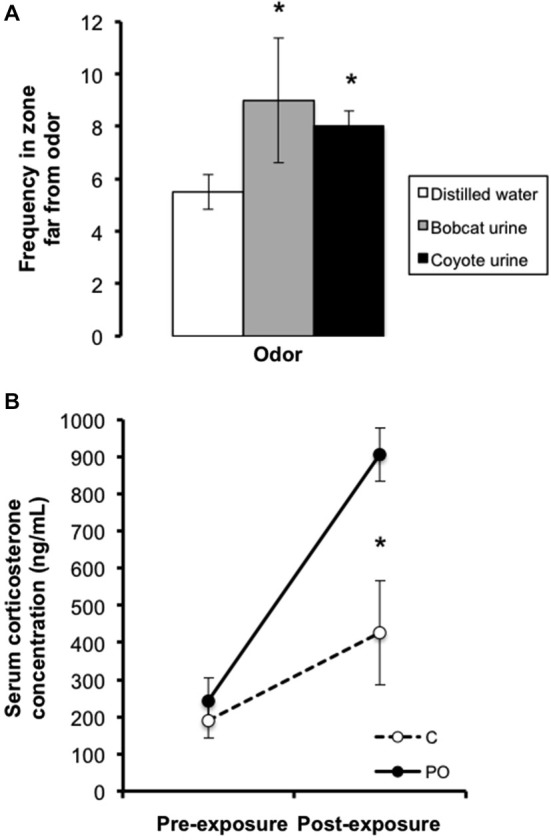
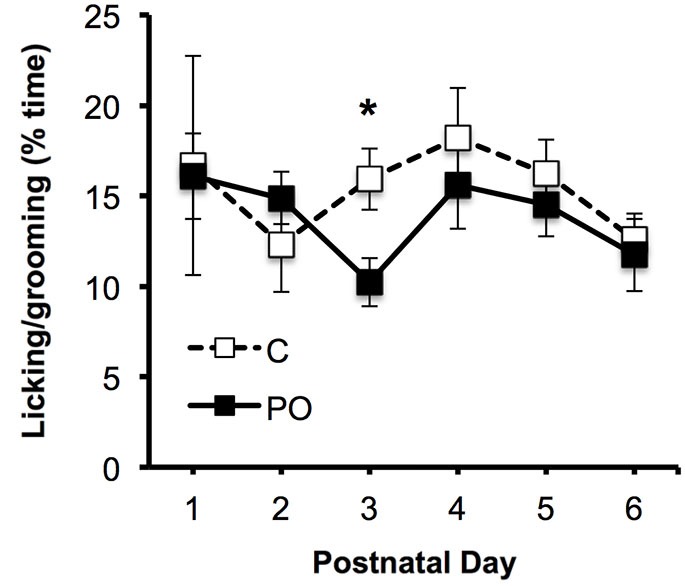
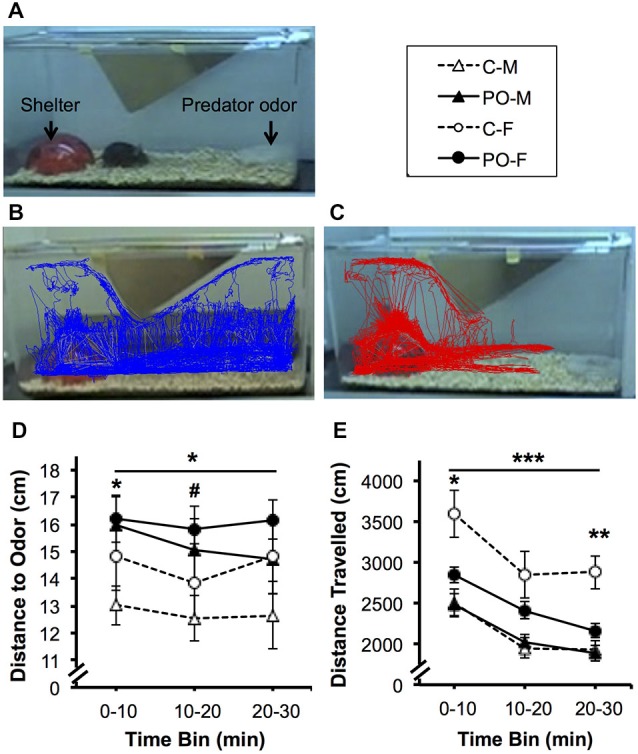
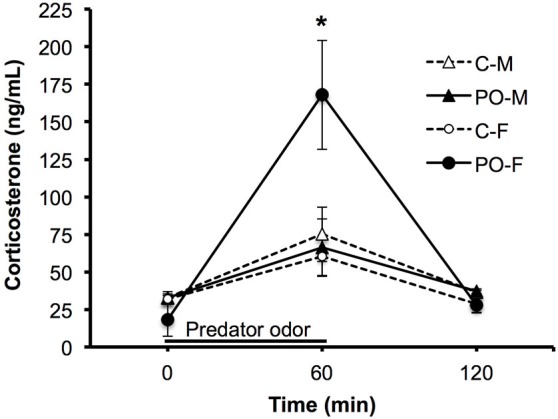
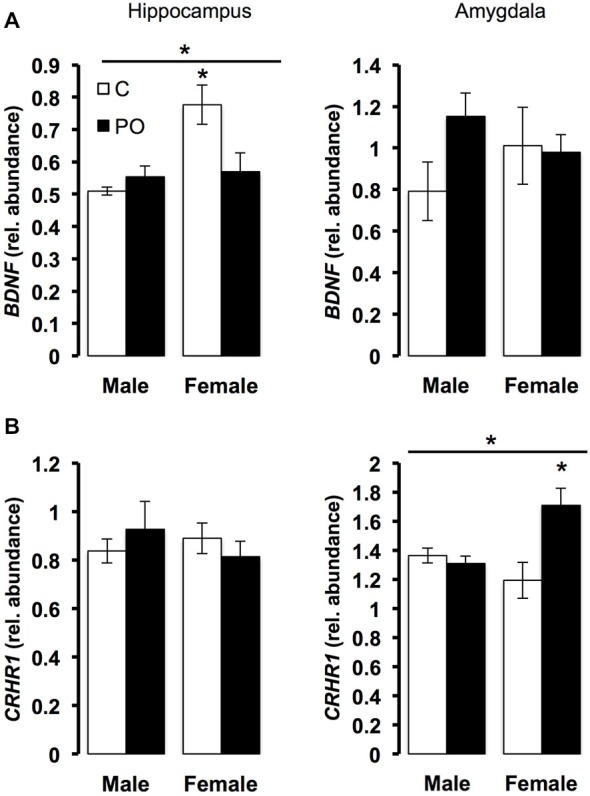
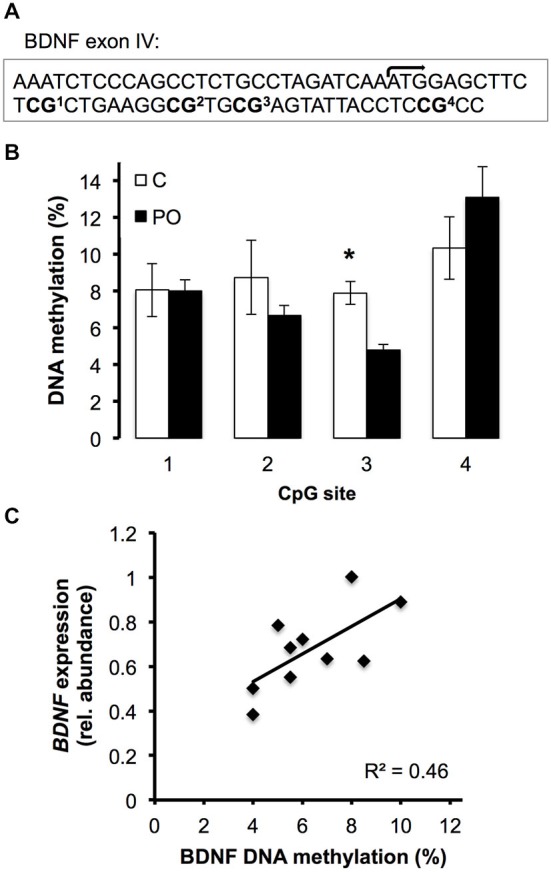
Perinatal stress mediated through the mother can lead to long-term alterations in stress-related phenotypes in offspring. The capacity for adaptation to adversity in early life depends in part on the life history of the animal. This study was designed to examine the behavioral and neural response in adult offspring to prenatal exposure to predator odor: an ethologically-relevant psychological stressor. Pregnant mice were exposed daily to predator odors or distilled water control over the second half of the pregnancy. Predator odor exposure lead to a transient decrease in maternal care in the mothers. As adults, the offspring of predator odor-exposed mothers showed increased anti-predator behavior, a predator-odor induced decrease in activity and, in female offspring, an increased corticosterone (CORT) response to predator odor exposure. We found a highly specific response among stress-related genes within limbic brain regions. Transcript abundance of Corticotropin-releasing hormone receptor 1 (CRHR1) was elevated in the amygdala in adult female offspring of predator odor-exposed mothers. In the hippocampus of adult female offspring, decreased Brain-derived neurotrophic factor (BDNF) transcript abundance was correlated with a site-specific decrease in DNA methylation in Bdnf exon IV, indicating the potential contribution of this epigenetic mechanism to maternal programming by maternal predator odor exposure. These data indicate that maternal predator odor exposure alone is sufficient to induce an altered stress-related phenotype in adulthood, with implications for anti-predator behavior in offspring.
Overview
The claims and statistics of this paper haven’t been checked yet.
Run the check — free, no account needed. It reads the open-access text and checks the sources it cites.
Integrity signals
Registry
Cites
Statistics
Figures
Verification
Claims the paper makes
The claims and statistics of this paper haven’t been checked yet.
Run the check — free, no account needed. It reads the open-access text and checks the sources it cites.
Claims other papers make about this one
Each is checked against this paper’s own text: does it say what the citing paper says it does?
In the citing paper
“Adverse experiences during the perinatal period have been linked to methylation changes in the NR3C1, which are associated with long-term diseases.”
From Comprehensive review of chronic stress pathways and the efficacy of behavioral stress reduction programs (BSRPs) in managing diseases. (2024) · cites this paper as [23]
In the citing paper
“Research has identified over 700 genes in the frontal cortex and hippocampus that are differentially expressed following prenatal stress.”
From Comprehensive review of chronic stress pathways and the efficacy of behavioral stress reduction programs (BSRPs) in managing diseases. (2024) · cites this paper as [23]
In the citing paper
“Hypermethylation under stressful conditions suggests a mechanism through which prenatal stress can program future health risks [23,57].”
From Comprehensive review of chronic stress pathways and the efficacy of behavioral stress reduction programs (BSRPs) in managing diseases. (2024) · cites this paper as [23]
Self-check
Percentages, sums and reported differences re-computed from the paper’s own numbers.
The self-check needs the paper’s full text.
Citations
Cites
Epigenetic programming by maternal behavior
Weaver, I. C. G., Cervoni, N., Champagne, F. A., D'Alessio, A. C., Sharma, S., Seckl, J. R., Dymov, S., Szyf, M., & Meaney, M. J. (2004) · Nature Neuroscience · doi:10.1038/nn1276 · Cited by 6,177
Epigenetic regulation of the glucocorticoid receptor in human brain associates with childhood abuse
McGowan, P. O., Sasaki, A., D'Alessio, A. C., Dymov, S., Labonté, B., Szyf, M., Turecki, G., & Meaney, M. J. (2009) · Nature Neuroscience · doi:10.1038/nn.2270 · Cited by 3,531
Self-citationmouse brain in stereotaxic coordinates
Franklin, K. B. J., & Paxinos, G. (1997) · Cited by 3,258
Meaney, M. J. (2001) · Annual Review of Neuroscience · doi:10.1146/annurev.neuro.24.1.1161 · Cited by 2,708
Sustained hippocampal chromatin regulation in a mouse model of depression and antidepressant action
Tsankova, N. M., Berton, O., Renthal, W., Kumar, A., Neve, R. L., & Nestler, E. J. (2006) · Nature Neuroscience · doi:10.1038/nn1659 · Cited by 1,780
Joëls, M., & Baram, T. Z. (2009) · Nature Reviews Neuroscience · doi:10.1038/nrn2632 · Cited by 1,521
Parental olfactory experience influences behavior and neural structure in subsequent generations
Dias, B. G., & Ressler, K. J. (2014) · Nature Neuroscience · doi:10.1038/nn.3594 · Cited by 1,338
NEUROTROPHINS AND SYNAPTIC PLASTICITY
McAllister, A. K., Katz, L. C., & Lo, D. C. (1999) · Annual Review of Neuroscience · doi:10.1146/annurev.neuro.22.1.295 · Cited by 1,337
Lasting epigenetic influence of early-life adversity on the BDNF gene
Roth, T. L., Lubin, F. D., Funk, A. J., & Sweatt, J. D. (2009) · Biological Psychiatry · doi:10.1016/j.biopsych.2008.11.028 · Cited by 1,273 · cited 3×
“…evidence indicates that these effects are mediated in part by epigenetic changes (Weaver et al., 2004; Mueller and Bale, 2008), defined as modifications to chromatin or DNA that collectively establish and propagate differential gene expression without a change in DNA sequence (Roth et al., 2009).”
BackgroundSex-Specific Programming of Offspring Emotionality after Stress Early in Pregnancy
Mueller, B. R., & Bale, T. L. (2008) · The Journal of Neuroscience · doi:10.1523/jneurosci.1424-08.2008 · Cited by 988
Cited by
Sorted by citations
Items 101–102 of 102
Collins, N. J., Ross, S. E., Prysakar, M., Bigham, O., Ayers, L. W., Rosen, J. B., & Roth, T. L. (2026) · Neurobiology of Stress · doi:10.1016/j.ynstr.2026.100825
Nguyen, C. T. Y., & Shier, D. M. (2026) · Frontiers in Conservation Science · doi:10.3389/fcosc.2026.1783876
Metadata
- Authors
- St-Cyr, S., & McGowan, P. O.
- Affiliations
- University of Toronto (CA)
- Corresponding author
- McGowan, Patrick O.
- Venue
- Frontiers in Behavioral Neuroscience
- Publisher
- Frontiers Media SA
- Published
- 2015-06-01
- Volume
- 9
- Pages
- 145-145
- ISSN
- 1662-5153 (ISSN-L)
- PMC
- PMC4450170
- OpenAlex
- W1494806802
- Cited by
- 102
- References
- 51
- Citations by year
- 2026: 3 · 2025: 7 · 2024: 8 · 2023: 9 · 2022: 6 · 2021: 11 · 2020: 13 · 2019: 16 · 2018: 5 · 2017: 12 · 2016: 11 · 2015: 1
- FWCI
- 5.03
- Type
- journal article
- Language
- en
- Open access
- gold
- doi.org
- Licence
- cc-by
- Locations
- Frontiers in Behavioral Neuroscience (publishedVersion, cc-by)
- Europe PMC (PubMed Central) (publishedVersion, cc-by)
- PubMed Central (publishedVersion, cc-by)
- PubMed (publishedVersion)
- DOAJ (DOAJ: Directory of Open Access Journals) (submittedVersion, cc-by-sa)
- Funders
- Natural Sciences and Engineering Research Council of Canada
- Topics
- Life Sciences › Neuroscience › Behavioral Neuroscience › Stress Responses and Cortisol
- Health Sciences › Medicine › Pediatrics, Perinatology and Child Health › Birth, Development, and Health
- Health Sciences › Medicine › Public Health, Environmental and Occupational Health › Maternal Mental Health During Pregnancy and Postpartum
- Keywords
- prenatal stress, maternal programming, predator odor, antipredator behavior, maternal care, CRHR1, brain-derived neurotrophic factor, DNA methylation, epigenetic regulation, amygdala, hippocampus, limbic system, life history
About these checks
Registry, retraction, Cites and statistics results are computed, not judged, with one exception: a printed reference that no index lists is read once by a model before it counts as a citation error. Claims are extracted by a model and kept only when their quote appears verbatim in the text; each cited source is then checked, with a model’s help, for whether it says what the claim relies on. Those verdicts can be wrong — read the claim’s quote and the cited source before relying on one.
Statistics and arithmetic are recomputed, not judged.
Confidence bands are shown only for fields calibrated on our annotated test set. None is calibrated yet, so no band is shown.
What counts as a claim ›How we measure confidence ›How we check this ›
Are you an author, or do you see a problem with this page? Request a review
