

The DOI matches its Crossref record; 63 of the 63 references it cites were found in a registry or an index.
Wnt Signaling Deregulation in the Aging and Alzheimer’s Brain
Open accessAbstract
Growing evidence suggests that synaptic signaling is compromised in the aging brain and in Alzheimer's disease (AD), contributing to synaptic decline. Wnt signaling is a prominent pathway at the synapse and is required for synaptic plasticity and maintenance in the adult brain. In this review, we summarize the current knowledge on deregulation of Wnt signaling in the context of aging and AD. Emerging studies suggest that enhancing Wnt signaling could boost synaptic function during aging, and ameliorate synaptic pathology in AD. Although further research is needed to determine the precise contribution of deficient Wnt signaling to AD pathogenesis, targeting Wnt signaling components may provide novel therapeutic avenues for synapse protection or restoration in the brain.
Overview
The claims and statistics of this paper haven’t been checked yet.
Run the check — free, no account needed. It reads the open-access text and checks the sources it cites.
Integrity signals
Registry
Cites
Statistics
Figures
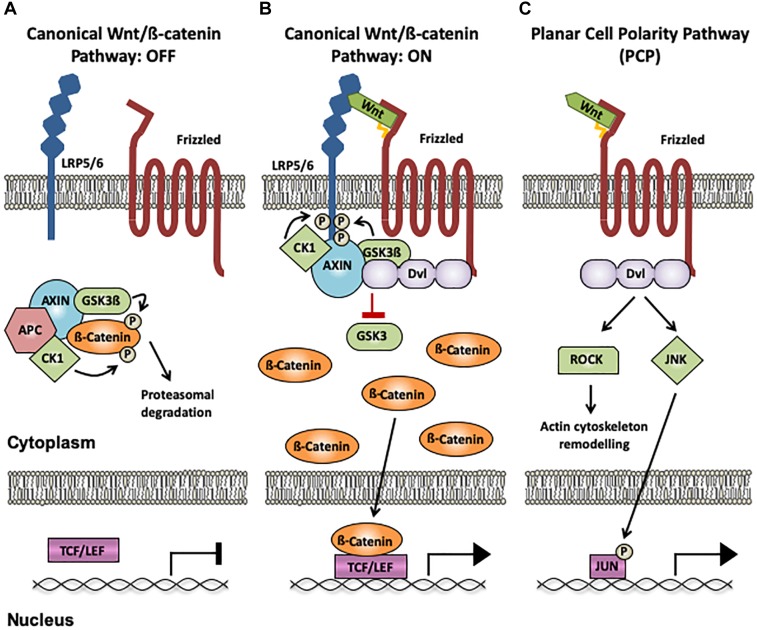
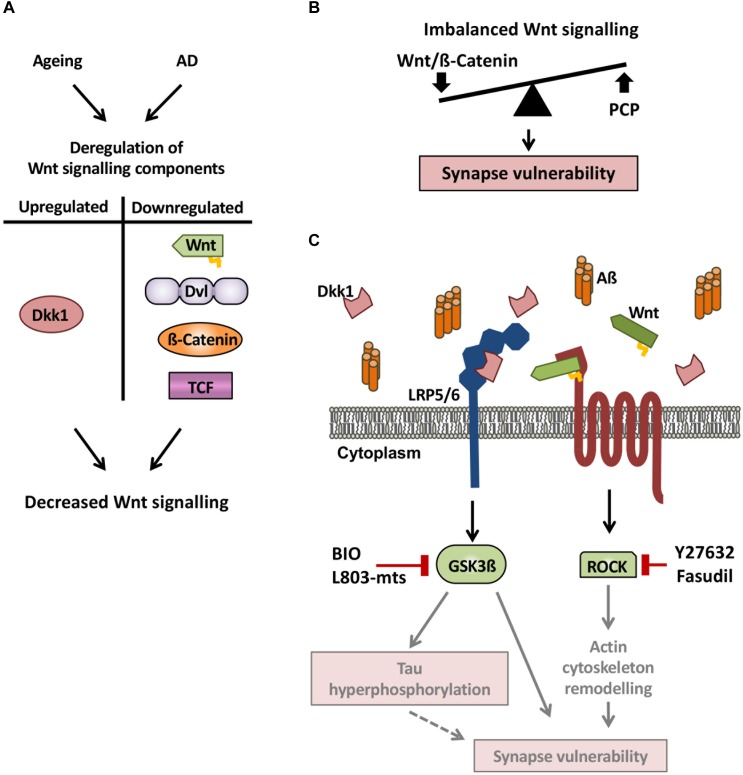
Verification
Claims the paper makes
The claims and statistics of this paper haven’t been checked yet.
Run the check — free, no account needed. It reads the open-access text and checks the sources it cites.
Claims other papers make about this one
Each is checked against this paper’s own text: does it say what the citing paper says it does?
In the citing paper
“Wnt signaling has also been implicated in neurological aging (Inestrosa et al., 2020) and neurological aging disorders such as AD (Palomer et al., 2019).”
From APOE3 Christchurch modulates β-catenin/Wnt signaling in iPS cell-derived cerebral organoids from Alzheimer’s cases (2024) · cites this paper as Palomer et al., 2019
Self-check
Percentages, sums and reported differences re-computed from the paper’s own numbers.
The self-check needs the paper’s full text.
Citations
Cites
Terry, R. D., Masliah, E., Salmon, D. P., Butters, N., DeTeresa, R., Hill, R., Hansen, L. A., & Katzman, R. (1991) · Annals of Neurology · doi:10.1002/ana.410300410 · Cited by 4,397
Wnt/β-Catenin Signaling, Disease, and Emerging Therapeutic Modalities
Nusse, R., & Clevers, H. (2017) · Cell · doi:10.1016/j.cell.2017.05.016 · Cited by 4,342
Harold, D., Abraham, R., Hollingworth, P., Sims, R., Gerrish, A., Hamshere, M. L., Pahwa, J. S., Moskvina, V., Dowzell, K., Williams, A., et al. (2009) · Nature Genetics · doi:10.1038/ng.440 · Cited by 3,326
Zhan, T., Rindtorff, N., & Boutros, M. (2017) · Oncogene · doi:10.1038/onc.2016.304 · Cited by 2,626
Genome-wide association study identifies variants at CLU and CR1 associated with Alzheimer's disease
the European Alzheimer's Disease Initiative Investigators, Lambert, J.-C., Heath, S., Even, G., Campion, D., Sleegers, K., Hiltunen, M., Combarros, O., Zelenika, D., Bullido, M. J., et al. (2009) · Nature Genetics · doi:10.1038/ng.439 · Cited by 2,234
Neural mechanisms of ageing and cognitive decline
Bishop, N. A., Lu, T., & Yankner, B. A. (2010) · Nature · doi:10.1038/nature08983 · Cited by 1,323
The ageing cortical synapse: hallmarks and implications for cognitive decline
Morrison, J. H., & Baxter, M. G. (2012) · Nature Reviews Neuroscience · doi:10.1038/nrn3200 · Cited by 965
REST and stress resistance in ageing and Alzheimer’s disease
Lu, T., Aron, L., Zullo, J., Pan, Y., Kim, H., Chen, Y., Yang, T.-H., Kim, H., Drake, D., Liu, X., et al. (2014) · Nature · doi:10.1038/nature13163 · Cited by 784
Tsukamoto, A. S., Grosschedl, R., Guzman, R. C., Parslow, T. G., & Varmus, H. E. (1988) · Cell · doi:10.1016/0092-8674(88)90220-6 · Cited by 747
Wnt/Ca2+ signaling pathway: a brief overview
De, A. (2011) · Acta Biochimica et Biophysica Sinica · doi:10.1093/abbs/gmr079 · Cited by 565
Destabilization of β-catenin by mutations in presenilin-1 potentiates neuronal apoptosis
Zhang, Z., Hartmann, H., Do, V. M., Abramowski, D., Sturchler, C., Staufenbiel, M., Sommer, B., van de Wetering, M., Clevers, H. C., Säftig, P., et al. (1998) · Nature · doi:10.1038/27208 · Cited by 515
Frizzled/PCP signalling: a conserved mechanism regulating cell polarity and directed motility
Seifert, J. R. K., & Mlodzik, M. (2007) · Nature Reviews Genetics · doi:10.1038/nrg2042 · Cited by 513
Dysregulation of Wnt/β-Catenin Signaling in Gastrointestinal Cancers
White, B. D., Chien, A. J., & Dawson, D. W. (2011) · Gastroenterology · doi:10.1053/j.gastro.2011.12.001 · Cited by 483
Pei, J.-J., Braak, E., Braak, H., Grundke-Iqbal, I., Iqbal, K., Winblad, B., & Cowburn, R. F. (1999) · Journal of Neuropathology & Experimental Neurology · doi:10.1097/00005072-199909000-00011 · Cited by 459
Synaptic Impairment in Alzheimer’s Disease: A Dysregulated Symphony
Forner, S., Baglietto-Vargas, D., Martini, A. C., Trujillo-Estrada, L., & LaFerla, F. M. (2017) · Trends in Neurosciences · doi:10.1016/j.tins.2017.04.002 · Cited by 430
A transcriptional response to Wnt protein in human embryonic carcinoma cells
Willert, J. R., Epping, M. T., Pollack, J. R., Brown, P. O., & Nusse, R. (2002) · BMC Developmental Biology · doi:10.1186/1471-213x-2-8 · Cited by 398
Caricasole, A., Copani, A., Caraci, F., Aronica, E., Rozemüller, A. J. M., Caruso, A., Storto, M., Gaviraghi, G., Terstappen, G. C., & Nicoletti, F. (2004) · Journal of Neuroscience · doi:10.1523/jneurosci.1381-04.2004 · Cited by 398
Hernández, F., Borrell, J., Guaza, C., Avila, J., & Lucas, J. J. (2002) · Journal of Neurochemistry · doi:10.1046/j.1471-4159.2002.01269.x · Cited by 372
Ferrari, G. V. D., Chacón, M. A., Barría, M. I., Garrido, J., Godoy, J. A., Olivares, G. H., Reyes, A. E., Alvarez, A. R., Bronfman, M., & Inestrosa, N. C. (2003) · Molecular Psychiatry · doi:10.1038/sj.mp.4001208 · Cited by 333
TREM2 Promotes Microglial Survival by Activating Wnt/β-Catenin Pathway
Zheng, H., Jia, L., Liu, C.-C., Rong, Z., Zhong, L., Yang, L., Chen, X.-F., Fryer, J. D., Wang, X., Zhang, Y.-W., et al. (2017) · The Journal of Neuroscience · doi:10.1523/jneurosci.2459-16.2017 · Cited by 317
Loss of Dickkopf-1 Restores Neurogenesis in Old Age and Counteracts Cognitive Decline
Seib, D. R., Corsini, N. S., Ellwanger, K., Plaas, C., Mateos, Á., Pitzer, C., Niehrs, C., Celikel, T., & Martín-Villalba, A. (2013) · Cell stem cell · doi:10.1016/j.stem.2012.11.010 · Cited by 298
Matarin, M., Salih, D. A., Yasvoina, M., Cummings, D. M., Guelfi, S., Liu, W., Nahaboo Solim, M. A., Moens, T. G., Paublete, R. M., Ali, S. S., et al. (2015) · Cell Reports · doi:10.1016/j.celrep.2014.12.041 · Cited by 290
Mouse models of Alzheimer’s disease
Esquerda-Canals, G., Montoliu-Gaya, L., Güell-Bosch, J., & Villegas, S. (2017) · Journal of Alzheimer’s Disease · doi:10.3233/jad-170045 · Cited by 288
Apostolova, L. G. (2016) · CONTINUUM Lifelong Learning in Neurology · doi:10.1212/con.0000000000000307 · Cited by 277
Ferrari, G. V. D., Papassotiropoulos, A., Biechele, T. L., DeVriéze, F. W., Ávila, M. E., Major, M. B., Myers, A., Sáez, K. L., Henríquez, J. P., Zhao, A. S., et al. (2007) · Proceedings of the National Academy of Sciences · doi:10.1073/pnas.0603523104 · Cited by 267
Wnt signaling during synaptic development and plasticity
Budnik, V., & Salinas, P. C. (2011) · Current Opinion in Neurobiology · doi:10.1016/j.conb.2010.12.002 · Cited by 264
Self-citationMulti-genetic events collaboratively contribute to Pten-null leukaemia stem-cell formation
Guo, W., Lasky, J. L., Chang, C.-J., Mosessian, S., Lewis, X., Xiao, Y., Yeh, J., Chen, J. Y., Iruela‐Arispe, M. L., Varella‐Garcia, M., et al. (2008) · Nature · doi:10.1038/nature06933 · Cited by 246
Avrahami, L., Farfara, D., Shaham-Kol, M., Vassar, R. J., Frenkel, D., & Eldar-Finkelman, H. (2012) · Journal of Biological Chemistry · doi:10.1074/jbc.m112.409250 · Cited by 235
Clusterin regulates β-amyloid toxicity via Dickkopf-1-driven induction of the wnt–PCP–JNK pathway
Killick, R., Ribe, E. M., Al-Shawi, R., Malik, B., Hooper, C., Fernandes, C., Dobson, R., Nolan, P. M., Lourdusamy, A., Furney, S., et al. (2014) · Molecular Psychiatry · doi:10.1038/mp.2012.163 · Cited by 222
Liu, C.-C., Tsai, C.-W., Deak, F., Rogers, J., Penuliar, M., Sung, Y. M., Maher, J. N., Fu, Y., Li, X., Xu, H., et al. (2014) · Neuron · doi:10.1016/j.neuron.2014.08.048 · Cited by 222
Wnt-3a overcomes β-amyloid toxicity in rat hippocampal neurons
Alvarez, A. R., Godoy, J. A., Müllendorff, K., Olivares, G. H., Bronfman, M., & Inestrosa, N. C. (2004) · Experimental Cell Research · doi:10.1016/j.yexcr.2004.02.028 · Cited by 212
The secreted Wnt antagonist Dickkopf-1 is required for amyloid β-mediated synaptic loss
Purro, S. A., Dickins, E. M., & Salinas, P. C. (2012) · The Journal of Neuroscience · doi:10.1523/jneurosci.4562-11.2012 · Cited by 195
Self-citationReduction in paracrine Wnt3 factors during aging causes impaired adult neurogenesis
Okamoto, M., Inoue, K., Iwamura, H., Terashima, K., Soya, H., Asashima, M., & Kuwabara, T. (2011) · The FASEB Journal · doi:10.1096/fj.11-184697 · Cited by 172
Increased Dickkopf‐1 expression in transgenic mouse models of neurodegenerative disease
Rosi, M. C., Luccarini, I., Grossi, C., Fiorentini, A., Spillantini, M. G., Prisco, A., Scali, C., Gianfriddo, M., Caricasole, A., Terstappen, G. C., et al. (2009) · Journal of Neurochemistry · doi:10.1111/j.1471-4159.2009.06566.x · Cited by 168
Molecular Pathways: Revisiting Glycogen Synthase Kinase-3β as a Target for the Treatment of Cancer
Walz, A. L., Ugolkov, A. V., Chandra, S., Kozikowski, A. P., Carneiro, B. A., O’Halloran, T. V., Giles, F. J., Billadeau, D. D., & Mazar, A. P. (2017) · Clinical Cancer Research · doi:10.1158/1078-0432.ccr-15-2240 · Cited by 168
Regulation of NMDA-Receptor Synaptic Transmission by Wnt Signaling
Cerpa, W. F., Gambrill, A. C., Inestrosa, N. C., & Barría, A. (2011) · Journal of Neuroscience · doi:10.1523/jneurosci.6311-10.2011 · Cited by 147
Marchetti, C., & Marie, H. (2011) · Reviews in the Neurosciences · doi:10.1515/rns.2011.035 · Cited by 141
Communication breakdown: The impact of ageing on synapse structure
Petralia, R. S., Mattson, M. P., & Yao, P. J. (2014) · Ageing Research Reviews · doi:10.1016/j.arr.2014.01.003 · Cited by 138
Reversal of Synapse Degeneration by Restoring Wnt Signaling in the Adult Hippocampus
Marzo, A., Galli, S., Lopes, D. M., McLeod, F., Podpolny, M., Segovia‐Roldán, M., Ciani, L., Purro, S. A., Cacucci, F., Gibb, A. J., et al. (2016) · Current Biology · doi:10.1016/j.cub.2016.07.024 · Cited by 137
Self-citationScali, C., Caraci, F., Gianfriddo, M., Diodato, E., Roncarati, R., Pollio, G., Gaviraghi, G., Copani, A., Nicoletti, F., Terstappen, G. C., et al. (2006) · Neurobiology of Disease · doi:10.1016/j.nbd.2006.06.016 · Cited by 128
Impaired Wnt Signaling in the Prefrontal Cortex of Alzheimer’s Disease
Folke, J., Pakkenberg, B., & Brudek, T. (2019) · Molecular Neurobiology · doi:10.1007/s12035-018-1103-z · Cited by 123
Wnts in action: from synapse formation to synaptic maintenance
Dickins, E. M., & Salinas, P. C. (2013) · Frontiers in Cellular Neuroscience · doi:10.3389/fncel.2013.00162 · Cited by 122
Self-citationMudher, A. K., Chapman, S. C., Richardson, J. C., Asuni, A. A., Gibb, G., Pollard, C. C., Killick, R., Iqbal, T. A., Raymond, F. L., Varndell, I. M., et al. (2001) · Journal of Neuroscience · doi:10.1523/jneurosci.21-14-04987.2001 · Cited by 122
Wnt-5aoccludes Aβ oligomer-induced depression of glutamatergic transmission in hippocampal neurons
Cerpa, W. F., Farı́as, G. G., Godoy, J. A., Fuenzalida, M., Bonansco, C., & Inestrosa, N. C. (2010) · Molecular Neurodegeneration · doi:10.1186/1750-1326-5-3 · Cited by 119
Parr, C., Mirzaei, N., Christian, M., & Sastre, M. (2014) · The FASEB Journal · doi:10.1096/fj.14-253211 · Cited by 114
A role for APP in Wnt signalling links synapse loss with β-amyloid production
Elliott, C., Rojo, A. I., Ribé, E. M., Broadstock, M., Xia, W., Morin, P., Semënov, M. V., Baillie, G. S., Cuadrado, A., Al‐Shawi, R., et al. (2018) · Translational Psychiatry · doi:10.1038/s41398-018-0231-6 · Cited by 112
Wnt proteins as modulators of synaptic plasticity
McLeod, F., & Salinas, P. C. (2018) · Current Opinion in Neurobiology · doi:10.1016/j.conb.2018.06.003 · Cited by 109
Self-citationAmyloid β synaptotoxicity is Wnt‐PCP dependent and blocked by fasudil
Sellers, K. J., Elliott, C., Jackson, J. D., Ghosh, A., Ribé, E. M., Rojo, A. I., Jarosz-Griffiths, H., Watson, I. A., Xia, W., Semënov, M. V., et al. (2017) · Alzheimer s & Dementia · doi:10.1016/j.jalz.2017.09.008 · Cited by 103
Inhibition of the canonical Wnt signaling pathway by apolipoprotein E4 in PC12 cells
Caruso, A., Motolese, M., Iacovelli, L., Caraci, F., Copani, A., Nicoletti, F., Terstappen, G. C., Gaviraghi, G., & Caricasole, A. (2006) · Journal of Neurochemistry · doi:10.1111/j.1471-4159.2006.03867.x · Cited by 101
Orellana, A. M., Vasconcelos, A. R., Leite, J. A., Lima, L. D. S., Andreotti, D. Z., Munhoz, C. D., Kawamoto, E. M., & Scavone, C. (2015) · Aging · doi:10.18632/aging.100853 · Cited by 99
Frizzled‐1 is involved in the neuroprotective effect of Wnt3a against Aβ oligomers
Chacón, M. A., Varela‐Nallar, L., & Inestrosa, N. C. (2008) · Journal of Cellular Physiology · doi:10.1002/jcp.21497 · Cited by 87
McLeod, F., Bossio, A., Marzo, A., Ciani, L., Sibilla, S., Hannan, S. B., Wilson, G. A., Palomer, E., Smart, T. G., Gibb, A. J., et al. (2018) · Cell Reports · doi:10.1016/j.celrep.2018.03.119 · Cited by 80
Self-citationGalli, S., Lopes, D. M., Ammari, R., Kopra, J. J., Millar, S. E., Gibb, A. J., & Salinas, P. C. (2014) · Nature Communications · doi:10.1038/ncomms5992 · Cited by 79
Self-citationA unique type of GSK-3 inhibitor brings new opportunities to the clinic
Licht-Murava, A., Paz, R., Vaks, L., Avrahami, L., Plotkin, B., Eisenstein, M., & Eldar-Finkelman, H. (2016) · Science Signaling · doi:10.1126/scisignal.aah7102 · Cited by 78
Tapia‐Rojas, C., Burgos, P. V., & Inestrosa, N. C. (2016) · Journal of Neurochemistry · doi:10.1111/jnc.13873 · Cited by 76
The effects of aging on the expression of Wnt pathway genes in mouse tissues
Hofmann, J. W., McBryan, T., Adams, P. D., & Sedivy, J. M. (2014) · AGE · doi:10.1007/s11357-014-9618-3 · Cited by 73
García‐Velázquez, L., & Arias, C. (2017) · Ageing Research Reviews · doi:10.1016/j.arr.2017.06.001 · Cited by 70
Downregulation of canonical Wnt signaling in hippocampus of SAMP8 mice
Bayod, S., Felice, P., Andrés‐Benito, P., Rosa, P., Camins, A., Pallàs, M., & Canudas, A.-M. (2014) · Neurobiology of Aging · doi:10.1016/j.neurobiolaging.2014.09.017 · Cited by 63
Kawamura, Y., Kikuchi, A., Takada, R., Takada, S., Sudoh, S., Shibamoto, S., Yanagisawa, K., & Komano, H. (2001) · European Journal of Biochemistry · doi:10.1046/j.1432-1327.2001.02197.x · Cited by 38
Salcedo‐Tello, P., Hernández‐Ortega, K., & Arias, C. (2014) · Journal of Alzheimer s Disease · doi:10.3233/jad-130749 · Cited by 28
Scott, E. L., Zhang, Q.-G., Han, D. K., Desai, B. N., & Brann, D. W. (2012) · Steroids · doi:10.1016/j.steroids.2012.11.004 · Cited by 27
Lentiviral Modulation of Wnt/β-Catenin Signaling Affects In Vivo LTP
Ivanova, O., Dobryakova, Y. V., Salozhin, S. V., Aniol, V. A., Onufriev, M. V., Gulyaeva, N. V., & Markevich, V. A. (2016) · Cellular and Molecular Neurobiology · doi:10.1007/s10571-016-0455-z · Cited by 15
Humphreys, S. (2008) · Continuum · doi:10.1080/10304310801989844 · Cited by 1
Cited by
Sorted by citations
Apoptotic Pathways and Alzheimer’s Disease: Probing Therapeutic Potential
Sharma, V., Singh, T. G., Singh, S., Garg, N., & Dhiman, S. (2021) · Neurochemical Research · doi:10.1007/s11064-021-03418-7 · Cited by 201
Marchetti, B., Tirolo, C., L’Episcopo, F., Caniglia, S., Testa, N., Smith, J. A., Pluchino, S., & Serapide, M. F. (2020) · Aging Cell · doi:10.1111/acel.13101 · Cited by 189
Post-translational modifications: Regulators of neurodegenerative proteinopathies
Gupta, R. V., Sahu, M., Srivastava, D., Tiwari, S., Ambasta, R. K., & Kumar, P. (2021) · Ageing Research Reviews · doi:10.1016/j.arr.2021.101336 · Cited by 126
Microglia Polarization in Alzheimer’s Disease: Mechanisms and a Potential Therapeutic Target
Wang, Q., Yao, H., Liu, W., Ya, B., Cheng, H., Xing, Z., & Wu, Y. (2021) · Frontiers in Aging Neuroscience · doi:10.3389/fnagi.2021.772717 · Cited by 111
Recent Scaffold Hopping Applications in Central Nervous System Drug Discovery
Callis, T. B., Garrett, T. R., Montgomery, A. P., Danon, J. J., & Kassiou, M. (2022) · Journal of Medicinal Chemistry · doi:10.1021/acs.jmedchem.2c00969 · Cited by 99
Metadata
- Authors
- Palomer, E., Buechler, J., & Salinas, P. C.
- Affiliations
- University College London (GB)
- Corresponding author
- Palomer, Ernest
- Salinas, Patricia C.
- Venue
- Frontiers in Cellular Neuroscience
- Publisher
- Frontiers Media SA
- Published
- 2019-05-22
- Volume
- 13
- Pages
- 227-227
- ISSN
- 1662-5102 (ISSN-L)
- PMC
- PMC6538920
- OpenAlex
- W2945124452
- Cited by
- 237
- References
- 63
- Citations by year
- 2026: 22 · 2025: 32 · 2024: 46 · 2023: 35 · 2022: 42 · 2021: 35 · 2020: 23 · 2019: 2
- FWCI
- 3.08
- Type
- journal article
- Language
- en
- Open access
- gold
- doi.org
- Licence
- Locations
- Frontiers in Cellular Neuroscience (publishedVersion, cc-by)
- PubMed Central (publishedVersion, cc-by)
- PubMed (publishedVersion)
- DOAJ (DOAJ: Directory of Open Access Journals) (submittedVersion, cc-by-sa)
- UCL Discovery (University College London) (submittedVersion)
- Funders
- Wellcome Trust (102267/Z/13/Z, 102267)
- European Commission (HORIZON2020, H2020, 749209)
- Horizon 2020 Framework Programme (MSCA-IF 749209)
- Medical Research Council (MR/M024083, MR/M024083/1)
- Topics
- Life Sciences › Neuroscience › Cellular and Molecular Neuroscience › Alzheimer's disease research and treatments
- Life Sciences › Biochemistry, Genetics and Molecular Biology › Molecular Biology › Wnt/β-catenin signaling in development and cancer
- Life Sciences › Neuroscience › Cellular and Molecular Neuroscience › Neuroscience and Neuropharmacology Research
- Keywords
- Wnt signaling, Alzheimer's disease, brain aging, synaptic plasticity, synaptic dysfunction, therapeutic target
About these checks
Registry, retraction, Cites and statistics results are computed, not judged, with one exception: a printed reference that no index lists is read once by a model before it counts as a citation error. Claims are extracted by a model and kept only when their quote appears verbatim in the text; each cited source is then checked, with a model’s help, for whether it says what the claim relies on. Those verdicts can be wrong — read the claim’s quote and the cited source before relying on one.
Statistics and arithmetic are recomputed, not judged.
Confidence bands are shown only for fields calibrated on our annotated test set. None is calibrated yet, so no band is shown.
What counts as a claim ›How we measure confidence ›How we check this ›
Are you an author, or do you see a problem with this page? Request a review
